



Abstract
Reverse transcription, quantitative polymerase chain reaction (RT-qPCR) is a powerful technique to quantify gene expression by transcript abundance. Expression of target genes is normalized to expression of stable reference genes to account for sample preparation variability. Thus, the identification and validation of stably expressed reference genes is crucial for making accurate, quantitative, statistical conclusions in gene expression studies. Traditional housekeeping genes identified decades ago based on high and relatively stable expression are often used, although many have shown these to not be valid, particularly in highly dynamic systems such as stem cell differentiation. In this study we outline a rational approach to identify stable reference genes valid throughout human pluripotent stem cell (hPSC) differentiation to hPSC-derived cardiomyocytes (hPSC-CMs). Several publicly available transcriptomic data sets were analyzed to identify genes with low variability in expression throughout differentiation. These putative novel reference genes were subsequently validated in RT-qPCR analyses to assess their stability under various perturbations, including maturation during extended culture, lactate purification, and various differentiation efficiencies. Expression in hPSC-CMs was also compared with whole human heart tissue. A core set of three novel reference genes (EDF1, DDB1, and ZNF384) exhibited robust stability across the conditions tested, whereas expression of the traditional housekeeping genes tested (ACTB, B2M, GAPDH, and RPL13A) varied significantly under these conditions.
Impact statement
This article presents an unbiased method for the selection and validation of novel reference genes for real-time quantitative polymerase chain reaction normalization using data from RNA sequencing datasets. This method identified more robust and stable reference genes for gene expression studies during human pluripotent stem cell differentiation to cardiomyocytes than commonly used reference genes. This study also provides a roadmap for identifying reference genes for assessing gene expression during other dynamic cellular processes, including stem cell differentiation to other cell types.
Keywords: human pluripotent stem cell, cardiomyocyte, stem cell differentiation, temporally stable gene expression, reference gene, RT-qPCR
Introduction
Human pluripotent stem cell-derived cardiomyocytes (hPSC-CMs) present a promising avenue of ongoing research for therapeutic, disease modeling, drug discovery, and developmental biology applications. A powerful technique used to characterize hPSC-CMs during and after differentiation is reverse transcription, real-time quantitative polymerase chain reaction (RT-qPCR), used to quantify the expression of genes of interest based on the abundance of mRNA transcripts. This method is widely used across several settings including research for targeted hypothesis testing, industrially for process development/optimization for assessing intermediate and target outputs, and clinically for diagnostics and disease detection and monitoring. Even with the increased utilization of RNA sequencing (RNAseq) technologies, key findings are often still confirmed with RT-qPCR assays.
In performing an RT-qPCR assay, expression must be normalized to a reference gene whose expression remains stable across all conditions tested. Many reference or “housekeeping” genes were initially identified and utilized owing to their high-expression levels and relatively stable expression. However, many of these traditional housekeeping genes are used without validation of stability in the system in which they are used, and their expression is often not constant within highly dynamic systems, including stem cell differentiation. Improper reference gene utilization has the potential to inaccurately assign significance to unaltered gene expression (false positives) and/or obfuscate statistical findings (false negatives).1 Because reference genes are vital to accurate quantification and interpretation of transcript expression via RT-qPCR, there is a need to identify more stably expressed reference genes suited to particular applications.
Many publications of late have begun to address this issue in various systems, with the understanding that treatment conditions can affect otherwise assumedly stable housekeeping gene expression. Such studies run the gamut from human clinical samples to primary animal model tissues and stem cells and their derivatives.2–10 A large number of these, however, simply evaluate the stability of established or previously published reference genes without evaluating new alternatives.2–10
In the age of RNAseq, a wealth of information about transcript abundance is available. Such datasets can be mined to identify putative reference genes. One study used RNAseq datasets to investigate the stability of previously identified reference genes.11 Others have utilized transcriptomic data for unbiased identification of novel reference genes, such as McLoughlin et al. using microarray analysis to select a panel of reference genes for human endothelial colony-forming cell studies.12 Other researchers have performed meta-analyses of several transcriptomic data sets to identify putative reference genes, overcoming the limitations and biases inherent within a single data set. For example, Holmgren et al. analyzed nine distinct data sets encompassing early differentiation of hPSCs into the three germ layers to identify common reference genes suitable to all. Although these methods have proven useful, they do not address the concern of temporal trends in gene expression, which may be obfuscated by the bulk statistical analyses utilized. To address this, we used analyses to further discriminate and eliminate putative reference genes that demonstrate significant temporal variation to identify a set of temporally stable genes for improved validity.
Here we use hPSC differentiation to hPSC-CMs as a model process for rational identification of reference genes during a dynamic cellular process. Upon establishing that traditional housekeeping genes are not suitable reference genes for differentiating hPSC-CMs, we outline a straightforward method for the elucidation of stable reference genes through a quantitative analysis of five independent transcriptomic data sets encompassing samples collected throughout the hPSC-CM differentiation process. RT-qPCR studies confirmed expression of these reference genes to remain stable over the range of differentiation and subsequent maturation of hPSC-CMs, exhibiting improved stability over housekeeping genes traditionally used in the field. Furthermore, the methodologies detailed herein are readily applicable to the identification of novel, robust reference genes for myriad dynamic systems beyond the hPSC-CM case outlined.
Materials and Methods
Transcriptomic data sets
Publicly available transcriptomic data sets were acquired from the Gene Expression Omnibus. Five independent data sets were selected, which presented samples at various stages during the hPSC-CM differentiation process13–17 (summarized in Table 1).
Table 1.
Temporal Human Pluripotent Stem Cell-Derived Cardiomyocyte Differentiation Transcriptomic Data Sets Selected for Analysis
| GEO accession | GSE76523 | GSE84815 | GSE100592 | GSE114373 | GSE85331 |
|---|---|---|---|---|---|
| References | 17 | 15 | 18 | 16 | 14 |
| Parental cell line(s) | H7 | H9 | HuES6 | H9 | H1, H9, C15, C20 |
| hPSC type | hESC | hESC | hESC | hESC | hESC, hiPSC |
| Samples used in this analysis; D = day of differentiation (n samples sequenced per time point) | hESCs (1) D1 (1) D2 (1) D3 (1) D4 (1) D5 (1) D6 (1) D8 (1) D10 (1) D15 (1) D30 (1) |
D0 (2) D2 (2) D5 (2) D14 (1) D15 (1) D30 (1) |
(All non-RA-treated): D0 (1) D1 (1) D2 (1) D3 (1) D4 (1) D5 (1) D6 (1) D8 (1) |
D0 (3) D7 TBX5+ (3) D14 TBX5+/TNNT2+ (3) D30 TBX5+/MYL2+ (3) |
D0 (2 per line) D2 (2 per line) D4 (2 per line) D30 (2 per line) |
| Transcriptomic platform | Illumina HiSeq 2500 | Illumina HiSeq 2000 | Illumina HumanHT-12 V4.0 expression beadchip |
Illumina HiSeq 2500 | Illumina HiSeq 2000 |
Five independent transcriptomic data sets encompassing samples throughout the hPSC-CM differentiation process in several hPSC cell lines were selected. (C15 and C20 are hiPSC lines, all others are hESC lines).
GEO, Gene Expression Omnibus; hESC, human embryonic stem cells; hiPSC, human-induced pluripotent stem cells; hPSC-CM, human pluripotent stem cell-derived cardiomyocytes; RA, retinoic acid.
Inter-set normalization and data presentation
To compare among data sets collected under widely varying conditions, fragments per kilobase of transcript per million mapped reads (FPKM) expression values for each transcript are presented as the percent difference from the average expression value for that transcript within each data set.
Stem cell maintenance
hPSCs (H9 human embryonic stem cells [hESCs] and WTC11 human induced pluripotent stem cells [hiPSCs]) were maintained as described previously.18 In brief, cells were cultured in mTeSR1 (85850; STEMCELL Technologies) on growth factor reduced Matrigel (354230; Corning)-coated 6-well plates (07-200-82; Corning COSTAR) in a cell culture incubator (MCO-18AC; Sanyo; 37°C, 5% CO2, 95% RH) and passaged with Versene (15040066; Life Technologies) at ∼70% confluency (every 3–5 days).
hPSC-CM differentiation
hPSCs were differentiated into CMs using the GiWi protocol as described previously.18 In brief, hPSCs were singularized in Accutase (AT104; Innovative Cell Technology) before resuspension in mTeSR1 with 5 μM Y-27632 and seeding onto Matrigel-coated 12-well plates. Plates were set at room temperature for 30 min before transfer to a cell culture incubator. Two hPSC lines were used in these studies: H9 (hESC) and WTC11 (hiPSC), each having different optimal differentiation parameters. Table 2 provides details about the differentiation of these two cell lines. For extended culture, media (RPMI1640+B27 supplement) was replaced every 3 days until the day of sample collection (indicated in Fig. 6a—days 30, 60, or 80).
Table 2.
Human Pluripotent Stem Cell Line-Specific Differentiation Protocols
| Day | hPSC line-specific differentiation protocols |
|
|---|---|---|
| WTC11 | H9 | |
| D-2 | Seed @ ∼75–150k cells/cm2 in mTeSR1 w/5 μM Y27632 | Seed @ ∼225–350k cells/cm2 in mTeSR1 w/5 μM Y27632 |
| D-1 | mTeSR1 | |
| D0 | RPMI-1640 with B27 − insulin (B27−) + 5 μM CHIR99021 | |
| D1 | — | RPMI-1640/B27− |
| D2 | RPMI-1640/B27− with 5.0 μM IWP2 | — |
| D3 | — | 50% RPMI-1640/B27− + 50% conditioned medium + 5.0 μM IWP2 |
| D4 | RPMI-1640/B27− | — |
| D5 | — | RPMI-1640/B27− |
| D6 | RPMI-1640/B27 | — |
| D7 | — | RPMI-1640/B27 |
| D8 | RPMI-1640/B27 | |
| D10 + 3n | RPMI1640/B27 | |
FIG. 6.

Validity and robustness testing of putative reference genes. (a) Comparison of the aggregated day 0–day 10 gene expression data to hPSC-CM samples cultured for 30, 60, and 80 days (n = 3 each; ANOVA with Dunnett's post hoc; significance markings with respect to D0–10 expression values) and an adult human heart RNA sample (grey bars; n = 1). (b) Effect of lactate treatment on reference gene expression (Student's t-test, n = 4). (c) (left) example parity plot of Gene 1 CT versus Gene 2 CT; (right) aggregate parity scores (higher = more co-linear, MAX = 4) calculated from R and minor slope values for the crosses of the four lead putative new reference genes (K = KIAA1429, D = DDB1, Z = ZNF384, E = EDF1) and four traditional housekeeping genes (A = ACTB, G = GAPDH, B = B2M, R = RPL13A); (bottom) parity test rankings calculated by the sum of all crosses involving the gene of interest for the simple single-gene crosses presented previously and for a cross of all combinations of the geometric means of two individual genes (GeoMean Cross). (d) Effect of differentiation efficiency on reference gene stability; normalized expression of samples collected at days 0, 6, and 16 of the hPSC-CM differentiation for good (green, 75 ± 3% cTnT+ on D16), intermediate (blue, 54 ± 3% cTnT+ on D16), and bad (magenta, 26 ± 3% cTnT+ on D16) differentiations. Data are presented as mean ± SD. *p < 0.05, **p < 0.01.
Validation of hPSC-CM differentiation
hPSC-CM differentiation efficiency and quality were assessed using RT-qPCR and flow cytometry. Temporal stage-specific marker genes (NANOG, TBX-T, NKX2-5, and TNNT2) were quantified using RT-qPCR. Terminal CM purity was assessed by flow cytometry for cardiac troponin T (cTnT) on day 16 as described previously.18 In brief, cells were singularized in Accutase, fixed in 1% paraformaldehyde, and stored in 90% methanol at −20°C until analysis. Approximately 200,000 cells were rinsed in flow buffer (FB = 0.5% w/v bovine serum albumin in Dulbecco's phosphate buffered saline), incubated overnight at 4°C in msIgG1-anti-cTnT primary antibody (MA5-12960; ThermoFisher) diluted 1:250 in FB +0.1% v/v Triton X-100, rinsed with FB, incubated for 1 h at room temperature in AF488-anti-msIgG1 secondary antibody (A-21121; ThermoFisher) diluted 1:1000 in FB +0.1% v/v Triton X-100, rinsed and resuspended in 300 μL FB before analysis on a BD Accuri C6 Plus flow cytometer. Undifferentiated hPSC-negative control samples were stained in parallel.
RNA sample collection
Sacrificial RNA samples were collected in triplicate from independent wells for each differentiation before each media change, starting on day 0. Each sample consisted of 1-well of a 12-well plate (∼1–2 million cells). Wells were rinsed once with DPBS before 1-min incubation in 500 μL cold Trizol reagent (15596018; ThermoFisher), scraped into 1.5 mL microcentrifuge tubes, snap-frozen in liquid nitrogen, and stored at −80°C.
RNA purification, reverse transcription, and qPCR
RNA was extracted from Trizol-collected samples per manufacturer's triphasic extraction followed by purification and concentration with Zymo Direct-zol MiniPrep Plus columns (R2072; Zymo) per kit instructions (including on-column DNAse treatment). The concentration of purified RNA was quantified on a NanoDrop spectrophotometer (ND2000c; ThermoFisher) and stored at −80°C. Two micrograms of RNA was reverse transcribed into cDNA with a Qiagen Omniscript RT Kit (205113; Qiagen) per manufacturer's instructions with RNaseOUT (10777-019; Life Technologies) and Oligo dT(20) primers (18418020; Life Technologies). Ten nanograms of cDNA from each sample was loaded per reaction, combined with 12.5 μL PowerUp SYBR (A25780; ThermoFisher), 0.125 μL of appropriate primers (100 μM; IDT), and nuclease-free water to a total volume of 25 μL/reaction. qPCRs were thermocycled on an AriaMx Real-Time PCR system (G8830A; Agilent Technologies) between 95°C (15 s) and 60°C (60 s) for a total of 40 cycles after which a melt curve analysis was performed to verify the presence of single amplicon product.
(q)PCR primer design and validation
Primers were designed using the NCBI Primer-BLAST online tool and sequences ordered from IDT. Amplicon specificity was confirmed by agarose gel electrophoresis. Primers that generated one amplicon band at the correct size in a positive control sample (10 ng of WTC11 cDNA) were then validated for primer efficiency using qPCR with a four-point standard curve over a 1:5 dilution series ([cDNA] = 10, 2, 0.4, 0.08 ng/reaction) and a no template control ([cDNA] = 0 ng/reaction]. Primers exhibiting no amplification of the no template control, and primer efficiencies between 90% and 110% were released for further use (see Supplementary Table S1 for primer details).
Statistical analyses
All samples were run in at least three independent wells within a differentiation for each experimental condition. Temporal expression stability was assessed using one-way analysis of variance (ANOVA) (with Dunnett's post hoc where indicated for multiple comparisons) and/or Kruskal–Wallis tests. Single treatment comparisons were assessed using Student's t-test.
Experiment
Variability in housekeeping gene expression during hPSC-CM differentiation
Current, common housekeeping genes used ubiquitously for RT-qPCR normalization were proposed decades ago based on high constitutive expression, but as techniques and applications have advanced in quantitative gene expression, many researchers still use these historical housekeeping genes without validation of their stability, and therefore suitability, as reference genes. To address this concern regarding reference genes, we first assessed the stability of common housekeeping genes through the differentiation of hPSCs into hPSC-CMs in publicly available RNAseq datasets.
Figure 1 provides the expression values of five widely used traditional housekeeping genes (ACTB, B2M, RPL13A, HPRT1, and GAPDH) at various timepoints throughout the 30-day process of hPSC differentiation to CMs in five independent transcriptomic data sets. Details on data sets are provided in Table 1. Coefficients of variation (CVs) for the cumulative expression data are as follows: ACTB: 46%, B2M: 72%, RPL13A: 29%, HPRT1: 50%, and GAPDH: 52% (Fig. 1a), indicating that expression of these genes fluctuates during differentiation. Figure 1b shows expression of these genes as a function of time throughout hPSC-CM differentiation. Large temporal variation in expression values is evident, particularly a significant monotonic decrease in ACTB and increase in B2M, as hPSCs progress to CM commitment. ANOVA and Kruskal–Wallis tests were performed on the combined temporal data, with all expression values (internally normalized as percent difference from set average—as presented in Fig. 1b) aggregated into one time-series to assess statistical differences in time. All five genes were found to exhibit statistically significant temporal variation of both mean and median expression values, with the exception of HPRT1 only exhibiting temporal statistical difference in median expression. These results suggest that these five widely utilized housekeeping genes are not suitable for use as reference genes in normalizing gene expression data across hPSC-CM differentiation. Therefore, more suitable alternatives that would exhibit more stable temporal expression were sought as reference genes.
FIG. 1.

Transcript expression of traditional housekeeping genes throughout hPSC-CM differentiation. (a) Combined expression data from five publicly available transcriptomic data sets across the hPSC-CM differentiation timecourse.14–18 (b) Temporal expression trends for each housekeeping gene. Each color represents an independent experiment (i.e., an independent data set or independent cell line within a data set). (c) Statistical tests for differences in gene expression through time. Normality tests performed include the D'Agostina & Pearson omnibus and the by Shapiro–Wilk normality tests with a p-value cutoff of 0.05 (both resulted in same conclusion for all genes). Blue highlighted cells indicate appropriate test to conclude statistical significance based on normality test results. Data are presented as normalized independently within each data set to gene temporal expression average. *p < 0.05, **p < 0.01, ****p < 0.0001, ns = p > 0.05. hPSC-CM, human pluripotent stem cell-derived cardiomyocyte.
Identification of novel, temporally stable reference genes
To elucidate temporally stable reference genes throughout hPSC-CM differentiation, sequential limiting of each parental transcriptomic dataset in parallel was performed as outlined in Figure 2. First, each set was filtered to remove any transcript that contained a null read (value less than 0.1 FPKM) in any of the samples analyzed, resulting in ∼20,000 identified unique transcripts. Next, all transcripts exhibiting a CV >25% across time-aggregate data were removed, leaving ∼3000 transcripts for each data subset (subseries Ai). To further enforce expression stability, a range-to-average threshold of ∼50% was applied; thus transcripts exhibiting a range ( = max – min) >50% of the set average was removed, resulting in subseries Bi (each containing ∼500 transcripts). Finally, a consensus voting algorithm was applied such that only those transcripts present in at least four of the five individual subseries Bi were selected as candidate reference genes (26 genes in total). Of interest, no transcripts met the CV and range-to-average threshold criteria in all five subseries Bi. This nonunanimous consensus can be attributed to several factors—extreme outliers within a dataset would fail to meet the stability criteria used and/or biological, batch, protocol, and sequencing variability among the experiments could have resulted in nonconsensus.
FIG. 2.

Rational, unbiased reference gene identification scheme. Starting with several publicly available transcriptomic data sets profiling cells at different stages of hPSC-CM differentiation, subsequent filters were used to rationally pare down putative reference genes from the >20,000 expressed transcripts to a conserved subset of ideal candidates. These candidates were then ranked to identify the top 8 for experimental validation.
The expression values of these 26 consensus transcripts were subsequently compiled from all five data sets. To compare these data sets collected from different laboratories on different hPSC lines using different differentiation protocols, each transcript's expression, G, was normalized to its average expression within its parental data set (normalized data presented in Fig. 3):
FIG. 3.

Lead candidates for putative global reference genes during hPSC-CM differentiation. (a) Combined expression data from all five RNAseq transcriptomic data sets throughout hPSC-CM differentiation.14–18 (b) Temporal expression of each of the putative reference genes (dashed lines represent ±25% difference from set average). (c) Statistical tests for differences in time in both mean (ANOVA) and median (Kruskal–Wallis) expression of all eight genes. Normality tests performed include the D'Agostina & Pearson omnibus and by Shapiro–Wilk normality tests with a p-value cutoff of 0.05 (both resulted in same conclusion for all genes). Blue highlighted cells indicate appropriate test to conclude statistical significance based on normality test results. Data are presented as mean ± SD. *p < 0.05, **p < 0.01, ****p < 0.0001, ns = p > 0.05. ANOVA, analysis of variance; RNAseq, RNA sequencing; SD, standard deviation.
where G = expression value of gene of interest, GN = normalized expression value of gene of interest, GAvg = average expression value of gene of interest across all samples in time, subscript “i” denotes an individual time-point, subscript “f” denotes the final time-point analyzed.
Finally, to compare across all data sets exhibiting significant differences in error, these 26 genes were ranked from most-to-least stable within each dataset. Transcript stability was based on several normalized error metrics: CV, range/average, and sum of squares of difference from mean. Aggregating the rankings within each dataset across each metric, the 10 lowest ranking genes were removed, and the remaining 16 candidates were assessed for temporal stability across each data set. The final eight genes for in-house validation experiments were randomly selected to encompass the entire range of observed expression values (exhibiting ∼10-fold variation in average expression across samples). Table 3 lists the 26 candidate genes, identifying those removed in each step of the limiting analysis.
Table 3.
Lead Candidate Putative Reference Gene Selection
| Gene ID | Normalized error ranking | Average values used in calculating error rankings |
Relative expression (vs. top 16 average) | Final 8 candidates | ||
|---|---|---|---|---|---|---|
| CV | Range/average | SUMSQ (difference from mean) | ||||
| PEX19 | 1.00 | 0.13 | 0.48 | 0.12 | 0.54 | PEX19 |
| DDB1 | 1.00 | 0.13 | 0.49 | 0.12 | 2.19 | DDB1 |
| UBAC2 | 0.94 | 0.14 | 0.5 | 0.13 | 0.53 | |
| ZNF384 | 0.90 | 0.19 | 0.72 | 0.13 | 0.30 | ZNF384 |
| SBF1 | 0.86 | 0.17 | 0.63 | 0.14 | 0.48 | SBF1 |
| TRAPPC11 | 0.80 | 0.16 | 0.59 | 0.16 | 0.42 | |
| EDC4 | 0.76 | 0.17 | 0.63 | 0.16 | 0.49 | |
| RPN1 | 0.73 | 0.16 | 0.55 | 0.16 | 2.02 | |
| SURF4 | 0.73 | 0.16 | 0.54 | 0.17 | 1.45 | |
| ARPC1A | 0.69 | 0.15 | 0.56 | 0.16 | 1.45 | |
| KIAA1429 | 0.65 | 0.18 | 0.67 | 0.17 | 0.29 | KIAA1429 |
| PPP3CB | 0.55 | 0.17 | 0.56 | 0.19 | 0.38 | |
| POLR2B | 0.53 | 0.17 | 0.62 | 0.20 | 1.10 | POLR2B |
| RAB10 | 0.51 | 0.18 | 0.60 | 0.19 | 1.33 | RAB10 |
| EDF1 | 0.49 | 0.18 | 0.64 | 0.21 | 2.97 | EDF1 |
| GOLPH3 | 0.47 | 0.19 | 0.63 | 0.20 | 0.80 | |
| SNX17 | 0.39 | 0.18 | 0.6 | 0.21 | ||
| STT3A | 0.35 | 0.18 | 0.56 | 0.21 | ||
| PPP4R1 | 0.31 | 0.16 | 0.61 | 0.21 | ||
| EIF4G2 | 0.27 | 0.17 | 0.6 | 0.22 | ||
| SUMO3 | 0.24 | 0.19 | 0.65 | 0.22 | ||
| UBQLN1 | 0.20 | 0.17 | 0.56 | 0.22 | ||
| PIP5K1A | 0.14 | 0.18 | 0.62 | 0.25 | ||
| CDS2 | 0.14 | 0.18 | 0.57 | 0.26 | ||
| RAB11A | 0.08 | 0.20 | 0.66 | 0.26 | ||
| FBXO7 | 0.04 | 0.19 | 0.64 | 0.30 | ||
The 26 candidate genes identified from the consensus analysis were further scrutinized to identify lead candidates. First, they were ranked across several error metrics within each data set (CV, range/average, and sum of squares of differences from mean expression), and the summative rank of these metrics across all sets was assigned (shown as normalized to maximum in column 2; higher ranking = more stable). The lowest ranked 10 genes were removed, and the 8 final candidates (column 7) were randomly selected such that they encompassed genes across the entire range of observed expression levels (column 6).
CV, coefficient of variation; SUMSQ, sum of squares.
A lesser degree of variation, including greater temporal stability in gene expression, for all 8 transcripts identified by this rational unbiased ranking as compared with traditional housekeeping genes is evident in Figure 3 versus Figure 1.
Next, RT-qPCR analysis of expression of these putative reference genes was performed at different time points of hPSC-CM differentiation to evaluate temporal expression stability.
Validation of hPSC-CM differentiation
Two hPSC lines, H9 hESCs and WTC11 hiPSCs, were differentiated to CMs by established protocols optimized independently for each hPSC line. The differentiating populations exhibited expected temporal transcriptional phenotypes, determined by quantification of the expression of four marker genes of different stages of hPSC-CM differentiation (Fig. 4). NANOG, a pluripotency marker, exhibited high expression at day 0 and rapidly diminished after induction of differentiation. TBX-T, a mesendoderm marker, exhibited a transient spike in expression at days 1–2. NKX2-5 and TNNT2, first heart field and CM markers, respectively, exhibited upregulation at day 6 and sustained expression in CMs. These expression trends are consistent with reports on CM development in vivo and hPSC differentiation to CMs in vitro, following the developmental sequence outlined in Figure 4.18,19 The hPSC-CM purity achieved in these experiments, quantified by flow cytometry for cTnT, was 75% ± 3% (average ± SD) on day 16 (Fig. 4d).
FIG. 4.

Validation of hPSC-CM differentiation. The temporal expression profiles of four distinct transcripts were used to monitor hPSC-CM differentiation by RT-qPCR and flow cytometry analysis of cTnT was performed on day 16 to assess CM purity. (a) Directed differentiation schematic with selected temporal markers defining key intermediate cell states during hPSC-CM differentiation. (b, c) Temporal expression profiles of four selected transcripts demonstrating initial pluripotent state (D0: NANOG), mesendodermal intermediate status (D1–2: TBX-T), and acquisition of cardiac and CM states (D6+: NKX2–5 and TNNT2, respectively). Data represent raw CT values normalized to average expression on day of maximal expression, normalized independently for each transcript (b and c are independent experiments in two different cell lines; (b) WTC11 iPSC, (c) H9 ESC). (d) Representative flow cytometry plot of cTnT protein expression at day 16; red = hPSC negative control, blue = hPSC-CM sample. cTnT, cardiac troponin T; RT-qPCR, reverse transcription polymerase chain reaction.
Experimental validation of putative hPSC-CM reference gene stability
RT-qPCR was performed to compare expression stability of the eight lead candidate reference genes to three traditional housekeeping genes during hPSC-CM differentiation. To compensate for cDNA preparation and loading variability in the absence of validated reference genes, expression data were normalized to the average expression value of all genes in the reference set (all traditional housekeeping genes and putative new reference genes).
As evident in Figure 5a, most putative reference genes exhibited lower expression variability than the traditional housekeeping genes, although they were expressed at lower levels (higher CT values), consistent with expression value comparisons within the RNAseq data sets used to identify the novel putative reference genes. Figure 5b further demonstrates increased temporal stability of the putative reference genes as compared with traditional housekeeping genes. DDB1 exhibited the greatest temporal stability, with EDF1 and ZNF384 also exhibiting high stability. SBF1 displayed very large temporal changes in expression, and was thus removed from further analysis (and removed from graph so as not to obscure the remaining data). Of interest, this result contradicts the initial transcriptomic pull-down rankings, which suggested SBF1 as one of the most stable candidates. The top 4 most stable putative reference genes (as ranked by ANOVA and standard deviation of aggregated expression data) from the WTC11 cell line analysis were analyzed further in the H9 cell line, supporting statistical analyses presented in Figure 5c.
FIG. 5.

Expression stability of putative novel reference genes compared with traditional housekeeping genes during hPSC-CM differentiation. (a) Normalized expression of time-aggregated data, with target genes exhibiting known large differentiation stage-specific variation provided for context. (b) Temporal normalized gene expression data for traditional housekeeping genes (top) and putative new reference genes (bottom) for two independent cell lines (WTC11, left; H9, right; SBF1 removed because of high variability). (c) Standard deviation of aggregate data from (a) (units = ΔCT); ANOVA (over time) for WTC11 expression data from (b). Expression was normalized to average of all reference genes tested and to average expression at day 0. Data are presented as average ± SD. *p < 0.05, **p < 0.01, ***p < 0.001, ****p < 0.0001, ns = p > 0.05. CT, cycle threshold.
Assessments of reference gene stability during hPSC-CM maturation, purification, and in primary human heart tissue
To further assess the robustness of these reference genes, we tested stability of expression of these genes beyond the intradifferentiation scope used to identify the reference genes. hPSC-CMs are immature in their gene expression, structure, and function compared with adult CMs.20,21 Application of physicochemical or intercellular cues during hPSC-CM differentiation has been reported to accelerate expression of genes associated with maturation and acquisition of more mature structures.22,23 Extended culture has also been shown to achieve modest but significant maturation phenotypes.24,25 Thus, we tested whether the reference genes identified as stable during hPSC-CM differentiation also maintained constant expression during maturation associated with extended culture. Aged hPSC-CM samples (cultured for 30, 60, and 80 days) were collected and gene expression values were compared with aggregated differentiating hPSC-CM samples (days 0–10). KIAA1429, ZNF384, and RPL13A exhibited consistent expression between differentiating and aging hPSC-CM cultures (Fig. 6a and Table 5).
Table 5.
Stability Metrics of Proposed Novel Reference Genes and Traditional Housekeeping Genes
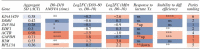 |
Compiled metrics from RT-qPCR-based reference gene stability assessments. Column 2 provides the standard deviations of aggregated D0–D10 gene expression data, with Column 3 listing the temporal statistical analysis (ANOVA significance levels during differentiation D0–D10; ns = p > 0.05, *p < 0.05, **p < 0.01, ***p < 0.001, ****p < 0.0001). Columns 4 and 5 provide the log2-fold change between the D0–D10 aggregate data and D30–80 aggregate data (column 4) or human total heart RNA (column 5). Column 6 presents the response of gene expression to lactate treatment (Student's t-test, ns = p > 0.05, *p < 0.05, **p < 0.01; up and down refer to direction of change in expression in lactate treated vs. control samples). Column 7 lists the ANOVA significance for the “differentiation efficiency” factor of the data presented in Figure 6d. Column 8 lists the ranking of the geomean cross-parity analyses detailed in Figure 6c. Blue = column best, white = intermediate, red = column worst.
ANOVA, analysis of variance; hHrt, human heart RNA; Log2FC, log2-fold change; RT-qPCR, real-time quantitative polymerase chain reaction; SD, standard deviation.
Furthermore, to compare hPSC-derived CMs in vitro to fully mature cardiac tissue in vivo, expression of the reference genes was quantified in human heart tissue RNA (LifeTech AM7966; 22-year-old Caucasian man, C.O.D. = stroke) (Fig. 6a). In addition to full maturation, this sample also presents at least two additional perturbations, significant numbers of non-CM cells and in vivo environmental conditioning. As evident in Figure 6a, even under these drastically different conditions, EDF1 and DDB1 maintained high expression stability between the hPSC-CMs and the human heart tissue.
Next, reference gene validity in response to lactate treatment, a common method to selectively purify hPSC-CMs,26 was assessed. Lactate purification involves removing glucose and supplementing lactate into the cell culture media; the hPSC-CMs are able to shift to utilizing lactate for energy production, whereas other contaminating cell types are not. RT-qPCR analysis was performed to assess the effect of lactate treatment on reference gene expression. As given in Figure 6b, expression values for KIAA1429, DDB1, EDF1, ACTB, and B2M were robust to this perturbation, whereas ZNF384, GAPDH, and RPL13a exhibited statistically significant differences in expression upon treatment.
To decouple the additive effects of sample cDNA stock preparation variability and true expression variability, parity analyses between all combinations of two reference genes were generated by plotting paired raw CT values from each for each sample (i.e., Gene 1 CT for sample A vs. Gene 2 CT for sample A, Gene 1 CT for sample B vs. Gene 2 CT for sample B…; Fig. 6c). These parity plots were utilized to identify pairs of reference genes that demonstrate high covariance, likely owing to variability in cDNA stock preparation as opposed to expression instability. Quantitative metrics extracted from these correlations (r2 and slope) were used to rank the putative reference genes. The normalized values of the coefficient of correlation and minor slope were calculated from these plot metrics and used in subsequent ranking.
Table 4 details the interpretation of the parity plot metrics, cases that would lead to each outcome, and the effect on using these metrics in classifying/ranking reference genes. These metrics from each pairwise correlation were aggregated for each gene as the sum of column values to rank them from best to worst (Fig. 6c). Furthermore, parity analyses were performed on an expanded set of reference pseudogenes (the geometric mean of all two-gene combinations); all unique crosses of any single or pseudogene were evaluated as with the single-gene crosses. Aggregate pairwise correlations for any cross containing each gene of interest were used to rank the genes.
Table 4.
Interpretation of Parity Plot Metrics
| r | Minor slope | Interpretation | Case | Classification |
|---|---|---|---|---|
| ≈1.0 | ≈1.0 | Stable monotonic covariance of genes (both exhibit very similar expression trends) | Both exhibit stable, uniform expression | Good candidates |
| Both exhibit same nonuniform trend | False positive | |||
| ≈1.0 | <1.0 | Stable nonmonotonic covariance of genes (at least one exhibits nonuniform expression trend) | 1 stable, 1 varies | False negative for stable gene |
| Both vary | Bad candidates | |||
| <<1.0 | Varies | At least 1 gene exhibits highly variable expression and/or nonlinear relationship between genes | 1 stable, 1 nonlinear | False negative for stable gene |
| Both vary nonlinearly | Bad candidates |
The coefficient of correlation (R) and minor slope were extracted from the parity plots and subsequently utilized to rank reference gene stability. The interpretation of these metrics, cases that can lead to their values, and the classification in utilizing these metrics are detailed.
Finally, to assess the effect of hPSC-CM differentiation efficiency on reference gene robustness, gene expression of samples collected at days 0, 6, and 16 of differentiation batches exhibiting good, intermediate, and bad final CM purities (as determined by flow cytometry on day 16 to be 75% ± 3%, 54% ± 3%, and 26% ± 3% cTnT+) was analyzed (Fig. 6d). Expression of DDB1, ZNF384, and B2M were not a function of differentiation efficiency. KIAA1429, EDF1, GAPDH, and RPL13A exhibited small, although statistically significant, differences in expression as differentiation efficiency varied (as determined by two-way ANOVA—presented in Table 4). ACTB demonstrated the most profound variance, with expression decreasing with increasing differentiation efficiency, suggesting significant differences in ACTB expression in differentiating CMs versus non-CMs. Gene expression stability of hPSC on day 0 of differentiation was additionally assessed across 5 independent experiments, data presented in Supplementary Figure 1.
Overall, the set of proposed reference genes outperform traditional housekeeping genes commonly used widely by the field, exhibiting greater stability throughout hPSC-CM differentiation and across several perturbations including extended culture and purification. This better stability in expression lends itself to more accurate comparisons among conditions, thereby decreasing the likelihood of obtaining false-positive or false-negative results. Table 5 summarizes the stability metrics for each of the four lead proposed reference genes and four common housekeeping genes, demonstrating the constraints in which each should be considered stable and amenable to use.
Discussion
RT-qPCR is a common method used to compare the expression of target genes among conditions of interest. Faithful reference genes that normalize against variability in sample preparation should exhibit a high degree of stability and robustness across the conditions of interest so as to avoid biasing the resultant comparisons that could lead to false-positive/negative interpretation of target gene expression changes.
Common methods to qualify reference genes are designed to rank a small subset of previously identified, user-selected genes as opposed to rationally selecting reference genes from transcriptomic, multigroup (>2), and/or time-course data sets. Although they may be extended, in some cases, to such applications, many of the underlying assumptions leave much to be desired. Three of the most common methods: geNorm,27 BestKeeper,28 and NormFinder29 are susceptible to false-positive assignment of expression stability for covarying genes (geNorm and BestKeeper) and/or genes exhibiting moderate, but consistent trends over time (all).30,31 As such, a new method (utilizing some of the underlying analyses of each of these common methods) was developed to combine their strengths and mitigate their weaknesses.
To this end, herein is laid out a novel, rational approach to select robust reference genes for RT-qPCR normalization based on the utilization of publicly available transcriptomic data across the conditions of interest, in this case temporal analysis through the differentiation of hPSCs into hPSC-CMs. Utilizing these transcriptomic data sets, sequential pare-down steps were undertaken to rationally select the most stably expressed genes of the ∼20,000 total genes identified as expressed within each data set. These genes from each individual data set were then analyzed for consensus across all data sets to select those that were identified to be stable across the datasets in 80% of the data sets (four of the five). These consensus genes were further scrutinized for robustness to rank and select the top candidates for follow-up analyses. RT-qPCR was used to validate expression stability of these candidate genes over a wide range of conditions.
By initializing with datasets generated from several different laboratories under different protocols and with different cell lines, the robustness of the resultant reference genes is inherently increased over a single-laboratory experimental validation, as variation in expression resulting from these parameters would lead to the removal of a putative reference gene through the stability assessments used herein. Therefore, we suggest that this leads to enhanced robustness of these proposed reference genes over more conditions than those used in the validation experiments.
This method has resulted in the identification of a set of novel reference genes (DDB1, ZNF384, KIAA1429, and EDF1) that exhibit improved stability throughout differentiation of hPSCs to hPSC-CMs versus commonly used traditional housekeeping genes (ACTB, B2M, GAPDH, and RPL13A). Table 6 provides known functions of these novel reference genes. Stable expression of DDB1 and KIAA1429 is consistent with their involvement in genetic regulatory processes,32–36 which are unlikely to be affected by differentiation state. ZNF384, a transcription factor implicated in the regulation of extracellular matrix deposition and degradation,37 is likely stable in the absence of conditions wherein significant matrix dynamics are expected. EDF1 may be the most prone to instability under conditions of drastic metabolic and/or hypertrophic perturbations owing to its regulation of peroxisome proliferator activated receptor gamma (PPARG) and nitric oxide synthase (NOS) activity and potential function in CM hypertrophy,38–41 although its expression was not altered under lactate treatment and demonstrated only modest expression level variation in aged hPSC-CMs and human heart tissue.
Table 6.
Known Functions of the Identified Novel Reference Genes
| Gene name | Protein name | Function | Refs |
|---|---|---|---|
| DDB1 | DNA damage-binding protein 1 | Involved in DNA repair and protein ubiquitination, as part of the UV-DDB complex and DCX (DDB1-CUL4-X-box) complexes | 32–34 |
| EDF1 | Endothelial differentiation-related factor 1 | Transcriptional coactivator stimulating NR5A1 and ligand-dependent NR1H3/LXRA and PPARG transcriptional activities. Enhances the DNA-binding activity of ATF1, ATF2, CREB1, and NR5A1. Regulates nitric oxide synthase activity probably by sequestering calmodulin in the cytoplasm. May function in endothelial cells differentiation, hormone-induced CMs hypertrophy and lipid metabolism | 38–41 |
| KIAA1429 (VIRMA) | Protein virilizer homolog | Associated component of the WMM complex, a complex that mediates N6-methyladenosine (m6A) methylation of RNAs, a modification that plays a role in the efficiency of mRNA splicing and RNA processing | 35,36 |
| ZNF384 | Zinc finger protein 384 | Transcription factor that binds the consensus DNA sequence [GC]AAAAA. Seems to bind and regulate the promoters of MMP1, MMP3, MMP7, and COL1A1 (by similarity) | 37 |
Function obtained from UniProt knowledgebase. PPARG, peroxisome proliferator activated receptor gamma.
Furthermore, we have demonstrated broader robustness of several reference genes, with ZNF384, KIAA1429, and RPL13A exhibiting low fold change in expression during extended time in culture and expression of KIAA1429, DDB1, EDF1, ACTB, and B2M not changing in response lactate treatment.
Based on this study, we propose a conditional set of reference genes to be adopted by the hPSC-CM field to provide more stable and reliable qPCR expression normalization than widely used housekeeping genes in Table 4. The best overall reference genes, exhibiting the widest range of stability, were identified to be EDF1 and DDB1, with ZNF384 also ranking highly (except in response to lactate treatment).
It is important to note that a holistic view of expression stability has been incorporated into this method and subsequent reference gene rankings. Bulk variability was assessed by standard deviation of gene expression for aggregated data, temporal stability was identified by ANOVA, and expression difference magnitude was assessed by fold changes. This provides a better basis upon which to rank genes as suitable reference genes as opposed to employment of any single metric (i.e., ANOVA might suggest a gene is not stably expressed even for genes exhibiting very low fold changes in expression between conditions owing to narrow intracondition variability).
Careful consideration should be taken in selecting reference genes to ensure they are stable under all the conditions being analyzed for which they are used to normalize expression values of other genes. Table 4 can be used to guide this selection process; however, it is recommended that should perturbations beyond those within the scope of this study be performed, validation of these genes should be performed to ensure stability.
Finally, the outlined approach can be adapted to other dynamic systems for which stable reference genes are not readily apparent and validated if sufficient transcriptomic data spanning the conditions of interest exists. In addition to other differentiating cell populations, other highly phenotypically diverse systems likely to benefit from this method to identify stable reference genes include cell activation or senescence studies, disease models, intertissue comparisons, and clinical tissue samples.
Conclusion
The selection of reference genes for normalization should be carefully and meticulously undertaken. This is particularly important for comparison of gene expression values across highly phenotypically distinct cell types, such as for differentiating stem cells. The use of traditional housekeeping genes without validation may drastically skew results, leading to wasted time invested in studying false positives and/or missed opportunities from false negatives.
We recommend utilization of rationally identified, stable reference genes when studying hPSC differentiation to CMs. We identified EDF1, ZNF384, and DDB1 as more stable and robust reference genes during hPSC-CM differentiation than commonly used housekeeping genes and put these forth as candidates to be adopted by the field.
The methodology laid out above can easily be adapted to any other system provided that sufficient transcriptomic data are available for analysis and validation across the relevant conditions of interest.
Supplementary Material
Disclosure Statement
No competing financial interests exist.
Funding Information
This work was supported by National Science Foundation, Grant Nos. EEC-1648035 and CBET-1743346, and by National Institutes of Health, Grant Nos. R01HL148059 and T32GM008349.
Supplementary Material
References
- 1. Dheda, K., Huggett, J.F., Chang, J.S., et al. The implications of using an inappropriate reference gene for real-time reverse transcription PCR data normalization. Anal Biochem 344, 141, 2005 [DOI] [PubMed] [Google Scholar]
- 2. Synnergren, J., Giesler, T.L., Adak, S., et al. Differentiating human embryonic stem cells express a unique housekeeping gene signature. Stem Cells 25, 473, 2007 [DOI] [PubMed] [Google Scholar]
- 3. Ruiz-Villalba, A., Mattiotti, A., Gunst, Q.D., Cano-Ballesteros, S., van den Hoff, M.J.B., and Ruijter, J.M. Reference genes for gene expression studies in the mouse heart. Sci Rep 7, 2017. DOI: 10.1038/s41598-017-00043-9 [DOI] [PMC free article] [PubMed] [Google Scholar]
- 4. Aggarwal, A., Jamwal, M., Viswanathan, G.K., et al. Optimal reference gene selection for expression studies in human reticulocytes. J Mol Diagn 20, 326, 2018 [DOI] [PubMed] [Google Scholar]
- 5. Dessels, C., and Pepper, M.S.. Reference gene expression in adipose-derived stromal cells undergoing adipogenic differentiation. Tissue Eng Part C Methods 25, 353, 2019 [DOI] [PMC free article] [PubMed] [Google Scholar]
- 6. Augustyniak, J., Lenart, J., Lipka, G., Stepien, P.P., and Buzanska, L.. Reference gene validation via RT–qPCR for human iPSC-derived neural stem cells and neural progenitors. Mol Neurobiol 56, 6820, 2019 [DOI] [PMC free article] [PubMed] [Google Scholar]
- 7. Ju, W., Sun, T., Lu, W., et al. Reference gene selection and validation for mRNA expression analysis by RT-qPCR in murine M1- and M2-polarized macrophage. Mol Biol Rep 47, 2735, 2020 [DOI] [PubMed] [Google Scholar]
- 8. Al-Sabah, A., Stadnik, P., Gilbert, S.J., Duance, V.C., and Blain, E.J.. Importance of reference gene selection for articular cartilage mechanobiology studies. Osteoarthritis Cartilage 24, 719, 2016 [DOI] [PMC free article] [PubMed] [Google Scholar]
- 9. Wu, X., Zhou, X., Ding, X., et al. Reference gene selection and myosin heavy chain (MyHC) isoform expression in muscle tissues of domestic yak (Bos grunniens). PLoS One 15, e0228493, 2020 [DOI] [PMC free article] [PubMed] [Google Scholar]
- 10. Nazet, U., Schröder, A., Grässel, S., Muschter, D., Proff, P., and Kirschneck, C.. Housekeeping gene validation for RT-qPCR studies on synovial fibroblasts derived from healthy and osteoarthritic patients with focus on mechanical loading. PLoS One 14, e0225790, 2019 [DOI] [PMC free article] [PubMed] [Google Scholar]
- 11. Li, Y., Han, J., Wu, J., et al. Transcriptome-based evaluation and validation of suitable housekeeping gene for quantification real-time PCR under specific experiment condition in teleost fishes. Fish Shellfish Immunol 98, 218, 2020 [DOI] [PubMed] [Google Scholar]
- 12. McLoughlin, K.J., Pedrini, E., MacMahon, M., Guduric-Fuchs, J., and Medina, R.J.. Selection of a real-time PCR housekeeping gene panel in human endothelial colony forming cells for cellular senescence studies. Front Med 6, 33, 2019 [DOI] [PMC free article] [PubMed] [Google Scholar]
- 13. Liu, Q., Jiang, C., Xu, J., et al. Genome-wide temporal profiling of transcriptome and open-chromatin of early cardiomyocyte differentiation derived from hiPSCs and hESCs. Circ Res 121, 376, 2017 [DOI] [PMC free article] [PubMed] [Google Scholar]
- 14. Nakano, H., Minami, I., Braas, D., et al. Glucose inhibits cardiac muscle maturation through nucleotide biosynthesis. Elife 6. DOI: 10.7554/eLife.29330 [DOI] [PMC free article] [PubMed] [Google Scholar]
- 15. Isolation of heart field specific cardiomyocytes from differentiating human embryonic stem cells for cardiac RegenerationGEO accession viewer. https://www.ncbi.nlm.nih.gov/geo/query/acc.cgi (Accessed December15, 2020)
- 16. Tompkins, J.D., Jung, M., Chen, C., et al. Mapping human pluripotent-to-cardiomyocyte differentiation: methylomes, transcriptomes, and exon DNA methylation “memories.” EBioMedicine 4, 74, 2016 [DOI] [PMC free article] [PubMed] [Google Scholar]
- 17. Quaranta, R., Fell, J., Rühle, F., et al. Revised roles of ISL1 in a hES cell-based model of human heart chamber specification. eLife 7, e31706, 2018 [DOI] [PMC free article] [PubMed] [Google Scholar]
- 18. Lian, X., Zhang, J., Azarin, S.M., et al. Directed cardiomyocyte differentiation from human pluripotent stem cells by modulating Wnt/β-catenin signaling under fully defined conditions. Nat Protoc 8, 162, 2013 [DOI] [PMC free article] [PubMed] [Google Scholar]
- 19. den Hartogh, S.C., Wolstencroft, K., Mummery, C.L., and Passier, R.. A comprehensive gene expression analysis at sequential stages of in vitro cardiac differentiation from isolated MESP1-expressing-mesoderm progenitors. Sci Rep 6, 19386, 2016 [DOI] [PMC free article] [PubMed] [Google Scholar]
- 20. Scuderi, G.J., and Butcher, J.. Naturally engineered maturation of cardiomyocytes. Front Cell Dev Biol 5, 50, 2017 [DOI] [PMC free article] [PubMed] [Google Scholar]
- 21. Dunn, K.K., and Palecek, S.P.. Engineering scalable manufacturing of high-quality stem cell-derived cardiomyocytes for cardiac tissue repair. Front Med 5, 110, 2018 [DOI] [PMC free article] [PubMed] [Google Scholar]
- 22. Jiang, Y., Park, P., Hong, S.-M., and Ban, K.. Maturation of cardiomyocytes derived from human pluripotent stem cells: Current strategies and limitations. Mol Cells 41, 613, 2018 [DOI] [PMC free article] [PubMed] [Google Scholar]
- 23. Yang, X., Pabon, L., and Murry, C.E.. Engineering adolescence: Maturation of human pluripotent stem cell-derived cardiomyocytes. Circ Res 114, 511, 2014 [DOI] [PMC free article] [PubMed] [Google Scholar]
- 24. Zhang, J., Wilson, G.F., Soerens, A.G., et al. Functional cardiomyocytes derived from human induced pluripotent stem cells. Circ Res 104, e30, 2009 [DOI] [PMC free article] [PubMed] [Google Scholar]
- 25. Lundy, S.D., Zhu, W.-Z., Regnier, M., and Laflamme, M.A.. Structural and functional maturation of cardiomyocytes derived from human pluripotent stem cells. Stem Cells Dev 22, 1991, 2013 [DOI] [PMC free article] [PubMed] [Google Scholar]
- 26. Tohyama, S., Hattori, F., Sano, M., et al. Distinct metabolic flow enables large-scale purification of mouse and human pluripotent stem cell-derived cardiomyocytes. Cell Stem Cell 12, 127, 2013 [DOI] [PubMed] [Google Scholar]
- 27. Vandesompele, J., De Preter, K., Pattyn, F., et al. Accurate normalization of real-time quantitative RT-PCR data by geometric averaging of multiple internal control genes. Genome Biol 3, research0034.1, 2002 [DOI] [PMC free article] [PubMed] [Google Scholar]
- 28. Pfaffl, M.W., Tichopad, A., Prgomet, C., and Neuvians, T.P.. Determination of stable housekeeping genes, differentially regulated target genes and sample integrity: BestKeeper—Excel-based tool using pair-wise correlations. Biotechnol Lett 26, 509, 2004 [DOI] [PubMed] [Google Scholar]
- 29. Andersen, C.L., Jensen, J.L., and Ørntoft, T.F.. Normalization of real-time quantitative reverse transcription-PCR data: a model-based variance estimation approach to identify genes suited for normalization, applied to bladder and colon cancer data sets. Cancer Res 64, 5245, 2004 [DOI] [PubMed] [Google Scholar]
- 30. De Spiegelaere, W., Dern-Wieloch, J., Weigel, R., et al. Reference gene validation for RT-qPCR, a note on different available software packages. PLoS One 10, 2015. DOI: 10.1371/journal.pone.0122515 [DOI] [PMC free article] [PubMed] [Google Scholar]
- 31. Mehdi Khanlou, K., and Van Bockstaele, E.. A critique of widely used normalization software tools and an alternative method to identify reliable reference genes in red clover (Trifolium pratense L.). Planta 236, 1381, 2012 [DOI] [PubMed] [Google Scholar]
- 32. Kulaksız G, Reardon, J.T., and Sancar, A.. Xeroderma pigmentosum complementation group E protein (XPE/DDB2): Purification of various complexes of XPE and analyses of their damaged DNA binding and putative DNA repair properties. Mol Cell Biol 25, 9784, 2005 [DOI] [PMC free article] [PubMed] [Google Scholar]
- 33. Hu, J., McCall, C.M., Ohta, T., and Xiong, Y.. Targeted ubiquitination of CDT1 by the DDB1–CUL4A–ROC1 ligase in response to DNA damage. Nat Cell Biol 6, 1003, 2004 [DOI] [PubMed] [Google Scholar]
- 34. He, Y.J., McCall, C.M., Hu, J., Zeng, Y., and Xiong, Y.. DDB1 functions as a linker to recruit receptor WD40 proteins to CUL4–ROC1 ubiquitin ligases. Genes Dev 20, 2949, 2006 [DOI] [PMC free article] [PubMed] [Google Scholar]
- 35. Schwartz, S., Mumbach, M.R., Jovanovic, M., et al. Perturbation of m6A writers reveals two distinct classes of mRNA methylation at internal and 5′ sites. Cell Rep 8, 284, 2014 [DOI] [PMC free article] [PubMed] [Google Scholar]
- 36. Yue, Y., Liu, J., Cui, X., et al. VIRMA mediates preferential m6A mRNA methylation in 3′UTR and near stop codon and associates with alternative polyadenylation. Cell Discov 4, 10, 2018 [DOI] [PMC free article] [PubMed] [Google Scholar]
- 37. Kuang, S., and Wang, L.. Deep learning of sequence patterns for CCCTC-binding factor-mediated chromatin loop formation. J Comput Biol 2020. DOI: 10.1089/cmb.2020.0225 [DOI] [PubMed] [Google Scholar]
- 38. Dragoni, I., Mariotti, M., Consalez, G.G., Soria, M.R., and Maier, J.A.M.. EDF-1, a novel gene product down-regulated in human endothelial cell differentiation. J Biol Chem 273, 31119, 1998 [DOI] [PubMed] [Google Scholar]
- 39. Kabe, Y., Goto, M., Shima, D., et al. The role of human MBF1 as a transcriptional coactivator. J Biol Chem 274, 34196, 1999 [DOI] [PubMed] [Google Scholar]
- 40. Brendel, C., Gelman, L., and Auwerx, J.. Multiprotein bridging factor-1 (MBF-1) is a cofactor for nuclear receptors that regulate lipid metabolism. Mol Endocrinol 16, 1367, 2002 [DOI] [PubMed] [Google Scholar]
- 41. Ballabio, E., Mariotti, M., De Benedictis, L., and Maier, J.A.M.. The dual role of endothelial differentiation-related factor-1 in the cytosol and nucleus: modulation by protein kinase A. Cell Mol Life Sci 61, 1069, 2004 [DOI] [PMC free article] [PubMed] [Google Scholar]
Associated Data
This section collects any data citations, data availability statements, or supplementary materials included in this article.