



Summary
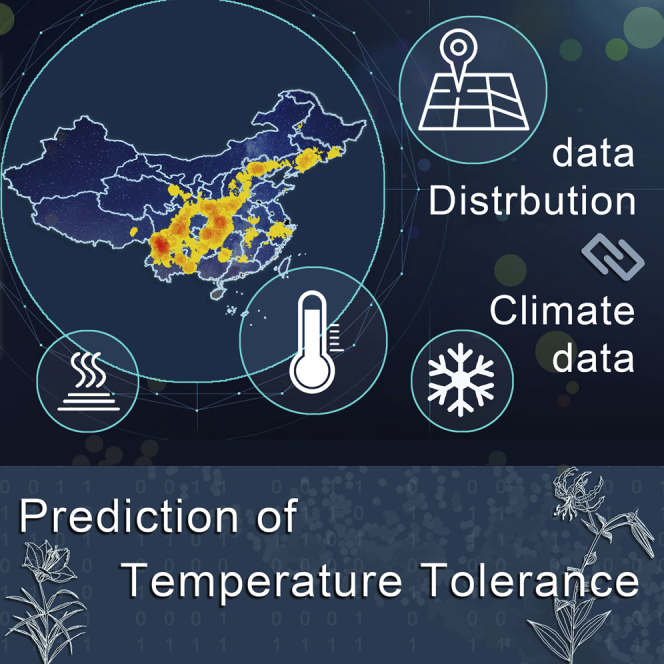
There are plenty publications providing guidance for resistant taxa selection by experimental researches while the number of experimental taxa is often restricted. In this study, we presented a concise method to predict the temperature tolerance of wild Lilium in China based on open access botanical and associated environmental datasets. We divided all taxa into five groups to present an overview of Lilium's adaptability to temperature stress. Furthermore, according to the environmental conditions, the prediction of heat and cold tolerance in Lilium was made based on the combined multi-sources data at taxon level. Thirteen taxa with potential temperature tolerance were predicted of 42 taxa. The results showed that not only is tolerance prediction created by large-scale data analysis possible, but that it may supplement traditional laboratory researches with a comprehensive list of taxa.
Keywords: Lilium, temperature tolerance, distribution, climate, data analysis
Graphical abstract
Highlights
-
•
A concise method predicts the temperature tolerance of wild Lilium in China
-
•
This method relies on a combination of online botanical and environmental data sets
-
•
Thirteen taxa with potential temperature tolerance were predicted of 42 taxa
-
•
Our findings can be used to rapidly screen the potential tolerant taxa
Plant bioinformatics; Plant physiology; Plant biogeography
Introduction
Temperature stress cause multifarious, and often adverse, alterations in physiological, biochemical, and molecular processes in plants (Hasanuzzaman et al., 2013; Lipiec et al., 2013; Theocharis et al., 2012). Confronted with temperature stress, a number of wild taxa have evolved various eco-physiological strategies to survive and reproduce, which make them valuable for breeding and agricultural production (Cairns et al., 2013; Tian et al., 2016; Dyderski et al., 2018). There are plenty publications providing guidance for resistant taxa selection by studying either morphological or physiological traits in experimental researches (Ji et al., 2020; Ma and Fan, 2014). However, the number of experimental taxa is often restricted by the time-consuming fieldwork, compounded by the possibility that practitioners would be interested in just a small proportion of the resources (Albani Rocchetti et al., 2021; Watkins et al., 2020). With ever-improving digital technologies enhancing our ability to access information, using digitized collections data to predict the abiotic stress tolerance of plants is an alternative strategy to complement the experimental resource lists (James et al., 2018). Climate is known as the main determinant of plant distribution at a global scale (Woodward and Williams, 1987; Bonetti and Wiens, 2014). The assumption that the range of climate conditions encompassed by the geographic distribution of a taxon accurately reflects its tolerances, has been applied in a wide range of fields, including biodiversity conservation (Lloret and Kitzberger, 2018; Margalef-Marrase et al., 2020), environmental science (Gong et al., 2020; Nascimbene et al., 2020), ecology and evolutionary biology (Descombes et al., 2016; Napier et al., 2019), etc. Appling this assumption to plant science allows us to develop a taxa evaluation method based on open access botanical and associated environmental datasets.
The Global Biodiversity Information Facility (GBIF, www.gbif.org) is the largest global data portal of occurrence records, including ~850 million records for all groups of organisms. Moreover, the National Plant Specimen Resource Center (NPSRC, www.cvh.ac.cn) holds digitized records of over 9.4 million of plant specimens from 140 herbaria of China. A combination of GBIF and NPSRC enables an abundant taxa list, especially considering that the digitization efforts drastically improve access to collections (Hufft et al., 2018; James et al., 2018). Extracting the GPS information from the specimen records can be used for visualization of plant distribution and connection with environmental datasets such as WorldClim version 2.1(www.worldclim.org), a global dataset of spatially interpolated monthly climate data which can be used for mapping and spatial modeling (Fick and Hijmans, 2017). Taken together, the multi-source data could be consolidated into taxa distribution models to predict the potential temperature tolerance of wild taxa.
The genus Lilium in the family Liliaceae includes about 110–115 taxa, primarily distributes throughout cold and temperate regions of the northern hemisphere (Du et al., 2013). It's one of the most important flowering crops as cut flower, garden plant and pot plant (Suh et al., 2013). Temperature stress induce changes in Lilium at physiological and molecular levels, thus affect its growth and development (Jia et al., 2012). The optimum temperature for Lilium growth is around 18–22°C (Yin et al., 2007; Xin et al., 2010). High temperature (>28°C) has negative effects on the growth of Lilium such as short stems, reduced number of flower buds, shortened flower bud length (Steininger and Pasian, 2003; Ding et al., 2021). Besides, previous studies showed that cold stress inhibit the growth of lily bulbs: for non-hardy taxa, –6°C can lead to bulb lethality in most cases; at –8°C, virtually all bulbs were dead and did not regrow (Du and Anderson, 2009; Tian et al., 2020). China is known as an significant distribution zone of Lilium, with 55 taxa having been reported in this country thus far (Du et al., 2013). Covering a vast territory, China spans several different climatic zones, including tropical, subtropical, warm temperate and cold temperate climatic zones (Zhang et al., 2019). The complicated climate provides multifarious conditions from cool plateau to hot basin for populations of variety lilies (Li and Geng, 2013), which makes China an ideal region to study the relationship between the temperature tolerance and distribution of Lilium.
In this study, the distribution data from herbarium specimens and literatures was connected with climate information, which enabled us to derive data on temperature conditions for each specimen location. Besides, the GPS data was linked to other environmental data to develop a comprehensive understanding of the realized niche of Lilium. We divided the wild Lilium of China into five groups according to their temperature conditions and made prediction of their heat and cold tolerance based on the combined multi-sources data at taxon level. The comprehensive list created by large-scale data analysis allowed us to identify exhaustive valuable taxa rather than particular ones which were commonly concerned.
Results
Database construction
Firstly, we created an original data set of 7,362 specimens based on 7,048 specimens and 314 locations obtaining from NPSRC, GBIF and literatures (see STAR Methods). Then the 7,362 specimens were resampled within a 0.5° grid, 2,201 specimens were retained and partitioned into 38 species and 16 varieties. These species accounted for 100% of the original species in China, while variants accounted for 94% of the described Chinese lily varieties. The species and varieties were regarded as the same level of separate taxa in subsequent analysis. The number of specimens varied from 1 to 365 per taxon and only the taxa with more than 5 specimens per taxon were selected. Furthermore, a comparative assessment of the taxonomy, GPS locations in our database with the distribution range described in Iplant (www.iplant.cn) have been carried out. The result showed that there were 42 taxa (2,066 specimens) fitting more than 70% of the distribution information in Iplant (Table 1). Finally, by combining the GPS data with climate information, we built a database of 42 taxa, totaling 2,066 specimens, including the information of original distribution, the mean temperature of coldest quarter (TOC), and temperature of flowering period (TOF) etc. for subsequent data analysis (Tables S1 and S2).
Table 1.
| Latin name | Number of specimens |
Fitting rate (%) | Flowering period |
|||
|---|---|---|---|---|---|---|
| Before resample | After resample | June | July | August | ||
| L. distichum | 65 | 47 | 70.21 | ❀ | ❀ | |
| L. papilliferum | 19 | 17 | 70.59 | ❀ | ||
| L. rosthornii | 51 | 38 | 71.05 | ❀ | ❀ | |
| L. bakerianum var. rubrum | 29 | 27 | 74.07 | ❀ | ||
| L. regale | 9 | 9 | 77.78 | ❀ | ❀ | |
| L. taliense | 37 | 27 | 77.78 | ❀ | ❀ | |
| L. davidii var. willmottiae | 19 | 19 | 78.95 | ❀ | ||
| L. henryi | 41 | 34 | 82.35 | ❀ | ||
| L. bakerianum var.yunnanense | 8 | 6 | 83.33 | ❀ | ||
| L. leichtlinii var. maximowiczii | 19 | 18 | 83.33 | ❀ | ❀ | |
| L. speciosum var. gloriosoides | 36 | 32 | 87.50 | ❀ | ❀ | |
| L. fargesii | 26 | 26 | 84.62 | ❀ | ❀ | |
| L. bakerianum | 89 | 49 | 93.88 | ❀ | ||
| L. leucanthum | 67 | 61 | 85.25 | ❀ | ❀ | |
| L. primulinum var. ochraceum | 43 | 29 | 86.21 | ❀ | ❀ | |
| L. amoenum | 12 | 11 | 90.91 | ❀ | ||
| L. wardii | 23 | 11 | 90.91 | ❀ | ❀ | ❀ |
| L. cernuum | 20 | 16 | 93.75 | ❀ | ||
| L. duchartrei | 143 | 73 | 94.52 | ❀ | ||
| L. davidii | 136 | 95 | 94.74 | ❀ | ❀ | |
| L. dauricum | 67 | 48 | 95.83 | ❀ | ❀ | ❀ |
| L. concolor var. pulchellum | 63 | 57 | 96.49 | ❀ | ❀ | |
| L. sargentiae | 80 | 58 | 96.55 | ❀ | ❀ | |
| L. concolor | 167 | 116 | 98.28 | ❀ | ❀ | |
| L. brownii | 619 | 353 | 98.58 | ❀ | ❀ | ❀ |
| L. pumilum | 456 | 316 | 99.68 | ❀ | ❀ | |
| L. apertum | 31 | 13 | 100.00 | ❀ | ❀ | |
| L. bakerianum var. aureum | 20 | 17 | 100.00 | ❀ | ||
| L. bakerianum var. delavayi | 27 | 25 | 100.00 | ❀ | ||
| L. callosum | 41 | 37 | 100.00 | ❀ | ❀ | |
| L. henrici | 6 | 6 | 100.00 | ❀ | ||
| L. lancifolium | 236 | 187 | 100.00 | ❀ | ❀ | |
| L. martagon var. pilosiusculum | 6 | 5 | 100.00 | ❀ | ||
| L. lankongense Franchet | 23 | 12 | 100.00 | ❀ | ❀ | |
| L. nanum | 54 | 19 | 100.00 | ❀ | ||
| L. nepalense | 32 | 11 | 100.00 | ❀ | ❀ | |
| L. nepalense var. burmanicum | 17 | 15 | 100.00 | ❀ | ❀ | |
| L. saluenense | 18 | 7 | 100.00 | ❀ | ❀ | ❀ |
| L. sempervivoideum | 11 | 7 | 100.00 | ❀ | ||
| L. souliei | 41 | 18 | 100.00 | ❀ | ❀ | |
| L. sulphureum | 50 | 40 | 100.00 | ❀ | ❀ | |
| L. lophophorum | 156 | 54 | 100.00 | ❀ | ❀ | |
The “❀” in each taxon represented the flowering period lasting 1–3 months.
Lilium and environmental conditions
We inputted the climatic zone map (Zhang and Yan, 2013) into ArcGIS 10.2 together with the GPS data of 2,066 specimens, thereby drawing the distribution map of wild Lilium in China (Figure 1). The distribution map showed that wild Lilium were mainly distributed in the temperate and subtropical climate zones, which was in line with the result of specimens' distribution in the temperature conditions. A vast majority of specimens were distributed at the mean TOF range of 25–30°C and the TOC range between 0 and 10°C, while most taxa were likely to grow in the mean TOF range of 20–25°C and the TOC range between - 5 and 10°C (Figures 2A and 2B). According to the result of hierarchical cluster analysis (Figure S1), we divided the taxa into five groups representing by different colors: purple, red, yellow, green, and blue group (Table 2). The purple group exhibited highly tolerant to heat stress, and its corresponding TOC was about 5°C. The red group was located in the areas with the mean TOF ranging between 18 and 23°C. Taxa of the red group preferred a warmer winter with TOC ranging from 5 to 10°C compared to the purple group. These two groups distributed in the higher TOF and TOC compared to the others, while the lowest value of TOF and TOC appeared in the yellow and green group, respectively. Lilies in the yellow group required the lowest temperature during flowering period compared with other groups, indicating that they may belong to the least heat-resistant group. The green and blue groups were able to withstand extreme low temperature during winter, representing the hardiest Lilium taxa (Figure 2B).
Figure 1.

Specimens' distribution in the climatic zones
Heatmap (Point Density) showed the distribution of 2,066 Lilium specimens present in our database. The wild Lilium were mainly distributed in the plateau, sub-humid and humid warm temperate zones and northern, central subtropical zones.
Figure 2.

Lilium and climate conditions
(A) The distribution of Lilium specimens in their corresponding temperature conditions.
(B) The distribution of Lilium taxa in their corresponding temperature conditions, see also Figure S1.
Table 2.
The cold-heat relations of Lilium taxa
| Group name | Lilium taxa |
Temperature conditions (°C) |
|
|---|---|---|---|
| The mean TOF | The TOC | ||
| Purple group | L. lancifolium, L. callosum, L. brownii, L. rosthornii, L. henryi, L. speciosum var. gloriosoides, L. papilliferum, L. leucanthum, L. fargesii | 24 - 29 | 3 - 8 |
| Red group | L. nepalense var. burmanicum, L. nepalense, L. sempervivoideum, L. bakerianum var. yunnanense, L. amoenum, L. bakerianum var. delavayi, Lilium sulphureum, L. sargentiae, L. taliense, L. primulinum var. ochraceum, L. henrici, L. souliei, L. bakerianum, L. bakerianum var. aureum, L. davidii var. willmottiae, L. davidii | 18 - 23 | 2 - 12 |
| Yellow group | L. lankongense Franchet, L. wardii, L. bakerianum var. rubrum, L. saluenense, L. lophophorum, L. nanum, L. apertum | 11 - 17 | - 3 - 5 |
| Blue group | L. cernuum, L. concolor, L. concolor var. pulchellum, L. pumilum, L. leichtlinii var. maximowiczii | 22 - 23 | - 10 - - 4 |
| Green group | L. dauricum, L. martagon var. pilosiusculum, L. distichum | 20 - 22 | −15 - - 13 |
The 42 taxa were divided into five groups according to their cold-heat relations.
After linking Lilium location to other environmental data, we were able to develop a comprehensive understanding of the realized niche of Lilium. The results (Figures S2–S4) showed that wild lilies distributed in the suitable soil conditions within the pH (median value) and salinity (Elco) range of 6.8–7.2 and 0–0.5 dS/m, respectively. According to the Harmonized World Soil Database (HSWD), pH values ranging from 5.5 to 7.2 are indicative of acid to neutral soils, which are the best conditions for nutrient availability and suitable for most crops (Jones and Thornton, 2015). And in most cases, an ECe value <2 indicates a very low degree of salt stress (Saslis-Lagoudakis et al., 2015). The Standardized Precipitation and Evapotranspiration Index (SPEI) values of Lilium ranged from –0.1 to 0.1, representing suitable water conditions without drought stress (Li et al., 2019).
Tolerance potential of Lilium taxa to heat
Our data reported the actual environment conditions experienced by lilies in their natural ranges, showing that there are significant inter-specific differences in the TOF (Table S1). The mean and maximum TOF experienced by wild-growing Lilium taxa illustrated these differences (Figure 3), showing that most Lilium populations are likely to grow in mild climate where the mean temperature range is about 20–25°C. Using the median values of mean TOF >25°C and maximum TOF >30°C as thresholds, 6 Lilium taxa were identified as potentially tolerant to heat stress, which are characterized by a higher temperature during flowering. In the predicted tolerant taxa (L. lancifolium, L. callosum, L. brownii, L. rosthornii, L. henryi, L. speciosum var. gloriosoides), 474 and 207 specimens were distributed in heat (the mean TOF >25°C) and non-heat (the mean TOF ≤25°C) environment, respectively. And in the predicted non-tolerant taxa, 269 and 1,116 specimens were distributed in heat and non-heat environment, respectively (Table 3). The Chi-square test showed that the distribution of specimens in heat stress and non-heat environment was significant different between predicted tolerant and non-tolerant taxa (X2 was 499.18, df = 1 and p value <0.05). Among the predicted tolerant taxa, L. speciosum var. gloriosoides showed the strongest resistance to heat stress and occupied a restricted range of conditions, while L. lancifolium and L. brownii with a niche width larger than the median showed a wide range of adaptability in the TOF. L. henryi with a smaller niche width showed stenotypic behaviors (Figure 4A).
Figure 3.

Tolerance potential of Lilium taxa to heat
The mean TOF (A) and the maximum TOF (B) experienced by wild-growing Lilium species, as reported in our database. The change in color represented diverse tolerance to heat stress. The boxes and taxa name were colored every 5°C to make the figures more intuitively.
See also Table S1.
Table 3.
Lilium's distribution in different temperature ranges
| Category | temperature range (°C) | Number of specimens |
|
|---|---|---|---|
| Tolerant taxa | Non-tolerant taxa | ||
| Heat | The mean TOF ≤25 | 207 (30.4%) | 1,116 (80.6%) |
| The mean TOF >25 | 474 (69.6%) | 269 (19.4%) | |
| Cold | The TOC ≤ - 5 | 375 (62.0%) | 93 (6.4%) |
| The TOC > - 5 | 230 (38.0%) | 1368 (93.6%) | |
The 2,066 specimens were divided into tolerant and non-tolerant taxa (42 in total) according to their temperature of flowering period (TOF) and the mean temperature of coldest quarter (TOC) ranges.
Figure 4.

Niche width of the potential tolerant taxa
The niche width of heat (A) and cold (B) tolerant taxa, as reported in our prediction.
Tolerance potential of Lilium taxa to cold
The TOC experienced by the Lilium in their distribution ranged from –25.5°C to 17.7°C (Table S2). There are significant inter-specific differences in the mean temperature of coldest quarter (Figure 5). Most Lilium populations were likely to grow in mild climate (TOC range of –5 to ~10°C). Using the median values of TOC ≤ –5°C as a threshold, 7 Lilium taxa were identified as potentially tolerant to cold stress, which were characterized by a lower temperature during coldest quarter. In the predicted tolerant taxa (L. dauricum, L. martagon var. pilosiusculum, L. distichum, L. cernuum, L. concolor var. pulchellum, L. concolor, L. pumilum), 375 and 230 specimens were distributed in cold and non-cold environment, respectively. And in the predicted non-tolerant taxa, 93 and 1,368 specimens were distributed in cold and non-cold environment, respectively (Table 3). The chi-square test showed that the distribution of specimens in cold stress and non-cold environment was significant different between predicted tolerant and non-tolerant taxa (X2 was 755.34, df = 1 and p value < 0.05). L. dauricum showed the strongest resistance to cold stress and occupied a wide range of conditions. L. pumilum, L. concolor, and Lilium concolor var. pulchellum also showed eurytopic tolerances; however, they had a weaker cold tolerance than others. In addition, L. cernuum, L. distichum, and L. martagon var. pilosiusculum showed stereotypic behaviors but had a strong tolerance to low temperature (Figure 4B).
Figure 5.

Tolerance potential of Lilium taxa to cold
The TOC experienced by wild-growing Lilium taxa, as reported in our database. The change in color represented diverse tolerance to cold stress. The boxes and taxa name were colored every 5°C to make the figures more intuitively.
See also Table S2.
Discussion
Lilium taxa have been known and cultivated in China for thousands of years, with significant ecological and commercial values (Fang et al., 2021). However, the majority of Lilium cannot grow well in heat (temperature >28°C) or cold (temperature < –6°C) conditions (Higgins and Stimart, 1990; Kim et al., 2007a, 2007b). Combining that with the threat posed by climate change has led to the impelling demand of climate-resilient lilies. The wild taxa have been challenged in diverse environmental stresses for centuries and maintain a high level of genetic diversity, making them significant to the resistance breeding (Zhang et al., 2017). China is considered as a center of origin for Lilium, yet a small number of studies have been carried out on the researches of wild Lilium’ evaluation and utilization, especially abiotic tolerances. Previous studies about Chinese Lilium have focused on morphological characterization (Niu et al., 2010; Xiang et al., 2005), taxonomic (Liu et al., 2017), phylogenetic (Kim et al., 2019; Zhou et al., 2020), genetic variability, and diversity (Wang et al., 2016). Thus, we want to develop a comprehensive understanding of the realized niche of Lilium in this study, which can provide a new insight into the tolerance evaluation of Lilium.
While a great deal of experimental research has been carried out in the area of wild plants' response to abiotic stresses, it is often difficult and time-consuming to achieve a comprehensive list of wild taxa (Watkins et al., 2020). Considering the practical difficulties in the collection of wild resources, preliminary data analysis is an applicable way to make predictions. Among a wide variety of factors that affect the geographical distribution of plants at different spatial and temporal scales, climate is at the core and plays a key role especially at larger spatial scales (Guisan and Thuiller, 2005; Maiorano et al., 2013). Ecologists are modeling species distribution models based upon this understanding (Zurell et al., 2020), whereas the question for botanists is whether the reverse can be modeled, i.e., whether we can speculate that traits vary in accordance to ecological niche: this process is well established in the selection of trees in urban forestry and the predictions on salinity tolerance of horticultural plants (Wang et al., 2018a; Watkins et al., 2020; Sjoman and Watkins, 2020), but is not as developed in the temperature tolerance of plants. In this study, we tried to provide a preliminary data analysis to supplement the laboratory experiments. Online herbaria, accessible via the GBIF and NPSRC, conserve hundreds of millions of specimens collected by botanists and satisfy the demands of information acquisition by the scientists with a digital platform for knowledge sharing (Hallgren et al., 2016; La Salle et al., 2016). When the NPSRC data were supplemented with the GBIF data, the completeness of datasets increased, which enabled us to avoid negative impacts on results and conclusions derived from incomplete taxa lists as much as possible (Qian et al., 2018).
In our final extracted database of 2,066 specimens, the majority (76.4%) of reported Chinese Lilium taxa were present. After linking Lilium location to physiographic and climate characteristics, we were able to analysis the natural conditions for lilies. The results suggested that there were no significant differences in the drought, saline and alkali niches of Lilium in China (Figures S2–S4). Excluding the impact of the non-temperature factors helps us draw more informed predictions because the non-temperature factors regularly prevent a taxon from occupying locations that are otherwise climatically suitable (Bush et al., 2019).
The wild lilies go through different stages in the growing season and experience the coldest and hottest temperatures during winter and flowering stage, respectively (Han and Jia, 2008; Tsuchiya et al., 2006). In addition, longer periods of environment information can help us better understand Lilium's tolerance to temperature stress, compared to heat waves or extreme cold events. Thus, our analysis focused primarily on environmental data excavated from the TOF and TOC. Our results showed that the majority of Lilium taxa were located in the mean TOF ranging from 20 to 23°C and the TOC ranging from 5 to 10°C, while the distribution of specimens could be explained by the uneven sampling (Tables S2 and S3). Before tolerance predictions, all the taxa were divided into five groups to deepen our understanding of Lilium adaptability to temperature. The cold-tolerant (green and blue) groups were able to tolerate a cold environment below - 5°C but preferred a stress-free condition during flowering period. While, the heat-resistant (purple) group was consistent with the cold-tolerant group: although the members could adapt to the mean TOF above 25°C, their optimum temperature in the coldest season was roughly the same as the temperate (red) group. The red group has the highest percentage of all groups (42.8%), representing the general temperature preference of Lilium: the mean TOF <25°C and the TOC > –5°C (Tsuchiya et al., 2006; Zieslin and Tsujita, 1988). Among all the groups, only the yellow group corresponded to a value lower than 20°C for the mean TOF, suggesting its potential for extensive application in the areas with low annual cumulative temperatures (Dai et al., 2019; Dorado-Linan et al., 2020). Further phylogenetic analysis and molecular biology research will be useful to explore more interconnections between groups.
Using data analysis, we tried to predict the potential tolerant taxa with the median values of the mean TOF >25°C, maximum TOF >30°C and TOC < –5°C as thresholds. Eventually, we compiled a list of 13 potentially tolerant taxa. For some taxa mentioned in our prediction, support was found in horticultural and physiological studies for their temperature tolerance. Yao et al. (2019) classified L. henryi as heat tolerant taxa. L. callosum was mentioned as a promising gene resource for breeding heat tolerant lilies (Liping and Rui, 2012). L. lancifolium was the most extensively studied taxa among the heat tolerant resources. L. lancifolium and L. brownii were identified by Zhang et al. (2010) as heat tolerant taxa based on growth and physiological index, followed by L. regale. The results of niche width in Figure 4 supported the proposal by Liang et al. (2018) that L. lancifolium performed high ecological adaptability compared to the other tested taxa from Midwestern China, as well as L. brownii. Furthermore, Wang et al. (2014) conjectured the heat stress signal transduction pathway in L. lancifolium, identified the expected key ingredients regulating the stress tolerance. More notably, L. lancifolium was also considered as a cold tolerant taxa as reported by Yong et al. (2018), indicating its potential in the researches of multiple stresses. Wang et al. (2018b) classified L. pumilum as a northern cold-hardy wild taxon and studied its dormancy mechanism at the molecular level. In addition, some predicted temperature tolerant taxa can also be supported from investigational studies. L. dauricum, L. distichum, and L. pumilum were distributed in the severely cold regions of Northeast China, including the Changbai Mountains and the Xiaoxingan mountains in Liaoning, Jilin, and Heilongjiang provinces (Du et al., 2013). Low temperature in winter of these areas can reach 40°C below zero (Zhang and Yan, 2013). Study on phylogeny of Lilium showed that L. henryi and L. rosthornii should be classified into the same subsect (Du et al., 2014), which is in agreement with the result of temperature niche in our study (Figures 2 and 3).
As a supplement to the taxa list with temperature tolerance which was already reported, our work has identified several potentially taxa. L. speciosum var. gloriosoides showed great patience with the heat stress. L. concolor and L. concolor var. pulchellum showed eurytopic tolerances to cold which making them ideal material for hardy breeding. More studies on the evaluation of lilies' temperature tolerance were required and our prediction expands the new space for the resistant breeding of wild Lilium.
Conclusion
In this study we developed a method for temperature tolerance prediction that could be drawled upon well-established biogeographical theory and herbarium data. Online herbarium data allowed an effective study of the whole wild Lilium resources in China with large amounts of plant samples, increase our ability to inform research and avoid missing overlooked taxa. Our results showed that the information combing geocoded specimen information and climate database might be used to identify potentially valuable genetic resources in Lilium at group and taxon level. Our findings could be used to rapidly screen the potential tolerant taxa and communicate evidence to botanical researches. While further testing in other genera is required, this approach holds considerable promise for an in-depth evaluation of potential resources for temperature tolerance and using genetic material in breeding or studies of abiotic stress.
Limitations of the study
Our method is developed based on the current distribution (i.e., the realized niche) of Lilium. Considering the effect of interspecific interactions, dispersal capacity and other factors, there is an inherent risk when using the realized niche that the environmental tolerances will be underestimated. However, this uncertainty does not prevent us from finding important patterns: the positively correlation between the temperature tolerance and climate conditions proposed by Bush et al. (2018) and Lancaster and Humphreys (2020) provides a compelling explanation for our method. Thus, we emphasize the use of data analysis for taxa evaluation before the laboratory experiments, which can help us rapidly screen the potential tolerant taxa with a comprehensive list of taxa.
STAR★Methods
Key resources table
| REAGENT or RESOURCE | SOURCE | IDENTIFIER |
|---|---|---|
| Software and algorithms | ||
| ArcGIS 10.2 | Environmental Systems Research Institute | https://developers.arcgis.com/ |
| Microsoft Excel 2016 | Microsoft | https://www.microsoft.com/zh-cn/ |
| IBM SPSS Version 20.0 | International Business Machines Corporation | https://www.ibm.com/analytics/spss-statistics-software |
| Adobe Photoshop CS 5.0 | Adobe Systems Incorporated | https://www.adobe.com/cn/products/photoshop.html |
| Other | ||
| The classified information | Iplant | www.iplant.cn |
| Distribution data | Global Biodiversity Information Facility | www.gbif.org |
| Distribution data | National Plant Specimen Resource Center | NPSRC, www.cvh.ac.cn |
| Climate data | WorldClim version 2.1 | www.worldclim.org |
| Drought index | SPEIbase v.2.6 at DIGITAL.CSIC | http://digital.csic.es/handle/10261/10002 |
| Soil parameters | Harmonized World Soil Database | westdc.westgis.ac.cn/data/611f7d50-b419-4d14-b4dd-4a944b141175 |
Resource availability
Lead contact
Further information and requests for resources and reagents should be directed to and will be fulfilled by the Lead Contact, Daofeng Liu (liu19830222@163.com).
Materials availability
This study did not generate new unique reagents.
Data and code availability
Data reported in this paper will be shared by the lead contact upon request.
This paper does not report original code.
Method details
Taxa distribution data
The occurrence records from NPSRC and GBIF were used to generate taxa lists (Qian et al., 2018). We also fetched distribution data from investigational literature which describes the location information and habitat niche of wild Lilium through field study as supplement (for example, Du et al. (2013) and Liang et al. (2018)). The location and classified information (species, subspecies and varieties) were subsequently revised and uniformed according to Iplant (www.iplant.cn), an online website consolidating data from aiPlants, Flora of China and Plant Photo Bank of China. To reflect the natural distribution of the wild Lilium, only the taxa described as initial species or subspecies in Iplant were selected. All observations collected on urban green spaces, botanical gardens and other sites before 1970 were excluded. As uneven sampling intensity would cause calculation bias (Dyderski et al., 2018), for each species, subspecies and varieties, we resampled the data within a 0.1° grid--one data point was selected within each grid cell. All the observations were transformed into spatial points in a WGS-84 spatial coordinates system. After resample, only the taxa with at least 5 specimens were selected for further data analysis.
Diverse distributions correspond to various environmental conditions, which affect the flowering period of plants. We compared the locations of all specimens with the plant distributions described on Iplant, and only selected the taxa with a fitting degree of more than 70%. We considered the flowering period information on Iplant as reliable data for the selected taxa since the geographical distribution of these taxa is basically consistent with the description on Iplant (Du et al., 2015). Finally, a database of Chinese Lilium was built after the data cleaning.
Climate data and soil parameters
We obtained the 0.5° grid (~1 km2) monthly climate data (mean and maximum temperature) from WorldClim version 2.1 to quantify heat events for the period of 1970-2000. We also extracted the mean temperature of coldest quarter (TOC) from the WorldClim climatic layer to predict the cold tolerance of Lilium. For each taxon, climatic niche width was calculated as the range of environmental conditions between the minimum and the maximum temperatures found among the cells of each taxon distributions (Rolland and Salamin, 2016).
The Standardized Precipitation and Evapotranspiration Index (SPEI) is a multiscalar drought index which can quantify the onset, duration and magnitude of drought episodes based on climatic data (Vicente-Serrano et al., 2010a, 2010b). We downloaded the monthly SPEI dataset from SPEIbase v.2.6 at DIGITAL.CSIC (Consejo Superior de Investigaciones Científicas, http://digital.csic.es/handle/10261/10002) to quantified the severity of droughts. We read and converted the SPEI dataset based on its corresponding software which developed by Vicente-Serrano et al. (2010a), so that the March-August SPEI at 1-month time scale could be extracted in ArcGIS 10.2.
The soil parameters, including ECe and pH measured in a soil-water solution were obtained from Harmonized World Soil Database (HSWD), a 30 arc-second raster dataset with over 15,000 different soil mapping units that combines existing regional and national updates of soil information worldwide (Nachtergaele et al., 2012). We established connection between the ArcGIS layer and the soil attribute database relying on the data management toolbox in ArcGIS to explore the salt and alkali stresses suffered by wild lilies.
Quantification and statistical analysis
All the raster and vector data, including the WorldClim climatic layer, SPEI, ECe and pH parameters was extracted to the distribution point relying on the spatial analyst toolbox in ArcGIS. Microsoft Excel 2016 was used to tabulate the data and IBM SPSS Version 20.0 was used to carry out statistical analysis and generate the boxplot, scatter plot and bubble chart. For taxa with flowering period lasting two or three months, the average temperature of flowering period (TOF) corresponding to each specimen location was calculated firstly, while other data could be used directly for statistics analysis. All the figures were colored in Adobe Photoshop CS 5.0 to better visualize the relationship between Lilium and temperature conditions.
For temperature conditions, the distribution map was generated in ArcGIS by combining taxa distribution with the climatic zone map (Zhang and Yan, 2013). To visualize distance and relatedness among Lilium taxa, we applied a hierarchical cluster analysis based on squared Euclidean distance (Liu et al., 2010). The taxa were divided into different groups based on the similarity of their temperature conditions (median values of the TOC and mean TOF), and then the scatter plots were generated to visualize the relationship between the groups and their corresponding temperature conditions. For other environmental conditions, the boxplots were used to quantified the drought, salt and alkali stresses suffered by wild Lilium.
The lower quartile (LQ), median, and upper quartile (UQ) were determined for the TOF and the TOC. We considered the median values as tolerance indicator as they provided the taxon’s central tendency to heat or cold conditions in their distributions. The taxa with median values of the mean TOF > 25°C and the maximum TOF > 30°C were predicted as being potentially tolerant to heat stress. For the TOC, the taxa with median values ≤ - 5°C were predicted as hardy varieties. To evaluate the results of our prediction, the number of specimens distributed in heat (the mean TOF > 25°C) or moderately warm (the mean TOF ≤ 25°C) climate of predicted heat tolerant and non-tolerant taxa were calculated, then a Chi-square test in SPSS was performed. The same method was used in the prediction of cold tolerance. Besides, we used the median niche width of heat and cold tolerant taxa to assign taxa to two distinct categories: stenotypic and eurytopic tolerances. Taxa with a niche width smaller than the median were assigned to the stenotypic category, while a larger niche width were categorized as eurytopic category (Rolland and Salamin, 2016).
Acknowledgments
This research was supported by the National Key Research and Development Program of China (2018YFD1000407) and Graduate Scientific Innovation Program of Chongqing, China (CYB19090). We wish to thank Prof. Yin Fang (Nanyang Technological University) for helpful comments on the manuscript.
Author contributions
Conceptualization and methodology, J.X., N.C., and D.L.; software, J.X., T. Zhang, and T. Zhu; validation and formal analysis, N.C. and Y.C.; resources, S.S., D.L., and M.L.; writing – original draft, J.X., N.C., and D.L.; visualization, J.X.; supervision, M.L. and D.L.
Declaration of interests
The authors declare no competing interests.
Published: July 23, 2021
Footnotes
Supplemental information can be found online at https://doi.org/10.1016/j.isci.2021.102794.
Supplemental information
References
- Albani Rocchetti G., Armstrong C.G., Abeli T., Orsenigo S., Jasper C., Joly S., Bruneau A., Zytaruk M., Vamosi J.C. Reversing extinction trends: new uses of (old) herbarium specimens to accelerate conservation action on threatened species. New Phytol. 2021;230:433–450. doi: 10.1111/nph.17133. [DOI] [PubMed] [Google Scholar]
- Bonetti M.F., Wiens J.J. Evolution of climatic niche specialization: a phylogenetic analysis in amphibians. Proc. Biol. Sci. 2014;281:20133229. doi: 10.1098/rspb.2013.3229. [DOI] [PMC free article] [PubMed] [Google Scholar]
- Bush A., Catullo R., Mokany K., Harwood T., Hoskins A.J., Ferrier S., Algar A. Incorporating existing thermal tolerance into projections of compositional turnover under climate change. Glob. Ecol. Biogeogr. 2019;28:851–861. [Google Scholar]
- Bush A., Catullo R.A., Mokany K., Thornhill A.H., Miller J.T., Ferrier S. Truncation of thermal tolerance niches among Australian plants. Glob. Ecol. Biogeogr. 2018;27:22–31. [Google Scholar]
- Cairns J.E., Crossa J., Zaidi P.H., Grudloyma P., Sanchez C., Araus J.L., Thaitad S., Makumbi D., Magorokosho C., Bänziger M. Identification of drought, heat, and combined drought and heat tolerant donors in maize. Crop Sci. 2013;53:1335–1346. [Google Scholar]
- Dai Y., Yuan L., Zhang S., Wang J., Xie S., Zhao M., Chen G., Sun R., Wang C. Comprehensive evaluation for cold tolerance in wucai (Brassica campestris L.) by the performance index on an absorption basis (PIabs) Agronomy-Basel. 2019;9:61. [Google Scholar]
- Descombes P., Pradervand J.-N., Golay J., Guisan A., Pellissier L. Simulated shifts in trophic niche breadth modulate range loss of alpine butterflies under climate change. Ecography. 2016;39:796–804. [Google Scholar]
- Ding L., Wu Z., Teng R., Xu S., Cao X., Yuan G., Zhang D., Teng N. LlWRKY39 is involved in thermotolerance by activating LlMBF1c and interacting with LlCaM3 in lily (Lilium longiflorum) Hortic. Res. 2021;8:36. doi: 10.1038/s41438-021-00473-7. [DOI] [PMC free article] [PubMed] [Google Scholar]
- Dorado-Linan I., Valbuena-Carabana M., Canellas I., Gil L., Gea-Izquierdo G. Climate change synchronizes growth and iWUE across species in a temperate-submediterranean mixed oak forest. Front. Plant Sci. 2020;11:706. doi: 10.3389/fpls.2020.00706. [DOI] [PMC free article] [PubMed] [Google Scholar]
- Du F., Anderson N. Bulb tissue cold-tolerance sensitivity differences in non-hardy and winter hardy Lilium. Hortscience. 2009;44:1013. [Google Scholar]
- Du Y.-P., He H.-B., Wang Z.-X., Li S., Wei C., Yuan X.-N., Cui Q., Jia G.-X. Molecular phylogeny and genetic variation in the genus Lilium native to China based on the internal transcribed spacer sequences of nuclear ribosomal DNA. J. Plant Res. 2014;127:249–263. doi: 10.1007/s10265-013-0600-4. [DOI] [PubMed] [Google Scholar]
- Du Y.-P., He H.-B., Wang Z.-X., Wei C., Li S., Jia G.-X. Investigation and evaluation of the genus Lilium resources native to China. Genet. Resour. Crop Evol. 2013;61:395–412. [Google Scholar]
- Du Y., Mao L., Queenborough S.A., Freckleton R.P., Chen B., Ma K. Phylogenetic constraints and trait correlates of flowering phenology in the angiosperm flora of China. Glob. Ecol. Biogeogr. 2015;24:928–938. [Google Scholar]
- Dyderski M.K., Paz S., Frelich L.E., Jagodzinski A.M. How much does climate change threaten European forest tree species distributions? Glob. Chang Biol. 2018;24:1150–1163. doi: 10.1111/gcb.13925. [DOI] [PubMed] [Google Scholar]
- Fang D., Chen J., Yi C., Li Z., Guo L., Wang T., Deng Q., Xu J.P., Gao C. First report of Fusarium fujikuroi causing bulb rot on Lilium lancifolium in China. Plant Dis. 2021 doi: 10.1094/PDIS-06-20-1197-PDN. [DOI] [Google Scholar]
- Fick S.E., Hijmans R.J. WorldClim 2: new 1-km spatial resolution climate surfaces for global land areas. Int. J. Climatol. 2017;37:4302–4315. [Google Scholar]
- Gong X., Chen Y., Wang T., Jiang X., Hu X., Feng J. Double-edged effects of climate change on plant invasions: ecological niche modeling global distributions of two invasive alien plants. Sci. Total Environ. 2020;740:139933. doi: 10.1016/j.scitotenv.2020.139933. [DOI] [PubMed] [Google Scholar]
- Guisan A., Thuiller W. Predicting species distribution: offering more than simple habitat models. Ecol. Lett. 2005;8:993–1009. doi: 10.1111/j.1461-0248.2005.00792.x. [DOI] [PubMed] [Google Scholar]
- Hallgren W., Beaumont L., Bowness A., Chambers L., Graham E., Holewa H., Laffan S., Mackey B., Nix H., Price J. The biodiversity and climate change virtual laboratory: where ecology meets big data. Environ. Model. Softw. 2016;76:182–186. [Google Scholar]
- Han X.-L., Jia G.-X. Studies on optimal germination conditions of different cultivars and heat-resistance techniques for seeds of Lilium x formolongi. For. Res. 2008;21:729–733. [Google Scholar]
- Hasanuzzaman M., Nahar K., Alam M.M., Roychowdhury R., Fujita M. Physiological, biochemical, and molecular mechanisms of heat stress tolerance in plants. Int. J. Mol. Sci. 2013;14:9643–9684. doi: 10.3390/ijms14059643. [DOI] [PMC free article] [PubMed] [Google Scholar]
- Higgins W.S., Stimart D.P. Influence of invitro generation temperature and post-invitro cold-storage duration on growth-response of lilium-longiflorum bulblets. J. Am. Soc. Hortic. Sci. 1990;115:930–933. [Google Scholar]
- Hufft R.A., Deprenger-Levin M.E., Levy R.A., Islam M.B. Using herbarium specimens to select indicator species for climate change monitoring. Biodiversity and Conservation. 2018;27:1487–1501. [Google Scholar]
- James S.A., Soltis P.S., Belbin L., Chapman A.D., Nelson G., Paul D.L., Collins M. Herbarium data: global biodiversity and societal botanical needs for novel research. Appl. Plant Sci. 2018;6:e1024. doi: 10.1002/aps3.1024. [DOI] [PMC free article] [PubMed] [Google Scholar]
- Ji L., Li P., Su Z., Li M., Guo S. Cold-tolerant introgression line construction and low-temperature stress response analysis for bell pepper. Plant Signal. Behav. 2020;15:1773097. doi: 10.1080/15592324.2020.1773097. [DOI] [PMC free article] [PubMed] [Google Scholar]
- Jia W.-J., Ma L.-L., Ding K., Cui G.-F., Wu L.-F., Wang X.-N., Wang J.-H. Characters of sap flow of Lilium and its relations with environment factors. Xibei Zhiwu Xuebao. 2012;32:2498–2505. [Google Scholar]
- Jones P.G., Thornton P.K. Representative soil profiles for the Harmonized World Soil Database at different spatial resolutions for agricultural modelling applications. Agric. Syst. 2015;139:93–99. [Google Scholar]
- Kim H.T., Lim K.B., Kim J.S. New insights on Lilium phylogeny based on a comparative phylogenomic study using complete plastome sequences. Plants (Basel) 2019;8:547. doi: 10.3390/plants8120547. [DOI] [PMC free article] [PubMed] [Google Scholar]
- Kim S.H., Niedziela C.E., Jr., Nelson P.V., De Hertogh A.A., Swallow W.H., Mingis N.C. Growth and development of Lilium longiflorum 'Nellie White' during bulb production under controlled environments - I. Effects of constant, variable and greenhouse day/night temperature regimes on scale and stem bulblets. Scientia Horticulturae. 2007;112:89–94. [Google Scholar]
- Kim S.H., Niedziela C.E., Jr., Nelson P.V., De Hertogh A.A., Swallow W.H., Mingis N.C. Growth and development of Lilium longiflorum 'Nellie White' during bulb production under controlled environments - II. Effects of shifting day/night temperature regimes on scale bulblets. Scientia Horticulturae. 2007;112:95–98. [Google Scholar]
- La Salle J., Williams K.J., Moritz C. Biodiversity analysis in the digital era. Philos. Trans. R. Soc. Lond. B Biol. Sci. 2016;371:20150337. doi: 10.1098/rstb.2015.0337. [DOI] [PMC free article] [PubMed] [Google Scholar]
- Lancaster L.T., Humphreys A.M. Global variation in the thermal tolerances of plants. Proc. Natl. Acad. Sci. 2020;117:13580–13587. doi: 10.1073/pnas.1918162117. [DOI] [PMC free article] [PubMed] [Google Scholar]
- Li R.-L., Geng S. Impacts of climate change on agriculture and adaptive strategies in China. J. Integr. Agric. 2013;12:1402–1408. [Google Scholar]
- Li X., Li Y., Chen A., Gao M., Slette I.J., Piao S. The impact of the 2009/2010 drought on vegetation growth and terrestrial carbon balance in Southwest China. Agric. For. Meteorol. 2019;269-270:239–248. [Google Scholar]
- Liang Z.-X., Niu L.-X., Farooq A., Li L.-H., Zhang Y.-L. Investigation of the wild Lilium resources native to midwestern China. Pakistan J. Bot. 2018;50:589–598. [Google Scholar]
- Lipiec J., Doussan C., Nosalewicz A., Kondracka K. Effect of drought and heat stresses on plant growth and yield: a review. Int. Agrophysics. 2013;27:463–477. [Google Scholar]
- Liping Y., Rui L. Heat stress response of lily hybrid seedlings and its inbred parents. J. Northeast For. Univ. 2012;12:63–66. [Google Scholar]
- Liu G., Zhang X., Lan Y., Xin H., Hu F., Wu Z., Shi J., Xi M. Karyotype and fluorescence in situ hybridization analysis of 15 Lilium species from China. J. Am. Soc. Hortic. Sci. 2017;142:298–305. [Google Scholar]
- Liu J., Chen X., Yang W., Zhang S., Wang F., Tang Z. Chemical fingerprinting of wild germplasm resource of ophiopogon japonicus from sichuan basin, China by RP-HPLC coupled with hierarchical cluster Analysis. Anal. Lett. 2010;43:2411–2423. [Google Scholar]
- Lloret F., Kitzberger T. Historical and event-based bioclimatic suitability predicts regional forest vulnerability to compound effects of severe drought and bark beetle infestation. Glob. Change Biol. 2018;24:1952–1964. doi: 10.1111/gcb.14039. [DOI] [PubMed] [Google Scholar]
- Ma W., Fan W. Determination and comprehensive evaluation on cold-tolerance of wild citrus from guizhou. Acta Botanica Boreali-Occidentalia Sinica. 2014;34:2063–2069. [Google Scholar]
- Maiorano L., Cheddadi R., Zimmermann N.E., Pellissier L., Petitpierre B., Pottier J., Laborde H., Hurdu B.I., Pearman P.B., Psomas A. Building the niche through time: using 13,000 years of data to predict the effects of climate change on three tree species in Europe. Glob. Ecol. Biogeogr. 2013;22:302–317. [Google Scholar]
- Margalef-Marrase J., Angeles Perez-Navarro M., Lloret F. Relationship between heatwave-induced forest die-off and climatic suitability in multiple tree species. Glob. Change Biol. 2020;26:3134–3146. doi: 10.1111/gcb.15042. [DOI] [PubMed] [Google Scholar]
- Nachtergaele F.O., Velthuizen Verelst L., Batjes N.H., Dijkshoorn J.A., Engelen V., Fischer G., Jones A., Montanarella L. 2012. Harmonized World Soil Database (Version 1.2) [Google Scholar]
- Napier J.D., De Lafontaine G., Heath K.D., Hu F.S. Rethinking long-term vegetation dynamics: multiple glacial refugia and local expansion of a species complex. Ecography. 2019;42:1056–1067. [Google Scholar]
- Nascimbene J., Benesperi R., Casazza G., Chiarucci A., Giordani P. Range shifts of native and invasive trees exacerbate the impact of climate change on epiphyte distribution: the case of lung lichen and black locust in Italy. Sci. Total Environ. 2020;735:139537. doi: 10.1016/j.scitotenv.2020.139537. [DOI] [PubMed] [Google Scholar]
- Niu L., Zhang Y., Zhang Q.-X., Jiang C.-Z., Reid M.S. Morphological characterization of wild Lilium species collected from the vicinity of the qin-Ba mountains, China. Hortscience. 2010;45:S160. [Google Scholar]
- Qian H., Deng T., Beck J., Sun H., Xiao C., Jin Y., Ma K. Incomplete species lists derived from global and regional specimen-record databases affect macroecological analyses: a case study on the vascular plants of China. J. Biogeogr. 2018;45:2718–2729. [Google Scholar]
- Rolland J., Salamin N. Niche width impacts vertebrate diversification. Glob. Ecol. Biogeogr. 2016;25:1252–1263. [Google Scholar]
- Saslis-Lagoudakis C.H., Hua X., Bui E., Moray C., Bromham L. Predicting species' tolerance to salinity and alkalinity using distribution data and geochemical modelling: a case study using Australian grasses. Ann. Bot. 2015;115:343–351. doi: 10.1093/aob/mcu248. [DOI] [PMC free article] [PubMed] [Google Scholar]
- Sjoman H., Watkins J.H.R. What do we know about the origin of our urban trees? - a north European perspective. Urban For. Urban Green. 2020;56:126879. [Google Scholar]
- Steininger J., Pasian C.C. Prediction of development of asiatic lilies based on air temperature and thermal units. Hortscience. 2003;38:1100–1103. [Google Scholar]
- Suh J.K., Wu X.W., Lee A.K., Roh M.S. Growth and flowering physiology, and developing new technologies to increase the flower numbers in the Genus Lilium. Hortic. Environ. Biotechnol. 2013;54:373–387. [Google Scholar]
- Theocharis A., Clement C., Barka E.A. Physiological and molecular changes in plants grown at low temperatures. Planta. 2012;235:1091–1105. doi: 10.1007/s00425-012-1641-y. [DOI] [PubMed] [Google Scholar]
- Tian X., Xie J., Yu J. Physiological and transcriptomic responses of Lanzhou Lily (Lilium davidii, var. unicolor) to cold stress. PLoS One. 2020;15:e0227921. doi: 10.1371/journal.pone.0227921. [DOI] [PMC free article] [PubMed] [Google Scholar]
- Tian Z., Yang Y., Wang F. A comprehensive evaluation of heat tolerance in nine cultivars of marigold. Hortic. Environ. Biotechnol. 2016;56:749–755. [Google Scholar]
- Tsuchiya H., Okubo H., Hiramatsu M., Kim J.H. Control of flowering in Lilium brownii var. colchesteri. Sci. Bull. Fac. Agric. Kyushu Univ. 2006;61:165–170. [Google Scholar]
- Vicente-Serrano S.M., Beguería S., López-Moreno J.I. A multiscalar drought index sensitive to global warming: the standardized precipitation evapotranspiration index. J. Clim. 2010;23:1696–1718. [Google Scholar]
- Vicente-Serrano S.M., Beguería S., López-Moreno J.I., Angulo M., El Kenawy A. A new global 0.5° gridded dataset (1901–2006) of a multiscalar drought index: comparison with current drought index datasets based on the palmer drought severity index. J. Hydrometeorol. 2010;11:1033–1043. [Google Scholar]
- Wang J., Wang Q., Yang Y., Liu X., Gu J., Li W., Ma S., Lu Y. De novo assembly and characterization of stress transcriptome and regulatory networks under temperature, salt and hormone stresses in Lilium lancifolium. Mol. Biol. Rep. 2014;41:8231–8245. doi: 10.1007/s11033-014-3725-1. [DOI] [PubMed] [Google Scholar]
- Wang J.M., Ma S.L., Li W.Q., Wang Q., Cao H.Y., Gu J.H., Lu Y.M. Genetic variability and diversity of the main resources of lily assessed via phenotypic characters, pollen morphology, and ISSR markers. Genet. Mol. Res. 2016;15 doi: 10.4238/gmr.15027638. [DOI] [PubMed] [Google Scholar]
- Wang S., Leus L., Van Labeke M.C., Van Huylenbroeck J. Prediction of lime tolerance in Rhododendron based on herbarium specimen and geochemical data. Front. Plant Sci. 2018;9:1538. doi: 10.3389/fpls.2018.01538. [DOI] [PMC free article] [PubMed] [Google Scholar]
- Wang W., Su X., Tian Z., Liu Y., Zhou Y., He M. Transcriptome profiling provides insights into dormancy release during cold storage of Lilium pumilum. BMC Genomics. 2018;19:196. doi: 10.1186/s12864-018-4536-x. [DOI] [PMC free article] [PubMed] [Google Scholar]
- Watkins J.H.R., Cameron R.W.F., Sjöman H., Hitchmough J.D. Using big data to improve ecotype matching for Magnolias in urban forestry. Urban For. Urban Green. 2020;48:126580. [Google Scholar]
- Woodward F.I., Williams B.G. Climate and plant distribution at global and local scales. VEGETATIO. 1987;69:189–197. [Google Scholar]
- Xiang D.-Y., Zhang Y.-L., Niu L.-X. Study on morphological diversity of wild lily from Qinba Mountain and its adjacent area. Wuhan Zhiwuxue Yanjiu. 2005;23:385–388. [Google Scholar]
- Xin H., Zhang H., Chen L., Li X., Lian Q., Yuan X., Hu X., Cao L., He X., Yi M. Cloning and characterization of HsfA2 from lily (Lilium longiflorum) Plant Cell Rep. 2010;29:875–885. doi: 10.1007/s00299-010-0873-1. [DOI] [PubMed] [Google Scholar]
- Yao J., Wen-Bo C., Jiang-Zhong H., Qi-Bing C. Effects of high temperature stress on physiological indexes of wild Lilium henryi. J. Northwest For. Univ. 2019;34:62–68. [Google Scholar]
- Yin H., Chen Q., Yi M. Effects of short-term heat stress on oxidative damage and responses of antioxidant system in Lilium longiflorum. Plant Growth Regul. 2007;54:45–54. [Google Scholar]
- Yong Y.B., Li W.Q., Wang J.M., Zhang Y., Lu Y.M. Identification of gene co-expression networks involved in cold resistance of Lilium lancifolium. Biologia Plantarum. 2018;62:287–298. [Google Scholar]
- Zhang X., He X., Gao J., Wang L. Latitudinal and climate effects on key plant traits in Chinese forest ecosystems. Glob. Ecol. Conservation. 2019;17:e00527. [Google Scholar]
- Zhang H., Mittal N., Leamy L.J., Barazani O., Song B.-H. Back into the wild-Apply untapped genetic diversity of wild relatives for crop improvement. Evol. Appl. 2017;10:5–24. doi: 10.1111/eva.12434. [DOI] [PMC free article] [PubMed] [Google Scholar]
- Zhang X., Yan X. Temporal change of climate zones in China in the context of climate warming. Theor. Appl. Climatol. 2013;115:167–175. [Google Scholar]
- Zhang Y., Niu L., Zhang Q.-X., Jiang C.-Z. Survey of wild Lilium species in the vicinity of the qin-Ba mountains, China. Hortscience. 2010;45:S159. [Google Scholar]
- Zhou Y.-P., Wang Z.-X., Du Y.-P., Li J.-W., He H.-B., Jia G.-X. Fluorescence in situ hybridization of 35S rDNA sites and karyotype of wild Lilium (Liliaceae) species from China: taxonomic and phylogenetic implications. Genet. Resour. Crop Evol. 2020;67:1601–1617. [Google Scholar]
- Zieslin N., Tsujita M.J. Regulation of stem elongation of lilies by temperature and the effect of gibberellin. Scientia Horticulturae. 1988;37:165–169. [Google Scholar]
- Zurell D., Franklin J., König C., Bouchet P.J., Dormann C.F., Elith J., Fandos G., Feng X., Guillera-Arroita G., Guisan A. A standard protocol for reporting species distribution models. Ecography. 2020:1261–1277. [Google Scholar]
Associated Data
This section collects any data citations, data availability statements, or supplementary materials included in this article.
Supplementary Materials
Data Availability Statement
Data reported in this paper will be shared by the lead contact upon request.
This paper does not report original code.