



Abstract
Dysregulation of histone deacetylases (HDACs) has been proposed as a potential contributor to aberrant transcriptional profiles that can lead to changes in cognitive functions. It is known that METH negatively impacts the prefrontal cortex (PFC) leading to cognitive decline and addiction whereas modafinil enhances cognition and has a low abuse liability. We investigated if modafinil (90 mg/Kg) and methamphetmine (METH) (1 mg/Kg) may differentially influence the acetylation status of histones 3 and 4 (H3ac and H4ac) at proximal promoters of class I, II, III and IV HDACs. We found that METH produced broader acetylation effects in comparison to modafinil in the medial PFC. For single-dose, METH affected H4ac by increasing its acetylation at class I Hdac1 and class IIb Hdac10, decreasing it at class IIa Hdac4 and Hdac5. Modafinil increased H3ac and decreased H4ac of Hdac7. For mRNA, single-dose METH increased Hdac4 and modafinil increased Hdac7 expression. For repeated treatments (4 days after daily injections over 7 days) we found specific effects only for METH. We found that METH increased H4ac in class IIa Hdac4 and Hdac5 and decreased H3/H4ac at class I Hdac1, Hdac2 and Hdac8. At the mRNA level, repeated METH increased Hdac4 and decreased Hdac2. Class III and IV HDACs were only responsive to repeated treatments, where METH affected the H3/H4ac status of Sirt2, Sirt3, Sirt7 and Hdac11. Our results suggest that HDAC targets linked to the effects of modafinil and METH may be related to the cognitive-enhancing vs cognitive-impairing effects of these psychostimulants.
Keywords: methamphetamine, modafinil, HDAC, histone acetylation, prefrontal cortex
INTRODUCTION
Chemical modifications of histones are some of the epigenetic mechanisms that regulate cellular processes requiring DNA access such as transcription, replication, and DNA repair (Zentner and Henikoff, 2013). Among histone modifications, lysine acetylation by histone acetyl-transferases (HATs) and lysine deacetylation by histone deacetylases (HDACs) play key roles in marking transcriptionally available genomic regions (Zentner and Henikoff, 2013). These epigenetic mechanisms are essential in cellular responses to environmental changes and are contributory factors to drug-induced neuroadaptations in various models of addiction (Robison and Nestler, 2011). Histone acetylation is also involved in long-term plasticity associated with cognition (Gräff and Tsai, 2013), and may constitute substrates for the development of some neuropsychiatric diseases (Volmar and Wahlestedt, 2015). Given the potential involvement of these processes in models of psychiatric disorders, the proposal that these diseases may be treatable by HDAC manipulation has been previously put forward (Robison and Nestler, 2011).
Methamphetamine (METH) is a potent psychostimulant that induces neuroplastic changes in the prefrontal cortex (PFC) associated with cognitive decline and addiction (González et al., 2014; 2016; Bisagno et al., 2016). In contrast, modafinil is a wake-promoting agent known to enhance cognitive profile with little addictive properties (González et al., 2014; Bisagno et al., 2016). Previously, our laboratory demonstrated that modafinil and METH elicit distinct epigenetic and transcriptional profiles in the PFC (González et al., 2018, 2019). For example, repeated treatments elicited different cognitive outcomes evaluated by novel object recognition (NOR), a PFC-dependent task, with modafinil-treated mice performing similarly to controls, and METH-treated mice showing impairments in recognition memory (González et al., 2018). In addition, single-dose modafinil or METH injections in mice showed that METH, but not modafinil, reduced the presynaptic probability of glutamate release onto DRD1-expressing layer V pyramidal medial (m)PFC neurons, indicative of hypofunctionality (González et al., 2019). These dichotomous functional outcomes were accompanied by differential changes in acetylation of histone H3 and H4 (H3ac and H4ac) on several neurotransmitter receptors gene promoters in the mPFC (González et al., 2018, 2019). These findings indeed suggest that modafinil and METH induce differential epigenetic, transcriptional and functional profiles within the mPFC.
HDACs in mammals are comprised of 18 genes that can be grouped into five subfamilies based on sequence homology and phylogenetic criteria. Classical HDACs are zinc-dependent and grouped in class I (HDAC1–3 and 8), class IIa (HDAC4, 5, 7, and 9), class IIb (HDAC6 and 10) and class IV (HDAC11), whereas class III HDACs are NAD-dependent and known as Sirtuins (SIRT1–7) (Haberland et al., 2009; Houtkooper et al., 2012). HDACs are all expressed in the brain (Haberland et al., 2009; Houtkooper et al., 2012) and differ in their structure, enzymatic function, subcellular localization, and expression patterns. Class I, II, and IV HDACs are expressed primarily in neurons (Broide et al., 2007). Interestingly, classes I and IIa HDACs are the most highly expressed in brain regions linked to learning and memory (Gräff and Tsai, 2013). Class I HDACs are found mostly within the nucleus and have high affinity for histones, whereas class IIa shuttle between the nucleus and cytoplasm, and class IIb are located only in the cytoplasm (Haberland et al., 2009). Nuclear class IIa HDACs bind to transcription factors like MEF2 and inhibit transcription of their target genes. Following phosphorylation by input-activated kinases however, class IIa HDACs bind to chaperone proteins, and shuttle back to the cytoplasm, thus permitting histone acetylation and transcriptional activation of target genes (Di Giorgio and Brancolini, 2016). This process is highly controlled by neuronal activity and thus provides a mechanism for input-specific gene expression (Chawla et al., 2003). Class III Sirtuins regulate important biological processes ranging from apoptosis, to cell differentiation, to energy metab olism, mechanisms that are important in regulating aging (Satoh and Imai, 2014). Sirtuins also function not only to deacetylate histones and several transcriptional regulators in the nucleus, but also some proteins located in other cellular compartments including the cytoplasm and mitochondria (Satoh and Imai, 2014). Class IV HDAC11 appears to play a role in neural differentiation, but little is known about its function in mature neural cells (Bryant et al., 2017). Like nearly all enzymes that are involved in critical cellular functions, HDAC activity is highly regulated by different mechanisms at the transcriptional, post-transcriptional, translational, and posttranslational levels (Seto and Yoshida, 2014). However, much remain to be done to identify the specific roles that histone acetylation might play at HDAC promoters in response to psychostimulant-induced transcriptional regulation.
Dysregulation of HDACs has been proposed to modulate the establishment and maintenance of aberrant transcriptional programs and behaviors associated with cognitive dysfunctions (Gräff and Tsai, 2013). These mechanisms may also be pivotal for psychostimulant-induced neuroadaptations and behavioral manifestations of addiction (Godino et al., 2015). However, more data are needed to elucidate the specific effects of pro-addictive and pro-cognitive drugs because they may have a differential impact on brain functions. In our continued efforts to understand these molecular mechanisms, we investigated the impact of modafinil and METH injections (1 hr after single-dose and 4 days after repeated daily injections over 7 days) on H3ac and H4ac enrichment at the promoters of class I, II, III and IV HDACs using tissues from mouse mPFC.
MATERIALS AND METHODS
Animals
C57BL/6 male mice (10–12 weeks old) from the School of Exact and Natural Sciences of the University de Buenos Aires (UBA) were used in this study. Mice were housed in groups of 5–6 animals per cage in a light- and temperature-controlled vivarium and had access to food and water ad libitum. Principles of animal care were followed in accordance with the ‘‘Guidelines for the Care and Use of Mammals in Neuroscience and Behavioral Research’’ (National Research Council, 2003), and approved by the Universidad de Buenos Aires IACUC authorities (Protocol Number: A5801–01) using OLAW and ARENA directives (NIH, Bethesda, USA). A total of 276 mice were used in this study.
Drug treatments
The drugs used were (+)-methamphetamine hydrochloride (Sigma, St Louis, MO) and modafinil (racemic mixture of R- and S-enantiomers), generously donated by Laboratorios Beta S.A. (Argentina). METH was diluted with 0.9% sterile saline, and modafinil was administered as a suspension in carboxymethylcellulose 0.5% in saline. We evaluated the effect of METH (1 mg/kg, s.c.) or modafinil (90 mg/kg i.p.) on the acetylation status of all HDACs by collecting mPFC tissue at two time points: 1 hr after a single-dose injection and 4 days after repeated daily injections over 7 days. For vehicle administration, half of the mice received saline s.c. and the other half carboxymethylcellulose 0.5% in saline i.p. Drug doses were chosen based on previous studies conducted by our laboratory. We previously observed that those drug doses, 90 mg/kg modafinil and 1 mg/kg METH, can elicit similar locomotion and behavioral sensitization effects, but different cognitive outcomes (González et al., 2018).
Chromatin immunoprecipitation assays followed by PCR (ChIP-PCR)
Mouse mPFC tissue was processed for chromatin immunoprecipitation (ChIP) according to published protocols (González et al., 2018, 2019). Different cohorts of mice were treated for each H3ac and H4ac ChIP experiments at the two time-points selected. Briefly, minced tissue (2 pooled mPFC per sample) was cross-linked in 1% formaldehyde/PBS for 15 min. Dynabeads (Life Technologies, Grand Island, NY) were blocked with BSA and incubated with anti-H3ac (5 μg, 06–599 Millipore), anti-H4ac (2,5 μg, 06–866 Millipore), or normal rabbit IgG (negative control, 2.5 or 5 μg, 12–370 Millipore) antibodies. Chromatin shearing was carried out using a temperature controlled cold water bath and rotating sonicator (Bioruptor Pico, Diagenode). Immunoprecipitation was carried out overnight at 4 °C with equal amounts of chromatin lysate (25–30 μg) per sample. DNA-protein complexes were then disassociated at 65 °C with proteinase K for 2 hrs following treatment with RNaseA (Life Technologies). DNA was then isolated using phenol/chloroform extractions and suspended in 10 mM Tris. PCR was performed on ChIP-derived DNA using the ABIPrism 7500 sequence detection system (Applied Biosystems). Enrichment of H3ac and H4ac was determined by specific ChIP primers designed to amplify proximal sequences from the transcription start site (TSS) of murine Hdac1–11 and Sirt1–7 and normalized to Actb (see Table S1 in supplemental information). ChIP PCR reactions were conducted with SYBR Green Master Mix 1X, 4 pmol of each primer pair and 5 µl of immunoprecipitated “IP” DNA in a concentration of 0.5 ng/µl (2.5 ng of total DNA per reaction), in a final volume of 13 µl. H3ac/H4ac-IP DNA and their respective IgG-IP controls were run in duplicates and extrapolated in a standard curve ranging from 5.00 to 0.04 ng of total (input) DNA in 5 µl.
RT-PCR
RT-PCR experiments were conducted in a separate and independent cohort of mice for each time-point selected, as previously described (González et al., 2016, 2018, 2019). Briefly, mPFC tissue was dissected and stored at −70 °C in RNAlater solution (Qiagen). Total RNA was then isolated using TRIZOL reagent (Invitrogen) following the manufacturer’s protocol. Five hundred nanograms of RNA were treated with DNAseI (Invitrogen), and reverse-transcribed in a 20 μL reaction using M-MLV reverse transcriptase (Promega) and random hexameres (Biodynamics). qRT-PCR primers were designed for the specific amplification of murine Hdac1–11 and Sirt1–7 (see Table S2 in supplemental information). Each sample was assayed in duplicate using 4 pmol of each primer, 1X SYBR Green Master Mix (Applied Biosystems), and 2–20 ng of cDNA in a total volume of 13 μL. Amplification was carried out in an ABI PRISM 7500 sequence detection system (Applied Biosystems). Expression of mRNA levels for each gene was normalized to the reference gene Actb. Results are reported as % change calculated by the ratios of normalized target genes of each drug-treated group in comparison to the gene expression data of respective control groups.
Statistical analysis
Data are expressed as means ± SEM. Statistical analyses were performed using one-way (treatment) ANOVAs followed by Bonferroni post-hoc test. Data were transformed when required to comply with parametric test assumptions. For data that did not comply with parametric test assumptions Kruskal-Wallis ANOVA on ranks was applied followed by paired comparisons. Statistics were conducted using the software InfoStat 2010. All data analyses were considered statistically significant when p ˂ 0.05.
Data Availability
The datasets generated during and/or analyzed during the current study are available from the corresponding author upon request.
RESULTS
Class I HDAC H3ac and H4ac promoter enrichment after single-dose and repeated modafinil or METH treatment
For single-dose modafinil and METH treatments we evaluated H3ac specific effects at class I HDACs (Fig. 1A) and found no changes among treatments. For H4ac specific effects (Fig. 1B), we found increased enrichment at Hdac1 after single-dose METH compared to modafinil and vehicle [ANOVA-Bonferroni F(2,27)=5.1, p=0.014], and decreased H4ac enrichment at Hdac2 and Hdac8 after single-dose modafinil and METH compared to vehicle [Hdac2: ANOVA-Bonferroni F(2,27)=6.3, p=0.006; Hdac8: ANOVA-Bonferroni F(2,27)=5.5, p=0.016].
Figure 1: Effect of single-dose and repeated modafinil (MOD) or methamphetamine (METH) treatment on the enrichment of acetylated histone 3 (H3ac) and acetylated histone 4 (H4ac) at Class I HDAC promoters in the mPFC.
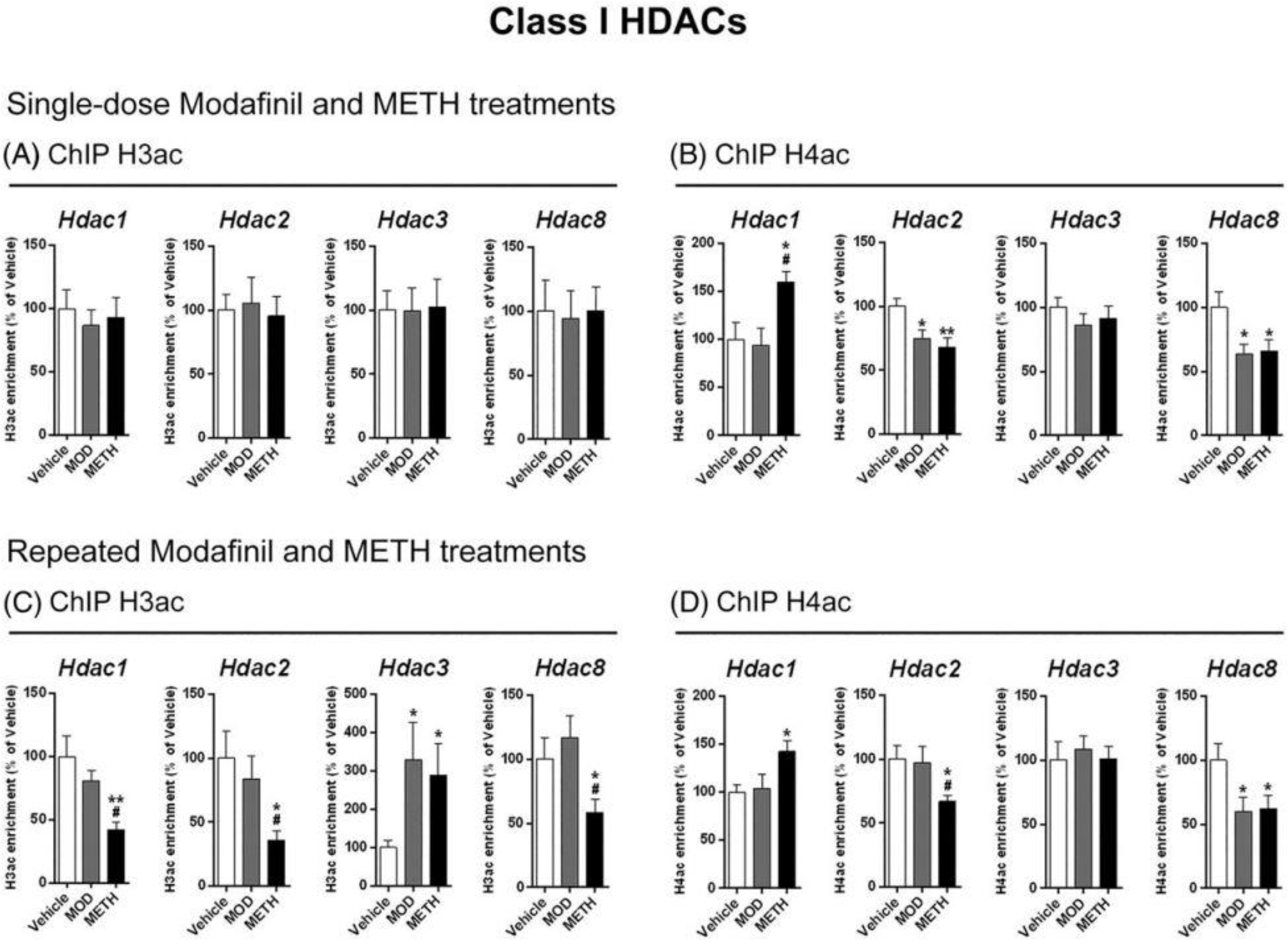
Single-dose treatments: A) ChIP-PCR for H3ac, B) ChIP-PCR for H4ac. Repeated treatments: C) ChIP-PCR for H3ac, D) ChIP-PCR for H4ac. Data are expressed as means ± SEM (N=8–10). * Different from vehicle p<0.05 or ** p<0.01, # different from MOD p<0.05.
For repeated modafinil and METH treatments we evaluated H3ac specific effects at class I HDACs (Fig. 1C), and found decreased enrichment at Hdac1, Hdac2 and Hdac8 after repeated METH compared to vehicle and modafinil [Hdac1: ANOVA-Bonferroni F(2,24)=5.9, p=0.009; Hdac2: Kruskal-Wallis H=7.4, p=0.025; Hdac8: Kruskal-Wallis H=10.5, p=0.005], and increased H3ac enrichment at Hdac3 after repeated modafinil and METH compared to vehicle [Kruskal-Wallis H=8.3, p=0.015]. For H4ac specific effects (Fig. 1D), we found increased enrichment at Hdac1 after repeated METH compared to vehicle [ANOVA-Bonferroni F(2,26)=4.72, p=0.019], decreased H4ac enrichment at Hdac2 after repeated METH compared to vehicle and modafinil [Kruskal-Wallis H=6.3, p=0.042], and decreased H4ac enrichment at Hdac8 after repeated modafinil or METH compared to vehicle [Kruskal-Wallis H=6.2, p=0.044].
Class II HDAC H3ac and H4ac promoter enrichment after single-dose and repeated modafinil or METH treatment
For single-dose modafinil or METH treatment at class IIa HDACs, we evaluated H3ac specific effects (Fig. 2A) and found increased H3ac enrichment at Hdac7 after single-dose modafinil compared to vehicle and METH [ANOVA-Bonferroni F(2,22)=10.9, p=0.0006]. For H4ac specific effects (Fig. 2B), we found decreased H4ac enrichment at Hdac4 after single-dose METH compared to modafinil and vehicle [ANOVA-Bonferroni F(2,27)=7.3, p=0.003], decreased H4ac enrichment at Hdac5 after single-dose METH compared to vehicle [ANOVA-Bonferroni F(2,27)=4.1, p=0.028], and decreased H4ac at Hdac7 after single-dose modafinil compared to vehicle and METH [Kruskal-Wallis H=6.44, p=0.039].
Figure 2: Effects of single-dose or repeated modafinil (MOD) or methamphetamine (METH) injections on the enrichment of acetylated histone 3 (H3ac) and acetylated histone 4 (H4ac) at Class IIa HDAC promoters in the mPFC.
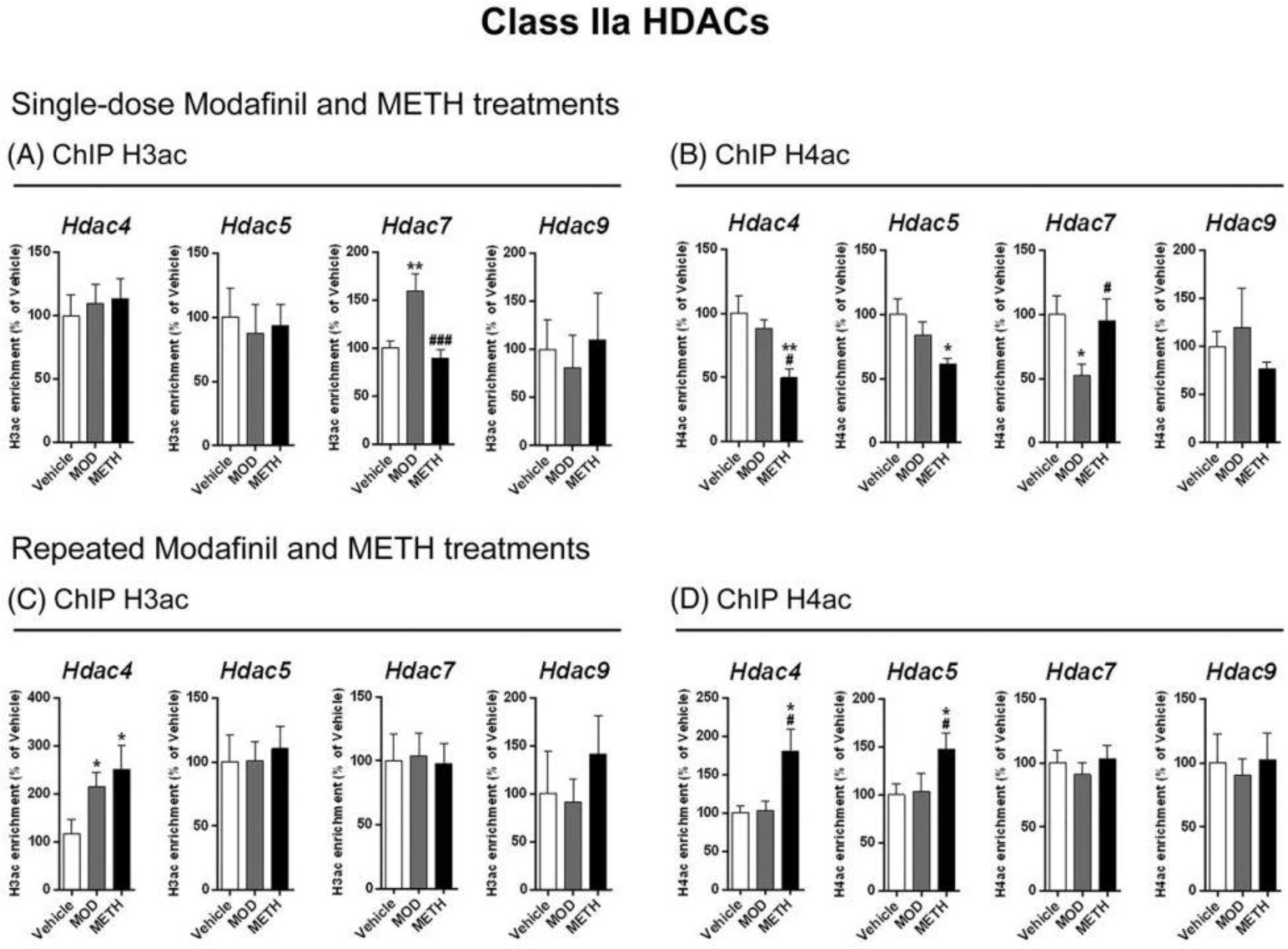
Single-dose treatments: A) ChIP-PCR for H3ac, B) ChIP-PCR for H4ac. Repeated treatments: C) ChIP-PCR for H3ac, D) ChIP-PCR for H4ac. Data are expressed as means ± SEM (N=8–10). * Different from vehicle p<0.05 or ** p<0.01, # different from MOD p<0.05 or ### p<0.001.
For repeated modafinil and METH treatments at class IIa HDACs, we evaluated H3ac specific effects (Fig. 2C) and found increased H3ac enrichment at Hdac4 after repeated modafinil or METH compared to vehicle [Kruskal Wallis H=7.1, p=0.029]. For H4ac specific effects (Fig. 2D), we found increased H4ac enrichment at Hdac4 and Hdac5 after repeated METH compared to vehicle and modafinil [Hdac4: Kruskal-Wallis H=6.6, p=0.036; Hdac5: Kruskal-Wallis H=6.3, p=0.043].
For single-dose modafinil and METH treatments at class IIb HDACs, we evaluated H3ac specific effects (Fig. 3A) and found no changes in H3ac enrichment among treatments. For H4ac specific effects (Fig. 3B), we found increased H4ac enrichment at Hdac10 after single-dose METH compared to vehicle and modafinil [ANOVA-Bonferroni F(2,27)=6.9, p=0.004]. For repeated modafinil or METH treatment at class IIb HDACs, we evaluated H3ac specific effects (Fig. 3C) and H4ac specific effects (Fig. 3D) and found no changes across treatments.
Figure 3: Effect of single-dose or repeated modafinil (MOD) or methamphetamine (METH) injection on the enrichment of acetylated histone 3 (H3ac) and acetylated histone 4 (H4ac) at Class IIb HDAC promoters in the mPFC.
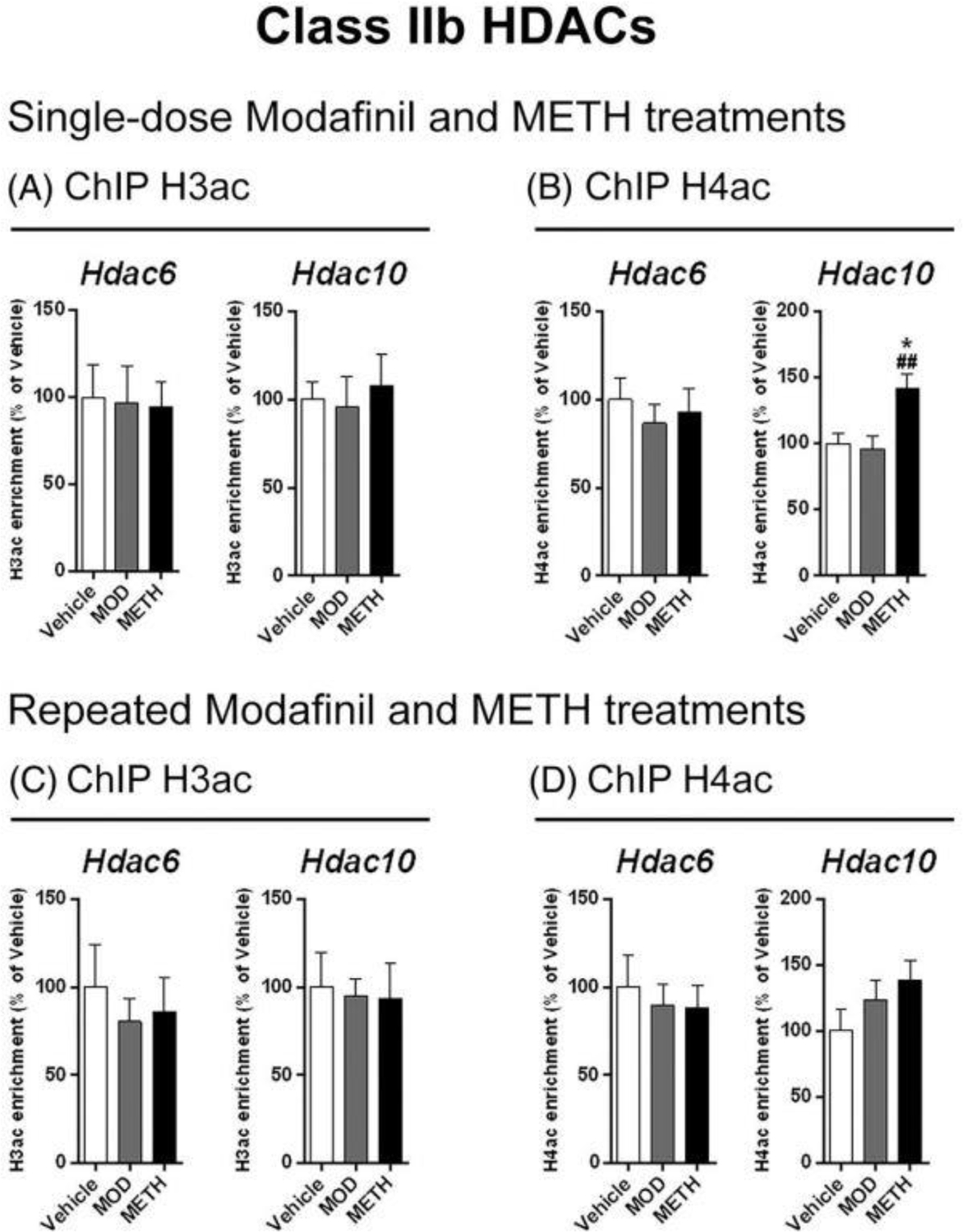
Single-dose treatments: A) ChIP-PCR for H3ac, B) ChIP-PCR for H4ac. Repeated treatments: C) ChIP-PCR for H3ac, D) ChIP-PCR for H4ac. Data are expressed as mean ± SEM (N=8–10). * Different from vehicle p<0.05, ## different from MOD p<0.01.
Class III HDAC Sirtuins H3ac and H4ac promoter enrichment after single-dose or repeated modafinil or METH treatment
For single-dose modafinil or METH treatment acetylation effects at class III Sirtuins, we evaluated H3ac (Fig. 4A) and H4ac (Fig. 4B) and found no changes across groups. For repeated modafinil or METH treatment at class III Sirtuins, we evaluated H3ac specific effects (Fig. 4C) and found increased H3ac enrichment at Sirt3 after repeated METH compared to vehicle and modafinil [ANOVA-Bonferroni F(2,26)=6.9, p=0.004], and increased H3ac at Sirt6 after repeated modafinil and METH compared to vehicle [Kruskal Wallis H=7.4, p=0.025]. For H4ac specific effects (Fig. 4D), we found increased H4ac enrichment at Sirt2 after repeated METH compared to vehicle [ANOVA-Bonferroni F(2,26)=4.2, p=0.027], and decreased H4ac enrichment at Sirt7 after repeated METH compared to vehicle and modafinil [Kruskal-Wallis H=6.4, p=0.039].
Figure 4: Effects of single-dose or repeated modafinil (MOD) or methamphetamine (METH) injection on the enrichment of acetylated histone 3 (H3ac) and acetylated histone 4 (H4ac) at Class III HDAC (Sirtuins) promoters in the mPFC.
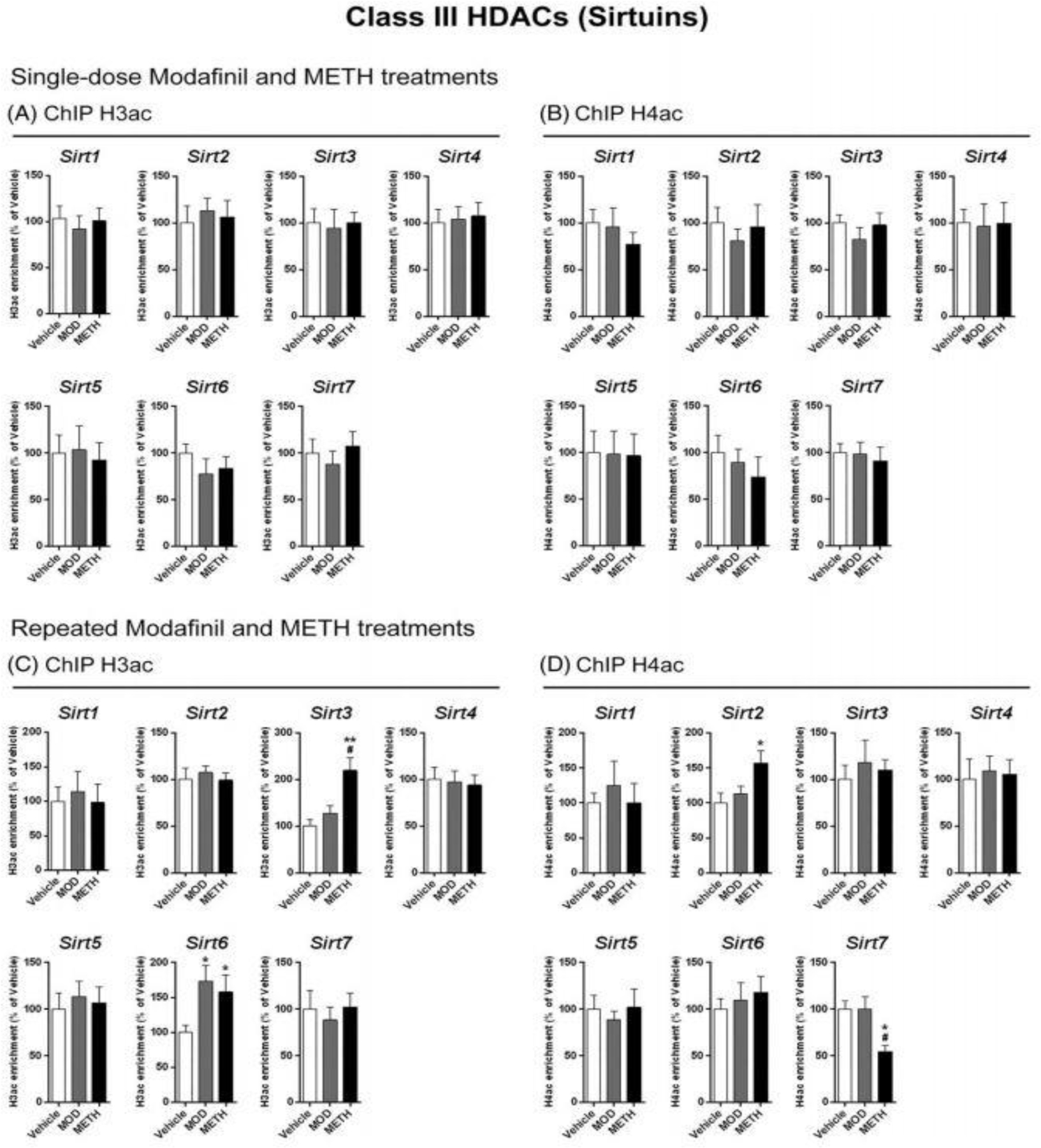
Single-dose treatments: A) ChIP-PCR for H3ac, B) ChIP-PCR for H4ac. Repeated treatments: C) ChIP-PCR for H3ac, D) ChIP-PCR for H4ac. Data are expressed as means ± SEM (N=8–10). * Different from vehicle p<0.05 or ** p<0.01, # different from MOD p<0.05.
Class IV HDAC11 H3ac and H4ac promoter enrichment after single-dose or repeated modafinil or METH administration
For single-dose modafinil or METH treatment at class IV Hdac11, we evaluated H3ac (Fig. 5A) and H4ac (Fig. 5B) specific effects and found no significant changes across groups. For repeated modafinil or METH treatment we evaluated H3ac (Fig. 5C) and found no changes among groups. For H4ac (Fig. 5D) we found increased H4ac enrichment at Hdac11 after repeated METH compared to vehicle and modafinil [ANOVA-Bonferroni F(2,28)=6.5, p=0.005].
Figure 5: Effects of single-dose or repeated modafinil (MOD) or methamphetamine (METH) treatment on the enrichment of acetylated histone 3 (H3ac) and acetylated histone 4 (H4ac) at Class IV HDAC promoter in the mPFC.
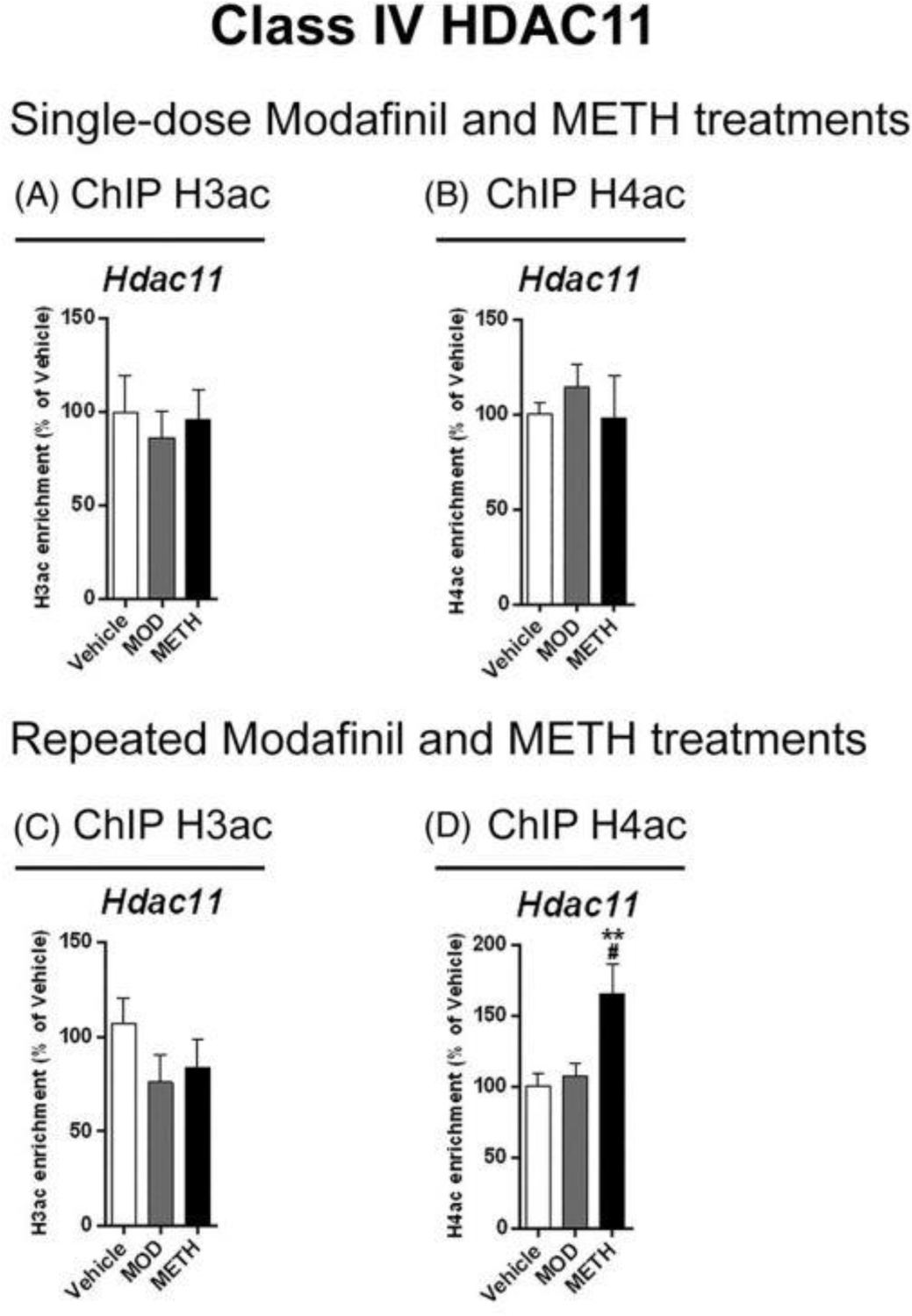
Single-dose treatments: A) ChIP-PCR for H3ac, B) ChIP-PCR for H4ac. Repeated treatments: C) ChIP-PCR for H3ac, D) ChIP-PCR for H4ac. Data are expressed as means ± SEM (N=8–10). ** Different from vehicle p<0.01, # different from MOD p<0.05.
Gene expression of HDACs that showed altered histone acetylation promoter enrichment after modafinil or METH treatment
While epigenetic regulation can lead to changes in gene expression, accumulating evidence has shown that altered chromatin states may not directly correlate with transcription (Wang et al., 2009; Zentner and Henikoff, 2013). Therefore, we measured mRNA levels of HDAC genes that showed altered H3ac and/or H4ac promoter enrichment after single-dose or repeated modafinil or METH injections.
For single-dose modafinil and METH treatment (Fig. 6A), we found increased class I Hdac1, Hdac2 and Hdac8 after modafinil and METH compared to vehicle [Hdac1: Kruskal Wallis H=7.72, p=0.021; Hdac2: Kruskal Wallis H=7.61, p=0.022; Hdac8: ANOVA-Bonferroni F(2,16)=5.5, p=0.018]. We also found increased class IIa Hdac4 after METH compared to modafinil and vehicle [ANOVA-Bonferroni F(2,16)=9.5, p=0.002], increased Hdac5 after modafinil and METH compared to vehicle [ANOVA-Bonferroni F(2,16)=11.2, p=0.001], and increased Hdac7 after modafinil compared to METH and vehicle [Kruskal Wallis H=6.8, p=0.018]. For repeated modafinil or METH treatment (Fig. 6B), we found decreased class I Hdac2 after METH compared to modafinil and vehicle [ANOVA-Bonferroni F(2,16)=8.5, p=0.004], and increased class IIa Hdac4 and class III Sirt7 after METH compared to vehicle [Hdac4: Kruskal Wallis H=6.88, p=0.032; Sirt7: ANOVA-Bonferroni F(2,16)=7.15, p=0.008].
Figure 6: Effects of single-dose or repeated modafinil (MOD) or methamphetamine (METH) treatment on gene expression in the mPFC.
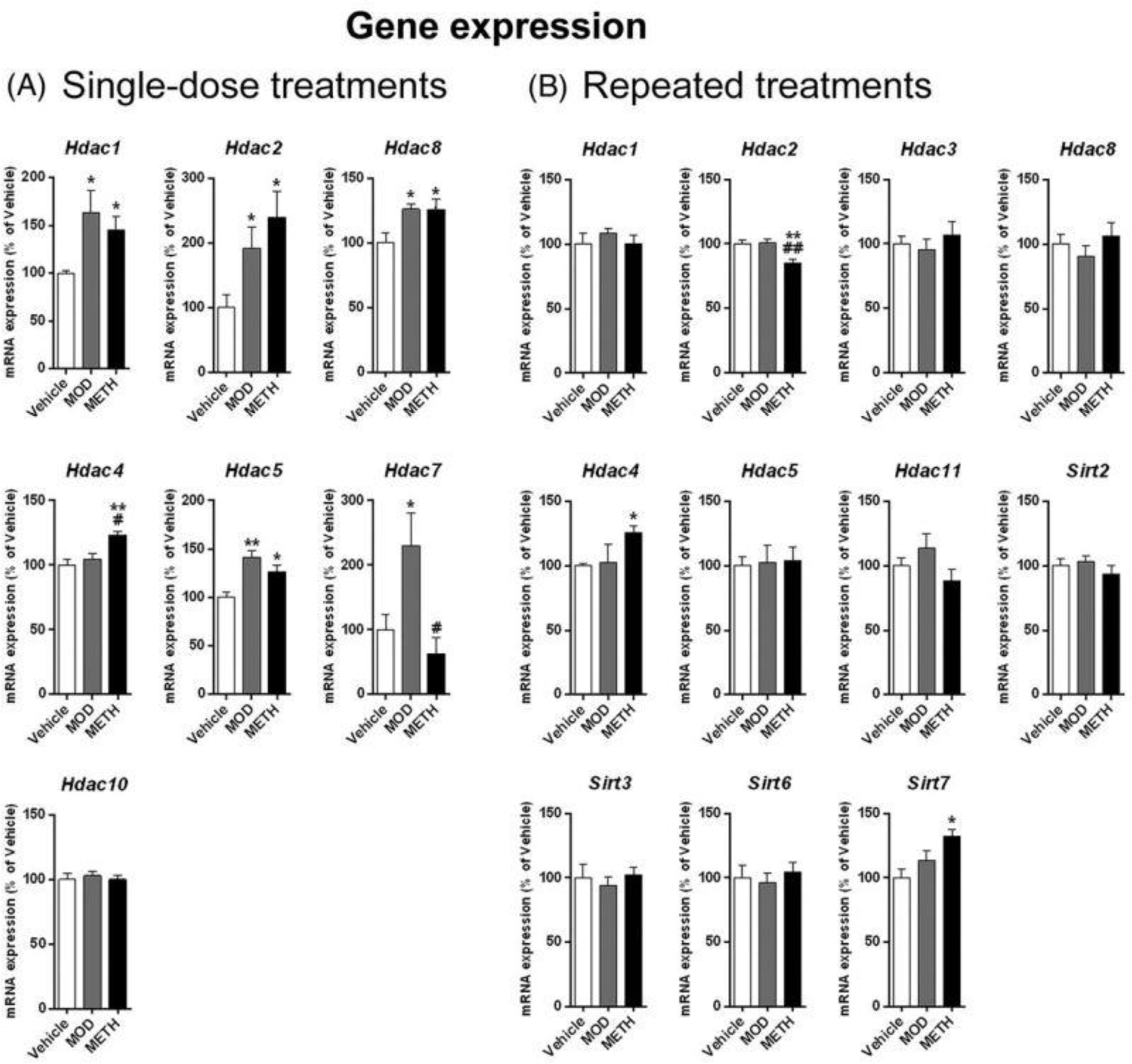
RT-PCR evaluation of mRNA expression after A) Single-dose administration and B) Repeated injections. Data are expressed as means ± SEM (N=5–6). * Different from vehicle p<0.05 or ** p<0.01, # different from MOD p<0.05 or ## p<0.01.
Results summary of HDACs histone 3 and 4 acetylation and gene expression studies
Figure 7 summarizes H3ac and H4ac ChIP-PCR results for modafinil and METH treatments, graphically depicting the global tendency of each drug compared to vehicle, and their specific and shared effects. Our results show that all classes of HDACs family were responsive to modafinil and/or METH treatments via mechanisms involving changes in H3ac and/or H4ac enrichment. Table 1 shows the acetylation changes found for each HDAC and concomitant gene expression results. Taken together, our results demonstrate that METH produced broader effects on HDAC superfamily acetylation compared to modafinil, and that patterns of H3ac and H4ac on HDACs are followed by different mRNA expression levels of these same genes.
Figure 7: Modafinil and METH shared and differential histone 3 and 4 acetylation profiles on HDACs family promoters in the mPFC.
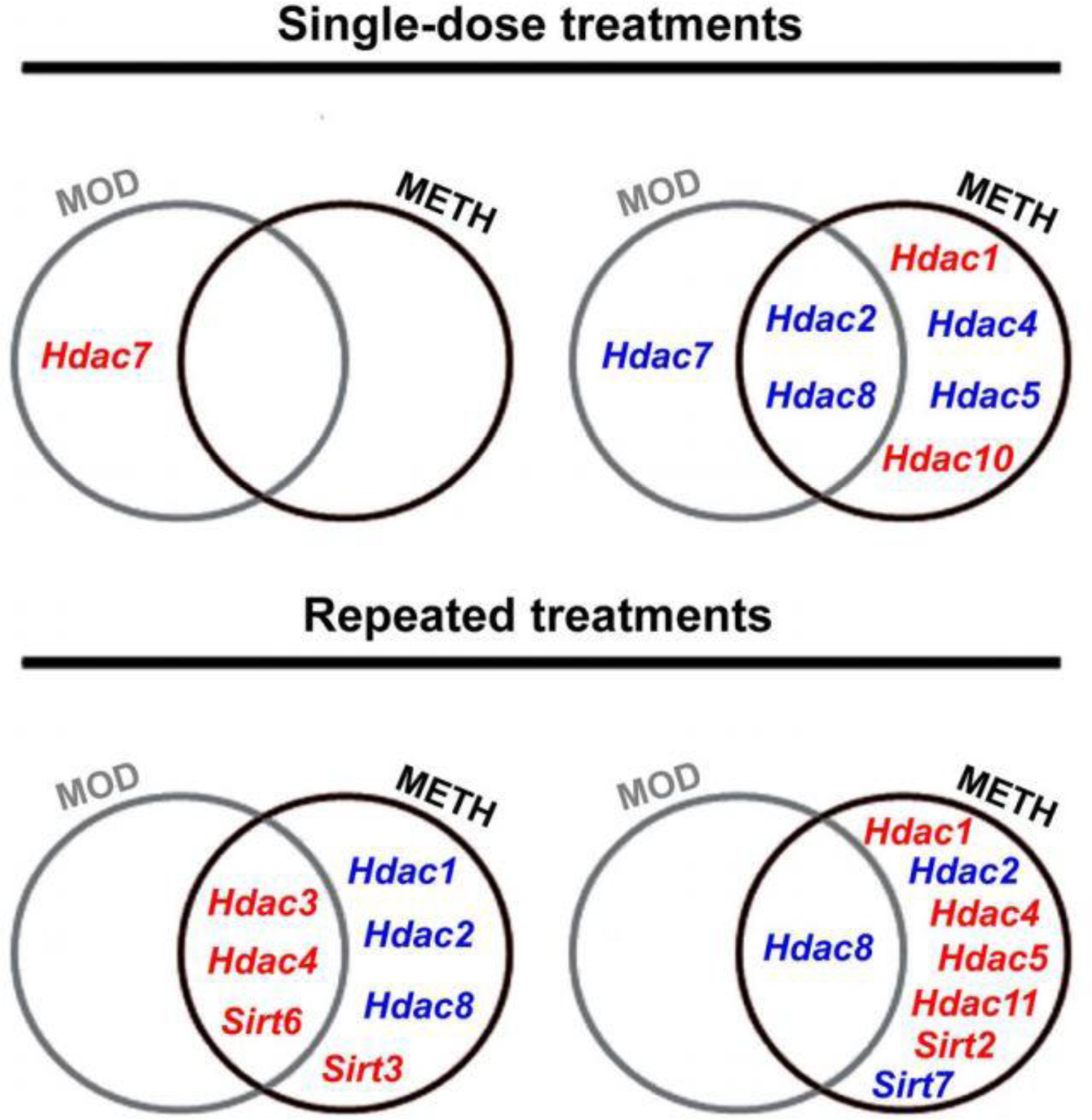
The Venn diagrams depict the specific and overlapped HDAC promoters with altered acetylation status, identified after administration of a single-dose and repeated injections of modafinil (gray) and METH (black).Letter case in red: increased acetylation, in blue: decreased acetylation, compared to vehicle-treated controls.
Table 1:
Results summary on histone 3 and 4 acetylation and gene expression results for modafinil and METH single-dose and repeated treatments. + : increased acetylation, − : decreased acetylation, =: no change, compared to vehicle.
| Single-dose treatments | ||||||
|---|---|---|---|---|---|---|
|
| ||||||
| Modafinil | METH | |||||
| H3ac | H4ac | mRNA | H3ac | H4ac | mRNA | |
| Hdac1 | = | = | + | = | + | + |
| Hdac2 | = | − | + | = | − | + |
| Hdac4 | = | = | = | = | − | + |
| Hdac5 | = | = | + | = | − | + |
| Hdac7 | + | − | + | = | = | = |
| Hdac8 | = | − | + | = | − | + |
| Hdac10 | = | = | = | = | + | = |
|
| ||||||
| Repeated treatments | ||||||
|
| ||||||
| Modafinil | METH | |||||
| H3ac | H4ac | mRNA | H3ac | H4ac | mRNA | |
| Hdac1 | = | = | = | − | + | = |
| Hdac2 | = | = | = | − | − | − |
| Hdac3 | + | = | = | + | = | = |
| Hdac4 | + | = | = | + | + | + |
| Hdac5 | = | = | = | = | + | = |
| Hdac8 | = | − | = | − | − | = |
| Hdac11 | = | = | = | = | + | = |
| Sirt2 | = | = | = | = | + | = |
| Sirt3 | = | = | = | + | = | = |
| Sirt6 | + | = | = | + | = | = |
| Sirt7 | = | = | = | = | − | + |
DISCUSSION
In the present study, we investigated the acetylation status of all HDACs after single-dose and repeated modafinil and METH treatments. These two time points were chosen based on our previous reports investigating the reactions of the brain to initial drug exposure, and epigenetic neuroadaptations that occur following repeated exposures (González et al., 2018, 2019). Modafinil and METH are known to transiently facilitate neurotransmission mediated by monoamines including DA, NE, and 5-HT in the reward pathways, including the mPFC (Bisagno et al., 2016). Because modafinil and METH increase DA concentration via different pharmacokinetic and pharmacodynamic mechanisms (Sulzer et al., 2005; Wisor, 2013), it seemed likely that distinct molecular adaptations might occur in response to each psychostimulant. We found substantial changes in H3ac and H4ac at HDAC proximal promoters mostly after METH injection in contrast to modafinil injection. Interestingly, H4ac was far more responsive to single-dose injections at HDAC promoters compared to H3ac. In contrast, we found similar levels of acetylation changes for each histone after repeated administration of each drug. The accumulated evidence suggests that H3ac and H4ac are under the control of different signaling mechanisms (Rogge and Wood, 2013), targeted by specific HAT- and HDAC-containing protein complexes (Jayanthi et al., 2014; Renthal et al., 2009), and that they elicit independent effects on transcription factor binding, gene expression, and chromatin remodeling (Agricola et al., 2006; Yu et al., 2011; Gansen et al., 2015; González et al., 2018, 2019). Therefore, the present results most likely reflect different pathways controlling H3ac and H4ac enrichment at HDAC promoters. We also found that repeated drug administration elicited H3ac changes in all members of class I HDACs. However, these changes were not detected following single-dose injection, suggesting that H3ac might participate in long-lasting neuroadaptations induced by drug exposure, particularly for METH. Previous findings have also found that specific H3ac changes were linked to gene regulation following repeated cocaine exposure (Kumar et al., 2005; Wang et al., 2010).
For class I, we found different patterns of changes between Hdac1, Hdac2, and Hdac8 in comparison to Hdac3. HDAC1 and 2 are generally found in repressive complexes that contain Sin3, NuRD, CoREST, and PRC2 (Haberland et al., 2009) whereas HDAC3 is found in complexes with N-CoR–SMRT (Fischle et al., 2002). HDAC3 is also associated with class II HDACs including HDAC4 and 5 that are enzymatically inactive, and not capable of driving epigenetic changes when not associated with HDAC3 (Fischle et al., 2002). Interestingly, we found similarly increased H3ac in Hdac3 and Hdac4 after repeated modafinil or METH. A different pattern was also observed between Hdac1 and Hdac2 promoters: single-dose and repeated METH increased H4ac in Hdac1 but decreased it in Hdac2. In the PFC, HDAC1 expression was found predominantly in glia, and HDAC2 was highly and ubiquitously expressed in neurons (Guan et al., 2009; Baltan et al., 2011). From a functional perspective, HDAC2, but not HDAC1, had been found to negatively regulate memory formation and synaptic plasticity (Guan et al., 2009). Moreover, the CoREST complex preferentially associates with HDAC2 relative to HDAC1 (Guan et al., 2009). Interestingly, Hdac8 showed decreased H4ac after both modafinil and METH single-dose and repeated treatments, suggesting a role of this HDAC on psychostimulant epigenetic effects in the mPFC.
It was proposed that histone acetylation of target genes increase upon neuronal stimulation, and HDACs may be concomitantly triggered to restrain these signals and restore acetylation to basal levels (Wang et al., 2009; Guan et al., 2009; Gräff and Tsai, 2013). Therefore, this epigentic system seems to self-regulate, where acetylation mechanisms may in turn control the activation of deacetylases. In this sense, it was shown that HDAC1 is recruited to its own promoter and thus regulate self-expression (Schuettengruber et al., 2003). We have previously shown that single-dose of both modafinil and METH increased H3ac but decreased H4ac global levels in the mPFC, together with increased HDAC1 and HDAC2 protein (González et al., 2019). Interestingly, increased HDAC2 and decreased H4ac were responsive to DA receptor blockers pre-treatment, suggesting that HDAC2 may participate in the control of H4 acetylation following DA stimulation in neurons (González et al., 2019). Here we found that single-dose modafinil and/or METH decreased H4ac at Hdac2, Hdac4, Hdac5, Hdac7 and Hdac8, together with increased mRNA expression. Noteworthy, for these HDACs the acetylation status of H4 seems to go in the opposite direction that the one expected by the gene expression patterns. However, this apparent contradiction between decreased acetylation and increased gene expression could be explained by the fact that not all acetylated H4 lysines results in increased gene expression. For example, Zhou and Grummt (2005) showed that H4K16ac can elicit gene silencing through the recruitment of repressive complexes, thus highlighting the possibility that H4 acetylation at K16 may elicit different responses than the other acetylated H4 lysines such as K5ac, K8ac or K12ac. Thus, the possible link between decreased acetylated H4 lysines and accompanied increases in mRNA expression cannot be resolved by the pan-acetylated antibodies used in this study and merits further exploration.
We found a contrasting acetylation profile in class IIa HDACs after single-dose vs repeated METH treatment: decreased vs increased H4ac in Hdac4 and Hdac5. It is noteworthy that increased H4ac at Hdac4 and Hdac5 after repeated METH occurred in parallel with decreased H3/H4ac at class I Hdac1, Hdac2 and Hdac8. It has been proposed that behavioral responses to chronic exposure to addictive drugs may involve class IIa HDAC gene targets (Renthal et al., 2007; Griffin et al., 2017). HDAC4 and 5 appear to have specific roles in synaptic plasticity, memory formation, and spatial learning (Sando et al., 2012; Agis-Balboa et al., 2013), and they have been implicated in cocaine reward (Penrod et al., 2017), and METH craving (Li et al., 2017). Among class IIa, HDAC7 is of particular interest given that a single-dose of modafinil specifically increased H3ac and decreased H4ac at the Hdac7 promoter and increased Hdac7 mRNA levels. HDAC7 seems to play a role in hippocampus-dependent memory formation (Jing et al., 2017), and is involved in neuronal protection against apoptotic mechanisms (Ma and D’Mello, 2011). Interestingly, we and others have shown that modafinil has anti-oxidative, anti-inflammatory, and neuroprotective effects on the dopaminergic system (Ueki et al., 1993; Jenner et al., 2000; van Vliet et al., 2008; Raineri et al., 2011, 2012). Moreover, we previously showed that modafinil is able to enhance memory recognition (González et al., 2014). Taken together, it is plausible to suggest that HDAC7 promoter acetylation and changes in gene expression might regulate, in part, modafinil’s effects on cognitive function and neuronal damage. Further studies are needed to fully explore modafinil-induced HDAC7 effects on learning and memory processes and inflammation pathways.
Class III Sirtuins and IV HDAC11 were only responsive to repeated treatment. METH effects at Sirt2, Sirt3, Sirt7, and Hdac11 could be related to its neurotoxic and pro-apoptotic effects in the brain: METH-induced cell death is related to intra-terminal DA autoxidation and generation of reactive oxygen species, with subsequent induction of neuronal apoptosis (Krasnova and Cadet, 2009). Consistent with a role of Sirtuins regulating the oxidative stress response in the brain during aging, it has been shown that SIRT2 has protective roles against neurodegeneration (Donmez et al., 2013), and that SIRT3 responds to changes in mitochondrial redox status by altering the enzymatic activity of specific downstream targets (Ozden et al., 2011). SIRT2 was found increased after chronic METH and cocaine exposure in the nucleus accumbens (Jayanthi et al., 2014; Renthal et al., 2009), and SIRT7 has exhibited a pro-survival role in cells, and its depletion triggers apoptosis (Ford et al., 2006). For HDAC11 it has been shown that it has modulatory effects on inflammation (Yanginlar and Logie, 2018), and it was also found significantly increased in rat anterior cingulate cortex after cocaine self-administration (Host et al., 2011), indicating a role of this HDAC in addiction models.
Accumulating evidence has shown that histone acetylation may change the steady-state mRNA levels of some genes, whereas at others may play a role in priming for subsequent induction or desensitization (Wang et al., 2009; Renthal and Nestler, 2008). Therefore, the acetylation changes detected here that do not match with gene expression might reflect latent or residual changes in gene inducibility. Also, given that several epigenetic mechanisms regulate transcription (Robison and Nestler, 2011), it is possible that other mechanisms are contributing to gene expression, such as DNA methylation or microRNA interactions. Nonetheless, we found an association between histone acetylation and gene expression after repeated METH treatment for Hdac2 (decreased promoter H3/H4ac and mRNA levels) and Hdac4 (increased promoter H4ac and mRNA levels), which is in agreement with the proposed role of gene targets of class IIa HDACs in chronic responses to addictive drugs (Renthal et al., 2007; Griffin et al., 2017).
In summary, our study is the first comprehensive work that compares the H3ac and H4ac status of all HDACs in the mPFC following acute and repeated modafinil and METH exposure. Our results show that injections of modafinil or METH are followed by distinct H3ac and H4ac patterns on HDACs promoters. These experiments thus identify histone acetylation as an important player in mechanisms that regulate psychostimulant-induced changes in HDAC expression. These epigenetic alterations may, in part, be related to the cognitive-enhancing and cognitive-impairing effects of modafinil vs METH, and their various molecular impact on mPFC functioning. A thorough understanding of HDAC regulation will not only provide further insights into histone acetylation after drug administration, but also may serve as potential diagnostic and therapeutic approaches for the treatment of diseases that result from abnormal acetylation/deacetylation of histones.
Supplementary Material
Acknowledgements:
Dr. Bisagno has been authorized to study drug abuse substances in animal models by A.N.M.A.T. (National Board of Medicine Food and Medical Technology, Ministerio de Salud, Argentina). This work is supported by grants PICT 2012–0924, PICT-2012–1769 and PICT 2014–2499, Argentina. In addition, this work was supported by NIH award P20 GM103422 to the Center for Translational Neuroscience, UAMS, USA.
Footnotes
Competing Interests Statement
Authors have nothing to disclose.
REFERENCES
- Agis-Balboa RC, Pavelka Z, Kerimoglu C, Fischer A (2013) Loss of HDAC5 impairs memory function: implications for Alzheimer’s disease. J Alzheimers Dis 33:35–44. [DOI] [PubMed] [Google Scholar]
- Agricola E, Verdone L, Di Mauro E, Caserta M (2006). H4 acetylation does not replace H3 acetylation in chromatin remodelling and transcription activation of Adr1-dependent genes. Mol Microbiol 62:1433–1446. [DOI] [PubMed] [Google Scholar]
- Baltan S, Bachleda A, Morrison RS, Murphy SP (2011) Expression of histone deacetylases in cellular compartments of the mouse brain and the effects of ischemia. Transl Stroke Res 2:411–423. [DOI] [PMC free article] [PubMed] [Google Scholar]
- Bisagno V, González B, Urbano FJ (2016) Cognitive enhancers versus addictive psychostimulants: The good and bad side of dopamine on prefrontal cortical circuits. Pharmacol Res 109:108–118. [DOI] [PubMed] [Google Scholar]
- Broide RS, Redwine JM, Aftahi N, Young W, Bloom FE, Winrow CJ (2007) Distribution of histone deacetylases 1–11 in the rat brain. J Mol Neurosci 31:47–58. [DOI] [PubMed] [Google Scholar]
- Bryant DT, Landles C, Papadopoulou AS, Benjamin AC, Duckworth JK, Rosahl T, Benn CL, Bates GP (2017) Disruption to schizophrenia-associated gene Fez1 in the hippocampus of HDAC11 knockout mice. Sci Rep 7:11900. [DOI] [PMC free article] [PubMed] [Google Scholar]
- Chawla S, Vanhoutte P, Arnold FJ, Huang CL, Bading H (2003) Neuronal activity-dependent nucleocytoplasmic shuttling of HDAC4 and HDAC5. J Neurochem 85:151–159. [DOI] [PubMed] [Google Scholar]
- Di Giorgio E and Brancolini C (2016) Regulation of class IIa HDAC activities: it is not only matter of subcellular localization. Epigenomics 8:251–269. [DOI] [PubMed] [Google Scholar]
- Donmez G and Outeiro TF (2013) SIRT1 and SIRT2: emerging targets in neurodegeneration. EMBO Mol Med 5:344–352. [DOI] [PMC free article] [PubMed] [Google Scholar]
- Fischle W, Dequiedt F, Hendzel MJ, Guenther MG, Lazar MA, Voelter W, Verdin E (2002) Enzymatic activity associated with class II HDACs is dependent on a multiprotein complex containing HDAC3 and SMRT/N-CoR. Mol Cell 9:45–57. [DOI] [PubMed] [Google Scholar]
- Ford E, Voit R, Liszt G, Magin C, Grummt I, Guarente L (2006) Mammalian Sir2 homolog SIRT7 is an activator of RNA polymerase I transcription. Genes Dev 20:1075–1080. [DOI] [PMC free article] [PubMed] [Google Scholar]
- Gansen A, Tóth K, Schwarz N, Langowski J (2015) Opposing roles of H3- and H4-acetylation in the regulation of nucleosome structure––a FRET study. Nucleic Acids Res 43:1433–1443. [DOI] [PMC free article] [PubMed] [Google Scholar]
- Godino A, Jayanthi S, Cadet JL (2015) Epigenetic landscape of amphetamine and methamphetamine addiction in rodents. Epigenetics 10:574–580. [DOI] [PMC free article] [PubMed] [Google Scholar]
- González B, Jayanthi S, Gomez N, Torres OV, Sosa MH, Bernardi A, Urbano FJ, García-Rill E, Cadet JL, Bisagno V (2018) Repeated methamphetamine and modafinil induce differential cognitive effects and specific histone acetylation and DNA methylation profiles in the mouse medial prefrontal cortex. Prog Neuropsychopharmacol Biol Psychiatry 82:1–11. [DOI] [PMC free article] [PubMed] [Google Scholar]
- González B, Raineri M, Cadet JL, García-Rill E, Urbano FJ, Bisagno V (2014) Modafinil improves methamphetamine-induced object recognition deficits and restores prefrontal cortex ERK signaling in mice. Neuropharmacology 87:188–197. [DOI] [PMC free article] [PubMed] [Google Scholar]
- González B, Rivero-Echeto C, Muñiz JA, Cadet JL, García-Rill E, Urbano FJ, Bisagno V (2016) Methamphetamine blunts Ca(2+) currents and excitatory synaptic transmission through D1/5 receptor-mediated mechanisms in the mouse medial prefrontal cortex. Addict Biol 21:589–602. [DOI] [PMC free article] [PubMed] [Google Scholar]
- González B, Torres OV, Jayanthi S, Gomez N, Sosa MH, Bernardi A, Urbano FJ, García-Rill E, Cadet JL, Bisagno V (2019) The effects of single-dose injections of modafinil and methamphetamine on epigenetic and functional markers in the mouse medial prefrontal cortex: potential role of dopamine receptors. Prog Neuropsychopharmacol Biol Psychiatry 88:222–234. [DOI] [PMC free article] [PubMed] [Google Scholar]
- Gräff J and Tsai LH (2013) Histone acetylation: molecular mnemonics on the chromatin. Nat Rev Neurosci 14:97–111. [DOI] [PubMed] [Google Scholar]
- Griffin EA Jr, Melas PA, Zhou R, Li Y, Mercado P, Kempadoo KA, Stephenson S, Colnaghi L, Taylor K, Hu MC, Kandel ER, Kandel DB (2017) Prior alcohol use enhances vulnerability to compulsive cocaine self-administration by promoting degradation of HDAC4 and HDAC5. Sci Adv 3:e1701682. [DOI] [PMC free article] [PubMed] [Google Scholar]
- Guan JS, Haggarty SJ, Giacometti E, Dannenberg JH, Joseph N, Gao J, Nieland TJ, Zhou Y, Wang X, Mazitschek R, Bradner JE, DePinho RA, Jaenisch R, Tsai LH (2009) HDAC2 negatively regulates memory formation and synaptic plasticity. Nature 459:55–60. [DOI] [PMC free article] [PubMed] [Google Scholar]
- Haberland M, Montgomery RL, Olson EN (2009) The many roles of histone deacetylases in development and physiology: implications for disease and therapy. Nat Rev Genet 10:32–42. [DOI] [PMC free article] [PubMed] [Google Scholar]
- Host L, Dietrich JB, Carouge D, Aunis D, Zwiller J (2011) Cocaine self-administration alters the expression of chromatin-remodelling proteins; modulation by histone deacetylase inhibition. J Psychopharmacol 25:222–229. [DOI] [PubMed] [Google Scholar]
- Houtkooper RH, Pirinen E, Auwerx J (2012) Sirtuins as regulators of metabolism and healthspan. Nat Rev Mol Cell Biol 13:225–238. [DOI] [PMC free article] [PubMed] [Google Scholar]
- Jayanthi S, McCoy MT, Chen B, Britt JP, Kourrich S, Yau HJ, Ladenheim B, Krasnova IN, Bonci A, Cadet JL (2014) Methamphetamine downregulates striatal glutamate receptors via diverse epigenetic mechanisms. Biol Psychiatry 76:47–56. [DOI] [PMC free article] [PubMed] [Google Scholar]
- Jenner P, Zeng BY, Smith LA, Pearce RK, Tel B, Chancharme L, Moachon G (2000) Antiparkinsonian and neuroprotective effects of modafinil in the mptp-treated common marmoset. Exp Brain Res 133:178–188. [DOI] [PubMed] [Google Scholar]
- Jing X, Sui WH, Wang S, Xu XF, Yuan RR, Chen XR, Ma HX, Zhu YX, Sun JK, Yi F, Chen ZY, Wang Y (2017) HDAC7 Ubiquitination by the E3 Ligase CBX4 Is Involved in Contextual Fear Conditioning Memory Formation. J Neurosci 37:3848–3863. [DOI] [PMC free article] [PubMed] [Google Scholar]
- Krasnova IN and Cadet JL (2009). Methamphetamine toxicity and messengers of death. Brain Research Reviews 60:379–407. [DOI] [PMC free article] [PubMed] [Google Scholar]
- Kumar A, Choi KH, Renthal W, Tsankova NM, Theobald DE, Truong HT, Russo SJ, Laplant Q, Sasaki TS, Whistler KN, Neve RL, Self DW, Nestler EJ (2005) Chromatin remodeling is a key mechanism underlying cocaine-induced plasticity in striatum. Neuron 48:303–314. [DOI] [PubMed] [Google Scholar]
- Li X, Carreria MB, Witonsky KR, Zeric T, Lofaro OM, Bossert JM, Zhang J, Surjono F, Richie CT, Harvey BK, Son H, Cowan CW, Nestler EJ, Shaham Y (2018) Role of Dorsal Striatum Histone Deacetylase 5 in Incubation of Methamphetamine Craving. Biol Psychiatry 84:213–222. [DOI] [PMC free article] [PubMed] [Google Scholar]
- Ma C and D’Mello SR (2011) Neuroprotection by histone deacetylase-7 (HDAC7) occurs by inhibition of c-jun expression through a deacetylase-independent mechanism. J Biol Chem 286:4819–4828. [DOI] [PMC free article] [PubMed] [Google Scholar]
- Ozden O, Park SH, Kim HS, Jiang H, Coleman MC, Spitz DR, Gius D (2011) Acetylation of MnSOD directs enzymatic activity responding to cellular nutrient status or oxidative stress. Aging (Albany NY) 3:102–107. [DOI] [PMC free article] [PubMed] [Google Scholar]
- Penrod RD, Carreira MB, Taniguchi M, Kumar J, Maddox SA, Cowan CW (2018) Novel role and regulation of HDAC4 in cocaine-related behaviors. Addict Biol 23:653–664. [DOI] [PMC free article] [PubMed] [Google Scholar]
- Raineri M, Gonzalez B, Goitia B, Garcia-Rill E, Krasnova IN, Cadet JL, Urbano FJ, Bisagno V (2012). Modafinil Abrogates Methamphetamine-Induced neuroinflammation and Apoptotic Effects in the Mouse Striatum. PLoS ONE, 7:e46599. [DOI] [PMC free article] [PubMed] [Google Scholar]
- Raineri M, Peskin V, Goitia B, Taravini IR, Giorgeri S, Urbano FJ, Bisagno V (2011) Attenuated methamphetamine induced neurotoxicity by modafinil administration in mice. Synapse 65:1087–1098. [DOI] [PubMed] [Google Scholar]
- Renthal W and Nestler EJ (2008) Epigenetic mechanisms in drug addiction. Trends in Molecular Medicine 14:341–350. [DOI] [PMC free article] [PubMed] [Google Scholar]
- Renthal W, Kumar A, Xiao G, Wilkinson M, Covington HE 3rd, Maze I, Sikder D, Robison AJ, LaPlant Q, Dietz DM, Russo SJ, Vialou V, Chakravarty S, Kodadek TJ, Stack A, Kabbaj M, Nestler EJ (2009). Genome-wide analysis of chromatin regulation by cocaine reveals a role for sirtuins. Neuron 62:335–348. [DOI] [PMC free article] [PubMed] [Google Scholar]
- Renthal W, Maze I, Krishnan V, Covington HE 3rd, Xiao G, Kumar A, Russo SJ, Graham A, Tsankova N, Kippin TE, Kerstetter KA, Neve RL, Haggarty SJ, McKinsey TA, Bassel-Duby R, Olson EN, Nestler EJ (2007) Histone deacetylase 5 epigenetically controls behavioral adaptations to chronic emotional stimuli. Neuron 56:517–529. [DOI] [PubMed] [Google Scholar]
- Robison AJ and Nestler EJ (2011) Transcriptional and epigenetic mechanisms of addiction. Nat Rev Neurosci 12:623–637. [DOI] [PMC free article] [PubMed] [Google Scholar]
- Rogge GA and Wood MA (2013) The role of histone acetylation in cocaine-induced neural plasticity and behavior. Neuropsychopharmacology 38:94–110. [DOI] [PMC free article] [PubMed] [Google Scholar]
- Sando R 3rd, Gounko N, Pieraut S, Liao L, Yates J 3rd, Maximov A (2012) HDAC4 governs a transcriptional program essential for synaptic plasticity and memory. Cell 151:821–834. [DOI] [PMC free article] [PubMed] [Google Scholar]
- Satoh A and Imai S (2014) Systemic regulation of mammalian ageing and longevity by brain sirtuins. Nat Commun 5:4211. [DOI] [PMC free article] [PubMed] [Google Scholar]
- Schuettengruber B, Simboeck E, Khier H, Seiser C (2003) Autoregulation of mouse histone deacetylase 1 expression. Mol Cell Biol 23:6993–7004. [DOI] [PMC free article] [PubMed] [Google Scholar]
- Seto E and Yoshida M (2014). Erasers of histone acetylation: the histone deacetylase enzymes. Cold Spring Harb Perspect Biol 6:a018713. [DOI] [PMC free article] [PubMed] [Google Scholar]
- Sulzer D, Sonders MS, Poulsen NW, Galli A (2005). Mechanisms of neurotransmitter release by amphetamines: a review. Prog Neurobiol 75:406–33. [DOI] [PubMed] [Google Scholar]
- Ueki A, Rosén L, Andbjer B, Finnman UB, Altamimi U, Janson AM, Goldstein M, Agnati LF, Fuxe K (1993) The vigilance-promoting drug modafinil counteracts the reduction of tyrosine hydroxylase immunoreactivity and of dopamine stores in nigrostriatal dopamine neurons in the male rat after a partial transection of the dopamine pathway. Exp Brain Res 93:259–270. [DOI] [PubMed] [Google Scholar]
- van Vliet SA, Blezer EL, Jongsma MJ, Vanwersch RA, Olivier B, Philippens IH (2008) Exploring the neuroprotective effects of modafinil in a marmoset Parkinson model with immunohistochemistry, magnetic resonance imaging and spectroscopy. Brain Res 1189:219–228. [DOI] [PubMed] [Google Scholar]
- Volmar CH and Wahlestedt C (2015) Histone deacetylases (HDACs) and brain function. Neuroepigenetics V1:20–27. [Google Scholar]
- Wang L, Lv Z, Hu Z, Sheng J, Hui B, Sun J, Ma L (2010) Chronic cocaine-induced H3 acetylation and transcriptional activation of CaMKIIalpha in the nucleus accumbens is critical for motivation for drug reinforcement. Neuropsychopharmacology 35:913–28. [DOI] [PMC free article] [PubMed] [Google Scholar]
- Wang Z, Zang C, Cui K, Schones DE, Barski A, Peng W, Zhao K (2009) Genome-wide mapping of HATs and HDACs reveals distinct functions in active and inactive genes. Cell 138:1019–1031. [DOI] [PMC free article] [PubMed] [Google Scholar]
- Wisor J (2013) Modafinil as a catecholaminergic agent: empirical evidence and unanswered questions. Front Neurol 4:139. [DOI] [PMC free article] [PubMed] [Google Scholar]
- Yanginlar C and Logie C (2018) HDAC11 is a regulator of diverse immune functions. Biochim Biophys Acta 1861:54–59. [DOI] [PubMed] [Google Scholar]
- Yu Q, Olsen L, Zhang X, Boeke JD, Bi X (2011) Differential contributions of histone H3 and H4 residues to heterochromatin structure. Genetics 188:291–308. [DOI] [PMC free article] [PubMed] [Google Scholar]
- Zentner GE and Henikoff S (2013) Regulation of nucleosome dynamics by histone modifications. Nat Struct Mol Biol 20:259–266. [DOI] [PubMed] [Google Scholar]
- Zhou Y and Grummt I (2005) The PHD finger/bromodomain of NoRC interacts with acetylated histone H4K16 and is sufficient for rDNA silencing. Curr Biol 15:1434–1438. [DOI] [PubMed] [Google Scholar]
Associated Data
This section collects any data citations, data availability statements, or supplementary materials included in this article.
Supplementary Materials
Data Availability Statement
The datasets generated during and/or analyzed during the current study are available from the corresponding author upon request.