



Abstract
N,O-acetals are part of many synthetic intermediates and important skeletons of numerous natural products and pharmaceutical drugs. The most straightforward method of the synthesis of N,O-acetals is the enantioselective addition of O-nucleophiles to imines. However, using this method for the synthesis of linear chiral N,O-ketals still remains challenging due to the instability of raw materials under acidic or basic conditions. Herein, we developed a Cu-catalyzed asymmetric addition of alcohols to β,γ-alkynyl-α-imino esters under mild conditions, providing the corresponding linear chiral N,O-ketals with up to 96% ee. The method tolerates some variation in the β,γ-alkynyl-α-imino ester and alcohol scope, including some glucose and natural amino acid derivatives. Computational results indicate that the Boc group of the substrates assist in the extraction of hydrogen atoms from the alcohols to promote the addition reactions. These products could be synthesized on a gram-scale and can be used in several transformations. This asymmetric addition system provides an efficient, mild, gram-scale, and transition-metal-catalyzed synthesis of linear chiral N,O-ketals.
Subject terms: Asymmetric catalysis, Asymmetric synthesis, Stereochemistry
N,O-acetals are part of many synthetic intermediates and important skeletons of numerous natural products and pharmaceutical drugs. Here the authors show a Cu-catalyzed asymmetric addition of alcohols to β,γ-alkynyl-α-imino esters, providing the corresponding linear chiral N,O-ketals with up to 96% ee.
Introduction
N,O-acetals (also termed N,O-aminals) are present in numerous structural motifs, which can be synthetic intermediates and important skeletons of numerous natural products and pharmaceutical drugs1–9. Chiral N,O-acetal subunits exist in a number of intriguing natural products such as Pederin10 and (−)-Crambidine11 and a considerable number of bioactive molecules like Mitomycin C12, (−)-Solasodine13, Psymberin14, and (+)-Tagetitoxin (Fig. 1)15. Importantly, the stereochemistry of this motif is crucial in terms of the biological activity of some anti-cancer candidates16,17.
Fig. 1. Examples of biologically molecules with N,O-acetal-structures.

Natural products and bioactive molecules containing the chiral N,O-acetal-structures.
Even though many synthetic routes for the preparation of chiral N,O-acetals have been reported18–24, the most straightforward method is the enantioselective addition of O-nucleophiles to imines25–34. Previous reports on the synthesis of linear chiral N,O-acetals mainly focus on the addition reaction of O-nucleophiles to aldimines by a chiral Brønsted acid (Fig. 2a)25–27. To the best of our knowledge, there are almost no reports concerning the addition reaction of O-nucleophiles to linear ketimines due to the instability of raw materials under acidic or basic conditions and the difficulty controlling the stereoselectivity, even though linear chiral N,O-ketals are versatile scaffolds for the preparation of potential bioactive compounds35–38. Therefore, it is necessary to develop a synthesis of linear chiral N,O-ketals via the addition reaction of alcohols to linear ketimines with mild reaction conditions.
Fig. 2. Catalytic asymmetric addition of O-nucleophiles to linear imines.

a Previous work: synthesis of linear chiral N,O-acetals. b This work: synthesis of linear chiral N,O-ketals.
β,γ-Alkynyl-α-imino esters, as types of highly stable and easy-accessible ketimines, are also recognized as potentially useful precursors for the synthesis of alkynyl or alkenyl α-amino acid derivatives due to the convenient functionalization of the ester and alkynyl groups (Fig. 2b)39–43. Additionally, the presence of carbonyl groups may allow for easier coordination with a metal atom to control the stereoselectivity. In view of the previous work related to the asymmetric addition reaction of ketimines in our group44–51, copper catalysis has already been shown to provide good reactivity and enantioselectivity45,47. Herein, we describe an efficient protocol for the preparation of linear chiral N,O-ketals using a direct Cu-catalyzed asymmetric addition of alcohols to β,γ-alkynyl-α-imino esters (Fig. 2b).
Results
Investigation of reaction conditions
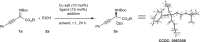
At the beginning of this study, β,γ-alkynyl-α-imino ester 1a and ethanol 2a were selected as the model substrates to investigate the asymmetric addition of O-nucleophiles, as shown in Table 1. If only Cu(OTf)2 was employed, the corresponding product 3a was generated in only a trace amount due to the hydrolysis of 1a (Table 1, entry 1). To our delight, a racemate of 3a was obtained in good yield when 4 Å MS was added (entry 2). Subsequently, the chiral ligands were investigated, and bis(oxazoline) (Box) ligands were found to perform better than other ligands (see Supplementary Table 1). Changing the substituents on the oxazoline rings of the Box ligands (L1-L5) showed that phenyl-substituted groups (L5) afforded better results (entries 3–7). Subsequently, the effect of substituents at the carbon atom connecting the two oxazoline rings was investigated. The substituent (R) was changed to methyl, allyl and 2-methylbut-2-enyl groups for screening (L6-L8). As a result, ligand L8 exhibited the best catalytic efficiency, providing the desired product with 71% ee and in 88% isolated yield (entries 8–10). Next, a variety of copper sources were examined (entries 11–13). Interestingly, copper catalysts with weakly binding anions performed better compared with those possessing strong binding anions (see Supplementary Table 2). The influence of solvent was subsequently inspected, and to our surprise, the ee value of the product improved dramatically when acetone was used as the solvent (entries 14–16). Reducing the temperature to 0 °C gave the desired product in 88% yield and 96% ee (entry 17). Finally, decreasing the equivalents of alcohol 2a improved the product yield slightly (entry 18). The absolute configuration of 3a was determined by X-ray diffraction.
Table 1.
Reaction optimizationa.
 | ||||||
|---|---|---|---|---|---|---|
| Entry | Cu salt | Ligand | Solvent | Additive | Yield %b | ee %c |
| 1 | Cu(OTf)2 | None | THF | None | Trace | N/A |
| 2 | Cu(OTf)2 | None | THF | 4 Å MS | 75 | rac. |
| 3 | Cu(OTf)2 | L1 | THF | 4 Å MS | 30 | 7 |
| 4 | Cu(OTf)2 | L2 | THF | 4 Å MS | 75 | −24 |
| 5 | Cu(OTf)2 | L3 | THF | 4 Å MS | 9 | rac. |
| 6 | Cu(OTf)2 | L4 | THF | 4 Å MS | 21 | 37 |
| 7 | Cu(OTf)2 | L5 | THF | 4 Å MS | 46 | 66 |
| 8 | Cu(OTf)2 | L6 | THF | 4 Å MS | 82 | 60 |
| 9 | Cu(OTf)2 | L7 | THF | 4 Å MS | 68 | 51 |
| 10 | Cu(OTf)2 | L8 | THF | 4 Å MS | 88 | 71 |
| 11 | Cu(OAc)2 | L8 | THF | 4 Å MS | 70 | 7 |
| 12 | Cu(acac)2 | L8 | THF | 4 Å MS | 90 | rac. |
| 13 | Cu(BF4)2•H2O | L8 | THF | 4 Å MS | 94 | 84 |
| 14 | Cu(BF4)2•H2O | L8 | Dioxane | 4 Å MS | 69 | 57 |
| 15 | Cu(BF4)2•H2O | L8 | MeCN | 4 Å MS | 78 | 88 |
| 16 | Cu(BF4)2•H2O | L8 | Acetone | 4 Å MS | 84 | 94 |
| 17d | Cu(BF4)2•H2O | L8 | Acetone | 4 Å MS | 88 | 96 |
| 18d, e | Cu(BF4)2•H2O | L8 | Acetone | 4 Å MS | 90 | 96 |
 | ||||||
aReaction conditions: 1a (0.10 mmol), 2a (1.0 mmol), copper salt (10 mol%), ligand (15 mol%) and 4 Å MS (40 mg) at room temperature in solvent (1.0 ml) for 24 h.
bIsolated yield.
cThe ee value was determined by HPLC.
dThe reaction was conducted at 0 °C.
e0.20 mmol of 2a was added.
Scope of β,γ-alkynyl-α-imino esters in the reactions
With the optimal reaction conditions in hand, the substrate scope of the β,γ-alkynyl-α-imino esters was investigated. As shown in Fig. 3, this reaction had a good tolerance of imines bearing different substituents. Electron-donating groups at the ortho, meta or para-position of the phenyl group, such as, Me, tBu and OMe, were all amenable to the reaction conditions, giving the corresponding products (3b–3f) with excellent enantioselectivities (91–94% ee) and yields (92–99%). The presence of electron-withdrawing substituents (e.g., F, Cl and Br) at the para-position of the phenyl ring resulted in a slight decrease in yields (82–96%) while maintaining excellent enantioselectivities (90–94% ee) (3g–3i). Changing the phenyl group to an α-naphthyl group gave the expected product (3j) with excellent enantioselectivity (91% ee) and good yield (81%). Compared to this, changing the phenyl group to a β-naphthyl group gave the expected product (3k) with excellent enantioselectivity (93% ee) and yield (97%). Furthermore, even in the case of 2-ethynylthiophene, the expected product (3l) was afforded with excellent enantioselectivity (94% ee) and yield (94%). Moreover, substrates with alkyl groups (e.g., cyclopropyl and n-butyl) linked to the acetylene bond generated products in high enantioselectivities yet with slightly lower yield (3m, 3n). Delightfully, a trimethylsilyl derived chiral N,O-ketal was formed in 99% yield and 95% ee (3o). Furthermore, changing the substituents on the ester (3p–3r) still gave the corresponding products with good to excellent yields and nearly 90% ee. The lower yield of product 3p was attributed to the transesterification of substrates with ethanol. However, the use of phenylimino ester substrates instead of β,γ-alkynyl-α-imino esters resulted in no reaction under the standard conditions (see Supplementary Fig. 1a).
Fig. 3. Scope of β,γ-alkynyl-α-imino esters.

Reaction conditions: 1 (0.10 mmol), 2a (0.20 mmol), Cu(BF4)2 ∙ H2O (10 mol%), L8 (15 mol%), 4 Å MS (40 mg), acetone (1.0 ml), 0 °C, 24 h; the yield refers to isolated yield; the ee value was determined by HPLC.
Scope of alcohols in the reactions
With the optimal reaction conditions in hand, the scope of the alcohols was also investigated briefly (Fig. 4). As expected, methanol, n-propanol and n-butanol could react with β,γ-alkynyl-α-imino ester 1a smoothly to afford the desired products (3s–3u) in good yields and enantioselectivities (81–85% yield, 90–92% ee). In addition, alcohols possessing other heteroatom groups in the chain, such as Br and OBn, still gave the corresponding products (3v, 3w) with good to excellent yields and enantioselectivities. Benzyl alcohol gave the product (3x) in 88% ee, but only 79% yield due to the transesterification reaction of the β,γ-alkynyl-α-imino ester 1a. In contrast, furfuryl alcohol provided its corresponding product (3y) with an excellent yield of 96% and a slightly lower enantioselectivity of 81% ee. Next, alcohols with unsaturated bonds (e.g., C=C, CΞC) in the chain were also studied; the products (3z–3ab) were obtained with moderate to excellent yields (73–95%) and enantioselectivities (88–93% ee). Subsequently, secondary alcohols (e.g., cyclobutanol and cyclopentanol) were also studied in this reaction system. The desired products (3ac, 3ad) were obtained with low yields (nearly 50%), but with excellent enantioselectivities (91% ee, 94% ee). However, use of isopropanol only provided a trace amount of desired product (see Supplementary Fig. 1b). These results show that the yield decreases significantly with an increase in the steric hindrance at the α-position of the hydroxyl group. In addition, this reaction could also be used to modify glucose derivatives or natural amino acid derivatives with primary alcohol structures, giving the corresponding products (3ae, 3af) with good yields (87%, 83%) and diastereoselectivities (88:12 dr, 85:15 dr). However, the use of ligand ent-L8 gave better results affording corresponding 3ae′ and 3af′ (the diastereomers of 3ae and 3af) in 85% yield with 94:6 dr and 83% yield with 88:12 dr, respectively, due to the chiral matching phenomenon. Finally, the use of phenol derivatives instead of alcohols as nucleophiles in the catalytic system gave a complex mixture of products and only a trace amount of the corresponding desired product was detected (see Supplementary Fig. 1c).
Fig. 4. Scope of alcohols.

Reaction conditions: 1 (0.10 mmol), 2 (0.20 mmol), Cu(BF4)2 ∙ H2O (10 mol%), L8 (15 mol%), 4 Å MS (40 mg), acetone (1.0 ml), 0 °C, 24 h; the yield refers to isolated yield; the ee value was determined by HPLC. a5.0 Equiv. alcohols was used and it was reacted for 48 h. bLigand ent-L8 was used instead of L8.
Possible reaction pathways
Two DFT calculations concerning the competing pathways to form chiral product 3a are shown in Fig. 5. Due to the steric hindrance of the phenyl group of the bis(oxazoline) and the Boc group, the nitrogen and oxygen atoms of substrate 1a coordinate to the copper atom to form a square-planar complex I with a distortion (DFT calculations show that the dihedral angle is about 43 degrees, see Supplementary Fig. 4). Ethanol favors attack of the C=N double bond from the Si-face because of the larger cavity (see complex I). Interestingly, the pathway for direct addition from ethanol to the C=N double bond is very high in energy (see Supplementary Fig. 5). Based on our previous studies on the influence of solvents in the reaction52–55, the transition state energy to product R-3a is reduced to 22.8 kcal/mol (TS-1) and the other to 19.0 kcal/mol (TS-2) when the solvent molecule (acetone) is put into the reaction system (Fig. 5b). It is worth noting that the carbonyl group of the acetone molecule plays a role as a base in assisting the extraction of hydrogen atoms from ethanol. However, the reaction can still proceed smoothly in toluene (83% yield, 63% ee, see Supplementary Table 3). Therefore, there appears to be another group in the reaction system that assists in the extraction of hydrogen from ethanol. Therefore, we conceived that the carbonyl group of the Boc substituent may play a key role in the reaction system. As expected, the transition state energy for R-3a is reduced to 17.2 kcal/mol (TS-3) and the other to 15.5 kcal/mol (TS-4) via synergistic extraction of the hydrogen atoms by the oxygen atom of the carbonyl group in the Boc group (Fig. 5c). The energy gap between the two transition states is ~1.7 kcal/mol, and the calculated enantioselectivity is 96% ee which is in agreement with the experimental value (96% ee). In addition, the reaction did not proceed smoothly under the standard reaction conditions if an acetyl group was used instead of a Boc group. However, when the temperature was raised to room temperature, the N-acyl substrates could afford the corresponding products in 34% yield. It is worth noting that if the solvent is changed to toluene, no reaction occurs at room temperature (see Supplementary Fig. 1d). These results suggested that the carbonyl functionality of the acetone or Boc group may act as a base.
Fig. 5. Two possible competing pathways to form product 3a.

a Direct additions of EtOH. b The transition states with acetone. c The transition states without solvent moleculars.
Gram-scale synthesis and synthetic applications
Considering the importance of the structural skeleton of linear chiral N,O-ketals products, we explored the practicality of our methodology. A gram-scale reaction using β,γ-alkynyl-α-imino esters 1a and ethanol 2a was carried out (Fig. 6a). The product 3a was obtained with results comparable to those shown in Fig. 3. In addition, the linear chiral N,O-ketals products 3 can undergo further transformations (Fig. 6b). Linear N,O-ketals products 3a could be converted to alkenyl and alkyl compounds (4, 5) via hydrogenation, without any change in enantioselectivities. Furthermore, the amino group of 3a is easily allylated to give product 6 in 52% yield and 91% ee, resulting in only a slight decrease in enantioselectivity. The product 6 could be further transformed into chiral 2,5-dihydro-1H-pyrrole 7 in 72% yield and 88% ee by Grubbs II catalyst56. Meanwhile, the cyclopentenone derivative 8 could also be obtained from product 6 in 62% yield and 75:25 dr via a Pauson-Khand reaction57. The absolute configuration of product 8 was determined by X-ray diffraction (see Supplementary Fig. 3). In addition to product 3a, other linear chiral N,O-ketals products with specific groups can also undergo interesting transformations. For instance, product 3w could form chiral cyclic N,O-ketal 9 via basic cyclization in 92% yield with only a slightly decrease in enantioselectivity (91% ee). The oxazolidinone 10 could be obtained in 67% yield with 88% ee via the reduction of 9 using LiAlH4 as reductant followed by a cyclization reaction in the presence of NaH. The trimethylsilyl group of the N,O-ketal 3o could be removed with TBAF to give 11 quantitatively. The alkynyl group in product 11 facilitated its application in “click” reactions, as exemplified by the synthesis of enantioenriched N,O-ketal-functionalized zidovudine 12 with 70% yield and 89:11 dr.
Fig. 6. Gram-scale synthesis and synthetic applications.

a Gram-scale synthesis of 3a. b Transformation of linear chiral N,O-ketals.
Discussion
In summary, we have demonstrated a direct Cu-catalyzed asymmetric addition reaction of alcohols to β,γ-alkynyl-α-imino esters that was successfully applied to the enantioselective synthesis of linear chiral N,O-ketals products motifs. The protocol proceeds smoothly under mild reaction conditions and can accommodate a wide scope of β,γ-alkynyl-α-imino esters, delivering the corresponding products in high yields and with excellent enantioselectivities (up to 96% ee). Furthermore, a variety of primary alcohols, including some glucose derivatives or natural amino acid derivatives, can be used in this reaction giving the desired products in good to excellent yields and enantioselectivities. DFT computational studies indicate that direct addition of alcohols is difficult. The Boc group of the substrates can assist as a base in the extraction of hydrogen atoms from the alcohols to promote the reaction via a six-membered ring transition state. The reaction system could be conducted smoothly on a gram-scale with comparable results. Several linear chiral N,O-ketals products could be transformed to some useful scaffolds.
Methods
General procedure for the copper-bis(oxazoline) catalyzed asymmetric addition of alcohols to linear β, γ-alkynyl-α-imino esters
A flame-dried Schlenk tube equipped with a magnetic stirring bar, was charged with a mixture of Cu(BF4)2•H2O (10 mol%), L2 (15 mol%) and 4 Å MS (40 mg). After being evacuated and refilled with nitrogen three times, acetone (1.0 mL) was added to the Schlenk tube and the mixture was stirred at room temperature under a N2 atmosphere for 1 h. Ketimine 1 (0.10 mmol) and alcohol 2 (0.20 mmol) were added sequentially. The reaction mixture was allowed to stir under a N2 atmosphere at 0 °C for 24 h. When the reaction was completed, solvent was evaporated in vacuo and the residue was purified by flash silica gel column chromatography (PE/EtOAc = 10/1) to give product 3a–3af.
Supplementary information
Acknowledgements
We would like to thank National Key R&D Program of China (No. 2018YFE0126800), National Natural Science Foundation of China (Nos. 21620102003, 21991112, 21831005), Shanghai Municipal Education Commission (No. 201701070002E00030), and Science and Technology Commission of Shanghai Municipality (19JC1430100) for financial support. We thank the Instrumental Analysis Center of SJTU for characterization.
Author contributions
C.S. conducted most of the synthetic experiments. Z.L. conducted part of the synthetic experiments. Y.L. conducted the DFT computational study. All authors wrote the manuscript. W.Z. directed the project.
Peer review
Peer review information
Nature Communications thanks the anonymous reviewer(s) for their contribution to the peer review of this work.
Data availability
The data generated in this study are provided in the Supplementary Information file. For the experimental procedures, data of NMR and HPLC analysis and Cartesian coordinates of the optimized structures, see Supplementary Methods, Notes and Figures in Supplementary Information file. The X-ray crystallographic coordinates for structures reported in this study have been deposited at the Cambridge Crystallographic Data Centre (3a: CCDC 2063358, 8: CCDC 2088332). These data could be obtained free of charge from The Cambridge Crystallographic Data Centre (https://www.ccdc.cam.ac.uk/data_request/cif).
Competing interests
The authors declare no competing interests.
Footnotes
Publisher’s note Springer Nature remains neutral with regard to jurisdictional claims in published maps and institutional affiliations.
Supplementary information
The online version contains supplementary material available at 10.1038/s41467-022-28002-7.
References
- 1.Sugiura M, Hagio H, Hirabayashi R, Kobayashi S. Lewis acid-catalyzed ring-opening reactions of semicyclic N,O-acetals possessing an exocyclic nitrogen atom: mechanistic aspect and application to piperidine alkaloid synthesis. J. Am. Chem. Soc. 2001;123:12510–12517. doi: 10.1021/ja0170448. [DOI] [PubMed] [Google Scholar]
- 2.Pedrosa R, Andrés C, Iglesias JM, Encabo AP. Diastereoselective tandem 6-exo carbolithiation intramolecular ring opening in (−)-8-aminomenthol-derived perhydrobenzoxazines. A new synthesis of enantiopure 4-substituted tetrahydro isoquinolines and 2-azabenzonorbornanes. J. Am. Chem. Soc. 2001;123:1817–1821. doi: 10.1021/ja002864q. [DOI] [PubMed] [Google Scholar]
- 3.Fleming JJ, Fiori KW, Bois JD. Novel iminium ion equivalents prepared through C-H oxidation for the stereocontrolled synthesis of functionalized propargylic amine derivatives. J. Am. Chem. Soc. 2003;125:2028–2029. doi: 10.1021/ja028916o. [DOI] [PubMed] [Google Scholar]
- 4.Terada M, Machioka K, Sorimachi K. Activation of hemiaminal ethers by chiral brønsted acids for facile access to enantioselective two-carbon homologation using enecarbamates. Angew. Chem. Int. Ed. 2009;48:2553–2556. doi: 10.1002/anie.200805385. [DOI] [PubMed] [Google Scholar]
- 5.Terada M, Toda Y. Double bond isomerization/enantioselective aza-Petasis-Ferrier rearrangement sequence as an efficient entry to anti- and enantioenriched β-amino aldehydes. J. Am. Chem. Soc. 2009;131:6354–6355. doi: 10.1021/ja902202g. [DOI] [PubMed] [Google Scholar]
- 6.Kim H, Rhee YH. A Perspective on the stereodefined N,O-Acetals:synthesis and potential applications. SYNLETT. 2012;23:2875–2879. [Google Scholar]
- 7.Wang Y, et al. An arylation strategy to propargylamines: catalytic asymmetric Friedel-Crafts-type arylation reactions of C-alkynyl imines. Angew. Chem. Int. Ed. 2016;55:15142–15146. doi: 10.1002/anie.201608918. [DOI] [PubMed] [Google Scholar]
- 8.Hosokawa S. Remote asymmetric induction reactions using a E,E-vinylketene silyl N,O-acetal and the wide range stereocontrol strategy for the synthesis of polypropionates. Acc. Chem. Res. 2018;51:1301–1314. doi: 10.1021/acs.accounts.8b00125. [DOI] [PubMed] [Google Scholar]
- 9.Lin Y, Malins LR. Total synthesis of biseokeaniamides A–C and late-stage electrochemically-enabled peptide analogue synthesis. Chem. Sci. 2020;11:10752–10758. doi: 10.1039/d0sc03701j. [DOI] [PMC free article] [PubMed] [Google Scholar]
- 10.Jewett JC, Rawal VH. Total synthesis of pederin. Angew. Chem. Int. Ed. 2007;46:6502–6504. doi: 10.1002/anie.200701677. [DOI] [PubMed] [Google Scholar]
- 11.Perl NR, et al. Annulation of thioimidates and vinyl carbodiimides to prepare 2-aminopyrimidines, competent nucleophiles for intramolecular alkyne hydroamination. synthesis of (–)-crambidine. J. Am. Chem. Soc. 2010;132:1802–1803. doi: 10.1021/ja910831k. [DOI] [PMC free article] [PubMed] [Google Scholar]
- 12.Zheng, Z., Touve, M., Barnes, J., Reich, N. & Zhang, L. Synthesis-enabled probing of mitosene structural space leads to improved IC50 over mitomycin C. Angew. Chem. Int. Ed.53, 9302–9305 (2014). [DOI] [PubMed]
- 13.Eltayeb EA, Al-Ansari AS, Roddick JG. Changes in the steroidal alkaloid solasodine during development of solanum nigrum and solanum incanum. Phytochemistry. 1997;46:489–494. [Google Scholar]
- 14.Wu C-Y, et al. Studies toward the unique pederin family member psymberin: structure-activity relationships, biochemical studies, and genetics identify the mode-of-action of psymberin. J. Am. Chem. Soc. 2012;134:18998–19003. doi: 10.1021/ja3057002. [DOI] [PMC free article] [PubMed] [Google Scholar]
- 15.He C, et al. Total synthesis of tagetitoxin. J. Am. Chem. Soc. 2020;142:13683–13688. doi: 10.1021/jacs.0c06641. [DOI] [PMC free article] [PubMed] [Google Scholar]
- 16.Jiang X, Williams N, De Brabander JK. Synthesis of psymberin analogues: probing a functional correlation with the pederin/mycalamide family of natural products. Org. Lett. 2007;9:227–230. doi: 10.1021/ol062656o. [DOI] [PMC free article] [PubMed] [Google Scholar]
- 17.Andrade SF, et al. Design, synthesis and structure-activity relationship studies of a novel focused library of 2,3,4-substituted oxazolidines with antiproliferative activity against cancer cell lines. Eur. J. Med. Chem. 2017;138:13–25. doi: 10.1016/j.ejmech.2017.06.022. [DOI] [PubMed] [Google Scholar]
- 18.Kim H, Lim W, Im DH, Kim DG, Rhee YH. Synthetic strategy for cyclic amines: a stereodefined cyclic N,O-acetal as a stereocontrol and diversity-generating element. Angew. Chem. Int. Ed. 2012;51:12055–12058. doi: 10.1002/anie.201206967. [DOI] [PubMed] [Google Scholar]
- 19.Cheng H-G, et al. Highly enantioselective Friedel-Crafts alkylation/N-hemiacetalization cascade reaction with indoles. Angew. Chem. Int. Ed. 2013;52:3250–3254. doi: 10.1002/anie.201209998. [DOI] [PubMed] [Google Scholar]
- 20.Li H, et al. Enantioselective synthesis of hemiaminals via Pd-catalyzed C-N coupling with chiral bisphosphine mono-oxides. J. Am. Chem. Soc. 2015;137:13728–13731. doi: 10.1021/jacs.5b05934. [DOI] [PubMed] [Google Scholar]
- 21.Wang T, et al. Regiodivergent enantioselective γ-additions of oxazolones to 2,3-butadienoates catalyzed by phosphines: synthesis of α,α-disubstituted α-amino acids and N,O-acetal derivatives. J. Am. Chem. Soc. 2016;138:265–271. doi: 10.1021/jacs.5b10524. [DOI] [PubMed] [Google Scholar]
- 22.Liu Y, et al. Carbene-catalyzed enantioselective aromatic N-nucleophilic addition of heteroarenes to ketones. Angew. Chem. Int. Ed. 2020;59:442–448. doi: 10.1002/anie.201912160. [DOI] [PubMed] [Google Scholar]
- 23.Buzzetti L, Puriņš M, Greenwood PDG, Waser J. Enantioselective carboetherifification/hydrogenation for the synthesis of amino alcohols via a catalytically formed chiral auxiliary. J. Am. Chem. Soc. 2020;142:17334–17339. doi: 10.1021/jacs.0c09177. [DOI] [PMC free article] [PubMed] [Google Scholar]
- 24.Wang G, et al. Asymmetric carbene-catalyzed oxidation of functionalized aldimines as 1,4-dipoles. Angew. Chem. Int. Ed. 2021;60:7913–7919. doi: 10.1002/anie.202017017. [DOI] [PubMed] [Google Scholar]
- 25.Li G, Fronczek FR, Antilla JC. Catalytic asymmetric addition of alcohols to imines: enantioselective preparation of chiral N,O-aminals. J. Am. Chem. Soc. 2008;130:12216–12217. doi: 10.1021/ja8033334. [DOI] [PubMed] [Google Scholar]
- 26.Zheng W, Wojtas L, Antilla JC. Chiral phosphoric acid catalyzed peroxidation of imines. Angew. Chem. Int. Ed. 2010;49:6589–6591. doi: 10.1002/anie.201002972. [DOI] [PMC free article] [PubMed] [Google Scholar]
- 27.Hashimoto T, Nakatsu H, Takiguchi Y, Maruoka K. Axially chiral dicarboxylic acid catalyzed activation of quinone imine ketals: enantioselective arylation of enecarbamates. J. Am. Chem. Soc. 2013;135:16010–16013. doi: 10.1021/ja407501h. [DOI] [PubMed] [Google Scholar]
- 28.Vellalath S, Čorić I, List B. N-Phosphinyl phosphoramide-a chiral brønsted acid motif for the direct asymmetric N,O-acetalization of aldehydes. Angew. Chem. Int. Ed. 2010;49:9749–9752. doi: 10.1002/anie.201005347. [DOI] [PubMed] [Google Scholar]
- 29.Kondoh A, Odaira K, Terada M. Ring expansion of epoxides under brønsted base catalysis: formal [3+2] cycloaddition of β,γ-epoxy esters with imines providing 2,4,5-trisubstituted 1,3-oxazolidines. Angew. Chem. Int. Ed. 2015;54:11240–11244. doi: 10.1002/anie.201505893. [DOI] [PubMed] [Google Scholar]
- 30.Liu Y, Ao J, Paladhi S, Song CE, Yan H. Organocatalytic asymmetric synthesis of chiral dioxazinanes and dioxazepanes with in situ generated nitrones via a tandem reaction pathway using a cooperative cation binding catalyst. J. Am. Chem. Soc. 2016;138:16486–16492. doi: 10.1021/jacs.6b10660. [DOI] [PubMed] [Google Scholar]
- 31.Nimmagad-da SK, Zhang Z, Antilla JC. Asymmetric one-pot synthesis of 1,3-oxazolidines and 1,3-oxazinanes via hemiaminal intermediates. Org. Lett. 2014;16:4098–4101. doi: 10.1021/ol501789c. [DOI] [PMC free article] [PubMed] [Google Scholar]
- 32.Kondoh A, Akahira S, Oishi M, Terada M. Enantioselective formal [3+2] cycloaddition of epoxides with imines under brønsted base catalysis: synthesis of 1,3-oxazolidines with quaternary stereogenic center. Angew. Chem. Int. Ed. 2018;57:6299–6303. doi: 10.1002/anie.201802468. [DOI] [PubMed] [Google Scholar]
- 33.Arai T, Tsuchiya K, Matsumura E. PyBidine-NiCl2-catalyzed asymmetric addition of alcohols and peroxides to isatin-derived ketimines. Org. Lett. 2015;17:2416–2419. doi: 10.1021/acs.orglett.5b00928. [DOI] [PubMed] [Google Scholar]
- 34.Jiang F, et al. Catalyst-controlled chemoselective and enantioselective reactions of tryptophols with isatin-derived imines. ACS Catal. 2017;7:6984–6989. [Google Scholar]
- 35.David, C. et al. Novel use of phenylheteroakylamine derivatives. US2003158185 (A1) (2003).
- 36.Zhong, W. et al. Substituted hydroxyethyl amine compounds as beta-secretase modulators and methods of use. WO2008147544 (A1) (2008).
- 37.Marilena, G. et al. Compounds having a fungicidal activity, their agronomic compositions and use thereof for control of phytopathogenic fungi. WO2021005512(A1) (2021).
- 38.Wang, Y., Wang, F. & Zhang, N. Combination of small molecule inhibitor of the PD-1/PD-L1 interaction and anti-PD-1 antibody for treating cancer. WO2021052386 (A1) (2021).
- 39.Hatano M, Yamashita K, Mizuno M, Ito O, Ishihara K. C-Selective and diastereoselective alkyl addition to β,γ-alkynyl-α-imino esters with zinc(II)ate complexes. Angew. Chem. Int. Ed. 2015;54:2707–2711. doi: 10.1002/anie.201408916. [DOI] [PubMed] [Google Scholar]
- 40.Hatano M, et al. Enantioselective aza-Friedel-Crafts reaction of furan with α-ketimino esters induced by a conjugated double hydrogen bond network of chiral bis(phosphoric acid) catalysts. Chem. Sci. 2018;9:6361–6367. doi: 10.1039/c8sc02290a. [DOI] [PMC free article] [PubMed] [Google Scholar]
- 41.Dai J, et al. Enantiodivergence by minimal modification of an acyclic chiral secondary aminocatalyst. Nat. Commun. 2019;10:5182. doi: 10.1038/s41467-019-13183-5. [DOI] [PMC free article] [PubMed] [Google Scholar]
- 42.Yang J, et al. Organocatalytic enantioselective synthesis of tetrasubstituted α-amino allenoates by dearomative γ-addition of 2,3-disubstituted indoles to β,γ-alkynyl-α-imino esters. Angew. Chem. Int. Ed. 2020;59:642–647. doi: 10.1002/anie.201911420. [DOI] [PubMed] [Google Scholar]
- 43.Li F, et al. Organocatalytic regio-, diastereo- and enantioselective γ-additions of isoxazol-5(4H)-ones to β,γ-alkynyl-α-imino esters for the synthesis of axially chiral tetrasubstituted α-amino allenoates. Org. Chem. Front. 2021;8:1243–1248. [Google Scholar]
- 44.Yang G, Zhang W. A palladium-catalyzed enantioselective addition of arylboronic acids to cyclic ketimines. Angew. Chem. Int. Ed. 2013;52:7540–7544. doi: 10.1002/anie.201302861. [DOI] [PubMed] [Google Scholar]
- 45.Ling Z, Singh S, Xie F, Wu L, Zhang W. Copper-catalyzed asymmetric alkynylation of cyclic N-sulfonyl ketimines. Chem. Commun. 2017;53:5364–5367. doi: 10.1039/c7cc02159c. [DOI] [PubMed] [Google Scholar]
- 46.Quan M, et al. Ni(II)-catalyzed asymmetric alkenylations of ketimines. Nat. Commun. 2018;9:2258. doi: 10.1038/s41467-018-04645-3. [DOI] [PMC free article] [PubMed] [Google Scholar]
- 47.Shao Q, et al. Copper (II)/RuPHOX-catalyzed enantioselective Mannich-type reaction of glycine schiff bases with cyclic ketimines. Adv. Synth. Catal. 2018;360:4625–4633. [Google Scholar]
- 48.Chen J, et al. Pd(OAc)2-catalyzed asymmetric hydrogenation of sterically hindered N-tosylimines. Nat. Commun. 2018;9:5000. doi: 10.1038/s41467-018-07462-w. [DOI] [PMC free article] [PubMed] [Google Scholar]
- 49.Hu Y, et al. Cobalt-catalyzed asymmetric hydrogenation of C=N bonds enabled by assisted coordination and nonbonding interactions. Angew. Chem. Int. Ed. 2019;58:15767–15771. doi: 10.1002/anie.201909928. [DOI] [PubMed] [Google Scholar]
- 50.Li B, Chen J, Zhang Z, Gridnev ID, Zhang W. Nickel-catalyzed asymmetric hydrogenation of N-sulfonyl imines. Angew. Chem. Int. Ed. 2019;58:7329–7334. doi: 10.1002/anie.201902576. [DOI] [PubMed] [Google Scholar]
- 51.Liu D, et al. Ni-catalyzed asymmetric hydrogenation of N-aryl imino esters for the efficient synthesis of chiral α-aryl glycines. Nat. Commun. 2020;11:5935. doi: 10.1038/s41467-020-19807-5. [DOI] [PMC free article] [PubMed] [Google Scholar]
- 52.Zhao X, Liu D, Guo H, Liu Y, Zhang W. C-N Bond cleavage of allylic amines via hydrogen bond activation with alcohol solvents in Pd-catalyzed allylic alkylation of carbonyl compounds. J. Am. Chem. Soc. 2011;133:19354–19357. doi: 10.1021/ja209373k. [DOI] [PubMed] [Google Scholar]
- 53.Huo X, et al. Palladium-catalyzed allylic alkylation of simple ketones with allylic alcohols and its mechanistic study. Angew. Chem. Int. Ed. 2014;53:6776–6780. doi: 10.1002/anie.201403410. [DOI] [PubMed] [Google Scholar]
- 54.Quan M, Yang G, Xie F, Gridnev ID, Zhang W. Pd(II)-catalyzed asymmetric addition of arylboronic acids to cyclic N-sulfonyl ketimine esters and a DFT study of its mechanism. Org. Chem. Front. 2015;2:398–402. [Google Scholar]
- 55.Ling Z, Xie F, Gridnev ID, Zhang W. DFT study of the strong solvent effects in the Cu-catalyzed asymmetric conjugate addition reaction. J. Chin. Chem. Soc. 2018;65:346–351. [Google Scholar]
- 56.Akullian LC, Snapper ML, Hoveyda AH. Three-component enantioselective synthesis of propargylamines through Zr-catalyzed additions of alkyl zinc reagents to alkynylimines. Angew. Chem. Int. Ed. 2003;42:4244–4247. doi: 10.1002/anie.200352081. [DOI] [PubMed] [Google Scholar]
- 57.Koradin C, Polborn K, Knochel P. Enantioselective synthesis of propargylamines by copper-catalyzed addition of alkynes to enamines. Angew. Chem. Int. Ed. 2002;41:2535–2538. doi: 10.1002/1521-3773(20020715)41:14<2535::AID-ANIE2535>3.0.CO;2-M. [DOI] [PubMed] [Google Scholar]
Associated Data
This section collects any data citations, data availability statements, or supplementary materials included in this article.
Supplementary Materials
Data Availability Statement
The data generated in this study are provided in the Supplementary Information file. For the experimental procedures, data of NMR and HPLC analysis and Cartesian coordinates of the optimized structures, see Supplementary Methods, Notes and Figures in Supplementary Information file. The X-ray crystallographic coordinates for structures reported in this study have been deposited at the Cambridge Crystallographic Data Centre (3a: CCDC 2063358, 8: CCDC 2088332). These data could be obtained free of charge from The Cambridge Crystallographic Data Centre (https://www.ccdc.cam.ac.uk/data_request/cif).