



Graphical abstract

Keywords: National Environmental Methods Index, Eco-Scale Assessment, Green Analytical Procedure Index, Analytical Greenness metrics, Remdesivir
Abstract
Remdesivir (REM) is considered the first therapeutic option approved by US Food and Drug Administration (FDA) for clinical care in case of hospitalized patients suffering in COVID-19 epidemic. In the presented multilateral comparative search, four eco friendlessness approaches —National Environmental Methods Index (NEMI), Eco-Scale Assessment (ESA), Green Analytical Procedure Index (GAPI), and Analytical Greenness metric (AGREE) are tested to assess 16 analytical chromatographic procedures reported for the analysis of the commonly used antiviral drug; Remdesivir (REM). The values of testing more than one approach when estimating the eco-friendly characters for analytical methods are illustrated in this study. On the light of the outcomes, ESA and AGREE approaches are recommended as they are easily applied and digitally presented. Furthermore, GAPI is also a reliable tool in terms of comprehensiveness for the whole analytical procedures, from sampling till the final assessment. NEMI is the easiest and fastest greenness evaluation tool; however, the information it provides is particularly of limited scope and sometimes inaccurate. To ensure greenness of chromatographic analytical methods, there must be clear planning beforehand, to reduce chemical hazards sent to environment. Additionally, it is highly recommended in method validation protocols to consider the greenness of a given analytical procedure before releasing to routine use.
The LC-MS/MS analysis for the active metabolite of REM (Nuc) reported by Avataneo et al. and Du et al. proved to be the best bio-analytical methods regarding the environmental aspects depending on the GAPI and AGREE tools. However, the HPLC method for REM analysis in intravenous solution reported by Jitta et al. proved to be the greenest analytical method for determination of REM in the pharmaceutical dosage forms according to the ESA, GAPI, and AGREE tools.
1. Introduction
Remdesivir (REM) is an approved broad-spectrum antiviral agent, introduced by Gilead Sciences in 2017 for treating the Ebola virus. It is considered a monophosphoramidate prodrug and adenosine analog as well. Remdesivir works via being metabolized into (GS-441524); the active form, that helps to decrease viral RNA generation. REM could offer effective antiviral activity against several variants of the Ebola virus in cell-based assays [1]. Going back to history, REM was originally introduced for the treatment of hepatitis C, [2] and was subsequently proposed for Marburg virus infections and the Ebola virus disease [3], before being examined as a post-infection treatment for COVID-19 virus [4].
During Therapeutic drug monitoring of REM for COVID-19 patients, HPLC methods were reported [5], [6], [7]. Determination of REM and its degradation products in its dosage form was developed [8]. LC-MS/MS determination of REM with other six anti-COVID 19 drugs in human serum was achieved by Habler et al in 2021 [9]. Liquid chromatographic analysis of REM in serum was done with its metabolite and dexamethasone [10]. Stability study of REM prodrug was applied using reversed-phase HPLC [11]. Moreover, REM was quantitatively determined with its metabolite in human serum [12] and in rat serum [13]. During the establishment of the research, the published researches related to the drug under study followed, as many research papers were just published, and then they were integrated into our environmental study [14], [15], [16], [17], [18], [19], [20].
Green Analytical Chemistry (GAC) has been a trending topic since 2000; aiming to offer safe analytical practices for humans and the environment [21]. Principles and approved recommendations of GAC are the foundation stone to fulfill balance between effective analyses and safe procedures [22], [23]. The basic guidelines of GAC were unanimously agreed and published [23].
Nevertheless, there have been a shortage in published standard tools/procedures for greenness evaluation [24]. The procedures indicate if a given analytical method is accepted as green. Furthermore, such assessment tools [25] should be effectively compared and incorporated as a standard in the developing and validating a new environmentally benign analytical method.
Four assessment tools including NEMI [26], ESA [27], GAPI [28] and AGREE [29] are frequently applied in many recent researches for evaluating method greenness and hence are considered in this presented study. This is deduced from high citation rates for the four mentioned tools for the greenness evaluation of analytical procedures [30], [31]. Green chemistry assessment tools are nowadays commonly implemented by many analysts to provide a general evaluation about analytical methods greenness [32].
Based on the above, the main task of the presented study is to assess the environmental impact of all reported chromatographic procedures proposed for the analysis of REM basing on the four mentioned greenness assessment tools, to construct a faceted comparative study among them, and further to clarify the benefits and the obstacles of each. Additionally, applying these tools in the chemical practical reality is vital for pointing to the highest eco-friendly methods.
2. Procedures
The chemical-pharmaceutical industries and laboratories must consider green chemistry through, and not only, their chemical analyses. Therefore, all analytical reviews and articles of REM were collected, followed by assessing the greenness values of the chromatographic procedures that were used for REM analysis by the mostly-applied greenness assessment tools, included (National environmental Method index (NEMI), Analytical Eco-scale assessment method (ESA), Analytical Greenness metric (AGREE), and Green Analytical procedure index (GAPI).
2.1. National environmental method Index (NEMI) method
National Environmental Methods Index (NEMI) has the widest database of environmental analytical procedures, which was introduced by the Methods and Data Comparability Board (MDCB). That tool consists of four quadrants (PBT (persistent, bio-accumulative, and toxic), Hazardous, Corrosive, and Waste), where each quarter with colour code to indicate the greenness of methods [26]. The data under evaluation, like chemicals with specified properties, pH values, and waste that cannot be recycled, are indicated in the greenness figure. Each criterion is presented as a quadrant with blank or green appearance, regarding the method matched to its specific norm. Later, greenness assessment can be simply applied by any analyst; offering a visual comparative diagram of greenness for the many analytical methods [26].
2.2. Analytical Eco-Scale assessments (ESA) method
This greenness evaluation tool is represented in a total score that can reflect the Environmental safety level of the analytical methods under evaluation. Starting with 100 points represents the greenest level, without any penalty points [27]. The Penalty points will reduce the total score showing the harmful effect of the catalysts and other reagents like the hazardous solvent being used in the method and their effects on the environment and the energy consumed. If the final score is above 75 points, it is considered a green method, but if it is between 50 and 75 points, it is considered acceptable green method. The method with the final result below 50 points, is deemed inadequate green analytical procedure. Penalty points of the hazards are decided as follow: zero penalty points and no pictogram indicates non-hazardous; for only one penalty point it is considered less severe hazard chemical, and as the points increase above one, this indicates more severe hazard [11], [23], [27]. Calculations of ESA scores of all methods are written in Supplementary file 1.
2.3. Green analytical procedure Index (GAPI) method
It is a recent tool introduced by J. Płotka-Wasylka in 2018 [28] which can assess the green profile of a whole analytical method, starting from sample collection and ending to final determination. GAPI has steps for analytical procedure description; the first step is a sample collection for a given analytical procedure, the second step is sample protection against potential chemical and physical changes, the last step is determination and quantification of analyses using analytical techniques. The GAPI tool provides a pictogram to classify the environmental safety degree of every step of a given analytical method by implementing a color profile including a red or yellow or green color, as the green color represents an environmentally-friend procedure, but the red color reflects the maximum environmental risks. GAPI symbol has five pentagrams used for evaluating and quantifying [28]. The fundamental 5 parts of the GAPI pictogram and the 15 subcategories were detailed explained in this reference [28]. Explanations of GAPI pictograms of all methods are clarified in the Supplementary file 2.
2.4. Analytical greenness metric (AGREE) method
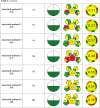
AGREE approach [29] was reported by Pererira et al in mid-2020. The automated software was characterized by simplicity and automation. Therefore, it is the most recommended tool for most analysts. The AGREE pictogram consists of 12 sections equivalent to twelve basics of green analytical chemistry (GAC). The color of the middle zone in the pictogram ranged from red to green depending on method greenness score. The color of each section ranges from red to green as well. The automatically calculated score is denoted in the middle zone ranged from 0 to one according to method greenness as well. The AGREE approach is available for all analysts through free website link. The authors appreciate Pererira and his team efforts. The chromatographic conditions for the nine chromatographic methods for REM were used to develop the full reports and the final scored pictograms as illustrated in Supplementary file 3. The summarized pictograms for AGREE approach are displayed in Table 2 for assessment with the last mentioned three greenness tools.
Table 2.
ESA, NEMI, GAPI, and AGREE approaches for the assessment of greenness values for the different analytical methods stated in the literature for the analysis of REM.
 |
 |
2.5. Application of the four greenness assessment tools to REM chromatographic analytical methods
Four greenness investigating approaches were independently implemented to assess greenness of the nine chromatographic methods reported for analysis of REM. The summary collected for the chromatographic conditions is illustrated in Table 1 . For each chromatographic method, complete details together with proper referencing are also indicated in Table 2 . NEMI tool is based on a blank-green model where green color refers to eco-friendliness of the procedure. ESA tool provides digital results with no figures. Like NEMI tool, GAPI provides 3 colored pictograms to evaluate the greenness of a given method (green, yellow, and red), where the green color distinguishes the best eco-friendly method whereas red refers to environmentally harmful method. Similarly, AGREE pictogram is illustrated by 3 colors like GAPI pictogram, but with different saturating degree of color increasing progressively with regards to digital evaluations of significance [23]. The total outcome given for AGREE is indicated in the center of every pictogram.
Table 1.
Summary of chromatographic condition for methods in literature for analysis of REM.
| Items | Analytical method 1 [5] | Analytical method 2 [6] | Analytical method 3 [7] | Analytical method 4 [8] | Analytical method 5 [9] |
|---|---|---|---|---|---|
| Application of the method (human, rat, rabbit plasma, pharmaceutical formulation) | Human plasma | Human plasma | Human plasma | Injectable Drug product | Human serum |
| Names of analyzed drugs in addition to REM | – | Its metabolites | Its metabolite | Degradation Products | REM (plus metabolite GS-441524), chloroquine, hydroxychloroquine, lopinavir, ritonavir, favipiravir and Azithromycin |
| Stationary phase | C18 | HSS T3 | HSS T3 | C18 | MassTox® TDM Master |
| Mobile phase composition | 0.05 % (v/v) formic acid in H2O (A) and acetonitrile (B) | 10 mM ammonium formate in 5% methyl alcohol, pH = 2.5 (A) and methanol (B) | 0.05 % formic acid in H2O (A) and 0.05% formic acid in acetonitrile (B) | Ortho-phosphoric acid in H2O with pH 3.0 (A) and mixture of acetonitrile, methyl alcohol and H2O in the percentage 70:20:10, v/v (B) | H2O (A) and acetonitrile-formic acid in the ratio 99.9:0.01, v/v (B) |
| Detector type | PDA, MS/MS | MS/MS | MS/MS | UV | MS/MS |
| Mode of elusion | Isocratic elution | Gradient elution | Gradient elution | Gradient elution | Gradient elution |
| Flow rate | 0.5 mL.min−1 | 0.5 mL.min−1 | 0.4 mL.min−1 | 0.7 mL.min−1 | 0.6 mL.min−1 |
| Time of analysis | 10 min | 3.4 min | 4 min | 7.5 min | 5 min |
| Items | Analytical method 6 [10] | Analytical method 7 [11] | Analytical method 8 [12] | Analytical method 9 [13] |
|---|---|---|---|---|
| Application of the method (human, rat, rabbit plasma , pharmaceutical formulation) | Serum | Injection dosage form | Human plasma | Rat plasma |
| Names of analyzed drugs in addition to REM | Remdesivir and its metabolite, along with dexamethasone, | – | Its metabolite | Its metabolite |
| Stationary phase | EC-C18 | SB-C18 | C18 | XBrige C18 |
| Mobile phase composition | H2O (A) and acetonitrile (B) | Acetonitrile (A) and H2O (acidified with phosphoric acid, pH 4) (B) | 10 mM Na formate buffer in 0.1% formic acid- H2O (A) and acetonitrile (B) | Acetonitrile: 0.1% formic acid in H2O in the ratio 95:5, v/v (A) and acetonitrile: 0.1% formic acid in water in the percentage 1:99 v/v (B) |
| Detector type | MS/MS | Fluorescence and diode array | MS/MS | MS/MS |
| Mode of elusion | Gradient elution | Isocratic elution | Gradient elution | Gradient elution |
| Flow rate | Ranged from 0.55 to 0.75 mL.min−1 | 1 mL.min−1 | 0.5 mL.min−1 | 0.4 mL.min−1 |
| Time of analysis | 10 min | 7 min | 5 min | 4.5 min |
| Items | Analytical method 10 [14] | Analytical method 11 [15] | Analytical method 12 [16] | Analytical method 13 [17] |
|---|---|---|---|---|
| Application of the method | Human plasma | Rat plasma | Intravenous Dosage Form | mouse tissues |
| (human, rat, rabbit plasma, pharmaceutical formulation) | ||||
| Names of analyzed drugs in addition to REM | – | Arachidonic acid and cascade metabolites | – | Its metabolites |
| Stationary phase | Synergi™ Fusion-RP | BEH C18 | Inertsil ODS-3V | BioBasic AX |
| Mobile phase composition | 1% formic acid in H2O (A) and 1% formic acid in acetonitrile (B) | 0.1% formic acid in H2O (A) and 0.1% formic acid in acetonitrile (B) | H2O (acidified with phosphoric acid, pH 3) (A) and acetonitrile (50:50, in volumes) (B) | Acetonitrile (A): H2O having 10 mM ammonium acetate (pH 6.0) (B) |
| Detector type | MS/MS | MS/MS | Diode array | MS/MS |
| Mode of elusion | Gradient elution | Gradient elution | Isocratic elution | Gradient elution |
| Flow rate | 0.25 and 0.5 mL.min−1 | 0.4 mL.min−1 | 1.2 mL.min−1 | 0.6 mL.min−1 |
| Time of analysis | 4 min | 17 min | 6 min | 6.5 min |
| Items | Analytical method 14 [18] | Analytical method 15 [19] | Analytical method 16 [20] |
|---|---|---|---|
| Application of the method (human, rat, rabbit plasma , pharmaceutical formulation) | pharmaceutical formulation | Human plasma | Tablet formulations and spiked plasma |
| Names of analyzed drugs in addition to REM | – | 6 co-administered therapeutics | Remdesivir and Favipiravir |
| Stationary phase | Luna phenyl hexyl | C18 | silica gel Al plate (60 F254, 0.1 mm thickness) |
| Mobile phase composition | Acetonitrile (A) : 0.1% ortho-phosphoric acid in H2O (B) (70:30, v/v) | H2O (acidified with phosphoric acid, pH 4) (A) and acetonitrile (B) | Ethyl acetate–methyl alchol-ammonia (8:2:0.2 by Volumes) |
| Detector type | Diode array | Fluorescence and diode array | Diode array |
| Mode of elusion | Isocratic elution | Gradient elution | Isocratic elution |
| Flow rate | 1 mL.min−1 | 1 mL.min−1 | not stated as it is TLC method |
| Time of analysis | 5 min | 12.0 min | saturation time about 15 min + the analysis time (not mentioned) |
3. Results and discussion
To determine the most eco-friendly procedure used to determine REM among all reported chromatographic methods, the greenness status of each method must be studied based on the most applicable greenness evaluating methods including NEMI, ESA, GAPI and AGREE. Regarding to NEMI tool, it was too simple to give us comparative information, as all pictograms of all methods had two blank quarters and 2 green quarters as well. Consequently, it is not feasible to adopt this method in the study for discrimination of the greenest chromatographic method.
To establish a fair environmental comparison among the 16 analytical methods, we must first differentiate between methods of analysis in pharmaceutical preparations and methods of analysis in tissues and biological fluids. As the stages of sample preparation are simpler and less consuming of chemicals in the case of analysis in pharmaceutical preparations than the case of analysis in tissues and biological fluids.
During the environmental comparison for the methods of REM determination in plasma and biological tissues, it was found that methods No. 3 [7] and 11 [15] are the best environmentally according to the AGREE and GAPI tools, Table 2; having the highest score of AGREE tool (0.58 and 0.57 respectively) and 6 green parts for GAPI tool. The secondly ranked methods are analytical method No. 15 [19] and analytical method No. 10 [14] in terms of environmental safety. On the other hand, method No. 13 [17] was the worst according to the GAPI (5 red parts and 4 green parts) and AGREE (0.48) tools, Table 2.
According to the environmental comparison of the analytical methods in the pharmaceutical formulations, method No. 12 [16] was the best according to ESA (91), GAPI (8 green parts), and AGREE (0.57) tools. In contrast, method No. 16 [20] is considered the worst environmentally depending on ESA (80), GAPI (5 green sections), and AGREE tool (0.46).
From the previous comparison, the following findings were extracted. Regarding NEMI tool, it was too simple to conclude the comparative information. GAPI tool has a high differential power during the environmental comparison in case of the analytical methods of active ingredients in the tissue and biological fluids because the GAPI tools evaluate the stages of sample preparation, sample storage and sample extraction as well. The ESA tool was more discriminative in the environmental comparison of analytical methods of active ingredients in the pharmaceutical formulations because the ESA tool gave penalty points for consumed chemicals and energy, and the volume of produced waste as well. AGREE tool is the master greenness assessment tool as it has environmental differential power in assessment of analytical methods in pharmaceutical formulations and also in biological fluids. Consequently, the combination of AGREE tool with GAPI and ESA tools is very effective in comparing analytical methods in pharmaceutical formulation. Furthermore, combination of AGREE tool with GAPI tool is very useful in case of comparing analytical methods in biological fluids and tissues. Detailed data associated with the ESA, GAPI and AGREE methods are clarified in supplementary file s (1–3).
Generally, all the discussed tools can assess the “greenness” of analytical protocols and have their inherent merits and demerits, and hence, the ideal solution is to implement two of them at least to extract the maximum possible information about analytical procedures. On the other hand gathering such detailed information in reality is very time-consuming approach.
4. Conclusion
The LC-MS/MS analysis for the active metabolite of REM (Nuc) reported by Avataneo et al. [7] and Du et al. [15] are the best bio-analytical method regarding the environmental aspects depending on the GAPI and AGREE tools. However, the HPLC method for REM analysis in intravenous solution reported by Jitta et al. [16] is the greenest analytical method for determination of REM in the pharmaceutical dosage forms according to the ESA, GAPI, and AGREE tools. For environmental assessment study of analytical methods in pharmaceutical formulation, combination of the ESA, GAPI, and AGREE tools is recommended for more comprehensive comparison. For the environmental assessment study of analytical methods in biological tissues and fluids, combination of the GAPI and AGREE tools is recommended for more comprehensive comparison. Generally, the need for using more than one tool for evaluation of eco-friendly characters of the analytical method is strongly recommended. NEMI is the lowest greenness approach where all the pictograms are giving similar colors, hence not offering enough discrimination.
Declaration of Competing Interest
The authors declare that they have no known competing financial interests or personal relationships that could have appeared to influence the work reported in this paper.
Acknowledgment
“The authors would like to extend their sincere appreciation to Taif University Researchers Supporting Project number [TURSP-2020/56], Taif University, Taif, Saudi Arabia”.
Footnotes
Supplementary data to this article can be found online at https://doi.org/10.1016/j.microc.2022.107242.
Appendix A. Supplementary data
The following are the Supplementary data to this article:
References
- 1.Al-Tawfiq J.A., Al-Homoud A.H., Memish Z.A. Remdesivir as a possible therapeutic option for the COVID-19. Travel Med. Infect. Dis. 2020;34 doi: 10.1016/j.tmaid.2020.101615. [DOI] [PMC free article] [PubMed] [Google Scholar]
- 2.Chatterjee S. Remdesivir: critical clinical appraisal for COVID 19 treatment, Drug Res. (Stuttg) 2021;71(03):138–148. doi: 10.1055/a-1288-4078. [DOI] [PMC free article] [PubMed] [Google Scholar]
- 3.Warren T.K., Jordan R., Lo M.K., Ray A.S., Mackman R.L., Soloveva V., Siegel D., Perron M., Bannister R., Hui H.C., Larson N., Strickley R., Wells J., Stuthman K.S., Van Tongeren S.A., Garza N.L., Donnelly G., Shurtleff A.C., Retterer C.J., Gharaibeh D., Zamani R., Kenny T., Eaton B.P., Grimes E., Welch L.S., Gomba L., Wilhelmsen C.L., Nichols D.K., Nuss J.E., Nagle E.R., Kugelman J.R., Palacios G., Doerffler E., Neville S., Carra E., Clarke M.O., Zhang L., Lew W., Ross B., Wang Q., Chun K., Wolfe L., Babusis D., Park Y., Stray K.M., Trancheva I., Feng J.Y., Barauskas O., Xu Y., Wong P., Braun M.R., Flint M., McMullan L.K., Chen S.-S., Fearns R., Swaminathan S., Mayers D.L., Spiropoulou C.F., Lee W.A., Nichol S.T., Cihlar T., Bavari S. Therapeutic efficacy of the small molecule GS-5734 against Ebola virus in rhesus monkeys. Nature. 2016;531(7594):381–385. doi: 10.1038/nature17180. [DOI] [PMC free article] [PubMed] [Google Scholar]
- 4.Kupferschmidt K., Cohen J. WHO launches global megatrial of the four most promising coronavirus treatments. Science (80-. 2020;). 22:58. [Google Scholar]
- 5.Pasupuleti R.R., Tsai P.-C., Ponnusamy V.K., Pugazhendhi A. Rapid determination of remdesivir (SARS-CoV-2 drug) in human plasma for therapeutic drug monitoring in COVID-19-Patients. Process Biochem. 2021;102:150–156. doi: 10.1016/j.procbio.2020.12.014. [DOI] [PMC free article] [PubMed] [Google Scholar]
- 6.Xiao D., Ling K.H.J., Tarnowski T., Humeniuk R., German P., Mathias A., Chu J., Chen Y.-S., van Ingen E. Validation of LC-MS/MS methods for determination of remdesivir and its metabolites GS-441524 and GS-704277 in acidified human plasma and their application in COVID-19 related clinical studies. Anal. Biochem. 2021;617 doi: 10.1016/j.ab.2021.114118. [DOI] [PMC free article] [PubMed] [Google Scholar]
- 7.Avataneo V., De Nicolò A., Cusato J., Antonucci M., Manca A., Palermiti A., Waitt C., Walimbwa S., Lamorde M., Di Perri G. Development and validation of a UHPLC-MS/MS method for quantification of the prodrug remdesivir and its metabolite GS-441524: a tool for clinical pharmacokinetics of SARS-CoV-2/COVID-19 and Ebola virus disease. J. Antimicrob. Chemother. 2020;75:1772–1777. doi: 10.1093/jac/dkaa152. [DOI] [PMC free article] [PubMed] [Google Scholar]
- 8.Reddy H.R., Pratap S.R., Chandrasekhar N., Shamshuddin S.Z.M. J. Chromatogr; Sci: 2021. A Novel Liquid Chromatographic Method for the Quantitative Determination of Degradation Products in Remdesivir Injectable Drug product. [DOI] [PubMed] [Google Scholar]
- 9.Habler K., Brügel M., Teupser D., Liebchen U., Scharf C., Schönermarck U., Vogeser M., Paal M. Simultaneous quantification of seven repurposed COVID-19 drugs remdesivir (plus metabolite GS-441524), chloroquine, hydroxychloroquine, lopinavir, ritonavir, favipiravir and azithromycin by a two-dimensional isotope dilution LC–MS/MS method in human serum. J. Pharm. Biomed. Anal. 2021;196 doi: 10.1016/j.jpba.2021.113935. [DOI] [PMC free article] [PubMed] [Google Scholar]
- 10.Reckers A., Wu A.H.B., Ong C.M., Gandhi M., Metcalfe J., Gerona R. A combined assay for quantifying remdesivir and its metabolite, along with dexamethasone, in serum. J. Antimicrob. Chemother. 2021;76(7):1865–1873. doi: 10.1093/jac/dkab094. [DOI] [PMC free article] [PubMed] [Google Scholar]
- 11.Hamdy M.M.A., Abdel Moneim M.M., Kamal M.F. Accelerated stability study of the ester prodrug remdesivir: Recently FDA-approved Covid-19 antiviral using reversed-phase-HPLC with fluorimetric and diode array detection. Biomed. Chromatogr. 2021;35(12) doi: 10.1002/bmc.v35.1210.1002/bmc.5212. [DOI] [PubMed] [Google Scholar]
- 12.Alvarez J.-C., Moine P., Etting I., Annane D., Larabi I.A. Quantification of plasma remdesivir and its metabolite GS-441524 using liquid chromatography coupled to tandem mass spectrometry. Application to a Covid-19 treated patient. Clin. Chem. Lab. Med. 2020;58(9):1461–1468. doi: 10.1515/cclm-2020-0612. [DOI] [PubMed] [Google Scholar]
- 13.Du P., Wang G., Yang S., Li P., Liu L. Quantitative HPLC-MS/MS determination of Nuc, the active metabolite of remdesivir, and its pharmacokinetics in rat. Anal. Bioanal. Chem. 2021;413(23):5811–5820. doi: 10.1007/s00216-021-03561-8. [DOI] [PMC free article] [PubMed] [Google Scholar]
- 14.Nguyen R., Goodell J.C., Shankarappa P.S., Zimmerman S., Yin T., Peer C.J., Figg W.D. Development and validation of a simple, selective, and sensitive LC-MS/MS assay for the quantification of remdesivir in human plasma. J. Chromatogr. B. 2021;1171 doi: 10.1016/j.jchromb.2021.122641. [DOI] [PMC free article] [PubMed] [Google Scholar]
- 15.Du P., Wang G.-Y., Zhao R., An Z.-L., Liu L.-H. Eicosanoid metabolomic profile of remdesivir treatment in rat plasma by high-performance liquid chromatography mass spectrometry. Front. Pharmacol. 2021;12 doi: 10.3389/fphar.2021.74745010.3389/fphar.2021.747450.s00110.3389/fphar.2021.747450.s00210.3389/fphar.2021.747450.s003. [DOI] [PMC free article] [PubMed] [Google Scholar]
- 16.Jitta S.R., Salwa, Kumar L., Gangurde P.K., Verma R. Development and validation of high-performance liquid chromatography method for the quantification of remdesivir in intravenous dosage form. Assay Drug Dev. Technol. 2021;19(8):475–483. doi: 10.1089/adt.2021.074. [DOI] [PubMed] [Google Scholar]
- 17.Hu W., Chang L., Ke C., Xie Y., Shen J., Tan B., Liu J. Challenges and stepwise fit-for-purpose optimization for bioanalyses of remdesivir metabolites nucleotide monophosphate and triphosphate in mouse tissues using LC–MS/MS. J. Pharm. Biomed. Anal. 2021;194 doi: 10.1016/j.jpba.2020.113806. [DOI] [PMC free article] [PubMed] [Google Scholar]
- 18.Raasi K.M. Analytical method development and validation of remdesivir in bulk and pharmaceutical dosage forms using reverse-phase-high performance liquid chromatography, br nahata smriti sansthan int. J. Phramaceutical Sci. Clin. Res. 2021;1 [Google Scholar]
- 19.Moneim M.M.A., Kamal M.F., Hamdy M.M.A. Rapid sensitive bioscreening of remdesivir in COVID-19 medication: Selective drug determination in the presence of six co-administered therapeutics. Rev. Anal. Chem. 2021;40:323–333. [Google Scholar]
- 20.Noureldeen D.A.M., Boushra J.M., Lashien A.S., Hakiem A.F.A., Attia T.Z. Novel environment friendly TLC-densitometric method for the determination of anti-coronavirus drugs “Remdesivir and Favipiravir”: Green assessment with application to pharmaceutical formulations and human plasma. Microchem. J. 2022;174:107101. doi: 10.1016/j.microc.2021.107101. [DOI] [PMC free article] [PubMed] [Google Scholar]
- 21.Armenta S., Garrigues S., de la Guardia M. Green analytical chemistry, TrAC. Trends Anal. Chem. 2008;27(6):497–511. [Google Scholar]
- 22.Płotka-Wasylka J., Fabjanowicz M., Kalinowska K., Namieśnik J. History and milestones of green analytical chemistry, in. Green Anal. Chem., Springer. 2019:1–17. [Google Scholar]
- 23.Liu J. DNA-stabilized, fluorescent, metal nanoclusters for biosensor development, TrAC. Trends Anal. Chem. 2014;58:99–111. [Google Scholar]
- 24.Tobiszewski M. Metrics for green analytical chemistry. Anal. Methods. 2016;8(15):2993–2999. [Google Scholar]
- 25.Płotka-Wasylka J., Kurowska-Susdorf A., Sajid M., Namieśnik J., Tobiszewski M. Green chemistry in higher education: state of the art, challenges, and future trends. ChemSusChem. 2018;11:2845–2858. doi: 10.1002/cssc.201801109. [DOI] [PubMed] [Google Scholar]
- 26.Keith L.H., Gron L.U., Young J.L. Green analytical methodologies. Chem. Rev. 2007;107(6):2695–2708. doi: 10.1021/cr068359e. [DOI] [PubMed] [Google Scholar]
- 27.Van Aken K., Strekowski L., Patiny L. EcoScale, a semi-quantitative tool to select an organic preparation based on economical and ecological parameters. Beilstein J. Org. Chem. 2006;2:3. doi: 10.1186/1860-5397-2-3. [DOI] [PMC free article] [PubMed] [Google Scholar]
- 28.Płotka-Wasylka J. A new tool for the evaluation of the analytical procedure: green analytical procedure index. Talanta. 2018;181:204–209. doi: 10.1016/j.talanta.2018.01.013. [DOI] [PubMed] [Google Scholar]
- 29.Pena-Pereira F., Wojnowski W., Tobiszewski M. AGREE—Analytical GREEnness metric approach and software. Anal. Chem. 2020;92(14):10076–10082. doi: 10.1021/acs.analchem.0c01887. [DOI] [PMC free article] [PubMed] [Google Scholar]
- 30.Gamal M., Naguib I.A., Panda D.S., Abdallah F.F. Comparative study of four greenness assessment tools for selection of greenest analytical method for assay of hyoscine N-butyl bromide. Anal. Methods. 2021;13(3):369–380. doi: 10.1039/d0ay02169e. [DOI] [PubMed] [Google Scholar]
- 31.Sheldon R.A., Arends I.W.C.E., Hanefeld U., editors. Green Chemistry and Catalysis. Wiley; 2007. [Google Scholar]
- 32.Migaszewski Z.M., Konieczka P., Namieśnik J., Gałuszka A., Namieśnik J.N. Analytical Eco-Scale for assessing the greenness of analytical procedures. Trends Anal. Chem. 2012;37:61–72. doi: 10.1016/j.trac.2012.03.013. [DOI] [Google Scholar]
Associated Data
This section collects any data citations, data availability statements, or supplementary materials included in this article.