



Abstract
Background
Prior studies suggest reduced humoral response to COVID-19 vaccination in immunosuppressed populations. Disease modifying therapies (DMTs) for multiple sclerosis (MS) have variable immunomodulatory effects, and limited data are available for all DMTs. We aimed to determine the impact of DMTs on antibody response to COVID-19 vaccination among MS patients.
Methods
Patients with documented COVID-19 vaccination dates and anti-spike antibody results post-vaccination were identified between March-August 2021. Clinical data were retrospectively abstracted from chart review. Deidentified data were analyzed to evaluate antibody response, and multivariable logistic regression analyses were used to identify clinical and demographic predictors of antibody response. Data analysis was completed with SAS Studio, v3.8.
Results
A total of 353 individuals had documented COVID-19 vaccine and antibody test dates (58% Pfizer, 38% Moderna, and 4% Johnson & Johnson). Of these 353 patients, 72% developed antibodies, with a mean antibody test interval of 53 days (median 46) post final vaccine dose. 100% of those on no DMT (n = 34), injectables (n = 20), teriflunomide (n = 10), natalizumab (n = 71), and 97.8% of those on fumarates (n = 46/47) had a positive antibody result. One patient on cladribine (n = 1) had a negative antibody result. Of those on sphingosine-1 phosphate (S1P) modulators, 72.4% (n = 21/29) had a positive antibody result. Of those on anti-CD20 therapies, 37.6% (n = 53/141) had a positive antibody result. Multivariate modeling of the total cohort showed anti-CD20 therapy was significantly associated with lower odds of positive antibody response (OR = 0.024, 95% CI 0.01;0.05, p < 0.0001). Among S1P modulators, increased duration of therapy, and not lymphopenia, may be associated with lower odds of positive antibody response. Multivariate modeling of anti-CD20 therapies showed therapy duration < 1 year (OR 8.14, 95% CI 2.896;22.898 p < .0001) and prior COVID-19 infection (OR = 3.95, 95% CI 1.137;13.726, p = .03) were significantly associated with higher odds of a positive antibody response. In patients with recent B-cell data, mean B-cell count was higher in antibody-positive individuals compared to antibody-negative (32.9 vs. 3.9 cells, p = .0056).
Conclusion
MS DMTs had variable impact on antibody response with mRNA and viral vector COVID-19 vaccines. All patients on no DMT, interferons, glatiramer acetate, teriflunomide, natalizumab, and nearly all on fumarates had positive antibody responses post-vaccine. S1P modulators and anti-CD20 therapies attenuated antibody response post-vaccine. For patients on anti-CD20 therapies, shorter duration of therapy and prior COVID-19 infection predicted positive antibody response. Further studies are needed to determine clinical significance of antibody testing, development of cellular mediated immunity, and benefits of booster vaccinations.
Keywords: COVID-19, Multiple sclerosis, Vaccine, Antibody response
1. Introduction
COVID-19 remains an ongoing pandemic (Wang et al., 2020) with a rapid vaccination effort underway. CDC guidelines for vaccinated individuals are continuously evolving. It is unclear whether these guidelines can be applied to people with multiple sclerosis (MS), a serious inflammatory neurological disorder affecting one million people in the US alone (Wallin et al., 2019) and typically requiring chronic immunomodulatory therapy. MS disease modifying therapies (DMTs) variably impact immune function, raising unique challenges for appropriate guidance post-vaccination. Recent literature in immunosuppressed organ transplant patients, including patients on anti-CD20 therapies also used in MS (Boyarsky et al., 2021), suggests decreased humoral responses post-vaccination. Decreased incidence of humoral response to the COVID-19 vaccine with anti-CD20 therapies and S1P modulators in MS patients has been previously reported (Achiron et al., 2021; Brill et al., 2021; Deepak et al., 2021; Sormani et al., 2021). However, these studies do not encompass the full range of DMT options, and are not inclusive of all vaccine types with FDA approval or emergency use authorization in the US (Pfizer, Moderna, and Johnson & Johnson). Our study aims to further elucidate the impact of MS DMTs on humoral immunity post-COVID-19 vaccination.
2. Material and methods
IRB exemption was obtained through the Mount Sinai Hospital IRB. MS patients at the Corinne Goldsmith Dickinson Center for MS with documented COVID-19 vaccination series dates and subsequent anti-spike antibody testing were identified by routine clinical care and medical chart review. To mitigate sampling bias, we reviewed all patients regardless of DMT between March 2021 and August 2021 who had COVID-19 antibody testing to evaluate for complete data regarding vaccination and antibody test dates. Additionally, all patients receiving infusion therapies (natalizumab, rituximab, and ocrelizumab) at the Mount Sinai infusion center systematically received antibody testing at each infusion during this time period regardless of DMT and vaccination status per institutional protocol.
Inclusion criteria included MS diagnosis, 18 years or older, documented COVID-19 vaccination dates and COVID-19 antibody results between March and July 2021. We excluded patients with a non-MS diagnosis, any patients who did not receive a complete vaccine series as mandated by FDA guidelines, any patients who did not receive any antibody testing post vaccination, and any patients who received more than one type of COVID-19 vaccination. Additionally, all patients with secondary immunosuppression were excluded. Data abstraction, including age, sex, DMT, duration of therapy at time of vaccination, white blood cell counts, absolute lymphocyte counts, circulating B cell counts, immunoglobulins, prior COVID-19 infection history, COVID-19 vaccine type, vaccine dates, and COVID-19 antibody test date and results, was completed by study authors. A history of prior COVID-19 infection was confirmed by chart review with a positive COVID-19 PCR or positive rapid antigen test at the time of symptoms, or if the patient had positive serum antibodies to either spike or nucleocapsid protein prior to vaccination. Where first vaccine dates were not available from data abstraction, dates were imputed based on standard vaccine dosing intervals per the FDA. For patients on anti-CD20 therapies, time since last infusion was defined as the time between the proximate infusion and the first vaccine date. The primary outcome was defined as a detectable antibody response on clinical laboratory testing.
Commercially available ECLIA or ELISA assays with emergency use authorization for serologic testing against the receptor binding domain of the spike protein in SARS CoV-2 were utilized. Available tests included qualitative anti-spike IgG (anti-S; DiaSorin), semi-quantitative total anti-spike antibody (anti-S; Elecsys anti-SARS-CoV-2 spike ECLIA, Roche Diagnostics- IgA, IgM, IgG), and semi-quantitative anti-spike IgG testing (anti-S; SeroKlir Kantaro ELISA, Mount Sinai Hospital- IgG)(Amanat et al., 2020). Outside testing sites (Quest, other academic institutions) were included after verification of assay type.
Univariate testing, including t-tests with continuous variables, and chi-squared tests or Fisher exact tests for categorical variables, was used to identify significant predictors of positive antibody response. ANOVA testing was used to assess potential differences in mean testing interval between DMTs, with Dunnett's t-test comparing all DMTs to testing intervals of patients on no DMTs. Clinically relevant and/or significant predictors with complete data were incorporated into multivariate logistic regression models of the full cohort, patients on S1P therapies, and patients on anti-CD20 therapies. All statistical analyses were performed with SAS Studio Version 3.8.
3. Results
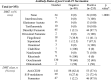
A total of 353 participants met inclusion criteria. The mean age was 47, and 72.2% were women. Vaccine types included Pfizer/BioNTech (58%), Moderna (38%), or Johnson & Johnson (4%). Most patients (72.2%) tested positive for COVID-19 antibodies after vaccination. The mean antibody testing interval post final vaccine dose was 53 days (median 46). The only DMT with a statistically significant shorter testing interval compared to patients on no therapy was natalizumab (difference between means was -25.433 days, 95% CI -42.992 to -7.874) due to routine monthly testing at each infusion. A minority (8.2%, n = 29) of patients had a confirmed history of COVID-19 infection. Of 29 patients with history of COVID-19, 14 were on anti-CD20 therapies. Of these 14 patients, all patients except one had COVID-19 while on therapy. Only one patient on ocrelizumab had COVID-19 prior to initiating therapy. No significant differences in age, sex, vaccine type, testing interval, and history of COVID-19 infection were noted in the total cohort (Table 1 ).
Table 1.
Antibody response to COVID-19 vaccination by key demographics, COVID-19 history, and vaccine type.
 |
*Statistical significance defined as p < .05.
1Testing Interval defined as days between final vaccine dose and antibody test. Antibody test result is reported once per participant, with the exception of assay types and lab facilities. Numbers for assay type and lab facility may not add to total (n = 353) given that patients may have had multiple tests.
Additionally, 5 out of 353 patients received oral prednisone within 10 days of receiving a dose of a COVID-19 vaccination. Of these 5 patients, 2 patients were not on DMT – one of whom received a 4-day low-dose prednisone taper 2 days after the first dose of the Moderna COVID-19 vaccine and one of whom was on 5mg prednisone every other day during the course of the Pfizer COVID-19 vaccination series. One patient on dimethyl fumarate received a 5-day course of high-dose oral prednisone 10 days after the second dose of the Moderna COVID-19 vaccine for a right hand sensory relapse. One patient on teriflunomide received a 5-day course of high-dose oral prednisone 6 days after the first dose of the Moderna COVID-19 vaccine for a left optic neuritis relapse, and one patient on siponimod received a 3-day course of high-dose oral prednisone one day prior to the first dose of the Moderna COVID-19 vaccine for a right upper extremity sensory relapse. Of note, despite receiving steroids in close proximity to the vaccine, all five patients had a positive antibody response to the COVID-19 vaccine.
100% of patients on no DMT (n = 34), injectables (interferon-beta, glatiramer acetate; n = 20), teriflunomide (n = 10), and natalizumab (n = 71) had positive antibodies (Fig. 1 ). Nearly all patients on fumarates (n = 46/47) had positive antibodies. One patient on cladribine had negative antibodies (Table 2 ).
Fig. 1.

Antibody Result by DMT: Number of participants who demonstrated a positive and negative antibody response classified by DMT at the time of COVID-19 vaccination.
Table 2.
Antibody response to COVID-19 vaccination by DMT and DMT class.
 |
*Statistical significance defined as p < .05 with chi-squared testing for antibody response by DMT.
All patients received standard dosing of DMTs described above per FDA recommendation. All patients on teriflunomide received 14 mg dosing. The one patient on cladribine received the Johnson & Johnson COVID-19 vaccine 3 months after completing cycle 2 of cladribine.
Of 29 patients on S1P modulators, 72.4% had positive antibody responses (Table 3 ). Medications included fingolimod (n = 18), siponimod (n = 8) and ozanimod (n = 3). Multivariate modeling (Table 4 ) showed longer therapy duration may be associated with lower odds of antibody positivity (OR = 0.999, 95% CI 0.998; 0.99992, p = .03).
Table 3.
Univariate Predictors of antibody response to COVID-19 Vaccination for S1P and anti- CD20 therapies.
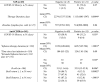 |
*Statistical significance defined as p < .05.
1Infusion therapy duration was defined as time on infusion anti- CD20 therapies from first infusion date to first vaccine date.
2Time since last infusion is defined as days between proximate infusion and first vaccine date, where the proximate infusion refers to the infusion date directly prior to the first vaccine date.
3Extended Infusion interval refers to the time between the most proximate infusion prior to the the first vaccine date to the most recent infusion at the time of data collection, and where “extended” was defined as being greater than 194 days, encompassing the standard six month infusion interval (180 days) with a two week grace period (14 days).
Table 4.
Multivariate logistic regression: predictors of positive antibody response.
| Total Cohort (n = 353) | OR | 95% CI | p value | |
|---|---|---|---|---|
| Age | 0.98 | 0.958 | 1.003 | 0.09 |
| Sex | 0.72 | 0.37 | 1.402 | 0.33 |
| COVID-19 History | 2.86 | 0.564 | 3.485 | 0.062 |
| Anti-CD20 | 0.024 | 0.011 | 0.052 | <.0001* |
| S1P Modulators (n = 29) | OR | 95% CI | p value | |
| Age | 0.97 | 0.887 | 1.057 | 0.63 |
| Sex | 1.59 | 0.171 | 14.906 | 0.48 |
| Absolute lymphocyte count | 1.001 | 0.999 | 1.002 | 0.57 |
| Therapy Duration | 0.999 | 0.998 | 0.999921 | 0.034* |
| Anti-CD20 (n = 139) | OR | 95% CI | p value | |
| Age | 0.99 | 0.964 | 1.021 | 0.58 |
| Sex | 0.64 | 0.283 | 1.431 | 0.27 |
| COVID-19 History | 3.95 | 1.137 | 13.726 | 0.03* |
| Infusion Duration (1–2 years)2 | 1.34 | 0.487 | 3.672 | 0.57 |
| Infusion Duration (< 1 year)2 | 8.14 | 2.896 | 22.898 | < .0001* |
| Time since last infusion2 | 1.004 | 0.999 | 1.009 | 0.087 |
Results of multivariate logistic regression model to identify significant predictors of positive antibody response among total cohort (n = 353), patients on only S1P modulators with complete therapy duration data (n = 29 of 29), and patients on only infusion anti-CD20 therapies with complete infusion duration data (n = 139 of 141). Reference parameters for categorical variables defined as follows: sex (male), COVID-19 history (no history of COVID-19 infection), anti-CD20 (not on anti- CD20), infusion duration (> 2 years), exended infusion interval (< 194 days between most recent infusions).
*Statistical significance defined as p < .05.
95% Confidence interval for Therapy Duration was noted to be 0.99839877- 0.99991534.
Therapy Duration defined as days between therapy initiation date and first vaccine date, categorized into < 1 year (365 days), 1, 2 years (366–730 days), and > 2 years (> 731 days). Reference parameter is infusion duration > 2 years (> 731 days).
3Time since last infusion is defined as days between proximate infusion and first vaccine date, where the proximate infusion refers to the infusion date directly prior to the first vaccine date.
Of 141 patients on anti-CD20 therapies, 37.6% had a positive antibody result. The majority of patients were on ocrelizumab (n = 130); however, 9 patients on rituximab and 2 patients on ofatumumab were also included (Table 3). Multivariate modeling for the total cohort (n = 353) showed anti-CD20 therapy was associated with lower odds of antibody positivity (OR = .024, 95% CI 0.01-0.05, p = <0.0001). Multivariate modeling of infusion anti-CD20 therapies (n = 139) showed infusion therapy duration <1 year (OR 8.14, 95% CI 2.896; 22.898, p < .0001) and prior COVID-19 infection (OR = 3.95, 95% CI 1.137;13.726, p = .03) as significant predictors of positive antibody response.
While time since last infusion was not significantly associated with positive antibody response, we also evaluated whether an extended infusion interval was associated with a positive antibody response. This was defined as the time from the most proximate infusion prior to the the first vaccine date to the most recent infusion at the time of data collection, where “extended” was defined as being greater than 194 days, encompassing the standard six month infusion interval (180 days) with a two week grace period (14 days). In a subset of patients with complete infusion date data (n = 131), 31% (n = 40) had an extended infusion interval (Table 3). 53% (21/40) of patients with an extended infusion interval had a positive antibody test as compared to 33% (30/91) without an extended infusion interval (p = .03). In a smaller subset of patients with available B-cell counts within 6 months prior to or after the second vaccine (n = 108), mean B-cell count (Table 3) was higher in antibody-positive individuals compared to antibody-negative (32.9 vs. 3.9 cells, p = 0.0056). Of these 108 patients, 86.7% of patients with zero B cells were antibody negative (Table 3). In comparison, 47% with any circulating B cells (≥ 1 cell) were antibody negative, decreasing to 36% when defined as ≥2 cells in serum. Among patients with positive semi-quantitative anti-spike IgG completed only through Mount Sinai (n = 195), mean numerical values were lower with anti-CD20 therapies compared to other DMTs (189.7 AU/ml vs 484.5 AU/ml, p < .0001). Decreased total IgG levels among anti-CD20 patients were not significantly associated with antibody result status. However given that only 10 patients had decreased IgG levels and collection time points of immunoglobulin levels varied, we are unable to definitively draw conclusions regarding IgG levels in this cohort.
4. Discussion
A robust and sustained adaptive immune response to SARS CoV-2 undoubtedly requires a complex interplay between humoral and cell-mediated mechanisms (Sette and Crotty, 2021). The optimal measurement of immunity likely includes a range of sophisticated assessments of neutralizing antibodies (Addetia et al., 2020), CD4+/CD8+ T-cell responses (Grifoni et al., 2020; Sekine et al., 2020), and evaluation of immune memory - including targeted humoral memory with antibody-secreting plasma cells (Turner et al., 2021; Zheng et al., 2021), reactive humoral memory with memory B-cells (Gaebler et al., 2021; Turner et al., 2021), and cell-mediated memory with memory CD4+/CD8+ T-cells (Wang et al., 2021). However, these assessments were not clinically available and rapidly evolving public health guidance for vaccinated individuals in the COVID-19 pandemic underscored a pressing need to quickly investigate whether MS DMTs may impede the development of an immune response to COVID-19 vaccination. Given that humoral immunity is key in the neutralization of acutely cytopathic viral pathogens, elimination of infected cells, and protection against re-infection (Dörner and Radbruch, 2007), and the only commercially available assays evaluating immunity assessed anti-spike binding antibodies at the time of inquiry, our pragmatic retrospective study focused on anti-spike binding antibody testing.
We observed all MS patients in our cohort not on therapy, interferons, glatiramer acetate, teriflunomide, and natalizumab had positive antibody responses post-vaccination, which is overall consistent with prior literature on vaccine response with these medications (Ciotti et al., 2020). While nearly all patients on fumarates had a positive response, 72% of patients on S1P modulators and only 37.6% of patients on anti-CD20 therapies had positive antibody responses. These rates are higher than previously published in Israel (Achiron et al., 2021) but lower than what was seen in Italy (Sormani et al., 2021). This may be due to broader DMT inclusion, longer testing intervals post-vaccination, and heterogeneous testing type at our site. Importantly, no differences in antibody positivity were seen with age, sex, or vaccine type.
S1P therapies, particularly fingolimod, have previously been associated with decreased humoral response (Kappos et al., 2015; Ufer et al., 2017). In our cohort, lymphocyte count did not significantly predict positive response. These results differ from results published in Italy (Sormani et al., 2021) where lymphopenia within one month in patients on fingolimod was noted to be associated with lower antibody response. Though we did not see an association between lymphopenia and antibody result, this is likely a sequelae of small sample size. We observed a small, but significant, association of increased duration of therapy and lower odds of positive antibody response, suggesting duration of therapy beyond lymphopenia may be an important consideration to the extent of immunomodulation among S1P therapies (Rommer et al., 2019). Additionally, this data raises a question of studying duration of lymphopenia as an additional factor in predicting antibody response post vaccine with S1P therapies.
Anti-CD20 therapies decreased odds of antibody positivity post-vaccine, consistent with prior literature on general vaccine responses (Bar-Or et al., 2020), and with recent literature on COVID-19 vaccine responses (Achiron et al., 2021; Brill et al., 2021; Sormani et al., 2021). Among our cohort of patients on anti-CD20 infusion therapies, shorter duration of therapy and prior COVID-19 history were significant predictors of positive antibody response. While time since last infusion was not significant in our multivariate analysis, a p-value that was close to statistical significance suggests that this may be due to sample size. Significant associations with increased time since last infusion increasing likelihood of positive antibody response have been noted in other studies around the world (Disanto et al., 2021; Sormani et al., 2021). Given that we had incomplete data for defining infusion interval and recent B cell counts for our full cohort, we did not include these in the larger multivariate models as to avoid introducing further risk of bias. However, we do note that a higher percentage of patients who had their infusion interval extended to accommodate the vaccine were antibody positive supporting the possibility that increasing the time between proximate infusion and vaccination may be of benefit. Recent data also suggest that extended interval ocrelizumab infusion may be a safe option that does not increase risk for relapse, making this a reasonable clinical strategy (Rolfes et al., 2021). We note a higher percentage of antibody positive patients having circulating B cells, which may play a part in driving an association between increased time since last infusion and antibody result. However, our results show that while detectable B cells may be important, they remain insufficient in predicting a positive antibody response, as 47% of patients with circulating B cells (≥ 1 cell) in our cohort remained antibody-negative.
Our data represent a real-world cohort and are limited by retrospective design with convenience sampling, as well as heterogeneous testing intervals and assays. There was a significant difference between the testing interval between natalizumab and reference (no therapy) DMT group. This was likely due to decreased variance in this group arising from monthly antibody testing due to evolving infusion protocols at the Mount Sinai infusion center. Due to prescribing practices within our center, our cohort did not include any patients on alemtuzumab, only one patient on cladribine, and only two patients on ofatumumab. Therefore these results are not fully representative of antibody responses with these therapies, and further study is needed. The full clinical significance of qualitative and semi-quantitative binding antibodies remains unclear. Prior clinical trial data and emerging evidence suggests a calibrated ELISA based assay as being an acceptable correlate of immunogenicity post-vaccine (Anderson et al., 2020; Earle et al., 2021; Sadoff et al., 2021; Walsh et al., 2020), and may track well with CD4+ T-cell response post-infection (Grifoni et al., 2020). Validating these findings with functional neutralization assays is needed, and larger studies to examine the clinical correlation of efficacy against COVID-19 re-infection or mortality with antibody testing will be key.
We were unable to evaluate cellular immunity, generally thought to be relatively preserved in anti-CD20 therapies, due to a lack of commercially available anti-spike T-cell testing at the time of this study. As recently demonstrated, patients on ocrelizumab without a detectable humoral response to the COVID-19 vaccine do mount evidence of cellular immunity(Apostolidis et al., 2021; Brill et al., 2021). The US study examining T-cell response showed a preserved CD8 T-cell response, and while present, an attenuated CD4 T-cell response. It is unclear to what extent a lack of circulating B cells may impede the development of cellular immunity post-COVID-19-vaccination due to inadequate T-cell activation, and to what extent that may be clinically significant in the context of rising COVID-19 variants. Though results from a series of organ transplant patients showed 67% of antibody-negative patients remained negative despite a third vaccine dose(Walsh et al., 2020), our finding of prior COVID-19 infection increasing odds of antibody response may indicate that patients with MS on anti-CD20 therapies could potentially better develop an antibody response from additional vaccine doses.
5. Conclusion
Our study demonstrates heterogeneous antibody responses post-COVID-19 vaccination across MS DMTs to a broad range of available COVID-19 vaccines in the US. All patients on no therapy, early injectable therapies, teriflunomide, natalizumab and nearly all patients on fumarates had antibody positivity, whereas this was not seen with S1P and anti-CD20 therapies. For anti-CD20 therapies, shorter therapy duration and COVID-19 history predicted positive response. Commercially available assays evaluating humoral and cellular mediated immunity and prospective data will be key to informing the best clinical correlates of immunity, the need for additional booster vaccinations, and guidance on infection risk mitigation in patients on immunomodulatory therapies.
Funding source
None.
CRediT authorship contribution statement
Sammita Satyanarayan: Conceptualization, Methodology, Formal analysis, Investigation, Resources, Data curation, Writing – original draft, Writing – review & editing, Visualization. Neha Safi: Conceptualization, Methodology, Formal analysis, Investigation, Resources, Data curation, Writing – original draft, Writing – review & editing, Visualization. Tali Sorets: Investigation, Resources, Writing – review & editing. Susan Filomena: Investigation, Resources, Writing – review & editing. Yinan Zhang: Investigation, Resources, Writing – review & editing. Sylvia Klineova: Resources, Writing – review & editing. Michelle Fabian: Resources, Writing – review & editing. Sam Horng: Resources, Writing – review & editing. Stephanie Tankou: Resources, Writing – review & editing. Aaron Miller: Resources, Writing – review & editing. Stephen Krieger: Resources, Writing – original draft, Writing – review & editing. Fred Lublin: Resources, Writing – review & editing. James Sumowski: Methodology, Formal analysis, Writing – original draft, Writing – review & editing. Ilana Katz Sand: Conceptualization, Methodology, Validation, Formal analysis, Investigation, Resources, Writing – original draft, Writing – review & editing, Visualization, Supervision.
Declaration of Competing Interest
S.Satyanarayan has no disclosures; N.Safi has no disclosures; T. Sorets has no disclosures; S. Filomena has no disclosures; Y. Zhang has no disclosures; S.Klineova has given non-promotional lectures with Biogen Idec and Alexion and participated on advisory boards for Biogen Idec, Genentech, and Greenwich Biosciences; M. Fabian has no disclosures; S. Horng has no disclosures; S.Tankou has no disclosures; S. Krieger reports consulting or advisory work with Biogen, EMD Serono, Genentech, Genzyme, Mallinckrodt, MedDay, Novartis, Teva, and TG Therapeutics, nonpromotional speaking with Biogen, EMD Serono, Genentech, and Novartis, and grant and research support from Biogen and Novartis; F.Lublin reports Sources of Funding for Research: Novartis, Actelion, Biogen, Sanofi, NMSS, NIH, Brainstorm Cell Therapeutics. Consulting Agreements/Advisory Boards/DSMB: Biogen, EMD Serono, Novartis, Teva, Actelion/Janssen, Sanofi/Genzyme, Acorda, Roche/Genentech, MedImmune/Viela Bio, Receptos/Celgene/BMS, TG Therapeutics, Medday, Atara Biotherapeutics, Mapi Pharma, Apitope, Orion Biotechnology, Brainstorm Cell Therapeutics, Jazz Pharmaceuticals, GW Pharma, Mylan, Immunic, Population Council, Avotres, Neurogene, Banner Life Sciences. Stock Options: Avotres. Speaker: Sanofi (non-promotional), EMD Serono (non-promotional); A. Miller reports consulting for AbbVie, Health Services, (Caremark), Adamas, Biogen Idec, Bristol Myers Squib/Celgene, Corrona, EMD Serono, Mallinckrodt, Mapi-Pharma, Novartis, Roche/Genentech, nonpromotional speaking with Biogen Idec, EMD Serono, Alexion, Genentech, and has received research support from Genzyme/Sanofi, Mallinckrodt, Novartis, Roche /Genentech, MedDay; J.Sumowski reports consulting or advisory work with Biogen and Genzyme; I. Katz Sand has no disclosures.
References
- Achiron A., Mandel M., Dreyer-Alster S., Harari G., Magalashvili D., Sonis P., Dolev M., Menascu S., Flechter S., Falb R., Gurevich M. Humoral immune response to COVID-19 mRNA vaccine in patients with multiple sclerosis treated with high-efficacy disease-modifying therapies. Ther. Adv. Neurol. Disord. 2021;14:1–8. doi: 10.1177/17562864211012835. [DOI] [PMC free article] [PubMed] [Google Scholar]
- Addetia A., Crawford K.H.D., Dingens A., Zhu H., Roychoudhury P., Huang M.L., Jerome K.R., Bloom J.D., Greninger A.L. Neutralizing antibodies correlate with protection from SARS-CoV-2 in humans during a fishery vessel outbreak with a high attack rate. J. Clin. Microbiol. 2020;58:1–11. doi: 10.1128/JCM.02107-20. [DOI] [PMC free article] [PubMed] [Google Scholar]
- Amanat F., Stadlbauer D., Strohmeier S., Nguyen T.H.O., Chromikova V., McMahon M., Jiang K., Arunkumar G.A., Jurczyszak D., Polanco J., Bermudez-Gonzalez M., Kleiner G., Aydillo T., Miorin L., Fierer D.S., Lugo L.A., Kojic E.M., Stoever J., Liu S.T.H., Cunningham-Rundles C., Felgner P.L., Moran T., García-Sastre A., Caplivski D., Cheng A.C., Kedzierska K., Vapalahti O., Hepojoki J.M., Simon V., Krammer F. A serological assay to detect SARS-CoV-2 seroconversion in humans. Nat. Med. 2020;26:1033–1036. doi: 10.1038/s41591-020-0913-5. [DOI] [PMC free article] [PubMed] [Google Scholar]
- Anderson E.J., Rouphael N.G., Widge A.T., Jackson L.A., Roberts P.C., Makhene M., Chappell J.D., Denison M.R., Stevens L.J., Pruijssers A.J., McDermott A.B., Flach B., Lin B.C., Doria-Rose N.A., O'Dell S., Schmidt S.D., Corbett K.S., Swanson P.A., Padilla M., Neuzil K.M., Bennett H., Leav B., Makowski M., Albert J., Cross K., Edara V.V., Floyd K., Suthar M.S., Martinez D.R., Baric R., Buchanan W., Luke C.J., Phadke V.K., Rostad C.A., Ledgerwood J.E., Graham B.S., Beigel J.H. Safety and Immunogenicity of SARS-CoV-2 mRNA-1273 Vaccine in Older Adults. N. Engl. J. Med. 2020;383:2427–2438. doi: 10.1056/nejmoa2028436. [DOI] [PMC free article] [PubMed] [Google Scholar]
- Apostolidis S.A., Kakara M., Painter M.M., Goel R.R., Mathew D., Lenzi K., Rezk A., Patterson K.R., Espinoza D.A., Kadri J.C., Markowitz D.M., E Markowitz C., Mexhitaj I., Jacobs D., Babb A., Betts M.R., Prak E.T.L., Weiskopf D., Grifoni A., Lundgreen K.A., Gouma S., Sette A., Bates P., Hensley S.E., Greenplate A.R., Wherry E.J., Li R., Bar-Or A. Cellular and humoral immune responses following SARS-CoV-2 mRNA vaccination in patients with multiple sclerosis on anti-CD20 therapy. Nat. Med. 2021 doi: 10.1038/s41591-021-01507-2. Springer US. [DOI] [PMC free article] [PubMed] [Google Scholar]
- Bar-Or A., Calkwood J.C., Chognot C., Evershed J., Fox E.J., Herman A., Manfrini M., McNamara J., Robertson D.S., Stokmaier D., Wendt J.K., Winthrop K.L., Traboulsee A. Effect of ocrelizumab on vaccine responses in patients with multiple sclerosis: the VELOCE study. Neurology. 2020;95:e1999–e2008. doi: 10.1212/WNL.0000000000010380. [DOI] [PMC free article] [PubMed] [Google Scholar]
- Boyarsky B.J., Werbel W.A., Avery R.K., Tobian A.A.R., Massie A.B., Segev D.L., Garonzik-Wang J.M. Antibody response to 2-dose sars-cov-2 mrna vaccine series in solid organ transplant recipients. JAMA J. Am. Med. Assoc. 2021;325:2204–2206. doi: 10.1001/jama.2021.7489. [DOI] [PMC free article] [PubMed] [Google Scholar]
- Brill L., Rechtman A., Zveik O., Haham N., Oiknine-Djian E., Wolf D.G., Levin N., Raposo C., Vaknin-Dembinsky A. Humoral and T-cell response to SARS-CoV-2 vaccination in patients with multiple sclerosis treated with ocrelizumab. JAMA Neurol. 2021:1–5. doi: 10.1001/jamaneurol.2021.3599. [DOI] [PMC free article] [PubMed] [Google Scholar]
- Ciotti J.R., Valtcheva M.V., Cross A.H. Effects of MS disease-modifying therapies on responses to vaccinations: a review. Mult. Scler. Relat. Disord. 2020;45 doi: 10.1016/j.msard.2020.102439. [DOI] [PMC free article] [PubMed] [Google Scholar]
- Deepak P., Kim W., Paley M.A., Yang M., Carvidi A.B., El-Qunni A.A., Haile A., Huang K., Kinnett B., Liebeskind M.J., Liu Z., McMorrow L.E., Paez D., Perantie D.C., Schriefer R.E., Sides S.E., Thapa M., Gergely M., Abushamma S., Klebert M., Mitchell L., Nix D., Graf J., Taylor K.E., Chahin S., Ciorba M.A., Katz P., Matloubian M., O'Halloran J.A., Presti R.M., Wu G.F., Whelan S.P.J., Buchser W.J., Gensler L.S., Nakamura M.C., Ellebedy A.H., Kim A.H.J. Glucocorticoids and B cell depleting agents substantially impair immunogenicity of mRNA vaccines to SARS-CoV-2. medRxiv Prepr. Serv. Health Sci. 2021 doi: 10.1101/2021.04.05.21254656. [DOI] [Google Scholar]
- Disanto G., Sacco R., Bernasconi E., Martinetti G., Keller F., Gobbi C., Zecca C. Association of disease-modifying treatment and anti-CD20 infusion timing with humoral response to 2 SARS-CoV-2 vaccines in patients with multiple sclerosis. JAMA Neurol. 2021:2–4. doi: 10.1001/jamaneurol.2021.3609. [DOI] [PMC free article] [PubMed] [Google Scholar]
- Dörner T., Radbruch A. Antibodies and B cell memory in viral immunity. Immunity. 2007;27:384–392. doi: 10.1016/j.immuni.2007.09.002. [DOI] [PubMed] [Google Scholar]
- Earle K.A., Ambrosino D.M., Fiore-Gartland A., Goldblatt D., Gilbert P.B., Siber G.R., Dull P., Plotkin S.A. Evidence for antibody as a protective correlate for COVID-19 vaccines. Vaccine. 2021;39:4423–4428. doi: 10.1016/j.vaccine.2021.05.063. [DOI] [PMC free article] [PubMed] [Google Scholar]
- Gaebler C., Wang Z., Lorenzi J.C.C., Muecksch F., Finkin S., Tokuyama M., Cho A., Jankovic M., Schaefer-Babajew D., Oliveira T.Y., Cipolla M., Viant C., Barnes C.O., Bram Y., Breton G., Hägglöf T., Mendoza P., Hurley A., Turroja M., Gordon K., Millard K.G., Ramos V., Schmidt F., Weisblum Y., Jha D., Tankelevich M., Martinez-Delgado G., Yee J., Patel R., Dizon J., Unson-O'Brien C., Shimeliovich I., Robbiani D.F., Zhao Z., Gazumyan A., Schwartz R.E., Hatziioannou T., Bjorkman P.J., Mehandru S., Bieniasz P.D., Caskey M., Nussenzweig M.C. Evolution of antibody immunity to SARS-CoV-2. Nature. 2021;591:639–644. doi: 10.1038/s41586-021-03207-w. [DOI] [PMC free article] [PubMed] [Google Scholar]
- Grifoni A., Weiskopf D., Ramirez S.I., Mateus J., Dan J.M., Moderbacher C.R., Rawlings S.A., Sutherland A., Premkumar L., Jadi R.S., Marrama D., de Silva A.M., Frazier A., Carlin A.F., Greenbaum J.A., Peters B., Krammer F., Smith D.M., Crotty S., Sette A. Targets of T cell responses to SARS-CoV-2 coronavirus in humans with COVID-19 disease and unexposed individuals. Cell. 2020;181:1489–1501. doi: 10.1016/j.cell.2020.05.015. e15. [DOI] [PMC free article] [PubMed] [Google Scholar]
- Kappos L., Mehling M., Arroyo R., Izquierdo G., Selmaj K., Curovic-Perisic V., Keil A., Bijarnia M., Singh A., Von Rosenstiel P. Randomized trial of vaccination in fingolimod-treated patients with multiple sclerosis. Neurology. 2015;84:872–879. doi: 10.1212/WNL.0000000000001302. [DOI] [PubMed] [Google Scholar]
- Rolfes L., Pawlitzki M., Pfeuffer S., Nelke C., Lux A., Pul R., Kleinschnitz C., Kleinschnitz K., Rogall R., Pape K., Bittner S., Zipp F., Warnke C., Goereci Y., Schroeter M., Ingwersen J., Aktas O., Klotz L., Ruck T., Wiendl H., Meuth S.G. Ocrelizumab extended interval dosing in multiple sclerosis in times of COVID-19. Neurol. Neuroimmunol. Neuroinflamm. 2021;8:e1035. doi: 10.1212/nxi.0000000000001035. [DOI] [PMC free article] [PubMed] [Google Scholar]
- Rommer P.S., Milo R., Han M.H., Satyanarayan S., Sellner J., Hauer L., Illes Z., Warnke C., Laurent S., Weber M.S., Zhang Y., Stuve O. Immunological aspects of approved MS therapeutics. Front. Immunol. 2019;10:1–24. doi: 10.3389/fimmu.2019.01564. [DOI] [PMC free article] [PubMed] [Google Scholar]
- Sadoff J., Le Gars M., Shukarev G., Heerwegh D., Truyers C., de Groot A.M., Stoop J., Tete S., Van Damme W., Leroux-Roels I., Berghmans P.-J., Kimmel M., Van Damme P., de Hoon J., Smith W., Stephenson K.E., De Rosa S.C., Cohen K.W., McElrath M.J., Cormier E., Scheper G., Barouch D.H., Hendriks J., Struyf F., Douoguih M., Van Hoof J., Schuitemaker H. Interim Results of a Phase 12a Trial of Ad26.COV2.S Covid-19 Vaccine. N. Engl. J. Med. 2021;384:1824–1835. doi: 10.1056/nejmoa2034201. [DOI] [PMC free article] [PubMed] [Google Scholar]
- Sekine T., Perez-Potti A., Rivera-Ballesteros O., Strålin K., Gorin J.B., Olsson A., Llewellyn-Lacey S., Kamal H., Bogdanovic G., Muschiol S., Wullimann D.J., Kammann T., Emgård J., Parrot T., Folkesson E., Akber M., Berglin L., Bergsten H., Brighenti S., Brownlie D., Butrym M., Chambers B., Chen P., Jeannin M.C., Grip J., Gomez A.C., Dillner L., Lozano I.D., Dzidic M., Tullberg M.F., Färnert A., Glans H., Haroun-Izquierdo A., Henriksson E., Hertwig L., Kalsum S., Kokkinou E., Kvedaraite E., Loreti M., Lourda M., Maleki K., Malmberg K.J., Marquardt N., Maucourant C., Michaelsson J., Mjösberg J., Moll K., Muva J., Mårtensson J., Nauclér P., Norrby-Teglund A., Medina L.P., Persson B., Radler L., Ringqvist E., Sandberg J.T., Sohlberg E., Soini T., Svensson M., Tynell J., Varnaite R., Kries A.Von, Unge C., Rooyackers O., Eriksson L.I., Henter J.I., Sönnerborg A., Allander T., Albert J., Nielsen M., Klingström J., Gredmark-Russ S., Björkström N.K., Sandberg J.K., Price D.A., Ljunggren H.G., Aleman S., Buggert M. Robust T cell immunity in convalescent individuals with asymptomatic or mild COVID-19. Cell. 2020;183:158–168. doi: 10.1016/j.cell.2020.08.017. e14. [DOI] [PMC free article] [PubMed] [Google Scholar]
- Sette A., Crotty S. Adaptive immunity to SARS-CoV-2 and COVID-19. Cell. 2021;184:861–880. doi: 10.1016/j.cell.2021.01.007. https://pubmed.ncbi.nlm.nih.gov/33497610/ [DOI] [PMC free article] [PubMed] [Google Scholar]
- Sormani M.P., Inglese M., Schiavetti I., Carmisciano L., Laroni A., Lapucci C., Da Rin G., Serrati C., Gandoglia I., Tassinari T., Perego G., Brichetto G., Gazzola P., Mannironi A., Stromillo M.L., Cordioli C., Landi D., Clerico M., Signoriello E., Frau J., Ferrò M.T., Di Sapio A., Pasquali L., Ulivelli M., Marinelli F., Callari G., Iodice R., Liberatore G., Caleri F., Repice A.M., Cordera S., Battaglia M.A., Salvetti M., Franciotta D., Uccelli A., Maglione A., Di Sapio A., Signori A., Laroni A., Iovino A., Repice A.M., Mannironi A., Uccelli A., Serrati C., Nicoletti C.G., Lapucci C., Mancinelli C.R., Cordioli C., Bezzini D., Carmagnini D., Brogi D., Franciotta D., Landi D., Orazio E.N., Cocco E., Signoriello E., Nako E., Assandri E., Marinelli F., Baldi F., Ansaldi F., Bovis F., Caleri F., Siciliano G., Cola G., Perego G., Lus G., Brichetto G., Icardi G., Bellucci G., Rin G.D., Marfia G.A., Vazzoler G., Liberatore G., Trivelli G., Callari G., Gandoglia I., Maietta I., Schiavetti I., Frau J., Sticchi L., Pasquali L., Lorefice L., Carmisciano L., Ruggiero L., Manzino M., Salvetti M., Bragadin M.M., Buscarinu M.C., Gagliardi M., Stromillo M.L., Sormani M.P., Ferrò M.T., Rilla M.T., Clerico M., Battaglia M.A., Ponzano M., Fronza M., Sette M.Del, Inglese M., Scialabba M., Bedognetti M., Ulivelli M., De Rossi N., De Stefano N., Gazzola P., Bigi R., Dubbioso R., Reniè R., Iodice R., Fabbri S., Rasia S., Rolla S., Platzgummer S., Cordera S., Tassinari T., Carlini V. Effect of SARS-CoV-2 mRNA vaccination in MS patients treated with disease modifying therapies. EBioMedicine. 2021 doi: 10.1016/j.ebiom.2021.103581. 000. [DOI] [PMC free article] [PubMed] [Google Scholar]
- Turner J.S., O'Halloran J.A., Kalaidina E., Kim W., Schmitz A.J., Zhou J.Q., Lei T., Thapa M., Chen R.E., Case J.B., Amanat F., Rauseo A.M., Haile A., Xie X., Klebert M.K., Suessen T., Middleton W.D., Shi P.Y., Krammer F., Teefey S.A., Diamond M.S., Presti R.M., Ellebedy A.H. SARS-CoV-2 mRNA vaccines induce persistent human germinal centre responses. Nature. 2021;596:109–113. doi: 10.1038/s41586-021-03738-2. [DOI] [PMC free article] [PubMed] [Google Scholar]
- Ufer M., Shakeri-Nejad K., Gardin A., Su Z., Paule I., Marbury T.C., Legangneux E. Impact of siponimod on vaccination response in a randomized, placebo-controlled study. Neurol. Neuroimmunol. NeuroInflamm. 2017;4:1–10. doi: 10.1212/NXI.0000000000000398. [DOI] [PMC free article] [PubMed] [Google Scholar]
- Wallin M.T., Culpepper W.J., Campbell J.D., Nelson L.M., Langer-Gould A., Marrie R.A., Cutter G.R., Kaye W.E., Wagner L., Tremlett H., Buka S.L., Dilokthornsakul P., Topol B., Chen L.H., Larocca N.G. The prevalence of MS in the United States: a population-based estimate using health claims data. Neurology. 2019;92:E1029–E1040. doi: 10.1212/WNL.0000000000007035. [DOI] [PMC free article] [PubMed] [Google Scholar]
- Walsh E.E., Frenck R.W., Falsey A.R., Kitchin N., Absalon J., Gurtman A., Lockhart S., Neuzil K., Mulligan M.J., Bailey R., Swanson K.A., Li P., Koury K., Kalina W., Cooper D., Fontes-Garfias C., Shi P.-Y., Türeci Ö., Tompkins K.R., Lyke K.E., Raabe V., Dormitzer P.R., Jansen K.U., Şahin U., Gruber W.C. Safety and immunogenicity of two RNA-based COVID-19 vaccine candidates. N. Engl. J. Med. 2020;383:2439–2450. doi: 10.1056/nejmoa2027906. [DOI] [PMC free article] [PubMed] [Google Scholar]
- Wang L., Wang Y., Ye D., Liu Q. Review of the 2019 novel coronavirus (SARS-CoV-2) based on current evidence. Int. J. Antimicrob. Agents. 2020;55:106137. doi: 10.1016/j.ijantimicag.2020.105948. [DOI] [PMC free article] [PubMed] [Google Scholar]
- Wang Z., Yang X., Zhong J., Zhou Y., Tang Z., Zhou H., He J., Mei X., Tang Y., Lin B., Chen Z., McCluskey J., Yang J., Corbett A.J., Ran P. Exposure to SARS-CoV-2 generates T-cell memory in the absence of a detectable viral infection. Nat. Commun. 2021;12:6–13. doi: 10.1038/s41467-021-22036-z. [DOI] [PMC free article] [PubMed] [Google Scholar]
- Zheng J., Deng Y., Zhao Z., Mao B., Lu M., Lin Y., Huang A. Characterization of SARS-CoV-2-specific humoral immunity and its potential applications and therapeutic prospects. Cell. Mol. Immunol. 2021:1–8. doi: 10.1038/s41423-021-00774-w. [DOI] [PMC free article] [PubMed] [Google Scholar]