



Abstract
Artemisia is one of the most diverse genera in the Asteraceae family. The genus is wildly distributed in Irano-Turanian habitats and includes 34 species in Iran. Here, for the first time the essential oil variability, antioxidants and anti-cholinesterase and anti-tyrosinase activities of extracts of three Artemisia species (A. tournefortiana, A. khorassanica, A. haussknechtii), from different regions of Iran were evaluated. Based on GC–MS analyses, 81.84% to 98.70% of the total oils were identified. Cluster analysis grouped the studied populations in three different chemotypes. The highest and the lowest essential oil contents were observed in A. khorassanica and A. haussknechtii species, respectively. Camphor, en-in-dicycloether, 1,8-cineole and (Z)-β-farnesene were the dominant components of essential oil in investigated ecotypes. The results revealed that the total phenol content was higher in A. tournefortiana collected from Kerman and A. haussknechtii collected from Chaharmahal and Bakhtiari. However, the lowest phenol content was recorded for A. haussknechtii collected from Isfahan province. The highest flavonoids content was found in A. tournefortiana collected from West Azerbaijan and A. khorassanica collected from North Khorasan. The highest FRAP antioxidant activity was observed in A. tournefortiana (Kerman) and the lower amount was in A. haussknechtii collected from Kohgiluyeh and Boyer-Ahmad. The highest antioxidant activity by DPPH method was in A. khorassanica collected from South Khorasan and the lowest activity was in Isfahan's A. haussknechtii. The acetycholine esterase inhibitory activity was higher in A. tournefortiana collected from West Azerbaijan; and the lowest activity was in A. haussknechtii collected from Chaharmahal and Bakhtiari province. The highest tyrosinase inhibitory activity was in A. khorassanica collected from North Khorasan; and the lowest was in A. haussknechtii collected from Chaharmahal and Bakhtiari.
Subject terms: Biochemistry, Plant sciences
Introduction
The genus Artemisia has a great distribution throughout the world and comprises 34 annual, biennial or perennial species throughout Iran1. Most of the Artemisia species are perennial, however about ten species are considered to be annual or biennial plants2. Artemisia species are mainly distributed in Asia, Europe and North America3. In Iran the distribution of Artemisia species is depends on various factors such as altitude and climatic conditions.
The genus Artemisia L. comprises medicinally important plants with valuable phytochemicals having a vast array of biological activities3. Over the years, more than 600 secondary metabolites belonging to different classes have been identified from Artemisia species, with valuable medical properties4. For thousands of years, the Chinese have been used A. annua as herbal tea preparation against malaria. Artemisia is considered to have a great potential for its biological activities, especially for treating viral infection and inflammation5. Artemisinin as the principal anti-malarial compound isolated from A. annua and the World Health Organization has recommended artemisinin-based combined therapies for the treatment of malaria6. Previous studies have been reported the insect’s repellent and insecticidal properties of the essential oil and the healing properties of A. khorassanica extract7,8. Recently, studies show that Artemisia amygdalina protects neurons through upregulation of Nrf2 pathway and may have the possibility to be a therapeutic agent for Alzheimer disease9. Ethanolic extract of Artemisia haussknechtii has antibacterial properties10.
Essential oils are among the important secondary metabolites of medicinal and aromatic plants. They have many usages in various industries and fields; from the pharmaceutical and cosmetic to the food and aromatherapy industries. Because of the various essential oil components, especially in leaves and flowers, some species of Artemisia genus possess a strong aroma. Many studies have shown that Artemisia species display significant intraspecific variations in the essential oil constituents. Various factors are involved in the diversity of essential oil compounds; such as pH, climatic factors and etc. In some cases, the variation in the volatile components of these plants may occur during plant ontogeny or growth at different altitudes3.
These days, researchers are paying attention to herbal medicines because of their fewer side effects; and there are some studies about medicinal plants inhibitory effects on acetylcholine esterase. For example, in a study concluded by Shekarchi et al., relatively non-polar components of F. persica var. persica had AChEI activity11; or methanolic extract of Mentha pulegium had significant effect on the activity of this enzyme12. Acetylcholine is the neurotransmitter at synapses and within the central nervous system13. Alzheimer's disease (AD) is one of the most common forms of dementia. The reduction in acetylcholine synthesis is the main cause of AD. Therefore, increasing the cholinergic levels in the brain by inhibiting the biological activity of acetylcholinesterase (AChE) is one of the potential therapeutic strategies for preventing AD14.
Tyrosinase is an enzyme that is widely distributed in different organisms of plants and has an important role in the melanogenesis and enzymatic browning. Browning of fruits, fungi and vegetables is a common undesirable phenomenon. Tyrosinase is the main enzyme responsible for this enzymatic browning. Therefore, its inhibitors are attractive in medicinal industries as depigmentation agents and also as anti-browning compounds in food and agriculture industries15.
There is no any comprehensive research on three species of A.tournefortiana, A.khorassanica, and A.haussknechtii, so this research was designed to evaluate the variation in essential oil composition of these species as well as TFC, TPC, antioxidants, anti-cholinesterase and anti-tyrosinase activities of extracts.
Materials and methods
Reagents and standards
Folin and Ciocalteu’s phenol reagent, 2,2-Diphenyl-1-picrylhydrazyl Free Radical (DPPH), gallic acid, tannic acid, and n-alkanes were purchased from Sigma–Aldrich company (MO, USA). AlCl3, HCl, NaHCO3, HPLC grade methanol and GC grade n-hexane were purchased from Merck company (Darmstadt, Germany). Other chemicals and solvents were analytical grade and were purchased from Merck (Darmstadt, Germany).
Plant materials, extraction and analysis of essential oil
The Artemisia species from Iranian provinces were collected and identified by the laboratory staff of Iranian Biological Resource Center (IBRC). All accessions were obtained under national and international guidelines and the plants were collected under the supervision and permission of Tabriz University and all authors comply with all the local and national guidelines.
Aerial parts of A.tournefortiana populations were collected from West Azerbaijan (Balolan village, IBRC No: IBRC P1000219), North Khorasan (Gifan toward Bojnourd, IBRC No: IBRC P1000632) and Kerman (Babzangi, S slopes of Hezar mt. IBRC No: IBRC P1006581) provinces. Aerial parts of A.khorassanica populations were collected from Semnan (Shahrod towards Azadshahr, IBRC No: IBRC P1000298), South Khorasan (Ghaen toward Sarayan, IBRC No: IBRC P1000750) and North Khorasan (Bojnourd, Baba Aman, IBRC No: IBRC P100639) provinces and aerial parts of A.haussknechtii populations were collected from Isfahan (Hanna, IBRC No: IBRC P1006441), Kohgiluyeh and Boyer-Ahmad (Sisakht, Bizhan pass, IBRC No: IBRC P1006481), and Chaharmahal and Bakhtiari (Malkhalifeh towards Lordegan, IBRC No: IBRC P1006501) provinces. Figure 1 shows a schematic diagram of the experiments.
Figure 1.

Schematic diagram of the experimental design.
Fifty grams of air-dried powdered plants (aerial parts) were subjected to hydro-distillation using a Clevenger type apparatus for 3–4 h (until the essential oil volume remained constant). Water to plant material ratio in hydro-distillation process was 10:1, the rate of distillation was about two drops per second.
The GC–MS analysis was performed on an Agilent, 19091S-443, USA instrument equipped with a HP-5MS column (30 m × 0.25 mm, film thickness 0.25 µm). The oven temperature was programmed as: 70 °C (held 3 min) raised to 120 °C at a rate of 10 °C/min (held 2 min), then heated up to 150 °C at a rate of 10 °C/min (held 2 min) and finally increased up to 240 °C at 7 °C/min and held 5 min in this temperature. Injector and transfer line temperatures were set at 230 and 240 °C, respectively. The essential oils were first diluted with n-hexane (1:100) and then 1 μL was injected into the GC–MS. The split ratio was 1:35. The essential oil components were identified by comparing their mass spectra with similar compounds from the WILEY275 and NIST 05 libraries. On the other hands, determination of arithmetic retention indices (RI) was investigated based on coherence of homologous series of hydrocarbons (Supelco, Bellefonte, USA) and comparing retention indices with those reported in the reference literature.
Determination of total phenolic contents
Methanolic extracts (1:10) (methanol 80%) were used for total phenolic assay. For the extraction procedure, 1 g of powdered aerial parts samples were dissolved in 10 mL methanol: water 80:20 mixtures. The procedure was continued by shaking the samples for 72 h. After centrifugation, the supernatants were used for the assays. The method of Stankovic (2011)16 and Velioglu et al. (1998)17 with a slight change was applied to measure total phenolic content, using the folin-ciocalteu regent. To obtain the calibration curve 5 ml of folin-ciocalteu regent was dissolved in 50 cc distilled water and prepared the sodium bicarbonate solution (7.5%). So, different concentrations of gallic acid standards (100, 50, 25, 12.5 mg/L) by dissolving gallic acid in methanol 80%. Then, 3 ml of folin-ciocalteu solution and 3 ml of sodium bicarbonate solution were poured into the 15 mL centrifuge tubes and 100 µl of the extracts were added to this mixture. These solutions and standards were placed in water bath (45°) for 30 min. The control sample was mixture of 10% folin- ciocalteu and sodium bicarbonate7.5%. Finally, the absorbance was read at 765 nm with a spectrophotometer (Camspec—Model M550).
Determination of total flavonoid contents
To measure the amount of total flavonoid, aluminum chloride )2%( was dissolved in methanol (80% in water). Then, we poured 1 ml of this solution and 1 ml of extract into the 15 mL centrifuge tubes, and incubated them at room temperature for 1 h. Quercetin standard solutions were made. At the end, the absorbance was read at 415 nm with spectrophotometer (Camspec—Model M550). The blank sample was aluminum chloride 2% solution16.
Estimation of total antioxidant activity
DPPH method
DPPH method was used to measure the antioxidant content of the extracts. Briefly, 10 mg of DPPH was dissolved in 25 ml of methanol. Different concentration of the extracts (10, 20, 50, 100 μL) were prepared. 100 µl of sample (different concentrations) was dissolved in 200 µl of DPPH solution (0.2 mM); and then, the volume was increased to 400 µl with 80% methanol. After keeping in the darkness at room temperature for 30 min, the absorbance at 517 nm was investigated. Methanol and ascorbic acid were used as control and positive control samples, respectively. Ascorbic acid concentrations were prepared below 100 mg/kg (6.25, 12.5, 25, 50, and 100 mg/kg).
FRAP method
Benzie and Strain (1996)18 method was used to evaluate the antioxidant activity with some changes. Briefly, 300 mMol acetate buffer was prepared with pH 3.6 (3.1 gr sodium acetate was dissolved in 16 mL and the volume was increased to 1 L with distilled water), then 0.062 gr TPTZ (Tripyridyltriazine) was dissolved in 10 cc choloridric acid 40 mMol and 0.054 gr of FeCl3.6H2O was dissolved in 10 mL distilled water. To prepare FRAP solution, acetate buffer, TPTZ and iron chloride (10:1:1) were mixed together at 37 °C.
In this experiment 600μL of FRAP solution was added to 30μL methanolic extract and were kept at 37 °C for 8 min. The blank sample was FRAP solution. Fe2SO4.7H2O solution was prepared with different concentrations (500, 250, 125, 62.5 and 31.25 mg/kg) to draw a standard curve. Then, the absorbance was red at 593 nm with spectrophotometer (Camspec—Model M550).
Acetyl cholinesterase inhibitory activity
For enzyme bioassay, the method of Ellman et al. (1961)19 with slight modifications was used. In this method, the inhibition of the acetylcholinesterase is determined by acetylcholine iodide, which is converted to thiocholine. In this method, 325 μl of 50 mM Tris buffer solution (pH8), 100 μl of plant extract in different concentrations (0.5–4 mg/ml) and 25 μl of enzyme solution (0.26 units per ml) was treated for 15 min at 25 °C. Then 75 μl of 15 mM acetylcholine iodide solution and 475 μl of 3 mM DTNB (Dithionitrobenzoic acid) solution were added. The absorbance of the sample was read at 412 nm20.
Tyrosinase inhibitory activity
To measure the inhibitory activity of tyrosinase, the method of Zheng et al. (2013)21 with some modifications was used. The extracts were freshly prepared in DMSO (Dimethyl sulfoxide) solution at a concentration of 120 mg/mL and then diluted to lower concentrations (15–60 mg/ml) by DMSO solution, Then 50 µl of the test sample solution were dissolved in 450 μl of 0.05 mM sodium phosphate buffer (pH 6.8) and then 500 μl of L-tyrosine solution (0.1 mg/ml) was added. Finally, 500 μl of tyrosinase enzyme solution (200 units/ml) was added. DMSO and kojic acid solutions were used as control and positive control samples, respectively. The reaction mixture (1.5 mL) was mixed well with the vortex and the sample absorbance was read at 490 nm.
Statistical analysis
Analysis of variance (ANOVA) and least significant difference (LSD) test at a 5% probability level was performed using SAS statistical software (version 9.1, SAS Inst., USA). Cluster analysis was done using IBM SPSS (SPSS, version 22, USA).
Results and discussion
Essential oils
The essential oil content of different ecotypes was between 0.02 and 0.1 ml (A.haussknechtii; A.khorassanica). In general, the average yield of essential oil was higher in A. khorassanica species and lower in A. haussknechtii species. Different ecotypes of A. haussknechtii species did not noticeably differ in essential oil yield. Few studies have been done on the composition of essential oils of these three species (A. khorassanica, A. haussknechtii, A. tournefortiana) in Iran. The major constituents of A. khorassanica essential oils were reported as 1,8-cineol, camphor, and davanone22. In another study, α-thujone, β-thujone and camphor were the main constituents of A. khorassanica essential oils23. Hadian et al. (2013)24 found that oxidated sesquiterpenes are the most essential oil constituents of the aerial parts of A. khorassanica during the flowering stage. Davanone, p-cymene, Z-citral, β-ascaridol and thymol were identified as the main components of A. khorasanica essential oil. The plants were collected from south of Khorasan (Saride village). In A. tournefortina (collected from India, Kashmir), cis-spiroether, Z-β-farnesene, trans-nerolidol and camphor were found to be the major constituents25. The main components of A. tournefortiana essence, collected from Firuzkuh (Iran), were E-thujone, sabinene and β-pinene26. In A. haussknechtii collected from Kermanshah, camphor, α-Terpineol, davana ether, and bornyl acetate were the major components10. Another study shows that the main components of the volatile oil of this species collected from north-west of Iran were 1,8—cineol, camphor, artemisia ketone, fragranol, yomogi alcohol and β- pinene27, which strongly supports the findings of our research.
Essential oils compounds were analyzed using GC–MS. According to the analysis of chromatograms, the essential oil compositions of Artemisia ecotypes are listed in Table 1. 81.84% of total oil for A.tournefortiana that collected from Kerman were identified. (E)-nerolidol (13.03%), (Z)-nerolidol (8.08%), camphor (7.69%) and (Z)-β-farnesene (7.65%) were the major components. 43.13% The identified compounds were sesquiterpenes and 34.90% of essential oil compounds were monoterpenes (Table 1).
Table 1.
Essential oils compounds of Artemisia ecotypes.
| RI cal | RI REFa | E1 | E2 | E3 | E4 | E5 | E6 | E7 | E8 | E9 | |
|---|---|---|---|---|---|---|---|---|---|---|---|
| α-Pinene | 930 | 932 | – | – | – | – | – | 0.126 | – | – | 0.42 |
| 3-Methyl-Cyclohexanol | 930 | 935 | – | – | – | – | – | – | 0.154 | – | – |
| Camphene | 944 | 946 | 1.18 | – | – | – | 0.918 | 0.295 | 0.703 | – | 0.851 |
| Benzaldehyde | 950 | 952 | – | – | – | – | – | 0.368 | – | – | 1.179 |
| Mesitylene | 990 | 994 | – | – | – | – | – | 3.612 | – | – | – |
| n-Decane | 999 | 1000 | 0.11 | 1.44 | – | 0.114 | – | – | 6.732 | – | – |
| δ-3-Carene | 1006 | 1008 | – | – | – | – | – | 2.6 | – | – | 0.036 |
| 1,8-Cineole | 1026 | 1026 | – | – | – | – | 22.917 | 7.358 | 2.099 | – | 16.569 |
| ɣ-Terpinene | 1056 | 1059 | 0.18 | – | – | – | – | 1.689 | – | – | – |
| trans-Sabinene hydrte | 1095 | 1098 | – | – | – | – | – | – | 7.59 | – | – |
| Linalool | 1098 | 1096 | 0.18 | – | – | – | – | – | 3.538 | – | 2.976 |
| β-Thujone | 1101 | 1101 | 0.89 | – | – | – | – | – | 1.002 | – | – |
| Filifolone | 1100 | 1109 | – | – | – | – | – | 4.707 | – | – | – |
| Menth-2-en-1-ol < cis-ρ- > | 1117 | 1118 | – | – | – | – | – | 0.481 | – | – | – |
| Chrysanthenone | 1120 | 1124 | 2.12 | 0.2 | – | – | – | 16.582 | 2.459 | – | 2.716 |
| cis-β-Terpineol | 1139 | 1140 | 6.02 | – | – | – | – | – | 0.067 | – | – |
| Camphor | 1140 | 1141 | 7.69 | 2.11 | 1.902 | – | 74.226 | 5.292 | 7.95 | 0.081 | 11.84 |
| (2E,6Z)-Nonadienal | 1151 | 1150 | – | – | 0.591 | – | – | – | – | – | – |
| Borneol | 1160 | 1165 | – | – | – | – | – | 2.054 | – | – | 16.139 |
| Lavandulol | 1161 | 1165 | 1.09 | – | – | – | – | – | – | – | – |
| Terpinen-4-ol | 1172 | 1174 | – | – | – | – | – | 2.525 | – | – | – |
| Naphthalene | 1176 | 1178 | – | – | 0.748 | 3.604 | – | – | – | – | – |
| Verbenone | 1206 | 1204 | 0.65 | – | – | – | – | 1.038 | – | – | – |
| cis-Carveol | 1226 | 1226 | 2.07 | – | – | – | – | – | – | – | – |
| Pulegone | 1230 | 1233 | 1.51 | – | – | – | – | – | – | – | – |
| (E)-Ocimenone | 1237 | 1235 | – | – | – | – | – | 0.984 | – | – | – |
| Nerol | 1238 | 1235 | 3.1 | 0.38 | – | – | – | – | – | – | – |
| Chrysanthenyl acetate | 1258 | 1261 | – | – | – | – | – | 1.251 | 6.68 | – | 3.317 |
| Isopulegyl acetate | 1274 | 1275 | – | – | – | – | – | – | – | – | 0.178 |
| Isopiperitenone | 1281 | 1285 | 0.56 | – | – | – | – | 0.772 | – | – | – |
| Cyclopentadiene carboxylica cid | 1283 | 1285 | – | – | – | – | – | 5.066 | – | – | – |
| Bornyl acetate | 1288 | 1287 | 3.17 | – | 0.369 | – | – | 1.056 | 2.348 | – | 4.559 |
| Hydroxy citronellal | 1289 | 1286 | – | 2.31 | – | – | – | – | – | – | – |
| Thymol | 1291 | 1289 | – | – | – | – | – | 2.685 | – | – | – |
| Carvacrol | 1299 | 1298 | 2.44 | 0.17 | – | – | – | 0.202 | 0.469 | – | 1.232 |
| Azulene | 1297 | 1298 | – | 1.67 | – | 3.115 | – | – | – | – | – |
| Filifolide A | – | 1996 | – | – | – | – | – | 1.921 | – | – | – |
| Geranyl acetate | 1381 | 1379 | – | – | – | – | – | – | – | – | 0.145 |
| 1-Tetradecene | 1387 | 1388 | 0.92 | 0.47 | 0.235 | – | – | 0.499 | 0.84 | – | 0.41 |
| (E)-Jasmone | 1391 | 1390 | – | – | – | – | – | 4.864 | – | – | – |
| trans-Caryophyllene | 1413 | 1417 | 1.25 | 0.22 | – | – | – | – | 1.055 | – | 0.459 |
| Benzimidazole | 1428 | 1430 | – | 4.15 | – | – | – | – | – | – | – |
| ɣ-Elemene | 1434 | 1434 | 0.51 | – | – | – | – | – | – | – | – |
| Aromadendrene | 1438 | 1439 | 0.87 | – | 2.366 | 1.583 | – | 0.902 | 2.635 | – | – |
| (Z)-β-Farnesene | 1439 | 1440 | 7.65 | 1.68 | 19.463 | – | – | – | 0.127 | – | – |
| 9-epi-(E)-Caryophillene | 1460 | 1464 | 1.19 | 0.12 | – | – | – | – | – | – | – |
| ɣ-Gurjunene | 1471 | 1475 | – | – | – | – | – | – | 0.183 | – | – |
| Ledene | 1495 | 1496 | – | – | 2.983 | – | – | – | 8.046 | – | – |
| Davana ether | 1496 | 1497 | – | – | – | – | – | 2.793 | – | – | 4.635 |
| Methyl isoeugenol < (E)- > | 1490 | 1491 | – | – | – | – | – | – | 2.113 | – | – |
| Valencene | 1497 | 1496 | – | 9.34 | 2.046 | 2.499 | – | – | – | – | – |
| Bicyclogermacrene | 1499 | 1500 | 0.43 | 0.21 | – | – | – | – | – | – | – |
| β-Bisabolene | 1507 | 1505 | 1.44 | 0.81 | 0.982 | – | – | – | 1.023 | – | – |
| δ-Cadinene | 1520 | 1522 | 2.27 | – | – | – | – | – | – | – | – |
| (Z)-Nerolidol | 1530 | 1531 | 8.08 | 15.25 | 0.988 | 5.242 | – | – | – | – | – |
| α-Cadinene | 1536 | 1537 | 0.3 | 0.99 | 0.345 | – | – | – | – | – | – |
| α-Calacorene | 1540 | 1544 | 0.67 | – | – | – | – | – | – | – | – |
| Elemol | 1543 | 1548 | – | – | – | 1.091 | – | – | – | – | – |
| (E)-Nerolidol | 1560 | 1561 | 13.03 | 9.77 | – | 2.796 | – | – | – | – | – |
| Dodecanoic acid | 1565 | 1565 | – | – | – | – | – | – | – | 0.082 | – |
| Farnesol < (2E,6Z)- > | 1710 | 1714 | 3.01 | – | 0.476 | – | – | – | 15.604 | – | 0.164 |
| Epi-bicyclosesquiphellandrene | 1518 | 1520 | – | 4.12 | – | – | – | – | – | – | – |
| Spathulenol | 1574 | 1577 | 0.67 | – | 1.707 | – | – | 1.24 | 1.25 | – | 2.425 |
| Caryophyllene oxide | 1578 | 1582 | – | 1.83 | 3.329 | – | – | 1.881 | 10.368 | – | 3.831 |
| Isoaromadendrene epoxide | 1580 | 1579 | 0.34 | – | – | – | – | 2.573 | – | – | – |
| Alloaromadendrene oxide | 1591 | 1595 | – | – | – | – | – | – | – | – | 2.423 |
| Xanthoxylin | 1620 | 1625 | 1.21 | – | 7.28 | – | – | – | – | – | – |
| β-Eudesmol | 1647 | 1649 | 0.87 | – | – | – | – | 1.683 | – | – | 2.24 |
| α-Eudesmol | 1650 | 1652 | 1.12 | 0.89 | 4.608 | – | – | – | – | – | – |
| α-Caryophylladienol | 1657 | 1661 | 1.37 | – | 5.861 | 1.023 | – | – | – | – | – |
| 1-cyclododecyl-Ethanone | 1660 | 1662 | – | – | – | – | – | 10.327 | – | – | 4.673 |
| Valerenol | 1690 | 1699 | 1.2 | – | 8.897 | 0.928 | – | – | 2.841 | – | – |
| 2-Pentadecanone | 1692 | 1697 | – | 1.39 | 1.266 | 2.793 | – | – | – | – | – |
| Diazinone | 1740 | 1745 | – | – | 1.072 | – | – | – | 0.832 | – | – |
| 2Z,6E-Farnesyl acetate | 1818 | 1821 | 0.48 | 2.78 | 4.75 | 4.125 | – | – | – | – | – |
| En-in-dicycloether | 1900 | 1902 | – | 19.97 | 4.473 | 47.259 | – | – | – | 83.6 | – |
| Phytol | 1940 | 1942 | – | – | 3.07 | – | – | – | – | – | – |
| Hexadecanoic acid | 1956 | 1959 | – | – | 1.343 | – | 0.532 | – | 0.976 | – | – |
| Fluoranthene | 2024 | 2020 | – | – | 2.4 | 2.209 | – | – | – | – | – |
| 1-decyl-Cyclopentanecarboxylic acid | – | – | – | 8.219 | – | – | – | 6.148 | – | ||
| Cyclolaurene | – | – | – | 4.12 | – | – | – | – | – | ||
| 9,12-Octadecadienoic acid | – | – | 1.433 | – | – | – | – | – | – | ||
| 9,12,15-Octadecatrienoic acid | – | – | 2.013 | – | – | – | – | – | – | ||
| Total | 81.84 | 82.27 | 86.996 | 90.72 | 98.703 | 89.426 | 89.684 | 89.911 | 83.417 |
aRelative retention indices taken from Adams30.
E1: A.tournefortiana (Kerman province), E2: A.tournefortiana (North Khorasan province), E3: A.tournefortiana (West Azerbaijan province), E4: A.khorassanica (South Khorasan province), E5: A.khorassanica (North Khorasan province), E6: A.khorassanica (Semnan province), E7: A.haussknechtii (Kohgiluyeh and Boyer-Ahmad province), E8: A.haussknechtii (Isfahan province), E9: A.haussknechtii (Chaharmahal and Bakhtiari province).
82.27% of A.tournefortiana essential oil compounds collected from North Khorasan were identified. In this population the most compounds were en-in-dicycloether (19.97%), (Z)-nerolidol (15.25%), (E)-nerolidol (9.77%) and valencene (9.34%). 49.4% of the identified compounds were sesquiterpenes and 5.17% of the compounds were monoterpenes (Table 1).
For the other population of A.tournefortiana was collected from West Azerbaijan 86.99% of total essential oil was identified. (Z)-β-farnesene (19.46%), valerenol (8.89%), xanthoxylin (7.28%) and α-caryophylladienol (5.86%) were the major components. In this ecotype, 59.54% of the identified essential oil compounds were sesquiterpenes and 2.27% of the compounds were monoterpenes (Table 1).
Almost all the compounds (98.70%) in A.khorassanica essential oil collected from North Khorasan were identified. The main compounds of oil were camphor (74.22%) and 1,8-cineole (22.91%). 98.06% of the identified essential oil compounds were monoterpenes and other compounds were non-terpenoid (Table 1).
For the other population was collected from South Khorasan 90.72% of total essential oil components were identified. En-in-dicycloether (47.25%), 1-decyclopentanecarboxylic acid (8.21%), (Z)-nerolidol (5.24%) and 2Z-6E-farnesyl acetate (4.12%) were the major components. Polyene were the major components of this essential oil, however, about 26% of the compounds were sesquiterpenes (Table 1).
89.42% of total oil for A.khorassanica collected from Semnan were identified. The most compounds were chrysanthenone (16.58%), 1-cyclododecyl-ethanone (10.32%), 1,8-cineole (7.35%) and camphor (5.29%). 58.48% of the compounds identified in the essential oil were monoterpenes and 11.07% of the compounds were sesquiterpenes (Table 2).
Table 2.
Inhibitory activity of Artemisia ecotypes extract.
| Artemisia ecotypes | Acetyl cholinesterase inhibition (IC50 μg/mL) | Tyrosinase inhibition (IC50 μg/mL) |
|---|---|---|
| E1 | 310 | 295 |
| E2 | 120 | 110 |
| E3 | 114 | 202 |
| E4 | 284 | 308 |
| E5 | 211 | 104 |
| E6 | 237 | 219 |
| E7 | 201 | 213 |
| E8 | 261 | 253 |
| E9 | 341 | 378 |
E1: A.tournefortiana (Kerman province), E2: A.tournefortiana (North Khorasan province), E3: A.tournefortiana (West Azerbaijan province), E4: A.khorassanica (South Khorasan province), E5: A.khorassanica (North Khorasan province), E6: A.khorassanica (Semnan province), E7: A.haussknechtii (Kohgiluyeh and Boyer-Ahmad province), E8: A.haussknechtii (Isfahan province), E9: A.haussknechtii (Chaharmahal and Bakhtiari province).
For A.haussknechtii collected from Kohgiluyeh and Boyer-Ahmad 89.68% of essential oil components were identified. The main components were (2E,6Z)-farnesol (15.60%), caryophyllene oxide (10.36%), ledene (8.04%) and camphor (7.95%). 43.13% of the identified compounds were sesquiterpenes and 34.90% of essential oil compounds were monoterpenes (Table 1).
About 89.91% of Isfahan's A.haussknechtii essential oil components were identified. En-in-dicycloether (83.6%) and 1-decyclopentanecarboxylic acid (6.14%) were main components. In this ecotype, most of the identified essential oil compounds (83.6%) were organic compounds (polyenes) and 0.08% were monoterpenes (Table 1).
For the other population collected from Chaharmahal and Bakhtiari 83.41% of components were identified. 1,8-cineole (16.56%), borneol (16.13%), camphor (11.84%) and 1-cyclododecyl-ethanone (4.67%) were the major components. 60.97% of the essential oil compounds were monoterpenes and 16.17% of the compounds were sesquiterpenes (Table 1).
Some components were just in one population. For example, alloaromadendrene oxide (2.42%) was identified only in the population of Chaharmahal and Bakhtiari population (A.haussknechtii). 9,12-octadecadienoic acid (1.43%), 9,12,15-octadecatrienoic acid (2.01%) and Phytol (3.07%) were identified only in the population of West Azerbaijan (A.tournefortiana). Cyclolaurene (4.12%) and elemol (1.09%) were identified only in the population of South Khorasan (A.khorassanica). Hydroxy citronellal (2.31%), benzimidazole (4.15%), epi-bicyclosesquiphellandrene (4.12%) were identified only in the population of North Khorasan (A.tournefortiana). δ-cadinene (2.27%), pulegone (1.51%), cis-carveol (2.07%) and lavandulol (1.09%) were identified only in the population of Kerman (A.tournefortiana). (E)-methyl isoeugenol (2.11%) and trans-sabinene hydrte (7.59%) were identified only in the population of Kohgiluyeh and Boyer-Ahmad (A.haussknechtii). Mesitylene (3.61%), filifolone (4.70%), terpinen-4-ol (2.52%), cyclopentadiene carboxylicacid (5.06%), thymol (2.68%), filifolide A (1.92%) and (E)-jasmone (4.86%) were identified only in the population of Semnan (A. khorassanica) (Table 1).
The major compounds between the essential oils of ecotypes were en-in-dicycloether, camphor, 1,8-cineole, and (Z)-β-farnesene (Table 1). En-in-dicycloether have shown important insecticidal and acaricidal effects28. Camphor has been used in traditional medicine over centuries, probably most commonly as a decongestant. It is used as a topical medication as a skin cream or ointment to relieve itching from insect bites, minor skin irritation, or joint pain. Said to β-farnesene possess DPPH free radical scavenging, anticarcinogenic, antibacterial, and antifungal activity and it also had demonstrated dose-related neuroprotective effects on cultured rat primary cortical neurons, blocking H2O2-induced intracellular LDH release and reduced DNA damage 47.8%, suggesting application in neurodegenerative diseases29.
Based on cluster analysis of essential oils compounds the investigated populations were divided into three different clusters. Isfahan's (A.haussknechtii) and South Khorasan's (A. khorassanica) populations had the highest amounts of en-in-dicycloether (47–83%) and 1-decyl-Cyclopentanecarboxylic acid (6.1–8.2%) and placed in a separate cluster. Interestingly these components have been identified for the first time as the main compounds of the species. North Khorasan's population (A.Khorassanica) with highest amount of camphor placed in a distinct cluster. Previously, camphor has been reported as one of the major components in A. khorassanica, which was collected from the north of Iran and Khorasan22,23. The rest of the populations placed in a separate cluster (Fig. 2).
Figure 2.
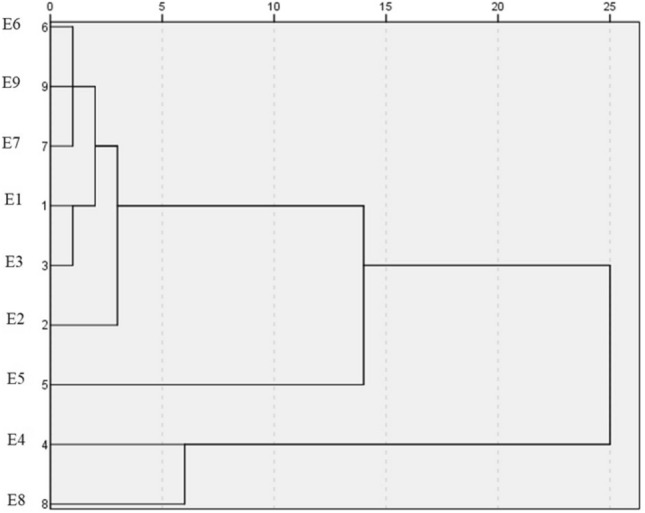
Dandrogram of essential oil compounds cluster analysis. E1: A.tournefortiana (Kerman province), E2: A.tournefortiana (North Khorasan province), E3: A.tournefortiana (West Azerbaijan province), E4: A.khorassanica (South Khorasan province), E5: A.khorassanica (North Khorasan province), E6: A.khorassanica (Semnan province), E7: A.haussknechtii (Kohgiluyeh and Boyer-Ahmad province), E8: A.haussknechtii (Isfahan province), E9: A.haussknechtii (Chaharmahal and Bakhtiari province).
TPC
A. tournefortiana which collected from Kerman with 1.35 ± 0.01 mg g−1 DW and A. haussknechtii collected from Chaharmahal and Bakhtiari province with 1.34 ± 0.005 mg g−1 DW had the highest amount of total phenol content compared with other regions. After them, Artemisia of West Azerbaijan region (A. tournefortiana) with 1.30 ± 0.0 mg g−1 DW had more total phenol. Then the highest amount of total phenol belongs to A. khorassanica collected from North Khorasan and South Khorasan and they did not differ significantly. After them, total phenol of A. tournefortiana collected from North Khorasan with 1.18 ± 0.001, Semnan's A. khorassanica with 1.09 ± 0.007 and A. haussknechtii collected from Kohgiluyeh and Boyer-Ahmad province with 0.97 ± 0.003 mg g−1 DW was higher. The lowest amount of phenolic compounds belongs to Isfahan region (A. haussknechtii) with 0.92 ± 00.7 mg g−1 DW (Fig. 3). Previous study on A. biennis Willd, showed that, the hydroethanolic extract of the plant had the highest amount of phenolic content and antioxidant activity31. Another research on A. absinthium demonstrated that the ethanolic extract had more TPC than A. dracunculus and A. annua32. In another study, among six Artemisia species, A. oliveriana had the highest TPC and A. diffusa had the highest TFC33.
Figure 3.
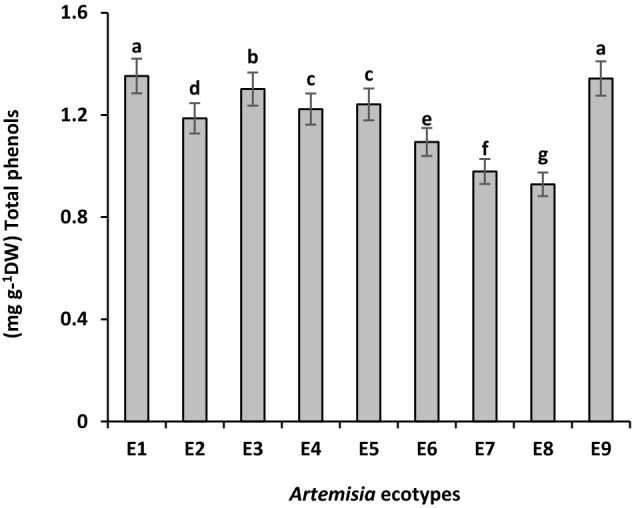
Comparison of mean total phenol ± standard error in different Artemisia ecotypes. E1: A.tournefortiana (Kerman province), E2: A.tournefortiana (North Khorasan province), E3: A.tournefortiana (West Azerbaijan province), E4: A.khorassanica (South Khorasan province), E5: A.khorassanica (North Khorasan province), E6: A.khorassanica (Semnan province), E7: A.haussknechtii (Kohgiluyeh and Boyer-Ahmad province), E8: A.haussknechtii (Isfahan province), E9: A.haussknechtii (Chaharmahal and Bakhtiari province).
TFC
A. tournefortiana which collected from West Azerbaijan with 0.98 ± 0.01 and A. khorassanica collected from North Khorasan with 0.98 ± 0.009 mg g−1 DW had the highest total flavonoids. After them, Kerman's A. tournefortiana with 0.97 ± 0.012 mg g−1 DW had higher total flavonoids and the Isfahan's ecotype (A. haussknechtii) with 0.93 ± 0.01 mg g−1 DW had the lowest total flavonoids (Fig. 4).
Figure 4.

Comparison of mean total flavonoid ± standard error in different Artemisia ecotypes. E1: A.tournefortiana (Kerman province), E2: A.tournefortiana (North Khorasan province), E3: A.tournefortiana (West Azerbaijan province), E4: A.khorassanica (South Khorasan province), E5: A.khorassanica (North Khorasan province), E6: A.khorassanica (Semnan province), E7: A.haussknechtii (Kohgiluyeh and Boyer-Ahmad province), E8: A.haussknechtii (Isfahan province), E9: A.haussknechtii (Chaharmahal and Bakhtiari province).
Antioxidant activity (DPPH)
Antioxidant activity of methanolic extract by DPPH method was higher with 26.17 ± 0.03 μg/mL in plants collected from Kerman (A. tournefortiana) than other regions. After that, North Khorasan's A. khorassanica with 29.19 ± 0.07, West Azerbaijan's A. tournefortiana with 32.14 ± 0.46, and South Khorasan's A. khorassanica with 43.28 ± 0.09 μg/mL had higher antioxidant activity. Then, the ecotypes belonging to North Khorasan (A. tournefortiana), Semnan (A. khorassanica) and Isfahan (A. haussknechtii) showed good antioxidant activity that did not differ significantly. Also, the ecotype belonging to Kohgiluyeh and Boyer-Ahmad (A. haussknechtii) with 68.13 ± 0.50 μg/mL showed the least activity (Fig. 5).
Figure 5.

Comparison of mean ± standard error of antioxidant activity of Artemisia ecotypes by DPPH method. E1: A.tournefortiana (Kerman province), E2: A.tournefortiana (North Khorasan province), E3: A.tournefortiana (West Azerbaijan province), E4: A.khorassanica (South Khorasan province), E5: A.khorassanica (North Khorasan province), E6: A.khorassanica (Semnan province), E7: A.haussknechtii (Kohgiluyeh and Boyer-Ahmad province), E8: A.haussknechtii (Isfahan province), E9: A.haussknechtii (Chaharmahal and Bakhtiari province).
Antioxidant activty (FRAP)
Antioxidant activity of methanolic extracts by FRAP method was higher with 1145.69 ± 3.38 μmol g−1 DW in plants collected from South Khorasan (A. khorassanica) than other regions. Then, Kerman's A. tournefortiana with 1054.94 ± 4.42, A. haussknechtii collected from Kohgiluyeh and Boyer-Ahmad with 920.74 ± 19.67, North Khorasan's A. khorassanica with 708.57 ± 5.57, and West Azerbaijan's A. tournefortiana with 642.11 ± 10.46 μmol g−1 DW had more activity, respectively. After them, antioxidant activity was high in A. haussknechtii collected from Chaharmahal and Bakhtiari, and North Khorasan's A. khorassanica that didn't differ significantly. Semnan's A. khorassanica activity was 500.24 ± 3.38 μmol g−1 DW. The lowest level of antioxidant activity was observed in Isfahan ecotype (A. haussknechtii) with 360.93 ± 3.83 μmol g−1 DW. (Fig. 6). Simple correlation analysis showed a significant relationship between the TFC and TPC content (r = 0.61, p < 0.05). Furthermore, correlation analysis revealed that 1,8-cineole content is correlated with camphor (r = 0.86, p < 0.01). Moreover, there were negative correlations between en-in-dicycloether and TFC content (r = -0.67, p-value < 0.05). However, there was no any significant correlation between antioxidant activity and essential oil components (Table 3).
Figure 6.

Comparison of mean ± standard error of antioxidant activity by FRAP method. E1: A.tournefortiana (Kerman province), E2: A.tournefortiana (North Khorasan province), E3: A.tournefortiana (West Azerbaijan province), E4: A.khorassanica (South Khorasan province), E5: A.khorassanica (North Khorasan province), E6: A.khorassanica (Semnan province), E7: A.haussknechtii (Kohgiluyeh and Boyer-Ahmad province), E8: A.haussknechtii (Isfahan province), E9: A.haussknechtii (Chaharmahal and Bakhtiari province).
Table 3.
Correlation coefficients among antioxidants and major essential oil components of Artemisia accessions.
| FRAP | DPPH | TFC | TPC | (Z)-β-farnesene | 1,8-cineole | Camphor | En-in-dicycloether | |
|---|---|---|---|---|---|---|---|---|
| FRAP | 1.00 | |||||||
| DPPH | − 0.16 | 1.00 | ||||||
| TFC | 0.31 | − 0.6 | 1.00 | |||||
| TPC | 0.31 | − 0.52 | 0.61* | 1.00 | ||||
| (Z)-β-farnesene | 0.07 | − 0.48 | 0.58 | 0.44 | 1.00 | |||
| 1,8-cineole | − 0.22 | − 0.02 | 0.36 | 0.28 | − 0.35 | 1.00 | ||
| camphor | 0.01 | − 0.31 | 0.53 | 0.2 | − 0.21 | 0.83** | 1.00 | |
| En-in-dicycloether | − 0.2 | − 0.02 | − 0.67* | − 0.52 | − 0.24 | − 0.42 | − 0.33 | 1.00 |
*Correlation is significant at the 0.05 level.
**Correlation is significant at the 0.01 level.
Acetyl cholinesterase inhibitory activity
According to Table 2, the extract of A. tournefortiana species belonging to West Azerbaijan with 114 μg/mL had the highest inhibitory activity of acetylcholinesterase. Then, North Khorasan's A. tournefortiana with 120, A, haussknechtii collected from Kohgiluyeh and Boyer-Ahmad with 201, North Khorasan's A. khorassanica with 211, and Semnan's A. khorassanica with 237 μg/mL had highest acetyl cholinesterase inhibitory activity, respectively. After these, Isfahan's A. haussknechtii with 261, South Khorasan's A. khorassanica with 284, and Kerman's A. tournefortiana with 310 μg/mL had more inhibitory activity. The lowest inhibitory activity was observed in A. haussknechtii collected from Chaharmahal and Bakhtiari with 341 μg/mL. Previous study showed that methanolic extract of A. asiatica showed the highest inhibition of acetylcholinestersa among extracts of various plants34.
Tyrosinase inhibitory activity
According to Table 2, the extract of A. khorassanica species belonging to North Khorasan had the highest tyrosinase inhibitory activity with 104 μg/mL. After that, ecotypes of North Khorasan (A. tournefortiana) with 110, West Azerbaijan (A. tournefortiana) with 202, Kohgiluyeh and Boyer-Ahmad (A. haussknechtii) with 213, and Semnan (A. khorassanica) with 219 μg/mL had highest activity, respectively. Then, Isfahan's A. haussknechtii with 253, Kerman's A. tournefortiana with 295, and South Khorasan's A. khorassanica with 308 μg/mL had more inhibitory activity. A. haussknechtii collected from Chaharmahal and Bakhtiari also had the lowest tyrosinase inhibitory activity (IC50: 378 μg/mL). According to the study on ethanolic extract of A. iwayomogi, it has been found that it has a high antioxidant activity (by DPPH) and high tyrosinase inhibitory activity35. Another study found that microwave assisted extraction of A. pallens had a higher tyrosinase inhibitory effect than soxhlet extraction36.
Conclusions
There were variations in main components of essential oil among species and ecotypes. These variations are probably related with different environmental conditions of the plants. So, due to the various compounds in essential oils, different ecotypes can be used in different industries. Among the ecotypes of A. tournefortiana, the ecotype belonging to Kerman had the highest essence yield and the ecotype of North Khorasan had the lowest yield. Among the ecotypes of A. khorassanica species, the ecotypes belonging to the North and South Khorasan had the highest and the lowest essential oil yields, respectively. There was not much difference between the essential oil yields of A. haussknechtii ecotypes, but essence yield of Kohgiluyeh and Boyer-Ahmad ecotype was slightly lower than the others. Isfahan's A. haussknechtii methanolic extract had the lowest TFC, TPC, and antioxidant activity with FRAP method. The lowest level of antioxidant activity with DPPH method, was in A. haussknechtii collected from Kohgiluyeh and Boyer-Ahmad. Kerman's A. tournefortiana methanolic extract had the most TPC and antioxidant activity by DPPH method. A. haussknechtii collected from Chaharmahal and Bakhtiari, similar to the Kerman's A. tournefortiana had the most TPC, but the latter ecotype had the lowest tyrosinase and acetyl cholinesterase inhibition. A. khorassanica collected from North Khorasan had the most TFC and the highest tyrosinase inhibition, but the one collected from South Khorasan had the most antioxidant activity with FRAP method. West Azerbaijan's A. tournefortiana similar to the North Khorasan's A. khorassanica had the most TFC and the highest acetyl cholinesterase inhibition. Thus, these two species are the superior species with the best medicinal value, which can be introduced for cultivation in different regions of Iran and other regional countries.
Abbreviations
- GC–MS
Gas chromatography–mass spectrometry
- Nrf2
Nuclear factor-erythroid factor 2-related factor 2
- AchEI
Acetyl-cholinesterase-inhibitor
- AD
Alzheimer's disease
- AchE
Acetyl-cholinesterase
- TFC
Total flavonoid content
- TPC
Total phenolic content
- IBRC
Iranian biological resource center
- NIST
National institute of standards and technology
- DPPH
2,2-Diphenyl-1-picrylhydrazyl
- FRAP
Fluorescence recovery after photobleaching
- TPTZ
Tripyridyltriazine
- DTNB
Dithionitrobenzoic acid
- DMSO
Dimethyl sulfoxide
- LDH
Lactate dehydrogenase
- DNA
Deoxyribonucleic acid
Author contributions
S.S.: experimental work, methodology, statistical analysis, initial writing; S.A.: Supervision, review and editing; K.G.-G.: experimental design, supervision, writing; E.A.: preparation of plant materials.
Data availability
The datasets used and/or analyzed during the current study available from the corresponding author on reasonable request.
Competing interests
The authors declare no competing interests.
Footnotes
Publisher's note
Springer Nature remains neutral with regard to jurisdictional claims in published maps and institutional affiliations.
References
- 1.Khezrilu Bandli, J., Heidari, R. Phenolic content and ferric reducing antioxidant power of Artemisia fragrans Willd and Artemisia vulgaris L. harbs. Pharmaceut. Chem. J.51, 52–55 (2017).
- 2.Wang WM. On the origin and development of Artemisia (Asteraceae) in the geological past. Bot. J. Linn. Soc. 2004;145:331–336. doi: 10.1111/j.1095-8339.2004.00287.x. [DOI] [Google Scholar]
- 3.Abad, M.J., Bedoya, L.M., Apaza, L., Bermejo, P. The Artemisia L. genus: a review of bioactive essential oils. Molecules17, 2542–2566 (2012). [DOI] [PMC free article] [PubMed]
- 4.Kazemi, E., & Mehraban, A. Reviewing Artemisia sieberi with a focus on phytoremediation and carbon sequestration. Conference on Recent Research in Science and Technology6, (2016).
- 5.Kshirsagar SG, Rao RV. Antiviral and immunomodulation effects of Artemisia. Medicina. 2021;57:217–229. doi: 10.3390/medicina57030217. [DOI] [PMC free article] [PubMed] [Google Scholar]
- 6.Biesen, C. The rise to prominence of Artemisia annua L.-the transformation of a Chinese plant to a global pharmaceutical. Afr. Sociol. Rev.14, 24–46 (2010).
- 7.Saeidi M, Moharramipour S. Insecticidal and repellent activities of Artemisia khorassanica, Rosmarinus officinalis and Mentha longifolia essential oils on Tribolium confusum. J. Crop Protect. 2013;2:23–31. [Google Scholar]
- 8.Ramezani Nowrozani F, Ghorbani Ranjbary A. Effects of the hydroalcoholic of Artemisia khorassanica on wound healing potential in mice. Comp. Clin. Pathol. 2018;27:1079–1083. doi: 10.1007/s00580-018-2704-7. [DOI] [Google Scholar]
- 9.Sajjad N, et al. Artemisia amygdalina upregulates Nrf2 and protects neurons against oxidative stress in Alzheimer disease. Cell. Mol. Neurobiol. 2019;39:387–399. doi: 10.1007/s10571-019-00656-w. [DOI] [PMC free article] [PubMed] [Google Scholar]
- 10.Khan Ahmadi, M., Rezazadeh, Sh., Shah Rezaei, F., Taran, M. Study on chemical composition of essential oil anti-oxidant and anti-microbial properties of Artemisia haussknechtii. J. Med. Plants8, 132–141 (2009).
- 11.Shekarchi M, Hajimehdipoor H, Naghibi F, Ara L. Investigating acetylcholinesterase inhibitory effects of some Ferula species. J. Med. Plants. 2013;12:106–112. [Google Scholar]
- 12.Mohadjerani, M., Rasolizadeh, A. Evaluation of kinetic parameters of acetylcholinesterase from the bovine brain and its inhibition with Mentha pulegium L. extract. J. Ilam Univ.27, 74–87 (2020).
- 13.Purves, D. et al. Neuroscience 2nd edition. (Sinauer associates, 2001).
- 14.Sharma K. Cholinesterase inhibitors as alzheimer's therapeutics (review) Mol. Med. Rep. 2019;20:1479–1487. doi: 10.3892/mmr.2019.10374. [DOI] [PMC free article] [PubMed] [Google Scholar]
- 15.Zolghadri S, et al. A comprehensive review on tyrosinase inhibitors. J. Enzyme Inhib. Med. Chem. 2019;34:279–309. doi: 10.1080/14756366.2018.1545767. [DOI] [PMC free article] [PubMed] [Google Scholar]
- 16.Stankovic, M. Total phenolic content, flavonoid concentration and antioxidant activity of Marrubium peregrinum L. extracts. Kragujevac J. Sci.33, 63–72 (2011).
- 17.Velioglu YS, Mazza G, Gao L, Oomah BD. Antioxidant activity and total phenolics in selected fruits, vegetables, and grain products. J. Agric. Food Chem. 1998;46:4113–4117. doi: 10.1021/jf9801973. [DOI] [Google Scholar]
- 18.Benzie I, Strain J. The ferric reducing ability of plasma (FRAP) as a measure of "antioxidant power": the FRAP assay. J. Anal. Biochem. 1996;239:70–76. doi: 10.1006/abio.1996.0292. [DOI] [PubMed] [Google Scholar]
- 19.Ellman GL, Courtney KD, Andres V, Featherstone RM. A new and rapid colorimetric determination of acetylcholinesterase activity. Biochem. Pharmacogn. 1961;7:88–90. doi: 10.1016/0006-2952(61)90145-9. [DOI] [PubMed] [Google Scholar]
- 20.Amessis-Ouchemoukh N, et al. Antioxidant capacity and phenolic contents of some Mediterranean medicinal plants and their potential role in the inhibition of cyclooxygenase-1 and acetylcholinesterase activities. Ind. Crops Prod. 2014;53:6–15. doi: 10.1016/j.indcrop.2013.12.008. [DOI] [Google Scholar]
- 21.Zheng Z, Tan H, Chen J, Wang M. Characterization of tyrosinase inhibitors in the twigs of Cudrania tricuspidata and their structure-activity relationship study. Fitoterapia. 2013;84:242–247. doi: 10.1016/j.fitote.2012.12.006. [DOI] [PubMed] [Google Scholar]
- 22.Ramezani M, Behravan J, Yazdinezhad A. Chemical composition and antimicrobial activity of the volatile oil of Artemisia khorassanica from Iran. Pharm. Biol. 2004;42:599–602. doi: 10.1080/13880200490902482. [DOI] [Google Scholar]
- 23.Barazandeh, M.M. Essential oil composition of Artemisia khorassanica Podl. from Iran. J. Essential Oil Res.15, 259–260 (2003).
- 24.Hadian, J., R.Masoumi, T., Farzaneh, M., & Mirjalili, M.H. Chemical compositions of essential oil of Artemisia khorasanica Podl. and its antifungal activity on soil-born phytopathogens. J. Essential Oil Bear. Plants10, 53–59 (2013).
- 25.Qadir, M., Maurya, A.K., Agnihorti, V.K., & Shah, W.A. Volatile composition, antibacterial and antioxidant activities of Artemisia tournefortiana Reichb. from Kashmir, India. Na. Prod. Res.35, 152–156 (2019). [DOI] [PubMed]
- 26.Kazemi, M., Akhavani, Sh. Constituents of Artemisia tournefortiana Rchb. essential oil from Iran. J. Appl. Chem. Res.3, 35–39 (2009).
- 27.Nassir Ahraadi, A., Rustaiyan, A., & Jassbi, A.R. Chemical analysis of essential oil of "Artemisia haussknechtii Boiss" by GC and GC/MS. DARU J. Pharmaceut. Sci.4, 39–49 (1994).
- 28.Buono-Core, G., Vargas, R., Jullian, C., Vanessa Nunez, M., Lucero, A. Structural elucidation of bioactive principles in floral extracts of german chamomille (Matricaria recutita L.). J. Chilean Chem. Soc.56, 549–553 (2011).
- 29.Russo EB, Marcu J. Chapter three - Cannabis pharmacology: The usual suspects and a few promising leads. Adv. Pharmacol. 2017;80:67–134. doi: 10.1016/bs.apha.2017.03.004. [DOI] [PubMed] [Google Scholar]
- 30.Adams, R.P. Identification of essential oil components by gascromatography/quadrupole mass spectroscopy, 4th edition. Allured Publishing Corporation, Carol Stream, IL, 455 (2007).
- 31.Hatam T, Emami SA, Miraghaee SS, Mojarrab M. Total phenolic contents and antioxidant activities of different extracts and fractions from the aerial Parts of Artemisia biennis Willd. Iran. J. Pharm. Res. 2014;13:551–559. [PMC free article] [PubMed] [Google Scholar]
- 32.Minda D, et al. Phytochemical profile, antioxidant and wound healing potential of three Artemisia species: in vitro and in ovo evaluation. Appl. Sci. 2022;12:1359–1379. doi: 10.3390/app12031359. [DOI] [Google Scholar]
- 33.Taherkhani M. Essential oil composition, total phenol and flavonoids in six Artemisia species extracts in Khorasan, Semnan and West Azarbaygan provinces. Eco Phytochem. J. Med. Plants. 2014;3:18–25. [Google Scholar]
- 34.Heo HJ, et al. Inhibitory effect of Artemisia asiatica alkaloids on acetylcholinesterase activity from rat PC12 cells. Mol. Cells. 2000;3:253–262. [PubMed] [Google Scholar]
- 35.Seo EJ, Hong ES, Choi MH, Kim KS, Lee SJ. The antioxidant and skin whitening effect of Artemisia iwayomogi extracts. Kor. J. Food Sci. Technol. 2012;44:89–93. doi: 10.9721/KJFST.2012.44.1.089. [DOI] [Google Scholar]
- 36.Kanimozhi, P., Ilango, K., Chowdary, A., Arun, B. Microwave assisted extraction of Artemisia pallens for tyrosinase inhibitory activity. Int. J. Pharma BioSci.1, (2010).
Associated Data
This section collects any data citations, data availability statements, or supplementary materials included in this article.
Data Availability Statement
The datasets used and/or analyzed during the current study available from the corresponding author on reasonable request.