



Abstract
While the detrimental consequences of racial/ethnic discrimination for adolescent well-being are well-established, less is known about the impact of SES-based discrimination and the potential protective benefits of adolescents’ intraindividual assets. The current study addressed these gaps by investigating the longitudinal associations between racial/ethnic and SES-based educator-perpetrated discrimination and adolescents’ academic well-being and assessed whether psychological resources moderated these pathways. To do so, the study used longitudinal data from a diverse sample of 750 9th grade students (54% female; 41% White, 34% Latina/o/x, 8% Asian American, 6% African American, 11% biracial/other race/ethnicity; 43% had parents with an associate’s degree or less) in the Southwestern U.S. who were subsequently surveyed one year later. Educator-perpetrated racial/ethnic discrimination was negatively associated with students’ school engagement, and both psychological resilience and self-efficacy emerged as protective for students’ educational expectations in the face of racial/ethnic and SES-based discrimination, respectively. The results of the current study highlight the role of discriminatory treatment in educational disparities and provide insights on effective coping strategies to combat the negative impacts of discrimination in academics.
Keywords: Discrimination, Psychological resources, Academic well-being, Adolescence
Introduction
In the United States, there are clear racial/ethnic (Hussar et al., 2020) and socioeconomic (Pfeffer, 2018) disparities in educational attainment. Identifying the precursors of educational attainment disparities is particularly important given that gaps in educational attainment feed into racial/ethnic and socioeconomic inequities across the life course, including disparities in full-time employment and receipt of government assistance (Pew Research Center, 2014) as well as morbidity and mortality rates (Zajacova & Lawrence, 2018). García Coll’s integrative model for minority child development highlights experiences of discrimination as a potential factor that may be contributing to educational disparities by suggesting that adolescents’ development is driven by experiences tied to social status (e.g., race/ethnicity, SES). The impact of experiences of discrimination and prejudice on young people’s growth and development, however, may be conditioned by the intraindividual psychological resources that adolescents possess (Elder, 1998). The current study examines the interplay of discrimination, academic well-being, and psychological resources, and it addresses key gaps in the extant discrimination literature. First, while the consequences of racial/ethnic discrimination for academic well-being have been well-documented (see Benner et al., 2018 for review), less is known about the impact of SES-based discrimination for adolescents’ academic success despite the fact that SES, like race/ethnicity, is a social differentiator that may drive experiences of marginalization (Durante & Fiske, 2017). Second, while psychological resources tend to be beneficial for mental and physical health (Chiang et al., 2019; Finch et al., 2020; Lamont et al., 2019), less is known about their potential role in protecting adolescents’ academic outcomes against the harms of discrimination. Addressing these knowledge gaps, the current study examined the longitudinal associations between both racial/ethnic and SES-based discrimination and adolescents’ academic well-being and whether adolescents’ psychological resources buffered these central pathways of interest.
Discrimination and Academic Well-being
Discrimination exacts a lasting toll on the well-being of adolescents across developmental domains (Benner et al., 2018; Priest et al., 2013), and scholarship has suggested discriminatory treatment likely plays a central role in achievement gaps (Farkas, 2003), consistent with García Coll’s integrative model of minority child development (García Coll et al., 1996). Indeed, research focused on U.S. populations has shown that racial/ethnic discrimination is associated with adolescents’ short- and long-term academic well-being. For example, adolescents who experience higher levels of racial/ethnic discrimination report lower school engagement (Bottiani et al., 2020) and grades (Huynh & Fuligni, 2010) concurrently, as well as lower educational expectations both concurrently and longitudinally (Kiang et al., 2015; O’Hara et al., 2012).
Although an abundance of research has documented the marginalization and injustices faced by students of color in the U.S. and the association between racial/ethnic discrimination and academic well-being, much less is known about discriminatory treatment in schools tied to adolescents’ socioeconomic background and its impact on students’ academic outcomes. Achievement disparities exist between youth from low-income families and their peers from higher-income homes (Reardon, 2013). In unpacking these disparities, prior research has detailed the structural inequities that low-SES families face, including limited access to quality childcare and income-based school segregation, which are linked to disparities in academic outcomes (Duncan & Murnane, 2016). However, it is likely that other stressors around SES, including discriminatory treatment tied to adolescents’ SES, could have similar detrimental consequences for academic well-being. In fact, many students report unfair or inequitable treatment in schools based on their income level (Auwarter & Aruguete, 2008), which is likely to have consequences for their education. For example, research has documented disparities in academic tracking decisions, wherein teachers perceive rigorous academic tracks as more suitable for students from high-SES backgrounds (Batruch et al., 2019). Likewise, recent research also documents that teachers have lower educational expectations for students from low-income families, and these lower expectations are linked to poorer academic performance and subsequent educational attainment (Benner et al., 2021).
The current research sought to expand the extant discrimination literature by examining the longitudinal influences of both racial/ethnic and SES-based discrimination for certain facets of adolescents’ academic well-being, including their educational expectations, school engagement, and grades, each of which is tied to later educational attainment and career pathways for U.S. and Australian youth (Abbott-Chapman et al., 2014; Beal & Crockett, 2010; Vuolo et al., 2014). In the current study, the focus is specifically on educator-perpetrated discrimination, as research has suggested that discrimination may have varying impacts on developmental outcomes depending on the perpetrator of discrimination, with educator-perpetrated discrimination showing stronger associations with academic outcomes than discrimination perpetrated by peers or societal institutions (Benner & Graham, 2013).
The Buffering Role of Psychological Resources
Psychological resources influence how individuals respond to threats and often serve as protective barriers against the consequences of life stressors (Pearlin & Schooler, 1978). This fits well within Elder’s life course theory (Elder, 1998), which posits that individuals’ development and adjustment can be conditioned by the intraindividual assets that they possess that allow them to exert agency and adapt to the broader opportunities and constraints of their social circumstances. One way human agency may be exercised is through people’s beliefs about their ability to control aspects of their lives (Bandura, 1989), and the current study considers these control beliefs to be an important psychological resource that may influence how one behaves in response to environmental stressors such as discrimination. Psychological resources, including control beliefs, have been shown to mitigate the negative association between chronic stressors (e.g., socioeconomic disadvantage) and health outcomes in U.S. men (Boylan et al., 2016) and the negative association between more transient stressors (e.g., life events, daily stressors) and health outcomes in American adolescents (Chiang et al., 2019). The current study posits that psychological resources—specifically psychological resilience, self-efficacy, and shift-and-persist—can likely play a similar buffering role for young people’s academic success when they face discriminatory treatment.
Psychological resilience, conceptualized as the capacity for an individual to adapt and overcome challenges, has been found to mitigate the association between minority stress (i.e., harassment, rejection, discrimination) and suicidal behavior in U.S. bisexual populations (Miceli et al., 2019) as well as the link between sexism and psychological distress in U.S. bisexual women specifically (Watson et al., 2018). Similarly, self-efficacy, which refers to the extent to which one perceives their environment and life experiences are under their own control, has been shown to dampen the negative effects of racial discrimination on depression in African American men (Watkins et al., 2011). Finally, shift-and-persist, which encompasses a combination of strategies that involve coping with stressors through cognitive reappraisals (shifting) and enduring adversity by maintaining hope for the future (persisting; Chen & Miller, 2012), has consistently been identified as a buffer between socioeconomic disadvantage and physical health in U.S. populations (Chen et al., 2012; Kallem et al., 2013). In addition, recent scholarship has shown that shift-and-persist mitigates the association between discrimination and depressive symptoms in Latina/o/x youth (Christophe et al., 2019) as well as asthma profiles (e.g., quality of life, symptom control) in a diverse sample of American youth (Lam et al., 2018).
While the protective nature of these three psychological resources has typically been studied in relation to mental and physical health outcomes in adults, they are likely also quite relevant for adolescents’ academic outcomes. All center on maintaining a sense of control and adapting to stressors and are thus likely to have positive influences on academic performance given that succeeding academically can serve as means for adolescents to maintain control over their lives in the face of discriminatory treatment (Browman et al., 2017). Taken together, this research suggests that psychological resilience, self-efficacy, and shift-and-persist hold promise as potential buffers of discrimination’s negative toll on adolescent well-being. Investigating how each of these unique psychological resources functions in response to both racial/ethnic and SES-based discrimination to positively support academic well-being will provide insights into why some adolescents are protected, at least in part, from the negative effects of discrimination and which psychological resources most effectively mitigate the negative impact of discrimination. These processes are critical to understand during adolescence specifically, as this developmental period is marked by critical milestones in social-cognitive and identity development that are foundational for adolescents’ perceptions of discrimination and its consequences (Brown & Bigler, 2005). Further, adolescents’ early experiences of discrimination and their ability to recover from its consequences can set the stage for their later academic development, as suggested by the life course perspective’s attention to accumulating advantages and disadvantages (Elder, 1998). Identifying the strengths adolescents bring when encountering discrimination is vitally important to designing intervention efforts, which must be coupled with larger efforts to address the systemic racism inherent in the everyday spaces of adolescents’ lives that allows discriminatory treatment to be perpetuated.
Current Study
The extant literature documents the consequences of racial/ethnic discrimination on adolescents’ academic well-being and identifies psychological resources as protective against discrimination’s impacts. However, additional research is needed that investigates the interplay between discrimination attributed to both race/ethnicity and SES, psychological resources, and academic outcomes in adolescence. In order to address this gap, the present study utilized data from a community-based longitudinal study to address two research questions. The first research question queried the longitudinal associations between both racial/ethnic and SES-based discrimination and adolescents’ academic well-being, including educational expectations, school engagement, and grades. Given the abundance of literature demonstrating the negative consequences of racial/ethnic discrimination for academics, combined with evidence that SES-based discrimination is also apparent among youth, it was hypothesized that adolescents who reported greater perceptions of racial/ethnic or SES-based discrimination would have lower educational expectations, school engagement, and grades one year later. Research question two queried the moderating role of distinct psychological resources (i.e., psychological resilience, self-efficacy, shift-and-persist) for the association between discrimination and academic well-being. Given the prior literature documenting the protective role of psychological resources in the face of stress, it was hypothesized that psychological resources would attenuate the negative association between discrimination and academic well-being, such that the link between discrimination and academics would be weaker (or nonsignificant) for students who demonstrated greater use of psychological resources versus those youth who employed fewer of these strategies.
Method
Participants
The current study utilized survey data from the second and third waves of an ongoing, longitudinal project conducted in the Southwestern U.S. entitled Project PISCES (Preventing Inequalities in School Climate and Educational Success). Participants (N = 1010) were first recruited across two cohorts when they were in the 8th grade (Wave 1) from 13 schools (10 public, 3 private) in a large, metropolitan city during either the 2016–17 school year (Cohort 1) or the 2017–18 school year (Cohort 2). Recruitment occurred in schools, and the overall return rate for consent forms was 46% across the 13 schools. Wave 2 occurred one year later when most participants were in 9th grade (N = 751) and had transitioned to high school, with a retention rate of 89% among those participants who had parental consent and student assent for the longitudinal component of the study. Wave 3 occurred one year after Wave 2 when participants were generally in 10th grade (N = 692). Because a school transition occurred between Waves 1 and 2, the current study focused on data from Waves 2 and 3 to avoid confounding influences associated with this normative school transition (Benner, 2011). The final analytic sample was 750 participants who were attending 76 different schools; one Wave 2 respondent was excluded because they lacked information on their Wave 2 school, the clustering variable. The analytic sample was racially/ethnically diverse (41% White, 34% Latina/o/x, 8% Asian American, 6% African American, 11% biracial/other race/ethnicity) and included relatively equal numbers of girls and boys (54% female). White participants were included in the analyses given the inclusion of SES-based discrimination in the models. The mean highest level of education earned across parents was an associate’s degree, and 29% of participants were eligible for free or reduced-price lunch. Participant demographic characteristics are presented in Table 1.
Table 1.
Participant demographics
| N | % | |
|---|---|---|
|
| ||
| Race/ethnicity | ||
| African American/Black | 41 | 5.6 |
| Latina/o/x | 250 | 34.0 |
| Asian American | 60 | 8.2 |
| White | 302 | 41.1 |
| Biracial/other | 82 | 11.2 |
| Gender | ||
| Female | 396 | 54.0 |
| Male | 337 | 46.0 |
| Generational status | ||
| 1st generation (participant born outside of the U.S.) | 54 | 7.3 |
| 2nd generation (participant U.S.-born with at least one foreign-born parent) | 236 | 31.8 |
| 3rd generation (both participant and both parents U.S.-born) | 451 | 60.9 |
| Parents’ highest level of education | ||
| Less than a high school diploma | 80 | 13.4 |
| High school diploma or GED only | 73 | 12.2 |
| Some college but no degree | 53 | 8.9 |
| Associate’s degree | 53 | 8.9 |
| Bachelor’s degree | 125 | 21.0 |
| Master’s degree | 146 | 24.5 |
| PhD, MD, or other advanced degree | 66 | 11.1 |
| Free or reduced-price lunch | ||
| Student receives free or reduced-price lunch | 196 | 29.1 |
| Student does not receive free or reduced-price lunch | 477 | 70.9 |
| Type of school attended by the student in wave 2 | ||
| Private | 27 | 3.6 |
| Public | 669 | 89.9 |
| Charter | 48 | 6.5 |
| School mobility | ||
| Student stayed in the same school between Waves 2 and 3 | 623 | 90.6 |
| Student moved to a different school between Waves 2 and 3 | 65 | 9.4 |
Note. Total possible N is 750
Attrition analyses were conducted to assess differences between students who attrited after Wave 1 of the study (including those who lacked consent/assent for the longitudinal component and those who did not complete a Wave 2 survey) versus those who participated in Wave 2. Attrition was related to parental educational attainment (χ2 (2) = 7.07, p < 0.05), such that participants whose parents’ educational attainment was categorized as some college or an associate’s degree and a bachelor’s degree or higher were more likely to continue in the study than participants whose parent’s educational attainment was categorized as a high school diploma or less. Additionally, attrition was related to receipt of free or reduced-price lunch (χ2 (1) = 5.17, p < 0.05), such that participants that did not receive free or reduced-price lunch were more likely to continue in the study than those participants that did receive free or reduced-price lunch. Attrition was not related to any of the other demographic characteristics (i.e., race/ethnicity, gender, generational status, type of school attended).
Procedures
After obtaining IRB approval from the authors’ home institution and approval from the districts and schools targeted, parent consent and student assent were obtained. In Wave 2 (9th grade) and Wave 3 (10th grade), participants typically completed surveys online, with a small minority completing paper-and-pencil surveys or surveys over the phone with a trained research assistant. Surveys were distributed to participants in the spring semester of the school year, giving participants a semester to adjust to the new school year. All study materials were available in English and Spanish, with measures translated and then back-translated by bilingual, bicultural research assistants; any discrepancies were reconciled through consensus discussions. Students were compensated $25 for each survey wave completed.
Measures
Discrimination and psychological resources were measured in Wave 2 and were grand mean centered for analyses. The academic well-being indicators were measured in Waves 2 and 3 except as noted. Descriptive statistics and correlations among the central study variables can be found in Table 2.
Table 2.
Bivariate correlations between study variables
| 1 | 2 | 3 | 4 | 5 | 6 | 7 | 8 | |
|---|---|---|---|---|---|---|---|---|
|
| ||||||||
| 1. Racial/ethnic discrimination W2 | ||||||||
| 2. SES-based discrimination W2 | 0.64*** | |||||||
| 3. Psych resilience W2 | −0.01 | −0.04 | ||||||
| 4. Self-efficacy W2 | −0.17*** | −0.18*** | 0.45*** | |||||
| 5. Shift-and-persist W2 | −0.01 | −0.02 | 0.54*** | 0.57*** | ||||
| 6. Educational expectations W3 | −0.09* | −0.07 | 0.15*** | 0.16*** | 0.13** | |||
| 7. School engagement W3 | −0.13** | −0.08* | 0.26*** | 0.24*** | 0.33*** | 0.32*** | ||
| 8. Grades W3 | −0.08* | −0.05 | 0.22*** | 0.11** | 0.14*** | 0.42*** | 0.50*** | |
| Mean | 0.15 | 0.07 | 2.60 | 2.58 | 2.48 | 5.06 | 2.79 | 9.14 |
| SD | 0.44 | 0.35 | 0.71 | 0.73 | 0.75 | 1.33 | 0.51 | 2.05 |
| N | 732 | 728 | 734 | 738 | 746 | 684 | 687 | 678 |
Note. Total possible N is 750. W2 N = 750. W3 N = 691. Psych = psychological
p < 0.05
p < 0.01
p < 0.001
Educator-perpetrated discrimination
Items measuring perceived educator-perpetrated racial/ethnic and SES-based discrimination were adapted from the Adolescent Discrimination Distress Index (Fisher et al., 2000) in which adolescents reported instances of perceived discrimination based on their race/ethnicity and their family’s wealth. The current study included three items tapping into discrimination from educators (e.g., “Were you given a lower grade than you deserved”), with separate stems querying whether this occurred due to the participant’s race/ethnicity or due to “how much money your family has.” Participants rated the frequency of each item in their lifetime on a scale of 0 (never) to 4 (a whole lot). For both racial/ethnic and SES-based discrimination, mean composites were calculated, such that higher mean scores indicated more frequent experiences of either perceived educator-perpetrated racial/ethnic discrimination (α = 0.71) or SES-based discrimination (α = 0.78).
Psychological resources
The study included three unique psychological resources.
Psychological resilience
The measure of psychological resilience (Bartko & Eccles, 2003) consisted of four items that asked students to rate on a scale from 0 (very bad) to 4 (excellent) how good they were at handling problems (e.g., “How good are you at bouncing back quickly from bad experiences?”). The mean of the four items was calculated, with higher mean scores indicating greater psychological resilience (α = 0.79).
Self-efficacy
Self-efficacy was measured using Pearlin and Schooler’s (1978) five-item mastery subscale (e.g., I can do just about anything I set my mind to). Participants rated each on a scale of 0 (not true at all) to 4 (true all the time). Negatively worded items were reverse-coded, and higher mean scores indicated greater self-efficacy (α = 0.80).
Shift-and-persist
The shift-and-persist measure utilized eight items, four items for shift strategies (e.g., “I think about what I can learn from the situation”) and four items for persist strategies (e.g., “I believe there is a larger reason or purpose for my life”; Chen et al. 2015). All shift-and-persist items were rated on a scale from 0 (not true at all) to 4 (true all the time). The mean of the eight items was calculated to create the shift-and-persist composite, with higher scores indicating greater use of shift-and-persist strategies (α = 0.84).
Academic well-being
The study included three indicators of academic well-being.
Educational expectations
Educational expectations were measured by one item that asked students how far they believed they will go in school (National Center for Education Statistics, 2008). The scale for the item ranged from 1 (less than high school graduation) to 7 (obtain a PhD, MD, or other advanced degree).
School engagement
The measure of school engagement (Witkow, 2006) consisted of six items (e.g., “I work hard in school.”) rated on a scale of 0 (Not true at all) to 4 (True all the time). The mean of the six items was calculated, with higher mean scores indicating greater school engagement (α = 0.73 at Wave 2; α = 0.67 at Wave 3).
Grades
Students’ grades were measured through a single item asking students to select the closest to their average grades in high school on a scale ranging from 0 (F) to 12 (A +).
Covariates
Covariates included students’ gender (1 = female, 0 = male), race/ethnicity (dummy codes for African American, Latina/o/x, Asian American, and biracial/other, with White as the omitted reference group), study cohort (1 = cohort 1, 0 = cohort 2), the highest level of education across parents (1 = Less than high school diploma, 6 = Ph.D., MD, or other advanced degree), and whether the student moved schools between Waves 2 and 3. Supplemental analyses were conducted adding controls for the influence of the Wave 2 academic indicators on the Wave 3 academic indicators; Wave 2 grades were only available for Cohort 2, which influenced the decision to consider these analyses as supplemental.
Analysis Plan
To determine the association between racial/ethnic and SES-based discrimination and academic well-being (research question 1), the three academic indicators at Wave 3 were regressed on educator-perpetrated racial/ethnic and SES-based discrimination along with all covariates. To test the moderating role of psychological resources on the link between discrimination and academics (research question 2), two hierarchical models were conducted for each psychological resource indicator (i.e., psychological resilience, self-efficacy, shift-and-persist). First, the three Wave 3 academic well-being indicators were regressed on Wave 2 racial/ethnic and SES-based discrimination along with the targeted psychological resources indicator (Model 1). In Model 2, the interactions between each form of discrimination and the targeted psychological resource indicator were integrated into the original model. When significant interactions emerged, simple slope analyses determined the extent to which each type of discrimination was associated with each academic well-being indicator when students’ psychological resource use was high (1 SD above the mean) versus low (1 SD below the mean). For the supplemental analyses, an identical set of models were run integrating Wave 2 academic indicators as control variables.
All models were conducted in Mplus 8.2. Models were saturated, and thus no fit statistics were available. As shown in Table 2, missing data were not particularly high for this sample (i.e., 10% or less for each measure). Missing data were handled using the full information maximum likelihood (FIML) method, which allows data from all cases to be utilized in model estimations. The FIML method is a preferred strategy for handling missing data, and it is frequently utilized in longitudinal studies (Enders, 2010). The CLUSTER function in Mplus was used to account for students nested in high schools, and maximum likelihood parameter estimates with standard errors (MLR) were used for analyses to adjust for non-normality of the discrimination indicators.
Results
Racial/Ethnic and SES-based Differences in Discrimination and Psychological Resources
Results of a series of one-way ANOVAs revealed significant race/ethnic differences in reports of educator-perpetrated racial/ethnic discrimination (F (4, 723) = 10.09, p < 0.001), with White participants reporting less racial/ethnic discrimination than all other racial/ethnic groups except biracial/multiracial. Additionally, African American participants reported significantly greater racial/ethnic discrimination than biracial/multiracial participants. There were no significant mean-level race/ethnic differences in educator-perpetrated SES discrimination or any of the psychological resources under study (F (4, 719–728)range = 0.69–2.54, ns). There were also no significant mean-level SES-based differences in any of the central constructs under study (F (2, 575–589)range = 0.18–1.19, ns) when comparing these three SES groups based on highest parental educational attainment: high school diploma or less, some college or an associate’s degree, bachelor’s degree or higher.
The Consequences of Discrimination for Academic Well-Being
Results for the first research question linking discrimination to academics revealed that racial/ethnic discrimination was significantly associated with only school engagement, such that greater educator-perpetrated racial/ethnic discrimination was associated with lower levels of school engagement (β = −0.15, p < 0.01). SES-based discrimination was not significantly related to any of the academic outcomes under study (see Table 3).
Table 3.
Direct associations between educator-perpetrated discrimination and academic well-being
| Educational expectations β (SE) |
School engagement β (SE) |
Grades β (SE) |
|
|---|---|---|---|
|
| |||
| Racial/ethnic discrimination | −0.06 (0.05) | −0.15 (0.05) ** | −0.03 (0.03) |
| SES-based discrimination | −0.00 (0.06) | 0.03 (0.05) | −0.01 (0.05) |
| African American | 0.01 (0.05) | 0.09 (0.04) * | −0.01 (0.04) |
| Latina/o/x | −0.06 (0.03) * | 0.00 (0.04) | −0.11 (0.05) * |
| Asian American | 0.10 (0.03) ** | 0.07 (0.04) | 0.10 (0.04) ** |
| Biracial/other | −0.03 (0.04) | 0.01 (0.06) | −0.05 (0.05) |
| Study cohort | −0.02 (0.04) | 0.05 (0.04) | −0.03 (0.03) |
| Parent education | 0.26 (0.04) *** | 0.11 (0.05) * | 0.22 (0.05) *** |
| Female | 0.15 (0.04) *** | 0.21 (0.04) *** | 0.19 (0.03) *** |
| Change in school from W2 to W3 | 0.09 (0.04) | 0.04 (0.04) | 0.14 (0.04) ** |
| R 2 | 0.15 *** | 0.09 *** | 0.17 *** |
Note. Results presented are standardized coefficients. Bold denotes significant associations. Model was saturated and model fit statistics could not be interpreted
p < 0.05
p < 0.01
p < 0.001
Psychological Resources as a Buffer of the Link between Discrimination and Academic Well-being
The second research question queried whether psychological resources moderated the associations between discrimination and academics, with psychological resilience, self-efficacy, and shift-and-persist included in separate sets of models. Initial results revealed that the psychological resources were significantly related to each of the academic well-being indicators, such that greater psychological resilience, higher levels of self-efficacy, and greater use of shift-and-persist strategies were linked to higher educational expectations, greater school engagement, and higher grades (see Model 1 in Table 4).
Table 4.
Psychological resources as moderators of the associations between educator-perpetrated discrimination and academic well-being
| Educational expectations |
School engagement |
Grades |
||||
|---|---|---|---|---|---|---|
| Model 1 β (SE) | Model 2 β (SE) | Model 1 β (SE) | Model 2 β (SE) | Model 1 β (SE) | Model 2 β (SE) | |
|
| ||||||
| Psychological resilience | ||||||
| Racial/ethnic discrimination | −0.07 (0.05) | −0.07 (0.05) | −0.17 (0.05) *** | −0.17 (0.05) *** | −0.04 (0.03) | −0.05 (0.03) |
| SES-based discrimination | 0.02 (0.05) | 0.06 (0.06) | 0.06 (0.05) | 0.08 (0.06) | 0.02 (0.04) | 0.04 (0.06) |
| Psych resilience | 0.15 (0.03) *** | 0.16 (0.03) *** | 0.29 (0.03) *** | 0.29 (0.03) *** | 0.24 (0.04) *** | 0.25 (0.04) *** |
| Racial/ethnic discrim × Psych resilience | 0.13 (0.06)* | 0.01 (0.05) | 0.08 (0.06) | |||
| SES-based discrim × Psych resilience | −0.01 (0.06) | 0.03 (0.05) | 0.01 (0.07) | |||
| R2 | 0.17 *** | 0.18 *** | 0.17 *** | 0.17 *** | 0.23 *** | 0.23 *** |
| Self-efficacy | ||||||
| Racial/ethnic discrimination | −0.04 (0.05) | −0.06 (0.06) | −0.14 (0.05) ** | −0.15 (0.05) ** | −0.02 (0.03) | −0.01 (0.04) |
| SES-based discrimination | 0.02 (0.05) | 0.10 (0.05) | 0.07 (0.05) | 0.02 (0.08) | 0.01 (0.05) | 0.08 (0.05) |
| Self-efficacy | 0.17 (0.04) *** | 0.17 (0.04) *** | 0.26 (0.04) *** | 0.25 (0.03) *** | 0.11 (0.04) ** | 0.11 (0.04) ** |
| Racial/ethnic discrim × Self-efficacy | −0.03 (0.05) | −0.03 (0.05) | 0.01 (0.05) | |||
| SES-based discrim × Self-efficacy | 0.11 (0.07) | −0.07 (0.07) | 0.10 (0.06) | |||
| R2 | 0.17 *** | 0.17 *** | 0.15 *** | 0.15 *** | 0.18 *** | 0.19 *** |
| Shift-and-persist | ||||||
| Racial/ethnic discrimination | −0.06 (0.05) | −0.07 (0.05) | −0.15 (0.05) ** | −0.15 (0.05) ** | −0.03 (0.03) | −0.03 (0.03) |
| SES-based discrimination | 0.00 (0.05) | 0.03 (0.06) | 0.04 (0.05) | 0.03 (0.05) | −0.01 (0.05) | −0.01 (0.05) |
| Shift-persist | 0.13 (0.03) *** | 0.13 (0.03) *** | 0.34 (0.04) *** | 0.34 (0.04) *** | 0.16 (0.03) *** | 0.16 (0.04) *** |
| Racial/ethnic discrim × Shift-persist | −0.04 (0.05) | 0.04 (0.04) | 0.01 (0.04) | |||
| SES-based discrim × Shift-persist | 0.09 (0.05) | −0.03 (0.05) | 0.01 (0.05) | |||
| R 2 | 0.16 *** | 0.17 *** | 0.20 *** | 0.20 *** | 0.20 *** | 0.20 *** |
Note. Discrim = discrimination, Psych = psychological. Coefficients are standardized. Bold denotes significant associations. All models were saturated and fit statistics could not be interpreted
p < 0.05
p < 0.01
p < 0.001
Examination of the interaction effects indicated that psychological resilience moderated the association between educator-perpetrated racial/ethnic discrimination and educational expectations (see Model 2 under psychological resilience in Table 4). Simple slope analyses revealed that, for students low in psychological resilience, greater educator-perpetrated racial/ethnic discrimination was significantly associated with lower educational expectations (b = −0.60, p < 0.05), whereas this link was not significant for students high in psychological resilience (1 SD above the mean; b = 0.16, p = 0.434; see Fig. 1). For self-efficacy and shift-and-persist, there were no significant interactions with either racial/ethnic or SES-based discrimination (see Model 2 in Table 4), suggesting that the extent to which educator-perpetrated discrimination is linked to academic well-being does not vary for students reporting higher versus low levels of self-efficacy or shift-and-persist.
Fig. 1.
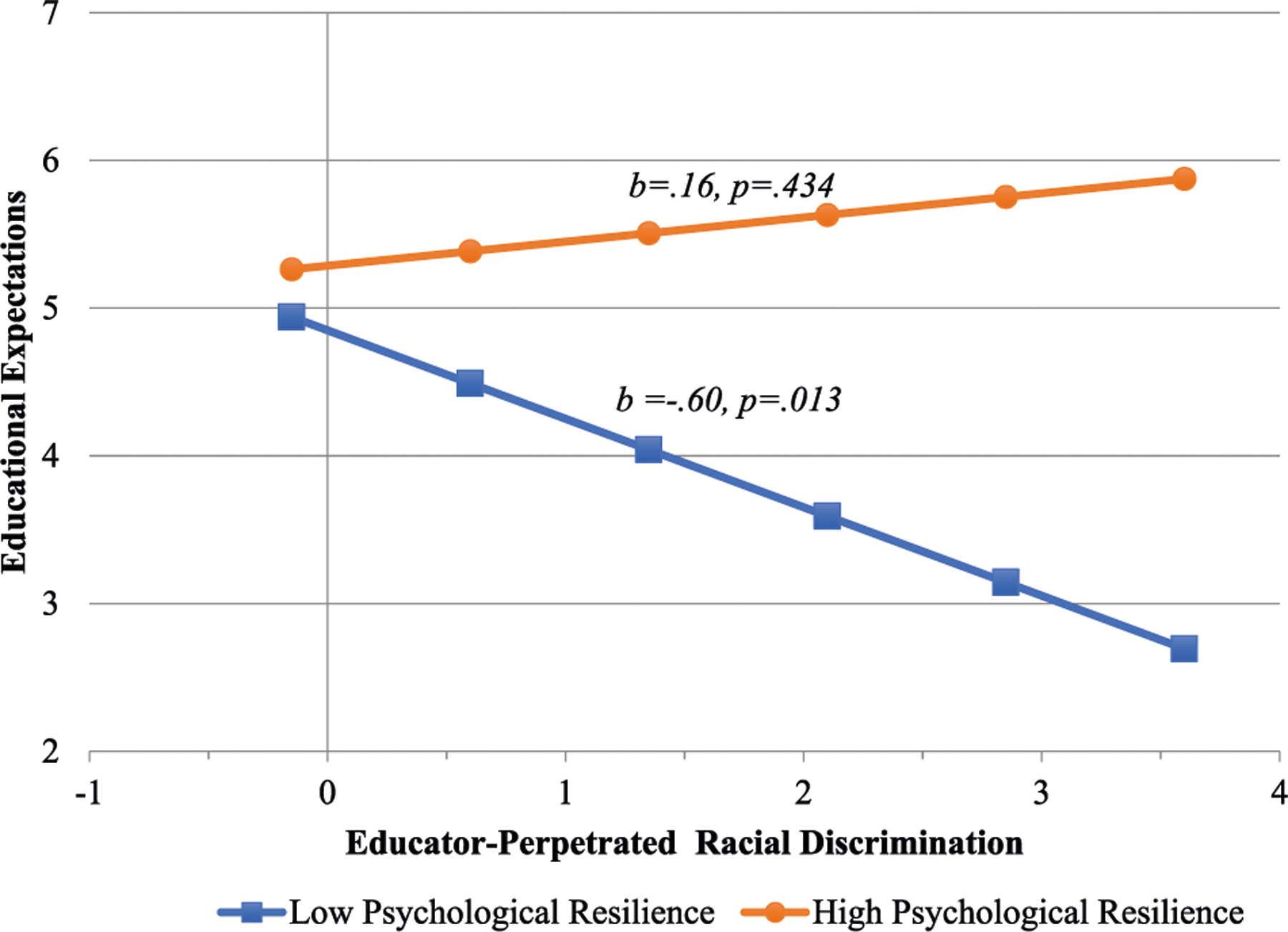
The moderating role of psychological resilience on the link between educator-perpetrated racial/ethnic discrimination and adolescents’ educational expectations’
Supplemental Analyses
Supplemental analyses were conducted to account for earlier measures of the academic outcomes, essentially testing whether educator-perpetrated discrimination was related to changes in academic well-being from 9th to 10th grades (see Appendix A for associated tables and figures). Model 1 linking discrimination to academics had acceptable model fit (χ2 = 29.17, p < 0.001; CFI = 0.979; RMSEA = 0.072 [CI: 0.047 −0.099]; see Table 5). Results were parallel to the main analyses, documenting that the association between educator-perpetrated racial/ethnic discrimination was linked to lower school engagement (β = −0.07, p < 0.05). The subsequent models introducing the direct effect of each psychological resource on the academic well-being indicators each had acceptable model fit (see Tables 6, 7, and 8 for psychological resilience, self-efficacy, and shift-and-persist, respectively). Results from these models revealed fewer significant associations between psychological resources and academic well-being than observed in the main analyses. Specifically, greater psychological resilience was linked to higher grades (β = 0.09, p < 0.01; see Model 1 in Table 6) but not educational expectations or school engagement. Neither self-efficacy (Model 1 in Table 7) nor shift-and-persist (Model 1 in Table 8) were significantly related to any of the academic well-being indicators.
For analyses examining psychological resources as potential buffers, three significant interactions emerged in the supplemental analyses (see Model 2 in Tables 6, 7, and 8). First, parallel to the main analyses, results revealed that for students low in psychological resilience, greater educator-perpetrated racial/ethnic discrimination was linked to lower educational expectations (b = −0.47, p < 0.05; see Model 2 in Table 6), while this association was not significant for students high in psychological resilience (b = 0.16, p = 0.348; see Fig. 2). A significant interaction also emerged between educator-perpetrated SES-based discrimination and self-efficacy (see Model 2 in Table 7), wherein for students with high self-efficacy, greater SES-based discrimination was linked to higher educational expectations (b = 0.54, p < 0.01), while this link was negative but not significant for students with low self-efficacy (b = −0.10, p = 0.544; see Fig. 3). A significant interaction effect between shift-and-persist and educator-perpetrated SES-based discrimination for educational expectations was also observed (see Model 2 in Table 8). Although the test of simple slopes showed only marginally significant slopes, the observed pattern of effects provided trend evidence of shift-and-persist’s buffering role (see Fig. 4).
Discussion
There is sound theoretical reasoning to suggest that social status (e.g., race/ethnicity, SES) influences academic well-being through experiences of discrimination (García Coll et al., 1996). While racial/ethnic discrimination as a contributor to poor academic well-being has been extensively documented (Benner et al., 2018), fewer studies have investigated the influence of SES-based discrimination on adolescents’ academic well-being. Further, it is also critical to understand the internal assets that young people possess that may protect them from the negative impacts of discrimination. Psychological resilience, self-efficacy, and shift-and-persist are psychological resources that have been previously shown to mitigate the negative influence of racial/ethnic discrimination on physical and mental well-being (Christophe et al., 2019; Lam et al., 2018), and thus these were considered as potential buffering resources. It was hypothesized that for both educator-perpetrated racial/ethnic and SES-based discrimination, more frequent discriminatory experiences would be associated with poorer academic well-being and that psychological resources would mitigate these negative effects.
The results partially supported the first hypothesis, as educator-perpetrated racial/ethnic discrimination was significantly related to lower school engagement one year later, and this result persisted even when controlling for the previous year’s school engagement. This finding is consistent with prior research documenting the negative influence of perceived discrimination on students’ school engagement (Bottiani et al., 2020). Unlike racial/ethnic discrimination, educator-perpetrated SES-based discrimination was not significantly related to the academic well-being indicators under study. Prior research has documented that classism is negatively related to academic well-being (Allan et al., 2016), but this research did not integrate racial/ethnic discrimination and SES-based discrimination simultaneously. Race/ethnicity is an observable physical characteristic that may make adolescents particularly vulnerable to discrimination, and discussions regarding the potential for racism, prejudice, and discrimination (i.e., preparation for bias) may reinforce minoritized adolescents’ awareness of the mistreatment they are encountering (Hughes et al., 2006). In contrast, SES is more concealable and thus may make low-SES adolescents less of a target. Indeed, in the current study, adolescents’ reports of SES-based discrimination were far fewer than those of race-based discrimination, and it is suspected that the particular salience of race/ethnicity identity exploration during adolescence (Yip, 2014, 2018) combined with the historical role and prominence of racial/ethnic discrimination in the U.S. may be driving the null effects for SES-based discrimination on academic well-being.
In considering the potential buffering role of psychological resources on the relation between discrimination and academic well-being, evidence partially confirmed the second hypothesis. Results revealed that psychological resilience appeared to buffer against the negative impact of racial/ethnic discrimination, such that for students with higher levels of psychological resilience, there was no significant association between discrimination and educational expectations, while racial/ethnic discrimination was related to lower educational expectations for students with lower psychological resilience. Similarly, self-efficacy served to promote adolescents’ educational expectations in the face of educator-perpetrated SES-based discrimination in the supplemental analyses, with students who demonstrated higher levels of self-efficacy showing increased educational expectations when faced with greater SES-based discrimination. These findings are notable, as students’ expectations for their educational attainment are strongly linked to academic effort and later educational attainment (Domina et al., 2011; Mello et al., 2012).
Students’ psychological resources, however, did not appear to moderate the association between discrimination and either grades or school engagement. These differential influences may be related to differences in the psychological versus behavioral nature of the outcomes under study. Educational expectations are more psychological in nature, assessing students’ beliefs and optimism regarding their academic trajectories. On the other hand, this study’s school engagement and grades indicators focus on students’ academic behaviors. Given that psychological resources center around one’s psychological response to stressors, students high in psychological resources may have the ability to maintain optimism regarding their academic trajectories in the face of discrimination; however, discrimination may impede students from engaging in academic behaviors that align with these expectations, and psychological resources may not be enough to help students overcome this barrier behaviorally.
For shift-and-persist, while this resource was found to be positively related to each academic outcome in the main analyses, it did not emerge as a moderator of the relation between discrimination and academic outcomes. These findings suggest that shift-and-persist strategies may not be enough to mitigate the negative associations of discrimination on educational expectations, school engagement, and grades. However, shift-and-persist may emerge as a predictor and moderator when assessing other forms of discrimination, other perpetrators of discrimination, or when utilizing other academic outcomes that are more in line with the focus of shift-and-persist (cognitive reappraisal of and persistence through stressors), such as academic motivation. Little research has investigated the role of shift-and-persist in relation to academic outcomes, and future qualitative inquiry could be particularly helpful in understanding whether shift-and-persist might be applicable to these outcomes.
Most, if not all, of the extant literature on the impact of discrimination for adolescents’ academics relates to discriminatory treatment perpetrated due to the target’s race/ethnicity. The current study extends this literature by assessing the differential influences of race/ethnicity-based and SES-based discrimination perpetrated by educators on young people’s grades, school engagement, and educational expectations. Attention to SES-based mistreatment is critical, as it can provide insights into the reasons for the clear and persistent achievement gaps between low-SES and high-SES students (Pfeffer, 2018). In addition, the particular attention to the potential moderating role of three unique psychological resources provides additional insights into the potential resources that young people possess that help them cope with discriminatory treatment (García Coll et al., 1996). The current study further extends existing research documenting the buffering role of self-efficacy, psychological resilience, and shift-and-persist for various indicators of mental and physical health (Christophe et al., 2019; Watkins et al., 2011; Watson et al., 2018) by highlighting a similar protective effect for adolescents’ academic well-being. Conclusions of the current study are also strengthened by the longitudinal nature of the data, which allows for temporal sequencing and the ability to control for prior academic functioning.
This study, however, is not without limitations. First, although these data are longitudinal, they are correlational in nature, and thus no causal claims can be made. Caution must also be taken when interpreting the results from the supplemental analyses given the data only control for Wave 2 grades for Cohort 2. Further, attention was placed on educator-perpetrated discrimination, as research has documented that the influence of discrimination on developmental outcomes may vary depending on the source of the discrimination, with educator-perpetrated discrimination shown to have stronger associations with academics than discrimination perpetrated by peers or societal institutions (Benner & Graham, 2013). Peer relationships, however, are also a crucial aspect of young people’s social ecologies and their academic experiences (Rubin et al., 2006), and as such, future research should investigate the role of peer-perpetrated discrimination for adolescents’ academic outcomes and the potential protective role of psychological resources for these relations. It is also critical to note that race/ethnicity and SES are inextricably linked in the U.S. In the current study sample, the highest parent educational attainment levels were over-represented for the White and Asian American participants, whereas the lowest levels of parent educational attainment were overrepresented for the Latina/o/x participants. Moreover, of those who reported any educator-perpetrated discrimination, about a quarter attributed that discrimination to both race/ethnicity and SES. While studying the intersection of racial/ethnic and SES-based discrimination was beyond the scope of the current study, this is a critical avenue for future research that would provide a deeper understanding of the impact that intersectional experiences of discrimination have for youth.
It must also be noted that all measures utilized in the current study rely on students’ self-reports. It is recognized that self-report surveys are susceptible to respondent bias (Cooper et al., 2012); however, in an attempt to assuage these biases, the researchers took measures to ensure privacy of survey completion by allowing participants to complete surveys in the privacy of their home. Lastly, generalizability was limited by relatively small samples of African American and Asian American students. While this is a reflection of the demographic makeup of the geographic area in which data were collected, as the adolescent population in the U.S. becomes increasingly more diverse, it is critical to understand how impacts of discrimination and its potential buffers may vary by race/ethnicity to inform tailored, research-driven interventions that benefit students from varying racial/ethnic backgrounds. Future research with a larger and more balanced representation of participants across racial/ethnic and SES groups would allow for the investigation of the generalizability of the observed relations across these key demographic groups.
Conclusion
Research documenting racial/ethnic discrimination’s association with poor academic well-being is abundant (Benner et al., 2018), however, the impacts of SES-based discrimination, as well as the potential protective influence of adolescents’ psychological resources, remain understudied. This study extends the prior research base by including attention to both race/ethnicity-based and SES-based discrimination. Moreover, the current research addresses gaps in knowledge of the interplay between discrimination and psychological resources for adolescents’ academics specifically. The results of the current study demonstrated that higher levels of educator-perpetrated racial/ethnic discrimination were significantly related to lower school engagement and that psychological resilience and self-efficacy buffered the negative impact of racial/ethnic discrimination and SES-based discrimination, respectively, on students’ educational expectations. These findings shed light on the importance of considering the various identities that adolescents hold that can make them vulnerable to stigmatization and marginalization and the consequences such discrimination may have on young people’s subsequent academic well-being. The findings reported here also highlight the unique psychological resources that adolescents possess that can protect them in the face of discrimination. While an important contribution, these findings are not meant to undercut the critical work that must be done to address structural racism and the larger social practices in place in the U.S. that perpetuate discrimination. Instead, these findings should bring greater awareness to the various forms of discrimination marginalized students may face and the personal assets from which they can draw to overcome the pernicious influences of discrimination. The promotion of these psychological resources highlights an important avenue for improving academic success during adolescence, particularly for those most vulnerable to race/ethnic- or SES-based mistreatment.
Acknowledgements
This research was supported by grants, P2CHD042849, Population Research Center, and T32HD007081, Training Program in Population Studies, awarded to the Population Research Center at The University of Texas at Austin by the Eunice Kennedy Shriver National Institute of Child Health and Human Development. This work was also supported by grants from the National Science Foundation (Grant No. 1551954) and NICHD (K01HD087479) awarded to the second author. Opinions reflect those of the authors and not necessarily those of the granting agencies.
Biography
Celeste C. Fernandez Is a doctoral candidate at the University of Texas at Austin. Her major research interests include adolescent development, marginalization and discrimination, and academic engagement and achievement.
Aprile D. Benner Is an Associate Professor at the University of Texas at Austin. Her major research interests include child and adolescent development, marginalization and discrimination, and stratification systems.
Appendix A
Fig. 2.
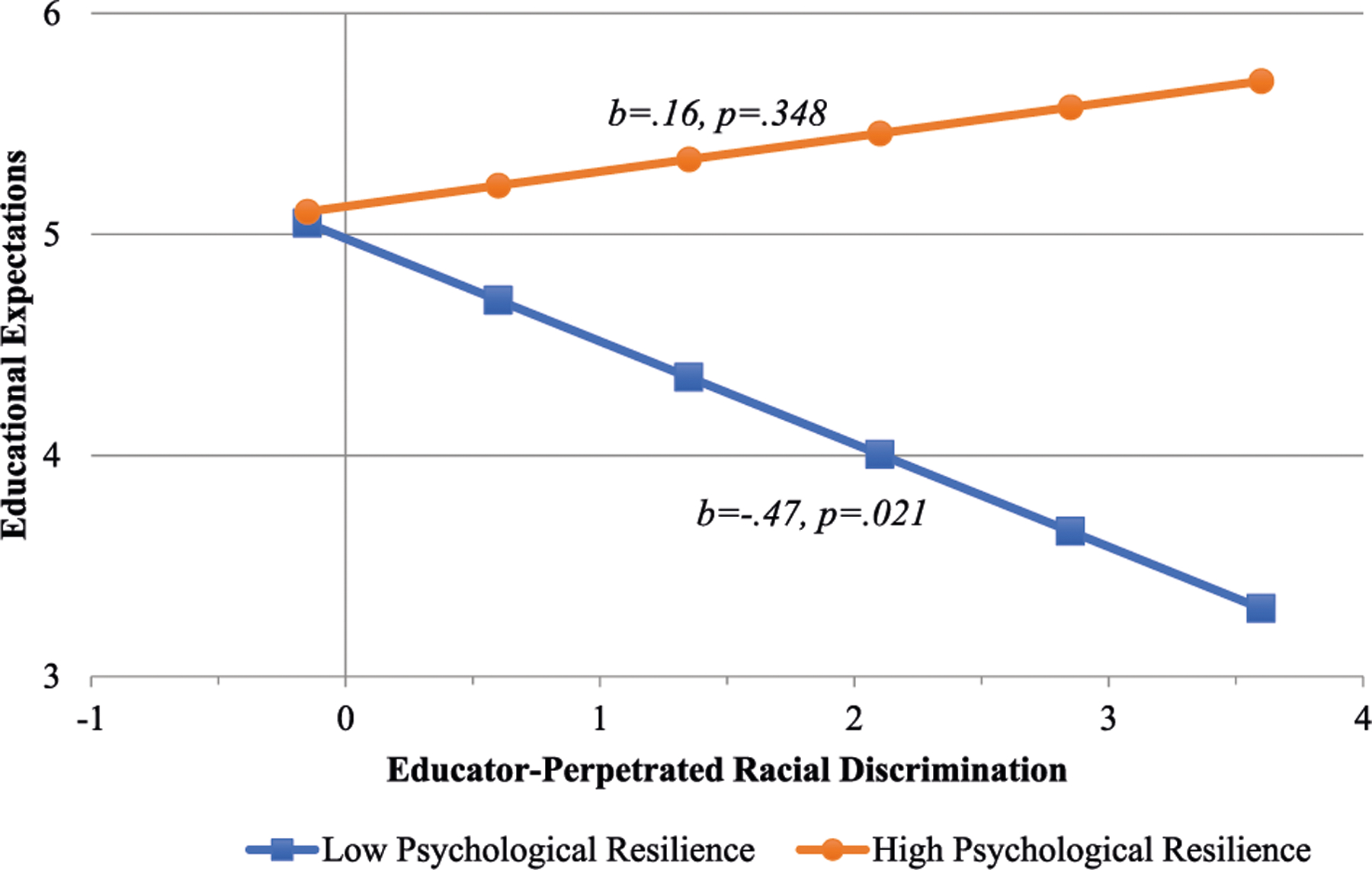
The moderating role of psychological resilience on the link between educator-perpetrated racial/ethnic discrimination and adolescents’ educational expectations
Fig. 3.
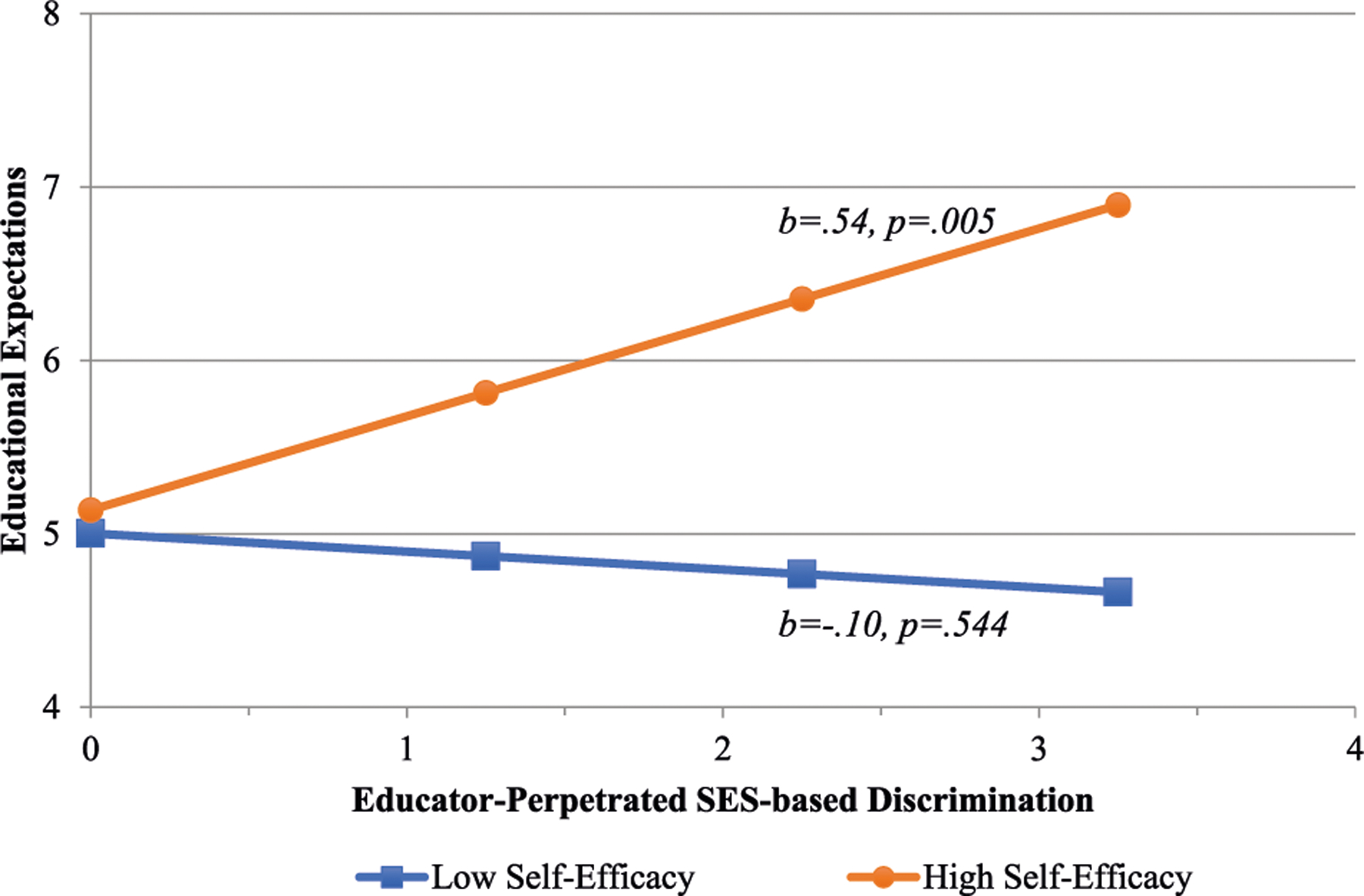
The moderating role of self-efficacy on the link between educator-perpetrated SES-based discrimination and adolescents’ educational expectations
Fig. 4.
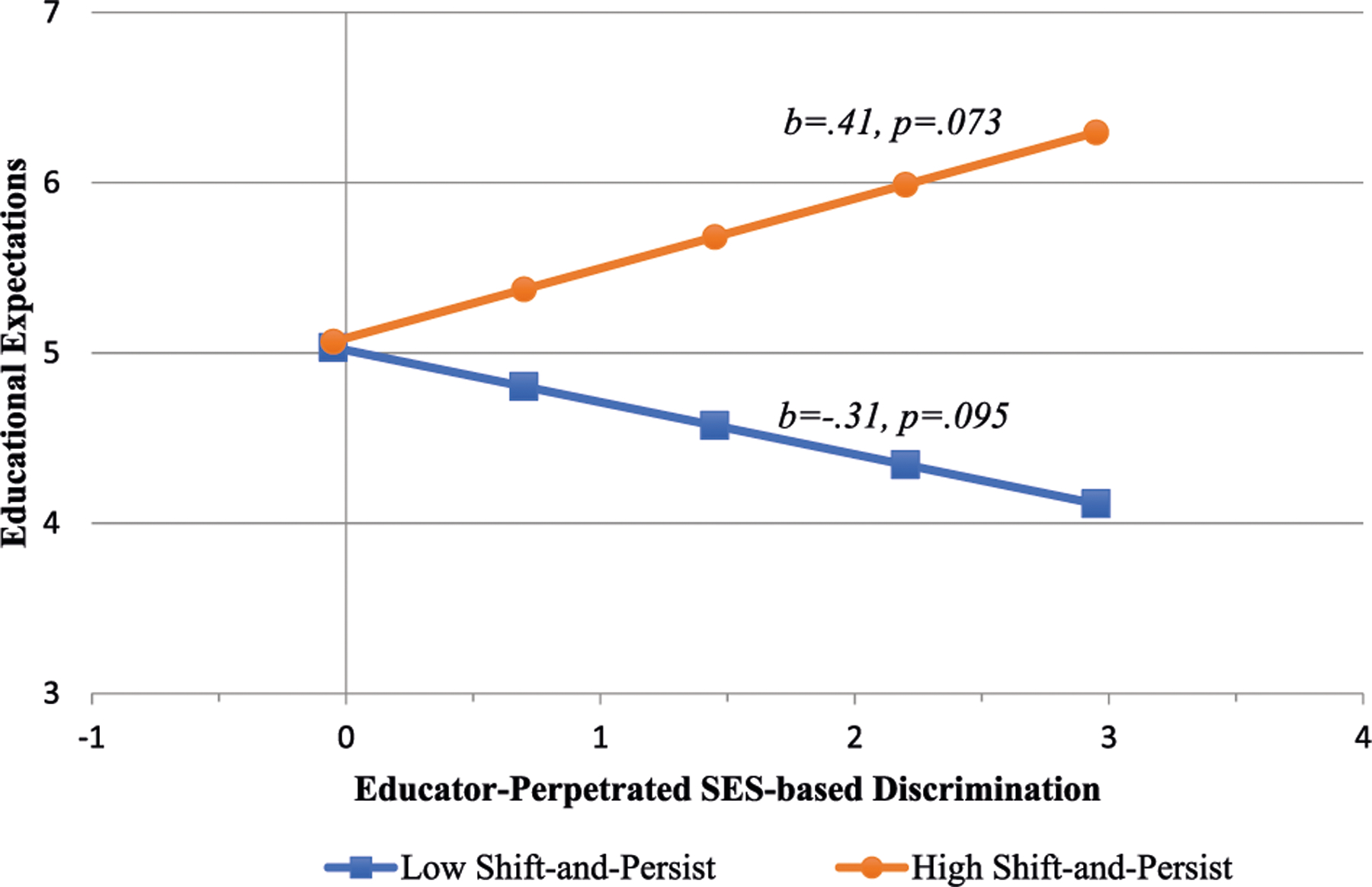
The moderating role of shift-and-persist on the link between educator-perpetrated SES-based discrimination and adolescents’ educational expectations
Table 5.
Direct effects of discrimination predicting academic well-being controlling for earlier academic outcomes
| Educational expectations β (SE) |
School engagement β (SE) |
Grades β (SE) |
|
|---|---|---|---|
|
| |||
| Racial/ethnic discrimination | −0.04 (0.05) | −0.07 (0.03) * | 0.01 (0.03) |
| SES-based discrimination | −0.01 (0.05) | 0.01 (0.04) | 0.01 (0.03) |
| African American | 0.03 (0.03) | 0.07 (0.03)** | 0.00 (0.03) |
| Latina/o/x | −0.05 (0.03) | 0.01 (0.03) | −0.06 (0.05) |
| Asian American | 0.06 (0.02) ** | 0.04 (0.03) | 0.08 (0.03) * |
| Biracial/other | −0.02 (0.03) | 0.04 (0.04) | −0.02 (0.04) |
| Study cohort | −0.03 (0.03) | 0.06 (0.03) * | −0.25 (0.11) * |
| Parent education | 0.08 (0.04) * | 0.05 (0.04) | 0.09 (0.05) |
| Female | 0.07 (0.03) * | 0.13 (0.04) ** | 0.13 (0.03) *** |
| Change in school from W2 to W3 | 0.07 (0.04) | −0.03 (0.02) | 0.07 (0.06) |
| W2 Academic well-being indicator | 0.58 (0.04) *** | 0.60 (0.02) *** | 0.61 (0.06) *** |
| R 2 | 0.44 *** | 0.43 *** | 0.47 *** |
Note. Results presented are standardized coefficients. Bold denotes significant associations. W2 N = 750. W3 N = 691. Model fit: χ2 = 29.17, p < 0.001; CFI = 0.979; RMSEA = 0.072 [CI: 0.047 – 0.099]
p < 0.05
p < 0.01
p < 0.001
Table 6.
Psychological resilience as a moderator of the associations between discrimination and academic well-being including Wave 2 academic outcomes
| Educational expectations |
School engagement |
Grades |
||||
|---|---|---|---|---|---|---|
| Model 1 β (SE) | Model 2 β (SE) | Model 1 β (SE) | Model 2 β (SE) | Model 1 β (SE) | Model 2 β (SE) | |
|
| ||||||
| Racial/ethnic discrimination | −0.04 (0.05) | −0.05 (0.04) | −0.08 (0.04) * | −0.08 (0.04) * | 0.01 (0.02) | −0.01 (0.02) |
| SES-based discrimination | −0.01 (0.05) | 0.03 (0.05) | 0.02 (0.04) | 0.02 (0.05) | 0.03 (0.04) | 0.05 (0.07) |
| Psych resilience | 0.05 (0.03) | 0.06 (0.03) * | 0.04 (0.04) | 0.04 (0.04) | 0.09 (0.03) ** | 0.08 (0.04) * |
| Racial/ethnic discrim × Psych resilience | 0.10 (0.04) * | 0.05 (0.03) | −0.03 (0.06) | |||
| SES-based discrim × Psych resilience | −0.01 (0.05) | −0.02 (0.03) | 0.03 (0.05) | |||
| R 2 | 0.44 *** | 0.45 *** | 0.43 *** | 0.43 *** | 0.48 *** | 0.48 *** |
Note. Results presented are standardized coefficients. Discrim = discrimination, Psych = psychological. Bold denotes significant associations. Model 1 fit: χ2 = 27.76, p < 0.001; CFI = 0.981; RMSEA = 0.070 [CI: 0.045 – 0.097]. Model 2 fit: χ2 = 26.18, p < 0.001; CFI = 0.983; RMSEA = 0.067 [CI: 0.042 – 0.094]
p < 0.05
p < 0.01
p < 0.001
Table 7.
Self-Efficacy as a moderator of the associations between discrimination and academic well-being-including Wave 2 academic outcomes
| Educational expectations |
School engagement |
Grades |
||||
|---|---|---|---|---|---|---|
| Model 1 β (SE) | Model 2 β (SE) | Model 1 β (SE) | Model 2 β (SE) | Model 1 β (SE) | Model 2 β (SE) | |
|
| ||||||
| Racial/ethnic discrimination | −0.04 (0.05) | −0.07 (0.04) | −0.07 (0.04) * | −0.09 (0.04) * | 0.01 (0.03) | 0.01 (0.03) |
| SES-based discrimination | −0.01 (0.04) | 0.06 (0.03) | 0.02 (0.04) | −0.02 (0.06) | 0.02 (0.04) | 0.15 (0.18) |
| Self-efficacy | 0.05 (0.03) | 0.05 (0.03) | 0.04 (0.03) | 0.04 (0.03) | 0.05 (0.03) | 0.06 (0.04) |
| Racial/ethnic discrim × Self-efficacy | −0.07 (0.04) | −0.03 (0.04) | 0.00 (0.04) | |||
| SES-based discrim × Self-efficacy | 0.12 (0.06) * | −0.03 (0.04) | 0.17 (0.18) | |||
| R2 | 0.44 *** | 0.45 *** | 0.43 *** | 0.43 *** | 0.48 *** | 0.48 *** |
Note. Discrim = discrimination. Results presented are standardized coefficients. Bold denotes significant associations. Model 1 fit: χ2 = 26.12, p < 0.001; CFI = 0.982; RMSEA = 0.067 [CI: 0.042 – 0.094]. Model 2 fit: χ2 = 28.99, p < 0.001; CFI = 0.981; RMSEA = 0.071 [CI: 0.047 – 0.099]
p < 0.05
p < 0.001
Table 8.
Shift-and-persist as a moderator of the associations between discrimination and academic well-being including Wave 2 academic outcomes
| Educational expectations |
School engagement |
Grades |
||||
|---|---|---|---|---|---|---|
| Model 1 β (SE) | Model 2 β (SE) | Model 1 β (SE) | Model 2 β (SE) | Model 1 β (SE) | Model 2 β (SE) | |
|
| ||||||
| Racial/ethnic discrimination | −0.04 (0.05) | −0.05 (0.05) | −0.08 (0.04) * | −0.08 (0.04) * | 0.01 (0.03) | 0.01 (0.04) |
| SES-based discrimination | −0.01 (0.05) | 0.01 (0.04) | 0.01 (0.04) | 0.01 (0.05) | 0.01 (0.03) | 0.03 (0.09) |
| Shift-Persist | 0.03 (0.03) | 0.03 (0.03) | 0.06 (0.04) | 0.06 (0.04) | 0.05 (0.03) | 0.06 (0.03) |
| Racial/ethnic discrim × Shift-Persist | −0.05 (0.04) | 0.03 (0.04) | 0.06 (0.06) | |||
| SES-based discrim × Shift-Persist | 0.10 (0.03) ** | −0.01 (0.05) | 0.00 (0.11) | |||
| R2 | 0.44 *** | 0.45 *** | 0.43 *** | 0.43 *** | 0.47 *** | 0.48 *** |
Note. Discrim = discrimination. Results presented are standardized coefficients. Bold denotes significant associations. Model 1 fit: χ2 = 27.85, p < 0.001; CFI = 0.981; RMSEA = 0.070 [CI: 0.045 – 0.097]. Model 2 fit: χ2 = 30.57, p < 0.001; CFI = 0.978; RMSEA = 0.074 [CI: 0.049 – 0.101]
p < 0.05
p < 0.01
p < 0.001
Footnotes
Conflict of Interest The authors declare no competing interests.
Data Sharing Declaration The datasets generated and/or analyzed during the current study are not publicly available but are available [blinded] from the corresponding author on reasonable request.
Compliance with Ethical Standards
Ethical Approval All procedures performed in studies involving human participants were in accordance with the ethical standards of the institutional and/or national research committee and with the 1964 Helsinki Declaration and its later amendments or comparable ethical standards. The study was approved by the Institutional Review Board at the University of Texas at Austin (No. 2016-02-0149).
Consent to Participate Informed consent was obtained from all individual participants included in the study
Publisher’s note Springer Nature remains neutral with regard to jurisdictional claims in published maps and institutional affiliations.
References
- Abbott-Chapman J, Martin K, Ollington N, Venn A, Dwyer T, & Gall S (2014). The longitudinal association of childhood school engagement with adult educational and occupational achievement: Findings from an Australian national study. British Educational Research Journal, 40(1), 102–120. 10.1002/berj.3031. [DOI] [Google Scholar]
- Allan BA, Garriott PO, & Keene CN (2016). Outcomes of social class and classism in first- and continuing-generation college students. Journal of Counseling Psychology, 63(4), 487–496. 10.1037/cou0000160. [DOI] [PubMed] [Google Scholar]
- Auwarter AE, & Aruguete MS (2008). Effects of student gender and socioeconomic status on teacher perceptions. Journal of Educational Research, 101(4), 243–246. 10.3200/JOER.101.4.243-246. [DOI] [Google Scholar]
- Bandura A (1989). Human agency in social cognitive theory. American Psychologist, 10. [DOI] [PubMed] [Google Scholar]
- Bartko WT, & Eccles JS (2003). Adolescent participation in structured and unstructured activities: A person-oriented analysis. Journal of Youth and Adolescence, 32(4), 233–241. 10.1023/A:1023056425648. [DOI] [Google Scholar]
- Batruch A, Autin F, Bataillard F, & Butera F (2019). School selection and the social class divide: How tracking contributes to the reproduction of inequalities. Personality and Social Psychology Bulletin, 45(3), 477–490. 10.1177/0146167218791804. [DOI] [PubMed] [Google Scholar]
- Beal SJ, & Crockett LJ (2010). Adolescents’ occupational and educational aspirations and expectations: Links to high school activities and adult educational attainment. Developmental Psychology, 46(1), 258–265. 10.1037/a0017416. [DOI] [PMC free article] [PubMed] [Google Scholar]
- Benner AD (2011). The transition to high school: Current knowledge, future directions. Educational Psychology Review, 23(3), 299–328. 10.1007/s10648-011-9152-0. [DOI] [PMC free article] [PubMed] [Google Scholar]
- Benner AD, Fernandez CC, Hou Y, & Gonzalez CS (2021). Parent and teacher educational expectations and adolescents’ academic performance: Mechanisms of influence. Journal of Community Psychology, 49(7), 2679–2703. 10.1002/jcop.22644. [DOI] [PMC free article] [PubMed] [Google Scholar]
- Benner AD, & Graham S (2013). The antecedents and consequences of racial/ethnic discrimination during adolescence: Does the source of discrimination matter? Developmental Psychology, 49(8), 1602–1613. 10.1037/a0030557. [DOI] [PubMed] [Google Scholar]
- Benner AD, Wang Y, Shen Y, Boyle AE, Polk R, & Cheng YP (2018). Racial/ethnic discrimination and well-being during adolescence: A meta-analytic review. American Psychologist, 73 (7), 855–883. 10.1037/amp0000204. [DOI] [PMC free article] [PubMed] [Google Scholar]
- Bottiani JH, McDaniel HL, Henderson L, Castillo JE, & Bradshaw CP (2020). Buffering effects of racial discrimination on school engagement: The role of culturally responsive teachers and caring school police. Journal of School Health, 90(12), 1019–1029. 10.1111/josh.12967. [DOI] [PMC free article] [PubMed] [Google Scholar]
- Boylan JM, Jennings JR, & Matthews KA (2016). Childhood socioeconomic status and cardiovascular reactivity and recovery among Black and White men: Mitigating effects of psychological resources. Health Psychology, 35(9), 957–966. 10.1037/hea0000355. [DOI] [PMC free article] [PubMed] [Google Scholar]
- Brown CS, & Bigler RS (2005). Children’s perceptions of discrimination: A developmental model. Child Development, 76(3), 533–553. 10.1111/j.1467-8624.2005.00862.x. [DOI] [PubMed] [Google Scholar]
- Browman AS, Destin M, Carswell KL, & Svoboda RC (2017). Perceptions of socioeconomic mobility influence academic persistence among low socioeconomic status students. Journal of Experimental Social Psychology, 72(Sept), 45–52. 10.1016/j.jesp.2017.03.006. [DOI] [Google Scholar]
- Chen E, & Miller GE (2012). “Shift-and-Persist” strategies: Why low socioeconomic status isn’t always bad for health. Perspectives on Psychological Science, 7(2), 135–158. 10.1177/1745691612436694. [DOI] [PMC free article] [PubMed] [Google Scholar]
- Chen E, McLean KC, & Miller GE (2015). Shift-and-persist strategies: Associations with socioeconomic status and the regulation of inflammation among adolescents and their parents. Psychosomatic Medicine, 77(4), 371–382. 10.1097/PSY.0000000000000157. [DOI] [PMC free article] [PubMed] [Google Scholar]
- Chen E, Miller GE, Lachman ME, Gruenewald TL, & Seeman TE (2012). Protective factors for adults from low-childhood socioeconomic circumstances: The benefits of shift-and-persist for allostatic load. Psychosomatic Medicine, 74(2), 178–186. 10.1097/PSY.0b013e31824206fd. [DOI] [PMC free article] [PubMed] [Google Scholar]
- Chiang JJ, Ko A, Bower JE, Taylor SE, Irwin MR, & Fuligni AJ (2019). Stress, psychological resources, and HPA and inflammatory reactivity during late adolescence. Development and Psychopathology, 31(2), 699–712. 10.1017/S0954579418000287. [DOI] [PMC free article] [PubMed] [Google Scholar]
- Christophe NK, Stein GL, Martin Romero MY, Chan M, Jensen M, Gonzalez LM, & Kiang L (2019). Coping and culture: The protective effects of shift-&-persist and ethnic-racial identity on depressive symptoms in latinx youth. Journal of Youth and Adolescence, 48(8), 1592–1604. 10.1007/s10964-019-01037-8. [DOI] [PMC free article] [PubMed] [Google Scholar]
- Cooper HE, Camic PM, Long DL, Panter AT, Rindskopf DE, & Sher KJ (2012). APA handbook of research methods in psychology, Vol 1: Foundations, planning, measures, and psychometrics (pp. xliv–744). American Psychological Association. [Google Scholar]
- Domina T, Conley A, & Farkas G (2011). The link between educational expectations and effort in the college-for-all era. Sociology of Education, 84(2), 93–112. [Google Scholar]
- Duncan GJ, & Murnane RJ (2016). Rising inequality in family incomes and children’s educational outcomes. RSF: The Russell Sage Foundation Journal of the Social Sciences, 2(2), 142 10.7758/rsf.2016.2.2.06. [DOI] [Google Scholar]
- Durante F, & Fiske ST (2017). How social-class stereotypes maintain inequality. Current Opinion in Psychology, 18, 43–48. 10.1016/j.copsyc.2017.07.033. [DOI] [PMC free article] [PubMed] [Google Scholar]
- Elder GH (1998). The life course as developmental theory. Child Development, 69(1), 1–12. 10.1111/j.1467-8624.1998.tb06128.x. [DOI] [PubMed] [Google Scholar]
- Enders CK (2010). Applied missing data analysis. New York, NY: Guilford Press. [Google Scholar]
- Farkas G (2003). Racial disparities and discrimination in education: What do we know, how do we know it, and what do we need to know? Teachers College Record, 105(6), 1119–1146. 10.1111/1467-9620.00279. [DOI] [Google Scholar]
- Finch J, Farrell LJ, & Waters AM (2020). Searching for the HERO in youth: Does psychological capital (PsyCap) predict mental health symptoms and subjective wellbeing in Australian school-aged children and adolescents? Child Psychiatry & Human Development, 51(6), 1025–1036. 10.1007/s10578-020-01023-3. [DOI] [PMC free article] [PubMed] [Google Scholar]
- Fisher CB, Wallace SA, & Fenton RE (2000). Discrimination distress during adolescence. Journal of Youth and Adolescence, 29(6), 679–695. 10.1023/A:1026455906512. [DOI] [Google Scholar]
- García Coll C, Lamberty G, Jenkins R, McAdoo HP, Crnic K, Wasik BH, & Garcia HV (1996). An integrative model for the study of developmental competencies in minority children. Child Development, 67(5), 1891 10.2307/1131600. [DOI] [PubMed] [Google Scholar]
- Hughes D, Rodriguez J, Smith EP, Johnson DJ, Stevenson HC, & Spicer P (2006). Parents’ ethnic-racial socialization practices: A review of research and directions for future study. Developmental Psychology, 42(5), 747–770. 10.1037/0012-1649.42.5.747. [DOI] [PubMed] [Google Scholar]
- Hussar B, Zhang J, Hein S, Wang K, Roberts A, Cui J, Smith M, Bullock Mann F, Barmer A, and Dilig R (2020). The condition of education 2020 (NCES 2020–144). Washington, DC: U.S. Department of Education. National Center for Education Statistics. Retrieved May, 2020, from https://nces.ed.gov/pubsearch/pubsinfo.asp?pubid=2020144. [Google Scholar]
- Huynh VW, & Fuligni AJ (2010). Discrimination hurts: The academic, psychological, and physical well-being of adolescents. Journal of Research on Adolescence, 20(4), 916–941. 10.1111/j.1532-7795.2010.00670.x. [DOI] [Google Scholar]
- Kallem S, Carroll-Scott A, Rosenthal L, Chen E, Peters SM, McCaslin C, & Ickovics JR (2013). Shift-and-persist: A protective factor for elevated BMI among low-socioeconomic-status children. Obesity, 21(9), 1759–1763. 10.1002/oby.20195. [DOI] [PMC free article] [PubMed] [Google Scholar]
- Kiang L, Witkow MR, Gonzalez LM, Stein GL, & Andrews K (2015). Changes in academic aspirations and expectations among Asian American adolescents. Asian American Journal of Psychology, 6(3), 252–262. 10.1037/aap0000025. [DOI] [Google Scholar]
- Lam PH, Miller GE, Chiang JJ, Levine CS, Le V, Shalowitz MU, Story RE, & Chen E (2018). One size does not fit all: Links between shift-and-persist and asthma in youth are moderated by perceived social status and experience of unfair treatment. Development and Psychopathology, 30(5), 1699–1714. 10.1017/S0954579418000913. [DOI] [PubMed] [Google Scholar]
- Lamont RA, Quinn C, Nelis SM, Martyr A, Rusted JM, Hindle JV, Longdon B, & Clare L, on behalf of the IDEAL study team. (2019). Self-esteem, self-efficacy, and optimism as psychological resources among caregivers of people with dementia: Findings from the IDEAL study. International Psychogeriatrics, 31(9), 1259–1266. 10.1017/S1041610219001236. [DOI] [PubMed] [Google Scholar]
- Mello ZR, Anton-Stang HM, Monaghan PL, Roberts KJ, & Worrell FC (2012). A longitudinal investigation of African American and Hispanic adolescents’ educational and occupational expectations and corresponding attainment in adulthood. Journal of Education for Students Placed at Risk (JESPAR), 17(4), 266–285. [Google Scholar]
- Miceli M, Klibert J, & Yancey CT (2019). Minority stress and suicidal behavior: Investigating a protective model through resilience in a bisexual sample. Journal of Bisexuality, 19(1), 83–102. 10.1080/15299716.2019.1567433. [DOI] [Google Scholar]
- National Center for Education Statistics. (2008). Mathematics course-taking and achievement at the end of high school: Evidence from the Education Longitudinal Study of 2002 (ELS:2002). Statistical analysis report. Washington, DC: U.S. Department of Education. Retrieved from http://nces.ed.gov/pobs2008/2008319.pdf. [Google Scholar]
- O’Hara RE, Gibbons FX, Weng CY, Gerrard M, & Simons RL (2012). Perceived racial discrimination as a barrier to college enrollment for African Americans. Personality and Social Psychology Bulletin, 38(1), 77–89. 10.1177/0146167211420732. [DOI] [PubMed] [Google Scholar]
- Pearlin LI, & Schooler C (1978). The structure of coping. Journal of Health and Social Behavior, 19(1), 2–21. 10.2307/2136319. [DOI] [PubMed] [Google Scholar]
- Pew Research Center, 2014, The rising cost of not going to college (http://www.pewsocialtrends.org/2014/02/11/the-rising-cost-of-not-going-to-college/).
- Pfeffer FT (2018). Growing wealth gaps in education. Demography, 55(3), 1033–1068. 10.1007/s13524-018-0666-7. [DOI] [PMC free article] [PubMed] [Google Scholar]
- Priest N, Paradies Y, Trenerry B, Truong M, Karlsen S, & Kelly Y (2013). A systematic review of studies examining the relationship between reported racism and health and wellbeing for children and young people. Social Science & Medicine, 95, 115–127. 10.1016/j.socscimed.2012.11.031. [DOI] [PubMed] [Google Scholar]
- Reardon SF (2013). The widening income achievement gap. Educational Leadership, 70(8), 10–16. [Google Scholar]
- Rubin KH, Bukowski WM, & Parker JG (2006). Peer interactions, relationships, and groups. In Eisenberg N, Damon W, & Lerner RM (Eds.), Handbook of child psychology: Social, emotional, and personality development, Vol. 3, 6th ed. (pp. 571–645). John Wiley & Sons, Inc. [Google Scholar]
- Vuolo M, Mortimer JT, & Staff J (2014). Adolescent precursors of pathways from school to work. Journal of Research on Adolescence, 24(1), 145–162. 10.1111/jora.12038. [DOI] [PMC free article] [PubMed] [Google Scholar]
- Watkins DC, Hudson DL, Howard Caldwell C, Siefert K, & Jackson JS (2011). Discrimination, mastery, and depressive symptoms among African American men. Research on Social Work Practice, 21(3), 269–277. 10.1177/1049731510385470. [DOI] [PMC free article] [PubMed] [Google Scholar]
- Watson LB, Morgan SK, & Craney R (2018). Bisexual women’s discrimination and mental health outcomes: The roles of resilience and collective action. Psychology of Sexual Orientation and Gender Diversity, 5(2), 182–193. 10.1037/sgd0000272. [DOI] [Google Scholar]
- Witkow MR (2006). Perceived social norms for schoolwork and achievement during adolescence. Unpublished manuscript, Ypsilanti, Eastern Michigan University. [Google Scholar]
- Yip T (2018). Ethnic/Racial identity—A double-edged sword? Associations with discrimination and psychological outcomes. Current Directions in Psychological Science, 27(3), 170–175. 10.1177/0963721417739348. [DOI] [PMC free article] [PubMed] [Google Scholar]
- Yip T (2014). Ethnic identity in everyday life: The influence of identity development status. Child Development, 85(1), 205–219. 10.1111/cdev.12107. [DOI] [PMC free article] [PubMed] [Google Scholar]
- Zajacova A, & Lawrence EM (2018). The relationship between education and health: reducing disparities through a contextual approach. Annual Review of Public Health, 39(1), 273–289. 10.1146/annurev-publhealth-031816-044628. [DOI] [PMC free article] [PubMed] [Google Scholar]