



Abstract
The lockdown imposed to limit the diffusion of COVID-19 in Italy affected the economic situation negatively. The income of many households decreased, and people were forced to stay home. Both these factors influenced food consumption: on the one hand less income means less money for purchases, on the other, the negative psychological impact of lesser income and the pandemic shifted the consumption towards alcohol and tobacco. Using survey data, this paper shows how the negative economic shock due to lockdown, together with the restrictions imposed by it, affected the consumption of food items in a region of Norther Italy.
Keywords: COVID-19, Lockdown, Economic downturn, Food purchases, Consumption, Italy
1. Introduction
The Covid-19 pandemic represents a challenge for all countries worldwide and can bring long-lasting alterations. Several changes had to be faced, ranging from the healthcare domain, until transportation and delivery, farming, food processing, food purchasing, as well as public services (Campbell et al., 2020). Until a vaccine can guarantee extended coverage of the population, the only measures to mitigate the Covid-19 dramatic effects and reduce contagion relates to the physical distancing that breaks social and economic contacts. The measures enacted to limit contagions negatively affect both economy and society, with short, medium and long-term consequences. In this context, policy makers have the delicate task of balancing the positive health effects of the measures with the economic costs of the burdens imposed to households and firms (Arndt et al., 2020).
In Italy the Covid-19 epidemic spread rapidly. During the first wave, Italy was the first Western Country to implement total lockdown from March 9th until May 4th 2020. Non-essential economic activities and services stopped working and schools were closed. Outdoor activities were allowed only for food purchasing, working (limited to specific activities) or health reasons. Furthermore, many households experienced severe financial downturn, due to reduction in income and employment. Together with mobility restrictions, these issues influenced the consumer's access to food (Béné, 2020; Cattivelli and Rusciano, 2020; Dou et al., 2020). Consequently, the lockdown restrictions imposed by the Government significantly affected food supply chain management and consumption habits (Principato et al., 2020), fostering the emergence of new solutions for food provision. These have affected quantities and types of food purchased by the households (Cappeli and Cini, 2020; Principato et al., 2020). In Italy, for the quarter February-April 2020, food sales increased by 6.1% in value, compared to the 2019 quarter, while non-food sales plunged by 52.2% (Istat, 2020). For the months of March and April 2020, ISMEA (2020) reports a rise in purchases of several food categories: + 145% flour, + 14% and + 25% pasta and rice respectively, +57% mozzarella and eggs, +31% cured meats, + 22 long-life milk (while fresh milk −5%), +78% oranges, +60% apples. A change in consumption patterns is therefore evident.
During extreme scenarios such as this, household consumers often try to mitigate the risk of food insecurity and the difficulties in food shopping (Slonim and Garbarino, 2009; Sterman & Dogan, 2015; Cappelli and Cini, 2020 and Power et al., 2020). Indeed, since the beginning of the first wave of Covid-19 pandemic there was evidence of stockpiling, hoarding, and panic buying.
In spite of a growing literature addressed to different facets and consequences of COVID-19 pandemic, little is still known about how households have responded in terms of their spending (Baker et al., 2020), comparing behaviour before and during lockdown.
This research investigates how the dramatic changes in the daily lives of consumers caused by the Covid-19 pandemic and lockdown influenced food preferences at household level. The primary aim of the paper is to understand if any changes in household food dynamics occurred in terms of food purchasing and eating behaviour. Specifically, this paper examines food purchasing behaviors, focusing on a segment of Italian population: university students and their families. A questionnaire was sent to understand the food purchasing habits during the period of total lockdown that characterized the first wave of Covid-19 pandemic.
The paper is structured as follows: section two provides a brief literature review on food purchasing habits during Covid-19 pandemic. Section three describes the methodology employed, the hypotheses formulated and key data. Section four presents the results of the research. Section five provides the discussion and concludes, highlighting the main practical and theoretical implications.
2. Literature review
Food choices have been shown to be generally stable in adulthood (Borland, Robinson, Crozier, & Inskip, 2008; Weismayer, Anderson, & Wolk, 2006), however, when people undergo changes in their environment, their habits enter in a non-automatic decision-making process (Verplanken & Wood, 2006). In this context, Covid-19 pandemic and lockdown have caused discontinuities in food choice habits (Marty et al., 2020), with significant pressures and modifications on the whole food system: panic buying, the closure of restaurants, cafés and bars and the fall in consumer incomes impacted the overall demand as well as induced shifts between product categories. Moreover, restrictive mobility measures influenced consumers’ demand for particular food items and the limitations in accessing specific supply outlets (e.g. open-air markets) inevitably forced households to supply in different places than they were used to (Béné, 2020; Ihle et al., 20203).
Consequently, household's food purchasing habits significantly changed in response to the Covid-19 pandemic (Kolodinsky et al., 2020; Worstell, 2020), also because of the perception of high uncertainty about the future, besides, working class families were usually less exposed (Alonso et al., 2015).
Household income reductions generated economisation in food purchasing, a phenomenon observed also during other kinds of shocks/crises (Cranfield, 2020). Price and convenience are key determinants of consumer purchasing behaviour also for food, and large food retail shops have a clear competitive advantage. However, during the lockdown consumers have shown a growing interest in local food supply chains, with the desire to support local businesses (Cappelli, 2020; Hobbs, 2020). The restrictions pushed purchases in the neighbourhoods, focussing on a lower number of retailers and on those that guarantee physical delivery at home (Bounie et al., 2020). However, many consumers still preferred to purchase in physical stores, instead of on-line, even when the number of daily contagions was high (Grashuis et al., 2020).
Cranfield (2020) observes that changes in opening hours or limits to the number of people allowed in retail stores, together with the reduction in the number of shopping trips (in compliance to governmental requirements and to avoid risk of exposure to the virus), pushed households to increase food inventories, with a rise in demand for easily stored food items, and a fall in demand for foods that either are not easy to store or deteriorate fast (e.g. substituting fresh fruit with canned fruit). Specifically, shortages of food products such as long-life milk, pasta, rice and tinned vegetables have been observed (Nicola et al., 2020). Other researchers reported a decrease in fresh fruit and vegetable purchases from pre- to during-Covid-19 lockdown, while intake of red/processed meat and starchy vegetables increased (Mitchell et al., 2020).
The research of Celik et al. (2020) reports that, following the Covid-19 lockdown, families' expenditure of food and beverage increased by 25.79% on average, with significant differences in food preferences before and after the pandemic outbreak. Before it, the first and second preferences were meat and bakery foods, while after the it, the first and second preferences have become fruits and vegetables, due to the belief that fruits and vegetables contains vitamins to fight virus. Moreover, before the outbreak, food choices were cost and health-driven, while after were quality and health-driven. However, no significant difference in the food preferences was recorded, according to household's income levels. Another research registered increases in the demand for both healthy products (e.g. soup), and comforting products (e.g. cookies or beer), due to the fact that comfort foods help customers to “restore a sense of control” (Galoni et al., 2020).
However, the literature has underlined a disparity in food access, linked to household economic condition. Specifically, consumptions of healthy food are generally accentuated amongst households with better economic condition (Medina et al., 2019; Suresh and Shauder, 2020). Low-income households usually consume less healthy foods for different reasons: i) lower awareness of the health benefits (Hart et al., 2002); ii) different preferences in favour of unhealthier food (Parmenter et al., 2000); iii) lower access to healthy food because it is generally more expensive (Buzby et al., 2015).Economic slump has also resulted in an increase in alcohol consumptions (Čihák, 2020).
In the U.S. and China households purchased extra amounts of various foods, changing food-use behaviours and perceptions with lower wastes, cooking home-meals more often and reducing ready-to-use food (Dou et al., 2020). However, no significant change was registered with respect to types of food purchased and consumed during the pandemic. In the UK, a significant increase of relatively unusual ingredients for food and home-made cocktails was observed (Huang and Sengupta, 2020).
An Italian research (Di Renzo et al., 2020) shows that the consumption of home-made baked food increased, while that of snacks, processed meat, carbonated and sugary drinks decreased. Instead, no substantial changes were registered for fresh foods. During the lockdown Italian households spent more on groceries as they were forced to stay at home, where they cooked their meals and enjoyed them with their families (Principato et al., 2020). On the contrary, a Canadian study reports changes in the eating behaviours: women ate more during lockdown and, specifically, more snack foods (Carroll et al., 2020)
Interestingly, a research conducted in the U.S. on the basis of Google food-related searches during the Covid-19 pandemic underlined different consumer approaches (Schmidt et al., 2020). Specifically, in the initial phase of the pandemic (since mid-February), consumers were concerned about storable food items and hoarding, while in the subsequent period, from the beginning of March, consumers started to search local options for sourcing foods (local farms and food producers). However, with an increase in the fear about virus and shutdowns, a growing interest in take-out food and home delivery emerged. Another similar research focussed on Spanish Google-searches and underlined a significant increase in searches for foods like bread, chicken, milk, flour, fruit starting from the middle of March 2020 (Laguna et al., 2020). The same research also highlighted that consumption of the most perishable food products like seafood decreased, even if fresh vegetables were increasingly purchased. Also purchases of non-perishable ready meals decreased, because of unhealthy opinions about them and increased time for cooking. In France, the consumers’ mood guided food choices during the lockdown, pulled by the importance of health, natural content and ethic motives, while economic convenience and price were less relevant. A decrease in nutritional quality of diets also emerged (Marty et al., 2020). This evidence is also confirmed by a research highlighting that, comparing to the pre-Covid-19 period, diets have shown larger energy intake and lower nutritional quality, with a higher environmental impacts (Batlle-Bayer et al., 2020). The increase in caloric intake, with a weight gain during the lockdown, was observed in many countries around the world, such as Kuwait, the U.S., Italy and France (Bhutani and Cooper, 2020; Deschasaux-Tanguy et al., 2020; Husain and Ashkanani, 2020).
Vall Castelló and Lopez Casasnovas (2021) document the effects of lockdown on supermarket sales in Spain. They show that they decreased for all the types of food. However, their results highlight that only people aged less than 66 purchased less food, while those aged more did not change the quantities bought in supermarkets during the lockdown. Our paper differs from it, as it considers purchases of food not only in supermarkets, but also in the other types of stores, including those selling online.
In conclusion, the Covid-19 has strongly affected the type of food purchased, highlighting, in some cases, not homogenous consumption patterns, also due to different lockdown strategies implemented in different countries (Poelman et al., 2020) Furthermore, the changes in the way and where households shopped impacted the channels and venues used to purchase food (Cranfield, 2020; Devereux et al., 2020). However, some changes in the habits, which occurred during the lockdown, may keep some long run effect (Đogaš et al., 2020).
3. Data and methodology
Data were collected through an online survey between June 4 and 15 2020 using an online survey. The students of the University of *** and their families were invited to fill in a questionnaire aimed at understanding how food habits changed during the lockdown. The questionnaire was structured into four parts: 1) socio-demographic characteristics of the respondent's household; 2) alimentary habits before and after the lockdown; 3) food purchase habits before and after the lockdown and 4) risk preferences and opinions about environmental concerns. Alimentary habits include questions about outdoor places (bars, restaurants, etc.) where the interviewees were used to eat before the lockdown. In facts, changes in these habits due to the lockdown may affect the quantity and the types of foods purchased. Environmental concerns are a potential driver of food purchasing choices.
The sample is concentrated in northern Italian regions, which were the most affected by the pandemic: studying the responses to the restrictions in this area, therefore, allows focussing on the reactions of the most affected populations to such an unprecedented event.
Students received the invitation at their institutional addresses; participation in the survey was voluntary, and full anonymity ensured. The choice of using institutional email addresses responds to the two main aims. On the one hand, official invitations are likely to elicit participation more than informal messages; on the other hand, as the questionnaire needed approving by the Students’ Office of the University, the use of institutional addresses allowed for easily controlling the procedure. The total population reached amounts to about 80,000 students, 80% of which are resident in Piedmont, most of the others are Italians living in other regions. The response rate was about 6%, with slightly more than 4700 responses collected. While the sample represents the population of students of the University and their families and is, therefore, not generalizable to the whole population, the city is representative of other towns, characterised by a strong presence of students and an economy that relies importantly on their consumption. For this reason, while only a part of the population is covered by the survey, such a portion of consumers is relevant for the economy of both *** and other similar towns.
Table 1 reports descriptive statistics about the respondents. Mirroring the larger percentage of women in the students’ population, 74% of the sample is composed by female students. Such a figure suggests that they are over-represented in the sample, as their share of the total population of the university is 60.8%. Mean age is 24 with some outliers, mainly adult working students. The respondents’ parents mostly have secondary or tertiary education diplomas, and many interviewees have at least one brother or sister. Considering environmental issues, about 30% of respondents reported to be very concerned about environmental sustainability and 17% responded that also their family are highly attentive to the issue.
Table 1.
Descriptive statistics – Individual characteristics.
| Variable | Obs | Mean | Std. Dev. | Min | Max |
|---|---|---|---|---|---|
| Female (as a share) | 3993 | .739 | .439 | 0 | 1 |
| Age | 3993 | 24.273 | 6.934 | 0 | 82 |
| Number of brothers | 3535 | .704 | .839 | 0 | 18 |
| Number of sisters | 3611 | .626 | .696 | 0 | 5 |
| Single (as a share) | 3993 | .445 | .497 | 0 | 1 |
| Number of children1 | 192 | 1.688 | .77 | 1 | 5 |
| Secondary education fathers2 | 3993 | .293 | .455 | 0 | 1 |
| Tertiary education fathers2 | 3993 | .459 | .498 | 0 | 1 |
| Secondary education mothers2 | 3993 | .231 | .421 | 0 | 1 |
| Tertiary Education mothers2 | 3993 | .513 | .5 | 0 | 1 |
| Very concerned about environment | 3993 | .304 | .45 | 0 | 1 |
| Family very concerned about environment | 3993 | .168 | .374 | 0 | 1 |
1. Referred only to the respondents with children.
2. As shares of the sample.
Table 2 shows descriptive statistics on the situations in which the interviewees spent the lockdown. The most of them had been living with two other persons, 86% with familiars. Only 2% lived alone. 51% of those living with respondents worked outdoor during the lockdown, while only 6% of respondents themselves did. 94% of the interviewees spent the lockdown in the same household they used to live. Few (56) were abroad during the lockdown abroad. These last are not included in the following analyses since the pandemic severity and the measures enacted in other countries may have been different. The questionnaire recorded also the number of inhabitants of the towns, where the interviewees lived during the lockdown: 34% of them were in towns with 10,000–25,000 inhabitants, 39% in cities with more than 100,000 habitants, 16% in settlements with 25,000–50,000 people and 11% in towns with 50,000–100,000 inhabitants. 85% of the respondents were in Piedmont during the lockdown. However, few people that used to reside in Piedmont, spent the lockdown in other regions (mainly northern regions, but also others located elsewhere in the country).
Table 2.
Descriptive statistics - Lockdown Situations.
| Variable | Obs | Mean | Std. Dev. | Min | Max |
|---|---|---|---|---|---|
| Household size ld | 3993 | 2.63 | 1.197 | 0 | 9 |
| usualhouse | 3939 | .942 | .235 | 0 | 1 |
| PiemonteLd | 3993 | .854 | .353 | 0 | 1 |
| PiemonteUsual | 3993 | .901 | .298 | 0 | 1 |
| North | 3993 | .936 | .244 | 0 | 1 |
| centre | 3993 | .019 | .137 | 0 | 1 |
| South | 3993 | .02 | .14 | 0 | 1 |
| Islands1 | 3993 | .021 | .144 | 0 | 1 |
1. It includes the major islands: Sardinia, Sicily and the smaller islands that administratively depend on them. Such a partition is common for statistical purposes.
Food consumption habits changed during the lockdown, as many people, who were used to eat outdoor, had to consume meals at home. In addition other two factors might influence food consumption. On the one hand, the decrease of physical exercise, as gyms and swimming pools were closed and outdoor activities strictly limited to essential doings and running and walking was allowed, though discouraged, but only in a radius of 200 m around home. On the other hand, the negative impact of the measures enacted and of the pandemic itself increased people's life dissatisfaction (Maugeri et al., 2020). Indeed, within the sample used in the following analyses, 62% of the respondents declared to be used to eat at least daily outside home before the lockdown. These phenomena may have affected the quantity and the types of foods eaten by the interviewees and their families. The data show that 21% of the interviewees increased the quantity of eaten food during the lockdown; moreover, 20% of them declared that other household members also did. Consequently, 42% of the households purchased more food during that period. The lockdown affected also the economic situation of many households negatively; consistently, 41% of the respondents responded that the economic condition of their household worsened, while it improved it only in the 9% of cases.
The aim of the paper is to understand how the lockdown and its economic consequences affected food consumption. In addition, the paper studies mediator factors for this effect like the educational level, the respondents’ parents. As suggested by the extant literature, some consequences of the pandemic and the lockdown in particular may have enhanced unhealthy choices, for example consuming more sweets, alcohol and tobacco, as usually happens during economic crises (de Goeij et al., 2015). In facts, the negative impact of the pandemic on people's health may take the form also of unhealthy habits. Nevertheless, (parents’) education generally is protective against the consumption of unhealthy food (Lwin et al., 2017 and Lee and Allen, 2020).
The analyses presented in the following section consider whether the consumption of some types of foods changed during the lockdown, when compared to before it. Foods are first categorised in fresh, long-life and alcohols and tobacco, then within each category, more precise types are identified: bread, meat, fish, milk, fruits and vegetables in the first group, canned food, frozen food, pasta, salty sauces and sweets in the second and, finally, wine, beer, spirits and tobacco in the third. The questionnaire asked the respondents to state whether the quantity of each type of food purchased at household level varied during the lockdown with respect to before. The possible answers were three: increased, unchanged, decreased. Each of them was transformed in a dummy variable, used as dependant variable in the econometric analysis presented in the next section.
The impact of the lockdown on the economic situation of the household is assessed on a five-option scale: 1) worsened situation with at least one job loss, 2) worsened situation without job losses, 3) unchanged situation, 4) improved situation without new jobs and 5) improved situation with at least one new job. For each of the previously listed category a dummy variable was created and used as independent variables in the regressions. Parents’ education is categorised using the three canonical levels of primary, secondary and tertiary education; a dummy for this last level is constructed and used as control in the regressions. Environmental concerns of respondents and their families are measured on a three-option scale: 1) low, 2) medium and 3) high. Dummies for this last case were constructed and used as controls. The coefficients for all these variables are included in the tables presented in the next section, as they are deemed to be the most relevant variables. Parental education and environmental concerns may indeed represent factors that influence eating habits. Therefore, they can moderate the effect of income and psychological shocks engendered by the lockdown. In addition, parental education might have had some protective effect against the risk of losing jobs or income (although some liberal professions may have suffered more than some low-skilled workers such as riders).
Other controls include the size of the settlement where the interviewee spent the lockdown, whether they and/or their familiars were used to eat outdoor before the lockdown and regional fixed effects to capture the possible effects that the different diffusion of the illness had during the first months of the pandemic in Italy. In particular, northern regions were much more hit than central and southern regions and the islands1 did.
Given the nature of the dependant variable, which presents three possible outcomes that are mutually exclusive, the econometric analyses are based on multinomial logit regressions, where the baseline outcome is the absence of any change in the consumed quantity of the considered type of food. The full specification to be estimated is therefore:
where is the matrix of the changes in the economic situation of i's household; is the dummy for mothers’ tertiary education, is the dummy for father's tertiary education; is the dummy for the interviewee's high level of environmental concern, is the dummy capturing high levels of environmental concern at the respondent's household level. Eventually is the matrix of the other controls included in the full specification of the model.
4. Results
The following tables present four specifications of the model presented in the previous section. The first specification includes only the variation of the economic conditions of the households. The second includes also parental education, the information about whether some members of the household were used to eat outdoor before the lockdown, household's size and the variation in the total quantities of purchased foods. The third adds the size of the settlement where the interviewee spent the lockdown. Finally, the fourth specification includes both the environmental concern at individual and household level. All the specifications include regional fixed effects. The different types of food are divided between fresh, long-life and alcohols and tobacco. Results (marginal effects) are reported separately for each type of food in each category.
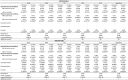
Table 3 presents the estimates for fresh foods. The figures show that the effect of the best outcome (improved economic conditions, with at least one new job) is a general increase in the probability of consuming more healthy foods (fish, fruits and vegetables) and a decrease in the probability of consuming less fruits and vegetables. The second positive outcome (improved economic conditions without new jobs) generally increases the probability of consuming more of the same healthy foods as before; in addition it has an analogous effect on the consumption of meat. Some marginal effects are positive and statistically significant also for the opposite outcome, a decrease in the probability of consuming some of the listed foods, in particular bread, meat and vegetables. However, in the case of the first two types the change in the probability of decreasing the consumption are smaller than the changes in the probability of increasing it, suggesting that the net effect is an increase in the probability of consuming those foods. The opposite happens for vegetables: an improvement in the economic conditions of the household has a stronger impact on the probability of decreasing the consumption rather than on that of increasing it.
Table 3.
Effects of the economic consequences of COVID-19 pandemic on the consumption of fresh foods
 |
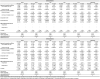 |
Considering the adverse changes in the household economic conditions, more complex effects emerge. Worse economic conditions without job losses are associated to higher probabilities of either increasing or decreasing the consumption of the listed foods. However, the stronger effects are in the sense of a decrease, consistently with what one can expect when the economic situation of a household worsens. However, the reason why the consumption of fresh foods may have increased as a consequence of poorer conditions may be that people have lower incomes as they worked less (for example workers in bars and restaurants) and spent more time and ate more meals cooked at home. Also those reporting worse economic conditions and the loss of at least a job are associated with higher probabilities of decreasing consumption of different types of food and lower probabilities of increasing it. This piece of evidence is consistent with the previous interpretation.
High levels of mothers’ education seem to be – at least partially – associated to healthy behaviours: interviewees’ households with graduated mothers are less likely to decrease the consumption of fish, milk and fruits, and more likely than the others to increase consumption of fish, milk and vegetables. Fathers’ tertiary education, instead, displays the opposite effect, with higher probabilities of decreasing the consumption of healthy foods such as fruits and vegetables. High environmental concern of households increases both the probability of buying vegetables and meat, while it reduces it that for milk. High environmental concern of the respondent diminishes the probability decrease of consuming bread and fish.
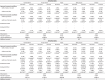
The results for long-life foods are presented in Table 4 . The different specifications reported in the table show partially different results. As the full specification of the model (i.e. the fourth) includes variables (such as parental education, information on eating outdoor before the pandemic, etc.), they are considered more robust and less biased by omitted variable problems than those in the first specification. Improved economic conditions with at least one new job appear associated with a lower probability of increasing consumption of salty sauces and of decreasing that of frozen foods. Those households that experienced an improvement in their economic situation, but no new job, declared higher probabilities of increasing the consumption of canned and frozen foods and pasta and lower probabilities of decreasing the eating of sweets. The marginal effects reported in the table show also higher probabilities of decreasing the consumption of frozen foods, pasta and salty sauces. In particular, the net effect on pasta is in the sense of an overall decrease in its eating (as the gain the probability of a decrease is significantly larger than the gain the probability of an increase).
Table 4.
Effects of the economic consequences of COVID-19 pandemic on the consumption of long-life foods
 |
 |
Worse economic conditions are linked to overall increases in the consumption of canned and frozen foods, consistently with literature (Webber et al., 2010 and Sen et al., in press) showing that poor households are generally likely to eat larger quantities of these types of foods. Worse economic conditions are also associated to an overall higher probability of decreasing the consumption of both salty sauces and sweets; while job losses have a larger impact on increasing rather than decreasing the consumption of pasta, deteriorated economic conditions without job losses display the opposite effect.
Mother's tertiary education is associated with lower probabilities of decreasing the consumption of all the listed foods; this result occurs perhaps because households with graduated mothers have better economic conditions than the others and, therefore, food consumption decreased less. Such an interpretation is compatible also with the results presented in Table 3, where mothers’ tertiary education appears associated with healthier food consumption. The figures in Table 4 portray an analogous effect for fathers’ education. Households with high environmental concern are less likely to decrease pasta consumption and to increase that of salty sauces. Instead, the respondent's environmental concern has the opposite effect on the consumption of salty sauces, is likely to have a negative effect on that of canned foods (as the marginal effect for a decrease is larger than that for an increase) and is associated with a lower probability of increasing the consumption of sweets.
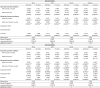
Finally, Table 5 shows the estimates for the multinomial logit regressions on alcohols and tobacco. The first category is divided into beverages with low alcohol content (beer and wine) and spirits, which include all the other products with higher percentages of alcohol. According to the estimates of the reduced model (first specification), improved economic conditions with at least one more job are associated with a higher probability of consuming wine, beer and spirits. However, this situation is also positively correlated with a higher probability of consuming less beer, and this is larger than the gain in the probability of consuming more of this type of beverage. Improved economic conditions without any new job are linked with higher probabilities of consuming more of all the listed goods. However, these results are not robust to the introduction of other regressors. The fourth specification of the table, indeed, shows that better economic conditions are associated with higher probabilities of consuming more wine and beer (for those households that did not experience new jobs) and with a lower probability of consuming spirits. No effect on tobacco is detected. Worse economic conditions are instead associated with overall (i.e. the net effect of higher probabilities of increasing and decreasing the consumption of these goods) higher probabilities of increasing the consumption of both tobacco and spirits. In particular, this effect is stronger for those households that experienced also job losses in addition to worse economic situation. Such a result is consistent with the extant literature. For the same group of households, a higher overall probability of consuming more beer is also detected. Instead, if the deterioration of the economic conditions was not accompanied by job losses, the gain in the probability of decreasing beer and wine consumption are larger than the gains in the probabilities of increasing such consumptions, suggesting an (slight) overall decrease in it.
Table 5.
Effects of the economic consequences of COVID-19 pandemic on the consumption of alcohols and tobacco
 |
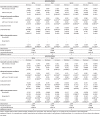 |
Parents’ education is almost never significantly associated to the variations in the probabilities of consuming more or less alcoholics and tobacco, suggesting that the use of these products to contrast the negative feelings induced by worse economic conditions and job losses is transversal to different levels of education. Only the environmental concern of the respondent is negatively associated with lower probabilities of both increasing and decreasing the consumption of the goods analysed in the table. However, the differences between the magnitudes of the coefficients are small and non-statistically significant, highlighting that high environmental concern is generally linked to no change in the consumption of the considered products.
5. Discussion and conclusions
The empirical evidence provided in the paper shows that the economic impact of the pandemic had some effects on the consumption of foods, as also observed in literature (Kolodinsky et al., 2020; Worstell, 2020). Different reasons may be behind the changes detected in the analysis: on the one hand, variations in the economic conditions of households have a budget effect, i.e. deteriorated situations correspond to tighter budget constraints, while the opposite happens when the economic conditions improved. On the other hand, the lockdown and the restrictions imposed during the first phase of the pandemic may have compelled people used to eat outdoor meals to substitute them with indoor lunches and dinners, so affecting the domestic consumption of foods. In addition, also the more sedentary life imposed by the restrictions may have affected the alimentary habits. Nevertheless, the analysis proposed in this paper tries to identify the effect of the change in the economic conditions, by controlling for personal variations in economic conditions and eating habits outside home before the lockdown.
The results show that worse economic conditions are correlated with more unhealthy alimentary habits, such as a reduction in the probability of consuming fruits and vegetables and an increase in the probability of consuming spirits and tobacco, as also partially observed in literature (Čihák, 2020; Medina et al., 2019; Suresh and Schauder, 2020). Changes in food consumption may however be due to the restrictions themselves, as people staying home may
In other words, the economic consequences of the pandemic do not seem to differ much from those of an economic crisis engendered by endogenous mechanisms. In facts, the recent estimates2 on the Italian GDP show a downturn of 8.1% in 2020, larger than that caused in 2009 (−6.6%) by the international financial crisis. Eating less fruits and vegetables and consuming more alcoholics and tobacco will have negative impacts on the Italians’ health in the years to come, highlighting that the negative effects of COVID-19 on people's health are not limited to those immediately observable, but will include others, indirectly caused, which will be fully visible only in the future. In other words, the costs of the pandemic will accompany the present generations for years.
From a policy point of view, the results presented in the paper suggest that the Italian government (and perhaps any government facing a severe economic downturn following the pandemic) should include economic helps not only for the categories of workers most affected by the restrictive measures, but also to sustain the consumption of healthy foods by impoverished households.
Declaration of Competing Interest
The authors have no conflict of interest to declare.
Beatrice Braut, Matteo Migheli and Elisa Truant
Footnotes
paragraph dummy footnote.
References
- Alonso L.E., Rodríguez C.J.F., Rojo R.I. From consumerism to guilt: economic crisis and discourses about consumption in Spain. J. Consum. Cult. 2015;15(1):66–85. [Google Scholar]
- Arndt C., Davies R., Gabriel S., Harris L., Makrelov K., Robinson S., ..., Anderson L. Covid-19 lockdowns, income distribution, and food security: an analysis for South Africa. Glob Food Sec. 2020;26 doi: 10.1016/j.gfs.2020.100410. [DOI] [PMC free article] [PubMed] [Google Scholar]
- Batlle-Bayer L., Aldaco R., Bala A., Puig R., Laso J., Margallo M., ..., Fullana-i-Palmer P. Environmental and nutritional impacts of dietary changes in Spain during the COVID-19 lockdown. Sci. Total Environ. 2020;748 doi: 10.1016/j.scitotenv.2020.141410. [DOI] [PMC free article] [PubMed] [Google Scholar]
- Béné C. Resilience of local food systems and links to food security–A review of some important concepts in the context of COVID-19 and other shocks. Food Secur. 2020;12:805–822. doi: 10.1007/s12571-020-01076-1. [DOI] [PMC free article] [PubMed] [Google Scholar]
- Bhutani S., Cooper J.A. COVID-19 related home confinement in adults: weight gain risks and opportunities. Obesity. 2020;28(9):1576–1577. doi: 10.1002/oby.22904. [DOI] [PMC free article] [PubMed] [Google Scholar]
- Borland S.E., Robinson S.M., Crozier S.R., Inskip H.M. Stability of dietary patterns in young women over a 2-year period. Eur. J. Clin. Nutr. 2008;62(1):119–126. doi: 10.1038/sj.ejcn.1602684. [DOI] [PubMed] [Google Scholar]
- Bounie, D., Camara, Y., & Galbraith, J.W. (2020). Consumers' Mobility, Expenditure and Online-Offline Substitution Response to COVID-19: evidence from French Transaction Data. HAL Working Paper n. hal-02566443 DOI: 10.2139/ssrn.3588373
- Buzby J.C., Bentley J.T., Padera B., Ammon C., Campuzano J. Estimated fresh produce shrink and food loss in U.S. supermarkets. Agriculture. 2015;5(3):626–648. doi: 10.3390/agriculture5030626. [DOI] [Google Scholar]
- Campbell M.C., Inman J.J., Kirmani A., Price L.L. In times of trouble: a framework for understanding consumers’ responses to threats. J. Consum. Res. 2020;47(3):311–326. [Google Scholar]
- Cappelli A., Cini E. Will the COVID-19 pandemic make us reconsider the relevance of short food supply chains and local productions? Trends Food Sci. Technol. 2020;99:566–567. doi: 10.1016/j.tifs.2020.03.041. [DOI] [PMC free article] [PubMed] [Google Scholar]
- Carroll N., Sadowski A., Laila A., Hruska V., Nixon M., Ma D.W., Haines J. The impact of COVID-19 on health behavior, stress, financial and food security among middle to high income Canadian families with young children. Nutrients. 2020;12(8):2352. doi: 10.3390/nu12082352. [DOI] [PMC free article] [PubMed] [Google Scholar]
- Cattivelli V., Rusciano V. Social innovation and food provisioning during Covid-19: the case of urban–rural initiatives in the province of Naples. Sustainability. 2020;12(11):1–15. [Google Scholar]
- Celik B., Ozden K., Senol D.A.N.E. The impact Of COVID-19 on household economy and consumption preferences: an international survey. J. Global Econ. Bus. 2020;1(2):91–115. [Google Scholar]
- Čihák J. The effect of economic conditions on alcohol consumption. Int. Rev. Econ. 2020;67:481–497. [Google Scholar]
- Cranfield J.A.L. Framing consumer food demand responses in a viral pandemic. Canadian J. Agri. Econ. 2020;68(2):151–156. [Google Scholar]
- De Goeij M.C.M., Suhrcke M., Tofolutti V., van de Mheen D., Shoenmakers T.M., Kunst A.E. How economic crises affect alcohol consumption and alcohol-related health problems: a realist systematic review. Soc. Sci. Med. 2015;131:131–146. doi: 10.1016/j.socscimed.2015.02.025. [DOI] [PubMed] [Google Scholar]
- Deschasaux-Tanguy, M., Druesne-Pecollo, N., Esseddik, Y., Szabo de Edelenyi, F., Alles, B., Andreeva, V.A., Baudry, J., Charreire, H., Deschamps, V., Egnell, M., et al. (2020). Diet and physical activity during the COVID-19 lockdown period (March-May 2020): results from the French NutriNet-Sante cohort study. (mimeo). DOI: 10.1101/2020.06.04.20121855. [DOI] [PMC free article] [PubMed]
- Devereux S., Béné C., Hoddinott J. Conceptualising COVID-19’s impacts on household food security. Food Secur. 2020;12(4):769–772. doi: 10.1007/s12571-020-01085-0. [DOI] [PMC free article] [PubMed] [Google Scholar]
- Di Renzo L., Gualtieri P., Pivari F., Soldati L., Attinà A., Cinelli G., ..., Esposito E. Eating habits and lifestyle changes during COVID-19 lockdown: an Italian survey. J. Transl. Med. 2020;18(1):1–15. doi: 10.1186/s12967-020-02399-5. [DOI] [PMC free article] [PubMed] [Google Scholar]
- Đogaš Z., Lušić Kalcina L., Pavlinavìc Dodig I., Demirović S., Madirazza K., Valić M., Pecotić R. The effect of COVID-19 lockdown on lifestyle and mood in croatian general population: a cross-sectional study. Croatian Med. J. 2020;61(4):309–318. doi: 10.3325/cmj.2020.61.309. [DOI] [PMC free article] [PubMed] [Google Scholar]
- Dou, Z., Stefanovski, D., Galligan, D. et al. (2020). The COVID-19 pandemic impacting household food dynamics: a cross-national comparison of China and the U.S. Center for Open Science. DOI: 10.31235/osf.io/64jwy.
- Galoni C., Carpenter G.S., Rao H. Disgusted and afraid: consumer choices under the threat of contagious disease. J. Consum. Res. 2020;47(3):373–392. [Google Scholar]
- Grashuis J., Skevas T., Segovia M.S. Grocery Shopping Preferences during the COVID-19 Pandemic. Sustainability. 2020;12(13):5369. [Google Scholar]
- Hart K.H., Bishop J.A., Truby H. An investigation into school children's knowledge and awareness of food and nutrition. J. Human Nutrit. Diet. 2002;15(2):129–140. doi: 10.1046/j.1365-277x.2002.00343.x. [DOI] [PubMed] [Google Scholar]
- Hobbs J.E. Food supply chains during the COVID-19 pandemic. Canadian J. Agri. Econ. 2020;68(2):171–176. [Google Scholar]
- Huang Y., Sengupta J. The influence of disease cues on preference for typical versus atypical products. J. Consum. Res. 2020;47(3):393–411. [Google Scholar]
- Husain W., Ashkanani F. Does COVID-19 change dietary habits and lifestyle behaviours in Kuwait? Environ. Health Prev. Med. 2020;25:61. doi: 10.1186/s12199-020-00901-5. [DOI] [PMC free article] [PubMed] [Google Scholar]
- Ihle R., Rubin O.D., Bar-Nahum Z., Jongeneel R. Imperfect food markets in times of crisis: economic consequences of supply chain disruptions and fragmentation for local market power and urban vulnerability. Food Secur. 2020;12(4):727–734. doi: 10.1007/s12571-020-01084-1. [DOI] [PMC free article] [PubMed] [Google Scholar]
- Ismea (2020), 2° Rapporto sulla domanda e l'offerta dei prodotti alimentari nelle prime settimane di diffusione del virus, aprile 2020,http://www.ismea.it/flex/cm/pages/ServeBLOB.php/L/IT/IDPagina/11036, Accessed 19th November 2020
- Istat (2020) Contributo e posizionamento all'interno del sistema produttivo italiano dei settori di attività economica, secondo la classificazione Ateco a 5 cifre https://www.istat.it/it/files//2020/04/nota-esplicativa_posizionamento.pdf, Accessed 19th November 2020
- Kolodinsky J., Sitaker M., Chase L., Smith D., Wang W. Food systems disruptions: turning a threat into an opportunity for local food systems. J. Agri., Food Syst. Commun. Dev. 2020 doi: 10.5304/jafscd.2020.093.013. [DOI] [Google Scholar]
- Mitchell, E.S., Yang, Q., Behr, H., Deluca, L., & Schaffer, P. (2020). Self-reported food choices before and during COVID-19 lockdown. (mimeo) DOI: 10.1101/2020.06.15.20131888
- Laguna L., Fiszman S., Puerta P., Chaya C., Tárrega A. The impact of COVID-19 lockdown on food priorities. Results from a preliminary study using social media and an online survey with Spanish consumers. Food Qual. Prefer. 2020;86 doi: 10.1016/j.foodqual.2020.104028. [DOI] [PMC free article] [PubMed] [Google Scholar]
- Lee J., Allen J. Gender differences in healthy and unhealthy food consumption and its relationship with depression in young adulthood. Commun. Ment. Health J. 2020 doi: 10.1007/s10597-020-00672-x. [DOI] [PubMed] [Google Scholar]
- Lwin M.O., Shin W., Yee A.Z.H., Wardoyo R.J. A parental health education model of children's food consumption: influence on children's attitudes, intention and consumption of healthy and unhealthy foods. J. Health Commun. 2017;22(5):403–412. doi: 10.1080/10810730.2017.1302523. [DOI] [PubMed] [Google Scholar]
- Marty L., de Lauzon-Guillain B., Labesse M., Nicklaus S. Food choice motives and the nutritional quality of diet during the COVID-19 lockdown in France. Appetite. 2020;157 doi: 10.1016/j.appet.2020.105005. [DOI] [PMC free article] [PubMed] [Google Scholar]
- Maugeri, G., Castrogiovanni, P., Battaglia, G., Pippi, R., D'Agata, V., Palma, A., Di Rosa, M. & Musumeci, G. (2020). “The Impact of Physical Activity on Psychological Health during Covid-19 Pandemic in Italy” Helyon, 6(6): e04315. [DOI] [PMC free article] [PubMed]
- Medina, L.D.P.B., Barros, M.B.D.A., Sousa, N.F.D.S., Bastos, T.F., Lima, M.G., & Szwarcwald, C.L. (2019). Social inequalities in the food consumption profile of the Brazilian population: national health survey, 2013. Revista Brasileira de Epidemiologia, 22: e190011-SUPL. [DOI] [PubMed]
- Nicola M., Alsafi Z., Sohrabi C., Kerwan A., Al-Jabir A., Iosifidis C., ..., Agha R. The socio-economic implications of the coronavirus pandemic (COVID-19): a review. Int. J. Surg. 2020;78:185. doi: 10.1016/j.ijsu.2020.04.018. [DOI] [PMC free article] [PubMed] [Google Scholar]
- Parmenter K., Waller J., Wardle J. Demographic variation in nutrition knowledge in England. Health Educ. Res. 2000;15(2):163–174. doi: 10.1093/her/15.2.163. [DOI] [PMC free article] [PubMed] [Google Scholar]
- Poelman M.P., Gillebaart M., Schlinkert C., Dijkstra S.C., Derksen E., Mensink F., ..., de Vet E. Eating behavior and food purchases during the COVID-19 lockdown: a cross-sectional study among adults in the Netherlands. Appetite. 2020;157 doi: 10.1016/j.appet.2020.105002. [DOI] [PMC free article] [PubMed] [Google Scholar]
- Power, M., Doherty, B., Pybus, K., & Pickett, K. (2020). How COVID-19 has exposed inequalities in the UK food system: the case of UK food and poverty. Emerald Open Research, 2. [DOI] [PMC free article] [PubMed]
- Principato L., Secondi L., Cicatiello C., Mattia G. Caring more about food: the unexpected positive effect of the Covid-19 lockdown on household food management and waste. Socio Econ. Plann. Sci. 2020 doi: 10.1016/j.seps.2020.100953. [DOI] [PMC free article] [PubMed] [Google Scholar]
- Schmidt C., Goetz S., Rocker S., Tian Z. Google searches reveal changing consumer food sourcing in the COVID-19 pandemic. J. Agri., Food Syst. Commun. Dev. 2020;9(3):1–8. [Google Scholar]
- Sen S., Antara N., Sen S. Factors influencing consumers’ to take ready-made frozen food. Current Psychol. 2022 doi: 10.1007/s12144-019-00201-4. [DOI] [Google Scholar]
- Slonim R., Garbarino E. Similarities and differences between stockpiling and reference effects. Managerial Decision Econ. 2009;30(6):351–371. [Google Scholar]
- Sterman J.D., Dogan G. I'm not hoarding, I'm just stocking up before the hoarders get here. Behavioral causes of phantom ordering in supply chains. J. Operat. Manage. 2015;39–40(1):6–22. [Google Scholar]
- Suresh S.S.G., Schauder S.A. Income segregation and access to healthy food. Am. J. Prev. Med. 2020;59(2):e31–e38. doi: 10.1016/j.amepre.2020.02.009. [DOI] [PubMed] [Google Scholar]
- Vall Castelló J., Lopez Casasnovas G. The effects of lockdowns and infection rates on supermarket sales. Econ. Human Biology. 2021;40 doi: 10.1016/j.ehb.2020.100947. [DOI] [PubMed] [Google Scholar]
- Verplanken B., Wood W. Interventions to break and create consumer habits. J. Public Policy Market. 2006;25(1):90–103. [Google Scholar]
- Webber C.B., Sobal J., Dollahite J.S. Shopping for fruits and vegetables. food and retail qualities of importance to low-income households at the grocery store. Appetite. 2010;54(2):297–303. doi: 10.1016/j.appet.2009.11.015. [DOI] [PubMed] [Google Scholar]
- Weismayer C., Anderson J.G., Wolk A. Changes in the stability of dietary patterns in a study of middle-aged Swedish women. J. Nutr. 2006;136(6):1582–1587. doi: 10.1093/jn/136.6.1582. [DOI] [PubMed] [Google Scholar]
- Worstell J. Ecological resilience of food systems in response to the COVID-19 crisis. J. Agri., Food Syst. Commun. Dev. 2020 doi: 10.5304/jafscd.2020.093.015. [DOI] [Google Scholar]