


Abstract
Background
Ovulation induction may impact endometrial receptivity due to insufficient progesterone secretion. Low progesterone is associated with poor pregnancy outcomes.
Objectives
To assess the effectiveness and safety of luteal phase support (LPS) in infertile women trying to conceive by intrauterine insemination or by sexual intercourse.
Search methods
We searched the Cochrane Gynaecology and Fertility Group Specialised Register, CENTRAL, MEDLINE, Embase, PsycINFO, LILACS, trial registries for ongoing trials, and reference lists of articles (from inception to 25 August 2021).
Selection criteria
Randomised controlled trials (RCTs) of LPS using progestogen, human chorionic gonadotropin (hCG), or gonadotropin‐releasing hormone (GnRH) agonist supplementation in IUI or natural cycle.
Data collection and analysis
We used standard methodological procedures expected by Cochrane. Our primary outcomes were live birth rate/ongoing pregnancy rate (LBR/OPR) and miscarriage.
Main results
We included 25 RCTs (5111 participants). Most studies were at unclear or high risk of bias. We graded the certainty of evidence as very low to low. The main limitations of the evidence were poor reporting and imprecision.
1. Progesterone supplement versus placebo or no treatment
We are uncertain if vaginal progesterone increases LBR/OPR (risk ratio (RR) 1.10, 95% confidence interval (CI) 0.81 to 1.48; 7 RCTs; 1792 participants; low‐certainty evidence) or decreases miscarriage per pregnancy compared to placebo or no treatment (RR 0.70, 95% CI 0.40 to 1.25; 5 RCTs; 261 participants). There were no data on LBR or miscarriage with oral stimulation. We are uncertain if progesterone increases LBR/OPR in women with gonadotropin stimulation (RR 1.24, 95% CI 0.80 to 1.92; 4 RCTs; 1054 participants; low‐certainty evidence) and oral stimulation (clomiphene citrate or letrozole) (RR 0.97, 95% CI 0.58 to 1.64; 2 RCTs; 485 participants; low‐certainty evidence). One study reported on OPR in women with gonadotropin plus oral stimulation; the evidence from this study was uncertain (RR 0.73, 95% CI 0.37 to 1.42; 1 RCT; 253 participants; low‐certainty evidence). Given the low certainty of the evidence, it is unclear if progesterone reduces miscarriage per clinical pregnancy in any stimulation protocol (RR 0.68, 95% CI 0.24 to 1.91; 2 RCTs; 102 participants, with gonadotropin; RR 0.67, 95% CI 0.30 to 1.50; 2 RCTs; 123 participants, with gonadotropin plus oral stimulation; and RR 0.53, 95% CI 0.25 to 1.14; 2 RCTs; 119 participants, with oral stimulation). Low‐certainty evidence suggests that progesterone in all types of ovarian stimulation may increase clinical pregnancy compared to placebo (RR 1.38, 95% CI 1.10 to 1.74; 7 RCTs; 1437 participants, with gonadotropin; RR 1.40, 95% CI 1.03 to 1.90; 4 RCTs; 733 participants, with gonadotropin plus oral stimulation (clomiphene citrate or letrozole); and RR 1.44, 95% CI 1.04 to 1.98; 6 RCTs; 1073 participants, with oral stimulation).
2. Progesterone supplementation regimen
We are uncertain if there is any difference between 300 mg and 600 mg of vaginal progesterone for OPR and multiple pregnancy (RR 1.58, 95% CI 0.81 to 3.09; 1 RCT; 200 participants; very low‐certainty evidence; and RR 0.50, 95% CI 0.05 to 5.43; 1 RCT; 200 participants, very low‐certainty evidence, respectively). No other outcomes were reported for this comparison.
There were three different comparisons between progesterone regimens. For OPR, the evidence is very uncertain for intramuscular (IM) versus vaginal progesterone (RR 0.59, 95% CI 0.34 to 1.02; 1 RCT; 225 participants; very low‐certainty evidence); we are uncertain if there is any difference between oral and vaginal progesterone (RR 1.25, 95% CI 0.70 to 2.22; 1 RCT; 150 participants; very low‐certainty evidence) or between subcutaneous and vaginal progesterone (RR 1.05, 95% CI 0.54 to 2.05; 1 RCT; 246 participants; very low‐certainty evidence). We are uncertain if IM or oral progesterone reduces miscarriage per clinical pregnancy compared to vaginal progesterone (RR 0.75, 95% CI 0.43 to 1.32; 1 RCT; 81 participants and RR 0.58, 95% CI 0.11 to 3.09; 1 RCT; 41 participants, respectively). Clinical pregnancy and multiple pregnancy were reported for all comparisons; the evidence for these outcomes was very uncertain. Only one RCT reported adverse effects. We are uncertain if IM route increases the risk of adverse effects when compared with the vaginal route (RR 9.25, 95% CI 2.21 to 38.78; 1 RCT; 225 participants; very low‐certainty evidence).
3. GnRH agonist versus placebo or no treatment
No trials reported live birth. The evidence is very uncertain about the effect of GnRH agonist in ongoing pregnancy (RR 1.10, 95% CI 0.70 to 1.74; 1 RCT; 291 participants, very low‐certainty evidence), miscarriage per clinical pregnancy (RR 0.73, 95% CI 0.26 to 2.10; 2 RCTs; 79 participants, very low‐certainty evidence) and clinical pregnancy (RR 1.00, 95% CI 0.68 to 1.47; 2 RCTs; 340 participants; very low‐certainty evidence), and multiple pregnancy (RR 0.28, 95% CI 0.11 to 0.70; 2 RCTs; 126 participants).
4. GnRH agonist versus vaginal progesterone
The evidence for the effect of GnRH agonist injection on clinical pregnancy is very uncertain (RR 1.00, 95% CI 0.51 to 1.95; 1 RCT; 242 participants).
5. HCG injection versus no treatment
The evidence for the effect of hCG injection on clinical pregnancy (RR 0.93, 95% CI 0.40 to 2.13; 1 RCT; 130 participants) and multiple pregnancy rates (RR 1.03, 95% CI 0.22 to 4.92; 1 RCT; 130 participants) is very uncertain.
6. Luteal support in natural cycle
No study evaluated the effect of LPS in natural cycle.
We could not perform sensitivity analyses, as there were no studies at low risk of selection bias and not at high risk in other domains.
Authors' conclusions
We are uncertain if vaginal progesterone supplementation during luteal phase is associated with a higher live birth/ongoing pregnancy rate. Vaginal progesterone may increase clinical pregnancy rate; however, its effect on miscarriage rate and multiple pregnancy rate is uncertain. We are uncertain if IM progesterone improves ongoing pregnancy rates or decreases miscarriage rate when compared to vaginal progesterone. Regarding the other reported comparisons, neither oral progesterone nor any other medication appears to be associated with an improvement in pregnancy outcomes (very low‐certainty evidence).
Plain language summary
What is the effectiveness and safety of luteal support in infertile women trying to conceive by intrauterine insemination (IUI) or by sexual intercourse?
Background
Luteal phase is part of the menstrual cycle. It is the time between the release of an egg (ovulation) and before the start of menstruation, and when the body produces progesterone (a hormone released by the ovaries) and prepares for a possible pregnancy. Ovarian stimulation (use of fertility medicines) might affect progesterone production during the luteal phase. Low levels of progesterone in the luteal phase are associated with decreased rates of pregnancy outcomes such as ongoing pregnancy (pregnancy after 12 weeks) and live birth. Luteal phase support including progesterone and/or other medical agents including pregnancy hormone (human chorionic gonadotropin (hCG), which stimulates progesterone production) or gonadotropin‐releasing hormone (GnRH) agonist, which increases progesterone level after ovulation, may improve pregnancy outcomes.
Study characteristics
We included 25 randomised controlled trials (a type of study where participants are randomly assigned to one of two or more treatment groups) involving a total of 5111 participants. We identified nine comparisons, including progesterone compared with placebo (dummy treatment) or no treatment, different dosages of vaginal progesterone supplement, different routes of progesterone supplement, GnRH agonist compared with placebo or no treatment, vaginal progesterone compared with GnRH agonist, and hCG compared with no treatment. All studies reported pregnancy outcomes, but only one study reported adverse events. All included studies reported on intrauterine insemination, a procedure where sperm is placed directly into the uterus (womb) using a thin, flexible plastic tube inserted through the vagina and cervix. No trial evaluated the effect of luteal support when trying to get pregnant naturally.
Key results
Progesterone supplementation versus placebo or no treatment
We are uncertain if vaginal progesterone increases live birth/ongoing pregnancy rate when compared to placebo or no treatment in any of the types of ovarian stimulation cycle evaluated (gonadotropin (injectable hormones), gonadotropin plus oral stimulation, and oral stimulation alone). We are uncertain if progesterone reduces miscarriage rates. Vaginal progesterone may slightly increase clinical pregnancy (when the pregnancy is confirmed through ultrasound and a heartbeat is be detected). Progesterone supplementation may increase clinical pregnancy slightly in all types of ovarian stimulation cycle (gonadotropin (injectable hormones), gonadotropin plus oral stimulation, and oral stimulation alone). However, given the low certainty of the evidence, it is unclear whether the treatment makes a difference for the other prespecified outcomes (adverse events or multiple pregnancy rate (having twins/triplets)).
300 mg versus 600 mg vaginal progesterone
It is unclear if 300 mg vaginal progesterone has an effect on live birth, ongoing pregnancy, miscarriage, or adverse events when compared to 600 mg vaginal progesterone.
Different routes of progesterone administration versus vaginal route
We do not know if other routes of progesterone (intramuscular, oral, or subcutaneous) have an effect on live birth, ongoing pregnancy, and miscarriage when compared to vaginal progesterone. Intramuscular progesterone may result in a large increase in adverse events (pain at site of injection), although the certainty of the evidence was very low.
Other interventions versus placebo or no treatment
We do not know if other interventions (GnRH agonist or hCG injection) have an effect on our prespecified outcomes.
Certainty of the evidence
The evidence for most comparisons was of very low to low certainty. The main limitations of the evidence were poor reporting of study methods and imprecision due to low numbers of women in the studies.
Summary of findings
Summary of findings 1. Progesterone compared to no treatment or placebo (route of progesterone administration) for women trying to conceive by intrauterine insemination.
| Progesterone compared to no treatment or placebo (route of progesterone administration) for women trying to conceive by intrauterine insemination | |||||
| Patient or population: women trying to conceive by intrauterine insemination Setting: clinic Intervention: progesterone Comparison: no treatment or placebo (route of progesterone administration) | |||||
| Outcomes* | Anticipated absolute effects** (95% CI) | Relative effect (95% CI) | № of participants (studies) | Certainty of the evidence (GRADE) | |
| Risk with no treatment or placebo (route of progesterone administration) | Risk with progesterone | ||||
| Live birth/ongoing pregnancy rate | 126 per 1000 | 139 per 1000 (102 to 187) | RR 1.10 (0.81 to 1.48) | 1792 (7 RCTs) | ⊕⊕⊝⊝ Low a,b |
| Miscarriage per clinical pregnancy | 183 per 1000 | 128 per 1000 (73 to 228) | RR 0.70 (0.40 to 1.25) | 261 (5 RCTs) | ⊕⊕⊝⊝ Low a,b |
| Clinical pregnancy per woman | 134 per 1000 | 181 per 1000 (153 to 216) | RR 1.35 (1.14 to 1.61) | 2794 (13 RCTs) | ⊕⊕⊝⊝ Low a,b |
| Clinical pregnancy per woman ‐ oral route | 449 per 1000 | 301 per 1000 (180 to 507) | RR 0.67 (0.40 to 1.13) | 99 (1 RCT) | ⊕⊝⊝⊝ Very low a,c |
| Multiple pregnancy per woman | 17 per 1000 | 14 per 1000 (5 to 40) | RR 0.84 (0.30 to 2.34) | 956 (3 RCTs) | ⊕⊕⊝⊝ Low a,b |
| Adverse events, OHSS, preterm delivery, congenital anomaly | Not reported | ||||
| *All studies reporting vaginal route unless otherwise indicated.
**The risk in the intervention group (and its 95% confidence interval) is based on the assumed risk in the comparison group and the relative effect of the intervention (and its 95% CI).
CI: confidence interval; OHSS: ovarian hyperstimulation syndrome; RCT: randomised controlled trial; RR: risk ratio | |||||
| GRADE Working Group grades of evidence High certainty: we are very confident that the true effect lies close to that of the estimate of the effect. Moderate certainty: we are moderately confident in the effect estimate: the true effect is likely to be close to the estimate of the effect, but there is a possibility that it is substantially different. Low certainty: our confidence in the effect estimate is limited: the true effect may be substantially different from the estimate of the effect. Very low certainty: we have very little confidence in the effect estimate: the true effect is likely to be substantially different from the estimate of effect. | |||||
aEvidence downgraded by one level due to unclear risk of selection and reporting bias. bEvidence downgraded by one level due to imprecision (small study size). cEvidence downgraded by two levels due to serious imprecision; single study with low event rate.
Summary of findings 2. Progesterone compared to placebo/no treatment for gonadotropin stimulation for women trying to conceive by intrauterine insemination.
| Progesterone compared to placebo/no treatment for gonadotropin stimulation for women trying to conceive by intrauterine insemination | |||||
| Patient or population: women with gonadotropin stimulation Setting: clinic Intervention: progesterone Comparison: placebo/no treatment | |||||
| Outcomes | Anticipated absolute effects* (95% CI) | Relative effect (95% CI) | № of participants (studies) | Certainty of the evidence (GRADE) | |
| Risk with placebo/no treatment | Risk with progesterone | ||||
| Live birth rate/ongoing pregnancy rate | 132 per 1000 | 164 per 1000 (106 to 254) | RR 1.24 (0.80 to 1.92) | 1054 (4 RCTs) | ⊕⊕⊝⊝ Low a,b |
| Miscarriage rate per clinical pregnancy | 167 per 1000 | 113 per 1000 (40 to 318) | RR 0.68 (0.24 to 1.91) | 102 (2 RCTs) | ⊕⊕⊝⊝ Low a,b |
| Clinical pregnancy rate | 142 per 1000 | 196 per 1000 (156 to 247) | RR 1.38 (1.10 to 1.74) | 1437 (7 RCTs) | ⊕⊕⊝⊝ Low a,b |
| Multiple pregnancy rate | 38 per 1000 | 27 per 1000 (6 to 120) | RR 0.72 (0.17 to 3.15) | 214 (1 RCT) | ⊕⊕⊝⊝ Low a,b |
| Adverse events, OHSS, preterm delivery, congenital anomaly | Not reported | ||||
| *The risk in the intervention group (and its 95% confidence interval) is based on the assumed risk in the comparison group and the relative effect of the intervention (and its 95% CI). CI: confidence interval; OHSS: ovarian hyperstimulation syndrome; RCT: randomised controlled trial; RR: risk ratio | |||||
| GRADE Working Group grades of evidence High certainty: we are very confident that the true effect lies close to that of the estimate of the effect. Moderate certainty: we are moderately confident in the effect estimate: the true effect is likely to be close to the estimate of the effect, but there is a possibility that it is substantially different. Low certainty: our confidence in the effect estimate is limited: the true effect may be substantially different from the estimate of the effect. Very low certainty: we have very little confidence in the effect estimate: the true effect is likely to be substantially different from the estimate of effect. | |||||
aEvidence downgraded by one level due to unclear risk of selection and reporting bias. bEvidence downgraded by one level due to imprecision (low event rate).
Summary of findings 3. Progesterone compared to placebo/no treatment for gonadotropin plus oral (clomiphene citrate/letrozole) stimulation for women trying to conceive by intrauterine insemination.
| Progesterone compared to placebo/no treatment for gonadotropin plus oral (clomiphene citrate/letrozole) stimulation for women trying to conceive by intrauterine insemination | |||||
| Patient or population: women with gonadotropin plus oral (clomiphene citrate or letrozole) stimulation Setting: clinic Intervention: progesterone Comparison: placebo/no treatment | |||||
| Outcomes | Anticipated absolute effects* (95% CI) | Relative effect (95% CI) | № of participants (studies) | Certainty of the evidence (GRADE) | |
| Risk with placebo/no treatment | Risk with progesterone | ||||
| Live birth rate | Not reported | ||||
| Ongoing pregnancy rate | 142 per 1000 | 103 per 1000 (52 to 201) | RR 0.73 (0.37 to 1.42) | 253 (1 RCT) | ⊕⊕⊝⊝ Low a,b |
| Miscarriage rate per clinical pregnancy | 188 per 1000 | 126 per 1000 (56 to 281) | RR 0.67 (0.30 to 1.50) | 123 (2 RCTs) | ⊕⊕⊝⊝ Low a,b |
| Clinical pregnancy rate | 157 per 1000 | 219 per 1000 (161 to 298) | RR 1.40 (1.03 to 1.90) | 733 (4 RCTs) | ⊕⊕⊝⊝ Low a,b |
| Multiple pregnancy rate | 14 per 1000 | 20 per 1000 (3 to 120) | RR 1.44 (0.24 to 8.49) | 290 (1 RCT) | ⊕⊕⊝⊝ Low a,b |
| Adverse events, OHSS, preterm delivery, congenital anomaly | Not reported | ||||
| *The risk in the intervention group (and its 95% confidence interval) is based on the assumed risk in the comparison group and the relative effect of the intervention (and its 95% CI). CI: confidence interval; OHSS: ovarian hyperstimulation syndrome; RCT: randomised controlled trial; RR: risk ratio | |||||
| GRADE Working Group grades of evidence High certainty: we are very confident that the true effect lies close to that of the estimate of the effect. Moderate certainty: we are moderately confident in the effect estimate: the true effect is likely to be close to the estimate of the effect, but there is a possibility that it is substantially different. Low certainty: our confidence in the effect estimate is limited: the true effect may be substantially different from the estimate of the effect. Very low certainty: we have very little confidence in the effect estimate: the true effect is likely to be substantially different from the estimate of effect. | |||||
aEvidence downgraded by one level due to unclear risk of selection and reporting bias. bEvidence downgraded by one level due to imprecision (small study size).
Summary of findings 4. Progesterone compared to placebo/no treatment for oral (clomiphene citrate or letrozole) stimulation for women trying to conceive by intrauterine insemination.
| Progesterone compared to placebo/no treatment for oral (clomiphene citrate or letrozole) stimulation for women trying to conceive by intrauterine insemination | |||||
| Patient or population: women with oral (clomiphene citrate or letrozole) stimulation Setting: clinic Intervention: progesterone Comparison: placebo/no treatment | |||||
| Outcomes | Anticipated absolute effects* (95% CI) | Relative effect (95% CI) | № of participants (studies) | Certainty of the evidence (GRADE) | |
| Risk with placebo/no treatment | Risk with progesterone | ||||
| Live birth rate/ongoing pregnancy | 105 per 1000 | 102 per 1000 (61 to 172) | RR 0.97 (0.58 to 1.64) | 485 (2 RCTs) | ⊕⊕⊝⊝ Low a,b |
| Miscarriage rate per clinical pregnancy | 256 per 1000 | 136 per 1000 (64 to 292) | RR 0.53 (0.25 to 1.14) | 119 (2 RCTs) | ⊕⊕⊝⊝ Low a,b |
| Clinical pregnancy | 131 per 1000 | 189 per 1000 (136 to 259) | RR 1.44 (1.04 to 1.98) | 1073 (6 RCTs) | ⊕⊕⊝⊝ Low a,b |
| Multiple pregnancy | 7 per 1000 | 4 per 1000 (1 to 26) | RR 0.58 (0.10 to 3.55) | 586 (2 RCTs) | ⊕⊕⊝⊝ Low a,b |
| Adverse events, OHSS, preterm delivery, congenital anomaly | Not reported | ||||
| *The risk in the intervention group (and its 95% confidence interval) is based on the assumed risk in the comparison group and the relative effect of the intervention (and its 95% CI). CI: confidence interval; OHSS: ovarian hyperstimulation syndrome; RCT: randomised controlled trial; RR: risk ratio | |||||
| GRADE Working Group grades of evidence High certainty: we are very confident that the true effect lies close to that of the estimate of the effect. Moderate certainty: we are moderately confident in the effect estimate: the true effect is likely to be close to the estimate of the effect, but there is a possibility that it is substantially different. Low certainty: our confidence in the effect estimate is limited: the true effect may be substantially different from the estimate of the effect. Very low certainty: we have very little confidence in the effect estimate: the true effect is likely to be substantially different from the estimate of effect. | |||||
aEvidence downgraded by one level due to unclear risk of selection and reporting bias. bEvidence downgraded by one level due to imprecision (small study size).
Summary of findings 5. 300 mg vaginal progesterone compared to 600 mg vaginal progesterone for women trying to conceive by intrauterine insemination.
| 300 mg vaginal progesterone compared to 600 mg vaginal progesterone for women trying to conceive by intrauterine insemination | |||||
| Patient or population: women trying to conceive by intrauterine insemination Setting: clinic Intervention: 300 mg vaginal progesterone Comparison: 600 mg vaginal progesterone | |||||
| Outcomes | Anticipated absolute effects* (95% CI) | Relative effect (95% CI) | № of participants (studies) | Certainty of the evidence (GRADE) | |
| Risk with 600 mg vaginal progesterone | Risk with 300 mg vaginal progesterone | ||||
| Ongoing pregnancy rate | 120 per 1000 | 190 per 1000 (97 to 371) | RR 1.58 (0.81 to 3.09) | 200 (1 RCT) | ⊕⊝⊝⊝ Very low a,b |
| Multiple pregnancy rate | 20 per 1000 | 10 per 1000 (1 to 109) | RR 0.50 (0.05 to 5.43) | 200 (1 RCT) | ⊕⊝⊝⊝ Very low a,b |
| None of the other main outcomes were reported. | |||||
| *The risk in the intervention group (and its 95% confidence interval) is based on the assumed risk in the comparison group and the relative effect of the intervention (and its 95% CI). CI: confidence interval; RCT: randomised controlled trial; RR: risk ratio | |||||
| GRADE Working Group grades of evidence High certainty: we are very confident that the true effect lies close to that of the estimate of the effect. Moderate certainty: we are moderately confident in the effect estimate: the true effect is likely to be close to the estimate of the effect, but there is a possibility that it is substantially different. Low certainty: our confidence in the effect estimate is limited: the true effect may be substantially different from the estimate of the effect. Very low certainty: we have very little confidence in the effect estimate: the true effect is likely to be substantially different from the estimate of effect. | |||||
aEvidence downgraded by one level due to unclear risk of selection and reporting bias. bEvidence downgraded by two levels due to very serious imprecision (small study size).
Summary of findings 6. Intramuscular (IM) progesterone compared to vaginal progesterone for women trying to conceive by intrauterine insemination.
| Intramuscular (IM) progesterone compared to vaginal progesterone for women trying to conceive by intrauterine insemination | |||||
| Patient or population: women trying to conceive by intrauterine insemination Setting: clinic Intervention: IM progesterone Comparison: vaginal progesterone | |||||
| Outcomes | Anticipated absolute effects* (95% CI) | Relative effect (95% CI) | № of participants (studies) | Certainty of the evidence (GRADE) | |
| Risk with vaginal progesterone | Risk with IM progesterone | ||||
| Live birth rate | Not reported | ||||
| Ongoing pregnancy rate | 252 per 1000 | 149 per 1000 (86 to 257) | RR 0.59 (0.34 to 1.02) | 225 (1 RCT) | ⊕⊝⊝⊝ Very low a,b |
| Miscarriage rate | 444 per 1000 | 333 per 1000 (191 to 587) | RR 0.75 (0.43 to 1.32) | 81 (1 RCT) | ⊕⊝⊝⊝ Very low a,b |
| Clinical pregnancy rate | 405 per 1000 | 316 per 1000 (223 to 450) | RR 0.78 (0.55 to 1.11) | 225 (1 RCT) | ⊕⊝⊝⊝ Very low a,b |
| Multiple pregnancy rate | Not reported | ||||
| Adverse events |
18 per 1000 | 167 per 1000 (40 to 699) | RR 9.25 (2.21 to 38.78) | 225 (1 RCT) | ⊕⊝⊝⊝ Very low a,b |
| OHSS, preterm delivery, congenital anomaly | Not reported | ||||
| *The risk in the intervention group (and its 95% confidence interval) is based on the assumed risk in the comparison group and the relative effect of the intervention (and its 95% CI). CI: confidence interval; OHSS: ovarian hyperstimulation syndrome; RCT: randomised controlled trial; RR: risk ratio | |||||
| GRADE Working Group grades of evidence High certainty: we are very confident that the true effect lies close to that of the estimate of the effect. Moderate certainty: we are moderately confident in the effect estimate: the true effect is likely to be close to the estimate of the effect, but there is a possibility that it is substantially different. Low certainty: our confidence in the effect estimate is limited: the true effect may be substantially different from the estimate of the effect. Very low certainty: we have very little confidence in the effect estimate: the true effect is likely to be substantially different from the estimate of effect. | |||||
aEvidence downgraded by one level due to unclear risk of selection, performance, detection, and reporting bias. bEvidence downgraded by two levels due to imprecision (small study size).
Summary of findings 7. Oral progesterone compared to vaginal progesterone for women trying to conceive by intrauterine insemination.
| Oral progesterone compared to vaginal progesterone for women trying to conceive by intrauterine insemination | |||||
| Patient or population: women trying to conceive by intrauterine insemination Setting: clinic Intervention: oral progesterone Comparison: vaginal progesterone | |||||
| Outcomes | Anticipated absolute effects* (95% CI) | Relative effect (95% CI) | № of participants (studies) | Certainty of the evidence (GRADE) | |
| Risk with vaginal progesterone | Risk with oral progesterone | ||||
| Live birth rate | Not reported | ||||
| Ongoing pregnancy rate | 213 per 1000 | 267 per 1000 (149 to 474) | RR 1.25 (0.70 to 2.22) | 150 (1 RCT) | ⊕⊝⊝⊝ Very low a,b |
| Miscarriage rate per clinical pregnancy | 158 per 1000 | 92 per 1000 (17 to 488) | RR 0.58 (0.11 to 3.09) | 41 (1 RCT) | ⊕⊝⊝⊝ Very low a,b |
| Clinical pregnancy rate | 253 per 1000 | 294 per 1000 (175 to 497) | RR 1.16 (0.69 to 1.96) | 150 (1 RCT) | ⊕⊝⊝⊝ Very low a,b |
| Multiple pregnancy rate | Not reported | ||||
| Adverse events, OHSS, preterm delivery, congenital anomaly | Not reported | ||||
| *The risk in the intervention group (and its 95% confidence interval) is based on the assumed risk in the comparison group and the relative effect of the intervention (and its 95% CI). CI: confidence interval; OHSS: ovarian hyperstimulation syndrome; RCT: randomised controlled trial; RR: risk ratio | |||||
| GRADE Working Group grades of evidence High certainty: we are very confident that the true effect lies close to that of the estimate of the effect. Moderate certainty: we are moderately confident in the effect estimate: the true effect is likely to be close to the estimate of the effect, but there is a possibility that it is substantially different. Low certainty: our confidence in the effect estimate is limited: the true effect may be substantially different from the estimate of the effect. Very low certainty: we have very little confidence in the effect estimate: the true effect is likely to be substantially different from the estimate of effect. | |||||
aEvidence downgraded by one level due to unclear risk of selection and reporting bias. bEvidence downgraded by two levels due to imprecision (small study size).
Summary of findings 8. Aqueous subcutaneous (Sc) progesterone compared to vaginal progesterone gel for women trying to conceive by intrauterine insemination.
| Aqueous subcutaneous (Sc) progesterone compared to vaginal progesterone gel for women trying to conceive by intrauterine insemination | |||||
| Patient or population: women trying to conceive by intrauterine insemination Setting: clinic Intervention: aqueous Sc progesterone Comparison: vaginal progesterone gel | |||||
| Outcomes | Anticipated absolute effects* (95% CI) | Relative effect (95% CI) | № of participants (studies) | Certainty of the evidence (GRADE) | |
| Risk with vaginal progesterone gel | Risk with aqueous Sc progesterone | ||||
| Ongoing pregnancy rate | 119 per 1000 | 125 per 1000 (64 to 244) | RR 1.05 (0.54 to 2.05) | 246 (1 RCT) | ⊕⊝⊝⊝ Very low a,b |
| Clinical pregnancy rate | 127 per 1000 | 142 per 1000 (75 to 268) | RR 1.12 (0.59 to 2.11) | 246 (1 RCT) | ⊕⊝⊝⊝ Very low a,b |
| None of the other main outcomes were reported. | |||||
| *The risk in the intervention group (and its 95% confidence interval) is based on the assumed risk in the comparison group and the relative effect of the intervention (and its 95% CI). CI: confidence interval; RCT: randomised controlled trial; RR: risk ratio | |||||
| GRADE Working Group grades of evidence High certainty: we are very confident that the true effect lies close to that of the estimate of the effect. Moderate certainty: we are moderately confident in the effect estimate: the true effect is likely to be close to the estimate of the effect, but there is a possibility that it is substantially different. Low certainty: our confidence in the effect estimate is limited: the true effect may be substantially different from the estimate of the effect. Very low certainty: we have very little confidence in the effect estimate: the true effect is likely to be substantially different from the estimate of effect. | |||||
aEvidence downgraded by one level due to unclear risk of selection bias and high risk of other bias. cEvidence downgraded by two levels due to imprecision (small study size).
Summary of findings 9. Subcutaneous (Sc) gonadotropin‐releasing hormone (GnRH) agonist compared to placebo/no treatment for women trying to conceive by intrauterine insemination.
| Subcutaneous (Sc) gonadotropin‐releasing hormone (GnRH) agonist compared to placebo/no treatment for women trying to conceive by intrauterine insemination | |||||
| Patient or population: women trying to conceive by intrauterine insemination Setting: clinic Intervention: Sc GnRH agonist Comparison: placebo/no treatment | |||||
| Outcomes | Anticipated absolute effects* (95% CI) | Relative effect (95% CI) | № of participants (studies) | Certainty of the evidence (GRADE) | |
| Risk with placebo/no treatment | Risk with Sc GnRH agonist | ||||
| Live birth | Not reported | ||||
| Ongoing pregnancy rate | 193 per 1000 | 213 per 1000 (135 to 336) | RR 1.10 (0.70 to 1.74) | 291 (1 RCT) | ⊕⊝⊝⊝ Very low a,b |
| Miscarriage rate | 17.1 per 1000 | 125 per 1000 (44 to 359) | RR 0.73 (0.26 to 2.10) | 79 (2 RCTs) | ⊕⊝⊝⊝ Very low a,b |
| Clinical pregnancy rate | 233 per 1000 | 233 per 1000 (158 to 342) | RR 1.00 (0.68 to 1.47) | 340 (2 RCTs) | ⊕⊝⊝⊝ Very low a,b |
| Multiple pregnancy rate | 281 per 1000 | 79 per 1000 (31 to 197) | RR 0.28 (0.11 to 0.70) | 126 (2 RCTs) | ⊕⊝⊝⊝ Very low a,b |
| Adverse events, OHSS, preterm delivery, congenital anomaly | Not reported | ||||
| *The risk in the intervention group (and its 95% confidence interval) is based on the assumed risk in the comparison group and the relative effect of the intervention (and its 95% CI). CI: confidence interval; OHSS: ovarian hyperstimulation syndrome; RCT: randomised controlled trial; RR: risk ratio | |||||
| GRADE Working Group grades of evidence High certainty: we are very confident that the true effect lies close to that of the estimate of the effect. Moderate certainty: we are moderately confident in the effect estimate: the true effect is likely to be close to the estimate of the effect, but there is a possibility that it is substantially different. Low certainty: our confidence in the effect estimate is limited: the true effect may be substantially different from the estimate of the effect. Very low certainty: we have very little confidence in the effect estimate: the true effect is likely to be substantially different from the estimate of effect. | |||||
aEvidence downgraded by one level due to unclear risk of selection and reporting bias. bEvidence downgraded by two levels due to imprecision (small study size and wide CIs).
Summary of findings 10. Vaginal progesterone compared to gonadotropin‐releasing hormone (GnRH) agonist for women trying to conceive by intrauterine insemination.
| Vaginal progesterone compared to gonadotropin‐releasing hormone (GnRH) agonist for women trying to conceive by intrauterine insemination | |||||
| Patient or population: women trying to conceive by intrauterine insemination Setting: clinic Intervention: vaginal progesterone Comparison: GnRH agonist | |||||
| Outcomes | Anticipated absolute effects* (95% CI) | Relative effect (95% CI) | № of participants (studies) | Certainty of the evidence (GRADE) | |
| Risk with GnRH agonist | Risk with vaginal progesterone | ||||
| Clinical pregnancy rate | 124 per 1000 | 124 per 1000 (63 to 242) | RR 1.00 (0.51 to 1.95) | 242 (1 RCT) | ⊕⊝⊝⊝ Very low a,b |
| None of the other main outcomes were reported. | |||||
| *The risk in the intervention group (and its 95% confidence interval) is based on the assumed risk in the comparison group and the relative effect of the intervention (and its 95% CI). CI: confidence interval; RCT: randomised controlled trial; RR: risk ratio | |||||
| GRADE Working Group grades of evidence High certainty: we are very confident that the true effect lies close to that of the estimate of the effect. Moderate certainty: we are moderately confident in the effect estimate: the true effect is likely to be close to the estimate of the effect, but there is a possibility that it is substantially different. Low certainty: our confidence in the effect estimate is limited: the true effect may be substantially different from the estimate of the effect. Very low certainty: we have very little confidence in the effect estimate: the true effect is likely to be substantially different from the estimate of effect. | |||||
aEvidence downgraded by one level due to unclear risk of selection and reporting bias. bEvidence downgraded by two levels due to imprecision (small study size).
Summary of findings 11. Human chorionic gonadotropin (hCG) injection compared to no treatment for women trying to conceive by intrauterine insemination.
| Human chorionic gonadotropin (hCG) injection compared to no treatment for women trying to conceive by intrauterine insemination | |||||
| Patient or population: women trying to conceive by intrauterine insemination Setting: clinic Intervention: hCG injection Comparison: no treatment | |||||
| Outcomes | Anticipated absolute effects* (95% CI) | Relative effect (95% CI) | № of participants (studies) | Certainty of the evidence (GRADE) | |
| Risk with no treatment | Risk with hCG injection | ||||
| Clinical pregnancy rate | 152 per 1000 | 141 per 1000 (61 to 323) | RR 0.93 (0.40 to 2.13) | 130 (1 RCT) | ⊕⊝⊝⊝ Very low a,b, |
| Multiple pregnancy rate | 45 per 1000 | 47 per 1000 (10 to 224) | RR 1.03 (0.22 to 4.92) | 130 (1 RCT) | ⊕⊝⊝⊝ Very low a,b, |
| None of the other main outcomes were reported. | |||||
| *The risk in the intervention group (and its 95% confidence interval) is based on the assumed risk in the comparison group and the relative effect of the intervention (and its 95% CI). CI: confidence interval; RCT: randomised controlled trial; RR: risk ratio | |||||
| GRADE Working Group grades of evidence High certainty: we are very confident that the true effect lies close to that of the estimate of the effect. Moderate certainty: we are moderately confident in the effect estimate: the true effect is likely to be close to the estimate of the effect, but there is a possibility that it is substantially different. Low certainty: our confidence in the effect estimate is limited: the true effect may be substantially different from the estimate of the effect. Very low certainty: we have very little confidence in the effect estimate: the true effect is likely to be substantially different from the estimate of effect. | |||||
aEvidence downgraded by one level due to unclear risk of selection and reporting bias and high risk of other bias. bEvidence downgraded by two levels due to imprecision as small study size.
Background
Description of the condition
Up to 10% to 15% of individuals wanting a baby encounter difficulty trying to conceive (Boivin 2007). This condition, which is known as infertility (Gnoth 2005), has several known causes, such as ovulatory disorders, no or infrequent coitus during the fertile period, advanced female age, sperm disorder, tubal disease, peritoneal adhesions, endometriosis and uterine abnormalities. However, even after investigation, a reasonable proportion of couples may have no problem that can be detected. Ovulation induction (OI), timed intercourse (TI), and intrauterine insemination/ovulation induction (IUI/OI) are medical treatments that can be used for infertile people before in vitro fertilisation (IVF) is considered (Adamson 2003).
Ovulation induction consists of using oral agents, mainly clomiphene citrate or letrozole, or low‐dose follicle‐stimulating hormone (FSH) injections to induce follicular growth and ovulation in women with ovulatory dysfunction, thereby improving their chance of achieving pregnancy (Birch Petersen 2016; Franik 2018; Weiss 2019). Timed intercourse is based on identification of the ovulation period by any available method, such as urinary luteinising hormone (LH) measurement, basal body temperature recording, changes in cervical mucus, or ultrasonography. As conception is more likely to happen when intercourse or IUI takes place one or two days before ovulation (Stanford 2002), couples are encouraged to intensify sexual intercourse frequency during this time window. The monitored cycle can be a natural or stimulated one; the latter is particularly useful for women with ovulatory dysfunction (Birch Petersen 2016). Intrauterine insemination is a procedure whereby sperm are injected into the uterine cavity just before ovulation during a natural cycle or after ovarian stimulation (Kim 2015).
Description of the intervention
Luteal phase support (LPS) aims to increase progesterone levels during the luteal phase of the menstrual cycle, which is the phase following ovulation. This can be achieved by administration of progesterone, dydrogesterone, human chorionic gonadotropin (hCG), or gonadotropin‐releasing hormone (GnRH) agonist.
Progesterone supplementation can be administered vaginally with a progesterone gel or in capsules of natural micronised progesterone, orally in capsules of natural micronised progesterone, by intramuscular injections of progesterone in oil, or by subcutaneous injections of progesterone. With regard to natural progesterone, oral preparations are of limited use in reproduction because they have poor bioavailability (Simon 1993). Vaginal preparations are associated with vaginal discomfort and discharge, but they yield high serum concentrations by bypassing the first‐pass effect through the liver, achieving adequate endometrial transformation and sustained circulating levels across 24 hours (Blake 2010; Levy 2000). Intramuscular oil‐based progesterone achieves good levels of circulating progesterone, but the injections cause discomfort and pain (Nillius 1971). A novel aqueous progesterone preparation is administered subcutaneously that might result in similar progesterone levels with less pain than can be achieved with intramuscular preparations (Sator 2013).
Dydrogesterone (6‐dehydro‐retroprogesterone) is structurally and pharmacologically similar to natural progesterone, and has good oral bioavailability and better tolerability than vaginal progesterone (Barbosa 2016).
Human chorionic gonadotropin is similar to LH in its molecular structure but has greater potency and a longer serum half‐life, working as LPS by stimulating the corpus luteum to produce progesterone (Andersen 2015; Martins 2013; Nastri 2015). It is administrated by subcutaneous or intramuscular injections.
Gonadotropin‐releasing hormone agonist increases LH secretion by the pituitary, resulting in increased progesterone production by the corpus luteum (Aboulghar 2015; Martins 2015). It is frequently administered by subcutaneous daily injections or by nasal spray.
How the intervention might work
The process of implantation and maintenance of pregnancy during early stages depends on both embryo and endometrial receptivity (Lensen 2021). Endometrial receptivity relies on several factors, but is strongly dependent on the production of progesterone, primarily by the corpus luteum. Progesterone plays an essential role in embryo implantation, inducing secretory transformation and improved endometrial receptivity. Its actions include changes in the immune system that promote an endometrial gene expression profile shift, Haouzi 2014, and production of non‐inflammatory T‐helper‐2 cytokines (Druckmann 2005); improve local blood flow and oxygen by increasing nitric oxide production (Chwalisz 2000); and reduce myometrial contractility around the time of implantation (Fanchin 1998). The role of progesterone in the maintenance of early pregnancy is widely known, and luteal phase deficiency has for decades been recognised as a cause of recurrent miscarriage (Shah 2013). Certain conditions are associated with both ovulatory dysfunction and low progesterone levels during the luteal phase, such as hyperandrogenism, endometriosis, hyperprolactinaemia, thyroid disorders, intense physical activity, and dietary factors (Andrews 2015; Arredondo 2006; Boutzios 2013; Bulun 2010).
High oestradiol levels due to ovarian stimulation exert direct negative feedback at the pituitary gland, reducing LH secretion and thereby impairing the ability of the corpus luteum to produce sufficient levels of progesterone to maintain pregnancy (Barbosa 2016; Shaw 2010). Additionally, some women have underlying conditions that have been associated with progesterone deficiency, which might impair the implantation process and reduce pregnancy rates amongst these women; LPS may also be effective for improving anovulatory or ovulatory cycle of progesterone deficiency.
Why it is important to do this review
Luteal support has been shown to benefit women undergoing in vitro fertilisation (IVF), with increased clinical pregnancy and live birth rates (van der Linden 2015). However, the role of luteal support is unclear amongst women trying to conceive by IUI or by sexual intercourse (Cohlen 2009b; Miralpeix 2014b). Although the mechanism behind LPS is not well established, this review may still provide evidence for its effect on clinical outcomes.
Objectives
To assess the effectiveness and safety of luteal phase support in infertile women trying to conceive by intrauterine insemination or by sexual intercourse.
Methods
Criteria for considering studies for this review
Types of studies
Published and unpublished randomised controlled trials (RCTs) were eligible for inclusion. We did not include studies with inadequate randomisation, such as randomisation based on alternate days or patient numbers/initials, as this is associated with high risk of bias. We included cross‐over trials, but only pooled data from the first phase for meta‐analyses, as cross‐over was not a valid design in this context. There were no limitations on language, publication date, or status.
Types of participants
Infertile women trying to conceive by IUI or sexual intercourse, with or without ovarian stimulation.
Types of interventions
Luteal phase support using any dose or route of administration, administered after the day of ovulation.
Eligible interventions included progesterone, dydrogesterone, hCG, and GnRH agonist (e.g. leuprolide, nafarelin, triptorelin).
Eligible comparators were placebo, no treatment, and other treatments.
We planned to exclude studies that started LPS before or more than one week after the expected day of ovulation, as well as studies that discontinued LPS before a negative pregnancy test or six weeks of gestational age in women with a positive pregnancy test. We would not consider hCG injections given to trigger ovulation as LPS.
Types of outcome measures
Primary outcomes
-
Live birth and ongoing pregnancy per woman
Live birth was defined as delivery of a live foetus after 20 completed weeks of gestational age; ongoing pregnancy was defined as evidence of a gestational sac with foetal heart motion at 12 weeks, confirmed by ultrasonography. We used ongoing pregnancy as a surrogate for live birth in cases where studies did not report live birth but reported ongoing pregnancy.
-
Miscarriage per clinical pregnancy/per woman
Defined as the spontaneous loss of a clinical pregnancy before 20 completed weeks of gestational age (18 weeks after fertilisation), or, if gestational age was unknown, the loss of an embryo/foetus weighing less than 400 grams.
Secondary outcomes
-
Clinical pregnancy per woman
Defined as evidence of a gestational sac, confirmed by ultrasonography. Multiple gestational sacs were counted as a single clinical pregnancy.
-
Adverse events
Multiple pregnancy per woman, defined as the presence of two or more gestational sacs in the uterine cavity detected by ultrasonography, or the presence of one or more gestational sacs in the uterine cavity plus an ectopic pregnancy.
Ovarian hyperstimulation syndrome (OHSS) rate per woman, defined as the presence of ascites and/or hydrothorax plus haemoconcentration (haematocrit > 45%) (Nastri 2015; Navot 1992).
Preterm birth (< 37 weeks) per woman.
Congenital anomaly per woman/per clinical pregnancy.
Any other adverse events per woman.
Search methods for identification of studies
We searched for all published and unpublished RCTs evaluating LPS for women who were trying to conceive by IUI or sexual intercourse, without language or date restriction and in consultation with the Cochrane Gynaecology and Fertility Group Information Specialist.
Electronic searches
We searched the following electronic databases for appropriate RCTs, from their inception to 25 August 2021:
the Cochrane Gynaecology and Fertility Specialised Register of Controlled Trials, ProCite platform, searched 25 August 2021 (Appendix 1);
CENTRAL via the Cochrane Register of Studies Online (CRSO), Web platform, searched 25 August 2021 (Appendix 2);
MEDLINE, Ovid platform, searched from 1946 to 25 August 2021 (Appendix 3);
Embase, Ovid platform, searched from 1980 to 25 August 2021 (Appendix 4);
PsycINFO, Ovid platform, searched from 1806 to 25 August 2021 (Appendix 5);
CINAHL (Cumulative Index to Nursing and Allied Health Literature), EBSCO platform, searched from 1961 to 13 February 2020 (Appendix 6) (CINAHL output from the 25 August 2021 search is contained in the CENTRAL search output);
LILACS (Latin American and Caribbean Health Sciences database), Web platform, searched 25 August 2021 (Appendix 7);
SCOPUS, Web platform, searched 25 August 2021(Appendix 8);
PubMed, Web platform, searched 25 August 2021 (Appendix 9);
Google Scholar, Web platform, searched 25 August 2021 (Appendix 10).
We also searched for studies in the following trial registers:
ClinicalTrials.gov (clinicaltrials.gov/) (Appendix 11);
ISRCTN registry (www.isrctn.com/) (Appendix 12);
World Health Organization International Clinical Trials Registry Platform (WHO ICTRP) (trialsearch.who.int/) (Appendix 13).
We searched the grey literature using OpenGrey (opengrey.eu/) (Appendix 14).
Searching other resources
We handsearched the reference lists of relevant trials and systematic reviews retrieved by the electronic searches and contacted experts in the field to obtain additional trial data. We also handsearched relevant journals and conference abstracts that were not covered in the Cochrane Gynaecology and Fertility Specialised Register.
Data collection and analysis
Selection of studies
Two review authors (LS and MBR) independently screened the titles and abstracts of studies retrieved by the literature search using the pre‐established inclusion criteria. We retrieved the full texts of all studies deemed potentially eligible, and the same two review authors independently evaluated the full texts for inclusion in the review using Covidence (Covidence). Any disagreements were resolved by consensus or by involving a third review author (JS). One review author (LS) transferred data into the Review Manager 5 files (Review Manager 2020). We double‐checked that data were entered correctly by comparing the data presented in the systematic review with the study reports. A second review author (PL) spot‐checked study characteristics for accuracy against the trial report.
Data extraction and management
One review author (LS) independently extracted data from the included studies. Two other review authors (MBR and JS) performed a second data extraction from the included studies, with both steps conducted using a data extraction form designed and pilot‐tested by the review authors. We noted in the 'Characteristics of included studies' table if outcome data were not reported in a usable way. Any disagreements were resolved by discussion (LS and JS) or by consultation with another review author (PL). We extracted data on study characteristics as well as outcome data. When studies had multiple publications, we used the main trial report as the reference and derived additional details from secondary papers. We corresponded with study investigators to request further data on methods and results, as required.
Assessment of risk of bias in included studies
Two review authors (LS and DMT) independently assessed risk of bias using the Cochrane risk of bias assessment tool for the following domains: selection, performance, detection, attrition, reporting, and other bias. Any disagreements were resolved by discussion or by consultation with two other review authors (JS and PL). We described all judgements fully and presented our conclusions in the risk of bias tables, which we incorporated into our interpretation of review findings by performing sensitivity analyses.
Selection bias
We considered the following methods of random sequence generation to be adequate: referring to a random number table; using a computer random number generator; tossing a coin; shuffling cards or envelopes; throwing dice; drawing lots.
We considered the following methods of allocation concealment to be adequate: central allocation (including telephone, internet‐based, or pharmacy‐controlled randomisation); sequentially numbered, opaque, sealed envelopes; coin tossing; shuffling of cards/envelopes; throwing dice; and drawing lots only after the participant had been included.
Any other methods of random sequence generation and allocation concealment used in the included studies were evaluated and potential risk of bias assessed.
Performance bias
We subjectively evaluated whether participants received similar treatment. We did not consider lack of blinding of participants or personnel, or both, as a relevant source of bias.
Detection bias
We did not consider lack of blinding of outcome assessors as a relevant source of bias. If the outcome was not defined by the study or was assessed differently from the way it was defined in the review, we considered the study as having a high risk of detection bias.
Attrition bias
We considered studies with losses over 15% or lack of balance between groups as at high risk of attrition bias; balanced losses between 5% and 15% as unclear risk of attrition bias; and balanced losses less than 5% as low risk of attrition bias.
Reporting bias
We considered studies reporting outcomes in the final report that differed from those specified in the protocol as at high risk of reporting bias. We also considered studies that did not report clinical pregnancy as at high risk of reporting bias.
When studies failed to report our primary outcome of live birth or ongoing pregnancy but reported interim outcomes such as clinical pregnancy, we assessed whether the interim values were similar to those reported in studies that also reported live birth.
Other bias
We subjectively assessed other important aspects that could have influenced the results (e.g. significantly or clinically relevant differences in age, body mass index (BMI) between intervention and control groups).
Measures of treatment effect
All of our prespecified outcomes were dichotomous. We calculated risk ratios (RRs) and corresponding 95% confidence intervals (95% CIs) to express effects of the intervention. We considered the clinical relevance of any statistically significant findings, and translated effect estimates for primary outcomes (and any other highly important clinical outcomes) into language that used natural frequencies to express differences in absolute risk.
Unit of analysis issues
We randomised the primary analysis per woman, and planned to conducted additional analysis to examine whether the effect estimate would be different if miscarriage and congenital abnormalities were analysed per clinical pregnancy. We briefly summarised data that did not allow valid analysis (e.g. 'per‐cycle' data) in an Additional table, and did not include them in the meta‐analysis. We counted multiple live births (e.g. twins, triplets) as a single live birth event, and included only first‐phase data from cross‐over trials in the analysis.
Dealing with missing data
We analysed data on an intention‐to‐treat basis to the greatest degree possible (i.e. we included all randomised women in the analysis in the groups to which they had been randomised). We attempted to obtain missing data from authors of the original trials. We did not perform imputations, and considered losses as a source of attrition bias.
Assessment of heterogeneity
We considered whether clinical and methodological characteristics of the included studies were sufficiently similar in terms of participant characteristics, intervention protocols, and indications for meta‐analysis to provide a clinically meaningful summary. As we anticipated some degree of heterogeneity resulting from the pooled analyses, we assessed the impact of such inconsistency over effect estimated by measuring I2. We interpreted I2 > 50% as indicative of substantial heterogeneity (Higgins 2021).
Assessment of reporting biases
In view of the difficulty of detecting and correcting for publication bias and other reporting biases, we aimed to minimise their potential impact by ensuring a comprehensive search for eligible studies and by staying alert for duplication of data. If in the future update we include 10 or more studies in the analysis, we will use a funnel plot to explore the possibility of small‐study effects (i.e. the tendency for estimates of the intervention effect to be more beneficial in smaller studies).
Data synthesis
If we considered that studies were sufficiently similar, in terms of participant characteristics, intervention protocols, and indications, we combined data for meta‐analysis using RRs and a random‐effects model for all included comparisons. We preferred to use a random‐effects model because the estimated 95% CI was more conservative in the presence of heterogeneity and was similar to that estimated by a fixed‐effect model when heterogeneity was minimal or absent. We combined data from primary studies comparing the intervention versus no intervention or placebo, or, when appropriate, comparing interventions versus other active interventions.
We planned the following comparisons.
-
Any type of LPS versus placebo or no treatment, stratified by type of LPS (pooling both subtotals and totals). For example:
progesterone versus control (placebo or no treatment);
dydrogesterone versus control (placebo or no treatment);
hCG versus control (placebo or no treatment);
GnRH agonist versus control (placebo or no treatment).
Head‐to‐head comparisons, for example progesterone versus dydrogesterone. We considered each different head‐to‐head comparison separately and reported all outcomes together.
We displayed graphically in the meta‐analyses to the right of the centre‐line any increase in the risk of a particular outcome that may be beneficial (e.g. live birth) or detrimental (e.g. adverse effects), and to the left of the centre‐line any decrease in the risk of an outcome.
Subgroup analysis and investigation of heterogeneity
In the case of substantial heterogeneity (I2 > 50%), we addressed this by (1) checking that the data were correct; and (2) exploring possible explanations in sensitivity analyses. We took any statistical heterogeneity into account when interpreting the results, especially if we noted any variation in the direction of effect.
We planned to perform the following subgroup analyses regardless of observed heterogeneity.
Intervention: sexual intercourse or IUI.
Ovarian stimulation: subcutaneous FSH, oral agents (clomiphene citrate or letrozole), or natural cycle.
Ovulation: final triggering with hCG or natural ovulation.
Additionally, we planned to perform a subgroup analysis for the primary outcome of effectiveness, to evaluate whether the estimate based only on studies reporting live birth differs from the estimate based only on studies reporting ongoing pregnancy.
After we extracted the results from the included studies, we found that the studies only investigated luteal support in IUI cycle, and that they preferred using only hCG for final ovarian triggering, therefore we only performed subgroup analysis according to ovarian stimulation.
Sensitivity analysis
We considered sensitivity analyses for the primary outcomes to determine whether the conclusions were robust to arbitrary decisions made regarding eligibility and analysis. These analyses included consideration of whether review conclusions would have differed if eligibility were restricted to studies at low risk of selection bias and not at high risk for the other domains.
Summary of findings and assessment of the certainty of the evidence
We prepared summary of findings tables using GRADEpro GDT and Cochrane methods (GRADEpro GDT). These tables evaluate the overall quality of the body of evidence for the main review outcomes (live birth/ongoing pregnancy, miscarriage per clinical pregnancy, clinical pregnancy, other adverse events (multiple pregnancy, OHSS, preterm birth, congenital anomalies)). Two review authors (LS and JS) independently made judgements about evidence certainty (high, moderate, low, or very low) using the five GRADE criteria (study limitations, consistency of effect, imprecision, indirectness, and publication bias), resolving any disagreements by discussion. We justified, documented, and incorporated judgements into the reporting of results for each outcome. We extracted study data, formatted our comparisons in data tables, and prepared a summary of findings table before writing the results and conclusions of our review.
Results
Description of studies
We included 25 RCTs (5111 participants) comparing any type of LPS versus placebo or no treatment or other treatment in participants who were trying to conceive by IUI. See Characteristics of included studies and Characteristics of excluded studies.
Results of the search
We searched for references up to 25 August 2021. We found 1206 references that met our search criteria, of which 270 were duplicates. Two review authors (LS and MBR) independently screened the titles and abstracts of records identified by the search; the majority of references identified were either not RCTs, or the objective of study was to investigate the effect of luteal support on IVF cycle. We reviewed 78 full‐text references, excluding 49 references that did not meet the inclusion criteria. Three studies are ongoing and one study is awaiting classification. We identified 25 RCTs for inclusion in the review. A PRISMA flow diagram is presented in Figure 1.
1.
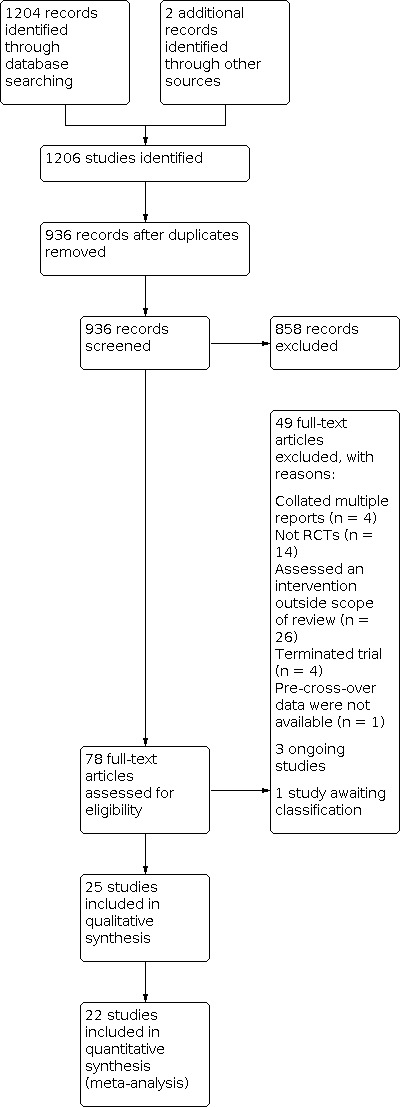
Study flow diagram.
Included studies
Study design
We included 25 RCTs in the review. Information on study methods, participants, interventions, outcomes, funding, and other details such as whether the study was published is presented in Characteristics of included studies. Seventeen RCTs reported our primary outcomes of live birth, ongoing pregnancy, and miscarriage rates. In addition, 23 RCTs reported our secondary outcomes of clinical pregnancy and multiple pregnancy rates. Only one RCT reported on adverse effects. No RCTs evaluated the effect of LPS in natural cycle.
All trials were parallel‐group RCTs.
Twenty‐three RCTs were two‐arm studies (Aali 2013; Agha‐Hosseini 2012; An 2010; Azmoodeh 2016; Bekuretsion 1998; Bellver 2010; Biberoglu 2016; Busso 2006; Eguiluz 2012; Erdem 2009; Han 2016; Keskin 2020; Khadem 2011; Khosravi 2015; Kyrou 2010; Pakrashi 2014; Peeraer 2016; Rashidi 2014; Romero Nieto 2014; Seckin 2014; Stadtmauer 2015; Venturella 2016; Yazici 2014).
Two RCTs included four study arms (Alizzi 2018; Karadag 2016).
Sample size
The sample size of most RCTs was more than 100 participants. Of the 26 included RCTs, only four RCTs had a sample size of fewer than 100 participants (Busso 2006; Keskin 2020; Pakrashi 2014; Stadtmauer 2015).
Participants
We included various types of participants.
Sixteen RCTs included women aged between 18 and 40 years (Aali 2013; Agha‐Hosseini 2012; Alizzi 2018; Bellver 2010; Biberoglu 2016; Busso 2006; Erdem 2009; Karadag 2016; Keskin 2020; Kyrou 2010; Pakrashi 2014; Romero Nieto 2014; Seckin 2014; Venturella 2016; Yazici 2014).
One RCT included women aged between 20 and 43 years (Peeraer 2016)
Eight RCTs did not specify the age of participants (An 2010; Azmoodeh 2016; Bekuretsion 1998; Eguiluz 2012; Han 2016; Khadem 2011; Khosravi 2015; Stadtmauer 2015).
Setting
The 25 RCTs took place in infertility clinics in various countries, including:
19 RCTs in middle‐income countries (Aali 2013; Agha‐Hosseini 2012; Alizzi 2018; An 2010; Azmoodeh 2016; Bekuretsion 1998; Bellver 2010; Biberoglu 2016; Busso 2006; Eguiluz 2012; Erdem 2009; Karadag 2016; Keskin 2020; Khadem 2011; Khosravi 2015; Pakrashi 2014; Romero Nieto 2014; Yazici 2014); and
seven RCTs in high‐income countries (Han 2016; Kyrou 2010; Pakrashi 2014; Peeraer 2016; Seckin 2014; Stadtmauer 2015; Venturella 2016).
Interventions
The following interventions and comparisons were undertaken.
Comparisons between progesterone and placebo or no treatment (17 RCTs)
Six RCTs compared vaginal progesterone with no treatment on live birth rate (Erdem 2009; Peeraer 2016; Romero Nieto 2014; Seckin 2014; Stadtmauer 2015; Yazici 2014).
Four RCTs compared vaginal progesterone with no treatment on ongoing pregnancy (Han 2016; Kyrou 2010; Peeraer 2016; Rashidi 2014).
Nine RCTs compared vaginal progesterone with no treatment on miscarriage rate (Agha‐Hosseini 2012; Eguiluz 2012; Han 2016; Kyrou 2010; Peeraer 2016; Rashidi 2014; Romero Nieto 2014; Seckin 2014; Yazici 2014).
Fifteen RCTs compared vaginal progesterone with no treatment on clinical pregnancy rate (Aali 2013; Agha‐Hosseini 2012; An 2010; Eguiluz 2012; Erdem 2009; Han 2016; Karadag 2016; Keskin 2020; Pakrashi 2014; Peeraer 2016; Rashidi 2014; Romero Nieto 2014; Seckin 2014; Stadtmauer 2015; Yazici 2014)
One RCT compared oral progesterone with no treatment on clinical pregnancy rate (Alizzi 2018).
Five RCTs compared vaginal progesterone with no treatment on multiple pregnancy rate (Agha‐Hosseini 2012; Erdem 2009; Kyrou 2010; Romero Nieto 2014; Yazici 2014).
Comparisons of difference dosages of vaginal progesterone (1 RCT)
One RCT compared 300 mg vaginal progesterone with 600 mg vaginal progesterone on ongoing pregnancy and multiple pregnancy rates (Biberoglu 2016).
Comparisons between intramuscular (IM) progesterone and vaginal progesterone (1 RCT)
One RCT compared IM progesterone with vaginal progesterone on ongoing pregnancy, miscarriage, and clinical pregnancy rates and adverse effects (Khadem 2011).
Comparisons between oral progesterone and vaginal progesterone (1 RCT)
One RCT compared oral progesterone with vaginal progesterone on ongoing pregnancy rate, miscarriage rate, and clinical pregnancy rate (Khosravi 2015).
Comparisons between subcutaneous (Sc) progesterone and vaginal progesterone (1 RCT)
One RCT compared Sc injection progesterone with vaginal progesterone on ongoing pregnancy rate and clinical pregnancy rate (Venturella 2016).
Comparisons between GnRH agonist plus progesterone and vaginal progesterone plus placebo (0 RCTs)
No study compared GnRH agonist plus progesterone with vaginal progesterone plus placebo.
Comparisons between Sc GnRH agonist and no treatment (2 RCTs)
One RCT compared Sc GnRH agonist with no treatment on ongoing pregnancy rate (Bellver 2010).
Two RCTs compared Sc GnRH agonist with no treatment on miscarriage, clinical pregnancy, and multiple pregnancy rates (Bellver 2010; Busso 2006).
Comparisons between Sc GnRH agonist and vaginal progesterone (1 RCT)
One RCT compared Sc GnRH agonist with vaginal progesterone on clinical pregnancy rate (Azmoodeh 2016).
Comparisons between hCG injection and no treatment (1 RCT)
One RCT compared hCG injection with vaginal progesterone on clinical pregnancy and multiple pregnancy rates (Bekuretsion 1998).
Outcomes
Primary outcomes
Seventeen RCTs reported our primary outcomes of live birth, ongoing pregnancy, and miscarriage rates.
Live birth rate: six RCTs compared vaginal progesterone with placebo or no treatment (Erdem 2009; Peeraer 2016; Romero Nieto 2014; Seckin 2014; Stadtmauer 2015; Yazici 2014).
Ongoing pregnancy rate: nine RCTs reported ongoing pregnancy rate that allowed the following comparisons.
Three RCTs compared vaginal progesterone with no treatment (Han 2016; Kyrou 2010; Rashidi 2014)
One RCT compared different dosages of vaginal progesterone (Biberoglu 2016).
One RCT compared oral progesterone with vaginal progesterone (Khosravi 2015).
One RCT compared IM progesterone with vaginal progesterone (Khadem 2011).
One RCT compared Sc progesterone with vaginal progesterone (Venturella 2016).
One RCT compared Sc GnRH agonist with no treatment (Bellver 2010).
Miscarriage rate: 13 RCTs reported miscarriage rate that allowed the following comparisons.
Nine RCTs compared vaginal progesterone with placebo or no treatment (Agha‐Hosseini 2012; Eguiluz 2012; Han 2016; Kyrou 2010; Peeraer 2016; Rashidi 2014; Romero Nieto 2014; Seckin 2014; Yazici 2014).
One RCT compared IM progesterone with vaginal progesterone (Khadem 2011).
One RCT compared oral progesterone with vaginal progesterone (Khosravi 2015).
Two RCTs compared Sc GnRH agonist with no treatment (Bellver 2010; Busso 2006).
Secondary outcomes
Twenty‐three RCTs reported clinical pregnancy rate, whilst multiple pregnancy rate was reported in nine RCTs. Only one RCT reported on adverse effects of medication (Khadem 2011).
Clinical pregnancy rate: 23 RCTs reported clinical pregnancy rate that allowed the following comparisons.
Fifteen RCTs compared vaginal progesterone with placebo or no treatment (Aali 2013; Agha‐Hosseini 2012; An 2010; Eguiluz 2012; Erdem 2009; Han 2016; Karadag 2016; Keskin 2020; Pakrashi 2014; Peeraer 2016; Rashidi 2014; Romero Nieto 2014; Seckin 2014; Stadtmauer 2015; Yazici 2014).
One RCT compared oral progesterone with placebo or no treatment (Alizzi 2018).
One RCT compared IM progesterone with vaginal progesterone (Khadem 2011).
One RCT compared oral progesterone with vaginal progesterone (Khosravi 2015).
One RCT compared Sc progesterone with vaginal progesterone (Venturella 2016).
Two RCTs compared Sc GnRH agonist with no treatment (Bellver 2010; Busso 2006).
One RCT compared Sc GnRH agonist with vaginal progesterone (Azmoodeh 2016).
One RCT compared hCG injection with vaginal progesterone (Bekuretsion 1998).
Multiple pregnancy rate: nine RCTs reported multiple pregnancy rate that allowed the following comparisons.
Five RCTs compared vaginal progesterone with no treatment (Agha‐Hosseini 2012; Erdem 2009; Kyrou 2010; Romero Nieto 2014; Yazici 2014).
One RCT compared 300 mg with 600 mg vaginal progesterone (Biberoglu 2016).
Two RCTs compared Sc GnRH agonist with no treatment (Bellver 2010; Busso 2006).
One RCT compared hCG injection with vaginal progesterone (Bekuretsion 1998).
Adverse effects: one RCT compared IM progesterone with vaginal progesterone (Khadem 2011).
None of the included studies reported on OHSS, preterm birth, or congenital anomalies.
Excluded studies
We excluded 49 RCTs from the review. We excluded 14 studies that were prospective cohort studies or reviews (Aboulghar 2009; Arango 1997; Bakay 2015; Cohlen 2009a; Ergur 1998; Gagliardi 1993; Gun 2016; Miralpeix 2014a; Miralpeix 2016; Mukherjee 2016; Penarrubia 1998; Schwarze 2013; Tas 2020; Yilmaz 2006). We excluded 31 studies because they did not include a comparison of interest in this review (Atmaca 2007; Bachus 1990; Balasch 1983; Beltsos 2014; Blumenfeld 1988; Check 1989; Corson 1993; Duffy 2006; Elkind 2000; Foroozanfard 2012; Foroozanfard 2013; Gleicher 2000; Green 2017a; Hansen 2018; IRCT201202078948N1; IRCT2015030521344N1; Keenan 1992; Lebrocquy 1998; Ludwig 2001; Madkour 2016; Maher 2011; Malhotra 2016; Malik 2016; Martins 2010; Niles 2019; Ozcimen 2004; Pirard 2005; Pomettini 2001; Youssef 2000; Zaffaroni 1997; Zayed 2003). We excluded four studies that had been terminated (NCT00700492 (a); NCT00700492 (b); NCT02510534 (a); NCT02510534 (b)). See Characteristics of excluded studies.
Studies awaiting classification
One study is awaiting classification (Ebrahimi 2010).
Ongoing studies
We identified three ongoing studies (Maryam 2017; NCT03115307; NCT03440359).
Risk of bias in included studies
See the risk of bias graph (Figure 2) and risk of bias summary (Figure 3).
2.
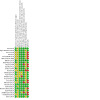
Risk of bias summary: review authors' judgements about each risk of bias item for each included study.
3.
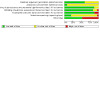
Risk of bias graph: review authors' judgements about each risk of bias item presented as percentages across all included studies.
Allocation
Random sequence generation
Sixteen RCTs reported acceptable methods of sequence generation and were judged as being at low risk of bias for this domain (Aali 2013; Bellver 2010; Biberoglu 2016; Erdem 2009; Agha‐Hosseini 2012; Karadag 2016; Keskin 2020; Khosravi 2015; Kyrou 2010; Pakrashi 2014; Peeraer 2016; Rashidi 2014; Romero Nieto 2014; Seckin 2014; Stadtmauer 2015; Yazici 2014).
Nine RCTs did not report what method was used for sequence generation and were assessed as at unclear risk of bias (Alizzi 2018; An 2010; Bekuretsion 1998; Busso 2006; Eguiluz 2012; Han 2016; Khadem 2011; Azmoodeh 2016; Venturella 2016).
Allocation concealment
Four RCTs provided sufficient details on the allocation concealment method and were assessed as at low risk of selection bias (Aali 2013; Erdem 2009; Peeraer 2016; Romero Nieto 2014). The other 21 RCTs did not describe how allocation concealment was undertaken and were assessed as at unclear risk of bias (Agha‐Hosseini 2012; Alizzi 2018; An 2010; Azmoodeh 2016; Bekuretsion 1998; Bellver 2010; Biberoglu 2016; Busso 2006; Eguiluz 2012; Han 2016; Karadag 2016; Keskin 2020; Khadem 2011; Khosravi 2015; Kyrou 2010; Pakrashi 2014; Rashidi 2014; Seckin 2014; Stadtmauer 2015; Venturella 2016; Yazici 2014).
Blinding
We did not consider that blinding was likely to influence findings for the main clinical outcomes (live birth, ongoing pregnancy, miscarriage, clinical pregnancy, and multiple pregnancy rates), therefore we assessed 23 RCTs as at low risk of bias (Aali 2013; Agha‐Hosseini 2012; Alizzi 2018; An 2010; Azmoodeh 2016; Bekuretsion 1998; Bellver 2010; Biberoglu 2016; Busso 2006; Eguiluz 2012; Erdem 2009; Han 2016; Keskin 2020; Khosravi 2015; Kyrou 2010; Pakrashi 2014; Peeraer 2016; Rashidi 2014; Romero Nieto 2014; Seckin 2014; Stadtmauer 2015; Venturella 2016; Yazici 2014). However, one RCT reported adverse events such that blinding status could have potentially affected findings (Khadem 2011), therefore we assessed this RCT as at high risk of bias.
One RCT did not report the blinding method and was thus assessed as at unclear risk of performance bias (Karadag 2016).
Incomplete outcome data
Twenty‐two RCTs had less than 10% dropout and were assessed as at low risk of bias (Aali 2013; Agha‐Hosseini 2012; Alizzi 2018; An 2010; Azmoodeh 2016; Bekuretsion 1998; Bellver 2010; Biberoglu 2016; Eguiluz 2012; Erdem 2009; Han 2016; Karadag 2016; Keskin 2020; Khadem 2011; Khosravi 2015; Kyrou 2010; Peeraer 2016; Rashidi 2014; Romero Nieto 2014; Seckin 2014; Venturella 2016; Yazici 2014). Three RCTs were interim analyses (Busso 2006; Pakrashi 2014; Stadtmauer 2015); we classified these RCTs as at high risk of attrition bias.
Selective reporting
Five RCTs reported all outcomes listed in the protocol, including live birth and ongoing pregnancy rates (the primary outcomes of this review), and were therefore assessed as at low risk of reporting bias (Aali 2013; Bellver 2010; Peeraer 2016; Rashidi 2014; Venturella 2016).
We judged 19 RCTs to be at unclear risk of reporting bias because they did not have protocol registration (Agha‐Hosseini 2012; Alizzi 2018; An 2010; Azmoodeh 2016; Bekuretsion 1998; Biberoglu 2016; Busso 2006; Eguiluz 2012; Erdem 2009; Karadag 2016; Keskin 2020; Khadem 2011; Khosravi 2015; Kyrou 2010; Pakrashi 2014; Romero Nieto 2014; Seckin 2014; Stadtmauer 2015; Yazici 2014).
We assessed only one RCT as at high risk of bias due to financial connections between review authors and drug firms (Han 2016).
Other potential sources of bias
Thirteen RCTs reported similar causes of infertility and other baseline characteristics and were thus deemed as at low risk of other bias (Aali 2013; Agha‐Hosseini 2012; Bellver 2010; Biberoglu 2016; Erdem 2009; Karadag 2016; Keskin 2020; Khadem 2011; Khosravi 2015; Peeraer 2016; Rashidi 2014; Seckin 2014; Yazici 2014).
We rated 12 RCTs as at high risk of bias for this domain as only abstracts were available (Alizzi 2018; An 2010; Azmoodeh 2016; Bekuretsion 1998; Busso 2006; Eguiluz 2012; Han 2016; Kyrou 2010; Pakrashi 2014; Romero Nieto 2014; Stadtmauer 2015; Venturella 2016). We attempted to contact the authors for additional information, without success.
Effects of interventions
See: Table 1; Table 2; Table 3; Table 4; Table 5; Table 6; Table 7; Table 8; Table 9; Table 10; Table 11
We included 25 RCTs (5111 participants). We could not perform any sensitivity analyses restricted to studies at low risk of selection bias and not at high risk for the other domains as no trial fulfilled the criteria. No studies reported on the outcome congenital anomalies.
Comparison 1. Progesterone versus no treatment or placebo (route of administration)
Seventeen RCTs (4101 participants) compared progesterone with placebo or no treatment (Aali 2013; Agha‐Hosseini 2012; Alizzi 2018; An 2010; Eguiluz 2012; Erdem 2009; Han 2016; Karadag 2016; Keskin 2020; Kyrou 2010; Pakrashi 2014; Peeraer 2016; Rashidi 2014; Romero Nieto 2014; Seckin 2014; Stadtmauer 2015; Yazici 2014). Only one study used an oral route (Alizzi 2018), with the remaining studies using a vaginal route. See Table 1.
Primary outcomes
1.1 Live birth rate/ongoing pregnancy rate (per woman)
Seven RCTs reported live birth rate (LBR)/ongoing pregnancy rate (OPR) per woman with data that could be included in a meta‐analysis (Erdem 2009; Han 2016; Kyrou 2010; Peeraer 2016; Rashidi 2014; Seckin 2014; Stadtmauer 2015). We are uncertain if vaginal progesterone increases LBR/OPR compared to placebo or no treatment (risk ratio (RR) 1.10, 95% confidence interval (CI) 0.81 to 1.48; 7 RCTs; 1792 participants; I2 = 35% low‐certainty evidence) (Analysis 1.1). We estimated that for a woman with 12.6% chance of achieving a live birth/ongoing pregnancy with placebo or no treatment, the chance with vaginal progesterone would be between 10.2% and 18.7%.
1.1. Analysis.
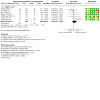
Comparison 1: Progesterone versus no treatment or placebo (route of progesterone administration), Outcome 1: Live birth/ongoing pregnancy rate
Romero Nieto 2014 reported LBR per cycle, therefore we did not combine data from this trial in meta‐analysis. The study authors reported no difference between progesterone supplementation and no‐treatment group (n/N = 46/449) 10.7% and (n/N = 37/444) 8.3%, respectively; P = 0.87.
Yazici 2014 reported LBR per cycle, therefore we did not combine data from this trial in meta‐analysis. The study authors reported no difference between progesterone supplementation and no‐treatment group (n/N = 20/122) 16.8% and (n/N = 13/123) 10.7%, respectively; P = 0.19.
1.2 ‐ 1.3 Miscarriage rate (per clinical pregnancy/per woman)
Five RCTs reported miscarriage rate per clinical pregnancy with data that could be combined in a meta‐analysis (Agha‐Hosseini 2012; Han 2016; Kyrou 2010; Peeraer 2016; Rashidi 2014). We are uncertain about the effect of vaginal progesterone on miscarriage rate per clinical pregnancy compared to placebo or no treatment (RR 0.70, 95% CI 0.40 to 1.25; 5 RCTs; 261 participants; I2 = 0%, low‐certainty evidence) (Analysis 1.2). This suggests that if the rate of miscarriage per clinical pregnancy with placebo or no treatment is 18.3%, the rate with vaginal progesterone would be between 7.3% and 22.8%. The evidence for miscarriage rate per woman compared to placebo or no treatment was also uncertain (RR 0.90, 95% CI 0.48 to 1.69; 5 RCTs; 1634 participants ; I2 = 0%; low‐certainty evidence) (Analysis 1.3).
1.2. Analysis.
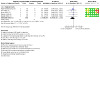
Comparison 1: Progesterone versus no treatment or placebo (route of progesterone administration), Outcome 2: Miscarriage per clinical pregnancy
1.3. Analysis.
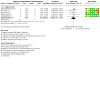
Comparison 1: Progesterone versus no treatment or placebo (route of progesterone administration), Outcome 3: Miscarriage per woman
Romero Nieto 2014 reported miscarriage rate per cycle, therefore we did not combine data from this trial in meta‐analysis. There was no difference between progesterone supplementation and no‐treatment group (n/N = 16/449) 3.6% and (n/N = 12/444) 2.7%, respectively; P = 0.87.
Eguiluz 2012 reported miscarriage rate per cycle, therefore we did not combine data from this trial in meta‐analysis. There was no difference between progesterone supplementation and no‐treatment group (n/N = 19/91) 21.1% and (n/N = 9/89) 10.3%, respectively; P > 0.05.
Yazici 2014 reported miscarriage rate per cycle, therefore we did not combine data from this trial in meta‐analysis. There was no difference between progesterone supplementation and no‐treatment group (n/N = 3/122) 2.4% and (n/N = 2/123) 1.6%, respectively; P > 0.05.
Seckin 2014 reported miscarriage rate per cycle, therefore we did not combine data from this trial in meta‐analysis. There was no difference between progesterone supplementation and no‐treatment group (n/N = 2/83) 2.4% and (n/N = 0/83) 0%, respectively.
Secondary outcomes
1.4 Clinical pregnancy rate (per woman)
Fourteen RCTs reported clinical pregnancy rate per woman (Aali 2013; Agha‐Hosseini 2012; Alizzi 2018; An 2010; Erdem 2009; Han 2016; Karadag 2016; Keskin 2020; Kyrou 2010; Pakrashi 2014; Peeraer 2016; Rashidi 2014; Seckin 2014; Stadtmauer 2015).
Vaginal progesterone may increase clinical pregnancy rate compared to placebo or no treatment (RR 1.35, 95% CI 1.14 to 1.61; 13 RCTs; 2794 participants; I2 = 0%); low‐certainty evidence) (Analysis 1.4) (Aali 2013; Agha‐Hosseini 2012; Alizzi 2018; An 2010; Erdem 2009; Han 2016; Karadag 2016; Keskin 2020; Kyrou 2010; Pakrashi 2014; Peeraer 2016; Rashidi 2014; Seckin 2014; Stadtmauer 2015). This suggests that if the chance of clinical pregnancy following placebo or no treatment is 13.4%, the chance following vaginal progesterone would be between 15.3% and 21.6%. We conducted subgroup analysis comparing vaginal progesterone and placebo or no treatment as planned.
1.4. Analysis.
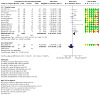
Comparison 1: Progesterone versus no treatment or placebo (route of progesterone administration), Outcome 4: Clinical pregnancy per woman
In contrast, the evidence is very uncertain about the effect of oral progesterone on clinical pregnancy rate compared to placebo or no treatment (RR 0.67, 95% CI 0.40 to 1.13; 1 RCT; 99 participants; very low‐certainty evidence) (Alizzi 2018).
Romero Nieto 2014 reported clinical pregnancy rate per cycle, therefore we did not combine data from this trial in meta‐analysis. There was no difference between progesterone supplementation and no‐treatment group (n/N = 62/449) 13.8% and (n/N = 49/444) 11.0%, respectively; P = 0.25.
Eguiluz 2012 reported clinical pregnancy rate per cycle, therefore we did not combine data from this trial in meta‐analysis. There was no difference between progesterone supplementation and no‐treatment group (n/N = 19/91) 20.9% and (n/N = 13/89) 14.6%, respectively; P > 0.05.
Yazici 2014 reported clinical pregnancy rate per cycle, therefore we did not combine data from this trial in meta‐analysis. There was no difference between progesterone supplementation and no‐treatment group (n/N = 23/122) 18.9% and (n/N = 15/123) 12.2%, respectively; P = 0.16.
1.5 Multiple pregnancy rate (per woman)
Three RCTs evaluated multiple pregnancy rate per woman (Agha‐Hosseini 2012; Erdem 2009; Kyrou 2010). The evidence is very uncertain about the effect of vaginal progesterone on multiple pregnancy rate compared to placebo or no treatment (RR 0.84, 95% CI 0.30 to 2.34; 3 RCTs; 956 participants; I2 = 0%; low‐certainty evidence) (Analysis 1.5). This suggests that if the rate of multiple pregnancy with placebo or no treatment is 1.7%, the rate with vaginal progesterone would be between 0.5% and 4.0%.
1.5. Analysis.
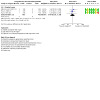
Comparison 1: Progesterone versus no treatment or placebo (route of progesterone administration), Outcome 5: Multiple pregnancy per woman
Romero Nieto 2014 reported multiple pregnancy rate per cycle, therefore we did not combine data from this trial in meta‐analysis. There was no difference between progesterone supplementation and no‐treatment group (n/N = 5/62) 1.1% and (n/N = 1/49) 0.2%, respectively; P = 0.33.
Yazici 2014 reported multiple pregnancy rate per cycle, therefore we did not combine data from this trial in meta‐analysis. There was no difference between progesterone supplementation and no‐treatment group (n/N = 2/122) 1.16% and (n/N = 2/123) 1.6%, respectively; P = 0.33.
Comparison 2. Progesterone versus no treatment or placebo (type of ovarian stimulation)
Seventeen RCTs (4101 participants) compared progesterone with placebo or no treatment (Aali 2013; Agha‐Hosseini 2012; Alizzi 2018; An 2010; Eguiluz 2012; Erdem 2009; Han 2016; Karadag 2016; Keskin 2020; Kyrou 2010; Pakrashi 2014; Peeraer 2016; Rashidi 2014; Romero Nieto 2014; Seckin 2014; Stadtmauer 2015; Yazici 2014).
Primary outcomes
2.1 Live birth rate/ongoing pregnancy rate (per woman)
Seven RCTs reported LBR/OPR per woman (Analysis 2.1) (Erdem 2009; Han 2016; Kyrou 2010; Peeraer 2016; Rashidi 2014; Seckin 2014; Stadtmauer 2015).
2.1. Analysis.
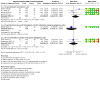
Comparison 2: Progesterone versus no treatment or placebo (type of ovarian stimulation), Outcome 1: Live birth/ongoing pregnancy rate
2.1.1 In gonadotropin stimulation cycle
Four RCTs evaluated LBR/OPR per woman in gonadotropin stimulation cycle (Table 2) (Erdem 2009; Han 2016; Peeraer 2016; Seckin 2014). We are uncertain if vaginal progesterone increases LBR/OPR compared to placebo or no treatment in gonadotropin stimulation cycle (RR 1.24, 95% CI 0.80 to 1.92; 4 RCTs; 1054 participants; I2 = 53%; low‐certainty evidence). (Analysis 2.1).
We estimated that for a woman with 13.2% chance of achieving a live birth/ongoing pregnancy with placebo or no treatment, the chance with vaginal progesterone in gonadotropin stimulation cycle would be between 10.6% and 25.4%.
Romero Nieto 2014 reported LBR per cycle, therefore we did not combine data from this trial in meta‐analysis. There was no difference between progesterone supplementation and no‐treatment group (n/N = 46/449) 10.7% and (n/N = 37/444) 8.3%, respectively; P = 0.87.
Yazici 2014 reported LBR per cycle, therefore we did not combine data from this trial in meta‐analysis. The study authors reported no difference between progesterone supplementation and no‐treatment group (n/N = 20/122) 16.8% and (n/N = 13/123) 10.7%, respectively; P = 0.19.
2.1.2 In gonadotropin plus oral (clomiphene citrate) stimulation cycle
No RCTs reported on LBR. Rashidi 2014 reported ongoing pregnancy (Table 3). It is unclear if there was a difference between progesterone supplementation and placebo or no treatment in ongoing pregnancy (RR 0.73, 95% CI 0.37 to 1.42; 1 RCT; 253 participants; low‐certainty evidence). We estimated that for a woman with 14.2% chance of achieving an ongoing pregnancy using placebo or no treatment, the chance with vaginal progesterone would be between 5.2% and 20.1%.
2.1.3 In oral (clomiphene citrate or letrozole) stimulation cycle
Stadtmauer 2015 and Kyrou 2010 reported LBR/OPR (Table 4). It is unclear if there was a difference between progesterone supplementation and placebo or no treatment in LBR/OPR (RR 0.97, 95% CI 0.58 to 1.64; 2 RCTs; 485 participants; I2 = 0%; low‐certainty evidence) (Analysis 2.1).
We estimated that for a woman with 10.5% chance of achieving a live birth/ongoing pregnancy using placebo or no treatment, the chance with vaginal progesterone in oral stimulation cycle would be between 6.1% and 17.2%.
2.2 ‐ 2.3 Miscarriage rate (per clinical pregnancy/per woman)
Nine RCTs reported miscarriage rate (Analysis 2.2; Analysis 2.3) (Agha‐Hosseini 2012; Eguiluz 2012; Han 2016; Kyrou 2010; Peeraer 2016; Rashidi 2014; Romero Nieto 2014; Seckin 2014; Yazici 2014).
2.2. Analysis.
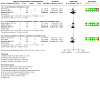
Comparison 2: Progesterone versus no treatment or placebo (type of ovarian stimulation), Outcome 2: Miscarriage per clinical pregnancy
2.3. Analysis.
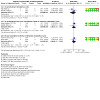
Comparison 2: Progesterone versus no treatment or placebo (type of ovarian stimulation), Outcome 3: Miscarriage per woman
2.2.1 ‐ 2.3.1 In gonadotropin stimulation cycle
Two RCTs reported miscarriage rate per clinical pregnancy (Table 2) (Han 2016; Peeraer 2016). It is unclear if there was a difference between progesterone supplementation and placebo or no treatment in miscarriage rate (RR 0.68, 95% CI 0.24 to 1.91; 2 RCTs; 102 participants; I2 = 0%; low‐certainty evidence) (Analysis 2.2). This suggests that if the risk of miscarriage per clinical pregnancy with placebo or no treatment is 16.7%, the risk with vaginal progesterone would be between 4.0% and 31.8%.
The evidence for miscarriage rate per woman when comparing progesterone supplementation to placebo or no treatment was also uncertain (RR 0.74, 95% CI 0.23 to 2.32; 2 RCTs; 691 participants; I2 = 9%; low‐certainty evidence) (Analysis 2.3).
Romero Nieto 2014 reported miscarriage rate per cycle. There was no difference between progesterone supplementation and no‐treatment group (n/N = 16/449) 3.6% and (n/N = 12/444) 2.7%, respectively; P = 0.87.
Eguiluz 2012 reported miscarriage rate per cycle, therefore we did not combine data from this trial in meta‐analysis. There was no difference between progesterone supplementation and no‐treatment group (n/N = 19/91) 21.1% and (n/N = 9/89) 10.3%, respectively; P > 0.05.
Yazici 2014 reported miscarriage rate per cycle, therefore we did not combine data from this trial in meta‐analysis. There was no difference between progesterone supplementation and no‐treatment group (n/N = 3/122) 2.4% and (n/N = 2/123) 1.6%, respectively; P > 0.05.
Seckin 2014 reported miscarriage rate per cycle, therefore we did not combine data from this trial in meta‐analysis. There was no difference between progesterone supplementation and no‐treatment group (n/N = 2/83) 2.4% and (n/N = 0/83) 0%, respectively; P > 0.05.
2.2.2 ‐ 2.3.2 In gonadotropin plus oral (clomiphene citrate or letrozole) stimulation cycle
Based on pooled analysis from two RCTs, it is unclear if there is a difference between progesterone supplementation and placebo or no treatment (RR 0.67, 95% CI 0.30 to 1.50; 2 RCTs; 123 participants; I2 = 0%; low‐certainty evidence) (Table 3) (Agha‐Hosseini 2012; Rashidi 2014). This suggests that if the rate of miscarriage with placebo or no treatment is 18.8%, the rate with vaginal progesterone would be between 5.6% and 28.1%. It was also unclear if there was a difference between groups in miscarriage when data were analysed per woman (RR 1.08, 95% CI 0.44 to 2.64; 2 RCTs; 543 participants; I2 = 0%).
2.2.3 ‐ 2.3.3 In oral (clomiphene citrate or letrozole) stimulation cycle
Kyrou 2010 and Agha‐Hosseini 2012 evaluated miscarriage rate (Table 4). It is unclear if there was a difference between progesterone supplementation and placebo or no treatment (RR 0.53, 95% CI 0.25 to 1.14; 2 RCTs; 119 participants; I2 = 0%; low‐certainty evidence). This suggests that if the rate of miscarriage with placebo or no treatment is 25.6%, the rate with vaginal progesterone would be between 6.4% and 29.2%. It is unclear if there was a difference between groups when data were analysed per woman (RR 1.09, 95% CI 0.47 to 2.54; 2 RCTs; 690 participants; I2 = 0%).
Secondary outcomes
2.4 Clinical pregnancy rate (per woman)
Thirteen RCTs reported clinical pregnancy rate per woman (Analysis 2.4) (Aali 2013; Agha‐Hosseini 2012; Alizzi 2018; An 2010; Erdem 2009; Han 2016; Karadag 2016; Keskin 2020; Pakrashi 2014; Peeraer 2016; Rashidi 2014; Seckin 2014; Stadtmauer 2015).
2.4. Analysis.
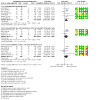
Comparison 2: Progesterone versus no treatment or placebo (type of ovarian stimulation), Outcome 4: Clinical pregnancy per woman
2.4.1 In gonadotropin stimulation cycle
Seven RCTs reported the effect of progesterone on clinical pregnancy rate (Table 2) (Aali 2013; Erdem 2009; Han 2016; Karadag 2016; Keskin 2020; Peeraer 2016; Seckin 2014). Progesterone supplementation may result in an increase in the clinical pregnancy rate compared to placebo or no treatment (RR 1.38, 95% CI 1.10 to 1.74; 7 RCTs; 1437 participants; I2 = 0%; low‐certainty evidence). This suggests that if the chance of clinical pregnancy with placebo or no treatment is 14.2%, the chance with vaginal progesterone would be between 15.6% and 24.7%.
Romero Nieto 2014 reported clinical pregnancy rate per cycle, therefore we did not combine data from this trial in meta‐analysis. There was no difference between progesterone supplementation and no‐treatment group (n/N = 62/449) 13.8% and (n/N = 49/444) 11.0%, respectively; P = 0.25.
Eguiluz 2012 reported clinical pregnancy rate per cycle, therefore we did not combine data from this trial in meta‐analysis. There was no difference between progesterone supplementation and no‐treatment group (n/N = 19/91) 20.9% and (n/N = 13/89) 14.6%, respectively; P≥ 0.05.
Yazici 2014 reported clinical pregnancy rate per cycle, therefore we did not combine data from this trial in meta‐analysis. There was no difference between progesterone supplementation and no‐treatment group (n/N = 23/122) 18.9% and (n/N = 15/123) 12.2%, respectively; P = 0.16.
2.4.2 In gonadotropin plus oral (clomiphene citrate or letrozole) stimulation cycle
Four RCTs reported the clinical pregnancy rate (Table 3) (Agha‐Hosseini 2012; Alizzi 2018; An 2010; Rashidi 2014). Progesterone supplementation may result in an increase in the clinical pregnancy rate compared to placebo or no treatment (RR 1.40, 95% CI 1.03 to 1.90; 4 RCTs; 733 participants; I2 = 0%; low‐certainty evidence). This suggests that if the chance of clinical pregnancy with placebo or no treatment is 15.7%, the chance with vaginal progesterone would be between 16.1% and 29.8%.
2.4.3 In oral (clomiphene citrate or letrozole) stimulation cycle
Six RCTs demonstrated an effect of progesterone supplementation on clinical pregnancy rate (Table 4) (Agha‐Hosseini 2012; Alizzi 2018; Karadag 2016; Kyrou 2010; Pakrashi 2014; Stadtmauer 2015). Progesterone supplement may result in an increase in clinical pregnancy rate compared to placebo or no treatment (RR 1.44, 95% CI 1.04 to 1.98; 6 RCTs; 1073 participants; I2 = 22%; low‐certainty evidence). This suggests that if the chance of clinical pregnancy with placebo or no treatment is 13.1%, the chance with vaginal progesterone would be between 13.6% and 25.9%.
2.5 Multiple pregnancy rate (per woman)
Five RCTs evaluated multiple pregnancy rate (Analysis 2.5) (Agha‐Hosseini 2012; Erdem 2009; Kyrou 2010; Romero Nieto 2014; Yazici 2014).
2.5. Analysis.
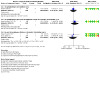
Comparison 2: Progesterone versus no treatment or placebo (type of ovarian stimulation), Outcome 5: Multiple pregnancy per woman
2.5.1 In gonadotropin stimulation cycle
One RCT assessed multiple pregnancy rate (Table 2) (Erdem 2009). It is unclear whether there was a difference between progesterone supplementation and placebo or no treatment in multiple pregnancy rate (RR 0.72, 95% CI 0.17 to 3.15; 1 RCT; 214 participants; I2 = 0%; low‐certainty evidence). This suggests that if the rate of multiple pregnancy with placebo or no treatment is 3.8%, the rate with vaginal progesterone would be between 0.6% and 12.0%.
Romero Nieto 2014 reported miscarriage rate per cycle, therefore we did not combine data from this trial in meta‐analysis. There was no difference between progesterone supplementation and no‐treatment group (n/N = 5/62) 3.6% and (n/N = 1/49) 2.7%, respectively; P = 0.87.
Yazici 2014 reported multiple pregnancy rate per cycle, therefore we did not combine data from this trial in meta‐analysis. There was no difference between progesterone supplementation and no‐treatment group (n/N = 2/122) 1.16% and (n/N = 2/123) 1.6%, respectively; P = 0.33.
2.5.2 In gonadotropin plus oral (clomiphene citrate or letrozole) stimulation cycle
Evidence from one RCT is very uncertain about the effect of progesterone supplementation on multiple pregnancy rate compared to placebo or no treatment (RR 1.44, 95% CI 0.24 to 8.49; 1 RCT; 290 participants; low‐certainty evidence) (Table 3) (Agha‐Hosseini 2012). This suggests that if the risk of multiple pregnancy with placebo or no treatment is 1.4%, the risk with vaginal progesterone would be between 0.3% and 12.0%.
2.5.3 In oral (clomiphene citrate or letrozole stimulation) cycle
Kyrou 2010 and Agha‐Hosseini 2012 reported multiple pregnancy rate (Table 4). It is unclear whether there was a difference between progesterone supplementation and placebo or no treatment in multiple pregnancy rate (RR 0.58, 95% CI 0.10 to 3.55; 2 RCTs; 586 participants; I2 = 0%; low‐certainty evidence). This suggests that if the rate of multiple pregnancy with placebo or no treatment is 0.7%, the rate with vaginal progesterone would be between 0.1% and 2.6%.
Comparison 3. Different dosages of vaginal progesterone
One RCT (200 participants) compared the effects of 300 mg versus 600 mg vaginal progesterone on ongoing pregnancy and multiple pregnancy rates (Table 5) (Biberoglu 2016). The certainty of the evidence for all outcomes in this comparison is very low.
Primary outcomes
Biberoglu 2016 did not report on live birth.
3.1 Ongoing pregnancy rate (per woman)
The evidence suggests that 300 mg vaginal progesterone does not increase ongoing pregnancy compared to 600 mg vaginal progesterone (RR 1.58, 95% CI 0.81 to 3.09; 1 RCT; 200 participants; very low‐certainty evidence) (Analysis 3.1). We estimated that for a woman with 12.0% chance of achieving an ongoing pregnancy with 600 mg of vaginal progesterone, the chance with 300 mg of vaginal progesterone would be between 9.7% and 37.1%.
3.1. Analysis.
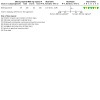
Comparison 3: 300 mg vaginal progesterone versus 600 mg vaginal progesterone, Outcome 1: Ongoing pregnancy per woman
Secondary outcomes
3.2 Multiple pregnancy rate (per woman)
The evidence suggests that 300 mg vaginal progesterone does not increase multiple pregnancy rate compared to 600 mg vaginal progesterone (RR 0.50, 95% CI 0.05 to 5.43; 1 RCT; 200 participants; very low‐certainty evidence) (Analysis 3.2). This suggests that if the rate of multiple pregnancy with 600 mg of vaginal progesterone is 2.0%, the rate with 300 mg of vaginal progesterone would be between 1.0% and 10.9%.
3.2. Analysis.
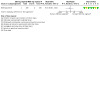
Comparison 3: 300 mg vaginal progesterone versus 600 mg vaginal progesterone, Outcome 2: Multiple pregnancy per woman
No other outcomes were reported for this comparison.
Comparison 4. Intramuscular (IM) progesterone versus vaginal progesterone
One RCT (225 participants) compared IM progesterone with vaginal progesterone on ongoing pregnancy, miscarriage, and clinical pregnancy rates and adverse effects (Table 6) (Khadem 2011). The certainty of the evidence for all outcomes in this comparison is very low.
Primary outcomes
Khadem 2011 did not report on live birth.
4.1 Ongoing pregnancy rate (per woman)
The evidence is very uncertain about the effect of IM progesterone on ongoing pregnancy rate compared to vaginal progesterone (RR 0.59, 95% CI 0.34 to 1.02; 1 RCT; 225 participants; very low‐certainty evidence) (Analysis 4.1). This suggests that if the chance of an ongoing pregnancy with vaginal progesterone is 25.2%, the chance with IM progesterone would be between 8.6% and 25.7%.
4.1. Analysis.
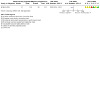
Comparison 4: IM progesterone versus vaginal progesterone, Outcome 1: Ongoing pregnancy per woman
4.2 ‐ 4.3 Miscarriage rate (per clinical pregnancy/per woman)
The evidence is very uncertain about the effect of IM progesterone on miscarriage rate per clinical pregnancy compared to vaginal progesterone (RR 0.75, 95% CI 0.43 to 1.32; 1 RCT; 81 participants; very low‐certainty evidence) (Analysis 4.2). This suggests that if the risk of miscarriage per clinical pregnancy with vaginal progesterone is 44.4%, the risk with IM progesterone would be between 19.1% and 58.7%. The evidence on miscarriage rate per woman was also very uncertain (RR 0.58, 95% CI 0.30 to 1.14; 1 RCT; 225 participants; very low‐certainty evidence) (Analysis 4.3).
4.2. Analysis.
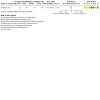
Comparison 4: IM progesterone versus vaginal progesterone, Outcome 2: Miscarriage per clinical pregnancy
4.3. Analysis.
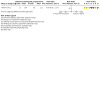
Comparison 4: IM progesterone versus vaginal progesterone, Outcome 3: Miscarriage per woman
Secondary outcomes
4.4 Clinical pregnancy rate (per woman)
The evidence is very uncertain about the effect of IM progesterone on clinical pregnancy rate compared to vaginal progesterone (RR 0.78, 95% CI 0.55 to 1.11; 1 RCT; 225 participants; very low‐certainty evidence) (Analysis 4.4). This suggests that if the chance of clinical pregnancy with vaginal progesterone is 40.5%, the chance with IM progesterone would be between 22.3% and 45.0%.
4.4. Analysis.
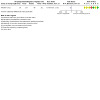
Comparison 4: IM progesterone versus vaginal progesterone, Outcome 4: Clinical pregnancy per woman
4.5 Adverse effects
Intramuscular progesterone may result in a large increase in adverse effects compared to vaginal progesterone, but the certainty of the evidence is very low (RR 9.25, 95% CI 2.21 to 38.78; 1 RCT; 225 participants; very low‐certainty evidence) (Analysis 4.5). This suggests that for a woman with 1.8% risk of adverse effects with vaginal progesterone, the corresponding risk with IM progesterone would be between 4.0% and 69.9%.
4.5. Analysis.
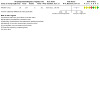
Comparison 4: IM progesterone versus vaginal progesterone, Outcome 5: Adverse effect
No other outcomes were reported for this comparison.
Comparison 5. Oral progesterone versus vaginal progesterone
One RCT (150 participants) compared oral progesterone with vaginal progesterone on ongoing pregnancy, miscarriage, and clinical pregnancy rates (Table 7) (Khosravi 2015).
Primary outcomes
Khosravi 2015 did not report on live birth.
5.1 Ongoing pregnancy rate (per woman)
The evidence is very uncertain about the effect of oral progesterone on ongoing pregnancy rate compared to vaginal progesterone (RR 1.25, 95% CI 0.70 to 2.22; 1 RCT; 150 participants; very low‐certainty evidence) (Analysis 5.1). This suggests that if the chance of an ongoing pregnancy with vaginal progesterone is 21.3%, the chance with oral progesterone would be between 14.9% and 47.4%.
5.1. Analysis.
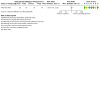
Comparison 5: Oral progesterone versus vaginal progesterone, Outcome 1: Ongoing pregnancy per woman
5.2 ‐ 5.3 Miscarriage rate (per clinical pregnancy/per woman)
The evidence is very uncertain about the effect of oral progesterone on miscarriage rate per clinical pregnancy compared to vaginal progesterone (RR 0.58, 95% CI 0.11 to 3.09; 1 RCT; 41 participants; very low‐certainty evidence) (Analysis 5.2). This suggests that if the risk of miscarriage per clinical pregnancy with vaginal progesterone is 15.8%, the risk with oral progesterone would be between 1.7% and 48.8%.
5.2. Analysis.
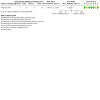
Comparison 5: Oral progesterone versus vaginal progesterone, Outcome 2: Miscarriage per clinical pregnancy
The evidence is also very uncertain about the effect of oral progesterone on miscarriage rate per woman (odds ratio 0.66, 95% CI 0.11 to 4.05; 1 RCT; 150 participants; very low‐certainty evidence) (Analysis 5.3).
5.3. Analysis.
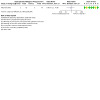
Comparison 5: Oral progesterone versus vaginal progesterone, Outcome 3: Miscarriage per woman
Secondary outcomes
5.4 Clinical pregnancy rate (per woman)
The evidence is very uncertain about the effect of oral progesterone on miscarriage rate compared to vaginal progesterone (RR 1.16, 95% CI 0.69 to 1.96; 1 RCT; 150 participants; very low‐certainty evidence) (Analysis 5.4). This suggests that if the chance of clinical pregnancy with vaginal progesterone is 25.3%, the chance with oral progesterone would be between 17.5% and 49.7%.
5.4. Analysis.
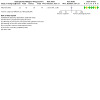
Comparison 5: Oral progesterone versus vaginal progesterone, Outcome 4: Clinical pregnancy per woman
No other outcomes were reported for this comparison.
Comparison 6. Aqueous subcutaneous (Sc) progesterone versus vaginal progesterone gel
One RCT (246 participants) compared Sc progesterone with vaginal progesterone on ongoing pregnancy and clinical pregnancy rates (Table 8) (Venturella 2016).
Primary outcomes
Venturella 2016 did not report on live birth.
6.1 Ongoing pregnancy rate (per woman)
The evidence is very uncertain about the effect of Sc progesterone on ongoing pregnancy rate compared to vaginal progesterone (RR 1.05, 95% CI 0.54 to 2.05; 1 RCT; 246 participants; very low‐certainty evidence) (Analysis 6.1). This suggests that if the chance of an ongoing pregnancy with vaginal progesterone is 11.9%, the chance with Sc progesterone would be between 6.4% and 24.4%.
6.1. Analysis.
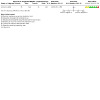
Comparison 6: Aqueous Sc progesterone versus vaginal progesterone gel, Outcome 1: Ongoing pregnancy per woman
Secondary outcomes
6.2 Clinical pregnancy rate (per woman)
The evidence is very uncertain about the effect of Sc progesterone on clinical pregnancy rate compared to vaginal progesterone (RR 1.12, 95% CI 0.59 to 2.11; 1 RCT; 246 participants; very low‐certainty evidence) (Analysis 6.2). This suggests that if the chance of clinical pregnancy with vaginal progesterone is 12.7%, the chance with Sc progesterone would be between 7.5% and 26.8%.
6.2. Analysis.
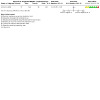
Comparison 6: Aqueous Sc progesterone versus vaginal progesterone gel, Outcome 2: Clinical pregnancy per woman
No other outcomes were reported for this comparison.
Comparison 7. Gonadotropin‐releasing hormone (GnRH) agonist plus progesterone versus vaginal progesterone plus placebo
No RCT reported on this comparison.
Comparison 8. Sc GnRH agonist versus placebo or no treatment
One RCT (291 participants) compared Sc GnRH agonist with no treatment on ongoing pregnancy rate (Bellver 2010). Two RCTs (340 participants) compared Sc GnRH agonist with no treatment on miscarriage, clinical pregnancy, and multiple pregnancy rates (Table 9) (Bellver 2010; Busso 2006).
Primary outcomes
The studies did not report on live birth.
8.1 Ongoing pregnancy rate (per woman)
One RCT evaluated ongoing pregnancy rate (Bellver 2010). The evidence is very uncertain about the effect of Sc GnRH agonist on ongoing pregnancy rate compared to no treatment (RR 1.10, 95% CI 0.70 to 1.74; 1 RCT; 291 participants; very low‐certainty evidence) (Analysis 7.1). This suggests that if the chance of an ongoing pregnancy with placebo or no treatment is 19.3%, the chance with GnRH agonist would be between 13.5% and 33.6%.
7.1. Analysis.
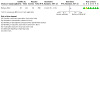
Comparison 7: Sc GnRH agonist versus no treatment or placebo, Outcome 1: Ongoing pregnancy per woman
8.2 ‐ 8.3 Miscarriage rate (per clinical pregnancy/per woman)
Two RCTs reported miscarriage rate (Bellver 2010; Busso 2006). Busso 2006 reported no events in both the intervention and control groups. The evidence is very uncertain about the effect of Sc GnRH agonist on miscarriage rate per clinical pregnancy compared to no treatment (RR 0.73, 95% CI 0.26 to 2.10; 2 RCTs; 79 participants; I2 = 0%; very low‐certainty evidence) (Analysis 7.2). This suggests that if the risk of miscarriage per clinical pregnancy with placebo or no treatment is 17.1%, the risk with GnRH agonist would be between 4.4% and 35.9%.
7.2. Analysis.
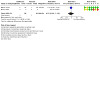
Comparison 7: Sc GnRH agonist versus no treatment or placebo, Outcome 2: Miscarriage per clinical pregnancy
Miscarriage rate per woman compared to vaginal progesterone: RR 0.76, 95% CI 0.25 to 2.34; 2 RCTs; 340 participants; I2 = 0%; very low‐certainty evidence; Analysis 7.3.
7.3. Analysis.
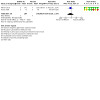
Comparison 7: Sc GnRH agonist versus no treatment or placebo, Outcome 3: Miscarriage per woman
Secondary outcomes
8.4 Clinical pregnancy rate (per woman)
Two RCTs assessed clinical pregnancy rate (Bellver 2010; Busso 2006). The evidence suggests that Sc GnRH agonist does not increase clinical pregnancy rate compared to no treatment (RR 1.00, 95% CI 0.68 to 1.47; 2 RCTs; 340 participants; I2 = 0%; very low‐certainty evidence) (Analysis 7.4). This suggests that if the chance of clinical pregnancy with placebo or no treatment is 23.3%, the chance with GnRH agonist would be between 15.8% and 34.2%.
7.4. Analysis.
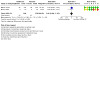
Comparison 7: Sc GnRH agonist versus no treatment or placebo, Outcome 4: Clinical pregnancy per woman
8.5 Multiple pregnancy rate (per woman)
Two RCTs assessed multiple pregnancy rate (Bellver 2010; Busso 2006). The evidence suggests that Sc GnRH agonist may result in a large reduction in multiple pregnancy rate compared to the no‐treatment group (RR 0.28, 95% CI 0.11 to 0.70; 2 RCTs; 126 participants; I2 = 0%; very low‐certainty evidence) (Analysis 7.5). This suggests that if the rate of multiple pregnancy with placebo or no treatment is 28.1%, the rate with GnRH agonist would be between 3.1% and 19.7%.
7.5. Analysis.
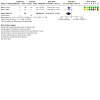
Comparison 7: Sc GnRH agonist versus no treatment or placebo, Outcome 5: Multiple pregnancy per woman
No other outcomes were reported for this comparison.
Comparison 9. Vaginal progesterone versus Sc GnRH agonist
One RCT (242 participants) compared Sc GnRH agonist with vaginal progesterone on clinical pregnancy rate (Table 10) (Azmoodeh 2016).
Secondary outcomes
Azmoodeh 2016 did not report on live birth.
9.1 Clinical pregnancy rate (per woman)
Azmoodeh 2016 specified clinical pregnancy rate as a main outcome. The evidence is very uncertain about the effect vaginal progesterone in clinical pregnancy rate (RR 1.00, 95% CI 0.51 to 1.95; 1 RCT; 242 participants; very low‐certainty evidence) (Analysis 8.1). This suggests that if the chance of clinical pregnancy with Sc GnRH agonist is 12.4%, the chance with vaginal progesterone would be between 6.3% and 24.2%.
8.1. Analysis.
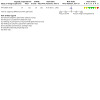
Comparison 8: Vaginal progesterone versus GnRH agonist, Outcome 1: Clinical pregnancy per woman
No other outcomes were reported for this comparison.
Comparison 10. HCG injection versus no treatment
One RCT (130 participants) compared hCG injection to vaginal progesterone on clinical pregnancy and multiple pregnancy rates (Table 11) (Bekuretsion 1998).
Secondary outcomes
Bekuretsion 1998 did not report on live birth.
10.1 Clinical pregnancy rate (per woman)
The evidence is very uncertain about the effect hCG injection on clinical pregnancy rate compared to no treatment (RR 0.93, 95% CI 0.40 to 2.13; 1 RCT; 130 participants; very low‐certainty evidence) (Analysis 9.1). We estimated that for a woman with 15.2% chance of achieving a clinical pregnancy with placebo or no treatment, the chance with hCG injection would be between 6.1% and 32.3%.
9.1. Analysis.
Comparison 9: HCG injection versus no treatment, Outcome 1: Clinical pregnancy per woman
10.2 Multiple pregnancy rate (per woman)
The evidence is very uncertain about the effect of hCG injection on multiple pregnancy rate compared to no treatment (RR 1.03, 95% CI 0.22 to 4.92; 1 RCT; 130 participants; very low‐certainty evidence) (Analysis 9.2). This suggests that if the rate of multiple pregnancy with placebo or no treatment is 4.5%, the risk with hCG injection would be between 1.0% and 22.4%.
9.2. Analysis.
Comparison 9: HCG injection versus no treatment, Outcome 2: Multiple pregnancy per woman
No other outcomes were reported for this comparison.
Discussion
Summary of main results
This Cochrane Review aimed to determine the effectiveness and safety of LPS in infertile women trying to conceive by IUI or by sexual intercourse. We included 25 RCTs assessing LPS in IUI cycle. No RCT evaluated the effect of LPS in natural cycle. Seventeen RCTs compared progesterone with placebo or no treatment; one RCT compared 300 mg vaginal progesterone with 600 mg vaginal progesterone; three RCTs compared vaginal progesterone with other routes of progesterone; three RCTs compared other interventions with placebo or no treatment; and one RCT compared vaginal progesterone with another intervention.
Overall, we are uncertain if vaginal progesterone increases live birth/ongoing pregnancy rate when compared with placebo or no treatment. Vaginal progesterone may increase clinical pregnancy rates per woman when compared with placebo or no treatment. We are uncertain of the effect of vaginal progesterone on multiple pregnancy and miscarriage rate. Oral progesterone may result in little to no difference in clinical pregnancy compared to placebo or no treatment. Progesterone given during the luteal phase may increase clinical pregnancy rates in all types of ovarian stimulation compared to placebo or no treatment. We are uncertain of the effect of type of ovarian stimulation on live birth/ongoing pregnancy, multiple pregnancy, and miscarriage rate.
When comparing different routes of progesterone (oral or IM or Sc), we are uncertain whether route of progesterone has an effect on our outcomes of interest. Intramuscular progesterone may increase the risk of adverse effects compared to vaginal progesterone; however, the reported event was mainly pain at the injection site.
We found no conclusive evidence of a difference between other interventions (Sc GnRH agonist or hCG injection) and no treatment given during the luteal phase in live birth, ongoing pregnancy, clinical pregnancy, multiple pregnancy, and miscarriage rates.
When comparing Sc GnRH agonist with placebo or no treatment, this relatively new method of LPS may reduce multiple pregnancy rate, but the certainty of the evidence was very low. It is unclear if Sc GnRH agonist results in a difference in ongoing pregnancy, miscarriage, or clinical pregnancy rates compared to no treatment.
Overall completeness and applicability of evidence
A number of methodological considerations must be considered when interpreting the results, as clinical heterogeneity was noted in the included RCTs. The included studies were similar with regard to participant mean age. Most RCTs excluded women over 40 years of age. Most fertility research centres have a maximum age of inclusion because of lower success rates with older women, related to lower ovarian reserve and oocyte quality in women over 40 years of age (Bukman 2000). The duration of infertility was at least one year in all included studies (where reported) and was often longer than three years. It is known that fertility treatment is less successful with longer duration of infertility. In addition, information is lacking regarding effect by types of infertility. This is perhaps a very important issue that limits the overall applicability of the evidence.
The method of ovarian stimulation varied amongst the included RCTs. The included studies used the following ovarian stimulation protocols: gonadotropin, gonadotropin plus oral (clomiphene citrate or letrozole), and oral (clomiphene citrate or letrozole) stimulation. More aggressive ovarian stimulation such as using gonadotropin is likely to increase the number of follicles retrieved, yet cause more disturbance in the hormonal system; this should be taken into account when study results are compared.
The included RCTs investigated various different interventions for luteal phase support in IUI cycle. The majority of RCTs evaluated the effect of progesterone supplementation or hCG injection or Sc GnRH agonist in woman who underwent IUI. Data were available for our primary outcomes of live birth, ongoing pregnancy, and miscarriage rates, and our secondary outcome of clinical pregnancy rate. Adverse effects were poorly reported in most of the included RCTs.
In our protocol, we planned to include RCTs that compared GnRH agonist plus progesterone supplement to progesterone supplement only. However, we identified no RCT focusing on this comparison. In addition, we identified no RCT evaluating the effect of luteal support in natural cycle.
Quality of the evidence
This Cochrane Review used the domain‐based evaluation to assess risk of bias, as outlined in the Cochrane Handbook for Systematic Reviews of Interventions (Higgins 2021), and the GRADE approach to assess the certainty of evidence across RCTs for many of the primary and secondary outcomes. The risk of bias of the studies included in this review was variable.
The most common problem relating to the quality of the included RCTs was failure to describe an acceptable method of allocation concealment. Most RCTs described acceptable methods of sequence generation and were at low risk of attrition bias and other sources of bias. Most RCTs appeared to be unblinded, but this was considered unlikely to cause bias due to the objective nature of the outcomes.
Using GRADE methods, we assessed the certainty of the evidence for effectiveness outcomes to be low or very low for most comparisons, denoting that further research may have an important impact on our confidence in the estimate of effect, and may change the estimate. Reasons for downgrading the certainty of evidence included risk of bias in the primary studies (e.g. lack of clearly described blinding, failure to fully describe methods of randomisation and allocation concealment, and risk of attrition bias) and imprecision due to small sample size.
Potential biases in the review process
To prevent bias in the review process, we conducted this review according to the standards recommended in the Cochrane Handbook, as described in the Methods. None of the review authors has any connection with pharmaceutical companies that have pharmaceutical product related to this review question, or was involved in any of the included RCTs.
Agreements and disagreements with other studies or reviews
We identified three other non‐Cochrane systematic reviews evaluating the effect of progesterone supplementation during LPS in women undergoing IUI (Cohlen 2009b; Green 2017b; Miralpeix 2014b). Our results for live birth/ongoing pregnancy rate were not consistent with their findings, and the certainty of the evidence was very low to low. Cohlen 2009b included only one RCT (214 participants) that compared vaginal progesterone with placebo in IUI cycle on live birth rate. That review reported that vaginal progesterone supplementation increased live birth rate. Another systematic review and meta‐analysis of five RCTs (1271 participants) found that vaginal progesterone increased live birth and clinical pregnancy rate (Miralpeix 2014b). Subgroup analysis showed increased live birth rate and clinical pregnancy rate in women who underwent ovulation induction with gonadotropin stimulation protocol (Miralpeix 2014b). Finally, Green 2017b, which included 11 RCTs (2842 participants), found that live birth and clinical pregnancy rates were improved in women receiving progesterone supplementation; however, they analysed the data per cycle, whilst we analysed the data per woman. They also included one study that we excluded (Maher 2011). Miralpeix 2014b also analysed data per cycle and included Maher 2011. These reviews found a higher pregnancy rate for progesterone in gonadotropin stimulation cycle. In addition, we included seven other RCTs that compared oral or vaginal micronised progesterone supplementation to placebo or no treatment in which the pooled results did not show an increase in live birth/ongoing pregnancy rate. Moreover, we included other RCTs comparing different dosages of vaginal progesterone supplementation; different routes of progesterone administration; and comparing other interventions (e.g. hCG or GnRH agonist) with placebo or no treatment. However, there was insufficient evidence to draw any conclusions regarding optimal dosage of progesterone supplementation, route of progesterone administration, or benefit of the other interventions due to imprecision related to small sample size.
Authors' conclusions
Implications for practice.
We are uncertain if vaginal progesterone supplementation during luteal phase is associated with higher live birth/ongoing pregnancy rate. Vaginal progesterone may increase clinical pregnancy rate. However, we are uncertain about its effect on miscarriage rate and multiple pregnancy rate. There was insufficient evidence to determine whether another route of progesterone supplementation influences pregnancy outcomes when compared to vaginal progesterone. In addition, we found no evidence suggesting that progesterone supplementation plus other interventions offer any benefit on pregnancy outcomes. We are uncertain if intramuscular progesterone improves ongoing pregnancy rate or decreases miscarriage rate when compared to vaginal progesterone. Regarding the other reported comparisons, neither oral progesterone nor any other medication appears to be associated with an improvement in pregnancy outcomes (very low‐certainty evidence).
Implications for research.
Future high‐quality, adequately powered randomised controlled trials utilising blinding where possible are needed to evaluate the effectiveness and safety of progesterone and other interventions including human chorionic gonadotropin (hCG) and gonadotropin‐releasing hormone (GnRH) agonist during luteal phase support in intrauterine insemination or natural conception. In addition, these future randomised controlled trials should include live birth rate, miscarriage rate, and adverse events as primary outcomes.
History
Protocol first published: Issue 11, 2016
| Date | Event | Description |
|---|---|---|
| 25 August 2021 | New search has been performed | Data extraction |
| 4 March 2019 | New search has been performed | Data extraction |
Acknowledgements
We thank the entire Cochrane Gynaecology and Fertility Group. In particular, we are grateful to Marian Showell (Information Specialist) for assistance in developing the search strategies; Managing Editor Elena Kostova; and Helen Nagels for valuable assistance with methodological aspects and support throughout the review process, and to the reviewers for their important comments. We would like to thank Mireia Gonzalez Comadran for contributing to the development of the protocol.
We thank Carolina Nastri for her previous contribution.
The authors of the 2020 review thank Dr Thaȉs Hespanhol for her contribution to early versions of the review, and Dr Miguel Angel Checa for his contribution to the review protocol.
We thank the following peer reviewers for their valuable comments:
Dr Rik van Eekelen, Amsterdam UMC, location AMC, Centre for Reproductive Medicine, Amsterdam, the Netherlands;
AEP Cantineau, University of Groningen, University Medical Center Groningen;
Mara Marongiu, IRGB‐CNR (ss 554, km4500, Monserrato‐ Ca‐Italy).
We would like to thank Lisa Winer for copy‐editing the review.
Appendices
Appendix 1. Cochrane Gynaecology and Fertility Specialised Register search strategy
ProCite platform
From inception until 25 August 2021
Keywords CONTAINS "IUI" or "insemination, intrauterine " or "Intrauterine Insemination" or "artificial insemination" or "ovulation induction" or "ovulation stimulation" or "ovarian hyperstimulation" or "Ovarian stimulation" or "stimulated cycle" or "coitus" or "intercourse" or "timed intercourse" or "superovulation" or "superovulation induction" or Title CONTAINS "IUI" or "insemination, intrauterine " or "Intrauterine Insemination" or "artificial insemination" or "ovulation induction" or "ovulation stimulation" or "ovarian hyperstimulation" or "Ovarian stimulation" or "stimulated cycle" or "coitus" or "intercourse" or "timed intercourse" or "superovulation" or "superovulation induction"
AND
Keywords CONTAINS "Luteal Phase" or "luteal phase support" or "luteal phase support timing" or "luteal support" or "luteal phase defect" or "luteal phase disorders" or "luteal phase dysfunction" or "luteal phase length" or "postcoital" or Title CONTAINS "Luteal Phase" or "luteal phase support" or "luteal phase support timing" or "luteal support" or "luteal phase defect" or "luteal phase disorders" or "luteal phase dysfunction" or "luteal phase length" or "postcoital"
(270 records)
Appendix 2. CENTRAL via the Cochrane Register of Studies Online (CRSO) search strategy
Web platform
From inception until 25 August 2021
#1 MESH DESCRIPTOR Reproductive Techniques, Assisted EXPLODE ALL TREES 3269
#2 MESH DESCRIPTOR Insemination, Artificial EXPLODE ALL TREES 372
#3 MESH DESCRIPTOR Ovulation Induction EXPLODE ALL TREES 1396
#4 (assisted reproduct*):TI,AB,KY 1535
#5 (artificial insemination):TI,AB,KY 245
#6 iui:TI,AB,KY 940
#7 (intrauterine insemination*):TI,AB,KY 1034
#8 (ovulation induc*):TI,AB,KY 2777
#9 (ovary* adj2 stimulat*):TI,AB,KY 31
#10 superovulat*:TI,AB,KY 222
#11 (ovarian hyperstimulation):TI,AB,KY 1468
#12 COH:TI,AB,KY 426
#13 (ovar* adj2 induction*):TI,AB,KY 275
#14 (tim* adj2 intercourse):TI,AB,KY 141
#15 (natural conception):TI,AB,KY 69
#16 (conceive naturally):TI,AB,KY 16
#17 coitus:TI,AB,KY 561
#18 intercourse:TI,AB,KY 2769
#19 #1 OR #2 OR #3 OR #4 OR #5 OR #6 OR #7 OR #8 OR #9 OR #10 OR #11 OR #12 OR #13 OR #14 OR #15 OR #16 OR #17 OR #18 10049
#20 MESH DESCRIPTOR Luteal Phase EXPLODE ALL TREES 542
#21 (luteal adj5 support*):TI,AB,KY 653
#22 (luteal adj5 phase*):TI,AB,KY 2163
#23 (ischemic adj5 phase):TI,AB,KY 178
#24 (post ovulat*):TI,AB,KY 48
#25 (post adj5 trigger*):TI,AB,KY 41
#26 (after adj5 trigger*):TI,AB,KY 315
#27 #20 OR #21 OR #22 OR #23 OR #24 OR #25 OR #26 2770
#28 #19 AND #27 891
Appendix 3. MEDLINE search strategy
Ovid platform
From 1946 until 25 August 2021
1 exp reproductive techniques, assisted/ or exp insemination, artificial/ or exp ovulation induction/ (73415) 2 assisted reproduct$.tw. (16542) 3 artificial insemination.tw. (7095) 4 iui.tw. (1903) 5 intrauterine insemination$.tw. (2658) 6 ovulation induc$.tw. (4267) 7 (ovari$ adj2 stimulat$).tw. (7690) 8 superovulat$.tw. (3524) 9 ovarian hyperstimulation.tw. (5339) 10 COH.tw. (1915) 11 (ovari$ adj2 induction).tw. (297) 12 (tim* adj2 intercourse).tw. (463) 13 natural conception.tw. (726) 14 conceive naturally.tw. (113) 15 coitus.tw. (2798) 16 sexual intercourse.tw. (9755) 17 or/1‐16 (102196) 18 exp Luteal Phase/ (5237) 19 (luteal adj5 support$).tw. (895) 20 (luteal adj5 phase).tw. (10524) 21 (ischemic adj5 phase).tw. (1418) 22 post ovulat$.tw. (907) 23 (post adj5 trigger$).tw. (722) 24 (after adj5 trigger$).tw. (4018) 25 or/18‐24 (19221) 26 exp Progesterone/ (71299) 27 Progesterone$.tw. (85829) 28 dydrogesterone.tw. (544) 29 exp Dydrogesterone/ (516) 30 utrogest.tw. (4) 31 17 alpha‐hydroxyprogesterone.tw. (1334) 32 Prontogest.tw. (5) 33 exp chorionic gonadotropin/ or exp chorionic gonadotropin, beta subunit, human/ (32016) 34 HCG.tw. (25436) 35 crinone.tw. (72) 36 (chorionic adj1 gonadotropin$).tw. (16930) 37 (chorionic adj1 gonadotrophin$).tw. (4854) 38 exp gonadotropin‐releasing hormone/ or exp leuprolide/ or exp nafarelin/ or exp triptorelin pamoate/ (32938) 39 gonadotrop?in‐releasing hormone agonist$.tw. (3016) 40 (GnRHa or GnRH a).tw. (2798) 41 GnRH agonist$.tw. (4648) 42 (leuprolide or Lupron or Leuprorelin).tw. (2526) 43 (Nafarelin or Synarel).tw. (266) 44 triptorelin.tw. (792) 45 Endometrin.tw. (16) 46 hydroxyprogesterone caproate.tw. (488) 47 or/26‐46 (181429) 48 17 and 25 and 47 (2106) 49 randomized controlled trial.pt. (541482) 50 controlled clinical trial.pt. (94353) 51 randomized.ab. (531296) 52 randomised.ab. (105844) 53 placebo.tw. (226727) 54 clinical trials as topic.sh. (197048) 55 randomly.ab. (364314) 56 trial.ti. (246094) 57 (crossover or cross‐over or cross over).tw. (90259) 58 or/49‐57 (1460863) 59 exp animals/ not humans.sh. (4877341) 60 58 not 59 (1345008) 61 48 and 60 (516)
Appendix 4. Embase search strategy
Ovid platform
From 1980 until 25 August 2021
1 exp infertility therapy/ or exp artificial insemination/ or exp intrauterine insemination/ or exp ovulation induction/ (108973) 2 assisted reproduct$.tw. (25032) 3 artificial insemination.tw. (6703) 4 iui.tw. (3481) 5 intrauterine insemination$.tw. (3992) 6 ovulation induc$.tw. (5825) 7 (ovari$ adj2 stimulat$).tw. (11924) 8 superovulat$.tw. (4040) 9 ovarian hyperstimulation.tw. (7801) 10 COH.tw. (2667) 11 (ovari$ adj2 induction).tw. (342) 12 (tim* adj2 intercourse).tw. (654) 13 natural conception.tw. (1238) 14 conceive naturally.tw. (186) 15 coitus.tw. (2809) 16 sexual intercourse.tw. (12716) 17 or/1‐16 (141936) 18 exp luteal phase/ (10711) 19 (luteal adj5 support$).tw. (1412) 20 (luteal adj5 phase).tw. (12175) 21 (ischemic adj5 phase).tw. (2121) 22 post ovulat$.tw. (995) 23 (post adj5 trigger$).tw. (1104) 24 (after adj5 trigger$).tw. (5612) 25 or/18‐24 (25254) 26 exp PROGESTERONE/ (81855) 27 Progesterone$.tw. (95527) 28 dydrogesterone.tw. (722) 29 exp dydrogesterone/ (2053) 30 utrogest.tw. (40) 31 17 alpha‐hydroxyprogesterone.tw. (606) 32 Prontogest.tw. (103) 33 exp chorionic gonadotropin/ (44093) 34 HCG.tw. (32510) 35 crinone.tw. (541) 36 (chorionic adj1 gonadotropin$).tw. (17281) 37 (chorionic adj1 gonadotrophin$).tw. (4864) 38 exp gonadorelin agonist/ (17188) 39 (leuprolide or Lupron or Leuprorelin).tw. (5307) 40 gonadotrop?in‐releasing hormone agonist$.tw. (3621) 41 (GnRHa or GnRH a).tw. (3869) 42 GnRH agonist$.tw. (7034) 43 (Nafarelin or Synarel).tw. (632) 44 triptorelin.tw. (1283) 45 Endometrin.tw. (120) 46 hydroxyprogesterone caproate.tw. (637) 47 or/26‐46 (191666) 48 17 and 25 and 47 (3703) 49 Clinical Trial/ (1001503) 50 Randomized Controlled Trial/ (667637) 51 exp randomization/ (91731) 52 Single Blind Procedure/ (43428) 53 Double Blind Procedure/ (183706) 54 Crossover Procedure/ (67708) 55 Placebo/ (356217) 56 Randomi?ed controlled trial$.tw. (264263) 57 Rct.tw. (43096) 58 random allocation.tw. (2193) 59 randomly.tw. (479703) 60 randomly allocated.tw. (38843) 61 allocated randomly.tw. (2675) 62 (allocated adj2 random).tw. (830) 63 Single blind$.tw. (27105) 64 Double blind$.tw. (215285) 65 ((treble or triple) adj blind$).tw. (1380) 66 placebo$.tw. (323920) 67 prospective study/ (704326) 68 or/49‐67 (2651299) 69 case study/ (80252) 70 case report.tw. (446876) 71 abstract report/ or letter/ (1159857) 72 or/69‐71 (1674803) 73 68 not 72 (2592999) 74 (exp animal/ or animal.hw. or nonhuman/) not (exp human/ or human cell/ or (human or humans).ti.) (6239198) 75 73 not 74 (2416398) 76 48 and 75 (1123)
Appendix 5. PsycINFO search strategy
Ovid platform
From 1806 until 25 August 2021
1 exp reproductive technology/ (1974) 2 assisted reproduct$.tw. (1090) 3 artificial insemination.tw. (267) 4 iui.tw. (46) 5 intrauterine insemination$.tw. (35) 6 ovulation induc$.tw. (33) 7 (ovari$ adj2 stimulat$).tw. (61) 8 ovarian hyperstimulation.tw. (14) 9 COH.tw. (144) 10 superovulat$.tw. (8) 11 (ovari$ adj2 induction).tw. (8) 12 natural conception.tw. (33) 13 (tim* adj2 intercourse).tw. (85) 14 conceive* naturally.tw. (32) 15 coitus.tw. (827) 16 sexual intercourse.tw. (4521) 17 or/1‐16 (8066) 18 (luteal adj5 support$).tw. (2) 19 (luteal adj5 phase).tw. (1127) 20 (ischemic adj5 phase).tw. (119) 21 18 or 19 or 20 (1246) 22 17 and 21 (11) 23 random*.ti,ab,hw,id. (216743) 24 trial*.ti,ab,hw,id. (196384) 25 controlled stud*.ti,ab,hw,id. (12936) 26 placebo*.ti,ab,hw,id. (42153) 27 ((singl* or doubl* or trebl* or tripl*) and (blind* or mask*)).ti,ab,hw,id. (30599) 28 (cross over or crossover or factorial* or latin square).ti,ab,hw,id. (32443) 29 (assign* or allocat* or volunteer*).ti,ab,hw,id. (175077) 30 treatment effectiveness evaluation/ (26014) 31 mental health program evaluation/ (2216) 32 exp experimental design/ (60018) 33 "2000".md. (0) 34 or/23‐33 (552142) 35 22 and 34 (5)
Appendix 6. CINAHL search strategy
Ebsco platform
From 1982 until 13 Feburary 2020. Search results from 13 Feburary 2020 to 25 August 2021 are contained in the CENTRAL search output
| # | Query | Results |
| S42 | S29 AND S41 | 109 |
| S41 | S30 OR S31 OR S32 OR S33 OR S34 OR S35 OR S36 OR S37 OR S38 OR S39 OR S40 | 1,380,799 |
| S40 | TX allocat* random* | 11,464 |
| S39 | (MH "Quantitative Studies") | 24,414 |
| S38 | (MH "Placebos") | 11,624 |
| S37 | TX placebo* | 61,081 |
| S36 | TX random* allocat* | 11,464 |
| S35 | (MH "Random Assignment") | 57,390 |
| S34 | TX randomi* control* trial* | 182,953 |
| S33 | TX ( (singl* n1 blind*) or (singl* n1 mask*) ) or TX ( (doubl* n1 blind*) or (doubl* n1 mask*) ) or TX ( (tripl* n1 blind*) or (tripl* n1 mask*) ) or TX ( (trebl* n1 blind*) or (trebl* n1 mask*) ) | 1,050,104 |
| S32 | TX clinic* n1 trial* | 258,108 |
| S31 | PT Clinical trial | 86,325 |
| S30 | (MH "Clinical Trials+") | 273,838 |
| S29 | S8 AND S28 | 292 |
| S28 | S9 OR S10 OR S11 OR S12 OR S13 OR S14 OR S15 OR S16 OR S17 OR S18 OR S19 OR S20 OR S21 OR S22 OR S23 OR S24 OR S25 OR S26 OR S27 | 17,359 |
| S27 | TX ovulation induction | 1,719 |
| S26 | TX sexual intercourse | 3,404 |
| S25 | TX conceive naturally | 44 |
| S24 | TX natural conception | 228 |
| S23 | TX coitus | 2,446 |
| S22 | TX timed intercourse | 39 |
| S21 | TX intra‐uterine insemination | 31 |
| S20 | TX (ovari* N2 induction) | 34 |
| S19 | TX COH | 244 |
| S18 | TX ovarian hyperstimulation | 839 |
| S17 | TX superovulat* | 87 |
| S16 | TX intrauterine insemination | 472 |
| S15 | TX IUI | 348 |
| S14 | TX artificial insemination | 787 |
| S13 | TX assisted reproduct* | 3,888 |
| S12 | (MM "Insemination, Artificial") | 437 |
| S11 | (MM "Reproduction Techniques+") | 9,039 |
| S10 | TX ovar* N3 hyperstimulat* | 844 |
| S9 | TX ovari* N3 stimulat* | 1,019 |
| S8 | S1 OR S2 OR S3 OR S4 OR S5 OR S6 OR S7 | 2,215 |
| S7 | TX after N5 trigger* | 558 |
| S6 | TX post N3 transfer* | 212 |
| S5 | TX post ovulat* | 40 |
| S4 | TX ischemic N5 phase | 329 |
| S3 | TX luteal N5 phase | 1,068 |
| S2 | TX luteal N5 support* | 153 |
| S1 | (MM "Luteal Phase") | 176 |
Appendix 7. LILACS search strategy
Web platform
From inception until 25 August 2021
"Luteal support" = 14
Appendix 8. Scopus search strategy
Web platform
From inception until 25 August 2021
((IUI) OR (insemination) OR ((ovulation OR ovarian) AND (induction OR stimulation OR hyperstimulation)) OR (coitus) OR (intercourse) OR (natural AND conception) OR (spontaneous AND pregnancy)) AND (Luteal AND Support) AND (random*) = 249
Appendix 9. PubMed search strategy
Web platform
From inception until 25 August 2021
((IUI) OR (insemination) OR ((ovulation OR ovarian) AND (induction OR stimulation OR hyperstimulation)) OR (coitus) OR (intercourse) OR (natural AND conception) OR (spontaneous AND pregnancy)) AND (Luteal AND Support) AND (random*) = 364
Appendix 10. Google Scholar search strategy
Web platform
From inception until 25 August 2021
allintitle: IUI luteal support randomized OR allintitle: insemination luteal support randomized = 11
Appendix 11. ClinicalTrials.gov search strategy
Web platform
From inception until 25 August 2021
((IUI) OR (insemination) OR ((ovulation OR ovarian) AND (induction OR stimulation OR hyperstimulation)) OR (coitus) OR (intercourse) OR (natural AND conception) OR (spontaneous AND pregnancy)) AND (Luteal AND Support) = 55
Appendix 12. ISRCTN search strategy
Web platform
From inception until 25 August 2021
((IUI) OR (insemination) OR ((ovulation OR ovarian) AND (induction OR stimulation OR hyperstimulation)) OR (coitus) OR (intercourse) OR (natural AND conception) OR (spontaneous AND pregnancy)) AND (Luteal AND Support) = 9
Appendix 13. WHO ICTRP search strategy
Web platform
From inception until 25 August 2021
"Luteal Support" = 29
Appendix 14. OpenGrey search strategy
Web platform
From inception until 25 August 2021
"Luteal Support" = 3
Data and analyses
Comparison 1. Progesterone versus no treatment or placebo (route of progesterone administration).
| Outcome or subgroup title | No. of studies | No. of participants | Statistical method | Effect size |
|---|---|---|---|---|
| 1.1 Live birth/ongoing pregnancy rate | 7 | Risk Ratio (M‐H, Random, 95% CI) | Subtotals only | |
| 1.1.1 Vaginal route | 7 | 1792 | Risk Ratio (M‐H, Random, 95% CI) | 1.10 [0.81, 1.48] |
| 1.2 Miscarriage per clinical pregnancy | 5 | Risk Ratio (M‐H, Random, 95% CI) | Subtotals only | |
| 1.2.1 Vaginal route | 5 | 261 | Risk Ratio (M‐H, Random, 95% CI) | 0.70 [0.40, 1.25] |
| 1.3 Miscarriage per woman | 5 | Risk Ratio (M‐H, Random, 95% CI) | Subtotals only | |
| 1.3.1 Vaginal route | 5 | 1634 | Risk Ratio (M‐H, Random, 95% CI) | 0.90 [0.48, 1.69] |
| 1.4 Clinical pregnancy per woman | 14 | Risk Ratio (M‐H, Random, 95% CI) | Subtotals only | |
| 1.4.1 Vaginal route | 13 | 2794 | Risk Ratio (M‐H, Random, 95% CI) | 1.35 [1.14, 1.61] |
| 1.4.2 Oral route | 1 | 99 | Risk Ratio (M‐H, Random, 95% CI) | 0.67 [0.40, 1.13] |
| 1.5 Multiple pregnancy per woman | 3 | Risk Ratio (M‐H, Random, 95% CI) | Subtotals only | |
| 1.5.1 Vaginal route | 3 | 956 | Risk Ratio (M‐H, Random, 95% CI) | 0.84 [0.30, 2.34] |
Comparison 2. Progesterone versus no treatment or placebo (type of ovarian stimulation).
| Outcome or subgroup title | No. of studies | No. of participants | Statistical method | Effect size |
|---|---|---|---|---|
| 2.1 Live birth/ongoing pregnancy rate | 7 | Risk Ratio (M‐H, Random, 95% CI) | Subtotals only | |
| 2.1.1 In gonadotropin stimulation cycle | 4 | 1054 | Risk Ratio (M‐H, Random, 95% CI) | 1.24 [0.80, 1.92] |
| 2.1.2 In gonadotropin plus oral (clomiphene citrate) stimulation (ongoing pregnancy only) | 1 | 253 | Risk Ratio (M‐H, Random, 95% CI) | 0.73 [0.37, 1.42] |
| 2.1.3 In oral (clomiphene citrate or letrozole) stimulation cycle | 2 | 485 | Risk Ratio (M‐H, Random, 95% CI) | 0.97 [0.58, 1.64] |
| 2.2 Miscarriage per clinical pregnancy | 5 | Risk Ratio (M‐H, Random, 95% CI) | Subtotals only | |
| 2.2.1 In gonadotropin stimulation cycle | 2 | 102 | Risk Ratio (M‐H, Random, 95% CI) | 0.68 [0.24, 1.91] |
| 2.2.2 In gonadotropin plus oral (clomiphene citrate or letrozole) stimulation cycle | 2 | 123 | Risk Ratio (M‐H, Random, 95% CI) | 0.67 [0.30, 1.50] |
| 2.2.3 In oral (clomiphene citrate or letrozole) stimulation cycle | 2 | 119 | Risk Ratio (M‐H, Random, 95% CI) | 0.53 [0.25, 1.14] |
| 2.3 Miscarriage per woman | 5 | Risk Ratio (M‐H, Random, 95% CI) | Subtotals only | |
| 2.3.1 In gonadotropin stimulation cycle | 2 | 691 | Risk Ratio (M‐H, Random, 95% CI) | 0.74 [0.23, 2.32] |
| 2.3.2 In gonadotropin plus oral (clomiphene citrate or letrozole) stimulation cycle | 2 | 543 | Risk Ratio (M‐H, Random, 95% CI) | 1.08 [0.44, 2.64] |
| 2.3.3 In oral (clomiphene citrate or letrozole) stimulation cycle | 2 | 690 | Risk Ratio (M‐H, Random, 95% CI) | 1.09 [0.47, 2.54] |
| 2.4 Clinical pregnancy per woman | 14 | Risk Ratio (M‐H, Random, 95% CI) | Subtotals only | |
| 2.4.1 In gonadotropin stimulation cycle | 7 | 1437 | Risk Ratio (M‐H, Random, 95% CI) | 1.38 [1.10, 1.74] |
| 2.4.2 In gonadotropin plus oral (clomiphene citrate or letrozole) stimulation cycle | 4 | 733 | Risk Ratio (M‐H, Random, 95% CI) | 1.40 [1.03, 1.90] |
| 2.4.3 In oral (clomiphene citrate or letrozole) stimulation cycle | 6 | 1073 | Risk Ratio (M‐H, Random, 95% CI) | 1.44 [1.04, 1.98] |
| 2.5 Multiple pregnancy per woman | 3 | Risk Ratio (M‐H, Random, 95% CI) | Subtotals only | |
| 2.5.1 In gonadotropin stimulation cycle | 1 | 214 | Risk Ratio (M‐H, Random, 95% CI) | 0.72 [0.17, 3.15] |
| 2.5.2 In gonadotropin plus oral (clomiphene citrate or letrozole) stimulation cycle | 1 | 290 | Risk Ratio (M‐H, Random, 95% CI) | 1.44 [0.24, 8.49] |
| 2.5.3 In oral (clomiphene citrate or letrozole) stimulation cycle | 2 | 586 | Risk Ratio (M‐H, Random, 95% CI) | 0.58 [0.10, 3.55] |
Comparison 3. 300 mg vaginal progesterone versus 600 mg vaginal progesterone.
| Outcome or subgroup title | No. of studies | No. of participants | Statistical method | Effect size |
|---|---|---|---|---|
| 3.1 Ongoing pregnancy per woman | 1 | Risk Ratio (M‐H, Random, 95% CI) | Subtotals only | |
| 3.2 Multiple pregnancy per woman | 1 | Risk Ratio (M‐H, Random, 95% CI) | Subtotals only |
Comparison 4. IM progesterone versus vaginal progesterone.
| Outcome or subgroup title | No. of studies | No. of participants | Statistical method | Effect size |
|---|---|---|---|---|
| 4.1 Ongoing pregnancy per woman | 1 | Risk Ratio (M‐H, Random, 95% CI) | Subtotals only | |
| 4.2 Miscarriage per clinical pregnancy | 1 | Risk Ratio (M‐H, Random, 95% CI) | Subtotals only | |
| 4.3 Miscarriage per woman | 1 | Risk Ratio (M‐H, Random, 95% CI) | Subtotals only | |
| 4.4 Clinical pregnancy per woman | 1 | Risk Ratio (M‐H, Random, 95% CI) | Subtotals only | |
| 4.5 Adverse effect | 1 | Risk Ratio (M‐H, Random, 95% CI) | Subtotals only |
Comparison 5. Oral progesterone versus vaginal progesterone.
| Outcome or subgroup title | No. of studies | No. of participants | Statistical method | Effect size |
|---|---|---|---|---|
| 5.1 Ongoing pregnancy per woman | 1 | Risk Ratio (M‐H, Random, 95% CI) | Subtotals only | |
| 5.2 Miscarriage per clinical pregnancy | 1 | Risk Ratio (M‐H, Random, 95% CI) | Subtotals only | |
| 5.3 Miscarriage per woman | 1 | Odds Ratio (M‐H, Random, 95% CI) | Subtotals only | |
| 5.4 Clinical pregnancy per woman | 1 | Risk Ratio (M‐H, Random, 95% CI) | Subtotals only |
Comparison 6. Aqueous Sc progesterone versus vaginal progesterone gel.
| Outcome or subgroup title | No. of studies | No. of participants | Statistical method | Effect size |
|---|---|---|---|---|
| 6.1 Ongoing pregnancy per woman | 1 | Risk Ratio (M‐H, Random, 95% CI) | Subtotals only | |
| 6.2 Clinical pregnancy per woman | 1 | Risk Ratio (M‐H, Random, 95% CI) | Subtotals only |
Comparison 7. Sc GnRH agonist versus no treatment or placebo.
| Outcome or subgroup title | No. of studies | No. of participants | Statistical method | Effect size |
|---|---|---|---|---|
| 7.1 Ongoing pregnancy per woman | 1 | Risk Ratio (M‐H, Random, 95% CI) | Subtotals only | |
| 7.2 Miscarriage per clinical pregnancy | 2 | 79 | Risk Ratio (M‐H, Random, 95% CI) | 0.73 [0.26, 2.10] |
| 7.3 Miscarriage per woman | 2 | 340 | Risk Ratio (M‐H, Fixed, 95% CI) | 0.76 [0.25, 2.34] |
| 7.4 Clinical pregnancy per woman | 2 | 340 | Risk Ratio (M‐H, Random, 95% CI) | 1.00 [0.68, 1.47] |
| 7.5 Multiple pregnancy per woman | 2 | 126 | Risk Ratio (M‐H, Random, 95% CI) | 0.28 [0.11, 0.70] |
Comparison 8. Vaginal progesterone versus GnRH agonist.
| Outcome or subgroup title | No. of studies | No. of participants | Statistical method | Effect size |
|---|---|---|---|---|
| 8.1 Clinical pregnancy per woman | 1 | Risk Ratio (M‐H, Random, 95% CI) | Subtotals only |
Comparison 9. HCG injection versus no treatment.
| Outcome or subgroup title | No. of studies | No. of participants | Statistical method | Effect size |
|---|---|---|---|---|
| 9.1 Clinical pregnancy per woman | 1 | Risk Ratio (M‐H, Random, 95% CI) | Subtotals only | |
| 9.2 Multiple pregnancy per woman | 1 | Risk Ratio (M‐H, Random, 95% CI) | Subtotals only |
Characteristics of studies
Characteristics of included studies [ordered by study ID]
Aali 2013.
| Study characteristics | ||
| Methods | Randomised controlled trial: single‐blinded clinical trial | |
| Participants | Population: total 196 consecutively seen women eligible for the study protocol Inclusion criteria: women with laparoscopic or radiologic evidence of patent tubes, age lower than 40 years, FSH < 12 IU/L and duration of infertility less than 5 years, less than 2 previous failed attempts of IUI and no history of chronic liver, kidney, and heart disease were included. Only couples with a sperm count of > 10 million/mL entered the study. Exclusion criteria: not stated Ovulation induction: gonadotropin stimulation |
|
| Interventions | Study group: progesterone 400 mg pessary (Cyclogest, Actavis) per vagina daily for 10 days, starting from the day after IUI (n = 99) Control group: no luteal phase support (n = 97) |
|
| Outcomes | Clinical pregnancy rate | |
| Notes | Title: The effectiveness of luteal phase support with Cyclogest in ovarian stimulated intra uterine insemination cycles: a randomised controlled trial Time: April 2010 to December 2011 Setting: not stated Extracted data from: full text Financial support: not stated Corresponding author: Bibi Shahnaz Aali PO Contact: Box: 76135‐783, Kerman, Iran Tel/Fax: (+98) 3412454095 Email: shahnaz.aali@gmail.com |
|
| Risk of bias | ||
| Bias | Authors' judgement | Support for judgement |
| Random sequence generation (selection bias) | Low risk | Randomised based on the order of the letter in each blocks (A and B) |
| Allocation concealment (selection bias) | Unclear risk | The allocation was divided by a nurse who was responsible for dispensation and instruction of the medication. |
| Blinding of participants and personnel (performance bias) All outcomes | Low risk | Single‐blinded: blinding of participants |
| Blinding of outcome assessment (detection bias) All outcomes | Low risk | Although the study was not blinded, we did not consider lack of blinding as a relevant source of bias for our outcomes of interest. |
| Incomplete outcome data (attrition bias) All outcomes | Low risk | All participants were analysed. |
| Selective reporting (reporting bias) | Low risk | Complete report from objective |
| Other bias | Low risk | Baseline characteristics were similar. |
Agha‐Hosseini 2012.
| Study characteristics | ||
| Methods | Prospective, randomised study | |
| Participants | Population: 290 women Inclusion criteria: women aged between 18 and 35 years, with a BMI of 18 to 28 kg/m2, regular menses, no polycystic ovarian disease according to the Rotterdam criteria, basal FSH < 10 IU/L, normal serum prolactin levels, and normal thyroid function. All the couples had been trying to conceive for at least 1 year unsuccessfully before enrolment in trial. All women had bilateral tubal patency and a normal uterine cavity, confirmed by hysterosalpingography. Semen analyses were performed twice in men before treatment. Normal semen analyses were defined by WHO threshold values. Exclusion criteria: women with diminished ovarian reserve, presence of a resistant ovarian cyst (> 20 mm for > 1 month), hypogonadotrophic hypogonadism, and any contraindications to progesterone therapy Ovulation induction protocol: clomiphene citrate/letrozole alone or clomiphene citrate/letrozole plus gonadotropin stimulation |
|
| Interventions | Study group: 400 mg progesterone suppositories (Cyclogest, Cox Pharmaceuticals, Barnstaple, UK) every night from the day after insemination up to 14 days (n = 150) Control group: placebo (n = 150) |
|
| Outcomes | Miscarriage rate Clinical pregnancy rate |
|
| Notes | Title: The effect of progesterone supplementation on pregnancy rates in controlled ovarian stimulation and intrauterine insemination cycles: a randomised prospective trial Time: April 2009 to November 2010 Setting: a tertiary infertility centre, Infertility Department, Shariati Hospital, Tehran University of Medical Sciences, Tehran, Iran Extracted data from: full text Financial support: not stated Corresponding author: Fatemeh Sarvi Contact: Infertility Department, Shariati Hospital, North Kargar St, After Gisha Bridge, Tehran, Iran Tel.: +98 21 88008810; fax: +98 21 88008810; mobile: +98 912 5463230 Email: sarvi.fateme@yahoo.com |
|
| Risk of bias | ||
| Bias | Authors' judgement | Support for judgement |
| Random sequence generation (selection bias) | Low risk | Computer‐generated randomisation |
| Allocation concealment (selection bias) | Unclear risk | Nurse gave treatment based on the allocated chart. |
| Blinding of participants and personnel (performance bias) All outcomes | Low risk | No placebo. However, we did not consider lack of blinding of participants and/or personnel as a relevant source of bias. |
| Blinding of outcome assessment (detection bias) All outcomes | Low risk | Not reported. However, we did not consider lack of blinding of outcome assessors as a relevant source of bias for our outcomes of interest. |
| Incomplete outcome data (attrition bias) All outcomes | Low risk | Dropout rate was quite low (study group 1.3%, control group 5.1%). |
| Selective reporting (reporting bias) | Unclear risk | No protocol registration |
| Other bias | Low risk | Baseline characteristics were similar. |
Alizzi 2018.
| Study characteristics | ||
| Methods | A prospective randomised clinical study | |
| Participants | Population: 149 infertility with PCOS Inclusion criteria: unovulatory infertile women with PCOS between 20 and 35 years of age All participants had normal hysterosalpingography, and their partner had a normal seminal fluid analysis. Exclusion criteria: thyroid dysfunction, hyperprolactinaemia, and other causes of hyperandrogenism Ovulation induction: letrozole or letrozole plus gonadotropin stimulation |
|
| Interventions | Study groups: 1. letrozole with LPS (n = 50); 2. letrozole plus gonadotropin with LPS (n = 25) Control groups: 3. letrozole without LPS (n = 49); 4. letrozole plus gonadotropin without LPS (n = 25) |
|
| Outcomes | Clinical pregnancy rate | |
| Notes | Title: Pregnancy rate following luteal phase support in polycystic ovary women using letrozole with or without gonadotropin as ovulation induction Time: June 2016 to January 2018 Setting: infertility clinic, Al‐Yarmouk Teaching Hospital, Baghdad, Iraq Extracted data from: full text Financial support: not stated Corresponding author: Fadia J Alizzi Contact: Department of Obstetrics and Gynecology, Al‐Mustansiriyah College of Medicine, Baghdad, Iraq Email: fmjafalizzi@yahoo.co.uk |
|
| Risk of bias | ||
| Bias | Authors' judgement | Support for judgement |
| Random sequence generation (selection bias) | Unclear risk | Says randomised, but method not stated |
| Allocation concealment (selection bias) | Unclear risk | Not stated |
| Blinding of participants and personnel (performance bias) All outcomes | Low risk | No placebo. However, we did not consider lack of blinding of participants and/or personnel as a relevant source of bias. |
| Blinding of outcome assessment (detection bias) All outcomes | Low risk | Not reported, but we did not consider lack of blinding of outcome assessors as a relevant source of bias |
| Incomplete outcome data (attrition bias) All outcomes | Low risk | All participants were analysed. |
| Selective reporting (reporting bias) | Unclear risk | No protocol registration |
| Other bias | High risk | Some differences in baseline characteristics |
An 2010.
| Study characteristics | ||
| Methods | Prospective RCT | |
| Participants | Population: 140 unexplained infertility Inclusion criteria: unexplained infertility for IUI Exclusion criteria: not stated Ovulation induction protocol: clomiphene citrate plus gonadotropin stimulation |
|
| Interventions | Study group: progesterone (Crinone) 8% gel (n = 69) Control group: no luteal phase support (n = 71) |
|
| Outcomes | Ongoing pregnancy rate Clinical pregnancy rate |
|
| Notes | Title: Effect of luteal phase support in intrauterine insemination cycles: a prospective randomised study Time: 1 November 2009 and 31 March 2010 Setting: Mirae & Heemang OB/GYN clinic, Seoul, Republic of Korea Extracted data from: abstract form poster presentation Financial support: not stated Corresponding author: SJ An, Mirae & Heemang OB/GYN Clinic, Seoul, Republic of Korea Email: not stated |
|
| Risk of bias | ||
| Bias | Authors' judgement | Support for judgement |
| Random sequence generation (selection bias) | Unclear risk | Method of randomisation not stated. |
| Allocation concealment (selection bias) | Unclear risk | Allocation concealment not stated. |
| Blinding of participants and personnel (performance bias) All outcomes | Low risk | We did not consider lack of blinding of participants and/or personnel as a relevant source of bias. |
| Blinding of outcome assessment (detection bias) All outcomes | Low risk | Although study was not blinded, we did not consider lack of blinding of outcome assessors as a relevant source of bias for our outcomes of interest. |
| Incomplete outcome data (attrition bias) All outcomes | Low risk | All participants were analysed. |
| Selective reporting (reporting bias) | Unclear risk | No protocol registration |
| Other bias | High risk | Study was published only as an abstract. |
Azmoodeh 2016.
| Study characteristics | ||
| Methods | Randomly divided into 2 groups | |
| Participants | Population: 242 infertile women Inclusion criteria: unexplained infertility candidate for ovarian stimulation and intrauterine insemination Exclusion criteria: not stated Ovulation induction protocol: gonadotropin stimulation |
|
| Interventions | Study group: 121 women with 400 mg/day/vaginally of natural micronised progesterone starting 1 day after the IUI Control group: 121 women with a single dose of GnRH agonist (triptorelin 0.1 mg) subcutaneously was injected 4 days after IUI |
|
| Outcomes | Clinical pregnancy rate | |
| Notes | Title: Comparision the effect of GnRH agonist administration versus vaginal progesterone on serum progesterone in luteal phase in ovarian hyperstimulation and intrauterine insemination cycles in unexplained infertility Time: not stated Setting: Infertility Center of Mirzakhochak Khan, Mirzakhochak Khan Hospital, Tehran University of Medical Sciences, Tehran, Iran Extracted data from: poster Financial support: not stated Corresponding author: Mohamadpoor J Email: mohamadpoorjaleh@yahoo.com |
|
| Risk of bias | ||
| Bias | Authors' judgement | Support for judgement |
| Random sequence generation (selection bias) | Unclear risk | Method not stated. |
| Allocation concealment (selection bias) | Unclear risk | Not stated |
| Blinding of participants and personnel (performance bias) All outcomes | Low risk | Although study was not blinded, we did not consider lack of blinding as a relevant source of bias for our outcomes of interest. |
| Blinding of outcome assessment (detection bias) All outcomes | Low risk | Although not reported, we did not consider lack of blinding of outcome assessors as a relevant source of bias for our outcomes of interest. |
| Incomplete outcome data (attrition bias) All outcomes | Low risk | All participants were analysed. |
| Selective reporting (reporting bias) | Unclear risk | No protocol registration |
| Other bias | High risk | Study published only as an abstract. |
Bekuretsion 1998.
| Study characteristics | ||
| Methods | RCT | |
| Participants | Population: 129 participants post‐IUI 1 cycle Inclusion criteria: unexplained infertility and mild endometriosis mild male factor Exclusion criteria: not stated Ovulation induction protocol: gonadotropin stimulation |
|
| Interventions | Study group: hCG 2500 unit injection every 3rd day (n = 64) Control group: no luteal phase support (n = 66) |
|
| Outcomes | Cinical pregnancy rate Multiple pregnancy rate |
|
| Notes | Title: A randomised study comparing low and high dose of gonadotropin with/without luteal phase support in intrauterine insemination cycles Time: not stated Setting: Department of Obstetric & Gynecology, country hospital Gavle, Sweden Extracted data from: poster presentation Financial support: not stated Corresponding author: Bekuretsion M, Department of Obstetric & Gynecology, country hospital Gavle, Sweden Email: not stated |
|
| Risk of bias | ||
| Bias | Authors' judgement | Support for judgement |
| Random sequence generation (selection bias) | Unclear risk | Randomised consecutively, insufficient information provided |
| Allocation concealment (selection bias) | Unclear risk | Not stated |
| Blinding of participants and personnel (performance bias) All outcomes | Low risk | Although there was no placebo, we did not consider lack of blinding as a relevant source of bias for our outcomes of interest. |
| Blinding of outcome assessment (detection bias) All outcomes | Low risk | Although study was not blinded, we did not consider lack of blinding of outcome assessors as a relevant source of bias for our outcomes of interest. |
| Incomplete outcome data (attrition bias) All outcomes | Low risk | Dropout rate of 11.6% |
| Selective reporting (reporting bias) | Unclear risk | No protocol available |
| Other bias | High risk | Study published only as an abstract. |
Bellver 2010.
| Study characteristics | ||
| Methods | Single‐centre, randomised, single‐blind, placebo‐controlled trial | |
| Participants | Population: 344 women undergoing IUI owing to mild to moderate male factor or donor sperm indication Inclusion criteria: women < 38 years old, bilateral tubal patency confirmed by hysterosalpingography, normal ultrasound scan of uterus and ovaries with at least 5 antral follicles per ovary seen during menstruation, normal day 3 basal hormones, 1st or 2nd attempt of IUI, and male partner affected by oligo‐ or asthenozoospermia, or both, with total motile sperm count after capacitation R2 million/mL or donor sperm Exclusion criteria: endometriosis, polycystic ovary syndrome, uterine disease (polyps, myomas, and mullerian defects) and > 1 previous failed IUI cycle Ovulation induction protocol: gonadotropin stimulation |
|
| Interventions | Study group: single subcutaneous injection of 0.1 mg triptorelin (n = 172) 8 days after hCG administration Control group: placebo (solvent injection) (group B; n = 172) |
|
| Outcomes | Ongoing pregnancy rates Miscarriage rate Clinical pregnancy |
|
| Notes | Title: GnRH agonist administration at the time of implantation does not improve pregnancy outcome in intrauterine insemination cycles: a randomised controlled trial Time: February 2005 to December 2007 Setting: Department of Reproduction, Instituto Valenciano de Infertilidad, University of Valencia, Valencia, Spain Extracted data from: full text Financial support: not stated Corresponding author: Jose Bellver, MD Contact: Instituto Valenciano de Infertilidad, Plaza de la Policıa Local, 3, Valencia, 46015, Spain (FAX: þ34 963050999) E‐mail: jbellver@ivi.es |
|
| Risk of bias | ||
| Bias | Authors' judgement | Support for judgement |
| Random sequence generation (selection bias) | Low risk | Computer‐generated list |
| Allocation concealment (selection bias) | Unclear risk | Not stated |
| Blinding of participants and personnel (performance bias) All outcomes | Low risk | Single‐blinded: blinding of participants |
| Blinding of outcome assessment (detection bias) All outcomes | Low risk | We did not consider lack of blinding of outcome assessors as a relevant source of bias for our outcomes of interest. |
| Incomplete outcome data (attrition bias) All outcomes | Low risk | All participants were analysed. |
| Selective reporting (reporting bias) | Low risk | All outcomes of interest were reported. |
| Other bias | Low risk | No differences in baseline characteristics |
Biberoglu 2016.
| Study characteristics | ||
| Methods | Prospective randomised comparative study | |
| Participants | Population: 200 women with unexplained infertility Inclusion criteria: at least 2 normal semen analysis based on WHO criteria, ovulatory cycles, and patent fallopian tubes by hysterosalpingography Exclusion criteria: female partners above 38 years of age or with poor ovarian reserve with basal FSH levels above 10 mIU/mL and/or fewer than 4 antral follicles in the ovaries by transvaginal ultrasonography, or with BMI ≥ 30 kg/m2, previous pelvic surgery or known endometriosis or any endocrine disease including hypo‐ or hyperthyroidism, clinical hyperandrogenism, hyperprolactinaemias Ovulation induction protocol: gonadotropin stimulation |
|
| Interventions | Study group: 300 mg of vaginal micronised P former group (100 mg of progesterone (Progestan) tablets, 3 times a day) (n = 100) Control group: 600 mg of vaginal micronised P (200 mg of progesterone (Progestan) tablets, 3 times a day) (n = 100) |
|
| Outcomes | Ongoing pregnancy rate Multiple pregnancy rate |
|
| Notes | Title: Luteal phase support in intrauterine insemination cycles: a prospective randomised study of 300 mg versus 600 mg intravaginal progesterone tablet Time: not stated Setting: the Infertility Outpatient Clinic at Gazi University Medical School, Ankara, Turkey Extracted data from: full text Financial support: not stated Corresponding author: EKO Biberoglu Contact: Department of Obstetrics and Gynecology, Gazi University Medical School, Ankara, Turkey Tel: +90 5323319404 Email: kobiber@gmail.com |
|
| Risk of bias | ||
| Bias | Authors' judgement | Support for judgement |
| Random sequence generation (selection bias) | Low risk | Computer‐generated list |
| Allocation concealment (selection bias) | Unclear risk | Not stated |
| Blinding of participants and personnel (performance bias) All outcomes | Low risk | We did not consider lack of blinding of participants and/or personnel as a relevant source of bias. |
| Blinding of outcome assessment (detection bias) All outcomes | Low risk | Although not reported, we did not consider lack of blinding of outcome assessors as a relevant source of bias for our outcomes of interest. |
| Incomplete outcome data (attrition bias) All outcomes | Low risk | All participants were analysed. |
| Selective reporting (reporting bias) | Unclear risk | No protocol to confirm |
| Other bias | Low risk | No differences in important baseline characteristics |
Busso 2006.
| Study characteristics | ||
| Methods | Randomised, placebo‐controlled trial | |
| Participants | Population: 40 participants were required Inclusion criteria: women < 38 years of age, bilateral tubal patency, sperm concentration after capacitation > 3 million/mL, stimulation with recombinant FSH Exclusion criteria: PCOS, endometriosis, uterine disease (polyps, myomas, and mullerian defects) Ovulation induction protocol: gonadotropin stimulation |
|
| Interventions | Study group: administration of 0.1 mg of triptorelin (Decapeptyl) 8 days after hCG (23 participants) Control group: placebo (administration of 1‐millilitre water injection 8 days after hCG) (26 participants) |
|
| Outcomes | Miscarriage rate Clinical pregnancy rate Multiple gestation rates |
|
| Notes | Title: Effect of a single dose of a GnRH agonist in the luteal phase of intrauterine insemination cycles: a randomised study. Interim analysis Time: not stated Setting: Instituto Valenciano de Infertilidad, Valencia, Spain Extracted data from: poster Financial support: not stated Corresponding author: C Busso, Instituto Valenciano de Infertilidad, Reproductive Endocrinology, Valencia, Spain Email: not stated |
|
| Risk of bias | ||
| Bias | Authors' judgement | Support for judgement |
| Random sequence generation (selection bias) | Unclear risk | Method of randomisation not stated. |
| Allocation concealment (selection bias) | Unclear risk | Not stated |
| Blinding of participants and personnel (performance bias) All outcomes | Low risk | Single‐blinded: blinding of participants |
| Blinding of outcome assessment (detection bias) All outcomes | Low risk | Although not reported, we did not consider lack of blinding of outcome assessors as a relevant source of bias for our outcomes of interest. |
| Incomplete outcome data (attrition bias) All outcomes | High risk | Interim analysis |
| Selective reporting (reporting bias) | Unclear risk | No protocol available |
| Other bias | High risk | Study published only as abstract. |
Eguiluz 2012.
| Study characteristics | ||
| Methods | Single‐centre, prospective, randomised study | |
| Participants | Population: 180 infertile couples with either primary or secondary infertility Inclusion criteria: not stated Exclusion criteria: not stated Ovulation induction protocol: gonadotropin stimulation |
|
| Interventions | Study group: received 200 mg intravaginal progesterone once daily (n = 91) Control group: no luteal phase support (n = 89) |
|
| Outcomes | Miscarriage rate Clinical pregnancy rate |
|
| Notes | Title: Should luteal phase support be introduced in ovarian stimulation/IUI programme? Time: January 2009 and December 2010 Setting: infertility unit, tertiary care university centre, Complejo Hospitalario Insular Materno Infantil de Las Palmas de Gran Canaria, Spain Extracted data from: poster Financial support: not stated Corresponding author: not stated Email: not stated |
|
| Risk of bias | ||
| Bias | Authors' judgement | Support for judgement |
| Random sequence generation (selection bias) | Unclear risk | Method of randomisation not stated. |
| Allocation concealment (selection bias) | Unclear risk | Not stated |
| Blinding of participants and personnel (performance bias) All outcomes | Low risk | Although study was not blinded, we did not consider lack of blinding as a relevant source of bias for our outcomes of interest. |
| Blinding of outcome assessment (detection bias) All outcomes | Low risk | Although study was not blinded, we did not consider lack of blinding of outcome assessors as a relevant source of bias for our outcomes of interest. |
| Incomplete outcome data (attrition bias) All outcomes | Low risk | All participants were analysed. |
| Selective reporting (reporting bias) | Unclear risk | No protocol registration |
| Other bias | High risk | Study published only as abstract. |
Erdem 2009.
| Study characteristics | ||
| Methods | Single‐centre, prospective randomised controlled trial | |
| Participants | Population: 214 couples with unexplained infertility who were treated during 427 ovarian stimulation and IUI cycles with recombinant FSH Inclusion criteria: regular menstrual cycles with mid‐luteal P levels of > 10 ng/mL, bilateral tubal patency confirmed with hysterosalpingography, and normal semen analysis according to WHO criteria Exclusion criteria: female partners with previous ovarian surgery, 1 ovary, polycystic ovaries on ultrasound examination, other endocrine abnormalities (i.e. polycystic ovarian syndrome, thyroid disorders, hyperprolactinaemia, hypogonadotropic hypogonadism), diminished ovarian reserve (basal FSH level > 15 IU/mL), or age of > 40 years Ovulation induction protocol: gonadotropin stimulation |
|
| Interventions | Study group: received luteal phase support in the form of vaginal progesterone gel (Crinone 8% gel) (n = 109) Control group: no luteal phase support (n = 105) |
|
| Outcomes | Live birth rate Miscarriage rate Clinical pregnancy rate |
|
| Notes | Title: Impact of luteal phase support on pregnancy rates in intrauterine insemination cycles: a prospective randomised study Time: November 2004 to February 2006 Setting: Department of Obstetrics and Gynecology, Gazi University School of Medicine, Ankara, Turkey Extracted data from: full text Financial support: not stated Corresponding author: Mehmet Erdem, MD Contact: Department of Obstetrics and Gynecology, Gazi University School of Medicine, 06500 Besevler, Ankara, Turkey Fax: 0090‐312‐215‐36‐17 Email: erdemom@yahoo |
|
| Risk of bias | ||
| Bias | Authors' judgement | Support for judgement |
| Random sequence generation (selection bias) | Low risk | Software‐generated allocation sequence |
| Allocation concealment (selection bias) | Unclear risk | Random allocation sequence was held by only one author. |
| Blinding of participants and personnel (performance bias) All outcomes | Low risk | Although placebo was not used, we did not consider lack of blinding of participants and/or personnel as a relevant source of bias. |
| Blinding of outcome assessment (detection bias) All outcomes | Low risk | Although study was not blinded, we did not consider lack of blinding of outcome assessors as a relevant source of bias for our outcomes of interest. |
| Incomplete outcome data (attrition bias) All outcomes | Low risk | All participants were analysed. |
| Selective reporting (reporting bias) | Unclear risk | No protocol |
| Other bias | Low risk | No differences in baseline characteristics |
Han 2016.
| Study characteristics | ||
| Methods | Single‐centre, open‐label randomised controlled trial | |
| Participants | Population: 298 women using gonadotropin COH and IUI Inclusion criteria:
Exclusion criteria: not stated Ovulation induction protocol: gonadotropin stimulation |
|
| Interventions | Study group: vaginal micronised progesterone (Endometrin 100 mg vaginally twice a day) (n = 151) Control group: no luteal phase support (n = 147) |
|
| Outcomes | Ongoing pregnancy rate Miscarriage rate Clinical pregnancy rate |
|
| Notes | Title: The effect of luteal phase support on pregnancy rates in intrauterine insemination cycles following ovarian stimulation gonadotropins ‐ a randomised controlled trial Time: December 2013 to December 2015 Setting: the Fertility and Women’s Endocrine Clinic at the Royal Alexandra Hospital, Canada Extracted data from: poster presentation Financial support: Ferring Pharmaceuticals subsidised the Endometrin used. Corresponding author: J Han Email: not stated |
|
| Risk of bias | ||
| Bias | Authors' judgement | Support for judgement |
| Random sequence generation (selection bias) | Unclear risk | Randomisation method not stated. |
| Allocation concealment (selection bias) | Unclear risk | Not stated |
| Blinding of participants and personnel (performance bias) All outcomes | Low risk | Open‐label; although the study was not blinded, we did not consider lack of blinding as a relevant source of bias for our outcomes of interest |
| Blinding of outcome assessment (detection bias) All outcomes | Low risk | Although not reported, we did not consider lack of blinding of outcome assessors as a relevant source of bias for our outcomes of interest. |
| Incomplete outcome data (attrition bias) All outcomes | Low risk | All participants were analysed. |
| Selective reporting (reporting bias) | High risk | Financial connections between review authors and the drug firms |
| Other bias | High risk | Study published only as abstract. |
Karadag 2016.
| Study characteristics | ||
| Methods | A prospective randomised study (computer‐generated randomisation) | |
| Participants | Population: 200 women with unexplained infertility (100 women in clomiphene citrate + IUI group and 100 women in gonadotropin + IUI group) Inclusion criteria:
Exclusion criteria: women who failed to respond to ovarian stimulation either by CC or Gn or who developed 3 follicles 17 mm and/or had serum oestradiol level 41,500 pg/mL during ovarian stimulation were not recruited to the study. Ovulation induction protocol: clomiphene citrate alone or gonadotropin alone stimulation |
|
| Interventions | Study group: vaginal progesterone (90 mg per day) (n = 100) (Crinone 8% vaginal gel, 90 mg, Serono, Turkey, starting the first day after IUI Control group: no luteal phase support (n = 100) |
|
| Outcomes | Miscarriage rate Clinical pregnancy rate |
|
| Notes | Title: The effect of luteal‐phase support with vaginal progesterone on pregnancy rates in gonadotropin and clomiphene citrate/intra‐uterine insemination cycles in unexplained infertility: a prospective randomised study Time: not stated Setting: the Infertility Clinic of Ministry of Health Etlik Zu¨beyde Hanm Maternity and Women’s Health Teaching and Research Hospital, Turkey Extracted data from: full text Financial support: not stated Corresponding author: Burak Karadag Contact: Department of Obstetrics and Gynecology, Ankara Teaching and Research Hospital, Ankara, Turkey Email: drburakkaradag@gmail.com |
|
| Risk of bias | ||
| Bias | Authors' judgement | Support for judgement |
| Random sequence generation (selection bias) | Low risk | Computer‐generated randomisation |
| Allocation concealment (selection bias) | Unclear risk | Not stated |
| Blinding of participants and personnel (performance bias) All outcomes | Unclear risk | Not reported |
| Blinding of outcome assessment (detection bias) All outcomes | Unclear risk | Not stated |
| Incomplete outcome data (attrition bias) All outcomes | Low risk | All participants were analysed. |
| Selective reporting (reporting bias) | Unclear risk | No protocol registration |
| Other bias | Low risk | Only differences in BMI between groups |
Keskin 2020.
| Study characteristics | ||
| Methods | A prospective randomised study (computer‐generated randomisation) | |
| Participants | Population: 87 women with unexplained infertility (43 women in gonadotropin + IUI group (luteal phase support) and 44 women in gonadotropin + IUI group (no luteal phase support)) Inclusion criteria:
Exclusion criteria:
Ovulation induction protocol: gonadotropin stimulation |
|
| Interventions | Study group: 100 mg micronised progesterone capsule (Progestan 100 mg, Koçak Farma, Turkey) twice a day beginning on the day of insemination until the miniaturisation of foetal heart rates on TV‐US (n = 43) Control group: no treatment (n = 44) |
|
| Outcomes | Clinical pregnancy rate | |
| Notes | Title: Does luteal phase support effect pregnancy rates in intrauterine insemination cycles? A prospective randomised controlled study in a tertiary center Time: August 2014 to January 2015 Setting: Ankara University School of Medicine, Infertility Center, a tertiary infertility centre Extracted data from: full text Financial support: not stated Corresponding author: Muge Keskin Contact: Department of Obstetrics and Gynecology, Ufuk University Faculty of Medicine, Ankara, Turkey Email: mugekeskin1@hotmail.com |
|
| Risk of bias | ||
| Bias | Authors' judgement | Support for judgement |
| Random sequence generation (selection bias) | Low risk | Computer‐generated randomisation |
| Allocation concealment (selection bias) | Unclear risk | Not stated |
| Blinding of participants and personnel (performance bias) All outcomes | Unclear risk | Not reported |
| Blinding of outcome assessment (detection bias) All outcomes | Unclear risk | Not stated |
| Incomplete outcome data (attrition bias) All outcomes | Low risk | All participants were analysed. |
| Selective reporting (reporting bias) | Unclear risk | No protocol registration |
| Other bias | Low risk | There was a significant difference in basal sperm count between the progesterone supplement group and the no‐treatment group (89 million versus 105 million, P = 0.042) |
Khadem 2011.
| Study characteristics | ||
| Methods | Random prospective clinical trial | |
| Participants | Population: 225 women Inclusion criteria:
Exclusion criteria:
Ovulation induction protocol: gonadotropin stimulation |
|
| Interventions | Study group: 50 mg intramuscular progesterone injection (114 women) Control group: 400 mg vaginal suppository progesterone (111 women) |
|
| Outcomes | Miscarriage rate Clinical pregnancy rate |
|
| Notes | Title: A comparative study of intramuscular oil progesterone injection and suppository progesterone for luteal phase support in patients undergoing IUI cycles [Arabic] Time: 2007 Setting: Montaserieh Infertility Centre affiliated to Mashhad University of Medical Sciences, Iran Extracted data from: full text Financial support: not stated Corresponding author: Khadem N Contact: Phone: 05118538659 Email: Khademn@mums.ac.ir |
|
| Risk of bias | ||
| Bias | Authors' judgement | Support for judgement |
| Random sequence generation (selection bias) | Unclear risk | Randomisation method is not stated. |
| Allocation concealment (selection bias) | Unclear risk | Not stated |
| Blinding of participants and personnel (performance bias) All outcomes | Unclear risk | Different route of administration |
| Blinding of outcome assessment (detection bias) All outcomes | High risk | Subjective outcomes: pain |
| Incomplete outcome data (attrition bias) All outcomes | Low risk | All participants were analysed. |
| Selective reporting (reporting bias) | Unclear risk | No protocol registration |
| Other bias | Low risk | No difference in baseline characteristics |
Khosravi 2015.
| Study characteristics | ||
| Methods | Prospective, randomised, double‐blind study | |
| Participants | Population: 150 infertile women younger than 35 years old undergoing ovarian stimulation for IUI cycles Inclusion criteria: age < 35 years, normal hormonal assay, normal pelvis in transvaginal sonography, duration of infertility ≤ 5 years, and bilateral tubal patency at hysterosalpingography Exclusion criteria: basal levels of FSH ≥ 10 mlU/mL, high‐grade endometriosis stage, a history of abdominal surgery, or severe male factor infertility Ovulation induction protocol: gonadotropin stimulation |
|
| Interventions | Study group: oral dydrogesterone (20 mg) (n = 90) Control group: vaginal progesterone (Cyclogest) (400 mg) (n = 90) |
|
| Outcomes | Ongoing pregnancy rates Miscarriage rate |
|
| Notes | Title: Comparison of oral dydrogesterone with vaginal progesterone for luteal support in IUI cycles: a randomised clinical trial Time: May 2013 to May 2014 Setting: infertility and reproductive health research centre and Emam Hossein Hospital, Tehran, Iran Extracted data from: full text Financial support: not stated Corresponding author: Robabeh Taheripanah Contact: Infertility & Reproductive Health Research Centre, 3rd floor, Taleghani Hospital, Velenjak, Chamran Highway, Tehran, Iran Postal code: 1985711151 Tel: (+98) 21‐2432558 Email: Taherioanahf@gmail.com |
|
| Risk of bias | ||
| Bias | Authors' judgement | Support for judgement |
| Random sequence generation (selection bias) | Low risk | Based on computer‐generated list |
| Allocation concealment (selection bias) | Unclear risk | Not reported |
| Blinding of participants and personnel (performance bias) All outcomes | Low risk | Double‐blind |
| Blinding of outcome assessment (detection bias) All outcomes | Low risk | We did not consider lack of blinding of outcome assessors as a relevant source of bias for our outcomes of interest. |
| Incomplete outcome data (attrition bias) All outcomes | Low risk | 90 participants were recruited in each group. However, 82 participants in Group A and 83 participants in Group B were allocated to treatment groups, with a loss to follow‐up rate of 7.7% in Group A and 8.8% in Group B. 75 remaining participants in each group were analysed. |
| Selective reporting (reporting bias) | Unclear risk | No protocol registration |
| Other bias | Low risk | No differences in baseline characteristics |
Kyrou 2010.
| Study characteristics | ||
| Methods | Prospective randomised study | |
| Participants | Population: 400 normo‐ovulatory women undergoing ovarian stimulation with clomiphene citrate for IUI Inclusion criteria: age ≤ 36 years, patent tubes on hysterosalpingography (maximum 3 months prior to starting the stimulation), BMI between 18 and 29 kg/m2, and FSH concentrations on Day 3 of menstrual cycle < 12 IU/L Exclusion criteria: not stated Ovulation induction protocol: clomiphene citrate stimulation |
|
| Interventions | Study group: luteal phase support in the form of vaginal micronised progesterone in 3 separate doses (Utrogestan 200 mg, 3 times/day) starting 1 day after IUI (n = 196) Control group: no luteal phase support (n = 204) |
|
| Outcomes | Ongoing pregnancy Miscarriage rate |
|
| Notes | Title: The effect of luteal support on pregnancy rates in normo‐ovulatory patients stimulated with clomiphene citrate for IUI: a prospective randomised study Time: September 2008 to December 2009 Setting: Universitair Ziekenhuis Brussel Vrije Universiteit Brussel, Centre for Reproductive Medicine, Brussels, Belgium Extracted data from: poster Financial support: not stated Corresponding author: D Kyrou Email: not stated |
|
| Risk of bias | ||
| Bias | Authors' judgement | Support for judgement |
| Random sequence generation (selection bias) | Low risk | Computer‐generated list |
| Allocation concealment (selection bias) | Unclear risk | Not reported |
| Blinding of participants and personnel (performance bias) All outcomes | Low risk | We did not consider lack of blinding of participants and/or personnel as a relevant source of bias. |
| Blinding of outcome assessment (detection bias) All outcomes | Low risk | We did not consider lack of blinding of outcome assessors as a relevant source of bias for our outcomes of interest. |
| Incomplete outcome data (attrition bias) All outcomes | Low risk | All participants were analysed. |
| Selective reporting (reporting bias) | Unclear risk | No protocol registration |
| Other bias | High risk | Study published only as abstract. |
Pakrashi 2014.
| Study characteristics | ||
| Methods | Randomised (1:1) | |
| Participants | Population: a total of 62 completed cycles out of 102 targeted cycles were analysed. Inclusion criteria: PCOS patients with ovulatory dysfunction who were younger than 40 years of age Exclusion criteria: not stated Ovulation induction protocol: letrozole stimulation |
|
| Interventions | Study group: treatment group (progesterone (Crinone) 8% vaginal gel once a day) (n = 31) Control group: no luteal phase support (n = 31) |
|
| Outcomes | Clinical pregnancy rate | |
| Notes | Title: Luteal phase supplementation with vaginal progesterone in women with polycystic ovary syndrome and ovulatory dysfunction undergoing ovulation induction with letrozole: a randomised controlled trial Time: November 2012 to April 2014 Setting: Obstetrics and Gynecology, Jones Institute for Reproductive Medicine/Eastern Virginia Medical School, Norfolk, VA; Graduate Program in Public Health, Eastern Virginia Medical School, Norfolk, VA, USA Extracted data from: poster Financial support: Actavis Inc Corresponding author: T Pakrashi Email: not stated |
|
| Risk of bias | ||
| Bias | Authors' judgement | Support for judgement |
| Random sequence generation (selection bias) | Unclear risk | Randomised 1:1 |
| Allocation concealment (selection bias) | Unclear risk | Not stated |
| Blinding of participants and personnel (performance bias) All outcomes | Low risk | Although no placebo used, we did not consider lack of blinding as a relevant source of bias for our outcomes of interest. |
| Blinding of outcome assessment (detection bias) All outcomes | Low risk | Although not reported, we did not consider lack of blinding of outcome assessors as a relevant source of bias for our outcomes of interest. |
| Incomplete outcome data (attrition bias) All outcomes | High risk | 62 completed cycles out of 102 targeted cycles were analysed. |
| Selective reporting (reporting bias) | Unclear risk | No protocol registration |
| Other bias | High risk | Study published only as an abstract. The authors state that it is an interim analysis, but the final report on all included women has not been published. Additionally, mean age was different between groups. |
Peeraer 2016.
| Study characteristics | ||
| Methods | Open‐label, multicentre randomised clinical trial | |
| Participants | Population: 393 couples Inclusion criteria: 393 normo‐ovulatory patients, < 43 years old, with unexplained infertility, mild male factor infertility, or minimal–mild endometriosis were eligible for this study during their first IUI cycle. Before their inclusion in the study, all couples underwent a complete infertility evaluation, including a medical history, physical examination, serum hormone assays between days 2 and 5 of the menstrual cycle, pelvic ultrasound, assessment of tubal patency either by hysterosalpingography or laparoscopy, and semen analysis. Only normo‐ovulatory patients < 43 years old, with a BMI ≤ 30 kg/m2 with at least 1 patent tube on hysterosalpingography and/or laparoscopy, with a normal uterine cavity, and with a partner whose sperm analysis showed a total motile sperm count of R5 million after capacitation Exclusion criteria: not stated Ovulation induction protocol: gonadotropin stimulation |
|
| Interventions | Study group: progesterone 8% vaginal gel (Crinone; Merck KGaA) once daily in the morning starting on the day after IUI (n = 202) Control group: no luteal phase support (n = 191) |
|
| Outcomes | Live birth rate Miscarriage rate Clinical pregnancy rate |
|
| Notes | Title: Impact of luteal phase support with vaginal progesterone on the clinical pregnancy rate in intrauterine insemination cycles stimulated with gonadotropins: a randomised multicenter study Time: April 2011 to January 2015 Setting: LUFC‐Department of Obstetrics and Gynaecology, University Hospitals Leuven; Department of Development and Regeneration, Leuven; Department of Gynaecology‐Andrology, Cliniques Universitaires Saint Luc, Universite Catholique de Louvain, Brussels; Department of Obstetrics and Gynaecology, Imelda Hospitals, Bonheiden; Centre de PMA, CHC‐Clinique Saint‐Vincent, Liege; and Leuven Biostatistics and Statistical Bioinformatics Centre, Leuven, Belgium Extracted data from: full text Financial support: not stated Corresponding author: Karen Peeraer Diane De Neubourg, MD, PhD Contact: UZA, Wilrijkstraat 10, 2650 Edegem, Belgium Email: diane.deneubourg@uza.be |
|
| Risk of bias | ||
| Bias | Authors' judgement | Support for judgement |
| Random sequence generation (selection bias) | Low risk | Block of 10 and internet‐based randomisation system by fertility centre |
| Allocation concealment (selection bias) | Low risk | Received centre‐specific login and password |
| Blinding of participants and personnel (performance bias) All outcomes | Low risk | Although no placebo used, we did not consider lack of blinding of participants and/or personnel as a relevant source of bias. |
| Blinding of outcome assessment (detection bias) All outcomes | Low risk | Blind assessor |
| Incomplete outcome data (attrition bias) All outcomes | Low risk | All participants were analysed as per protocol, excluded participants in Group A (7.3%) and Group B (7.2%). |
| Selective reporting (reporting bias) | Low risk | All prespecified outcomes were reported on in the results. |
| Other bias | Low risk | No differences in baseline characteristics |
Rashidi 2014.
| Study characteristics | ||
| Methods | Prospective, computer‐generated list randomised, double‐blind study | |
| Participants | Population: 253 women underwent ovarian stimulation with clomiphene citrate (100 mg) and gonadotropin (75 IU) for an IUI cycle. Inclusion criteria: age 20 to 35 years, normal hormonal assay, normal pelvis in transvaginal sonography, duration of infertility ≤ 5 years, and bilateral tubal patency at hysterosalpingography Exclusion criteria: basal levels of FSH ≥ 10 mlU/mL, endometriosis stage 3, 4, or a history of pelvic surgery and severe male factor infertility Ovulation induction protocol: clomiphene citrate plus gonadotropin stimulation |
|
| Interventions | Study group: luteal phase support in the form of vaginal progesterone (400 mg twice a day) (n = 127) Control group: placebo (n = 126) |
|
| Outcomes | Miscarriage rate Clinical pregnancy rate |
|
| Notes | Title: Luteal phase support in the intrauterine insemination (IUI) cycles: a randomised double blind, placebo controlled study Time: March 2011 to January 2012 Setting: tertiary infertility centre Extracted data from: full text Financial support: not stated Corresponding author: Batool Hossein Rashidi Reproductive Health Research Center, Emam Hospital, Keshavarz blvd., Tehran, Iran Email: bhrashidi@tums.ac.ir |
|
| Risk of bias | ||
| Bias | Authors' judgement | Support for judgement |
| Random sequence generation (selection bias) | Low risk | Computer generated |
| Allocation concealment (selection bias) | Unclear risk | Not stated |
| Blinding of participants and personnel (performance bias) All outcomes | Low risk | Double‐blind (use of placebo) |
| Blinding of outcome assessment (detection bias) All outcomes | Low risk | Blind assessor |
| Incomplete outcome data (attrition bias) All outcomes | Low risk | All participants were analysed as per protocol. |
| Selective reporting (reporting bias) | Low risk | All prespecified outcomes were reported on in the results. |
| Other bias | Low risk | No differences in baseline characteristics |
Romero Nieto 2014.
| Study characteristics | ||
| Methods | Prospective, open, randomised trial | |
| Participants | Population: 406 women undergoing IUI, and 999 cycles were commenced (n = 893 cycles) Inclusion criteria: duration of primary infertility at least 1 year for each couple, donor sperm accepted, aged between 18 and 40 years, BMI < 35 kg/m2, normal uterine cavity in transvaginal sonography and hysterosalpingography, patency of at least 1 fallopian tube assessed by hysterosalpingography or laparoscopic with chromo‐salpingography and optimal ovarian reserve; Day 3 serum FSH 510 IU/mL and oestradiol (E2) 560 pg/mL at the initiation of stimulation. Only cycles stimulated using gonadotropins were included. Exclusion criteria: severe/moderate endometriosis (American Fertility Society grade III/IV), total motile sperm count 53 million following semen preparation (swim up) or severe teratospermia (55% normal forms), and cycles using GnRH analogues. Any patient with contraindications to progesterone therapy or to ovulation induction was excluded as well. Ovulation induction protocol: gonadotropin stimulation |
|
| Interventions | Study group: vaginal micronised P capsules 200 mg administered once daily beginning the day after IUI (n = 449 cycles) Control group: no luteal phase support (n = 444 cycles) |
|
| Outcomes | Live birth rate Miscarriage rate Clinical pregnancy rate Multiple pregnancy rate |
|
| Notes | Title: Luteal phase support with progesterone in intrauterine insemination: a prospective randomised study Time: February 2010 to September 2012 Setting: Department of Obstetrics and Gynecology, ‘‘Reina Sofı´a’’ University Hospital, Co´rdoba, Spain and Faculty of Medicine, Institut Clinic of Gynecology, Obstetrics and Neonatology, University of Barcelona, Hospital Clinic‐Institut d´Investigacions Biome`diques August Pi i Sunyer (IDIBAPS), Barcelona, Spain Extracted data from: full text Financial support: not stated Corresponding author: Marı´a Inmaculada Romero Nieto, Camil Castelo‐Branco, Institut Clı´nic de Ginecologia, Obstetrı´cia i Neonatologı´a, Hospital Clı´nic, Villarroel 170, 08036 Barcelona, Spain Tel: +34 93 227 54 36; Fax: +34 93 227 93 25 Email: castelobranco@ub.edu |
|
| Risk of bias | ||
| Bias | Authors' judgement | Support for judgement |
| Random sequence generation (selection bias) | Low risk | Computer‐generated randomisation |
| Allocation concealment (selection bias) | Low risk | Computer allocation |
| Blinding of participants and personnel (performance bias) All outcomes | Low risk | Although no placebo was used in the control group, we did not consider lack of blinding of participants and/or personnel as a relevant source of bias. |
| Blinding of outcome assessment (detection bias) All outcomes | Low risk | Although not reported, we did not consider lack of blinding of outcome assessors as a relevant source of bias for our outcomes of interest. |
| Incomplete outcome data (attrition bias) All outcomes | Low risk | All participants were analysed. |
| Selective reporting (reporting bias) | Unclear risk | No protocol registration |
| Other bias | High risk | Participants were randomised several times, according to the number of cycles they were submitted to. However, we could not obtain data from the first cycle only, thus analysis 'per participant' was not possible. We cannot assume that there is no residual effect of 1 medication on the subsequent cycle. |
Seckin 2014.
| Study characteristics | ||
| Methods | A prospective randomised study | |
| Participants | Population: 149 women with gonadotropin undergoing IUI Inclusion criteria: regular cycle with mid‐cycle P level > 10 ng/mL, normal husband sperm analysis, patency both tubes under hysterosalpingogram or laparoscopy, normal basal FSH level (< 12 mIU/mL), normal early follicular phase ultrasound Exclusion criteria: BMI > 30 kg/m2, age > 40 years, hypogonadotropic hypogonadism, hyperprolactinaemia, thyroid dysfunction, history of ovarian surgery and endometriosis Ovulation induction protocol: gonadotropin stimulation |
|
| Interventions | Study group: vaginal progesterone gel supplement (n = 71) Control group: no luteal phase support (n = 78) |
|
| Outcomes | Live birth rate Miscarriage rate Clinical pregnancy rate |
|
| Notes | Title: Effect of luteal phase support with vaginal progesterone in intrauterine insemination cycles with regard to follicular response Time: September 2010 to June 2011 Setting: Department of Reproductive Endocrinology, Zekai Tahir Burak Women's Health Education and Research Hospital, Ankara, Turkey Extracted data from: full text Financial support: not stated Corresponding author: Berna Seckin Email: bernaseckin1@hotmail.com |
|
| Risk of bias | ||
| Bias | Authors' judgement | Support for judgement |
| Random sequence generation (selection bias) | Low risk | Computer‐generated random allocation sequence |
| Allocation concealment (selection bias) | Unclear risk | Not stated |
| Blinding of participants and personnel (performance bias) All outcomes | Low risk | Although study was not blinded (no placebo), we did not consider lack of blinding of participants and/or personnel as a relevant source of bias. |
| Blinding of outcome assessment (detection bias) All outcomes | Low risk | Although not reported, we did not consider lack of blinding of outcome assessors as a relevant source of bias for our outcomes of interest. |
| Incomplete outcome data (attrition bias) All outcomes | Low risk | All participants were analysed. |
| Selective reporting (reporting bias) | Unclear risk | No protocol registration |
| Other bias | Low risk | No differences in baseline characteristics |
Stadtmauer 2015.
| Study characteristics | ||
| Methods | Randomised controlled trial (1:1 with computer‐generated spreadsheet) | |
| Participants | Population: PCOS patients (n = 44) undergoing ovulation induction (85 cycles) with letrozole Inclusion criteria: PCOS Exclusion criteria: not stated Ovulation induction protocol: letrozole stimulation |
|
| Interventions | Study group: 8% Crinone vaginal progesterone gel (n = 41) Control group: no luteal phase support (n = 44) |
|
| Outcomes | Live birth rate | |
| Notes | Title: A randomised controlled trial of luteal phase supplementation with vaginal progesterone in women with polycystic ovary syndrome undergoing ovulation induction with letrozole Time: November 2012 to December 2014 Setting: The Jones Institute for Reproductive Medicine, Obstetrics and Gynecology, Norfolk, VA, USA Extracted data from: poster Financial support: not stated Corresponding author: L Stadtmauer Contact: The Jones Institute for Reproductive Medicine, Obstetrics and Gynecology, Norfolk, VA, USA Email: not stated |
|
| Risk of bias | ||
| Bias | Authors' judgement | Support for judgement |
| Random sequence generation (selection bias) | Low risk | Computer‐generated list |
| Allocation concealment (selection bias) | Unclear risk | Not stated |
| Blinding of participants and personnel (performance bias) All outcomes | Low risk | Although study was not blinded, we did not consider lack of blinding as a relevant source of bias for our outcomes of interest. |
| Blinding of outcome assessment (detection bias) All outcomes | Unclear risk | Not stated |
| Incomplete outcome data (attrition bias) All outcomes | High risk | Interim analysis |
| Selective reporting (reporting bias) | Unclear risk | No protocol registration |
| Other bias | High risk | Study published only as abstract. |
Venturella 2016.
| Study characteristics | ||
| Methods | Open‐label, prospective randomised controlled, parallel‐group, 2‐arm, non‐inferiority pilot study | |
| Participants | Population: 246 women who underwent urinary FSH preparation (Fostimon) stimulated IUI cycles Inclusion criteria: age 18 to 38 years, with either primary or secondary infertility for at least 1 year, BMI between 19 and 30 kg/m2, Day 2 serum FSH < 15 IU/mL, normal serum prolactin level, normal uterine cavity on hysterosalpingography or hysteroscopy Exclusion criteria: not stated Ovulation induction protocol: gonadotropin stimulation |
|
| Interventions | Study group: aqueous subcutaneous progesterone (Pleyris) (n = 120) Control group: vaginal progesterone gel (Crinone 8%) supplementation (n = 126) |
|
| Outcomes | Clinical pregnancy rate | |
| Notes | Title: Subcutaneous aqueous versus vaginal progesterone gel for luteal phase support in intrauterine insemination cycles: a pilot randomised, controlled trial Time: December 2014 to January 2016 Setting: University Magna Graecia, Chair of Obstetrics and Gynecology, Catanzaro, Italy Extracted data from: poster Financial support: not stated Corresponding author: R Venturella, University Magna Graecia, Chair of Obstetrics and Gynecology, Catanzaro, Italy Email: not stated |
|
| Risk of bias | ||
| Bias | Authors' judgement | Support for judgement |
| Random sequence generation (selection bias) | Unclear risk | Randomisation method not stated. |
| Allocation concealment (selection bias) | Unclear risk | No information provided. |
| Blinding of participants and personnel (performance bias) All outcomes | Low risk | Although study was not blinded, we did not consider lack of blinding as a relevant source of bias for our outcomes of interest. |
| Blinding of outcome assessment (detection bias) All outcomes | Low risk | Although study was not blinded, we did not consider lack of blinding of outcome assessors as a relevant source of bias for our outcomes of interest. |
| Incomplete outcome data (attrition bias) All outcomes | Low risk | All participants were analysed. |
| Selective reporting (reporting bias) | Low risk | All outcomes prespecified in the protocol were reported on in the results. |
| Other bias | High risk | Study was only published as abstract. |
Yazici 2014.
| Study characteristics | ||
| Methods | RCT, computer‐generated random allocation, with blinding | |
| Participants | Population: 110 clomiphene citrate‐resistant women with PCOS Inclusion criteria: age 20 to 40 years with history of at least 3 unsuccessful clomiphene citrate cycles who failed to conceive or ovulate Exclusion criteria: uncontrolled hypothyroidism or hyperprolactinaemia, Cushing's syndrome, concurrent medical illness, stage III or IV endometriosis, abnormal day 3 FSH (> 12 mIU/mL), tubal or male factor based on hysterosalpingogram or semen analysis Ovulation induction protocol: gonadotropin stimulation |
|
| Interventions | Study group: vaginal micronised progesterone capsule (300 mg/d Kacak Farma, Istanbul, Turkey) beginning 1 day after IUI (n = 122) Control group: no luteal phase support (n = 123) |
|
| Outcomes | Live birth rate Miscarriage rate Clinical pregnancy rate Mulitple pregnancy rate |
|
| Notes | Title: Role of luteal phase support on gonadotropin ovulation induction cycle in patients with PCOS Time: May 2008 to June 2010 Setting: Department of Obstetrics and Gynecology and of Biostatistics, School of Medicine, Mersin University, Mersin, Turkey Extracted data from: full text Financial support: not stated Corresponding author: Gurkan Yazici Contact: Email: gyazici70@yahoo.com, gyaziximd@gmail.com |
|
| Risk of bias | ||
| Bias | Authors' judgement | Support for judgement |
| Random sequence generation (selection bias) | Low risk | Computer‐generated randomisation |
| Allocation concealment (selection bias) | Unclear risk | Not stated |
| Blinding of participants and personnel (performance bias) All outcomes | Low risk | Although study was not blinded, we did not consider lack of blinding of participants and/or personnel as a relevant source of bias for our outcomes of interest. |
| Blinding of outcome assessment (detection bias) All outcomes | Low risk | Although study was not blinded, we did not consider lack of blinding of outcome assessors as a relevant source of bias for our outcomes of interest. |
| Incomplete outcome data (attrition bias) All outcomes | Low risk | All participants were analysed. |
| Selective reporting (reporting bias) | Unclear risk | No protocol registration |
| Other bias | Low risk | No difference in baseline characteristics |
BMI: body mass index CC: clomiphene citrate COH: controlled ovarian stimulation FSH: follicular‐stimulating hormone GnRH: gonadotropin‐releasing hormone hCG: human chorionic gonadotropin HSG: hysterosalpingogram IU: international unit IUI: intrauterine insemination IVF: in vitro fertilisation LPS: luteal phase support RCT: randomised controlled trial P: progesterone PCOS: polycystic ovarian syndrome TV‐US: transvaginal ultrasound WHO: World Health Organization
Characteristics of excluded studies [ordered by study ID]
| Study | Reason for exclusion |
|---|---|
| Aboulghar 2009 | Wrong study design (review) |
| Arango 1997 | Wrong study design (not a RCT (pseudo‐randomisation)) |
| Atmaca 2007 | Wrong outcome (combined IUI and IVF outcomes) |
| Bachus 1990 | Wrong outcome (progesterone level) |
| Bakay 2015 | Wrong study design (not an RCT) |
| Balasch 1983 | Wrong outcome (endometrial thickening and progesterone level) |
| Beltsos 2014 | Wrong outcome (evaluates the preferential use of progesterone) |
| Blumenfeld 1988 | Wrong outcome (biochemical pregnancy) |
| Check 1989 | Wrong study design (patients with luteal phase defect from hyperprolactinaemia) |
| Cohlen 2009a | Wrong study design (review) |
| Corson 1993 | Wrong intervention (ovulation induction) |
| Duffy 2006 | Wrong outcome (oestrogen level) |
| Elkind 2000 | Wrong outcome (endometrial biopsy) |
| Ergur 1998 | Wrong study design (not an RCT) |
| Foroozanfard 2012 | Wrong study design (compare effect of CC plus gonadotropin and letrozole plus gonadotropin) |
| Foroozanfard 2013 | Wrong study design. The study compared the effect of ovulation induction (CC plus gonadotropin vs letrozole plus gonadotropin) under progesterone supplementation during luteal phase. |
| Gagliardi 1993 | Wrong study design (not an RCT) |
| Gleicher 2000 | Wrong patient population (oestrogen plus progesterone to improve ovulation induction) |
| Green 2017a | Wrong outcome (review cost‐benefit of a drug) |
| Gun 2016 | Wrong study design (review) |
| Hansen 2018 | Wrong outcome (measure progesterone level) |
| IRCT201202078948N1 | Wrong outcome (biochemical pregnancy and tolerate score) |
| IRCT2015030521344N1 | Wrong study design (compared different doses of IM progesterone (25 mg and 50 mg) and vaginal progesterone (400 mg and 500 mg) in luteal phase in intrauterine insemination) |
| Keenan 1992 | Wrong outcome (measure oestradiol level) |
| Lebrocquy 1998 | Wrong study design (cryopreserve donor spermatozoa) |
| Ludwig 2001 | Wrong population (luteal phase support in IVF) |
| Madkour 2016 | Wrong study design (intervention: oestrogen plus progesterone) |
| Maher 2011 | Data per cross‐over are not available. |
| Malhotra 2016 | Wrong outcome (measure progesterone level) |
| Malik 2016 | Wrong study design (review about progesterone use) |
| Martins 2010 | Wrong study design (review about progesterone use) |
| Miralpeix 2014a | Wrong study design (review) |
| Miralpeix 2016 | Wrong study design (review) |
| Mukherjee 2016 | Wrong study design (observational study) |
| NCT00700492 (a) | Wrong study design |
| NCT00700492 (b) | Recruitment status: trial described as terminated on ClinicalTrials.gov due to change in Belgian law on the use of hMG in IUI |
| NCT02510534 (a) | Recruitment status: terminated (unable to enrol participants who meet the criteria) |
| NCT02510534 (b) | Wrong study design |
| Niles 2019 | Wrong patient population (IVF population) |
| Ozcimen 2004 | Wrong outcome (pregnancy test) |
| Penarrubia 1998 | Wrong study design (not an RCT) |
| Pirard 2005 | Wrong outcome (measure progesterone level) |
| Pomettini 2001 | Wrong outcome (measure progesterone level) |
| Schwarze 2013 | Wrong study design (pilot study) |
| Tas 2020 | Wrong study design (not an RCT) |
| Yilmaz 2006 | Wrong study design (not an RCT) |
| Youssef 2000 | Wrong outcome (measure only urine pregnancy test) |
| Zaffaroni 1997 | Wrong outcome (measure progesterone level) |
| Zayed 2003 | Wrong study design (comparison between IUI and IVF) |
CC: clomiphene citrate hMG: human menopausal gonadotropin IM: intramuscular IUI: intrauterine insemination IVF: in vitro fertilisation RCT: randomised controlled trial
Characteristics of studies awaiting classification [ordered by study ID]
Ebrahimi 2010.
| Methods | Single‐centre, prospective, randomised, blinded control trial |
| Participants | Population: 200 women with unexplained infertility plan IUI Inclusion criteria: the diagnosis of unexplained infertility was made by normal semen analysis based on World Health Organization criteria (2010), normal early follicular phase ultrasound (no cyst, no endometrioma, and no fibroma), normal FSH and LH (< 10 IU/L), mid‐luteal phase serum P levels > 20 nmol/L, patent tubes and normal uterine cavity as confirmed by hysterosalpingography Exclusion criteria: female partners were over the age of 36, had a diminished ovarian reserve (basal FSH level > 10 IU/L), 1 ovary, polycystic ovaries on ultrasound examination, previous ovarian surgery, endometriosis or any type of endocrine diseases |
| Interventions | Study group: progesterone (Cyclogest) vaginal pessaries (Cox Pharmaceutical, Barnstaple, UK) 400 mg daily beginning 2 days after IUI (n = 98) Control group: no luteal phase support (n = 102) |
| Outcomes | Live birth rate Clinical pregnancy rate |
| Notes | Title: The effect of luteal phase support on pregnancy rates of the stimulated intrauterine insemination cycles in couples with unexplained infertility Time: October 2007 to December 2008 Setting: Obstetrics and Gynecology Department, Mirza Koochak Khan Hospital, Faculty of Medicine, Tehran University, Tehran, Iran Extracted data from: full text Financial support: not stated Corresponding author: Mahbod Ebrahimi Contact: PO Box 1597586511, Obstetrics and Gynecology Department, Mirza Koochak Khan Hospital, Faculty of Medicine, Tehran University, Tehran, Iran Email: maeb214@yahoo.com The study is awaiting classification until we are able to determine whether it was randomised (the study may be pseudo‐randomised). |
CC: clomiphene citrate FSH: follicle‐stimulating hormone IU: international unit IUI: intrauterine insemination LH: luteinising hormone P: progesterone
Characteristics of ongoing studies [ordered by study ID]
Maryam 2017.
| Study name | The effect of progesterone suppository to luteal phase support on pregnancy rates in the intrauterine insemination cycles |
| Methods | Randomisation: randomised Blinding: single‐blinded Placebo: not used Assignment: parallel Purpose: treatment |
| Participants | Participants: 100 Inclusion criteria: normal sonograph; normal FSH, LH, AMH; without cardiac, pulmonary, and renal disease; mild endometriosis; normal sperm analysis; normal HSG Exclusion criteria: more than 36 years old; previous ovarian surgery;tubal factor; severe endometriosis; hypothalamic amenorrhoea;endocrine causes of infertility and amenorrhoea; patients with more than 3 follicles with 14‐millimetre diameter; severe oligoasthenospermia Age minimum: no limit Age maximum: 36 years Gender: female |
| Interventions | Study group: progesterone vaginal suppository 400 mg daily for luteal support Control group: no treatment |
| Outcomes | Clinical pregnancy rate Miscarriage rate |
| Starting date | Date of registration: 15 May 2017 |
| Contact information | Name: Maryam Yasaei Mehrjardi
Address: Shahid Bahonar sq. Yazd Iran (Islamic Republic of)
Telephone: +98 35 3724 0171
Email: info@ssu.ac.ir
Affiliation: Shahid Sadoughi University of Medical Science Name: Razieh Dehghani Firozabadi Address: Shahid Bahonar sq. Yazd Iran (Islamic Republic of) Telephone: +98 35 3724 0171 Email: info@ssu.ac.ir Affiliation: Shahid Sadoughi University of Medical Science |
| Notes | Setting: Iran |
NCT03115307.
| Study name | Luteal phase support in insemination cycles study Official title: A protocol for a randomized, controlled study to compare the use of gonodotropin‐releasing hormone agonist triptoreline (gonapeptyl) for luteal phase support versus natural luteal phase in the insemination cycles (EudaCT number: 2016‐002321‐11) |
| Methods | Randomised parallel assignment (open‐label) |
| Participants | Population: 242 participants Inclusion criteria:
Exclusion criteria:
|
| Interventions | Study group: using triptorelin (Gonapeptyl) 0.1 mg/mL subcutaneous once in the eight day after the injection of hCG (Pregnyl) in the insemination cycle Control group: no luteal phase medications in the insemination cycle |
| Outcomes | Live birth rate Ongoing pregnancy rate Miscarriage rate |
| Starting date | January 2017 |
| Contact information | Central contact: Elena Tinkanen
Email: helena.tinkanen@pshp.fi Central contact backup: Riikka Leppänen Email: riikka.leppanen@pshp.gi |
| Notes | Setting: Tampere University Hospital, Finland Financial support: Tampere University Hospital |
NCT03440359.
| Study name | Vaginal progesterone supplementation in women with PCOS undergoing ovulation induction with letrozole Official title: Supplementation of the luteal phase with vaginal progesterone (Crinone 8%) in women with polycystic ovary syndrome undergoing ovulation induction with letrozole: a prospective and randomized controlled trial |
| Methods | Randomised parallel assignment |
| Participants | Population: 52 participants with PCOS who met criteria were randomised to either progesterone (Crinone) vaginal therapy versus no therapy in the luteal phase of an ovulation induction cycle. Participants who did not achieve a pregnancy were able to participate in up to 3 cycles, and were re‐randomised with each cycle. Inclusion criteria:
Exclusion criteria:
|
| Interventions | Study group: progesterone vaginal gel 8% vaginal therapy was provided in luteal phase for 14 days. Administration was started the 2nd day after intrauterine insemination or timed intercourse. Control group: no treatment |
| Outcomes | Clinical pregnancy rate Live birth rate |
| Starting date | 6 July 2012 Last update posted: 26 February 2018 |
| Contact information | Laurel A Stadtmauer, MD, PhD Eastern Virginia Medical School Norfolk, VA, USA 23507 |
| Notes | Setting: Eastern Virginia Medical School Financial support: Eastern Virginia Medical School Collaborator: Watson Pharmaceuticals |
AMH: anti‐Müllerian hormone BMI: body mass index FSH: follicle‐stimulating hormone GnRH: gonadotropin‐releasing hormone hCG: human chorionic gonadotropin HSG: hysterosalpingogram IUI: intrauterine insemination LH: luteinising hormone OI: ovulation induction TI: times intercourse
Differences between protocol and review
We listed ovarian hyperstimulation syndrome (OHSS) as a secondary outcome and miscarriage as a primary outcome. We added miscarriage per pregnancy to the summary of findings tables. We only extracted ongoing pregnancy data to combine with live birth data if ongoing pregnancy was directly reported.
Contributions of authors
WPM conceived and developed the protocol with final approval from all review authors.
LS, MBR, and JS performed study selection.
LS and JS extracted data from the included studies.
LS and JS entered data into Review Manager 5 and performed the analyses.
All review authors helped to interpret the analyses.
LS, JS, and PL wrote the final version of the review.
Sources of support
Internal sources
-
CNPq, Brazil
Scholarship, WPM.
-
FAPESP, Brazil
Scholarship, CON.
-
University of Sao Paulo, Brazil
Salary, WPM.
External sources
None, Other
Declarations of interest
LS declares no conflict of interest.
DMT declares no conflict of interest.
IS declares no conflict of interest.
JS declares no conflict of interest.
WPM declares no conflict of interest.
MBR declares no conflict of interest.
PL declares no conflict of interest.
New
References
References to studies included in this review
Aali 2013 {published data only}
- Aali BS, Ebrahimipour S, Medhdizadeh S. The effectiveness of luteal phase support with Cyclogest in ovarian stimulated intra uterine insemination cycles: a randomised controlled trial. Iranian Journal of Reproductive Medicine 2013;11(4):309-14. [PMC free article] [PubMed] [Google Scholar]
Agha‐Hosseini 2012 {published data only}
- Agha-Hosseini M, Rahmani M, Alleyassin A, Safdarian L, Sarvi F. The effect of progesterone supplementation on pregnancy rates in controlled ovarian stimulation and intrauterine insemination cycles: a randomised prospective trial. European Journal of Obstetrics & Gynecology and Reproductive Biology 2012;165(2):249-53. [DOI] [PubMed] [Google Scholar]
- Alleyassin A, Agha Hosseini M, Sarvi F, Safdarian L, Rahmanpour H, Kokab AA. The effect of progesterone supplementation on pregnancy rates in controlled ovarian stimulation and intrauterine insemination cycles: a randomized prospective trial. Fertility and Sterility 2012;98(3 Suppl 1):S197. [DOI] [PubMed] [Google Scholar]
Alizzi 2018 {published data only}
- Alizzi FJ. Pregnancy rate following luteal phase support in polycystic ovary women using letrozole with or without gonadotropin as ovulation induction. Asian Journal of Pharmacuetical and Clinical Research 2018;11(9):321-4. [Google Scholar]
An 2010 {published data only}
- An SJ, Jung JY, Kwon HC, Kim HM, Han JH, Lee SJ. Effect of luteal phase support in intrauterine insemination cycles: a prospective randomised study. Fertility and Sterility 2010;94 Suppl 1(4):S176-7. [Google Scholar]
Azmoodeh 2016 {published data only}
- Azmoodeh A, Mohamadpoor J, Asbagh FA, Ghaseminezhad A, Lorzadeh N, Forghani F. Comparision the effect of GNRH agonist administration versus vaginal progesterone on serum progesterone in luteal phase in ovarian hyperstimulation and intrauterine insemination cycles in unexplained infertility. International Journal of Medicine and Health Research 2016;2(9):84-8. [Google Scholar]
- Mohamadpoor J. Comparision the effect of GNRH agonist administration versus vaginal progesterone on serum progesterone in luteal phase in ovarian hyperstimulation and intrauterine insemination cycles in unexplained infertility. International Journal of Fertility and Sterility 2013;7:112. [Google Scholar]
Bekuretsion 1998 {published data only}
- Bekuretsion M, Lundkvist O, Karlstrom PO. A randomised study comparing low and high dose of HMG/FSH with and without luteal phase support in intrauterine insemination cycles. Human Reproduction 1998;13:199. [Google Scholar]
Bellver 2010 {published data only}
- Bellver J, Labarta E, Bosch E, Melo MA, Vidal C, Remohi J, et al. GnRH agonist administration at the time of implantation does not improve pregnancy outcomes in intrauterine insemination cycles: a randomised controlled trial. Fertility and Sterility 2010;94:1065-71. [DOI] [PubMed] [Google Scholar]
Biberoglu 2016 {published data only}
- Biberoglu EH, Tanrikulu F, Erdem M, Erdem A, Biberoglu KO. Luteal phase support in intrauterine insemination cycles: a prospective randomised study of 300 mg versus 600 mg intravaginal progesterone tablet. Gynecological Endocrinology 2016;32(1):55-7. [DOI] [PubMed] [Google Scholar]
Busso 2006 {published data only}
- Busso C, Labarta E, Melo MAB, Navarro C, Vidal C, Remohi J, et al. Effect of a single dose of a GnRH agonist in the luteal phase of intrauterine insemination cycles: a randomised study. Interim analysis. Human Reproduction 2006;21(Suppl 1):i116. [Google Scholar]
Eguiluz 2012 {published data only}
- Eguiluz Gutierrez-Barquin I, Sanchez Sanchez V, Torres Afonso A, Alvarez Sanchez M, De Leon Socorro S, Molina Cabrillana J, et al. Should luteal phase support be introduced in ovarian stimulation/IUI programme? Human Reproduction 2012;27:ii226. [Abstract number: P320] [Google Scholar]
- Eguiluz Gutierrez-Barquin I, Sanchez Sanchez V, Torres Afonso A, Alvarez Sanchez M, De Leon Socorro S, Molina Cabrillana J, et al. Should luteal phase support be introduced in ovarian stimulation/IUI programme? Human Reproduction 2012;27 Suppl 2(12):ii226-47. [Google Scholar]
Erdem 2009 {published data only}
- Erdem A, Erdem M, Atmaca S, Guler I. Impact of luteal phase support on pregnancy rates in intrauterine insemination cycles: a prospective randomised study. Fertility and Sterility 2009;91:2508-13. [DOI] [PubMed] [Google Scholar]
Han 2016 {published data only}
- Han J, Motan T. The effect of luteal phase support on pregnancy rates in intrauterine insemination cycles following ovarian stimulation with gonadotropins - a randomised controlled trial. Fertility and Sterility 2016;106(3):e57. [Google Scholar]
Karadag 2016 {published data only}
- Karadag B, Dilbaz B, Karcaaltincaba D, Sahin EG, Ercan F, Karasu Y, et al. The effect of luteal-phase support with vaginal progesterone on pregnancy rates in gonadotropin and clomiphene citrate/intra-uterine insemination cycles in unexplained infertility: a prospective randomised study. Journal of Obstetrics and Gynaecology 2016;36:794-9. [DOI] [PubMed] [Google Scholar]
Keskin 2020 {published data only}
- Keskin M, Aytaç R. Does luteal phase support effect pregnancy rates in intrauterine insemination cycles? A prospective randomised controlled study in a tertiary center. Obstetrics and Gynecology International 2020:1-5. [DOI: 10.1155/2022/6234070] [DOI] [PMC free article] [PubMed] [Google Scholar]
Khadem 2011 {published data only}
- Khadem N, Mousavifar N, Bonakdar F, Rafie NB. A comparative study of intramuscular oil progesterone injection and suppository progesterone for luteal phase support in patients undergoing IUI cycles. Iranian Journal of Obstetrics, Gynecology and Infertility 2011;13(6):1-5. [Google Scholar]
- Khadem N, Mousavifar N, Bonakdar F, Rafie NB. A comparative study of intramuscular oil progesterone injection and suppository progesterone for luteal phase support in patients undergoing IUI cycles. Iranian Journal of Obstetrics, Gynecology and Infertility 2011;13(6):1-5. [Google Scholar]
Khosravi 2015 {published data only}
- Khosravi D, Taheripanah R, Khosravi R, Taheri Panah A, Tarighat Monfared V, Defaee S, et al. Comparison of oral dydrogesterone with vaginal progesterone for luteal support in IUI cycles: a randomised clinical trial (RCT). Iranian Journal of Obstetrics, Gynecology and Infertility 2015;13:433-8. [PMC free article] [PubMed] [Google Scholar]
- Khosravi D, Taheripanah R, Taheripanah A, Monfared V, Hosseini-Zijoud SM. Comparison of oral dydrogesterone with vaginal progesterone for luteal support in IUI cycles: a randomised clinical trial. Iranian Journal of Obstetrics, Gynecology and Infertility 2015;13(7):433-8. [PMC free article] [PubMed] [Google Scholar]
Kyrou 2010 {published data only}
- Kyrou D, Fatemi HM, Devroey P. The effect of luteal support on pregnancy rates in normo-ovulatory patients stimulated with clomiphene citrate for IUI: a prospective randomised study. Human Reproduction 2010;25 Suppl 1(6):i44-5. [Abstract no. O] [DOI] [PubMed] [Google Scholar]
- Kyrou D, Fatemi HM, Tournaye H, Devroey P. Luteal phase support in normo-ovulatory women stimulated with clomiphene citrate for intrauterine insemination: need or habit? Human Reproduction 2010;25:2501-6. [DOI] [PubMed] [Google Scholar]
Pakrashi 2014 {published data only}
- Pakrashi T, Baydoun H, Bocca S, Oehninger S, Stadtmauer L. Luteal phase supplementation with vaginal progesterone in women with polycystic ovary syndrome and ovulatory dysfunction undergoing ovulation induction with letrozole: a randomised controlled trial. Fertility and Sterility 2014;102 Suppl(3):e237. [Google Scholar]
Peeraer 2016 {published data only}
- Peeraer K, D'Hooghe T, Laurent P, Pelckmans S, Delvigne A, Laenen A, et al. Impact of luteal phase support with vaginal progesterone on the clinical pregnancy rate in intrauterine insemination cycles stimulated with gonadotropins: a randomised multicenter study. Fertility and Sterility 2016;106(6):1490-5. [DOI] [PubMed] [Google Scholar]
- Peeraer K, D'Hooghe T, Laurent P, Pelckmans S, Delvigne A, Laenen A, et al. Impact of luteal phase support with vaginal progesterone on the clinical pregnancy rate in IUI cycles stimulated with gonadotrophins: a prospective randomised multicentre study. Fertility and Sterility 2016;106(6):1490-5. [DOI] [PubMed] [Google Scholar]
Rashidi 2014 {published data only}
- Rashidi BH, Tanha FD, Rahmanpour H, Ghazizadeh M. Luteal phase support in intrauterine insemination (IUI) cycles: a randomised double blind, placebo controlled study [The effect of luteal phase support with vaginal progesterone on pregnancy rates in intrauterine insemination (IUI) cycles]. Fertility and Sterility 2014;8:149-53. [PMC free article] [PubMed] [Google Scholar]
- Rashidi BH, Tanha FD, Rahmanpour H, Ghazizadeh M. Luteal phase support in the intrauterine insemination (IUI) cycles: a randomised double blind, placebo controlled study. Journal of Family and Reproductive Health 2014;8(4):149-53. [PMC free article] [PubMed] [Google Scholar]
Romero Nieto 2014 {published data only}
- Romero Nieto MI, Lorente Gonzalez J, Arjona-Berral JE, Del Munoz-Villanueva M, Castelo-Branco C. Luteal phase support with progesterone in intrauterine insemination: a prospective randomised study. Gynecological Endocrinology 2014;30(3):197-201. [DOI] [PubMed] [Google Scholar]
Seckin 2014 {published data only}
- Seckin B, Turkcapar F, Yildiz Y, Senturk B, Yilmaz N, Gulerman C. Effect of luteal phase support with vaginal progesterone in intrauterine insemination cycles with regard to follicular response: a prospective randomised study. Journal of Reproductive Medicine 2014;59(5):260-6. [PubMed] [Google Scholar]
Stadtmauer 2015 {published data only}
- Stadtmauer L, Pakrashi T, Beydoun H, Bocca S, Oehninger S. A randomised controlled trial of luteal phase supplementation with vaginal progesterone in women with polycystic ovary syndrome undergoing ovulation induction with letrozole. Human Reproduction 2015;30 Suppl 1(P-718):i429. [Abstract no: P-718] [Google Scholar]
- Stadtmauer L, Pakrashi T, Beydoun H, Bocca S, Oehninger S. A randomised controlled trial of luteal phase supplementation with vaginal progesterone in women with polycystic ovary syndrome undergoing ovulation induction with letrozole. Human Reproduction 2015;30 Suppl 1(P-718):i429. [Google Scholar]
Venturella 2016 {published data only}
- Venturella R, Mocciaro R, Lico D, Rocca M, Di Cello A, Piccione F, et al. Subcutaneous aqueous versus vaginal progesterone gel for luteal phase support in intrauterine insemination cycles: a pilot randomised, controlled trial. Human Reproduction 2016;31 Suppl 1:i304-5. [Google Scholar]
Yazici 2014 {published data only}
- Yazici G, Savas A, Tasdelen B, Dilek S. Role of luteal phase support on gonadotropin ovulation induction cycles in patients with polycystic ovary syndrome. Journal of Reproductive Medicine 2014;59(1-2):25-30. [PubMed] [Google Scholar]
References to studies excluded from this review
Aboulghar 2009 {published data only}
- Aboulghar M. Luteal support in reproduction: when, what and how? Current Opinion in Obstetrics and Gynecology 2009;21(3):279-84. [DOI] [PubMed] [Google Scholar]
Arango 1997 {published data only}
- Arango MartÃnez A, Betancourt MarÃn J. Utilidad del soporte en fase lutea con óvulos de progesterone in artificial intrauterine insemination. Profamilia-in ser. 1996-1997. CES Medicina 1997;11(1):1-25. [Google Scholar]
Atmaca 2007 {published data only}
- Atmaca S, Erdem M, Erdem A, Guler I. The impact of luteal phase support on pregnancy rates in intrauterine insemination cycles: a prospective randomised study. Fertility and Sterility 2007;88 Suppl 1:163. [DOI] [PubMed] [Google Scholar]
Bachus 1990 {published data only}
- Bachus KE, Hughes CL Jr, Haney AF, Dodson WC. The luteal phase in polycystic ovary syndrome during ovulation induction with human menopausal gonadotropin with human menopausal gonadotropin with and without leuprolide acetate. Fertility and Sterility 1990;54(1):27-31. [DOI] [PubMed] [Google Scholar]
Bakay 2015 {published data only}
- Bakay K, Aytekin F, Celik NY. Progesterone supplement and luteal phase deficiency in uni-follicular intrauterine insemination cycles. Journal of Clinical and Analytical Medicine 2015;6:691-3. [Google Scholar]
Balasch 1983 {published data only}
- Balasch J, Vanrell JA, Márquez M, González-Merlo J. Dehydrogesterone treatment of endometrial luteal phase deficiency after ovulation induced by clomiphene citrate and human chorionic gonadotropin. Fertility and Sterility 1983;40(4):469-71. [DOI] [PubMed] [Google Scholar]
Beltsos 2014 {published data only}
- Beltsos AN, Sanchez MD, Doody KJ, Bush MR, Domar AD, Collins MG. Patients' administration preferences: progesterone vaginal insert (Endometrin®) compared to intramuscular progesterone for luteal phase support. Reproductive Health 2014;11(1):78-85. [DOI] [PMC free article] [PubMed] [Google Scholar]
Blumenfeld 1988 {published data only}
- Blumenfeld Z, Nahhas F. Luteal dysfunction in ovulation induction: the role of repetitive human chorionic gonadotropin supplementation during the luteal phase. Fertility and Sterility 1988;50(3):403-7. [DOI] [PubMed] [Google Scholar]
Check 1989 {published data only}
- Check JH, Wu CH, Adelson HG. Bromocriptine versus progesterone therapy for infertility related to luteal phase defects in hyperprolactinaemia patients. International Journal of Fertility 1989;34(3):209-14. [PubMed] [Google Scholar]
Cohlen 2009a {published data only}
- Cohlen BJ. Should luteal phase support be introduced in ovarian stimulation/IUI programmes? An evidence-based review. Reproductive Biomedicine Online 2009;19(Suppl 4):31-8. [PubMed] [Google Scholar]
Corson 1993 {published data only}
- Corson SL, Batzer FR, Gocial B, Maislin G. The luteal phase after ovulation induction with human menopausal gonadotropin and one versus two doses of a gonadotropin-releasing hormone agonist. Fertility and Sterility 1993;59(6):1251-6. [DOI] [PubMed] [Google Scholar]
Duffy 2006 {published data only}
- Duffy DA, Manzi D, Benadiva C, Maier D, Saunders M, Nulsen J. Impact of leuprolide acetate on luteal phase function in women undergoing controlled ovarian hyperstimulation and intrauterine insemination. Fertility and Sterility 2006;85(2):407-11. [DOI] [PubMed] [Google Scholar]
Elkind 2000 {published data only}
- Elkind Hirsch K, Phillips K, Keller MG, Bello S, McNichol M. Hormone supplementation (vaginal oestradiol and Crinone 8%) corrects delayed endometrial development during the late luteal phase. Human Reproduction 2000;15:174. [Google Scholar]
Ergur 1998 {published data only}
- Ergur AR, Yergok Y, Ertekin A, Mungen E, Tutuncu L. Efficacy of luteal phase supplementation with human chorionic gonadotropin (HCG) in gonadotropin induced cycles. Human Reproduction 1997;12(Suppl 2):322-3. [Google Scholar]
Foroozanfard 2012 {published data only}
- Foroozanfard F, Saberi H, Moravvegi A, Kazemi M. Vaginal progesterone effect on pregnancy rate in polycystic ovary syndrome patients. Iranian Journal of Reproductive Medicine 2012;10:10. [Google Scholar]
Foroozanfard 2013 {published data only}
- Foroozanfard F, Saberi H, Moraveji SA, Bazarganipour F. Pregnancy rate following luteal phase support in Iranian women with polycystic ovarian syndrome. International Journal of Fertility and Sterility 2014;8(3):235-42. [PMC free article] [PubMed] [Google Scholar]
- Foroozanfard F, Saberi H, Moravvegi A, Kazemi M. Pregnancy rate following luteal phase support in polycystic ovarian syndrome using combination therapies for ovulation induction: a randomised clinical trial. Human Reproduction 2013;28:i311-56 P. [Google Scholar]
- Foroozanfard F, Saberi H, Moravvegi A, Kazemi M. Pregnancy rate following luteal phase support in polycystic ovarian syndrome using combination therapies for ovulation induction: a randomised clinical trial. Human Reproduction 2013;28 Suppl 1:i311-56 P. [Google Scholar]
Gagliardi 1993 {published data only}
- Gagliardi CL. Utility of gonadotropin-releasing hormone agonists in programs of ovarian hyperstimulation with intrauterine insemination. Clinical Obstetrics & Gynecology 1993;36(3):711-8. [DOI] [PubMed] [Google Scholar]
Gleicher 2000 {published data only}
- Gleicher N, Brown T, Dudkiewicz A, Karande V, Rao R, Balin M, et al. Estradiol/progesterone substitution in the luteal phase improves pregnancy rates in stimulated cycles - but only in younger women. Early Pregnancy: Biology and Medicine 2000;4(1):64-73. [PubMed] [Google Scholar]
Green 2017a {published data only}
- Green KA, Zolton JR, Schermerhorn SM, DeCherney AH, Hill MJ. An updated meta-analysis evaluating the effect of progesterone (P) luteal support on live birth after ovulation induction (OI) and intrauterine insemination (IUI). Reproductive Sciences 2017;1(Suppl 1):166A. [Google Scholar]
Gun 2016 {published data only}
- Gün I, Özdamar Ö, Yılmaz A. Luteal phase support in intrauterine insemination cycles. Turkish Journal of Obstetrics and Gynecology 2016;13(2):90-4. [DOI] [PMC free article] [PubMed] [Google Scholar]
Hansen 2018 {published data only}
- Hansen KR, Eisenberg E, Baker V, Hill MJ, Chen S, Talken S, et al. Midluteal progesterone: a marker of treatment outcomes in couples with unexplained infertility. Journal of Clinical Endocrinology and Metabolism 2018;103(7):2743-51. [DOI] [PMC free article] [PubMed] [Google Scholar]
IRCT201202078948N1 {published data only}
- IRCT201202078948N1. The effect of progesterone in intrauterine insemination [Comparison the efficacy of using intravaginal progesterone in pregnancy rate in intrauterine insemination]. www.irct.ir/trial/9407 (first received 17 August 2012).
IRCT2015030521344N1 {published data only}
- IRCT2015030521344N1. Comparing intramuscular (25 and 50 milligram) and vaginal suppository (400 and 800 milligram) progesterone for luteal phase support in IUI cycle in infertile women with age of 20 to 38 years, who were candidate for IUI cycles due to male factor and unexplained infertility [Comparison of intramuscular progesterone and suppository progesterone for luteal phase support in IUI cycles]. www.irct.ir/trial/18732 (first received 1 May 2015).
Keenan 1992 {published data only}
- Keenan JA, Moghissi KS. Luteal phase support with hCG does not improve fecundity rate in human menopausal gonadotropin-stimulated cycles. Obstetrics and Gynecology 1992;79(6):983-7. [PubMed] [Google Scholar]
Lebrocquy 1998 {published data only}
- Lebrocquy C, Geriil A, Janssen J, Evenepoel J, Branden K. Results of an artificial insemination programme with cryopreserved donor spermatozoa with or without luteal supplementation in cycles with clomiphene citrate. Human Reproduction 1998;13(1):19. [Google Scholar]
Ludwig 2001 {published data only}
- Ludwig M, Finas A, Katalinic A, Strik D, Kowalcek I, Schwartz P, et al. Prospective, randomised study to evaluate the pregnancy rate using HCG, vaginal progesterone (Utrogest), or a combination of both for luteal-phase support: preliminary results. Acta Obstetricia et Gynecologica Scandinavica 2001;80(1):574-82. [PubMed] [Google Scholar]
Madkour 2016 {unpublished data only}
- Madkour WA, Noah B, Arm MS, Hamid A, Zeheer H, Al-Bahr A, et al. Luteal phase support with progesterone versus estrogen and progesterone on pregnancy rates. Human Fertility 2016;19:142-9. [DOI] [PubMed] [Google Scholar]
Maher 2011 {published data only}
- Maher MA. Luteal phase support may improve pregnancy outcomes during intrauterine insemination cycles. European Journal of Obstetrics & Gynecology and Reproductive Biology 2011;157:57-62. [DOI] [PubMed] [Google Scholar]
Malhotra 2016 {published data only}
- Malhotra J, Krishnaprasad K. Open-label, prospective, investigator initiated study to assess the clinical role of oral natural or synthetic progesterone during stimulated IUI cycles for unexplained infertility. Journal of Clinical and Diagnostic Research 2016;10(1):8-10. [DOI] [PMC free article] [PubMed] [Google Scholar]
Malik 2016 {published data only}
- Malik S, Krishnaprasad K. Natural micronized progesterone sustained release (SR) and luteal phase: role redefined!! Journal of Clinical and Diagnostic Research 2016;10(2):QE01-4. [DOI] [PMC free article] [PubMed] [Google Scholar]
Martins 2010 {published data only}
- Martins WP. Suporte da fase lútea. Femina 2010;38(5):271-6. [Google Scholar]
Miralpeix 2014a {published data only}
- Miralpeix E, González-Comadran M, Solà I, Manau D, Carreras R, Checa MA. Efficacy of luteal phase support with vaginal progesterone in intrauterine insemination: a systematic review and meta-analysis. Journal of Assisted Reproduction and Genetics 2014;31(1):89-100. [DOI] [PMC free article] [PubMed] [Google Scholar]
Miralpeix 2016 {published data only}
- Miralpeix E, González-Comadran M, Solà I, Manau D, Carreras R, Checa MA. Efficacy of luteal phase support with vaginal progesterone in intrauterine insemination: a systematic review and meta-analysis. Journal of Assisted Reproduction and Genetics 2014;31:89-100. [DOI] [PMC free article] [PubMed] [Google Scholar]
Mukherjee 2016 {published data only}
- Mukherjee G, Konar H, Mandve P, Sharma S, Ghosh S, Chakraborty P, et al. Progesterone supplementation in PCOS women undergoing clomiphene citrate stimulated IUI may improve pregnancy by increasing uterine blood. Fertility and Sterility 2016;106:e260. [Google Scholar]
NCT00700492 (a) {published data only}
- NCT00700492. Does hormonal luteal support after intra-uterine insemination (IUI) increase the pregnancy rate? www.clinicaltrials.gov/ct2/show/NCT00700492 (first received 18 June 2008).
NCT00700492 (b) {published data only}
- NCT00700492. Does hormonal luteal support after intra-uterine insemination (IUI) increase the pregnancy rate? clinicaltrials.gov/ct2/show/NCT00700492 (first received 18 June 2008).
NCT02510534 (a) {published data only}
- NCT02510534. Effect of luteal progesterone support on pregnancy rates with combined clomid/ gonadotropin & IUI. clinicaltrials.gov/ct2/show/NCT02510534 (first received 23 September 2016). [Google Scholar]
NCT02510534 (b) {published data only}
- NCT02510534. Effect of luteal progesterone support on pregnancy rates with combined clomid/gonadotropin & IUI. clinicaltrials.gov/ct2/show/NCT02510534 (first received 29 July 2015).
Niles 2019 {published data only}
- Niles AM, Fricke HP, Carvalho PD, Wiltbank MC, Hernandez LL, Fricke PM. Effect of treatment with human chorionic gonadotropin 7 days after artificial insemination or at the time of embryo transfer on reproductive outcomes in nulliparous Holstein heifers. Journal of Dairy Science 2019;102(3):2593-606. [DOI] [PubMed] [Google Scholar]
Ozcimen 2004 {published data only}
- Ozcimen E, Ugur M, Ozcimen N, Yilmaz Z. Is luteal phase support with hCG or vaginal micronized progesterone beneficial in non-IVF gonadotropin induction of ovulation? Fertility and Sterility 2004;82(Suppl 2):S142. [Google Scholar]
Penarrubia 1998 {published data only}
- Peñarrubia J, Balasch J, Fábregues F, Creus M, Casamitjana R, Ballescá JL, et al. Human chorionic gonadotrophin luteal support overcomes luteal phase inadequacy after gonadotrophin-releasing hormone agonist-induced ovulation in gonadotrophin-stimulated cycles. Human Reproduction 1998;13(12):3315-8. [DOI] [PubMed] [Google Scholar]
Pirard 2005 {published data only}
- Pirard C, Donnez J, Loumaye E. GnRH agonist as novel luteal support: results of a randomised, parallel group, feasibility study using intranasal administration of buserelin. Human Reproduction 2005;20(7):1798-804. [DOI] [PubMed] [Google Scholar]
Pomettini 2001 {published data only}
- Pomettini A, Capalbi A, Melluso J, Reale MG, Agostini R. Progesterone supplementation for induction of ovulation. Giomale Italiano di Ostetrica e Gonecologia 2001;23(6):285-9. [Google Scholar]
Schwarze 2013 {published data only}
- Schwarze JE, Villa S, Manzur A, Magendzo A, Pommer R. Progesterone-releasing vaginal ring for luteal phase support after superovulation and intrauterine insemination cycles, a pilot study. JBRA Assisted Reproduction 2013;17:313-5. [Google Scholar]
Tas 2020 {published data only}
- Taş M, Uludag SZ, Aygen ME, Sahin Y. Comparison of oral dydrogesterone and vaginal micronized progesterone for luteal phase support in intrauterine insemination. Gynecology Endocrinology 2020;36(1):77-80. [DOI] [PubMed] [Google Scholar]
- Taş M, Uludag SZ, Aygen ME, Sahin Y. Comparison of oral dydrogesterone and vaginal micronized progesterone for luteal phase support in intrauterine insemination. Gynecology Endocrinology 2020;36(1):77-80. [DOI] [PubMed] [Google Scholar]
Yilmaz 2006 {published data only}
- Yilmaz B, Kelekci S, Savan K, Oral H, Mollamahmutoglu L. Addition of human chorionic gonadotropin to clomiphene citrate ovulation induction therapy does not improve pregnancy outcomes and luteal function. Fertility and Sterility 2006;85(3):783-6. [DOI] [PubMed] [Google Scholar]
Youssef 2000 {published data only}
- Youssef G, Maguid A, El-Inany H. Progesterone supplementation in clomiphene citrate treated anovulatory patients with menstrual irregularities: a randomised controlled trial. Middle East Fertility Society Journal 2000;5(3):209-12. [Google Scholar]
Zaffaroni 1997 {published data only}
- Zaffaroni L, Costa P, Vinci G. Topical progesterone as support for the luteal phase in induced cycles. Minerva Gynaecology 1997;49:361-4. [PubMed] [Google Scholar]
Zayed 2003 {published data only}
- Zayed FF, El-Jallad MF, Al-Chalabi HA. Luteal phase support in ovarian induction cycles using human chorionic gonadotropin or oral progestogens. Saudi Medical Journal 2003;24(1):34-6. [PubMed] [Google Scholar]
References to studies awaiting assessment
Ebrahimi 2010 {published data only}
- Ebrahimi M, Asbagh FA, Darvish S. The effect of luteal phase support on pregnancy rates of the stimulated intrauterine insemination cycles in couples with unexplained infertility. International Journal of Fertility and Sterility 2010;4:51-6. [Google Scholar]
References to ongoing studies
Maryam 2017 {published data only}
- IRCT2017041233379N. The effect of progesterone on pregnancy rates in the intrauterine insemination cycles [The effect of progesterone on pregnancy rates in the intrauterine insemination cycles]. apps.who.int/trialsearch/Trial2.aspx?TrialID=IRCT2017041233379N1 (first received 22 February 2018).
- IRCT2017041233379N1. The effect of progesterone on pregnancy rates in the intrauterine insemination cycles [The effect of progesterone suppository to luteal phase support on pregnancy rates in the intrauterine insemination cycles]. apps.who.int/trialsearch/Trial2.aspx?TrialID=IRCT2017041233379N1 (first received 22 February 2018).
NCT03115307 {published data only}
- NCT03115307. Luteal phase support in insemination cycles [A protocol for a randomized, controlled study to compare the use of gonodotropin-releasing hormone agonist triptoreline (Gonapeptyl®) for luteal phase support versus natural luteal phase in the insemination cycles]. clinicaltrials.gov/ct2/show/NCT03115307 (first received 14 April 2017).
NCT03440359 {published data only}
- NCT03440359. Vaginal progesterone supplementation in women with PCOS undergoing ovulation induction with letrozole [Supplementation of the luteal phase with vaginal progesterone (Crinone 8%) in women with polycystic ovary syndrome undergoing ovulation induction with letrozole: a prospective and randomized controlled trial]. clinicaltrials.gov/ct2/show/NCT03440359 (first received 22 Febuary 2018).
Additional references
Aboulghar 2015
- Aboulghar MA, Marie H, Amin YM, Aboulghar MM, Nasr A, Serour GI, et al. GnRH agonist plus vaginal progesterone for luteal phase support in ICSI cycles: a randomised study. Reproductive Biomedicine Online 2015;30(1):52-6. [DOI: 10.1016/j.rbmo.2014.09.017] [PMID: ] [DOI] [PubMed] [Google Scholar]
Adamson 2003
- Adamson GD, Baker VL. Subfertility: causes, treatment and outcome. Best Practice & Research. Clinical Obstetrics & Gynaecology 2003;17(2):169-85. [PMID: ] [DOI] [PubMed] [Google Scholar]
Andersen 2015
- Andersen CY, Elbaek HO, Alsbjerg B, Laursen RJ, Povlsen BB, Thomsen L, et al. Daily low-dose hCG stimulation during the luteal phase combined with GnRHa triggered IVF cycles without exogenous progesterone: a proof of concept trial. Human Reproduction 2015;30(10):2387-95. [DOI: 10.1093/humrep/dev184] [PMID: ] [DOI] [PubMed] [Google Scholar]
Andrews 2015
- Andrews MA, Schliep KC, Wactawski-Wende J, Stanford JB, Zarek SM, Radin RG, et al. Dietary factors and luteal phase deficiency in healthy eumenorrhoea women. Human Reproduction 2015;30(8):1942-51. [PMID: ] [DOI] [PMC free article] [PubMed] [Google Scholar]
Arredondo 2006
- Arredondo F, Noble LS. Endocrinology of recurrent pregnancy loss. Seminars in Reproductive Medicine 2006;24(1):33-9. [PMID: ] [DOI] [PubMed] [Google Scholar]
Barbosa 2016
- Barbosa MW, Silva LR, Navarro PA, Ferriani RA, Nastri CO, Martins WP. Dydrogesterone vs progesterone for luteal-phase support: systematic review and meta-analysis of randomised controlled trials. Ultrasound in Obstetrics and Gynecology 2016;48(2):161-70. [DOI: 10.1002/uog.15814] [PMID: ] [DOI] [PubMed] [Google Scholar]
Birch Petersen 2016
- Birch Petersen K, Pedersen NG, Pedersen AT, Lauritsen MP, la Cour Freiesleben N. Mono-ovulation in women with polycystic ovary syndrome: a clinical review on ovulation induction. Reproductive Biomedicine Online 2016;32(6):563-83. [DOI: 10.1016/j.rbmo.2016.03.006] [PMID: ] [DOI] [PubMed] [Google Scholar]
Blake 2010
- Blake EJ, Norris PM, Dorfman SF, Longstreth J, Yankov VI. Single and multidose pharmacokinetic study of a vaginal micronized progesterone insert (Endometrin) compared with vaginal gel in healthy reproductive-aged female subjects. Fertility and Sterility 2010;94(4):1296-301. [DOI: 10.1016/j.fertnstert.2009.06.014] [PMID: ] [DOI] [PubMed] [Google Scholar]
Boivin 2007
- Boivin J, Bunting L, Collins JA, Nygren KG. International estimates of infertility prevalence and treatment-seeking: potential need and demand for infertility medical care. Human Reproduction 2007;22(6):1506-12. [DOI: 10.1093/humrep/dem046] [PMID: ] [DOI] [PubMed] [Google Scholar]
Boutzios 2013
- Boutzios G, Karalaki M, Zapanti E. Common pathophysiological mechanisms involved in luteal phase deficiency and polycystic ovary syndrome. Impact on fertility. Endocrinology 2013;43(2):314-7. [DOI: 10.1007/s12020-012-9778-9] [PMID: ] [DOI] [PubMed] [Google Scholar]
Bukman 2000
- Bukman A, Heineman MJ. Ovarian reserve testing and the use of prognostic models in patients with subfertility. Human Reproduction Update 2001;7(6):581-90. [DOI] [PubMed] [Google Scholar]
Bulun 2010
- Bulun SE, Cheng YH, Pavone ME, Xue Q, Attar E, Trukhacheva E, et al. Estrogen receptor-beta, oestrogen receptor-alpha, and progesterone resistance in endometriosis. Seminars in Reproductive Medicine 2010;28(1):36-43. [PMID: ] [DOI] [PMC free article] [PubMed] [Google Scholar]
Chwalisz 2000
- Chwalisz K, Garfield RE. Role of nitric oxide in implantation and menstruation. Human Reproduction 2000;15(Suppl 3):96-111. [PMID: ] [DOI] [PubMed] [Google Scholar]
Cohlen 2009b
- Cohlen BJ. Should luteal phase support be introduced in ovarian stimulation/IUI programmes? An evidence-based review. Reproductive Biomedicine Online 2009;19(Suppl 4):4239-46. [PMID: 20034415] [PubMed] [Google Scholar]
Covidence [Computer program]
- Covidence. Version accessed 7 November 2019. Melbourne, Australia: Veritas Health Innovation. Available at covidence.org.
Druckmann 2005
- Druckmann R, Druckmann MA. Progesterone and the immunology of pregnancy. Journal of Steroid Biochemistry and Molecular Biology 2005;97(5):389-96. [PMID: ] [DOI] [PubMed] [Google Scholar]
Fanchin 1998
- Fanchin R, Righini C, Olivennes F, Taylor S, Ziegler D, Frydman R. Uterine contractions at the time of embryo transfer alter pregnancy rates after in-vitro fertilization. Human Reproduction 1998;13(7):1968-74. [PMID: 9740459] [DOI] [PubMed] [Google Scholar]
Franik 2018
- Franik S, Eltrop SM, Kremer JAM, Kiesel L, Farquhar C. Aromatase inhibitors (letrozole) for subfertile women with polycystic ovary syndrome. Cochrane Database of Systematic Reviews 2018, Issue 5. Art. No: CD010287. [DOI: 10.1002/14651858.CD010287.pub3] [DOI] [PMC free article] [PubMed] [Google Scholar]
Gnoth 2005
- Gnoth C, Godehardt E, Frank-Herrmann P, Friol K, Tigges J, Freundl G. Definition and prevalence of subfertility and infertility. Human Reproduction 2005;20(5):1144-7. [DOI: 10.1093/humrep/deh870] [PMID: ] [DOI] [PubMed] [Google Scholar]
GRADEpro GDT [Computer program]
- GRADEpro GDT. Version accessed 11 May 2020. Hamilton (ON): McMaster University (developed by Evidence Prime). Available at gradepro.org.
Green 2017b
- Green KA, Zolton JR, Schermerhorn SM, Lewis TD, Healy MW, Terry N, et al. Progesterone luteal support after ovulation induction and intrauterine insemination: an updated systematic review and meta-analysis. Fertility and Sterility 2017;107:924-33. [DOI: 10.1016/j.fertnstert.2017.01.011] [PMID: ] [DOI] [PubMed] [Google Scholar]
Haouzi 2014
- Haouzi D, Bissonnette L, Gala A, Assou S, Entezami F, Perrochia H, et al. Endometrial receptivity profile in patients with premature progesterone elevation on the day of HCG administration. BioMed Research International 2014;2014:951937. [PMID: ] [DOI] [PMC free article] [PubMed] [Google Scholar]
Higgins 2021
- Higgins JPT, Thomas J, Chandler J, Cumpston M, Li T, Page MJ, Welch VA, editor(s). Cochrane Handbook for Systematic Reviews of Interventions Version 6.2 (updated February 2021). Cochrane, 2021. Available from training.cochrane.org/handbook/archive/v6.2.
Kim 2015
- Kim D, Child T, Farquhar C. Intrauterine insemination: a UK survey on the adherence to NICE clinical guidelines by fertility clinics. BMJ 2015;5(5):e007588. [PMID: ] [DOI] [PMC free article] [PubMed] [Google Scholar]
Lensen 2021
- Lensen SF, Armstrong S, Gibreel A, Nastri CO, Raine-Fenning N, Martins WP. Endometrial injury in women undergoing in vitro fertilisation (IVF). Cochrane Database of Systematic Reviews 2021, Issue 6. Art. No: CD009517. [DOI: 10.1002/14651858.CD009517.pub4] [DOI] [PMC free article] [PubMed] [Google Scholar]
Levy 2000
- Levy T, Yairi Y, Bar-Hava I, Shalev J, Orvieto R, Ben-Rafael Z. Pharmacokinetics of the progesterone-containing vaginal tablet and its use in assisted reproduction. Steroids 2000;65(10-1):645-9. [DOI] [PubMed] [Google Scholar]
Martins 2013
- Martins WP, Vieira AD, Figueiredo JB, Nastri CO. FSH replaced by low-dose hCG in the late follicular phase versus continued FSH for assisted reproductive techniques. Cochrane Database of Systematic Reviews 2013, Issue 3. Art. No: CD010042. [DOI: 10.1002/14651858.CD010042.pub2] [PMID: ] [DOI] [PMC free article] [PubMed] [Google Scholar]
Martins 2015
- Martins WP, Ferriani RA, Navarro PA, Nastri CO. GnRH agonist during luteal phase for women undergoing assisted reproductive techniques: systematic review and meta-analysis of randomised controlled trials. Ultrasound in Obstetrics and Gynecology 2015;47(2):144-51. [DOI: 10.1002/uog.14874] [PMID: ] [DOI] [PubMed] [Google Scholar]
Miralpeix 2014b
- Miralpeix E, Gonzalez-Comadran M, Sola I, Manau D, Carreras R, Checa MA. Efficacy of luteal phase support with vaginal progesterone in intrauterine insemination: a systematic review and meta-analysis. Journal of Assisted Reproduction and Genetics 2014;31(1):89-100. [PMID: 24189966] [DOI] [PMC free article] [PubMed] [Google Scholar]
Nastri 2015
- Nastri CO, Teixeira DM, Moroni RM, Leitão VM, Martins WP. Ovarian hyperstimulation syndrome: pathophysiology, staging, prediction and prevention. Ultrasound in Obstetrics and Gynecology 2015;45(4):377-93. [DOI] [PubMed] [Google Scholar]
Navot 1992
- Navot D, Bergh PA, Laufer N. Ovarian hyperstimulation syndrome in novel reproductive technologies: prevention and treatment. Fertility and Sterility 1992;58(2):249-61. [PMID: ] [DOI] [PubMed] [Google Scholar]
Nillius 1971
- Nillius SJ, Johansson ED. Plasma levels of progesterone after vaginal, rectal, or intramuscular administration of progesterone. American Journal of Obstetrics and Gynecology 1971;110(4):470-7. [PMID: ] [PubMed] [Google Scholar]
Review Manager 2020 [Computer program]
- Review Manager 5 (RevMan 5). Version 5.4. Copenhagen: Nordic Cochrane Centre, The Cochrane Collaboration, 2020.
Sator 2013
- Sator M, Radicioni M, Cometti B, Loprete L, Leuratti C, Schmidl D, et al. Pharmacokinetics and safety profile of a novel progesterone aqueous formulation administered by the subcutaneous route. Gynecological Endocrinology 2013;29(3):205-8. [DOI] [PubMed] [Google Scholar]
Shah 2013
- Shah D, Nagarajan N. Luteal insufficiency in first trimester. Indian Journal of Endocrinology and Metabolism 2013;17(1):44-9. [PMID: 23776852] [DOI] [PMC free article] [PubMed] [Google Scholar]
Shaw 2010
- Shaw ND, Histed SN, Srouji SS, Yang J, Lee H, Hall JE. Estrogen negative feedback on gonadotropin secretion: evidence for a direct pituitary effect in women. Journal of Clinical Endocrinology and Metabolism 2010;95(4):1955-61. [PMID: ] [DOI] [PMC free article] [PubMed] [Google Scholar]
Simon 1993
- Simon JA, Robinson DE, Andrews MC, Hildebrand JR 3rd, Rocci ML Jr, Blake RE, et al. The absorption of oral micronized progesterone: the effect of food, dose proportionality, and comparison with intramuscular progesterone. Fertility and Sterility 1993;60(1):26-33. [PMID: ] [PubMed] [Google Scholar]
van der Linden 2015
- Linden M, Buckingham K, Farquhar C, Kremer JA, Metwally M. Luteal phase support for assisted reproduction cycles. Cochrane Database of Systematic Reviews 2015, Issue 7. Art. No: CD009154. [DOI: 10.1002/14651858.CD009154.pub3] [PMID: ] [DOI] [PMC free article] [PubMed] [Google Scholar]
Weiss 2019
- Weiss NS, Kostova E, Nahuis M, Mol BWJ, Veen F, Wely M. Gonadotrophins for ovulation induction in women with polycystic ovary syndrome. Cochrane Database of Systematic Reviews 2019, Issue 1. Art. No: CD010290. [DOI: 10.1002/14651858.CD010290.pub3] [DOI] [PMC free article] [PubMed] [Google Scholar]
References to other published versions of this review
Checa 2016
- Checa MA, Teixeira DM, González‐Comadran M, Nastri CO, Martins WP. Luteal phase support for women trying to conceive by intrauterine insemination or sexual intercourse.. Cochrane Database of Systematic Reviews 2016, Issue 11. Art. No: CD012396. [DOI: 10.1002/14651858.CD012396] [DOI] [PMC free article] [PubMed] [Google Scholar]