


Abstract
Background
Child and adolescent overweight and obesity have increased globally and are associated with significant short‐ and long‐term health consequences.
Objectives
To assess the effects of surgery for treating obesity in childhood and adolescence.
Search methods
For this update, we searched Cochrane Central Register of Controlled Trials, MEDLINE, Latin American and Caribbean Health Science Information database (LILACS), World Health Organization International Clinical Trials Registry Platform (ICTRP)and ClinicalTrials.gov on 20 August 2021 (date of the last search for all databases). We did not apply language restrictions. We checked references of identified studies and systematic reviews.
Selection criteria
We selected randomised controlled trials (RCTs) of surgical interventions for treating obesity in children and adolescents (age < 18 years) with a minimum of six months of follow‐up. We excluded interventions that specifically dealt with the treatment of eating disorders or type 2 diabetes, or which included participants with a secondary or syndromic cause of obesity, or who were pregnant.
Data collection and analysis
We used standard methodological procedures expected by Cochrane. Two review authors independently extracted data and assessed the risk of bias using the Cochrane Risk of Bias 2.0 tool. Where necessary, we contacted authors for additional information.
Main results
With this update, we did not find any new RCTs. Therefore, this updated review still includes a single RCT (a total of 50 participants, 25 in both the intervention and comparator groups). The intervention focused on laparoscopic adjustable gastric banding surgery, which was compared to a control group receiving a multi‐component lifestyle programme. The participating population consisted of Australian adolescents (a higher proportion of girls than boys) aged 14 to 18 years, with a mean age of 16.5 and 16.6 years in the gastric banding and lifestyle groups, respectively. The trial was conducted in a private hospital, receiving funding from the gastric banding manufacturer. For most of the outcomes, we identified a high risk of bias, mainly due to bias due to missing outcome data.
Laparoscopic gastric banding surgery may reduce BMI by a mean difference (MD) of ‐11.40 kg/m2 (95% CI ‐13.22 to ‐9.58) and weight by ‐31.60 kg (95% CI ‐36.66 to ‐26.54) compared to a multi‐component lifestyle programme at two years follow‐up. The evidence is very uncertain due to serious imprecision and a high risk of bias. Adverse events were reported in 12/25 (48%) participants in the intervention group compared to 11/25 (44%) in the control group. A total of 28% of the adolescents undergoing gastric banding required revisional surgery. The evidence is very uncertain due to serious imprecision and a high risk of bias. At two years of follow‐up, laparoscopic gastric banding surgery may increase health‐related quality of life in the physical functioning scores by an MD of 16.30 (95% CI 4.90 to 27.70) and change in health scores by an MD of 0.82 (95% CI 0.18 to 1.46) compared to the lifestyle group. The evidence is very uncertain due to serious imprecision and a high risk of bias. No data were reported for all‐cause mortality, behaviour change, participants’ views of the intervention and socioeconomic effects.
Finally, we have identified three ongoing RCTs that are evaluating the efficacy and safety of metabolic and bariatric surgery in children and adolescents.
Authors' conclusions
Laparoscopic gastric banding led to greater body weight loss compared to a multi‐component lifestyle program in one small study with 50 participants. These results have very limited application, primarily due to more recent recommendations derived from observation studies to avoid the use of banding in youth due to long‐term reoperation rates. This systematic review update still highlights the lack of RCTs in this field. The authors are concerned that there may be ethical barriers to RTCs in this field, despite the lack of other effective therapies for severe obesity in children and adolescents and the significant morbidity and premature mortality caused by childhood obesity. Nevertheless, future studies, whether pre‐registered and planned non‐randomised or pragmatic randomised trials, should assess the impact of the surgical procedure and post‐operative care to minimise adverse events, including the need for post‐operative adjustments and revisional surgery. Long‐term follow‐up is also critical to comprehensively assess the impact of surgery as participants enter adulthood.
Keywords: Adolescent, Adult, Child, Female, Humans, Male, Australia, Life Style, Pediatric Obesity, Pediatric Obesity/surgery, Quality of Life
Plain language summary
Surgery for the treatment of obesity in children and adolescents
Review question
How effective is bariatric surgery in safely reducing weight in obese children and adolescents?
Background
Across the world, more children and adolescents are developing overweight and obesity. As children and adolescents with overweight and obesity are more likely to suffer from health problems, more information is needed about how best to treat this problem.
Study characteristics
We did not find any new trials compared to the former version. Therefore, this work still includes one randomised controlled trial with a total of 50 participants (25 in both the intervention and comparator groups) and a follow‐up of two years. The surgery used was 'laparoscopic adjustable gastric banding' (gastric band placed around the entrance of the stomach by means of keyhole surgery). The control group received a program consisting of reduced energy intake (individualised diet plans ranging between 800 and 2000 kcal per day, depending on age and weight), increased activity (target of 10,000 steps per day) with a structured exercise schedule of at least 30 minutes a day and behavioural modification.
Key results
Australian adolescents (higher proportion of girls than boys) with an average age of 16.5 and 16.6 years in the gastric banding and control group participated. The study authors reported an average reduction in weight of 34.6 kg at two years, representing a change in body mass index units (kg/m²) of 12.7 for the gastric banding group; and an average reduction in weight of 3.0 kg representing a change in body mass index units of 1.3 for the control intervention. Side effects were reported in 12 of 25 (48%) participants in the intervention group and in 11 of 25 (44%) in the control group. A total of 28% of the adolescents undergoing gastric banding required a 'revisional procedure' (surgery because of complications from the gastric banding surgery). No data were reported for all‐cause mortality, behaviour change, participants’ views of the intervention and socioeconomic effects. At two years, the gastric banding participants performed better than the lifestyle participants in two of eight health‐related quality of life concepts as measured by the Child Health Questionnaire (physical functioning score (94 versus 78, community norm 95) and change in health score (4.4 versus 3.6, community norm 3.5).
Quality of the evidence
Our results are limited to two years of follow‐up and are based on just one small Australian study with high risk of bias, which was conducted in a private hospital and received funding from the gastric banding manufacturer. There remains insufficient RCT evidence to inform the recommendations of clinical guidelines. Current guidelines are reliant on the growing body of evidence from observational data.
Currentness of evidence
This evidence is up to date as of August 2021.
Summary of findings
Summary of findings 1. Summary of findings.
| Surgery compared with usual care(non‐surgical treatment) for children and adolescents with obesity | |||||
|
Population: children and adolescents with obesity Settings: community, clinic Intervention: laparoscopic adjustable gastric banding surgery Comparison: multi‐component lifestyle programme | |||||
| Outcomes | Laparoscopic adjustable gastric banding surgery | Multi‐component lifestyle programme | Relative effect (95% CI) | No of participants (studies) | Certainty of the evidence (GRADE) |
|
BMI loss (kg/m²) Follow‐up: two years |
12.7 lower (11.3 lower to 14.2 lower) | 1.3 lower (0.4 lower to 2.9 lower) | MD 11.40 less (13.22 less to 9.58 less) | 50 (1 RCT) | ⊕⊝⊝⊝ very lowa,b |
|
Weight loss (kg) Follow‐up: two years |
34.6 lower (30.2 lower to 39.0 lower) | 3.0 lower (2.1 lower to 8.1 lower) | MD 31.60 less (36.66 less to 26.54 less) | 50 (1 RCT) | ⊕⊝⊝⊝ very lowa,b |
|
Adverse events (revisional procedure) Follow‐up: two years |
280 per 1000 | 0 per 1000 | ‐ | 42 (1 RCT) | ⊕⊝⊝⊝ very lowa,b |
|
Health‐related quality of life (CHQ (8 subscores); scale 0 to 100, where 0 indicates the worst possible health state and 100 the best possible health state)c Physical functioning Change in health Follow‐up: two years |
Physical functioning: 94.4 (91.8 to 97.0) Change in health: 4.38 (4.1 to 4.7) |
Physical functioning: 78.1 (68.7 to 87.5) Change in health: 3.56 (3.09 to 4.03) |
Physical functioning: MD 16.30 higher (4.90 higher to 27.70 higher) Change in health: MD 0.82 higher (0.18 higher to 1.46 higher) |
42 (1 RCT) | ⊕⊝⊝⊝ very lowa,b |
| All‐cause mortality | Not reported | ||||
|
Morbidity (metabolic syndrome)d Follow‐up: two years |
0 per 1000 | 222 per 1000 | RR 0.08 (0.00 to 1.47) | 42 (1 RCT) | ⊕⊝⊝⊝ very lowa,b,e |
| Socioeconomic effects | Not reported | ||||
| *The basis for the assumed risk (e.g. the median control group risk across studies) is provided in footnotes. The corresponding risk (and its 95% confidence interval) is based on the assumed risk in the comparison group and the relative effect of the intervention (and its 95% CI). BMI: body mass index; CHQ: child health questionnaire; CI: confidence interval; MD: mean difference; RCT: Randomised controlled trial; RR: risk ratio | |||||
| GRADE Working Group grades of evidence High certainty: Further research is very unlikely to change our confidence in the estimate of effect. Moderate certainty: Further research is likely to have an important impact on our confidence in the estimate of effect and may change the estimate. Low certainty: Further research is very likely to have an important impact on our confidence in the estimate of effect and is likely to change the estimate. Very low certainty: We are very uncertain about the estimate. | |||||
aDowngraded one level for serious imprecision (one study with a small number of participants). bDowngraded two levels for study limitations (high risk of bias due to deviations from intended interventions, missing outcome data). cPoor health‐related quality of life is defined as two standard deviations below the mean of the normative sample or a physical functioning or psychosocial health summary score less than 30. dThe metabolic syndrome is a weak surrogate endpoint for illness or harm associated with the intervention or the condition. eDowngraded one level for indirectness.
Background
From 1975 to 2016, the body mass index (BMI) in children and adolescents increased for girls by 0.30 kg/m2 (95% credibility interval 0.20 to,0.40) and for boys by 0.40 kg/m2 (95% credibility interval 0.30 to 0.50) per decade in most countries of the world, presenting a global public health crisis (NCD‐RisC 2017). Obesity prevalence increased in every country, with 50 million girls (95% credibility interval 24 to 89) and 74 million boys (95% credibility interval 39 to 125) affected globally. These BMI increases have also accelerated due to the COVID‐19 pandemic for children in the USA and European countries (Jarnig 2022; Lange 2021; Vogel 2022; Yang 2022).
The impact of severe obesity is also a major concern in the paediatric population (Pinhas‐Hamiel 2022). Although the International Obesity Task Force (IOTF) published an international definition for severe paediatric (morbid) obesity in 2012 (Cole 2012), severe obesity prevalence is often reported using country‐specific cut‐points, making international comparisons difficult. However, current data suggest that severe obesity affects 6.10% (standard error 0.70) of both boys and girls in the USA between two and 19 years of age (Fryar 2020), and between 1.00% (95% confidence interval 0.70 to 1.30) and 5.50% (95% confidence interval 4.90 to 6.10) of European children, with the prevalence being worse in boys compared to girls (Spinelli 2019).
Inequalities in overweight and obesity prevalence have also been documented. Generally, socioeconomically disadvantaged children in high‐income countries (Buoncristiano 2021; Knai 2012; Shrewsbury 2008), and children of higher socioeconomic status in low‐ and middle‐income countries (Buoncristiano 2021; Dinsa 2012), are at greater risk of developing overweight (Bridger 2021). However, this relationship may vary by population demographics (e.g. age, gender, ethnicity) and environment (e.g. country, urbanisation) (Wang 2012). The prevalence of obesity has been shown to vary by urbanisation, with higher prevalence in regions with lower population density (Ogden 2018), and data from several regions show substantial ethnic variation in child populations in Europe (de Wilde 2018; Pedersen 2016; Strugnell 2020), the USA (Min 2018), and New Zealand (Gibb 2019). The prevalence of severe obesity also varies by demographic characteristics, such as socioeconomic status, ethnicity, or urbanisation (de Wilde 2018; Ogden 2018; Pinhas‐Hamiel 2020). It may result in a greater risk of adverse cardio‐metabolic events and severe obesity in adulthood (Bendor 2020; Chung 2018; Michalsky 2015).
Description of the condition
Obesity is defined as an abnormal or excessive accumulation of body fat (WHO 2000). It is often measured by the BMI in adults. As children and adolescents have not completed linear growth, international or region‐specific and age‐ and sex‐adjusted BMI percentiles are used to define overweight and obesity in this age group (Cole 2012; de Onis 2007; Krebs 2007; Kuczmarski 2002; Styne 2017). Compared to their healthy‐weight peers, children and adolescents with obesity have a higher risk for comorbidities such as pre‐diabetes and diabetes, dyslipidaemia, high blood pressure, metabolic syndrome, non‐alcoholic fatty liver disease (NAFLD), asthma and sleep apnoea (Sharma 2019). The risk of developing comorbidities, such as high blood pressure, high triglyceride, elevated HbA1 values and low HDL (high‐density lipoprotein) cholesterol levels, has also been shown to increase as the severity of obesity increases (Skinner 2015). As in adulthood, obesity in childhood and adolescence can increase the risk of both short‐ and longer‐term health consequences. The early onset of obesity during childhood and adolescence can persist into adulthood (Ward 2017). The condition can also affect psychosocial well‐being, and young people with obesity are susceptible to reduced self‐esteem and quality of life due to weight stigma, which might lead to a vicious cycle (Puhl 2020).
In addition, paediatric obesity is associated with adverse health outcomes in later life, such as cardiovascular disease (Meyer 2021) and complications of type 2 diabetes mellitus (Bjerregaard 2018; Weihrauch‐Blüher 2019).
Description of the intervention
Given the serious implications associated with childhood and adolescent obesity, effective treatment is imperative. The primary aim of treatment (i.e. weight reduction or deceleration of weight gain) and the most suitable intervention approach varies and is dependent on the child's age and degree of excess weight, amongst other considerations. Multicomponent lifestyle intervention should be the starting point for all children and adolescents. If not effective, given the chronic relapsing nature of obesity, further treatment options (i.e. pharmacotherapy or surgery) should be considered to obtain sustainable, significant improvement in obesity and related comorbidities (Farpour‐Lambert 2015; Kelly 2018; Luca 2015; van der Baan‐Slootweg 2014).
Metabolic and bariatric surgery is an established treatment for adults with severe obesity (Phillips 2018; Rives‐Lange 2022). However, indications for bariatric surgery in youth differ between existing clinical guidelines, with less strict indications proposed by the American Academy of Paediatrics (AAP) (Armstrong 2019) and the American Society for Metabolic and Bariatric Surgery (ASMBS) (Pratt 2018) compared to the European Society for Paediatric Gastroenterology Hepatology and Nutrition (ESPGHAN) (Nobili 2015). According to the experiences of adolescents who underwent bariatric surgery, this type of therapy should be offered to adolescents with severe obesity, even though it is described as a "rough" journey (Nordin 2018; van de Pas 2021). Therefore, in some adolescents with severe obesity, both adolescents and clinicians may consider surgery to be a pragmatic last solution to reduce BMI and associated comorbidities and improve health‐related quality of life.
Adverse effects of the intervention
Metabolic and bariatric surgery is a major surgical intervention with a risk of serious operative and perioperative complications and mortality. Depending on the type of surgery, interventions can cause early and late complications, such as nutritional, vitamin and mineral deficiencies, internal or incisional hernia, reflux disease, cholelithiasis, wound infections, or ulceration (Arterburn 2020). The restrictive or malabsorptive nature of some forms of metabolic and bariatric surgery is an additional consideration in growing children, with guidelines largely agreeing that eligible candidates must be adolescents with severe obesity who have reached or nearly reached physical maturity (DAG 2019; Nobili 2015). In contrast, current American Guidelines (e.g. ASMBS, AAP) advise not to rely only on physical maturity or the adolescent's age as indication standards (Armstrong 2019; Pratt 2018). Additional considerations in adolescents may include developmental issues around the ability to consent and the need for family support. Severe obesity can be a comorbidity in some children with learning disabilities, who may have limited ability to both consent and adhere to dietary regimes required for safe surgery and postoperative care. Given this, consideration of patient and parent compliance is an important issue surrounding surgery. Contraindications to surgery include pregnancy or breastfeeding, medically correctable causes of obesity, substance abuse, and a disability that may prevent adherence to postoperative management (DAG 2019; Nobili 2015).
How the intervention might work
Metabolic and bariatric surgery changes the neurohormonal signalling that triggers hunger, satiety, and metabolism through changes in gastrointestinal hormones involved in appetite regulation, such as peptide YY (PYY), glucagon‐like peptide 1 (GLP‐1) or ghrelin (Nguyen 2017; Xu 2021). This leads to decreased caloric intake, changes in food choices and improved metabolism. A number of different surgical procedures exist that are commonly used in children.
Laparoscopic sleeve gastrectomy involves removing two‐thirds of the stomach, leaving a 'banana' shaped stomach. This results in decreased ghrelin (less hunger) and increased GLP‐1 and PYY levels (improving insulin resistance and leading to early satiety). Weight loss and improvement in type 2 diabetes, sleep apnoea, cardiovascular risk and fatty liver disease occur rapidly the following surgery.
Roux‐en‐Y gastric bypass involves dividing the proximal stomach, leaving an egg‐sized pouch, and then connecting an end of the small intestine called the roux limb, which bypasses the stomach and proximal small intestine. The resultant change in gastrointestinal hormonal secretion, bile salts and microbiome results in decreased food intake, improved metabolism, and significant weight loss. It also results in significant and rapid improvement in type 2 diabetes mellitus, sleep apnoea, cardiovascular risk and fatty liver disease.
Laparoscopic adjustable banding involves the placement of an adjustable band just below the gastro‐oesophageal junction to create a small gastric pouch that restricts food intake (Nguyen 2017). It does not produce the beneficial neurohormonal changes that the other procedures do and has not shown significant long‐term efficacy in most patients. The only randomised study done in this field in children, however, was carried out using the adjustable gastric band.
For adolescents undergoing bariatric surgery in the USA, the most common procedures include vertical sleeve gastrectomy (70.6%) and laparoscopic Roux‐en‐Y gastric bypass (27.7%) procedures (Griggs 2018).
Compared to bariatric surgery in children and adolescents with severe obesity, there is more evidence from trials in adults with severe obesity. Bariatric surgery in adults has been shown to improve quality of life and life expectancy by three to nine years (Carlsson 2020; Schauer 2015).
Why it is important to do this review
Since the last update of the review in 2015 (Ells 2015), the prevalence of severe obesity in children and adolescents has increased, and the application of surgical techniques has changed (Griggs 2018). For example, the use of the technique evaluated in the only randomised controlled trial (RCT) (O'Brien 2010) included in the Ells 2015 review (laparoscopic adjustable gastric banding) decreased from 419 in 2009 to less than 10 in 2014 (Griggs 2018). Furthermore, observational data showed high failure rates and increased needs for reintervention (Peña 2017); as such, the ASMBS guideline no longer recommends adjustable gastric banding (Pratt 2018). Furthermore, observational data for other procedures, such as gastric bypass in adolescents, now have longer‐term follow‐up data available (three years (Shoar 2017), or five years (Inge 2019)). Therefore, we updated the search for published and ongoing RCTs to summarise the recent trial evidence for bariatric and metabolic surgery in children and adolescents, to derive further implications for research and clinical practice.
Objectives
To assess the effects of surgery for treating obesity in children and adolescents.
Methods
Criteria for considering studies for this review
Types of studies
We included randomised controlled trials (RCTs).
Types of participants
We included study groups consisting of obese participants, with a mean age of less than 18 years at the commencement of the intervention. We excluded pregnant females and the critically ill, as well as children with obesity due to a secondary or syndromic cause (e.g. Prader‐Willi syndrome).
Types of interventions
We investigated the following comparisons of intervention versus control or comparator.
Surgery compared with placebo.
Surgery compared with usual care (non‐surgical treatment).
Surgery + other therapy compared with placebo + other therapy.
Surgery + other therapy compared with usual care (non‐surgical treatment) + other therapy compared.
Concomitant therapies were the same in the intervention and comparator groups.
Types of outcome measures
Primary outcomes
BMI and weight loss.
Adverse events.
Secondary outcomes
Health‐related quality of life and self‐esteem.
All‐cause mortality.
Morbidity (changes in disease status).
Measures of body fat distribution.
Behaviour change.
Participants' views of the intervention.
Socioeconomic effects.
Method and timing of outcome measurement
BMI: defined as the weight (kg) divided by height (m) squared, and weight loss defined as a loss in weight in kg from baseline, measured at baseline, 6, 12 and 24 months.
Adverse events: defined as an adverse outcome that occurs during or after the intervention but is not necessarily caused by it, and measured at baseline, 6, 12 and 24 months.
Health‐related quality of life and self‐esteem: evaluated by a validated instrument such as the Paediatric Quality of Life Inventory and measured at baseline, 6, 12 and 24 months.
All‐cause mortality: defined as any death that occurred during or after the intervention and measured at baseline, 6, 12 and 24 months.
Morbidity: defined as illness or harm associated with the intervention or the condition and measured at baseline, 6, 12 and 24 months.
Measures of body fat distribution: defined by the use of validated tools, such as dual energy X‐ray absorptiometry (DXA), waist circumference, skinfold thickness, waist to hip ratio, dual x‐ray absorptiometry or bioelectrical impedance analysis, and measured at baseline, 6, 12 and 24 months.
Behaviour change: defined as validated measures of diet or physical activity (Bryant 2014), and measured at baseline, 6, 12 and 24 months.
Participants' views of the intervention: defined as documented accounts from participant feedback and measured at baseline, 6, 12 and 24 months.
Socioeconomic effects: defined as a validated measure of socioeconomic status, such as parental income or educational status, and measured at baseline, 6, 12 and 24 months.
Summary of findings table
We present a summary of findings table reporting the following outcomes, listed according to priority.
BMI and weight loss.
Adverse events.
Health‐related quality of life.
All‐cause mortality.
Morbidity.
Socioeconomic effects.
Search methods for identification of studies
Electronic searches
For this update, we searched the following sources from 1 January 2015 to 20 August 2021 (date of last search for all databases) and placed no restrictions on the language of publication.
Cochrane Central Register of Controlled Trials (CENTRAL) via Cochrane Register of Studies Online (CRSO).
MEDLINE (Epub Ahead of Print, In‐Process & Other Non‐Indexed Citations, Ovid MEDLINE(R) Daily and Ovid MEDLINE(R) 1946 to Present).
LILACS (Latin American and Caribbean Health Science Information database).
World Health Organization International Clinical Trials Registry Platform (ICTRP) (www.who.int/trialsearch).
ClinicalTrials.gov (www.clinicaltrials.gov).
We did not include Embase in our search, as RCTs indexed in Embase are now prospectively added to CENTRAL via a highly sensitive screening process (Cochrane 2022). For detailed search strategies see Appendix 1.
Searching other resources
We tried to identify other potentially eligible trials or ancillary publications by searching the reference lists of retrieved included trials, systematic reviews, meta‐analyses and health technology assessment reports.
Data collection and analysis
Selection of studies
To determine the studies to be assessed further, two review authors (GT, JB) independently scanned the abstract, title, or both, of every record retrieved by the searches. We investigated all potentially relevant articles as full text. Where differences in opinion existed, we resolved them by discussion and consensus with a third review author (LJE). If it was not possible to resolve the disagreement, we added the article to those 'Studies awaiting classification' and contacted study authors for clarification. We present an adapted PRISMA flow diagram reporting the process of study selection (Page 2021).
Data extraction and management
For studies that fulfilled inclusion criteria, two review authors (LJE, KR, or EM) independently extracted key participant and intervention characteristics and reported data on efficacy outcomes and adverse events using a standard data extraction form supplied by the Cochrane Metabolic and Endocrine Disorders (CMED) Group. Disagreements were to be resolved by discussion, or if required by a third review author (GA). Details of study characteristics are provided in Characteristics of included studies, and of participants' characteristics in Table 2. Details of intervention characteristics are shown in Appendix 2, and baseline characteristics are provided in Appendix 3 and Appendix 4. Characteristics on endpoints are shown in Appendix 5, Appendix 6, Appendix 7, Appendix 8, Appendix 9.
1. Overview of study populations.
| Intervention(s) and comparator(s) | Sample sizea | Screened/eligible (N) | Randomised (N) | Safety (N) | ITT/analysed (N) | Finishing study (N) | Randomised finishing study [%] | Follow‐upb | |
| O'Brien 2010 | I: gastric banding procedure + lifestyle advice | The study was powered assuming that, using an ITT analysis, more than 60% of participants of the gastric banding group would achieve an excess weight loss of more than 50% at 2 years and that less than 10% of the lifestyle group would achieve this weight lossc. Using these expected proportions, study authors required 17 participants in each the study group to provide an 80% power and a 2‐sided P value of 0.05. On the basis of a possible loss of 30% after randomisation, 50 adolescents were recruited. | 163/84 | 25 | 25 | 25/25d | 24 | 96 | 24 months |
| C: lifestyle programme | 25 | 25 | 25/25d | 18 | 72 | ||||
| total: | 50 | 50 | 50/50 | 42 | 84 | ||||
| Grand total | All interventions | 25 | 24 | ||||||
| All comparators | 25 | 18 | |||||||
| All interventions and comparators | 50 | 42 | |||||||
aAccording to power calculation in study publication or report bDuration of intervention or follow‐up, or both, under randomised conditions until end of study cActual numbers were 84% in the intervention and 12% in the comparator group dPrimary analysis only (weight change data) C: comparator; I: intervention; ITT: intention‐to‐treat
We provide information about potentially‐relevant ongoing studies including trial identifier in the Characteristics of ongoing studies table and in Appendix 5 'Matrix of study endpoints (publications and trial documents)'. We tried to find the protocol for each included study, either in databases of ongoing trials, in publications of study designs, or both. We sent an email request to the author of the included study to enquire whether further unpublished data relating to the study were available, whether the trial was ongoing, and whether they were involved with any new studies in this area (Appendix 10).
Dealing with duplicate publications and companion papers
In the event of duplicate publications and companion papers of a primary study, we tried to maximise yield of information by simultaneous evaluation of all available data. In case of doubt, we gave priority to the publication reporting the longest follow‐up associated with our primary or secondary outcomes.
Assessment of risk of bias in included studies
Two review authors (GT, JB) independently assessed the risk of bias for the results of the main outcomes (those included in the summary of findings table, see below) in each study using a recently developed revision of the Cochrane Risk of bias tool (the Risk of Bias (RoB) 2 tool) (Higgins 2022a; Sterne 2019). We resolved disagreements by consensus or by consulting a third review author (LJE). If adequate information was unavailable from the publications, trial protocols, clinical study reports or other sources, we contacted the study authors for more details to request missing data on risk of bias items. We assessed the risk of bias according to the following domains, focusing on the effect of assignment to the intervention at baseline:
the randomisation process;
deviations from intended interventions;
missing outcome data;
measurement of the outcome;
selection of the reported results.
Answers to signalling questions and supporting information collectively lead to a domain‐level judgement of either 'low risk', 'some concerns', or 'high risk' of bias. These domain‐level judgements informed an overall risk of bias judgement for a single result in the form of (a) 'low risk' if we judged all domains to be 'low risk'; (b) 'some concerns' if we judged all domains to have 'some concerns'; or (c) 'high risk' if we judged one or more domain to be 'high risk', or if we judged four domains to have 'some concerns'. We provided a quote from the study report together with a justification for our judgement in the risk of bias table. We summarised the risk of bias judgements across different studies for each of the domains listed. We sourced trial registries, protocols and analysis plans for the assessment of selective reporting. Where information on the risk of bias related to unpublished data or correspondence with a trialist, we noted this in the risk of bias table.
When considering treatment effects, we took into account the risk of bias for the studies that contributed to that outcome. We constructed summary assessments of the risk of bias for each important outcome (across domains), within and across studies (Higgins 2022a; Sterne 2019).
We used the RoB 2 Excel tool to manage the data supporting the answers to the signalling questions and risk of bias judgements (available at www.riskofbias.info/). The data are available in the Open Science Framework (osf.io/7tydm/).
Measures of treatment effect
For dichotomous outcomes we calculated odds ratio (OR) or risk ratio (RR) and corresponding 95% confidence interval (CI). For continuous outcomes we calculated the mean difference (MD) and corresponding 95% CI.
Unit of analysis issues
We planned to take into account the level at which randomisation occurred, such as cross‐over trials, cluster‐randomised trials and multiple observations for the same outcome.
Dealing with missing data
If feasible, we obtained relevant missing data from authors. We evaluated important numerical data such as the number of screened, eligible, and randomised participants, as well as intention‐to‐treat (ITT), as‐treated and per‐protocol (PP) populations. We investigated attrition rates (e.g. dropouts, losses to follow‐up, withdrawals), and we critically appraised issues concerning missing data and imputation methods (e.g. last observation carried forward (LOCF)).
If standard deviations for outcomes had not been reported, we would have imputed these values by assuming the standard deviation of the missing outcome to be the average of the standard deviations from those studies where this information was reported. If more than one study had been available, we would have investigated the impact of this imputation on the point estimate using a sensitivity analysis.
Assessment of heterogeneity
If more than one paper had been identified and there was substantial clinical, methodological or statistical heterogeneity, we would not have reported study results as meta‐analytically pooled effect estimates. Heterogeneity would have been identified by visual inspection of the forest plots and by using a standard Chi² test with a significance level of α = 0.1, in view of the low power of this test. If more than one study had been identified, we would have examined heterogeneity using the I² statistic (which quantifies inconsistency across studies) to assess the impact of heterogeneity on the meta‐analysis (Higgins 2002; Higgins 2003); where an I² statistic of 75% or more indicates a considerable level of inconsistency (Higgins 2022b). If heterogeneity had been found, we would have attempted to determine potential reasons for it by examining individual study and subgroup characteristics.
We expected the following characteristics to introduce clinical heterogeneity.
Differences in the age of the study population.
Differences in the study population demographics.
Differences in the types of surgery performed.
Differences in BMI at baseline.
Assessment of reporting biases
If we included 10 studies or more for a given outcome, we planned to use funnel plots to assess small study effects. Due to there being several potential explanations for funnel plot asymmetry, we planned to interpret results carefully (Sterne 2011).
Data synthesis
Unless there was good evidence for homogeneous effects across studies, we planned to primarily summarise low‐risk of bias data by means of a random‐effects model (Wood 2008). We planned to interpret random‐effects meta‐analyses with due consideration of the whole distribution of effects, ideally by presenting a prediction interval (Higgins 2009). A prediction interval specifies a predicted range for the true treatment effect in an individual study (Riley 2011). In addition, if statistical analyses had been possible, these would have been performed according to the statistical guidelines provided by the Cochrane Handbook for Systematic Reviews of Interventions (Higgins 2022b)).
Subgroup analysis and investigation of heterogeneity
We planned to carry out the following subgroup analyses, and wanted to investigate interaction.
Length of follow‐up.
Impact and nature of maintenance periods.
The impact of comparator or control: whether concomitant therapy or no treatment (true control).
The impact of population demographics.
Sensitivity analysis
We planned to perform sensitivity analyses in order to explore the influence of the following factors (when applicable) on effect size by restricting the analysis to the following.
Published studies.
Taking into account risk of bias, as specified in the Assessment of risk of bias in included studies section.
Very long or large studies to establish how much these studies dominate the results.
Studies using the following filters: diagnostic criteria, language of publication, source of funding (industry versus other), country.
We also planned to test the robustness of the results by repeating the analysis using different measures of effect size (RR, OR etc) and different statistical models (fixed‐effect and random‐effects models).
Summary of findings and assessment of the certainty of the evidence
We presented the overall certainty of the evidence for each outcome specified below according to the GRADE approach, which takes into account issues related to internal validity (overall risk of bias, inconsistency, imprecision, publication bias) and external validity (such as directness of results). Two review authors (LJE, KR, or GT) independently rated the certainty of the evidence for each outcome. We resolved any differences in assessment by discussion or by consultation with a third review author (EM).
We presented a summary of the evidence in a summary of findings table. This provides key information about the best estimate of the magnitude of effect, in relative terms and as absolute differences for each relevant comparison of alternative management strategies; the numbers of participants and studies addressing each important outcome; and a rating of overall confidence in effect estimates for each outcome. We created the summary of findings table using the methods described in the Cochrane Handbook for Systematic Reviews of Interventions (Schünemann 2022), using GRADEpro software (GRADEpro GDT).
We justified all decisions to downgrade the certainty of the evidence by using informative footnotes, and we used GRADE guidelines for informative statements (Santesso 2016; Santesso 2020).
We planned to create summary of findings tables for the following comparisons and outcomes.
-
Comparison
Surgery compared with usual care (non‐surgical treatment)
-
Outcomes
BMI, weight loss, health‐related quality of life, all‐cause mortality, morbidity, socioeconomic effects (follow‐up: two years)
Results
Description of studies
For a detailed description of studies, see Characteristics of included studies, Characteristics of excluded studies, and Characteristics of ongoing studies.
Results of the search
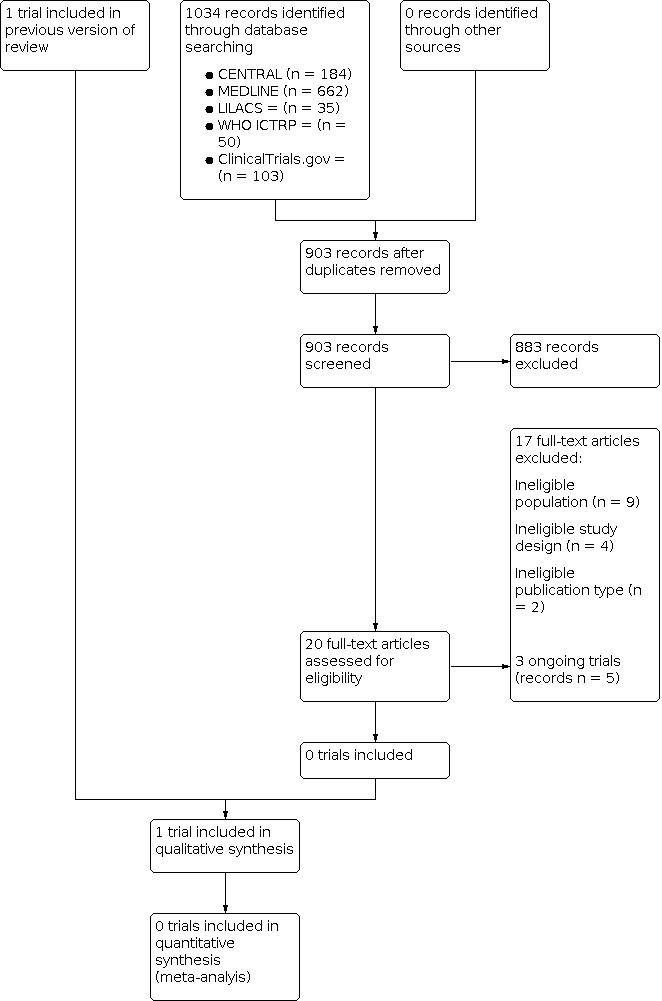
The update search on 20 August 2021 identified 1034 records (881 from database searches and 153 from trial registry searches). From these, we identified 20 full‐text publications and protocols for further examination, of which three trials met the inclusion criteria for ongoing studies. We excluded the other 17 studies because they did not meet the inclusion criteria or were not relevant to the review question (see Figure 1 for the amended PRISMA flow diagram). After screening the full texts of the selected publications, we did not identify any new finished or published trials that met our inclusion criteria. Therefore, this updated review only includes the one RCT that had already been included in the previous review by Ells 2015.
1.
Ongoing studies
NCT01172899 reports the recruitment of 14‐ to 16‐year‐old adolescents with obesity to assess the efficacy of gastric banding in a Dutch population, with completion anticipated in December 2022. In this trial, 30 participants were randomly allocated to a lifestyle intervention plus gastric banding and 30 participants to a lifestyle intervention.
ACTRN12609001004257 reports the recruitment of 44 of 50 planned 12‐ to 17‐year‐old participants with obesity to assess the efficacy of a Bioenterics Intragastric Balloon (BIB) in an Australian population. This study started recruitment in 2009 but does not report the end date. For this trial, interim results were published as a conference abstract. No significant differences between the groups were shown for percentage change in body weight and BMI z‐score. The interim analysis included five participants in the BIB group; no adverse event was reported during insertion, the intervention phase, or at removal (ACTRN12609001004257).
NCT02378259 is the most recently registered trial and aims to recruit 13‐ to 16‐year‐olds to assess the efficacy of bariatric surgery in Sweden. Twenty‐five participants were randomised to bariatric surgery and 25 participants to calorie restriction by a meal replacement product. As stated in the published protocol, 23 of the 25 participants were treated by Laparoscopic Roux‐en‐Y Gastric Bypass and two by sleeve gastrectomy. The primary completion was anticipated for June 2022, with study completion in June 2034.
The last version of this review (Ells 2015) identified another ongoing trial from France (clinicaltrials.gov/ct2/show/NCT01700738). For this trial, results were only published for one of the two planned groups (Pourcher 2015). Therefore, we did not consider this trial as an ongoing RCT for this version of the review.
Included studies
A detailed description of the characteristics of included studies is presented elsewhere (see Characteristics of included studies and appendices). The following is a succinct overview.
Source of data
With this update, we could not include any additional RCTs. The only published RCT that meets the inclusion criteria (O'Brien 2010) was included in the previous version of this review (Ells 2015). Furthermore, we list three ongoing trials that were identified from trial registry searches (ACTRN12609001004257; NCT01172899; NCT02378259). These were also identified as ongoing studies by Ells 2015. We could not include these ongoing trials as outcome data are not yet available. Details of these studies are provided in the Characteristics of ongoing studies studies.
Comparisons
O'Brien 2010 compared laparoscopic adjustable gastric banding surgery to a multi‐component lifestyle modification program, consisting of individual calorie reduction diet plans, increased physical activity through pedometer targets, structured exercise schedules, advice to reduce sedentary activity and support through consultation with a health care practitioner every six weeks.
Overview of study populations
A total of 50 participants were included in the trial; 25 participants were randomised to intervention and 25 to control groups. Twenty‐four (98%) participants finished the study in the intervention compared to 18 (72%) participants in the control group.
Study design
The included study was a randomised parallel group superiority trial. Given the nature of the intervention under investigation, it was not possible to blind to participants or personnel delivering the interventions. However, outcome assessors were also unblinded. The duration of the intervention was two years, conducted between August 2006 and September 2008. The study was not terminated early.
Settings
The study was undertaken in a specialist weight management clinic either in the community or the Royal Children’s Hospital, Melbourne, with surgery occurring at a private hospital.
Participants
The participating population consisted of Australian adolescents aged 14 to 18 years, with a mean age of 16.5 and 16.6 years in the banding and lifestyle groups, respectively. All participants demonstrated substantial physiological maturity with secondary sexual characteristics and most had also completed bone growth. This study contained a higher proportion of girls than boys in each arm of the intervention: 36% of the banding group were males and 28% of the lifestyle group were males. No further demographic information was reported. The mean BMI at baseline was 42.30 (standard deviation (SD) 6.10) kg/m² in the banding group compared to 40.40 (SD 3.10) kg/m² in the lifestyle group. Entry criteria are outlined in the Characteristics of included studies table. Major exclusion criteria were intellectual disability and syndromic obesity.
Diagnosis
Participants in the O'Brien 2010 study were required to have a BMI greater than 35 and identifiable medical complications such as metabolic syndrome, physical limitation (such as an inability to play a sport), or psycho‐social difficulties such as low self‐esteem.
Interventions
This study employed a two‐month run‐in program, which all participants undertook prior to randomisation. The program involved the implementation of best practice guidance on healthy eating and physical activity. The surgical intervention consisted of the gastric band placement followed by detailed guidance on post‐operative eating and activity.
Outcomes
The one included study assessed 50 participants and reported data for all primary and some secondary endpoints. This study did not report all‐cause mortality, behaviour change, participants' views of the intervention, socioeconomic effects and costs. For a summary of all outcomes assessed in the study, see Appendix 5.
Excluded studies
Fifteen articles had to be excluded from the update search after careful evaluation of the full publication (Asaad 2018; Bjork 2021; de Oliveira 2018; Dewberry 2019; Ebell 2017; Miller 2017; Misra 2020; Ospanov 2019; Ponce 2015; Schiavon 2020; Shah 2021; Sullivan 2017; Trastulli 2017; Varma 2019; Zitsman 2020; see Figure 1).
Risk of bias in included studies
For details on the risk of bias of the included study, see the Characteristics of included studies table and each of the analyses. We investigated the risk of bias for all reported outcome measures that met our inclusion criteria.
Randomisation process
We judged the included study to have a low risk of bias for randomisation. We identified a mismatch in information between the study publication and data in the trial register, but judged both methods to be sufficiently random. In addition, we did not identify substantial differences in baseline characteristics between the intervention and comparator groups.
Deviations from the intended interventions
O'Brien 2010 explicitly stated that the study was not blinded. However, blinding of the participants and personnel delivering the intervention was not possible given the nature of this study. The authors stated that ITT analyses were performed for the primary outcome (weight change). Therefore, we rated the risk of bias due to deviations from the intended interventions as low for BMI and weight loss. We rated the risk of bias in this domain as high for the other outcomes as the authors applied complete case analyses.
Missing outcome data
O'Brien 2010 reported on withdrawals and losses to follow‐up, with one loss to follow‐up in the banding intervention and two losses to follow‐up and five withdrawals in the lifestyle intervention (due to family problems and being unsatisfied with progress). ITT analysis was performed for the primary outcome (weight change) only, and all secondary outcomes (health‐related quality of life outcomes) were assessed by analysis of completers as the study was only powered to detect changes in the primary outcome measure. Consequently, we considered that there was a high risk of bias due to missing outcome data for objectively measured outcomes (such as the primary outcome of weight loss) because of a substantial loss to follow‐up and differences in dropouts. There was a higher dropout rate in the lifestyle group, with a considerable number of participants justifying it by unhappiness with progress, and there were no details of ITT analyses (e.g. the method of imputation). Additionally, we considered the risk of bias for subjective measures (health‐related quality of life) to be high as no ITT analysis was conducted, and disparate attrition rates probably influenced this outcome measure. In addition, the O'Brien 2010 study lacked analyses correcting for bias or sensitivity analyses.
Measurement of the outcome
The impact of not blinding posed a high risk for the subjectively reported health‐related quality of life measures. Therefore, we judged the impact of no blinding on bias due to measurement of the outcome to be high risk for the subjective outcome health‐related quality of life. For the objective outcomes, we judged that the measurement of outcomes was standardised, so we did not assume that the measurement of outcomes differed between the groups. Therefore, we judged the risk of bias due to the measurement of the outcome to be low for objectively measured outcomes.
Selection of the reported result
No detailed analysis plan was published in the trial register, but comparing the study publication and protocol information in the trial register revealed some differences in health‐related quality of life. Therefore, we judged there to be a high risk of bias due to the selection of this reported result; however, there was little information for other results, so we rated this domain to have 'some concerns'.
Effects of interventions
See: Table 1
Baseline characteristics
For details of baseline characteristics, see Appendix 3 and Appendix 4.
Gastric banding program versus lifestyle program
The included study examined the effects of laparoscopic gastric banding surgery compared to a form of lifestyle programme (O'Brien 2010). This study measured weight change as the primary outcome.
Primary outcomes
BMI and weight loss
The study authors reported, for a total of 50 participants providing outcome data, a mean reduction in weight of 34.60 kg (95% CI 30.20 to 39.00) at two years, representing a change in BMI units of 12.70 (95% CI 11.30 to 14.20) for the surgery intervention; and a mean reduction in weight of 3.00 kg (95% CI 2.10 to 8.10) representing a change in 1.30 BMI units (95% CI 0.40 to 2.90) for the lifestyle intervention. Laparoscopic gastric banding surgery may reduce BMI by a mean difference (MD) of ‐11.40 kg/m2 (95% CI ‐13.22 to ‐9.58) (Analysis 1.1) and weight by ‐31.60 kg (95% CI ‐36.66 to ‐26.54) (Analysis 1.2), compared to a multi‐component lifestyle programme at two years follow‐up for a total of 50 participants. The certainty of the evidence is very uncertain due to serious imprecision and a high risk of bias.
1.1. Analysis.
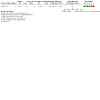
Comparison 1: Surgery compared with usual care (non‐surgery intervention), Outcome 1: BMI loss
1.2. Analysis.
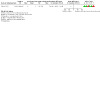
Comparison 1: Surgery compared with usual care (non‐surgery intervention), Outcome 2: Weight loss
Adverse events
The gastric banding placement occurred without any complications during the perioperative period or within 30 days. The mean length of hospital stay was 26 hours (range from 23 hours to 32 hours). A total of 28% of the 42 participants providing outcome data required a revisional procedure (Analysis 1.3).
1.3. Analysis.
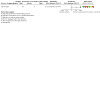
Comparison 1: Surgery compared with usual care (non‐surgery intervention), Outcome 3: Adverse events
Adverse events were reported in both groups, with 13 events reported in 12 participants in the surgery intervention compared to 18 events reported in 11 participants in the lifestyle group; adverse events in the surgery group included six proximal gastric enlargements, two needlestick injuries to tubing, one cholecystectomy, one hospital admission for depression, one loss to follow‐up and two unplanned pregnancies. Adverse events in the lifestyle group included one hospital admission for depression and intracranial hypertension, one cholecystectomy, seven loss to follow‐up and two unplanned pregnancies.
Over the two‐year study period, the surgical group (n = 25) had a mean of 20 visits with a physician (range 10 to 31) per participant and a mean of 9.5 adjustments made to the volume of saline in the band (range 5 to 18) per participant. In the non‐surgical group (n = 25), adolescents visited the adolescent physician, study dietitian, study nurse practitioner, or other physicians a mean of 16 (range 7 to 31) times. There was also a mean of five telephone consultations per participant and each participant had six sessions with a personal trainer.
Secondary outcomes
Health‐related quality of life
Health‐related quality of life was assessed by the Child Health Questionnaire (CHQ), a family of generic quality of life instruments that have been designed and validated for children 5 to 18 years of age. Parents and children (ages 10 to 18 years) may self‐administer the CHQ after instructions from the administrator. The CHQ measures 14 unique physical and psychosocial concepts. The parent form is available in two lengths: 50 or 28 items. Scores can be analysed separately, the CHQ profile scores, or combined to derive an overall physical and psychosocial score, the CHQ summary scores.
Score interpretation: the range on subscales and the overall scale is 0 to 100, where 0 indicates the worst possible health state and 100 the best possible health state. A normative sample was not available for comparison of paediatric patient‐reported health‐related quality of life. Poor health‐related quality of life has been defined as two standard deviations below the mean of the normative sample or a physical functioning or psychosocial health summary score less than 30.
Eight of the subscores of the CHQ are shown in Appendix 11. The subscores for behavioural, emotional, and physical limitations are not shown because these items did not differ from community values at entry into the study and were not different within or between groups over the two‐year follow‐up period. No statistically significant differences existed in any measures between groups at the commencement of the study. For the 42 participants providing outcome data at two years follow‐up, laparoscopic gastric banding surgery may increase health‐related quality of life in the physical functioning scores by an MD of 16.30 (95% CI 4.90 to 27.70) (Analysis 1.4) and change in health scores by an MD of 0.82 (95% CI 0.18 to 1.46) (Analysis 1.5) compared to the lifestyle group. The certainty of the evidence is very uncertain due to serious imprecision and a high risk of bias.
1.4. Analysis.

Comparison 1: Surgery compared with usual care (non‐surgery intervention), Outcome 4: Health‐related quality of life (physical functioning)
1.5. Analysis.
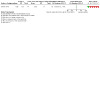
Comparison 1: Surgery compared with usual care (non‐surgery intervention), Outcome 5: Health‐related quality of life (change in health)
Morbidity
Morbidity was associated with metabolic syndrome, a weak surrogate endpoint for illness or harm associated with the intervention or the condition itself. At study entry, 36% of the participants in the gastric banding group and 40% in the lifestyle group were diagnosed with metabolic syndrome. For the 42 participants providing outcome data at two years follow‐up, none of the 24 study completers (0%) in the gastric banding group had metabolic syndrome compared to four of 18 completers (22%) in the lifestyle group who still had metabolic syndrome. Therefore, laparoscopic gastric banding surgery may decrease the risk for morbidity by a RR of 0.08 (95% CI 0.00 to 1.47) (Analysis 1.6) compared to a lifestyle programme at two years follow‐up. The certainty of the evidence is very uncertain due to serious imprecision, a high risk of bias and indirectness.
1.6. Analysis.
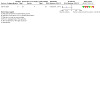
Comparison 1: Surgery compared with usual care (non‐surgery intervention), Outcome 6: Morbidity (changes in disease status)
Measures of body fat distribution
Waist circumference was reduced by 28.20 cm in the gastric banding group and by 3.50 cm in the lifestyle group in the 42 participants providing outcome data at two years (MD ‐24.70 cm, 95% CI ‐33.10 to ‐16.30; P < 0.001; Analysis 1.7).
1.7. Analysis.
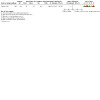
Comparison 1: Surgery compared with usual care (non‐surgery intervention), Outcome 7: Measures of body fat distribution
Other outcomes
All‐cause mortality, behaviour change, self‐esteem, participants' views of the intervention and socioeconomic effects were either not investigated or not reported in the included study.
Discussion
Summary of main results
This review reports the findings from one RCT (50 participants). The intervention focused on laparoscopic adjustable gastric banding surgery, which was compared to a control group receiving a multi‐component lifestyle program. The study authors were unable to blind their participants, personnel and outcome assessors, which may have resulted in a high risk of bias in deviations from the intended interventions and measurement of the outcome. At two years' follow‐up, laparoscopic gastric banding surgery may reduce BMI, weight, and the risk of morbidity, and may improve health‐related quality of life in the physical functioning scores and change in health scores compared to a multi‐component lifestyle programme. For participants who underwent bariatric surgery, the performance of revisional procedures was necessary in a substantial number of cases. The certainty of evidence is very uncertain due to serious imprecision, a high risk of bias, or indirectness. In addition, there are three ongoing trials that evaluate the efficacy and safety of metabolic and bariatric surgery in children and adolescents.
Overall completeness and applicability of evidence
We did not find further RCTs to provide additional data to that identified by the previous update (Ells 2015). Whilst the included trial by O'Brien 2010 reported on weight, health‐related quality of life and adverse events, further data on the participants' socioeconomic status and ethnic origin may have enhanced the wider applicability of the findings. Eating small meals slowly is central to avoiding problems after the gastric banding procedure. This was repeatedly stressed during the O'Brien 2010 trial. For adolescents, additional education and supervision of eating may help reduce the need for revision surgery. Recruitment methods were used to minimise bias towards one or other treatment but may have drawn on a subset of the community attracted by the availability of free treatment. The O'Brien 2010 trial was also powered to measure differences in weight outcomes rather than differences in other health measures or adverse events. Adolescents and parents must understand the importance of carefully adhering to recommended eating behaviours and seeking early consultation if symptoms of reflux, heartburn, or vomiting occur. As importantly, they should be in a setting where they can maintain contact with health professionals who understand the care process. The authors state their uncertainty as to whether the study population accurately reflects the general adolescent population living with obesity since it may have attracted a subset of the community amenable to the availability of free treatment. In addition, the only included trial provides evidence for a surgical technique that is no longer recommended by the ASMBS due to high complication (10.50%) and reintervention (14.70%) rates and a lack of safety data (Pratt 2018), and which is currently not yet approved by the US Food and Drug Administration (FDA) for people < 18 years of age (Pratt 2018). Therefore, gastric bands should be considered for metabolic and bariatric surgery with caution.
We list three ongoing trials (ACTRN12609001004257; NCT01172899; NCT02378259). One ongoing trial is examining the effect of Bioenterics Intragastric Balloon (BIB) insertion over six months compared to usual care (a 10‐week multidisciplinary lifestyle modification programme) in an Australian adolescent population (ACTRN12609001004257). We contacted the study authors twice but did not receive a reply. In the absence of further details, we were unable to include the trial. This finding was reflected in a recent repeated meta‐research analysis, suggesting that the nonpublication of RCTs still occurs (Speich 2022). Another Swedish ongoing study, started in August 2014, planned to have completed data collection by June 2022 for the primary outcome BMI. This study aims to examine the impact of bariatric surgery (Roux‐en‐Y‐gastric bypass (23 participants) or sleeve gastrectomy (two participants)) compared to an intensive lifestyle treatment (25 participants) in 13‐ to 16‐year‐old adolescents (NCT02378259). Although another ongoing trial in the Netherlands (NCT01172899) is also comparing laparoscopic gastric banding (as assessed by O'Brien 2010), it has yet to reach completion so no further narrative or quantitative comparisons could be made.
In line with the previous update (Ells 2015), and the other reviews in this series examining interventions for the treatment of child and adolescent obesity (Al‐Khudairy 2017; Colquitt 2016; Ells 2018; Loveman 2015; Mead 2016; Mead 2017), the study design was limited to RCTs to provide the least‐biased estimate of effect size (Rosen 2006).
Additionally, important aspects ‐ mainly regarding safety and the long‐term outcome ‐ have not been addressed (or not sufficiently addressed) by O'Brien and colleagues. Post‐surgical interventions, such as nutritional supplementation, are recommended to reduce adverse events after metabolic and bariatric surgery. Observational data of 85 adolescents who underwent Roux‐en‐Y gastric bypass surgery showed that those not adhering to the recommendations for nutritional supplementation had a higher chance of nutritional deficiencies (Henfridsson 2019). This is supported by evidence from studies in adults undergoing metabolic and bariatric surgery (Ha 2021). Strategies to improve adherence to post‐surgery management need further development to prevent future deficiencies (Anvari 2021).
For the efficacy and safety of weight loss interventions, the knowledge of long‐term outcomes is crucial. A systematic review summarised evidence from non‐randomized trials on metabolic and bariatric surgery in adolescents (Ruiz‐Cota 2019). For BMI or weight, most studies reported weight regain until the latest reported follow‐up at 12 years, remission rates for comorbidities, i.e., dyslipidaemia, musculoskeletal problems, hypertension, and type 2 diabetes mellitus, were 75%‐85% and rates for iron deficiency and anaemia were high (up to 70% and 50%). Other possible complications were reported insufficiently (Ruiz‐Cota 2019). A further recent publication reporting ten‐year outcomes of sleeve gastrectomy in over 2500 children and adolescents demonstrated improvements in cardiovascular outcomes (e.g., hypertension, dyslipidaemia), significant weight loss and a low number of adverse events, such as nausea or vomiting, or neuropathy (Alqahtani 2021).
Moreover, it is important not to ignore the significant morbidity of (severe) obesity in childhood and the risk of inadequately treating children with severe obesity. Type 2 diabetes mellitus in children is associated with a much more rapid progression of beta‐cell loss, cardiovascular disease, renal impairment, retinopathy, and neuropathy than in adults or children with type 1 diabetes (Barrett 2020). Furthermore, elevated BMI in adolescents has been shown to significantly increase the risk of cardiovascular mortality in adults in an American study, as well as all‐cause mortality in a Swedish study (Lindberg 2020; Ryder 2020; Twig 2016). Obesity during childhood is also associated with a higher cancer mortality rate in adults (Nuotio 2022). In addition, adult studies report significantly improved life expectancy in people with severe obesity treated with metabolic and bariatric surgery, especially those with type 2 diabetes mellitus, versus those who continue to pursue lifestyle interventions (Carlsson 2020; Schauer 2015).
Quality of the evidence
With this update, we assessed the risk of bias with the Cochrane Risk of Bias 2.0 tool. Whilst the included study was well conducted and provides much‐needed evidence in this field, further studies are required to strengthen the evidence base. Although blinding would have reduced the risk of bias, we acknowledge the logistical challenges of blinding in such studies. The effect of blinding on treatment outcomes is still not clear, which is why blinding continues to be recommended in RCTs (Moustgaard 2020). It would also have been useful if O'Brien 2010 had additionally reported the exact baseline‐adjusted group difference in change scores.
Potential biases in the review process
As only one published study was comprehensively assessed in this review, no potential biases in the review process arose.
Agreements and disagreements with other studies or reviews
The findings from this review are limited due to the lack of other RCTs in adolescents. However, metabolic and bariatric surgery is supported by multiple systematic reviews of adolescent obesity surgery that also considered evidence from observational studies (Qi 2017; Selvendran 2018; Trooboff 2019). The degree of weight loss and improvements to health‐related quality of life reported in the O'Brien 2010 study are concordant with those reported in recent reviews of metabolic and bariatric surgery in young people (Qi 2017). However, there is significantly better weight loss, improved quality of life and improvement in comorbidities seen with Roux‐en‐Y gastric bypass and sleeve gastrectomy than with adjustable gastric banding in the adolescent systematic reviews (Qi 2017; Selvendran 2018; Trooboff 2019). However, these reviews also show the inadequacy of alternative therapies in successfully treating severe obesity, including pharmacotherapy, intensive lifestyle, and exercise programmes (Selvendran 2018).
To our knowledge, no other systematic review has been published that included any RCTs other than the O'Brien 2010 trial. However, several systematic reviews have been published that (additionally) summarised evidence from observational studies. As mentioned before, due to missing evidence from RCTs, evidence from non‐randomised trials should be considered given the rising prevalence of severe paediatric obesity and surgical procedures in children and adolescents with obesity since the publication of the O'Brien 2010 study (Griggs 2018).
We excluded trials that had participants with severe obesity due to a secondary or syndromic cause, such as Prader‐Willi Syndrome. The risks and benefits of metabolic and bariatric surgery must be carefully assessed for people with such conditions, given their other comorbidities (Gantz 2022). In addition, we excluded pregnant adolescents, which is in line with clinical guidelines that do not recommend metabolic and bariatric surgery during pregnancy or for at least 12 months after pregnancy (Pratt 2018).
As we did not find further evidence from RCTs in adolescents, indirect evidence from studies in (young) adults warrants discussion. These observational studies investigate differences in the effects of metabolic and bariatric surgery between adolescents and adults. For example, Lennerz 2014 did not show a significant difference between adolescents and younger adults for short‐term BMI reduction following various types of bariatric and metabolic surgery (gastric banding, gastric bypass, sleeve gastrectomy, gastric balloon, biliopancreatic diversion and gastric pacemaker). This finding was also demonstrated by Benedix 2017, who compared adolescents (mean age 19.50 ± 1.50 years) and middle‐aged adults (mean age 44.2 ± 11 years) from Germany for two years after laparoscopic sleeve gastrectomy, and the Teen‐LABS study in the USA (Inge 2019), which compared middle‐aged adults with adolescents five years after surgery. Further, remission of diabetes and hypertension was more likely for adolescents than adults (Inge 2019). Similar results between the two age groups were shown for the remission of hypertriglyceridemia, low HDL cholesterol, and the need for any post‐surgery intra‐abdominal operation (Inge 2019).
O'Brien 2010 also reported improvements in cardiovascular morbidity in the gastric banding group. Improvements in cardiovascular morbidity following metabolic and bariatric surgery in adolescents have been reported in multiple studies of people undergoing Roux‐en‐Y gastric bypass, sleeve gastrectomy and adjustable gastric banding (Qi 2017). The improved well‐being measure reported in the O'Brien 2010 study aligns with observational evidence that also demonstrates the beneficial effects of stapled bariatric procedures on psychosocial outcomes and quality of life in adolescents (Trooboff 2019).
Authors' conclusions
Implications for practice.
This review aimed to assess the effects of surgery on treating obesity in children and adolescents. However, the ability to address this was severely limited by the size of the current evidence base. Whilst an overview of the considerations arising from the included study is provided below, in isolation, this study does not provide sufficient evidence to adequately inform practice.
Compared with a lifestyle treatment program for obesity, laparoscopic gastric banding led to greater body weight loss in one well‐conducted study that included 50 participants. However, this study was limited to two years of follow‐up, was based on just one small Australian population, and was conducted in a private hospital that received funding from the manufacturer of the gastric band. As a result, there is currently insufficient evidence to make an informed judgement about efficacy. Whilst the study identified the possible benefits of surgery, there are not enough data to assess efficacy across populations from different countries, and socioeconomic and ethnic backgrounds, who may respond differently. There are also insufficient data to examine possible variations according to gender, age, baseline weight status and different surgical procedures.
Unlike adults, surgery in children and adolescents requires additional considerations, such as a suitable multidisciplinary paediatric team (Pratt 2018). In addition, O'Brien 2010 states that optimal effectiveness requires long‐term specialist supportive follow‐up, with consideration required for the bespoke needs of an adolescent population. Experience from adolescents who received metabolic and bariatric surgery highlights the importance of long‐term management and its impact on daily life and their transition to adulthood (Li 2021). Given the current variation in clinical guidance concerning metabolic and bariatric surgery for children and adolescents, more research is required to inform consistent recommendations and appropriate care pathways.
Implications for research.
The update of this systematic review highlights again the lack of randomised controlled trials in this field. Since the last update of this review (Ells 2015), no new RCTs have been published. Recommendations from available clinical guidelines on the management of severe obesity in children and adolescents are almost exclusively based on evidence from observational studies and best practice experiences (Armstrong 2019; Pratt 2018; Styne 2017). Therefore, more high‐quality trials are required to address the efficacy and safety of metabolic and bariatric surgery for treating obesity in children and adolescents. Future studies need to address clinical effectiveness across various populations, including participants with diverse socio‐demographics, ethnicity, baseline weight status and geography. In addition, future studies should assess the impact of the surgical procedure and postoperative care to minimise adverse events, including the need for postoperative adjustments and revisional surgery. Long‐term follow‐up is also critical to comprehensively assess the impact of surgery as participants enter adulthood. Additional data on cost‐effectiveness and participants' views will also provide constructive evidence to help steer future policy and practice decision‐making.
Given the number of recently conducted observational studies and the heavy reliance upon these for clinical guideline production, it raises questions as to whether these should be integrated into future review updates on the efficacy and safety of metabolic and bariatric surgery in children and adolescents (Arditi 2016). For this purpose, methods for summarising and pooling both evidence from randomised and non‐randomised trials must be well planned (Schwingshackl 2022). Nevertheless, evidence from non‐RCTs might not (sufficiently) substitute evidence from RCTs (Gerstein 2019). Therefore, funding organisations should also provide resources for future RCTs, with sufficient power to detect small differences in rare outcomes, especially concerning safety outcomes.
What's new
| Date | Event | Description |
|---|---|---|
| 20 August 2022 | New citation required but conclusions have not changed | Methods were updated (including ROB2) and there was a change in authorship. |
| 20 August 2022 | New search has been performed | No new studies were incorporated |
History
Review first published: Issue 6, 2015
| Date | Event | Description |
|---|---|---|
| 23 July 2014 | Amended | Given the rapid growth in the treatment of child and adolescent obesity, the original review formerly published as 'Interventions for treating obesity in children and adolescents' has now been split into six separate reviews (see Differences between protocol and review). |
Notes
Part of the background, the methods section, the appendices, and additional tables of this review are based on a standard template established by the Cochrane Metabolic and Endocrine Disorders Group.
Risk of bias
Risk of bias for analysis 1.1 BMI loss.
| Study | Bias | |||||||||||
| Randomisation process | Deviations from intended interventions | Missing outcome data | Measurement of the outcome | Selection of the reported results | Overall | |||||||
| Authors' judgement | Support for judgement | Authors' judgement | Support for judgement | Authors' judgement | Support for judgement | Authors' judgement | Support for judgement | Authors' judgement | Support for judgement | Authors' judgement | Support for judgement | |
| O'Brien 2010 | Low risk of bias | 1.1 Quote from publication: "Randomization was performed using a computer‐derived random allocation sequence to allow orderly admission into both programs. There was no stratification or blocking," Information specified in study register (ACTRN12605000160639): "Subjects were block randomized into 3 unequal blocks. Each block contained equal numbers in both treatment arms. The sequence within blocks was determined by the staff member in control of concealment by drawing the allocation out of a hat and the number in each blocking group was known only to this staff member" Comment: randomization sufficiently random 1.2 Quote from author (via email): "The trial coordinator went over the trial details with the prospective participant (and parent), had the informed consent for the trial signed, phoned the allocation centre, received the allocation and informed the participant immediately" Information specified in study register (ACTRN12605000160639): "Intervention recorded and stored in numbered, sealed opaque envelopes organized and maintained by staff member not involved in patient care or scheduling and opened in sequence as randomized." Comment: allocation was concealed 1.3 Comment: no baseline differences detected. |
Low risk of bias | 2.1/ 2.2 Quote from publication: "The study was not blinded" Quote from information specified in study register (ACTRN12605000160639): "Open (masking not used)" 2.6 Quote from publication: "Data Analysis. We analyzed the weight change data according to the patient's randomly assigned program (intention‐to‐treat analysis) and used completer's analysis for the health and quality of life data." Comment: ITT analysis was used to estimate the effect of assignment to intervention. |
High risk of bias | 3.1 Quote from publication: "Data Analysis. We analyzed the weight change data according to the patient's randomly assigned program (intention‐to‐treat analysis) and used completer's analysis for the health and quality of life data. Longitudinal data analysis was performed using SAS software to estimate weight measures allowing for missing data" Comment: 24/25 in bariatric surgery arm at FU and 18/25 in lifestyle arm with 4 patients dropping out 'because unhappy with progress' 3.2 Quote from publication: "Data Analysis. We analyzed the weight change data according to the patient's randomly assigned program (intention‐to‐treat analysis) and used completer's analysis for the health and quality of life data. Longitudinal data analysis was performed using SAS software to estimate weight measures allowing for missing data" Comment: 24/25 in bariatric surgery arm at FU and 18/25 in lifestyle arm with 4 patients dropping out 'because unhappy with progress' 3.3/ 3.4 Quote from publication: "Data Analysis. We analyzed the weight change data according to the patient's randomly assigned program (intention‐to‐treat analysis) and used completer's analysis for the health and quality of life data. Longitudinal data analysis was performed using SAS software to estimate weight measures allowing for missing data" Comment: 24/25 in bariatric surgery arm at FU and 18/25 in lifestyle arm with 4 patients dropping out 'because unhappy with progress'" |
Low risk of bias | 4.1 Quote from publication: "The primary end point of the study was whether participants could lose 50% excess weight. We used the Centers for Disease Control and Prevention (CDC) growth charts and defined excess weight as the weight above the 85th percentile of BMI for age and sex. We calculated the total weight loss (kg), percentage of total weight lost, percentage of excess weight lost, change in BMI, and BMI z score. BMI z scores are the number of standard deviations that a patient's BMI deviates from the reference mean BMI for that age group. Anthropometric measures included neck, waist, and hip circumference. Adjustment for change in height was made when appropriate." Comment: appropriate assessment of the outcome. 4.2 Quote from publication: "The primary end point of the study was whether participants could lose 50% excess weight. We used the Centers for Disease Control and Prevention (CDC) growth charts and defined excess weight as the weight above the 85th percentile of BMI for age and sex. We calculated the total weight loss (kg), percentage of total weight lost, percentage of excess weight lost, change in BMI, and BMI z score. BMI z scores are the number of standard deviations that a patient's BMI deviates from the reference mean BMI for that age group. Anthropometric measures included neck, waist, and hip circumference. Adjustment for change in height was made when appropriate." Comment: probably no difference in objective outcome assessment between groups 4.3 Quote from publication: "the study was not blinded." Comment: Outcome assessors were aware of the intervention. 4.4 Comment: probably no difference in objective outcome assessment between groups |
Low risk of bias | 5.1 Comment: no changes in analysis plans detected. 5.2 Comment: all assessed outcomes were reported 5.3 Comment: all assessed outcomes were reported |
High risk of bias | High RoB for at least one RoB domain |
Risk of bias for analysis 1.2 Weight loss.
| Study | Bias | |||||||||||
| Randomisation process | Deviations from intended interventions | Missing outcome data | Measurement of the outcome | Selection of the reported results | Overall | |||||||
| Authors' judgement | Support for judgement | Authors' judgement | Support for judgement | Authors' judgement | Support for judgement | Authors' judgement | Support for judgement | Authors' judgement | Support for judgement | Authors' judgement | Support for judgement | |
| O'Brien 2010 | Low risk of bias | 1.1 Quote from publication: "Randomization was performed using a computer‐derived random allocation sequence to allow orderly admission into both programs. There was no stratification or blocking," Information specified in study register (ACTRN12605000160639): "Subjects were block randomized into 3 unequal blocks. Each block contained equal numbers in both treatment arms. The sequence within blocks was determined by the staff member in control of concealment by drawing the allocation out of a hat and the number in each blocking group was known only to this staff member" Comment: randomization sufficiently random 1.2 Quote from author (via email): "The trial coordinator went over the trial details with the prospective participant (and parent), had the informed consent for the trial signed, phoned the allocation centre, received the allocation and informed the participant immediately" Information specified in study register (ACTRN12605000160639): "Intervention recorded and stored in numbered, sealed opaque envelopes organized and maintained by staff member not involved in patient care or scheduling and opened in sequence as randomized." Comment: allocation was concealed 1.3 Comment: no baseline differences detected. |
Low risk of bias | 2.1/ 2.2 Quote from publication: "The study was not blinded" Quote from information specified in study register (ACTRN12605000160639): "Open (masking not used)" 2.6 Quote from publication: "Data Analysis. We analyzed the weight change data according to the patient's randomly assigned program (intention‐to‐treat analysis) and used completer's analysis for the health and quality of life data." Comment: ITT analysis was used to estimate the effect of assignment to intervention. |
High risk of bias | 3.1 Quote from publication: "Data Analysis. We analyzed the weight change data according to the patient's randomly assigned program (intention‐to‐treat analysis) and used completer's analysis for the health and quality of life data. Longitudinal data analysis was performed using SAS software to estimate weight measures allowing for missing data" Comment: 24/25 in bariatric surgery arm at FU and 18/25 in lifestyle arm with 4 patients dropping out 'because unhappy with progress' 3.2 Quote from publication: "Data Analysis. We analyzed the weight change data according to the patient's randomly assigned program (intention‐to‐treat analysis) and used completer's analysis for the health and quality of life data. Longitudinal data analysis was performed using SAS software to estimate weight measures allowing for missing data" Comment: 24/25 in bariatric surgery arm at FU and 18/25 in lifestyle arm with 4 patients dropping out 'because unhappy with progress' 3.3/ 3.4 Quote from publication: "Data Analysis. We analyzed the weight change data according to the patient's randomly assigned program (intention‐to‐treat analysis) and used completer's analysis for the health and quality of life data. Longitudinal data analysis was performed using SAS software to estimate weight measures allowing for missing data" Comment: 24/25 in bariatric surgery arm at FU and 18/25 in lifestyle arm with 4 patients dropping out 'because unhappy with progress'" |
Low risk of bias | 4.1 Quote from publication: "The primary end point of the study was whether participants could lose 50% excess weight. We used the Centers for Disease Control and Prevention (CDC) growth charts and defined excess weight as the weight above the 85th percentile of BMI for age and sex. We calculated the total weight loss (kg), percentage of total weight lost, percentage of excess weight lost, change in BMI, and BMI z score. BMI z scores are the number of standard deviations that a patient's BMI deviates from the reference mean BMI for that age group. Anthropometric measures included neck, waist, and hip circumference. Adjustment for change in height was made when appropriate." Comment: appropriate assessment of the outcome. 4.2 Quote from publication: "The primary end point of the study was whether participants could lose 50% excess weight. We used the Centers for Disease Control and Prevention (CDC) growth charts and defined excess weight as the weight above the 85th percentile of BMI for age and sex. We calculated the total weight loss (kg), percentage of total weight lost, percentage of excess weight lost, change in BMI, and BMI z score. BMI z scores are the number of standard deviations that a patient's BMI deviates from the reference mean BMI for that age group. Anthropometric measures included neck, waist, and hip circumference. Adjustment for change in height was made when appropriate." Comment: probably no difference in objective outcome assessment between groups 4.3 Quote from publication: "the study was not blinded." Comment: Outcome assessors were aware of the intervention. 4.4 Comment: probably no difference in objective outcome assessment between groups |
Low risk of bias | 5.1 Comment: no changes in analysis plans detected. 5.2 Comment: all assessed outcomes were reported 5.3 Comment: all assessed outcomes were reported |
High risk of bias | High RoB for at least one RoB domain |
Acknowledgements
Acknowledgements from the authors
We would like to thank Gudrun Paletta and Juan VA Franco (Cochrane Metabolic and Endocrine Disorders Group) for helping with review management.
Editorial and peer‐reviewer contributions
Cochrane Metabolic and Endocrine Disorders Group supported the authors in the development of this update.
The following people conducted the editorial process for this article:
Sign‐off Editor (final editorial decision): Brenda Bongaerts, Institute of General Practice, Medical Faculty of the Heinrich‐Heine‐University Düsseldorf, Düsseldorf, Germany
Managing Editor (selected peer reviewers, collated peer‐reviewer comments, provided editorial guidance to authors, edited the article): Juan Victor Ariel Franco, Institute of General Practice, Medical Faculty of the Heinrich‐Heine‐University Düsseldorf, Düsseldorf, Germany
Copy Editor (copy‐editing and production): Andrea Takeda (Central Production Service)
Appendices
Appendix 1. Search strategies
| Cochrane Central Register of Controlled Trials (Cochrane Register of Studies Online) |
| Population: obesity 1. MESH DESCRIPTOR Obesity 2. MESH DESCRIPTOR Obesity, Morbid 3. MESH DESCRIPTOR Pediatric Obesity 4. (adipos* or obes*):TI,AB,KY 5. #1 OR #2 OR #3 OR #4 Intervention: bariatric surgery 6. MESH DESCRIPTOR Bariatric Surgery 7. MESH DESCRIPTOR Gastric Bypass 8. MESH DESCRIPTOR Gastroplasty 9. MESH DESCRIPTOR Gastrectomy 10. MESH DESCRIPTOR Biliopancreatic Diversion 11. MESH DESCRIPTOR Gastric Balloon 12. MESH DESCRIPTOR Anastomosis, Roux‐en‐Y 13. ((obes* or weight loss or weight reduction or antiobes* or metabolic or gastric or laparoscop*) ADJ1 surg*):TI,AB,KY 14. (bariatric ADJ (surg* or operation* or procedure*)):TI,AB,KY 15. (surg* ADJ (procedure* or intervention* or treatment or management)):TI,AB,KY 16. (gastric ADJ (bypass or band* or imbrication* or plication* or sleeve or stapl* or resection* or reduction* or stimulation)):TI,AB,KY 17. ((gastroileal or jejunal or duodeno or ileal or biliopancreatic or bilio pancreatic or stomach) ADJ bypass):TI,AB,KY 18. (greater curvature plication):TI,AB,KY 19. ((bilio pancreatic or biliopancreatic) ADJ diversion):TI,AB,KY 20. gastrectom*:TI,AB,KY 21. gastroplast*:TI,AB,KY 22. (malabsorpti* ADJ (procedure* or surg*)):TI,AB,KY 23. lap band*:TI,AB,KY 24. (RYGB* or "Roux‐en‐Y"):TI,AB,KY 25. duodenal switch:TI,AB,KY 26. stomach stapl*:TI,AB,KY 27. scopinaro:TI,AB,KY 28. ((mason or rose or stomaphyx) ADJ procedure):TI,AB,KY 29. ((gastric or intragastric) ADJ balloon):TI,AB,KY 30. ((endoluminal or bypass) ADJ sleeve):TI,AB,KY 31. (bypass liner or DJBL or endobarrier):TI,AB,KY 32. #6 OR #7 OR #8 OR #9 OR #10 OR #11 OR #12 OR #13 OR #14 OR #15 OR #16 OR #17 OR #18 OR #19 OR #20 OR #21 OR #22 OR #23 OR #24 OR #25 OR #26 OR #27 OR #28 OR #29 OR #30 OR #31 Population + intervention 33. #5 AND #32 Age group [adaptation of pediatric filter for PubMed byLeclercq 2013] 34. MESH DESCRIPTOR Adolescent 35. MESH DESCRIPTOR Child 36. MESH DESCRIPTOR Young Adult 37. MESH DESCRIPTOR Pediatrics 38. (boy or boys or boyhood):TI,AB,KY 39. girl*:TI,AB,KY 40. (kid or kids):TI,AB,KY 41. (child* or schoolchild*):TI,AB,KY 42. adolescen*:TI,AB,KY 43. juvenil*:TI,AB,KY 44. youth*:TI,AB,KY 45. (teen* or preteen*):TI,AB,KY 46. (underage* or under age*):TI,AB,KY 47. pubescen*:TI,AB,KY 48. p?ediatric*:TI,AB,KY 49. #34 OR #35 OR #36 OR #37 OR #38 OR #39 OR #40 OR #41 OR #42 OR #43 OR #44 OR #45 OR #46 OR #47 OR #48 Population + intervention + age group 50. #33 AND #49 Limit to 2015 onwards 51. 2015 TO 2021:YR 52. #50 AND #51 =184 |
| MEDLINE (Ovid SP) |
| Population: obesity
1. Obesity/
2. Obesity, Morbid/
3. Pediatric Obesity/
4. (adipos* or obes*).tw.
5. or/1‐4 Intervention: bariatric surgery 6. Bariatric Surgery/ 7. Gastric Bypass/ 8. Gastroplasty/ 9. Gastrectomy/ 10. Biliopancreatic Diversion/ 11. Gastric Balloon/ 12. Anastomosis, Roux‐en‐Y/ 13. ((obes* or weight loss or weight reduction or antiobes* or metabolic or gastric or laparoscop*) adj1 surg*).tw. 14. (bariatric adj (surg* or operation* or procedure*)).tw. 15. (surg* adj (procedure* or intervention* or treatment or management)).tw. 16. (gastric adj (bypass or band* or imbrication* or plication* or sleeve or stapl* or resection* or reduction* or stimulation)).tw. 17. ((gastroileal or jejunal or duodeno or ileal or biliopancreatic or bilio pancreatic or stomach) adj bypass).tw. 18. (greater curvature plication).tw. 19. ((bilio pancreatic or biliopancreatic) adj diversion).tw. 20. gastrectom*.tw. 21. gastroplast*.tw. 22. (malabsorpti* adj (procedure* or surg*)).tw. 23. lap band*.tw. 24. (RYGB* or "Roux‐en‐Y").tw. 25. duodenal switch.tw. 26. stomach stapl*.tw. 27. scopinaro.tw. 28. ((mason or rose or stomaphyx) adj procedure).tw. 29. ((gastric or intragastric) adj balloon).tw. 30. ((endoluminal or bypass) adj sleeve).tw. 31. (bypass liner or DJBL or endobarrier).tw. 32. or/6‐31 Population + intervention 33. 5 and 32 Age group [adaptation of pediatric filter for PubMed byLeclercq 2013] 34. Adolescent/ 35. Child/ 36. Young Adult/ 37. Pediatrics/ 38. (boy or boys or boyhood).tw. 39. girl*.tw. 40. (kid or kids).tw. 41. (child* or schoolchild*).tw. 42. adolescen*.tw. 43. juvenil*.tw. 44. youth*.tw. 45. (teen* or preteen*).tw. 46. (underage* or under age*).tw. 47. pubescen*.tw. 48. p?ediatric*.tw. 49. or/34‐48 Population + intervention + age group 50. 33 and 49 Study filter [Lefebvre 2011Cochrane Handbook 2008 RCT filter ‐ sensitivity maximizing version, without “drug therapy.fs”] 51. randomized controlled trial.pt. 52. controlled clinical trial.pt. 53. randomi?ed.ab. 54. placebo.ab. 55. randomly.ab. 56. trial.ab. 57. groups.ab. 58. or/51‐57 59. exp animals/ not humans/ 60. 58 not 59 Population + intervention + age group + RCTs 61. 50 and 60 Limit to 2015 onwards 62. ("2015*" or "2016*" or "2017*" or "2018*" or "2019*" or "202*").dt. 63. 61 and 62 = 662 |
| LILACS |
| Title, abstract, subject: (MH:"Bariatric Surgery" OR MH:"Obesity" OR MH:"Obesity, Morbid" OR ((bariatric$ OR obes$ OR gastric$) AND (surg* OR cirug* OR cirurg*)) OR (gastr$ AND (band$ OR bypass OR sleeve OR vertic$ OR derivac$)) OR (biliopancreatic AND (diversion OR derivac$ OR bypass)) OR gastroplast$ OR balloon "bypass liner" OR "endoluminal sleeve" OR endobarrier) AND (MH:"Adolescent" OR MH:"Child" OR MH:"Young Adult" OR MH:"Pediatrics" OR boy OR boys OR girl$ OR kid OR kids OR child$ OR schoolchild$ OR adolescen$ OR juvenil$ OR youth$ OR teen$ OR preteen$ OR underage$ OR pubescen$ OR paediatri$ OR pediatri$ OR joven$ OR jovem$ OR juvenil$ OR niños OR niñas OR criancas OR menin$) + Filter "Controlled Clinical Trial" + Publication year range 2015‐2021 = 35 |
| WHO ICTRP (Standard search) |
| bariatric AND child* OR bariatric AND adolesc* OR obes* AND surg* AND child* OR obes* AND surg* AND adolesc* OR obes* AND bypass* AND child* OR obes* AND bypass* AND adolesc* OR obes* AND gastr* AND child* OR obes* AND gastr* AND adolesc* OR obes* AND biliopancreatic AND child* OR obes* AND biliopancreatic AND adolesc* OR obes* AND band* AND child* OR obes* AND band* AND adolesc* OR obes* AND endoluminal AND child* OR obes* AND endoluminal AND adolesc* OR obes* AND endobarrier AND child* OR obes* AND endobarrier AND adolesc* OR obes* AND balloon AND child* OR obes* AND balloon AND adolesc* + Date of registration: 2015‐2021 = 50 |
| ClinicalTrials.gov (Advanced search) |
|
Condition or disease: adiposity OR adipose OR obese OR obesity Intervention/treatment: surgery OR surgical OR bariatric OR gastrectomy OR gastroplasty OR gastric OR band OR banding OR balloon OR roux OR bypass OR duodenal OR sleeve OR endobarrier OR endoluminal OR biliopancreatic Age Group: Child (birth–17) First Posted: From 01/01/2015 To 12/31/2021 = 103 |
Appendix 2. Description of interventions
| Intervention(s) | Comparator(s) | |
| O'Brien 2010 | Gastric banding procedure (LAP‐BAND® adjustable gastric banding system) Lifestyle advice (eating rules and physical activity) |
Lifestyle program (dietary and exercise advice (assessed by pedometers and food diary), behavioural modification, group outings and a personal trainer for 6 weeks) |
Appendix 3. Baseline characteristics (I)
| Intervention(s) and comparator(s) | Duration of intervention (duration of follow‐up) | Participating population | Study period (year to year) | Country | Setting | Duration of obesity (mean years (SD)) | Comedications /Co‐interventions | Comorbidities | |
| O'Brien 2010 | I: gastric banding procedure + lifestyle advice | After the procedure clinical reviews were conducted approximately every 6 weeks for 2 years (24 months) | Severely obese adolescents with identifiable medical complications, physical limitations or psychosocial difficulties | May 2005 to September 2008 | Melbourne, Australia | Community clinic or Centre for Adolescent Health, Royal
Children’s Hospital Gastric banding procedures were conducted at a private hospital |
‐ | ‐ | Identifiable medical complications such as hypertension, metabolic syndrome, asthma, back pain; physical limitations such as an inability to play a sport, difficulties with activities of daily living; psychosocial difficulties such as isolation or low self‐esteem, and subject to bullying that stems from obesity |
| C: lifestyle programme | Consultation occurred approx. every 6 weeks throughout the 24‐month study period; a personal trainer was provided
to each participant for a 6‐week period (24 months) |
||||||||
| "‐" denotes not reported C: comparator; I: intervention; SD: standard deviation |
|||||||||
Appendix 4. Baseline characteristics (II)
| Intervention(s) and comparator(s) | Sex (female %) | Age (mean years (SD)) | BMI (mean kg/m² (SD)) | BMI z‐score (SD) | Weight (mean kg (SD)) | Waist circumference (mean cm (SD)) | BP systolic (mean mm Hg (SD)) | BP diastolic (mean mm Hg (SD)) | |
| O'Brien 2010 | I: gastric banding procedure + lifestyle advice | 64 | 16.5 (1.4) | 42.3 (6.1) | 2.54 (0.31) | 120.7 (25.3) | 120.8 (14.2) | 122 (14) | 72 (8) |
| C: lifestyle programme | 72 | 16.6 (1.2) | 40.4 (3.1) | 2.46 (0.22) | 115.4 (14.0) | 118.1 (10.6) | 133 (16) | 77 (11) | |
| BMI: body mass index; BMI z‐score (BMI standard deviation score): measure of relative weight adjusted for child age and sex; BP: blood pressure; C: comparator; I: intervention; SD: standard deviation | |||||||||
Appendix 5. Matrix of study endpoints (publications and trial documents)
| Endpoints quoted in trial document(s) (ClinicalTrials.gov, FDA/EMA document, manufacturer's web site, published design paper)a | Study results posted in trial register (publications specified in trial register) | Endpoints quoted in publication(s)b,c | Endpoints quoted in abstract of publication(s)b,c | |
| O'Brien 2010 |
Source: ACTRN12605000160639 (retrospectively registered) Primary outcome measure(s): at the end of the 2‐year period following randomization: % of participants who achieve a weight loss of 50% of excess BMI corrected for age; the initial BMI will be adjusted for age (z‐score) |
No (yes ‐ O'Brien 2010) | Primary outcome measure(s): the primary endpoint was whether participants could lose 50% excess weight |
Primary outcome measure(s): weight loss (% loss of excess weight, kg, BMI, BMI z‐score) |
|
Secondary outcome measure(s): difference in weight, height, skinfolds at triceps, minimal abdominal, maximal gluteal circumferences and neck circumference at the upper border of the thyroid cartilage (at 24 months); functional status using SF36, multi‐dimensional body‐self relation questionnaire, Beck depression inventory, child health questionnaire, binge eating scale, step fitness (pedometers) ‐ at 6,12, and 24 months; relationship of primary outcome with University of Rhode Island change assessment (URICA) scale ‐ at 2 years; changes in comorbidities (including hypertension, impaired fasting glucose,hyperinsulinaemia, insulin resistance and pancreatic beta cell function, dyslipidaemia, clinical polycystic ovary syndrome, markers for obesity related liver dysfunction (NAFLD), obstructive sleep apnoea, excessive daytime sleepiness and asthma) ‐ at 6,12 and 24 months; side effects of treatment with emphasis on compliance, peri‐operative problems, postoperative vomiting, need for revisional procedures, cost of therapy for both arms ‐ at 24 months |
Secondary outcome measure(s): health (health status was documented by clinical assessment and investigations at the initial assessment before randomization, and at 12 and 24 months after randomization); quality of life (using the child health questionnaire (CHQ CF‐50); adverse events resulting from treatment or from failure of compliance with the protocol |
Secondary outcome measure(s): metabolic syndrome, quality of life, adverse outcomes |
||
|
Other outcome measure(s): ‐ |
Other outcome measure(s): total weight loss (kg), percentage of total weight lost, percentage of excess weight lost, change in BMI and BMI z score; anthropometric measures included neck, waist, and hip circumference; metabolic syndrome (defined by the age‐specific adolescent criteria of Joliffe and Janssen linked to the Adult Treatment Panel III 21 criteria); hypertension (adjusted for age); insulin sensitivity and pancreatic ‐cell function (homeostatic model assessment (HOMA); adverse events included perioperative complications, revisional or other gastric banding procedures, protocol violations, adverse drug or treatment effects, hospitalizations, new disease diagnoses, and loss to follow‐up |
Other outcome measure(s): | ||
| ‐ denotes not reported aTrial document(s) refers to all available information from published design papers and sources other than regular publications (e.g. FDA/EMA documents, manufacturer's web sites, trial registers) bPublication(s) refers to trial information published in scientific journals (primary reference, duplicate publications, companion documents or multiple reports of a primary study) cOther outcome measures refer to all outcomes not specified as primary or secondary outcome measures BMI: body mass index; EMA: European Medicines Agency; FDA: Food and Drug Administration (US) | ||||
Appendix 6. Definition of endpoint measurement (I)
| Body mass index | Adverse events | Health‐related quality of life and self esteem | All‐cause mortality | Morbidity | ||
| O'Brien 2010 | Expressed as change in BMI (kg/m²) and BMI z score (reference: Centers for Disease Control and Prevention (CDC) growth charts) | Adverse events
included perioperative complications,
revisional or other gastric banding procedures,
protocol violations, adverse drug or treatment effects, hospitalisations,
new disease diagnoses, and loss
to follow‐up. A serious/severe adverse event was not defined |
Quality of Life ‐ measured using the Child Health Questionnaire (CHQ CF‐50). The questionnaire was administered to each adolescent alone, prior to randomisation, and at 2 years after entry. The CHQCF‐50 has 11 validated subscores. Each item was scored and transformed into 10 final subscores with values ranging from 0 to 100, and 1 subscore (change of health) with 5 levels |
N/I | Health status was documented by clinical assessment and investigations at the initial assessment before randomisation, and at 12 and 24 months after randomisation: metabolic syndrome, defined by the age‐specific adolescent criteria linked to the Adult Treatment Panel III hypertension was adjusted to age and defined using the 2004 report of the National High Blood Pressure Education Program Working Group on High Blood Pressure in Children and Adolescents | |
| BMI: body mass index; BMI z‐score (BMI standard deviation score): measure of relative weight adjusted for child age and sex; N/D: not defined; N/I: not investigated | ||||||
Appendix 7. Definition of endpoint measurement (II)
| Measures of body fat distribution | Behaviour change | Participants views of the intervention | Socioeconomic effects | |
| O'Brien 2010 | Anthropometric measures included neck, waist, and hip circumference ‐ no reference; total weight loss (kg), percentage of total weight lost |
N/I | N/I | N/I |
| N/D: not defined; N/I: not investigated | ||||
Appendix 8. Adverse events (I)
| Intervention(s) and comparator(s) | Randomised or safety population (N) | Deaths (N (%)) | Participants with reoperations (N) | Participants with reoperations (%) | Participants with adverse events (N) | Participants with adverse events (%) | Participants with severe/serious adverse events (N(%)) | Participants discontinuing study due to adverse events | |
| O'Brien 2010 | I: gastric banding procedure + lifestyle program | 25 | 0 (0) | 7 | 28 | 12 | 48 | ‐ | 0 (0) |
| C: lifestyle programme | 25 | 0 (0) | N/A | N/A | 11 | 44 | ‐ | 0 (0) | |
| all: | 50 | 0 (0) | N/A | N/A | 23 | 46 | ‐ | 0 (0) | |
| "‐" denotes not reported C: comparator; I: intervention; N/A: not applicable | |||||||||
Appendix 9. Adverse events (II)
| Intervention(s) and comparator(s) | Randomised or safety population (N) | Participants hospitalised (N) | Participants hospitalised (%) | Participants with specific adverse events (description) | Participants with specific adverse events (N) | Participants with specific adverse events (%) | |
| O'Brien 2010 | I: gastric banding procedure + lifestyle program | 25 | 9 | 36 | (1) Proximal gastric enlargements (2) Needle stick injury to tubing (3) Acute cholecystitis (+ cholecystectomy) (4) Hospital admission for depression (5) Lost to follow‐up (6) Unplanned pregnancy |
(1) 6 (2) 2 (3) 1 (4) 1 (5) 1 (6) 2 |
(1) 24 (2) 8 (3) 4 (4) 4 (5) 4 (6) 8 |
| C: lifestyle programme | 25 | 2 | 8 | (1) Hospital admission for depression and intracranial hypertension (2) Cholelithiasis (+ cholecystectomy) (3) Lost to follow‐up (4) Unplanned pregnancy |
(1) 1 (2) 1 (3) 7 (4) 2 |
(1) 4 (2) 4 (3) 28 (4) 8 |
|
| all: | 50 | 11 | 22 | ||||
| "‐" denotes not reported C: comparator; I: intervention | |||||||
Appendix 10. Survey of authors providing information on included trials
| Study author contacted | Study author replied | Study author asked for additional information (short summary) | Study author provided data (short summary) | |
| O'Brien 2010 | 24 January 2014 24 April 2014 |
24 January 2014 30 April 2014 |
Asked to provide data on outpatient visits for adverse events table and to describe how allocation was concealed | Author provided data on number of outpatient visits but stressed that these were not adverse events. He also confirmed allocation was concealed |
| ACTRN12609001004257 | 31 March 2015 | 20 April 2015 | Asked on the current status of the trial and whether results were published | Currently 23 participants in the control arm and 21 participants in the intervention arm. Recruitment will continue until 50 participants are included |
Appendix 11. Health‐related quality of life: instruments
| Name [type of measurement] | Dimensions (subscales) | Validated instrument | Answer options | Scores |
Minimum score Maximum score |
Weighting of scores | Direction of scales | Minimal important difference | |
| Child
Health Questionnaire (G) |
BE ‐ global behaviour BEHAV BP ‐ bodily pain CH ‐ change in health FA ‐ family activities FC ‐ family cohesion GH ‐ general health MH ‐ mental health PE ‐ parental impact emotional PF ‐ physical functioning PT ‐ parental impact time REB ‐ role social‐emotional behaviour RP ‐ role social‐physical SE ‐ self‐esteem | Multidimensional generic measure of HrQoL; validated | Likert rating scale | Scores can be analysed separately, the CHQ profile scores, or combined to derive an overall physical and psychosocial score, the CHQ summary scores; the CHQ measures 14 unique physical and psychosocial concepts (physical functioning, role/social‐physical, general health perceptions, bodily pain, parental time impact, parental emotional impact, parental emotional impact, role/social‐emotional/behavioural, self‐esteem, mental health, general behaviour, family activities, family cohesion, change in health); the parent form is available in 2 lengths ‐ 50 or 28 items | Scores are transformed to a 0–100 scale, with a mean of 50 and an SD of 10 | None | Range on subscales and the overall scale is 0–100, where 0 = worst possible health state and 100 = best possible health state; individual or population means of can be compared to a normative sample | Poor HRQoL has been defined as 2 SDs below the mean of the normative sample or a physical functioning or psychosocial health summary score <30 | |
| O'Brien 2010 | LAGB (initial) (SD/median and interquartile range) N = 25 | LAGB (final) (SD) N = 24 | Intragroup P value | Lifestyle (initial) (SD/median and interquartile range) N = 25 | Lifestyle (final) (SD) N = 18 | Intragroup P value | Intergroup P value | Community norms | |
| BE | 59.1 (19) | 64.0 (21) | 0.42 | 58.0 (19) | 58.6 (19) | 0.80 | 0.27 | 77.5 | |
| FA | 70.5 (23) | 85.6 (16) | 0.006 | 73.1 (18) | 80.2 (23) | 0.60 | 0.12 | 72.5 | |
| FC | 52.8 (24) | 50.8 (32) | 0.76 | 62.8 (23) | 70.8 (23) | 0.48 | 0.52 | 71.2 | |
| GH | 47.8 (17) | 65.7 (21) | 0.003 | 47.1 (15) | 53.7 (15) | 0.044 | 0.37 | 68.1 | |
| MH | 75.0 (65‐81) | 73.0 (3.3) | 0.66 | 65.6 (56‐75) | 67.0 (2.5) | 0.90 | 0.69 | 74.9 | |
| PF | 73.1 (18) | 94.4 (6.6) | <.001 | 80.4 (20) | 78.1 (24) | 0.79 | 0.002 | 94.8 | |
| SE | 55.9 (18) | 70.3 (21) | 0.012 | 60.5 (15) | 62.7 (22) | 0.94 | 0.21 | 74.6 | |
| CH | 2.48 (0.8) | 4.38 (0.8) | <.001 | 2.96 (0.8) | 3.56 (1.2) | 0.094 | 0.006 | 3.54 | |
| CHQ: child health questionnaire; G: generic; HrQoL: health‐related quality of life; LABG: laparoscopic adjustable gastric banding; SD: standard deviation | |||||||||
Data and analyses
Comparison 1. Surgery compared with usual care (non‐surgery intervention).
| Outcome or subgroup title | No. of studies | No. of participants | Statistical method | Effect size |
|---|---|---|---|---|
| 1.1 BMI loss | 1 | Mean Difference (IV, Random, 95% CI) | Totals not selected | |
| 1.2 Weight loss | 1 | Mean Difference (IV, Random, 95% CI) | Totals not selected | |
| 1.3 Adverse events | 1 | Risk Ratio (M‐H, Random, 95% CI) | Totals not selected | |
| 1.4 Health‐related quality of life (physical functioning) | 1 | Mean Difference (IV, Random, 95% CI) | Totals not selected | |
| 1.5 Health‐related quality of life (change in health) | 1 | Mean Difference (IV, Random, 95% CI) | Totals not selected | |
| 1.6 Morbidity (changes in disease status) | 1 | Risk Ratio (M‐H, Random, 95% CI) | Totals not selected | |
| 1.7 Measures of body fat distribution | 1 | Mean Difference (IV, Random, 95% CI) | Totals not selected |
Characteristics of studies
Characteristics of included studies [author‐defined order]
O'Brien 2010.
| Study characteristics | ||
| Methods |
Parallel randomised control trial (RCT) Randomisation ratio: 1:1 Superiority design |
|
| Participants |
Inclusion criteria: age between 14 and 18 years; BMI > 35, identifiable medical complications such as hypertension, metabolic syndrome, asthma, back pain; physical limitations such as an inability to play a sport, difficulties with activities of daily living; or psychosocial difficulties such as isolation or low self‐esteem, subject to bullying that stems from obesity and evidence of attempts to lose weight by lifestyle means for more than 3 years Key inclusion criteria specified in study register (ACTRN12605000160639): "Have a body mass index greater than 35 kg/m2 corrected for age, that is a z‐score of 3.0 or greater, have had identifiable problems with obesity for more than 3 years, self‐motivated with a good grasp of English and able to clearly understand the nature of a randomized treatment program, be able to understand the options and study requirements and comply with both of the management programs, be able to give informed consent to either program, be willing to be randomized, have the support of a parent or guardian who understands the nature and requirements of both treatment arms and is fully supportive of the decision of the adolescent to enter the randomized study, willingness of the parent or guardian to give informed consent to either arm. The subject and parent or guardian partners would understand the requirements of the study itself, including the need for serial simple anthropometric measurements, completion of serial questionnaires and serial biochemical analysis that requires fasting venous sampling." Exclusion criteria: applicants were excluded who had learning disabilities and Prader‐Willi syndrome Key exclusion criteria specified in study register (ACTRN12605000160639): "Lack of acceptance of the randomization process, history of previous criteria abdominal surgery which would potentially preclude laparoscopic placement of the band, a history of previous obesity surgery, any contraindication to Lap‐Band placement history of previous abdominal surgery which would potentially preclude laparoscopic placement of the band, unsuitability for the Active8 peer support program, medical issues which contraindicated the application of either arm of the study (these would include; acute myocardial infarction within the past 6 months, dementia, active psychosis, concurrent experimental drug use, autoimmune disease, pregnancy, lactation, illicit drug use, excessive alcohol intake, use of drugs known to affect body composition, cytotoxic drugs, internal malignancy or major organ failure), systemic lupus erythematosus or other autoimmune disease, direct hypothalamic damage as a cause of obesity, inability to understand the risks, realistic benefits and compliance requirements of the Lap‐Band intervention and conventional management of severe obesity, Prader‐Willi syndrome or other syndromes associated with intellectual disability or hyperphagia". Diagnostic criteria: obesity defined as BMI > 35 |
|
| Interventions |
Number of study centres: consultations and adjustments of the gastric banding were carried out at a community clinic dedicated to obesity management or at a special clinic at the Centre for Adolescent Health, Royal Children’s Hospital; gastric banding procedures were conducted at a private hospital Treatment before study: see run‐in period. Intervention (gastric banding program): "participants in the gastric banding group had the procedure performed within a month of randomization. The LAP‐BAND Adjustable Gastric Banding system (Allergan, Irvine, California) was used in all cases. Detailed instructions on the requirements for correct eating and exercise after gastric banding were provided by discussion as well as in written form before the procedure. Eating rules centered on having 3 or fewer small (approximately 125 mL), protein‐containing meals per day, eaten slowly (1 min/bite) and chewed well. Each participant was encouraged to undertake at least 30 minutes of formal exercise per day and to maintain a high level of activity through the day. Clinical reviews were conducted approximately every 6 weeks for 2 years by experienced medical staff. Adjustments to the volume of fluid in the band were conducted in the office, without use of x‐ray imaging, based on weight loss, sense of satiety, and eating pattern and symptoms" Comparator (lifestyle programme): "program centered on reduced energy intake (individualized diet plans ranging between 800 and 2000 kcal/d, depending on age and weight status), increased activity (target of 10 000 steps per day on pedometer) with a structured exercise schedule of at least 30 minutes a day and behavioral modification. Compliance was monitored intermittently with food diaries and step counts. Consultation occurred approximately every 6 weeks throughout the 24‐month study period by an adolescent physician and a dietitian or exercise consultant, the study nurse coordinator, and a sports medicine physician. The participant’s family was included in activities and education where appropriate. Exercise and activity recommendations included decrease of sedentary activities with a limit of 2‐hour computer or television screen time, increase of formal exercise including bicycle riding, walking, and swimming plus informal individual and group activities. Group outings to fun parks, bike rides, hiking trips, walking, jogging, kickboxing, indoor bowling, and outdoor reunions were scheduled. A personal trainer was provided to each participant for a 6‐week period. Parents were invited to participate in a specific educational program that included sports motivational talks, nutritional education, and discussions of the psychological aspects of adolescence" |
|
| Outcomes | Outcomes reported in abstract of publication: number of participants who lost more than 50% of excess weight, mean changes in weight loss, excess weight loss, BMI, BMI z score change, number of participants with metabolic syndrome, quality of life, adverse events | |
| Study details |
Run‐in period: "at initial telephone contact, potential participants and their families were invited to attend a patient information session followed by a clinical assessment by 2 physicians experienced in the management of obesity in adolescents. At this time, the nature of the study and the proposed management of the 2 study groups was carefully explained, and the suitability of the participant was clarified. Participants were asked to complete a 2‐week food diary, record activity for 2 weeks using a pedometer, and complete several questionnaires. A second consultation occurred no less than 4 weeks later with a detailed clinical assessment, confirmation of satisfactory completion of the tasks, and further discussion of the trial methods. Clinical assessment included measurement of weight and height, neck, waist, and hip circumference; history of the weight disorder; and diet and weight loss efforts. Clinical features of comorbidities of obesity were sought. Laboratory analyses included fasting blood glucose, serum insulin, C‐peptide, hemoglobin A1c, iron status, liver function tests, lipids, and thyroid function tests. Potential participants undertook a 2‐month program that involved best practice recommendations around eating and physical activity. At a third clinical appointment, the randomization process was again explained and the consent form was signed by the participant and the parent or guardian. After a cooling‐off period of 7 days, the desire to enter the study was reconfirmed ..." Study terminated before regular end (for benefit / because of adverse events): no |
|
| Publication details |
Language of publication: English Funding: commercial funding and non‐commercial funding Publication status: peer review journal |
|
| Stated aim for study | Quote from publication: "we hypothesized that gastric banding would induce more weight loss and would provide greater health benefits and better improvement in the quality of life of obese adolescents than the optimal application of the currently available lifestyle approaches. To test this hypothesis, we conducted a prospective, randomized controlled trial in a group of severely obese adolescents" | |
| Notes | First author's failure to report financial disclosure information was corrected in a letter to the editor. | |
Note: where the judgement is 'Unclear' and the description is blank, the study did not report that particular outcome.
BMI: body mass index
Characteristics of excluded studies [ordered by study ID]
| Study | Reason for exclusion |
|---|---|
| Asaad 2018 | Ineligible population |
| Bjork 2021 | Ineligible publication type |
| de Oliveira 2018 | Ineligible population |
| Dewberry 2019 | Ineligible study design |
| Ebell 2017 | Ineligible publication type |
| Miller 2017 | Ineligible population |
| Misra 2020 | Ineligible study design |
| Ospanov 2019 | Ineligible population |
| Ponce 2015 | Ineligible population |
| Schiavon 2020 | Ineligible population |
| Shah 2021 | Ineligible study design |
| Sullivan 2017 | Ineligible population |
| Trastulli 2017 | Ineligible population |
| Varma 2019 | Ineligible population |
| Zitsman 2020 | Ineligible study design |
Characteristics of ongoing studies [ordered by study ID]
ACTRN12609001004257.
| Study name |
Title: randomised controlled trial of the Bioenterics Intragastric Balloon (BIB) versus lifestyle intervention alone on weight loss and reversal of weight related diseases in obese adolescents Acronym: BIB study |
| Methods |
Type of study: interventional; randomised controlled trial Allocation: randomised Intervention model: parallel assignment Masking: open Primary purpose: treatment |
| Participants |
Condition: obesity Enrolment: 50 Inclusion criteria: males and females aged 12 to 17 years; participants must be living in metropolitan Perth and willing to attend outpatient appointments, and have no significant weight loss despite 3 months attempted lifestyle improvements. Participants must also have a BMI Z‐score > +3 or a BMI Z‐score > +2 and 2 or more of the following comorbidities: hyperlipidaemia; impaired glucose tolerance/hyperinsulinaemia; hepatitis steatosis; hypertension; polycystic ovarian syndrome; obstructive sleep apnoea; benign intracranial hypertension; degenerative joint disease Exclusion criteria: previous gastrointestinal resections; structural abnormalities of the gastrointestinal tract; psychiatric/eating disorder; rural dwelling; active oesophagitis (grade1)/active gastric ulcer or its previous complications/hiatus hernia (> 5 cm); pregnancy; type 2 diabetes; patient on anticoagulants or non‐steroidal anti‐inflammatory drugs gastric irritants, unwilling to make lifestyles changes or attend regular clinic appointments; unwilling to accept the probability of nausea and vomiting in the postoperative period; physical inability to maintain regular follow‐up; obstructive sleep apnoea requiring a continuous positive airway pressure (CPAP) machine |
| Interventions |
Intervention: Bioenterics Intragastric Balloon (BIB) for a duration of six months, plus detailed postoperative dietary plan Comparator: usual care multidisciplinary lifestyle intervention: changes in lifestyle are successful in partnership (CLASP) program. The program runs for 10 weeks (two and a half sessions held once a week) and aims to achieve: a healthy diet, learning how to self‐monitor, behavioural changes and improving physical activities, through a series of participant and parent/guardian individual and group sessions |
| Outcomes |
Primary outcome: body mass index (BMI) raw score and Z score measured at baseline, six and 18 months Secondary outcomes: biochemical tests, clinical symptoms and signs of obesity complications, assessed through clinic visits and biochemical markers, fitness, physical activity and sedentary behaviour, using validated questionnaires. Fitness will be assessed by the 6‐minute walk test, step test and balance test, dietary habits and intake changes, using a three‐day food diary and an eating habits questionnaire, psychological scores on validated questionnaires, blood pressure, measured using a handheld aneroid sphygmomanometer all assessed at baseline, six and eighteen months. Tolerance and adverse events, including nausea, vomiting and abdominal pain. This will be measured by assessing the postoperative requirement for antiemetics and documentation of symptoms, measured at one week, two weeks, four weeks, 10 weeks, six months |
| Starting date | 10 January 2009 |
| Contact information | Scientific queries to: Dr Jacqueline Curran Princess Margaret Hospital for Children Department of Endocrinology and Diabetes Roberts Road Subiaco, WA 6008 jacqueline.curran@health.wa.gov.au |
| Notes | When identified the study was currently recruiting participants Funding source: National Health and Medical Research Council 20 April 2015 (information from study authors): "Currently we have 23 in the control arm and 21 in the intervention arm ... we will continue to recruit until 50" For this trial, only preliminary results were published as a conference abstract, which demonstrated no significant differences between both groups for percentage change in body weight and BMI z‐score. For the five participants in the Balloon group, no adverse events were reported during insertion, the intervention phase, or at removal (ACTRN12609001004257). The authors were contacted twice (21 September 2021 and 30 March 2022) but we did not receive an answer. |
NCT01172899.
| Study name |
Title: bariatric surgery in children Acronym: BASIC |
| Methods |
Type of study: interventional; randomised controlled trial Allocation: randomised Intervention model: parallel assignment Masking: single blind (outcomes assessor) Primary purpose: treatment |
| Participants |
Condition: obesity; morbid Enrolment: estimated 60 Inclusion criteria: aged 14 to 16 years; age and sex adjusted BMI > 40 kg/m2 or > 35 kg/m2 with associated comorbidity (associated comorbidity includes: glucose intolerance, type 2 diabetes, hypertension, pseudotumour cerebri, acanthosis nigricans, obstructive sleep apnoea syndrome, depression, arthropathies, non‐alcoholic steatohepatitis and dyslipidaemia); > 1 year multidisciplinary organised weight reducing attempts with less than 5% weight loss; demonstrate decisional capacity Exclusion criteria: psychologically not suitable; pre‐menarche or bone age <15 years in boys; obesity associated to other disorders such as hypothyroidism; syndromal disorders such as Prader‐Willi syndrome; severe cardiorespiratory impairment (ASA class 3 or higher); Insufficiently fluid in the Dutch language; unwillingness to adhere to follow‐up programmes |
| Interventions |
Intervention: laparoscopic gastric band placement + combined lifestyle interventions Comparator: combined lifestyle interventions |
| Outcomes |
Primary outcome(s): percentage total weight loss, excess weight loss and loss of excess BMI Secondary outcome(s): body composition; pubertal development; metabolic and endocrine changes; inflammatory status; cardiovascular abnormalities; non‐alcoholic fatty liver disease; quality of life; behaviour changes; operative complications; effects on sleep architecture; brain development; physical activity; behavior towards food Other outcome(s): not reported |
| Starting date |
Study start date: December 2011 Study completion date: December 2022 (final data collection date for primary outcome measure) |
| Contact information |
Responsible party/principal investigator: Maastricht University Medical Center. LWE van Heurn, Professor: +31433877477. e.van.heurn@mumc.nl Givan F Paulus, PhD student: +31620727692. g.paulus@mumc.nl. |
| Notes | When the study was identified they were currently recruiting participants. ClinicalTrials.gov Identifier: NCT01172899. Study sponsor: Maastricht University Medical Center |
NCT02378259.
| Study name | Title: randomized controlled trial; intensive conservative treatment or bariatric surgery for adolescents (13‐16 y) with severe obesity (AMOS2‐RCT) |
| Methods |
Type of study: interventional; randomised controlled trial Allocation: randomised Intervention model: parallel assignment Masking: open label Primary purpose: treatment |
| Participants |
Condition: obesity Enrolment: estimated 50 Inclusion criteria: age 13 to 16 years; BMI > 35; failed comprehensive treatment for obesity > 1 year; passing assessment of psychologist; Tanner stage 3 or more Exclusion criteria: monogenic obesity (e.g. Prader‐Willi syndrome, Laurence Moon‐Bardet‐Biedl); obesity secondary to brain injury; severely mentally disabled; not eligible for general anaesthesia; psychotic or other major psychiatric illness; previous major gastrointestinal surgery |
| Interventions |
Intervention: bariatric surgery (predominantly Roux‐en‐Y gastric bypass) Comparator: intensive conservative treatment |
| Outcomes |
Primary outcome measures: differences in changes in body mass index over two years (time frame: 1, 2, 5, 10 and 15 years after treatment initiation) Secondary outcome measures
Other outcome measures: cancer or precancerous lesions (time frame: 15 years after treatment initiation and later); as this parameter is hard to foresee we might need to extend the time for assessment longer than 15 years |
| Starting date |
Study start date: August 2015 Study completion date: June 2022 (Estimated Primary Completion Date); June 2034 (Estimated Study Completion Date) |
| Contact information | Responsible party/principal investigator: Torsten Olbers, Göteborg University |
| Notes | When identified this study was not yet recruiting participants. Study sponsor: Göteborg University Clinical trials identifier: NCT02378259 Other study ID number: 578‐13 |
AD(H)D: attention deficit (hyperactivity) disorder
ALP: alkaline phosphatase
ALT: alanine transaminase
Apo: apolipoprotein
ASA: American Society of Anesthesiologists
AST: aspartate transaminase
Bil: bilirubin
CRP: C‐reactive protein
fP‐Glc: fasting plasma glucose
fs: fasting serum
HbA1c: glycated hemoglobin
HDL: high‐density lipoprotein
IL‐6: interleukin‐6
LDL: low‐density lipoprotein
LPK: L‐type pyruvate kinase
OCD: obsessive‐compulsive disorder
QoL: quality of life
TG: triglycerides
TNF: tumour ncrosis factor
Differences between protocol and review
We assessed the risk of bias by the more recent Cochrane Risk of Bias 2.0 tool.
Contributions of authors
Gabriel Torbahn (GT): acquiring trial reports, trial selection, data extraction, data analysis, data interpretation, update draft.
Jana Brauchmann (JB): trial selection, data extraction, data analysis, data interpretation, update draft.
Emma Axon (EA): search strategy development, acquiring trial reports, trial selection, data extraction, data analysis, data interpretation, review draft and update draft.
Ken Clare (KC): data interpretation and update draft.
Maria‐Inti Metzendorf (MIM): search strategy development, update draft.
Janey SA Pratt (JSAP): data interpretation and update draft.
Susanna Wiegand (SW): data interpretation and update draft.
Louisa J Ells (LJE): search strategy development, acquiring trial reports, trial selection, data extraction, data analysis, data interpretation, review draft and update draft.
Sources of support
Internal sources
-
New Source of support, Other
For this work, we did not receive any financial support.
External sources
-
New Source of support, Other
For this work, we did not receive any financial support.
Declarations of interest
GT: none known.
JB: none known.
EA: none known.
KC: Boehringer Ingelheim (Independent Contractor ‐ Other), Apollo Endosurgery US Inc (Independent Contractor ‐ Other), Novo Nordisk (Independent Contractor ‐ Other).
MIM: none known.
JSAP: none known.
SW: none known.
LJE: none known.
New search for studies and content updated (no change to conclusions)
References
References to studies included in this review
O'Brien 2010 {published data only}
- O'Brien PE, Sawyer SM, Laurie C, Brown WA, Skinner S, Veit F, et al. Laparoscopic adjustable gastric banding in severely obese adolescents. JAMA 2010;303(6):519-26. [DOI] [PubMed] [Google Scholar]
References to studies excluded from this review
Asaad 2018 {published data only}
- Asaad OM. Different ventilation techniques and hemodynamic optimization to maintain regional cerebral oxygen saturation (rScO2) during laparoscopic bariatric surgery: a prospective randomized interventional study. Journal of Anesthesia 2018;32(3):394-402. [DOI] [PubMed] [Google Scholar]
Bjork 2021 {published data only}
- Bjork A, Dahlgren J, Gronowitz E, Henriksson Wessely F, Janson A, Engstrom M, et al. High prevalence of neurodevelopmental problems in adolescents eligible for bariatric surgery for severe obesity. Acta Paediatrica 2021;110(5):1534-40. [DOI] [PMC free article] [PubMed] [Google Scholar]
de Oliveira 2018 {published data only}
- Oliveira LS, Filho ML, Castro JB, Touguinha HM, Silva PC, Ferreira ME. Bariatric surgery repercussions on the quality of life, biochemical profile, and blood pressure of patients with morbid obesity. Fisioterapia e pesquisa 2018;25(3):284-93. [Google Scholar]
Dewberry 2019 {published data only}
- Dewberry LC, Khoury JC, Ehrlich S, Jenkins TM, Beamish AJ, Kalkwarf HJ, et al. Change in gastrointestinal symptoms over the first 5years after bariatric surgery in a multicenter cohort of adolescents. Journal of Pediatric Surgery 2019;54(6):1220-5. [DOI] [PMC free article] [PubMed] [Google Scholar]
Ebell 2017 {published data only}
- Ebell MH. Bariatric surgery improves quality of life and results in more weight loss than intensive medical therapy. American Family Physician 2017;95(12):805. [PubMed] [Google Scholar]
Miller 2017 {published data only}
- Miller K, Turro R, Greve JW, Bakker CM, Buchwald JN, Espinos JC. MILEPOST multicenter randomized controlled trial: 12-month weight loss and satiety outcomes after poseSM vs. medical therapy. Obesity Surgery 2017;27(2):310-22. [DOI] [PubMed] [Google Scholar]
Misra 2020 {published data only}
- Misra M, Singhal V, Carmine B, Bose A, Kelsey MM, Stanford FC, et al. Bone outcomes following sleeve gastrectomy in adolescents and young adults with obesity versus non-surgical controls. Bone 2020;134:115290. [DOI] [PMC free article] [PubMed] [Google Scholar]
Ospanov 2019 {published data only}
- Ospanov O, Yeleuov G, Kadyrova I, Bekmurzinova F. The life expectancy of patients with metabolic syndrome after weight loss: study protocol for a randomized clinical trial (LIFEXPE-RT). Trials 2019;20(1):202. [DOI] [PMC free article] [PubMed] [Google Scholar]
Ponce 2015 {published data only}
- Ponce J, Woodman G, Swain J, Wilson E, English W, Ikramuddin S, et al, Investigators Reduce Pivotal Trial. The REDUCE pivotal trial: a prospective, randomized controlled pivotal trial of a dual intragastric balloon for the treatment of obesity. Surgery for Obesity & Related Diseases 2015;11(4):874-81. [DOI] [PubMed] [Google Scholar]
Schiavon 2020 {published data only}
- Schiavon CA, Bhatt DL, Ikeoka D, Santucci EV, Santos RN, Damiani LP, et al. Three-year outcomes of bariatric surgery in patients with obesity and hypertension: a randomized clinical trial. Annals of Internal Medicine 2020;173(9):685-93. [DOI] [PubMed] [Google Scholar]
Shah 2021 {published data only}
- Shah AS, Helmrath MA, Inge TH, Xanthakos SA, Kelsey MM, Jenkins T, et al. Study protocol: a prospective controlled clinical trial to assess surgical or medical treatment for paediatric type 2 diabetes (ST 2 OMP). BMJ Open 2021;11(8):e047766. [DOI] [PMC free article] [PubMed] [Google Scholar]
Sullivan 2017 {published data only}
- Sullivan S, Swain JM, Woodman G, Antonetti M, La Cruz-Munoz N, Jonnalagadda SS, et al. Randomized sham-controlled trial evaluating efficacy and safety of endoscopic gastric plication for primary obesity: The ESSENTIAL trial. Obesity 2017;25(2):294-301. [DOI] [PubMed] [Google Scholar]
Trastulli 2017 {published data only}
- Trastulli S, Desiderio J, Grandone I, Fontana L, Paolini L, Altomare M, et al, Investigators Esinodop trial. Rationale and design of the Early Sleeve gastrectomy In New Onset Diabetic Obese Patients (ESINODOP) trial. Endocrine 2017;55(3):748-53. [DOI] [PubMed] [Google Scholar]
Varma 2019 {published data only}
- Varma S, Lee CJ, Brown TT, Maruthur NM, Schweitzer M, Magnuson T, et al. Comparative effects of medical versus surgical weight loss on body composition: a pilot randomized trial. Obesity Surgery 2019;29(8):2503-10. [DOI] [PubMed] [Google Scholar]
Zitsman 2020 {published data only}
- Zitsman JL, DiGiorgi MF, Zhang AZ, Kopchinski JS, Sysko R, Devlin M J, et al. Adolescent gastric banding: a 5-Year longitudinal study. Obesity Surgery 2020;30(3):828-36. [DOI] [PubMed] [Google Scholar]
References to ongoing studies
ACTRN12609001004257 {published data only}
- Curran JA, Kalic RJ, Sherrington CS, Ravikumara M, Messina D, Mews C, et al. A RCT of Intragastric balloons in obese adolescents: Preliminary data. Obesity Facts 2015;8(Suppl 1):223. [Google Scholar]
NCT01172899 {published data only}
- Roebroek YG, Paulus GF, Mil EG, Vreugdenhil AC, Winkens B, Nederkoorn C, et al. Bariatric surgery in adolescents: a prospective randomized controlled trial comparing laparoscopic gastric banding to combined lifestyle interventions in adolescents with severe obesity (BASIC trial). BMC Pediatrics 2019;19(1):34. [DOI: 10.1186/s12887-019-1395-9] [DOI] [PMC free article] [PubMed] [Google Scholar]
NCT02378259 {published data only}
- Janson A, Järvholm K, Gronowitz E, Sjögren L, Klaesson S, Engström M, et al. A randomized controlled trial comparing intensive non-surgical treatment with bariatric surgery in adolescents aged 13-16 years (AMOS2): Rationale, study design, and patient recruitment. Contemporary Clinical Trials Communications 2020;27(19):100592. [DOI: 10.1016/j.conctc.2020.100592] [DOI] [PMC free article] [PubMed] [Google Scholar]
Additional references
Al‐Khudairy 2017
- Al-Khudairy L, Loveman E, Colquitt JL, Mead E, Johnson RE, Fraser H, et al. Diet, physical activity and behavioural interventions for the treatment of overweight or obese adolescents aged 12 to 17 years. Cochrane Database of Systematic Reviews 2017;6(6):Cd012691. [DOI] [PMC free article] [PubMed] [Google Scholar]
Alqahtani 2021
- Alqahtani AR, Elahmedi M, Abdurabu HY, Alqahtani S. Ten-year outcomes of children and adolescents who underwent sleeve gastrectomy: weight loss, comorbidity resolution, adverse events, and growth velocity. Journal of the American College of Surgeons 2021;233(6):657-64. [DOI] [PubMed] [Google Scholar]
Anvari 2021
- Anvari S, Samarasinghe Y, Alotaiby N, Tiboni M, Crowther M, Doumouras AG. Iron supplementation following bariatric surgery: a systematic review of current strategies. Obesity Reviews 2021;22(9):e13268. [DOI] [PubMed] [Google Scholar]
Arditi 2016
- Arditi C, Burnand B, Peytremann-Bridevaux I. Adding non-randomised studies to a Cochrane review brings complementary information for healthcare stakeholders: an augmented systematic review and meta-analysis. BMC Health Services Research 2016;16(1):598. [DOI] [PMC free article] [PubMed] [Google Scholar]
Armstrong 2019
- Armstrong SC, Bolling CF, Michalsky MP, Reichard KW. Pediatric metabolic and bariatric surgery: evidence, barriers, and best practices. Pediatrics 2019;144(6):e20193223. [DOI] [PubMed] [Google Scholar]
Arterburn 2020
- Arterburn DE, Telem DA, Kushner RF, Courcoulas AP. Benefits and risks of bariatric surgery in adults: a review. Journal of the American Medical Association 2020;324(9):879-87. [DOI] [PubMed] [Google Scholar]
Barrett 2020
- Barrett T, Jalaludin MY, Turan S, Hafez M, Shehadeh N. Rapid progression of type 2 diabetes and related complications in children and young people - a literature review. Pediatric Diabetes 2020;21(2):158-72. [DOI] [PMC free article] [PubMed] [Google Scholar]
Bendor 2020
- Bendor CD, Bardugo A, Pinhas-Hamiel O, Afek A, Twig G. Cardiovascular morbidity, diabetes and cancer risk among children and adolescents with severe obesity. Cardiovascular Diabetology 2020;19(1):79. [DOI] [PMC free article] [PubMed] [Google Scholar]
Benedix 2017
- Benedix F, Krause T, Adolf D, Wolff S, Lippert H, Manger T, et al. Perioperative course, weight loss and resolution of comorbidities after primary sleeve gastrectomy for morbid obesity: are there differences between adolescents and adults? Obesity Surgery 2017;27(9):2388-97. [DOI] [PubMed] [Google Scholar]
Bjerregaard 2018
- Bjerregaard LG, Jensen BW, Ängquist L, Osler M, Sørensen TIA, Baker JL. Change in overweight from childhood to early adulthood and risk of type 2 diabetes. New England Journal of Medicine 2018;378(14):1302-12. [DOI] [PubMed] [Google Scholar]
Bridger 2021
- Bridger Staatz C, Kelly Y, Lacey RE, Blodgett JM, George A, Arnot M, et al. Socioeconomic position and body composition in childhood in high- and middle-income countries: a systematic review and narrative synthesis. International Journal of Obesity 2021;45(11):2316-34. [DOI] [PMC free article] [PubMed] [Google Scholar]
Bryant 2014
- Bryant M, Ashton L, Nixon J, Jebb S, Wright J, Roberts K, et al. Framework of outcome measures recommended for use in the evaluation of childhood obesity treatment interventions: the CoOR framework. Pediatric Obesity 2014;9(6):e116-31. [DOI] [PubMed] [Google Scholar]
Buoncristiano 2021
- Buoncristiano M, Williams J, Simmonds P, Nurk E, Ahrens W, Nardone P, et al. Socioeconomic inequalities in overweight and obesity among 6- to 9-year-old children in 24 countries from the World Health Organization European region. Obesity Reviews 2021;22(Suppl 6):e13213. [DOI] [PubMed] [Google Scholar]
Carlsson 2020
- Carlsson LM, Sjöholm K, Jacobson P, Andersson-Assarsson JC, Svensson PA, Taube M, et al. Life expectancy after bariatric surgery in the Swedish obese subjects study. New England Journal of Medicine 2020;383(16):1535-43. [DOI] [PMC free article] [PubMed] [Google Scholar]
Chung 2018
- Chung ST, Onuzuruike AU, Magge SN. Cardiometabolic risk in obese children. Annals of the New York Academy of Sciences 2018;1411(1):166-83. [DOI] [PMC free article] [PubMed] [Google Scholar]
Cochrane 2022
- Cochrane. How CENTRAL is created. www.cochranelibrary.com/central/central-creation (accessed 15 June 2022).
Cole 2012
- Cole TJ, Lobstein T. Extended international (IOTF) body mass index cut-offs for thinness, overweight and obesity. Pediatric Obesity 2012;7(4):284-94. [DOI] [PubMed] [Google Scholar]
Colquitt 2016
- Colquitt JL, Loveman E, O'Malley C, Azevedo LB, Mead E, Al-Khudairy L, et al. Diet, physical activity, and behavioural interventions for the treatment of overweight or obesity in preschool children up to the age of 6 years. Cochrane Database of Systematic Reviews 2016, Issue 3. Art. No: CD012691. [DOI: 10.1002/14651858.CD012691] [DOI] [PMC free article] [PubMed] [Google Scholar]
DAG 2019
- Deutsche Adipositas-Gesellschaft. Treatment and prevention of obesity in childhood and adolescence [Therapie und Prävention der Adipositas im Kindes- und Jugendalter]. AWMF-Nr. 050-002 August 2019.
de Onis 2007
- Onis M, Onyango AW, Borghi E, Siyam A, Nishida C, Siekmann J. Development of a WHO growth reference for school-aged children and adolescents. Bulletin of the World Health Organization 2007;85(9):660-7. [DOI] [PMC free article] [PubMed] [Google Scholar]
de Wilde 2018
- Wilde JA, Meeuwsen RC, Middelkoop BJ. Growing ethnic disparities in prevalence of overweight and obesity in children 2-15 years in the Netherlands. European Journal of Public Health 2018;28(6):1023-8. [DOI] [PubMed] [Google Scholar]
Dinsa 2012
- Dinsa GD, Goryakin Y, Fumagalli E, Suhrcke M. Obesity and socioeconomic status in developing countries: a systematic review. Obesity Reviews 2012;13(11):1067-79. [DOI] [PMC free article] [PubMed] [Google Scholar]
Ells 2018
- Ells LJ, Rees K, Brown T, Mead E, Al-Khudairy L, Azevedo L, et al. Interventions for treating children and adolescents with overweight and obesity: an overview of Cochrane reviews. International Journal of Obesity 2018;42(11):1823-33. [DOI] [PubMed] [Google Scholar]
Farpour‐Lambert 2015
- Farpour-Lambert NJ, Baker JL, Hassapidou M, Holm JC, Nowicka P, O'Malley G, et al. Childhood obesity is a chronic disease demanding specific health care - a position statement from the Childhood Obesity Task Force (COTF) of the European Association for the Study of Obesity (EASO). Obesity Facts 2015;8(5):342-9. [DOI] [PMC free article] [PubMed] [Google Scholar]
Fryar 2020
- Fryar CD, Carroll MD, Afful J. Prevalence of overweight, obesity, and severe obesity among children and adolescents aged 2–19 years: United States, 1963–1965 through 2017–2018; December 2020. NCHS Health E-Stats. Available from www.cdc.gov/nchs/data/hestat/obesity-child-17-18/obesity-child.htm.
Gantz 2022
- Gantz MG, Driscoll DJ, Miller JL, Duis JB, Butler MG, Gourash L, et al. Critical review of bariatric surgical outcomes in patients with Prader-Willi syndrome and other hyperphagic disorders. Obesity (Silver Spring) 2022;30(5):973-81. [DOI] [PubMed] [Google Scholar]
Gerstein 2019
- Gerstein HC, McMurray J, Holman RR. Real-world studies no substitute for RCTs in establishing efficacy. Lancet 2019;393(10168):210-1. [DOI] [PubMed] [Google Scholar]
Gibb 2019
- Gibb S, Shackleton N, Audas R, Taylor B, Swinburn B, Zhu T, et al. Child obesity prevalence across communities in New Zealand: 2010-2016. Australian and New Zealand Journal of Public Health 2019;43(2):176-81. [DOI] [PubMed] [Google Scholar]
GRADEpro GDT [Computer program]
- GRADEpro GDT. Version accessed 7 September 2022. Hamilton (ON): McMaster University (developed by Evidence Prime). Available at gradepro.org.
Griggs 2018
- Griggs CL, Perez NP Jr, Goldstone RN, Kelleher CM, Chang DC, Stanford FC, et al. National trends in the use of metabolic and bariatric surgery among pediatric patients with severe obesity. JAMA Pediatrics 2018;172(12):1191-2. [DOI] [PMC free article] [PubMed] [Google Scholar]
Ha 2021
- Ha J, Kwon Y, Kwon JW, Kim D, Park SH, Hwang J, et al. Micronutrient status in bariatric surgery patients receiving postoperative supplementation per guidelines: insights from a systematic review and meta-analysis of longitudinal studies. Obesity Reviews 2021;22(7):e13249. [DOI] [PubMed] [Google Scholar]
Henfridsson 2019
- Henfridsson P, Laurenius A, Wallengren O, Beamish AJ, Dahlgren J, Flodmark CE, et al. Micronutrient intake and biochemistry in adolescents adherent or nonadherent to supplements 5 years after Roux-en-Y gastric bypass surgery. Surgery for Obesity and Related Diseases 2019;15(9):1494-502. [DOI] [PubMed] [Google Scholar]
Higgins 2002
- Higgins JP, Thompson SG. Quantifying heterogeneity in a meta-analysis. Statistics in Medicine 2002;21(11):1539-58. [DOI] [PubMed] [Google Scholar]
Higgins 2003
- Higgins JP, Thompson SG, Deeks JJ, Altman DG. Measuring inconsistency in meta-analysis. BMJ 2003;327(7414):557-60. [DOI] [PMC free article] [PubMed] [Google Scholar]
Higgins 2009
- Higgins JP, Thompson SG, Spiegelhalter DJ. A re-evaluation of random-effects meta-analysis. Journal of the Royal Statistical Society: Series A (Statistics in Society) 2009;172(1):137-59. [DOI] [PMC free article] [PubMed] [Google Scholar]
Higgins 2022a
- Higgins JP, Savović J, Page MJ, Elbers RG, Sterne JA. Chapter 8: Assessing risk of bias in a randomized trial. In: Higgins JP, Thomas J, Chandler J, Cumpston M, Li T, Page MJ, Welch VA, editor(s). Cochrane Handbook for Systematic Reviews of Interventions version 6.3 (updated February 2022). Cochrane, 2022. Available from www.training.cochrane.org/handbook.
Higgins 2022b
- Higgins JP, Thomas J, Chandler J, Cumpston M, Li T, Page MJ, Welch VA, editor(s). Cochrane Handbook for Systematic Reviews of Interventions version 6.3 (updated February 2022). Cochrane, 2022. Available from www.training.cochrane.org/handbook.
Inge 2019
- Inge TH, Courcoulas AP, Jenkins TM, Michalsky MP, Brandt ML, Xanthakos SA, et al. Five-year outcomes of gastric bypass in adolescents as compared with adults. New England Journal of Medicine 2019;380(22):2136-45. [DOI] [PMC free article] [PubMed] [Google Scholar]
Jarnig 2022
- Jarnig G, Jaunig J, Kerbl R, Strenger V, Haeusler G, Poppel MN. Acceleration in BMI gain following COVID-19 restrictions. A longitudinal study with 7- to 10-year-old primary school children. Pediatric Obesity 2022;17(6):e12890. [DOI] [PMC free article] [PubMed] [Google Scholar]
Kelly 2018
- Kelly AS, Marcus MD, Yanovski JA, Yanovski SZ, Osganian SK. Working toward precision medicine approaches to treat severe obesity in adolescents: report of an NIH workshop. International Journal of Obesity 2018;42(11):1834-44. [DOI] [PMC free article] [PubMed] [Google Scholar]
Knai 2012
- Knai C, Lobstein T, Darmon N, Rutter H, McKee M. Socioeconomic patterning of childhood overweight status in Europe. International Journal of Environmental Research and Public Health 2012;9(4):1472-89. [DOI] [PMC free article] [PubMed] [Google Scholar]
Krebs 2007
- Krebs NF, Himes JH, Jacobson D, Nicklas TA, Guilday P, Styne D. Assessment of child and adolescent overweight and obesity. Pediatrics 2007;120(Suppl 4):S193-228. [DOI] [PubMed] [Google Scholar]
Kuczmarski 2002
- Kuczmarski RJ, Ogden CL, Guo SS, Grummer-Strawn LM, Flegal KM, Mei Z, et al. 2000 CDC growth charts for the United States: methods and development. Vital and health statistics. Series 11, Data from the National Health Survey 2002;May(246):1-190. [PubMed] [Google Scholar]
Lange 2021
- Lange SJ, Kompaniyets L, Freedman DS, Kraus EM, Porter R, Blanck HM, et al. Longitudinal trends in body mass index before and during the COVID-19 pandemic among persons aged 2-19 years - United States, 2018-2020. MMWR. Morbidity and mortality weekly report 2021;70(37):1278-83. [DOI] [PMC free article] [PubMed] [Google Scholar]
Leclercq 2013
- Leclercq E, Leeflang MM, Dalen EC, Kremer LC. Validation of search filters for identifying pediatric studies in PubMed. Journal of Pediatrics 2013;162(3):629-34. [DOI] [PubMed] [Google Scholar]
Lefebvre 2011
- Lefebvre C, Manheimer E, Glanville J. Chapter 6: Searching for studies. In: Higgins JP, Green S, editor(s). Cochrane Handbook for Systematic Reviews of Interventions Version 5.1.0 (updated March 2011). The Cochrane Collaboration, 2011. Available from training.cochrane.org/handbook/archive/v5.1/.
Lennerz 2014
- Lennerz BS, Wabitsch M, Lippert H, Wolff S, Knoll C, Weiner R, et al. Bariatric surgery in adolescents and young adults--safety and effectiveness in a cohort of 345 patients. International Journal of Obesity 2014;38(3):334-40. [DOI] [PubMed] [Google Scholar]
Li 2021
- Li MK, Sathiyamoorthy T, Regina A, Strom M, Toulany A, Hamilton J. "Your own pace, your own path": perspectives of adolescents navigating life after bariatric surgery. International Journal of Obesity 2021;45(12):2546-53. [DOI] [PMC free article] [PubMed] [Google Scholar]
Lindberg 2020
- Lindberg L, Danielsson P, Persson M, Marcus C, Hagman E. Association of childhood obesity with risk of early all-cause and cause-specific mortality: a Swedish prospective cohort study. PLoS Med 2020;17(3):e1003078. [DOI] [PMC free article] [PubMed] [Google Scholar]
Loveman 2015
- Loveman E, Al-Khudairy L, Johnson RE, Robertson W, Colquitt JL, Mead EL, et al. Parent-only interventions for childhood overweight or obesity in children aged 5 to 11 years. Cochrane Database of Systematic Reviews 2015, Issue 12. Art. No: CD012008. [DOI: 10.1002/14651858.CD012008] [DOI] [PMC free article] [PubMed] [Google Scholar]
Luca 2015
- Luca P, Dettmer E, Khoury M, Grewal P, Manlhiot C, McCrindle BW, et al. Adolescents with severe obesity: outcomes of participation in an intensive obesity management programme. Pediatric Obesity 2015;10(4):275-82. [DOI] [PubMed] [Google Scholar]
Mead 2016
- Mead E, Atkinson G, Richter B, Metzendorf MI, Baur L, Finer N, et al. Drug interventions for the treatment of obesity in children and adolescents. Cochrane Database of Systematic Reviews 2016, Issue 11. Art. No: CD012436. [DOI: 10.1002/14651858.CD012436] [DOI] [PMC free article] [PubMed] [Google Scholar]
Mead 2017
- Mead E, Brown T, Rees K, Azevedo LB, Whittaker V, Jones D, et al. Diet, physical activity and behavioural interventions for the treatment of overweight or obese children from the age of 6 to 11 years. Cochrane Database of Systematic Reviews 2017, Issue 6. Art. No: CD012651. [DOI: 10.1002/14651858.CD012651] [DOI] [PMC free article] [PubMed] [Google Scholar]
Meyer 2021
- Meyer JF, Larsen SB, Blond K, Damsgaard CT, Bjerregaard LG, Baker JL. Associations between body mass index and height during childhood and adolescence and the risk of coronary heart disease in adulthood: A systematic review and meta-analysis. Obesity Reviews 2021;22(9):e13276. [DOI] [PubMed] [Google Scholar]
Michalsky 2015
- Michalsky MP, Inge TH, Simmons M, Jenkins TM, Buncher R, Helmrath M, et al. Cardiovascular risk factors in severely obese adolescents: the Teen Longitudinal Assessment of Bariatric Surgery (Teen-LABS) study. JAMA Pediatrics 2015;169(5):438-44. [DOI] [PMC free article] [PubMed] [Google Scholar]
Min 2018
- Min J, Wen X, Xue H, Wang Y. Ethnic disparities in childhood BMI trajectories and obesity and potential causes among 29,250 US children: findings from the Early Childhood Longitudinal Study-Birth and Kindergarten Cohorts. International Journal of Obesity 2018;42(9):1661-70. [DOI] [PubMed] [Google Scholar]
Moustgaard 2020
- Moustgaard H, Clayton GL, Jones HE, Boutron I, Jørgensen L, Laursen DR, et al. Impact of blinding on estimated treatment effects in randomised clinical trials: meta-epidemiological study. BMJ 2020;368:l6802. [DOI] [PMC free article] [PubMed] [Google Scholar]
NCD‐RisC 2017
- NCD Risk Factor Collaboration (NCD-RisC). Worldwide trends in body-mass index, underweight, overweight, and obesity from 1975 to 2016: a pooled analysis of 2416 population-based measurement studies in 128·9 million children, adolescents, and adults. Lancet 2017;390(10113):2627-42. [DOI] [PMC free article] [PubMed] [Google Scholar]
Nguyen 2017
- Nguyen NT, Varela JE. Bariatric surgery for obesity and metabolic disorders: state of the art. Nature Reviews Gastroenterology & Hepatology 2017;14(3):160-9. [DOI] [PubMed] [Google Scholar]
Nobili 2015
- Nobili V, Vajro P, Dezsofi A, Fischler B, Hadzic N, Jahnel J, et al. Indications and limitations of bariatric intervention in severely obese children and adolescents with and without nonalcoholic steatohepatitis: ESPGHAN Hepatology Committee Position Statement. Journal of Pediatric Gastroenterology and Nutrition 2015;60(4):550-61. [DOI] [PubMed] [Google Scholar]
Nordin 2018
- Nordin K, Brorsson AL, Ekbom K. Adolescents' experiences of obesity surgery: a qualitative study. Surgery for Obesity and Related Diseases 2018;14(8):1157-62. [DOI: 10.1016/j.soard.2018.04.003] [DOI] [PubMed] [Google Scholar]
Nuotio 2022
- Nuotio J, Laitinen TT, Sinaiko AR, Woo JG, Urbina EM, Jacobs DR Jr, et al. Obesity during childhood is associated with higher cancer mortality rate during adulthood: the i3C Consortium. International Journal of Obesity 2022;46(2):393-9. [DOI] [PMC free article] [PubMed] [Google Scholar]
Ogden 2018
- Ogden CL, Fryar CD, Hales CM, Carroll MD, Aoki Y, Freedman DS. Differences in obesity prevalence by demographics and urbanization in US children and adolescents, 2013-2016. JAMA 2018;319(23):2410-8. [DOI] [PMC free article] [PubMed] [Google Scholar]
Page 2021
- Page MJ, McKenzie JE, Bossuyt PM, Boutron I, Hoffmann TC, Mulrow CD, et al. The PRISMA 2020 statement: an updated guideline for reporting systematic reviews. BMJ 2021;29(372):n71. [DOI: 10.1136/bmj.n71] [DOI] [PMC free article] [PubMed] [Google Scholar]
Pedersen 2016
- Pedersen DC, Aarestrup J, Pearson S, Baker JL. Ethnic inequalities in overweight and obesity prevalence among Copenhagen schoolchildren from 2002 to 2007. Obesity Facts 2016;9(4):284-95. [DOI] [PMC free article] [PubMed] [Google Scholar]
Peña 2017
- Peña AS, Delko T, Couper R, Sutton K, Kritas S, Omari T, et al. Laparoscopic adjustable gastric banding in Australian adolescents: should it be done? Obesity Surgery 2017;27(7):1667-73. [DOI] [PubMed] [Google Scholar]
Phillips 2018
- Phillips BT, Shikora SA. The history of metabolic and bariatric surgery: development of standards for patient safety and efficacy. Metabolism 2018;79:97-107. [DOI] [PubMed] [Google Scholar]
Pinhas‐Hamiel 2020
- Pinhas-Hamiel O, Reichman B, Afek A, Derazne E, Tzur D, Hamiel U, et al. Socioeconomic inequalities and severe obesity-sex differences in a nationwide study of 1.12 million Israeli adolescents. Pediatric Obesity 2020;15(12):e12681. [DOI] [PubMed] [Google Scholar]
Pinhas‐Hamiel 2022
- Pinhas-Hamiel O, Hamiel U, Bendor CD, Bardugo A, Twig G, Cukierman-Yaffe T. The global spread of severe obesity in toddlers, children, and adolescents: a systematic review and meta-analysis. Obesity Facts 2022;15(2):118-34. [DOI] [PMC free article] [PubMed] [Google Scholar]
Pourcher 2015
- Pourcher G, De Filippo G, Ferretti S, Piquard C, Dagher I, Bougnères P. Short-term results of single-port sleeve gastrectomy in adolescents with severe obesity. Surgery for Obesity and Related Diseases 2015;11(1):65-9. [DOI: 10.1016/j.soard.2014.05.029] [DOI] [PubMed] [Google Scholar]
Pratt 2018
- Pratt JS, Browne A, Browne NT, Bruzoni M, Cohen M, Desai A, et al. ASMBS pediatric metabolic and bariatric surgery guidelines, 2018. Surgery for Obesity and Related Diseases 2018;14(7):882-901. [DOI] [PMC free article] [PubMed] [Google Scholar]
Puhl 2020
- Puhl RM, Himmelstein MS, Pearl RL. Weight stigma as a psychosocial contributor to obesity. American Psychologist 2020 Feb-Mar;75(2):274-89. [DOI: 10.1037/amp0000538] [DOI] [PubMed] [Google Scholar]
Qi 2017
- Qi L, Guo Y, Liu CQ, Huang ZP, Sheng Y, Zou DJ. Effects of bariatric surgery on glycemic and lipid metabolism, surgical complication and quality of life in adolescents with obesity: a systematic review and meta-analysis. Surgery for Obesity and Related Diseases 2017;13(12):2037-55. [DOI] [PubMed] [Google Scholar]
Riley 2011
- Riley RD, Higgins JP, Deeks JJ. Interpretation of random effects meta-analyses. BMJ 2011;342:d549. [DOI] [PubMed] [Google Scholar]
Rives‐Lange 2022
- Rives-Lange C, Rassy N, Carette C, Phan A, Barsamian C, Thereaux J, et al. Seventy years of bariatric surgery: a systematic mapping review of randomized controlled trials. Obesity Reviews 2022 May;23(5):e13420. [DOI: 10.1111/obr.13420] [DOI] [PubMed] [Google Scholar]
Rosen 2006
- Rosen L, Manor O, Engelhard D, Zucker D. In defense of the randomized controlled trial for health promotion research. American Journal of Public Health 2006;96(7):1181-6. [DOI] [PMC free article] [PubMed] [Google Scholar]
Ruiz‐Cota 2019
- Ruiz-Cota P, Bacardí-Gascón M, Jiménez-Cruz A. Long-term outcomes of metabolic and bariatric surgery in adolescents with severe obesity with a follow-up of at least 5 years: a systematic review. Surgery for Obesity and Related Diseases 2019;15(1):133-44. [DOI] [PubMed] [Google Scholar]
Ryder 2020
- Ryder JR, Northrop E, Rudser KD, Kelly AS, Gao Z, Khoury PR, et al. Accelerated early vascular aging among adolescents with obesity and/or type 2 diabetes mellitus. Journal of the American Heart Association 2020;9(10):e014891. [DOI] [PMC free article] [PubMed] [Google Scholar]
Santesso 2016
- Santesso N, Carrasco-Labra A, Langendam M, Brignardello-Petersen R, Mustafa RA, Heus P, et al. Improving GRADE evidence tables part 3: detailed guidance for explanatory footnotes supports creating and understanding GRADE certainty in the evidence judgments. Journal of Clinical Epidemiology 2016;74:28-39. [PMID: ] [DOI] [PubMed] [Google Scholar]
Santesso 2020
- Santesso N, Glenton C, Dahm P, Garner P, Akl EA, Alper B, et al. GRADE guidelines 26: informative statements to communicate the findings of systematic reviews of interventions. Journal of Clinical Epidemiology 2020;119:126-35. [PMID: ] [DOI] [PubMed] [Google Scholar]
Schauer 2015
- Schauer DP, Arterburn DE, Livingston EH, Coleman KJ, Sidney S, Fisher D, et al. Impact of bariatric surgery on life expectancy in severely obese patients with diabetes: a decision analysis. Annals of Surgery 2015;261(5):914-9. [DOI] [PMC free article] [PubMed] [Google Scholar]
Schünemann 2022
- Schünemann HJ, Higgins JPT, Vist GE, Glasziou P, Akl EA, Skoetz N, et al. Chapter 14: Completing ‘Summary of findings’ tables and grading the certainty of the evidence. In Higgins JP, Thomas J, Chandler J, Cumpston M, Li T, Page MJ, Welch VA, editor(s), Cochrane Handbook for Systematic Reviews of Interventions version 6.3 (updated February 2022). Cochrane, 2021. Available from www.training.cochrane.org/handbook.
Schwingshackl 2022
- Schwingshackl L, Nagavci B, Stadelmaier J, Werner SS, Cuello Garcia CA, Schünemann HJ, et al. Pooling of cohort studies and RCTs affects GRADE certainty of evidence in nutrition research. Journal of Clinical Epidemiology 2022;147:151-9. [DOI] [PubMed] [Google Scholar]
Selvendran 2018
- Selvendran SS, Penney NC, Aggarwal N, Darzi AW, Purkayastha S. Treatment of obesity in young people-a systematic review and meta-analysis. Obesity Surgery 2018;28(8):2537-49. [DOI] [PubMed] [Google Scholar]
Sharma 2019
- Sharma V, Coleman S, Nixon J, Sharples L, Hamilton-Shield J, Rutter H, et al. A systematic review and meta-analysis estimating the population prevalence of comorbidities in children and adolescents aged 5 to 18 years. Obesity Reviews 2019;20(10):1341-9. [DOI] [PMC free article] [PubMed] [Google Scholar]
Shoar 2017
- Shoar S, Mahmoudzadeh H, Naderan M, Bagheri-Hariri S, Wong C, Parizi AS, et al. Long-term outcome of bariatric surgery in morbidly obese adolescents: a systematic review and meta-analysis of 950 patients with a minimum of 3 years follow-up. Obesity Surgery 2017;27(12):3110-7. [DOI] [PubMed] [Google Scholar]
Shrewsbury 2008
- Shrewsbury V, Wardle J. Socioeconomic status and adiposity in childhood: a systematic review of cross-sectional studies 1990-2005. Obesity 2008;16(2):275-84. [DOI] [PubMed] [Google Scholar]
Skinner 2015
- Skinner AC, Perrin EM, Moss LA, Skelton JA. Cardiometabolic risks and severity of obesity in children and young adults. New England Journal of Medicine 2015;373(14):1307-17. [DOI] [PubMed] [Google Scholar]
Speich 2022
- Speich B, Gryaznov D, Busse JW, Gloy VL, Lohner S, Klatte K, et al. Nonregistration, discontinuation, and nonpublication of randomized trials: a repeated metaresearch analysis. PLOS Medicine 2022;19(4):e1003980. [DOI] [PMC free article] [PubMed] [Google Scholar]
Spinelli 2019
- Spinelli A, Buoncristiano M, Kovacs VA, Yngve A, Spiroski I, Obreja G, et al. Prevalence of severe obesity among primary school children in 21 European countries. Obesity Facts 2019;12(2):244-58. [DOI] [PMC free article] [PubMed] [Google Scholar]
Sterne 2011
- Sterne JA, Sutton AJ, Ioannidis JP, Terrin N, Jones DR, Lau J, et al. Recommendations for examining and interpreting funnel plot asymmetry in meta-analyses of randomised controlled trials. BMJ 2011;343:d4002. [DOI] [PubMed] [Google Scholar]
Sterne 2019
- Sterne JA, Savović J, Page MJ, Elbers RG, Blencowe NS, Boutron I, et al. RoB 2: a revised tool for assessing risk of bias in randomised trials. BMJ 2019;366:l4898. [DOI] [PubMed] [Google Scholar]
Strugnell 2020
- Strugnell C, Mathrani S, Sollars L, Swinburn B, Copley V. Variation in the socioeconomic gradient of obesity by ethnicity - England's National Child Measurement Programme. Obesity 2020;28(10):1951-63. [DOI] [PMC free article] [PubMed] [Google Scholar]
Styne 2017
- Styne DM, Arslanian SA, Connor EL, Farooqi IS, Murad MH, Silverstein JH, et al. Pediatric obesity-assessment, treatment, and prevention: an Endocrine Society clinical practice guideline. Journal of Clinical Endocrinology and Metabolism 2017;102(3):709-57. [DOI] [PMC free article] [PubMed] [Google Scholar]
Trooboff 2019
- Trooboff SW, Stucke RS, Riblet NB, Kulkarni AS, Anand R, Casey A, et al. Psychosocial outcomes following adolescent metabolic and bariatric surgery: a systematic review and meta-analysis. Obesity Surgery 2019;29(11):3653-64. [DOI] [PubMed] [Google Scholar]
Twig 2016
- Twig G, Yaniv G, Levine H, Leiba A, Goldberger N, Derazne E, et al. Body-mass index in 2.3 million adolescents and cardiovascular death in adulthood. New England Journal of Medicine 2016;374(25):2430-40. [DOI] [PubMed] [Google Scholar]
van de Pas 2021
- de Pas KG, Bonouvrie DS, Janssen L, Roebroek YG, Zegers BS, Leclercq WK, et al. Bariatric surgery in youth: the perspective of dutch pediatricians, parents, and adolescents. Obesity Surgery 2021;31(11):4821-8. [DOI: 10.1007/s11695-021-05648-8] [DOI] [PMC free article] [PubMed] [Google Scholar]
van der Baan‐Slootweg 2014
- Baan-Slootweg O, Benninga MA, Beelen A, Palen J, Tamminga-Smeulders C, Tijssen JG, et al. Inpatient treatment of children and adolescents with severe obesity in the Netherlands: a randomized clinical trial. JAMA Pediatrics 2014;168(9):807-14. [DOI] [PubMed] [Google Scholar]
Vogel 2022
- Vogel M, Geserick M, Gausche R, Beger C, Poulain T, Meigen C, et al. Age- and weight group-specific weight gain patterns in children and adolescents during the 15 years before and during the COVID-19 pandemic. International Journal of Obesity 2022;46(1):144-52. [DOI] [PMC free article] [PubMed] [Google Scholar]
Wang 2012
- Wang Y, Lim H. The global childhood obesity epidemic and the association between socio-economic status and childhood obesity. International Review of Psychiatry 2012;24(3):176-88. [DOI] [PMC free article] [PubMed] [Google Scholar]
Ward 2017
- Ward ZJ, Long MW, Resch SC, Giles CM, Cradock AL, Gortmaker SL. Simulation of growth trajectories of childhood obesity into adulthood. New England Journal of Medicine 2017;377(22):2145-53. [DOI] [PMC free article] [PubMed] [Google Scholar]
Weihrauch‐Blüher 2019
- Weihrauch-Blüher S, Schwarz P, Klusmann JH. Childhood obesity: increased risk for cardiometabolic disease and cancer in adulthood. Metabolism 2019;92:147-52. [DOI] [PubMed] [Google Scholar]
WHO 2000
- World Health Organization. Obesity: preventing and managing the global epidemic: report of a WHO consultation; 2000. Available from apps.who.int/iris/handle/10665/42330. [PubMed]
Wood 2008
- Wood L, Egger M, Gluud LL, Schulz KF, Juni P, Altman DG, et al. Empirical evidence of bias in treatment effect estimates in controlled trials with different interventions and outcomes: meta-epidemiological study. BMJ 2008;336(7644):601-5. [DOI] [PMC free article] [PubMed] [Google Scholar]
Xu 2021
- Xu G, Song M. Recent advances in the mechanisms underlying the beneficial effects of bariatric and metabolic surgery. Surgery for Obesity and Related Diseases 2021;17(1):231-8. [DOI] [PMC free article] [PubMed] [Google Scholar]
Yang 2022
- Yang D, Luo C, Feng X, Qi W, Qu S, Zhou Y, et al. Changes in obesity and lifestyle behaviours during the COVID-19 pandemic in Chinese adolescents: a longitudinal analysis from 2019 to 2020. Pediatric Obesity 2022;17(5):e12874. [DOI] [PMC free article] [PubMed] [Google Scholar]
References to other published versions of this review
Ells 2015
- Ells L J, Mead E, Atkinson G, Corpeleijn E, Roberts K, Viner R, et al. Surgery for the treatment of obesity in children and adolescents. Cochrane Database of Systematic Reviews 2015, Issue 6. Art. No: CD011740. [DOI: 10.1002/14651858.CD011740] [DOI] [PubMed] [Google Scholar]
Oude Luttikhuis 2009
- Oude Luttikhuis H, Baur L, Jansen H, Shrewbury VA, O’Malley C, Stolk RP, et al. Interventions for treating obesity in children. Cochrane Database of Systematic Reviews 2009, Issue 1. Art. No: CD001872. [DOI: 10.1002/14651858.CD001872.pub2] [DOI] [PubMed] [Google Scholar]
Summerbell 2003
- Summerbell CD, Ashton V, Campbell KJ, Edmunds L, Kelly S, Waters E. Interventions for treating obesity in children. Cochrane Database of Systematic Reviews 2003, Issue 3. Art. No: CD001872. [DOI: 10.1002/14651858.CD001872] [DOI] [PubMed] [Google Scholar]