



Abstract
In this Q&A we speak with David Lynn, an EMBL Australia Group Leader at the South Australian Health and Medical Research Institute and a professor at Flinders University, about his research applying systems immunology approaches to better understand how pathogen and commensal microbes regulate our immune system in different contexts.
Main text
Biography
David Lynn received a PhD in computational immunology from the School of Medicine at University College Dublin and did postdoctoral training at Trinity College Dublin and subsequently at Simon Fraser University and the University of British Columbia in Vancouver. In 2014, David joined the South Australian Health and Medical Research Institute (SAHMRI) in Adelaide, South Australia, as an EMBL Australia Group Leader. David is currently the director of the Computational and Systems Biology Program at SAHMRI and is also a professor at the College of Medicine and Public Health at Flinders University. His research focuses on applying systems immunology approaches to better understand how pathogenic and commensal microbes regulate immune responses in different contexts. David is also the founding director of the South Australian Genomics Centre, a state-wide facility established to enhance support for genomics and bioinformatics research in South Australia.
Can you tell us about your research?
My research applies systems immunology approaches to better understand how microbes influence immune responses in a broad range of contexts from infant vaccination to cancer immunotherapy. In recent years, I have become particularly interested in the role commensal microorganisms play in regulating how our immune system responds to different therapies or challenges. In our recent article in Cell Reports Medicine (https://www.cell.com/cell-reports-medicine/fulltext/S2666-3791(21)00336-0), we show for example that the gut microbiota is required for the immunotoxicity induced by two different immune agonist antibody immunotherapies, anti-CD40 and anti-CD137. Antibiotic-treated or germ-free mice are protected against the colitis, cytokine storm, and liver damage induced by these immunotherapies. Importantly, the microbiota was not required for the anti-tumor efficacy of these drugs alone or in combination with the immune checkpoint inhibitor (ICI), anti-PD1. Our data suggest that targeting the gut microbiota could be a promising avenue to reduce the dose-limiting and sometimes life-threatening immunotoxicity induced by these drugs. If true in patients, this would overcome a critical roadblock to the clinical application of these immunotherapies to enhance the anti-cancer efficacy of ICIs, which are currently only effective against certain immunologically “hot” cancer types.
How did you become interested in your field?
I studied genetics as an undergraduate at Trinity College Dublin (TCD) but became fascinated by the immune system during this time thanks to exciting and cutting-edge lectures given by prominent TCD immunologist, Luke O’Neil. I subsequently combined my expertise in genetics, genomics, and bioinformatics with immunology during my PhD with another excellent Irish immunologist, Cliona O’Farrelly, and computational biologist Andrew Lloyd. This formative multi-disciplinary training set me on my career path in systems immunology, which was strengthened by postdoctoral positions in immunogenomics and systems immunology at TCD and subsequently in Vancouver. In Canada, I again worked as part of a highly multi-disciplinary computational biology and immunology team led by Fiona Brinkman at Simon Fraser University and Bob Hancock at the University of British Columbia. In 2014, I was offered a unique opportunity to take up a new position as an EMBL Australia Group Leader at the South Australian Health and Medical Research Institute and at Flinders University in Adelaide, South Australia. EMBL Australia positions come with an unprecedented up to 9 years of untied funding support. I decided to use this opportunity to broaden my research, which until then had largely focused on pathogenic microbes, and I established a new program of research investigating the role of the microbiota in a range of different contexts. Credit for our more recent program investigating the role of the microbiota in cancer immunotherapy goes to Stephen Blake, a senior postdoc in the group with a significant track record in the area of cancer immunotherapy. When Stephen joined my group, we discussed what he would work on and he commented that he had observed significant cage effects when assessing responses to various immunotherapies in mice. We agreed that the microbiota was a likely culprit, and, as discussed above, we have now shown that the gut microbiota regulates the immunotoxicity induced by immune agonist antibody immunotherapies and have a number of other projects in this area.
What is one thing about your work that you love?
I can’t pick just one! There are two major things I love about my work. First is the privileged opportunity that I have to spend my time discovering new things that were not previously known and have the potential to benefit patients and the wider community. The second is the people that I work with. I have been extremely lucky to have had amazing mentors throughout my career and I am now trying my best to pay that forward to my own team. I love the passion and excitement that students and postdocs have for their work and nothing is more rewarding than seeing one of my team succeed in their own career. I feel very privileged to come to work each day with such a diverse group of smart young people from all over the world.
What are some of the challenges you face in your field?
I think many of the challenges faced in my field are the same broad challenges faced by many in science including funding and job insecurity (especially at earlier career stages but increasingly even at senior levels), an increasing tendency for government funding agencies to prioritize funding for research that has very obvious application at the expense of discovery research (we need both supported), a deluge of new information that is increasingly difficult to keep abreast of, administrative and bureaucratic overload, and challenges with experimental reproducibility. More specifically in the field of microbiome research, we are transitioning in recent years from the era of association studies to the more challenging aspects of dissecting causality and the mechanisms involved to the even greater challenge of translating the unprecedented new knowledge gained in this field in the last 10 years into new interventions that benefit patients and the wider community. Great strides have been made, but there is still much to do.
What do you see as the future for your field?
Technology advances, particularly in single cell and spatial omics technologies, are already driving another wave of innovation and advancement in the systems immunology field. In the near future, these technologies will provide unprecedented insight into the immune system at a level that spans from a single cell to a whole tissue. Data analysis and interpretation remains a key bottleneck, however, and cost is a major barrier to larger-scale studies. In the future, I expect further innovations, which increase throughput and reduce cost, will allow the application of these technologies in much larger cohorts and even at a population scale. Further work is needed to better support the career development of researchers with backgrounds in bioinformatics, statistics, and computational biology. These individuals are in high demand but are generally under-recognized in many fellowship schemes and in promotions. In the field of microbiome research, we are moving toward a future where we increasingly understand the mechanisms through which the gut microbiota regulates how well we respond to certain infections, diseases, or therapies such as vaccines and immunotherapies. Based on this increased understanding, I expect to see the development and more widespread implementation of more personalized and rationally designed microbiota-targeted interventions that are safer and more effective than currently available ones.
Why did you choose to publish in a translational journal?
While I am passionate about discovery science, I work at a highly translational medical research institute because I am committed to not only discovering new knowledge but to translating those discoveries into new solutions and interventions that benefit patients or the wider community. Publishing our results in a translational journal reflects that commitment and I hope raises the profile of the work among other researchers and clinicians also working in the field to facilitate clinical translation. Following publication, we have already formed new collaborations to explore opportunities to do just that.
Can you share a humorous moment from your lab or the course of your research?
We aim to work hard in our lab but also have a lot of fun doing it. We have a wide array of social activities throughout the year from our St. Patrick’s Day parties (reflecting the lab’s Irish roots) to our annual retreat in the outback in South Australia. One of my funniest memories from last year was one of our students from China trying to hit a piñata in the shape of a witch while blindfolded at our Halloween party (did you know Halloween originates from an Irish pagan festival)—now that really was a fun multi-cultural experience! The funny thing was we had forgotten to fill the piñata with sweets so there was no reward after all the effort and hilarity.
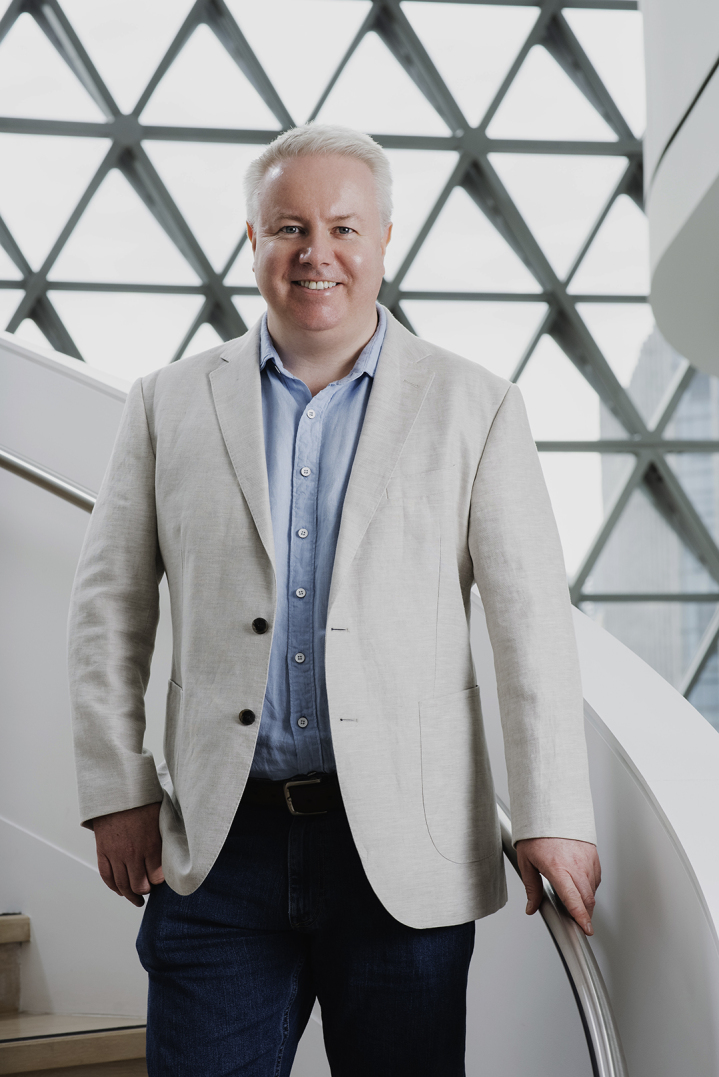
David Lynn
South Australian Health and Medical Research Institute (SAHMRI) and Flinders University