



Abstract
Rectovaginal fistula (RVF) is an abnormal connection between the rectum and vagina that affects women globally. In low- and middle-income countries (LMIC), RVF is most commonly due to obstetric complications such as prolonged labor or perineal tears, female genital mutilation and trauma such as sexual violence or iatrogenic surgical injuries. Women affected by this condition suffer from debilitating physical symptoms, social isolation, economic disempowerment, psychological trauma, low self-esteem, and loss of role fulfillment. Lack of accessible, high-quality, and effective healthcare is a major barrier to timely and safe obstetric care and to care for subsequent complications such as RVF. Additionally, social, cultural, financial, and systemic barriers put women at risk of acquiring fistula and contribute to delays in seeking and receiving care. Literature evaluating RVF repair in those able to access care offers limited information about management and outcomes. It is difficult to ascertain which surgical techniques are used. To reduce the burden of this often-preventable disease, appropriate investment in healthcare infrastructure to strengthen maternal care in LMICs is paramount. Furthermore, more standardized reporting of severity and treatment approach along with outcome data are critical to improving the quality of care for patients impacted by RVF.
Keywords: rectovaginal fistula, maternal care, obstetric complications
Prevalence and Etiology
Rectovaginal fistula (RVF) is an abnormal connection between the rectum and vagina. This connection allows the passage of stool and gas into the vagina and places a significant symptomatic burden on women with this disorder ( Fig. 1 ). The global prevalence of RVF is challenging to estimate given the lack of rigorous epidemiological studies. Most of the available literature evaluates patients who presented to the hospital for treatment that is not representative of the whole population of impacted individuals as it fails to capture those who do not seek care. In low- and middle-income countries (LMIC), RVF most commonly develops due to obstetric complications such as obstructed labor. In this setting, it is rare for RVF to occur alone, and instead, it is usually found in combination with vesicovaginal fistulas (VVF). 1 2 3 As such, RVF is often not distinguished from VVF in literature evaluating the prevalence of obstetric fistula. Despite these limitations, extrapolation from prior literature can be used to estimate the global prevalence of RVF. The World Health Organization estimates that over 2 million women in sub-Saharan Africa and South Asia are living with untreated obstetric fistulas with an incidence of 50,000 to 100,000 new cases annually. 4 While the majority of obstetric fistula are VVF, it is estimated that 6 to 22% of obstetric fistula are RVF. 5 In a study of 14,928 Ethiopian women with obstetric fistula, 13.5% were found to have RVF (0.3% had RVF in isolation, 13.2% had RVF with VVF). 1
Fig. 1.
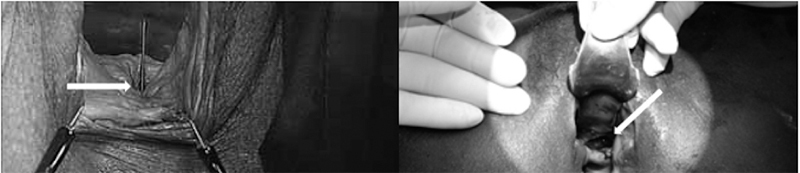
( A ) Small rectovaginal fistula secondary to obstetric injury with intact perineum and anal sphincters. Printed with permission from Dr. Ann Lowry. ( B ) Large, complex fistula with anterior sphincter disruption and loss of perineal tissue secondary to obstetric injury. The white arrow depicts vaginal fistula opening. Printed with permission from Dr. Andrew Browning.
Obstetric complications are the most frequent cause of RVF in LMIC accounting for up to 88% of RVF. 6 Other etiologies of RVF include female genital mutilation (FGM) and trauma (sexual and iatrogenic). Primary infection and malignancy have also been cited as rare causes of RVF. 7 8 Etiologies such as inflammatory bowel disease (IBD) and radiation therapy are common in Western countries, but their prevalence is not well known in LMICs where the diagnosis of IBD is uncommon and access to radiation therapy rare.
Obstetric Complications
There are two main mechanisms by which patients develop RVF as a complication of delivery. The first, and most commonly cited cause, is prolonged labor during which pressure of the fetal head on the rectovaginal septum/lower perineal body results in full-thickness necrosis. 9 Risk factors for this mechanism of injury include primiparity, lack of antenatal care, limited access to timely obstetric care, home delivery, and short stature. 1 3 5 RVF can also occur as a result of perineal tissue tearing with resulting rectal injury. While this is often cited as a cause of RVF in developed countries, 6 9 it is less commonly mentioned in the LMIC setting. This difference may be due to higher rates of home birth and lack of comprehensive peripartum diagnosis and care.
Female Genital Mutilation
The World Health Organization defines FGM as involving “the partial or total removal of external female genitalia or other injury to the female genital organs for non-medical reasons.” 10 It is estimated that 200 million girls and women have undergone FGM. 11 There are four types: clitoridectomy (type I); excision, of all or part of the clitoris and labia minora (type II); infibulation, or narrowing of the vaginal opening by stitching together parts of the vulva (type III); and finally, type IV which includes all other non-medical procedures to the female genitalia. 12 The association between FGM and RVF remains a matter of debate. 13 14 Some studies suggest that fistula may directly result from FGM due to the cutting procedure itself or as an infibulation-induced infection where abscess formation evolves into a fistula. 15 16 In general, positive, direct associations between FGM and fistulae have been found in studies evaluating the more severe types of FGM (types III and IV). Other studies describe an indirect association whereby FGM leads to obstetric complications such as prolonged labor or perineal tears that subsequently result in RVF. 17 18
Trauma
Sexual violence and iatrogenic injuries are the most common traumatic causes of RVF in LMIC. Current literature generally does not cite sexual violence as a cause of RVF but documented cases exist in Rwanda, Sierra Leone, Sudan, and the Democratic Republic of Congo. 8 19 One report of 4,715 women who suffered sexual violence in Eastern Congo found 702 (14.9%) patients had a genital fistula. The authors define genital fistula as either VVF or RVF and report that of the 702 women with genital fistula, 26.6% were obstetric and 63.4% were traumatic. 20 Iatrogenic forms of trauma may occur during gynecologic surgery or other procedures including cesarean section, hysterectomy, and episiotomy as well as damage from instrumental deliveries. 21 22
Implications and Barriers to Care
Implications
The most devastating consequences of obstetric fistula can be categorized as physical, societal, psychological, and economic. Beyond the primary physical injury that causes uncontrollable leakage of stool into the vagina, women with obstetric fistula often suffer a host of physical and psychosocial complications termed the obstructed labor injury complex. 23 The complex includes gynecologic complications (loss of menses-amenorrhoea, vaginal stenosis, secondary infertility), gastrointestinal complications (anal sphincter incompetence leading to anal incontinence), musculoskeletal injury (osteitis pubis, limb contractures, pelvic pain), neurologic injury (foot drop, complex neuropathic bladder dysfunction), dermatologic injury (urine or fecal dermatitis), urologic complications (such as renal failure, chronic kidney infections, bladder stones, urinary incontinence), and social injury (isolation, divorce, malnutrition, worsening poverty, depression and premature death).
In an integrative review of literature on societal implications of fistula, Roush divides the negative consequences of obstetric fistula into three categories: loss of role fulfillment, isolation and economic hardship. 24 Inability to participate in daily activities, religious observances, and sexual intimacy can lead to higher fear, guilt, and mental health burden. 25 26 27 Up to 95% of women with fistula also suffer from child loss (95% fetal case-fatality rate) and approximately one-third of women with obstetric fistula are separated or divorced. 1 The majority of those who are not divorced may not stay in the marriage as time goes on particularly if they remain incontinent. For example, Murphy evaluated 174 fistula patients in Nigeria and found that the proportion of fistula patients who are still married dropped from 42% in new patients to 11% in those who have lived with the fistula for more than 2 years. 28 In an Ugandan study looking at reintegration needs of patients after fistula repair, Emasu et al showed that of the 53 women who maintained their marital relationship, 23% said their partners were emotionally or physically abusive, 17% said their partner took another wife, and 11% reported their partners had other sexual partners. Only 15% reported ongoing support from their partners. 29
Women with fistula face further social stigma and isolation due to poor understanding of the causes of fistula. It is not uncommon, for example, to hear people say “She is being punished for her sins” or “she is afflicted by an evil spirit” as an explanation for fi s tula. Qualitative studies by Engender health in their Women's Dignity project in Tanzania and by Ojanuga in Nigeria indicate that stigma arises from beliefs that obstructed labor is caused by sexual misconduct by the woman, witchcraft, and evil spirits. 30 Women with fistula report being mocked and isolated by their own families. 31 32 33 They may be excluded from religious services that perpetuate the belief that there is something “wrong” or “evil” about fistula patients. 30 This deprives them of the social safety nets that are often first-line psychological first-aid. Even when there is a supportive environment, however, women with fistula may isolate themselves due to their own fear of offending others with their smell. Personal hygiene may be challenging due to lack of access to sanitary pads and even soap and water.
The extent of the economic impact of fistula is not well characterized but disability from fistula and the resulting loss of productivity has negative impact on families. The resources invested in seeking and getting medical care add additional burden. According to the Women's Dignity Project by Engender Health, the majority of women with obstetric fistula could not work at all and those who did had limited options. 30 Indeed, Emasu et al reported that only 2% of fistula patients who worked prior to their injury were able to return to work after acquiring fistula. Those who returned to work reported economic exploitation in the hands of husbands, other family members, and employers. 29
Risk Factors and Barriers to Care
The same social, cultural, and systemic barriers that put women at risk of acquiring fistula also contribute to delay in seeking, reaching, and receiving fistula care. 34 Gender inequity and systemic barriers are perhaps the most significant contributors.
Gender Inequality
The United States Agency for International Development has stated that a woman's ability to make decisions about her own healthcare is a central component to ensuring individual well-being, as well as a salient driver of population-level health improvement. 35 A girl/woman in LMIC often lacks the autonomy to decide whether or not she can attend school, when and to whom she gets married, the size of her family and whether or not she can access healthcare when she needs it. Lack of education can disadvantage girls at a very young age. Nearly one in three adolescent girls from the poorest households around the world have never attended school. 36 Lack of sexual and reproductive knowledge, or cultural inhibitions to discuss these topics, may result in acceptance of postpartum complications such as fistula as “normal postpartum healing” rather than prompting care seeking.
According to the United Nations (UN), in 2019, one in three women, aged 20 to 24 years, were married before the age of 18 in sub-Saharan Africa. 37 Girls who are married as children are at an increased risk of poverty, domestic violence, teenage childbirth, and accompanying childbirth complications, including low birth weight babies, obstetric fistula, and maternal mortality. 38 39 40 41 42 In a large review of 14,928 cases at the Hamlin Obstetric Fistula Hospital in Ethiopia, researchers found that 34.6% of the fistula patients were below the age of twenty. 1 Young age particularly in association with poor nutrition are risk factors for childbirth injuries. From an obstetrics perspective, young girls who get pregnant will have poorly developed pelvises putting them at higher risk of complications such as obstructed labor. Malnutrition increases the risk of stunted development and healing after childbirth injuries. Indeed, the average prevalence of stunting from malnutrition in children under the age of 5 is 30% in Africa as a whole and 32% in Southern Asia that is higher than the global average of 22%. 43
Systemic Barriers
Lack of accessible, effective healthcare is a major barrier to timely and safe obstetric care and care for obstetric complications such as fistula. Fewer than half of deliveries in LMICs are attended by skilled healthcare providers. 44 The UN 2030 Sustainable Development goal #3 calls for ensuring healthy lives and promoting well-being for all ages through access to universal healthcare that is defined as access for all people and communities to healthcare services that they need without financial hardship. 45 To meet the 2030 UN Sustainable development Goal #3, well-resourced and accessible healthcare infrastructures are required in addition to healthcare providers. 46
Many women who experience RVF from obstetric complications live in poor rural communities making it difficult to access fistula centers that are often located in larger cities. Even when women are able to overcome social and distance challenges, the cost of healthcare presents an additional barrier.
The low priority placed on women's health at national levels in most LMICs often leaves women with fistula to seek healthcare in low-resourced environments where surgeons are either not incentivized, supported, or well trained to provide quality care. This often leads to shifting of the responsibility to care for women with fistula to charity organizations who operate within an inadequate health system filling the gap by short-term visiting surgeons from Western countries some of whom may not have prior experience in fistula care. In the absence of proper oversight of qualifications and long-term investment in quality improvement, this can put patients at risk of poor outcomes, outcomes that are often not tracked. This practice has been criticized by some as “fistula tourism.” 47 Although these short-term surgical missions provide much needed care, they often do not invest in comprehensive team-based care models or in building healthcare resilience.
Existing Treatment Approaches and Outcomes
Published literature offers limited information about the management and outcomes of RVF repairs in LMIC. Obstructed labor is the cause of most of the fistulas in those publications. Frequently, details regarding the type of repair and the outcomes are combined with data about VVF and not reported separately for the RVF. Success at discharge is the typical outcome measure; rarely longer term follow-up is provided.
In high-resource countries, a rectal or vaginal advancement flap is the most common initial repair for RVFs in women with intact anal sphincters. A sphincteroplasty is utilized for women with a fistula and sphincter disruption. Martius or gracilis interposition flaps are used for larger or complex fistulas. It is difficult to ascertain from the published literature how often any of those techniques are used in LMIC.
Ruminjo et al reported the most detailed technical information. They describe both single- and double-layer closures of the rectal and vaginal walls presumably through the vagina. While single layer closure of the vagina was more common (70%), single- and double-layer closures of the rectum were equally common. 48 Browning and Whiteside describe a bowel anastomosis through the vagina but technical details are not included. Diverting stomas were not performed. 5 A Martius flap was used in only one patient in Ruminjo's study but in 73.6% in another study. 48 49 Use of interposition flaps is not mentioned in most publications. The option of an end-to-end sphincter repair for women with a RVF and sphincter damage is described in an article discussing training of local surgeons. 49 It is unclear how often it is utilized for repairs for RVF. Goh et al described use of a sphincter repair without diversion for women with a chronic fourth degree perineal tear or cloaca. The same article suggests that a temporary stoma should be offered for difficult, high, or recurrent RVFs. 50 51
Generally, high rates of closure of the RVF at the time of discharge are reported. Most studies do not distinguish how many attempts at repair were required ( Table 1 ). Browning and Menber reported 6-month follow-up in 18 of the original cohort of 26 women who underwent repair of an isolated or combined RVF. All remained closed at 6 months. 52 The overall success of repair of all obstetric fistulas dropped from 93.8 to 83.7% at 3 months in another study. 48 Details about the RVF repairs were not provided separately.
Table 1. Summary of outcomes in studies reporting repair of RVF.
| Study | Number of isolated RVF | Number of combined RVF/VVF | Success (all fistulas) at discharge | Success (isolated RVF) at discharge | Success (combined VVF/RVF) at discharge |
|---|---|---|---|---|---|
| Kelly 1992 49 | 31 | 121 | 84.60% | NA | |
| Muleta and Williams 1999 53 | 45 | 1 | 97.7%/100% a | 100% | |
| Raassen et al 2008 54 | 16 | 13 | 93% | NA | |
| Muleta et al 2010 1 | 52 | 1973 | 92% | NA | NA |
| Kayondo et al 2011 55 | 2 | 5 | 100% | 40% | |
| Ayaz et al 2012 56 | 10 | 93% (54.1% after 1 operation) | NA | NA | |
| Ruminjo et al 2014 48 | 22 | 42 | 93% | NA | NA |
| Browning and Whiteside 2015 5 | 45 | 79 | 97.80% | 98.70% | |
| Delamou et al 2015 57 | 23 | 27 | 100% | 58.3% b | |
| Egziabher et al 2015 58 | 48 | 86% | NA | NA | |
| Mpunga Mafu et al 2020 8 | 62 | 95.70% | NA | NA | |
| Maroyi et al 2020 59 | 149 | 39 | 92.60% |
Abbreviations: NA, not available; RVF, rectovaginal fistula; VVF, vesicovaginal fistula.
At first operation, after second surgery.
Not stated whether RVF or VVF failed.
Future Directions
Overall, obstetric trauma is a major contributor to the development of RVF in low-resource settings. This is primarily due to lack of access to quality and timely obstetric care. In LMICs, women face devastating social, psychological, and physical consequences as a result of these injuries. There is a dearth of information on the prevalence of RVF in LMICs. In studies where RVF is reported, there is limited standardized assessment of severity, reporting of surgical approaches, or outcomes beyond time of discharge, thus making it difficult to identify factors that impact clinical outcomes. In addition to the need for more population and clinical data on RVFs in LMICs, there are big opportunities to reduce the burden of this often preventable disease through appropriate investment in healthcare infrastructure to strengthen maternal care in LMICs.
Acknowledgments
We would like to thank Dr. Binyam Sirak, Dr. Yeshinah Demerew, and Dr. Zeharah Mohammed for sharing their insights into RVFs in Ethiopia.
References
- 1.Muleta M, Rasmussen S, Kiserud T. Obstetric fistula in 14,928 Ethiopian women. Acta Obstet Gynecol Scand. 2010;89(07):945–951. doi: 10.3109/00016341003801698. [DOI] [PubMed] [Google Scholar]
- 2.Kelly J, Kwast B E. Epidemiologic study of vesicovaginal fistulas in Ethiopia. Int Urogynecol J Pelvic Floor Dysfunct. 1993;4(05):278–281. [Google Scholar]
- 3.Tebeu P M, Fomulu J N, Khaddaj S, de Bernis L, Delvaux T, Rochat C H. Risk factors for obstetric fistula: a clinical review. Int Urogynecol J Pelvic Floor Dysfunct. 2012;23(04):387–394. doi: 10.1007/s00192-011-1622-x. [DOI] [PMC free article] [PubMed] [Google Scholar]
- 4.World Health Organization Fistula O.Published Accessed February 28, 20222018https://www.who.int/news-room/facts-in-pictures/detail/10-facts-on-obstetric-fistula.
- 5.Browning A, Whiteside S. Characteristics, management, and outcomes of repair of rectovaginal fistula among 1100 consecutive cases of female genital tract fistula in Ethiopia. Int J Gynaecol Obstet. 2015;131(01):70–73. doi: 10.1016/j.ijgo.2015.05.012. [DOI] [PubMed] [Google Scholar]
- 6.Champagne B J, McGee M F. Rectovaginal fistula. Surg Clin North Am. 2010;90(01):69–82. doi: 10.1016/j.suc.2009.09.003. [DOI] [PubMed] [Google Scholar]
- 7.Tebeu P, Ekono R, Fouogue J, Halle G, Fokom J, Rochat C. Pattern of non-obstetric infectious recto-vaginal fistula: a case series and literature review in Cameroon, Central Africa. Int J Reprod Contracept Obstet Gynecol. 2016;5(07):2239–2242. [Google Scholar]
- 8.Mpunga Mafu M, Banze D F, Nembunzu D. Frequency and management of non-obstetric fistula in the Democratic Republic of Congo: experience from the Fistula Care Plus project. Trop Med Int Health. 2020;25(06):687–694. doi: 10.1111/tmi.13394. [DOI] [PMC free article] [PubMed] [Google Scholar]
- 9.Dawes A J, Jensen C C. Rectovaginal fistulas secondary to obstetrical injury. Clin Colon Rectal Surg. 2021;34(01):28–39. doi: 10.1055/s-0040-1714284. [DOI] [PMC free article] [PubMed] [Google Scholar]
- 10.World Health Organization Mutilation F G.Published Accessed February 28, 20222020https://www.who.int/news-room/fact-sheets/detail/female-genital-mutilation.
- 11.Female Genital Mutilation (FGM) UNICEF 2021. Accessed February 28, 2022 at:https://data.unicef.org/topic/child-protection/female-genital-mutilation/
- 12.Female genital mutilation. World Health Organization 2012. Accessed February 28, 2022 at:https://www.who.int/news-room/fact-sheets/detail/female-genital-mutilation
- 13.Sripad P, Ndwiga C, Keya K T. New York: Population Council; 2017. Exploring the association between FGM/C and fistula: a review of the evidence. Evidence to End FGM/C: Research to Help Women Thrive. [Google Scholar]
- 14.Matanda D J, Sripad P, Ndwiga C. Is there a relationship between female genital mutilation/cutting and fistula? A statistical analysis using cross-sectional data from Demographic and Health Surveys in 10 sub-Saharan Africa countries. BMJ Open. 2019;9(07):e025355. doi: 10.1136/bmjopen-2018-025355. [DOI] [PMC free article] [PubMed] [Google Scholar]
- 15.Jiménez Ruiz I, Almansa Martínez P, Pastor Bravo M, Pina Roche F. Approximation to the ablation/female genital mutilation (A/FGM from the transcultural nursing. A bibliographical revisión. Enferm Glob. 2012;11(04):411–424. [Google Scholar]
- 16.Magoha G A, Magoha O B. Current global status of female genital mutilation: a review. East Afr Med J. 2000;77(05):268–272. doi: 10.4314/eamj.v77i5.46631. [DOI] [PubMed] [Google Scholar]
- 17.Mabeya H.Characteristics of women admitted with obstetric fistula in the rural hospitals in West Pokot, Kenya 2004. Accessed February 28, 2022 at:https://www.gfmer.ch/Medical_education_En/PGC_RH_2004/Obstetric_fistula_Kenya.htm
- 18.Jaldesa G W, Askew I, Njue C, Wanjiru M.Female genital cutting among the Somali of Kenya and management of its complications. 2005. Accessed February 28, 2022 at:http://www.popcouncil.org/uploads/pdfs/frontiers/FR_FinalReports/Kenya_Somali.pdf
- 19.Traumatic Gynecologic Fistula: A Consequence of Sexual Violence in Conflict Settings. 2006.
- 20.Longombe A O, Claude K M, Ruminjo J. Fistula and traumatic genital injury from sexual violence in a conflict setting in Eastern Congo: case studies. Reprod Health Matters. 2008;16(31):132–141. doi: 10.1016/S0968-8080(08)31350-0. [DOI] [PubMed] [Google Scholar]
- 21.Naidoo T D, Moodley J, Naidoo S. Genital tract fistula: a case series from a tertiary centre in South Africa. Int Urogynecol J Pelvic Floor Dysfunct. 2018;29(03):383–389. doi: 10.1007/s00192-017-3396-2. [DOI] [PubMed] [Google Scholar]
- 22.Barageine J K, Tumwesigye N M, Byamugisha J K, Almroth L, Faxelid E. Risk factors for obstetric fistula in Western Uganda: a case control study. PLoS One. 2014;9(11):e112299. doi: 10.1371/journal.pone.0112299. [DOI] [PMC free article] [PubMed] [Google Scholar]
- 23.Wall L L.Obstetric vesicovaginal fistula as an international public-health problem Lancet 2006368(9542):1201–1209. [DOI] [PubMed] [Google Scholar]
- 24.Roush K M. Social implications of obstetric fistula: an integrative review. J Midwifery Womens Health. 2009;54(02):e21–e33. doi: 10.1016/j.jmwh.2008.09.005. [DOI] [PubMed] [Google Scholar]
- 25.Touhidi Nezhad F, Jalali R, Karimi F. Women's experiences of rectovaginal fistula: an ethno- religious experience. BMC Womens Health. 2020;20(01):130. doi: 10.1186/s12905-020-00992-w. [DOI] [PMC free article] [PubMed] [Google Scholar]
- 26.Gebresilase Y T. A qualitative study of the experience of obstetric fistula survivors in Addis Ababa, Ethiopia. Int J Womens Health. 2014;6:1033–1043. doi: 10.2147/IJWH.S68382. [DOI] [PMC free article] [PubMed] [Google Scholar]
- 27.Changole J, Thorsen V C, Kafulafula U. “I am a person but I am not a person”: experiences of women living with obstetric fistula in the central region of Malawi. BMC Pregnancy Childbirth. 2017;17(01):433. doi: 10.1186/s12884-017-1604-1. [DOI] [PMC free article] [PubMed] [Google Scholar]
- 28.Murphy M. Social consequences of vesico-vaginal fistula in northern Nigeria. J Biosoc Sci. 1981;13(02):139–150. doi: 10.1017/s0021932000013304. [DOI] [PubMed] [Google Scholar]
- 29.Emasu A, Ruder B, Wall L L, Matovu A, Alia G, Barageine J K. Reintegration needs of young women following genitourinary fistula surgery in Uganda. Int Urogynecol J Pelvic Floor Dysfunct. 2019;30(07):1101–1110. doi: 10.1007/s00192-019-03896-y. [DOI] [PMC free article] [PubMed] [Google Scholar]
- 30.Bangser MM and M. Risk and Resilience: Obstetric fistula in Tanzania. Women's Dign Proj Tanzania, EngenderHealth, USA 2006. Accessed February 28, 2022 at:https://www.engenderhealth.org/files/pubs/maternal-health/risk-and-resilience-obstetric-fistula-in-tanzania.pdf
- 31.Ojanuga D. Social work practice with childbirth-injured women in Nigeria. Health Soc Work. 1994;19(02):120–124. doi: 10.1093/hsw/19.2.120. [DOI] [PubMed] [Google Scholar]
- 32.Turan J M, Johnson K, Polan M L. Experiences of women seeking medical care for obstetric fistula in Eritrea: implications for prevention, treatment, and social reintegration. Glob Public Health. 2007;2(01):64–77. doi: 10.1080/17441690600648728. [DOI] [PubMed] [Google Scholar]
- 33.Muleta M, Hamlin E C, Fantahun M, Kennedy R C, Tafesse B. Health and social problems encountered by treated and untreated obstetric fistula patients in rural Ethiopia. J Obstet Gynaecol Can. 2008;30(01):44–50. doi: 10.1016/S1701-2163(16)32712-8. [DOI] [PubMed] [Google Scholar]
- 34.Baker Z, Bellows B, Bach R, Warren C. Barriers to obstetric fistula treatment in low-income countries: a systematic review. Trop Med Int Health. 2017;22(08):938–959. doi: 10.1111/tmi.12893. [DOI] [PubMed] [Google Scholar]
- 35.Kishor S, Subaiya L.Understanding Women's Empowerment: A Comparative Analysis of Demographic and Health Surveys (DHS) Data 2008. Accessed February 28, 2022 at:https://dhsprogram.com/pubs/pdf/CR20/CR20.pdf
- 36.UNICEF Addressing the learning crisis: An urgent need to better finance education for the poorest children 2020. Accessed February 28, 2022 at:https://www.unicef.org/media/63896/file/Addressing-the-learning-crisis-advocacy-brief-2020.pdf
- 37.Goal 5: Achieve gender equality and empower all women and girls. United Nations. 2020. Accessed February 28, 2022 at:https://www.un.org/sustainabledevelopment/gender-equality/
- 38.Clark S. Early marriage and HIV risks in sub-Saharan Africa. Stud Fam Plann. 2004;35(03):149–160. doi: 10.1111/j.1728-4465.2004.00019.x. [DOI] [PubMed] [Google Scholar]
- 39.Delprato M, Akyeampong K, Dunne M. Intergenerational education effects of early marriage in sub-Saharan Africa. World Dev. 2017;91:173–192. [Google Scholar]
- 40.Yount K M, Crandall A, Cheong Y F. Women's age at first marriage and long-term economic empowerment in Egypt. World Dev. 2018;102:124–134. doi: 10.1016/j.worlddev.2017.09.013. [DOI] [PMC free article] [PubMed] [Google Scholar]
- 41.Nour N M. Health consequences of child marriage in Africa. Emerg Infect Dis. 2006;12(11):1644–1649. doi: 10.3201/eid1211.060510. [DOI] [PMC free article] [PubMed] [Google Scholar]
- 42.Raj A, Boehmer U. Girl child marriage and its association with national rates of HIV, maternal health, and infant mortality across 97 countries. Violence Against Women. 2013;19(04):536–551. doi: 10.1177/1077801213487747. [DOI] [PubMed] [Google Scholar]
- 43.United Nations-World Health Organization-The World Bank Group UNICEF-WHO-The World Bank: Joint child malnutrition estimates - Levels and trendsReport2019
- 44.UNICEF Care D.2021. Accessed February 28, 2022 at:https://data.unicef.org/topic/maternal-health/delivery-care/
- 45.Transforming our world: the 2030 Agenda for Sustainable Development. United Nations. Accessed February 28, 2022 at:https://sdgs.un.org/2030agenda
- 46.Universal Health Coverage (UHC) World Health Organization 2021. Accessed February 28, 2022 at:https://www.who.int/news-room/fact-sheets/detail/universal-health-coverage-(uhc)
- 47.Wall L L, Arrowsmith S D, Lassey A T, Danso K. Humanitarian ventures or ‘fistula tourism?’: the ethical perils of pelvic surgery in the developing world. Int Urogynecol J Pelvic Floor Dysfunct. 2006;17(06):559–562. doi: 10.1007/s00192-005-0056-8. [DOI] [PubMed] [Google Scholar]
- 48.Ruminjo J K, Frajzyngier V, Bashir Abdullahi M. Clinical procedures and practices used in the perioperative treatment of female genital fistula during a prospective cohort study. BMC Pregnancy Childbirth. 2014;14(01):220. doi: 10.1186/1471-2393-14-220. [DOI] [PMC free article] [PubMed] [Google Scholar]
- 49.Kelly J. Vesico-vaginal and recto-vaginal fistulae. J R Soc Med. 1992;85(05):257–258. doi: 10.1177/014107689208500505. [DOI] [PMC free article] [PubMed] [Google Scholar]
- 50.Goh J TW, Natukunda H, Singasi I, Kabugho E, Browning A, Krause H G. Surgical repair and follow-up of chronic 4th degree obstetric perineal tear (total perineal defect) in 2 centres in eastern Africa. Int Urogynecol J Pelvic Floor Dysfunct. 2021;32(09):2437–2442. doi: 10.1007/s00192-021-04841-8. [DOI] [PMC free article] [PubMed] [Google Scholar]
- 51.Goh J TW, Tan S BM, Natukunda H, Singasi I, Krause H G. Outcomes following surgical repair using layered closure of unrepaired 4th degree perineal tear in rural western Uganda. Int Urogynecol J Pelvic Floor Dysfunct. 2016;27(11):1661–1666. doi: 10.1007/s00192-016-3024-6. [DOI] [PubMed] [Google Scholar]
- 52.Browning A, Menber B. Women with obstetric fistula in Ethiopia: a 6-month follow up after surgical treatment. BJOG. 2008;115(12):1564–1569. doi: 10.1111/j.1471-0528.2008.01900.x. [DOI] [PubMed] [Google Scholar]
- 53.Muleta M, Williams G. Postcoital injuries treated at the Addis Ababa Fistula Hospital, Effects of bypass on ocular ischaemic syndrome caused by reversed flow in the ophthalmic a rt e ry. Lancet. 1999;354:2051–2052. doi: 10.1016/s0140-6736(99)05161-2. [DOI] [PubMed] [Google Scholar]
- 54.Raassen T J, Verdaasdonk E G, Vierhout M E. Prospective results after first-time surgery for obstetric fistulas in East African women. Int Urogynecol J Pelvic Floor Dysfunct. 2008;19(01):73–79. doi: 10.1007/s00192-007-0389-6. [DOI] [PubMed] [Google Scholar]
- 55.Kayondo M, Wasswa S, Kabakyenga J. Predictors and outcome of surgical repair of obstetric fistula at a regional referral hospital, Mbarara, western Uganda. BMC Urol. 2011;11:23. doi: 10.1186/1471-2490-11-23. [DOI] [PMC free article] [PubMed] [Google Scholar]
- 56.Ayaz A, un Nisa R, Anwar S, Mohammad T.Vesicovaginal and rectovaginal fistulas: 12-year results of surgical treatment J Ayub Med Coll Abbottabad 201224(3–4):25–27. [PubMed] [Google Scholar]
- 57.Delamou A, Diallo M, Beavogui A H. Good clinical outcomes from a 7-year holistic programme of fistula repair in Guinea. Trop Med Int Health. 2015;20(06):813–819. doi: 10.1111/tmi.12489. [DOI] [PMC free article] [PubMed] [Google Scholar]
- 58.Egziabher T G, Eugene N, Ben K, Fredrick K. Obstetric fistula management and predictors of successful closure among women attending a public tertiary hospital in Rwanda: a retrospective review of records. BMC Res Notes. 2015;8(01):774. doi: 10.1186/s13104-015-1771-y. [DOI] [PMC free article] [PubMed] [Google Scholar]
- 59.Maroyi R, Keyser L, Hosterman L, Notia A, Mukwege D.The mobile surgical outreach program for management of patients with genital fistula in the Democratic Republic of Congo Int J Gynaecol Obstet 2020148(Suppl 1)27–32. [DOI] [PMC free article] [PubMed] [Google Scholar]