



Producing the International Society of Arthroplasty Registries (ISAR) Annual Meeting while simultaneously working toward the goal of improving joint replacement surgery proved to be a challenge during the COVID-19 pandemic. For the second year in a row, we converted the annual meeting into a virtual event because of restrictions related to the pandemic. But despite the condensed format, the 10th International Congress of Arthroplasty Registries, hosted by the Danish Hip Arthroplasty Register, brought together a large group of international experts who covered a wide variety of arthroplasty topics. Indeed, these proceedings showed that despite the obstacles outside of our control, arthroplasty research continues to thrive in our international organization.
For example, two papers [7, 8] combined data from several registries using distributed data analysis. These research collaborations build on harmonized methods and pooled aggregate data across registries to help us address research questions that could not be answered in the context of a single registry. In particular, those that need big populations; small, expected differences; or unusual exposures or outcomes. In one study, data from six registries were combined to analyze the risk of revision when dual-mobility cups were used compared to standard cups in arthroplasty for hip fractures. In terms of overall revision risk, the dual-mobility cups had similar outcomes as standard cups. Until results from ongoing randomized register-based trials with dislocation as endpoint are complete [6, 13, 14], these results reduce concerns about rapid increase in the use of dual-mobility constructs for fractures.
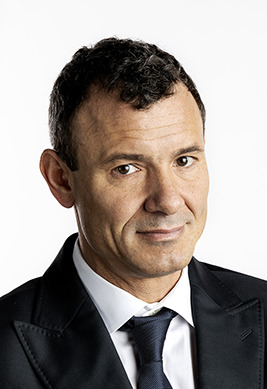
Ola Rolfson MD, PhD
The vast majority of researchers who use arthroplasty registries do so to learn more about the outcomes following primary joint replacement. Considering the relatively high risk of repeat revision following first THA revision [3] and the challenges in undertaking conclusive single-center clinical trials on revision surgery, I anticipate more registry studies addressing results, including repeat revision, other complications, and patient-reported outcomes, following revision surgery in the years to come. In addition to highlighting the high frequency of repeat revision, this paper not only demonstrates how revision influences the risk for repeat revision but also the surgical factors that may lead to repeat revisions, including the choice of fixation method.
Another study from the Australian registry demonstrated greater survivorship for highly crosslinked polyethylene (HXLPE) in total shoulder arthroplasty compared to conventional polyethylene [10]. The benefits of highly crosslinked bearings are well documented for hip and knee arthroplasty [4, 5, 11] but, to my knowledge, Page et al. [10] is the first study to establish this relationship for shoulder arthroplasty. The clinical message is clear—use highly crosslinked bearings for total shoulder arthroplasty when available. But there are other questions about HXLPE; for example, the stabilization of HXLPE with antioxidants was developed to enhance the material’s resistance to oxidation. To my knowledge, using arthroplasty registers for implant survivorship studies on antioxidant-stabilized polyethylene inlays in total knee replacement have not been performed previously. In this year’s ISAR proceedings in CORR®, a paper from the American Joint Replacement Register found no benefits in terms of revision risk for antioxidant-stabilized polyethylene compared to both highly crosslinked and conventional polyethylene [9].
Our international organization would like to develop more patient-reported outcome measures (PROMs) to better assess joint replacement [2]. Under the lead of ISAR’s PROMs working group, PROMs data from 13 registries around the world were analyzed. The seemingly large variation in changes in PROM scores across hip and knee arthroplasty registries was partially explained by differences in age, gender, and importantly, the patients’ preoperative scores [8]. The authors concluded that differences in patient-reported outcomes may reflect differences in clinical practice and treatment effect. This conclusion was strengthened by findings from Australia, where poor patient-reported outcomes were found to be associated with a higher risk of early revision following TKA [1].
As mentioned above, methods to validate data are a key component of any good arthroplasty register. After the introduction of a barcode scanning system for the collection of data, the Irish Arthroplasty Register undertook a validation of completeness and accuracy of implant records [12]. This study design is a great example of how to validate a new data collection method and improve quality of information submitted to the register.
As of this writing, we are planning on meeting in person in September 2022 when the Irish Arthroplasty Register organizes their 11th congress in Dublin, Ireland. The 2023 congress will be organized by the Canadian Joint Replacement Registry in Montreal, and in 2024 the German National Arthroplasty Registry will host the meeting in Berlin. And, of course, we expect the best papers from these meetings will be shared with you here, in Clinical Orthopaedics and Related Research.
Footnotes
The author certifies that there are no funding or commercial associations (consultancies, stock ownership, equity interest, patent/licensing arrangements, etc.) that might pose a conflict of interest in connection with the submitted article related to the author or any immediate family members.
All ICMJE Conflict of Interest Forms for authors and Clinical Orthopaedics and Related Research® editors and board members are on file with the publication and can be viewed on request.
The opinions expressed are those of the writer, and do not reflect the opinion or policy of CORR® or The Association of Bone and Joint Surgeons®.
References
- 1.Ackerman IN, Harris IA, Cashman K, Rowden N, Lorimer M, Graves SE. Poor knee-specific and generic patient-reported outcome measure scores at 6 months are associated with early revision knee arthroplasty: a study from the Australian Orthopaedic Association National Joint Replacement Registry. Clin Orthop Relat Res. 2022;480:1899-1909. [DOI] [PMC free article] [PubMed] [Google Scholar]
- 2.Bohm ER, Kirby S, Trepman E, et al. Collection and reporting of patient-reported outcome measures in arthroplasty registries: multinational survey and recommendations. Clin Orthop Relat Res. 2021;479:2151-2166. [DOI] [PMC free article] [PubMed] [Google Scholar]
- 3.de Steiger RN, Lewis PL, Harris I, Lorimer MF, Graves SE. What is the outcome of the first revision procedure of primary THA for osteoarthritis? A study from the Australian Orthopaedic Association National Joint Replacement Registry. Clin Orthop Relat Res. 2022;480:1952-1970. [DOI] [PMC free article] [PubMed] [Google Scholar]
- 4.de Steiger R, Lorimer M, Graves SE. Cross-linked polyethylene for total hip arthroplasty markedly reduces revision surgery at 16 years. J Bone Joint Surg Am. 2018;100:1281-1288. [DOI] [PubMed] [Google Scholar]
- 5.de Steiger RN, Muratoglu O, Lorimer M, Cuthbert AR, Graves SE. Lower prosthesis-specific 10-year revision rate with crosslinked than with non-crosslinked polyethylene in primary total knee arthroplasty. Acta Orthop. 2015;86:721-727. [DOI] [PMC free article] [PubMed] [Google Scholar]
- 6.Farey JE, Adie S, Harris IA; the DISTINCT Group. DISTINCT: dual-mobility versus standard total hip arthroplasty in femoral neck fractures, a registry-nested, cluster-randomised trial. ACTRN12621000069853. Available at: https://www.anzctr.org.au/Trial/Registration/TrialReview.aspx?id=381041&isReview=true. Accessed July 29th, 2022. [DOI] [PMC free article] [PubMed]
- 7.Farey JE, Masters J, Cuthbert AR, et al. Do Dual-mobility cups reduce revision risk in femoral neck fractures compared with conventional THA designs? An international meta-analysis of arthroplasty registries. Clin Orthop Relat Res. 2022;480:1912-1925. [DOI] [PMC free article] [PubMed] [Google Scholar]
- 8.Ingelsrud LH, Wilkinson JM, Overgaard S, et al. How do patient-reported outcome scores in international hip and knee arthroplasty registries compare? Clin Orthop Relat Res. 2022;480:1884-1896. [DOI] [PMC free article] [PubMed] [Google Scholar]
- 9.Kendall J, Pelt CE, Imlay B, Yep P, Mullen K, Kagan R. No reduction in revision risk associated with highly cross-linked polyethylene with or without antioxidants over conventional polyethylene in total knee arthroplasty; analysis from the American Joint Replacement Registry. Clin Orthop Relat Res. 2022;480:1929-1936. [DOI] [PMC free article] [PubMed] [Google Scholar]
- 10.Page RS, Alder-Price AC, Rainbird S, et al. Reduced revision rates in total shoulder arthroplasty with crosslinked polyethylene: results from the Australian Orthopaedic Association National Joint Replacement Registry. Clin Orthop Relat Res. 2022;480:1940-1949. [DOI] [PMC free article] [PubMed] [Google Scholar]
- 11.Paxton EW, Inacio MC, Namba RS, Love R, Kurtz SM. Metal-on-conventional polyethylene total hip arthroplasty bearing surfaces have a higher risk of revision than metal-on-highly crosslinked polyethylene: results from a US registry. Clin Orthop Relat Res. 2015;473:1011-1021. [DOI] [PMC free article] [PubMed] [Google Scholar]
- 12.Russell SP, Broderick JM, O’Dea SD, Fahey E, Kenny P, Cashman J. Barcode scanning improve data capture in a national register? Findings from the Irish National Orthopaedic Register. Clin Orthop Relat Res. 2022;480:1971-1976. [DOI] [PMC free article] [PubMed] [Google Scholar]
- 13.Van Beers L, Van Der Wal BCH, Van Loon TG, et al. Study protocol: effectiveness of dual-mobility cups compared with uni-polar cups for preventing dislocation after primary total hip arthroplasty in elderly patients - design of a randomized controlled trial nested in the Dutch Arthroplasty Registry. Acta Orthop. 2020;91:514-519. [DOI] [PMC free article] [PubMed] [Google Scholar]
- 14.Wolf O, Mukka S, Notini M, et al. Study protocol: the DUALITY trial-a register-based, randomized controlled trial to investigate dual-mobility cups in hip fracture patients. Acta Orthop. 2020;91:506-513. [DOI] [PMC free article] [PubMed] [Google Scholar]