


Abstract
Background
Malaria remains an important public health problem. Research in 1900 suggested house modifications may reduce malaria transmission. A previous version of this review concluded that house screening may be effective in reducing malaria. This update includes data from five new studies.
Objectives
To assess the effects of house modifications that aim to reduce exposure to mosquitoes on malaria disease and transmission.
Search methods
We searched the Cochrane Infectious Diseases Group Specialized Register; Central Register of Controlled Trials (CENTRAL), published in the Cochrane Library; MEDLINE (PubMed); Embase (OVID); Centre for Agriculture and Bioscience International (CAB) Abstracts (Web of Science); and the Latin American and Caribbean Health Science Information database (LILACS) up to 25 May 2022. We also searched the World Health Organization International Clinical Trials Registry Platform, ClinicalTrials.gov, and the ISRCTN registry to identify ongoing trials up to 25 May 2022.
Selection criteria
Randomized controlled trials, including cluster‐randomized controlled trials (cRCTs), cross‐over studies, and stepped‐wedge designs were eligible, as were quasi‐experimental trials, including controlled before‐and‐after studies, controlled interrupted time series, and non‐randomized cross‐over studies.
We sought studies investigating primary construction and house modifications to existing homes reporting epidemiological outcomes (malaria case incidence, malaria infection incidence or parasite prevalence). We extracted any entomological outcomes that were also reported in these studies.
Data collection and analysis
Two review authors independently selected eligible studies, extracted data, and assessed the risk of bias. We used risk ratios (RR) to compare the effect of the intervention with the control for dichotomous data. For continuous data, we presented the mean difference; and for count and rate data, we used rate ratios. We presented all results with 95% confidence intervals (CIs). We assessed the certainty of evidence using the GRADE approach.
Main results
One RCT and six cRCTs met our inclusion criteria, with an additional six ongoing RCTs. We did not identify any eligible non‐randomized studies. All included trials were conducted in sub‐Saharan Africa since 2009; two randomized by household and four at the block or village level. All trials assessed screening of windows, doors, eaves, ceilings, or any combination of these; this was either alone, or in combination with roof modification or eave tube installation (an insecticidal "lure and kill" device that reduces mosquito entry whilst maintaining some airflow). In one trial, the screening material was treated with 2% permethrin insecticide. In five trials, the researchers implemented the interventions. A community‐based approach was adopted in the other trial.
Overall, the implementation of house modifications probably reduced malaria parasite prevalence (RR 0.68, 95% CI 0.57 to 0.82; 5 trials, 5183 participants; moderate‐certainty evidence), although an inconsistent effect was observed in a subpopulation of children in one study. House modifications reduced moderate to severe anaemia prevalence (RR 0.70, 95% CI 0.55 to 0.89; 3 trials, 3643 participants; high‐certainty evidence). There was no consistent effect on clinical malaria incidence, with rate ratios ranging from 0.38 to 1.62 (3 trials, 3365 participants, 4126.6 person‐years). House modifications may reduce indoor mosquito density (rate ratio 0.63, 95% CI 0.30 to 1.30; 4 trials, 9894 household‐nights; low‐certainty evidence), although two studies showed little effect on this parameter.
Authors' conclusions
House modifications – largely screening, sometimes combined with insecticide and lure and kill devices – were associated with a reduction in malaria parasite prevalence and a reduction in people with anaemia. Findings on malaria incidence were mixed. Modifications were also associated with lower indoor adult mosquito density, but this effect was not present in some studies.
Plain language summary
House modifications for preventing malaria
What is the aim of this review?
House modifications, such as screening (covering or closing potential house entry points for mosquitoes with mesh or other materials) or the use of specific house materials or designs, such as metals roofs instead of thatched roofs, or elevated rooms, may contribute to reducing the burden of malaria. They work by preventing mosquitoes from entering houses, and reducing the number of bites householders receive indoors. Some house modifications under consideration additionally aim to kill any mosquitoes that attempt to enter houses by incorporating insecticide into the modification.
Key messages
Modifying houses to prevent mosquitoes entering the home was associated with a reduction in the proportion of people with malaria parasites in their blood and reduced anaemia, based on evidence from seven studies conducted in Africa. The effect of house modifications on the number of cases of malaria identified during specific time periods was mixed, and the effect on indoor mosquito density was less clear due to differences between study results. Six trials awaiting publication are likely to enrich the current evidence base.
What was studied in the review?
This review summarized studies investigating the effects of house modifications on human malaria outcomes. If studies additionally reported the effect of the house modifications on mosquitoes (those with potential to carry the parasites that cause malaria), or householders' views, we also summarized this data. After searching for relevant studies, we included seven published trials and six ongoing trials. All complete trials assessed screening (of windows, doors, eaves, ceilings, or any combination of these), either alone or in combination with roof modification or eave tube installation (a "lure and kill" device positioned in eave gaps to attract and kill mosquitoes). One trial incorporated insecticide into their house screening.
What are the main results of the review?
The seven included trials all assessed either the number of cases of malaria identified during specific time periods in people living in the house, the proportion of people with malaria parasites in their blood, or both. Overall, the studies showed that people living in modified houses were around 32% less likely to have malaria parasites in their blood, and were 30% less likely to experience moderate or severe anaemia. Our confidence in these results was moderate to high. The studies demonstrated 37% reduction in the number of mosquitoes trapped indoors at night in modified houses, although this result varied between trials. The trials showed mixed results for the likelihood of experiencing an episode of clinical malaria (caused by Plasmodium falciparum parasites), ranging from a 62% lower rate to a 68% higher rate of malaria for people living in modified houses. Due to the high inconsistency between these results, we have very low confidence in this evidence.
How up to date is this review?
The review authors searched for studies available up to 25 May 2022.
Summary of findings
Summary of findings 1. Summary of findings table 1.
|
Patient or population: children and adults at risk of malaria Setting: sub‐Saharan Africa (The Gambia, Ethiopia, Kenya, Malawi, Cote d'Ivoire) Intervention: screening modifications alone (5 studies) or with other modifications (2 studies)a Comparison: no modification | ||||||
| Outcomes | Anticipated absolute effects* (95% CI) | Relative effect (95% CI) | No of participants (studies) | Certainty of the evidence (GRADE) | Comments | |
| Risk with control | Risk with house modification | |||||
|
Malaria parasite prevalence Follow‐up: range 6 months to 2 years |
115 per 1000 | 78 per 1000 (65 to 94) | RR 0.68 (0.57 to 0.82) |
5183 ** (5 RCTs) |
⨁⨁⨁⊝ Moderateb Due to imprecision |
House modifications probably reduce malaria parasite prevalence. |
|
Anaemia prevalence Follow up: range 6 months to 2 years |
131 per 1000 | 92 per 1000 (72 to 117) |
RR 0.70 (0.55 to 0.89) |
3643 (3 RCTs) |
⨁⨁⨁⨁ Highc,d |
House modifications reduce the prevalence of anaemia (moderate or severe). |
|
Clinical malaria incidence Follow‐up: range 6 months to 2 years |
Pooled analysis not appropriate due to substantial qualitative heterogeneity. Using the highest and lowest point estimates from the included studies, the rate of malaria incidence ranged from a 68% increase in screened houses (Pinder 2021; rate ratio 1.68, 95% CI 1.11 to 2.55) to a 62% decrease (Getawen 2018; rate ratio 0.38, 95% CI 0.18 to 0.82). | 3365 (3 RCTs) |
⨁⊝⊝⊝ Very lowe,f Due to inconsistency and indirectness |
Qualitative heterogeneity precluded a meta‐analysis. | ||
| Indoor adult mosquito density | 8.82 per house night | 5.56 per house night (2.6 to 11.5) |
Rate ratio 0.63 (0.30 to 1.30) |
9894 household‐nights (4 RCTs) |
⊕⊕⊝⊝ Lowd,g,h Due to imprecision and inconsistency |
House modifications may reduce indoor adult mosquito density. |
| * The risk in the intervention group (and its 95% CI) is based on the assumed risk in the comparison group and the relative effect of the intervention (and its 95% CI). ** Participant numbers for McCann 2021 and Ng'ang'a 2020 were calculated from the number of participants selected per survey, but some participants may have been selected for more than one survey. CI: confidence interval; RCT: randomized controlled trial; RR: risk ratio | ||||||
| GRADE Working Group grades of evidence High certainty: we are very confident that the true effect lies close to that of the estimate of the effect. Moderate certainty: we are moderately confident in the effect estimate. The true effect is likely to be close to the estimate of the effect, but there is a possibility that it is substantially different. Low certainty: our confidence in the effect estimate is limited. The true effect may be substantially different from the estimate of the effect. Very low certainty: we have very little confidence in the effect estimate. The true effect is likely to be substantially different from the estimate of effect. | ||||||
aAll studies implemented screening to protect homes from mosquito entry. In addition, one study also replaced thatch roofs with metal (Pinder 2021), and one study also installed eave tubes (Sternberg 2021). bDowngraded by one level for imprecision due to wide CIs. If risk of bias had influenced the effect in the meta‐analysis, we would have downgraded further for risk of bias. cNot downgraded: 30% reduction in anaemia is an important effect, and the least optimistic effect of 11% is also an important effect. dOne study contributing to these outcomes was at high risk of bias due to doubt relating to the identification of participants and randomization of clusters. Sensitivity analysis shows no effect on the overall result, so we did not downgrade for risk of bias. eDowngraded by two levels for inconsistency due to high qualitative heterogeneity between studies. One study (Pinder 2021) indicated a paradoxical increase in malaria incidence. The trial authors noted that high indoor temperatures in modified houses may have encouraged participants to go indoors to bed later, there was damage to the modifications, the study was carried out in a highly researched area that was receiving high coverage of other malaria interventions, and participants in modified houses left doors open for ventilation. fDowngraded by one level for indirectness: one study reported that an eave closure campaign in the study area had preceded the trial, meaning the trial cohort consisted of individuals who ignored or were unaware of the campaign (Pinder 2021). This study cohort is unlikely to be representative of the general population. gDowngraded by one level for imprecision due to wide CIs. hDowngraded by one level for inconsistency due to qualitative heterogeneity between studies.
Background
Description of the condition
Preventing malaria
Malaria is a life‐threatening parasitic disease caused by Plasmodium species, and is transmitted by female Anopheles mosquitoes (WHO 2018). Plasmodium falciparum is responsible for most malaria deaths, and 96% of those deaths occur in Africa (WHO 2022). Although malaria can be prevented, the World Health Organization (WHO) reports that overall progress in malaria control appears to have plateaued for the first time since the turn of the century, and this has been exacerbated by the COVID‐19 pandemic (WHO 2017a; WHO 2018; WHO 2021). In 2020, there were an estimated 241 million cases worldwide (14 million more cases than in 2019) (WHO 2021). In sub‐Saharan Africa, the major malaria vectors are Anopheles gambiae sensu lato and Anopheles funestus. These vectors are endophilic (resting and inhabiting indoors), endophagic (indoor‐biting), and night‐biting. These characteristics mean that most malaria transmission occurs indoors (Huho 2013).
The most widely used malaria prevention tools over the past two decades include vector control tools such as indoor residual spraying (IRS) and insecticide‐treated nets (ITNs), making notable contributions to the reductions in malaria observed in the early 21st century (Bhatt 2015). In 2020, 65% of sub‐Saharan households owned at least one ITN, a 60% increase since 2000. The percentage of the at‐risk population protected by IRS in malaria‐endemic countries declined by 3.2% to 2.6% since 2010, which may represent a change in prevention strategy (WHO 2021). These interventions target malaria vectors once they have entered the home and can fail when there is inadequate coverage or usage of interventions, when interventions are not durable, or when vectors are not susceptible to the insecticide being used. Widespread insecticide resistance observed across Africa may be contributing to decreased susceptibility to the primary insecticides (Ranson 2016; WHO 2017b).
These challenges have led researchers and policy specialists to explore other approaches to preventing malaria, especially options that are not reliant on the efficacy of the most frequently used class of insecticides: pyrethroids. In line with this, there is renewed interest in aspects of house design that may help prevent mosquitoes entering houses, biting people, and transmitting malaria. Although house modifications have been widely used for malaria prevention in the past (Gachelin 2018), in the late 1940s, large‐scale IRS campaigns were implemented as dichlorodiphenyltrichloroethane (DDT) became available, which steered vector control programmes towards insecticidal tools. In light of the challenges associated with current vector control tools, specialists are now re‐examining how housing may help protect people from malaria infection.
The 2020 Cochrane Review 'House modifications for preventing malaria' demonstrated the potential for house screening to reduce the incidence of clinical malaria for people living in modified houses, as well as the potential to reduce the prevalence of parasitaemia and anaemia (Furnival‐Adams 2020; minor amendment published in Furnival‐Adams 2021). Only two studies contributed results to this version of the review, meaning the evidence for the effect of house screening for preventing malaria was mainly low‐certainty, due to imprecision.
Housing and protection
Screening of homes using wire gauze to protect against flying insects has been practised by communities since before malaria transmission by female Anopheles mosquitoes was discovered (Gachelin 2018; Wilson 2020). Simple house proofing (screening) techniques were used in some of the early experiments that contributed to the establishment of this link (Celli 1901; Manson 1900). Celli, published in the Lancet in 1901, reported on the "mechanical protection of houses" using simple screening techniques, combined with covering exposed skin and use of antimalarial drugs, in railway workers in Italy, noting that the families in his study experienced fewer incidences of fever compared to the previous year when no house modifications were used (Celli 1901). Surveys conducted in America also suggested a link between house quality and malaria (Boyd 1926).
Systematic review of association (2015)
With the renewed interest in housing design and modification for malaria control, researchers collected data assessing housing as a risk factor for malaria in a range of geographical, epidemiological, and socioeconomic settings (Tusting 2015). In three cohort studies that evaluated mesh screening on windows, there was some evidence of a reduction in clinical malaria in screened houses, with an effect estimate (odds ratio; OR) of 0.56; but for malaria infection incidence, results were inconsistent.
Studies that compared malaria rates in ‘modern' houses against those in ‘traditional' houses, controlled for socio‐economic status, consistently showed lower odds of malaria infection and clinical malaria in modern houses. Modern wall materials were associated with a 63% reduction in malaria infection across 22 studies. Modern roof materials, such as corrugated iron, were associated with a lower incidence of clinical malaria. However, these were observational studies and likely to be confounded, which the authors noted, along with other limitations.
Demographic and health survey analysis (2017)
In a subsequent paper, the same research team analysed data across several countries, drawing on the Demographic and Health Surveys (DHS) and Malaria Indicator Surveys (MIS) across 21 sub‐Saharan African countries that assessed the relationship between house quality and malaria (Tusting 2017). The results suggested that modern housing was associated with a 9% to 14% reduction in the odds of malaria infection after adjusting for age, gender, ITN use, IRS coverage (where measured), household wealth, and cluster‐level variables such as rural or urban status. The analysis was rigorous and covered data from a large population of 284,532 children. Given the risk of residual confounding by household wealth and the absence of dramatic differences, these summaries of observational data are suggestive of a relationship between housing and malaria, but not proof of a causal relationship.
Systematic review and meta‐analysis (2021)
More recently, a systematic review and meta‐analysis of housing interventions to reduce mosquito‐borne diseases collected data from randomized trials to assess whether housing interventions were effective in reducing mosquito densities in homes in malaria‐ or dengue‐endemic areas (Kua 2021). This review demonstrated similar findings to the previous version of this Cochrane Review and to Tusting 2015. The small number of studies contributing to the meta‐analyses and the pooling of non‐equivalent clinical results limit the findings of this review.
Description of the intervention
Various aspects of the physical environment in and around the house, including proximity to breeding sites, may affect indoor mosquito density, and subsequently the risk of infectious bites to humans in their dwellings. Environmental modifications surrounding homes is a well‐explored larval control strategy, utilizing source reduction strategies to minimise breeding habitats for malaria vectors. At a domestic level, physical modifications to the house design and structure may reduce mosquito entry. Together, these actions may help to reduce the vector‐borne disease burden. The WHO describes such an approach as 'intersectoral action', whereby multiple sectors work collaboratively to engineer an environment that is less conducive to malaria transmission. Intersectoral collaboration formed a core component of the Global Vector Control Response, and is considered by researchers and policymakers to be important for developing sustainable malaria control programmes (WHO 2017b).
House modifications may be divided into two categories, described in Table 2.
1. Types of house modifications to prevent malaria.
| Intervention | Modification |
| Primary construction | |
| Wall | Mud or thatch replaced with wood, cement or brick |
| Door | Different door designs for doors and door frames exist, and some may reduce the space or time period at which mosquitoes can enter compared to traditional designs |
| Elevation | House built above ground level on stilts |
| Windows | Fewer or smaller windows |
| Modifications to existing homes | |
| Screening | Covering of potential entry points (ceilings, eaves, doors, windows gable ends) with: commonly PVC‐coated fibreglass or metal mesh, or alternative materials found around the home |
| Roof | Thatch replaced with corrugated iron or tiles |
| Eave tubes | Eaves are closed and tubes with insecticide‐coated electrostatic netting are inserted |
PVC: polyvinyl chloride
Design, detailing and material specifications for primary construction
Modifications or additions to the physical structure of existing houses (retrofit)
Houses require a minimum level of structural integrity for modifications to be sustained, where barriers such as screening can be applied and maintained. Those living in the houses also need to value change, see mosquitoes as a nuisance at the very least, and understand that malaria is a risk. Such community views will help communities accept the provision of modifications and encourage their use and maintenance.
How the intervention might work
Some major Anopheles species in Africa have evolved with humans to be endophilic and endophagic, meaning they typically bite when individuals are likely to be asleep at home (Gillies 1968). These behaviours make homes an area of high malaria risk and an important target for vector control interventions. House modifications aim to reduce the entry of mosquitoes into the home by reducing entry routes into the house, improving the structural integrity of the home, or targeting malaria vectors with insecticide, thus reducing the risk of mosquito bites to house dwellers.
Primary house construction
Certain house designs and materials used for house construction may minimize malaria risk by aiming to reduce mosquito entry, if associated with a sufficient reduction in infective mosquito bites. This effect is likely to be related to the abundance of functional holes (for example ventilation holes, doors or windows), or how prone the materials of the house are to the development of holes (cracks in or gaps between building elements) (Lindsay 2019). Other considerations regarding primary construction include the following factors: whether the house is elevated or left at ground level, as previous studies suggest that indoor vector density is lower in houses raised on stilts compared to houses at ground level (Charlwood 2003); the presence or absence of eaves or gables.
Considering the expected doubling of the sub‐Saharan African population by 2050, the construction of new homes should aim to utilize materials and designs that prevent mosquito entry and exposure while maintaining ventilation and being affordable (UN 2019). Ongoing projects such as The Star Homes Project are investigating the effect of a novel house design, with an elevated sleeping area, on the incidence of malaria in children (Mshamu 2022; Star Homes Project).
Modifications to existing houses
Screening
Existing homes may be modified to reduce the number of entry points for mosquitoes or cover existing entry points, known as screening. In areas where eaves and gables are a common feature of the house, open eaves are the main port of entry for anopheline mosquitoes (Lindsay 1988). Screening or closing up potential entry points may reduce the density of malaria vectors in the home, thereby reducing the exposure of the occupants to infective bites. Many of the interventions under consideration involve partial or full screening of openings such as windows, doors and ventilation openings, usually with polyvinyl chloride (PVC)‐coated fibreglass or metal mesh. Gaps in wall structures may also be filled with a cement‐based mortar, or with fine aggregate sand or stone. How effective the screening of doors and windows is will depend on their size and how often they are left open (Jawara 2018).
Screening of houses using insecticidal netting is also possible, although challenges exist concerning the photodegradation of insecticide in treated netting, with potentially increased exposure to ultraviolet (UV) light compared to insecticides in ITNs or IRS (Kayedi 2008). If effective, insecticide‐based vector control tools have the advantage of killing mosquitoes, thus increasing their potential to reduce mosquito population density within the community. In some cases, insecticide‐based tools can also repel mosquitoes further away from people, increasing personal protection.
Other modifications
Eave tubes are an example of a mosquito‐targeting house modification, whereby holes are drilled into the walls of houses under the eaves and tubes filled with electrostatic netting, coated with insecticide, are inserted into the wall (Andriessen 2015). This method aims to lure mosquito vectors towards the eave tube, attracted by carbon dioxideescaping the home, subsequently killing the mosquitoes due to contact with the insecticide.
Some modifications include replacing traditional thatched roofs with modern materials such as metal or tiles, which are less easily penetrable to malaria vectors and may increase difficultly of survival in the home (Charlwood 2003; Lindsay 2019). Methods such as this one potentially require greater costs and maintenance efforts than simple screening procedures.
Acceptability and implementation
House modifications for vector control are appealing in that they offer household‐level protection; may be simple to instal and maintain; and the efficacy of non‐insecticidal interventions is not threatened by insecticide resistance. It is likely that effective housing interventions will also reduce entry of nuisance insects and other disease vectors, such as day‐biting mosquitoes and flies carrying diarrhoeal agents (Ogoma 2010). This would provide additional health benefits and may increase the attractiveness of the intervention to householders.
If house modifications are shown to be effective, there are uncertainties regarding how best to implement these interventions. In trials, housing interventions are likely to mimic a ‘top down' approach, with the intervention applied and paid for by the researchers. However, long‐term sustainability of housing improvements to reduce malaria will depend on changes in construction practices and on the willingness and capacity for householders to implement and adhere to the modifications themselves. Improving community knowledge, perception, and practices may therefore be an important aspect of the implementation strategy (Kaindoa 2018). Policymakers and public health specialists will also need to consider how implementation strategies can ensure equitability.
Why it is important to do this review
The evidence provided above shows clear potential for house modifications to reduce malaria. Previous reviews have focused on observational studies and have suggested that there is an association between housing and malaria. Some small‐scale entomological studies have also indicated that house modifications can reduce indoor mosquito density. Well‐conducted trials with comparative data will allow this hypothesis to be tested further and guide policymakers and householders. In this review update, we will summarize experimental, epidemiological studies that assess whether house modifications show an effect on malaria infection in humans. If variation in efficacy is observed, this review may additionally provide an ongoing summary of which approaches have been successful.
The previous version of this review reported data that demonstrated a protective effect of screening for clinical malaria incidence (rate ratio 0.38, 95% CI 0.18 to 0.82), parasite prevalence (RR 0.84, 95% CI 0.60 to 1.17), and anaemia (RR 0.61, 95% CI 0.42 to 0.89) compared to unscreened houses (Furnival‐Adams 2021). Since publication of the first version of this Cochrane Review (Furnival‐Adams 2020; minor amendment published in Furnival‐Adams 2021), several new studies have become available, including four studies identified in Furnival‐Adams 2021 that now offer published results.
This is an active field, so this review will provide a global evidence summary that can be updated as new evidence emerges.
Objectives
To assess the effects of house modifications that aim to reduce exposure to mosquitoes on malaria disease and transmission.
Methods
Criteria for considering studies for this review
Types of studies
Randomized controlled trials (RCTs)
Cluster‐randomized controlled trials (cRCTs) with at least two clusters per arm
Cluster‐randomized cross‐over studies with at least three data points both before and after the intervention is introduced
Cluster‐randomized studies using a stepped‐wedge approach
Quasi‐experimental trials
Controlled before‐and‐after studies with baseline data, a contemporaneous control group, and at least two sites per arm
Controlled interrupted time series (ITS) with at least three data points before and after the intervention was introduced
Non‐randomized cross‐over studies with a clearly defined point in time when the cross‐over occurred, and monitoring of at least two transmission seasons before and after the cross‐over.
Non‐randomized studies of interventions (NRSI) are included since we expected to find a limited number of studies and, considering the laborious nature of some interventions, the feasibility of conducting RCTs may be limited. We therefore anticipated that there may be a higher number of non‐randomized studies that would add to the evidence base. In this update, we found only new RCTs and no NRSI. We plan to exclude NRSI in future updates of this review.
Types of participants
Any individuals living in an area where malaria transmission is known to exist were eligible, excluding migrant populations or displaced individuals.
Types of interventions
We planned to primarily group the modifications as either primary construction or modifications to existing homes. We only identified modifications to existing homes in our included studies, which we categorized into two groups (Table 3). All studies included screening modifications of various types, which aim to reduce entry points into the home for malaria vectors, and some additionally included other modifications aimed at increasing the structural integrity of the home by changing the roof material or targetting malaria vectors with insecticidal eave tubes. There should have been no major structural differences between the intervention and control arm other than the intervention itself that were likely to influence mosquito entry. Any co‐interventions should have been balanced across the control and intervention arms.
2. Modifications to existing homes.
| Intervention | Description |
| Screening modifications: reducing mosquito entry points | |
| Doors and windows | Screening or complete closure of potential entry points with PVC‐coated fibreglass, metal mesh, or alternative materials found around the homea |
| Eaves | |
| Ceiling | |
| Other openings | |
| Other modifications: replacement of house features with the intention of increasing structural integrity of the home against vectors or targetted killing of mosquitoes | |
| Roof | Thatch replaced with metal or tiles |
| Door | Door designs that reduce mosquito entry |
| Windows | Fewer or smaller windows |
| Eave tubes | Eaves are closed and tubes screened with insecticide‐coated electrostatic netting are inserted to lure‐and‐kill mosquitoes |
aScreening may be with or without insecticide.
PVC: polyvinyl chloride
We excluded: interventions to impermanent dwellings such as tents; interventions where the mechanism of action underlying the house modifications under consideration did not relate primarily to blocking mosquito entry into the house, such as wall linings; and interventions not integral to the built structure, such as insecticide‐treated curtains.
Types of outcome measures
We included data from all time points; studies commonly reported results for the overall study period.
Primary outcomes
Studies must have included one of the following primary outcomes.
Parasite prevalence (clinical and subclinical malaria): the proportion of surveyed individuals with confirmed parasitaemia at a community household survey
Malaria case incidence: measured as a count per person unit time or the number of new uncomplicated malaria cases. We used site‐specific definitions as long as they demonstrated (a) a fever or history of fever, and (b) confirmed parasitaemia (by blood smear microscopy, rapid diagnostic test (RDT), or polymerase chain reaction (PCR)).
Malaria infection incidence: measured as count per person unit time or the number of new infections (individuals must have confirmed parasitaemia by blood smear, RDT, or PCR)
Secondary outcomes
Epidemiological
Anaemia prevalence as per WHO cut‐offs, based on haemoglobin measurements taken in community household surveys (Appendix 1; WHO 2011)
All‐cause mortality
Other disease case incidence, including other vector‐borne diseases or diarrhoeal diseases that may be influenced by house characteristics
Entomological
Adult mosquito density
Transmission intensity (measured using entomological inoculation rate; EIR)
Sporozoite rate
User acceptability
Any measure of user acceptability collected during the conduct of the trial and reported by treatment arm. This includes cross‐sectional survey data of reported acceptability and qualitative data on views about the intervention. We also sought data on the cost of interventions for individual participants or stakeholders.
Unintended effects
Any data within the trials suggesting whether the housing interventions influence: the proportion of time spent inside or outside the house; bed‐net usage; damage to the intervention; and any indications of the influence of interventions on malaria incidence in neighbouring huts or houses.
Adverse effects
Any indicators of adverse effects, such as increased reports of respiratory disease, or adverse effects related to insecticide‐based interventions, such as poisoning or changes in mosquito behaviour that reduce efficacy of vector control interventions.
Search methods for identification of studies
We searched for all relevant new trials regardless of or status (published, unpublished, in press and in progress) from the date of search of the previously published version of this review (1 November 2019) up to 25 May 2022.
Electronic searches
We searched the databases up to 25 May 2022 using terms described in Appendix 2: the Cochrane Infectious Diseases Group Specialized Register; Central Register of Controlled Trials (CENTRAL), Issue 4 of 12, April 2022, published in the Cochrane Library; MEDLINE (PubMed, from 1966); Embase (OVID, from 1947); Centre for Agriculture and Bioscience International (CAB) Abstracts (Web of Science; from 1973); and Latin American and Caribbean Sciences (LILACS) (BIREME, from 1982). We searched the WHO International Clinical Trials Registry Platform (www.who.int/ictrp/search/en/), ClinicalTrials.gov (www.clinicaltrials.gov), and the ISRCTN registry (www.isrctn.com/) to identify ongoing trials.
We identified qualitative research associated with the studies by:
examining the trial reports for concomitant qualitative data collection in the methods;
searching MEDLINE using key terms to identify the trial, such as the location or year, for qualitative studies;
contacting the authors to determine whether qualitative studies had been conducted.
Searching other resources
We contacted researchers working in the field for unpublished data. We also checked the citations of all studies identified by the above methods.
Data collection and analysis
Selection of studies
Two review authors (TF and JFA) independently assessed the titles and abstracts of studies identified by searches. These two review authors assessed full‐text copies of potentially relevant studies for inclusion using an eligibility form based on the inclusion criteria. We included studies irrespective of whether they reported data in a ‘usable' way. Where there were multiple publications reporting the same study, we collated information from each publication to ensure that we did not miss any important data. We compared the results of our assessments and resolved any disagreements by discussion and consensus, with arbitration by a third review author (MC) if necessary. We listed excluded studies, together with their reasons for exclusion, in the Characteristics of excluded studies table. The study selection process is illustrated in a PRISMA diagram (Figure 1). We managed the references using Endnote and screened them using Covidence.
1.
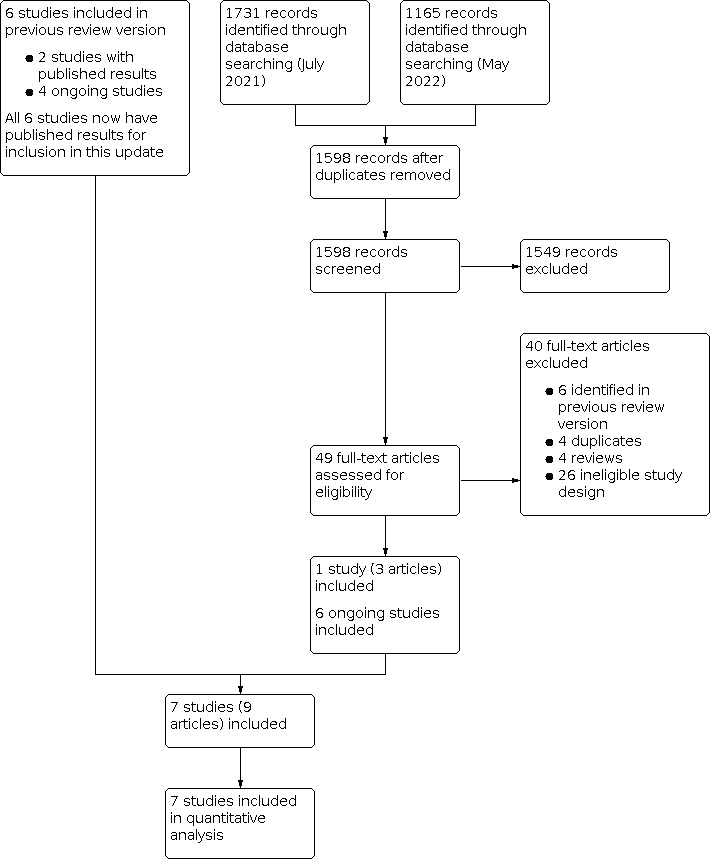
PRISMA diagram
Data extraction and management
Two review authors (TF and JFA) independently extracted information from the included studies using pre‐piloted electronic data extraction forms. In case of differences in extracted data, the two review authors discussed these differences to reach consensus. If unresolved, we consulted a third review author (MC). In case of missing data, we contacted the original study author(s) for clarification.
We extracted data on the following:
study design: type of study; method of participant selection; sample size; details of sampling methodology; follow‐up period. For cluster‐RCTs (cRCTs): adjustment for clustering; number of clusters; unit of randomization; intracluster correlation coefficient (ICC);
participants: study settings; population characteristics; withdrawal; and loss to follow‐up;
interventions: full details of intervention, co‐interventions and any theory informing it; coverage of intervention and co‐interventions; compliance of any co‐interventions; typology of the house;
all outcomes: definition of outcome; diagnostic method or surveillance method; passive or active case detection; duration of follow‐up; time points at which outcomes were assessed; number of events; number of participants or unit time; statistical power; unit of analysis; incomplete outcomes/missing data; Plasmodium species;
entomological outcomes: primary and secondary vector(s) species; vector(s) behaviour; method(s) of mosquito collection; malaria endemicity; eco‐epidemiological setting; population proximity and density; insecticide resistance status;
other: primary construction materials; topography of study site; who was responsible for implementing the intervention.
We examined how and by whom the intervention was delivered, and we described the contribution and engagement of the householders to the process where detail was provided.
Assessment of risk of bias in included studies
Two review authors (TF and JFA) independently assessed the risk of bias using the Cochrane risk of bias 2 tool (RoB 2) (Higgins 2022; Risk of Bias 2; Sterne 2019). We justified judgements made in the risk of bias tables. The effect of interest was the effect of assignment to the intervention at baseline, regardless of whether the interventions were received as intended (the 'intention‐to‐treat effect'). We managed the assessments using the RoB 2 Excel tool for cluster‐randomized trials or randomized trials. For randomized cross‐over trials, we planned to use the version of ROB2 for cross‐over trials. We assessed risk of bias for four outcomes: parasite prevalence, clinical malaria incidence, anaemia prevalence, and indoor adult mosquito density. We used the following domains to assess bias arising from the randomization process:
bias due to deviations from intended interventions;
bias due to missing outcome data;
bias in measurement of the outcome; and
bias in selection of the reported result.
For trials that randomized clusters, we assessed an additional component, namely bias arising from identification or recruitment of individual participants within clusters.
We answered signalling questions as either yes; probably yes; probably no; no; or no information. We used these to determine the overall risk of bias for each domain (high, some concerns, low) and later, the overall risk of bias for each primary outcome from the included studies (high, some concerns, low). We judged study outcomes to have an overall low risk of bias if all domains were at low risk, some concerns if any domain had some concerns, and high if we assessed any domain to be at high risk of bias.
We did not find any observational or quasi‐experimental studies suitable for inclusion; however, to assess risk of bias in such studies we had intended to use the Cochrane Risk Of Bias In Non‐randomized Studies ‐ of Interventions (ROBINS‐I) tool (Appendix 3; Sterne 2016), with interest in the 'intention‐to‐treat effect'. This tool assesses the risk of bias through a hierarchy of domains, starting with critical then serious, moderate, and low. If any domain were to have reached critical risk of bias, we would not have continued with the assessment, as further evaluation would not have influenced how we assessed the certainty of the evidence. We had intended to assess the risk of bias for the following domains for each outcome:
confounding;
selection of participants into the study;
classification of interventions;
deviations from intended interventions;
missing data;
measurement of outcomes;
selection of the reported result.
We planned to judge risk of bias domains as 'low risk', 'moderate risk', 'serious risk', 'critical risk', or 'no information', and evaluate individual bias items as described in Sterne 2016. An overall judgement of risk of bias would have been made from the results of each domain: low risk of bias (the study is comparable to a well‐performed RCT); moderate risk of bias (the study provides sound evidence for an NRS but cannot be considered comparable to a well‐performed RCT); serious risk of bias (the study has some important problems); critical risk of bias (the study is too problematic to provide any useful evidence and should not be included in any synthesis); no information on which to base a judgement about risk of bias. The confounding domains and co‐interventions that could be different between intervention groups and that could impact on outcomes have been outlined in Appendix 3.
We assessed the quality of included qualitative studies using a modified version of the tool developed by the Evidence for Policy and Practice Information and Co‐ordinating Centre (EPPI‐Centre) and outlined by Eshun‐Wilson 2019. Briefly, studies were assessed in terms of the following:
rigour in sampling (an appropriate sampling strategy was used, a diverse sample was obtained, critical characteristics of the sample were presented);
rigour in data collection (data collection tools were piloted, collection was comprehensive, flexible and sensitive, participants were able and willing to contribute)
rigour in analysis (analysis methods were systematic, diversity was explored, analysis sought to rule out alternative explanations for findings);
findings of the study supported by the data (data shows how author findings were reached, data presented fit the interpretation claims, data illustrate the findings, quotes are identified); and
breadth and depth of study findings (range of issues covered, perspectives are fully explored, richness and complexity is portrayed, there is theoretical development).
These domains were assessed as: Yes, a fairly thorough attempt was made; Yes, several steps were taken; Yes, a few steps were taken, and; No, not at all/Not stated/Can’t tell.
Measures of treatment effect
We used risk ratios (RR) to compare the effect of the intervention with the control for dichotomous data. For continuous data, we planned to present the mean difference (MD); and for count/rate data, we used rate ratios. For non‐randomized studies, we planned to use adjusted measures of effect to summarize treatment effects. We presented all results with 95% confidence intervals (CIs).
Unit of analysis issues
We took into account the unit of randomization in study designs such as cross‐over trials, cRCTs, and multiple observations for the same outcome.
For cRCTs, we extracted adjusted measures of effect, where possible. If the study authors did not perform any adjustment for clustering, we adjusted the raw data using an ICC value. If the trial did not report the ICC value, we borrowed an ICC value from previous studies if they were conducted in similar contexts, or estimated the ICC ourselves. For clinical malaria incidence for Getawen 2018, we estimated an ICC of 0.02 based on a previous study (Foy 2019). For anaemia prevalence for Kirby 2009, the paper reported an estimated ICC of between 0.04 and 0.08, based on unpublished data. For bed‐net use for both studies, we estimated an ICC of 0.375, based on a previous study in Liberia (Babalola 2016).
For entomological outcomes, we did not perform adjustments for clustering. Reported ICCs were not available for these outcomes, and we did not consider it appropriate to estimate ICCs, since we did not consider it possible to produce estimates that we could be confident had been appropriately adjusted for clustering. We summarized these data in tables.
For studies that had multiple intervention arms, we included data from these studies either by combining treatment arms or by splitting the control group, so that we only included these in the meta‐analysis once. For studies that reported multiple follow‐up times or multiple age groups, we extracted data from all time points and age groups. For outcomes where a meta‐analysis was possible, we planned to make a judgement on which time point or age group to use based on comparability with other data included in the analysis.
We did not identify any randomized cross‐over trials. If we had identified any, and did not think that either carry‐over or period effects were likely to have been an issue, we had intended to use a paired t‐test for the analysis of continuous data from two‐period, two‐armed cross‐over trials. If we had identified non‐RCTs, we intended to keep RCTs and non RCTs separate in the analyses.
Dealing with missing data
In cases of missing data, we applied available‐case analysis, only including data on the known results. The denominator was the total number of participants who had data recorded for the specific outcome. For outcomes with no missing data, we performed analyses on an intention‐to‐treat basis. We included all participants randomized to each group in the analyses and analysed participants in the group to which they were randomized.
Assessment of heterogeneity
For outcomes where meta‐analysis was possible, we inspected forest plots for overlapping CIs and assessed statistical heterogeneity in each meta‐analysis using the I² statistic value and the Chi² statistic. We considered heterogeneity as moderate if I² statistic values were between 30% to 60%; substantial if they were between 50% to 90%; and considerable if they were between 75% to 100% (Higgins 2011). We considered a Chi² test statistic with a P value ≤ 0.10 to indicate statistically significant heterogeneity. If substantial heterogeneity was present, we planned to explore clinical and methodological heterogeneity through consideration of the trial populations, methods, and interventions, and by visualization of trial results.
Assessment of reporting biases
If there were 10 or more trials included in each meta‐analysis, we planned to investigate reporting biases (such as publication bias) using funnel plots. We planned to inspect the funnel plot visually, and use formal tests for funnel plot asymmetry (Harbord 2006). If we detected asymmetry in any of these tests or by assessment, we planned to explore the reasons for asymmetry.
Data synthesis
We analysed the data using Review Manager 5 (RevMan 5) (Review Manager 2020). For outcomes where data were meta‐analysed, we used a fixed‐effect meta‐analysis to combine data where heterogeneity was absent. If considerable heterogeneity was present, we planned to combine data using random‐effects meta‐analysis and report an average treatment effect. We planned to decide whether to use a fixed‐effect or random‐effects model based on the consideration of clinical and methodological heterogeneity between trials.
We summarized qualitative findings on consumer views narratively. If there had been a sufficient number of included studies, two review authors would have independently coded the studies, and used thematic synthesis to identify themes and sub‐themes.
Subgroup analysis and investigation of heterogeneity
We did not plan to perform subgroup analysis on the data due to the anticipated small number of included studies and lack of evidence on the effect of house modifications in different populations and settings.
Sensitivity analysis
We planned to perform sensitivity analysis on the primary outcome of studies determined to be at high risk of bias, to see the effect of exclusion of trials at high risk of bias (for incomplete outcome data) on the overall results. However, this was not possible due to the small number of studies. For trials with estimated ICC values, we undertook sensitivity analyses to investigate the impact of varying the ICC value on meta‐analysis results. These are presented in Appendix 4.
Summary of findings and assessment of the certainty of the evidence
We assessed the certainty of the evidence using the GRADE approach (Guyatt 2011). For RCTs, we rated key outcomes as described by Balshem 2011; RCTs start as high‐certainty evidence, but can be downgraded if there are valid reasons within the following five categories:
risk of bias;
imprecision;
inconsistency;
indirectness; and
publication bias
Although we did not identify any non‐randomized studies that met our inclusion criteria, we had planned to use the GRADE approach to rate primary outcomes for any such studies. The body of evidence from non‐randomized studies begins as low certainty. This initial rating is followed by consideration of eight domains, five of which may result in rating down certainty (risk of bias, imprecision, inconsistency, indirectness, and publication bias), and three in rating up (a large magnitude of effect, a dose‐response gradient, and a situation in which plausible biases, if present, would serve to increase our confidence in the effect estimate) (Guyatt 2013).
We used the following evidence grades:
high: we are very confident that the true effect lies close to that of the estimate of the effect;
moderate: we are moderately confident in the effect estimate. The true effect is likely to be close to the estimate of the effect;
low: our confidence in the effect estimate is limited. The true effect may be substantially different from the estimate of the effect;
very low: we have very little confidence in the effect estimate. The true effect is likely to be substantially different from the estimate of effect.
We summarized the following outcomes (those considered most important to decision‐making) in Table 1: parasite prevalence, clinical malaria incidence, anaemia prevalence, and indoor adult mosquito density.
Results
Description of studies
Results of the search
We identified 2896 potentially relevant studies through our search strategy. After removing duplicates, we screened 1598 records, from which we considered 49 for full‐text screening (Figure 1). Of these, seven studies met our inclusion criteria. Two published studies and four ongoing studies were included in the previous Cochrane Review (Furnival‐Adams 2021). All six of these studies now have published results, which we have included in this review update (Getawen 2018; Kirby 2009; McCann 2021; Minakawa 2022; Pinder 2021; Sternberg 2021). One new study was included in this review update (Ng'ang'a 2020). The characteristics of the seven included studies are described in Included studies. Two included RCTs collected data on relevant secondary outcomes (user acceptability; unintended effects; cost) but published this in separate articles. We identified two articles associated with these RCTS; one reports a cost analysis for the trial by McCann 2021 (Phiri 2021), and the other provides data on user‐acceptability and community acceptance from the trial by Pinder 2021 (Jones 2022). The six identified ongoing trials are detailed in Ongoing studies (Asale 2020; JPRN‐UMIN000045079; Mshamu 2022; NCT04622241; Odufuwa 2022; Sangoro 2021).
Of the 49 studies that we assessed at full‐text screening, we excluded 40: six were identified in the previous Cochrane Review (Furnival‐Adams 2021), four were reviews, four were duplicates, and 26 had study designs that did not meet the inclusion criteria.
Included studies
Trial design and location
Of the seven published trials meeting our inclusion criteria, six were cRCTs (Getawen 2018; Kirby 2009; McCann 2021; Minakawa 2022; Ng'ang'a 2020; Sternberg 2021) and one was an RCT (Pinder 2021). Since we identified an increasing number of RCTs meeting our inclusion criteria and no non‐randomized studies for our review, we plan to exclude non‐randomized studies from any future updates.
Two cRCTs were household‐randomized (Getawen 2018; Kirby 2009), and the other four were village‐ or block‐randomized; with buffer sizes of 400 m (McCann 2021), 300 m (Minakawa 2022), and 2 km (Sternberg 2021). Ng'ang'a 2020 did not report the buffer size.
Two studies took place in The Gambia (Kirby 2009; Pinder 2021), one in Ethiopia (Getawen 2018), one in Cote d'Ivoire (Sternberg 2021), one in Malawi (McCann 2021), and two in Kenya (Minakawa 2022; Ng'ang'a 2020). Four were conducted in rural areas (McCann 2021; Minakawa 2022; Ng'ang'a 2020; Sternberg 2021), two in rural and urban settings (Kirby 2009; Pinder 2021), and one was conducted in an urban area (Getawen 2018).
Interventions
The interventions under consideration in each trial are detailed in Table 4.
3. Intervention components of included studies.
| Study | House structure before modification | Screening | Other modifications | |||||
| Eave screening | Eave closure | Ceiling | Doors and windows | Gaps and holes | Roof replacement | Eave tubes | ||
| Getawen 2018 | Metal roof, mud walls | Yes | ||||||
| Kirby 2009 ‐ full screening arm | Thatched roof, open eaves, mud walls | Yes | Yes | |||||
| Kirby 2009 ‐ ceiling screening arm | Thatched roof, open eaves, mud walls | Yes | ||||||
| McCann 2021 | Open eaves | Yes | Yes | Yes | ||||
| Minakawa 2022 | Stick framework plastered with mud and cow dung, metal roof | Yesa | ||||||
| Ng'ang'a 2020 | Sheet roof, mud walls with plaster finish | Yes | ||||||
| Pinder 2021 | Thatched roof, mud or cement walls | Yes | Yes | Yes | ||||
| Sternberg 2021 | Metal roof, cement walls | Yes | Yesb | Yes | Yes | |||
Screening or complete closure of potential entry points done with polyvinyl chloride‐coated fibreglass, metal mesh, or alternative materials found around the home.
aMinakawa 2022 screening with insecticide treated netting bSternberg 2021 screening on windows only
All studies used screening with either PVC‐coated fibreglass netting, wire mesh or aluminium screens, closed gaps using local materials, or closed the eaves. Screening was the only component incorporated into all studies, as described below:
Four studies assessed non‐insecticidal screening based modifications: one study had two intervention arms, one assessing full screening (screening of eaves, doors and windows), and one arm that assessed ceiling screening only (nets act as quasi‐ceiling in houses with no permanent ceiling); three studies assessed one screening intervention each (doors and windows, eaves); one study assessed multiple screening interventions (doors and windows, other entry points, eave closure).
One study assessed insecticide‐treated screening, using 2% permethrin‐treated nets.
Two studies assessed non‐insecticidal screening interventions plus other modifications, one of which incorporated insecticide (eave tubes) and the other which was non‐insecticidal (roof replacement).
Insecticide‐based
Minakawa 2022 used 2% permethrin‐treated nets (OlysetNet, Sumitomo Chemical, Tokyo, Japan). Sternberg 2021 incorporated 10% wettable powder (WP) formulation of beta‐cyfluthrin on the eave tube netting.
Maintenance
Implementation strategy
In six trials, the research team implemented the interventions. In one study, volunteer community members engaged in the interventions and implemented the intervention themselves (McCann 2021).
Co‐interventions
Getawen 2018 provided untreated bed nets to all participants. Minakawa 2022, Sternberg 2021, and Pinder 2021 provided insecticide treated bed nets to participants in both trial arms. Participants in one trial received insecticide treated bed nets as well as being involved in a community engagement and education program as part of a national malaria campaign (McCann 2021).
Participants
Five studies measured malaria in children to evaluate the intervention, and two studies examined both adults and children (Getawen 2018; Ng'ang'a 2020).
Outcomes
Epidemiological outcomes
All trials used active case detection (ACD) to survey participants for malaria. Three studies measured malaria incidence (Getawen 2018; Pinder 2021; Sternberg 2021), five studies measured parasite prevalence (Kirby 2009; McCann 2021; Minakawa 2022; Ng'ang'a 2020; Pinder 2021). Anaemia was a primary outcome in one of the trials (Kirby 2009). Four other studies measured anaemia as a secondary outcome (McCann 2021; Minakawa 2022; Pinder 2021; Sternberg 2021).
Entomological outcomes
All the studies measured indoor adult mosquito density, one using suna traps (McCann 2021), one using human landing catch sampling (Sternberg 2021), one using the pyrethrum spray catch method (PSC) (Minakawa 2022), and four using Centers for Disease Control and Prevention (CDC) light traps. Two studies also measured outdoor mosquito density (McCann 2021; Sternberg 2021). Five studies reported a sporozoite rate, three of which used enzyme‐linked immunosorbent assay (ELISA) (Getawen 2018; Kirby 2009; Pinder 2021), and two used polymerase chain reaction (PCR) (McCann 2021; Sternberg 2021). Five studies calculated an entomological inoculation rate (EIR) from these indicators.
Other outcomes
User acceptability
Four studies measured indicators of user acceptability and community acceptance. One study reported the collection of user acceptability data (Pinder 2021), which was detailed in a separate article associated with this trial (Jones 2022).
One study measured user acceptability and community acceptance through semi‐structured questionnaires, with questions related to effect of screening, problems with screened doors, perception of screening on appearance of houses, maintenance and cost of replacement (Getawen 2018). One study measured this through focus group discussions on general perceptions of the types of screening that aimed to identify the key concerns and benefits of the screening (Kirby 2009). Jones 2022 (Pinder 2021) captured the acceptability of the intervention using: 1) observations and informal conversations during the house modification process; 2) photo‐voice (a participatory action research technique enabling people to record and reflect on their concerns, promote critical dialogue, and reach policymakers); and 3) focus‐group discussions. Sternberg 2021 used thematic analysis to evaluate ethnographic and focus‐group information related to user acceptability, and they plan to present the findings in future publications.
Unintended effects
Four studies recorded bed‐net usage (Getawen 2018; Kirby 2009; McCann 2021; Sternberg 2021).
Pinder 2021 recorded damage to the intervention by encouraging house owners in the intervention group to report bed‐net damage to nurse field assistants during their twice‐weekly visits. Two trials reported all‐cause mortality during the trial period (Kirby 2009; Sternberg 2021). Due to concerns that screening houses may reduce airflow and exacerbate respiratory diseases, two studies reported incidence of respiratory infection (Pinder 2021; Sternberg 2021). Pinder 2021 and Sternberg 2021 reported adverse events.
Concomitant economic assessments
Five studies performed economic evaluations. In the protocol of one study, authors stated that economic data would be collected to determine cost‐effectiveness (McCann 2021). These data were included in a secondary publication that was identified through our search (Phiri 2021). All other economic data in our included studies were presented in the primary publications.
McCann 2021 reported a cost‐analysis from a societal perspective in a separate publication (Phiri 2021); Sternberg 2021 measured incremental economic and financial cost per malaria case averted, and cost per DALY averted in the intervention group and compared it to the control group with ITNs only; Kirby 2009 calculated costings for both interventions on a per‐person basis; Getawen 2018 presented the cost of intervention per house; and Pinder 2021 planned to conduct a cost analysis in the protocol but has not reported this further.
Excluded studies
We excluded thirty‐four articles at full‐text screening for the reasons:
twenty‐six had an ineligible study design;
four were duplicates; and
four were reviews.
Risk of bias in included studies
Overall risk of bias
We assessed methodological and risk of bias for six cRCTs and one RCT contributing results to our outcomes using the RoB 2 tool. The studies contributed a total of 15 study results to four outcomes that we assessed using RoB 2 (Higgins 2022). The RoB 2 judgements are summarized below. Detailed risk of bias assessments are available on request.
Overall risk of bias by study
One study was at overall high risk of bias for all outcomes that it contributed results to (clinical malaria incidence, anaemia, adult mosquito density) due to a high risk of bias for timing of identification or recruitment of participants (Sternberg 2021). This is because villages were randomized to the control and intervention arms before enrolment of individual participants. However, we do not think this has a substantial effect on the study outcome as authors were able to recruit sufficient participants in both arms of the trial.
One study had some concerns for the overall risk for the clinical malaria incidence outcome (Getawen 2018). Two studies had some concerns for the overall risk of bias for the parasite prevalence outcome (Minakawa 2022; Ng'ang'a 2020). All other studies were at low risk of bias for these outcomes.
Overall risk of bias by outcome
Parasite prevalence
Five studies contributed results to the analysis of malaria parasite prevalence. We judged three of these to be at overall low risk of bias (Kirby 2009; McCann 2021; Pinder 2021). We rated one study as having some concerns overall for this outcome due to missing data from some participants (Minakawa 2022), although this was balanced across both arms, and due to bias in selection of the reported result as they did not publish a protocol a priori. We also had some concerns about another study for this outcome (Ng'ang'a 2020), due to bias in selection of the reported result, as they did not publish a protocol a priori.
Clinical malaria incidence
Three studies contributed results to the analysis of clinical malaria incidence. We assessed Pinder 2021 to be at low risk of bias for this outcome. There were some concerns for this outcome in Getawen 2018 due to bias in selection of the reported result, as no protocol was published a priori. We judged Sternberg 2021 to be at overall high risk of bias due to timing of identification or recruitment of participants.
Anaemia prevalence
Three studies contributed results to the analysis of anaemia prevalence. We assessed Kirby 2009 and Pinder 2021 to be at low risk of bias for this outcome. For Sternberg 2021, bias due to timing of identification or recruitment of participants was at high risk of bias.
Adult mosquito density
Four studies contributed results to the analysis of adult mosquito density. We assessed three studies to be at low risk of bias for this outcome (Kirby 2009; McCann 2021; Pinder 2021). Sternberg 2021 was at high risk of bias due to timing of identification or recruitment of participants.
Effects of interventions
See: Table 1
Key outcomes are presented in Table 1.
For all human outcomes (clinical malaria incidence, parasite prevalence, anaemia and bed‐net use), we present data adjusted for clustering in the meta‐analyses. Data that were not adjusted for clustering in the primary studies are presented in tables (Table 5; Table 6). For studies presenting unadjusted data, we adjusted for clustering using an estimated ICC where appropriate and performed sensitivity analyses using ranges of ICCs to assess whether these estimates impacted on the results, presented in Appendix 4. For each outcome, we did not find that using alternative ICCs greatly affected the adjusted effect size, and we therefore consider the ICC estimates used in the primary analyses appropriate.
4. Clinical malaria incidence.
| Study | Rate of disease (event/person‐year) | Rate ratio (95% CI) | |
| Screened houses | Unscreened houses | ||
| Getawen 2018 | 0.09 | 0.24 | 0.38 (0.18 to 0.82) |
| Pinder 2021 | 0.20 | 0.12 | 1.68 (1.11 to 2.55) |
| Sternberg 2021 | 1.43 | 2.29 | 0.62 (0.50 to 0.77) |
CI: confidence interval
5. Haemoglobin levels.
| Study | Measurement | Screening | No screening |
| McCann 2021 Women (15 to 19 years) | Mean difference from baseline in haemoglobin level g/dL (95% CI) | 12.61 (12.49 to 12.72) | 12.46 (12.31 to 12.61) |
| McCann 2021 Children (6 to 59 months) | Mean difference from baseline in haemoglobin level g/dL (95% CI) | 11.29 (11.16 to 11.42) | 11.08 (10.89 to 11.27) |
| Minakawa 2022 | Median concentrationa (g/dL‐1) (IQR) | 11.0 (0.2) | 10.9 (0.2) |
CI: confidence intervals; IQR: interquartile range
aCluster‐level median haemoglobin concentration
Epidemiological outcomes
Parasite prevalence
Five trials reported data on malaria parasite prevalence (Kirby 2009; McCann 2021; Minakawa 2022; Ng'ang'a 2020; Pinder 2021). The pooled analysis demonstrated a protective effect of screening against malaria parasitaemia: participants in modified houses were observed to have 32% lower parasite prevalence compared to control houses (RR 0.68, 95% CI 0.57 to 0.82; P < 0.0001; 5183 participants; moderate‐certainty evidence; Analysis 1.1). A subgroup from one study demonstrated an increased risk of malaria parasite prevalence in children aged 6 to 59 months in screened homes (OR 1.38, 95% CI 0.63 to 3.03; 631 participants), but another subgroup (women aged 15 to 49 years) in this study reported a substantial benefit of screening on parasite prevalence, although CIs were wide (OR 0.75, 95% CI 0.37 to 1.52; 831 participants) (McCann 2021).
1.1. Analysis.
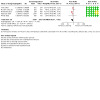
Comparison 1: Modification versus no modification, Outcome 1: Parasite prevalence
Clinical malaria incidence
Three trials reported data on malaria infection incidence (Getawen 2018; Pinder 2021; Sternberg 2021). Substantial qualitative heterogeneity between studies was present (I2 = 100%), with one study reporting a higher malaria infection incidence in the screened house group (Pinder 2021), and two studies reporting a lower infection incidence (Getawen 2018; Sternberg 2021); therefore, we did not present a pooled analysis of these results. Overall, the studies demonstrated clinical malaria incidence ranging from 0.09 to 1.43 per person‐year in screened houses, and between 0.12 to 2.29 per person‐year in unscreened houses (3365 participants; very low‐certainty evidence; Table 5).
The result from the study with an increase in clinical malaria incidence in the screening group suggest that the rate of malaria in people in screened homes is 68% higher than in unscreened homes (rate ratio 1.68, 95% CI 1.11 to 2.55; Analysis 1.2). It is unexpected that the modifications implemented in this study (screening and roof replacement) would be associated with a large increase in malaria incidence. Authors reported that a high‐uptake eave closure campaign in the study area had preceded the trial, meaning the trial cohort consisted of a minority population of individuals from households who ignored or were unaware of the previous campaign (Pinder 2021).
1.2. Analysis.
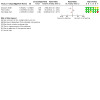
Comparison 1: Modification versus no modification, Outcome 2: Clinical malaria incidence
Anaemia
Five studies compared anaemia in screened houses with that in unscreened houses. Data on the prevalence of moderate to severe anaemia from three studies are included in the meta‐analysis (Kirby 2009; Pinder 2021; Sternberg 2021). In the three studies, house modifications were associated with lower prevalence of moderate to severe anaemia compared to unmodified houses (RR 0.70, 95% CI 0.55 to 0.89; P = 0.004; 3643 participants; high‐certainty evidence; Analysis 1.3). McCann 2021 presented data on mean difference from baseline in haemoglobin concentrations for each study arm, aggregated over the trial period. Minakawa 2022 reported haemoglobin concentrations and calculated differences between the screened and unscreened houses. Both studies suggest there is little effect of screening on haemoglobin concentration, with similar differences in haemoglobin concentration in participants in screened houses compared to unscreened houses in McCann 2021, and very similar median concentrations across groups in Minakawa 2022 (Table 6).
1.3. Analysis.
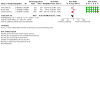
Comparison 1: Modification versus no modification, Outcome 3: Moderate to severe anaemia prevalence
Entomological outcomes
We were only able to meta‐analyse data on adult mosquito density due to differences in the unit of measurement and different follow‐up periods for other entomological data.
Adult mosquito density
All seven trials reported the mean number of mosquitoes caught indoors per trap per night as an indicator of adult mosquito density of the primary vector.
Due to a methodological issue with the pre‐trial power analysis, data for entomological outcomes in McCann 2021 were unable to demonstrate any effect. Another study was carried out in a highly researched area that was receiving high coverage of other malaria interventions (Pinder 2021). Due to this methodological heterogeneity, the data for indoor adult mosquito density from four studies were included in a random‐effects meta‐analysis (Analysis 1.4). Fewer mosquitoes were caught in modified houses compared to unmodified houses, suggesting that modifications may reduce mosquito entry, but CIs were wide (rate ratio 0.63, 95% CI 0.30 to 1.30; 9894 household‐nights; low‐certainty evidence; Analysis 1.4).
1.4. Analysis.
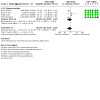
Comparison 1: Modification versus no modification, Outcome 4: Adult mosquito density
We were not able to obtain appropriate ICC estimates to adjust the data presented in two studies for clustering; however, one demonstrated a 95% increased mosquito density rate in unscreened houses, suggesting a large protective effect of screening modifications (rate ratio 1.94, 95% CI 1.38 to 2.72, favouring modification, Getawen 2018), and the other suggested no real difference between mosquito density in screened or unscreened houses (Ng'ang'a 2020) (Table 7). We were also unable to include the data from Minakawa 2022 in the pooled analysis, which demonstrated a protective effect of screening on indoor mosquito density (RR 0.73, 95% CI 0.53 to 0.92; P = 0.057) (Table 7).
6. Indoor adult mosquito density.
| Trial | Assessment method | Measurement | Screened houses | Unscreened houses | Effect sizea (95% CIs) |
| Getawen 2018 | Mosquitoes sampled from CDC light traps placed in 10 sentinel houses/study arm that were selected after randomization (6‐month follow‐up) | Mean no. mosquitoes/night/trap (95% CIs) | 0.85 (0.45 to 2.15) | 1.65 (0.80 to 6.80) | Rate ratio: 1.94 (1.38 to 2.72) higher rate of mosquitoes trapped per night in control |
| Ng'ang'a 2020 | Number of adult mosquitoes collected from CDC light traps in every study house (2‐year follow‐up) | Mean no. mosquitoes/night/trap (95% CIs) | Total mosquitoes collected 3100 (mean per house 4.57; SD = 13.83) | Total mosquitoes collected 12,186 (mean per house 4.29; SD = 10.84 | Adjusted difference (students t‐test: t = 0.567, P = 0.571 |
| Minakawa 2022 | Number of adult mosquitoes collected from pyrethrum spray catches monthly from 80 sentinel houses (14‐month follow‐up) | Median vector density (IQR) | 0.5 (0.3) | 2.5 (1.9) | Adjusted risk ratio: 0.73 (0.53 to 0.92), P = 0.057, higher rate of mosquitoes trapped per night in control |
aThese effect sizes have not been adjusted for clustering unless stated as adjusted.
CI: confidence interval; CDC: Centers for Disease Control and Prevention;IQR: interquartile range; SD: standard deviation
Entomological inoculation rate (EIR)
Five trials reported EIR in screened houses versus unscreened houses. Results from all studies demonstrated a reduction in EIR in modified houses, although the size of the effect varied between studies (mean difference in EIR ranges 0.001 to 1.50; 5 trials). Sternberg 2021 presented adjusted indoor and outdoor EIR, demonstrating a reduced EIR in screened houses compared to unscreened houses (indoor OR 0.28, 95% CI 0.24 to 0.33; outdoor OR 0.33, 95% CI 0.27 to 0.40; Analysis 1.5). Unadjusted data are not included in analyses and are summarized in Table 8.
1.5. Analysis.
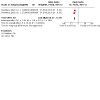
Comparison 1: Modification versus no modification, Outcome 5: Entomological innoculation rate
7. Entomological inoculation rates.
| Trial | Outcome definition | Assessment method | Comparison | Mean EIR (95% CI) | Effect sizea (95% CI) | |
| Screened houses | Unscreened houses | |||||
| Kirby 2009 | Number of infective bites received per person in a given unit of time, in a human population | Adult mosquito density (CDC light traps from all study houses) and sporozoite rates (ELISA) were used to calculate mean number of infective mosquitoes per person per season. | Full screening versus no screening 2006 | 0.77 (0.57 to 0.96) | 2.27 (1.38 to 3.16) | Mean difference: 1.50 (0.59 to 2.41), favouring the intervention |
| Full screening versus no screening 2007 | 0.42 (0.24 to 0.63) | 1.35 (0.74 to 1.97) | Mean difference: 0.93 (0.30 to 1.56), favouring the intervention | |||
| Screened ceilings versus no screening 2006 | 1.14 (0.85 to 1.42) | 2.27 (1.38 to 3.16) | Mean difference: 1.13 (0.20 to 2.06), favouring the intervention | |||
| Screened ceilings versus no screening 2007 | 0.90 (0.22 to 1.57) | 1.35 (0.74 to 1.97) | Mean difference: 0.45 (‐0.46 to 1.36), favouring the intervention | |||
| Getawen 2018 | The EIR was calculated using adult mosquito density and sporozoite rate from CDC light traps in 10 sentinel houses per arm. | Screening versus no screening | 1.75 (0.35 to 5.30) | 6.32 (2.46 to 10.50) |
Mean difference: 4.57 (3.81 to 5.33) favouring the intervention |
|
| McCann 2021 | EIR was calculated as the product of the sporozoite rate and the number of host‐seeking Anopheles mosquitoes collected per house using indoor and outdoor Suna traps. | Screening versus no screening | 0.00 (0.00 to 0.004) | 0.001 (0.000 to 0.008) | Mean difference: 0.001b favouring the intervention |
|
| Pinder 2021 | EIR was calculated using female A gambiae adult mosquito density from indoor collections during monthly CDC light trap collections in 120 randomly selected houses and sporozoite rate. Infective bites per transmission season. | Screening plus other modification versus no screening | 1.23 | 1.79 | Mean difference: 0.57 (‐1.86 to 3.00) favouring the intervention |
|
aThese effect sizes have not been adjusted for clustering. bCI not reported.
CI: confidence interval; CDC: Centers for Disease Control and Prevention; EIR: entomological inoculation rate; ELISA: enzyme‐linked immunosorbent assay
Sporozoite rate
Four trials reported sporozoite rate. Getawen 2018 reported sporozoite rates in both P falciparum and P vivax mosquitoes, demonstrating a lower P falciparum sporozoite rate in screened houses compared to unscreened houses (RR 0.59, 95% CI 0.16 to 2.11), but no difference in P vivax sporozoite rate between study arms (RR 0.98, 95% CI 0.09 to 10.73). Pinder 2021 also reported lower sporozoite rates in screened houses (OR 0.63, 95% CI 0.20 to 1.97). Due to no difference when comparing the sporozoite rate between trial arms (0.24% in 2006 and 0.14% in 2007), Kirby 2009 did not report sporozoite rate by intervention arm. Similarly, McCann 2021 did not report sporozoite rate by intervention arm, possibly due to complications with low power to detect this outcome. Unadjusted data are reported in Table 9.
8. Sporozoite rates.
| Trial | Outcome definition | Assessment method | Reported results | Risk ratioa (95% CI) | |
| Screened houses | Unscreened houses | ||||
| Kirby 2009 | Proportion of Anopheles infected with sporozoites |
Identified by ELISA | 19/13146 (0.14%)b | Not reported | |
| Getawen 2018 (P falciparum) | 3/190 (1.58%) | 10/372 (2.69%) | 0.59 (0.16 to 2.11) | ||
| Getawen 2018 (P vivax) | 1/190 (0.5%) | 2/372 (0.5%) | 0.98 (0.09 to 10.73) | ||
| McCann 2021 | Identified by real‐time PCR | 49/657 (7.46%)c | Not reported | ||
| Pinder 2021 | Identified by ELISA | 5/2644 (0.2%) | 7/2317 (0.3%) | OR: 0.63 (0.20 to 1.97) | |
aThese effect sizes have not been adjusted for clustering. bSporozoite rates in sampled mosquitoes reportedly did not differ between trial groups and data were therefore pooled. cSporozoite rate calculated for whole study area only.
CI: confidence interval; ELISA: enzyme‐linked immunosorbent assay; OR: odds ratio; PCR: polymerase chain reaction
User acceptability
Community acceptance
Few studies performed good‐quality, detailed investigations of community views on house modifications. Getawen 2018 used in‐depth interviews to measure community acceptance of the interventions, and Kirby 2009 used focus group discussions (FGD) for this purpose. In both studies, participants positively reported that the intervention reduced the number of indoor mosquitoes and houseflies. Most participants in both trials chose to include screening modifications in their homes after the duration of the trial. Additionally, participants in the study by Kirby 2009 positively reported a reduction in entry of other animals. In both trials, participants expressed concern that screening would be damaged by domestic animals and children, or that it would become dirty. The quality assessment we conducted on both studies was low (Table 10).
9. Quality assessment for community acceptance a.
| Quality assessment | Getawen 2018 | Kirby 2009 | Pinder 2021(Jones 2022) |
| a) Were steps taken to increase rigour in the sampling? | No, not at all/Not stated/ Can't tell | Yes, a few steps were taken | Yes, a fairly thorough attempt was made |
| b) Were steps taken to increase rigour in the data collected? | No, not at all/Not stated/ Can't tell | Yes, a few steps were taken | Yes, several steps were taken |
| c) Were steps taken to increase rigour in the analysis of the data? | No, not at all/Not stated/ Can't tell | No, not at all/Not stated/ Can't tell | Yes, several steps were taken |
| d) Were the findings of the study grounded in/supported by the data? | Not applicable | Not applicable | Yes, a fairly thorough attempt was made |
| e) Please rate the findings of the study in terms of their breadth and depth | Poor | Poor | Yes, several steps were taken |
aThis is a modified version of the quality assessment tool developed by the Evidence for Policy and Practice Information and Co‐ordinating Centre (EPPI‐Centre), outlined in Eshun‐Wilson 2019.
Views and experiences of participants in the trial by Pinder 2021 are described in detail in a separate paper (Jones 2022). Authors encouraged participants to highlight elements of a 'good' or 'bad' house through FGDs, photo voice data collection, and questionnaires. In general, modifications to prevent mosquito entry were associated with 'good' houses, particularly corrugated roofs and closure of gaps where animals and insects could enter the home. Participants were very supportive of the trial and perceived it as beneficial since most participants could not afford to 'modernize' their homes themselves. Many of the positive views of the modifications related to improved security and status, rather than health benefits, while many of the negative views related to poor construction and practicality of modifications. The authors report that they believed negative views were often rectified through good communication between researchers and participants. The quality assessment for this study was high (Table 10).
Cost analysis
Basic economic evaluation data for four studies have been summarized in Table 11, presenting the cost per person and cost per household of the modifications.
10. Cost of interventions.
| Study | Modification | Annual per person cost (USD) | Annual per household cost (USD) | Total intervention cost (USD) |
| Getawen 2018 | Screening (door and window) | 6.47 | 29.13 | ‐ |
| Kirby 2009 | Screening (eaves, ceiling, door and window) | 11.11 (full screening) 21.17 (screening ceiling) |
‐ | ‐ |
| McCann 2021 (Phiri 2021) | Screening (door and window, eave closure) | 27.04 | 119.91 | 123,503 |
| Sternberg 2021 | Screening (window, eave closure) plus eave tubes | 21.47 (societal) 19.62 (provider) |
239.46 (societal) 215.38 (provider) |
645,641 per year |
USD: United States Dollars
Unintended effects
Bed‐net use
Five trials reported bed‐net usage throughout the trial period. Pooled analysis of three of the trials demonstrated that individuals living in houses with modifications were around 5% less likely to sleep under a bed net (RR 0.95, 95% CI 0.92 to 0.98; 3 trials, 2508 participants; Analysis 1.6) (Getawen 2018; Kirby 2009; Minakawa 2022). Results from McCann 2021 and Sternberg 2021 are presented separately as we could not adjust for clustering. They demonstrate a similar pattern of effect, with lower bed‐net use in screened houses compared to unscreened houses (Table 12).
1.6. Analysis.
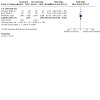
Comparison 1: Modification versus no modification, Outcome 6: Bed net use
11. Bed net use.
| Bed net use throughout study period | Measurement | Screened houses | Unscreened houses |
| McCann 2021 (women aged 15 to 49 years) | Percentage slept under a bed net the previous night (95% CI) | 79.0 (75.3 to 82.3) | 81.0 (76.3 to 85.0) |
| McCann 2021 (children aged 5 to 59 months) | Percentage slept under a bed net the previous night (95% CI) | 80.0 (75.9 to 83.6) | 85.6 (80.3 to 89.7) |
| Sternberg 2021 | Percentage slept under a bed net the previous night (95% CI) | 59.0 (58.1 to 59.9) | 67.2 (66.1 to 68.4) |
| Minakawa 2022 | Median bed net use (IQR) | 0.85 (0.02) | 0.88 (0.02) |
CI: Confidence intervals; IQR: interquartile range
All‐cause mortality
Two trials reported all‐cause mortality during the trial period, which was low across all participants (screened houses mortality rate: Kirby 2009: 0.3%; Sternberg 2021: 0.24%; unscreened houses mortality rate: Kirby 2009: 1.5%; Sternberg 2021: 0.69%).
Respiratory disease
Due to concerns that screening houses may reduce airflow and exacerbate respiratory diseases, two studies reported incidence of respiratory infection (Pinder 2021; Sternberg 2021). Respiratory infection incidence was low and similar in both the screened and unscreened houses across both studies (Pinder 2021, adjusted rate ratio 0.85, 95% CI 0.65 to 1.11; P = 0.24; Sternberg 2021, hazard ratio (HR) 1.00, 95% CI 0.71 to 1.41; P = 0.99).
Damage to the intervention
Pinder 2021 encouraged participants to report damage or malfunctioning of modifications of bed nets to nurse field assistants who visited twice a week throughout the duration of the study period. By the end of the trial period, only 139/392 (35%) modified houses had intact screening, suggesting substantial damage to the intervention in this study setting. Due to lack of data from other studies, it is unclear if this effect applies to other study settings.
Other adverse effects
Pinder 2021 reported a similarly low frequency of serious adverse events (SAEs) in participants from both the screened houses and unscreened houses (screened: hospitalized n = 21, due to severe malaria n = 5; unscreened: hospitalized n = 20, due to severe malaria n = 3). Adverse events reported in Sternberg 2021 were also similar across both study groups. They reported that no SAEs associated with the intervention were reported during the trial by any study participant.
Discussion
Summary of main results
This review is a substantive update to the previous version (Furnival‐Adams 2021), with published data from five trials added. All studies investigated screening components to prevent mosquito entry to the home. Two had additional components: one study also incorporated the replacement of traditional roofs with modern materials, and one study inserted insecticidal eave tubes into study homes. See Table 1.
Screening houses was shown to probably reduce parasite prevalence of the people living in the modified homes by almost a third, although there was some quantitative heterogeneity between studies (RR 0.68, 95% CI 0.57 to 0.82; 5 trials, 5183 participants). Screening houses was also shown to effectively reduce the prevalence of moderate to severe anaemia by 30% (RR 0.70, 95% CI 0.55 to 0.89; 3 trials, 3643 participants).
We note high quantitative heterogeneity between study results for clinical malaria incidence: two studies demonstrated a protective effect of house screening on malaria incidence (Getawen 2018; rate ratio 0.38, 95% CI 0.18 to 0.82; Sternberg 2021; rate ratio 0.62, 95% CI 0.50 to 0.77), suggesting that house modifications may reduce clinical malaria. One study paradoxically demonstrated an increase in clinical malaria incidence in modified houses which reduces the certainty of evidence and suggests that the intervention may not always be effective (Pinder 2021; rate ratio 1.68, 95% CI 1.11 to 2.55).
House modifications demonstrated some effect on indoor adult mosquito density, but quantitative heterogeneity was high, suggesting the intervention may not always be effective (rate ratio 0.63, 95% CI 0.30 to 1.30; 4 trials, 9894 household‐nights). In studies where indoor adult mosquito density was reduced, epidemiological outcomes appeared to demonstrate the protective effect of house modifications.
Overall completeness and applicability of evidence
This review includes evidence from across the African continent and assesses the effect of house modifications that aim to reduce exposure to mosquitoes on malaria outcomes in children and adults in rural and urban locations. We included studies with a broad set of screening‐based modifications, including a variety of non‐insecticidal screening modifications introduced to reduce mosquito entry and one study implementing insecticidal screening, as well as studies introducing modifications with other protective mechanisms, such as roof replacement with more robust modern materials, or insecticidal eave tubes as a lethal house lure. The pooled analysis of epidemiological outcomes demonstrated some substantial protective effects of house modifications against malaria, although heterogeneity was sometimes present.
Quantitative heterogeneity among malaria interventions is very common: indeed the review of artemisinin‐based combination treatments in the Lancet that underpinned their introduction levels demonstrated high heterogeneity (International Artemisinin Study Group 2004). Conflicting results are more concerning, but in this case it may have been due to failed implementation of the intervention. The study authors suggested that damage to modifications was high; high indoor temperatures may have delayed bedtime for children, and participants often left doors open, allowing increased mosquito entry; or the result may have been due to chance (Pinder 2021). The trial cohort, consisting of a minority population of individuals from households who ignored or were unaware of a previous house modification campaign in the trial area, may also introduce methodological heterogeneity and affect the certainty of the evidence.
The effectiveness of the intervention may depend on methodological study design, or may be due to factors relating to the study population, such as acceptability and adherence which may influence participant behaviours. A lack of data on user‐implementation views and community acceptance prevents delineation of qualitative evidence for adherence to the intervention.
Researchers and policymakers are considering several novel house modifications that exist for malaria control, outlined in the methods' section of this review. Due to the limited number of studies and the implementation of multiple modifications, evidence from this review does not allow us to perform strong comparisons of different types of modification. Nonetheless, this evidence demonstrates the effectiveness of simple screening measures using wire mesh in preventing malaria disease and transmission. One ongoing trial in Uganda intends to pilot three types of modification in both modern and traditional homes (NCT04622241), before implementing up to two modifications in a cluster‐randomized trial, which may be useful for further comparing the effect of different modification types.
Certainty of the evidence
We appraised the certainty of evidence of the effect estimates for the primary outcomes in these studies using the GRADE approach, presented in Table 1. We considered the evidence for house modifications for preventing malaria to be of high to very low certainty.
House modifications probably reduce malaria parasite prevalence (moderate‐certainty evidence). We downgraded the certainty of the evidence by one level for imprecision. The 32% reduction in malaria demonstrated is an important effect, as is the least optimistic effect of 18% reduction in parasite prevalence.
House modifications reduce prevalence of moderate to severe anaemia (high‐certainty evidence). The 30% reduction in moderate to severe anaemia demonstrated is an important effect, and the least optimistic effect of 11% is also an important effect. Results were consistent across all trials (I2 = 3%).
Our effect estimate for incidence of clinical malaria in modified houses is probably markedly different from the true effect (very low‐certainty evidence), therefore we do not know the effect of house modifications on clinical malaria incidence. We downgraded the certainty of this evidence by two levels for inconsistency due to high heterogeneity between studies and serious indirectness. GRADE assessment of this outcome determined that one study introduced serious indirectness since the study population was not representative of normal populations (Pinder 2021).
House modifications may reduce indoor mosquito density (low‐certainty evidence); however, heterogeneity between study results means the true effect may be different from our estimate. We downgraded the certainty of this evidence by one level for imprecision, due to wide CIs, and by one level for inconsistency, due to quantitative heterogeneity.
Potential biases in the review process
Our search strategy was comprehensive, and we assessed search results for eligibility irrespective of language, date of publication or publication status. Two review authors independently screened search results, extracted data from included studies, and assessed risk of bias. For trials that had not adjusted data for clustering, we adjusted the data using an estimated ICC based on a previous study, and conducted a sensitivity analysis using a range of ICCs. We did not identify any potential sources of bias in the review process.
Agreements and disagreements with other studies or reviews
We identified one review and two meta‐analyses that had been conducted prior to this review (Kua 2021; Tusting 2015; Tusting 2017), which we reported and appraised in the Background section. The results suggested that both modern housing and house screening were associated with a reduction in the risk of malaria infection. Despite controlling for socioeconomic status in the observational data included in these meta‐analyses, there remains a risk of residual confounding by household wealth due to the inherent association between housing and socioeconomic status. For this reason, we chose to exclude observational studies and only included studies with experimental designs that reported epidemiological outcomes. The results from our systematic review support the conclusions drawn from the review and meta‐analyses, suggesting that house modifications can reduce malaria risk.
The effect size for house modification on parasite prevalence reported in this review is very similar to that reported in the 2018 Cochrane Review 'Insecticide‐treated nets for preventing malaria', which demonstrated the protective effect of insecticidal bed nets against malaria parasitaemia (RR 0.83, 95% CI 0.71 to 0.98; 6 trials, 18,809 participants), an intervention which is now widely implemented for malaria prevention (Pryce 2018).
Authors' conclusions
Implications for practice.
The trials published to date show in these studies that house modifications protect against anaemia and may reduce parasite prevalence for children and adults, and this is consistent with previous research. The evidence from studies to evaluate whether house modifications reduce clinical malaria incidence was mixed, and although pooled evidence suggested a reduction in indoor mosquito density, this was not always present.
Implications for research.
House modifications may provide an important, long‐term, sustainable option to reduce malaria. Further research will help delineate the best implementation approaches to assure the effect. It will also identify co‐interventions that may enhance the effect, and those factors which may mitigate the effects, including epidemiological, structural, and social influences. The success of implementation of modifications will likely be affected by perceived benefits by users, the cost of implementation, and the ability of home‐owners to introduce modifications themselves. How best to optimize roll‐out and facilitate communities to take charge of modifying their own houses would be useful operational research to maximise the potential of this strategy in malaria.
What's new
| Date | Event | Description |
|---|---|---|
| 28 September 2022 | New citation required and conclusions have changed | This review update includes seven studies in total. The updated search identified seven new records, including one published trial and six ongoing studies, since the last published version (Furnival‐Adams 2021). Four trials that were included in the previous version of this review but were not yet completed are now published, and the author team included data from these studies in this review version. |
| 28 September 2022 | New search has been performed | An updated search was performed to 25 May 2022. The authors used Risk of bias 2 to assess the risk of bias in included studies. |
History
Protocol first published: Issue 8, 2019 Review first published: Issue 10, 2020
| Date | Event | Description |
|---|---|---|
| 5 January 2021 | Amended | We corrected the certainty of the evidence for malaria parasite prevalence to low‐certainty. |
| 5 January 2021 | New citation required and conclusions have changed | The certainty of the evidence for malaria parasite prevalence was corrected. It was downgraded by two levels, to low‐certainty evidence. |
Risk of bias
Risk of bias for analysis 1.1 Parasite prevalence.
| Study | Bias | |||||||||||
| Randomisation process | Deviations from intended interventions | Missing outcome data | Measurement of the outcome | Selection of the reported results | Overall | |||||||
| Authors' judgement | Support for judgement | Authors' judgement | Support for judgement | Authors' judgement | Support for judgement | Authors' judgement | Support for judgement | Authors' judgement | Support for judgement | Authors' judgement | Support for judgement | |
| Kirby 2009 | Low risk of bias | Appropriate randomisation process clearly explained, "Randomisation was done by computer‐generated list, in permuted blocks of five houses in the ratio 2:2:1.". No substantial differences in baseline characteristics between intervention and control groups (sex, ethnicity, age, socioeconomic status score, bed net use). | Low risk of bias | Modifications physically visible to trial participants and staff so blinding not possible. An appropriate intention‐to‐treat analysis used and there were no deviations from intended interventions. | Low risk of bias | Full screening 313/439 children included in analysis; screened ceiling 278/421 children included in analysis; control 164/225 children included in analysis. Authors provide justification for children missing from the analysis. They also state that "731 children had complete data for clinical outcomes and covariate data (full screening, n=309; screened ceilings, n=264; control, n=158) and were used in the statistical analysis". | Low risk of bias | Appropriate methods used to measure parasite prevalence, "A clinical cross‐sectional survey of children was done at the end of each transmission season, at least 6 months after the screening was installed...To establish parasite presence and density (asexual stages per μL, assuming a blood volume of 0·002 μL per high‐power field), Giemsa‐stained blood slides were examined (magnification ×1000).". Measurement methods unlikely to be subjected to diagnostic detection bias. | Low risk of bias | Analysis described in published protocol. Authors state that "Analysis of this trial adhered, as far as possible, to a detailed analytical plan established before the investigators had access to the finalised data.". The numerical results are unlikely to have been selected from multiple outcome measurements or multiple analyses. | Low risk of bias | Domain for cluster RCTs: Bias due to timing of identification or recruitment of participants. Judgement: Low risk of bias Support for judgement: Participants were identified and recruited before randomization of clusters "MJK enrolled participants and assigned them to trial groups". The baseline characteristics of participants in each group are similar and do not suggest differential identification or recruitment. Overall support for judgement: Recruitment and randomisation of participants described clearly, no deviations from the protocol and appropriate measurement and analysis of parasite prevalence in the study population. |
| McCann 2021 | Low risk of bias | Randomization process appropriately conducted, "Within each focal area, six potential randomization design options were identified...At each community event in focal areas A and C, one of the six options was selected by drawing lots: six opaque folded cards corresponding to each of the six options were placed in a dish, and a volunteer from the community blindly selected one card.", "In the second stage of the randomization...the clusters were assigned to one of the four treatment arms by drawing lots, again using folded cards.". No substantial differences in most baseline characteristics between intervention and control groups (socioeconomic category, bed net use, age, malaria infection prevalence, haemoglobin level). Some differences in baseline characteristics for entomological characteristics and altitude. We did not think these were suggestive of a problem with the randomization process since the differences were balanced with other arms of the trial that are not included in our review. |
Low risk of bias | Modifications physically visible to trial participants and staff so blinding not possible, "All village residents and research staff were aware of the treatment assignments due to the nature of the intervention.". An appropriate intention‐to‐treat analysis used, "Differences were assessed at the cluster level, and every household was assumed to be fully covered by the interventions in the trial arm to which it was allocated (i.e., intention‐to‐treat)", and there were no deviations from intended interventions. | Low risk of bias | Parasite prevalence measurements were taken during the trial period from "1370 for children aged 6–59 months and 1935 for women aged 15–49 years". In total, 3305/20013 participants contributed to the parasite prevalence survey during the trial period, across all clusters. The authors clearly describe their randomization process for parasite prevalence sampling, "We used a repeated cross‐sectional survey sampling framework for both epidemiological surveys" (further detail in Additional file 1 of the publication) and performed a cluster‐level analysis and a household‐ and individual‐level analysis which evidences that the result was not biased by missing data. | Low risk of bias | Appropriate methods used to measure parasite prevalence, "For children aged 6–59 months and women aged 15–49 years, the presence of P. falciparum parasites was measured by rapid diagnostic test (RDT; SD BIOLINE Malaria Ag P.f. HRP‐II, Standard Diagnostics, Yongin‐si, Republic of Korea)". Outcome assessors were aware that a trial was taking place, "All village residents and research staff were aware of the treatment assignments due to the nature of the intervention." Overall assessment of the outcome was automatically produced via the diagnostic test and therefore assessment of the outcome was unlikely to have been influenced by knowledge of intervention received. |
Low risk of bias | Description of analysis provided in published protocol. The numerical results are unlikely to have been selected from multiple outcome measurements or multiple analyses. | Low risk of bias | Domain for cluster RCTs: Bias due to timing of identification or recruitment of participants. Judgement: Low risk of bias Support for judgement: Villages were identified and recruited before being randomised into clusters. The clusters were then randomly assigned to the treatment arms. The baseline characteristics of participants in each group are similar and do not suggest differential identification or recruitment. Overall support for judgement: Randomisation and enrolment process appropriate and adequately described, no concerns relating to assessment of the outcome or reporting of the result. |
| Minakawa 2022 | Low risk of bias | Appropriate randomization process clearly explained, “We asked a volunteer to randomize clusters and individuals… The person used a computer program (Stata Statistical Software, Release 11, College Town, TX, USA, StataCorp LP) for the randomizations.”. No substantial differences in baseline characteristics between intervention and control groups (age, gender, bet net use, sleeping location, parasite prevalence, haemoglobin level, socioeconomic status). |
Low risk of bias | Modifications physically visible to trial participants and staff so blinding not possible An appropriate intention‐to‐treat analysis used and there were no deviations from intended interventions. |
Low risk of bias | 150 participants were selected from each cluster for epidemiological surveys. During the baseline survey, data were obtained from 424/600 selected participants from the control arm and 425/600 participants from the intervention arm. At the final survey data were obtained from 385/600 selected participants from the control arm and 339/600 participants from the intervention arm. Missing participants either could not be found or did not show for the survey and are balanced across both arms of the study therefore the result is unlikley to be biased by missing data. |
Low risk of bias | Appropriate methods used to measure parasite prevalence, “The axillary temperature of each child was measured, and a finger prick blood sample was taken to conduct RDT (Paracheck‐Pf, Orchard Biomedical System, Goa, India) for detecting P. falciparum infection”. Assessment of the outcome was unlikely to be influenced by knowledge of intervention received due to automatic generation of the result. | Some concerns | No protocol or trial registry detailing the analysis plan was published a priori. The numerical results are unlikely to have been selected from multiple outcome measurements or multiple analyses. | Some concerns | Domain for cluster RCTs: Bias due to timing of identification or recruitment of participants. Judgement: Low risk of bias Support for judgement: Participants were identified and recruited before randomization of clusters, “Based on the baseline data we listed children from 7 months to 10 years old, and then selected 150 children from the list for each cluster allocating computer‐ generated random numbers to all eligible children”. Figure 3 then shows the process of clusters being randomized to the control and intervention groups. The baseline characteristics of participants in each group are similar and do not suggest differential identification or recruitment. Overall support for judgement: Randomization and enrolment process appropriate and adequately described, no concerns relating to assessment of the outcome, but some concerns relating to selection of the reported result due to no published protocol. |
| Ng'ang'a 2020 | Low risk of bias | Appropriate randomization of clusters, "randomization carried out by use of computer‐generated list, in permuted blocks of ten houses and 16 village blocks in the study site, with 80 houses in each of the two study arms (control and intervention) for both entomological and parasitological assessment. In each village, there were 10 houses randomly selected for the study with half of them allocated treatment in a ratio of 1:1 between the control and treatment groups.". Baseline characteristics of participants not clearly described. |
Low risk of bias | Modifications physically visible to trial participants and staff so blinding not possible. An appropriate intention‐to‐treat analysis used and there were no deviations from intended interventions. | Low risk of bias | All trial participants contributed data for this outcome, "All members of the household were tested for the presence of malaria parasite using RDT for four consecutive times (i.e. in every three months).". | Low risk of bias | Appropriate methods used to measure parasite prevalence, "Testing was done by Rapid Diagnostic Tests (RDTs), using SD‐Bioline malaria antigen P.f® test as recommended by the NMCP in Kenya.". Measurement methods unlikely to be subjected to diagnostic detection bias. | Some concerns | No published trial protocol or trial registry to determine deviations from pre‐specified analysis plan. The numerical results are unlikely to have been selected from multiple outcome measurements or multiple analyses. | Some concerns | Domain for cluster RCTs: Bias due to timing of identification or recruitment of participants. Judgement: Low risk of bias Support for judgement: Participants were identified and recruited before randomization of clusters, “An initial household enumeration exercise was conducted, and randomization carried out by use of computer‐generated list…In each village, there were 10 houses randomly selected for the study with half of them allocated treatment in a ratio of 1:1 between the control and treatment groups”. Baseline characteristics of participants not clearly described. Overall support for judgement: Lack of pre‐specified plan for measurement and analysis of parasite prevalence in trial participants. |
| Pinder 2021 | Low risk of bias | Appropriate randomization process clearly explained, "All randomization was done using code written by DJ in MATLAB, from a database of census data.". No substantial differences in baseline characteristics between intervention and control groups (sex, age, ethnicity, proximity to river, bed net use, parasite prevalence, anaemia). | Low risk of bias | Modifications physically visible to trial participants and staff so blinding not possible “It was impossible to conduct this study in a fully masked manner. Observer bias was reduced where feasible". An appropriate intention‐to‐treat analysis used and there were no deviations from intended interventions. | Low risk of bias | Data from almost all participants was available and a similar number of participants were lost to follow up in both groups. "Among the 859 children recruited into the study, including replacements for the original cohort, 54 were absent for at least 50% of home visits in both years and were excluded from the analysis. Therefore, the final data set included 805 children, 410 in unmodified houses and 395 in modified houses (figure 1)." | Low risk of bias | Appropriate methods used to measure parasite prevalence, "The children in the study were visited at home twice per week...A blood sample was collected for thick films for Plasmodium falciparum detection only when the axillary temperature was 37∙5°C or more." Interventions were not blinded to outcome assessors however "Blood films will be read by microscopists blinded to the identity and intervention status of the subjects." so assessment of the outcome was not influenced by knowledge of intervention received. | Low risk of bias | A protocol which included an analysis plan was published a priori. | Low risk of bias | No evidence of imbalance between control and intervention arms, no risk of bias due to enrolment or randomization process, and clearly described outcome measurements. |
Risk of bias for analysis 1.2 Clinical malaria incidence.
| Study | Bias | |||||||||||
| Randomisation process | Deviations from intended interventions | Missing outcome data | Measurement of the outcome | Selection of the reported results | Overall | |||||||
| Authors' judgement | Support for judgement | Authors' judgement | Support for judgement | Authors' judgement | Support for judgement | Authors' judgement | Support for judgement | Authors' judgement | Support for judgement | Authors' judgement | Support for judgement | |
| Getawen 2018 | Low risk of bias | Appropriate randomization process clearly explained, "We made a list of all eligible households, and randomized the houses into intervention and control groups using SPSS software.", with efforts made to prevent selection bias, "While the study is done in Ethiopia, the randomization was done in Bergen in Norway. This was done to prevent selection bias by concealing the allocation sequence from the field researchers.”. There were no substantial differences in baseline characteristics between study houses or participants in the control and intervention groups (age, sex, indoor mosquito density, parasite prevalence, opening on eaves, opening on walls, window screening, door fitness, distance from river). |
Low risk of bias | Modifications physically visible to trial participants and staff so blinding not possible. An appropriate intention‐to‐treat analysis used and there were no deviations from intended interventions. Figure 3 demonstrates no exclusion of cases from either control or intervention arm. | Low risk of bias | Data from participants were analysed for this outcome, with no exclusion of cases. | Low risk of bias | Appropriate methods used to measure incidence of clinical malaria, "Active case surveillance (ACS) was employed to test for malaria...clinical assessment was conducted by testing the axillary temperature of all household members...Blood specimen collection was done from participants whose axillary temperature was ≥37.5 °C for RDT testing. If the participants tested positive with RDT, thin and thick blood smears were prepared for later confirmation using microscopy.". Field staff conducting active case detection aware of intervention assignment but microscopists "were blinded to the identity, intervention status and RDT results of the study subjects.". | Some concerns | The researchers did not publish a protocol or trial registry prior to the start of the trial so the risk of reporting bias is unclear. | Some concerns | Domain for cluster RCTs: Bias due to timing of identification or recruitment of participants. Judgement: Low risk of bias Support for judgement: Participants were identified and recruited before randomization of clusters: Figure 3 clearly outlines study houses' profile and trial procedure. Study participants were recruited prior to randomisation of clusters. The baseline characteristics of participants in each group are similar and do not suggest differential identification or recruitment. Overall support for judgement: Some concerns related to selection of reported results due to no published protocol describing planned data analysis. |
| Pinder 2021 | Low risk of bias | Appropriate randomization process clearly explained, "All randomization was done using code written by DJ in MATLAB, from a database of census data.". No substantial differences in baseline characteristics between intervention and control groups (sex, age, ethnicity, proximity to river, bed net use, parasite prevalence, anaemia). | Low risk of bias | “It was impossible to conduct this study in a fully masked manner. Observer bias was reduced where feasible." | Low risk of bias | Data from almost all participants was available and a similar number of participants were lost to follow up in both groups. "Among the 859 children recruited into the study, including replacements for the original cohort, 54 were absent for at least 50% of home visits in both years and were excluded from the analysis. Therefore, the final data set included 805 children, 410 in unmodified houses and 395 in modified houses (figure 1)." | Low risk of bias | Appropriate methods used to measure clinical malaria incidence using active case detection, "The children in the study were visited at home twice per week...A blood sample was collected for thick films for Plasmodium falciparum detection only when the axillary temperature was 37∙5°C or more." Interventions were not blinded to outcome assessors however "Blood films will be read by microscopists blinded to the identity and intervention status of the subjects." so assessment of the outcome was not influenced by knowledge of intervention received. | Low risk of bias | A protocol which included an analysis plan was published a priori. "Formal analysis will use a mixed effects Poisson (or negative binomial) model to test the difference in incidence rate between the two arms, allowing for the repeated measurements within house and within village and the effect of year." | Low risk of bias | No evidence of imbalance between control and intervention arms, no risk of bias due to enrolment or randomization process, and clearly described outcome measurements. |
| Sternberg 2021 | Low risk of bias | Appropriate randomization process clearly explained, "We generated 10,000 potential sequences for the randomisation using Stata (version 15), one of which was picked by random drawing during a public ceremony on Sept 7, 2016". No substantial differences in baseline characteristics between intervention and control groups (age, sex, children per house, bed net use, malaria prevalence, anaemia prevalence). | Low risk of bias | Modifications physically visible to trial participants and staff so blinding not possible. An appropriate intention‐to‐treat analysis used and there were no deviations from intended interventions. | Some concerns | Authors stated that incidence of clinical malaria was measured in a cohort of 50 participants per cluster, which was justified by statistical design to detect a 40% difference in clinical malaria incidence. "We recruited 1300 children in the control group and 1260 in the intervention group over the 2‐year period for active case detection". A total of 3021 houses received the intervention therefore it is likely that a large proportion of eligible participants did not contribute data to this outcome. | Low risk of bias | Appropriate methods used to measure incidence of clinical malaria "At each active case detection visit—once per month during the dry season (November–April) and twice per month during the rainy season (May–October)—the clinical team recorded the axillary temperature of each child...A finger prick blood sample was taken from all febrile children for a malaria rapid diagnostic test.". Reporting of fever may be influenced by knowledge of assignment to intervention; however, temperature measurement does not involve judgement therefore unlikely to influence assessment of the outcome. |
Low risk of bias | Methods described in published protocol. Outcomes not selected from multiple eligible outcome measurements or multiple analyses. "All analysis will use a mixed effects model to test the difference in incidence rate between the two arms, allowing for repeated measurements on the same individual, and within‐cluster correlation of responses.". |
High risk of bias | Domain for cluster RCTs: Bias due to timing of identification or recruitment of participants. Judgement: High risk of bias Support for judgement: Individual participants were recruited after randomization of clusters, “The study area included 8390 houses with 55404 inhabitants at the time of the census (figure 3). We installed SET from Sept 26, 2016, to Feb 26, 2017, and installed treated inserts between April 15 and May 22, 2017, before enrolment of children in the village.”. This may consciously or subconsciously affect the willingness of individuals to participate in the trial or the recruitment of individuals themselves. There were however no baseline imbalances that suggest differential identification or recruitment of individual participants between intervention groups. Overall support for judgement: Enrolment of participants after randomization of clusters creates high risk of bias for timing of identification or recruitment of participants. |
Risk of bias for analysis 1.3 Moderate to severe anaemia prevalence.
| Study | Bias | |||||||||||
| Randomisation process | Deviations from intended interventions | Missing outcome data | Measurement of the outcome | Selection of the reported results | Overall | |||||||
| Authors' judgement | Support for judgement | Authors' judgement | Support for judgement | Authors' judgement | Support for judgement | Authors' judgement | Support for judgement | Authors' judgement | Support for judgement | Authors' judgement | Support for judgement | |
| Kirby 2009 | Low risk of bias | Appropriate randomisation process clearly explained, "Randomisation was done by computer‐generated list, in permuted blocks of five houses in the ratio 2:2:1.". No substantial differences in baseline characteristics between intervention and control groups (sex, ethnicity, age, socioeconomic status score, bed net use). | Low risk of bias | Modifications physically visible to trial participants and staff but intention‐to‐treat analysis used and no deviations from intended interventions. | Low risk of bias | Full screening 313/439 children included in analysis; screened ceiling 278/421 children included in analysis; control 164/225 children included in analysis. Authors provide justification for children missing from the analysis. They also state that "731 children had complete data for clinical outcomes and covariate data (full screening, n=309; screened ceilings, n=264; control, n=158) and were used in the statistical analysis". | Low risk of bias | Appropriate methods used to measure anaemia prevalence, "A finger‐prick blood sample was taken from each child to measure haemoglobin concentration by use of a portable haemoglobin photometer". Automatic result generated and “Clinical assessments were undertaken by a team that was not involved in any other study procedures and that was masked to the intervention status of each child”, therefore assessment of the outcome could not have been influenced by knowledge of intervention received. | Low risk of bias | Analysis described in published protocol. Authors state that "Analysis of this trial adhered, as far as possible, to a detailed analytical plan established before the investigators had access to the finalised data.". The numerical results are unlikely to have been selected from multiple outcome measurements or multiple analyses. | Low risk of bias | 1b Domain for cluster RCTs: Bias due to timing of identification or recruitment of participants. Judgement: Low risk of bias Support for judgement: Participants were identified and recruited before randomization of clusters "MJK enrolled participants and assigned them to trial groups". The baseline characteristics of participants in each group are similar and do not suggest differential identification or recruitment. Overall support for judgement: Appropriate randomization and analysis, with all participants included in outcome measurement and appropriate methods used. |
| Pinder 2021 | Low risk of bias | Appropriate randomization process clearly explained, "All randomization was done using code written by DJ in MATLAB, from a database of census data.". No substantial differences in baseline characteristics between intervention and control groups (sex, age, ethnicity, proximity to river, bed net use, parasite prevalence, anaemia). | Low risk of bias | Modifications physically visible to trial participants and staff so blinding not possible “It was impossible to conduct this study in a fully masked manner. Observer bias was reduced where feasible". An appropriate intention‐to‐treat analysis used and there were no deviations from intended interventions. | Low risk of bias | Data from almost all participants was available and a similar number of participants were lost to follow up in both groups. "Among the 859 children recruited into the study, including replacements for the original cohort, 54 were absent for at least 50% of home visits in both years and were excluded from the analysis. Therefore, the final data set included 805 children, 410 in unmodified houses and 395 in modified houses (figure 1)." | Low risk of bias | Appropriate methods used to measure anaemia prevalence, "Children were fingerpricked for measurement of anaemia with a spectrophotometer". Interventions were not blinded to outcome assessors however the use of an automatic test means assessment of the outcome is unlikely to have been influenced by knowledge of intervention received. | Low risk of bias | Analysis described in published protocol. Anaemia data recorded at three time points during the study and all results for all time‐points reported, "Haemoglobin concentrations from the cross‐sectional data were analysed by either logistic or linear regression according to whether the variable was binary or continuous.". This suggests that the numerical results are unlikely to have been selected from multiple outcome measurements or multiple analyses. | Low risk of bias | Appropriately measured data on anaemia prevalence provided for almost all enrolled participants, across both trial arms. |
| Sternberg 2021 | Low risk of bias | Appropriate randomization process clearly explained, "We generated 10,000 potential sequences for the randomisation using Stata (version 15), one of which was picked by random drawing during a public ceremony on Sept 7, 2016". No substantial differences in baseline characteristics between intervention and control groups (age, sex, children per house, bed net use, malaria prevalence, anaemia prevalence). | Low risk of bias | Modifications physically visible to trial participants and staff so blinding not possible. An appropriate intention‐to‐treat analysis used and there were no deviations from intended interventions. | Low risk of bias | Authors stated that haemoglobin tests for anaemia were performed on 621/1260 children in control group and 643/1280 children in intervention group in year 1, and 550/1179 in control group and 519/1158 children in intervention group in year 2. Children across all clusters were tested and authors used analysis methods to correct for bias relating to missing data. | Low risk of bias | Appropriate methods used to measure anaemia prevalence "We also measured haemoglobin concentrations in children aged 5 years and younger using a spectrophotometer". Interventions were not blinded to outcome assessors however the use of an automatic test means assessment of the outcome is unlikely to have been influenced by knowledge of intervention received. | Low risk of bias | Analysis described in published protocol, "The effect of the intervention on anaemia was estimated using mixed effects logistic models with child included as a random effect to account for repeated measures and robust standard errors.". The numerical results are unlikely to have been selected from multiple outcome measurements or multiple analyses. | High risk of bias | Domain for cluster RCTs: Bias due to timing of identification or recruitment of participants. Judgement: High risk of bias Support for judgement: Individual participants were recruited after randomization of clusters, “The study area included 8390 houses with 55404 inhabitants at the time of the census (figure 3). We installed SET from Sept 26, 2016, to Feb 26, 2017, and installed treated inserts between April 15 and May 22, 2017, before enrolment of children in the village.”. This may consciously or subconsciously affect the willingness of individuals to participate in the trial or the recruitment of individuals themselves. There were however no baseline imbalances that suggest differential identification or recruitment of individual participants between intervention groups. Overall support for judgement: Enrolment of participants after randomization of clusters creates high risk of bias for timing of identification or recruitment of participants. |
Risk of bias for analysis 1.4 Adult mosquito density.
| Study | Bias | |||||||||||
| Randomisation process | Deviations from intended interventions | Missing outcome data | Measurement of the outcome | Selection of the reported results | Overall | |||||||
| Authors' judgement | Support for judgement | Authors' judgement | Support for judgement | Authors' judgement | Support for judgement | Authors' judgement | Support for judgement | Authors' judgement | Support for judgement | Authors' judgement | Support for judgement | |
| Subgroup 1.4.1 Primary analysis | ||||||||||||
| Kirby 2009 | Low risk of bias | Appropriate randomisation process clearly explained, "Randomisation was done by computer‐generated list, in permuted blocks of five houses in the ratio 2:2:1.". No substantial differences in baseline characteristics between intervention and control groups (sex, ethnicity, age, socioeconomic status score, bed net use). | Low risk of bias | Modifications physically visible to trial participants and staff so blinding not possible. An appropriate intention‐to‐treat analysis used and there were no deviations from intended interventions. | Low risk of bias | All study houses included in data collection for this outcome, "Each study house was sampled every 2 weeks during this surveillance period (June 26–Nov 2, 2006, or July 16–Nov 5, 2007).". | Low risk of bias | Appropriate methods used to measure adult mosquito density, "measured by routine surveillance with US Centers for Disease Control and Prevention (CDC) light traps (one per house; model 512; John Hock Company, Gainsville, FL, USA) positioned 1 m above the ground, 1–2 m from the foot end of a bed protected with an untreated net used on that night only". Interventions were blinded to outcome assessors "Investigators who analysed the mosquito trap data were also masked to treatment assignment." so assessment of the outcome was not influenced by knowledge of intervention received. |
Low risk of bias | Analysis described in published protocol, "Light traps will be operated from 19:00 to 07:00 h the following morning. Mosquitoes will be killed by freezing at ‐25°C for 2 hours and identified using morphological criteria.". The numerical results are unlikely to have been selected from multiple outcome measurements or multiple analyses. | Low risk of bias | Domain for cluster RCTs: Bias due to timing of identification or recruitment of participants. Judgement: Low risk of bias Support for judgement: Participants were identified and recruited before randomization of clusters "MJK enrolled participants and assigned them to trial groups". The baseline characteristics of participants in each group are similar and do not suggest differential identification or recruitment. Overall support for judgement: All houses involved in appropriate data collection and assessors masked to the intervention. |
| McCann 2021 | Low risk of bias | Randomization process appropriately conducted, "Within each focal area, six potential randomization design options were identified...At each community event in focal areas A and C, one of the six options was selected by drawing lots: six opaque folded cards corresponding to each of the six options were placed in a dish, and a volunteer from the community blindly selected one card.", "In the second stage of the randomization...the clusters were assigned to one of the four treatment arms by drawing lots, again using folded cards.". No substantial differences in most baseline characteristics between intervention and control groups (socioeconomic category, bed net use, age, malaria infection prevalence, haemoglobin level). Some differences in baseline characteristics for entomological characteristics and altitude. We did not think these were suggestive of a problem with the randomization process since the differences were balanced with other arms of the trial that are not included in our review. |
Low risk of bias | Modifications physically visible to trial participants and staff so blinding not possible, "All village residents and research staff were aware of the treatment assignments due to the nature of the intervention.". An appropriate intention‐to‐treat analysis used, "Differences were assessed at the cluster level, and every household was assumed to be fully covered by the interventions in the trial arm to which it was allocated (i.e., intention‐to‐treat)", and there were no deviations from intended interventions. | Low risk of bias | Most houses included in outcome assessment. "Of the 1380 and 3240 households selected for epidemiological surveys, 1104 (80%) and 2340 (72%), respectively, were selected for adult mosquito sampling.". Selection of houses for sampling was balanced across treatment arm and clusters. "Every two months from May 2016 through April 2018...195 of those 270 households will be randomly selected for adult mosquito sampling". | Low risk of bias | Appropriate methods used to measure adult mosquito density, "Suna traps were set at the houses of study participants for two consecutive nights (one indoors, one outdoors), and mosquitoes were collected from the traps each morning after a night of sampling.". | Low risk of bias | Outcome assessors were aware that a trial was taking place, "All village residents and research staff were aware of the treatment assignments due to the nature of the intervention.", however assessment of the outcome is unlikely to have been influenced by knowledge of intervention received as "All collected mosquitoes were preserved using a desiccant". | Low risk of bias | Domain for cluster RCTs: Bias due to timing of identification or recruitment of participants. Judgement: Low risk of bias Support for judgement: Villages were identified and recruited before being randomized into clusters. The clusters were then randomly assigned to the treatment arms. The baseline characteristics of participants in each group are similar and do not suggest differential identification or recruitment. Overall support for judgement: Appropriate method of outcome measurement and assessment, utilising most study households. |
| Pinder 2021 | Low risk of bias | Appropriate randomization process clearly explained, "All randomization was done using code written by DJ in MATLAB, from a database of census data.". No substantial differences in baseline characteristics between intervention and control groups (sex, age, ethnicity, proximity to river, bed net use, parasite prevalence, anaemia). | Low risk of bias | Modifications physically visible to trial participants and staff so blinding not possible “It was impossible to conduct this study in a fully masked manner. Observer bias was reduced where feasible". An appropriate intention‐to‐treat analysis used and there were no deviations from intended interventions. | Low risk of bias | Data was collected from randomly selected houses, balanced between groups and clusters "Of the 800 houses, 120 were randomly selected for monthly light trap collections, balanced between groups and stratified by village and riverbank location (north or south).". | Low risk of bias | Appropriate methods used to measure adult mosquito density, "mosquito collections were made using light traps from the Centers for Disease Control and Prevention, placed 1 m from the ground at the foot end of a study child’s insecticide‐treated net. The density of malaria vectors was assessed once a month from June to December in 2016 and 2017". | Low risk of bias | A protocol which included an analysis plan was published a priori. | Low risk of bias | Appropriate measurement and assessment of the outcome clearly described by authors. |
| Sternberg 2021 | Low risk of bias | Appropriate randomization process clearly explained, "We generated 10,000 potential sequences for the randomisation using Stata (version 15), one of which was picked by random drawing during a public ceremony on Sept 7, 2016". No substantial differences in baseline characteristics between intervention and control groups (age, sex, children per house, bed net use, malaria prevalence, anaemia prevalence). | Low risk of bias | Modifications physically visible to trial participants and staff so blinding not possible. An appropriate intention‐to‐treat analysis used and there were no deviations from intended interventions. | Low risk of bias | Data was collected from radnomly selcted houses every month in each cluster, "Catches were done indoors and outdoors for one night per month in four randomly selected houses per cluster". An appropriate analysis was used to correct for bias from missing data "To analyse mosquito density and EIR, we used mixed effects generalised linear mixed models with a negative binomial distribution, controlling for collection timepoint as a categorical fixed effect. Cluster was included in the model as a random effect". | Low risk of bias | Appropriate methods used to measure indoor moquito density, "For the human landing catch sampling, volunteers were recruited from the study clusters to capture mosquitoes. Volunteers sat with their legs uncovered from 18:00 to 08:00, trapping any mosquitoes that landed on their legs in glass haemolysis tubes plugged with cotton. Capturers worked in two shifts, from 18:00 to 01:00 and from 01:00 to 08:00, and were supervised by research technicians to ensure they were working according to protocol.". Field staff were aware of assignment to the intervention but analysis of data was blinded, "All analyses will be conducted on blinded data". | Low risk of bias | A protocol which included an analysis plan was published a priori. | High risk of bias | 1b Domain for cluster RCTs: Bias due to timing of identification or recruitment of participants. Judgement: High risk of bias Support for judgement: Individual participants were recruited after randomization of clusters, “The study area included 8390 houses with 55404 inhabitants at the time of the census (figure 3). We installed SET from Sept 26, 2016, to Feb 26, 2017, and installed treated inserts between April 15 and May 22, 2017, before enrolment of children in the village.”. This may consciously or subconsciously affect the willingness of individuals to participate in the trial or the recruitment of individuals themselves. There were however no baseline imbalances that suggest differential identification or recruitment of individual participants between intervention groups. Overall support for judgement: High concerns relating to identification of participants. |
Acknowledgements
Editorial and peer‐reviewer contributions
The following people conducted the editorial process for this article:
Sign‐off Editor (final editorial decision): Professor Paul Garner, Cochrane Infectious Diseases Group (CIDG)
Contact Editor: Dr Joseph Okebe, CIDG
Managing Editor (selected peer reviewers, collated peer‐reviewer comments, provided editorial guidance to authors, edited the article): Dr Deirdre Walshe, CIDG;
Copy Editor (copy editing and production): Andrea Takeda, Cochrane Central Production Service
Peer‐reviewers (provided comments and recommended an editorial decision) for review update (2022): Dr Kerry Dwan, Cochrane Methods Support Unit
We are grateful to Dr Vittoria Lutje, CIDG Information Specialist, for help with the literature search strategy.
TF is supported by the Research, Evidence and Development Initiative (READ‐It) project. The CIDG editorial base and READ‐It are funded by UK aid from the UK government for the benefit of low‐ and middle‐income countries (project number 300342‐104). The views expressed do not necessarily reflect the UK government’s official policies.
EAO is supported by PIIVeC, the Partnership for Increasing the Impact of Vector Control. PIIVeC is funded by the Medical Research Council of the UK (grant number MR/P027873/1) through the Global Challenges Research Fund.
Appendices
Appendix 1. Haemoglobin levels used to diagnose anaemia a
| Population | Non‐anaemicb | Anaemiab | ||
| Mild | Moderate | Severe | ||
| Children 6 to 59 months of age | ≥ 110 | 100 to 109 | 70 to 99 | < 70 |
| Children 5 to 11 years of age | ≥ 115 | 110 to 114 | 80 to 109 | < 80 |
| Children 12 to 14 years of age | ≥ 120 | 110 to 119 | 80 to 109 | < 80 |
| Non‐pregnant women (15 years of age and above) | ≥ 120 | 110 to 119 | 80 to 109 | < 80 |
| Pregnant women | ≥ 110 | 100 to 109 | 70 to 99 | < 70 |
| Men (15 years of age and above) | ≥ 130 | 110 to 129 | 80 to 109 | < 80 |
| aWHO 2011. bHaemoglobin (g/L). | ||||
Appendix 2. Detailed search strategies
Search Name: Cochrane Central Register of Controlled Trials
Issue 4 of 12, April 2022
#1 (malaria or anopheles or mosquito):ti,ab,kw (Word variations have been searched)
#2 (House or houses or housing or hut or huts or building* or dwelling* or shelter or shelters):ti,ab,kw (Word variations have been searched)
#3 (roof* or eave* or wall* or window* or door*):ti,ab,kw (Word variations have been searched)
#4 (ceiling* or floor or floors or gable or gables or stilts:ti,ab,kw (Word variations have been searched))
#5 (elevation or elevated or “netting barrier*”):ti,ab,kw (Word variations have been searched)
#6 architecture:ti,ab,kw (Word variations have been searched)
#7 #2 or #3 or #4 or #5 or #6
#8 #1 and #7
Medline (Pubmed)
| Search set | Search terms |
| 1 | Search Malaria* Field: Title/Abstract OR “Malaria” [MeSH] |
| 2 | Search Plasmodium Field: Title/Abstract OR “Plasmodium” [MeSH] |
| 3 | Search Anopheles Field: Title/Abstract OR “Anopheles” [MeSH] |
| 4 | Search "Mosquito Control"[MeSH] |
| 5 | Search 1 or 2 or 3 or 4 |
| 6 | Search House or houses or housing or hut or huts or building* or dwelling* or shelter or shelters Field: Title/Abstract |
| 7 | Search roof* or eave* or wall* or window* or door* or ceiling* or floor or floors or gable or gables or stilts or elevation or elevated or “netting barriers” Field: Title/Abstract |
| 8 | Search "living environment" or construction* Field: Title/Abstract |
| 9 | Search "Housing "[MeSH] |
| 10 | Search "Architecture"[MeSH] or architect* Field: Title/Abstract |
| 11 | Search 6 or 7 or 8 or 9 or 10 |
| 12 | Search 5 and 11 |
| 13 | Search "Randomized Controlled Trial" [Publication Type] OR "Controlled Clinical Trial" [Publication Type] OR "Prospective Studies"[MeSH] |
| 14 | Search (intervention* or effect or trial* or assessment or improvement or improve* or crossover or random* or cohort* or control) Field: Title/Abstract |
| 15 | Search "Cohort Studies"[MeSH] |
| 16 | Search field trial Field: Title/Abstract |
| 17 | Search 13 or 14 or 15 or 16 |
| 18 | Search 12 and 17 |
Database: Embase 1947‐Present, updated daily
Search Strategy:
‐‐‐‐‐‐‐‐‐‐‐‐‐‐‐‐‐‐‐‐‐‐‐‐‐‐‐‐‐‐‐‐‐‐‐‐‐‐‐‐‐‐‐‐‐‐‐‐‐‐‐‐‐‐‐‐‐‐‐‐‐‐‐‐‐‐‐‐‐‐‐‐‐‐‐‐‐‐‐‐
1 malaria.mp. or *Malaria/
2 anopheles.mp. or *Anopheles/
3 1 or 2
4 (roof or roofs or roofing or eave* or wall or walls or window* or door or doors).ab. or (roof or roofs or roofing or eave* or wall or walls or window* or door or doors).ti.
5 (ceiling* or floor or floors or gable or gables or stilts).ab. or (ceiling* or floor or floors or gable or gables or stilts).ti.
6 (House or houses or housing or hut or huts).ab. or (House or houses or housing or hut or huts).ti.
7 (building* or dwelling* or shelter or shelters).ab. or (building* or dwelling* or shelter or shelters).ti.
8 housing.mp. or *Housing/
9 architecture.mp. or *Architecture/
10 4 or 5 or 6 or 7 or 8 or 9
11 3 and 10
12 randomized controlled trial/ or controlled clinical trial/
13 prospective study/
14 (intervention* or effect or trial* or assessment or improvement or improve* or crossover or random* or cohort* or control*).mp.
15 cohort analysis/
16 field trial.mp.
17 time series.mp.
18 12 or 13 or 14 or 15 or 16 or 17
19 11 and 18
Indexes=CAB Abstracts Timespan=All years
| #1 | TOPIC: (malaria or anopheles) AND TOPIC: (housing or roofs or doors or windows or eaves or ceiling) |
| #2 | TOPIC: (malaria or mosquito*) AND TOPIC: (hous* and (improvement* or modification*)) |
| #3 | TOPIC: (malaria or mosquito*) AND TOPIC: (eave* or building* or dwelling* or gables or stilts |
| #4 | TOPIC: (malaria or mosquito*) AND TOPIC: (walls or windows or ceilings or floor*) |
| #5 | #4 OR #3 OR #2 OR #1 |
| Database : | LILACS |
| Search on : | housing or roof$ or eave$ or stilts or building [Words] or "HOUSING" [Words] and malaria or anopheles or mosquito [Words] |
Clinicaltrials.gov, WHO ICTRP, ISRCTN registry: Malaria and housing, Malaria and Houses, Malaria and building*
Appendix 3. ROBINS‐I tool, confounders and co‐interventions
Specify the review question
| Participants | All age groups living in an area with malaria |
| Experimental intervention | Modifications to primary construction design and specifications, including: choice of material used for walls, roofs, or doors; house elevation; closed eaves versus open eaves Modifications or additions to existing houses including: screening of ceilings, doors, eaves, windows, or any combination of these; changes to size or number of windows or doors per household; filling in of cracks and crevices in walls or ceilings Any structural house modification incorporating insecticide |
| Comparator | For modifications to primary construction design and specification: wall, roof, or door types traditionally/most commonly used in the local area; house at ground level or open eaves. For modifications or additions to existing houses: no screening or a quantifiable reduction in screening; a quantifiable difference in the number of or size of windows or doors; no filling in of cracks and crevices. For incorporation of insecticidal delivery systems: no incorporation of insecticidal delivery system to house structure. For all of these comparators, there should be no major structural differences between the intervention and control arm other than the intervention itself that are likely to influence mosquito entry. |
| Outcomes | Malaria case incidence, incidence of new malaria infections, malaria parasite prevalence, prevalence of anaemia, indoor adult mosquito density |
List the confounding domains relevant to all or most studies
Socioeconomic status: people of lower socioeconomic status may be less likely to live in houses with walls appropriate for house modifications and therefore less likely to be selected for the intervention group. Socioeconomic status is considered a prognostic factor for malaria (Somi 2007).
Geographical location: people living in certain geographical regions may live in houses that are more appropriate or more convenient for implementation of house interventions and therefore may be more likely to be selected for the intervention group. Malaria transmission is also heterogenous across different geographical regions and can therefore be a predictor of malaria risk (Bousema 2012).
List co‐interventions that could be different between intervention groups and that could impact on outcomes
Use of other (non‐insecticidal) vector control tools: individuals receiving the intervention may be less inclined to use other vector control interventions such as bed nets.
Appendix 4. Intracluster correlation coefficient sensitivity analyses
Table 1: Clinical malaria incidence (ICC value = 0.01 forGetawen 2018)
| Study | Log[Rate ratio] | SE | Weight | Rate ratio (95% CI) |
| Getawen 2018 | ‐0.958247 | 0.37929 | 6.5% | 0.38 (0.18, 0.81) |
| Sternberg 2021 | ‐0.48036 | 0.113442 | 72.7% | 0.62 (0.50, 0.77) |
| Pinder 2021 | 0.518794 | 0.212181 | 20.8% | 1.68 (1.11, 2.55) |
| Subtotal (95% CI) | ‐ | ‐ | 100% | 0.74 (0.61, 0.89) |
| Heterogeneity: Chi2 = 20.25, df = 2 (P < 0.0001); I2 = 90% Test for overall effect: Z = 3.10 (P = 0.002) ICC: intracluster correlation coefficient; SE: standard error; CI: confidence interval | ||||
Table 2: Clinical malaria incidence (ICC value = 0.06 forGetawen 2018)
| Study | Log[Rate ratio] | SE | Weight | Rate ratio (95% CI) |
| Getawen 2018 | ‐0.958247 | 0.413354 | 5.5% | 0.38 (0.17, 0.86) |
| Sternberg 2021 | ‐0.48036 | 0.113442 | 73.5% | 0.62 (0.50, 0.77) |
| Pinder 2021 | 0.518794 | 0.212181 | 21.0% | 1.68 (1.11, 2.55) |
| Subtotal (95% CI) | ‐ | ‐ | 100% | 0.74 (0.61, 0.89) |
| Heterogeneity: Chi2 = 19.89, df = 2 (P < 0.0001); I2 = 90% Test for overall effect: Z = 3.04 (P = 0.002) ICC: Intracluster correlation coefficient; SE: standard error; CI: confidence interval | ||||
Table 3: Parasite prevalence (ICC value = 0.01 forKirby 2009)
| Study | Modification Events | Modification Total | No modification Events | No modification Total | Weight | Odds ratio (95% CI) |
| Kirby 2009 | 115 | 585 | 36 | 161 | 6.1% | 0.85 (0.56, 1.30) |
| McCann 2021 | 626 | 4568 | 768 | 4244 | 92.8% | 0.72 (0.64, 0.81) |
| Ng'ang'a 2020 | 2 | 80 | 5 | 80 | 0.7% | 0.38 (0.07, 2.04) |
| Pinder 2021 | 2 | 348 | 3 | 354 | 0.4% | 0.68 (0.11, 4.07) |
| Subtotal (95% CI) | 745 | 5581 | 812 | 4839 | 100.0% | 0.72 (0.65, 0.81) |
| Heterogeneity: Chi2 = 1.12, df = 3 (P = 0.77); I2 = 0% Test for overall effect: Z = 5.73 (P < 0.00001) ICC: intracluster correlation coefficient; CI: confidence interval | ||||||
Table 4: Parasite prevalence (ICC value = 0.1 forKirby 2009)
| Study | Modification Events | Modification Total | No modification Events | No modification Total | Weight | Odds ratio (95% CI) |
| Kirby 2009 | 104 | 530 | 32 | 146 | 5.5% | 0.87 (0.56, 1.36) |
| McCann 2021 | 626 | 4568 | 768 | 4244 | 93.4% | 0.72 (0.64, 0.81) |
| Ng'ang'a 2020 | 2 | 80 | 5 | 80 | 0.7% | 0.38 (0.07, 2.04) |
| Pinder 2021 | 2 | 348 | 3 | 354 | 0.4% | 0.68 (0.11, 4.07) |
| Subtotal (95% CI) | 745 | 5581 | 812 | 4839 | 100.0% | 0.72 (0.65, 0.81) |
| Heterogeneity: Chi2 = 1.22, df = 3 (P = 0.75); I2 = 0% Test for overall effect: Z = 5.70 (P < 0.00001) ICC: intracluster correlation coefficient; CI: confidence interval | ||||||
Table 5: Prevalence of anaemia (ICC value = 0.04 forKirby 2009)
| Study | Modification Events | Modification Total | No modification Events | No modification Total | Weight | Odds ratio, 95% CI |
| Kirby 2009 | 70 | 545 | 31 | 150 | 38.5% | 0.57 (0.35, 0.90) |
| Pinder 2021 | 7 | 348 | 5 | 354 | 4.1% | 1.43 (0.45, 4.56) |
| Sternberg 2021 | 55 | 519 | 82 | 550 | 60.1% | 0.68 (0.47, 0.97) |
| Subtotal (95% CI) | 132 | 1412 | 118 | 1054 | 100.0% | 0.67 (0.50, 0.88) |
| Heterogeneity: Chi2 = 2.16, df = 2 (P = 0.34); I2 = 7% Test for overall effect: Z = 2.83 (P = 0.005) ICC: Intracluster correlation coefficient; CI: confidence interval | ||||||
Table 6: Prevalence of anaemia (ICC value = 0.08 forKirby 2009)
| Study | Modification Events | Modification Total | No modification Events | No modification Total | Weight | Odds ratio, 95% CI |
| Kirby 2009 | 60 | 472 | 27 | 130 | 32.7% | 0.56 (0.34, 0.92) |
| Pinder 2021 | 7 | 348 | 5 | 354 | 4.3% | 1.43 (0.45, 4.56) |
| Sternberg 2021 | 55 | 519 | 82 | 550 | 63.0% | 0.68 (0.47, 0.97) |
| Subtotal (95% CI) | 122 | 1339 | 114 | 1034 | 100.0% | 0.67 (0.50, 0.88) |
| Heterogeneity: Chi2 = 2.19, df = 2 (P = 0.33); I2 = 9% Test for overall effect: Z = 2.74 (P = 0.006) ICC: Intracluster correlation coefficient; CI: confidence interval | ||||||
Table 7: Bed‐net use (ICC value = 0.3 forGetawen 2018andKirby 2009)
| Study | Modification Events | Modification Total | No modification Events | No modification Total | Weight | Odds ratio, 95% CI |
| Getawen 2018 | 12 | 21 | 11 | 21 | 12.7% | 1.09 (0.63, 1.89) |
| Kirby 2009a | 44 | 95 | 26 | 40 | 42.2% | 0.71 (0.52, 0.98) |
| Kirby 2009b | 63 | 121 | 26 | 40 | 45.1% | 0.80 (0.60, 1.06) |
| Subtotal (95% CI) | 119 | 237 | 63 | 101 | 100.0% | 0.80 (0.66, 0.97) |
|
aFull screening bPartial screening | ||||||
| Heterogeneity: Chi2 = 1.74, df = 2 (P = 0.42); I2 = 0% Test for overall effect: Z = 2.22 (P = 0.03) ICC: intracluster correlation coefficient; CI: confidence interval | ||||||
Table 8: Bed‐net use (ICC value = 0.45 forGetawen 2018andKirby 2009)
| Study | Modification Events | Modification Total | No modification Events | No modification Total | Weight | Odds ratio, 95% CI |
| Getawen 2018 | 9 | 17 | 9 | 17 | 11.8% | 1.00 (0.53, 1.88) |
| Kirby 2009a | 56 | 107 | 23 | 35 | 45.5% | 0.80 (0.59, 1.07) |
| Kirby 2009b | 39 | 85 | 23 | 35 | 42.7% | 0.70 (0.50, 0.97) |
| Subtotal (95% CI) | 104 | 209 | 55 | 87 | 100.0% | 0.78 (0.63, 0.96) |
|
aFull screening bPartial screening | ||||||
| Heterogeneity: Chi2 = 1.03, df = 2 (P = 0.60); I2 = 0% Test for overall effect: Z = 2.33 (P = 0.02) ICC: intracluster correlation coefficient; CI: confidence interval | ||||||
Data and analyses
Comparison 1. Modification versus no modification.
| Outcome or subgroup title | No. of studies | No. of participants | Statistical method | Effect size |
|---|---|---|---|---|
| 1.1 Parasite prevalence | 5 | 5183 | Risk Ratio (IV, Fixed, 95% CI) | 0.68 [0.57, 0.82] |
| 1.2 Clinical malaria incidence | 3 | Rate Ratio (IV, Fixed, 95% CI) | Totals not selected | |
| 1.3 Moderate to severe anaemia prevalence | 3 | 3643 | Risk Ratio (IV, Fixed, 95% CI) | 0.70 [0.55, 0.89] |
| 1.4 Adult mosquito density | 4 | Rate Ratio (IV, Random, 95% CI) | 0.63 [0.30, 1.30] | |
| 1.4.1 Primary analysis | 4 | Rate Ratio (IV, Random, 95% CI) | 0.63 [0.30, 1.30] | |
| 1.5 Entomological innoculation rate | 1 | Odds Ratio (IV, Fixed, 95% CI) | 0.30 [0.27, 0.34] | |
| 1.6 Bed net use | 3 | Risk Ratio (M‐H, Fixed, 95% CI) | Subtotals only | |
| 1.6.1 Bed net use | 3 | 2508 | Risk Ratio (M‐H, Fixed, 95% CI) | 0.95 [0.92, 0.98] |
Characteristics of studies
Characteristics of included studies [ordered by study ID]
Getawen 2018.
| Study characteristics | ||
| Methods |
Status: completed and published Study design: household‐randomized controlled trial with two arms
Unit of allocation: cluster (household) Number of units: control, 46; intervention, 46 Outcome assessment/surveillance type Epidemiological
Entomological
Length of follow‐up: 6 months (July to December 2016) Adjustment for clustering: none |
|
| Participants |
Number of participants: 477 (239 in the intervention arm and 238 in control houses), 219.3 person‐years. Method of recruitment: the first household was selected by lottery method and every Kth household was included in the study. K was calculated as K = N/n, where K is the gap between every household, N is the total number of households in the study villages, and n is the sample size. The sampling houses were allocated proportionally, thus K is the same for each village. Recruitment rates: not reported. Withdrawal and loss to follow‐up: no loss to follow‐up; data on all participants were analysed. Age: mean age of 19.7 years in the intervention arm and 19.1 years in the control arm. Sex: intervention group, 115 males, 124 females; control group, 108 males, 130 females. Ethnicity: not reported. Socioeconomic status: not reported. |
|
| Interventions |
Intervention type (Primary construction/modification to existing structure/insecticidal delivery system): screening doors and windows. Detailed description of intervention and any theory informing it: in the intervention arm, wire meshes were fitted onto doors and windows to reduce mosquito entry to the house. For insecticidal interventions, insecticide used and dosage: N/A Coverage: N/A Co‐interventions: untreated bed nets were provided to eligible households in both groups. Coverage of co‐interventions: all modified and control households were provided with bed nets, and coverage of bed nets in the study area was already about 90% prior to study due to distribution from the government. Implemented by: researchers. Buffer size between clusters: none. Economic information (intervention costs, changes in other costs as a result of intervention): the total cost of screening per house was USD 29.13. As the average household size in the intervention group was 4.5 people, the cost of doors and windows screening per person protected was USD 6.47. Resource requirements: all the materials were locally bought. No further details. Description of house features in control and intervention arms: the household characteristics were comparable in each arm with respect to opening on the eaves, opening on the wall, window screening, door fitness and distance of the house from Kulifo river. All houses were in an urban setting. |
|
| Outcomes |
|
|
| Notes |
Location profile Study location (urban/rural, socioeconomic status, topology of landscape): urban town in Ethiopia (low income country), close to the Kulifo River. The town is located at 06°05’ latitude and 37°38′ longitude, with an average elevation of 1218m above sea level. Social context: not reported. Malaria endemicity: not reported. EIR: not reported. Population proximity/density: indoor malaria prevalence in pre‐intervention and pre‐control groups, 3.3% (95% CI 1.7 to 5.5). Plasmodium species:P falciparum was the dominant species (13/16; 81.2%) and P vivax accounted for 18.8% (3/16); no mixed infection was identified. Vector profile Primary (and secondary vector species):An arabiensis accounted for 95.3% of vectors. Method of mosquito collection: mosquito sampling was carried out twice per household per month using CDC light traps, for six months. Postscreening, mosquito collection was done in each household twice per month for 3 months. For insecticidal interventions, resistance profile: N/A Funding source Study funding source: Norwegian Programme for Capacity Development in Higher Education and Research for Development is highly acknowledged for funding this study. The funding body played no role in study design, field data collection, data analysis and interpretation, and reporting. |
|
Kirby 2009.
| Study characteristics | ||
| Methods |
Status: completed and published Study design: household‐randomized controlled trial with three arms:
Unit of allocation: cluster (household) Number of units: 462 (full screening = 188, screened ceilings = 178, control = 96) Outcome assessment/surveillance type Epidemiological
Entomological
Length of follow‐up: For epidemiological data, one year (two distinct cohorts on two consecutive years). For entomological data, two years. Adjustment for clustering: "The study was designed to have 90% power to detect a difference of 5 g/L or more in the mean haemoglobin concentration of children in the intervention groups compared with the control group, assuming ... an intraclass correlation of between 0.04 to 0.08 from earlier studies" |
|
| Participants |
Number of participants: 1085 (439 full screening, 421 screened ceilings, 225 control) Method of recruitment: MRC Farafenni ran a demographic surveillance system in the study area throughout the study, which included 46 residential blocks in Farafenni town and 23 surrounding villages. Lists of potentially eligible houses, and children sleeping in those houses, were generated from this census and visited to check criteria for recruitment. Recruitment rates: 500/595 houses. Withdrawal and loss to follow‐up: 38 houses were lost to follow‐up. Age: Children aged from 6 months to 10 years Sex: Female and male Ethnicity: Gambian (Study area participants: Wolof (n = 2984, 38%), Mandinka (n = 2199, 28%), and Fula (n = 2120, 27%)). Socioeconomic status: Socioeconomic status score of 3.5 to 3.8. |
|
| Interventions |
Intervention type (Primary construction/modification to existing structure/insecticidal delivery system): Screening full (eaves, doors and windows) or partial (ceiling). Detailed description of intervention and any theory informing it: "In homes with full screening, timber framed doors and windows were constructed and covered with PVC‐coated fibreglass netting... The gap between the top of the wall and roof (eaves) was filled with a mixture of sand, rubble, cement, and water". "In homes with screened ceilings, netting was stretched across the room below the eaves, fixed to the walls with wooden battens, and any small holes were filled with mortar". For insecticidal interventions, insecticide used and dosage: N/A Coverage: N/A Co‐interventions: None Coverage of co‐interventions: N/A Implemented by: Researchers Buffer size between clusters: Not reported Economic information (intervention costs, changes in other costs as a result of intervention): Full screening (USD 9.98), screened ceiling (USD 8.69). If locally available netting was used, the mean cost per person would be USD 11.11 for full screening and USD 21.17 for screened ceilings. Resource requirements: Two teams, each consisting of one leader and three assistants, installed full screening in two to three houses, or screened ceilings in four to five houses, per day. The screening was made from local timber and PVC coated fibreglass netting (1.2 m wide for doors, 2.4 m wide for ceilings and 1.0 m wide for windows), with a mesh size of 42 holes/cm2. Description of house features in control and intervention arms: Single‐storey buildings, open eaves, less than five rooms, no existing ceilings, no existing screening, and at least one child aged between 6 months and 10 years sleeping there at night. |
|
| Outcomes |
|
|
| Notes |
Location profile Study location (urban/rural, socioeconomic status, topology of landscape): The study took place in both rural and urban areas of the Gambia (a low income country). The study area was situated approximately 170 km from the mouth of the Gambia River and covered 70 km2 of the north bank, an area of open Sudan savanna. Social context: Not reported Malaria endemicity: Not reported EIR: Entomological inoculation rate varies from 0 to 166 infective bites per person per rainy season. Population proximity/density: Not reported. Plasmodium species:P falciparum Vector profile Primary (and secondary vector species):An gambiae Method of mosquito collection: CDC light traps positioned 1 m to 2 m from the foot end of a bed protected with an untreated net used on that night only. For insecticidal interventions, resistance profile: N/A Funding source Study funding source: Medical Research Council. The sponsor of the study had no role in study design, data collection, data analysis, data interpretation, or writing of the report. |
|
McCann 2021.
| Study characteristics | ||
| Methods |
Status: completed and published Study design: cluster‐randomized controlled trial with four arms
We will only consider arms 1 and 4. Unit of allocation: cluster (village) Number of units: 53 villages grouped into 18 clusters in total (9 from arms 1 and 4: 5 control clusters, 4 intervention clusters)
Outcome assessment/surveillance type
Length of follow‐up: 2 years Adjustment for clustering: "Differences were assessed at the cluster level, and every household was assumed to be fully covered by the interventions in the trial arm to which it was allocated (i.e. intention‐to‐treat)." |
|
| Participants |
Number of participants: total 4558 households, 20,013 participants. Control: 1056 households, 4244 participants. Intervention: 1030 households, 4568 participants. Method of recruitment: an area of high malaria transmission was selected as the study area, and communities were sensitized prior to recruitment. Recruitment rates: 65 villages recruited (Block A, 21; Block B, 13; Block C, 31), 6 villages removed from Block A and Block B each to allow minimum spacing > 800 m between clusters. 55 villages included in the trial (Block A, 15; Block B, 13; Block C, 25) and villages within each block grouped into 6 clusters each. Withdrawal and loss to follow‐up: not stated. Age: children aged 6 to 59 months and women aged 15 to 49 years. Sex: male and female. Ethnicity: not stated. Socioeconomic status: not stated. |
|
| Interventions |
Intervention type: screening doors and windows plus eave closure. Detailed description of intervention and any theory informing it: housing Improvements (HI) modifications consist of: covering windows and other openings used for ventilation with aluminium screens that allow airflow; closing all eaves using local material similar to that used to construct the house (i.e. bricks and extra mud for most houses); closing all holes in the wall not used for ventilation, using the same materials used for closing eaves; and modifying doors to fully cover doorways when closed. For insecticidal interventions, insecticide used and dosage: N/A Coverage: N/A Co‐interventions: trial interventions were implemented alongside Malawi National Malaria Control Programme (NMCP) interventions. This included a mass distribution of ITNs in the district during the study period in April 2016. The study site was also part of a community engagement and education program to increase community participation in malaria control. Coverage of co‐interventions: Implemented across the entire study site/population. Implemented by: Community‐based: an “animator approach” was used, adapted to the specific setting. Volunteers from the 65 villages were trained as “health animators” by the Majete Malaria project (a collaboration of the Ministry of Health, The Hunger Project (THP; a non‐governmental organization specialising in community‐based programmes), African Parks Malawi (which has run the Majete Wildlife Reserve as part of a public‐private partnership since 2003), and the academic institutions of the principal investigators of this trial). In some cases, a second health animator for a village was selected, with a total of 77 health animators. Health animators led fortnightly malaria workshops in their communities. An essential component of this approach is empowering the community through a process of mindset change, leadership, vision, commitment, and action. In brief, this means that the community should perceive malaria as a challenge that can be actively addressed, and it provides a basis for community action planning towards malaria control. Furthermore, health animators followed a training manual, developed by the project, to cover a broad range of malaria topics at each of the community workshops. Buffer size between clusters: 800 m Economic information (intervention costs, changes in other costs as a result of intervention): Annual cost per person, USD 27.04. Annual cost per household USD 119.91. Major costs were staff costs (48.9%); transport (29.9%); materials (< 2%). Resource requirements: health animators, HI committees and community leaders encouraged heads of households in their villages to carry out any necessary improvements on their own houses, with assistance when needed. Materials provided by the project for HI were aluminium screening and a set of basic hand tools. Bricks for filling large eave openings were prepared by communities. Description of house features in control and intervention arms: not described, known to have open eaves in control arm. |
|
| Outcomes |
|
|
| Notes |
Location profile Study location (urban/rural, socioeconomic status, topology of landscape): Rural study site is in Chikhwawa District, an area of high malaria transmission in the Lower Shire River Valley region of southern Malawi. Chikhwawa covers an area of about 4800 km2. Rain‐fed farming is the main occupation, with maize, millet and sorghum as the major staple foods. Social context: not reported. Malaria endemicity: baseline malaria prevalence 19% to 33%. EIR: Baseline EIR 0.21. Population proximity/density: Chikhwawa has a population of over 530,000 people, and population of study villages around 25,000 people. Plasmodium species:P falciparum Vector profile Primary (and secondary vector species): 3 malaria vector species are present: An gambiae s.s., An arabiensis, and An funestus. Method of mosquito collection: Suna traps were set up indoors and outdoors. Every two months from May 2016 to April 2018, 270 households were selected for the epidemiological survey using a randomized inhibitory spatial sampling procedure. At the same time, 195 of those 270 households were randomly selected for adult mosquito sampling. The lower number of households for mosquito sampling is necessary because mosquito traps were set at each selected household for two nights, whereas the epidemiological survey requires one day per household. Data collection at the 270 households were conducted over a 6‐ to 8‐week period. For insecticidal interventions, resistance profile: N/A Funding source Study funding source: Dioraphte Foundation, The Netherlands. |
|
Minakawa 2022.
| Study characteristics | ||
| Methods |
Status: completed and published Study design: household‐randomized controlled trial with 2 arms
Unit of allocation: cluster Number of units: control, 4; intervention, 4 Outcome assessment/surveillance type Epidemiological
Entomological
Length of follow‐up: 18 months (February 2011 to July 2012) Adjustment for clustering: adjusted |
|
| Participants |
Number of participants: 849 children enrolled with complete information at baseline (424 in control group, 425 in intervention group). Method of recruitment: completed a baseline survey and listed children from 7 months to 10 years old in the study area. Randomly selected 150 for each cluster (4 clusters per arm). Trained field assistants visited the households of the selected children and explained the study to their caretakers and obtained informed written consent. Recruitment rates: 1200 children recruited at baseline out of a possible 2504. Withdrawal and loss to follow‐up: at 18 months postinstallation of intervention: 178 individuals randomly selected in the control arm were not found or did not show; 211 individuals randomly selected in the intervention arm were not found or did not show. Age: Aged 7 months to 10 years old Sex: 54% female at baseline Ethnicity: the majority of residents belong to the Luo ethnic group. Socioeconomic status: not reported, but fishing, small‐scale farming and cattle breeding are the main income sources. |
|
| Interventions |
Intervention type (Primary construction/modification to existing structure/insecticidal delivery system): screening ceilings. Detailed description of intervention and any theory informing it: ceiling nets treated with 2% permethrin (Olyset®Net, Sumitomo Chemical, Tokyo, Japan). Aimed at preventing mosquito entry via open eaves and also exposing mosquitoes to insecticide if they enter via doors and windows and prefer to rest in the upper areas of the house. The centre of the net was lifted and fixed it using a stapler at the highest point of the triangle roof to prevent any restriction to taller individuals. For insecticidal interventions, insecticide used and dosage: 2% permethrin (Olyset®Net, Sumitomo Chemical, Tokyo, Japan) Coverage: insecticide‐treated ceiling nets implemented in 1073 of 1162 houses in the intervention group. Co‐interventions: insecticide‐treated bed nets were provided to eligible households in both groups (Olyset®Net). Coverage of co‐interventions: all modified and control households were provided with bed nets, but coverage of bed nets in the study area was already about 90% due to distribution from the government. Implemented by: researchers. Buffer size between clusters: 300 m. Economic information (intervention costs, changes in other costs as a result of intervention): not reported. Resource requirements: ceiling nets and bed nets. None others reported. Description of house features in control and intervention arms: houses were constructed with a stick framework plastered with a mixture of mud and cow dung and a corrugated iron roof. All houses contained one room. |
|
| Outcomes |
|
|
| Notes |
Location profile Study location (urban/rural, socioeconomic status, topology of landscape): rural location, Gembe East of Homa Bay County in western Kenya. Total land area approximately 46 km2, and coordinates of the geographical mid‐point 0°30′ 24′′ S and 34°20′ 48′′ E. Social context: not reported. Malaria endemicity: not reported. EIR: not reported. Population proximity/density: not reported. Plasmodium species:An arabiensis, An gambiae s.s, and An funestus s.s. were identified. Vector profile Primary (and secondary vector species):An gambiae and An funestus. Method of mosquito collection: mosquito sampling was carried out monthly using PSC was used to collect data from 80 sentinel houses (10 for each cluster) during the period between March 2011 and May 2012. For insecticidal interventions, resistance profile: results from surveys published in 2011 suggested substantial resistance to pyrethroids in all three mosquito species. Funding source Study funding source: this study was funded as joint research between Nagasaki University and Sumitomo Chemical Co. Ltd, and partially supported by the Global Center of Excellence Program, Nagasaki University, Japan. |
|
Ng'ang'a 2020.
| Study characteristics | ||
| Methods |
Status: completed and published Study design: cluster‐randomized controlled trial with two arms
Unit of allocation: block (village) Number of units: control: 16; intervention: 16 Outcome assessment/surveillance type Epidemiological
Entomological
Length of follow‐up: 2 years (January 2016 to November 2017) Adjustment for clustering: "The impact of house screening on infection prevalence was calculated and odds ratios (OR) estimated using multilevel mixed effects logistic regression model while accounting for household clusters." |
|
| Participants |
Number of participants: 160 households, 80 control, 80 intervention. Median 4 participants per household. Method of recruitment: household enumeration exercise conducted and randomization carried out, in permuted blocks of 10 houses and 16 village blocks in the study site. In each village, 10 houses were randomly selected with half of them allocated treatment in a ratio of 1:1. Recruitment rates: not stated. Withdrawal and loss to follow‐up: not stated. Age: individual socio‐demographic information was collected but has not been published. Sex: male and female Ethnicity: individual socio‐demographic information was collected but has not been published. Socioeconomic status: In 2015/16, overall poverty headcount rate was approximately 40.1%. |
|
| Interventions |
Intervention type: screening of eaves Detailed description of intervention and any theory informing it: in the intervention arm, grey coloured fibre‐glass coated wire mesh was tightly and firmly fitted over eaves to reduce entry points for malaria vectors into the home. For insecticidal interventions, insecticide used and dosage: N/A Coverage: N/A Co‐interventions: none Coverage of co‐interventions: N/A Implemented by: researchers and community project staff with local youth Buffer size between clusters: none Economic information (intervention costs, changes in other costs as a result of intervention): not stated Resource requirements: fibre‐glass coated wire mesh, wooden frames, locally sourced elastic cloth lining Description of house features in control and intervention arms: the household characteristics in both arms were sheet roofs, mud walls and plaster finish on walls. |
|
| Outcomes |
|
|
| Notes |
Location profile Study location (urban/rural, socioeconomic status, topology of landscape): Nyabondo, a rural plateau area located in Upper Nyakach sub‐county of Kisumu County, about 30 km North‐East of Lake Victoria, Kenya. Nyabondo lies between an altitude of 1520 m and 1658 m above sea level, and 0° 23′ 0 S and 34° 58′ 60 E. Social context: largely dependent on agriculture and brick‐making as economic activity. 31.9% of household heads/spouses had completed Primary education. Malaria endemicity: baseline malaria prevalence 5.2 to 10% EIR: not reported Population proximity/density: 34,000 people with a high population density of nearly 460 persons per square km Plasmodium species:P falciparum Vector profile Primary (and secondary vector species):An gambiae, An arabiensis Method of mosquito collection: sampling of adult mosquitoes using CDC light traps was conducted from January 2017 to November 2018 for 16 days each month, with all 10 houses in a cluster being sampled in one night. For insecticidal interventions, resistance profile: N/A Funding source Study funding source: this research work was funded by Biovision (BV) Foundation, Project Number BV HH‐07 / 2016‐18, and core financial assistance to the International Centre of Insect Physiology and Ecology (ICIPE) provided by UK’s Department for International Development (DFID), the Swedish International Development Cooperation Agency (Sida), the Swiss Agency for Development and Cooperation (SDC), the German Federal Ministry for Economic Cooperation and Development (BMZ), and the Kenyan and Ethiopian Governments. |
|
Pinder 2021.
| Study characteristics | ||
| Methods |
Status: completed and published Study design: a household‐randomized controlled study using a generalized, randomized, complete, block design, with the village as the block. Unit of allocation: individual Number of units: 800 houses from 91 villages, 400 per arm. Outcome assessment/surveillance type Epidemiological
Entomological
Length of follow‐up: 18 months (June 2016 to December 2017) Adjustment for clustering: Not a cluster‐RCT. An analysis adjusted for age, riverbank, month of the year and ethnicity was carried out. |
|
| Participants |
Number of participants: 410 houses in control, 395 houses in intervention arm Method of recruitment: 800 houses randomly selected from 91 villages. Within each village the houses were randomly allocated to the control and intervention groups. One child was randomly selected from each house and stratified by age (younger or older than 72 months) for each group. At least four houses (two per study group) were enrolled in each village. Recruitment rates: 398 children randomly assigned to control group and 402 to intervention group at baseline. Control: further 8 children recruited in 2016 and 30 in 2017. Intervention: further 5 children recruited in 2016 and 16 in 2017. At least four houses (two per study group) were enrolled in each village. Withdrawal and loss to follow‐up: Children who did not have at least 50% of clinical visits per year were excluded. 26 lost in control group, 28 lost in intervention group. Age: children aged between 6 months and 13 years, control median 6 years (IQR 4‐8), intervention median 5 years (IQR 3 to 8) Sex: control 47% female, intervention 49% female Ethnicity: control: 64% Fula, 33% Mandinka, 2% Other. Intervention: 64% Fula, 32% Mandinka, 4% Other Socioeconomic status: Not stated |
|
| Interventions |
Intervention type: screening doors and windows plus replace thatched roof. Detailed description of intervention and any theory informing it: in the intervention arm thatched roofs were replaced with metal roofs, eaves were closed, metal‐louvered screened doors were fitted at the front of the house and wooden screened doors fitted at the back, windows screened. For insecticidal interventions, insecticide used and dosage: N/A Coverage: N/A Co‐interventions: insecticide‐treated nets were provided to all occupants in July 2016 by the National Malaria Control Programme (NMCP) in August 2017, as part of the national mass campaign. Coverage of co‐interventions: across whole study site Implemented by: researchers Buffer size between clusters: not stated Economic information (intervention costs, changes in other costs as a result of intervention): not stated Resource requirements: not stated Description of house features in control and intervention arms: thatched‐roofed houses constructed with mud walls, open eaves, and without ceilings or screening. |
|
| Outcomes |
|
|
| Notes |
Location profile Study location (urban/rural, socioeconomic status, topology of landscape): urban and rural areas in the Upper River Region of The Gambia, an area of open Sudanian savanna with moderate levels of malaria transmission during the rainy season. Social context: not described Malaria endemicity: baseline parasite prevalence 2% to 5% EIR: not stated Population proximity/density: not stated Plasmodium species:P falciparum Vector profile Primary (and secondary vector species):An gambiae s.l Method of mosquito collection: indoor collection using CDC light traps for 16 days each month in 120 houses. For insecticidal interventions, resistance profile: N/A Funding source Study funding source: funded by the MRC‐DfID Wellcome Trust. |
|
Sternberg 2021.
| Study characteristics | ||
| Methods |
Status: completed and published Study design: two‐armed, cluster‐randomized controlled trial
Unit of allocation: cluster (village) Number of units: 20 villages per arm Outcome assessment/surveillance type Epidemiological
Entomological
Length of follow‐up: 2 years Adjustment for clustering: Yes |
|
| Participants |
Number of participants: Control total 1300 children enrolled (1076 year 1; 224 year 2). Intervention total 1260 children enrolled (1088 year 1; 172 year 2). Method of recruitment: a census in all clusters was conducted to collect details of all household members, number of ITNs available, and structure of houses. From the census list, 60 children were randomly selected from each cluster. All the households in the cluster assigned to SET were offered SET if the structure of their house was suitable. Recruitment rates: 60 children per cluster (20 control clusters, 20 intervention clusters). Withdrawal and loss to follow‐up: control: 121 lost to follow‐up and 6 deaths after year 1; 137 lost to follow‐up and 3 deaths after year 2. Intervention: 102 lost to follow‐up and 2 deaths after year 1; 117 lost to follow‐up and 1 death after year 2. Age: 6 months to 8 years old. Control mean 4.6 years (range 0.5 to 9.6). Intervention mean 4.7 years (range 0 to 8.8). Sex: control 50.5% male, intervention 50.1% male. Ethnicity: not stated. Socioeconomic status: not stated. |
|
| Interventions |
Intervention type: screening plus eave tubes. Detailed description of intervention and any theory informing it: modifications consist of: covering windows and other openings used for ventilation with aluminium screens that allow airflow; closing all eaves using local material similar to that used to construct the house (i.e. bricks and extra mud for most houses); closing all holes in the wall not used for ventilation using the same materials used for closing eaves; modifying doors to fully cover doorways when closed; and inserting insecticide treated eave tubes into the walls outside all occupied rooms (20cm below the roof at 1.5 to 2 m intervals). For insecticidal interventions, insecticide used and dosage: eave tubes were treated with 10% wettable powder formulation of the pyrethroid β‐cyfluthrin. Coverage: intervention arm only. Co‐interventions: polyester nets treated with 1.8g/kg deltamethrin (PermaNet 2.0) distributed during a campaign between 8 March and 19 March 2017 in all clusters, according to Côte d'Ivoire's National Malaria Control Program. Coverage of co‐interventions: whole study site Implemented by: researchers Buffer size between clusters: at least 2 km Economic information (intervention costs, changes in other costs as a result of intervention): total economic costs of the interventions were USD 239.46 per house from the societal perspective and USD 215.38 per house from the provider perspective. Resource requirements: work teams required to instal interventions: PVC tubes plus insecticide‐treated eave tube inserts, custom‐built wooden frames for windows with untreated UV‐resistant PVC‐plasticides glass‐fibre enforced netting, brick, cement and plaster to seal open eaves. Description of house features in control and intervention arms: all selected houses had roofs made out of metal sheeting and walls made out of concrete or brick. |
|
| Outcomes |
|
|
| Notes |
Location profile Study location (urban/rural, socioeconomic status, topology of landscape): rural study site situated in the Gbêkê region in central Côte d’Ivoire. Forty candidate villages have been identified within a 60 km radius around the town of Bouaké. Social context: not stated Malaria endemicity: highly endemic area with year‐round transmission, peaking during the rainy season (May through October). Baseline malaria infection prevalence 73.9% (control group), 72.4% (intervention group). EIR: not stated Population proximity/density: 8390 houses with 55,404 inhabitants in the study are at the time of the consensus. Plasmodium species:P falciparum Vector profile Primary (and secondary vector species):An gambiae (coluzzi) Method of mosquito collection: human landing catch sampling. For insecticidal interventions, resistance profile: area of intense pyrethroid resistance but initial assays showed 100% mortality of the pyrethroid β‐cyfluthrin against wild‐type mosquitoes using eave tubes. Funding source Study funding source: research was supported by a grant from the Bill & Melinda Gates Foundation, grant number OPP1131603. |
|
ACS: active case surveillance; ACD: active case detection; CDC: Centers for Diseases Control and Prevention; DfID: Department for International Development;EIR: entomological inoculation rate; ELISA: enzyme‐linked immunosorbent assay; Hb: haemoglobin; HLC: human landing catches; HI: household improvement; ITN: insecticide‐treated nets; LLIN: long‐lasting insecticide‐treated net; LSM: larval source management; MRC: Medical Research Council;N/A: not applicable; NMCP: National Malaria Control Programme; PCR: polymerase chain reaction; PSC: pyrethrum spray catch; PVC: polyvinyl chloride; RDT: rapid diagnostic test; SET: screening plus eaves tubes; SPSS: Statistical Package for the Social Sciences; USD: US dollars.
Characteristics of excluded studies [ordered by study ID]
| Study | Reason for exclusion |
|---|---|
| Berti 1960 | Trial had multiple co‐interventions. |
| Carrasco‐Tenezaca 2021 | Experimental hut trial, not a permanent dwelling. |
| Gouissi 2013 | Study design did not meet the inclusion criteria. |
| Nguela 2020 | No epidemiological outcomes. |
Characteristics of ongoing studies [ordered by study ID]
Asale 2020.
| Study name | Asale 2020 |
| Methods |
Status: preprint protocol (not peer reviewed) Study design: household‐randomized controlled trial with four arms
Unit of allocation: cluster (household) Number of units: 30 clusters, 838 households. 167 control, 246 HI Outcome assessment/surveillance type Epidemiological Incidence of clinical malaria will be assessed by active infection detection documented during fortnightly house to house visits over the course of the two‐year study period. The axillary temperature will be taken fortnightly by CHWs from all enrolled study children; if the child shows ≥ 37.5 °C or history of fever in the past 48 hours, then a rapid diagnostic test will be conducted. The second epidemiological outcome will be the prevalence of anaemia among the study participants. Entomological Indoor and outdoor mosquito catches will be collected from 8 houses (4 indoor, 4 outdoor) in each study village using CDC light traps. Indoor traps will be hung from the ceiling at the foot end of the bed, 1.5 m from the floor, and outdoor traps will be hung under eaves. Collections will be made from 18:00 to 06:00. They will be used to determine the density of malaria vectors, and will be examined to identify whether they are fed or unfed, and determine sporozoite rates. Length of follow‐up: 2 years (September 2020 to December 2022) Adjustment for clustering: "Mixed effects Poisson model will be used to test the difference in incidence rate among the study arms, to determine effects of the repeated measurements within house, village, the effect of year and village‐intervention interaction effects. To control the effect of clustering or village and individual level confounding factors such as gender and age, these covariates will be fitted in to random effects during analysis." |
| Participants |
Number of participants: 838 (167 control, 246 screening) Method of recruitment: a total of 500 metal‐roofed houses constructed with mud walls, and without screening, with at least one child aged 6 months to 14 years, will be selected. Consent will be sought from the parents or guardians for them to join the study by field assistants. Stratified randomization by sub‐kebeles will take out the kebele effect and the likelihood of chance imbalances between study arms. Recruitment rates: not reported Withdrawal and loss to follow‐up: not reported Age: < 14 years Sex: male and female Ethnicity: not reported Socioeconomic status: not reported |
| Interventions |
Intervention type: modification to existing structure, door and window screening Detailed description of intervention and any theory informing it: doors and windows screened with mesh. Household owners will be trained on the care needed to keep the screens intact and effective and avoid activities that could result into making holes in the mesh or cause the screen to slide and create spaces that could allow mosquito entry into the houses. For insecticidal interventions, insecticide used and dosage: N/A Coverage: N/A Co‐interventions: LLINs Coverage of co‐interventions: pyrethroid‐based DuraNets will be provided to all households (treatment and control) at the rate of 1 bed net for 2 people following the NMCP and per WHO recommended universal net coverage. Implemented by: trained community members Buffer size between clusters: none Economic information (intervention costs, changes in other costs as a result of intervention): not stated Resource requirements: LLINs and locally acquired mesh for screening Description of house features in control and intervention arms: household characteristics included metal roofs and mud walls. |
| Outcomes |
|
| Starting date | null |
| Contact information | null |
| Notes |
Location profile Study location (urban/rural, socioeconomic status, topology of landscape): Jabi‐Tehnan districts of Amhara regional state, Western Ethiopia. The altitude of the district ranges from 900 to 2300 m above sea level. Much of the area lies in the higher altitude range, closer to 2300 m. Agro‐ecologically, 88% of the district is classified as mid‐land and the remaining 12% as low land. The topography of the district is dominated by areas of at plain. Social context: More than 90% of the people in the district live in rural areas practising mixed farming. Malaria endemicity: A cross‐sectional active malaria prevalence survey from randomly selected kebeles of the district in 2013 showed the disease prevalence of 2.8%. EIR: not reported Population proximity/density: The population of the district was 211,516 in 2017 with an average annual growth rate of 2.8%. Plasmodium species:P falciparum and P vivax Vector profile Primary (and secondary vector species):Anopheles gambiae s.l. and Anopheles pharoensis Method of mosquito collection: Indoor and outdoor mosquito catches will be collected from 8 houses (4 indoor, 4 outdoor) in each study village using CDC light traps. For insecticidal interventions, resistance profile: not reported Funding source Study funding source: Norwegian Agency for Development Cooperation (NORAD) through the project Combating Arthropod Pests for Better Health, Food and Resilience to Climate Change (CAP‐Africa) |
JPRN‐UMIN000045079.
| Study name | JPRN‐UMIN000045079 |
| Methods |
Status: preprint protocol (not peer reviewed) Study ID: JPRN‐UMIN000045079 Study design: household‐randomized controlled trial with two arms.
Unit of allocation: cluster (household) Number of units: not reported Outcome assessment/surveillance type Epidemiological Methods of assessment not described, but authors intend to measure prevalence of Plasmodium infections in children 3 to 15 years 6 and 12 months after OlysetPlus ceiling net installation, incidence of malaria across all ages 12 months after net installation, haemoglobin levels in children 3 to 15 years 6 and 12months after net installation, and prevalence of antibodies against Anopheles salivary proteins and Plasmodium antigens across all ages twelve months after net installation. Entomological Methods of assessment not described, but authors intend to measure density and composition of Anopheles vectors 6 and 12 months after net installation, and genomic profiles of Plasmodium parasites at 6 and 12 months after net installation. Length of follow‐up: 12 months Adjustment for clustering: not described |
| Participants |
Number of participants: 12,000 Method of recruitment: not reported Recruitment rates: not reported Withdrawal and loss to follow‐up: not reported Age: 3 to 15 years Sex: male and female Ethnicity: not reported Socioeconomic status: not reported |
| Interventions |
Intervention type: modification to existing structure, ceiling screening Detailed description of intervention and any theory informing it: not described For insecticidal interventions, insecticide used and dosage: N/A Coverage: screening will be installed to houses at a 1:1 ratio Co‐interventions: none Coverage of co‐interventions: N/A Implemented by: not reported Buffer size between clusters: not reported Economic information (intervention costs, changes in other costs as a result of intervention): not reported Resource requirements: screening fabric, other installation materials Description of house features in control and intervention arms: not reported |
| Outcomes |
|
| Starting date | 1 September 2021 |
| Contact information | Wataru Kagaya, Osaka Metropolitan University Graduate School of Medicine Akira Kaneko, Osaka Metropolitan University Graduate School of Medicine |
| Notes |
Location profile Study location (urban/rural, socioeconomic status, topology of landscape): Lake Victoria basin, Kenya Social context: not described Malaria endemicity: not reported EIR: not reported Population proximity/density: not reported Plasmodium species: not reported Vector profile Primary (and secondary vector species): not reported Method of mosquito collection: not reported For insecticidal interventions, resistance profile: not reported Funding source Study funding source: Japan International Cooperation Agency‐Science and Technology Research Partnership for Sustainable Development (JICA‐SATREPS) |
Mshamu 2022.
| Study name | Mshamu 2022 |
| Methods |
Status: preprint protocol (not peer reviewed) Study design: household‐randomized controlled trial with 2 arms
Unit of allocation: cluster (household) Number of units: 110 intervention houses, 440 control houses Outcome assessment/surveillance type: Epidemiological For the active case surveillance trained research assistants will visit each child weekly and collect disease and travel history, temperature, and a rapid diagnostic test to detect P falciparum infections if there is history of fever since the last visit. Passive case detection will be conducted in all health care facilities serving the study population. To detect any difference in parasite prevalence between participants in the 2 study arms annual malaria surveys will be conducted. Dried blood spots (DBS) and a rapid test for malaria will be collected from all children participating in this study. This survey will be done 4 times throughout the 3‐year study period (at the beginning, and once every year for 3 years). Entomological Standard CDC light traps will be used to estimate the potential exposure to malaria mosquitoes in the bedrooms of study children in 110 novel design houses and their nearest comparison house from October 2021 to December 2023. Length of follow‐up: 3 years (2022 to 2024) Adjustment for clustering: "Since ICCs that accommodate village and household level clustering are rarely reported, we compensated clustering from both levels by choosing a conservatively high ICC of 0.6." Protective efficacy against clinical malaria will be assessed by comparing incidence rates between the two study arms adopting an intention‐to‐treat analysis. |
| Participants |
Number of participants: 1650 children (1320 control, 330 intervention) Method of recruitment: Following the selection of 68 eligible villages a census of 14,600 households in the 68 villages was conducted, and eligible houses were recruited. All households meeting the eligibility criteria were invited to participate in a randomization process in the form of a village lottery. A total of 862 households were eligible to participate in a lottery to select: firstly the 110 new house owners and secondly the 440 household to serve as comparison houses. Recruitment rates: 550 out of 862 eligible households were recruited into the study. Withdrawal and loss to follow‐up: not reported Age: < 13 years Sex: male and female Ethnicity: not reported Socioeconomic status: not reported |
| Interventions |
Intervention type: novel house construction Detailed description of intervention and any theory informing it: novel house with an elevated sleeping area, shade‐net as cladding to optimise airflow while minimising the entry of insects. Three doors with a spring powered closing mechanism to minimise the time that the doors stay open. The ground floor cooking area is screened to improved airflow and reduce the entry of flies. For insecticidal interventions, insecticide used and dosage: N/A Coverage: N/A Co‐interventions: routine government health interventions include the distribution of ITNs. Coverage of co‐interventions: all households in study area Implemented by: not reported Buffer size between clusters: none Economic information (intervention costs, changes in other costs as a result of intervention): construction costs of novel design houses will be estimated and used to assess incremental costs and cost‐effectiveness of the interventions. Resource requirements: not reported Description of house features in control and intervention arms Control: Traditional house design constructed with mud walls, thatched roof and dirt floor. Intervention: elevation of the sleeping area by constructing double‐storey buildings and the use of shade‐net as cladding to optimise airflow while minimising the entry of insects. Three doors with a spring powered closing mechanism to minimise the time that the doors stay open. The ground floor cooking area is screened to improved airflow and reduce the entry of flies. |
| Outcomes |
|
| Starting date | 2022 |
| Contact information | Not reported |
| Notes |
Location profile Study location (urban/rural, socioeconomic status, topology of landscape): Mtwara region, on the south‐east coast of Tanzania. It is an area of forest and scrubland with two rainy seasons. Social context: Mtwara region is a leading cashew producer in Tanzania and more than 90% of its residents are engaged in cashew production, with a few fishers. Malaria endemicity: the population‐adjusted P falciparum parasite rate standardized to the age group 2 to 10 years is high (PAPfPR 2 to 10 > 30%). EIR: not reported Population proximity/density: Mtwara has an area of 16,710 km2 and comprises 5 districts and 9 councils with a population of 1,424,083 people in 2018. Plasmodium species:Plasmodium falciparum Vector profile Primary (and secondary vector species):An gambiae s.l., An funestus s.l. Method of mosquito collection: standard CDC light traps will be used to estimate the potential exposure to malaria mosquitoes in the bedrooms of study children in 110 novel design houses and their nearest comparison house from October 2021 to December 2023. Collections will be made from one cluster each week, with a different sub‐cluster sampled on four consecutive nights each week, Monday night to Thursday night. At the end of the week all houses will be sampled in each cluster (i.e. 32 houses). For insecticidal interventions, resistance profile: not reported Funding source Study funding source: funded by the Hanako Foundation, Singapore |
NCT04622241.
| Study name | NCT04622241 |
| Methods |
Status: study record detail (clinical trial) Study ID: NCT04622241 Study design: cluster‐randomized controlled trial with up to two arms. Four arms to be investigated in pilot on both traditional and modern houses, then a cluster‐randomized control trial of the most effective, scalable, and cost‐effective interventions.
Unit of allocation: cluster (village) Number of units: 60 clusters, 20 in arm 1, 20 in arm 2, 20 in control Outcome assessment/surveillance type Epidemiological Incidence of clinical malaria in children < 60 months will be assessed, as well as parasite prevalence, and prevalence of anaemia. Protocol not described. Entomological Entomology surveys will use CDC light traps. Vector density, sporozoite rate, EIR, proportion of mosquitoes with insecticide resistance. Length of follow‐up: 12 months Adjustment for clustering: not stated |
| Participants |
Number of participants: 9300 Method of recruitment: A cluster is defined as a segment of a village with ~100 households; method of recruitment not stated Recruitment rates: not reported Withdrawal and loss to follow‐up: not reported Age: < 60 months Sex: male and female Ethnicity: not reported Socioeconomic status: not reported |
| Interventions |
Intervention type: modification to existing structure, screening, eave tubes, eave ribbons Detailed description of intervention and any theory informing it: arm 1: full house screening includes screening eaves/ceilings, ventilation openings, and windows. Eaves/ceiling, air vents, and windows of eligible houses will be screened with wire mesh or other locally available screening materials. Arm 2: partial screening will include either screening of the eaves or installing a screened ceiling, where no ceiling is present. In traditional houses, a netting (either insecticide‐impregnated or untreated) may be either fixed in multiple places in the rafters or by hanging from a single central point and attached to the walls. Arm 3: the eave tubes are PVC tubes with a diameter of 15 cm installed in the outer wall of occupied rooms at 1.5 to 2 m intervals, fitted with electrostatic mesh inserts coated with insecticides. Arm 4: eave ribbons are 15 cm‐wide triple‐layered hessian fabrics (burlap‐line fabric woven from sisal fibres, procured locally), in lengths starting 1 m that can be attached to houses using nails, adhesives or Velcro, without completely closing eave‐spaces. For insecticidal interventions, insecticide used and dosage: eave ribbons will be treated by study staff with a commonly used spatial repellent, transfluthrin. Insecticide for eave tubes not described. Coverage: N/A Co‐interventions: all households will be provided with piperonyl butoxide (PBO) long‐lasting insecticidal nets (LLINs). Coverage of co‐interventions: all households, 1 for every 2 residents. Implemented by: not reported Buffer size between clusters: none Economic information (intervention costs, changes in other costs as a result of intervention): not reported Resource requirements: not reported Description of house features in control and intervention arms: interventions will be introduced to both modern and traditional homes. |
| Outcomes |
|
| Starting date | September 2021 |
| Contact information | Moses Kamya, Infectious Diseases Research Collaboration, Kampala Catherine Tugaineyo, Infectious Diseases Research Collaboration, Kampala |
| Notes |
Location profile Study location (urban/rural, socioeconomic status, topology of landscape): Uganda. Study location not described. Social context: not reported Malaria endemicity: not reported EIR: not reported Population proximity/density: not reported Plasmodium species: not reported Vector profile Primary (and secondary vector species): not reported Method of mosquito collection: indoor collection using CDC light traps For insecticidal interventions, resistance profile: not reported Funding source Study funding source: sponsors and collaborators: Infectious Diseases Research Collaboration, Uganda Centers for Disease Control and Prevention, United States Agency for International Development (USAID), London School of Hygiene and Tropical Medicine, and University of California, San Francisco. |
Odufuwa 2022.
| Study name | Odufuwa 2022 |
| Methods |
Status: preprint protocol (not peer reviewed) Study design: household‐randomized controlled trial with two arms
Unit of allocation: cluster (household) Number of units: 450 households Outcome assessment/surveillance type: Epidemiological Prevalence of P. falciparum parasites will be assessed using qPCR in residents over 6 months of age at 6‐ and 12‐months after installation of screening. Clinical malaria incidence will be diagnosed using an axillary temperature of 37.5 degrees or more (fever) and positive RDT at 6‐ and 12‐months after installation of screening. Entomological Indoor mosquito catches will be collected using CDC light traps. They will be used to determine the density of malaria vectors and nuisance mosquitoes. Length of follow‐up: 12 months Adjustment for clustering: not described |
| Participants |
Number of participants: 1800 Method of recruitment: recruit households from Chalinze district, Tanzania upon written consent. No further details. Recruitment rates: not reported Withdrawal and loss to follow‐up: not reported Age: < 6 months Sex: male and female Ethnicity: not reported Socioeconomic status: not reported |
| Interventions |
Intervention type: modification to existing structure, window and eave screening Detailed description of intervention and any theory informing it: insecticide‐Treated Eave nets (ITENs) in combination with insecticide‐treated window screens (ITWS), coated with a dual active ingredient (dual AI): deltamethrin at 3g AI/kg, which corresponds to 144 mg/m² and PBO synergist at 10g/kg which corresponds to 480 mg/m², as used in the so‐called dual‐AI LLIN or "resistance breaking" nets for resistance malaria vector control. For insecticidal interventions, insecticide used and dosage: deltamethrin at 3g AI/kg, which corresponds to 144 mg/m², and PBO synergist at 10g/kg, which corresponds to 480 mg/m² Coverage: screening will be installed to houses at a 1:1 ratio Co‐interventions: none Coverage of co‐interventions: N/A Implemented by: not reported Buffer size between clusters: not reported Economic information (intervention costs, changes in other costs as a result of intervention): material cost and time to instal intervention will be recorded. Resource requirements: insecticide treated fabric, other installation materials Description of house features in control and intervention arms: intact walls, opened eaves, and those without screens or nets on the windows |
| Outcomes |
|
| Starting date | 9 July 2021 |
| Contact information | Zawadi Mboma: zmageni@ihi.or.tz Rose Philipo: rphilipo@ihi.or.tz |
| Notes |
Location profile Study location (urban/rural, socioeconomic status, topology of landscape): Chalinze district, Tanzania Social context: not described Malaria endemicity: not reported EIR: not reported Population proximity/density: not reported Plasmodium species:P falciparum Vector profile Primary (and secondary vector species): not reported Method of mosquito collection: indoor mosquito catches using CDC light traps. For insecticidal interventions, resistance profile: not reported Funding source Study funding source: sponsor: Ifakara Health Institute; Collaborators: London School of Hygiene and Tropical Medicine, Swiss Tropical & Public Health Institute |
Sangoro 2021.
| Study name | Sangoro 2021 (protocol) |
| Methods |
Status: published protocol Study design: multi‐country, two‐armed household‐randomized controlled trial. House screening + LLINs, versus LLINs only. Unit of allocation: cluster (household) Number of units: 800 households. 400 control, 400 intervention Outcome assessment/surveillance type: Epidemiological Clinical malaria incidence in participating children by active case detection ‐ body temperature measurement every fortnight for 3 to 6 months in high malaria transmission season (January to May) for 2 years. Children with temperatures above 37 °C or febrile illness with have an RDT for malaria. Parasite prevalence assessed in children at start and end of the transmission season for 2 years. Entomological Vector biting and resting indoor densities will be measured using CDC light traps and PSC techniques in 120 intervention and control houses. Length of follow‐up: 2 years Adjustment for clustering: "A mixed‐effects model will be used to compare clinical malaria incidence rates between the intervention and control arms, to allow for repeated measures within households, villages, and the effect of year. Possible confounders such as the age of child, gender, ethnicity, and season will be included in the models... A Poisson distribution model with a log link function will be used, and a random factor for each data point will be included in the model to adjust for excess variation between data points (over‐dispersion)." |
| Participants |
Number of participants: 800 (400 control, 400 intervention) Method of recruitment: study participants will be recruited by the national project team in consultation with local health workers. For allocation of the households, a computer‐generated list of random numbers was used. Households were randomly assigned following simple randomization procedures (computerized random numbers) to either the intervention or control group. The allocation was stratified by the village. Households must include at least 1 child aged 6 months to 13 years, be 50 m apart and be of a 'semi‐modern' character. Recruitment rates: not reported Withdrawal and loss to follow‐up: not reported Age: 6 months to 13 years Sex: male and female Ethnicity: not reported Socioeconomic status: not reported |
| Interventions |
Intervention type: modification to existing structure, full screening Detailed description of intervention and any theory informing it: all mosquito entry points screened, including doors, windows and eaves For insecticidal interventions, insecticide used and dosage: N/A Coverage: N/A Co‐interventions: LLINs Coverage of co‐interventions: all households Implemented by: "Community implemented" Buffer size between clusters: none Economic information (intervention costs, changes in other costs as a result of intervention): not stated Resource requirements: LLINs and locally acquired mesh for screening Description of house features in control and intervention arms: houses that have either a tin or tiled roof; mud, stone, or wooden walls and earthen or cemented floors (semi‐modern) with few open spaces for potential mosquito entry and screening; the houses should not be in such a debilitated state that it is impossible to cover up the mosquito entry points. |
| Outcomes |
|
| Starting date | Participant recruitment started February 2019 |
| Contact information | psangoro@icipe.org |
| Notes |
ACS: active case surveillance; ACD: active case detection; CDC: Centers for Diseases Control and Prevention; CHW: community health worker; DfID: Department for International Development;ELISA: enzyme‐linked immunosorbent assay; EIR: entomological inoculation rate; Hb: haemoglobin; HI: household improvement; HLC: human landing catches; ITENs: insecticide‐treated eave nets; ITWS: insecticide‐treated window screens; LLIN: long‐lasting insecticide‐treated net; LSM: larval source management; MRC: Medical Research Council;N/A: not applicable; NMCP: National Malaria Control Programme; PCR: polymerase chain reaction; PPT: push‐pull technology; PSC: pyrethrum spray catch; PVC: polyvinyl chloride; RDT: rapid diagnostic test; SET: screening plus eaves tubes; SPSS: Statistical Package for the Social Sciences; USD: US dollars.
Differences between protocol and review
We changed the title from 'Housing interventions for preventing malaria' to 'House modifications for preventing malaria' (Furnival‐Adams 2021).
Differences between review and review update
Martha Chaplin (MC) was added as a new author, and Paul Garner (PG) removed as an author.
We used Risk of bias 2 to assess the risk of bias in included studies.
We used the same search strategy to identify new studies published or registered from 1 November 2019 to 25 May 2022. This resulted in the inclusion of seven new records, including one published trial and six ongoing studies. Four trials that were included in the previous version of this review but were not yet completed are now published, and we included data from these studies in this review version. As a result, we were able to perform a meta‐analysis on the data for six of our outcomes, compared to one meta‐analysis for bed‐net use in the previous version of this review (Furnival‐Adams 2021).
Contributions of authors
For this review update version, Tilly Fox (TF) and Joanna Furnival‐Adams (JFA) selected studies, extracted study data and characteristics, and assessed the risk of bias and certainty of the evidence. Marty Chaplin (MC) and TF analysed the data. Evelyn Olanga (EO) and Mark Napier (MN) contributed to the development of the review update. TF updated the text of the review update.
All authors contributed to the review update design and approved the final version.
Sources of support
Internal sources
Liverpool School of Tropical Medicine, UK
External sources
-
Foreign, Commonwealth and Development Office (FCDO), UK
Project number 300342‐104
-
Partnership for Increasing the Impact of Vector Control (PIIVeC), UK
Provided support to EAO. PIIVeC is funded by the Medical Research Council of the UK (grant number MR/P027873/1) through the Global Challenges Research Fund.
Declarations of interest
TF is a CIDG Research Associate, and was not involved in the editorial process. She has no known conflicts of interest to declare. JFA has no known conflicts of interest to declare. MC is a CIDG Editor, and was not involved in the editorial process. She has no known conflicts of interest to declare. MN has no known conflicts of interest to declare. EAO has no known conflicts of interest to declare.
New search for studies and content updated (conclusions changed)
References
References to studies included in this review
Getawen 2018 {published data only}
- Getawen SK, Ashine T, Massebo F, Woldeyes D, Lindtjørn B. Exploring the impact of house screening intervention on entomological indices and incidence of malaria in Arba Minch town, southwest Ethiopia: a randomized control trial. Acta Tropica 2018;181:84-94. [DOI] [PubMed] [Google Scholar]
Kirby 2009 {published data only}
- Kirby MJ, Ameh D, Bottomley C, Green C, Jawara M, Milligan PJ et al. Effect of two different house screening interventions on exposure to malaria vectors and on anaemia in children in The Gambia: a randomised controlled trial. Lancet 2009;374(9694):998-1009. [DOI] [PMC free article] [PubMed] [Google Scholar]
McCann 2021 {published data only}
- McCann RS, den Berg H, Diggle PJ, Vugt M, Terlouw DJ, Phiri KS, et al. The effect of community-driven larval source management and house improvement on malaria transmission when added to the standard malaria control strategies in Malawi: a cluster-randomized controlled trial. BMC Malaria Journal 2021;20:232. [DOI] [PMC free article] [PubMed] [Google Scholar]
- Phiri MD, McCann RS, Kabaghe AN, de Berg H, Malenga T, Gowelo S, et al. Cost of community-led larval source management and house improvement for malaria control: a cost analysis within a cluster-randomized trial in a rural district in Malawi. Malaria Journal 2021;20:268. [DOI] [PMC free article] [PubMed] [Google Scholar]
Minakawa 2022 {published data only}
- Minakawa N, Kongere JO, Sonye GO, Awuor B, Hu J, Lutiali PA, et al. Effectiveness of screened ceilings over the current best practice in reducing malaria prevalence in western Kenya: a cluster randomized-controlled trial. Parasitology 2022;149(7):944-55. [DOI] [PMC free article] [PubMed] [Google Scholar]
Ng'ang'a 2020 {published data only}
- Ng'ang'a PN, Okoyo C, Mbogo C, Mutero CM. Evaluating effectiveness of screening house eaves as a potential intervention for reducing indoor vector densities and malaria prevalence in Nyabondo, western Kenya. Malaria Journal 2020;19:341. [DOI] [PMC free article] [PubMed] [Google Scholar]
Pinder 2021 {published data only}
- Jones C, Matta A, Pinder M, D'Alessandro U, Knudsen J, Lindsay S. House screening for malaria control: views and experiences of participants in the Roo Pfs trial. Pre-print: Research Square 2022:1-32. [DOI: 10.21203/rs.3.rs-1361259/v1] [DOI] [PMC free article] [PubMed]
- Pinder M, Bradley J, Jawara M, Affara M, Contel L, Correa S, et al. Improved housing versus usual practice for additional protection against clinical malaria in The Gambia (Roo Pfs): a household-randomised controlled trial. Lancet 2021;5(4):220. [DOI] [PMC free article] [PubMed] [Google Scholar]
Sternberg 2021 {published data only}
- Sternberg ED, Cook J, Ahoua Alou LP, Assi SB, Koffi AA, Doudou DT, et al. Impact and cost-effectiveness of a lethal house lure against malaria transmission in Côte d'Ivoire: a two-arm, cluster-randomised controlled trial. Lancet 2021;397:805. [DOI] [PMC free article] [PubMed] [Google Scholar]
References to studies excluded from this review
Berti 1960 {published data only}
- Berti AL, Suarez MA, Cheng Hurtado A. The Division of Malariology, with its studies and its program on a healthful rural dwelling, offers to the agrarian reform the method, the doctrine and the skill for fighting against the thatched hut. Revista Venezolana de Sanidad y Asistencia Social 1960;25:55-60. [PubMed] [Google Scholar]
Carrasco‐Tenezaca 2021 {published data only}
- Carrasco-Tenezaca M, Jawara M, Abdi MY, Bradley J, Brittain OS, Ceesay S, et al. The relationship between house height and mosquito house entry: an experimental study in rural Gambia. Journal of the Royal Society Interface 2021;18(178):20210256. [DOI] [PMC free article] [PubMed] [Google Scholar]
Gouissi 2013 {published data only}
- Gouissi FM, Salifou S, Edorh AP, Sedjame AR, Gouissi SG, Yadouleton WA, et al. Contribution of poses screen preimpregnated (PSP) installed at openings and eaves of dwellings in the reduction of malaria transmission in the commune of Aguégués in Benin. Asian Pacific Journal of Tropical Medicine 2013;6:61-7. [DOI] [PubMed] [Google Scholar]
Nguela 2020 {published data only}
- Nguela RL, Bigoga JD, Armel TN, Esther T, Line D, Boris NA, et al. The effect of improved housing on indoor mosquito density and exposure to malaria in the rural community of Minkoameyos, Centre Region of Cameroon. Malaria Journal 2020;19(1):172. [DOI] [PMC free article] [PubMed] [Google Scholar]
References to ongoing studies
Asale 2020 {published data only}
- Asale A, Kassie M, Abro Z, Enchalew B, Belay A, Sangoro P, et al. Combined evaluation of long-lasting insecticidal nets, house screening and push-pull technology as appropriate interventions for integrated management of malaria vectors and cereal pests in Ethiopia: study protocol for household randomised controlled trial. Pre-print: Research Square 2021:1-24. [DOI: 10.21203/rs.3.rs-523580/v1] [DOI]
JPRN‐UMIN000045079 {published data only}
- JPRN-UMIN000045079. Evaluation of OlysetPlus ceiling net in Lake Victoria basin, Kenya. trialsearch.who.int/Trial2.aspx?TrialID=JPRN-UMIN000045079 (first received 2021).
Mshamu 2022 {published data only}
- Mshamu S, Mmbando A, Meta J, Bradley J, Bøjstrup TC, Day NPJ, et al. Assessing the impact of a novel house design on the incidence of malaria in children in rural Africa: study protocol for a household randomized controlled trial. Pre-print: Research Square 2022:1-22. [DOI: 10.21203/rs.3.rs-1262951/v1] [DOI]
NCT04622241 {published data only}
- NCT04622241. Uganda Housing Modifications Study (UHMS). clinicaltrials.gov/ct2/show/NCT04622241 (first received 9 November 2020).
Odufuwa 2022 {published data only}
- Odufuwa OG, Moore SJ, Mboma ZM, Mbuba E, Muganga J, Moore J, et al. Insecticide-treated eave nets and window screens for malaria control in Chalinze district, Tanzania: a study protocol for a household randomised control trial. Trials 2022;23:578. [DOI: 10.1186/s13063-022-06408-4] [DOI] [PMC free article] [PubMed] [Google Scholar]
Sangoro 2021 {published data only}
- Sangoro OP, Fillinger U, Saili K, Nkya TE, Marubu R, Masaninga F, et al. Evaluating the efficacy, impact and feasability of community-based house screening as a complementary malaria control intervention in southern Africa: a study protocol for a household randomised trial. Trials 2021;22:883. [DOI] [PMC free article] [PubMed] [Google Scholar]
Additional references
Andriessen 2015
- Andriessen R, Snetselaar J, Suer RA, Osinga AJ, Deschietere J, Lyimo IN, et al. Electrostatic coating enhances bioavailability of insecticides and breaks pyrethroid resistance in mosquitoes. Proceedings of the National Academy of Sciences of the United States of America 2015;112(39):12081-6. [DOI] [PMC free article] [PubMed] [Google Scholar]
Babalola 2016
- Babalola S, Ricotta E, Awantang G, Lewicky N, Koenker H, Toso M. Correlates of intra-household ITN use in Liberia: a multilevel analysis of household survey data. PLoS ONE 2016;11(7):e0158331. [DOI] [PMC free article] [PubMed] [Google Scholar]
Balshem 2011
- Balshem H, Helfand M, Schünemann HJ, Oxman AD, Kunz R, Brozek J, et al. GRADE guidelines: 3. Rating the quality of evidence. Journal of Clinical Epidemiology 2011;64(4):401-6. [DOI] [PubMed] [Google Scholar]
Bhatt 2015
- Bhatt S, Weiss DJ, Cameron E, Bisanzio D, Mappin B, Dalrymple U, et al. The effect of malaria control on Plasmodium falciparum in Africa between 2000 and 2015. Nature 2015;526(7572):207-11. [DOI] [PMC free article] [PubMed] [Google Scholar]
Bousema 2012
- Bousema T, Griffin JT, Sauerwein RW, Smith DL, Churcher TS, Takken W, et al. Hitting hotspots: spatial targeting of malaria for control and elimination. PLOS Medicine 2012;9(1):e1001165. [DOI] [PMC free article] [PubMed] [Google Scholar]
Boyd 1926
- Boyd MF. The influence of obstacles unconsciously erected against anophelines (housing and screening) upon the incidence of malaria. American Society of Tropical Medicine and Hygiene 1926;s1-6(2):157-60. [Google Scholar]
Celli 1901
- Celli A. The new preventative treatment of malaria in Latium. Collected Papers on Malaria 1901;1899-1912:1-12. [Google Scholar]
Charlwood 2003
- Charlwood JD, Pinto J, Ferrara PR, Sousa CA, Ferreira C, Gil V, et al. Raised houses reduce mosquito bites. Malaria Journal 2003;2:45. [DOI] [PMC free article] [PubMed] [Google Scholar]
Covidence [Computer program]
- Covidence. Melbourne, Australia: Veritas Health Innovation, accessed prior to 24 September 2020. Available at covidence.org.
Eshun‐Wilson 2019
- Eshun-Wilson I, Rohwer A, Hendricks L, Oliver S, Garner P. Being HIV positive and staying on antiretroviral therapy in Africa: a qualitative systematic review and theoretical model. PLoS ONE 2019;14(1):e0210408. [DOI] [PMC free article] [PubMed] [Google Scholar]
Foy 2019
- Foy BD, Alout H, Seaman JA, Rao S, Magalhaes T, Wade M, et al. Efficacy and risk of harms of repeat ivermectin mass drug administrations for control of malaria (RIMDAMAL): a cluster-randomised trial. Lancet 2019;393(10180):1517-26. [DOI] [PMC free article] [PubMed] [Google Scholar]
Gachelin 2018
- Gachelin G, Garner P, Ferroni E, Verhave PV, Opinel A. Evidence and strategies for malaria prevention and control: a historical analysis. Malaria Journal 2018;17:96. [DOI] [PMC free article] [PubMed] [Google Scholar]
Gillies 1968
- Gillies MT, De Meillon B. The Anophelinae of Africa south of the Sahara (Ethiopian Zoogeographical Region). South African Institute for Medical Research, 1968. [Google Scholar]
Guyatt 2011
- Guyatt GH, Oxman AD, Schünemann HJ, Tugwell P, Knottnerus A. GRADE guidelines: a new series of articles in the Journal of Clinical Epidemiology. Journal of Clinical Epidemiology 2011;64(4):380-2. [DOI] [PubMed] [Google Scholar]
Guyatt 2013
- Guyatt G, Oxman AD, Sultan S, Brozak J, Glasziou P, Alonso-Coello P, et al. GRADE guidelines: 11. Making an overall rating of confidence in effect estimates for a single outcome and for all outcomes. Journal of Clinial Epidemiology 2013;66(2):151-7. [DOI] [PubMed] [Google Scholar]
Harbord 2006
- Harbord RM, Egger M, Sterne JA. A modified test for small-study effects in meta analyses of controlled trials with binary endpoints. Statistics in Medicine 2006;25(20):3443-57. [DOI] [PubMed] [Google Scholar]
Higgins 2011
- Higgins JP, Green S, editor(s). Cochrane Handbook for Systematic Reviews of Interventions Version 5.1.0 (updated March 2011). The Cochrane Collaboration, 2011. Available from handbook.cochrane.org.
Higgins 2022
- Higgins JP, Savović J, Page MJ, Elbers RG, Sterne JA. Chapter 8: Assessing risk of bias in a randomized trial. In: Higgins JP, Thomas J, Chandler J, Cumpston M, Li T, Page MJ, Welch VA, editor(s). Cochrane Handbook for Systematic Reviews of Interventions version 6.3 (updated February 2022). Cochrane, 2022. Available from training.cochrane.org/handbook.
Huho 2013
- Huho B, Briët O, Seyoum A, Sikaala C, Bayoh N, Gimnig J, et al. Consistently high estimates for the proportion of human exposure to malaria vector populations occurring indoors in rural Africa. International Journal of Epidemiology 2013;42(1):235-47. [DOI] [PMC free article] [PubMed] [Google Scholar]
International Artemisinin Study Group 2004
- Adjuik M, Babiker A, Garner P, Olliaro P, Taylor W, International Artemisin Study Group. Artesunate combinations for treatment of malaria: meta-analysis. Lancet 2004;363(9402):9-17. [DOI] [PubMed] [Google Scholar]
Jawara 2018
- Jawara M, Jatta E, Bell D, Burkot TR, Bradley J, Hunt V, et al. New prototype screened doors and windows for excluding mosquitoes from houses: a pilot study in rural Gambia. American Journal of Tropical Medicine and Hygiene 2018;99(6):1475-84. [DOI] [PMC free article] [PubMed] [Google Scholar]
Jones 2022
- Jones C, Matta A, Pinder M, D'Alessandro U, Knudsen J, Lindsay S. House screening for malaria control: views and experiences of participants in the RooPfs trial. Pre-print: Research Square 2022:1-32. [DOI: 10.21203/rs.3.rs-1361259/v1] [DOI] [PMC free article] [PubMed]
Kaindoa 2018
- Kaindoa EW, Finda M, Kiplagat J, Mkandawile G, Nyoni A, Coetzee M, et al. Housing gaps, mosquitoes and public viewpoints: a mixed methods assessment of relationships between house characteristics, malaria vector biting risk and community perspectives in rural Tanzania. Malaria Journal 2018;17:298. [DOI] [PMC free article] [PubMed] [Google Scholar]
Kayedi 2008
- Kayedi MH, Lines JD, Haghdoost AA, Vatandoost MH, Rassi Y, Khamisabady K. Evaluation of the effects of repeated hand washing, sunlight, smoke and dirt on the persistence of deltamethrin on insecticide-treated nets. Transactions of the Royal Society of Tropical Medicine and Hygiene 2008;102(8):811-6. [DOI] [PubMed] [Google Scholar]
Kua 2021
- Kua KP, Lee SWH. Randomized trials of housing interventions to prevent malaria and Aedes-transmitted diseases: a systematic review and meta-analysis. PLoS ONE 2021;16(1):e0244284. [DOI] [PMC free article] [PubMed] [Google Scholar]
Lindsay 1988
- Lindsay SW, Snow RW. The trouble with eaves; house entry by vectors of malaria. Transactions of the Royal Society of Tropical Medicine and Hygiene 1988;82(4):645-6. [DOI] [PubMed] [Google Scholar]
Lindsay 2019
- Lindsay SW, Jawara M, Mwesigwa J, Achan J, Bayoh N, Bradley J, et al. Reduced mosquito survival in metal-roof houses may contribute to a decline in malaria transmission in sub-Saharan Africa. Scientific Reports 2019;9(1):7770. [DOI] [PMC free article] [PubMed] [Google Scholar]
Manson 1900
- Manson P. Experimental proof of the mosquito-malaria theory. British Medical Journal 1900;2:949-51. [DOI] [PMC free article] [PubMed] [Google Scholar]
Ogoma 2010
- Ogoma SB, Lweitoijera DW, Ngonyani H, Furer B, Russell TL, Mukabana WR, et al. Screening mosquito house entry points as a potential method for integrated control of endophagic filariasis arbovirus and malaria vectors. PLOS Neglected Tropical Diseases 2010;4(8):e773. [DOI] [PMC free article] [PubMed] [Google Scholar]
Phiri 2021
- Phiri MD, McCann RS, Kabaghe AN, de Berg H, Malenga T, Gowelo S, et al. Cost of community-led larval source management and house improvement for malaria control: a cost analysis within a cluster-randomized trial in a rural district in Malawi. Malaria Journal 2021;20:268. [DOI] [PMC free article] [PubMed] [Google Scholar]
Pryce 2018
- Pryce J, Richardson M, Lengeler C. Insecticide‐treated nets for preventing malaria. Cochrane Database of Systematic Reviews 2018, Issue 11. Art. No: CD000363. [DOI: 10.1002/14651858.CD000363.pub3] [DOI] [PMC free article] [PubMed] [Google Scholar]
Ranson 2016
- Ranson H, Lissenden N. Insecticide resistance in African anopheles mosquitoes: a worsening situation that needs urgent action to maintain malaria control. Trends in Parasitology 2016;32(3):187-96. [DOI] [PubMed] [Google Scholar]
Review Manager 2020 [Computer program]
- Review Manager 5 (RevMan 5). Version 5.4. Copenhagen: Nordic Cochrane Centre, The Cochrane Collaboration, 2020.
Risk of Bias 2
- Risk of Bias tools. www.riskofbias.info/welcome/rob-2-0-tool/current-version-of-rob-2 (accessed 19 January 2022).
Somi 2007
- Somi MF, Butler JR, Vahid F, Njau J, Kachur SP, Abdulla S. Is there evidence for dual causation between malaria and socioeconomic status? Findings from rural Tanzania. American Journal of Tropical Medicine and Hygiene 2007;77(6):1020-7. [PubMed] [Google Scholar]
Star Homes Project
- The Star Homes Project. ingvartsen.dk/star-homes/05j7kpd9jgwrs3g4yattohlxwnyz3q (accessed 12 December 2021).
Sterne 2016
- Sterne JA, Hernán MA, Reeves BC, Savović J, Berkman ND, Viswanathan M, et al. ROBINS-I: a tool for assessing risk of bias in non-randomised studies of interventions. BMJ 2016;355:i4919. [DOI] [PMC free article] [PubMed] [Google Scholar]
Sterne 2019
- Sterne JA, Savović J, Page MJ, Elbers RG, Blencowe NS, Boutron I, et al. RoB 2: a revised tool for assessing risk of bias in randomised trials. BMJ 2019;366:l4898. [DOI] [PubMed] [Google Scholar]
Tusting 2015
- Tusting LS, Ippolito MM, Willey B, Kleinschmidt I, Dorsey G, Gosling RD, et al. The evidence for improving housing to reduce malaria: a systematic review and meta-analysis. Malaria Journal 2015;14:209. [DOI] [PMC free article] [PubMed] [Google Scholar]
Tusting 2017
- Tusting LS, Bottomley C, Gibson H, Kleinschmidt I, Tatem AJ, Lindsay SW, et al. Housing improvements and malaria risk in Sub-Saharan Africa: a multi-country analysis of survey data. PLOS Medicine 2017;14(2):e1002234. [DOI] [PMC free article] [PubMed] [Google Scholar]
UN 2019
- United Nations. World Population Prospects 2019: Highlights. United Nations Department of Global Communications, 2019. [Google Scholar]
WHO 2011
- World Health Organization. Vitamin and mineral nutrition information system. Haemoglobin concentrations for the diagnosis of anaemia and assessment of severity; 2011. www.who.int/vmnis/indicators/haemoglobin/en/index.html (accessed prior to 23 January 2019).
WHO 2017a
- World Health Organization. World Malaria Report. Geneva, Switzerland: World Health Organization, 2017. [Google Scholar]
WHO 2017b
- World Health Organization. Global Vector Control Response 2017-2030. Geneva, Switzerland: World Health Organization, 2017. [Google Scholar]
WHO 2018
- World Health Organization. World Malaria Report. Geneva, Switzerland: World Health Organization, 2018. [Google Scholar]
WHO 2021
- World Health Organization. World Malaria Report. Geneva, Switzerland: World Health Organization, 2021. [Google Scholar]
WHO 2022
- Malaria fact sheet. www.who.int/news-room/fact-sheets/detail/malaria (accessed 15 March 2022).
Wilson 2020
- Wilson AL, Courtenay O, Kelly-Hope LA, Scott TW, Takken W, Torr SJ, et al. The importance of vector control for the control and elimination of vector-borne diseases. PloS Neglected Tropical Diseases 2020;14(1):e0007831. [DOI: 10.1371/journal.pntd.0007831] [DOI] [PMC free article] [PubMed] [Google Scholar]
References to other published versions of this review
Furnival‐Adams 2019
- Furnival-Adams J, Olanga E, Napier M, Garner P. Housing interventions for preventing malaria. Cochrane Database of Systematic Reviews 2019, Issue 8. Art. No: CD013398. [DOI: 10.1002/14651858.CD013398] [DOI] [Google Scholar]
Furnival‐Adams 2020
- Furnival-Adams J, Olanga EA, Napier M, Garner P. House modifications for preventing malaria. Cochrane Database of Systematic Reviews 2020, Issue 10. Art. No: CD013398. [DOI: 10.1002/14651858.CD013398.pub2] [DOI] [PubMed] [Google Scholar]
Furnival‐Adams 2021
- Furnival-Adams J, Olanga EA, Napier M, Garner P. House modifications for preventing malaria. Cochrane Database of Systematic Reviews 2021, Issue 1. Art. No: CD013398. [DOI: 10.1002/14651858.CD013398.pub3] [DOI] [PMC free article] [PubMed] [Google Scholar]