



Abstract
Aim
Adolescence is a period of vulnerability to stress. Increased anxiety during this period has been associated with the later development of mental disorders, hence the growing interest for interventions that could decrease stress reactivity and improve cognitive control in adolescents. Mindfulness‐based interventions have demonstrated their efficacy on stress reactivity and anxiety in adults, but evidence is lacking in youth.
Methods
The Mindfulteen Study is a 3‐year longitudinal cohort with a nested randomized controlled trial examining the effectiveness of mindfulness‐based interventions for adolescents. Young adolescents from the general population, aged between 13 and 15 years old, with no history of current mental health disorder (apart from past mood disorders or current anxiety disorders) are included and stratified into low or high anxiety based on trait anxiety scores before being randomized to early or late 8‐week intervention groups. Primary outcomes are based on neuroimaging data (i.e., structural and functional measures in the cortico‐limbic network) while secondary outcomes are psychological (i.e., anxiety and stress‐associated dimensions) and biological (i.e., cortisol, inflammatory and redox markers). Assessments are performed at baseline, immediately after intervention or waiting time and after 18 months of intervention.
Conclusion
To the best of our knowledge, this is the first randomized controlled trail examining the effect of a mindfulness‐based intervention in young adolescents from the general population based on the measurement and analyses of psychological, neuroimaging and biological data.
Keywords: adolescence, anxiety, inflammation, mindfulness, neuroimaging
1. INTRODUCTION
Much of the shaping of human emotional coping abilities and stress response occurs during adolescence (Paus et al., 2008; Romeo, 2010; Tottenham & Galván, 2016). Maturation of prefrontal regions during this period gradually leads to a greater cognitive control over limbic‐related emotional reactivity. Although adolescents experience a period of great neural maturation, they are particularly vulnerable to stress (Paus et al., 2008). Increased stress reactivity during adolescence has been associated with increased vulnerability for psychiatric disorders (Aiello et al., 2012; Hafeman et al., 2017; Kozlowska, 2013; McGorry, 2013; Monroe & Harkness, 2005).
Failure to increase cognitive control during adolescence may lead to maladaptive emotion regulation strategies (Casey et al., 2010; Spear, 2013). Indeed, various mental disorders, which have emotion dysregulation in common (Mitchell et al., 2014; Zilverstand et al., 2017) display structural and functional abnormalities in prefrontal and limbic areas within the so‐called ‘cortico‐limbic’ network (Price & Drevets, 2012). The cortico‐striato‐thalamo‐cortical network plays an important role in emotion regulation and develops during adolescence (Casey et al., 2019). Additionally, there is evidence from neuroimaging studies that abnormalities within this network could represent trait vulnerability markers for mood disorders (Klauser et al., 2015; Piguet et al., 2015), emotion dysregulation disorders (Murray et al., 2021) and other psychiatric disorders (Peters et al., 2016). This network seems particularly sensitive to stress exposure during adolescence (Tottenham & Galván, 2016).
There is growing evidence that during adolescence, premorbid, attenuated and non‐specific symptoms such as subclinical levels of anxiety can be identified prior to the development of full‐blown psychiatric symptoms. There is also emerging evidence that early interventions may be successful at decreasing stress reactivity in adolescents, by improving cognitive control. Those interventions could consequently have a major impact in mental health, by preventing the development of mental illness (Ratheesh et al., 2017; Rice et al., 2017). Therefore, there is a strong interest for the development of stage specific, rather than illness specific, early interventions which may be delivered before adolescents seek for mental help (Hickie et al., 2013).
In the context of the growing attractiveness of non‐pharmacological treatments, interest in MBI has increased significantly in recent years. Mindfulness can be defined as the awareness that arises from paying attention, on purpose, in the present moment, with a non‐judgmental attitude (Kabat‐Zinn, 2017). Mindfulness can be considered a mental competence that is present to varying degrees in each individual (i.e., trait mindfulness) and that can be enhanced by practice (Marusak et al., 2018). Historically, mindfulness is rooted in contemplative traditions such as Eastern Buddhism, but nowadays, the practice of meditation can be secular and manualized (Crane et al., 2017). After its initial application for the treatment of chronic pain (Hilton et al., 2017), stress reduction and prevention of depressive relapses, MBIs are now widely implemented among clinical and non‐clinical populations, from school‐aged children to elderly populations (Alsubaie et al., 2017; Dawson et al., 2020; Poissant et al., 2019; Zhou et al., 2020).
Recent findings directly support the use of mindfulness to improve physical and mental health in children and adolescents. Indeed, MBI has been shown to be feasible with adolescents in different outpatient settings (Vo et al., 2014) and a recent review found that mindfulness training is associated with improved quality of life in this population, suggesting that mindfulness could be introduced in the context of primary care visits (Lin et al., 2019). Recent meta‐analyses reported a positive effect of MBI in adolescents, not only regarding psychopathology in clinical settings (Ali et al., 2017) but also on the levels of stress, anxiety and depression in non‐clinical adolescent populations (Kallapiran et al., 2015). However, a recent meta‐analysis highlighted the very limited number of well‐designed studies assessing the effect of mindfulness in adolescents, pointing to the need for randomized controlled trials in this population(Ruiz‐Íñiguez et al., 2020).
Neural correlates of MBI are still largely unknown. Neuroimaging studies in adults consistently reported structural and functional changes in brain regions involved in emotion processing and regulation (i.e., prefrontal, cingulate and insular cortices, hippocampus and amygdala) (Gotink et al., 2016; Guendelman et al., 2017), despite a high heterogeneity regarding the direction of the effect (i.e., decreased vs. increased) which may be driven by the type of meditation practice (Fox et al., 2016). In adolescents, studies are sparse and their findings heterogeneous (Celen et al., n.d.). Interestingly, higher scores of trait mindfulness in youth seems associated to higher flexibility between neural states, and increased capacity of shifting mental states may explain the link between higher mindfulness and lower anxiety (Marusak et al., 2018).
Regarding the impact of MBI on inflammation and redox status, there is a growing body of evidence in adults (Black & Slavich, 2016; Buric et al., 2017). However, to the best of our knowledge, there is no study on the effects of MBI on oxidative stress and/or inflammatory markers published so far in adolescents. As a stress‐reduction measure, the impact of MBI on cortisol seems promising in adults (Sanada et al., 2016). Preliminary data in adolescents in the context of chronic pain also show a positive effect of MBI on cortisol levels (Chadi et al., 2016).
In summary, MBI is a well‐tolerated, non‐invasive and cost‐effective intervention, with strong evidence supporting its efficacy in adults but not in adolescents. The Mindfulteen Study aims to understand the impact of MBI in adolescents from the general population, examining the modifications of brain circuits involved in emotion and stress reactivity, as well as clinical information and biological markers of stress. To achieve this goal, a randomized controlled translational trial integrating neuroimaging, clinical and biological outcomes of stress reactivity was designed. The overarching research question is whether MBI can decrease anxiety through increasing cognitive control and decreasing stress reactivity, in a non‐clinical population of adolescents.
2. OBJECTIVES
The overall objective of the Mindfulteen Study is to assess the effects of an 8‐week MBI on reactivity to stress and anxiety, in a non‐clinical sample of young adolescents from the general population. Underlying psychological and biological changes are assessed using a multimodal brain MRI protocol, blood and hair sampling, as well as physiological measurements of stress.
The primary aim is to characterize brain functional modifications after 8‐week MBI, in cortico‐limbic and cortico‐striato‐thalamo‐cortical networks (functional MRI data) and their underlying neuroanatomical changes (analysis of structural, spectroscopy and diffusion MRI data) in adolescents with low vs. high anxiety levels at baseline.
Secondary aims include the effects of MBI on self‐reported levels of anxiety, emotion regulation strategies (clinical scores), physiological markers of hypothalamic–pituitary–adrenal axis (hair cortisol) and autonomous system (heart rate variability) involvement, as well as biological markers of oxidative stress and inflammation (blood sampling).
3. METHODS
3.1. Study design and assessments
The Mindfulteen Study is a 3‐year longitudinal cohort study with a nested randomized controlled trial (Figure 1(a)). After inclusion, participants are electronically randomized using the sealedenvelope® platform between either early intervention group or late intervention group (i.e., waiting list; Figure 1(b)). Participants allocated in the late intervention group engage in MBI after the waiting period, providing data also for the longitudinal cohort part of the study (Figure 1(c)).
FIGURE 1.
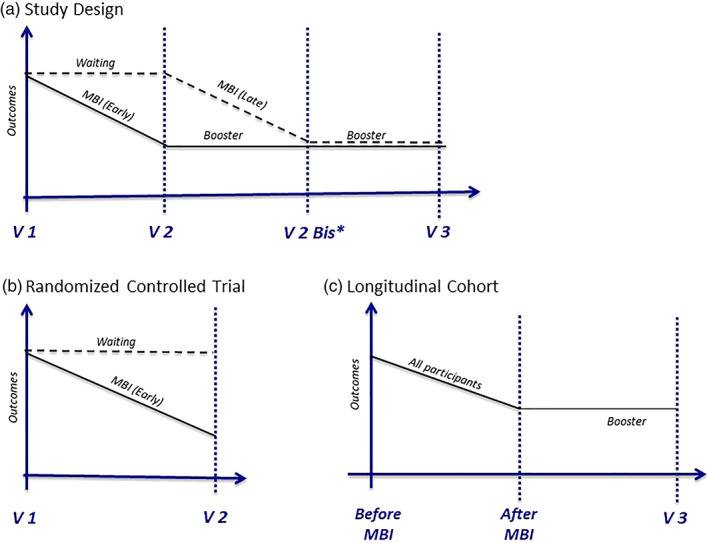
(a) Study design. The V2 bis visit is proposed to participants on the late MBI group, after the intervention. (b) Nested randomized controlled trail. (c) Longitudinal cohort
Before randomization, participants are stratified according to enduring anxiety levels using their trait score on the State–Trait Anxiety Inventory for Children (STAI‐C). Based on the median calculated in data previously collected by the Centre for Psychiatric Epidemiology and Psychopathology in schoolchildren (n = 535; 10–15 yo) from the Lausanne area in 1997–8 (by M. Preisig and C. Vandeleur, unpublished), we determined a cut‐off value of 31 to divide our sample into a low (≤31) and a high anxiety group (>31).
Assessments are performed before intervention (V0 and V1), immediately after intervention or waiting period (V2) and in 18 months (V3), as detailed in Figure 2. Based on previous experience (Siffredi et al., 2021), investigators anticipate low attrition rate and therefore are confident to assure a high late follow up rate for this population of motivated participants. For the late intervention group, an additional assessment is performed immediately after the intervention (V2bis).
FIGURE 2.

Mindfulteen study visits. ICF: Informed consent form; ER task: emotion regulation task; STAI: Strai and Trait Anxiety Invetory; MBI: Mindfulness‐based intervention
3.2. Setting and eligibility criteria
The Mindfulteen Study is conducted in collaboration with the universities and university hospitals of Geneva and Lausanne, in Switzerland. Recruitment, clinical assessments and MBI are performed at the Geneva University Hospital. Creation of the biobank and biological assessments are held at the Centre for Psychiatric Neuroscience at Lausanne University Hospital/University of Lausanne. The Brain and Behaviour Laboratory at Geneva University provides MRI facilities.
The project aims to recruit 120 non‐clinical adolescents between 13 and 15 years old. Therefore, all psychiatric conditions are exclusion criteria, apart from current anxiety disorders or past depressive episode. Any current or recent psychotherapeutic follow‐up is also an exclusion criteria. Furthermore, interest in partaking in a MBI is an inclusion criteria, creating a selected population of motivated teenagers. Detailed inclusion and exclusion criteria are shown on Table 1.
TABLE 1.
Eligibility criteria
| Inclusion criteria |
| 1. Age 13–15‐year‐old |
| 2. Interest in participating in a mindfulness‐based intervention |
| 3. Francophone |
| 4. Internet access and a compatible device (smartphone or tablet) a |
| 5. Availability for the study duration |
| 6. Consent documented by signature |
| 7. Parental consent as documented by signature |
| Exclusion criteria |
| 1. History of chronic somatic disease or significant medical condition |
| 2. History of psychiatry disease, with the exception of a mood disorder resolved for at least 6 months or current anxiety disorder without comorbidities b |
| 3. History of psychotherapy in the last 6 months |
| 4. History of regular meditation practice |
| 5. Pregnancy |
| 6. Known or suspected non‐compliance |
| 7. Known or suspected drug or alcohol abuse |
| 8. Inability to participate on group sessions |
| 9. Inability to undergo study's procedures |
| 10. Previous enrolment into the current study |
Internet and a compatible advice are demanded to run study's application with the recorded guided meditations.
If the definition of psychotherapy is not clear, the cut‐off of more than six visits with a mental health professional in the previous 6 months is to be used.
3.3. Ethical approval and consent procedure
The Mindfulteen Study protocol was approved by the Geneva Regional Research Ethical Committee on January 9th, 2018 (CCER 2018‐01731) and is published at clinicaltrials.com (NCT04711694).
Both the participant and the legal representative sign the informed consent forms at the first visit (V0).
3.4. Recruitment and restitution plan
Participants are recruited through advertisement material on social media (Facebook, Snapchat and Instagram), a website (www.mindfulteen.ch) and with flyers made available in adolescent clinics' waiting rooms, collaborating private and public schools, yoga studios and fitness centers. All materials were submitted to the local ethics committee and are in accordance with the Swissethics checklist for recruitment of participants by means of advertising.
Participants are reimbursed for each visit (i.e., from 15 to 62 US$) but not for their participation in the MBI.
3.5. Intervention
The intervention consists of an 8‐week MBI initial training, followed by 4 weeks of booster sessions. The MBI consists of 90 min group sessions of up to 12 participants once a week. Participants are also encouraged to practice individually every day with the help of a smartphone app. The overview of the intervention is presented in Appendix 1. In the case sanitary restrictions due to the Covid pandemic prevent face‐to‐face groups, the intervention will be held via videoconference.
The offered MBI is an in‐house adaptation from MBCT (Mindfulness Based Cognitive Therapy) and MBSR (Mindfulness Based Stress Reduction) and other MBI protocols, specially designed for young adolescents. Adaptation to youth, besides language and instructors' more active attitude, included shorter sessions, more guided (with less silence) and shorter mediation practices (between 2 and 10 min), mostly body‐centered practices, and an entire session devoted to kindness and self‐compassion. The same intervention was already used with success at Geneva university hospital (Siffredi et al., 2021). During the 8‐week program, participants learn about attention and stabilization of attention, about the awareness of experiences such as breath, physical sensations, emotions and thoughts, gradually allowing the recognition of patterns of behaviour. They are also trained in cognitive behavioural principles, with a mindfulness‐based approach. The facilitators (MMS and AM) are certified mindfulness instructors with a long‐term training in mindfulness. At each session, participants are not only trained to formal meditation practices but also to a variety of informal practices and exercises. Participants are also encouraged to practice individually every day with the help of a smartphone app that was specifically designed for the study in order to (i), display a selection of guided meditation audios, (ii) monitor their individual practice habits (i.e., time of the day, frequency and duration) and (iii), display short questions about the way they feel after their practice. Each participant engages in 12 weekly sessions (8 weeks of the MBI program and 4 weeks of booster sessions). After completion of the 12 weeks training, weekly booster sessions and access to the smartphone app are still available to all participants, supporting a transition to a sustained practice.
3.6. Outcomes measures
3.6.1. Neuroimaging outcomes
All MRI data are acquired using the same 3T Magnetom TIM Trio scanner (Siemens, Germany) and 32‐channel array coil, at the Brain and Behaviour Laboratory, Faculty of Medicine, University of Geneva. Each MR‐imaging session comprises the following: a magnetization‐prepared rapid acquisition gradient (MPRAGE) sequence to assess grey and white matter volumes as well as cortical thickness, a diffusion spectrum imaging (DSI) sequence to investigate structural connectivity, a new in house spectroscopy imaging (MRSI) sequence to measure whole‐brain neurochemical properties, see on peer‐reviewed preprint (A. Klauser et al., 2020) and a functional Echo‐Planar Imaging sequence (EPI‐T2*) to record blood oxygen level signal, with a repetition time of 2100 ms, for both functional tasks and 8 min ‘resting state’ during which participants have for instructions to fix a white cross and let their mind wander, without falling asleep.
The functional task investigates the dynamics of fronto‐limbic circuit recovery after a social laboratory stressor. It is well established that the most reliable and effective type of laboratory procedure involves a psychological stressor with a social component, for which the subject has little control. A successful adaptation of the classical Trier Social Stress Test (TSST) (Kirschbaum et al., 1993) to the MRI environment is the Montreal Imaging Stress Task (MIST), where subjects perform arithmetic tests and receive negative social feedback in the scanner (Dedovic et al., 2005). Here we use a local adaptation of this task, with the novelty to compare recovery after stressful and non‐stressful conditions, and recovery after positive and negative feedbacks. To test for possible differences in the recovery from stress (besides reactivity per se), fMRI paradigm stress periods (arithmetic task) are followed by positive or negative feedback and are interwoven with resting state periods. Recent fMRI research shows that transient negative or positive emotional conditions can produced sustained changes in brain activity patterns during the post‐emotion resting state (Eryilmaz et al., 2011). Participants perform two sessions of about 12 min each to get four repetitions of each condition (control, positive or negative feedback), which has proven to be sufficient (Murray et al., 2021).The team in charge of data acquisition will be trained to interact with participants in order to decrease unnecessary stress level in this vulnerable population.
3.6.2. Clinical outcomes
Participants undergo a structured K‐SADS interview on screening visit (Kaufman et al., 2000). Parents undergo a MINI (Mini International Neuropsychiatric Interview, (Sheehan et al., 1997) questionnaire to investigate family history of psychiatric disorders. Parents are also invited to fill the Cognitive Emotion Regulation Questionnaire (Jermann et al., 2006) and the Strength and difficulties questionnaire, parents' version (Goodman, 2001), to complete clinical characterization.
Self‐reported questionnaires are administered at each session of outcome assessment (V1, V2 and V2bis) and are listed on Table 2. The State Trait Anxiety Inventory For Children (STAI‐C) is consistently applied as the first questionnaire and is adopted as the main anxiety measure (Turgeon & Chartrand, 2003). The selected questionnaires cover various dimensions of affective and stress reactivity, as well as trait mindfulness. All clinical variables are then transmitted and coded into a standardized database using Teleform® semi‐automated program, and each data entry is double checked by the study coordinator.
TABLE 2.
Clinical outcomes: self‐reported questionnaires applied before MBI, immediately after MBI and 18 months after MBI. Main variables are general functioning, anxiety, depression, functional symptoms, current affects, emotion regulation strategies, trait mindfulness
| Self‐reported questionnaires | |
|---|---|
| State–trait Anxiety Inventory (STAI) (Gauthier & Bouchard, 1993) | Dimensional measure of anxiety, used in a large non‐clinical literature, with separation of trait and state subtypes |
| Beck Depression Inventory (BDI) (Beck & Steer, 1984) | Classical measure of depressive symptoms |
| Depression and anxiety stress scale (DASS‐21) (Nahaboo, 2015) | Combined measure of anxiety, depression and stress, added here in order to separate these close constructs |
| Multidimensional Anxiety Scale for Childre (MASC) (Turgeon et al., 2006) | Clinical measure of anxiety related to DSM diagnostic categories |
| Strengths and difficulties Questionnaires for adolescents (Goodman, 2001) | Well‐known general overview of different types of mental health‐related problems: emotional symptoms, conduct problems, hyperactivity‐inattention, peer relationship problems |
| Somatoform dissociation questionnaire (SDQ‐20) (Nijenhuis et al., 1998) | Measure of functional symptoms, a very common presentation of mental health difficulties during adolescence |
| Positive and Negative Affect Schedule (PANAS) (Gaudreau et al., 2006) | Widely used measure of positive and negative affects, brief and easy to administer |
| Emotion Awareness Questionnaire (EAQ) (Lahaye et al., 2010) | 2 questions are used, to complete the ERQ questionnaire, more cognitive: bodily awareness and emotion differentiation |
| Child and Adolescent Mindfulness Measure (CAMM) (Dion et al., 2018) | Measure of trait mindfulness, a dimension related to response to MBI |
| Emotion regulation Questionnaire (ERQ) (Gullone & Taffe, 2011) | Description of dimensional cognitive strategies of emotion regulation |
3.6.3. Biological outcomes
Averaged cortisol during the last month is measured using a hair strand collected with scissors from the vertex posterior region directly above the scalp at V1, V2 and V2bis. Measurement is done on the first centimetre of hair, using the liquid chromatography–tandem mass spectrometry (LC–MS/MS), as described by Binz et al. (2016).
Other biological measures are shown in Table 3. The blood collection is performed by an experienced paediatric nurse at fasting in the morning, after applying local anaesthesia with EMLA® patch. In total, five containers are collected: one 4.9 mL plain tube for hormones and four 7.5 mL EDTA tubes for redox and inflammatory markers. Samples are processed within few hours of collection and aliquots are stored frozen until analysis.
TABLE 3.
Biological markers collected before MBI, immediately after MBI and 18 months after MBI
| Inflammatory markers: |
| Pro‐inflammatory molecules: C‐reactive protein (CRP) and cytokines (IL‐1, IL‐6, IL‐8, IL‐10, TNF‐a & MCP‐1) levels |
| Pro‐inflammatory transcription factors: nuclear factor kappa‐light‐chain‐enhancer of activated B cells (NFκB) active form levels |
| Interaction factors between inflammation and oxidative stress: macrophage migration inhibitory factor (MIF) levels, the matrix metalloproteinase‐9 (MMP9) activity and the soluble form of the receptor for advanced glycation end‐product (sRAGE) levels |
| Redox markers: |
| Antioxidant defence metabolites: glutathione (GSH) and cysteine levels |
| Antioxidant enzymes: superoxide dismutase (SOD) activity, glutathione peroxidase (GPx) & glutathione reductase (GR) activities, peroxiredoxin 4 (PRX4) level, thioredoxin (Trx) activity and peroxiredoxins (PRXs) redox status |
| Antioxidant transcription factors: nuclear factor erythroid 2‐related factor 2 (Nrf2) active form levels |
| Consequences of oxidative stress: malondialdehyde (MDA) levels, 8‐Hydroxy‐2‐deoxyguanosine (8‐OHdG) levels and F2‐isoprostanes levels |
| Mitochondrial oxidative stress marker: microRNA 137 levels |
| Polymorphism related to redox defences: GAG trinucleotide‐repeat polymorphism in the gene for the catalytic subunit of gamma‐glutamylcysteine ligase |
| Puberty markers: dehydroepiandrosterone (DHEA), oestradiol and testosterone levels |
| Stress‐axis activation marker: morning cortisol level |
Puberty markers will allow controlling for possible differences regarding pubertal development. At a later stage, multimodal combination of biological and neuroimaging variables will allow to test for more advanced models of anxiety, stress reactivity and related impact of MBI.
3.7. Statistical analyses
The fMRI data will be analysed by standard statistical methods, using SPM12 (statistical parametric mapping, www.fil.ion.ucl.ac.uk/spm/) software implemented in Matlab and in accordance with our previous studies (Murray et al., 2021; Piguet et al., 2013). Structural, DSI and spectroscopy data will be analysed in collaboration with experts in the field, following well‐established pipelines.
Concerning clinical and biological data, each type of measure will be extracted after data cleaning and analysed with the corresponding statistical model in SPSS or R software (t‐tests, ANOVA or MANCOVA), considering potential cofounders. Post‐hoc analyses will be done and a two‐sided α = 0.05 will be used as level of significance. Inter‐subject regression analyses (between changes in clinical variables on the one hand, biological indices and performance measures on the other hand) will also be conducted. Given the large number of secondary measures, multilevel regression (MLM) will be used to maximize the longitudinal information of the dataset. Depending on the type of variable, we will report effect sizes when adapted and 95% confidence intervals as a measure of imprecision of the effect estimate. At the end of the project, the clinical database will be archived in a reusable format, encompassing all anonymized raw data, meta‐data and transformed data. Once the study is published, data sets can be accessed upon request to the researchers in charge.
3.8. Determination of the sample size
Sample size was determined according to fMRI main outcome and based on data from a previous study using the same stress task with a population of young and vulnerable participants. The minimal sample size to detect a significant response for the main condition of the MIST task, with a power of 95% and significance level of a = 0,05, was 51 subjects (Murray et al., 2021). Therefore, two groups of 60 subjects will allow for sufficient statistical power. Given the low attrition rate expected, the final sample size is 120 participants.
4. HYPOTHESES
Regarding the randomized controlled trial (V1 × V2 data) part of the study, we expect participants from the early MBI group compared to the late intervention group to show decreased activity and volume in the amygdala, but increased activity and potentially increased volume in the anterior cingulate cortex, prefrontal cortex and striatal region. Following this, we expect increased connectivity indices between prefrontal structures and limbic areas, more particularly between PFC and amygdala. We also expect these changes to be correlated with expected decreases in anxiety, perceived stress, depression, functional symptoms and affective lability, and decreases in markers of HPA stress axis, inflammation and oxidative stress.
We expect the same range of effects on the before and after comparisons (V1 × V2 data for the early intervention group and V2 × V2bis for the late group), that is, the longitudinal cohort part of the study. We also expect that, at baseline, adolescents on the high anxiety group will show higher reactivity to stress compared to adolescents on the low anxiety group. Moreover, when comparing those two groups, we anticipate the effect of MBI will be more intense on the high anxiety group.
We anticipate that at least some of the effects will be enduring and observed at the long‐term assessment (V1 × V3) and the maintenance of effects will be related to meditation practice, measured by participation in booster sessions and use of the study application.
5. CONCLUSION
This paper presents the rationale and methodology of a clinical randomized controlled trial proposing MBI to young adolescents from the general population. To the best of our knowledge, this is the first randomized controlled trial integrating neuroimaging, clinical and biological outcomes of emotion and stress reactivity on youth exposed to MBI. We expect that MBI could help decrease stress reactivity and increase cognitive control, and that these changes would be observed on neuroimaging, clinical assessments and biological markers. Therefore, the authors expect to further extend the growing body of evidence regarding the effects and the specific mechanisms of change of MBI in youth, eventually facilitating the understanding of preventive and clinical indications of such approach.
CONFLICT OF INTEREST
The authors declare no conflicts of interest.
ACKNOWLEDGEMENTS
This study is supported by a fund granted by the Leenaards Foundation. The Swiss National Center of Competence in Research; ‘Synapsy: the Synaptic Basis of Mental Diseases’ provides complementary source of funding (Swiss National Science Foundation, Grant Number 51NF40‐158776). Authors would like to acknowledge the Leenaards Foundation, NCCR Synapsy, the Paediatric Research Platform at Geneva University Hospitals and the Brain and Behaviour Laboratory at Geneva University. Authors recognize and acknowledge the work and support of Eleonore Pham, Anne‐Lise Küng, Prof. Dan Schechter, Prof. Petra Hüppi, Prof. Andrea Samson, Prof. Ulrike Rimmele, Prof. Alexandre Dayer and Prof. Kim Do. PK is funded by a fellowship from the Adrian and Simone Frutiger Foundation. Open access funding provided by Universite de Geneve.
Appendix 1.
| Session | SESSION THEMESession intentionsession mindfulness attitude | Agenda | Home practice |
|---|---|---|---|
| 1 | ATTENTION and AUTOPILOT | ||
|
Introduction to attention and autopilot mode Beginners Mind |
Group and instructor introduction Mindfulness definition: To pay attention to what happens in the present moment, with a curious and non‐judgmental attitude. Dialogue about attention awareness and focus of attention The six channels: five senses and thoughts Practice: Eating a raisin as an explorer Practice: Grounding mediation Closure practice |
Chart: Attention ‐ where is my attention now? Practice: Mindful eating – a mindful bite once a day Practice: Grounding meditation |
|
| 2 | DISCOVERING THE BODY LANGUAGE | ||
|
Discovering bodily sensations Acceptance |
Opening practice: Grounding meditation Dialogue about home practice Dialogue about sensations and sensation awareness Practice: Lying down Body scan, with a component of contraction and relaxation at the beginning Practice: Seated body scan Closure practice |
Chart: Cool moment of the day Practice: Doing mindfully something habitually done on autopilot Practice: Grounding meditation Practice: Body scan |
|
| 3 | ATTENTION STABILIZATION | ||
|
Discovering the breath Non‐striving |
Opening practice: Grounding meditation Dialogue about home practice Dialogue about the breath and it's use as a possible anchor Practice: The 3 min break Practice: Stop and breath Practice: Siting practice focusing on breath Closure practice |
Practice: Body scan Practice: 3 min break Practice: Stop and breath |
|
| 4 | RECOGNIZING EMOTIONS | ||
|
Recognizing emotions from bodily sensations Patience |
Opening practice: Grounding meditation Dialogue about home practice Practice: Seated body scan, including emotions Dialogue about emotions: recognizing emotions from bodily sensations and the link between sensations, thoughts and behaviour. Practice: Sitting meditation including emotions (internal forecast) Drawing and naming the identified emotion Closure practice |
Chart: Emotions ‐ recognizing links between sensations, thoughts and behaviour Practice: The 3 min break Practice: Sitting meditation including emotions |
|
| 5 | RECOGNIZING THOUGTHS | ||
|
I'm much more than my thoughts Non‐judging |
Opening practice: Grounding meditation Dialogue about home practice Walking down the street exercise Discussion about thoughts and emotions Practice: walking meditation Closure practice |
Practice: Sitting meditation including emotions Practice: Walking mediation |
|
| 6 | AUTOMATIC REACTION OR CONSCIOUS RESPONSE? | ||
|
Exploring stressors and stress reaction Letting go |
Opening practice: Grounding meditation Dialogue about home practice Practice: Open awareness Quick board game: identifying stress reaction Discussion about stressors and stress reaction strategies Practice: 5 min to deal with stress Closure practice |
Chart: Identifying qualities on others Practice: 5 min to deal with stress Practice: Walking mediation Practice: Open awareness |
|
| 7 | KINDNESS | ||
|
Being kind to oneself and to others Gratitude and generosity |
Opening practice: Grounding meditation Dialogue about home practice Discussion about kindness and compassion Exercise about our own qualities Practice: finding refuge Drawing our refuge Mindful listening exercise Dialogue about communications and social media Closure practice |
Letter to oneself: What did I learned and I do not want to forget? What did I learn about myself? Which meditations do I want to keep practicing? Practice: Refuge Practice: Chose another meditation to practice |
|
| 8 | CLOSURE AND OPENNESS | ||
|
Integrating the program Trust |
Opening practice: Grounding meditation Dialogue about home practice Practice: sitting meditation about the program Satisfaction questionnaire How to facilitate our own practice Closing ritual |
||
Piguet, C. , Klauser, P. , Celen, Z. , James Murray, R. , Magnus Smith, M. , & Merglen, A. (2022). Randomized controlled trial of a mindfulness‐based intervention in adolescents from the general population: The Mindfulteen neuroimaging study protocol. Early Intervention in Psychiatry, 16(8), 891–901. 10.1111/eip.13235
Camille Piguet and Paul Klauser have contributed equally to the article.
Funding information Fondation Leenards, Grant/Award Number: Translational Research Award 2018; Schweizerischer Nationalfonds zur Förderung der Wissenschaftlichen Forschung, Grant/Award Number: 51NF40‐158776
DATA AVAILABILITY STATEMENT
At the end of the project, the clinical database will be archived in a reusable format, encompassing all anonymized raw data, meta‐data, and transformed data. Once the study is published, data sets can be accessed upon request to the researchers in charge.
REFERENCES
- Aiello, G. , Horowitz, M. , Hepgul, N. , Pariante, C. M. , & Mondelli, V. (2012). Stress abnormalities in individuals at risk for psychosis: A review of studies in subjects with familial risk or with “at risk” mental state. Psychoneuroendocrinology, 37(10), 1600–1613. 10.1016/j.psyneuen.2012.05.003 [DOI] [PubMed] [Google Scholar]
- Ali, A. , Weiss, T. R. , Dutton, A. , McKee, D. , Jones, K. D. , Kashikar‐Zuck, S. , Silverman, W. K. , & Shapiro, E. D. (2017). Mindfulness‐based stress reduction for adolescents with functional somatic syndromes: A pilot cohort study. The Journal of Pediatrics, 183, 184–190. 10.1016/j.jpeds.2016.12.053 [DOI] [PMC free article] [PubMed] [Google Scholar]
- Alsubaie, M. , Abbott, R. , Dunn, B. , Dickens, C. , Keil, T. F. , Henley, W. , & Kuyken, W. (2017). Mechanisms of action in mindfulness‐based cognitive therapy (MBCT) and mindfulness‐based stress reduction (MBSR) in people with physical and/or psychological conditions: A systematic review. Clinical Psychology Review, 55, 74–91. 10.1016/j.cpr.2017.04.008 [DOI] [PubMed] [Google Scholar]
- Beck, A. T. , & Steer, R. A. (1984). Internal consistencies of the original and revised Beck depression inventory. Journal of Clinical Psychology, 40(6), 1365–1367. 10.1002/1097-4679(198411)40:6<1365::aid-jclp2270400615>3.0.co;2-d [DOI] [PubMed] [Google Scholar]
- Binz, T. M. , Braun, U. , Baumgartner, M. R. , & Kraemer, T. (2016). Development of an LC‐MS/MS method for the determination of endogenous cortisol in hair using (13)C3‐labeled cortisol as surrogate analyte. Journal of Chromatography B, Analytical Technologies in the Biomedical and Life Sciences, 1033‐1034, 65–72. 10.1016/j.jchromb.2016.07.041 [DOI] [PubMed] [Google Scholar]
- Black, D. S. , & Slavich, G. M. (2016). Mindfulness meditation and the immune system: A systematic review of randomized controlled trials. Annals of the New York Academy of Sciences, 1373(1), 13–24. 10.1111/nyas.12998 [DOI] [PMC free article] [PubMed] [Google Scholar]
- Buric, I. , Farias, M. , Jong, J. , Mee, C. , & Brazil, I. A. (2017). What is the molecular signature of mind‐body interventions? A systematic review of gene expression changes induced by meditation and related practices. Frontiers in Immunology, 8, 670. 10.3389/fimmu.2017.00670 [DOI] [PMC free article] [PubMed] [Google Scholar]
- Casey, B. J. , Heller, A. S. , Gee, D. G. , & Cohen, A. O. (2019). Development of the emotional brain. Neuroscience Letters, 693, 29–34. 10.1016/j.neulet.2017.11.055 [DOI] [PMC free article] [PubMed] [Google Scholar]
- Casey, B. J. , Jones, R. M. , Levita, L. , Libby, V. , Pattwell, S. S. , Ruberry, E. J. , Soliman, F. , & Somerville, L. H. (2010). The storm and stress of adolescence: Insights from human imaging and mouse genetics. Developmental Psychobiology, 52(3), 225–235. 10.1002/dev.20447 [DOI] [PMC free article] [PubMed] [Google Scholar]
- Celen, Z. , Murray, R. , Klauser, P. , Merglen, A. , Vuilleumier, P. & Piguet, C. Neural mechanisms of recovery from psychosocial stress in adolescents (in prep).
- Chadi, N. , McMahon, A. , Vadnais, M. , Malboeuf‐Hurtubise, C. , Djemli, A. , Dobkin, P. L. , Lacroix, J. , Luu, T. M. , & Haley, N. (2016). Mindfulness‐based intervention for female adolescents with chronic pain: A pilot randomized trial. Journal of the Canadian Academy of Child and Adolescent Psychiatry = Journal De l'Academie Canadienne De Psychiatrie De L'enfant Et De L'adolescent, 25(3), 159–168. [PMC free article] [PubMed] [Google Scholar]
- Crane, R. S. , Brewer, J. , Feldman, C. , Kabat‐Zinn, J. , Santorelli, S. , Williams, J. M. G. , & Kuyken, W. (2017). What defines mindfulness‐based programs? The warp and the weft. Psychological Medicine, 47(6), 990–999. 10.1017/S0033291716003317 [DOI] [PubMed] [Google Scholar]
- Dawson, A. F. , Brown, W. W. , Anderson, J. , Datta, B. , Donald, J. N. , Hong, K. , Allan, S. , Mole, T. B. , Jones, P. B. , & Galante, J. (2020). Mindfulness‐based interventions for university students: A systematic review and meta‐analysis of randomised controlled trials. Applied Psychology. Health and Well‐Being, 12(2), 384–410. doi: 10.1111/aphw.12188 [DOI] [PubMed] [Google Scholar]
- Dedovic, K. , Renwick, R. , Mahani, N. K. , Engert, V. , Lupien, S. J. , & Pruessner, J. C. (2005). The Montreal Imaging Stress Task: Using functional imaging to investigate the effects of perceiving and processing psychosocial stress in the human brain. Journal of Psychiatry & Neuroscience: JPN, 30(5), 319–325. [PMC free article] [PubMed] [Google Scholar]
- Dion, J. , Paquette, L. , Daigneault, I. , Godbout, N. , & Hébert, M. (2018). Validation of the French version of the child and adolescent mindfulness measure (CAMM) among samples of French and indigenous youth. Mindfulness, 9(2), 645–653. 10.1007/s12671-017-0807-x [DOI] [Google Scholar]
- Eryilmaz, H. , Van De Ville, D. , Schwartz, S. , & Vuilleumier, P. (2011). Impact of transient emotions on functional connectivity during subsequent resting state: A wavelet correlation approach. NeuroImage, 54(3), 2481–2491. 10.1016/j.neuroimage.2010.10.021 [DOI] [PubMed] [Google Scholar]
- Fox, K. C. R. , Dixon, M. L. , Nijeboer, S. , Girn, M. , Floman, J. L. , Lifshitz, M. , Ellamil, M. , Sedlmeier, P. , & Christoff, K. (2016). Functional neuroanatomy of meditation: A review and meta‐analysis of 78 functional neuroimaging investigations. Neuroscience and Biobehavioral Reviews, 65, 208–228. 10.1016/j.neubiorev.2016.03.021 [DOI] [PubMed] [Google Scholar]
- Gaudreau, P. , Sanchez, X. , & Blondin, J.‐P. (2006). Positive and negative affective states in a performance‐related setting: Testing the factorial structure of the PANAS across two samples of French‐Canadian participants. European Journal of Psychological Assessment, 22(4), 240–249. 10.1027/1015-5759.22.4.240 [DOI] [Google Scholar]
- Gauthier, J. , & Bouchard, S. (1993). Adaptation canadienne‐française de la forme révisée du State–Trait Anxiety Inventory de Spielberger . [A French‐Canadian adaptation of the revised version of Spielberger's State–Trait Anxiety Inventory.]. Canadian Journal of Behavioural Science/Revue canadienne des sciences du comportement, 25(4), 559–578. 10.1037/h0078881 [DOI] [Google Scholar]
- Goodman, R. (2001). Psychometric properties of the strengths and difficulties questionnaire. Journal of the American Academy of Child & Adolescent Psychiatry, 40(11), 1337–1345. 10.1097/00004583-200111000-00015 [DOI] [PubMed] [Google Scholar]
- Gotink, R. A. , Meijboom, R. , Vernooij, M. W. , Smits, M. , & Hunink, M. G. M. (2016). 8‐week mindfulness based stress reduction induces brain changes similar to traditional long‐term meditation practice—A systematic review. Brain and Cognition, 108, 32–41. 10.1016/j.bandc.2016.07.001 [DOI] [PubMed] [Google Scholar]
- Guendelman, S. , Medeiros, S. , & Rampes, H. (2017). Mindfulness and emotion regulation: Insights from neurobiological, psychological, and clinical studies. Frontiers in Psychology, 8, 220. 10.3389/fpsyg.2017.00220 [DOI] [PMC free article] [PubMed] [Google Scholar]
- Gullone, E. , & Taffe, J. (2011). The emotion regulation questionnaire for children and adolescents (ERQ‐CA): A psychometric evaluation. Psychological Assessment, 24, 409–417. 10.1037/a0025777 [DOI] [PubMed] [Google Scholar]
- Hafeman, D. , Bebko, G. , Bertocci, M. A. , Fournier, J. C. , Chase, H. W. , Bonar, L. , Perlman, S. B. , Travis, M. , Gill, M. K. , Diwadkar, V. A. , Sunshine, J. L. , Holland, S. K. , Kowatch, R. A. , Birmaher, B. , Axelson, D. , Horwitz, S. M. , Arnold, L. E. , Fristad, M. A. , Frazier, T. W. , … Phillips, M. L. (2017). Amygdala‐prefrontal cortical functional connectivity during implicit emotion processing differentiates youth with bipolar spectrum from youth with externalizing disorders. Journal of Affective Disorders, 208, 94–100. 10.1016/j.jad.2016.09.064 [DOI] [PMC free article] [PubMed] [Google Scholar]
- Hickie, I. B. , Scott, E. M. , Hermens, D. F. , Naismith, S. L. , Guastella, A. J. , Kaur, M. , Sidis, A. , Whitwell, B. , Glozier, N. , Davenport, T. , Pantelis, C. , Wood, S. J. , & McGorry, P. D. (2013). Applying clinical staging to young people who present for mental health care. Early Intervention in Psychiatry, 7(1), 31–43. 10.1111/j.1751-7893.2012.00366.x [DOI] [PubMed] [Google Scholar]
- Hilton, L. , Hempel, S. , Ewing, B. A. , Apaydin, E. , Xenakis, L. , Newberry, S. , Colaiaco, B. , Maher, A. R. , Shanman, R. M. , Sorbero, M. E. , & Maglione, M. A. (2017). Mindfulness meditation for chronic pain: Systematic review and meta‐analysis. Annals of Behavioral Medicine: A Publication of the Society of Behavioral Medicine, 51(2), 199–213. 10.1007/s12160-016-9844-2 [DOI] [PMC free article] [PubMed] [Google Scholar]
- Jermann, F. , Van der Linden, M. , d'Acremont, M. , & Zermatten, A. (2006). Cognitive Emotion Regulation Questionnaire (CERQ). European Journal of Psychological Assessment, 22(2), 126–131. 10.1027/1015-5759.22.2.126 [DOI] [Google Scholar]
- Kabat‐Zinn, J. (2017). Too early to tell: The potential impact and challenges‐ethical and otherwise‐inherent in the mainstreaming of dharma in an increasingly dystopian world. Mindfulness, 8(5), 1125–1135. 10.1007/s12671-017-0758-2 [DOI] [PMC free article] [PubMed] [Google Scholar]
- Kallapiran, K. , Koo, S. , Kirubakaran, R. , & Hancock, K. (2015). Review: Effectiveness of mindfulness in improving mental health symptoms of children and adolescents: A meta‐analysis. Child and Adolescent Mental Health, 20(4), 182–194. 10.1111/camh.12113 [DOI] [PubMed] [Google Scholar]
- Kaufman, J. , Birmaher, B. , Brent, D. A. , Ryan, N. D. , & Rao, U. (2000). K‐SADS‐PL. Journal of the American Academy of Child and Adolescent Psychiatry, 39(10), 1208. 10.1097/00004583-200010000-00002 [DOI] [PubMed] [Google Scholar]
- Kirschbaum, C. , Pirke, K. M. , & Hellhammer, D. H. (1993). The ‘Trier social stress test’—A tool for investigating psychobiological stress responses in a laboratory setting. Neuropsychobiology, 28(1–2), 76–81. 10.1159/000119004 [DOI] [PubMed] [Google Scholar]
- Klauser, A. , Klauser, P. , Grouiller, F. , Courvoisier, S. , & Lazeyras, F. (2020). Whole‐brain high‐resolution metabolite mapping with 3D compressed‐sensing‐SENSE‐LowRank 1H FID‐MRSI [preprint]. Neuroscience. 10.1101/2020.05.18.101618 [DOI] [PMC free article] [PubMed] [Google Scholar]
- Klauser, P. , Fornito, A. , Lorenzetti, V. , Davey, C. G. , Dwyer, D. B. , Allen, N. B. , & Yücel, M. (2015). Cortico‐limbic network abnormalities in individuals with current and past major depressive disorder. Journal of Affective Disorders, 173, 45–52. 10.1016/j.jad.2014.10.041 [DOI] [PubMed] [Google Scholar]
- Kozlowska, K. (2013). Stress, distress, and Bodytalk: Co‐constructing formulations with patients who present with somatic symptoms. Harvard Review of Psychiatry, 21(6), 314–333. 10.1097/HRP.0000000000000008 [DOI] [PubMed] [Google Scholar]
- Lahaye, M. , Luminet, O. , Van Broeck, N. , Bodart, E. , & Mikolajczak, M. (2010). Psychometric properties of the emotion awareness questionnaire for children in a French‐speaking population. Journal of Personality Assessment, 92(4), 317–326. 10.1080/00223891.2010.482003 [DOI] [PubMed] [Google Scholar]
- Lin, J. , Chadi, N. , & Shrier, L. (2019). Mindfulness‐based interventions for adolescent health. Current Opinion in Pediatrics, 31(4), 469–475. 10.1097/MOP.0000000000000760 [DOI] [PubMed] [Google Scholar]
- Marusak, H. A. , Elrahal, F. , Peters, C. A. , Kundu, P. , Lombardo, M. V. , Calhoun, V. D. , Goldberg, E. K. , Cohen, C. , Taub, J. W. , & Rabinak, C. A. (2018). Mindfulness and dynamic functional neural connectivity in children and adolescents. Behavioural Brain Research, 336, 211–218. doi: 10.1016/j.bbr.2017.09.010 [DOI] [PMC free article] [PubMed] [Google Scholar]
- McGorry, P. (2013). Early clinical phenotypes and risk for serious mental disorders in young people: Need for care precedes traditional diagnoses in mood and psychotic disorders. The Canadian Journal of Psychiatry, 58(1), 19–21. doi: 10.1177/070674371305800105 [DOI] [PubMed] [Google Scholar]
- Mitchell, J. T. , Dennis, M. F. , English, J. S. , Dennis, P. A. , Brightwood, A. , Beckham, J. C. , & Kollins, S. H. (2014). Ecological momentary assessment of antecedents and consequences of smoking in adults with attention‐deficit/hyperactivity disorder. Substance Use & Misuse, 49(11), 1446–1456. doi: 10.3109/10826084.2014.912229 [DOI] [PMC free article] [PubMed] [Google Scholar]
- Monroe, S. M. , & Harkness, K. L. (2005). Life stress, the kindling hypothesis, and the recurrence of depression: Considerations from a life stress perspective. Psychological Review, 112(2), 417–445. doi: 10.1037/0033-295X.112.2.417 [DOI] [PubMed] [Google Scholar]
- Murray, R. J. , Apazoglou, K. , Celen, Z. , Dayer, A. , Aubry, J.‐M. , Ville, D. V. D. , Vuilleumier, P. , & Piguet, C. (2021). Maladaptive emotion regulation traits predict altered corticolimbic recovery from psychosocial stress. Journal of Affective Disorders, 280, 54–63. 10.1016/j.jad.2020.09.122 [DOI] [PubMed] [Google Scholar]
- Nahaboo, S. (2015). Validation of the French depression anxiety stress scales (DASS‐21) and predictors of depression in an adolescent Mauritian population. 10.13140/RG.2.1.1321.5203 [DOI]
- Nijenhuis, E. R. , Spinhoven, P. , van Dyck, R. , van der Hart, O. , & Vanderlinden, J. (1998). Psychometric characteristics of the somatoform dissociation questionnaire: A replication study. Psychotherapy and Psychosomatics, 67(1), 17–23. doi: 10.1159/000012254 [DOI] [PubMed] [Google Scholar]
- Paus, T. , Keshavan, M. , & Giedd, J. N. (2008). Why do many psychiatric disorders emerge during adolescence? Nature Reviews Neuroscience, 9(12), 947–957. doi: 10.1038/nrn2513 [DOI] [PMC free article] [PubMed] [Google Scholar]
- Peters, S. K. , Dunlop, K. , & Downar, J. (2016). Cortico‐striatal‐thalamic loop circuits of the salience network: A central pathway in psychiatric disease and treatment. Frontiers in Systems Neuroscience, 10, 104. doi: 10.3389/fnsys.2016.00104 [DOI] [PMC free article] [PubMed] [Google Scholar]
- Piguet, C. , Desseilles, M. , Cojan, Y. , Sterpenich, V. , Dayer, A. , Bertschy, G. , & Vuilleumier, P. (2015). Neural correlates of generation and inhibition of verbal association patterns in mood disorders. Social Cognitive and Affective Neuroscience, 10(7), 978–986. doi: 10.1093/scan/nsu146 [DOI] [PMC free article] [PubMed] [Google Scholar]
- Piguet, C. , Sterpenich, V. , Desseilles, M. , Cojan, Y. , Bertschy, G. , & Vuilleumier, P. (2013). Neural substrates of cognitive switching and inhibition in a face processing task. NeuroImage, 82, 489–499. doi: 10.1016/j.neuroimage.2013.06.015 [DOI] [PubMed] [Google Scholar]
- Poissant, H. , Mendrek, A. , Talbot, N. , Khoury, B. , & Nolan, J. (2019). Behavioral and cognitive impacts of mindfulness‐based interventions on adults with attention‐deficit hyperactivity disorder: A systematic review. Behavioural Neurology, 2019, 5682050. doi: 10.1155/2019/5682050 [DOI] [PMC free article] [PubMed] [Google Scholar]
- Price, J. L. , & Drevets, W. C. (2012). Neural circuits underlying the pathophysiology of mood disorders. Trends in Cognitive Sciences, 16(1), 61–71. doi: 10.1016/j.tics.2011.12.011 [DOI] [PubMed] [Google Scholar]
- Ratheesh, A. , Cotton, S. M. , Davey, C. G. , Adams, S. , Bechdolf, A. , Macneil, C. , Berk, M. , & McGorry, P. D. (2017). Ethical considerations in preventive interventions for bipolar disorder. Early Intervention in Psychiatry, 11(2), 104–112. doi: 10.1111/eip.12340 [DOI] [PubMed] [Google Scholar]
- Rice, S. M. , Halperin, S. , Cahill, S. , Cranston, I. , Phelan, M. , Hetrick, S. E. , Blaikie, S. , Edwards, J. , Koutsogiannis, J. , & Davey, C. G. (2017). The Youth Mood Clinic: An innovative service for the treatment of severe and complex depression. Australasian Psychiatry: Bulletin of Royal Australian and New Zealand College of Psychiatrists, 25(2), 112–116. doi: 10.1177/1039856216689002 [DOI] [PubMed] [Google Scholar]
- Romeo, R. D. (2010). Adolescence: A central event in shaping stress reactivity. Developmental Psychobiology, 52(3), 244–253. doi: 10.1002/dev.20437 [DOI] [PubMed] [Google Scholar]
- Ruiz‐Íñiguez, R. , Santed Germán, M. Á. , Burgos‐Julián, F. A. , Díaz‐Silveira, C. , & Carralero Montero, A. (2020). Effectiveness of mindfulness‐based interventions on anxiety for children and adolescents: A systematic review and meta‐analysis. Early Intervention in Psychiatry, 14(3), 263–274. doi: 10.1111/eip.12849 [DOI] [PubMed] [Google Scholar]
- Sanada, K. , Montero‐Marin, J. , Alda Díez, M. , Salas‐Valero, M. , Pérez‐Yus, M. C. , Morillo, H. , Demarzo, M. M. P. , García‐Toro, M. , & García‐Campayo, J. (2016). Effects of mindfulness‐based interventions on salivary cortisol in healthy adults: A meta‐analytical review. Frontiers in Physiology, 7, 471. doi: 10.3389/fphys.2016.00471 [DOI] [PMC free article] [PubMed] [Google Scholar]
- Sheehan, D. , Lecrubier, Y. , Harnett Sheehan, K. , Janavs, J. , Weiller, E. , Keskiner, A. , Schinka, J. , Knapp, E. , Sheehan, M. , & Dunbar, G. (1997). The validity of the Mini International Neuropsychiatric Interview (MINI) according to the SCID‐P and its reliability. European Psychiatry, 12(5), 232–241. doi: 10.1016/S0924-9338(97)83297-X [DOI] [Google Scholar]
- Siffredi, V. , Liverani, M. C. , Smith, M. M. , Meskaldji, D. E. , Stuckelberger‐Grobéty, F. , Freitas, L. G. A. , De Albuquerque, J. , Savigny, E. , Gimbert, F. , Hüppi, P. S. , Merglen, A. , Tolsa, C. B. , & Leuchter, R. H.‐V. (2021). Improving executive, behavioural and socio‐emotional competences in very preterm young adolescents through a mindfulness‐based intervention: Study protocol and feasibility. Early Human Development, 105435. 10.1016/j.earlhumdev.2021.105435 [DOI] [PubMed] [Google Scholar]
- Spear, L. P. (2013). Adolescent neurodevelopment. The Journal of Adolescent Health: Official Publication of the Society for Adolescent Medicine, 52(Suppl 2), S7–S13. doi: 10.1016/j.jadohealth.2012.05.006 [DOI] [PMC free article] [PubMed] [Google Scholar]
- Tottenham, N. , & Galván, A. (2016). Stress and the adolescent brain. Neuroscience & Biobehavioral Reviews, 70, 217–227. doi: 10.1016/j.neubiorev.2016.07.030 [DOI] [PMC free article] [PubMed] [Google Scholar]
- Turgeon, L. , & Chartrand, É. (2003). Psychometric properties of the French Canadian version of the state‐trait anxiety inventory for children. Educational and Psychological Measurement, 63(1), 174–185. doi: 10.1177/0013164402239324 [DOI] [Google Scholar]
- Turgeon, L. , Chartrand, E. , Robaey, P. , Gauthier, A. , Robaey, P. , & Gauthier, A. (2006). Qualités psychométriques de la version québécoise du Multidimensional Anxiety Scale for Children (MASC). Revue Francophone de Clinique Comportementale et Cognitive, 11(3), 1–8. [Google Scholar]
- Vo, D. X. , Doyle, J. , & Christie, D. (2014). Mindfulness and adolescence: A clinical review of recent mindfulness‐based studies in clinical and nonclinical adolescent populations. Adolescent Medicine: State of the Art Reviews, 25(2), 455–472. [PubMed] [Google Scholar]
- Zhou, X. , Guo, J. , Lu, G. , Chen, C. , Xie, Z. , Liu, J. , & Zhang, C. (2020). Effects of mindfulness‐based stress reduction on anxiety symptoms in young people: A systematic review and meta‐analysis. Psychiatry Research, 289, 113002. doi: 10.1016/j.psychres.2020.113002 [DOI] [PubMed] [Google Scholar]
- Zilverstand, A. , Parvaz, M. A. , & Goldstein, R. Z. (2017). Neuroimaging cognitive reappraisal in clinical populations to define neural targets for enhancing emotion regulation: A systematic review. NeuroImage, 151, 105–116. doi: 10.1016/j.neuroimage.2016.06.009 [DOI] [PMC free article] [PubMed] [Google Scholar]
Associated Data
This section collects any data citations, data availability statements, or supplementary materials included in this article.
Data Availability Statement
At the end of the project, the clinical database will be archived in a reusable format, encompassing all anonymized raw data, meta‐data, and transformed data. Once the study is published, data sets can be accessed upon request to the researchers in charge.