



As a woman of color, and as an academic gastroenterologist specializing in molecular mechanisms of gastric and colon cancer, I recently decided to take on a leadership role while still juggling a working molecular biology laboratory and maintaining a small clinical practice. Such a career is never easy, but if the reader takes nothing else from my experience, I would suggest “let your passion for science be your guide.” The other essential ingredient in my success has been the multiple sponsors and mentors that helped shape my career. In nearly every biography or profile, writers nearly always credit their parents and/or mentors who influenced them at critical stages of their careers. I write at this juncture in my profession to honor one of my favorite mentors: Tadataka “Tachi” Yamada, MD. Tachi succeeded in multiple career venues—from academia, big pharma, and non-profits to philanthropy and venture capitalism. He was creative and fearless, knew how to recognize talent and how to reinvent himself—traits that I continue to admire and to some extent would love to emulate. For women, and especially women of color, our mentors typically do not look like us nor do we share common origins. Yet, these mentors, somewhere in our past (and present) see through our insecurities, reach out, and pull us out of obscurity. A common theme for those that shaped my career is convergence on an interest in scientific investigation, teaching, and mentoring.
Mentors
Currently, I am chief of the Division of Gastroenterology and Hepatology and Regents Professor of Medicine at the University of Arizona, a role that I began after retiring from a successful 27-year academic career at the University of Michigan. Tachi had recruited me after completing a one-year clinical gastroenterology (GI) fellowship at UCLA in 1991. Prior to that, I had completed both a three-year residency in Internal Medicine and a three-year research fellowship in the GI Division at the Massachusetts General Hospital (MGH) in Boston. It was at the MGH that I re-ignited my interest in fundamental research and learned molecular biology. It was the late 1980s, and Kurt Isselbacher, MD and subsequently Dan Podolsky, MD were my division chiefs. My research cohort was comprised of MD-GI fellows Tim Wang, Anil Rustgi, Jake Liang, Ray Chung, and Dan Chung. Tachi and I shared a common interest in the biology of the hormone gastrin and its role in gastric acid secretion [1]. Although Tachi left Michigan in 1996, in retrospect, I realized that he had plucked me out of obscurity and placed me on a solid path for success as a physician-scientist. Tachi nominated me for important committees in the American Gastroenterological Association (AGA) as well as for a Howard Hughes Medical Institute (HHMI) investigator position. I received my first NIH R01 grant in 1993, on the Transcriptional Control of Gastrin, which has undergone multiple competitive renewals and is currently in its 27th year of funding. I was able to rise through the professorial ranks at the University of Michigan to become tenured and eventually hold the H. Marvin Pollard Chair in Gastrointestinal Sciences for 10 years before departing to assume my current position as division chief at the University of Arizona in Tucson. I have served on and chaired numerous NIH review panels and external advisory boards for P30 Digestive Disease Centers and currently sit on the Councils for the AGA, Ludwig Cancer Institute, Harold Amos Medical Faculty Development Program (AMFDP), American Association of Physicians (AAP), and National Academy of Medicine (NAM). Yet, at this career juncture, what matters most to me is to continue to do excellent science, see some of my discoveries impact clinical practice, and help diversify the scientific and academic medical workforce.
Aside from my mother, who always encouraged my brother and me to focus on our education, I attribute Renu Heller, PhD, Adjunct Professor of Biology at Stanford University, with raising my awareness of a career in scientific discovery combined with medicine, the plight of women in the academy, and the “glass ceiling.” It was working in Renu’s lab as a college sophomore, struggling to figure out what to do with a major in biology, that I fell in love with working in a biochemical research lab. It was the mid-1970s, and women were rarely admitted to the tenure track of top research institutions, especially in medicine and science. I had never heard of MD-PhD programs, but Renu sent a clear message to an impressionable college student that, as a minority woman, I needed to acquire the strongest credentials possible to be successful in the medical academy. Given her own roadblocks to career advancement, she anticipated what I would soon encounter in my career progression. I followed her advice despite the pushback that I received from the Black community in Los Angeles (LA). Because of Black poverty, I received comments such as, “it’s more important for Black physicians to make money” and “it’s more important to directly serve the community” (“we need physicians that look like us”). Of course, there is still the prevalent notion that medical academics use Black people as “guinea pigs,” i.e., as in the Tuskegee study of untreated syphilis [2, 3]. It was this study that led to the 1979 Belmont Report upon which the principles for ethical research in human studies were established [4]. Even in 2022, I still have friends and family members who distrust the medical establishment and prefer to avoid life-preserving treatments. I understand now, as I did then, that the medical community still has a long way to go before it gains the trust of minority communities. The recent COVID-19 pandemic is clear evidence that mistrust in communities of color still thrives [5]. It was on this backdrop in the mid-1980s that I felt the need to venture into this “wilderness of medical academia,” to become part of the solution. I will quote my cardiology friend and colleague Ivor Benjamin, MD, who always reminds me that “if you are not at the table, you’re on the menu”–certainly not something I knew or understood as an undergraduate, but certainly understand now and would endorse. It is essential that academics from minority communities be part of the academic ranks that shape the flow of scientific discovery and their impact on medicine. As a result of my decision to choose a combined degree program, I ended up being the first African American to complete an MD-PhD in the NIH-supported Yale Medical Scientist Training Program (MSTP). I write this profile in part to inspire the next generation to consider this path as an approach to diversifying the scientific/medical enterprise. Diversification means that where I am able, I will try to mentor, sponsor, and teach the next generation of medically trained academics (Fig. 1).
Fig. 1.
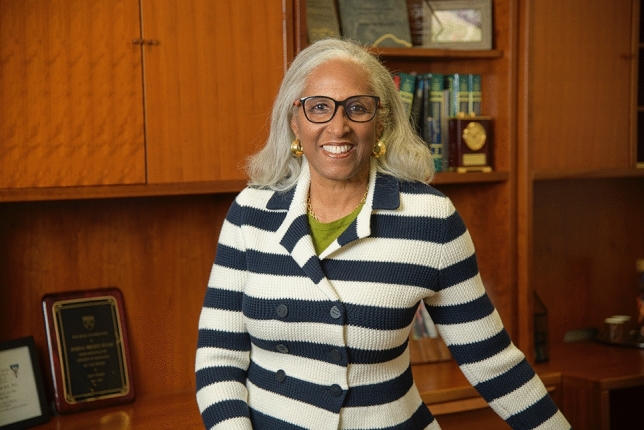
Dr. Merchant Chief of Gastroenterology and Hepatology at the University of Arizona
Family
What is the “throughline” from where I began to where I am now? What shaped my view of the world, such that I was receptive to the advice of mentors? Like some African Americans, our roots began in the racially segregated Jim Crow South. My mother was from a family farming community near Tulsa, Oklahoma, and my father was from Tuskegee, Alabama, both small, rural, all-Black towns. My mother was the seventh child from a family of 13 in the era when for Black families to survive they needed to raise their own food and livestock. Large families were essential to sustain a farm since there was no money to employ workers. Education was a luxury that these families could not afford. Therefore, education was foremost in my mother’s mind to escape her fate. She was strongly discouraged and even punished for attempting to go to school. She would remind me that her mother (my grandmother) needed to take her place to do the farm work so that my mother could attend school. Since there was no transportation to the one-room schoolhouse, my mother and her siblings walked miles to school each day, rain or shine. Given the hard-scrabble life that she was raised in, I understood why she impressed on my brother and me to do well in school. (“It is the only way to improve your lot in life.”) Her life in rural Oklahoma around the time of the Great Depression and Dust Bowl of the 1930s, is the reason why my mother was determined to leave her racially segregated agrarian lifestyle for the West Coast when she had the opportunity.
My father had enlisted in the Army to escape rural Alabama and never finished high school. He was eventually assigned to an all-Black regiment in Italy during World War 2 (WW2). While in college at Langston University, a historically Black college or university (HBCU) near Tulsa, women college students were encouraged to write letters to GIs during WW2, which is how my parents initially began corresponding, became pen pals (mailed, handwritten letters were the primary means of communication), eventually met, and married. Determined not to remain on the farm and to follow my mother’s dream of becoming a teacher, my parents relocated to LA in the early 1940s with the hope of better opportunities. In those days, most African Americans aspired to have a stable career within government, especially the postal service or teaching. It was rare for African Americans to become physicians since there were only two medical schools that admitted African Americans in any significant numbers, Meharry Medical College and Howard University (https://guides.mclibrary.duke.edu/blackhistorymonth/education). It is why even today that these two HBCUs are credited with graduating the highest number of Black physicians in the US [6]. For my mother to qualify for her teaching credentials in the LA public school system, she was required to redo her bachelor’s degree at a “non-HBCU” university. After completing her bachelor’s and master’s degrees from the University of Southern California, she was then able to apply for her teaching credentials in LA. However, like many African Americans, she was prohibited from teaching in schools west of Main Street, an important dividing line separating East LA from the more prosperous West LA. Nevertheless, she began her teaching career at Main Street Elementary School, while my father struggled to maintain employment as a non-licensed electrician after his tours of duty in both WW2 and the Korean War, most likely because he had not completed high school. He became an alcoholic and eventually left, leaving my mother alone to support us on her teaching salary. I was eight, and my brother was four.
Education
Navigating the LA public school system in the tumultuous 1960s ranged from the insecurity of walking to my local elementary school in a transitioning section of LA just South of Wilshire Blvd. I was born after my parents were able to secure an apartment in an African-American section of LA before we moved because the land was claimed by eminent domain to build Interstate 10 (I-10). Redlining was alive and well in LA, and it was difficult for African-American families to obtain a mortgage, particularly one on the West side of town. It was not until I was in high school that I learned that the mortgage on our house was not held by a bank but rather by a wealthy landowner who lived in Bel Air. As a first and second grade teacher, my mother understood that I needed to master reading and arithmetic (a term used prior to the “new Math”) and assiduously supervised my homework. However, by the time I reached middle school, we both agreed that I needed to seek enrollment in schools with a focus on college preparation. Even participating in a voluntary busing program for middle school to attend a school with college preparatory courses did not prevent LA public school counselors from programming me into “home economics” classes such as typing, cooking, and sewing. Therefore, I attended summer school every year from 9 to 12th grade to complete minimal prerequisites for college. It was pure luck that I became high school friends with another student, Karen, who was a year ahead of me and had applied to Stanford University. To be honest, I had no idea that Stanford was in northern California, but when I visited Karen on campus her freshman year, I fell in love with the bucolic setting and realized that I could escape the urban sprawl of LA without leaving the state. I enjoyed my science and math classes and had initially planned to follow in my mother’s footsteps and become a math teacher. However, freshman calculus and statistics at Stanford convinced me that math was not my vocation. By the end of my freshman year, I declared biology as my major, a decision that changed my career trajectory. Other students suggested that many biology majors go to medical school, so I decided to become pre-med. Except for Karen’s father, who was a Meharry Medical School graduate and a physician in private practice specializing in Ob-Gyn, I knew nothing about the medical profession.
As a Yale MSTP student, I had a steep learning curve, primarily during the PhD phase of the training when it was critical to learn the rigors of hypothesis generation and experimental design. My PhD thesis in cell biology was on Na+,K+-ATPase biosynthesis in the duck salt gland, a relatively obscure topic far removed from medicine or disease mechanisms [7]. Fred Gorelick, MD was an Assistant Professor in the GI Division and found time at 6 am before starting his clinical duties to show me how to study phosphorylation of the Na+,K+-ATPase enzyme. To this day he remains a good friend and mentor. Not really enjoying my graduate student experience, I was unsure whether to continue doing research after completing medical school. However, by my second year of Internal Medicine residency, I started to miss asking more mechanistic questions about the patients that I cared for. After completing three years of Internal Medicine residency at MGH, my then-chair John Potts, MD, an endocrinologist, recommended that I join the lab of Stephen Brand, MD, PhD, a new faculty member originally from Perth, Australia. Steve had just completed his research fellowship and was setting up his independent lab in the GI Division to study the hormone gastrin. Moving directly from residency back into the lab to do a three-year research fellowship in the GI Division allowed me to hone my skills in molecular gastroenterology alongside Tim Wang, MD. It was those three years that solidified my commitment to academic medicine and basic research. By year two in Steve’s lab, I had a first author paper in the Proceedings of the National Academy of Sciences (PNAS) that boosted my confidence [8].
In my “gut,” I now felt that I could do research and that it was worth pursuing NIH funding and eventually applying for tenure-track positions. My confidence was further boosted by receiving a four-year career development research grant from the Robert Wood Johnson Foundation. In addition to working in the GI peptide/hormone field, I eventually met Tachi and Chung Owyang, who would become my future bosses, sponsors, and mentors, as well as other Michigan GI faculty at a somatostatin peptide meeting in Montreal, Canada. I didn’t ever think that I would move to the Midwest, and when Tachi proposed that I look at the University of Michigan for my first faculty position, I laughed and told him that I was from LA and that Michigan was the “great fly-over.” Within three years I had to eat those words when Tachi successfully recruited me to Michigan.
Research
I have continued to work on the hormone gastrin. From the transcriptional control work that I did as a post-doctoral fellow in Steve’s lab [9], I identified a DNA binding element that I used to clone a new transcription factor that I named ZBP-89 (ZNF148) once I started my own independent lab [10, 11]. The studies on gastrin eventually spawned questions about gastrin’s role in mediating the complications of Helicobacter pylori infection such as gastric cancer [12–14]. Ultimately, I discovered that noncanonical Hedgehog signaling through GLI1 modulates the immune system during the transition from chronic inflammation to metaplasia, a pre-neoplastic lesion [15, 16]. This work ultimately led me to study a subset of myeloid-derived suppressor cells (MDSCs) co-regulated by Hedgehog and type 1 interferon signaling [17, 18].
After doing research for over 30 years, I have come to realize that formulating a good question that both you as the investigator and your peers find interesting is what fuels longevity in an academic career for three reasons: first and foremost, being passionate about the topic; second, that this passion is what can buoy one through the tough times of rejection and personal doubts about one’s abilities (Imposter Syndrome); and third, good questions spawn additional good questions. In the end, there is not enough money in the world to stave off boredom. If you hate what you do, you will be looking for the door at every turn. Sometimes, one’s questions are ahead of the field or discipline, which can be frustrating if no one understands or accepts the ideas. If supported by sound approaches and methodology, one should have faith in one’s own ideas. What I tell my trainees is to follow the question and not to be afraid to learn or to develop new tools and techniques and, if necessary, to perform key pilot studies to address questions that one cares about and hopefully to convince others that the studies are worthwhile. When one thinks about the research that changed academic medicine, e.g., Nobel prize-winning research, and traces the origin of those seminal studies back to their inception, one will usually find that the investigator(s) had challenged dogma in a field or discipline but continued to chip away at the question. Although most of us do not start out trying to win a Nobel prize, I think we all want to work on problems and questions that our peers and patients deem important. One must also learn how to communicate ideas to different audiences from peers to patients to grant funders and learn to accept valid criticism. It is only over the test of time—with reproducibility by others—that the truth will win out.
In closing, I hope that trainees and early-stage investigators will take away that the opportunity to develop an academic career is an exciting journey. Be curious, ask questions, and generate testable hypotheses. There is no specific formula for success, although most successful physician-scientists will exhibit tenacity, have a strong work ethic, and heed the advice of mentors at critical decision points along their career journey.
Declarations
Conflict of interest
None.
Footnotes
Publisher's Note
Springer Nature remains neutral with regard to jurisdictional claims in published maps and institutional affiliations.
References
- 1.Duan S, Rico K, Merchant JL. Gastrin: from physiology to gastrointestinal malignancies. Function (Oxf) 2021;3:zqab062. doi: 10.1093/function/zqab062. [DOI] [PMC free article] [PubMed] [Google Scholar]
- 2.White RM. Unraveling the Tuskegee Study of Untreated Syphilis. Arch Intern Med. 2000;160:585–598. doi: 10.1001/archinte.160.5.585. [DOI] [PubMed] [Google Scholar]
- 3.Gamble VN. Under the shadow of Tuskegee: African Americans and health care. Am J Public Health. 1997;87:1773–1778. doi: 10.2105/AJPH.87.11.1773. [DOI] [PMC free article] [PubMed] [Google Scholar]
- 4.Adashi EY, Walters LB, Menikoff JA. The Belmont Report at 40: Reckoning with Time. Am J Public Health. 2018;108:1345–1348. doi: 10.2105/AJPH.2018.304580. [DOI] [PMC free article] [PubMed] [Google Scholar]
- 5.Lin C, Tu P, Terry TC. Moving the needle on racial disparity: COVID-19 vaccine trust and hesitancy. Vaccine. 2022;40:5–8. doi: 10.1016/j.vaccine.2021.11.010. [DOI] [PMC free article] [PubMed] [Google Scholar]
- 6.Ly DP. Historical Trends in the Representativeness and Incomes of Black Physicians, 1900–2018. J Gen Intern Med. 2022;37:1310–1312. doi: 10.1007/s11606-021-06745-1. [DOI] [PMC free article] [PubMed] [Google Scholar]
- 7.Merchant JL, Papermaster DS, Barnett RJ. Correlation of the Na+, K+-ATPase content and plasma membrane surface area in adapted and de-adapted salt glands of duckling. J Cell Sci. 1985;78:233–246. doi: 10.1242/jcs.78.1.233. [DOI] [PubMed] [Google Scholar]
- 8.Godley JM, Brand SJ. Regulation of the gastrin promoter by epidermal growth factor and neuropeptides. Proc Natl Acad USA. 1989;86:3036–3040. doi: 10.1073/pnas.86.9.3036. [DOI] [PMC free article] [PubMed] [Google Scholar]
- 9.Merchant JL, Demediuk B, Brand SJ. A GC-rich element confers epidermal growth factor responsiveness to transcription from the gastrin promoter. Mol Cell Biol. 1991;11:2686–2696. doi: 10.1128/mcb.11.5.2686. [DOI] [PMC free article] [PubMed] [Google Scholar]
- 10.Merchant JL, Shiotani A, Mortensen ER, Shumaker DK, Abraczinskas DR. Epidermal growth factor stimulation of the human gastrin promoter requires Sp1. J Biol Chem. 1995;270:6314–6319. doi: 10.1074/jbc.270.11.6314. [DOI] [PubMed] [Google Scholar]
- 11.Merchant JL, Iyer GR, Taylor BR, Kitchen JR, Mortensen ER, Wang Z, Flintoft RJ, Michel JB, Bassel-Duby R. ZBP-89, a Krüppel-like zinc finger protein inhibits epidermal growth factor induction of the gastrin promoter. Mol Cell Biol. 1996;16:6644–6653. doi: 10.1128/MCB.16.12.6644. [DOI] [PMC free article] [PubMed] [Google Scholar]
- 12.Zavros Y, Eaton KA, Kang W, Rathinavelu S, Katukuri V, Kao JY, Samuelson LC, Merchant JL. Chronic gastritis in the hypochlorhydric gastrin-deficient mouse progresses to adenocarcinoma. Oncogene. 2005;24:2354–2366. doi: 10.1038/sj.onc.1208407. [DOI] [PubMed] [Google Scholar]
- 13.Zavros Y, Waghray M, Tessier A, Bai L, Todisco A, Gumucio DL, Samuelson LC, Dlugosz A, Merchant JL. Reduced pepsin A processing of sonic hedgehog in parietal cells precedes gastric atrophy and transformation. J Biol Chem. 2007;282:33265–33274. doi: 10.1074/jbc.M707090200. [DOI] [PubMed] [Google Scholar]
- 14.Saqui-Salces M, Merchant JL. Hedgehog signaling and gastrointestinal cancer. Biochim Biophys Acta. 2010;1803:786–795. doi: 10.1016/j.bbamcr.2010.03.008. [DOI] [PMC free article] [PubMed] [Google Scholar]
- 15.El-Zaatari M, Kao JY, Tessier A, Bai L, Hayes MM, Fontaine C, Eaton KA, Merchant JL. Gli1 deletion prevents Helicobacter-induced gastric metaplasia and expansion of myeloid cell subsets. PLoS One 2013; e58935. [DOI] [PMC free article] [PubMed]
- 16.Ding L, Hayes MM, Photenhauer A, Eaton KA, Li Q, Ocadiz-Ruiz R, Merchant JL. Schlafen 4-expressing myeloid-derived suppressor cells are induced during murine gastric metaplasia. J Clin Invest. 2016;126:2867–2880. doi: 10.1172/JCI82529. [DOI] [PMC free article] [PubMed] [Google Scholar]
- 17.Zavros Y, Merchant JL. The immune microenvironment in gastric adenocarcinoma. Nat Rev Gastroenterol Hepatol. 2022;19:451–467. doi: 10.1038/s41575-022-00591-0. [DOI] [PMC free article] [PubMed] [Google Scholar]
- 18.Ding L, Chakrabarti J, Sheriff S, Li Q, Thi Hong HN, Sontz RA, Mendoza ZE, Schreibeis A, Helmrath MA, Zavros Y, Merchant JL. Toll-like Receptor 9 pathway mediates Schlafen+-MDSC polarization during Helicobacter-induced gastric metaplasias. Gastroenterology. 2022;163:411–425. doi: 10.1053/j.gastro.2022.04.031. [DOI] [PMC free article] [PubMed] [Google Scholar]