



Abstract
Tert-butyl hydroquinone (TBHQ) is a food additive commonly used as a more effective protectant in the food, cosmetic and pharmaceutical industries. However, the long-term exposure to TBHQ at higher doses (0.7 mg/kg) results in substantial danger to public health and brings a series of side effects, including cytotoxic, genotoxic, carcinogenic, and mutagenic effects. As a result, the global burden of chronic diseases has fascinated consumers and governments regarding the safety assessment of food additives. Regarding contradictory reports of various research about the application of food additives, the accurate monitoring of food additives is urgent. Notwithstanding, there are reports of the therapeutic effects of TBHQ under pathologic conditions through activation of nuclear factor erythroid 2-related factor 2. Thus, further investigations are required to investigate the impact of TBHQ on public health and evaluate its mechanism of action on various organs and cells. Therefore, this review aimed to investigate TBHQ safety through an overview of its impacts on different tissues, cells, and biological macromolecules as well as its therapeutic effects under pathologic conditions.
Keywords: Food additives, Tert-butylhydroquinone, Overdose, Food safety, Adverse impact
Graphical Abstract

Highlights
-
•
Tert-butylhydroquinone a synthetic antioxidant, has wide applications in food, cosmetic and pharmaceutical products.
-
•
Tert-butylhydroquinone has good antimicrobial, antifungal and antioxidant activities.
-
•
Tert-butylhydroquinone has been showed cytotoxic and genotoxic effects.
-
•
Tert-butylhydroquinone lead to the transition of DNA conformation and DNA damage.
-
•
Reports have been shown that Tert-butylhydroquinone attenuates nephrotoxicity, hepatotoxicity and neurotoxicity.
1. Introduction
Healthy food choices and appropriate nutrition with safe foods play the most critical role in increasing the human lifespan. In recent years, consumer concerns about food safety have increased due to increases in their public awareness and vast consumption of processed foods, as well as changes in their lifestyle and eating habits [1], [2]. Due to the widespread use of food additives in processed foods and the high prevalence of chronic diseases, the European Commission (EC) has emphasized reassessing the safety, pharmacokinetic and toxicological characteristics of food additives [3]. Food additives are chemical substances added to foodstuffs with various technological or sensory goals such as improving food flavor, color, and texture, extending food shelf-life, and decreasing foodborne diseases [4]. These chemicals include antioxidants, antimicrobials, colorants, sweeteners and flavors [5], [6]. The use of these food additives in authorized quantities is harmless. However, the use of amounts greater than the authorized levels can threaten consumer health, especially the use of those that have cumulative properties in the body [7]. In recent years, consumers have expressed serious concerns about using food additives, especially synthetic ones, due to the present reports on their cellular and molecular toxicities in vivo and in vitro [8].
Additionally, food additives also randomly used in combination with a lipid-based diet also lead to serious health issues by oxidative stress via generating intracellular reactive oxygen species [9], [10]. Moreover, food processor uses food additive far exceeding the safe limit, which may lead to the activation of inflammatory and apoptotic cascades to cause systemic anomalies [11], [12]. However, the extensive use of TBHQ brings carcinogenicity through the formation of reactive GSH-conjugates, reactive species, CYP1A1 induction, caspase activation, and reduced GSH/ATP levels [13].
Antioxidants as food additives, when added to foods at approved concentrations significantly prevent or postpone oxidation and deterioration of the food products due to their multifunctional properties [5], [14]. Antioxidants play key roles in food matrices and human bodies to decrease oxidative processes. Food producers use various food-grade antioxidants to prevent spoilage of the foodstuffs and preserve food nutritional values [15], [16], [17]. Furthermore, food antioxidants are interested in food chemists and public health professionals because antioxidants may help the body protect itself against damages created by reactive oxygen species (ROS).
Tert-butylhydroquinone (TBHQ) is a patented potential oil-soluble antioxidant used as an effective additive in various products [18], [19], [20]. TBHQ is more efficient than other synthetic antioxidants in vegetable oils and animal fat [21]. In contrast, high quantities of TBHQ cause harmful effects on animals, such as inducing gastrointestinal tumors and damaging deoxyribonucleic acid (DNA) rings [22]. For instance, several studies have shown that TBHQ results in the development of 8-hydroxydeoxyguanosine (8-oxodG) in DNA due to ROS production such as superoxide anion and H2O2 [16], [19]. Moreover, suppressing/increasing effects of TBHQ on gene expression can modify its cytotoxic and genotoxic effects on various cell lines [23], [24]. In recent years, further studies have been suggested concerning multiple roles of the compound in public health [20], [25]. However, the genotoxic and cytotoxic effects of TBHQs on various cells are still unclear. This review was focused on TBHQ roles in food products, its therapeutic and toxicological effects, and its mechanisms of action.
2. Physiochemical properties of tert-butylhydroquinone
The TBHQ antioxidant (Fig. 1) is an aromatic compound with the molecular formula of (C10H14O2), IUPAC name of 2-(1,1-dimethylethyl)− 1,4-benzenediol and PubChem CID of 16043, identified as E-319 in food industries [26]. The TBHQ is a synthetic antioxidant compound, manufactured through alkylation in the presence of tert-butanol, H3PO4,or H2SO4/H3PO4 catalysts from hydroquinone and isobutylene [27]. The chemical is insoluble in water (less than 1% at 25 °C) but soluble in ethanol, acetone and ethyl acetate [28]. Naturally, TBHQ is a white to light colored crystalline or fine powder with a mild aromatic odor, a melting point of 127–129 ºC (261–264 ºF, 400–402 K), the boiling point of 273 °C (523°F, 546 K), the density of 1.05 g/cm³ , the molar mass of 166.22 g/mol and pKa of 10.8 [25]. The thermal stability of TBHQ is higher than that of other synthetic antioxidants (BHA, BHT, PG) [29], [30]. The purity chemical criteria include TBHQ (99.0% minimum), tertiary-butyl-p-benzoquinone (0.2% maximum), 2,5-di-tertiary butylhydroquinone (0.2% maximum), hydroquinone (0.1% maximum), heavy metals (Pb, 5 ppm maximum) and toluene (not more than 0.0025%) [31].
Fig. 1.
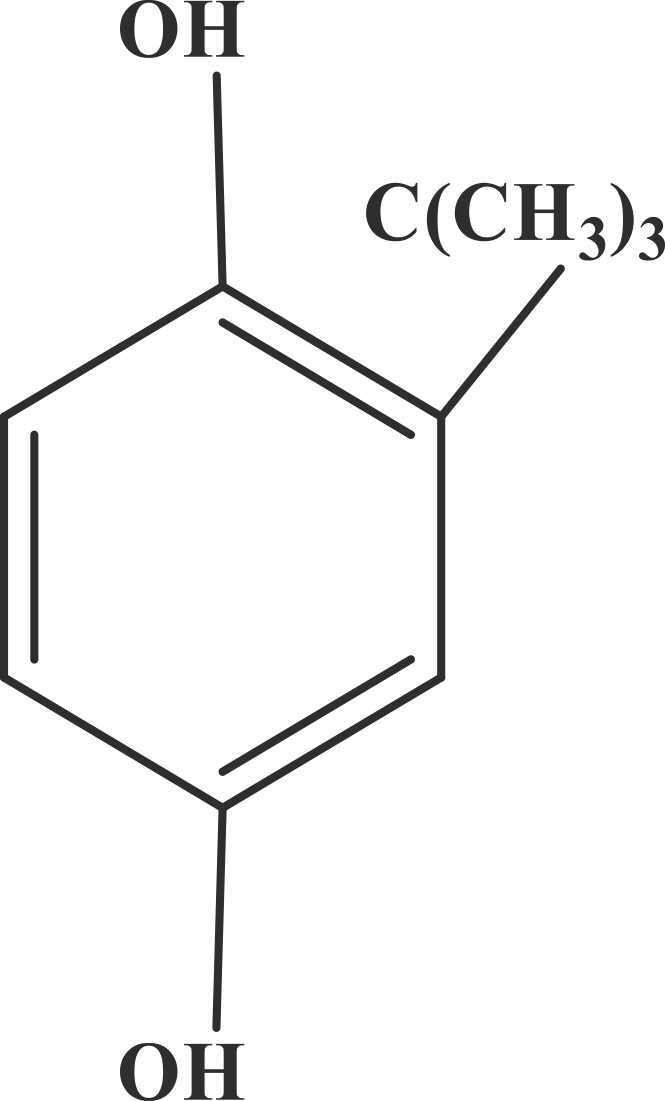
: Structure of tert-butylhydroquinone.
3. Analysis methods of tert-butylhydroquinone in foods
An important challenge for the regulatory authorities is the analysis of synthetic antioxidants in foodstuffs. Due to the recent reports on health problems such as carcinogenicity linked to synthetic phenolic antioxidants, regulatory authorities have established accurate assessment techniques of TBHQ in foodstuff [32]. Various analytical methods are used for the assessment of TBHQ in food products, including gas chromatographic-mass spectrometric (GC-MS) [33], high-performance liquid chromatography (HPLC) with various detection systems (such as HPLC-mass spectrometry with high selectivity, sensitivity, precision and accuracy are suitable for routine quality control analysis of TBHQ in edible oils) [34], [35], micellar electrokinetic capillary chromatography (MECC) [36], thin-layer chromatography (TLC) [31] and Fourier-transform infrared spectroscopy (FTIR) [37]. The nordihydroguaiaretic acid (NDGA) technique is one of the other methods that can be used to assess TBHQ in oils and fats after double extraction (with methanol), based on the official methods by the Association of Analytical Communities (AOAC) and American Oil Chemists' Society (AOCS). Recently, electrochemical (such as voltammetry sensors), photoelectrochemical, and fluorescence methods have become widespread in detecting TBHQ, mainly due to their inexpensive cost, rapid analysis, and high sensitivity properties [38]. Of the highlighted methods, MECC is described as a novel and reliable method for assessing TBHQ [39]. Table 1 provides a brief overview of TBHQ detection utilizing various analytical approaches.
Table 1.
An overview of studies on detection of tert-butylhydroquinone in various products.
| Method | Analyzed | Linear range | LOD | LOQ | Product | Reference |
|---|---|---|---|---|---|---|
| HPLC-UV | C18 column, Mobile phase: 0.5% acetic acid aqueous solution | 5–500 mg/kg | 0.02 μg/mL | 0.06 μg/mL | Edible oil | [104] |
| HPLC | C18 column, Reverse‐phase Mobile phase: methanol/water (80: 20, v/v) |
10‐7–10‐5 g/mL | 24 ng/mL | – | Sesame oil | [105] |
| NP-HPLC | C18 column, gradient elution solutions: n-hexane with 5% ethyl acetate and n-hexane with 5% isopropanol | 0.10–500 μg/mL | 0.30 μg/mL | > 0.1 μg/mL | Edible oils | [106] |
| MECC | – | 0.02–2 × 10⁻⁴ mol/l | 0.80 × 10⁻⁶ mol/l | – | Vegetable oil Mushroom cream Fish soup |
[107] |
| GC-MS | Helium carrier gas flow-rate: 1 mL/min |
0.01–20 mg/l | 0.004 mg/l | – | Vegetable oil | [33] |
| Fluorescence | Carbon quantum dots/gold | 0. 5–5.44 μg/mL | 0.24 μg/mL | – | – | [108] |
| Raman Spectroscopy | – | – | 10 mg/kg | – | Vegetable Oils | [109] |
| Photoelectrochemical | CdSe/ZnS, quantum dots LiTCNE | 0.6–250 μmol/L | 0.21 μmol/L | 0.7 μmol/L | Edible oil | [110] |
| LiTCNE-TiO2 | 0.4–500 μmol/L | 100 nmol/L | – | – | [111] | |
| Electrochemical sensor | PdAuNPs/ERGO | 0.5–60 μg/mL | 0.046 μg/mL | – | Edible oil | [112] |
| PCV/GCE | 5 × 10⁻⁷–1.0 × 10⁻⁴ mol/l | 3 × 10⁻⁸ mol/L | – | Edible oil | [113] | |
| AuNPs/EGP | 8.0 × 10⁻⁸ − 1.0 × 10⁻⁴ mol/l | 1.2 × 10⁻⁸ mol/L | – | – | [114] | |
| MnO2/ERGO/GCE | 1.0–50.0 μM 100.0–300.0 μM |
0.8 μM | – | Edible oil | [115] | |
| ADC/GCE | 4.00 × 10⁻⁷–4.00 × 10⁻⁴ mol/l | 1.8 × 10⁻⁹ mol/L | – | Fried chips | [116] | |
| Voltammetric Sensor | MWCNT/GE | 4.0 × 10⁻⁶–1.0 × 10⁻⁴ M | 3.20 × 10⁻⁸ M | – | Coconut Oil | [117] |
NP-HPLC, normal-phase high-performance liquid chromatography; ERGO, electrochemically reduced graphene oxide; ADC, azodicarbonamide; GCE, glass carbon electrode; MWCNT/GE, multiwalled carbon nanotube modified gold electrode; PCV, poly crystal violet, LOD, Limit of Detection
4. Tert-butylhydroquinone as a food antioxidant
Antioxidants are a food additive group intentionally added into foodstuffs to slow or inhibit oxidation reactions. Antioxidants include natural and synthetic antioxidants. The most commonly used antioxidants to prevent deterioration and extend shelf-life of food, pharmaceutical and commercial products are synthetic antioxidants worldwide. The phenolic synthetic antioxidants, including butyl hydroxyl toluene (BHT), TBHQ, butylated hydroxyanisole (BHA), and propyl gallate (PG), are broadly used in food products due to their high performance, chemical stability, availability, low cost and good antioxidant properties at low doses [40]. Of synthetic phenolic antioxidants, TBHQ is commonly used in vegetable oils due to its stability at ambient temperature, and shelf-life extend power with no effects on organoleptic properties of foodstuffs such as flavor, odor, and color [41]. Usually, TBHQ is used as a potential antioxidant in food products such as edible oils, fats, fish, meats, cereals, dairy products (milk and cheese), mayonnaise, and shortening at concentrations less than 0.02% [42], as well as cosmetic products such as lipsticks, eye shadows, blushers, hair dyes, and skincare preparations at concentrations less than 0.1% [43], [44] and pharmaceutical products [45], [46].
The Joint FAO/WHO Expert Committee on Food Additives (JEFSA), an international expert scientific committee of Food and Agriculture Organization of the United Nations (FAO) and the World Health Organization (WHO) has concluded that the most sensitive species to TBHQ is dog and the acceptable daily intake (ADI) of TBHQ is limited to 0–0.7 mg/kg body weight (BW) [13]. Potential human exposure depends on consumed fats containing TBHQ. Children and infants highly intake fats due to their high energetic requirements. Therefore, their ADI must be higher than adults (1.3 mg/kg BW) [13]. Since TBHQ is used in infant formulae, exposure in infants can increase the ADI. The Codex General Standard for Food Additives (GSFA) establishes maximum limits for TBHQ based on national intake estimates. The average intake of TBHQ varies from 90% of the ADI for the USA to 180% of the ADI for Australia and New Zealand. The best estimates of national average intake of TBHQ range from 50% of the ADI for the USA to 100% of the ADI for China based on the individual dietary records [47], [48]. Furthermore, TBHQ has been authorized as food additive in several countries, including Australia (200 mg/kg), Brazil (200 mg/kg), China (200 mg/kg), the USA (200 mg/kg) and Iran (120 mg/kg). Studies reported that TBHQ concentration in food samples (corn oil: 115 mg/kg [49], Brazil nut crude oil: 82.37 mg/kg [50], butter/margarine: 153.1–180.3 mg/kg and snacks: 160.7–180.7 mg/kg [51]) were lower than the permitted limit.
5. Tert-butylhydroquinone reaction in foods
The most significant affecting factors on the activity of TBHQ include temperature, time, pH, food composition, packaging, metal ions, food additives and water [52]. The stability of TBHQ and its antioxidative effects majorly depend on temperature. It has been demonstrated that increased temperatures (175–185 °C) lead to evaporation of phenolic antioxidants such as TBHQ and its subsequent decomposition to several breakdown products, resulting in losses in antioxidative activity. The breakdown products of TBHQ oxidation include tert-butyl benzoquinone (TBBQ), dimerized TBHQ and free radical species [53]. The primary decomposition product is TBBQ, including nearly 30% of the original material [54]. It was reported that increased free fatty acids (FFA) and acid values of soybean oil at 120 or 180 ºC result in losses in TBHQ [55]. The TBHQ may be oxidized in nitrite presence and produce 2-tert-butyl-p-benzoquinone (TBQ) compound that can react with the secondary amines, leading to nitrosamine formation [56]. The TBHQ cannot reduce acrylamide in model asparagine-glucose system; however, interactions between the oxidized products from TBHQ (e.g., quinones) with asparagine affect acrylamide formation [57]. Han, Lin [58] found that TBHQ could inhibit the formation of Amadori compounds via removing OH° or trapping glyoxal. Indeed, TBHQ is a chain-breaking as radical chain‐breaking antioxidant. Since the hydroxyl (-OH) group of aromatic rings of TBHQ is very active, the group hydrogen is donated to oxidizing free radicals, preventing it from continuing oxidation [59]. In lipid systems, increasing of saturation degree can improve antioxidant properties of TBHQ [60], as well as the presence of saturated or polyunsaturated fatty acids can improve the antioxidant activity of TBHQ by synergy properties [59]. For instance, antioxidant activity of TBHQ was reduced with adding palmitic acid due to attenuate the hydrogen bonding with the C9OO radical and strengthening the O-H sigma bond [61]. Naturally, TBHQ does not complex with iron or copper; therefore, it does not discolor the treated products [25]. The presence of chelators such as citric acid and monoglyceride citrate can improve the lipid-stabilizing activity of TBHQ [62].
6. Antimicrobial properties of tert-butylhydroquinone
Various food additives such as antioxidants are commonly used to prevent deterioration or rancidity in susceptible products such as lipids and lipid-containing foods. Recently, antioxidants with antimicrobial properties, especially in the meat and dairy industries and healthcare, has received more attention. Because these antioxidants display protective effects against oxidative processes in food, and they inhibit the growth of various microorganisms. It is worth noting that antimicrobial activity of antioxidants depend on several factors such as concentration, initial microbial population, microbial species, and combination with other bioactive agents, as well as the presence of hydroxyl groups, lipid solubility of the compound, and degree of steric hindrance [60]. TBHQ as a phenolic antioxidant, due to having antioxidants and antimicrobial properties, low price and lack of effect on the organoleptic properties of food has attracted the attention of producers.
Previous studies have shown that TBHQ effects on growth of microorganisms such as Staphylococcus aureus, Escherichia coli, Salmonella spp., Klebsiella pneumoniae, Pseudomonas aeruginosa, Streptococcus mutans, S. agalactiae, Vibrio parahemolyticus, Saccharomyces cerevisiae and Clostridium botulinum [53], [63], [64]. Moreover, TBHQ shows inhibitory effects on lactic acid production from S. mutans [65] and luteoskyrin production by Penicillium islandicum [66]. Poerschke and Cunningham [67] found that TBHQ inhibited S. senftenberg at 200 ppm when used in fresh ground beef. Furthermore, Gram-positive bacteria were more affected by TBHQ than Gram-negative bacteria [63]. The poor activity of TBHQ and TBBQ against Gram-negative bacteria is related to the limited entrance of these compounds across the outer membrane, resulting from the chemical active efflux from the cell by AcrAB-TolCT [68]. The MIC of TBHQ and TBBQ for S. aureus was reported at 8 and 4–8 mg/l, respectively [68]. The antibacterial activity of TBHQ is commonly intensified when combined with other antimicrobial compounds [16], [69]. For example, Davidson et al., (1981) investigated the antibacterial activities of TBHQ alone and in combination with BHA and potassium sorbate against S. aureus and S. Typhimurium. The authors showed that combination of TBHQ, BHA and potassium sorbate effectively inhibited the growth of S. aureus in tryptone soy broth (TSB) [70]. Table 2 represents minimum inhibitory concentration (MIC) values for TBHQ against several microorganisms. MIC is the lowest concentration of TBHQ, which inhibit growth of microorganisms.
Table 2.
Growth inhibition effectiveness of TBHQ using minimum inhibitory concentration.
| Microbial strain | MIC (mg/L) | Product | Reference |
|---|---|---|---|
|
Staphylococcus aureus SH1000 Staphylococcus aureus ATCC 23723 Staphylococcus aureus29213 |
8 | Mueller-Hinton broth Mueller-Hinton agar |
[68] |
| Staphylococcus aureus | 25 | – | [118] |
|
Staphylococcus aureus Pseudomonas fluorescens Bacillus cereus |
0.00312 1.2 0.8 |
Mueller-Hinton broth | [119] |
|
Paecilomyces variotii Pseudallescheria boydii Candida guilliermondii Bacillus pumilus |
1000 1000 500 250 |
Malt broth Luria-Bertani broth |
[120] |
|
Staphylococcus aureus z-8830 Pediococcus pentosaceus |
30 20 |
– | [121] |
| Aspergillus parasiticus | 0.001 | Salami | [122] |
| Listeria monocytogenes | 0.064 | Milk | [123] |
| Escherichia coli O157:H7 | 400 | Brain heart infusion broth | [124] |
| Escherichia coli O157:H7 | 100–400 | Ground beef | [125] |
|
Penicillium islandicum UST-11 Penicillium islandicum HLT-6 |
5 | – | [66] |
Several mechanisms have been expressed for the antimicrobial activity of TBHQ. The antibacterial effects of TBHQ may be due to the conversion of TBHQ into TBBQ or properties of TBBQ [68], [71]. Fig. 2 displays antimicrobial mechanisms for TBHQ. The TBHQ reacts typically with the cell membrane, resulting in disruption of the cell membrane and leakage of intracellular contents, followed by inhibition of macromolecular synthesis (e.g., DNA, RNA, lipid, and protein) in microorganisms [68], [72].
Fig. 2.

Mechanisms of antimicrobial activity of tert-butylhydroquinone. The TBHQ normally reacts with the cell membrane, resulting in disruption of the cell membrane and leakage of intracellular contents, followed by inhibition of macromolecular synthesis (e.g., DNA, RNA, lipid and protein) in microorganisms.
7. Metabolism and pharmacokinetic studies of Tert-butylhydroquinone
There are three routes; by which a matter can enter the body, including oral, inhalation, and skin routes. The metabolic fate of TBHQ has been studied in rats, dogs and humans. More than 90% of TBHQ is absorbed after oral administration in rats, dogs, and humans and distributed in the body by biomacromolecules (majorly serum albumin proteins). In the liver, the substance is metabolized and oxidized into the corresponding quinone (TBBQ). In Phase Ⅰ, TBHQ is oxidized at the tert-butyl group of its structure by enzymes such as cytochrome P450 (monooxygenases, prostaglandin H synthase, and lipoxygenase) or via autoxidation and/or Cu+2 ion-catalyzed redox cycling to TBBQ as the reactive metabolite. In Phase Ⅱ, TBBQ conjugated with glutathione (GSH) by metabolizing enzymes such as glutathione S-transferase (GST), NADPH quinone oxidoreductase (NQO1), UDP-glucuronosyltransferase and epoxide hydrolase [73], [74]. Furthermore, 2-tert-butyl-5-(glutathione-S-yl) hydroquinone (1.11%), 2-tert-butyl-6-(glutathione-S-yl) hydroquinone (0.46%) and 2-tert-butyl-3,6-(bisglutathione-S-yl) hydroquinone (0.65%) are metabolites of TBHQ in bile. Studies showed that the conjugate metabolites underwent further metabolisms and excreted in rat urine as unchanged metabolites (4–12%), 4–0-sulfate (57–80%), and 4-O-glucuronide (4%) conjugates after 48–72 h [15], [75], [76], [77]. In humans, TBHQ was excreted in urine within 24 h as O-sulphate (73–88%) and O-glucuronide (15–22%) conjugates [76]. However, unchanged TBHQ was not detected in urine. In dogs, similar metabolites with high proportions of glucuronide were detected. The rest of unabsorbed TBHQ (2.4–3.7%) is excreted in feces. However, excretion levels of the chemical in urine depend on its quantity, manner of ingestion, and carriers [78]. For example, doses exerted in urine included 22% for the gelatin capsules containing 150 mg of TBHQ/cottonseed oil and 90–100% for 125 mg of TBHQ in corn oils and graham cracker crumbs. After metabolism, TBHQ residues were reported to be insignificant in the brain, liver, and kidney [13]. No tissue retentions of the compound were seen in rats. Pathways of TBHQ absorption, metabolism, and excretion in humans are shown in Fig. 3.
Fig. 3.

Pathways of Tert-butyl hydroquinone absorption, metabolism and excretion in human body. More than 90% of TBHQ are absorbed after oral administration and distributed in the body by biomacromolecules (majorly serum albumin protein). It is metabolized and oxidized into TBBQ in the liver. In Phase Ⅰ, TBHQ is oxidized at the tert-butyl group of its structure by cytochrome P450 (monooxygenases, prostaglandin H synthase and lipoxygenase) or via autoxidation and/or Cu+2 ion-catalyzed redox cycling to TBBQ as the reactive metabolite. In Phase Ⅱ, TBBQ conjugated with glutathione (GSH) by metabolizing enzymes such as glutathione S-transferase (GST), NADPH quinone oxidoreductase (NQO1), UDP-glucuronosyltransferase and epoxide hydrolase. humans, TBHQ was excreted in urine within 24 h as O-sulphate (73–88%) and O-glucuronide (15–22%) conjugates. However, unchanged TBHQ was not detected in urine. Rest of unabsorbed TBHQ (2.4–3.7%) are excreted in feces.
The TBHQ can bind to biomacromolecules using hydrophobic forces and hydrogen bonds, effectively distributed within the body. Jun, Yanlan [79] reported interactions of TBHQ with bovine serum albumin (BSA) greater than 10 L/mol and the formation of a novel polymer detected using ultraviolet (UV) absorption and fluorescence spectra. Fathi, and Dolatanbadi [80] assessed interaction of TBHQ at various concentrations (100–800 µM) with BSA using surface plasmon resonance (SPR). They demonstrated the binding of TBHQ to BSA using dose-response sensorgrams with increasing TBHQ concentration. In another study, Shahabadi, Maghsudi [21] showed that interaction of TBHQ with Subdomain IIA (Trp-212) of BSA via hydrophobic forces and hydrogen bonds (∆H (-), ∆S (+), and ∆G (-)) can result in changes in secondary-structure of this protein by reduction of α-helix contents, as it is displayed in Fig. 4. Kashanian and Dolatabadi [16] indicated that TBHQ (10 mM) interacted with native calf thymus DNA (CT-DNA) through intercalating of DNA base pairs. This interaction led to elongations of DNA helix and increases in DNA specific viscosity. This study revealed that TBHQ/TBQ could dynamically bind to CT-DNA via hydrophobic interactions, van der Waals forces, and hydrogen bonds. It seems that TBHQ (2.0 × 10⁻⁴ mol/L) binding to CT-DNA changed DNA conformation from B-form to A-form (Fig. 5) and caused DNA damage with a combination of TBHQ and Cu(II) [20].
Fig. 4.

Interaction of Tert-butyl hydroquinone with bovine serum albumin. TBHQ reacts with Subdomain IIA (Trp-212) of BSA and lead to changes in secondary-structure of this protein by reduction of α-helix contents.
Fig. 5.

Interaction of tert-butylhydroquinone with deoxyribonucleic acid. TBHQ bind to CT-DNA changed DNA conformation from B-form to A-form.
8. Protective and toxicity effects of Tert-butylhydroquinone
Safety and toxicity assessments of food additives need the establishment of an innovative strategy for the estimation of health risks linked to antioxidants. Contradictory results of studies have shown that the TBHQ has antioxidative and prooxidative properties, and also it can be cytotoxic and genotoxic [25]. Studies have reported that TBHQ can be a promised therapeutic agent against chronic diseases. Although numerous studies have indicated the toxicity of various antioxidants such as TBHQ in invitro, the strict toxicity (cytotoxicity and genotoxicity) mechanisms of TBHQ on diverse cells and animals are not well clear [6], [81]. Acute oral and intraperitoneal doses (LD50) of TBHQ in rats have been assessed as 700–1000 and 300–400 mg/kg, respectively [76].
Several studies have shown that TBHQ can result in the formation of 8-hydroxydeoxyguanosine in thymus DNA due to the production of ROS such as superoxide anion [16]. Assessment of genotoxicity of TBHQ at 400 mg/kg concentration on mice organs showed DNA damage in stomach cells at 24 h and enhancement of DNA migration in liver and kidney cells due to the formation of ROS [82]. TBQ (a metabolite of TBHQ) was weakly genotoxic to Chinese hamster lung fibroblast V79 cells with or without activation by hepatocytes. No mitotic gene conversion or reverse mutation was observed in strain D7 of S. cerevisiae by exposure to 500 μg/mL TBHQ for 4 h. The cytotoxic effects of TBQ were 6–7 times more than TBHQ [83]. The weak genotoxicity of TBQ at high concentrations on S. Typhimurium TA1535/pSK1002 was verified by Đorđević, Kolarević [84] using SOS/umuC assay after 18 h of treatment. Boss, Freeborn [85] showed that TBHQ with concentrations of 1 or 5 μM in mice changed function and maturation of natural killer cells after 24 h, using phorbol 12-myristate 13-acetate (PMA) and ionomycin. Gharavi and El-Kadi [86] demonstrated that the TBHQ could activate cytochrome P450 1A1 (CYP1A1) gene expression involved in inducing carcinogenic effects on murine hepatoma Hepa 1C1C7 cells. At high doses, TBHQ may cause cytotoxic effects and adverse health effects on laboratory animals via inducing precursors of stomach tumors [25].
The primary cytoxicity mechanism of TBHQ on healthy cells is linked to the redox cycling ability between hydroquinone and its corresponding quinone [87]. The carcinogenicity of TBHQ has been attributed to the formation of reactive GSH-conjugates, generation of reactive species, induction of CYP1A1, activation of caspases, and decreases in GSH/ATP levels [13], [24].
No teratogenic effects at concentrations of 0.125%, 0.25% and 0.50% of TBHQ have been reported in rats [88]. In a study by Hageman and Verhagen [89], the genotoxic effects of TBHQ were not reported at a concentration of 100 μg was assessed for mutagenic activities using reverse mutation tests with S. typhimurium TA97, TA102, TA104 and TA100 on rat liver S9 fraction.
The protective effects of TBHQ in invitro and in vivo studies are summarized in Table 3. The TBHQ as an antioxidant can activate the nuclear factor erythroid 2-related factor 2 (Nrf2), a redox-sensitive transcription factor that accelerates induction of cellular antioxidant defense mechanisms and neutralizes electrophiles and ROS. The Nrf2 is a transcription agent that acts as a sensor for oxidative stress [90], [91]. Eskandani and Hamishehkar [92] investigated possible genotoxicities of TBHQ (5 × 10⁻⁴ M) using alkaline comet assay in A549 lung cancer cells and human umbilical vein endothelial cells (HUVEC) in vitro as well as the chemical cytotoxicity using MTT assay and flow cytometry analysis. Overall, decreased growth of A549 and HUVEC, early and late cell apoptosis, and DNA breakage after 24 h were reported. Li, Li [93] reported that 50 μM TBHQ protected hepatocytes in AML-12 mouse and HepG2 human cells from lipotoxicity induced by saturated fatty acids (SFA). Activation of adenosine monophosphate-activated protein kinase (AMPK) leads to the autophagy activation, which is suggested as a possible mechanism for protecting TBHQ. Turley, Zagorski [91] reported that 1 μM of TBHQ inhibited activation of primary human CD4 T-cells via inhibition of NFκB-DNA binding. Activation of Nrf2 antioxidant pathway via increased gene expression of Nrf2, superoxide dismutase (SOD), catalase (CAT) and heme oxygenase-1 (HO-1) at 5 µM concentrations of TBHQ prevented ethanol-induced apoptosis in H9c2 cardiomyocytes after 24 h [94]. Traumatic brain injury (TBI) is a worldwide health problem and a significant cause of death and long-term disability. TBHQ as Nrf2 activator can attenuate TBI. Recently, Zhang, Liang [95] reported that a diet containing TBHQ (25 mg/kg) decreased brain lesions, astrocyte overactivation, pro-inflammatory phenotype M1, and inflammatory cytokine production (TNF-α, IL-1β, IL-6, and free radicals), apoptosis and neuronal death in the cerebral cortex of rat following TBI. In another study by Lu and Wang [96] reported that TBHQ protected mice against TBI-induced oxidative stress through upregulation of Nrf2 gene expressions and inactivation of the NOX2 signaling pathway. Protectant effects of TBHQ on brain edema and cortical apoptosis after TBI have been reported in mice by reduction of NF-κB activation and inflammatory cytokine production [97]. P é rez-Rojas and Guerrero-Beltrán [22] reported that treatment with TBHQ leads to nephroprotective effects against oxidative stress induced by Cis diamminedichloroplatinum II in the rat kidney by activation of the antioxidant enzymes such as glutathione peroxidase and glutathione-S-transferase. It was reported that TBHQ at 20, 50, 75, 100, and 200 μM concentrations can protect L6 myoblasts against palmitate-induced toxicity due to modulation of Nrf2 and NF-κB signaling routes after 24 h [98]. In a study, Liu and Zhao [99] added 1% of TBHQ to diets of mice with hepatic cancer for 7 weeks. Results showed that the antioxidant capacity of renal cells increased and doxorubicin-induced cells damage decreased after seven weeks through activating gene expressions of Nrf2 mediated SOD and NQO1. In vivo, TBHQ (16.7 mg/kg) protected mice against carbon tetrachloride-induced hepatic injury by activating Nrf2/HO-1 pathway [100]. Zeng and Li [101] reported that TBHQ at a concentration of 3 mg/mL showed anti-inflammatory activities via modulating oxidative damages and apoptosis in rats. The protective effects of TBHQ on hepatocytes cover decreasing aspartate transaminase (AST) and alanine minotransferase (ALT) levels, oxidative stress and inducing apoptosis via expression of bcl-2 and caspase-3 and activation of Keap1/Nrf2/ARE signaling pathway [101]. Potential antioxidant activities of TBHQ at concentrations of 0.028 g/kg on diazinon-induced rat tissues after seven days of treatment were reported by Moghadam Jafari and Heydarpour [102]. Other benefits TBHQ related to enhancing the antitumor effects of probiotics. Salmanzadeh and Eskandani [103] demonstrated that treatment of Lactobacillus rhamnosus with TBHQ increased the bacterial effects on the apoptosis of human colorectal adenocarcinoma cell (line HT-29) through increasing proapoptotic caspase 9 gene expression and inhibited the cell growth (IC50 = 120 μg/mL) after 24 h. The protective mechanism underlying TBHQ against chronic disease is attributed to Nrf2-mediated induction of genes involved in antioxidative defense mechanisms and interaction with various signaling pathways associated with cell survival, including promotion of ROS-mediated dissociation of Nrf2-Keap1, Nrf2 stabilization, phosphatidylinositol 3-kinase (PI3K)/Akt activity and MAPK [13].
Table 3.
A summary of in vitro and in vivo protection studies on Tert-butylhydroquinone.
| Assays | Dose | Cell/tissue/animal | Parameter | Finding | Reference |
|---|---|---|---|---|---|
| In vivo | 1% | Mice | SOD, T-AOC and MDA | Activate expressions of Nrf2 mediated SOD and decrease renal damage | [99] |
| In vivo | 1% | Lung tissue of rat | IL-1, TNF-α, HYP, TGF-β, MDA and the GSH-PX | Decrease oxidative stress induce silica dust, increase IL-1, HYP, MDA | [126] |
| In vivo | 0.028 g/kg | Rat | MDA and total thiol group | Improve antioxidant status in brain and heart tissues of rats with chronic toxicity of diazinon | [127] |
| In vitro | 10–100 μM | Rat | Fluorescence of membrane and cellular constituents measured by flow cytometer using fluorescent dyes | Dose-dependent toxicity induced (30 μM) | [128] |
| In vitro | 50 mM | Human keratinocytes | ROS, MDA, SOD, CAT and apoptosis | Decrease ROS, SOD, CAT activities, increase MDA | [129] |
| In vitro | 5,25 μmol/l | Human hepatocyte cell line | Cell proliferation activity; MDA, GSH and GR; ROS | Suppress arsenic-induced hepatocellular cytotoxicity; accelerate arsenic methylation and excretion | [130] |
| In vitro | 10 μM | Bovine mammary epithelial cells | cell viability, ROS, expression of Nrf2 | Activation of Nrf2 and decrease HS-induced cell damage | [131] |
| In vitro | 1–25 µM | Rat | ROS Mitochondrial superoxide, Mitochondria membrane potential, Mitochondrial Ca2 + detection, Mitochondrial respiration, Caspase 3/7 activity | Preserve against oxidative stress-induced death | [132] |
| In vitro | 2 mM | Rat | Analyzed inflammatory cell count of neutrophils, lymphocytes, macrophages and fibroblasts | Increase healing of the hard tissues in tooth sockets | [133] |
| In vivo | 1% | Rats retina | Nrf2, HO-1, Bcl-2 and VEGF expression | Inhibit oxidative stress and apoptosis | [134] |
MDA, malondialdehyde; SOD, superoxide dismutase; CAT, catalase; ROS, reactive oxygen species; HO-1, heme oxygenase-1; GSH, glutathione; Bcl-2, lymphoma-2
9. Conclusion
In general, TBHQ, as a synthetic antioxidant and antimicrobial, can be used in food, pharmaceutical, and cosmetic industries in authorized quantities. Accumulation of TBHQ in body tissues is negligible; however, it is noteworthy that the chemical possibly leads to nutritional disorders and chronic diseases, and adverse biological effects on human health at high doses or in long-term. This overview shows that TBHQ can have side effects on human health through activation of inflammatory routes, generation of reactive species, induction of CYP1A1, activation of caspases, and decreases in GSH/ATP levels, and triggering of the gradual development of cancers. Thus, accurate authorized quantities for practical use in the food industry are highly required. It is worth noting that there are reports of the therapeutic effects of TBHQ under different pathologic conditions. There is no exact information on the cumulative intake of this additive from various food sources. However, we recommend that to decrease TBHQ additive intake through diets, only the legal limit of this antioxidant ought to be used in food products.
Declaration of Competing Interest
The authors declare that they have no known competing financial interests or personal relationships that could have appeared to influence the work reported in this paper.
Acknowledgments
The authors would like to thank the student Research Committee, Tabriz University of Medical Sciences, (Grants no : 66638) for financially supporting this project.
Contributor Information
Arezou Khezerlou, Email: arezou.khezerlou@gmail.com.
Amir pouya Akhlaghi, Email: amirpouyaakhlaghi@gmail.com.
Adel Mirza Alizadeh, Email: alizadeh.sbmu@gmail.com.
Parvin Dehghan, Email: dehghanp@tbzmed.ac.ir.
Parham Maleki, Email: parham.maleki@gmail.com.
References
- 1.Akhtar‐Danesh N., et al. Parents’ perceptions and attitudes on childhood obesity: AQ‐methodology study. J. Am. Acad. Nurse Pract. 2011;23(2):67–75. doi: 10.1111/j.1745-7599.2010.00584.x. [DOI] [PubMed] [Google Scholar]
- 2.King T., et al. Food safety for food security: relationship between global megatrends and developments in food safety. Trends Food Sci. Technol. 2017;68:160–175. [Google Scholar]
- 3.Constable A., et al. An integrated approach to the safety assessment of food additives in early life. Toxicol. Res. Appl. 2017;1 p. 2397847317707370. [Google Scholar]
- 4.Pressman P., et al. Food additive safety: a review of toxicologic and regulatory issues. Toxicol. Res. Appl. 2017;1 p. 2397847317723572. [Google Scholar]
- 5.Fathi F., et al. Kinetic and thermodynamic studies of bovine serum albumin interaction with ascorbyl palmitate and ascorbyl stearate food additives using surface plasmon resonance. Food Chem. 2018;246:228–232. doi: 10.1016/j.foodchem.2017.11.023. [DOI] [PubMed] [Google Scholar]
- 6.Sohrabi Y., et al. Cytotoxicity and genotoxicity assessment of ascorbyl palmitate (ap) food additive. Adv. Pharm. Bull. 2018;8(2):341. doi: 10.15171/apb.2018.039. [DOI] [PMC free article] [PubMed] [Google Scholar]
- 7.Mohammadzadeh-Aghdash H., et al. Safety assessment of sodium acetate, sodium diacetate and potassium sorbate food additives. Food Chem. 2018;257:211–215. doi: 10.1016/j.foodchem.2018.03.020. [DOI] [PubMed] [Google Scholar]
- 8.Thomas, Adegoke Toxicity of food colours and additives: a review. Afr. J. Pharm. Pharmacol. 2015;9(36):900–914. [Google Scholar]
- 9.Banerjee A., Mukherjee S., Maji B.K. Worldwide flavor enhancer monosodium glutamate combined with high lipid diet provokes metabolic alterations and systemic anomalies: an overview. Toxicol. Rep. 2021;8:938–961. doi: 10.1016/j.toxrep.2021.04.009. [DOI] [PMC free article] [PubMed] [Google Scholar]
- 10.Banerjee A., et al. Mechanistic study of attenuation of monosodium glutamate mixed high lipid diet induced systemic damage in rats by Coccinia grandis. Sci. Rep. 2020;10(1):1–24. doi: 10.1038/s41598-020-72076-6. [DOI] [PMC free article] [PubMed] [Google Scholar]
- 11.Banerjee A., Mukherjee S., Maji B.K. Efficacy of Coccinia grandis against monosodium glutamate induced hepato-cardiac anomalies by inhibiting NF-kB and caspase 3 mediated signalling in rat model. Hum. Exp. Toxicol. 2021;40(11):1825–1851. doi: 10.1177/09603271211010895. [DOI] [PubMed] [Google Scholar]
- 12.Banerjee A., Mukherjee S., Maji B.K. Monosodium glutamate causes hepato-cardiac derangement in male rats. Hum. Exp. Toxicol. 2021;40(12_suppl):S359–S369. doi: 10.1177/09603271211049550. [DOI] [PubMed] [Google Scholar]
- 13.Gharavi N., Haggarty S., El-Kadi A.O.S. Chemoprotective and carcinogenic effects of tert-butylhydroquinone and its metabolites. Curr. Drug Metab. 2007;8(1):1–7. doi: 10.2174/138920007779315035. [DOI] [PubMed] [Google Scholar]
- 14.Mohammadzadeh-Aghdash H., et al. Molecular and technical aspects on the interaction of serum albumin with multifunctional food preservatives. Food Chem. 2019 doi: 10.1016/j.foodchem.2019.04.119. [DOI] [PubMed] [Google Scholar]
- 15.Eskandani M., Hamishehkar H., Dolatabadi J.E.N. Cytotoxicity and DNA damage properties of tert-butylhydroquinone (TBHQ) food additive. Food Chem. 2014;153:315–320. doi: 10.1016/j.foodchem.2013.12.087. [DOI] [PubMed] [Google Scholar]
- 16.Kashanian S., Dolatabadi J.E.N. DNA binding studies of 2-tert-butylhydroquinone (TBHQ) food additive. Food Chem. 2009;116(3):743–747. [Google Scholar]
- 17.Dehghan, P., et al., Pharmacokinetic and toxicological aspects of potassium sorbate food additive and its constituents. Trends in Food Science & Technology, 2018.
- 18.Okubo T., et al. Cell death induced by the phenolic antioxidant tert-butylhydroquinone and its metabolite tert-butylquinone in human monocytic leukemia U937 cells. Food Chem. Toxicol. 2003;41(5):679–688. doi: 10.1016/s0278-6915(03)00002-4. [DOI] [PubMed] [Google Scholar]
- 19.Karimi Z., et al. The protective effect of thymoquinone on tert-butylhydroquinone induced cytotoxicity in human umbilical vein endothelial cells. Toxicol. Res. 2019;8(6):1050–1056. doi: 10.1039/c9tx00235a. [DOI] [PMC free article] [PubMed] [Google Scholar]
- 20.Wang R., et al. Characterizing the binding of tert-butylhydroquinone and its oxidation product tert-butylquinone with calf thymus DNA in vitro. J. Mol. Liq. 2020;302 [Google Scholar]
- 21.Shahabadi N., et al. Multispectroscopic studies on the interaction of 2-tert-butylhydroquinone (TBHQ), a food additive, with bovine serum albumin. Food Chem. 2011;124(3):1063–1068. [Google Scholar]
- 22.Pérez-Rojas J.M., et al. Preventive effect of tert-butylhydroquinone on cisplatin-induced nephrotoxicity in rats. Food Chem. Toxicol. 2011;49(10):2631–2637. doi: 10.1016/j.fct.2011.07.008. [DOI] [PubMed] [Google Scholar]
- 23.Schreiber T.D., et al. Regulation of CYP1A1 gene expression by the antioxidant tert-butylhydroquinone. Drug Metab. Dispos. 2006;34(7):1096–1101. doi: 10.1124/dmd.106.009662. [DOI] [PubMed] [Google Scholar]
- 24.Braeuning A., et al. Paradoxical cytotoxicity of tert-butylhydroquinone in vitro: what kills the untreated cells? Arch. Toxicol. 2012;86(9):1481–1487. doi: 10.1007/s00204-012-0841-3. [DOI] [PubMed] [Google Scholar]
- 25.Dolatabadi J.E.N., Kashanian S. A review on DNA interaction with synthetic phenolic food additives. Food Res. Int. 2010;43(5):1223–1230. [Google Scholar]
- 26.de Souza D.A.A., et al. Avaliação do potencial de misturas de antioxidantes naturais e sintético na estabilidade oxidativa de biodiesel. Braz. J. Dev. 2021;7(2):11782–11799. [Google Scholar]
- 27.Schillaci C., Nepravishta R., Bellomaria A. Antioxidants in food and pharmaceutical research. Albania J. Pharm. Sci. 2014;1(1):9–15. [Google Scholar]
- 28.Zhang Y., et al. Solubility of 2,5-Di-tert-butylhydroquinone and process design for its purification using crystallization. J. Chem. Eng. Data. 2015;60(7):1968–1974. [Google Scholar]
- 29.Allam S.S.M., Mohamed H.M.A. Thermal stability of some commercial natural and synthetic antioxidants and their mixtures. J. Food Lipids. 2002;9(4):277–293. [Google Scholar]
- 30.Allam S., Mohamed H. Thermal stability of some commercial natural and synthetic antioxidants and their mixtures. J. Food Lipids. 2007;9:277–293. [Google Scholar]
- 31.Liu C., et al. Thermal losses of tertiary butylhydroquinone (TBHQ) and its effect on the qualities of palm oil. J. Oleo Sci. 2016;65(9):739–748. doi: 10.5650/jos.ess16041. [DOI] [PubMed] [Google Scholar]
- 32.Das A., Chakraborty R. Antioxidant nutraceuticals with probiotic applications. Antioxid. Nutraceuticals: Prev. Healthc. Appl. 2018 [Google Scholar]
- 33.Ding M., Zou J. Rapid micropreparation procedure for the gas chromatographic–mass spectrometric determination of BHT, BHA and TBHQ in edible oils. Food Chem. 2012;131(3):1051–1055. [Google Scholar]
- 34.Huang W., et al. HPLC coupled with Ion TRAP MS/MS for analysis of tertiary butylhydroquinone in edible oil samples. J. Food Lipids. 2008;15(1):1–12. [Google Scholar]
- 35.Li X.-L., et al. Determination of synthetic phenolic antioxidants in essence perfume by high performance liquid chromatography with vortex-assisted, cloud-point extraction using AEO-9. Chin. Chem. Lett. 2014;25(8):1198–1202. [Google Scholar]
- 36.Guo L., et al. Simultaneous determination of five synthetic antioxidants in edible vegetable oil by GC–MS. Anal. Bioanal. Chem. 2006;386(6):1881. doi: 10.1007/s00216-006-0738-1. [DOI] [PubMed] [Google Scholar]
- 37.Ammawath W., et al. A new method for determination of tert‐butylhydroquinone (TBHQ) in RBD palm olein with FTIR spectroscopy. J. Food Lipids. 2004;11(4):266–277. [Google Scholar]
- 38.Hoyos-Arbeláez J., Vázquez M., Contreras-Calderón J. Electrochemical methods as a tool for determining the antioxidant capacity of food and beverages: A review. Food Chem. 2017;221:1371–1381. doi: 10.1016/j.foodchem.2016.11.017. [DOI] [PubMed] [Google Scholar]
- 39.Wang P., et al. Electrochemical determination of tert-butylhydroquinone and butylated hydroxyanisole at choline functionalized film supported graphene interface. Sens. Actuators B: Chem. 2016;224:885–891. [Google Scholar]
- 40.Rashidi L., et al. Rapid method for extracting and quantifying synthetic antioxidants in all edible fats and oils. Food Anal. Methods. 2016;9(9):2682–2690. [Google Scholar]
- 41.Pu H., et al. Characterization and antioxidant activity of the complexes of tertiary butylhydroquinone with β-cyclodextrin and its derivatives. Food Chem. 2018;260:183–192. doi: 10.1016/j.foodchem.2018.04.008. [DOI] [PubMed] [Google Scholar]
- 42.Shams A., et al. A comparison between ascorbylpalmitateen capsulated with nanoliposomeas a natural antioxidant and conventional antioxidants (TBHQ And BHA) in the oxidative stability of sunflower oil. Biosci. Biotechnol. Res. Asia. 2016;13(4):2135. [Google Scholar]
- 43.Lu Y., et al. Comprehensive evaluation of effective polyphenols in apple leaves and their combinatory antioxidant and neuroprotective activities. Ind. Crops Prod. 2019;129:242–252. [Google Scholar]
- 44.García C.D., Ortiz P.I. BHA and TBHQ quantification in cosmetic samples. Electroanal.: Int. J. Devoted Fundam. Pract. Asp. Electroanal. 2000;12(13):1074–1076. [Google Scholar]
- 45.Di Bernardini R., et al. Antioxidant and antimicrobial peptidic hydrolysates from muscle protein sources and by-products. Food Chem. 2011;124(4):1296–1307. [Google Scholar]
- 46.Najafian L., Babji A.S. A review of fish-derived antioxidant and antimicrobial peptides: Their production, assessment, and applications. Peptides. 2012;33(1):178–185. doi: 10.1016/j.peptides.2011.11.013. [DOI] [PubMed] [Google Scholar]
- 47.Suh H.-J., et al. Estimated daily intakes of butylated hydroxyanisole (BHA), butylated hydroxytoluene (BHT) and tert-butyl hydroquinone (TBHQ) antioxidants in Korea. Food Addit. Contam. 2005;22(12):1176–1188. doi: 10.1080/02652030500195288. [DOI] [PubMed] [Google Scholar]
- 48.Organization, W.H., Evaluation of Certain Food Additives: fifty-first report of te joint FAO/WHO expert committee on food additives, in Evaluation of Certain Food Additives: fifty-first report of te joint FAO/WHO expert committee on food additives. 2000. [PubMed]
- 49.Oliveira J.T., Regitano-d′Arce M.A. Determining economical TBHQ doses for corn oil stability. Food Sci. Technol. 2004;24(3):413–418. [Google Scholar]
- 50.Gutierrez É.M.R. Universidade de São Paulo,; 1997. Estabilidade oxidativa do óleo bruto da castanha-do-pará (Bertholletia excelsa). [Google Scholar]
- 51.Shasha D., Magogo C., Dzomba P. Reversed phase HPLC-UV Quantitation of BHA, BHT and TBHQ in food items sold in Bindura supermarkets, Zimbabwe. Int. Res. J. Pure Appl. Chem. 2014:578–584. [Google Scholar]
- 52.Xu X., et al. Transformation of TBHQ in lard and soybean oils during room temperature storage. Eur. J. Lipid Sci. Technol. 2019;121(8) [Google Scholar]
- 53.Ooi N., et al. Antibacterial activity and mode of action of tert-butylhydroquinone (TBHQ) and its oxidation product, tert-butylbenzoquinone (TBBQ) J. Antimicrob. Chemother. 2013;68(6):1297–1304. doi: 10.1093/jac/dkt030. [DOI] [PubMed] [Google Scholar]
- 54.Additives E.Po.F., Food N.Sat. Statement on the refined exposure assessment of tertiary‐butyl hydroquinone (E 319) EFSA J. 2016;14(1):4363. [Google Scholar]
- 55.Li J., et al. Effect of acid value on TBHQ and BHT losses in heating oils: identification of the esterification products of TBHQ and free fatty acids. J. Am. Oil Chem. ’ Soc. 2014;91(10):1763–1771. [Google Scholar]
- 56.Urano M., et al. Effect of tert-Butylhydroquinone (TBHQ) on the Formation of Nitrosamines in the Reaction of Secondary Amines with Nitrite. Eisei kagaku. 1994;40(6):504–512. [Google Scholar]
- 57.Ou S., et al. Effect of antioxidants on elimination and formation of acrylamide in model reaction systems. J. Hazard. Mater. 2010;182(1):863–868. doi: 10.1016/j.jhazmat.2010.06.124. [DOI] [PubMed] [Google Scholar]
- 58.Han L., et al. Inhibition mechanism of catechin, resveratrol, butylated hydroxylanisole, and tert‐butylhydroquinone on carboxymethyl 1, 2–dipalmitoyl‐sn‐glycero‐3–phosphatidylethanolamine formation. J. Food Sci. 2019;84(8):2042–2049. doi: 10.1111/1750-3841.14668. [DOI] [PubMed] [Google Scholar]
- 59.Ali, R., et al., Synergistic effects of fatty acids on the performance of TBHQ in inhibiting the oxidation of corn oil. 2017.
- 60.Liu C., et al. Comparison on antioxidant activity of TBHQ to oils and fats with different saturation degrees. J. Henan Univ. Technol. (Nat. Sci. Ed. ) 2013;(2):5. [Google Scholar]
- 61.Ali, R., J. Ariffin, and K.H. Ku Bulat. Theoretical Studies on the Effects of Palmitic Acid Adulteration to the Hydroperoxyl Methyl Linoleate-Tbhq System. in The Open Conference Proceedings Journal. 2013.
- 62.Mohdali, A.A.A., Evaluation of some food processing by-products as sources for natural antioxidants. 2010.
- 63.Fung D.Y., Sheree Lin C., Gailani M.B. Vol. 12. 1985. Effect of phenolic antioxidants on microbial growth; pp. 153–183. (CRC Critical reviews in microbiology). [DOI] [PubMed] [Google Scholar]
- 64.Eubanks V., Beuchat L. Effects of antioxidants on growth, sporulation and pseudomycelium production by Saccharomyces cerevisiae. J. Food Sci. 1982;47(5):1717–1722. [Google Scholar]
- 65.Kupp L., Rosen S., Beck F. Effect of anti-oxidants on growth and lactic acid production by Streptococcus mutans. J. Dent. Res. 1985;64(7):1016–1018. doi: 10.1177/00220345850640070401. [DOI] [PubMed] [Google Scholar]
- 66.Tseng H.-H., Tseng T.-C. Effects of butylated hydroxyanisole, butylated hydroxytoluene and tertiary butylhydroquinone on growth and luteoskyrin production byPenicillium islandicum. Mycopathologia. 1995;129(2):73–78. doi: 10.1007/BF01103463. [DOI] [PubMed] [Google Scholar]
- 67.Poerschke R., Cunningham F. Influence of potassium sorbate and selected antioxidants on growth of Salmonella senftenberg 1. J. Food Qual. 1985;8(2–3):113–129. [Google Scholar]
- 68.Ooi N., et al. Antibacterial activity and mode of action of tert-butylhydroquinone (TBHQ) and its oxidation product, tert-butylbenzoquinone (TBBQ) J. Antimicrob. Chemother. 2013;68(6):1297–1304. doi: 10.1093/jac/dkt030. [DOI] [PubMed] [Google Scholar]
- 69.Lim Y., et al. Control of glucose-and NaCl-induced biofilm formation by rbf in Staphylococcus aureus. J. Bacteriol. 2004;186(3):722–729. doi: 10.1128/JB.186.3.722-729.2004. [DOI] [PMC free article] [PubMed] [Google Scholar]
- 70.Davidson P., Brekke C., Branen A. Antimicrobial activity of butylated hydroxyanisole, tertiary butylhydroquinone, and potassium sorbate in combination. J. Food Sci. 1981;46(1):314–316. [Google Scholar]
- 71.Ooi N., et al. Tert-butyl benzoquinone: mechanism of biofilm eradication and potential for use as a topical antibiofilm agent. J. Antimicrob. Chemother. 2016;71(7):1841–1844. doi: 10.1093/jac/dkw100. [DOI] [PMC free article] [PubMed] [Google Scholar]
- 72.Raccach M. The antimicrobial activity of phenolic antioxidants in foods: a review1. J. Food Saf. 1984;6(3):141–170. [Google Scholar]
- 73.Peters M.M., et al. Metabolism of tert-butylhydroquinone to S-substituted conjugates in the male Fischer 344 rat. Chem. Res. Toxicol. 1996;9(1):133–139. doi: 10.1021/tx950122i. [DOI] [PubMed] [Google Scholar]
- 74.Hao P., et al. Metabolic pathways of tertiary butylhydroquinone in rats. J. Toxicol. 2007;21(1):30–32. [Google Scholar]
- 75.Tischer, K. and D. Walton, Dietary feeding of TBHQ and related compounds to rats and dogs: The response of liver processing enzymes and liver glucose-6-phosphatase activity. Unpublished report from the Biochemistry Laboratory, Eastman Kodak, 1968.
- 76.Astill B., et al. Safety evaluation and biochemical behavior of monotertiarybutylhydroquinone. J. Am. Oil Chem. ’ Soc. 1975;52(2):53–58. doi: 10.1007/BF02901824. [DOI] [PubMed] [Google Scholar]
- 77.Huang W., Niu H., Gu Y. Metabolic kinetics of tert-butylhydroquinone and its metabolites in rat serum after oral administration by LC/ITMS. Lipids. 2008;43(8):757–763. doi: 10.1007/s11745-008-3196-z. [DOI] [PubMed] [Google Scholar]
- 78.Conning D., Phillips J. Comparative metabolism of BHA, BHT and other phenolic antioxidants and its toxicological relevance. Food Chem. Toxicol. 1986;24(10–11):1145–1148. doi: 10.1016/0278-6915(86)90300-5. [DOI] [PubMed] [Google Scholar]
- 79.Jun L., et al. Interaction among tertiary butylhydroquinone and its oxidation product with bovine serum albumin. J. Chin. Cereals Oils Assoc. 2017;4:25. [Google Scholar]
- 80.Fathi F., et al. Kinetic studies of bovine serum albumin interaction with PG and TBHQ using surface plasmon resonance. Int. J. Biol. Macromol. 2016;91:1045–1050. doi: 10.1016/j.ijbiomac.2016.06.054. [DOI] [PubMed] [Google Scholar]
- 81.Tusi S.K., Khodagholi F. Prevention of lipopolysaccharide-induced apoptosis in PC12 cells by tBHQ: role of mitogen-activated protein kinases and NF-κB. Alzheimer’S. Dement.: J. Alzheimer’S. Assoc. 2010;6(4):S388–S389. [Google Scholar]
- 82.Ramadan A., Suzuki T. Detection of genotoxicity of phenolic antioxidants, butylated hydroxyanisole and tert-butylhydroquinonein multiple mouse organs by the alkaline comet assay. Life Sci. J. 2012;9(1) [Google Scholar]
- 83.Rogers C.G., et al. Evaluation of genotoxicity of tert.-butylhydroquinone in an hepatocyte-mediated assay with V79 Chinese hamster lung cells and in strain D7 of Saccharomyces cerevisiae. Mutation Research/Genetic. Toxicology. 1992;280(1):17–27. doi: 10.1016/0165-1218(92)90014-q. [DOI] [PubMed] [Google Scholar]
- 84.Đorđević J., et al. Evaluation of genotoxic potential of tert-butylquinone and its derivatives in prokaryotic and eukaryotic test models. Drug Chem. Toxicol. 2020;43(5):522–530. doi: 10.1080/01480545.2018.1514043. [DOI] [PubMed] [Google Scholar]
- 85.Boss A.P., et al. The Nrf2 activator tBHQ inhibits the activation of primary murine natural killer cells. Food Chem. Toxicol. 2018;121:231–236. doi: 10.1016/j.fct.2018.08.067. [DOI] [PMC free article] [PubMed] [Google Scholar]
- 86.Gharavi N., El-Kadi A.O. tert-Butylhydroquinone is a novel aryl hydrocarbon receptor ligand. Drug Metab. Dispos. 2005;33(3):365–372. doi: 10.1124/dmd.104.002253. [DOI] [PubMed] [Google Scholar]
- 87.Bolton J.L., et al. Role of quinones in toxicology. Chem. Res. Toxicol. 2000;13(3):135–160. doi: 10.1021/tx9902082. [DOI] [PubMed] [Google Scholar]
- 88.Krasavage W.J. Evaluation of the teratogenic potential of tertiary butylhydroquinone (TBHQ) in the rat. Teratology. 1977;16(1):31–33. doi: 10.1002/tera.1420160105. [DOI] [PubMed] [Google Scholar]
- 89.Hageman G.J., Verhagen H., Kleinjans J.C.S. Butylated hydroxyanisole, butylated hydroxytoluene and tert-butylhydroquinone are not mutagenic in the Salmonella/microsome assay using new tester strains. Mutat. Res. Lett. 1988;208(3):207–211. doi: 10.1016/0165-7992(88)90062-0. [DOI] [PubMed] [Google Scholar]
- 90.Koh K., et al. tBHQ inhibits LPS-induced microglial activation via Nrf2-mediated suppression of p38 phosphorylation. Biochem. Biophys. Res. Commun. 2009;380(3):449–453. doi: 10.1016/j.bbrc.2009.01.082. [DOI] [PubMed] [Google Scholar]
- 91.Turley A.E., Zagorski J.W., Rockwell C.E. The Nrf2 activator tBHQ inhibits T cell activation of primary human CD4 T cells. Cytokine. 2015;71(2):289–295. doi: 10.1016/j.cyto.2014.11.006. [DOI] [PMC free article] [PubMed] [Google Scholar]
- 92.Eskandani M., Hamishehkar H., Ezzati Nazhad Dolatabadi J. Cytotoxicity and DNA damage properties of tert-butylhydroquinone (TBHQ) food additive. Food Chem. 2014;153:315–320. doi: 10.1016/j.foodchem.2013.12.087. [DOI] [PubMed] [Google Scholar]
- 93.Li S., et al. tert-Butylhydroquinone (tBHQ) protects hepatocytes against lipotoxicity via inducing autophagy independently of Nrf2 activation. Biochim. Et. Biophys. Acta (BBA) - Mol. Cell Biol. Lipids. 2014;1841(1):22–33. doi: 10.1016/j.bbalip.2013.09.004. [DOI] [PMC free article] [PubMed] [Google Scholar]
- 94.Shi X., et al. Tert-butylhydroquinone attenuates the ethanol-induced apoptosis of and activates the Nrf2 antioxidant defense pathway in H9c2 cardiomyocytes. Int. J. Mol. Med. 2016;38(1):123–130. doi: 10.3892/ijmm.2016.2605. [DOI] [PMC free article] [PubMed] [Google Scholar]
- 95.Zhang Z.-W., et al. TBHQ improved neurological recovery after traumatic brain injury by inhibiting the overactivation of astrocytes. Brain Res. 2020;1739 doi: 10.1016/j.brainres.2020.146818. [DOI] [PubMed] [Google Scholar]
- 96.Lu X.-Y., et al. Pretreatment with tert-butylhydroquinone attenuates cerebral oxidative stress in mice after traumatic brain injury. J. Surg. Res. 2014;188(1):206–212. doi: 10.1016/j.jss.2013.11.1106. [DOI] [PubMed] [Google Scholar]
- 97.Jin W., et al. Protective effect of tert-butylhydroquinone on cerebral inflammatory response following traumatic brain injury in mice. Injury. 2011;42(7):714–718. doi: 10.1016/j.injury.2011.03.009. [DOI] [PubMed] [Google Scholar]
- 98.Posadas-Rodríguez P., et al. tBHQ induces a hormetic response that protects L6 myoblasts against the toxic effect of palmitate. Oxid. Med. Cell. Longev. 2020;2020 doi: 10.1155/2020/3123268. [DOI] [PMC free article] [PubMed] [Google Scholar]
- 99.Liu L., et al. Protective effect of antioxidant on renal damage caused by doxorubicin chemotherapy in mice with hepatic cancer. Asian Pac. J. Trop. Med. 2016;9(11):1101–1104. doi: 10.1016/j.apjtm.2016.08.003. [DOI] [PubMed] [Google Scholar]
- 100.Li R., et al. Tert-butylhydroquinone mitigates carbon tetrachloride induced hepatic injury in mice. Int. J. Med. Sci. 2020;17(14):2095. doi: 10.7150/ijms.45842. [DOI] [PMC free article] [PubMed] [Google Scholar]
- 101.Zeng X.P., et al. Tert-butylhydroquinone protects liver against ischemia/reperfusion injury in rats through Nrf2-activating anti-oxidative activity. Transplant. Proc. 2017;49(2):366–372. doi: 10.1016/j.transproceed.2016.12.008. [DOI] [PubMed] [Google Scholar]
- 102.Moghadam Jafari A., Heydarpour M. Tert-butylhydroquinone (TBHQ) improves antioxidant status in rat tissues following chronic diazinon intoxication. Iran. J. Vet. Sci. Technol. 2015;6(2):42–52. [Google Scholar]
- 103.Salmanzadeh R., et al. Propyl gallate (PG) and tert-butylhydroquinone (TBHQ) may alter the potential anti-cancer behavior of probiotics. Food Biosci. 2018;24:37–45. [Google Scholar]
- 104.Liu W., et al. A green ultrasonic-assisted liquid-liquid microextraction based on deep eutectic solvent for the HPLC-UV determination of TBHQ in edible oils. Food Anal. Methods. 2017;10(9):3209–3215. [Google Scholar]
- 105.Xu S., et al. Simple simultaneous determination of butylated hydroquinone (TBHQ) and butylated hydroxyanisole (BHA) antioxidants in oil using high-performance liquid chromatography with chemiluminescence detection. Luminescence. 2014;29(8):1027–1032. doi: 10.1002/bio.2654. [DOI] [PubMed] [Google Scholar]
- 106.Li J., et al. Simultaneous analysis of tertiary butylhydroquinone and 2-tert-Butyl-1,4-benzoquinone in edible oils by normal-phase high-performance liquid chromatography. J. Agric. Food Chem. 2015;63(38):8584–8591. doi: 10.1021/acs.jafc.5b03002. [DOI] [PubMed] [Google Scholar]
- 107.Guan Y., et al. Determination of phenolic antioxidants by micellar electrokinetic capillary chromatography with electrochemical detection. Food Chem. 2006;94(1):157–162. doi: 10.1016/j.chroma.2005.03.063. [DOI] [PubMed] [Google Scholar]
- 108.LI M., et al. Determination of TBHQ in edible oil by fluorescence enhancement method with carbon quantum dots/gold composite. China Oils Fats. 2018;(7):32. [Google Scholar]
- 109.Pan Y., et al. Determination of tert-butylhydroquinone in vegetable oils using surface-enhanced raman spectroscopy. J. Food Sci. 2014;79(6):T1225–T1230. doi: 10.1111/1750-3841.12482. [DOI] [PubMed] [Google Scholar]
- 110.Monteiro T.O., et al. Photoelectrochemical determination of tert-butylhydroquinone in edible oil samples employing CdSe/ZnS quantum dots and LiTCNE. Food Chem. 2017;227:16–21. doi: 10.1016/j.foodchem.2017.01.089. [DOI] [PubMed] [Google Scholar]
- 111.Monteiro T.O., et al. Development of a photoelectrochemical sensor for detection of TBHQ antioxidant based on LiTCNE-TiO2 composite under visible LED light. J. Electroanal. Chem. 2016;774:36–41. [Google Scholar]
- 112.Yue X., et al. Selective electrochemical determination of tertiary butylhydroquinone in edible oils based on an in-situ assembly molecularly imprinted polymer sensor. Food Chem. 2019;289:84–94. doi: 10.1016/j.foodchem.2019.03.044. [DOI] [PubMed] [Google Scholar]
- 113.Tang J., et al. Electrochemical determination of tert-butyl hydroquinone in edible oil samples at poly (crystal violet) modified glassy carbon electrode. Food Anal. Methods. 2016;9(11):3044–3052. [Google Scholar]
- 114.Fan L., Hao Q., Kan X. Three-dimensional graphite paper based imprinted electrochemical sensor for tertiary butylhydroquinone selective recognition and sensitive detection. Sens. Actuators B: Chem. 2018;256:520–527. [Google Scholar]
- 115.Cao W., et al. Developing an electrochemical sensor for the detection of tert-butylhydroquinone. Sens. Actuators B: Chem. 2019;293:321–328. [Google Scholar]
- 116.Ma X., et al. A simple and sensitive electrochemical sensor based on azodicarbonamide for the determination of tert-butylhydroquinone in food. Int. J. Electrochem. Sci. 2020;15:2180–2190. [Google Scholar]
- 117.Thomas A., et al. Voltammetric sensor for the determination of TBHQ in coconut oil. Food Anal. Methods. 2015;8(8):2028–2034. [Google Scholar]
- 118.Rico-Munos, E., Effect of phenolic compounds on the adenosine triphosphatase of the Staphylococcus aureus (antioxidant, food pathoges, additives, antimicrobials, safety, ATPase). 1987.
- 119.Gutiérrez-Larraínzar M., et al. In vitro assessment of synthetic phenolic antioxidants for inhibition of foodborne Staphylococcus aureus, Bacillus cereus and Pseudomonas fluorescens. Food Control. 2013;30(2):393–399. [Google Scholar]
- 120.Beker S.A., et al. Effect of different concentrations of tert-butylhydroquinone (TBHQ) on microbial growth and chemical stability of soybean biodiesel during simulated storage. Fuel. 2016;184:701–707. [Google Scholar]
- 121.Raccach M., Henningsen E.C. Antibacterial effect of tertiary butylhydroquinone against two genera of gram positive cocci. J. Food Sci. 1982;47(1):106–109. [Google Scholar]
- 122.Lin C.C.S., Fung D.Y.C. Effect of BHA, BHT, TBHQ and PG on growth and toxigenesis of selected aspergilli. J. Food Sci. 1983;48(2):576–580. [Google Scholar]
- 123.Payne K.D., Rico-Munoz E., Davidson P.M. The antimicrobial activity of phenolic compounds against listeria monocytogenes and their effectiveness in a model milk system. J. Food Prot. 1989;52(3):151–153. doi: 10.4315/0362-028X-52.3.151. [DOI] [PubMed] [Google Scholar]
- 124.Ogunrinola O.A., Fung D.Y.C., Jeon I.J. Escherichia coli O157: H7 growth in laboratory media as affected by phenolic antioxidants. J. Food Sci. 1996;61(5):1017–1021. [Google Scholar]
- 125.Ogunrinola, O.A., Fate of phenolic antioxidants and their antibacterial effects on pathogenic Escherichia coli O157: H7 in laboratory media and ground beef. 1994.
- 126.Hu Y.W., et al. Protective effect and mechanism of tHBQ on acute silica dust exposure in rats. Zhonghua lao dong wei sheng zhi ye Bing. za zhi = Zhonghua laodong weisheng zhiyebing zazhi = Chin. J. Ind. Hyg. Occup. Dis. 2017;35(10):721–726. doi: 10.3760/cma.j.issn.1001-9391.2017.10.001. [DOI] [PubMed] [Google Scholar]
- 127.Sargazi S., Moghadam Jafari A., Heidarpour M. protective effect of tert butyl hydroquinone on diazinon-induced oxidative stress in brain and heart of male rats. ZAHEDAN J. Res. Med. Sci. (TABIB-E-SHARGH) 2016;18(6) (p. -) [Google Scholar]
- 128.Kamemura N., et al. Diverse cellular actions of tert-butylhydroquinone, a food additive, on rat thymocytes. Toxicol. Res. 2017;6(6):922–929. doi: 10.1039/c7tx00183e. [DOI] [PMC free article] [PubMed] [Google Scholar]
- 129.Duan X., et al. Antioxidant tert-butylhydroquinone ameliorates arsenic-induced intracellular damages and apoptosis through induction of Nrf2-dependent antioxidant responses as well as stabilization of anti-apoptotic factor Bcl-2 in human keratinocytes. Free Radic. Biol. Med. 2016;94:74–87. doi: 10.1016/j.freeradbiomed.2016.02.009. [DOI] [PubMed] [Google Scholar]
- 130.Duan X., et al. Tert-butylhydroquinone as a phenolic activator of Nrf2 antagonizes arsenic-induced oxidative cytotoxicity but promotes arsenic methylation and detoxication in human hepatocyte cell line. Biol. Trace Elem. Res. 2014;160(2):294–302. doi: 10.1007/s12011-014-0042-4. [DOI] [PubMed] [Google Scholar]
- 131.Jin X.L., et al. Nuclear factor-like factor 2-antioxidant response element signaling activation by tert-butylhydroquinone attenuates acute heat stress in bovine mammary epithelial cells. J. Dairy Sci. 2016;99(11):9094–9103. doi: 10.3168/jds.2016-11031. [DOI] [PubMed] [Google Scholar]
- 132.Sun J., Ren X., Simpkins J.W. Sequential up-regulation of SOD2 and HO-1 by tert-butylhydroquinone protects mitochondria during oxidative stress. Mol. Pharmacol. 2015 doi: 10.1124/mol.115.098269. p. mol.115.098269. [DOI] [PMC free article] [PubMed] [Google Scholar]
- 133.Tusi S.K., et al. Can tert-butylhydroquinone improve the healing of extracted tooth socket in rats? Dent. Res. J. 2017;14(1):8–12. doi: 10.4103/1735-3327.201134. [DOI] [PMC free article] [PubMed] [Google Scholar]
- 134.Tian M., et al. tBHQ activates Nrf2 signaling pathways to enhance retinal protection in type 2 diabetic rats. Recent Adv. Ophthalmol. 2017;37(3):220–224. [Google Scholar]