



Abstract
Aims
For >300 drugs, sexual side effects are included in the drug information leaflet. As sexual adverse events (sAEs) may be more easily shared at online medication platforms, patient‐reported drug experiences may add to the current knowledge on sAE experiences. This study evaluated patient reports from the online platform mijnmedicijn.nl for the frequency of sAE reporting, sex differences concerning sAEs and to assess drugs with disproportional sAE reporting.
Methods
On the online platform, terms for sAEs as used by patients were collected with a poll. Subsequently, drug reports posted between 2008 and 2020 were searched for sAEs with the identified terms. From the retrieved reports, the sAE frequencies and complaints and reporting odds ratios (ROR) were calculated, stratified for sex and drug (class). sAE reporting was considered disproportional frequent if the lower 95% confidence interval bound of the ROR >2.0.
Results
For 189 drugs, sAEs were identified in 2408 reports (3.9%). Women posted 1383 reports (3.5% of all female reports) and men 1025 (4.7%). Almost half of the sAE reports addressed antidepressants: 586 reports of women (ROR 4.2; 95%CI 3.8–4.7) and 510 reports of men (ROR 7.5; 95%CI 6.6–8.5). Disproportional high numbers of sAE reports were found for 27 drugs, mostly antidepressants, hormonal contraceptives and drugs used in benign prostatic hyperplasia. Of these drugs with frequent sAEs, 7 had low sAE risks in their professional drug information.
Conclusion
One in 25 drug reports on mijnmedicijn.nl included sAEs. The sAEs were reported frequently for antidepressants, contraceptives and drugs used in benign prostatic hyperplasia.
Keywords: patient‐reported outcome measures—sex differences, pharmacovigilance, sexual adverse events, sexual dysfunction—adverse drug reaction reporting
What is already known about this subject
According to official drug information, >300 drugs negatively affect sexual function.
Real‐world occurrence of sexual side effects (risk, symptoms experienced) are likely to differ from official drug information, because of different populations and underreporting.
What this study adds
Sexual side effects are mentioned in 4% of the patient‐reported drug experiences at mijnmedicijn.nl, mostly for antidepressants.
Men reported notably more sexual side effects for cardiovascular drugs than women and showed more diversity in the type of sexual side effects reported.
Healthcare professionals should be more attentive of sexual complaints for drugs for which sexual side effects were disproportionally often reported, such as antidepressants, hormonal contraceptives and drugs used in benign prostatic hyperplasia.
1. INTRODUCTION
Sexuality is a central aspect of being human. An abundance of research has shown that sexual function can be impaired by common diseases such as depression, diabetes and hypertension. 1 Additionally, drug treatments may also impact sexual function. In previous research we have shown that sexual adverse drug reactions (sADRs) are registered for 346 drugs in their summary of product characteristics (SmPC). 2 Presumably, these sADRs were spontaneously reported by participants of registration trials. Consequently, the sADRs in the registration files may not reflect the real‐world incidence of sexual complaints during drug treatment. 3 , 4 Indeed, in the case of selective serotonin receptor inhibitors (SSRIs), the difference in frequencies of sADRs mentioned in the drug label (6–26%) and reported in postmarketing studies (30–60%) was so noticeable that the US Food and Drug Authority (FDA) recently published an advice on how to systematically collect sADRs information for registration files. 3
To understand the impact of drugs on sexuality, it is important to realize that sexuality is a complex trait, influenced by biological, psychological, relational and sociocultural factors. 5 These influences also interact, e.g. a physical condition may alter a person's psychological well‐being. Since both chronic diseases and their drug treatments can influence sexuality, identifying the single impact of 1 drug on sexuality becomes challenging.
As sexual physiology is mainly based on vasocongestion and myotonia, any drug that affects arteries, nerves, and musculoskeletal function may theoretically impact sexual function. 5 Indeed, most drugs registered with sADRs target the nervous system (105 drugs [30%]) and the cardiovascular system (89 drugs [26%]). 2 Similarly, research about medication‐induced sexual dysfunction generally focused on antidepressant, antipsychotic, anxiolytic, mood‐stabilizing and cardiovascular drugs, with an additional interest for drugs targeting the genitourinary organs or hormonal balances. 6 , 7 , 8 , 9 , 10 , 11 Although these studies have given valuable insight in the prevalence of sADRs for certain drugs, little is known about sADRs outside their scope of research. Moreover, the sADRs were often studied as single entities for 1 sex, e.g. erectile dysfunction during treatment with cardiovascular drugs. Contrarily, the SmPC texts of the drugs often listed several sADRs for 1 drug, without sex‐specificity. 2 This impedes a more specific prediction of sADR risks for individual patients.
In the field of pharmacovigilance, underreporting remains a well‐known limitation and this may be more pronounced for sexual complaints. 12 Patients were shown reluctant to report sexual complaints to their healthcare providers. 13 Presumably, they are more comfortable with sharing this sensitive information anonymously online. Indeed, respondents to an European pharmacovigilance survey indicated that 1 of the benefits of patient‐reporting was that they could report embarrassing symptoms directly to their national agency. 14 To supplement the current collection of adverse events (AEs), data extraction from social media such as Twitter or health forums is increasingly investigated. 15 The first studies with these new AE sources showed their ability to capture the less‐frequently reported AEs. 15
The present study aimed to add to the current knowledge on sexual AEs (sAEs) by evaluating patient reports shared on an online platform for drug experiences (mijnmedicijn.nl). We defined patient‐reported sexual complaints as sAEs because the complaints were not evaluated by healthcare professionals for causality with the drug in use. The primary objective was to identify the number of drugs with at least 1 sAE report and the types of sAE reported, stratified for sex. For a better understanding of causal inference, the sAE reports were assessed with information on de‐ or rechallenge, changes in sAE experiences after the first period of treatment and patients' doubts about the association with the drug. The secondary objective was to identify drugs with disproportional numbers of sAE reports with the reporting odds ratio (ROR).
2. METHODS
2.1. Design
This observational study explored patients' online reporting of a change in sexual function that occurred during drug treatment (sAE) at a platform for medication experiences.
2.2. Data source
Patient reports of sAEs were searched on an online platform for drug experiences, mijnmedicijn.nl. Users of the platform can share their experiences in a drug report, together with additional information such as their age, sex, drug and drug brand. These data are summarized and can be commented on in publicly available drug overviews on the platform. The platform aims to support drug users by collecting and sharing their experiences with drugs. It is a product of an independent private business (Insight Pharma Services BV, Apeldoorn, The Netherlands) that currently is available in 11 countries. Editors of mijnmedicijn.nl validated each drug report to only include drug experiences, cutting out commerce and unrelated opinions (e.g. about healthcare professionals). Moreover, although platform users can share experiences with >1 drug, editors delete accounts with suspiciously high numbers of posts. The online platform mijnmedicijn.nl, was launched in 2008 for drug users in the Netherlands and contains information and drug reports written in Dutch. Information posted on the platform is collected in the related database and was available for this research. The majority of data collected have been published on the platform between 2014 and 2020. To the best of our knowledge, information from this platform has not been used before in published scientific research.
2.3. Collection of sAE terms
Medical terms for sexual symptoms generally differ from the language patients use to describe their complaints. To be able to thoroughly search for patient‐reported sexual complaints, users of mijnmedicijn.nl were asked to describe sAEs in their own terms in an online poll that was initiated for this study. The poll was visible to all platform users between April and June 2019. The poll asked what came to mind when the reader thought of sexual side effects. Initially, most responders filled in 1 sAE for each sex. To stimulate the responders to provide more terms, multiple free text spaces were added as additional options for both sexes.
After 3 months, the sAE terms from the poll were collected and cleaned from unrelated responses (e.g. advertisement) or responses that were unspecific for the symptom (e.g. vagina). Terms that concerned the sexual reproduction organs but did not necessarily change sexual function were excluded, for example genital irritation. Terms that by themselves were not associated with sexual function were specified for their effects on sexuality (e.g. low desire was listed as low desire in sex) and otherwise excluded. From the remaining terms, the shortest terms were used (e.g. libido for zero libido). This resulted in a list of 125 sAE terms (see Supplement A). Notably, although the term would also be found when it was part of a larger word or word group (e.g. sex within sexual activity), both the short and longer terms were included in the list of sAE terms to be able to identify which words would be used most in the reports. Lastly, the list also included spelling errors detected during the collection of the sAE terms, since those spelling errors could also occur in drug reports.
2.4. Data collection
Drug reports published on mijnmedicijn.nl between April 2008 and March 2020, were searched with the 125 selected sAE terms. Each detected drug report was extracted from the Dutch division of the multilingual database, together with information on the drug (name and Anatomical Therapeutic Chemical [ATC] code 16 ), the age and sex of the reporter. 17 The total number of posted reports on the platform were extracted for the same period and the same information components for drug, age and sex. Subsequent comments on original drug reports were excluded from the data collection.
2.5. Data preparation
Each extracted drug report was read by at least 1 researcher (R.G., E.K.) to check if indeed an sAE was reported and if the information in the report matched with the additional characteristics that were filled in (age, sex, drug name). Discrepancies between the drug report and the additional characteristics were corrected based on the information from the drug report. Duplications of reports were deleted. In addition, reports were tagged for mentioning certain events, notably discontinuation or decrease in dose, which could result in a positive dechallenge (sAE disappeared), negative dechallenge (sAE remained) or rechallenge (reappearance of sAE when drug [dose] restarted). Other tags concerned positive effects on sexual function, the sAE disappearing after the starting phase of the treatment and a suspicion that other drugs or diseases (also) caused the change in sexual function. Whether an sAE was considered positive or negative was based on the patient's evaluation, e.g. if someone reported to be satisfied with the unintended side effect of less desire for sex, this was tagged as a positive sAE. Reports that were difficult to tag or could be interpreted in multiple ways were discussed and agreed upon in a consensus meeting (R.G., E.K.).
2.6. Outcomes
The sAE frequencies for the primary objective were calculated for each drug and stratified for sex and age groups. In addition, the types of sAE (e.g. vaginal dryness, libido) experienced with each drug were summarized based on the sAE terms that were identified in the reports. Additional outcomes for the first objective were the number of reports with information on de‐ or rechallenges, doubts about the association of the sAE with the drug, the sAEs that were considered a positive change for the drug user or sAEs that had decreased or disappeared in the first weeks of the drug treatment. For the secondary objective, the reporting odds ratio (ROR) was calculated as proposed by Bate and Evans. 18
2.7. Data analysis
The number of reports with sAEs were calculated for each of the outcomes with descriptive statistics. Drug reports with sAEs were stratified for sex, the total numbers also for age groups. For drug classes on ATC level 2 and for drugs with 3 or more reports with an sAE, the ROR was calculated as the sAE proportion for the individual drug, divided by the sAE proportion for all drugs on the platform. The signal for disproportionally was considered strong if the lower bound of the 95% confidence interval (CI) of the ROR was >2.0. Lastly, the user numbers of the drugs in the Netherlands in 2019 were retrieved from the publicly available GIP databank from the National Health Care Institute in the Netherlands (https://www.gipdatabank.nl/) to assess whether low numbers of reports on the platform might be explained by low user numbers.
3. RESULTS
A total of 61 623 drug reports were posted between 2008 and 2020 on mijnmedicijn.nl (Figure 1). The sAE search terms were detected in 5.3% of these reports. After cleaning the data, 2408 reports with sAEs remained (3.9%), with 65 sAE terms for 189 drugs. The sAEs were reported for a broad range of drugs, that covered 11 of the 14 ATC classes on level 1. However, most sAE reports belonged to 2 of these classes: drugs targeting the nervous system (ATC class N; n = 1341) and genitourinary system and sex hormones (ATC class G; n = 761). Treatment cessation or dose reduction was mentioned in 666 reports with sAEs, which was a positive dechallenge in 208 reports and negative in 9 reports. Rechallenge was mentioned in 24 reports, which were all positive. Infrequently, the sAE was experienced as positive (n = 83; 3.4% of reports with sAEs). The number of reports with sAEs for individual drugs can be found in Supplement B, the frequency of labels (e.g. dechallenge, positive sAEs) in Supplement C.
FIGURE 1.
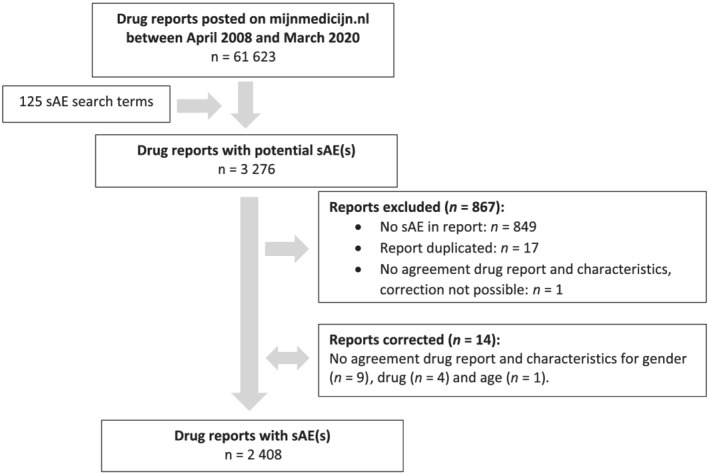
Description of the collection of drug reports with sexual adverse events on mijnmedicijn.nl. sAE = sexual adverse event
3.1. Sex‐stratified numbers of sAE reports
Men posted 1025 drug reports with sAEs (4.7% of all drug reports posted by men) and women 1383 drug reports (3.5% of all drug reports posted by women; see Table 1). Women reporting sAEs were mostly aged 20–29 years (n = 506), whereas men who reported sAEs were most often aged 40–49 years (n = 244), see Figure 2. Uncertainty about the association with the specific drugs was mentioned by fewer women (n = 32; 2.3% of reports with sAEs) than men (n = 45; 4.4% of reports with sAEs).
TABLE 1.
Overview of reports with sexual adverse events posted on mijnmedicijn.nl (2008–2020)
| ATC groups (level 1 and level 2) | Reports of women | Reports of men | |||||
|---|---|---|---|---|---|---|---|
| All | With sAE | ROR (95%CI) a | All | With sAE | ROR (95%CI) a | ||
| A | A02 drugs for acid‐related disorders | 936 | ‐ | 786 | 5 | 0.1 (0.1–0.3) | |
| A08 antiobesity preparations, excl. diet products | 112 | ‐ | 18 | 1 | |||
| A10 drugs used in diabetes | 656 | ‐ | 539 | 10 | 0.4 (0.2–0.7) | ||
| C | C01 cardiac therapy | 150 | ‐ | 210 | 1 | ||
| C02 antihypertensives | 86 | ‐ | 29 | 1 | |||
| C03 diuretics | 245 | 2 | 199 | 12 | 1.3 (0.7–2.3) | ||
| C05 vasoprotectives | 67 | ‐ | 38 | 1 | |||
| C07 β‐blocking agents | 983 | 14 | 0.4 (0.2–0.7) | 683 | 39 | 1.2 (0.9–1.7) | |
| C08 calcium channel blockers | 359 | 3 | 0.2 (0.1–0.7) | 341 | 22 | 1.4 (0.9–2.2) | |
| C09 agents acting on the renin‐angiotensin system | 808 | 5 | 0.2 (0.1–0.4) | 872 | 39 | 0.9 (0.7–1.3) | |
| C10 lipid modifying agents | 1267 | 1 | 1577 | 37 | 0.5 (0.3–0.7) | ||
| D | D05 antipsoriatics | 135 | 1 | 111 | ‐ | ||
| D10 antiacne preparations | 559 | 3 | 0.1 (0.0–0.5) | 240 | 3 | 0.3 (0.1–0.8) | |
| D11 other dermatological preparations | 89 | 1 | 58 | ‐ | |||
| G | G01 gynaecological anti‐infectives and antiseptics | 356 | 1 | 3 | ‐ | ||
| G02 other gynaecologicals | 2819 | 227 | 2.7 (2.3–3.2) | 43 | 3 | 1.5 (0.5–4.9) | |
| G03 sex hormones and modulators of the genital system | 3283 | 384 | 4.7 (4.2–5.3) | 123 | 6 | 1.0 (0.5–2.4) | |
| G04 urologicals | 147 | ‐ | 680 | 122 | 4.9 (4.0–6.0) | ||
| H | H02 corticoids for systemic use | 208 | ‐ | 137 | 1 | ||
| H03 thyroid therapy | 1339 | 3 | 0.1 (0.0–0.2) | 233 | 1 | ||
| J | J01 antibacterials for systemic use | 2629 | 3 | 0.0 (0.0–0.1) | 987 | 2 | |
| J05 antivirals for systemic use | 40 | ‐ | 167 | 1 | |||
| L | L01 antineoplastic agents | 162 | ‐ | 129 | 2 | ||
| L02 endocrine therapy | 624 | 55 | 2.8 (2.1–3.7) | 99 | 20 | 5.2 (3.2–8.5) | |
| L04 immunosuppressants | 751 | 1 | 454 | 2 | |||
| M | M01 anti‐inflammatory and antirheumatic products | 904 | ‐ | 528 | 2 | ||
| M03 muscle relaxants | 51 | ‐ | 51 | 1 | |||
| M04 antigout preparations | 23 | ‐ | 122 | 1 | |||
| M09 other drugs for disorders of the musculoskeletal system | 28 | ‐ | 14 | 1 | |||
| N | N02 analgesics | 2157 | 2 | 1263 | 19 | 0.3 (0.2–0.5) | |
| N03 antiepileptics | 1475 | 10 | 0.2 (0.1–0.3) | 881 | 27 | 0.6 (0.4–0.9) | |
| N04 anti‐Parkinson drugs | 143 | ‐ | 129 | 2 | |||
| N05 psycholeptics | 2354 | 43 | 0.5 (0.4–0.7) | 1939 | 80 | 0.9 (0.7–1.1) | |
| N06 psychoanaleptics | 7393 | 598 | 3.6 (3.2–4.0) | 3948 | 538 | 5.6 (4.9–6.4) | |
| N07 other nervous system drugs | 920 | 4 | 0.1 (0.0–0.3) | 677 | 18 | 0.5 (0.3–0.9) | |
| R | R03 drugs for obstructive airway diseases | 815 | 3 | 0.1 (0.0–0.3) | 489 | 3 | 0.1 (0.0–0.4) |
| R06 antihistamines for systemic use | 671 | 1 | 318 | ‐ | |||
| S | S01 ophthalmologicals | 221 | 1 | 183 | 2 | ||
| TOTAL | 39 873 | 1383 | 21 750 | 1025 | |||
ATC = Anatomical Therapeutic Chemical; sAE = sexual adverse event; 95%CI = 95% confidence interval; ROR = reporting odds ratio, calculated as the proportion of sAE for the specific drug class divided by the proportion of sAE for all drug classes.
If the lower bound of the 95% confidence interval of the ROR is >2, the ROR is shown in bold in this table.
FIGURE 2.
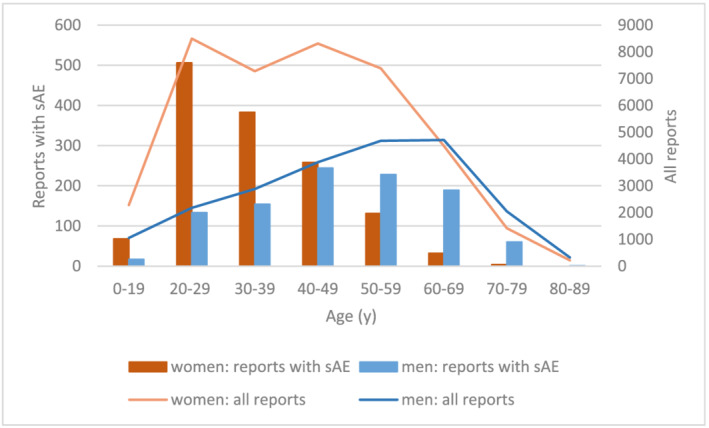
Number of reports with sexual adverse events posted by women and men for each age category in comparison to all reports on mijnmedicijn.nl (2008–2020). sAE = sexual adverse event
Almost half of the sAE reports on mijnmedicijn.nl addressed antidepressants. For these drugs, men mentioned sAEs relatively more often than women. For example, sAEs were found for venlafaxine in 22% of the reports of men (n = 102) and in 10% of the reports of women (n = 101). The most notable sex difference was found for cardiovascular drugs, with 152 reports with sAEs posted by men and 26 reports by women. For drugs targeting the genitourinary system, the reports with sAEs showed inherent sex differences, e.g. 604 women posted reports with sAEs for contraceptives and 118 men for drugs used for benign prostate hypertrophy (BPH).
The most common reported sAEs type concerned a change in desire, which was mentioned in 427 reports of men (41.7%) and 1059 reports of women (76.6%), see supplement D. Most commonly, desire‐related changes were described with libido, a term used in 325 reports of men (31.7%) and in 806 reports of women (58.3%). Besides changes in desire, men also reported changes in erectile function (n = 346; 33.8%), orgasm (n = 150; 14.6%), ejaculation (n = 108; 10.5%) and arousal (n = 21; 2.0%). For women, other reported sAEs types were changes in orgasm (n = 140; 10.1%), vaginal dryness (n = 48; 3.5%), arousal (n = 24; 1.7%) and pain during sex (n = 24; 1.7%). In addition, the sAE was unspecified (e.g. ‘sexual problem’) in 161 reports of men (15.7%) and 183 reports of women (13.2%).
3.2. Disproportional high numbers of sAE reports
The ROR indicated disproportional high numbers of sAE reports for 22 drugs for 1 of the sexes and for another 5 drugs for both sexes. Most of these drugs belonged to 5 drug classes on ATC level 2: Other gynaecologicals (G02); Sex hormones and modulators of the genital system (G03); Urologicals (G04); Endocrine therapy (L02); and Psychoanaleptics (N06). Table 1 shows that the RORs for these drug classes also indicated disproportional high numbers of sAE reports on ATC level 2. Within drug classes G02 and G03, most sAEs were attributed to hormonal contraceptives (ATC classes G02B and G03A), for which women reported sAEs 5.6 times more often than for other drugs (95%CI 5.0–6.3). Within drug class L02, the disproportional signal was attributed to the aromatase inhibitors (ATC class L02BG) and the gonadotropin releasing hormone (GnRH) analogues (ATC class L02AE). The highest proportion of sAEs was found for drugs used in BPH, with 30% of the reports including at least 1 sAE (ROR 9.6; 95%CI 7.7–12.0).
As most sAEs within drug class N06 concerned antidepressants (ATC class N06A), these are presented in more detail in Table 2. Women reported sAEs for antidepressants 4.2 times more often than for other drugs (95%CI 3.8–4.7) and men 7.5 times more often (95%CI 6.6–8.5). The SSRIs (ATC class N06AB), amitriptyline, venlafaxine and mirtazapine received most drug reports and most reports with sAEs. Disproportional high numbers of sAE reports were found for sertraline, paroxetine, citalopram, escitalopram, venlafaxine and for men also for clomipramine and duloxetine.
TABLE 2.
Sex‐stratified numbers and proportions of sexual adverse events for antidepressants (ATC group N06A)
| ATC group | Drug | Users in NL a | sADR risk in SmPC b | Reports by women | Reports by men | ||||
|---|---|---|---|---|---|---|---|---|---|
| All | With sAE | ROR (95%CI) c | All | With sAE | ROR (95%CI) c | ||||
| N06AA | Clomipramine | 26 046 | >10% | 128 | 12 | 2.9 (1.6–5.3) | 81 | 14 | 4.3 (2.4–7.6) |
| Amitriptyline | 201 720 | 1–10% | 407 | 10 | 0.7 (0.4–1.3) | 153 | 7 | 1.0 (0.5–2.1) | |
| Nortriptyline | 64 796 | 1–10% | 103 | 3 d | 0.8 (0.3–2.6) | 74 | 4 | 1.2 (0.4–3.2) | |
| N06AB | Fluoxetine | 57 408 | 1–10% | 365 | 22 | 1.8 (1.2–2.8) | 131 | 18 | 3.3 (2.0–5.4) |
| Citalopram | 181 260 | 1–10% | 815 | 100 | 4.1 (3.3–5.1) | 278 | 63 d | 6.2 (4.7–8.3) | |
| Paroxetine | 145 860 | >10% | 907 | 122 | 4.6 (3.8–5.7) | 442 | 98 d | 6.3 (5.0–7.9) | |
| Sertraline | 93 386 | >10% | 662 | 84 d | 4.2 (3.4–5.4) | 255 | 72 d | 8.5 (6.4–11.2) | |
| Fluvoxamine | 16 660 | 0.1–1% | 171 | 15 | 2.7 (1.6–4.6) | 83 | 8 | 2.2 (1.0–4.5) | |
| Escitalopram | 75 179 | 1–10% | 560 | 73 d | 4.3 (3.4–5.6) | 263 | 64 d | 6.9 (5.1–9.2) | |
| N06AF | Fenelzine | 184 | ‐ | 10 | 2 d | ‐ | 7 | 0 | ‐ |
| Tranylcypromine | 1918 | 0.001–0.01% | 62 | 1 d | ‐ | 27 | 0 | ‐ | |
| N06AG | Moclobemide | 951 | Unknown | 12 | 0 | ‐ | 16 | 1 d | ‐ |
| N06AX | Trazodon | 12 191 | Unknown | 43 | 1 | ‐ | 29 | 4 | 3.2 (1.1–9.3) |
| Mirtazepine | 125 480 | ‐ | 340 | 4 | 0.3 (0.1–0.9) | 249 | 8 | 0.7 (0.3–1.4) | |
| Bupropion | 27 466 | ‐ | 319 | 14 d | 1.3 (0.7–2.2) | 184 | 16 d | 1.9 (1.2–3.2) | |
| Venlafaxine | 103 080 | 1–10% | 962 | 101 d | 3.4 (2.8–4.3) | 461 | 102 d | 6.3 (5.0–7.9) | |
| Duloxetine | 30 631 | 1–10% | 268 | 18 d | 2.0 (1.2–3.3) | 102 | 27 d | 7.4 (4.8–11.6) | |
| Agomelatine | 2075 | ‐ | 71 | 2 | ‐ | 37 | 1 d | ‐ | |
| Hypericum | ‐ | ‐ | 41 | 1 | ‐ | 41 | 2 d | ‐ | |
| Vortioxetine | 5403 | Unknown | 39 | 1 | ‐ | 10 | 1 | ‐ | |
| TOTAL | 6285 | 586 | 4.2 (3.8–4.7) | 2923 | 510 | 7.5 (6.6–8.5) | |||
ATC = Anatomical Therapeutic Chemical; NL = Netherlands; ROR = reporting odds ratio; 95%CI = 95% confidence interval; sADR = sexual adverse reaction; sAE = sexual adverse event; SmPC=Summary of Product Characteristics.
Data from GIP databank, 2019. ‐, should be interpreted as no users.
Risk for sADRs as percentage of users. ‐, should be interpreted as no risk registered; unknown, should be interpreted as too little cases of sADRs to estimate a risk.
If the lower bound of the 95% confidence interval of the ROR is >2 (unrounded numbers), the ROR is shown in bold in this table.
Also reports with a positive effect: for women the positive sAE were mostly desire‐related (2 cases additionally reported a positive effect on orgasms): 1 report each for sertraline, escitalopram, fenelzine, tranylcypromine and duloxetine; 2 reports for nortriptyline; 3 reports for venlafaxine; and 5 reports for bupropion. For men the positive sAE mostly concerned orgasms and desire: 1 report each for citalopram, escitalopram, moclobemide, agomelatine and hypericum; 2 reports each for paroxetine, sertraline and duloxetine; and 3 reports each for bupropion and venlafaxine.
Besides drugs within the drug classes G02, G03, G04, L02 and N06, 3 other drugs had received disproportional high numbers of reports with sAEs from men: lisinopril and diuretics (ROR 6.2 [95%CI 2.0–19.2]), gemfibrozil (ROR 10.1 [95%CI 2.5–40.5]) and risperidone (ROR 3.4 [95%CI 2.1–5.5]). For women, the disproportional high numbers of reports concerned only drugs within the beforementioned drug classes.
Of the 27 drugs with disproportional high numbers of reports with sAEs, 20 were registered with >1% risk for sADRs in their SmPC text. Seven drugs had lower risks registered: 4 hormonal contraceptives (0.1–1% risk), 2 cardiovascular drugs (0.1–1% risk) and anastrozole (not registered with sADRs). In addition, for 58 drugs for which sAEs were reported on mijnmedicijn.nl, no sADRs were found in their SmPC text.
4. DISCUSSION
Unintended effects on sexual function were found in 4% of the patient‐reported drug experiences posted for 189 drugs on mijnmedicijn.nl. Men and women differed in their age and frequency for reporting sAEs, the drugs for which they reported sAEs and the type of sexual complaint experienced. Twenty‐seven drugs showed disproportionally frequent sAE reporting, which mostly concerned antidepressants, hormonal contraceptives, drugs used in BPH, aromatase inhibitors and GnRH analogues. Of these drugs, seven were registered with a low risk for sADRs in their SmPC text, thus showing a potential sAE underestimation in the registration trials. The high frequencies of sAE reporting found for several drugs implies that the influence on sexual function is an important aspect of those drug treatments.
To our best knowledge, this is the first study that evaluated patient‐reported sAEs from social media. The chosen online platform exclusively focused on medication experiences, with the benefit of a simple data extraction in comparison to the AE extraction methods needed for platforms such as medical forums and Twitter. 15 , 19 Other advantages of the data source were the patient and drug characteristics in the platform database and the qualitative rich information in the drug experiences. Moreover, sAE experiences were posted for a broad range of drugs, which enabled an exploration of differences between drugs and between men and women. Another advantage was the use of patient‐reported sAE terms, as patients can have difficulty understanding sexual function terms. 20 In comparison, previous studies that collected AEs from online drug reviews either annotated AEs to medical terms 21 , 22 , 23 , 24 , 25 or extracted side effect expressions from the drug reports. 26 Those studies had different aims, as they primarily investigated the process of AE collection 21 , 22 , 26 or the utility of social media data in comparison other AE sources such as pharmacovigilance systems. 23 , 24 , 25 Such comparisons with pharmacovigilance systems were difficult for this study, as pharmacovigilance studies about sAEs only investigated sAEs in relation to SSRIs or only presented drugs with the highest RORs for sAEs. 27 , 28 , 29 The latter study with the highest RORs was published by the Dutch National Pharmacovigilance Center Lareb and investigated a similar total number of sAEs, also most frequently for antidepressants. 29 In contrast to our study, the majority of sAEs reported at Lareb were reported by men (72 vs. 43%) and statins were among the drug groups with most sAE reports. Presumably, embarrassment around sAEs caused low sAE reporting rates at pharmacovigilance centres, as demonstrated for the French Pharmacovigilance System (FPS). 27 Indeed, at mijnmedicijn.nl sAEs were 18 times more often reported than at FPS (3.9 vs. 0.2% of reports in the databases). Moreover, the sAEs reported at FPS and Lareb could often be considered more objectively noticed (e.g. anorgasmia, impotence) than the mostly desire‐related sAEs reported at mijnmedicijn.nl. 27 The high proportion of desire‐related sAEs at mijnmedicijn.nl suggests that this sAE influenced the reporters' quality of life. In addition, it highlights the importance for drug users to share their sAE experiences and their reservation to share these with healthcare providers or pharmacovigilance centers. Therefore, this study of an online medication platform probably reflects the real‐world frequency of sAEs better than pharmacovigilance systems.
This study showed differences for women and men in their online reporting of sAEs. For women, a higher total number of sAE reports was found. This higher number probably derived from the twice higher total number of drug reports in comparison to men. It is well‐known that women report more side effects. 30 , 31 A multitude of potential reasons exist for this difference, for example a higher polypharmacy rate, reaching a higher age, different baseline characteristics and risks (e.g. longer QT interval, higher prevalence of depression), physiological differences that can lead to higher average drug exposures, receiving different care, a different perception of healthcare professionals, and a different attitude towards drugs in women. 30 By contrast, when comparing the proportions of reporting sAEs in drug experiences, women in this study reported sAEs less frequently than men. Importantly, the lower sAE proportion in women was observed for drugs that both sexes used frequently, e.g. antidepressants and cardiovascular drugs. Concordantly, in Lareb, statin‐associated decreased libido and SSRI‐associated loss of libido and sexual dysfunction showed to have higher odds ratios for men than for women. 32 In a meta‐analysis about SSRI‐associated sAEs, men also showed significant higher incidences of desire and orgasm dysfunction, although women reported more arousal dysfunction. 6 Since SSRIs are expected to induce some degree of genital numbness in all users, 33 it is unclear why men reported higher percentages of SSRI‐associated sexual complaints. Besides biological differences, the sex differences in sAE reporting may be underpinned by different expectations and expressions of female and male sexuality. For example, the concordance between genital response and subjective arousal is more relevant for men than for women. 34 Accordingly, drug influences on genital response might be more noticeable and have more impact for men. Moreover, women are known to report their sexual complaints less frequently to their doctor. 35 This may reflect a societal expectation of women, which possibly also deters women from reporting sexual complaints online. Therefore, future research should explore whether women can identify drug‐induced differences in sexual function to the same extent as men (but deter from reporting this) and in which manner the impact of sAEs on male and female sexuality may differ.
For this new AE source, limitations inherent to both social media and pharmacovigilance studies applied. Firstly, the platform depends on spontaneous reporting. Therefore, selection bias may have influenced the results. Specifically for sAEs, notoriety bias, underreporting and Weber's effect (increase in reported AEs for new drugs within first years of approval) have been found before. 27 , 36 However, at mijnmedicijn.nl, potential notoriety bias, exhibited as extremely high numbers of reports, was only found for levothyroxine sodium (n = 1229) and plastic intrauterine device with progestogen (n = 2302). For the latter drug, media coverage in France changed the reporting of sAEs to the FPS from 6.9 to 47.3% of the reports. 36 Concerning the reporting rates of sAEs, general under‐ or overreporting may have altered the sAE frequencies for individual drugs, but not the ROR values, because both the numerator and denominator would be affected. 27 Importantly, the ROR has an arbitrary cut‐off value for disproportionality, for this study a lower CI bound >2.0. This high cut‐off value was chosen to increase the specificity of our findings. 18 Additionally, it cannot be excluded that 1 drug user might have posted multiple sAE reports for different drug experiences. However, due to the checks within the database it is unlikely that this happened often nor that this would fully explain our findings. Lastly, a comparison of sAE frequencies of our study to sADR frequencies from SmPC information requires caution as the denominators of the proportions differed for the related populations.
Sexual side effects were part of at least 1 drug experience for a broad range of drugs, similar to the wide scope of drug labels that included sADRs. 2 As hypothesized, the drugs associated with sAEs in this study mostly targeted arteries, nerves and musculoskeletal function. 5 Hormonal contraceptives and drugs used in BPH were also often associated with sAEs. The association of hormonal contraceptives with sAEs remains unexplained. 8 Different possible explanations exist for drugs used in BPH, for which we refer to La Vignera et al. 37 For the remaining drugs with sAEs in our study, only few sAEs were reported, which were sometimes confirmed in case studies (for omeprazole, isotretinoin, methotrexate and timolol 38 , 39 , 40 , 41 ) and sometimes explained within the drug reports by indirect effects or presented with uncertainty about the association. For drugs used in diabetes and hypo‐ or hyperthyroidism, the rare sAEs reported in this study may indicate inadequate or excessive treatment effects, as these drugs are known to reduce sexual complaints caused by the diseases. 42 , 43 Drugs used for substance dependencies presented substantially higher sAE frequencies in literature than on mijnmedicijn.nl (varenicline 4.3 vs. 0.7%; methadone 14–81 vs. 4.0%; naltrexone 90 vs. 10.3%), possibly due to already existing sexual complaints caused by the substances in those studies. 44 , 45
The findings of this study add to our understanding of sAEs. Firstly, sAEs were experienced in about 1 in 25 online drug reports, varied between women and men and mostly concerned desire‐related problems. Secondly, it showed that sAE descriptions in drug labels may not always reflect the real‐world experiences, as several antidepressants and contraceptives received many more sAE reports in our study than expected from the SmPC text. Therefore, healthcare providers should be alert for patient‐reported sAEs, also when the sAEs is not described in the drug label. Lastly, this study showed that for sensitive AEs such as sAEs, online medication platforms can contribute to knowledge from pharmacovigilance databases with real‐world patient experiences.
5. CONCLUSION
One in 25 patient‐reported drug experiences on mijnmedicijn.nl included a sexual side effect. For many antidepressants and hormonal contraceptives, the frequency of reporting sAEs in the drug experiences on mijnmedicijn.nl was >10%. In addition, sex differences in reporting sAEs were revealed. These findings should stimulate healthcare providers to be sensitive to patient‐reported sAEs and to be mindful of possible under‐ and overreporting of sAEs in the drug labels.
COMPETING INTERESTS
W.W. is the owner and chief executive director of Insight Pharma Services. E.K. was an employee of Insight Pharmacy Services. The remaining authors have no conflicts of interest to declare.
AUTHORS' CONTRIBUTIONS
All authors designed the study; W.W. and E.K. obtained the data; R.G. and E.K. analysed the data. R.G. wrote the first draft and all authors contributed by reviewing and editing.
Supporting information
DATA S1 Supporting Information
Gordijn R, Wessels W, Kriek E, et al. Patient reporting of sexual adverse events on an online platform for medication experiences. Br J Clin Pharmacol. 2022;88(12):5326‐5335. doi: 10.1111/bcp.15454
Funding information No funding was received to support this study.
DATA AVAILABILITY STATEMENT
The data that support the findings of this study were derived from the public domain mijnmedicijn.nl and is summarized in the supplementary materials. The complete dataset is available from Insight Pharma Services. Restrictions apply to the availability of these data, which were used under license for this study. The dataset is available from the corresponding author with the permission of Insight Pharma Services.
REFERENCES
- 1. McCabe MP, Sharlip ID, Lewis R, et al. Risk Factors for Sexual Dysfunction Among Women and Men: A Consensus Statement From the Fourth International Consultation on Sexual Medicine 2015. J Sex Med. 2016;13(2):153‐167. doi: 10.1016/j.jsxm.2015.12.015 [DOI] [PubMed] [Google Scholar]
- 2. Gordijn R, Teichert M, Nicolai MPJ, Elzevier HW, Guchelaar HJ. Adverse drug reactions on sexual functioning: a systematic overview. Drug Discov Today. 2019;24(3):890‐897. doi: 10.1016/j.drudis.2019.01.012 [DOI] [PubMed] [Google Scholar]
- 3. Khin NA, Kronstein PD, Yang P, et al. Regulatory and scientific issues in studies to evaluate sexual dysfunction in antidepressant drug trials. J Clin Psychiatry. 2015;76(8):1060‐1063. doi: 10.4088/JCP.14cs09700 [DOI] [PubMed] [Google Scholar]
- 4. Haberfellner EM. A review of the assessment of antidepressant‐induced sexual dysfunction used in randomized, controlled clinical trials. Pharmacopsychiatry. 2007;40(5):173‐182. doi: 10.1055/s-2007-985881 [DOI] [PubMed] [Google Scholar]
- 5. Verschuren JE, Enzlin P, Dijkstra PU, Geertzen JHB, Dekker R. Chronic disease and sexuality: a generic conceptual framework. J Sex Res. 2010;47(2‐3):153‐170. doi: 10.1080/00224491003658227 [DOI] [PubMed] [Google Scholar]
- 6. Serretti A, Chiesa A. Treatment‐emergent sexual dysfunction related to antidepressants: a meta‐analysis. J Clin Psychopharmacol. 2009;29(3):259‐266. doi: 10.1097/JCP.0b013e3181a5233f [DOI] [PubMed] [Google Scholar]
- 7. la Torre A, Conca A, Duffy D, Giupponi G, Pompili M, Grözinger M. Sexual dysfunction related to psychotropic drugs: a critical review part II: antipsychotics. Pharmacopsychiatry. 2013;46(6):201‐208. doi: 10.1055/s-0033-1347177 [DOI] [PubMed] [Google Scholar]
- 8. Burrows LJ, Basha M, Goldstein AT. The effects of hormonal contraceptives on female sexuality: a review. J Sex Med. 2012;9(9):2213‐2223. doi: 10.1111/j.1743-6109.2012.02848.x [DOI] [PubMed] [Google Scholar]
- 9. Gacci M, Ficarra V, Sebastianelli A, et al. Impact of medical treatments for male lower urinary tract symptoms due to benign prostatic hyperplasia on ejaculatory function: a systematic review and meta‐analysis. J Sex Med. 2014;11(6):1554‐1566. doi: 10.1111/jsm.12525 [DOI] [PubMed] [Google Scholar]
- 10. Nicolai MP, Liem SS, Both S, et al. A review of the positive and negative effects of cardiovascular drugs on sexual function: a proposed table for use in clinical practice. Neth Heart J. 2014;22(1):11‐19. doi: 10.1007/s12471-013-0482-z [DOI] [PMC free article] [PubMed] [Google Scholar]
- 11. la Torre A, Giupponi G, Duffy DM, et al. Sexual dysfunction related to psychotropic drugs: a critical review. Part III: mood stabilizers and anxiolytic drugs. Pharmacopsychiatry. 2014;47(1):1‐6. doi: 10.1055/s-0033-1358683 [DOI] [PubMed] [Google Scholar]
- 12. Margraff F, Bertram D. Adverse drug reaction reporting by patients: an overview of fifty countries. Drug Saf. 2014;37(6):409‐419. doi: 10.1007/s40264-014-0162-y [DOI] [PubMed] [Google Scholar]
- 13. Bonierbale M, Lançon C, Tignol J. The ELIXIR study: evaluation of sexual dysfunction in 4557 depressed patients in France. Curr Med Res Opin. 2003;19(2):114‐124. doi: 10.1185/030079902125001461 [DOI] [PubMed] [Google Scholar]
- 14. de Vries ST, Denig P, Andrić A, et al. Motives to Report Adverse Drug Reactions to the National Agency: A Survey Study among Healthcare Professionals and Patients in Croatia, The Netherlands, and the UK. Drug Saf. 2021;44(10):1073‐1083. doi: 10.1007/s40264-021-01098-4 [DOI] [PMC free article] [PubMed] [Google Scholar]
- 15. Tricco AC, Zarin W, Lillie E, et al. Utility of social media and crowd‐intelligence data for pharmacovigilance: a scoping review. BMC Med Inform Decis Mak. 2018;18(1):38. doi: 10.1186/s12911-018-0621-y [DOI] [PMC free article] [PubMed] [Google Scholar]
- 16. WHO Collaborating Centre for Drug Statistics Methodology, ATC/DDD Index Available online at: https://www.whocc.no/atc_ddd_index/. 2018.
- 17. Database Insights Pharma Services . Sexual adverse events in Dutch written drug reports; 2020. Individual data reports publicly available at mijnmedicijn.nl [DATASET]
- 18. Bate A, Evans SJ. Quantitative signal detection using spontaneous ADR reporting. Pharmacoepidemiol Drug Saf. 2009;18(6):427‐436. doi: 10.1002/pds.1742 [DOI] [PubMed] [Google Scholar]
- 19. Lardon J, Abdellaoui R, Bellet F, et al. Adverse Drug Reaction Identification and Extraction in Social Media: A Scoping Review. J Med Internet Res. 2015;17(7):e171. doi: 10.2196/jmir.4304 [DOI] [PMC free article] [PubMed] [Google Scholar]
- 20. Alexander AM, Flynn KE, Hahn EA, et al. Improving patients' understanding of terms and phrases commonly used in self‐reported measures of sexual function. J Sex Med. 2014;11(8):1991‐1998. doi: 10.1111/jsm.12599 [DOI] [PMC free article] [PubMed] [Google Scholar]
- 21. Duh MS, Cremieux P, Audenrode MV, et al. Can social media data lead to earlier detection of drug‐related adverse events? Pharmacoepidemiol Drug Saf. 2016;25(12):1425‐1433. doi: 10.1002/pds.4090 [DOI] [PMC free article] [PubMed] [Google Scholar]
- 22. Yates A, Goharian N. ADRTrace: Detecting expected and unexpected adverse drug reactions from user reviews on social media sites. ECIR 2013; 2013:816‐819. [Google Scholar]
- 23. Wang C, Karimi S. Differences between social media and regulatory databases in adverse drug reaction discovery. In Proceedings of the First International Workshop on Social Media Retrieval and Analysis. ACM; 2014:13‐14. [Google Scholar]
- 24. Borchert JS, Wang B, Ramzanali M, Stein AB, Malaiyandi LM, Dineley KE. Adverse Events Due to Insomnia Drugs Reported in a Regulatory Database and Online Patient Reviews: Comparative Study. J Med Internet Res. 2019;21(11):e13371. doi: 10.2196/13371 [DOI] [PMC free article] [PubMed] [Google Scholar]
- 25. Hughes S, Cohen D. Can online consumers contribute to drug knowledge? A mixed‐methods comparison of consumer‐generated and professionally controlled psychotropic medication information on the internet. J Med Internet Res. 2011;13(3):e53. doi: 10.2196/jmir.1716 [DOI] [PMC free article] [PubMed] [Google Scholar]
- 26. Liu J, Li A, Seneff S. Automatic Drug Side Effect Discovery from Online Patient‐Submitted Reviews: Focus on Statin Drugs. The First International Conference on Advances in Information Mining and Management; 2011. [Google Scholar]
- 27. Trenque T, Maura G, Herlem E, et al. Reports of sexual disorders related to serotonin reuptake inhibitors in the French pharmacovigilance database: an example of underreporting. Drug Saf. 2013;36(7):515‐519. doi: 10.1007/s40264-013-0069-z [DOI] [PubMed] [Google Scholar]
- 28. Chinchilla Alfaro K, van Hunsel F, Ekhart C. Persistent sexual dysfunction after SSRI withdrawal: a scoping review and presentation of 86 cases from the Netherlands. Expert Opin Drug Saf. 2022;21(4):553‐561. doi: 10.1080/14740338.2022.2007883 [DOI] [PubMed] [Google Scholar]
- 29. Valeiro C, Matos C, Scholl J, van Hunsel F. Drug‐Induced Sexual Dysfunction: An Analysis of Reports to a National Pharmacovigilance Database. Drug Saf. 2022;45(6):639‐650. doi: 10.1007/s40264-022-01174-3 [DOI] [PubMed] [Google Scholar]
- 30. Franconi F, Campesi I. Sex and gender influences on pharmacological response: an overview. Expert Rev Clin Pharmacol. 2014;7(4):469‐485. doi: 10.1586/17512433.2014.922866 [DOI] [PubMed] [Google Scholar]
- 31. Hasford J, Bruchmann F, Lutz M, Thürmann P, Schmiedl S. A patient‐centred web‐based adverse drug reaction reporting system identifies not yet labelled potential safety issues. Eur J Clin Pharmacol. 2021;77(11):1697‐1704. doi: 10.1007/s00228-021-03134-9 [DOI] [PMC free article] [PubMed] [Google Scholar]
- 32. de Vries ST, Denig P, Ekhart C, et al. Sex differences in adverse drug reactions reported to the National Pharmacovigilance Centre in the Netherlands: An explorative observational study. Br J Clin Pharmacol. 2019;85(7):1507‐1515. doi: 10.1111/bcp.13923 [DOI] [PMC free article] [PubMed] [Google Scholar]
- 33. Healy D. Citizen petition: Sexual side effects of SSRIs and SNRIs. Int J Risk Saf Med. 2018;29(3–4):135‐147. doi: 10.3233/JRS-180745 [DOI] [PMC free article] [PubMed] [Google Scholar]
- 34. Carpenter D, Janssen E, Graham C, Vorst H, Wicherts J. Women's scores on the sexual inhibition/sexual excitation scales (SIS/SES): gender similarities and differences. J Sex Res. 2008;45(1):36‐48. doi: 10.1080/00224490701808076 [DOI] [PubMed] [Google Scholar]
- 35. Kikuchi T, Uchida H, Suzuki T, Watanabe K, Kashima H. Patients' attitudes toward side effects of antidepressants: an Internet survey. Eur Arch Psychiatry Clin Neurosci. 2011;261(2):103‐109. doi: 10.1007/s00406-010-0124-z [DOI] [PubMed] [Google Scholar]
- 36. Langlade C, Gouverneur A, Bosco‐Lévy P, et al. Adverse events reported for Mirena levonorgestrel‐releasing intrauterine device in France and impact of media coverage. Br J Clin Pharmacol. 2019;85(9):2126‐2133. doi: 10.1111/bcp.14027 [DOI] [PMC free article] [PubMed] [Google Scholar]
- 37. la Vignera S, Aversa A, Cannarella R, et al. Pharmacological treatment of lower urinary tract symptoms in benign prostatic hyperplasia: consequences on sexual function and possible endocrine effects. Expert Opin Pharmacother. 2021;22(2):179‐189. doi: 10.1080/14656566.2020.1817382 [DOI] [PubMed] [Google Scholar]
- 38. Perry TW. Abrupt‐onset, profound erectile dysfunction in a healthy young man after initiating over‐the‐counter omeprazole: a case report. J Med Case Reports. 2021;15(1):360. doi: 10.1186/s13256-021-02981-5 [DOI] [PMC free article] [PubMed] [Google Scholar]
- 39. Healy D, Le Noury J, Mangin D. Enduring sexual dysfunction after treatment with antidepressants, 5α‐reductase inhibitors and isotretinoin: 300 cases. Int J Risk Saf Med. 2018;29(3–4):125‐134. doi: 10.3233/JRS-180744 [DOI] [PMC free article] [PubMed] [Google Scholar]
- 40. Wylie G, Evans CD, Gupta G. Reduced libido and erectile dysfunction: rarely reported side‐effects of methotrexate. Clin Exp Dermatol. 2009;34(7):e234. doi: 10.1111/j.1365-2230.2008.03082.x [DOI] [PubMed] [Google Scholar]
- 41. Katz IM. Sexual dysfunction and ocular timolol. JAMA. 1986;255(1):37‐38. doi: 10.1001/jama.1986.03370010039015 [DOI] [PubMed] [Google Scholar]
- 42. Corona G, Isidori AM, Aversa A, et al. Male and female sexual dysfunction in diabetic subjects: Focus on new antihyperglycemic drugs. Rev Endocr Metab Disord. 2020;21(1):57‐65. doi: 10.1007/s11154-019-09535-7 [DOI] [PubMed] [Google Scholar]
- 43. Gabrielson AT, Sartor RA, Hellstrom WJG. The Impact of Thyroid Disease on Sexual Dysfunction in Men and Women. Sex Med Rev. 2019;7(1):57‐70. doi: 10.1016/j.sxmr.2018.05.002 [DOI] [PubMed] [Google Scholar]
- 44. Grover S, Mattoo SK, Pendharkar S, Kandappan V. Sexual dysfunction in patients with alcohol and opioid dependence. Indian J Psychol Med. 2014;36(4):355‐365. doi: 10.4103/0253-7176.140699 [DOI] [PMC free article] [PubMed] [Google Scholar]
- 45. Haas JS, Amato M, Marinacci L, Orav EJ, Schiff GD, Bates DW. Do package inserts reflect symptoms experienced in practice?: assessment using an automated phone pharmacovigilance system with varenicline and zolpidem in a primary care setting. Drug Saf. 2012;35(8):623‐628. doi: 10.1007/BF03261959 [DOI] [PubMed] [Google Scholar]
Associated Data
This section collects any data citations, data availability statements, or supplementary materials included in this article.
Supplementary Materials
DATA S1 Supporting Information
Data Availability Statement
The data that support the findings of this study were derived from the public domain mijnmedicijn.nl and is summarized in the supplementary materials. The complete dataset is available from Insight Pharma Services. Restrictions apply to the availability of these data, which were used under license for this study. The dataset is available from the corresponding author with the permission of Insight Pharma Services.