



Abstract
The 2021 volcanic eruption at Fagradalsfjall, Iceland, provides a case study for examining an active collaboration between stakeholders in the development of an emergent volcanic site into a tourism destination from its inception. Stakeholders for this research include municipal actors and representatives; landowners; commercial tour companies and operators; the Federal Ministry of Tourism and Ministry of Environment and Natural Resources, civil protection, and search and rescue. These stakeholder perceptions of the management process are analyzed within a responsible and sustainable tourism framework by a constant comparative method of interview text. The results bring to light issues deemed important during the site management and destination development process around concepts of authority, responsibility, safety, funding, and access. According to stakeholders, the management of the emergent Fagradalsfjall destination while positively perceived initially has gaps surrounding ongoing sustainable and responsible management that could have impacts on the participation of various stakeholder groups in the destination’s ongoing development. This research has implications for other emergent volcanic tourist sites in Iceland and beyond.
Keywords: Destination development, Tourism stakeholders, Sustainable tourism, Volcano, Iceland
Introduction
There has been significant progress in developing Iceland’s nature-tourism sites since the country erupted into global consciousness with the 2010 Eyjafjallajökull eruption. Critical theories on sustainable development in Iceland have emerged in the years since as a reaction to the unanticipated, explosive increase in tourism and the desire to access Iceland’s remote regions as a holiday destination. In 2018, international tourism grew to 2.3 million tourists and the public conversation on tourism in Iceland became no longer unanimously optimistic about the positive economic, social, and cultural impacts on society and nature (Helgadóttir et al. 2019; Ólafsdóttir et al. 2018). The conversation shifted from the promotion of mass tourism (Buckley 1999) to a discourse on overtourism (Sæþórsdóttir et al. 2020), described as a tipping point at which tourists have “overtaken” a destination and where the infrastructure can no longer support the growth (Helgadóttir et al. 2019; Kepnes 2021; Þórhallsdóttir and Ólafsson 2017; Ólafsdóttir et al. 2018). In response, even throughout the COVID-19 pandemic, development in tourism’s physical infrastructure in Iceland has progressed alongside research regarding how to best develop natural sites, while maintaining safety (Bird et al. 2010) and a sustainable social, economic, and environmental balance within the Icelandic community (Helgadóttir et al. 2019; Ólafsdóttir et al. 2018; Sæþórsdóttir 2014; Sæþórsdóttir et al. 2020).
Iceland is a country with high levels of volcanic activity that can create brand-new tourist attractions overnight. Some argue there is a gap in Icelandic policy regarding the management of these specific types of nature sites from their conception. These types of emerging destinations occur quickly and sometimes with high risk to the safety of inhabitants and visitors. Therefore they have different stakeholders initially in the management process compared to other tourist attractions, such as civil protection and emergency response organizations, which typically work closely with scientists. Researchers in Iceland have worked toward building action plans focused on the natural environment (Ólafsdóttir et al. 2018; Sæþórsdóttir 2014), social sustainability (Helgadóttir et al. 2019; Knox-Hayes et al. 2020;), willingness to pay for tourism infrastructure and access (Cook et al. 2018a, b; Einarsdóttir et al. 2019; Malinauskaite et al. 2020; Reynisdottir et al. 2008; Sæþórsdóttir 2014;), and carrying capacity (Yeoman et al. 2019). However, with notable exceptions, less work has been done on the concept of emergency response, safety, and stakeholder engagement in the tourist site development process from the beginning (Bird and Gísladóttir 2018, 2020; Bird et al. 2010). It is argued that this is necessary in volcanic destinations, especially as they are being created. This will allow a better understanding of the social dimension of responsible tourism management at potentially hazardous or environmentally vulnerable locations (Sæþórsdóttir et al. 2020).
This work aims to contribute to the discussion on social sustainability in tourism and natural site management (Gunnarsdóttir and Matthíasdóttir (2019); Knox-Hayes et al. 2020), including civil protections and emergency response organizations as key stakeholders. While scientists are also an important voice during natural activities such as volcanic eruptions, including other stakeholder participant voices can strengthen a cornerstone of sustainability assessments (Kristjánsdóttir et al. 2017). Research into these various stakeholder relationships is lacking overall even though stakeholder consultation facilitates a “process that will ultimately reduce the potential for conflicts, reduce power imbalances and is more politically legitimate” (Hardy and Pearson 2018, p.248). There have been several recent national-level tourism developments in Iceland where a lack of stakeholder consensus may have contributed to the dismissal or failure of proposed legislation, such as the Nature Pass Bill in 2015, and the Highlands National Park proposal in 2021 (Haraldsson 2016; Morgunblaðið 2021). Public opposition has also hindered other revenue-raising ideas such as a tourist tax and service fees, confirming the suggestion that sustainable tourism development must better incorporate the socio-cultural component (Fontaine 2020; Haraldsson 2016; Ólafsson 2014) to negotiate the necessary agreement between different public, private and legislature representatives. For these reasons, the research in this paper investigates various perceptions from other non-scientist stakeholders, of the measures taken to manage and transition the Fagradalsfjall Volcanic Eruption into a tourist destination. It identifies key concerns and considerations from these stakeholders in the process that can inform continued responsible management.
Fagradalsfjall volcanic area
The Reykjanes peninsula in South Iceland is part of the Mid-Atlantic Ridge that rises above the North Atlantic Ocean and cuts southwest to northeast across the island of Iceland. It is the boundary of the North American and Eurasian tectonic plates. Regular volcanic activity and glaciers have shaped the landscape over millennia (Sæmundsson et al. 2020). The mountain range Fagradalsfjall is located within the Gelingadalir valley in the Reykjanes Geopark, one of two geoparks in Iceland. The location of the Fagradalsfjall volcanic eruption in 2021 was uniquely accessible to the public given its relatively close proximity to the airport and capital city as compared to previous eruptions in Holuhraun in 2014 in Iceland’s east, and Eyjafjallajökull in 2010 in the south. Lava first erupted below the mountain range Fagradalsfjall in the Geldingadalur Valley on Iceland’s Reykjanes peninsula on 19 March 2021 and ceased to flow as of 18 September 2021. The eruption was briefly active for 2 weeks in August 2022 in the nearby Meradalir Valley (after the conclusion of this research). During the initial eruption, the Icelandic civil defense Almannavarnir and Icelandic Association for Search and Rescue Landsbjörg (ICE-SAR) took immediate control of what was considered a natural hazard (Pearson 2021).
From 21 March to 15 September 2021, over 285,000 visitors were recorded as having visited the site along the monitored paths A, B, and C (Ferðaþjónustunnar 2021b). The volcano’s future was challenging to predict at the time, with geologists observing in May that the activity was increasing rather than slowing (Tyrie 2021b). As the summer progressed and 5 months passed from the first fissure opening, the volcano became less predictable with episodic fountaining behavior and intermittent periods of activity. Some specialists predicted the eruption would end soon after (Maurer 2021; Morgunblaðið 2021), with others predicting it is equally as likely to continue for years (Pomrenke 2021; Sævarsson 2021). The extent of the lava flow, paths, and parking lots as of 10 September 2021, the end of this study, are shown in Fig. 1. The marked paths adapted to the restriction imposed by the lava flow. As of 13 June 2021, Path A was no longer viable.
Fig. 1.

Fagradalsfjall lava flow, active crater, paths, parking lots, and web camera as of 10 September 2021
A working group with key stakeholders was established to oversee the short-term site development of the Fagradalsfjall volcanic area throughout the summer of 2021. The first stage of the process concluded on 30 August 2021 (Bernharðsdóttir 2021). The working group’s goal was to delegate responsibility for implementing a long-term plan to transition the site from one managed by the civil defense force and ICE-SAR to a developed attraction with services, infrastructure, staff, and financial ties to the local community using rangers from the Federal Environment Agency Umhverfisstofnan (UST) (Bernharðsdóttir 2021; Tyrie 2021a). This research aimed to collect data on the various perceptions of the initial process of transforming this emergent Icelandic tourist site, Fagradalsfjall, into a sustainable and responsibly managed volcanic tourist destination. The research concentrates on community stakeholders (defined as those that have some community connection to the initial management and development of the Fagradalsfjall site) during the period from the beginning of the volcanic eruption until the conclusion of the first working group at the end of August 2021. Interviews took place before the group made any final decisions on long-term management responsibilities going forward.
Literature review
The World Tourism Organization (WTO) and United Nations Environment Program (UNEP) definition of sustainable tourism promotes making optimal use of environmental resources; maintaining essential ecological processes by helping to conserve natural heritage and biodiversity; respecting the authenticity of communities by creating tolerance and understanding of cultures; and ensuring viable, long-term economic operations that provide socio-economic benefits to all stakeholders fairly (UNEP and WTO 2005). This threefold approach to sustainability is relevant to the Fagradalsfjall eruption both in the context of an initial emergency response to the eruption and to the future development of the site. Goodwin (2016), in his definition of responsible tourism, asserts that companies and managers who claim to be operating responsibly are liable to be called to account on three specific metrics; their willingness or ability to respond to issues when they arise; their level of assumed obligation, accountability, liability, and blame when problematic issues arise; their empowerment, and the responsibility given to them by their peers and other stakeholders. Understanding the perceptions of multiple stakeholders within these principles of responsible and sustainable tourism has utility in this research. Sustainability, however, is not a homogenous concept applicable to all communities (Knox-Hayes et al. 2020; McMinn 1997), and the WTO and UNEP make it a point to integrate local community social, environmental, and economic principles in their approach to sustainable tourism (2005), attempting to alleviating the challenge of using “sustainable” as a single metric within a global perspective (McMinn 1997). For this research “sustainability” will be sought to be understood within the Icelandic context.
Kristjánsdóttir et al.’s (2017) research indicate that the social dimension is the least integrated dimension of responsible and sustainable tourism management, even though the UNEP and WTO (2005) concept of respecting the authenticity of communities by creating tolerance and understanding of cultures, is integral to a community’s perception of success and safety in destination management. Kristjánsdóttir et al. (2017) find that engaging multiple stakeholder groups through multi-disciplinary research to determine measures of sustainability holistically can have a positive impact on the planning and decision-making processes. Ólafsdóttir et al. (2018) demonstrate that continual stakeholder consultation is essential to adequately measure and consider the impact and sustainability of site development. Knox-Hayes et al. (2020) show that in Iceland this is especially important as the “regulative, normative, cultural, and cognitive institutional structures are in constant interaction with value systems and sustainability conceptions” in the tourism industry (p. 1) such as seen with the Icelandic civil rights almannaréttur or the “right to roam” of citizens on private lands embedded in Icelandic culture and policy. Sæþórsdóttir et al. (2020) advocate for consulting stakeholders in developing normative standards for various aspects of development as well. With this understanding, this research attempts to provide information that might improve the chance of tourism development plans for Fagradalsfjall gaining legitimacy among the population (Kristjánsdóttir et al. 2017) by discussing the involvement and perceptions of multiple stakeholders, including emergency response and civil defense in this group. This requires those involved in the development process to assume a level of responsibility for the ongoing sustainability of the site. Responsible tourism requires a collective, with parties cooperatively taking responsibility for making tourism more sustainable (Goodwin 2016), including keeping all involved accountable, to avoid individualization or a singular interpretation of responsible behavior (Saarinen 2021).
In the past, it has been particularly challenging to reach a consensus on how to sustainably fund natural sites in Iceland, as funding is distributed through many channels at all levels of government and administration, including national funding for research, physical infrastructure, product development, regional and municipal groups for social projects, and innovative businesses. Policymakers and administrators are tasked with achieving the goal that local municipalities financially benefit from the economic and work opportunities, increased traffic through the towns, and the heightened demand for accommodation and services. These sustainable economic outcomes exist alongside the immediate and ongoing concern for safety at sites like Fagradalsfjall, intersecting with the desire to protect the natural environment while building appropriate infrastructure. While other places in the world protect, control, and fund volcanic sites through public taxes, visitor fees, and designations like National Park and UNESCO World Heritage site (US National Park Service 2022), there has been public opposition to proposed revenue-raising ideas in Iceland such as a proposed nature pass, tourist tax, and service fees. These struggles confirm that a true consensus on sustainable development must adequately consider the demands of the public and impacted stakeholders (Haraldsson 2016).
The concept of community engagement and trust in the source of information is shown by disaster researchers to be an important component for locals following evacuation orders for various types of disasters in different parts of the world (Haynes et al. 2008; Strahan et al. 2018). It has also been shown as necessary in the responses to past volcanic eruptions that have taken place in the south of Iceland. Surveys and interviews have indicated an overall positive response of community members to the management of volcanic site eruptions in the past, with most following evacuation orders and self-reporting respect for public safety officials (Bird and Gísladóttir 2018, 2020). This is attributed in large part to their high engagement with the public, made easier by the small, close-knit nature of the communities there. However, this level of community communication and connection could change as the demographics of Iceland shift and more tourists visit. Researchers warn this could lead to increased safety issues and perhaps decreased compliance during times of disaster (Bird and Gísladóttir 2020). The eruption in Fagradalsfjall presents specialists with the opportunity to set a precedent for the development of a natural site that actively and publicly engages a variety of stakeholders over a prolonged period as the sustainability of the eruption site is linked to consensus building on who will bear the social and financial responsibility to manage different aspects of the destination in the future.
Research design and methodology
This research collected qualitative data on stakeholder perceptions regarding the development of a sustainable and responsibly managed natural destination at Fagradalsfjall in Iceland. Sixteen stakeholders were interviewed in June and July 2021. The research was conducted using a phenomenological approach in grounded theory (Merriam and Tisdell 2015) in order to record the lived experiences and impressions of stakeholders during this shared phenomenon. According to the procedures of grounded theory, the first theoretical sampling was conducted in the form of preliminary interviews and a review of prior case studies (Merriam and Tisdell 2015) on sustainable and responsible approaches to tourism management in an Icelandic context. An interview protocol was developed to assess perceptions of the process of managing the site and developing the destination. The questions focused on what the different stakeholder groups would like to see for management at the Fagradalsfjall site, who was/is responsible for each item, their perceptions of the current organizational power structures at the volcano site, and their perceived role in all of the above.
The stakeholders in this research are (1) municipal actors and representatives; (2) landowners; (3) civil protection and search and rescue; (4) commercial companies and operators; and (5) the Federal Ministry of Tourism and the Ministry of Environment and Natural Resources. Scientific voices around volcanology were infused within all categories and not separated out in this research. A snowball sampling method identified 16 interviewees within these groups. Confidential interviews with stakeholders were conducted across 4 weeks in the summer 2021. The interviews averaged 60 min. Questioning followed the interview protocol with a semi-structured approach that allowed for clarification.
The data collected from the interview transcripts was analyzed by two researchers using an inductive coding method (Merriam and Tisdell 2015) to discover first-order keywords. It produced 71 unique inductive codes across 292 quotes. Five central themes were evident across the interviews, with 18 secondary deductive codes, which were then applied across the material. Working from first-order codes to analytical categories, second-order core concepts were analyzed to further develop essential issues having utility in the broader sustainable development conversation. Several perceived challenges and priorities from the stakeholders emerged through the coding of interview data. These were analyzed using a constant comparative method that compared segments of data across different stakeholder groups numerous times to determine similarities and differences (Merriam and Tisdell 2015). See Table 1 for details on the codes and central themes that emerged within the interview data.
Table 1.
Central themes and data codes from Fagradalsfjall interview data
| Main Themes | Deductive codes | Inductive codes |
|---|---|---|
| Authority | Trustworthy | Timing and speed of reaction; trustworthiness; distance/oversight on issues; drawing on previous experience; almannavarnir hazard control; framework and transition/future planning; non-capitalist management; working group; specialists; leadership |
| Specialists | ||
| Leadership | ||
| Management | ||
| Responsibility | Communication | Communication/collaboration between stakeholders; communication to the public; branding/image of Iceland and attractions; enforceability; government regulation required; local residents; environmental and social sustainability; transparency, sustainable planning; legal basis for decisions |
| Branding | ||
| Accountability | ||
| Enforceability | ||
| Safety | Security | Attitude to safety changing; ICE-SAR (rescue); hazards; infrastructure; ranger/ICE-SAR (monitoring); type of tourists; signage; need for education; accidents; responsibility of companies |
| Accident prevention | ||
| Personnel | ||
| Access | Carrying Capacity | Companies; almannaréttur; carrying capacity; legality of 'free access’ by operators; landowners (and their ability to restrict access/charge for access); value of access to nature; entitlement to access |
| Right to access | ||
| Value of nature | ||
| Funding | Services | A delayed or reduced capacity to act; responsibility of bearing the financial risk; income streams for development; Infrastructure; willingness to pay (services provided); redistribution of income |
| Income | ||
| Government | ||
| Willingness to pay (WTP) |
Results and discussion
During the interviews, stakeholder respondents were first asked about their general involvement with and perception of management at the Fagradalsfjall site and overall development there for the first 3 months. The main authority figure initially at Fagradalsfjall that was identified in all the interviews was the civil defense force and ICE-SAR. The overall perception from the stakeholders in this research on the Fagradalsfjall volcanic eruption was that those in a position of authority had, for the most part, sufficiently responded to issues during the initial eruption, and had funding and sufficient support from the community to do so. See Fig. 2. What came to light though was that there were several underlying issues that could negatively impact efforts going forward if an empowered stakeholder did not assume control, or if a stakeholder in a position of authority did not continue to utilize the appropriate tools to manage the site responsibly. The first of these perceived issues revealed itself in the initial coding of the data with “authority” and “responsible practice” perceived by almost all stakeholders as mutually exclusive. Those words were rarely used together. The absence of a connection between the two in these interviews could indicate that many stakeholders feel there are gaps in responsible practices by authorities and would be something to follow up on in future research.
Fig. 2.
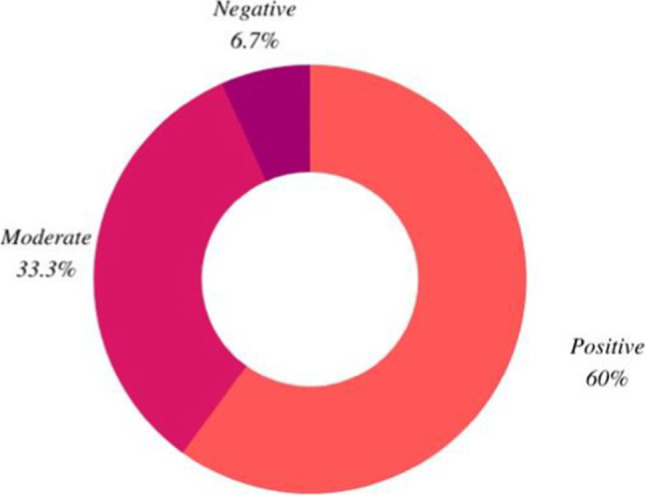
Overall stakeholder perceptions of the initial management of the Fagradalsfjall eruption
When the data from the remaining interview questions was analyzed, five themes emerged as issues to stakeholders: authority, responsibility, safety, access, and funding. Refer to Table 1. What became apparent was that respondents perceived that “safety” (of visitors to the site), “access” (to the site), and “funding” (for managing the site) lost clear direction and leadership once ICE-SAR and the civil defense began to be removed from the site as the original authority figures during the summer of 2021. There was uncertainty about the rangers that were being assigned to the site and by extension the federal government, to appropriately and effectively manage the site without continuing to require volunteer power from the ICE-SAR teams. There was wariness of the landowner’s plans to charge for infrastructure and vehicle access to the site. There was, however, the agreement that funding was necessary, but a lack of consensus on where that money was to come from and what should be given up in exchange for protecting nature and visitor safety.
Authority and responsibility
Figures acting with authority initially during the eruption were not perceived as being the best candidates to lead going forward. An example of this was the perception that ICE-SAR staff was the most responsible figure to respond to health and safety issues, but could not enforce any policies such as dealing with walking on the lava. “We don’t want to step into the role and responsibility of police… there’s this very small overlap between being a police officer and being in search and rescue,” said one civil defense stakeholder. In most of the respondent’s interviews, responsible tourism actions, including communication, enforceability, transparency, and accountability mechanisms, were not connected to authoritative figures who were seen as needing to lead in the future. Regarding the federal government stepping in to fill the authority gap, one stakeholder spoke about a history of mixed communication and a lack of transparent accountability mechanisms. Another mentioned that trust in authorities will only come from seeing that the restrictions put in place are actually enforced.
Discussing who they would like to see managing the site going forward, landowners, federal government representatives, and municipality representatives were all suggested by different stakeholders. None of these sectors had full unanimous support by all interviewed or were perceived to have the resources needed available to them. “So who is responsible now if something happens? I think that the individual himself must be responsible for their own risk. But do we really want that all over Iceland? I mean, do we want people just to be unsecured because we cannot decide on how we want to secure it?” said one municipal stakeholder. Commercial, municipal and civil defense stakeholders also suggested that a third-party specialist, should be in a position of authority to monitor the process, hold those in charge accountable, and communicate with the public in the interest of safety and transparency. A third-party site manager was also suggested as a way to prevent communication breakdowns between stakeholder groups, as there were issues around communication between groups that left municipal stakeholders out of the working group initially. The importance of the local municipal stakeholders being at the table by all stakeholders was captured in this quote “If the local people feel like they have something to say….they don’t have to sit at the table all the time, but you have to kind of make them involved in the decision making.”
The government was repeatedly mentioned by all the respondents as the entity that should create a plan for developing privately-owned land into a tourist destination and securing safety there, even by the landowners. “If you have a ranger who says the area is closed off, they might have a higher status than SAR. I’m pretty sure as soon as we see rangers there they’re going to assist SAR in terms of safety and security.” said one commercial stakeholder. All stakeholders asked for structure, a plan, a handbook, a precedent, and/or mechanism from the federal government to guide responsible actions in the future. One stakeholder posited “The government…needs to be leading there. The landowners of course have a choice of what they do and how, but I think that it would be really nice if [there was] some structure around it.”
Safety and access
Another issue that arose was the differing definition of what was sustainable and responsible when it came to developing infrastructure for safety and access to the emerging destination. From the perspective of all stakeholders, it was indisputable that the site should be professionally developed and managed in the name of safety. This aligns with past research in South Iceland by Bird et al. (2010) and Bird and Gísladóttir (2020). Media outlets in Iceland actively reported on instances of people walking on the fresh lava and posting this to their social media accounts as a means of communicating that this is extremely hazardous (Hafstað 2021). Beyond having a path, without barriers, signage, or active personnel attempting to stop people, it leaves decisions regarding personal safety to the individual tourists. It was noted by stakeholders that safety is seen as a legitimate reason to alter the natural landscape and incidental trails created by early visitors. Basic pathways, stairs, and viewing points as a means of guiding and limiting visitors’ exposure were acceptable to most stakeholders. However, interviewees were not confident of the success of, or not supportive of other measures that might limit the “right to roam” or almannaréttur, which is ingrained in Icelandic culture and law. “We can’t ban people walking on the new lava. But we advised them not to do it because we won’t do it, we are not going to rescue you if you fall through it” said one civil defense stakeholder. Stakeholders said it was regrettable that some visitors may choose to endanger themselves by walking on the lava but questioned whose place it was to intervene, and to what lengths. The Icelandic approach in the past has mostly been a guided individual responsibility that involves giving visitors the appropriate tools to make their own safety decisions, but no official rules (Saarinen 2021). This has typically been all that is needed for strong compliance around safety measures, especially during a time of the disaster, due in large part to the close-knit nature of Icelandic communities (Bird et al. 2010; Bird and Gísladóttir 2020). However, with the increase of tourists, this could change. “I mean, almannaréttur is pretty clear that you have the right to pass through the land, any land if you’re not doing anything illegal,” said one stakeholder. According to this research, however, most stakeholders seem willing to discuss if this may still be a sustainable approach at an active volcanic site. “If you expect almannaréttur you can’t expect to have the pathways or the restaurants or the toilets or whatever. And also, we can’t forget the safety you know. It isn’t almannaréttur just to do whatever you want to do regarding the hazard of it. I think that almannaréttur has to be in second place in areas like this.” This type of thought was brought up in some form by most stakeholders, mostly in reference to tourists ignoring safety protocols.
Significantly, to reduce the load on infrastructure and the need to develop the site further, all stakeholder groups had at least one respondent recommend limiting access to natural sites to preserve them, ensure services can be sustainably provided, and that developed infrastructure is appropriate and adequate for the flow of tourists. This takes a balance. Sustainable development sometimes requires constraints on human activities and commercial desires in order to balance the social, environmental, and economic goals of a destination (Knox-Hayes et al. 2020). An issue all the stakeholders want to address is overproduction and overconsumption at Fagradalsfjall. This fear led stakeholders to ask for more responsible or conscious ways to avoid the negative impacts they’ve seen at other sites. As one commercial stakeholder said, of natural sites in Iceland, “[We should] guard them like priceless trophy assets. If we are at risk of actually damaging these attractions, we should close them. We should close them and restrict access to them.”
The stakeholders interviewed pointed to the need to also understand the diverse needs and wants of the markets they develop infrastructure and services for, in order to ensure the infrastructure itself did not exert unnecessary impact on the environment and that it is designed to guide visitors’ decisions. One stakeholder pointed out “People just want a comfortable walking path where they can line up with a good selfie on their phone and then leave, so hiking around isn’t necessarily what people want to do and if they’re forced to do it then it’s just a waste of land that’s going to be destroyed.” Several stakeholders opposed overdeveloping the site to facilitate access at the risk of “Disneyfication” of the natural experience. They expressed concern that overdeveloped infrastructure risked attracting the type of visitors who would not consider fragile environments with the appropriate caution. Promotion of sites on social media and their subsequent popularity has in the past led to environmental damage (for example, the Fjaðrarágljúfur canyon), so it was thought that infrastructure needed to be designed to guide people’s decisions for safety once on site. There was agreement that not everything needed to be physically developed (tarmac roads and carparks, for instance) to suit ease and comfort across the whole site, but that funneling different tourist groups to different areas of the destination may ease the burden on the environment and provide safety and support for those that require it, irrespective of their physical capabilities, level of preparedness, or the information they may have collected previously. Stakeholders from the landowner group expressed an awareness of the implication of infrastructure in the natural environment. “[We are] …trying to construct sensibly for the travelers that are visiting the area… You want to make the area safe, but at the same time you don’t want to do something that would lessen the quality of the experience of visiting… and obviously not doing permanent damage as well.”
Funding
Unlike other countries such as the USA, which have a strong National Park infrastructure and public tax base, as well as a cultural acceptance for fees charged by state and local governments to tourists to visit volcanic sites (US National Park Service 2022), there was confusion and various suggestions on who is responsible for getting and spending funding on infrastructure at an emergent volcanic tourist site like Fagradalsfjall in Iceland. “On an active volcano, for landowners to put in 20–30 million ISK for a pathway that could go [under] lava in just 1 month. That doesn’t seem too good of an investment. So I would think the government is the perfect party to bear that risk.” However, it was mentioned by a number of stakeholders that “maybe the government doesn’t have enough of a budget to build up as much infrastructure, but then [there is] an income stream at the volcano [from parking fees] that is directed towards the land owners,” implying a connection between assuming responsibility for, or entitlement to, the proceeds from an income stream, and the resultant obligation private owners have to direct a portion of those funds to necessary construction and upkeep.
In the past, prior to the demand and necessity created by mass tourism, experiencing nature in Iceland was mostly free. However, stakeholders discussed the fact that “We always think here in Iceland that people will not do this if we charge for it, they will not do that, but the same Icelanders are going abroad and to the USA and they pay to go into the national parks… Everybody thinks that’s just a fine situation actually, but…Iceland has never tried that.” This perception sums up one of the dilemmas outlined by a number of the stakeholders in terms of funding natural sites for visitors. Many interviewed perceived charging fees as acceptable, achievable, and a sustainable response to the issue of tourists at emergent sites, even if it clashed with the high value placed on almannaréttur. They believed that people’s values and willingness to pay are aligned with their perception that the eruption unquestionably provides an economic opportunity and is a major safety responsibility. Stakeholders also generally agreed that in high-traffic areas there was a need to establish minimum sustainable infrastructure to support the growth of the site, funded by a non-governmental source of income, i.e., fees and charges. Charging fees have become more acceptable at sites like this now than it has been in the past, with the caveat that the income is necessarily directed in part to the continual upkeep of the site.
In the Fagradalsfjall study, there was a strong feeling from most stakeholders that fees however should only be charged in exchange for direct services at the site. The preferred approach would be a mechanism developed by the government that private landowners and companies would be required to follow. This leads back to a point of tension found in the data, which is the apparent lack of structure or planning around funding the maintenance of Fagradalsfjall, as well as other Icelandic nature tourism sites. “We need the structure around it. And we need some…clarity on what can we [charge for] because people are paying everywhere [else, but] of course we don’t want the government just to come and decide everything” said one stakeholder. A number of stakeholders mentioned that it is accepted by citizens in the USA that they will pay taxes to support natural sites and tourists to the USA that they will pay a fee to the US government to visit natural sites including volcanos. This allows a high level of management to occur, which benefits the experience. Determining who should and can charge fees and who should and can be responsible for the maintenance of a natural site in Iceland is still something that needs to be addressed. One landowner stakeholder questioned the uncertain connection between accepting payment, resultant obligation, and potential liability: “[What is] the obligation that comes with charging for parking or charging for toilets? It’s very uncertain. What then is the liability for landowners?” Most stakeholders suggested fees could be used to regulate visitor flow. “So maybe these fees will hopefully create some form of scheduling system in the future, which would make the customers experience much better, but obviously be safer, as well as less people…causing congestion and issues with overcrowding.” Overall, all the stakeholders felt that “there’s no precedent. I mean, we don’t have a handbook” that guides how the funding of these sites should proceed. This is another reason to involve stakeholders in the conversation around the process of developing an approach for emergent natural sites. By understanding their perceptions of the process, suggested funding solutions will likely have a better chance of being sustainably supported. See Table 2 for the summary of issues identified by stakeholders.
Table 2.
Summary of stakeholder issues identified from Fagradalsfjall interview data
| Authority | Responsibility | Safety | Access | Funding |
|---|---|---|---|---|
| A perceived lack of active, cohesive leadership on site | A lack of on-site responsibility for ensuring visitor preparedness | Hiring of staff to maintain the safety of a site was commercially viable and acceptable | Limiting the number of tourists might lead to a safer environment, and less physical impact on the nature | Fees needed to be charged in order to raise income for infrastructure, not to disproportionately benefit private actors |
| Authority can only be maintained if actions taken are respected by society | Private companies should be held responsible for the actions of their clients and the impact of their profiting off natural resources | More signage required to direct people in lieu of personnel or language | That almannaréttur, a social value, would continue to be sacrificed for economic benefit or the physical preservation of nature | More transparency or effective communication around expenses would help alleviate distrust regarding income derived from natural attractions |
| Restrictions and regulations need to be imposed with evidence, and by authorities that people trust | The quality of life for local residents with the increased tourism, and the threat of losing key services such as road access, water, electricity, and internet due to the lava flow | The concern with safety for all visitors impeded on the right of access for some | The natural landscape and infrastructure would be overdeveloped to suit the widest possible visitor demographic | |
| Stakeholders and institutions in power need to be held accountable for their actions | More active and comprehensive transfer of information between institutions, actors, and similar activities | The promotion of the site on social media might normalize risky behaviors so infrastructure and personnel need to guide responsible behavior | Too much infrastructure might lead tourists into a false sense of security and attract visitors who disregard safety boundaries or limits set for environmental benefit | |
| The limits of control mechanisms like restricting access and charging for entry need to be regularly examined to determine their effectiveness | There were still environmental hazards that required attention |
Future research
The current case study research was exploratory in nature, focusing on gaining information on tourism stakeholders’ perceptions of the development of an active volcano into a tourist destination in order to inform on the issues that need to be addressed as the process moves forward. Further research that can build on this might include representation from scientists as a separate group, which might lead to a deeper assessment of the lack of connection between concepts of “authority” and “responsible practice” which seems to be a consistent pattern in the interviews. It could be explored in the future whether this disconnect is a signal of general distrust in the government’s ability to effectively manage sites or to do with the development process of Fagradalsfjall in particular. Annual studies of stakeholder perceptions would also be valuable as the situation with an active volcano rapidly changes. Fagradalsfjall has already briefly erupted again after this research was completed and issues of safety and responsibility will have accordingly shifted with the renewed threat of a subsequent eruptions in which the nearby town of Grindavík and popular tourist destination The Blue Lagoon are especially threatened. Finally, in order to scale this research, it would be valuable to collect quantitative data on the management process, such as through a survey, from a wider range and number of stakeholders.
Conclusion
Research into the development of Fagradalsfjall into a tourism destination due to the volcanic eruptions that took place there in the spring and summer of 2021 shows that the inclusion of the emergency response and civil defense in the initial management of the site was critical due in part by the large amounts of visitors that flocked to the site as soon as the eruptions started. Stakeholders all had relatively positive perceptions of the initial management of Fagradalsfjall under ICE-SAR. This aligns with past research in south Iceland during previous volcanic eruptions indicating respect and trust for local public safety officials (Bird and Gísladóttir 2018, 2020). However, according to interviews completed with 16 non-scientist stakeholders managing Fagradalsfjall in the summer 2021, there are issues and points of confusion on who is responsible for aspects of development going forward starting in the fall of 2021, including the funding of the site and a general distrust surrounding government authority. This research shines a light on the issues deemed important by stakeholders around concepts of authority, access, responsibility, safety, and funding in the ongoing management of the site. It also shows the correctness of past warnings that with increased tourists there likely will be decreased compliance with public safety measures (Bird and Gísladóttir 2020). It indicates that in order to transform Fagradalsfjall into a sustainable and responsibly managed attraction there needs to be measures and infrastructure that take better responsibility for tourist safety within the confines of Iceland’s “right to roam,” rather than letting them make their own safety decisions; a limitation of visitors on site to mitigate the impact on the environment; more enforcement of policy from those in positions of authority; a system and structure in place from the federal government surrounding taxes and fees paid to access natural attractions in line with other countries managing volcanic tourist destinations; and continued cooperation and communication between stakeholders involved in or affected by the development. The common goal heard from stakeholders transcending these issues is prioritizing preserving the natural environment at the Fagradalsfjall volcanic area so that future residents and travelers can enjoy it safely. This research provides support for the concept of making sure various stakeholders are continuously engaged in the management process and their perceptions are addressed and discussed. This approach can provide information that will help reach management goals in a more sustainable and responsible way.
Footnotes
This paper constitutes part of a topical collection: Low intensity basalt eruptions: the 2021 Geldingadalir and 2022 Meradalir eruptions of the Fagradalsfjall Fires, SW Iceland.
Contributor Information
Stephanie Langridge, Email: Stephanie.langridge@ru.is.
Tracy Michaud, Email: Tracy.michaud@maine.edu.
References
- Bernharðsdóttir B (2021) Kostnaður ríkisins við uppbyggingu kringum Fagradalsfjall um 40 milljónir. Vísir. https://www.visir.is/g/20212105516d/kostnadur-rikisins-vid-uppbyggingu-kringum-fagradalsfjall-um-40-milljonir. Accessed 5 May 2021
- Bird DK, Gísladóttir G (2018) Responding to volcanic eruptions in Iceland: from the small to the catastrophic. Palgrave Communi 4(1):151. https://www.nature.com/articles/s41599-018-0205-6
- Bird DK, Gísladóttir G. Enhancing tourists’ safety in volcanic areas: an investigation of risk communication initiatives in Iceland. Int J Disaster Risk Reduct. 2020;50:101896. doi: 10.1016/j.ijdrr.2020.101896. [DOI] [Google Scholar]
- Bird DK, Gisladotti G, Dominey-Howes D. Volcanic risk and tourism in southern Iceland: implications for hazard, risk and emergency response education and training. J Volcanol Geoth Res. 2010;189(1–2):33–48. doi: 10.1016/j.jvolgeores.2009.09.020. [DOI] [Google Scholar]
- Buckley R. Correspondence: an ecological perspective on carrying capacity. Ann Tour Res. 1999;26(3):705–708. doi: 10.1016/S0160-7383(99)00011-0. [DOI] [Google Scholar]
- Cook D, Davíðsdóttir B, Kristófersson D. Willingness to pay for the preservation of geothermal areas in Iceland – the contingent valuation studies of Eldvörp and Hverahlíð. Renew Energy. 2018;116:97–108. doi: 10.1016/j.renene.2017.09.072. [DOI] [Google Scholar]
- Cook D, Eiríksdóttir K, Davíðsdóttir B, Kristófersson D. The contingent valuation study of Heiðmörk, Iceland – willingness to pay for its preservation. J Environ Manag. 2018;209:126–138. doi: 10.1016/j.jenvman.2017.12.045. [DOI] [PubMed] [Google Scholar]
- Einarsdóttir S, Cook D, Davíðsdóttir B. The contingent valuation study of the wind farm Búrfellslundur - Willingness to pay for preservation. J Clean Prod. 2019;209:795–802. doi: 10.1016/j.jclepro.2018.10.156. [DOI] [Google Scholar]
- Ferðaþjónustunnar (2021b) Gosslóð. Mælaborð ferðaþjónustunnar. Retrieved 10 August, 2021, from https://www.maelabordferdathjonustunnar.is/is/gosslod-geldingadalir?fbclid=IwAR3gTpb8dmKl7hrlOrExQJ8kT-X4tg7NpnUEpp2lVUP1h8n292LTe6wGAHk
- Fontaine A (2020) From Iceland — controversy surrounding proposed Highlands National Park. The Reykjavik Grapevine. https://grapevine.is/news/2020/12/11/controversy-surrounding-proposed-highlands-national-park/. Accessed 11 December
- Goodwin H. Responsible tourism: using tourism for sustainable development. 2. Oxford: Goodfellow Publishers Limited; 2016. [Google Scholar]
- Gunnarsdóttir G, Matthíasdóttir J. Social sustainability of tourism in Iceland: a qualitative inquiry. Scand J Hosp Tour. 2019;19(4–5):404–421. doi: 10.1080/15022250.2019.1696699. [DOI] [Google Scholar]
- Hafstað V (2021) Keep off the lava: rescue impossible: video. Iceland Monitor. https://icelandmonitor.mbl.is/news/nature_and_travel/2021/06/22/keep_off_the_lava_rescue_impossible_video/. Accessed 22 June 2021
- Haraldsson E (2016) Frumvarp í Pattstöðu. Hvað varð til þess að frumvarp um náttúrupassa hlaut ekki brautargengi? Bachelor’s thesis, University of Iceland. http://hdl.handle.net/1946/25962. Accessed 12 Dec 2020
- Hardy A, Pearson L. Examining stakeholder group specificity: an innovative sustainable tourism approach. J Destin Mark Manag. 2018;8:247–258. doi: 10.1016/j.jdmm.2017.05.001. [DOI] [Google Scholar]
- Haynes K, Barclay J, Pidgeon N. The issue of trust and its influence on risk communication during a volcanic crisis. Bull Volcanol. 2008;70:605–621. doi: 10.1007/s00445-007-0156-z. [DOI] [Google Scholar]
- Helgadóttir G, Einarsdóttir A, Burns G, Gunnarsdóttir G, Matthíasdóttir J. Social sustainability of tourism in Iceland: a qualitative inquiry. Scand J Hosp Tour. 2019;19(4–5):404–421. doi: 10.1080/15022250.2019.1696699. [DOI] [Google Scholar]
- Kepnes M (2021) Overtourism: how you can help solve this global travel problem. Nomadic Matt’s Travel Site. https://www.nomadicmatt.com/travel-blogs/overtourism-solutions/. Accessed 30 May 2021
- Knox-Hayes J, Chandra S, Chun J (2020) The role of values in shaping sustainable development perspectives and outcomes: a case study of Iceland. Sustain Dev 29(2):1–15. 10.1002/sd.2152
- Kristjánsdóttir K, Ólafsdóttir R, Ragnarsdóttir K. Reviewing integrated sustainability indicators for tourism. J Sustain Tour. 2017;26(4):583–599. doi: 10.1080/09669582.2017.1364741. [DOI] [Google Scholar]
- Malinauskaite L, Cook D, Davíðsdóttir B, Ögmundardóttir H, Roman J (2020) Willingness to pay for expansion of the whale sanctuary in Faxaflói Bay, Iceland: a contingent valuation study. Ocean Coastal Manag 183. 10.1016/j.ocecoaman.2019.105026
- Maurer A (2021) Eruption might end soon as volcanic activity subsides. Reykjavík Grapevine. https://grapevine.is/news/2021/06/29/eruption-might-end-soon-as-volcanic-activity-subsides/. Accessed 10 July 2021
- McMinn S. The challenge of sustainable tourism. Environmentalist. 1997;17(2):135–141. doi: 10.1023/a:1018504117490. [DOI] [Google Scholar]
- Merriam S, Tisdell E (2015) Qualitative research: a guide to design and implementation. John Wiley & Sons. https://heimkaup.vitalsource.com/books/9781119003601. Accessed 3 Apr 2020
- Morgunblaðið (2021) Hálendisþjóðgarði formlega vísað til ríkisstjórnar. https://www.mbl.is/frettir/innlent/2021/06/12/halendisthjodgardi_formlega_visad_fra/. Accessed 12 June 2021
- Ólafsdóttir R, Sæþórsdóttir A, Noordhuizen J, Nijkrake W. Sustainable leisure landscapes in Icelandic rural communities: a multidisciplinary approach. J Manag Sustain. 2018;8(4):54. doi: 10.5539/jms.v8n4p54. [DOI] [Google Scholar]
- Ólafsson S (2014) Íslensk náttúra í fyrsta sætið - Til að höggva á gjaldtökuhnútinn leggja SAF til náttúrugjald sem innheimt er af gistinóttum. Morgunblaðið. Retrieved August 2, 2021, from https://www.mbl.is/media/93/8393.pdf. Accessed 27 November 2021
- Pearson J (2021) Picture story: guardians of the Geldingadalsgos. The Reykjavik Grapevine. https://grapevine.is/mag/mag-featured/2021/06/08/picture-story-guardians-of-the-geldingadalsgos/. Accessed 20 December 2022
- Pomrenke E (2021) From Iceland — joining rest of nation, volcano goes on vacation. The Reykjavik Grapevine. https://grapevine.is/news/2021/07/23/joining-rest-of-nation-volcano-goes-on-vacation/. Accessed 23 July 2021
- Reynisdottir A, Song H, Agrusa J. Willingness to pay entrance fees to natural attractions: an Icelandic case study. Tour Manage. 2008;29(6):1076–1083. doi: 10.1016/j.tourman.2008.02.016. [DOI] [Google Scholar]
- Saarinen J. Is being responsible sustainable in tourism? Connections and critical differences. Sustainability. 2021;13(12):65–99. doi: 10.3390/su13126599. [DOI] [Google Scholar]
- Sæmundsson, K, Sigurgeursson, A, Friðleifsson, G (2020) Geology and structure of the Reykjanes volcanic system, Iceland. J Volcanol Geotherm Res 391. 10.1016/j.volgeores.2018.11.022
- Sævarsson, SB (2021). Gengið að nornapotti. Morgunblaðið. https://www.mbl.is/frettir/innlent/2021/08/28/gengid_ad_nornapotti/. Accessed 29 Aug 2021
- Sæþórsdóttir A (2014) Preserving wilderness at an emerging tourist destination. J Manag Sustain 4(3):65–78. 10.5539/jms.v4n3p65
- Sæþórsdóttir A, Hall C, Wendt M. Overtourism in Iceland: fantasy or reality? Sustainability. 2020;12(18):7375. doi: 10.3390/su12187375. [DOI] [Google Scholar]
- Strahan K, Whittaker J, Handmer J. Self-evacuation archetypes in Australian bushfire. Int J Disaster Risk Reduct. 2018;27:307–316. doi: 10.1016/j.ijdrr.2017.10.016. [DOI] [Google Scholar]
- Tyrie O (2021a) No indication that the eruption will stop any time soon. The Reykjavík Grapevine. https://grapevine.is/news/2021/05/10/no-indication-that-the-eruption-will-stop-any-time-soon/. Accessed 11 May 2021
- Tyrie O (2021b) Proposal submitted to make developments at the eruption site. The Reykjavík Grapevine. https://grapevine.is/news/2021/05/05/proposal-submitted-to-make-developments-at-the-eruption-site/. Accessed 05 May 2022
- United Nations Environment Programme and World Tourism Organization (2005) Making tourism more sustainable: A guide for policy makers. World Tourism Organization Publications. https://wedocs.unep.org/handle/20.500.11822/8741;jsessionid=D86AF6FA19D5F1CB5CC743B30FE25206. Accessed 22 Feb 2021
- U.S. National Park Service (2022) Tourism to Hawai‘i Volcanoes National Park creates $124,937,400 in economic benefit - Hawaiʻi Volcanoes National Park. https://www.nps.gov/havo/learn/news/economy.htm. Accessed 07 November 2022
- Yeoman A, Reigner N, Árnason (2019) Þolmarkagreining fyrir Silfru: köfun og yfirborðsköfun í Þingvallaþjóðgarði (1). Efla. https://www.mbl.is/media/36/11136.pdf. Accessed 02 July 2021
- Þórhallsdóttir G, Ólafsson R. A method to analyze seasonality in the distribution of tourists in Iceland. J Outdoor Recreat Tour. 2017;19:17–24. doi: 10.1016/j.jort.2017.05.001. [DOI] [Google Scholar]