



Abstract
A 32 kDa protein isolated from human mononuclear cells is a member of the lipocortin family, a new group of Ca2+-dependent lipid-binding proteins thought to be involved in the regulation of phospholipase A2, in exocytosis and in membrane-cytoskeleton interactions. Purification of this protein was based on its ability to associate with membrane phospholipids in a Ca2+-dependent manner and its capacity to inhibit purified phospholipase A2 from pig pancreas. Using immunological detection, we show that it is present in various cells involved in the inflammatory and coagulation processes. We present extensive amino acid data that strongly suggest that this protein is identical with a recently described inhibitor of blood coagulation, with endonexin II and with lipocortin V. Sequence alignment with other known proteins show a significant degree of homology with lipocortins I and II, the substrates of the epidermal-growth-factor receptor tyrosine kinase and the oncogene pp60src tyrosine kinase respectively, and with protein II. The possible physiological role of this 32 kDa lipocortin is discussed.
Full text
PDF


Images in this article

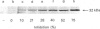
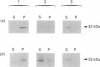
Selected References
These references are in PubMed. This may not be the complete list of references from this article.
- Aarsman A. J., Mynbeek G., van den Bosch H., Rothhut B., Prieur B., Comera C., Jordan L., Russo-Marie F. Lipocortin inhibition of extracellular and intracellular phospholipases A2 is substrate concentration dependent. FEBS Lett. 1987 Jul 13;219(1):176–180. doi: 10.1016/0014-5793(87)81212-7. [DOI] [PubMed] [Google Scholar]
- Blackwell G. J., Carnuccio R., Di Rosa M., Flower R. J., Parente L., Persico P. Macrocortin: a polypeptide causing the anti-phospholipase effect of glucocorticoids. Nature. 1980 Sep 11;287(5778):147–149. doi: 10.1038/287147a0. [DOI] [PubMed] [Google Scholar]
- Brugge J. S. The p35/p36 substrates of protein-tyrosine kinases as inhibitors of phospholipase A2. Cell. 1986 Jul 18;46(2):149–150. doi: 10.1016/0092-8674(86)90729-4. [DOI] [PubMed] [Google Scholar]
- Chap H., Comfurius P., Bevers E. M., Fauvel J., Vicendo P., Douste-Blazy L., Zwaal R. F. Potential anticoagulant activity of lipocortins and other calcium/phospholipid binding proteins. Biochem Biophys Res Commun. 1988 Feb 15;150(3):972–978. doi: 10.1016/0006-291x(88)90724-3. [DOI] [PubMed] [Google Scholar]
- Cloix J. F., Colard O., Rothhut B., Russo-Marie F. Characterization and partial purification of 'renocortins': two polypeptides formed in renal cells causing the anti-phospholipase-like action of glucocorticoids. Br J Pharmacol. 1983 May;79(1):313–321. doi: 10.1111/j.1476-5381.1983.tb10526.x. [DOI] [PMC free article] [PubMed] [Google Scholar]
- Cooper J. A., Hunter T. Regulation of cell growth and transformation by tyrosine-specific protein kinases: the search for important cellular substrate proteins. Curr Top Microbiol Immunol. 1983;107:125–161. doi: 10.1007/978-3-642-69075-4_4. [DOI] [PubMed] [Google Scholar]
- Creutz C. E., Pazoles C. J., Pollard H. B. Identification and purification of an adrenal medullary protein (synexin) that causes calcium-dependent aggregation of isolated chromaffin granules. J Biol Chem. 1978 Apr 25;253(8):2858–2866. [PubMed] [Google Scholar]
- Creutz C. E. Secretory vesicle - cytosol interactions in exocytosis: isolation by Ca2+-dependent affinity chromatography of proteins that bind to the chromaffin granule membrane. Biochem Biophys Res Commun. 1981 Dec 31;103(4):1395–1400. doi: 10.1016/0006-291x(81)90278-3. [DOI] [PubMed] [Google Scholar]
- Crompton M. R., Owens R. J., Totty N. F., Moss S. E., Waterfield M. D., Crumpton M. J. Primary structure of the human, membrane-associated Ca2+-binding protein p68 a novel member of a protein family. EMBO J. 1988 Jan;7(1):21–27. doi: 10.1002/j.1460-2075.1988.tb02779.x. [DOI] [PMC free article] [PubMed] [Google Scholar]
- Davidson F. F., Dennis E. A., Powell M., Glenney J. R., Jr Inhibition of phospholipase A2 by "lipocortins" and calpactins. An effect of binding to substrate phospholipids. J Biol Chem. 1987 Feb 5;262(4):1698–1705. [PubMed] [Google Scholar]
- Erikson E., Erikson R. L. Identification of a cellular protein substrate phosphorylated by the avian sarcoma virus-transforming gene product. Cell. 1980 Oct;21(3):829–836. doi: 10.1016/0092-8674(80)90446-8. [DOI] [PubMed] [Google Scholar]
- Errasfa M., Rothhut B., Fradin A., Billardon C., Junien J. L., Bure J., Russo-Marie F. The presence of lipocortin in human embryonic skin fibroblasts and its regulation by anti-inflammatory steroids. Biochim Biophys Acta. 1985 Nov 20;847(2):247–254. doi: 10.1016/0167-4889(85)90027-8. [DOI] [PubMed] [Google Scholar]
- Fava R. A., Cohen S. Isolation of a calcium-dependent 35-kilodalton substrate for the epidermal growth factor receptor/kinase from A-431 cells. J Biol Chem. 1984 Feb 25;259(4):2636–2645. [PubMed] [Google Scholar]
- Funakoshi T., Heimark R. L., Hendrickson L. E., McMullen B. A., Fujikawa K. Human placental anticoagulant protein: isolation and characterization. Biochemistry. 1987 Aug 25;26(17):5572–5578. doi: 10.1021/bi00391a053. [DOI] [PubMed] [Google Scholar]
- Funakoshi T., Hendrickson L. E., McMullen B. A., Fujikawa K. Primary structure of human placental anticoagulant protein. Biochemistry. 1987 Dec 15;26(25):8087–8092. doi: 10.1021/bi00399a011. [DOI] [PubMed] [Google Scholar]
- Geisow M. J. Common domain structure of Ca2+ and lipid-binding proteins. FEBS Lett. 1986 Jul 14;203(1):99–103. doi: 10.1016/0014-5793(86)81445-4. [DOI] [PubMed] [Google Scholar]
- Geisow M. J., Fritsche U., Hexham J. M., Dash B., Johnson T. A consensus amino-acid sequence repeat in Torpedo and mammalian Ca2+-dependent membrane-binding proteins. Nature. 1986 Apr 17;320(6063):636–638. doi: 10.1038/320636a0. [DOI] [PubMed] [Google Scholar]
- Geisow M. J., Walker J. H., Boustead C., Taylor W. Annexins--new family of Ca2+-regulated-phospholipid binding protein. Biosci Rep. 1987 Apr;7(4):289–298. doi: 10.1007/BF01121450. [DOI] [PubMed] [Google Scholar]
- Gerke V., Weber K. Identity of p36K phosphorylated upon Rous sarcoma virus transformation with a protein purified from brush borders; calcium-dependent binding to non-erythroid spectrin and F-actin. EMBO J. 1984 Jan;3(1):227–233. doi: 10.1002/j.1460-2075.1984.tb01789.x. [DOI] [PMC free article] [PubMed] [Google Scholar]
- Glenney J. Two related but distinct forms of the Mr 36,000 tyrosine kinase substrate (calpactin) that interact with phospholipid and actin in a Ca2+-dependent manner. Proc Natl Acad Sci U S A. 1986 Jun;83(12):4258–4262. doi: 10.1073/pnas.83.12.4258. [DOI] [PMC free article] [PubMed] [Google Scholar]
- Gould K. L., Woodgett J. R., Isacke C. M., Hunter T. The protein-tyrosine kinase substrate p36 is also a substrate for protein kinase C in vitro and in vivo. Mol Cell Biol. 1986 Jul;6(7):2738–2744. doi: 10.1128/mcb.6.7.2738. [DOI] [PMC free article] [PubMed] [Google Scholar]
- Gupta C., Katsumata M., Goldman A. S., Herold R., Piddington R. Glucocorticoid-induced phospholipase A2-inhibitory proteins mediate glucocorticoid teratogenicity in vitro. Proc Natl Acad Sci U S A. 1984 Feb;81(4):1140–1143. doi: 10.1073/pnas.81.4.1140. [DOI] [PMC free article] [PubMed] [Google Scholar]
- Haigler H. T., Fitch J. M., Jones J. M., Schlaepfer D. D. Two lipocortin-like proteins, endonexin II and anchorin CII, may be alternate splices of the same gene. Trends Biochem Sci. 1989 Feb;14(2):48–50. doi: 10.1016/0968-0004(89)90041-8. [DOI] [PubMed] [Google Scholar]
- Haigler H. T., Schlaepfer D. D., Burgess W. H. Characterization of lipocortin I and an immunologically unrelated 33-kDa protein as epidermal growth factor receptor/kinase substrates and phospholipase A2 inhibitors. J Biol Chem. 1987 May 15;262(14):6921–6930. [PubMed] [Google Scholar]
- Heimark R. L., Schwartz S. M. Binding of coagulation factors IX and X to the endothelial cell surface. Biochem Biophys Res Commun. 1983 Mar 16;111(2):723–731. doi: 10.1016/0006-291x(83)90365-0. [DOI] [PubMed] [Google Scholar]
- Hirata F., Matsuda K., Notsu Y., Hattori T., del Carmine R. Phosphorylation at a tyrosine residue of lipomodulin in mitogen-stimulated murine thymocytes. Proc Natl Acad Sci U S A. 1984 Aug;81(15):4717–4721. doi: 10.1073/pnas.81.15.4717. [DOI] [PMC free article] [PubMed] [Google Scholar]
- Hirata F., Notsu Y., Iwata M., Parente L., DiRosa M., Flower R. J. Identification of several species of phospholipase inhibitory protein(s) by radioimmunoassay for lipomodulin. Biochem Biophys Res Commun. 1982 Nov 16;109(1):223–230. doi: 10.1016/0006-291x(82)91588-1. [DOI] [PubMed] [Google Scholar]
- Hirata F., Schiffmann E., Venkatasubramanian K., Salomon D., Axelrod J. A phospholipase A2 inhibitory protein in rabbit neutrophils induced by glucocorticoids. Proc Natl Acad Sci U S A. 1980 May;77(5):2533–2536. doi: 10.1073/pnas.77.5.2533. [DOI] [PMC free article] [PubMed] [Google Scholar]
- Huang K. S., Wallner B. P., Mattaliano R. J., Tizard R., Burne C., Frey A., Hession C., McGray P., Sinclair L. K., Chow E. P. Two human 35 kd inhibitors of phospholipase A2 are related to substrates of pp60v-src and of the epidermal growth factor receptor/kinase. Cell. 1986 Jul 18;46(2):191–199. doi: 10.1016/0092-8674(86)90736-1. [DOI] [PubMed] [Google Scholar]
- Isacke C. M., Trowbridge I. S., Hunter T. Modulation of p36 phosphorylation in human cells: studies using anti-p36 monoclonal antibodies. Mol Cell Biol. 1986 Jul;6(7):2745–2751. doi: 10.1128/mcb.6.7.2745. [DOI] [PMC free article] [PubMed] [Google Scholar]
- Iwasaki A., Suda M., Nakao H., Nagoya T., Saino Y., Arai K., Mizoguchi T., Sato F., Yoshizaki H., Hirata M. Structure and expression of cDNA for an inhibitor of blood coagulation isolated from human placenta: a new lipocortin-like protein. J Biochem. 1987 Nov;102(5):1261–1273. doi: 10.1093/oxfordjournals.jbchem.a122165. [DOI] [PubMed] [Google Scholar]
- Khanna N. C., Tokuda M., Waisman D. M. Phosphorylation of lipocortins in vitro by protein kinase C. Biochem Biophys Res Commun. 1986 Dec 15;141(2):547–554. doi: 10.1016/s0006-291x(86)80208-x. [DOI] [PubMed] [Google Scholar]
- Kondo S., Noguchi M., Funakoshi T., Fujikawa K., Kisiel W. Inhibition of human factor VIIa-tissue factor activity by placental anticoagulant protein. Thromb Res. 1987 Nov 15;48(4):449–459. doi: 10.1016/0049-3848(87)90402-6. [DOI] [PubMed] [Google Scholar]
- Kristensen T., Saris C. J., Hunter T., Hicks L. J., Noonan D. J., Glenney J. R., Jr, Tack B. F. Primary structure of bovine calpactin I heavy chain (p36), a major cellular substrate for retroviral protein-tyrosine kinases: homology with the human phospholipase A2 inhibitor lipocortin. Biochemistry. 1986 Aug 12;25(16):4497–4503. doi: 10.1021/bi00364a007. [DOI] [PubMed] [Google Scholar]
- Moore P. B., Dedman J. R. Calcium-dependent protein binding to phenothiazine columns. J Biol Chem. 1982 Aug 25;257(16):9663–9667. [PubMed] [Google Scholar]
- Owens R. J., Gallagher C. J., Crumpton M. J. Cellular distribution of p68, a new calcium-binding protein from lymphocytes. EMBO J. 1984 May;3(5):945–952. doi: 10.1002/j.1460-2075.1984.tb01912.x. [DOI] [PMC free article] [PubMed] [Google Scholar]
- Pepinsky R. B., Sinclair L. K., Browning J. L., Mattaliano R. J., Smart J. E., Chow E. P., Falbel T., Ribolini A., Garwin J. L., Wallner B. P. Purification and partial sequence analysis of a 37-kDa protein that inhibits phospholipase A2 activity from rat peritoneal exudates. J Biol Chem. 1986 Mar 25;261(9):4239–4246. [PubMed] [Google Scholar]
- Pepinsky R. B., Tizard R., Mattaliano R. J., Sinclair L. K., Miller G. T., Browning J. L., Chow E. P., Burne C., Huang K. S., Pratt D. Five distinct calcium and phospholipid binding proteins share homology with lipocortin I. J Biol Chem. 1988 Aug 5;263(22):10799–10811. [PubMed] [Google Scholar]
- Pollard H. B., Scott J. H. Synhibin: a new calcium-dependent membrane-binding protein that inhibits synexin-induced chromaffin granule aggregation and fusion. FEBS Lett. 1982 Dec 13;150(1):201–206. doi: 10.1016/0014-5793(82)81334-3. [DOI] [PubMed] [Google Scholar]
- Powell M. A., Glenney J. R. Regulation of calpactin I phospholipid binding by calpactin I light-chain binding and phosphorylation by p60v-src. Biochem J. 1987 Oct 15;247(2):321–328. doi: 10.1042/bj2470321. [DOI] [PMC free article] [PubMed] [Google Scholar]
- Radke K., Martin G. S. Transformation by Rous sarcoma virus: effects of src gene expression on the synthesis and phosphorylation of cellular polypeptides. Proc Natl Acad Sci U S A. 1979 Oct;76(10):5212–5216. doi: 10.1073/pnas.76.10.5212. [DOI] [PMC free article] [PubMed] [Google Scholar]
- Rothhut B., Comera C., Prieur B., Errasfa M., Minassian G., Russo-Marie F. Purification and characterization of a 32-kDa phospholipase A2 inhibitory protein (lipocortin) from human peripheral blood mononuclear cells. FEBS Lett. 1987 Jul 13;219(1):169–175. doi: 10.1016/0014-5793(87)81211-5. [DOI] [PubMed] [Google Scholar]
- Rothhut B., Russo-Marie F., Wood J., DiRosa M., Flower R. J. Further characterization of the glucocorticoid-induced antiphospholipase protein "renocortin". Biochem Biophys Res Commun. 1983 Dec 28;117(3):878–884. doi: 10.1016/0006-291x(83)91678-9. [DOI] [PubMed] [Google Scholar]
- Saris C. J., Tack B. F., Kristensen T., Glenney J. R., Jr, Hunter T. The cDNA sequence for the protein-tyrosine kinase substrate p36 (calpactin I heavy chain) reveals a multidomain protein with internal repeats. Cell. 1986 Jul 18;46(2):201–212. doi: 10.1016/0092-8674(86)90737-3. [DOI] [PubMed] [Google Scholar]
- Schlaepfer D. D., Mehlman T., Burgess W. H., Haigler H. T. Structural and functional characterization of endonexin II, a calcium- and phospholipid-binding protein. Proc Natl Acad Sci U S A. 1987 Sep;84(17):6078–6082. doi: 10.1073/pnas.84.17.6078. [DOI] [PMC free article] [PubMed] [Google Scholar]
- Sheets E. E., Giugni T. D., Coates G. G., Schlaepfer D. D., Haigler H. T. Epidermal growth factor dependent phosphorylation of a 35-kilodalton protein in placental membranes. Biochemistry. 1987 Feb 24;26(4):1164–1172. doi: 10.1021/bi00378a026. [DOI] [PubMed] [Google Scholar]
- Sigel M. B., Sinha Y. N., VanderLaan W. P. Production of antibodies by inoculation into lymph nodes. Methods Enzymol. 1983;93:3–12. doi: 10.1016/s0076-6879(83)93031-8. [DOI] [PubMed] [Google Scholar]
- Simon M. M., Prester M., Kramer M. D., Fruth U. An inhibitor specific for the mouse T-cell associated serine proteinase 1 (TSP-1) inhibits the cytolytic potential of cytoplasmic granules but not of intact cytolytic T cells. J Cell Biochem. 1989 May;40(1):1–13. doi: 10.1002/jcb.240400102. [DOI] [PubMed] [Google Scholar]
- Stern D. M., Drillings M., Nossel H. L., Hurlet-Jensen A., LaGamma K. S., Owen J. Binding of factors IX and IXa to cultured vascular endothelial cells. Proc Natl Acad Sci U S A. 1983 Jul;80(13):4119–4123. doi: 10.1073/pnas.80.13.4119. [DOI] [PMC free article] [PubMed] [Google Scholar]
- Südhof T. C., Ebbecke M., Walker J. H., Fritsche U., Boustead C. Isolation of mammalian calelectrins: a new class of ubiquitous Ca2+-regulated proteins. Biochemistry. 1984 Mar 13;23(6):1103–1109. doi: 10.1021/bi00301a010. [DOI] [PubMed] [Google Scholar]
- Thiagarajan P., Shapiro S. S., De Marco L. Monoclonal immunoglobulin M lambda coagulation inhibitor with phospholipid specificity. Mechanism of a lupus anticoagulant. J Clin Invest. 1980 Sep;66(3):397–405. doi: 10.1172/JCI109869. [DOI] [PMC free article] [PubMed] [Google Scholar]
- Touqui L., Rothhut B., Shaw A. M., Fradin A., Vargaftig B. B., Russo-Marie F. Platelet activation--a role for a 40K anti-phospholipase A2 protein indistinguishable from lipocortin. Nature. 1986 May 8;321(6066):177–180. doi: 10.1038/321177a0. [DOI] [PubMed] [Google Scholar]
- Towbin H., Staehelin T., Gordon J. Electrophoretic transfer of proteins from polyacrylamide gels to nitrocellulose sheets: procedure and some applications. Proc Natl Acad Sci U S A. 1979 Sep;76(9):4350–4354. doi: 10.1073/pnas.76.9.4350. [DOI] [PMC free article] [PubMed] [Google Scholar]
- Uchida T., Filburn C. R. Affinity chromatography of protein kinase C-phorbol ester receptor on polyacrylamide-immobilized phosphatidylserine. J Biol Chem. 1984 Oct 25;259(20):12311–12314. [PubMed] [Google Scholar]
- Walker J. H. Isolation from cholinergic synapses of a protein that binds to membranes in a calcium-dependent manner. J Neurochem. 1982 Sep;39(3):815–823. doi: 10.1111/j.1471-4159.1982.tb07965.x. [DOI] [PubMed] [Google Scholar]
- Wallner B. P., Mattaliano R. J., Hession C., Cate R. L., Tizard R., Sinclair L. K., Foeller C., Chow E. P., Browing J. L., Ramachandran K. L. Cloning and expression of human lipocortin, a phospholipase A2 inhibitor with potential anti-inflammatory activity. Nature. 1986 Mar 6;320(6057):77–81. doi: 10.1038/320077a0. [DOI] [PubMed] [Google Scholar]
- Weber K., Johnsson N., Plessmann U., Van P. N., Söling H. D., Ampe C., Vandekerckhove J. The amino acid sequence of protein II and its phosphorylation site for protein kinase C; the domain structure Ca2+-modulated lipid binding proteins. EMBO J. 1987 Jun;6(6):1599–1604. doi: 10.1002/j.1460-2075.1987.tb02406.x. [DOI] [PMC free article] [PubMed] [Google Scholar]
- Weber K., Johnsson N. Repeating sequence homologies in the p36 target protein of retroviral protein kinases and lipocortin, the p37 inhibitor of phospholipase A2. FEBS Lett. 1986 Jul 14;203(1):95–98. doi: 10.1016/0014-5793(86)81444-2. [DOI] [PubMed] [Google Scholar]