



Abstract
Vaccine:
GonaCon™ is the trade name of a GnRH–hemocyanin conjugate immunocontraceptive vaccine formulation shown to prevent reproduction and inhibit production of sex hormones in numerous mammalian species for extended durations. GonaCon is currently registered with the US Environmental Protection Agency (EPA) for contraception of female white-tailed deer, and GonaCon™-Equine for female wild horses and burros. Multiple formulations of this GnRH-hemocyanin conjugate immunocontraceptive vaccine have been developed at the National Wildlife Research Center in the United States.
Evidence base:
Three studies employing an early generation vaccine formulation indicated its potential for multi-year contraception of female cats (median duration of effect in excess of 39.7 months). The contraceptive effect for male cats was less predictable and of shorter duration (median duration of effect 14 months). Since these initial feline studies there have been formulation composition changes, and further investigation of the safety, efficacy and duration of this contraceptive vaccine for cats is warranted.
Future prospects:
Individual country regulations will determine if GonaCon could be registered for unowned, free-roaming and/or pet cats.
Introduction
At present, communities tend to employ one of two intervention strategies to reduce populations of unowned, free-roaming cats: removal (often through trapping and euthanizing) and trap– neuter–return (TNR). The former is controversial on grounds of animal welfare, ethics, efficacy and cost. The latter, which can trace its beginnings to England in the 1950s before making its way to the United States some four decades later, 1 has a passionate following that crosses national boundaries. However, it too is controversial. TNR also presents economic and logistical constraints, plus the challenge of sterilizing sufficient numbers of animals to see a sustained population decline. A ‘third option’, trap– contracept–return (TCR), may now be on the horizon.
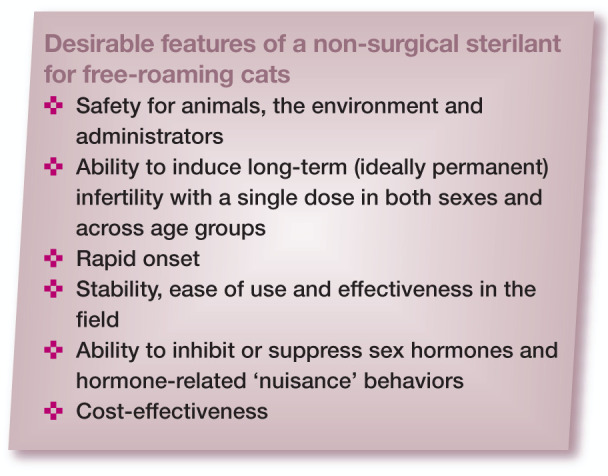
Non-surgical, long-term (3 years or more) contraception could offer unique value for feral or ‘community’ cat population management. Important characteristics of a product for this feline cohort include safety for both target animals and the environment, single-dose long-term (ideally permanent) contraception in both sexes and across age groups, rapid onset, stability and ease of use under field conditions, inhibition of sex hormones, and affordability. 2 GonaCon™, a gonadotropin-releasing hormone (GnRH) immunocontraceptive vaccine, has the potential to fulfill many of these requirements. An early generation GonaCon formulation yielded a median contraceptive effect of over 3 years in female cats. While cats may require sedation to ensure proper injection, the vaccination process does not require anesthesia and thus does not necessitate holding animals overnight to ensure a safe release. For that reason it warrants further evaluation as an additional tool for managing unowned, free-roaming cats, particularly with regard to its practical applications and long-term contraceptive impact.
GonaCon and GonaCon™-Equine immunocontraceptive vaccines are registered with the US Environmental Protection Agency (EPA) for use in female white-tailed deer, and wild and feral horses and burros, respectively (Figure 1), per the Federal Insecticide, Fungicide, and Rodenticide Act (FIFRA). 3 This creates precedent for registration for additional wildlife species and ‘feral’ animals, including unowned, free-roaming cats. 4 Country- and region-specific regulatory processes determine registration pathways for each product, species and type of animal. The European Medicines Agency (EMA), for example, regulates all veterinary medicinal products in the European Union (EU). 4
Figure 1.

GonaCon and GonaCon-Equine immunocontraceptive vaccines are registered with the US Environmental Protection Agency for use in female white-tailed deer, and female wild and feral horses and burros, respectively
Physiological feasibility
The past two decades have seen multiple studies on the effect of GnRH-based immunocontraceptive vaccines on feline fertility.5 –9 Research into this fertility control approach continues today.10,11 GonaCon is one such GnRH immunocontraceptive vaccine. Studied in multiple species using both intramuscular and subcutaneous routes of administration, GonaCon is designed to trigger development of antibodies that inactivate the GnRH produced by the hypothalamus. Without GnRH stimulation, the release of gonadal hormones in both males and females and across mammalian species remains negligible, and gametes do not mature.12 –14
GonaCon was developed at the National Wildlife Research Center (NWRC), the research arm of the United States Department of Agriculture (USDA)-Animal and Plant Health Inspection Service (APHIS) Wildlife Services program. The EPA approved GonaCon for contraception of adult female white-tailed deer in 2009 (EPA Registration Number 56228-40) and GonaCon-Equine for adult female wild and feral horses/burros in 2013 (EPA Registration Number 56228-41). 15 Although registration is currently limited to these aforementioned species and to females, multiple generations of GonaCon formulations developed by the NWRC have been shown to have a contraceptive effect in both sexes of multiple mammalian species.
The GnRH peptide is a small self-antigen that cannot independently produce an immune response and must be coupled with a carrier protein to make it more antigenic. The GnRH–carrier protein conjugate is, in turn, combined with an adjuvant to enhance the immune response.13,14,16,17 GonaCon formulations have used both keyhole limpet hemocyanin (KLH) and Concholepas concholepas hemocyanin (‘blue protein’) to create conjugate antigens. EPA regulatory approval allows formulation with either protein. AdjuVac™ adjuvant, used in current GonaCon formulations, contains a purified fraction of inactivated Mycobacterium avium in oil.14,17 The quantity of M avium used has varied as NWRC scientists have sought to reduce injection-site reactions without compromising vaccine efficacy.
The NWRC’s objective is for GonaCon to offer multi-year infertility with a single injection. The EPA registration label for deer states that a single vaccination will have a minimum 1 year contraceptive effect, and both deer and equine labels note that the contraceptive effect may be longer.18,19 For both species, re-immunization can extend infertility. For white-tailed deer and wild and feral equids, as well as several species for which GonaCon does not have regulatory approval (including cats), there is evidence of multi-year effect in some animals with a single injection. Beyond preventing reproduction, GonaCon should eliminate estrous cycles in females so long as sufficient GnRH antibodies are present. It should also suppress behaviors and health effects associated with male and female sex hormones.2,20

Evidence base
To date, three feline laboratory studies using an early generation GonaCon formulation have been conducted at the University of Florida College of Veterinary Medicine.2,12,20,21 The studies, each of which used a single intramuscular injection, measured vaccine efficacy based on GnRH antibody levels and serum hormone levels (for males and females), sperm quality and quantity (for males), and breeding trials (for males and females). A longitudinal feline study using the GonaCon formulation registered with the EPA for deer and equids began in August 2015 (see box on page 761).
The three University of Florida studies found individual variation among both females and males. They also suggest that female cats overall have more predictable antibody development following vaccination than males. The GnRH antibody titer required to block fertility in females was lower than in males, and the duration of response to a single vaccine longer. 2 This has also been observed in other species, possibly related to greater difficulty in blocking continuously secreted GnRH in males compared with episodic secretion in females.2,22
In a long-term study with 20 female cats aged 8–14 months, all 15 cats receiving the early generation GonaCon vaccine (0.5 ml containing 400 µg/ml GnRH–KLH conjugate and 170 µg/ml M avium) had delayed pregnancies, compared with none of the five that received a sham vaccine. Of the 15 vaccinated cats, 93% were infertile for at least 1 year, 73% for 2 years, 53% for 3 years and 40% for 4 years; 27% were still infertile at the conclusion of the 5 year study. 12 (One treated cat was bred in three successive periods of estrus between days 129–164 and became pregnant on day 164.) 12 The vaccinated cats had a longer time to conception (median ⩾39.7 months) compared with the control group (4.4 months). Response to vaccination was accompanied by cessation of estrous cyclicity and weight gain, similar to effects seen in cats undergoing surgical sterilization.2,12
Two studies in male cats have evaluated both short- and long-term response to multiple early generation GonaCon formulations.20,21 The first study included 12 male cats aged 9–12 months; three groups of three cats received 0.5 ml containing 50, 200 or 400 µg GnRH–KLH conjugate (100, 400 or 800 µg/ml) and 85 µg M avium (170 µg/ml); three cats served as controls.2,20 All nine cats that received the vaccine developed GnRH antibodies after 1 month, which persisted throughout the 6 month study. However, antibody levels varied among individuals. Six of nine treated cats were identified as ‘responders’, and three of nine as ‘non-responders’. Responders had undetectable serum testosterone by 3 months post-treatment, plus marked testicular atrophy and no viable sperm. Non-responders had lower GnRH antibody titers and intermediate serum testosterone concentrations, testicular atrophy and reduced sperm counts compared with responders and control cats receiving a placebo vaccine.2,20,21

In a second longitudinal study, a single early generation GonaCon injection (0.5 ml containing 400 µg/ml GnRH–KLH conjugate and 170 µg/ml M avium) led nine of 12 vaccinated male cats to develop high GnRH antibody titers (‘responder’ cats). 21 Long-term immune response varied. Among the responders, the median time for testosterone to become undetectable was 2 months (range 1–12 months), and testosterone production remained undetectable for a median of 14 months (range 5–33 months). Azoospermia (absence of viable sperm) was generally observed 1–2 months after loss of detectable testosterone, and normal sperm counts returned 2 months after testosterone levels recovered. One cat had an unexplained delayed response to the vaccine; the GnRH antibody titer did not begin to increase until 6 months after vaccination, and the cat did not experience suppression of testosterone and azoospermia until 12 months and 14 months after vaccination, respectively.2,21
The breeding trial with males in the longitudinal study showed that the mean time to successful breeding was 12 months for responders, 5 months for the ‘non-responder’ cats that did not develop high antibody levels, and 3 months for 12 sham-treated cats. Median litter size sired by cats was not significantly different between groups. All but one cat recovered fertility by 3 years post-treatment. 2
GonaCon – both the current EPA-approved and earlier generation formulations – suppresses production of sex hormones, and thus should suppress reproductive functions (eg, estrus) and behaviors associated with these hormones. The studies described above resulted in female cats ceasing to come into estrus 12 and male cats losing their libido (JK Levy, unpublished data).

To date, no pregnant cats have been vaccinated with any GonaCon formulation. However, Levy et al found that upon conception (median duration ⩾39.7 months following vaccination), cats treated with the early generation GonaCon formulation averaged smaller litter sizes than sham-treated cats. 12 There was no difference in the number of stillborn kittens. 12 Product labels for deer and wild equid GonaCon vaccines specify that treatment should not affect an existing pregnancy; instead, it should cause infertility in the vaccinated animal for, at a minimum, the subsequent year.18,19 A study of an early generation GonaCon formulation in dogs found that two bitches that received the vaccine while pregnant delivered healthy puppies. 23
A study is under way to evaluate the safety in cats of a ‘booster’ vaccine, using the EPA-approved GonaCon formulation (see box above). This will be the first of its kind – to date, no study has evaluated the safety or titer effects of a booster contraceptive vaccine in cats. However, booster vaccines have been studied in white-tailed deer,24,25 and GonaCon labels for female white-tailed deer and wild horses report that a second vaccine may be given 30–60 days or 30+ days after the first injection, respectively, or ‘during the following year’ to achieve a longer contraceptive effect.18,19
Considerations for using GonaCon
Multiple factors, discussed below, warrant consideration when determining both optimal and feasible contexts for using GonaCon for feline contraception.
Individual variability
Completed feline studies found that individual animals of the same sex, breed and age had variable responses to an early generation GonaCon formulation in terms of GnRH antibody production and both the onset and duration of contraceptive effect.2,12,20,21 The studies demonstrate that, overall, a higher proportion of queens than toms were ‘responders’ to the vaccine, as measured by fertility status. Queens also remained infertile for a longer duration than toms. Levy et al noted that the variable response in cats is not believed to be related to vaccine dose and proposed that, in some cats, the immune response was diverted to certain components of the vaccine (the carrier protein, mycobacterial adjuvant or other vaccine components) rather than the intended GnRH. 20 As with all vaccines, it is likely that duration of effect (infertility) will vary among individuals; GonaCon must be used with this understanding and expectation.
Injection-site reactions
Two features of GonaCon, both EPA-approved and early generation formulations, facilitate long-term contraception with a single injection. First, the inactivated M avium in the AdjuVac adjuvant stimulates the immune system to react against the target antigen by inducing a local inflammatory response. Secondly, the use of a water-in-oil emulsion slows release of the vaccine and protects the antigen from rapidly degrading, thus extending vaccine duration.17,26 The components that extend vaccine duration are also believed to contribute to injection-site reactions.12,17,26,27 The timing, type and severity of these reactions vary significantly among species, and have also been shown to vary among individuals of a particular species.
During the 6 month study with 12 male cats (that received 0.5 ml vaccine containing 100, 400 or 800 µg/ml GnRH–KLH conjugate, adjuvanted with AdjuVac containing 170 µg/ml M avium), no injection-site or systemic reactions (eg, inflammation or tenderness) were detected.2,20 Late-onset (2 years post-treatment) granulomatous injection-site masses developed in five of 15 treated female cats in the aforementioned long-term study. 12 In one cat, the mass grew to 4 cm x 5 cm in size; the other four cats developed single or multiple masses under 1 cm in diameter. The masses were persistent and waxed and waned for the duration of the study, but did not drain or appear painful. 12 A biopsy of the largest mass revealed granulomatous inflammation with interlesional acid-fast bacteria and produced negative aerobic, anaerobic and mycobacterial cultures. 12
Although the masses in all cats appeared benign, they nonetheless prompt some concern given indications that cats may be at an increased risk for developing malignant sarcomas at the site of vaccine-induced inflammation. Of potential relevance, several cats receiving adjuvant containing mycobacteria in oil (Freund’s adjuvant) in a study of zona pellucida immunocontraception (a different vaccine from GonaCon, and with a different adjuvant) developed systemic granulomatous disease accompanied by hypercalcemia, and one cat developed an injection-site sarcoma. 27
Effect of laboratory vs ‘field’ conditions
To date, feline studies with early generation GonaCon formulations have taken place exclusively in a laboratory setting. Males and females were specific pathogen-free domestic shorthair cats, acquired from the same commercial vendor.12,20 Each study housed cats in climate-controlled indoor spaces with controlled light cycles; water and food were available ad libitum.12,20 This is in contrast to research on GonaCon formulations in other species, dogs included, which have relied heavily – sometimes exclusively – on field studies. At this time, it is not known if factors such as greater or lesser genetic heterogeneity, parasite load, age or variable light duration could potentially impact cats’ response to the vaccine.
Variable formulations
The GonaCon formulations that the NWRC has developed warrant attention with respect to future feline use. Although the agency began by using KLH to create a GnRH conjugate antigen, and KLH was used in the studies conducted at the University of Florida, the NWRC now uses C concholepas hemocyanin. KLH became cost-prohibitive once it became attractive for human cancer vaccines (K Fagerstone, 2014, personal communication). The NWRC has also trialed the immunocontraceptive vaccine with different concentrations of GnRH–KLH conjugate and adjuvant. As discussed above, University of Florida studies in male cats used three concentrations of GnRH–KLH conjugate (100, 400, 800 µg/ml).2,20 The formulation used in the female study contained 400 µg/ml GnRH-KLH conjugate. 12 Currently GonaCon and GonaCon-Equine formulations use a higher concentration of GnRH conjugate antigen (1000 µg/ml) and C concholepas hemocyanin, although EPA registration permits either C concholepas or KLH.
Regulatory considerations
Regulatory processes specific to individual countries or to the EU would determine registration pathways for different feline ‘cohorts’. The EMA, for example, regulates all medicines for veterinary use in the EU. 4 In the United States, veterinary pharmaceuticals may be regulated by the FDA Center for Veterinary Medicine, the USDA Center for Veterinary Biologics or the EPA (see accompanying article in this Special Issue for further details 4 ). The EPA regulates use of pesticides for ‘pest’ species management under FIFRA.
GonaCon is registered as a pesticide with the EPA for adult female white-tailed deer, and GonaCon-Equine is registered with the EPA for reproductively mature female wild or feral horses and burros. These registrations may create precedent for the EPA registration of GonaCon to be used in additional wildlife species and ‘feral’ animals, including unowned, free-roaming cats. This might entail, in this limited context, defining such cats as wildlife or ‘pests’. It would likely also restrict use to unowned ‘feral’ cats, rather than pet cats with owners seeking a non- surgical fertility control option.
Certainly a company or group could pursue regulatory approval of GonaCon with the FDA, or in the EU with the EMA, which would permit use for owned and unowned, socialized and feral cats alike under the supervision of a veterinarian. However, FDA and EMA regulatory approval would likely be challenging due to the high cost of conducting all the studies required, including the complexity of achieving a manufacturing process that would satisfy the good manufacturing practice (GMP) requirements of these agencies. The manufacturing process is complex, and includes a bacterial component (AdjuVac), presenting significant challenges to meeting requirements (L Rhodes, 2014, personal communication).
Conclusions and recommendations
GonaCon has the potential to meet many of the requirements of a non-surgical ‘tool’ to control fertility in unowned, free-roaming cat populations (see box). Although further studies are needed using the current EPA-registered GonaCon formulation and under field conditions, the results of studies to date are reason for optimism. The risks and benefits of registering GonaCon for free-roaming cats must also be balanced against the welfare implications of no intervention, uncontrolled breeding, euthanasia and/or inhumane culling in communities where surgical sterilization is not available at the rate required to have a significant impact on population size.
Permanent sterilization and efficacy in 100% of vaccinated animals would be optimal for population control; this is particularly true for animals without the more consistent monitoring and veterinary care enjoyed by many pet cats. However, free-roaming cats have been found to have a relatively short average lifespan and high kitten mortality rate;28 –32 this potentially makes a multi-year contraceptive a valuable tool for population control and stability. This is particularly true if GonaCon proves to contracept female free-roaming cats for approximately 3 years, and if permanent sterilization cannot be performed on the scale needed to achieve population management goals. GonaCon might be used in conjunction with sterilization, allowing TNR programs more time to catch and transport animals for surgery. GonaCon also does not necessitate anesthesia and the associated recovery time; while some cats may require sedation to ensure proper injection, the procedure is such that animals would not need to be held overnight to ensure a safe release.
Computer modeling shows promise for the effect of multi-year contraception on population reduction (as discussed in an accompanying article in this Special Issue, 33 and elsewhere 34 ). Although the model suggests that more cats must be contracepted than sterilized in order to see a reduction in population, it is possible that GonaCon’s financial savings and technical ease of administration could offset the higher numbers of animals requiring treatment.
Key Points
GonaCon and GonaCon-Equine are the trade names of a GnRH–hemocyanin conjugate immunocontraceptive vaccine formulation developed by the National Wildlife Research Center and registered with the US Environmental Protection Agency (EPA) for a minimum 1 year contraception of female white-tailed deer, wild horses and wild burros with a single vaccine injection.
GonaCon is designed to trigger creation of antibodies that inactivate the GnRH produced by the hypothalamus. Without GnRH stimulation, the release of gonadal hormones in both males and females and across mammalian species is suppressed, and gametes do not mature.
Three studies of male and female cats used an earlier generation of the GnRH–hemocyanin conjugate immunocontraceptive vaccine, the composition of which varied moderately from the EPA-registered formulation. The median duration of effect was ⩾39.7 months for female cats, indicating potential application for long-term contraception. Testosterone production in male cats remained undetectable for a median of 14 months. The EPA-registered GonaCon formulation is currently being studied in cats to confirm safety and production of GnRH antibody titers. A field study using the EPA-approved formulation began in August 2015.
Footnotes
Funding: The authors received no specific grant from any funding agency in the public, commercial or not-for-profit sectors for the preparation of this article.
The authors have no conflict of interest to declare.
Contributor Information
Valerie A W Benka, Project Manager, Alliance for Contraception in Cats & Dogs, Portland, Oregon, USA.
Julie K Levy, Maddie’s Shelter Medicine Program, College of Veterinary Medicine, University of Florida, USA.
References
- 1. Berkeley EP. TNR: past, present and future: a history of the trap–neuter–return movement. Bethesda, MD: Alley Cat Allies, 2004. [Google Scholar]
- 2. Levy JK. Contraceptive vaccines for the humane control of community cat populations. Am J Reprod Immunol 2011; 66: 63–70. [DOI] [PMC free article] [PubMed] [Google Scholar]
- 3. Fagerstone K, Eisemann J. Feral cats: new regulatory pathway, new approaches. Proceedings of the 3rd International Symposium on Non-Surgical Contraceptive Methods for Pet Population Control; 2006 November 9–12; Alexandria, VA, USA. http://www.acc-d.org/resource-library/symposia/3rd-symposium. [Google Scholar]
- 4. Rhodes L. Put a label (claim) on it: getting non-surgical contraceptives approved for use in cats and dogs. J Feline Med Surg 2015; 17: 783–789. [DOI] [PMC free article] [PubMed] [Google Scholar]
- 5. Alliance for Contraception in Cats & Dogs (ACC&D). Contraception and fertility control in dogs and cats. http://www.acc-d.org/resource-library/e-book (2013, accessed June 16, 2015).
- 6. Baker HJ, Griffen B, Smith BF, et al. Immunization of cats and dogs with an anti-GnRH protein vaccine with molecular adjuvantation. Proceedings of the 2nd International Symposium on Non-Surgical Methods for Pet Population Control; 2004 June 24–27; Breckenridge, CO, USA. [Google Scholar]
- 7. Robbins SC. Active immunization of prepubertal cats against gonadotropin-releasing hormone and its effects on gonadal hormone concentration and reproductive function. Proceedings of the 2002 International Symposium on Nonsurgical Methods for Pet Population Control; 2002 April 19–21; Pine Mountain, GA, USA. [Google Scholar]
- 8. Enright WJ, Swift PJ. GnRH immunization of peripubertal male cats: dose titration of a GnRH-gly-cys-ovalbumin (GnRHOVAL) conjugate on immune and testicular responses. J Reprod Fertil Abstr Ser 1995; 15: 15. [Google Scholar]
- 9. Ladd A, Tsong YY, Walfield AM, et al. Development of an antifertility vaccine for pets based on active immunization against luteinizing hormone-releasing hormone. Biol Reprod 1994; 51: 1076–1083. [DOI] [PubMed] [Google Scholar]
- 10. Munks MW, Montoya A, Talmage G, et al. Development of attenuated feline herpesvirus-1 as a cat contraceptive vaccine vector. Proceedings of the 5th International Symposium on Non-Surgical Contraceptive Methods of Pet Population Control; 2013 June 20–22; Portland, OR, USA. http://www.acc-d.org/resource-library/symposia/5th-symposium. [Google Scholar]
- 11. Samoylova TI, Samoylov AM, Chochran AM, et al. Filamentous phage as a platform for development of contraceptive vaccines for animals. Proceedings of the 5th International Symposium on Non-Surgical Contraceptive Methods of Pet Population Control; 2013 June 20–22; Portland, OR, USA. http://www.acc-d.org/resource-library/symposia/5th-symposium. [Google Scholar]
- 12. Levy JK, Friary JA, Miller LA, et al. Long-term fertility control in female cats with GonaCon™, a GnRH immunocontraceptive. Theriogenology 2011; 76: 1517–1525. [DOI] [PubMed] [Google Scholar]
- 13. Miller LA, Rhyan J, Killian G. GonaCon™, a versatile GnRH contraceptive for a large variety of pest animal problems. Proceedings of the 21st Vertebrate Pest Conference; 2004 March 1–4; Visalia, CA, USA. Davis: University of California, Davis, pp 269–273. [Google Scholar]
- 14. Munks MW. Progress in development of immunocontraceptive vaccines for permanent non-surgical sterilization of cats and dogs. Reprod Dom Anim 2012; 47 Suppl 4: 223–227. [DOI] [PubMed] [Google Scholar]
- 15. Eisemann J. Recent advances in the development of GonaCon™ immunocontraceptive vaccine. Proceedings of the 5th International Symposium on Non-Surgical Contraceptive Methods of Pet Population Control; 2013 June 20–22; Portland, OR, USA. http://www.acc-d.org/resource-library/symposia/5th-symposium. [Google Scholar]
- 16. Kutzler M, Wood A. Non-surgical methods of contraception and sterilization. Theriogenology 2006; 66: 514–525. [DOI] [PubMed] [Google Scholar]
- 17. Miller L, Fagerstone K, Kemp J, et al. Immune mechanisms and characterization of injection site reactions involved in the multi-year contraceptive effect of the GonaCon™ vaccine. Proceedings of the 23rd Vertebrate Pest Conference; 2008 March 17–20; San Diego, CA, USA. Davis: University of California, Davis, pp 244–249. [Google Scholar]
- 18. Anonymous. GonaCon immunocontraceptive vaccine for use on female white-tailed deer. US Department of Agriculture, Animal and Plant Health Inspection Service, Pesticide Product label, US. Environmental Protection Agency Registration Number 56228-40, 2009.
- 19. Anonymous. GonaCon Equine. US Department of Agriculture, Animal and Plant Health Inspection Service, Pesticide Product label, US Environmental Protection Agency Registration Number 56228-41, 2013.
- 20. Levy JK, Miller LA, Crawford C, et al. GnRH immunocontraception of male cats. Theriogenology 2004; 62: 1116–1130. [DOI] [PubMed] [Google Scholar]
- 21. Levy JK. Multi-year study of single-dose GnRH immunocontraceptive in cats. Proceedings of the 3rd International Symposium on Non-Surgical Contraceptive Methods for Pet Population Control; 2006 November 9–12; Alexandria, VA, USA. http://www.acc-d.org/resource-library/symposia/3rd-symposium. [Google Scholar]
- 22. Bender SC, Bergman DL, Wenning KM, et al. No adverse effects of simultaneous vaccination with the immunocontraceptive GonaCon™ and a commercial rabies vaccine on rabies virus neutralizing antibody production in dogs. Vaccine 2009; 27: 7210–7213. [DOI] [PubMed] [Google Scholar]
- 23. Vargas-Pino F, Gutiérrez-Cedillo V, Canales-Vargas EJ, et al. Concomitant administration of GonaCon™ and rabies vaccine in female dogs (Canis familiaris) in Mexico. Vaccine 2013; 31: 4442–4447. [DOI] [PubMed] [Google Scholar]
- 24. Miller LA, Killian GJ. Seven years of white-tailed deer immunocontraceptive research at Penn State University: a comparison of two vaccines. The Ninth Wildlife Damage Management Conference Proceedings; 2000 Oct 5–8; State College, PA, USA, pp 60–69. [Google Scholar]
- 25. Miller LA, Johns BE, Killian GJ. Immunocontraception of white-tailed deer with GnRH Vaccine. Am J Reprod Immunol 2000; 44: 266–274. [DOI] [PubMed] [Google Scholar]
- 26. Perry KR, Miller LA, Taylor J. Mycobacterium avium: is it an essential ingredient for a single-injection immunocontraceptive vaccine? Proceedings of the 23rd Vertebrate Pest Conference; 2008 March 17–20; San Diego, CA. Davis: University of California, Davis, pp 253–256. [Google Scholar]
- 27. Munson L, Harrenstien LA, Acton AE, et al. Immunologic responses and adverse reactions to Freund’s-adjuvanted porcine zona pellucida immuno-contraceptives in domestic cats. Vaccine 2005; 23: 5646–5654. [DOI] [PubMed] [Google Scholar]
- 28. Gunther I, Finkler H, Terkel J. Demographic differences between urban feeding groups of neutered and sexually intact free-roaming cats following a trap–neuter–return procedure. J Am Vet Med Assoc 2011; 238: 1134–1140. [DOI] [PubMed] [Google Scholar]
- 29. Horn JA, Mateus-Pinilla N, Warner RE, et al. Home range, habitat use, and activity patterns of free-roaming domestic cats. J Wildl Manage 2011; 75: 1177–1185. [Google Scholar]
- 30. Schmidt PM, Lopez RL, Collier BA. Survival, fecundity, and movements of free-roaming cats. J Wildl Manage 2007; 71: 915–919. [Google Scholar]
- 31. Nutter FB, Levine JF, Stoskopf MK. Reproductive capacity of free-roaming domestic cats and kitten survival rate. J Am Vet Med Assoc 2004; 225: 1399–1402. [DOI] [PubMed] [Google Scholar]
- 32. Warner RE. Demography and movements of free-ranging domestic cats in rural Illinois. J Wildl Manage 1985; 49: 340–346. [Google Scholar]
- 33. Boone J. Better trap–neuter–return for free-roaming cats. Using models and monitoring to improve population management. J Feline Med Surg 2015; 17: 800–807. [DOI] [PMC free article] [PubMed] [Google Scholar]
- 34. Miller PS, Boone JD, Briggs JR, et al. Simulating free-roaming cat population management options in open demographic environments. PLoS ONE 2014; 9: e113553. DOI: 10.1371/journal.pone.0113553. [DOI] [PMC free article] [PubMed] [Google Scholar]