



Abstract
Background and Aims
Many women reported experiencing abnormalities in their cycle after being vaccinated with Covid‐19 vaccination. To understand this issue further, our study aimed to evaluate the menstrual cycle patterns among women of childbearing age after receiving COVID‐19 vaccinations.
Methods
A cross‐sectional study was conducted to investigate the impact of COVID‐19 vaccine on women aged 18 years and above in Saudi Arabia. A self‐administered online questionnaire was distributed among participants who had received at least one dose of COVID‐19 vaccine. The questionnaire included questions about the participants' demographic characteristics, medical history, and vaccine‐related adverse events.
Results
The study included 383 female participants with an average age of 30.8 ± 8.1 years. The majority of participants, 92.7%, were Saudi, and more than half, 51.4%, were single. Of the participants, 78.9% were disease‐free, and a majority of 67.9% had no history of Coronavirus Disease 2019 infection. A significant proportion of participants reported postvaccination changes in the menstrual cycle. Specifically, 43.1% reported changes after the first dose, and 38.4% reported changes after the second dose (p = 0.044). The severity of premenstrual symptoms increased from 44 (11.5%) to 113 (29.5%) after the first dose. Reported pain on the (WONG‐BAKER) scale was also significantly elevated from 34 (8.9%) to 87 (22.7%) (p < 0.001) after the first dose.
Conclusion
A relatively high prevalence of menstrual cycle irregularities was reported by Saudi vaccinated women, particularly young adults. These findings suggest the need to further research and explore the underlying causes of these irregularities and develop interventions that may help mitigate their impact on women's health. It is also recommended that women who observe long‐term changes in their menstrual cycles seek follow‐up and consultation with healthcare providers to ensure that any potential health concerns are addressed promptly.
Keywords: COVID‐19, COVID‐19 vaccine, menstrual cycle, Saudi Arabia, vaccine side effects, women's health
1. INTRODUCTION
Coronavirus Disease 2019 (COVID‐19) is a global pandemic that has caused severe disruptions worldwide due to its rapid spread and high death rate since it was first identified in December 2019. 1 , 2 Globally, the virus has affected millions of people, with over 841,000 confirmed cases and over 96,000 deaths in Saudi Arabia alone as of November 2023. 3 , 4 Although some infected people are asymptomatic or experience mild symptoms, the virus can cause severe respiratory problems and even multiple organ failure, which might lead to death. 5 , 6 Vaccine development has been a significant achievement in the fight against COVID‐19, preventing severe cases and deaths. Worldwide, 18 vaccines, including diverse technologies from attenuated or inactivated whole live virus, protein‐based, viral vector, to/and nucleic acid‐based vaccines, were approved for emergency use in less than a year after the first identification of the virus. 7 , 8 As of 2023, over 13 billion vaccine doses have been distributed globally, and more than 68 million doses of COVID‐19 vaccine have been administered to the residents of Saudi Arabia. 4
Previous studies have extensively examined the impact of various vaccines, such as influenza, measles, and tuberculosis on the immune system. These studies have shown that the immune response can be affected by sex hormones, specifically estrogen, which stimulates antiviral reaction cells while inhibiting the replication of the influenza A virus, and testosterone, which inhibits inflammation. 9 , 10 , 11 , 12 In this era, researchers and scientists have noted, among other factors, gender differences in infection, morbidity, and mortality rates among COVID‐19 patients. 13 Females, in particular, have been observed to have an efficacious immune response, which may lead to different outcomes and side effects with diseases and vaccines. 14 Consequently, women are more prone to being affected by COVID‐19 than men. 9
The menstrual cycle plays a crucial role in women's reproductive health; having a regular menstrual cycle is a sign of a normally functioning hypothalamic‐pituitary‐gonadal (HPG) axis and is considered a vital sign of female health. 15 However, disruptions in this cycle can activate the HPG axis, leading to serious consequences for women's health, including fertility issues and hormonal imbalances. 16 , 17 , 18 According to the literature, results from different regions have shown that the pandemic‐related psychological impact and/or the immune effect of COVID‐19 vaccine can affect menstrual patterns in various ways, including significant changes in the duration of their menstruation and/or menstrual cycle length after vaccination. 19 , 20 , 21 , 22 While a great deal of research has been conducted on the efficacy of COVID‐19 vaccines, limited information is available regarding their potential side effects, particularly on the menstrual cycle, in Saudi Arabia and worldwide. The aim of this study is thus to explore and observe the possible side effects of COVID‐19 vaccines on the menstrual cycle patterns of child‐bearing‐age women in Saudi Arabia.
2. METHODS
2.1. Sample size and sampling procedure
The reported changes in the menstrual cycle during COVID‐19 included regularity, flow volume, and pain severity. A previous study showed that 24% of participants reported an increase in missed periods, and 21% reported an increase in pain severity compared to pre‐pandemic times. 23 Based on this study, sample size determination was performed using PASS 11.0 software to ensure optimal sample size calculation. The proportionate change in regularity predicted an optimal sample size of 366, which produces a two‐sided 95% confidence interval with a width equal to 0.09. This means that the study was conducted with a sufficient number of participants, providing accurate results that can be used to understand the impact of COVID‐19 on women's menstrual cycle.
2.2. Inclusion and exclusion criteria
This cross‐sectional study included 383 adult women aged 18 years or older who had received at least one dose of any COVID‐19 vaccine type in Riyadh, Saudi Arabia. Exclusion criteria included: (i) pregnancy or lactation; (ii) pre‐menopause and menopause; (iii) history of ovarian dysfunction diagnosed within 6 months before the onset of disease, including delayed menses, menstrual irregularities, or earlier menopause; (iv) prior hysterectomy or oophorectomy; and (v) current treatment with chemotherapy and/or medication for autoimmune disease (Figure 1).
Figure 1.
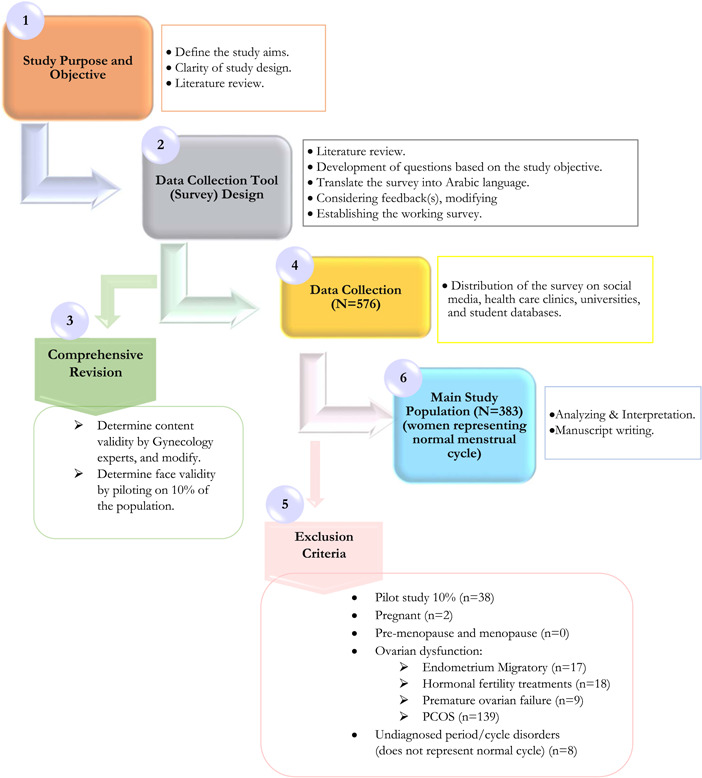
Summary of the study design.
2.3. Survey tool and data collection
To ensure the accuracy and reliability of the survey, it was developed in multiple phases based on the study objective. The first phase consisted of collecting the required data from the literature, which included relevant articles, research papers, and other sources of information. This step was crucial in creating a comprehensive survey covering all the study's necessary aspects.
In the second phase, the survey questions were translated into Arabic to make them more accessible and understandable to the target population. This step was necessary to ensure the participants could respond to the survey questions accurately and effectively.
In the third phase, two independent consultants from the Department of Gynecology at King Fahad Medical City, who are experts in the topic/subject/work, were selected to evaluate the survey. The consultants were chosen based on their extensive experience and knowledge in the field, which made them capable of providing valuable feedback on the content validity of the survey.
In the fourth phase, the survey was modified based on the remarks of each expert. This step was essential in ensuring that the survey was accurate, reliable, and valid for the study. The modifications were made to address any concerns or issues raised by the consultants and to improve the overall quality of the survey.
Finally, in the fifth phase, the survey was piloted with 10% of the sample to evaluate its face validity in terms of feasibility, readability, and clarity of language used. This step was crucial in determining whether the participants could effectively understand and respond to the questions. The pilot test results were used to modify the survey before administering it to the whole sample.
The survey tool was a self‐administered questionnaire with structured questions created using Google Forms. It consists of seven sections. The first section briefly describes the study, its purpose, declarations of anonymity and confidentiality, and a written consent question. The second section contains demographic‐related questions such as age, nationality, marital status, educational level, occupation, smoking status, and vital signs, including height, weight, and body mass index (BMI). The third section includes information about the medical history. The fourth section covers vaccination intake, including the vaccination protocol used in this study, history, and reported side effects, referring to both mRNA vaccines (Pfizer‐BioNTech [BNT162b2] and Moderna [mRNA‐1273]) and adenovirus vector vaccine (Oxford‐AstraZeneca [ChAdOx1 nCoV‐19]). The fifth section has gynecological questions related to the menstrual patterns of participants before receiving COVID‐19 vaccine as a baseline. The sixth section covers the menstrual patterns after receiving each dose of the COVID‐19 vaccine, including the first dose, second dose, and third dose, if applicable. Incomplete third‐dose data were collected but not included in the final analysis. The menstrual patterns were presented in terms of regularity, flow volume, and pre‐menstrual symptoms (PMS) severity. This section also includes the intensity of uterine contraction pain represented by the (WONG‐BAKER) pain scale with response options ranging from 0 to 10, where 0 means no pain and 10 means severe pain. The normal menstrual pattern during the last 3 months before participation was defined as a frequency of 24–38 days, 7–9 days' variation between the shortest to longest cycles, duration of flow of 8 days or less, and blood loss of 5–80 mL. 15 , 24 The seventh section comprises the history of severe acute respiratory syndrome coronavirus 2 (COVID‐19) infection and menstrual patterns after the infection.
From November 2021 to February 2022, an invitation via an online link and a QR code was shared on various social media platforms such as Twitter, Instagram, Snapchat, and WhatsApp. The invitation was also distributed via online community networks, staff, and student email databases. Women participants were approached using a systematic sampling technique, where every first 10 women accepting the invitation were recruited to complete a survey link of the study on each working day.
2.4. Statistical analysis
Categorical variables were presented as numbers and percentages, while continuous variables were presented as means and standard deviations (±SD). The Kolmogoro−Smirnov test was used to confirm the normal distribution assumption. The Pearson χ 2 or Fisher's exact test was used to determine significant associations between categorical variables. A p < 0.05 was considered statistically significant. All data analyses were performed using the SPSS 25 Statistics Package (SPSS Inc.).
3. RESULTS
3.1. Socio‐demographic characteristics of the study population
The study surveyed a total of 576 individuals. However, only 383 participants were included in the analysis, as they represented normal menstrual cycles and met the inclusion criteria. To provide a comprehensive understanding of the participants, their sociodemographic characteristics were analyzed and are demonstrated in (Table 1).
Table 1.
Sociodemographic characteristics.
| Characteristic | min−max, Mean ± SD, and Median | N (%) | |
|---|---|---|---|
| Age (year) | 18−24 | 90 (23.5) | |
| 25−29 | 110 (28.7) | ||
| 30−34 | 63 (16.4) | ||
| 35−39 | 50 (13.1) | ||
| 40−44 | 42 (11.0) | ||
| ≥45 | 28 (7.3) | ||
| min−max | 18−58 | ||
| Mean ± SD | 30.8 ± 8.1 | ||
| Median (P25−P75) | 29 (25−37) | ||
| Nationality | Saudi | 355 (92.7) | |
| Non‐Saudi | 28 (7.3) | ||
| Marital Status | Single | 197 (51.4) | |
| Married | 174 (45.4) | ||
| Divorced | 10 (2.6) | ||
| Widow | 2 (0.5) | ||
| Age at menarche (year) | min−max | 8−19 | |
| Mean ± SD | 12.8 ± 1.6 | ||
| Median (P25−P75) | 13 (12−14) | ||
| Smoking | 15 (3.9) | ||
| BMI (kg/m2) | <18.5 (Underweight) | 22 (5.7) | |
| 8.5−24.9 (Normal Weight) | 165 (43.1)1 | ||
| 25−29.9 (Overweight) | 115 (30.0) | ||
| ≥30 (Obese) | 81 (21.1) | ||
| min−max | 15.6−218.5 | ||
| Mean ± SD | 26.9 ± 15.6 | ||
| Median (P25−P75) | 25 (21.8−28.9) | ||
| Comorbidity | 81 (21.1) | ||
| Medication use | 86 (22.5) | ||
| Hormonal contraceptive | 46 (12.0) | ||
| Hormones for any other reasons | 11 (2.9) | ||
On average, the participants' ages ranged from 18 to 58 years, with a mean age of 30.8 years (SD = 8.1). The majority of the study participants were Saudi nationals, accounting for 92.7% of the participants, while only 7.3% were non‐Saudi. Interestingly, 51.4% of the 383 women who completed the questionnaire were single.
As shown in Table 1, the age at menarche was reported to range from 8 to 19 years, with a mean age of 12.8 years (SD = 1.6). It was also found that nonsmokers accounted for about 97% of the participants, which is a positive indicator of the population's health.
To provide an overview of the participants' weight status, it was found that most of the population had an average weight, accounting for approximately 43% of the participants, with a mean BMI of 26.9 (SD = 15.6). On the other hand, overweight was found to be in 30% of the participants, while 21% were obese.
It was also found that the majority of participants, 78.9%, were disease‐free. In terms of contraceptive use, 12.0% of the participants began using a contraceptive in the last calendar year, while 2.9% less frequently used hormones for other reasons. Moreover, 22.5% of the participants use different types of medication, which provides insight into the study's population's overall health status.
3.2. Menstrual cycle post‐Covid‐19 vaccination
According to Table 2, Pfizer‐BioNTech was the most common type of vaccine received by women in Saudi Arabia. As per the data, 77.3% of the participants received the first dose, while 81.7% received both doses. This could be attributed to its availability in the Kingdom of Saudi Arabia.
Table 2.
Covid‐19 vaccination and post‐effective menstruation.
| Characteristic | Description | 1st Dose (N [%]) | 2nd Dose (N [%]) | p Value |
|---|---|---|---|---|
| Covid‐19 Vaccination Type of vaccine | Pfizer/BioNTech | 296 (77.3) | 308 (81.7) | 0.516 |
| AstraZeneca/Oxford | 85 (22.2) | 62 (16.4) | ||
| Moderna | 2 (0.5) | 7 (1.9) | ||
| Johnson and Johnson | 0 (0.0) | 0 (0.0) | ||
| Noticing a change in cycle or period after the vaccine | Yes | 165 (43.1) | 139 (38.4) | 0.044 |
| No | 218 (56.9) | 223 (61.6) | ||
| Duration of the new cycle symptoms remains after the time of the dose: | Just the first period after the vaccine | 76 (19.8) | 52 (16.2) | 0.600 |
| It is an ongoing problem after the vaccine | 96 (25.1) | 95 (29.6) | ||
| No new symptoms on my period | 211 (55.1) | 174 (54.2) |
Interestingly, almost half of the women reported a change in their menstrual cycle patterns after the first dose, while slightly over one‐third experienced changes after the second dose (43% and 38.4%, respectively). It is worth noting that there was no significant difference between the two doses (p = 0.044) (Table 2).
Furthermore, it is significant to mention that the participants reported no long‐lasting impact of the vaccine on their menstrual cycle symptoms after the first dose in 211 women (55.1%). This trend continued after the second dose, with 174 women (54.2%) stating no long‐lasting impact (Figure 2).
Figure 2.
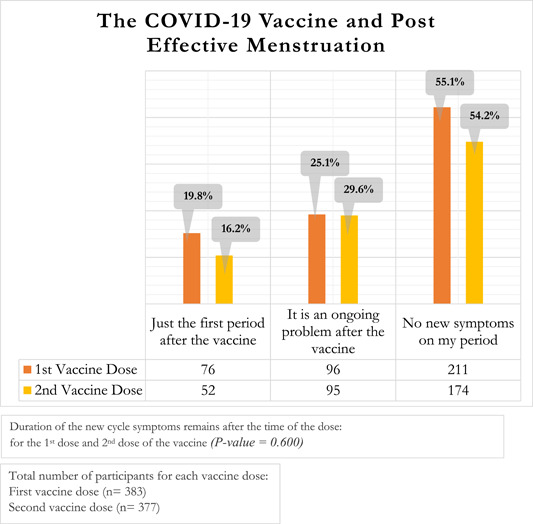
COVID‐19 vaccine and posteffective menstruation.
3.3. Trends of menstrual abnormalities after Covid‐19 vaccination
The results presented in Table 3 showed the impact of vaccine doses on menstrual cycle length, regularity patterns, flow volume, and pre‐menstrual syndrome (PMS) among participants. In this study, we found that the mean length of the menstrual cycle increased from 27.5 ± 3.4 days before vaccination to 29.5 ± 10.8 days after the first dose, which was a statistically significant difference, while the second dose did not appear to have any further effects. In contrast, the mean length of the period did not change significantly after the vaccine doses, with only a slight increase from 6.4 ± 1.3 days before vaccination to 6.7 ± 2.4 days after the first dose, and this remained consistent after the second dose.
Table 3.
Menstruation characteristics before vaccination with respect to posteffective Covid‐19 vaccination.
| Characteristic | Description | Prevaccination (N [%]) | After 1st Dose (N [%]) | After 2nd Dose (N [%]) | p Value |
|---|---|---|---|---|---|
| Length of the cycle (day) | Min−max | 15−45 | 7−120 | 3−100 | 0.093 |
| Mean (days) ± SD | 27.5 ± 3.4 | 29.5 ± 10.8 | 28.3 ± 9 | ||
| Median (P25−P75) | 28 (26, 29) | 28 (26, 30) | 28 (25, 30) | ||
| Length of period (day) | Min−max | 2−13 | 1−24 | 1−20 | 0.293 |
| Mean (days) ± SD | 6.4 ± 1.3 | 6.7 ± 2.4 | 6.7 ± 2.3 | ||
| Median (P25−P75) | 7 (6−7) | 7 (5−7) | 7 (5−7) | ||
| Regularity | Regular | 289 (75.5) | 231 (60.3) | 195 (58.4) | <0.001 |
| Irregular | 53 (13.8) | 95 (24.8) | 93 (27.8) | ||
| Continuous bleeding between each period | 1 (0.3) | 7 (1.8) | 7 (2.1) | ||
| Noncontinuous bleeding between each period | 10 (2.6) | 5 (1.3) | 3 (0.9) | ||
| Amenorrhea | 30 (7.8) | 41 (10.7) | 31 (9.3) | ||
| Menopause | 0 (0.0) | 4 (1.0) | 5 (1.5) | ||
| Flow volume | Spotting (a drop or two of blood) | 9 (2.3) | 15 (3.9) | 14 (4.2) | 0.003 |
| Very light bleeding | 23 (6.0) | 50 (13.1) | 37 (11.1) | ||
| Light bleeding | 77 (20.1) | 90 (23.5) | 80 (24.0) | ||
| Moderate bleeding | 237 (61.9) | 164 (42.8) | 146 (43.7) | ||
| Heavy bleeding | 30 (7.8) | 51 (13.3) | 44 (13.2) | ||
| Very heavy bleeding | 7 (1.8) | 13 (3.4) | 13 (3.9) | ||
| PMS severity | No symptoms | 36 (9.4) | 32 (8.4) | 31 (9.4) | <0.001 |
| Mild | 151 (39.4) | 75 (19.6) | 60 (18.2) | ||
| Moderate | 152 (39.7) | 163 (42.6) | 159 (48.2) | ||
| Severe | 44 (11.5) | 113 (29.5) | 80 (24.2) | ||
| Backache | 251 (65.5) | 240 (62.7) | 201 (52.5) | <0.001 | |
| Depression | 181 (47.3) | 163 (42.6) | 143 (37.3) | <0.001 | |
| Stomach ache | 119 (31.1) | 120 (31.3) | 112 (29.2) | 0.532 | |
| Tenderness of Breast | 165 (43.1) | 145 (37.9) | 126 (32.9) | <0.001 | |
| Nausea | 113 (29.5) | 97 (25.3) | 90 (23.5) | 0.008 | |
| Vomiting | 23 (6.0) | 24 (6.3) | 20 (5.2) | 0.618 | |
| Restlessness, tiredness | 158 (41.3) | 126 (32.9) | 115 (30.0) | <0.001 | |
| Weight changes | 74 (19.3) | 80 (20.9) | 79 (20.6) | 0.661 | |
| Mood changes | 277 (72.3) | 225 (58.7) | 193 (50.4) | <0.001 | |
| Sweating | 85 (22.2) | 67 (17.5) | 66 (17.2) | 0.01 | |
| Headache | 157 (41.0) | 144 (37.6) | 142 (37.1) | 0.162 | |
| Dizziness | 50 (13.1) | 53 (13.8) | 59 (15.4) | 0.316 | |
| Muscle and joint pain | 132 (34.5) | 129 (33.7) | 122 (31.9) | 0.512 | |
| Acne | 148 (38.6) | 116 (30.3) | 106 (27.7) | <0.001 | |
| I don't experience any of these symptoms | 9 (2.3) | 0 (0.0) | 0 (0.0) | <0.001 | |
| Other (specify) | 0 (0.0) | 27 (7.0) | 27 (7.0) | <0.001 | |
| Uterine contractions pain (WONG‐BAKER pain scale) | Lighter than usual | 68 (17.8) | 23 (6.0) | 14 (4.3) | <0.001 |
| As usual | 260 (67.9) | 254 (66.3) | 211 (64.7) | ||
| Worse than usual | 34 (8.9) | 87 (22.7) | 69 (21.2) | ||
| No uterine contraction | 21 (5.5) | 19 (5.0) | 32 (9.8) | ||
Regarding the regularity patterns, the percentage of participants who reported irregularity significantly increased from 13.8% to 24.8% after the first dose and 27.8% after the second dose, indicating a progressive trend. Furthermore, a few subjects reported experiencing abnormal bleeding after vaccination, with the percentage of participants reporting very light bleeding significantly increasing by almost double from 6.0% to 13.1% after the first dose and slightly decreasing to 11.1% after the second dose. In comparison, the percentage of those reporting heavy bleeding significantly increased from 7.8% to 13.3% after the first dose and to 13.2% after the second dose.
In terms of PMS, the percentage of participants who reported severity in their symptoms increased from 11.5% to 29.5% after the first dose, with a slight decrease to 24.2% after the second dose. Physiological symptoms fluctuated throughout the vaccine doses, with some showing no significant change while others showed minor changes. Backache reporting dropped from 65.5% to 62.7% and then to 52.5%, which was statistically significant. Women reporting breast tenderness significantly decreased from 43.1% before vaccination to 37.9% and 32.9% after the first and second doses, respectively.
On the other hand, PMS symptoms reported decreased significantly for psychological symptoms, such as depression, from 47.3% to 42.6% and 37.3% after the first and second doses, respectively. Also, for mood changes, individuals reported a significant reduction from 72.3% to 58.7% after one dose and 50.4% after two doses, indicating a progressive trend.
Finally, we assessed the impact of vaccine doses on uterine contraction pain using the WONG‐BAKER scale. We found the percentage of women who reported having pain worse than usual increased from 8.9% to 22.7% after the first dose of the vaccine, which was a statistically significant difference.
3.4. Changes in the menstrual cycle with the demographic variables
Based on the demographic data presented in Table 4, it appears that young adult women under 30 years of age were most affected by menstrual cycle disruptions after receiving one dose of COVID‐19 vaccine (p = 0.005). Additionally, the majority of affected individuals were healthy single women, with over 49.7% of single women reporting changes after the first dose. Among disease‐free women, 79.4% observed disturbances in their menstrual cycle after vaccination.
Table 4.
Noticing a change in cycle or period after the vaccine.
| Characteristic | Description | 1st dose | ||
|---|---|---|---|---|
| Yes | No | p Value | ||
| Age (year) | min−max | 18−58 | 19−52 | 0.867 |
| Mean ± SD | 30.9 ± 8.9 | 30.8 ± 7.4 | ||
| Age (year) | 18−24 | 43 (26.1) | 47 (21.6) | 0.005* |
| 25−29 | 48 (29.1) | 62 (28.4) | ||
| 30−34 | 23 (13.9) | 40 (18.3) | ||
| 35−39 | 11 (6.7) | 39 (17.9) | ||
| 40−44 | 23 (13.9) | 19 (8.7) | ||
| ≥45 | 17 (10.3) | 11 (5.0) | ||
| Marital Status | Single | 82 (49.7) | 115 (52.8) | 0.337 |
| Married | 78 (47.3) | 96 (44.0) | ||
| Divorced | 3 (1.8) | 7 (3.2) | ||
| Widow | 2 (1.2) | 0 (0.0) | ||
| Comorbidity | Yes | 34 (20.6) | 47 (21.6) | 0.821 |
| No | 131 (79.4) | 171 (78.4) | ||
*p < 0.05.
3.5. Trends of menstrual abnormalities in terms of regularity and flow volume before and after the 1st and 2nd dose of Covid‐19 vaccination
Table 5 shows that after the first dose of COVID‐19 vaccine, 38.6% of women reported irregular or disturbed menstrual cycles. This number slightly increased to 40.1% after the second dose (p < 0.001). Additionally, 1% of the population experienced menopause after vaccination. Furthermore, 40.5% of women reported light menstruation after taking one dose of COVID‐19 vaccine. Finally, heavy flow reporting almost doubled from baseline to 16.7% after the first dose of COVID‐19 vaccination.
Table 5.
Characteristics before vaccination with respect to post‐effective by COVID‐19 vaccination.
| Characteristic | Description | Prevaccination [N (%)] | After 1st dose (N [%]) | After 2nd dose (N [%]) | p Value |
|---|---|---|---|---|---|
| Regularitya | Regular | 289 (75.5) | 231 (60.3) | 195 (58.4) | <0.001 |
| Irregular menstruation | 94 (24.5) | 148 (38.6) | 134 (40.1) | ||
| Menopause | 0 (0.0) | 4 (1.0) | 5 (1.5) | ||
| Flow volumeb | Light bleeding | 109 (28.5) | 155 (40.5) | 131 (39.2) | 0.032 |
| Moderate Bleeding | 237 (61.9) | 164 (42.8) | 146 (43.7) | ||
| Heavy bleeding | 37 (9.7) | 64 (16.7) | 57 (17.1) |
Irregular, continuous bleeding between each period, noncontinuous bleeding between each period, and amenorrhea all combined as Irregular menstruation.
Spotting (a drop or two of blood), Very light bleeding, and light bleeding all combined as Light bleeding. Very heavy bleeding and heavy bleeding were all combined as Heavy bleeding.
3.6. Concordance between the baseline wong‐baker pain assessment, menstrual regularity, and menstrual flow volume with their repeated assessments after the 1st dose of Covid‐19 vaccination
After the first dose of COVID‐19 vaccination, concordance between the baseline Wong‐Baker Pain assessment, Menstrual Regularity, and Menstrual Flow Volume with their repeated assessments generated three latent variables (Table 6). The concordance in the Wong‐Baker Pain assessment was evaluated in (49.9%) of subjects, regularity in (71.0%), and flow volume in (61.6%). Significant associations existed between the change in uterine contractions pain assessed by the Wong‐Baker pain scale and the change in menstrual regularity in (61.1%) of subjects. In comparison, the alteration in Flow volume was ascertained in (66.1%) of subjects. Overall, a total of (29.1%) of subjects were unaffected by any change in Wong‐Baker pain assessment, menstrual regularity, and menstruation flow volume before or after the first dose of COVID‐19 vaccination.
Table 6.
Concordance between the baseline Wong‐Baker pain assessment, menstrual regularity, and menstrual flow volume with their repeated assessments after the 1st dose of COVID‐19 vaccination.
| Characteristic | Description | Change in Uterine contractions pain (WONG‐BAKER pain scale) | p‐value | Kappa | ||
|---|---|---|---|---|---|---|
| No | Yes | Total | ||||
| 191 (49.9) | 192 (50.1) | 383 (100.0) | ||||
| Change in Regularity | No | 149 (78.0) | 123 (64.1) | 272 (71.0) | 0.003 | 0.139 |
| Yes | 42 (22.0) | 69 (35.9) | 111 (29.0) | |||
| Change in flow volume | No | 130 (68.1) | 106 (55.2) | 236 (61.6) | 0.010 | 0.128 |
| Yes | 61 (31.9) | 86 (44.8) | 147 (38.4) | |||
3.7. Menstrual cycle abnormalities and Covid‐19 infection
Among the women who participated in the study, 67.9% had no history of COVID‐19 infection (Table 7). Of those who had a previous COVID‐19 infection, 34.2% had menstrual abnormalities. Additionally, postvaccination menstrual abnormalities were significantly associated with severe symptoms of COVID‐19 infection (Table 7).
Table 7.
Clinical symptoms among COVID‐19 infected studied participants.
| Symptom | COVID‐19 [123 [32,1%]) | Total (383 [100.0%]) | p Value |
|---|---|---|---|
| Fever | 50 (40.7) | 51 (13.3) | <0.001 |
| Diarrhea | 17 (13.8) | 17 (4.4) | <0.001 |
| Loss of the taste or smell | 53 (43.1) | 54 (14.1) | <0.001 |
| Sore throat | 40 (32.5) | 40 (10.4) | <0.001 |
| Cough | 45 (36.6) | 45 (11.7) | <0.001 |
| Difficulty in Breathing | 35 (28.5) | 35 (9.1) | <0.001 |
| Headache | 61 (49.6) | 62 (16.2) | <0.001 |
| No, symptoms | 2 (100.0) | 2 (100.0) | 1 |
| Experiencing changes in the menstrual cycle after the infection | 41 (34.2) | 42 (31.3) | 0.039 |
4. DISCUSSION
This study describes the prevalence of menstrual disturbance and abnormality among 383 women in Saudi Arabia, specifically regarding the observation of the menstrual cycle after COVID‐19 vaccination. The study assessed the main patterns of menstruation, including regularity, flow volume, uterine contractions pain, PMS, duration, and frequency.
Regularity of the menstrual cycle is a vital sign for women's reproductive health. 25 As per reported patterns of regularity, there was a change after vaccination, especially after the first dose. Nearly 40% (39.6%) of our participants experienced menstrual abnormalities after the first dose of COVID‐19 vaccination, including irregularity, intermenstrual bleeding, and amenorrhea. Our results are consistent with a large cross‐sectional study that included 2269 women from the (MENA) region, where 46.7% reported abnormalities after the first dose of COVID‐19 vaccine. 22 According to our findings, the vaccine also altered the duration of the menstrual cycle, resulting in a slightly prolonged cycle. However, the length of menstruation remained the same even after the vaccine, consistent with published results from global cohort data. 21 The effects of vaccines on the menstrual cycle are still not clearly understood, although previous research on vaccines such as the typhoid vaccine, the hepatitis B virus vaccine, and the human papillomavirus (HPV) vaccine, have shown similar effects on menstruation, 26 , 27 , 28 , 29 indicating a potential link between vaccination and menstrual disturbance.
Our study found that vaccination was significantly associated with changes in flow volume, particularly toward a heavier menstrual flow (hemorrhages). According to Dasharathy et al. after 3 days of bleeding, elevated levels of follicle‐stimulating hormone (FSH) and progesterone appear, resulting in heavier flow. 16 This suggests that the mRNA vaccine could potentially affect the levels of hormones that lead to severe blood loss. However, the exact mechanism of this effect was linked to the immune response rather than a specific component of the vaccine. 25 The mRNA vaccine is consistent with the HPV vaccine, which appears to have a similar mechanism in the female body. 29
Furthermore, this study also reported a high prevalence of premenstrual symptoms (PMS), with 29.5% of participants experiencing severe PMS after the first dose and 24% after the second dose. This is higher than the prevalence of moderate to severe PMS, which typically ranges between 5 and 8%. 30 , 31 The severity of PMS in this study was defined by the American College of Obstetrics and Gynecology (ACOG) as having one or more psychological or physical symptoms that lead to a weakening. 31 Overall, our findings suggest that vaccination may impact the menstrual cycle, potentially leading to a disturbance in flow volume and increased severity of PMS. However, further research is needed to fully understand these effects' mechanisms and determine the long‐term implications for women's health.
Our findings highlight substantial perceived distress in PMS among women after receiving COVID‐19 vaccine. 62.7% reported suffering from backache, 58.7% from mood changes, and 42.6% from depression after the first dose. While other reported symptoms fluctuated between the first and second doses of the vaccine.
Earlier scientific research identified a link between premenstrual syndrome (PMS) and progesterone production in the body. Elevated levels of progesterone and other hormone disturbances have been noticed after receiving other forms of mRNA vaccine besides the COVID‐19 vaccine. 29 Therefore, our findings might point to an important pattern of increased PMS severity after COVID‐19 vaccination. We recommend informing individuals that menstrual disturbances are a potential side effect.
It is worth noting that depression was assessed as part of PMS rather than as a standalone mental condition. 20 , 32 We believe that this assessment is comprehensive, as depression in PMS refers to 1 week before bleeding. 31 Our results suggest that the depression status improved slightly with each dose of COVID‐19 vaccine. This contrasts with other studies that found a deterioration in mood after vaccination. However, those studies were conducted during the first wave of the vaccination campaign (December 2020/January 2021). At that time, vaccine hesitancy was shared worldwide, particularly in the Middle East, among at‐risk individuals such as young adults or women who were concerned about the vaccine's potential impact on reproductive health. 33 , 34 , 35
The improvement in mood and depression observed in our study may be related to the overall improvement with the pandemic situation. As the viral outbreak declined by the time of the second and third vaccine doses, lockdowns and restrictions were lifted due to the vaccine's widespread distribution. People became more confident in vaccination, which led to a sense of ease, a recovery in daily life, and general mental well‐being. 36 , 37
We included a WONG‐BAKER scale in the questionnaire to evaluate uterine contraction pain, which has not been examined before in other studies from the MENA regions. 22 Pain resulting from uterine contractions can affect women's quality of life and daily activity. 20 Half of the women in the study experienced moderate to severe pain after vaccination. The medical literature has discussed the effect of vaccination on the level of sex hormones, which could be related to a drop in estrogen levels and an increase in pain severity. 21 In our further analysis, we found that the change in uterine contraction pain, as assessed by the Wong‐Baker pain scale, was ascertained in 61.1% of cases when examining the change in menstrual regularity, while the change in flow volume was ascertained in 66.1% of cases.
This study found that women who are disease‐free and have no smoking history are more likely to report disturbance of the menstrual cycle, in contrast to previous studies that identified smoking and comorbidities as contributing factors to menstrual irregularities. 16 Young, single adults under the age of 35 were also more likely to experience pattern changes in their menstrual cycles. This atypical pattern could be explained by the fact that health‐conscious individuals are in harmony with their regular body cycles, which makes them more likely to notice abnormalities and menstrual disturbances. Dealing with cycle abnormalities may be more challenging at a younger age due to a lack of experience and confidence. Therefore, even if this abnormality is considered a temporary effect, it should be addressed by a physician to prevent negative effects on the marital, parental, and professional aspects of women's lives. Muhaidat et al. reported that 65% of women from the Middle East ignored seeking consultation regarding menstrual abnormalities after vaccination. 22
We found that half of COVID‐19‐infected women experienced severe symptoms. Additionally, 34.2% of the infected subjects reported abnormalities in their menstrual cycles after the infection. Previous research has documented that viral infections can cause hypothalamic and hypogonadism, which can lead to amenorrhea and menstrual disturbance. 16 This can affect the length of the menstrual cycle due to abnormal hormonal patterns of FSH, LH, estradiol, and progesterone, which all play a role in regulating menstrual patterns. Rapid menstrual cycles were associated with an earlier escalation in FSH and higher estradiol levels, whereas extended cycles were linked to increased LH and minor estradiol levels. 16
4.1. Strengths and limitations
This study has strengths and limitations, which are essential when interpreting the results. One of the strengths of this study is that it investigates the prevalence of postvaccination menstrual abnormalities among different age groups of women in Saudi Arabia. This is significant because few studies on this topic are specific to women in Saudi Arabia. Most published papers on menstrual cycle abnormalities are from Western countries and include women with different ethnic and genetic backgrounds. Additionally, using the (Wong‐Baker) pain scale and PMS inquiries further links the assessment topic to the menstrual cycle, providing a more comprehensive understanding of menstrual health.
However, there are limitations to this study that should be taken into account. First, using a cross‐sectional design means that causality between menstrual abnormalities and vaccination cannot be determined. Conducting a longitudinal study to investigate this relationship further would be beneficial. Second, recall bias may have affected the results since self‐reported data was used, and participants may not fully understand their menstrual cycle patterns. Third, online surveys may limit the generalizability of the sample, even though participants from various socioeconomic statuses were included. The Omicron variant was prevalent during data collection, and online surveys were the most feasible option for data collection at that time. Finally, the lack of a comparison group consisting of unvaccinated women limits the ability to fully evaluate the changes and address public concerns regarding the associations between COVID‐19 vaccination and menstrual cycle disturbance. Future studies should consider including a comparison group to better contextualize the results.
In Saudi Arabia, 74.03% of the population is fully vaccinated as of the last data published in 2023, with women being the minority. 38 This study aims to help healthcare professionals educate women about vaccine safety, provide information about post‐vaccine side effects, and focus on vulnerable groups like young adults. Detecting bleeding quantity through a hormonal profile and follow‐up after vaccination are essential. Future studies should include prospective cohort designs to examine menstrual cycle disturbance pre‐ and postvaccination. Clinical trials for vaccine development should consider the outcomes of this study, as COVID‐19 vaccine trials did not investigate changes in menstrual health.
AUTHOR CONTRIBUTIONS
Halah AlRawi: Conceptualization; investigation; methodology; project administration; supervision; validation; writing—original draft; writing—review and editing. Alaa AlQurashi: Conceptualization; investigation; methodology; project administration; supervision; writing—original draft; writing—review and editing. Doaa AlDahan: Conceptualization; investigation; methodology; writing—original draft; writing—review and editing. Maha Alkhudhayri: Data curation; writing—original draft. Amani R Alsharidah: Data curation; writing—original draft. Tariq Wani: Data curation; validation. Dania AlJaroudi: Conceptualization; investigation; project administration; resources; supervision; validation; visualization; writing—review and editing.
CONFLICT OF INTEREST STATEMENT
The authors declare no conflict of interest.
ETHICS STATEMENT
The studies involving human participants were reviewed and approved by the Institutional Review Board of King Fahad Medical City, Riyadh Second Health Cluster, with reference number IRB 00010471. Informed consent was obtained from all the women who participated in this study.
TRANSPARENCY STATEMENT
The lead author Dania AlJaroudi affirms that this manuscript is an honest, accurate, and transparent account of the study being reported; that no important aspects of the study have been omitted; and that any discrepancies from the study as planned (and, if relevant, registered) have been explained.
ACKNOWLEDGMENTS
We would like to thank the team of data collectors, Ms. Wejdan Fahad and Ms. Bayan Alswigh, for their support. We would also like to acknowledge the biostatisticians at the Research Center at King Fahad Medical City, Riyadh.
AlRawi HZ, AlQurashi A, AlDahan D, et al. Association between receiving COVID‐19 vaccine and menstrual cycle patterns among childbearing women: a cross‐sectional study. Health Sci Rep. 2024;7:e1934. 10.1002/hsr2.1934
DATA AVAILABILITY STATEMENT
The data that support the findings of this study are available on request from the corresponding author. The data are not publicly available due to privacy or ethical restrictions.
REFERENCES
- 1. Fauci AS, Lane HC, Redfield RR. Covid‐19—navigating the uncharted. N Engl J Med. 2020;382(13):1268‐1269. 10.1056/nejme2002387 [DOI] [PMC free article] [PubMed] [Google Scholar]
- 2. Yang L, Liu S, Liu J, et al. Covid‐19: immunopathogenesis and immunotherapeutics. Signal Transduct Target Ther. 2020;5(1):128. 10.1038/s41392-020-00243-2 [DOI] [PMC free article] [PubMed] [Google Scholar]
- 3. Covid‐19 dashboard: Saudi Arabia [Internet] . Moh.Gov.SA. 2023. https://covid19.moh.gov.sa/
- 4. WHO (COVID‐19) WHED . Saudi Arabia: Who coronavirus disease (COVID‐19) dashboard with vaccination data [Internet]. World Health Organization; 2023. https://covid19.who.int/region/emro/country/sa [Google Scholar]
- 5. Zhang Y, Chen Y, Meng Z. Immunomodulation for severe COVID‐19 pneumonia: the state of the art. Front Immunol. 2020;11:577442. 10.3389/fimmu.2020.577442 [DOI] [PMC free article] [PubMed] [Google Scholar]
- 6. Chen N, Zhou M, Dong X, et al. Epidemiological and clinical characteristics of 99 cases of 2019 novel coronavirus pneumonia in Wuhan, China: a descriptive study. Lancet. 2020;395(10223):507‐513. 10.1016/s0140-6736(20)30211-7 [DOI] [PMC free article] [PubMed] [Google Scholar]
- 7. Bok K, Sitar S, Graham BS, Mascola JR. Accelerated COVID‐19 vaccine development: Milestones, lessons, and prospects. Immunity. 2021;54(8):1636‐1651. 10.1016/j.immuni.2021.07.017 [DOI] [PMC free article] [PubMed] [Google Scholar]
- 8. Ndwandwe D, Wiysonge CS. Covid‐19 vaccines. Curr Opin Immunol. 2021;71:111‐116. 10.1016/j.coi.2021.07.003 [DOI] [PMC free article] [PubMed] [Google Scholar]
- 9. Chang W‐H. A review of vaccine effects on women in light of the COVID‐19 pandemic. Taiwanese J Obstet Gynecol. 2020;59(6):812‐820. 10.1016/j.tjog.2020.09.006 [DOI] [PMC free article] [PubMed] [Google Scholar]
- 10. Klein SL, Marriott I, Fish EN. Sex‐based differences in immune function and responses to vaccination. Trans R Soc Trop Med Hyg. 2015;109(1):9‐15. 10.1093/trstmh/tru167 [DOI] [PMC free article] [PubMed] [Google Scholar]
- 11. Trenti A, Tedesco S, Boscaro C, Trevisi L, Bolego C, Cignarella A. Estrogen, angiogenesis, immunity and cell metabolism: solving the puzzle. Int J Mol Sci. 2018;19(3):859. 10.3390/ijms19030859 [DOI] [PMC free article] [PubMed] [Google Scholar]
- 12. Peretz J, Pekosz A, Lane AP, Klein SL. Estrogenic compounds reduce influenza A virus replication in primary human nasal epithelial cells derived from female, but not male, donors. American J Physiol Lung Cell Mol Physiol. 2016;310(5):L415‐L425. 10.1152/ajplung.00398.2015 [DOI] [PMC free article] [PubMed] [Google Scholar]
- 13. Newson L, Manyonda I, Lewis R, Preissner R, Preissner S, Seeland U. Sensitive to infection but strong in defense—female sex and the power of oestradiol in the COVID‐19 pandemic. Front Global women's Health. 2021;2:651752. 10.3389/fgwh.2021.651752 [DOI] [PMC free article] [PubMed] [Google Scholar]
- 14. Suba Z. Prevention and therapy of COVID‐19 via exogenous estrogen treatment for both male and female patients. Jf Phar Pharma Sci. 2020;23(1):75‐85. 10.18433/jpps31069 [DOI] [PubMed] [Google Scholar]
- 15. Wang Y‐X, Arvizu M, Rich‐Edwards JW, et al. Menstrual cycle regularity and length across the reproductive lifespan and risk of premature mortality: prospective cohort study. BMJ (Clinical research ed.). 2020;371:m3464. 10.1136/bmj.m3464 [DOI] [PMC free article] [PubMed] [Google Scholar]
- 16. Dasharathy SS, Mumford SL, Pollack AZ, et al. Menstrual bleeding patterns among regularly menstruating women. Am J Epidemiol. 2012;175(6):536‐545. 10.1093/aje/kwr356 [DOI] [PMC free article] [PubMed] [Google Scholar]
- 17. Karlsson TS, Marions LB, Edlund MG. Heavy menstrual bleeding significantly affects quality of life. Acta Obstet Gynecol Scand. 2013;93(1):52‐57. 10.1111/aogs.12292 [DOI] [PubMed] [Google Scholar]
- 18. Kadir Ra, Edlund M, Von Mackensen S. The impact of menstrual disorders on quality of life in women with inherited bleeding disorders. Haemophilia. 2010;16(5):832‐839. 10.1111/j.1365-2516.2010.02269.x [DOI] [PubMed] [Google Scholar]
- 19. Chao MJ, Menon C, Elgendi M. Effect of COVID‐19 vaccination on the menstrual cycle. Front Med. 2022;9. 10.3389/fmed.2022.1065421 [DOI] [PMC free article] [PubMed] [Google Scholar]
- 20. Rodríguez Quejada L, Toro Wills MF, Martínez‐Ávila MC, Patiño‐Aldana AF. Menstrual cycle disturbances after COVID‐19 vaccination. Women's Health. 2022;18:174550572211093. 10.1177/17455057221109375 [DOI] [PMC free article] [PubMed] [Google Scholar]
- 21. Edelman A, Boniface ER, Male V, et al. Association between menstrual cycle length and COVID‐19 vaccination: global, retrospective cohort study of prospectively collected data. BMJ Medicine. 2022;1(1):e000297. 10.1136/bmjmed-2022-000297 [DOI] [PMC free article] [PubMed] [Google Scholar]
- 22. Muhaidat N, Alshrouf MA, Azzam MI, Karam AM, Al‐Nazer M, Al‐Ani A. Menstrual symptoms after COVID‐19 vaccine: a cross‐sectional investigation in the MENA region. Int J Women's Health. 2022;14(2022):395‐404. 10.2147/ijwh.s352167 [DOI] [PMC free article] [PubMed] [Google Scholar]
- 23. Phelan N, Behan LA, Owens L. The impact of the COVID‐19 pandemic on women's reproductive health. Front Endocrinol. 2021;12:1664‐2392. 10.3389/fendo.2021.642755 [DOI] [PMC free article] [PubMed] [Google Scholar]
- 24. Demir O, Sal H, Comba C. Triangle of COVID, anxiety and menstrual cycle. J Obstet Gynaecol. 2021;41(8):1257‐1261. 10.1080/01443615.2021.1907562 [DOI] [PubMed] [Google Scholar]
- 25. American College of Obstetricians and Gynecologists. Diagnosis of abnormal uterine bleeding in reproductive‐aged women. Practice bulletin. 2012;128:197‐206. [DOI] [PubMed] [Google Scholar]
- 26. Lamb AR. Experiences with prophylactic typhoid vaccination. Arch Intern Med. 1913;XII(5):565‐577. 10.1001/archinte.1913.00070050082008 [DOI] [Google Scholar]
- 27. Shingu T, Uchida T, Nishi M, et al. Menstrual abnormalities after hepatitis B vaccine. Kurume Med J. 1982;29(3):123‐125. 10.2739/kurumemedj.29.123 [DOI] [Google Scholar]
- 28. Suzuki S, Hosono A. No association between HPV vaccine and reported post‐vaccination symptoms in Japanese young women: results of the nagoya study. Papilloma Res. 2018;5:96‐103. 10.1016/j.pvr.2018.02.002 [DOI] [PMC free article] [PubMed] [Google Scholar]
- 29. Nicol AF, Andrade CV, Russomano FB, Rodrigues LLS, Oliveira NS, Provance DW. HPV vaccines: a controversial issue? Braz J Med Biol Res. 2016;49(5):e5060. 10.1590/1414-431x20155060 [DOI] [PMC free article] [PubMed] [Google Scholar]
- 30. Yoshimi K, Inoue F, Odai T, et al. Current status and problems in the diagnosis and treatment of premenstrual syndrome and premenstrual dysphoric disorder from the perspective of obstetricians and gynecologists in Japan. J Obstet Gynaecol Res. 2023;49(5):1375‐1382. 10.1111/jog.15618 [DOI] [PubMed] [Google Scholar]
- 31. Yonkers KA, O'Brien PS, Eriksson E. Premenstrual syndrome. Lancet. 2008;371(9619):1200‐1210. 10.1016/S0140-6736(08)60527-9 [DOI] [PMC free article] [PubMed] [Google Scholar]
- 32. Muharam R, Agiananda F, Budiman YF, et al. Menstrual cycle changes and mental health states of women hospitalized due to COVID‐19. PLoS One. 2022;17(6):e0270658. 10.1371/journal.pone.0270658 [DOI] [PMC free article] [PubMed] [Google Scholar]
- 33. Murphy J, Vallières F, Bentall RP, et al. Psychological characteristics associated with COVID‐19 vaccine hesitancy and resistance in Ireland and the United Kingdom. Nat Commun. 2021;12(1):29. 10.1038/s41467-020-20226-9 [DOI] [PMC free article] [PubMed] [Google Scholar]
- 34. Sallam M. Covid‐19 vaccine hesitancy worldwide: a concise systematic review of vaccine acceptance rates. Vaccines. 2021;9(2):160. 10.3390/vaccines9020160 [DOI] [PMC free article] [PubMed] [Google Scholar]
- 35. Cascini F, Pantovic A, Al‐Ajlouni Y, Failla G, Ricciardi W. Attitudes, acceptance and hesitancy among the general population worldwide to receive the COVID‐19 vaccines and their contributing factors: a systematic review. EClinicalMedicine. 2021;40:101113. 10.1016/j.eclinm.2021.101113 [DOI] [PMC free article] [PubMed] [Google Scholar]
- 36. Nguyen M. The psychological benefits of COVID‐19 vaccination. Adv Pub Health. 2021;2021:1‐9. 10.1155/2021/1718800 [DOI] [Google Scholar]
- 37. Agrawal V, Cantor J, Sood N, Whaley C. The impact of the COVID‐19 vaccine distribution on mental health outcomes. Nat Bureau Eco Res. 2021. 10.3386/w29593 [DOI] [Google Scholar]
- 38. Saudi Arabia coronavirus vaccination rate: Any dosage (I: SACVRAD) [Internet] . Saudi Arabia coronavirus vaccination rate: any dosage. YCharts. 2023. https://ycharts.com/indicators/saudi_arabia_coronavirus_vaccination_rate_any_dosage
Associated Data
This section collects any data citations, data availability statements, or supplementary materials included in this article.
Data Availability Statement
The data that support the findings of this study are available on request from the corresponding author. The data are not publicly available due to privacy or ethical restrictions.