



Abstract
The Middle East is facing serious climate change challenges, rendering it as one of the most affected regions worldwide. This paper aimed to investigate the outcomes of climate change in the Middle East. In 2024, a qualitative study was conducted employing a methodology that integrated systematic review for data collection and thematic analysis for data analysis. Such integration of the approaches provided valuable insights into the findings within the literature in a comprehensive and categorized format. PubMed, Scopus, ProQuest, and the Cochrane Database of Systematic Reviews were searched for relevant studies published between 2000 and 2024. The quality of these studies was assessed using the AACODS (Accuracy, Coverage, Objectivity, Date, Significance) checklist. The data extracted from the included studies underwent a thematic analysis utilizing Braun and Clarke’s methodology. After completing the screening process, a total of 93 papers were deemed suitable for inclusion in the study. The quality assessment of these selected studies demonstrated a notably high standard, particularly in terms of authority, accuracy, coverage, objectivity, and significance. Moreover, minimal levels of bias were observed within the included studies. Subsequent thematic analysis of the findings from the systematic review identified 6 overarching themes: “Human Health Outcomes,” “Animal Health Outcomes,” “Plant Health Outcomes,” “Ecological Outcomes,” “Economic Outcomes,” and “Political Outcomes.” The study revealed ecological outcomes as the most prevalent consequences of climate change in the Middle East, including alterations in habitat distribution, temperature increase, water scarcity, and more. The outcomes seemed to be interconnected, exacerbating each other. Yemen and Syria had faced severe consequences, leading to political unrest and humanitarian crises in which Yemen ranking among the most water-stressed nations globally, while Syria contending with millions of displaced individuals living in dire conditions.
Keywords: Climate change, Middle East, environmental health, public health, sociology
Key Messages
- • What is already known on this topic
- • The Middle-East region has experienced severe negative outcomes due to the climate change, and it is considered as one of the most significantly affected regions around the globe.
- • What this study adds
- • The study found the primary impacts of climate change in the Middle East and reported that these effects are interrelated and compound each other. Furthermore, the study reported countries including Yemen and Syria experiencing severe consequences, contributing to political instability and humanitarian emergencies.
- • How this study might affect research, practice, or policy
- • This study highlighted the need for healthcare policymakers and researchers to examine Yemen and Syria’s experiences to address their urgent situations and implement preventive measures in their own countries. Additionally, the study emphasized the innovative climate change policies of the UAE and Kuwait, offering valuable insights for mitigating the climate crisis.
Introduction
Climate change is perceived as the most significant health hazard of the 21st century, exerting both direct and indirect impacts on human lives by destabilizing environmental and social health determinants.1,2 The escalation in temperatures, coupled with the occurrence of fires, floods, and droughts, can induce both physical and mental human pathologies, either directly or indirectly. Extreme meteorological phenomena result in the loss of human lives and essential life resources, thereby imposing a substantial mental strain. 2 This underlines the multifaceted and profound implications of climate change on human health and well-being.
Climate change can be defined as a modification in the patterns of global or regional climate, particularly a transformation that became evident from the mid to late 20th century onward and is ascribed to human activities. It is typified by a rise in sea surface temperature, an escalation in the severity of extreme weather events, a deterioration in air quality, and the destabilization of natural systems attributable to the augmentation in greenhouse gas emissions.3 -5
Climate change is linked to various healthcare indicators. It contributes to increased mortality rates from extreme weather and temperature changes, with studies indicating a potential rise in global death rates, particularly among vulnerable groups such as the elderly.6,7 Health issues associated with climate change include respiratory diseases, cardiovascular problems, and mental health disorders. Key factors such as exposure to extreme temperatures, air pollution, and infectious diseases are critical for monitoring population vulnerability to climate-related hazards.8,9 Additionally, adaptation indicators are essential for strengthening health system resilience against climate impacts, facilitating the identification of effective practices that can be replicated across different contexts.8,10
The Middle East region is confronted with severe temperatures, droughts, floods, and escalating sea levels, conditions that are intensified by its geographical characteristics. The Middle East and North Africa (MENA) region ranks among the most susceptible areas worldwide to the impacts of climate change. Notably, countries such as Iraq are particularly at risk, with Iraq ranking as the fifth most vulnerable nation globally to climate change.11,12 MENA economies are significantly dependent on oil and gas revenues, posing risks amid accelerating global energy transitions. In this regard, countries like Saudi Arabia are pursuing economic diversification initiatives, such as Vision 2030, but face challenges due to entrenched fossil fuel dependencies.13,14 Furthermore, agriculture, employing a substantial portion of the population in MENA, is particularly vulnerable to climate variability, with forecasts suggesting a 15% to 45% reduction in water discharge by century’s end, jeopardizing rain-fed agriculture that accounts for approximately 70% of the region’s output.15,16
The Middle East, a region strategically located at the intersection of North Africa and West Asia, encompasses a diverse array of countries. These include Bahrain, Egypt, Iraq, Jordan, Kuwait, Lebanon, Oman, Qatar, Saudi Arabia, Syria, the United Arab Emirates, Yemen, Iran, and Turkey. Additionally, the territories of Gaza and the West Bank, as well as the nation of Israel, are also part of this region. This geographical composition underscores the region’s cultural and political diversity. 17
Recognizing the impacts of climate change on specific regions, particularly those severely affected, can provide policymakers and stakeholders with a more comprehensive and accurate perspective on the consequences of climate change in their respective regions. This understanding can enhance their analytical capabilities during crises, thereby enabling the implementation of more efficient and effective measures and policies to counteract the adverse outcomes of climate change in their region.
Upon evaluation by the authors of the manuscript during the research process, it was observed that there were no systematic reviews within the existing literature that aimed to investigate the outcomes of climate change on the Middle East in a comprehensive context. This observation underscores the necessity and importance of conducting research with such a focus. In this regard, A systematic review was conducted to investigate the correlation between climate change and violent conflict in the Middle East and North Africa (MENA) region. The findings of the study indicated that climate change has the potential to amplify the risks associated with violent conflict through a variety of mechanisms. 18 Another systematic review aimed to consolidate knowledge on the impact of climate change on health in the Eastern Mediterranean region (EMR). The study highlighted the scarcity of research in this area and underscored the need for long-term studies investigating climate change and health correlations. It also advocated for broader regional studies considering various factors influencing disease spread. 19 Another review investigating the link between climate change and human health in the Middle East found that health is significantly influenced by climatic factors such as extreme heat, water shortages, and air pollution. It also revealed that climate change impacts the epidemiology of vector-borne diseases and health outcomes of population displacement in this region. 20
In light of the aforementioned context, Given the importance of the outcomes related to climate change in the Middle East region and the lack of a comprehensive review of this phenomenon, this paper endeavored to investigate the outcomes of climate change within the Middle East region through a systematic review. We aimed to gather data on these outcomes without any scope limitations to provide a detailed and comprehensive analysis of the findings for the benefit of stakeholders, including healthcare policymakers, administrators, and researchers in the context of climate change.
Materials and Methods
This qualitative study was conducted in 2024. Our methodology combined a systematic review for data collection and a thematic analysis for data analysis. Our approach to the systematic review was in accordance to the Preferred Reporting Items for Systematic Reviews and Meta-Analyses (PRISMA checklist). 21
Research question
The research question was formulated as the following: “What are the outcomes of climate change in the Middle East region?”
Data collection
The process of data collection encompassed 4 distinct stages: initial database searches, screening of abstracts, thorough examination of full-text articles for eligibility, and extraction of data from the corpus. Our search was conducted across 4 reputable databases: PubMed, Scopus, ProQuest, and the Cochrane Database of Systematic Reviews. To facilitate a comprehensive search, the search terms were categorized into 3 domains—Outcome, Climate Change, and Middle-East - in order to identify studies that align with the specified criteria. The search strategy began with the use of broad terms to enhance sensitivity, incorporating synonyms through the use of the “OR” operator. To ensure specificity and minimize the inclusion of irrelevant studies, the “AND” operator was utilized within our search methodology. The search strategy is presented in Table 1.
Table 1.
The search strategy utilized for conducting the systematic review.
| Research question | What are the outcomes of climate change in the middle-eastern countries? |
| Key concepts or terms | Outcome, Climate change, Middle-east, |
| Databases or sources | Cochrane Library, PubMed, ProQuest, and Scopus. |
| Time-period | 2000-2024 |
| #1 | outcome* OR Effect OR effects OR result* OR consequence* OR impact OR impacts OR influence OR influences |
| #2 | Climate OR greenhouse |
| #3 | Middle-east* OR Bahrain* OR Cypr* OR Egypt* OR Iran* OR Israel* OR Leban* OR Syria* OR Iraq* OR Palestin* OR Jordan* OR Kuwait* OR Oman* OR Qatar* OR Turk* OR United Arab Emirates OR UAE OR Emirat* OR Yemen* OR Saudi Arabia* |
| Final strategy | #1 AND #2 AND #3 AND |
Inclusion and exclusion criteria
In our study, we incorporated articles published in English between April 2000 and March 2024, specifically addressing the outcomes of climate change in Middle Eastern nations. Articles were excluded if they: (1) did not address the pertinent outcomes of climate change in Middle Eastern countries, (2) lacked a title or abstract detailing the topic of our study, or (3) lacked a title, abstract, or full-text content that presented any outcome of climate change in Middle Eastern countries. Consequently, the manuscripts that discussed the relevant outcomes of climate change in Middle Eastern countries were incorporated into the research for further analysis.
Screening and data extraction
The researchers conducted a thorough analysis of the references cited in the articles to pinpoint studies that were pertinent to the topic but were not captured by the search strategy. Multiple authors collaborated to validate the results at each stage of the search process, aiming to enhance reliability and mitigate potential biases. Initially, 2 authors autonomously reviewed all articles retrieved from the databases. Subsequently, abstracts of the chosen articles and reports were scrutinized in the second phase. This was followed by a comprehensive evaluation of the full text of the selected articles. Ultimately, articles demonstrating adequate validity were included in the study. The data extraction from the selected papers was carried out using a pre-structured form consisting of various sections, such as the publication year, country of origin, study type, and a summary of the research.
Quality appraisal of the included studies utilizing the AACODS checklist
The evaluation of the quality of the studies included in the analysis was undertaken by 2 authors utilizing the AACODS (Accuracy, Coverage, Objectivity, Date, Significance) checklist which comprised 6 criteria. 22 An established scoring protocol was employed throughout the evaluation process, where a response of “Yes” corresponded to a score of 2, “Can’t Tell” to 1, and “No” to 0. Scores were tabulated within a range of 0 to 12, with higher scores indicative of heightened quality. Subsequently, the studies were stratified into 4 tiers based on their total scores: very low quality (0-3), low quality (4-6), medium quality (7-9), and high quality (10-12). Only studies classified as medium or high quality were considered appropriate for inclusion in research endeavors. Any disparities noted between the assessments of the 2 authors were resolved through dialog and consultation with an independent arbiter. These protocols were reiterated twice to ensure methodological consistency.
Thematic analysis
The aim of this phase was to discover the outcomes of climate change in Middle Eastern countries mentioned within the texts of the included studies. During this phase of the research, we employed Braun and Clarke’s method for thematic analysis, comprising 6 sequential steps: familiarization with the data, coding, theme generation, theme review, theme definition and naming, and final write-up. 23
Initially, we aimed to acquaint ourselves with the subject matter and research context by thoroughly reviewing the content within the finalized studies. Subsequently, we proceeded to code the elements corresponding to the aim of the study based on the information extracted from the final studies. Following this, we derived sub-themes and overarching themes from the coded data by organizing and grouping the codes. The generated themes underwent multiple rounds of review to ensure the robustness and reliability of the process. Subsequently, we defined and labeled the themes and sub-themes based on their core essence and distinctive characteristics. Finally, we consolidated the themes, sub-themes, and corresponding codes into a unified document.
The thematic analysis process adhered to Lincoln and Guba’s criteria for qualitative research to validate and authenticate the findings. These criteria encompassed 4 fundamental aspects: credibility, transferability, dependability, and confirmability of the qualitative content analysis process. 24
Results
Systematic review
The search conducted within the databases resulted in 5914 references, among which 95 were identified as duplicates. Following the screening process of the remaining references, a total of 93 papers were selected for inclusion in the study (Figure 1). The bibliography of the included studies revealed a substantial representation of quantitative investigations carried out across diverse geographical regions, notably with Iran and Turkey standing out for their prevalence in the literature. The methodologies employed in these studies encompassed both quantitative and qualitative approaches. Further details regarding the characteristics of the included studies are presented in Appendix 1 (Bibliography).
Figure 1.

PRISMA diagram of the systematic review.
Quality assessment
As depicted in Figure 2, the quality assessment of the included studies revealed a high level of quality, with the bias levels within the studies found to be minimized, as indicated by Question 4 (Q4) of the AACODS checklist. However, it is noteworthy that, as per Question 5 (Q5) of the checklist, the publication dates of a number of studies were relatively dated. For further elaboration on the quality assessment of the studies, Appendix 2 (Quality assessment) provides additional details. The description of each question within the AACODS checklist is provided below:
Figure 2.

Quality assessment of the included studies.
• Q1: Authority: Is the author or source of the information reputable and trustworthy?
• Q2: Accuracy: Is the information reliable, truthful, and correct?
• Q3: Coverage: Does the information cover the topic comprehensively and sufficiently?
• Q4: Objectivity: Is the information presented in an unbiased and balanced way?
• Q5: Date: Is the information current and up-to-date?
• Q6: Significance: Is the information relevant, important, and valuable to the topic?
Thematic analysis
The thematic analysis on the findings of the systematic review yielded 6 themes as delineated in Table 2. The themes included “Human Health Outcomes” cited by 17%, “Animal Health Outcomes” cited by 8%, “Plant Health Outcomes” cited by 3%, “Ecological Outcomes” cited by 74%, “Economic Outcomes” cited by 19%, and “Political Outcomes” cited by roughly 1% of the included studies (Figure 3). The percentages, calculated based on the number of citations of each theme by the included studies, signify the prevalence and repetition of the data regarding each theme within the included studies.
Table 2.
Findings of the thematic analysis.
| Theme | Sub-theme | Context(s) | Reference(s) |
|---|---|---|---|
| Human health outcomes | Increase in mental health issues | Iran, Tunisia, Libya, Morocco, Saudi Arabia | Abbasi 25 , Arnout 26 , Aboubakri et al 27 , Bhaumik et al 28 , Paz et al 29 , Alkishe et al 30 , Asadgol et al 31 , Asadgol et al 32 , Balci et al 33 , Charrahy et al 34 , El-Fadel et al 35 , Ruheili et al 36 , Saberi et al 37 , Shajari and Sanjerehei 38 , Taha 39 , Abdel-Aal et al 40 |
| Increase in human mortality | Iran | ||
| Increase infectious diseases | Tunisia, Libya, Morocco, Saudi Arabia, Iran, Turkey, Lebanon, Oman | ||
| Animal health outcomes | Changes in animal distribution Range and Phenology | Israel, Iran, Turkey, Oman | Bhaumik et al 28 , Baar et al 41 , Behroozian et al 42 , Farashi and Karimian 43 , Korkmaz et al 44 , Rounaghi and Hosseinian Yousefkhani 45 , Hashem et al 46 , Goma and Phillips 47 |
| Declined animal body Size | Israel, Egypt | ||
| Changes in animal Productivity | Egypt | ||
| Plant health outcomes | Losses in Plant Species and Population | Turkey, Iran | Canturk and Kulaç 48 , Shaban et al 49 , Hosseini et al 50 |
| Ecological outcomes | Changes in Habitat Distribution | Iran | Bhaumik et al 28 , Paz et al 29 , Farashi and Karimian 43 , Korkmaz et al 44 , Shaban et al 49 , Hosseini et al 50 , Alipour and Walas 51 , Asgharzadeh et al 52 , Azizi et al 53 , Bande et al 54 , Deveci 55 , Ekercin and Örmeci 56 , ElSaied et al 57 , Ertürk et al 58 , Ganji and Nasseri 59 , Gholipoor and Shahsavani 60 , Giovanis and Ozdamar 61 , Gohari et al 62 , Goma and Phillips 47 , Göncü and Albek 63 , Gumus et al 64 , Jeihouni et al 65 , Lange 66 , Lelieveld et al 67 , Mahdian et al 68 , Eltarabily et al 69 , Najimi et al 70 , Orosa et al 71 , Paz 72 , Rahimi et al 73 , Raoufi and Soufizadeh 74 , Roshan et al 75 , Shahvari et al 76 , Shalby et al 77 , Yano et al 78 , Aibaidula et al 79 , Bakirci and Kirtiloglu 80 , Abed et al 81 , Al Blooshi et al 82 , Al-Hasani et al 83 , Asadi et al 84 , Elbeltagi et al 85 , Gorguner and Kavvas 86 , Gorguner et al 87 , Nama et al 88 , Nassery et al 89 , Soltani et al 90 , Wade et al 91 , Yilmaz et al 92 , Yilmaz et al 93 , Chowdhury and Al-Zahrani 94 , Al Zawad and Aksakal 95 , Altemimi et al 96 , Kara and Yucel 97 , Roth et al 98 , Tabari and Willems 99 , Ranjbar et al 100 , Bannayan et al 101 , Chandio et al 102 , Chandio et al 103 , Sherif et al 104 , Sušnik et al 105 , Wabnitz et al 106 , Tarnian et al 107 , Javadi et al 108 , Nourani et al 109 , Boyacioglu et al 110 , Fathian et al 111 , Khodraz et al 112 |
| Increase in temperature | Iran, UAE, Turkey, Egypt, Israel | ||
| Changes in Solar Radiation and Sunshine Duration | Turkey, Iran, Egypt | ||
| Water Scarcity | Iraq, UAE, Jordan, Iran, Turkey, Egypt, Iraq, Saudi Arabia | ||
| Decrease in Snow Cover | Iraq, Turkey, Iran, Egypt | ||
| Changes in Wind Field | Iran | ||
| Increase in CO2 Concentration | Iran, Turkey | ||
| Sea-Level Rise | Iran, | ||
| Economic outcomes | Impacts on Agricultural Production | Iran, Turkey, Egypt, Lebanon | Arnout 26 , Paz et al 29 , Azizi et al 53 , Deveci 55 , ElSaied et al 57 , Ertürk et al 58 , Ganji and Nasseri 59 , Gohari et al 62 , Yano et al 78 , Bakirci and Kirtiloglu 80 , Sušnik et al 105 , Ahmed et al 113 , Azhdari et al 114 , Breisinger et al 115 , Javadi et al 108 , Fathian et al 111 , Kaniewski et al 116 , Ajjur and Al-Ghamdi 117 |
| Impact on Solar Technologies | Turkey | ||
| Food Security issue | Turkey, Qatar, Tunisia, Libya, Morocco, Saudi Arabia, Iran | ||
| Economic Impacts | Turkey, Iran, Egypt | ||
| Increase in Global Food Prices | Syria, Tunisia, Yemen | ||
| Political outcomes | Political Instability | - | Paz et al 29 |
Figure 3.

Distribution of themes among the included studies.
Human health outcomes
This theme included 3 sub-themes presenting multiple outcomes. Firstly, there is an observed increase in mental health issues, particularly depression, which is linked to rapid climate changes that urban populations have not had the opportunity to adapt to.25,26 Secondly, the potential for climate change to cause a significant increase in human mortality has been highlighted, indicating a clear trend toward increased death rates due to the changing climate.27 -29 Lastly, the studies have noted that climate change is influencing the geographic distributions and abundances of arthropod vectors, which subsequently affects the distribution and epidemiology of associated vector-borne and infectious diseases.26,29 -40
Animal health outcomes
This theme included 3 sub-themes underscoring multiple outcomes. Firstly, there are changes in animal distribution range and phenology, which refers to the study of cyclic and seasonal natural phenomena in relation to climate and animal life. Climate change is found to affect these aspects significantly.28,41 -45 Secondly, there is a noted decline in animal body size. This phenomenon has been widely studied in mammals and birds, with most findings indicating a reduction in body size due to global warming. However, there is limited data on similar size change patterns in invertebrates, particularly insects.28,41 -45 Lastly, changes in animal productivity have been observed, with heat waves, humidity, and drought being the major climatic changes affecting smallholding animal production. 46
Plant health outcomes
This theme included only 1 sub-theme which underscored significant loses in species and population in plants due to the global climate change.48 -50
Ecological outcomes
This theme included multiple sub-themes presenting multiple outcomes. Firstly, changes in habitat distribution have been observed due to climate change.48,50 -52 Secondly, an increase in temperature and warm weather has been noted.28,29,47,53 -79 Thirdly, significant changes in the amount of yearly average global solar radiation and sunshine duration have been found.60,69,73,80 Fourthly, climate change exacerbates water scarcity, threatening all sectors in arid regions and hampering sustainable development plans.44,56 -60,64 -67,69,70,81 -95 Fifthly, there has been a significant decrease in snow cover, with the area and percentage of snow cover decreasing continuously during the study periods.43,58,62 -64,66,70,76,78,96 -99 Sixthly, changes in wind field were found to be the most disadvantageous for the Persian Gulf’s capacity to flush dissolved pollutants out. 100 Seventhly, climate change was seen to be correlated with an increase in CO2 concentration.74,75,101 -103 Lastly, the results presented that climate change leads to a rise in sea levels.100,104 -106 These findings collectively highlight the extensive impacts of climate change on the ecology of the Middle East.
Economic outcomes
This theme included several sub-themes underscoring multiple outcomes. Firstly, climate change is known as one of the main factors influencing agricultural production, having extensive impacts on the agricultural sector.100,104 -106 Secondly, changes in solar radiation and sunshine duration can impact various solar technologies such as solar drying, cooking, heating, and building illuminations. 80 Thirdly, the studies assessed the risk of climate change from the perspective of loss in food grains and food security, with food loss negatively correlating with food security as it increases reliance on food imports. 80 Fourthly, the papers identified the relationship between food waste and food import, food prices, and economic growth, with losses in food supplies contributing greatly to price increases. However, the GDP growth rate was presented to be a weak instigator.57,105,113,114 Furthermore, employment and housing of residents were presented to be affected30,75,77,78. Lastly, even under perfect climate change mitigation, the world market prices for food are projected to increase, affecting the economies differently. Higher global prices for food negatively affect most sectors of the economy, except for agriculture, which benefits from the higher prices. However, real household incomes decline, particularly those of poor rural nonfarm households. Higher food prices pose challenges to the poor, and higher global prices for food will lower overall GDP growth, raise agricultural GDP, and decrease real household incomes. 115
Political outcomes
This theme had only 1 sub-theme presenting the outcomes of climate change. The findings delineated that Climate change plays an important role in contributing to political instability in the region through displacement of people, food insecurity, and increased violence. 29
Discussion
As outlined by the findings of the study, multiple themes emerged subsequent to the conduct of thematic analysis on the collected data from the review. Among these themes, “Ecological Outcomes,” “Economic Outcomes,” and “Human Health Outcomes” exhibited the most prevalent distribution across the included studies. Within this section, our endeavor was to thoroughly examine and analyze these principal outcomes of climate change in conjunction with other findings and evidence cited within the literature. These findings can be utilized by the beneficiaries, particularly in the realm of public health policy and intervention, in order to prioritize such contexts in their plans and policy designs for combating and mitigating climate change effects on society.
As indicated by the findings, the “Ecological Outcomes” of climate change in the Middle East encompassed alterations in habitat distribution, temperature increase, changes in solar radiation and sunshine duration, water scarcity, reduction in snow cover, shifts in wind patterns, elevated CO2 concentration, and rising sea levels28,29,43,44,48-106,110-115,118. The “Economic Outcomes” of climate change in the Middle East encompassed impacts on agricultural production, effects on solar technologies, issues pertaining to food security, economic consequences, and a rise in global food prices.26,29,53,55,57 -59,62,78,80,105,108,111,113 -117 And, the “Human Health Outcomes” of climate change in the Middle East comprised an increase in mental health disorders, elevated human mortality rates, and a rise in infectious diseases.25 -39
The evidence highlighted the interrelationship between the outcomes of climate change, emphasizing that ecological outcomes such as extreme heat, water scarcity, and air pollution exert significant impacts on human health outcomes (another prominent outcome of climate change reported by our study) in the Middle East.19,20 Moreover, the susceptibility to climate change in the region is exacerbated by factors including elevated rates of population growth, urbanization, political conflicts, and low economic performance. 20 This demonstrates the presence of interconnectedness and causal relationships among the various outcomes of climate change, with each outcome both influencing and exacerbating the others (Figure 4).
Figure 4.
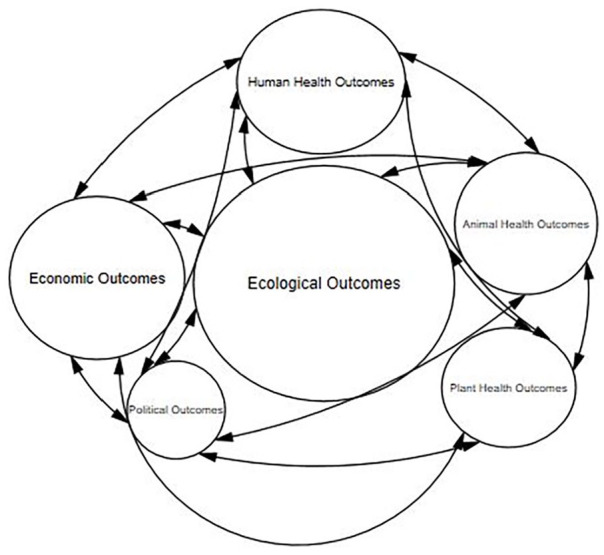
Interconnectedness and causal relationships among the various outcomes of climate change.
The Middle East region has faced distinct challenges stemming from its climatic variability, with desert-like conditions prevalent in some areas, characterized by arid, hot climates and limited precipitation and vegetation. Furthermore, economic disparities within the region have resulted in differing levels of resilience and adaptation to climate change impacts. Notably, per capita gross domestic product (GDP) varies significantly, ranging from $758 in Yemen to $65 908 in Qatar. 20 This phenomenon presents the diverse status of the countries within the Middle East region in terms of economic and financial attributes, which have affected the varying levels of ability of the countries to respond to climate change. This has resulted in some weaker regions that have responded poorly to the effects of climate change and some wealthier regions that have responded differently.
As reported by the findings of our study, Yemen, the least developed in the Middle East region, has experienced a severe cholera epidemic in 2016, surpassing 1 million suspected cases by January 2018. The conflict and destruction of infrastructure exacerbated the outbreak. Unique climatic conditions, influenced by El Niño and regional winds, facilitated cholera transmission from the Horn of Africa to Yemen. 29 Moreover, Yemen ranks among the most water-stressed nations globally, with projections suggesting that its capital, Sana’a, may become the first to exhaust its water supply. Predating the conflict, approximately half of Yemen’s population lacked reliable access to clean water and sanitation. The country’s infrastructure, including vital facilities like water desalination plants and reservoirs, has sustained significant damage throughout the civil war, further aggravating the water crisis. 118 And, the UN has declared Yemen as the world’s worst humanitarian crisis, with 21 million people in need of humanitarian assistance. 119
Another example reported by the findings of our study is Syria, where prolonged droughts exacerbated by climate change have led to extensive migration, food insecurity, malnutrition, and the breakdown of public health infrastructure, culminating in social unrest and civil strife.26,115 The drought, attributed to escalating greenhouse gas emissions and global warming, has been identified as a primary driver of regional conflict. 115 Furthermore, the ongoing war in Syria has inflicted severe damage on public health services, resulting in decreased life expectancy and a resurgence of preventable diseases due to health system collapse.120,121 Moreover, Syria harbors the largest internally displaced population worldwide, with 6.5 million displaced individuals among its 17 million inhabitants. The opposition-controlled area in Northwest Syria accommodates roughly 4.2 million people, over 2.8 million of whom are internally displaced populations from various regions. Within the opposition-controlled area, internally displaced camps provide refuge for approximately 1.5 million displaced Syrians, with over 75% comprising women and children. 122 These findings present a close relationship between climate change outcomes and political affairs, as supported by the literature. 123
It is worth mentioning that the situation in the Middle East regarding the outcomes of climate change varies among each country. In this regard, in contrast to the experience of Yemen and Syria, the UAE and Kuwait are leading efforts in the Middle East to address climate change. The UAE’s green economy strategy aims to incorporate 7% renewable energy by 2030, along with a nuclear power plant in Abu Dhabi supplying up to 25% of electricity needs. Despite heavy reliance on desalination, the UAE is also investing in water recycling. Meanwhile, Kuwait has ratified the Kyoto Protocol and the Paris Agreement, aiming for 15% renewable energy by 2030 as part of its 2035 vision, integrating renewables into water-energy sectors and promoting socioeconomic sustainability.124,125
The approach to addressing the climate crisis in the Middle East has entailed a blend of mitigation and adaptation strategies. Mitigation strategies have geared toward curtailing greenhouse gas emissions, transitioning to renewable energy sources, and enhancing energy efficiency. Conversely, adaptation strategies have focused on addressing the repercussions of climate change, including extreme temperatures, droughts, and flooding, through both precautionary and reactive measures.20,126,127 As regions exhibit varying sources and levels of emissions, they require tailored climate policy approaches that consider local conditions and capacities. 128 A place-based strategy is presented to be essential for achieving the transformations needed to reach net-zero emissions. This approach integrates local environmental, economic, and social factors into climate strategies, resulting in more effective and sustainable outcomes. 128
Limitations and Implications
A limitation of this study was the exclusion of local papers published in local languages within scientific journals of each Middle Eastern country, which could serve as a valuable consideration for future researchers. Another limitation of the study was its limited scope, which was confined to the Middle East. Future researchers can expand the scope to include other regions of the globe. The study ranked climate change outcomes based on their citations in the included studies. These findings can help beneficiaries, especially in public health policy, prioritize contexts in their plans and interventions to combat and mitigate the effects of climate change on society. The study also explored the catastrophic consequences of the climate change crisis in the Middle East, particularly focusing on Yemen and Syria. This serves as a significant implication for healthcare policymakers and researchers, both regionally and internationally, to examine the experiences of these nations meticulously and devise initiatives not only to alleviate the dire situations in Yemen and Syria but also to implement preventive policies in their respective countries. Additionally, the study highlighted the pioneering climate change policies of the UAE and Kuwait in the Middle East; This aspect offers valuable insights for policymakers and researchers, encouraging them to leverage the experiences of these nations in mitigating the climate change crisis. Policymakers in the Middle East, or in other regions with similar contexts, can implement various strategies to mitigate the effects of climate change on their areas. These strategies may include implementing green initiatives (e.g. transitioning to renewable energies) to enhance the sustainability of their regions.
Conclusion
Our study aligned with previous systematic reviews supporting the hypothesis that climate change has severely affected the Middle East region. The analysis of reviewed data revealed ecological outcomes as the most prevalent consequences of climate change in the Middle East, including alterations in habitat distribution, temperature increase, water scarcity, and more. The outcomes seemed to be interconnected, exacerbating each other. Yemen and Syria had faced severe consequences, leading to political unrest and humanitarian crises in which Yemen ranking among the most water-stressed nations globally, while Syria contending with millions of displaced individuals living in dire conditions. In contrast, the UAE and Kuwait had led regional efforts to address climate change, employing a mix of mitigation and adaptation strategies, serving as potential models for other countries. Future reviews focusing on internally published papers in local languages may be beneficial for obtaining a precise understanding of the phenomenon and its outcomes in the region.
Supplemental Material
Supplemental material, sj-docx-1-ehi-10.1177_11786302241302270 for A Systematic Review on the Outcomes of Climate Change in the Middle-Eastern Countries: The Catastrophes of Yemen and Syria by Mohsen Khosravi, Seyyed Morteza Mojtabaeian and Mina Aghamaleki Sarvestani in Environmental Health Insights
Supplemental material, sj-docx-2-ehi-10.1177_11786302241302270 for A Systematic Review on the Outcomes of Climate Change in the Middle-Eastern Countries: The Catastrophes of Yemen and Syria by Mohsen Khosravi, Seyyed Morteza Mojtabaeian and Mina Aghamaleki Sarvestani in Environmental Health Insights
Footnotes
Funding: The author(s) received no financial support for the research, authorship, and/or publication of this article.
The author(s) declared no potential conflicts of interest with respect to the research, authorship, and/or publication of this article.
Author Contributions: MK theorized the project, conducted the review, and data analysis, wrote the text of the manuscript and coordinated in the quality assessment of the papers. SMM wrote the methods section and cooperated in conducting writing of the manuscript. And, MAS conducted the quality assessment of the included studies, wrote the bibliography and coordinated in writing of the manuscript; All of the authors contributed in the screening process of the papers.
Ethical Approval and Consent to Participate: Not applicable.
Consent for Publication: Not applicable.
Availability of Data and Materials: The research data can be accessed by contacting the author of the paper.
ORCID iD: Mohsen Khosravi  https://orcid.org/0000-0002-0576-7660
Supplemental Material: Supplemental materials for this article are available online.
References
- 1. Campbell-Lendrum D, Neville T, Schweizer C, Neira M. Climate change and health: three grand challenges. Nat Med. 2023;29:1631-1638. [DOI] [PubMed] [Google Scholar]
- 2. Luschkova D, Ludwig A, Traidl-Hoffmann C. [Climate crisis and its impact on human health]. Dtsch Med Wochenschr. 2021;146:1636-1641. [DOI] [PubMed] [Google Scholar]
- 3. Luber G, Prudent N. Climate change and human health. Trans Am Clin Climatol Assoc. 2009;120:113-117. [PMC free article] [PubMed] [Google Scholar]
- 4. Rossati A. Global warming and its health impact. J Occup Environ Med. 2017;8:7-20. [DOI] [PMC free article] [PubMed] [Google Scholar]
- 5. Lineman M, Do Y, Kim JY, Joo GJ. Talking about climate change and global warming. PLoS One. 2015;10:e0138996. [DOI] [PMC free article] [PubMed] [Google Scholar]
- 6. Pizzulli VA, Telesca V, Covatariu G. Analysis of correlation between climate change and human health based on a machine learning approach. Healthcare. 2021;9:86. [DOI] [PMC free article] [PubMed] [Google Scholar]
- 7. Figueiredo T, Midão L, Rocha P, et al. The interplay between climate change and ageing: a systematic review of health indicators. PLoS One. 2024;19:e0297116. [DOI] [PMC free article] [PubMed] [Google Scholar]
- 8. Ebi KL, Boyer C, Bowen KJ, Frumkin H, Hess J. Monitoring and evaluation indicators for climate change-related health impacts, risks, adaptation, and resilience. Int J Environ Res Public Health. 2018;15:1943. [DOI] [PMC free article] [PubMed] [Google Scholar]
- 9. Di Napoli C, McGushin A, Romanello M, et al. Tracking the impacts of climate change on human health via indicators: lessons from the Lancet countdown. BMC Public Health. 2022;22:663. [DOI] [PMC free article] [PubMed] [Google Scholar]
- 10. Palmeiro-Silva Y, Aravena-Contreras R, Izcue Gana J, González Tapia R, Kelman I. Climate-related health impact indicators for public health surveillance in a changing climate: a systematic review and local suitability analysis. Lancet Reg Health Am. 2024;38:100854. [DOI] [PMC free article] [PubMed] [Google Scholar]
- 11. Stepanyan V, Abdih Y, Al-Hassan A, et al. Feeling the Heat: adapting to climate change in the Middle East and Central Asia. Dep Pap. 2022;2022:1. [Google Scholar]
- 12. Alaaldin R. Climate Change May Devastate the Middle East. Here’s How Governments Should Tackle It. Brookings; 2022. [Google Scholar]
- 13. Aysan A, Yousef O, T, Tracking Climate Policy Uncertainty In MENA. Middle East Council on Global Affairs; 2024. [Google Scholar]
- 14. Osman S. Assessing Climate Adaptation Plans in the Middle East and North Africa. 2024. [Google Scholar]
- 15. Borghesi S, Ticci E. Climate change in the MENA region: environmental risks, socioeconomic effects and policy challenges for the future. MED. 2019:289-292. [Google Scholar]
- 16. Arkeh J, Hamzawy A. Climate change in the Middle East and North Africa: mitigating vulnerabilities and designing effective policies. 2024. [Google Scholar]
- 17. Omran AR, Roudi F. The Middle East population puzzle. Popul Bull. 1993;48:1-40. [PubMed] [Google Scholar]
- 18. Kim K, Garcia TF. Climate change and violent conflict in the Middle East and North Africa. Int Stud Rev. 2023;25:viad053. [Google Scholar]
- 19. Khader YS, Abdelrahman M, Abdo N, et al. Climate change and health in the Eastern Mediterranean countries: a systematic review. Rev Environ Health. 2015;30:163-181. [DOI] [PubMed] [Google Scholar]
- 20. Neira M, Erguler K, Ahmady-Birgani H, et al. Climate change and human health in the Eastern Mediterranean and Middle East: literature review, research priorities and policy suggestions. Environ Res. 2023;216:114537. [DOI] [PMC free article] [PubMed] [Google Scholar]
- 21. Page MJ, Moher D, Bossuyt PM, et al. PRISMA 2020 explanation and elaboration: updated guidance and exemplars for reporting systematic reviews. BMJ. 2021;372. [DOI] [PMC free article] [PubMed] [Google Scholar]
- 22. Tyndall J. AACODS (authority, accuracy, coverage, objectivity, date, significance) checklist. Flinders: Flinders University. 2010. [Google Scholar]
- 23. Byrne D. A worked example of Braun and Clarke’s approach to reflexive thematic analysis. Qual Quant. 2022;56:1391-1412. [Google Scholar]
- 24. Lincoln YGEG. Naturalistic Inquiry. Sage Publications; 1985. [Google Scholar]
- 25. Abbasi H. The effect of climate change on depression in urban areas of western Iran. BMC Res Notes. 2021;14:155. [DOI] [PMC free article] [PubMed] [Google Scholar]
- 26. Arnout BA. An epidemiological study of mental health problems related to climate change: a procedural framework for mental health system workers. Work. 2023;75:813-835. [DOI] [PubMed] [Google Scholar]
- 27. Aboubakri O, Khanjani N, Jahani Y, Bakhtiari B, Mesgari E. Projection of mortality attributed to heat and cold; the impact of climate change in a dry region of Iran, Kerman. Sci Total Environ. 2020;728:138700. [DOI] [PubMed] [Google Scholar]
- 28. Bhaumik S, Beri D, Jagnoor J. The impact of climate change on the burden of snakebite: evidence synthesis and implications for primary healthcare. J Family Med Prim Care. 2022;11:6147-6158. [DOI] [PMC free article] [PubMed] [Google Scholar]
- 29. Paz S, Majeed A, Christophides GK. Climate change impacts on infectious diseases in the Eastern Mediterranean and the Middle East (EMME)-risks and recommendations. Clim Change. 2021;169:40. [DOI] [PMC free article] [PubMed] [Google Scholar]
- 30. Alkishe AA, Peterson AT, Samy AM. Climate change influences on the potential geographic distribution of the disease vector tick Ixodes ricinus. PLoS One. 2017;12:e0189092. [DOI] [PMC free article] [PubMed] [Google Scholar]
- 31. Asadgol Z, Mohammadi H, Kermani M, Badirzadeh A, Gholami M. The effect of climate change on cholera disease: the road ahead using artificial neural network. PLoS One. 2019;14:e0224813. [DOI] [PMC free article] [PubMed] [Google Scholar]
- 32. Asadgol Z, Badirzadeh A, Mirahmadi H, et al. Simulation of the potential impact of climate change on malaria incidence using artificial neural networks (ANNs). Environ Sci Pollut Res Int. 2023;30:75349-75368. [DOI] [PubMed] [Google Scholar]
- 33. Balci E, Borlu A, Kilic AU, et al. Tularemia outbreaks in Kayseri, Turkey: an evaluation of the effect of climate change and climate variability on tularemia outbreaks. J Infect Public Health. 2014;7:125-132. [DOI] [PubMed] [Google Scholar]
- 34. Charrahy Z, Yaghoobi-Ershadi MR, Shirzadi MR, et al. Climate change and its effect on the vulnerability to zoonotic cutaneous leishmaniasis in Iran. Transbound Emerg Dis. 2022;69:1506-1520. [DOI] [PubMed] [Google Scholar]
- 35. El-Fadel M, Ghanimeh S, Maroun R, Alameddine I. Climate change and temperature rise: implications on food- and water-borne diseases. Sci Total Environ. 2012;437:15-21. [DOI] [PubMed] [Google Scholar]
- 36. Ruheili AMA, Boluwade A, Subhi AMA. Assessing the impact of climate change on the distribution of lime (16srii-B) and alfalfa (16srii-D) Phytoplasma disease using MaxEnt. Plants. 2021;10:460. [DOI] [PMC free article] [PubMed] [Google Scholar]
- 37. Saberi N, Raeisi A, Gorouhi MA, et al. Modeling the effect of climate change on the distribution of main malaria vectors in an endemic area, southeastern Iran. Iran J Public Health. 2023;52:1061-1070. [DOI] [PMC free article] [PubMed] [Google Scholar]
- 38. Shajari A, Sanjerehei MM. Modeling the distribution of urolithiasis prevalence under projected climate change in Iran. Urolithiasis. 2015;43:339-347. [DOI] [PubMed] [Google Scholar]
- 39. Taha TE. Climate change and potential impact on disease: what are the public health agenda? Saudi J Med Med Sci. 2016;4:71-73. [DOI] [PMC free article] [PubMed] [Google Scholar]
- 40. Abdel-Aal MAM, Eltoukhy AEE, Nabhan MA, AlDurgam MM. Impact of climate indicators on the COVID-19 pandemic in Saudi Arabia. Environ Sci Pollut Res. 2022;29:20449-20462. [DOI] [PMC free article] [PubMed] [Google Scholar]
- 41. Baar Y, Friedman ALL, Meiri S, Scharf I. Little effect of climate change on body size of herbivorous beetles. Insect Sci. 2018;25:309-316. [DOI] [PubMed] [Google Scholar]
- 42. Behroozian M, Ejtehadi H, Peterson AT, Memariani F, Mesdaghi M. Climate change influences on the potential distribution of Dianthus polylepis bien. Ex Boiss. (Caryophyllaceae), an endemic species in the Irano-Turanian region. PLoS One. 2020;15:e0237527. [DOI] [PMC free article] [PubMed] [Google Scholar]
- 43. Farashi A, Karimian Z. Assessing climate change risks to the geographical distribution of grass species. Plant Signal Behav. 2021;16:1913311. [DOI] [PMC free article] [PubMed] [Google Scholar]
- 44. Korkmaz M, Mangıt F, Dumlupınar, et al. Effects of climate change on the habitat suitability and distribution of endemic freshwater fish species in semi-arid central Anatolian ecoregion in Türkiye. Water. 2023;15:1619. [Google Scholar]
- 45. Rounaghi I, Hosseinian Yousefkhani SS. Effects of climate change on niche shifts of Pseudotrapelus dhofarensis and Pseudotrapelus jensvindumi (Reptilia: Agamidae) in Western Asia. PLoS One. 2018;13:e0197884. [DOI] [PMC free article] [PubMed] [Google Scholar]
- 46. Hashem NM, Martinez-Ros P, Gonzalez-Bulnes A, El-Raghi AA. Case studies on impacts of climate change on smallholder livestock production in Egypt and Spain. Sustainability. 2023;15:13975. [Google Scholar]
- 47. Goma AA, Phillips CJC. The impact of anthropogenic climate change on Egyptian livestock production. Animals. 2021;11:3127. [DOI] [PMC free article] [PubMed] [Google Scholar]
- 48. Canturk U, Kulaç. The effects of climate change scenarios on Tilia ssp. In Turkey. Environ Monit Assess. 2021;193:771. [DOI] [PubMed] [Google Scholar]
- 49. Shaban M, Ghehsareh Ardestani E, Ebrahimi A, Borhani M. Climate change impacts on optimal habitat of Stachys inflata medicinal plant in central Iran. Sci Rep. 2023;13:6580. [DOI] [PMC free article] [PubMed] [Google Scholar]
- 50. Hosseini N, Mostafavi H, Sadeghi SMM. Impact of climate change on the future distribution of three ferulago species in Iran using the MaxEnt model. Integr Environ Assess Manag. 2024;20:1046-1059. [DOI] [PubMed] [Google Scholar]
- 51. Alipour S, Walas. The influence of climate and population density on Buxus hyrcana potential distribution and habitat connectivity. J Plant Res. 2023;136:501-514. [DOI] [PMC free article] [PubMed] [Google Scholar]
- 52. Asgharzadeh M, Alesheikh AA, Yousefi M. Disentangling the impacts of climate and land cover changes on habitat suitability of common pheasant phasianus colchicus along elevational gradients in Iran. Environ Sci Pollut Res Int. 2023;30:60958-60966. [DOI] [PubMed] [Google Scholar]
- 53. Azizi J, Zarei N, Ali S. The short- and long-term impacts of climate change on the irrigated barley yield in Iran: an application of dynamic ordinary least squares approach. Environ Sci Pollut Res Int. 2022;29:40169-40177. [DOI] [PubMed] [Google Scholar]
- 54. Bande L, Mohamed M, Asmelash Y, Alnuaimi A, eds. Residential Neighborhood Assessment in the City of Al Ain, United Arab Emirates, and the Impact on Climate Change (heat Island Effect Analysis). WIT Transactions on the Built Environment; 2022. [Google Scholar]
- 55. Deveci H. Estimation of the impact of climate change on spinach cultivation areas in Türkiye. Sustainability. 2023;15:15395. [Google Scholar]
- 56. Ekercin S, Örmeci C. Evaluating climate change effects on water and salt resources in Salt Lake, Turkey using multitemporal SPOT imagery. Environ Monit Assess. 2010;163:361-368. [DOI] [PubMed] [Google Scholar]
- 57. ElSaied A, Farouk H, Elhady M, Almarid ZD, Hashim AM. Environmental monitoring of anthropogenic impacts and climate change: a case study from the national network of roads in Egypt. Environ Sci Pollut Res Int. 2021;28:63391-63411. [DOI] [PubMed] [Google Scholar]
- 58. Ertürk A, Ekdal A, Gürel M, et al. Evaluating the impact of climate change on groundwater resources in a small Mediterranean watershed. Sci Total Environ. 2014;499:437-447. [DOI] [PubMed] [Google Scholar]
- 59. Ganji F, Nasseri M. System dynamics approaches to assess the impacts of climate change on surface water quality and quantity: case study of Karoun River, Iran. Environ Sci Pollut Res Int. 2021;28:31327-31339. [DOI] [PubMed] [Google Scholar]
- 60. Gholipoor M, Shahsavani S. Simulation study of past climate change effect on chickpea phenology at different sowing dates in Gorgan, Iran. Pak J Biol Sci. 2008;11:1561-1568. [DOI] [PubMed] [Google Scholar]
- 61. Giovanis E, Ozdamar O. The impact of climate change on budget balances and debt in the Middle East and North Africa (MENA) region. Clim Change. 2022;172:34. [DOI] [PMC free article] [PubMed] [Google Scholar]
- 62. Gohari A, Eslamian S, Abedi-Koupaei J, et al. Climate change impacts on crop production in Iran’s Zayandeh-rud River Basin. Sci Total Environ. 2013;442:405-419. [DOI] [PubMed] [Google Scholar]
- 63. Göncü S, Albek E. Modeling the effects of climate change on different land uses. Water Sci Technol. 2007;56:131-138. [DOI] [PubMed] [Google Scholar]
- 64. Gumus B, Oruc S, Yucel I, Yilmaz MT. Impacts of climate change on extreme climate indices in Türkiye driven by high-resolution downscaled CMIP6 climate models. Sustainability. 2023;15:7202. [Google Scholar]
- 65. Jeihouni E, Mohammadi M, Eslamian S, Zareian MJ. Potential impacts of climate change on groundwater level through hybrid soft-computing methods: a case study-Shabestar Plain, Iran. Environ Monit Assess. 2019;191:620. [DOI] [PubMed] [Google Scholar]
- 66. Lange MA. Impacts of climate change on the Eastern Mediterranean and the Middle East and North Africa region and the water–energy nexus. Atmos. 2019;10:455. [Google Scholar]
- 67. Lelieveld J, Hadjinicolaou P, Kostopoulou E, et al. Climate change and impacts in the eastern Mediterranean and the Middle East. Clim Change. 2012;114:667-687. [DOI] [PMC free article] [PubMed] [Google Scholar]
- 68. Mahdian M, Hosseinzadeh M, Siadatmousavi SM, et al. Modelling impacts of climate change and anthropogenic activities on inflows and sediment loads of wetlands: case study of the Anzali wetland. Sci Rep. 2023;13:5399. [DOI] [PMC free article] [PubMed] [Google Scholar]
- 69. Eltarabily MG, Abd-Elaty I, Elbeltagi A, Zeleňáková M, Fathy I. Investigating climate change effects on evapotranspiration and groundwater recharge of the Nile delta Aquifer, Egypt. Water. 2023;15:572. [Google Scholar]
- 70. Najimi F, Aminnejad B, Nourani V. Assessment of Climate Change’s impact on flow quantity of the mountainous watershed of the Jajrood River in Iran using hydroclimatic models. Sustainability. 2023;15:15875. [Google Scholar]
- 71. Orosa JA, Roshan G, Negahban S. Climate change effect on outdoor ambiences in Iranian cities. Environ Monit Assess. 2014;186:1889-1898. [DOI] [PubMed] [Google Scholar]
- 72. Paz S. The West Nile Virus outbreak in Israel (2000) from a new perspective: the regional impact of climate change. Int J Environ Health Res. 2006;16:1-13. [DOI] [PubMed] [Google Scholar]
- 73. Rahimi M, Fatemi F, Rezaei Mohammdi Z. Impacts of climate change on occupational health indicators in the three climatic regions of Iran. Int J Environ Health Res. 2024;34:535-546. [DOI] [PubMed] [Google Scholar]
- 74. Raoufi RS, Soufizadeh S. Simulation of the impacts of climate change on phenology, growth, and yield of various rice genotypes in humid sub-tropical environments using AquaCrop-Rice. Int J Biometeorol. 2020;64:1657-1673. [DOI] [PubMed] [Google Scholar]
- 75. Roshan G, Arab M, Klimenko V. Modeling the impact of climate change on energy consumption and carbon dioxide emissions of buildings in Iran. J Environ Health Sci Eng. 2019;17:889-906. [DOI] [PMC free article] [PubMed] [Google Scholar]
- 76. Shahvari N, Khalilian S, Mosavi SH, Mortazavi SA. Assessing climate change impacts on water resources and crop yield: a case study of varamin plain basin, Iran. Environ Monit Assess. 2019;191:134. [DOI] [PubMed] [Google Scholar]
- 77. Shalby A, Elshemy M, Zeidan BA. Assessment of climate change impacts on water quality parameters of Lake Burullus, Egypt. Environ Sci Pollut Res Int. 2020;27:32157-32178. [DOI] [PubMed] [Google Scholar]
- 78. Yano T, Aydin M, Haraguchi T. Impact of climate change on irrigation demand and crop growth in a Mediterranean environment of Turkey. Sensors (Basel). 2007;7:2297-2315. [DOI] [PMC free article] [PubMed] [Google Scholar]
- 79. Aibaidula D, Ates N, Dadaser-Celik F. Modelling climate change impacts at a drinking water reservoir in Turkey and implications for reservoir management in semi-arid regions. Environ Sci Pollut Res Int. 2022;30:13582-13604. [DOI] [PubMed] [Google Scholar]
- 80. Bakirci K, Kirtiloglu Y. Effect of climate change to solar energy potential: a case study in the Eastern Anatolia Region of Turkey. Environ Sci Pollut Res Int. 2022;29:2839-2852. [DOI] [PubMed] [Google Scholar]
- 81. Abed R, Adham A, Allawi MF, Ritsema C. Potential impacts of climate change on the Al Abila Dam in the Western Desert of Iraq. Hydrology. 2023;10:183. [Google Scholar]
- 82. Al Blooshi LS, Ksiksi TS, Aboelenein M, Gargoum AS. The impact of climate change on agricultural and livestock production and groundwater characteristics in Abu Dhabi, UAE. Nat Environ Pollut Technol. 2020;19:1945-1956. [Google Scholar]
- 83. Al-Hasani I, Al-Qinna M, Hammouri NA. Potential impacts of climate change on surface water resources in arid regions using downscaled regional circulation model and soil water assessment tool, a case study of Amman-Zerqa Basin, Jordan. Climate. 2023;11:51. [Google Scholar]
- 84. Asadi R, Zamaniannejatzadeh M, Eilbeigy M. Assessing the impact of human activities and climate change effects on groundwater quantity and quality: a case study of the Western Varamin Plain, Iran. Water. 2023;15:3196. [Google Scholar]
- 85. Elbeltagi A, Aslam MR, Malik A, et al. The impact of climate changes on the water footprint of wheat and maize production in the Nile delta, Egypt. Sci Total Environ. 2020;743:140770. [DOI] [PubMed] [Google Scholar]
- 86. Gorguner M, Kavvas ML. Modeling impacts of future climate change on reservoir storages and irrigation water demands in a Mediterranean basin. Sci Total Environ. 2020;748:141246. [DOI] [PubMed] [Google Scholar]
- 87. Gorguner M, Kavvas ML, Ishida K. Assessing the impacts of future climate change on the hydroclimatology of the Gediz Basin in Turkey by using dynamically downscaled CMIP5 projections. Sci Total Environ. 2019;648:481-499. [DOI] [PubMed] [Google Scholar]
- 88. Nama AH, Alwan IA, Pham QB. Climate change and future challenges to the sustainable management of the Iraqi marshlands. Environ Monit Assess. 2024;196:35. [DOI] [PMC free article] [PubMed] [Google Scholar]
- 89. Nassery HR, Zeydalinejad N, Alijani F, Shakiba A. A proposed modelling towards the potential impacts of climate change on a semi-arid, small-scaled aquifer: a case study of Iran. Environ Monit Assess. 2021;193:182. [DOI] [PubMed] [Google Scholar]
- 90. Soltani F, Javadi S, Roozbahani A, et al. Assessing climate change impact on water balance components using integrated groundwater–surface water models (case study: Shazand Plain, Iran). Water. 2023;15:813. [Google Scholar]
- 91. Wade AJ, Black E, Brayshaw DJ, et al. A model-based assessment of the effects of projected climate change on the water resources of Jordan. Philos Trans A Math Phys Eng Sci. 2010;368:5151-5172. [DOI] [PubMed] [Google Scholar]
- 92. Yilmaz AG, Hussein ANA, Khamis A, et al. Climate change effects on drought in Sharjah, UAE. Int J Environ Sci Dev. 2020;11:116-122. [Google Scholar]
- 93. Yilmaz F, Osborn D, Tsamados M. The influence of the Covid-19 pandemic and climate change on water use and supply: experience of Istanbul, Türkiye. UCL Open Environ. 2023;5:e061. [DOI] [PMC free article] [PubMed] [Google Scholar]
- 94. Chowdhury S, Al-Zahrani M. Implications of climate change on water resources in Saudi Arabia. Arab J Sci Eng. 2013;38:1959-1971. [Google Scholar]
- 95. Al Zawad F, Aksakal A. Impacts of climate change on water resources in Saudi Arabia. Green Energy Technol. 2010;31:511-523. [Google Scholar]
- 96. Altemimi DG, Al-Lami AM, Hashim BM. Assessment the impact of climate changes on snow cover area using Landsat data in sulaymaniyah City, Iraq. IOP Conf Ser Earth Sci. 2023;1213:012112. [Google Scholar]
- 97. Kara F, Yucel I. Climate change effects on extreme flows of water supply area in Istanbul: utility of regional climate models and downscaling method. Environ Monit Assess. 2015;187:580. [DOI] [PubMed] [Google Scholar]
- 98. Roth V, Lemann T, Zeleke G, et al. Effects of climate change on water resources in the upper Blue Nile Basin of Ethiopia. Heliyon. 2018;4:e00771. [DOI] [PMC free article] [PubMed] [Google Scholar]
- 99. Tabari H, Willems P. Seasonally varying footprint of climate change on precipitation in the Middle East. Sci Rep. 2018;8:4435. [DOI] [PMC free article] [PubMed] [Google Scholar]
- 100. Ranjbar MH, Etemad-Shahidi A, Kamranzad B. Modeling the combined impact of climate change and sea-level rise on general circulation and residence time in a semi-enclosed sea. Sci Total Environ. 2020;740:140073. [DOI] [PubMed] [Google Scholar]
- 101. Bannayan M, Mansoori H, Rezaei EE. Estimating climate change, CO2 and technology development effects on wheat yield in northeast Iran. Int J Biometeorol. 2014;58:395-405. [DOI] [PubMed] [Google Scholar]
- 102. Chandio AA, Gokmenoglu KK, Ahmad F. Addressing the long- and short-run effects of climate change on major food crops production in Turkey. Environ Sci Pollut Res Int. 2021;28:51657-51673. [DOI] [PMC free article] [PubMed] [Google Scholar]
- 103. Chandio AA, Ozturk I, Akram W, Ahmad F, Mirani AA. Empirical analysis of climate change factors affecting cereal yield: evidence from Turkey. Environ Sci Pollut Res Int. 2020;27:11944-11957. [DOI] [PubMed] [Google Scholar]
- 104. Sherif M, Sefelnasr A, Ebraheem A, Javadi A, eds. Possible impacts of climate changes on freshwater in coastal aquifers. International Conference on Marine and Freshwater Environments, iMFE 2014; 2014. [Google Scholar]
- 105. Sušnik J, Vamvakeridou-Lyroudia LS, Baumert N, et al. Interdisciplinary assessment of sea-level rise and climate change impacts on the lower Nile delta, Egypt. Sci Total Environ. 2015;503-504:279-288. [DOI] [PubMed] [Google Scholar]
- 106. Wabnitz CCC, Lam VWY, Reygondeau G, et al. Climate change impacts on marine biodiversity, fisheries and society in the Arabian Gulf. PLoS One. 2018;13:e0194537. [DOI] [PMC free article] [PubMed] [Google Scholar]
- 107. Tarnian F, Kumar S, Azarnivand H, Chahouki MAZ, Mossivand AM. Assessing the effects of climate change on the distribution of Daphne mucronata in Iran. Environ Monit Assess. 2021;193:562. [DOI] [PubMed] [Google Scholar]
- 108. Javadi A, Ghahremanzadeh M, Sassi M, Javanbakht O, Hayati B. Impact of climate variables change on the yield of wheat and rice crops in Iran (Application of stochastic model based on Monte Carlo Simulation). Comput Econ. 2023;63:983-1000. [DOI] [PMC free article] [PubMed] [Google Scholar]
- 109. Nourani V, Ghareh Tapeh AH, Khodkar K, Huang JJ. Assessing long-term climate change impact on spatiotemporal changes of groundwater level using autoregressive-based and ensemble machine learning models. J Environ Manag. 2023;336:117653. [DOI] [PubMed] [Google Scholar]
- 110. Boyacioglu H, Gunacti MC, Barbaros F, et al. Impact of climate change and land cover dynamics on nitrate transport to surface waters. Environ Monit Assess. 2024;196:270. [DOI] [PubMed] [Google Scholar]
- 111. Fathian M, Bazrafshan O, Jamshidi S, Jafari L. Impacts of climate change on water footprint components of rainfed and irrigated wheat in a semi-arid environment. Environ Monit Assess. 2023;195:324. [DOI] [PubMed] [Google Scholar]
- 112. Khodraz Z, Akbarian M, Khoorani A. Projecting the impacts of climate change on the wind erosion potential using an ensemble of GCMs in Hormozgan Coastal plains, Iran. Environ Monit Assess. 2023;195:1445. [DOI] [PubMed] [Google Scholar]
- 113. Ahmed N, Areche FO, Cotrina Cabello GG, et al. Intensifying effects of climate change in food loss: a threat to food security in Turkey. Sustainability. 2022;15:350. [Google Scholar]
- 114. Azhdari Z, Rafeie Sardooi E, Bazrafshan O, et al. Impact of climate change on net primary production (NPP) in south Iran. Environ Monit Assess. 2020;192:409. [DOI] [PubMed] [Google Scholar]
- 115. Breisinger C, Al-Riffai P, Wiebelt M. Economic impacts of climate change in the Arab world: A summary of case studies from Syria, Tunisia and Yemen. Climate Change and Food Security in West Asia and North Africa; 2013:339-366. [Google Scholar]
- 116. Kaniewski D, Marriner N, Morhange C, et al. Climate change threatens olive oil production in the levant. Nat Plants. 2023;9:219-227. [DOI] [PubMed] [Google Scholar]
- 117. Ajjur SB, Al-Ghamdi SG. Exploring urban growth-climate change-flood risk nexus in fast growing cities. Sci Rep. 2022;12:12265. [DOI] [PMC free article] [PubMed] [Google Scholar]
- 118. Al-Mekhlafi HM. Yemen in a time of cholera: current situation and challenges. Am J Trop Med Hyg. 2018;98:1558-1562. [DOI] [PMC free article] [PubMed] [Google Scholar]
- 119. Rahmat ZS, Islam Z, Mohanan P, et al. Food insecurity during COVID-19 in Yemen. Am J Trop Med Hyg. 2022;106:1589-1592. [DOI] [PMC free article] [PubMed] [Google Scholar]
- 120. Lal P. Ten years since the crises in Syria: lessons for planetary and public health. Public Health Action. 2021;11:110-111. [DOI] [PMC free article] [PubMed] [Google Scholar]
- 121. Zastrow M. Climate change implicated in current Syrian conflict. Nature. 2015. https://doi.org/10.1038/nature.2015.17027 [Google Scholar]
- 122. Douedari Y, Alhaffar M, Al-Twaish M, et al. “Ten years of war! You expect people to fear a ‘germ’?”: a qualitative study of initial perceptions and responses to the COVID-19 pandemic among displaced communities in opposition-controlled northwest Syria. J Migr Health. 2020;1-2:100021. [DOI] [PMC free article] [PubMed] [Google Scholar]
- 123. Sofuoğlu E, Ay A. The relationship between climate change and political instability: the case of MENA countries (1985:01–2016:12). Environ Sci Pollut Res. 2020;27:14033-14043. [DOI] [PubMed] [Google Scholar]
- 124. Sherif M, Liaqat MU, Baig F, Al-Rashed M. Water resources availability, sustainability and challenges in the GCC countries: an overview. Heliyon. 2023;9:e20543. [DOI] [PMC free article] [PubMed] [Google Scholar]
- 125. Sherif M, Abrar M, Baig F, Kabeer S. Gulf cooperation council countries’ water and climate research to strengthen UN’s SDGs 6 and 13. Heliyon. 2023;9:e14584. [DOI] [PMC free article] [PubMed] [Google Scholar]
- 126. El-Zein A, Jabbour S, Tekce B, et al. Health and ecological sustainability in the Arab world: a matter of survival. Lancet. 2014;383:458-476. [DOI] [PMC free article] [PubMed] [Google Scholar]
- 127. Abbass K, Qasim MZ, Song H, et al. A review of the global climate change impacts, adaptation, and sustainable mitigation measures. Environ Sci Pollut Res Int. 2022;29:42539-42559. [DOI] [PMC free article] [PubMed] [Google Scholar]
- 128. OECD. Environmental transition in regions. OECD. 2024. https://www.oecd.org/en/topics/sub-issues/environmental-transition-in-regions.html
Associated Data
This section collects any data citations, data availability statements, or supplementary materials included in this article.
Supplementary Materials
Supplemental material, sj-docx-1-ehi-10.1177_11786302241302270 for A Systematic Review on the Outcomes of Climate Change in the Middle-Eastern Countries: The Catastrophes of Yemen and Syria by Mohsen Khosravi, Seyyed Morteza Mojtabaeian and Mina Aghamaleki Sarvestani in Environmental Health Insights
Supplemental material, sj-docx-2-ehi-10.1177_11786302241302270 for A Systematic Review on the Outcomes of Climate Change in the Middle-Eastern Countries: The Catastrophes of Yemen and Syria by Mohsen Khosravi, Seyyed Morteza Mojtabaeian and Mina Aghamaleki Sarvestani in Environmental Health Insights