



Abstract
The focus of this paper was on finding wrist sensor-derived features for detecting highly acute fall risk from the sit-to-stand transitions performed in a non-ambulatory environment. Furthermore, the influence of the dominant and non-dominant hand on these features was investigated. A cohort of 174 older subjects was monitored for seven consecutive days in their home setting by using inertial sensors attached at the wrist. Based on the reported falls during a one-month follow-up phase, two groups were defined. Twenty-one time and frequency domain features were implemented for the quantitative assessment of extracted sit-to-stand transitions. The statistical analysis yielded two features that could convincingly distinguish fallers from non-fallers for the dominant hand, and six for the non-dominant hand. A novel feature, energy of the applied support during standing up, showed statistically good performance independently of on which hand the sensor node was worn, as well as for the dominant and non-dominant hand ( ,
,  , and
, and  , respectively). This paper overcomes limitations of clinical tests and shows a reliable application of wrist-worn bands in terms of assessment of highly acute fall risk. In addition, it reveals the sit-to-stand transition as a potential assessment source for the wrist-worn devices in the elderly population. Early assessment of the risk of falling in a widely accepted and non-stigmatized manner has the ability to bring crucial changes in fall prevention strategies, reducing the number of falls and the fall rate.
Keywords: Elderly population, fall risk assessment, inertial sensors, transitions in daily activities
An exploratory cross sectional study for determination of wrist sensor derived features for highly acute fall risk assessment (FRA) in elderly population from the sit to stand transitions performed in non ambulatory environments is presented. Wrist worn bands have shown a reliable application in terms of highly acute FRA, revealing sit to stand transitions as a potential robust assessment source. Early assessment of the risk of falling in the proposed widely accepted and non stigmatized manner has the ability to bring crucial changes in fall prevention strategies, reducing the number of falls, as well as the fall rate.

I. Introduction
One third of the population aged over 65 experience one or more falls each year. Falls are a major cause of middle to severe injuries placing an enormous burden on the healthcare system. This is reflected in over $34 billion fall-related costs per year in the USA alone [1]. Falls can lead to depression and social isolation [2]. The number of falls can be significantly reduced by using different fall prevention strategies such as balance and strength training, avoiding home hazards and shoe modifications, as well as drug related modifications and interventions [3].
The main prerequisite for fall prevention strategies is an objective and reliable fall risk assessment (FRA) to target the intervention. FRA in the clinical setting is still considered to be the gold standard. It is often assessed either via series of different tools (e.g. Psychological Profile Approach [4]) or via simple gait and balance tests (e.g. Timed-Up-And-Go test [5]). These tests have numerous limitations such as the lack of cost-effectiveness, high time consumption for both, patients and professionals, or focus on singular aspects (e.g. time) of highly complex activities. Therefore, recent studies have tried to perform FRA in a home environment by using unobtrusive systems containing inertial sensors [6]–[9]. Moreover, the results of FRA were further improved by combining sensor-based assessment with questionnaires [8], [9]. Sensor nodes in latter mentioned studies mostly target different aspects of gait analysis. The focus on gait is justifiable, since gait parameters have been shown to be meaningful fall predictors (such as gait speed [10], step rate variability [6] etc.). However, it also has been shown that 41% of all falls in the frail elderly population are caused by inappropriate sit-to-stand transfers [11], strongly indicating that more studies should address this outcome.
Although general consensus on the definition of a sit-to-stand transition is lacking, particularly in the unsupervised non-laboratory environment, clinically every sit-to-stand transition can be split into four main phases [12]: flexion (leaning forward), momentum-transfer (seat-off), extension (returning to upright position) and stabilization phase. The transitions described by this definition are rather inorganic in a home environment, mainly because they are often followed by a walking phase. As suggested in [13], most common transitions in normal daily routine are sit-to-walk transitions, where walking continues directly after the extension phase, skipping the stabilization phase. In these cases the initiation of the first step takes place at the same time as when the center of mass reaches the highest vertical point in the transition during extension. This movement requires very good coupling of both, upper and lower limbs. Weaker inter-limb coordination is characteristic of the elderly population at high risk of falling [14], highlighting the need to investigate sit-to-walk transitions in terms of FRA.
In previous studies sensor nodes were usually attached close to the center of mass, at the thigh or on the chest with an objective to detect activities of daily living [6]–[9], [15]. At present, wrist-worn bands, as the most unobtrusive and widely accepted devices for activity monitoring, have not yet been validated in terms of FRA from activities of daily living. Inertial sensors at the wrist are far away from the center of mass, and additionally are affected by movements performed during upper limb activities when the center of mass is in an approximately motionless position (e.g. standing, sitting, and lying). Although this challenging position has shown low performance for activity classification [16], [17], analysis of the data acquired with a wrist-worn band may reveal important information about different transfer techniques [18].
The aim of our study was the development of sensor-derived features describing the sit-to-stand transition via wrist band to discriminate between fallers and non-fallers in a cohort of elderly population. In order to gain better validation and understanding of the features independently of the side on which the sensor node was worn, the analysis of the implemented features was performed both, for the dominant and non-dominant hand.
II. Methods
A. Data Acquisition
An exploratory cross-sectional FRA study including a convenient sample of 174 adults aged between 65 and 85 years with a one month follow-up documenting fall events was performed. This study was part of a larger ongoing study conducted to develop fall risk assessment models based on the sensor-derived data from daily life activities. Participants were recruited from a geriatric rehabilitation clinic and a health insurance company in Germany. The study was approved by the Ethical Committee of the Medical Faculty at the University Hospital of Tuebingen, Germany. All participants gave their written informed consent in accordance with the Declaration of Helsinki. The exclusion criteria for participation in the study were impaired cognition (>10 points on the Short-Orientation-Memory-Concentra-tion (SOMC) test [19]), inability to walk or terminal diseases. During the study, 13 participants revoked their participation, while 25 participants had to be excluded due to the sensor malfunction, resulting in the inclusion of 136 subjects on which the data analysis was conducted.
Sensor-derived data of physical activities from each participant were recorded for one week (seven consecutive days) in the participant’s daily life routine. One week of data recording was chosen, since it reflects the person’s behavior during working hours (in case the participant is still employed) as well as during leisure time (weekends), which significantly influences the frequency of the transitions as shown in [20]. On the first day of measurement the participants arbitrarily chose on the side (dominant or non-dominant hand) they wanted the sensor node to be attached to and were asked to continue wearing it there until the end of measurement. The sensor node was attached in the morning and it was worn during normal daily routine, while the batteries were charged overnight. The sensor’s housing was not waterproof so the participants were instructed not to wear it when they had to come in contact with water. Data corresponding to measurements over one day were stored in one file to ease offline processing.
On the first day of a measurement week the participants’ characteristics were collected by a trained supervisor in the participants’ home environment. Descriptive parameters included age, height, body mass, SOMC test, habitual gait speed, number of chair rises during 30 seconds [21], and side of the dominant hand. The habitual gait speed was measured with static start on a pathway no shorter than 3.5 meters. The walking pathway was variable due to various conditions in the participant’s home environment (e.g. obstacles, small apartments).
Additionally, the participants answered a fall risk assessment questionnaire (FRAQ), investigating 18 of the most relevant factors for risk of falling identified in [22]. Risk factors were assessed with yes-no questions, except history of falls in the last 12 months and number of prescribed medications. History of falls was graded with 0 for no reported falls, with 1 for one to two reported falls and with 2 for more than two reported falls. For more than two prescribed medications the answer was graded with 1, otherwise with 0. Other factors depending on their presence were graded either with 0 or 1. Total score of the FRAQ was defined as the sum score of the answers. Furthermore, anthropometric measures and FRAQ were used to determine the FRAT-up (Fall Risk Assessment Tool) score, a score for the FRA previously developed and validated in [23] and [24]. Both measures, FRAQ and FRAT-up score, were used for further comparison with the results of the study.
From the first day of the measurement week onwards, all participants filled out a fall diary for one month. Each day was marked either with 1 (in case of fall) or 0 (in case of no fall). The fall was defined as a non-intentional unexpected event in which one’s body comes to rest on the ground, floor or lower level including the events occurred by tripping over an obstacle or slipping due to various environmental conditions (indoor, as well as outdoor) [25]. Since no reasonable definition in the literature nor general consensus about the relevant falls in terms of the FRA in a non-ambulatory environment could be found, all reported falls (including also ones during the fall-prone activities) were treated equally. These reports were used as the reference method for splitting the participants into two groups: fallers (participants reporting one or more falls) and non-fallers (participants reporting no falls). Characteristics of the participants are shown in Table 1.
TABLE 1. Participants Characteristics.
| Characteristic | All | Fallers | Non-fallers | ep-values |
|---|---|---|---|---|
| N | 136 | 13 | 123 | – |
| Female (%) | 69.2 | 69.2 | 57.7 | – |
| Sensor worn on dominant hand (%) | 40.0 | 40.0 | 39.3 | – |
| Age (years) | 72.5±5.6 | 74.2±5.3 | 72.4±5.6 | 0.93 |
| Height (cm) | 169.3±9.1 | 165.8±7.4 | 169.7±9.2 | 0.46 |
| Weight (kg) | 73.9±14.7 | 72.8±12.3 | 74.0±14.9 | 0.97 |
| aBMI, (kg/m2) | 25.7±4.1 | 26.4±3.4 | 25.6±4.2 | 0.61 |
| bSOMC (0–28) | 2.6±2.9 | 4.1±2.9 | 2.5±2.9 | 0.15 |
| Habitual gait speed, (m/s) | 1.1±0.2 | 1.0±0.3 | 1.1±0.2 | 0.97 |
| 30 sec chair rise test (n) | 13.3±3.3 | 11.8±3.5 | 13.4±3.2 | 0.33 |
| History of falls (n) | 0.3±0.5 | 0.5±0.5 | 0.2±0.4 | 0.15 |
| cFRAQ | 3.4±2.6 | 4.8±3.7 | 3.2±2.4 | 0.37 |
| dFRAT-up | 0.3±0.1 | 0.4±0.1 | 0.3±0.1 | 0.47 |
BMI = Body Mass Index;
SOMC = Short-Orientation-Memory-Concentration test;
FRAQ = Fall Risk Assessment Questionnaire;
FRAT-up = Fall Risk Assessment Tool;
P-values corrected for multiple comparison by using Benjamini-Hochberg correction (critical p-value: 0.02)
B. Sensor System
Participants wore one sensor node attached at the wrist (Figure 1). The sensor node consisted of a three-axial accelerometer BMA280, gyroscope BMG160 and magnetometer BMC055 (all three Bosch Sensortec GmbH, Reutlingen, Germany). Physical dimensions of the sensor node were 56 mm width, 46 mm length and 15 mm height. Measurement ranges were set to ±8 g, ±1000 °/s, and  for the accelerometer, gyroscope and magnetometer, respectively. Resolution of the accelerometer sensors was set to 14 bit, while gyroscope and magnetometer sensors had a 16 bit resolution. The data were sampled with 100 Hz, as this is a sampling frequency that by Nyquist-Shannon theorem should be able to cover 99% frequency components of the human daily movement [26]. Sampled data were transmitted wirelessly over a Bluetooth Low Energy (BLE) connection to an Android phone (LG G2 mini, LG Electronics, Seoul, South Korea) attached to a belt around the waist. Arrival time of each BLE packet was noted. Moreover, every minute the phone was sending a packet to the sensor and it was waiting for its response. The round trip of that packet between the phone and sensor was used later for synchronization purposes. The sensor node was supplied with a rechargeable lithium battery (170 mAh) which lasted for approximately eight hours of continuous data acquisition.
FIGURE 1.

Sensor node equipped with the 3-axes accelerometer, gyroscope and magnetometer attached at the wrist together with the data acquisition device (smart phone).
C. Transition Definition
The conventional descriptions of sit-to-stand transitions are predominantly related either to the participant’s center of mass (located around the fifth vertebrae in the lumbar spine) or to the upper part of the body. Our focus was on detection of the transitions with the wrist-attached sensor node by means of the acceleration-based dominant trigger conditions (e.g. dormancy phase or rotation in the wrist) in order to increase the algorithm’s precision for detection of these non-recurrent movements in activities of daily living. Since the end of the first dormancy phase followed by the rotation in the wrist was depicted as the transition’s start, the partial or in extreme cases complete loss of the flexion phase was unwillingly introduced as a trade-off. This further means that in the event of a total loss of the flexion phase, the seat-off moment, as the most noticeable and easily detectable part of the transition, became the starting point of the corresponding transition. With respect to the hand, more precisely with respect to the end phase, three possible end conditions were defined: motionless position at least for two seconds after the extension phase, first highest point in the arm swing depicting the start of a walking phase and various hand movements (e.g. reaching for the hair, fitting the clothes, swinging the hands) that were not distinguished from each other but rather depicted with energy in the acceleration signal above predefined threshold.
III. Data Analysis
A. Preprocessing
Acquired data from the FRA study were processed offline using MATLAB R2013b software package. Wrist signals were partially affected by data loss due to artifacts in the BLE connection (e.g. various obstacles and distances between wrist sensor and phone). Data loss was detected when the time difference between two consecutive BLE packages  and
and  satisfied a relation
  , where
  is the defined sampling period. Data loss was detected on a monotonously increasing time vector built from the mapping of the phone and sensor times. More specifically, the sensor time was a 22-bit counter mapped on the packet arrival time noted by the phone. This method allowed us to overcome the problem with counter overflow (due to limited variable size), as well as data loss over longer periods of time where whole counter cycles might have been lost (for example due to the BLE connection loss).
Before further processing, missing data packets were interpolated linearly. In order to use only meaningful (valid) parts of the interpolated signals, a valid flag was introduced. The valid flag denoted valid parts in the signal defined by three crucial conditions:
-
•
An interval between two consecutively acquired BLE packets was shorter than 250 milliseconds;
-
•
An interval defined with a window size of one second had less than 30% data loss in total;
-
•
An interval satisfying the two conditions above was longer than 10 seconds.
Invalid signal points, as well as the days with total data loss higher than 80% were excluded from further processing. Validated interpolated acceleration sensor data were used as an input to the sit-to-stand transition detection algorithm.
B. Sit-To-Stand Transition Detection
While many previous studies have focused on the detection and assessment of the particular phases in order to reliably assess the performed transitions [27]–[29], our proposed method focused on detection of particular trigger events (such as rotation of the wrist above a predefined threshold), as well as periodical or motionless situations after these events. Various reasons justify application of this approach. Movements of the hand prior to the transition can be mathematically described as chaotic movement contrary to the body’s center of mass which is prevalently motionless during sitting or standing [30], [31]. The focus on dominant trigger events places emphasis on the algorithm’s precision reducing possible false positive movements. Figure 2 shows an acceleration signal during eight hours of recording on the wrist and waist (data taken from a pilot study). This example illustrates the need for more robust algorithms (e.g. via trigger events) for the wrist sensor since sitting, standing and lying movements are overlapped with significantly more chaotically signals (i.e. higher signal variability) compared against the acceleration signals acquired with the waist-worn devices in previous studies [6]–[9]. Moreover, the end of the transition is mainly affected by additional chaotic movements. Thus, focus on the periodical movements (i.e. walking) or dormancy phase (i.e. motionless situation) can result in higher algorithm precision. Starting the transition with the trigger event as a trade-off introduces loss of the flexion phase which we overcame by assessing different features on the acceleration signal parts detected as transitions instead of the total transition time.
FIGURE 2.

Typical movement patterns recorded with acceleration sensor attached at the wrist and waist. Significantly higher signal variability (Spearman’s r = 0:05,  ) is clearly visible for the wrist sensor (2.9 g versus 1.5 g). Positive X axis of the local coordination system of the sensor points in the inferior-superior (VT) direction, positive Y axis points in the medial-lateral (ML) direction from the body, while Z axis points the anterior-posterior (AP) backwards direction.
Interpolated valid parts of the acceleration signal were filtered with a low-pass Butterworth filter  order with a cut-off frequency at 20 Hz. This filtration eliminated high frequency components that could have been misinterpreted as trigger events in the next steps of the algorithm. More precisely, the Butterworth filter has a maximally flat frequency response in the pass band, filtering the high frequency component but allowing the rest of the signal go through without attenuation (i.e. preserving the realistic recorded human movement). On the filtered acceleration signal, a detector for dormancy phases was applied, which was followed by the trigger detector based on the measurement of the rotation of the wrist either around X or Z local sensor axis (Figure 2). In case when the trigger detector reached a defined threshold (i.e. total rotation in the wrist after the dormancy phase was above empirically defined value) the second prerequisite for a transition was fulfilled. End of the dormancy phase was defined as the transition start.
In order to analyze only the meaningful parts of the signal, the next step of our algorithm defined the end of the detected transition. If a dormancy phase was detected at the transition end, the end of the corresponding transition was defined with the start of the dormancy phase. In case when a walking phase was detected at the transitions end, the highest point in the signal vector magnitude of the acceleration signal in the first detected arm swing within the walking phase was defined as the transition end. Walking as a periodical movement [32] from the macro perspective of the acceleration signal can be easily detected also on the wrist. An acceleration based arm swing detector was used for the detection of the walking phase. It was previously developed in Microsoft Visual Studio 2008 and used as a binary mex-file for offline processing of the acceleration data in MATLAB 2013b. The arm swing detector algorithm was based on an adaptive threshold approach with a sliding window. A walking phase was defined as the time between the start and end of walking. Start of walking was identified with three or more consecutively detected arm swings, while the end of walking was determined when no arm swings for a defined maximum swing duration time (three seconds) were detected. If both conditions for the transition’s end remained unfulfilled, its end was by default defined as a four second time period following the first trigger condition (i.e. end of the first dormancy phase). Visualization of the implemented approach together with corresponding signal analysis is shown in the Figure 3.
FIGURE 3.

Implication of different implemented detectors for trigger conditions on the acceleration signal of one sit-to-stand transition recorded with the wrist-attached sensor.
C. Feature Extraction
All parts of the acceleration signal that were classified as sit-to-stand transitions were used in the feature extraction process. An optimized feature extraction process allows significant dimensionality reduction (i.e. transformation of the existing signals into a lower dimensional space) [33] and easier interpretation of the results for both, clinicians and engineers. The most significant sit-to-stand feature for distinguishing between fallers and non-fallers is its duration [34], [35], but as previously described, this cannot be implemented for a wrist sensor due to the loss of the flexion phase. Moreover, to the best of our knowledge there are no features that could reliably assess the transitions on the wrist in terms of FRA. This fact is important because the wrist is far from the center of mass, meaning that a different behavior is recorded during the transitions when compared to a sensor attached at the lower back or sternum. Therefore, we introduced 10 time domain and 11 frequency domain features that were extracted from the wrist data set.
Time domain features were: peak value, jerk, median value, time to first arm swing (TTFS), amplitude of the first arm swing (AFS), and the amount of oscillation. All time domain features, except for the amount of oscillation, were derived from the validated filtered signals. The amount of oscillation was derived from the unfiltered signal since the oscillation spectrum was depicted with frequency components higher than the cut-off frequency of the applied filter. The peak value was calculated for all three axis of the acceleration signal as the maximum value during the transition. It is commonly present at the seat-off moment and reflects the energy that a participant invests for pushing himself from the chair. In addition to that, the peak value at the lower back has been shown to be very well correlated with the sit-to-stand transition time [28], supporting the implementation of this feature also in our study. The jerk and median features were calculated on the signal vector magnitude (SVM) of the acceleration signal. The jerk was defined as the mean value of the first derivation of the SVM, while the median feature is defined as the median of the SVM of the corresponding transition. TTFS corresponds to the feature time to walk introduced in [36]. Namely, it has been shown that fallers due to hesitation in the gait initiation need more time to perform the first step after the transition than non-fallers, so with this feature we could investigate whether the same could be claimed for the wrist-worn devices (i.e. first arm swing of the gait phase following the transition). Besides that, we introduced a new feature that investigated the amplitude of this first arm swing (i.e. AFS feature). The AFS and TTFS features were analyzed only for transitions where the walking phase was detected at the end of the transition (within four seconds from the trigger event). Lastly, the amount of oscillation during the transition was calculated as the variance of the first derivation independently for each acceleration axis.
Frequency domain features were: entropy, energy, fundamental frequency (FF), index of harmonicity (IH), and energy of the applied support in the oscillation spectrum. All features except for the latter one were calculated on the filtered signal (either on the SVM or particular sensor axis). The entropy of the signal was calculated for all three axes and is a measure of complexity of the analyzed signal (i.e. transition). The energy in the frequency spectrum was calculated as the squared sum of the harmonics lower or equal to a cut-off frequency of 20 Hz. Unlike the dominant frequency that is often used for quantifying the periodical movements like walking, the FF was used to assess the sit-to-stand transitions. FF was defined as the smallest frequency in the power spectrum having a peak [37]. IH was calculated as the ratio between the fundamental harmonic and following five (oscillating) harmonics. It quantifies the contribution of the fundamental frequency of the transition pattern to the signal power relatively to the higher harmonics [37].
A novel feature energy of the applied support (AS) for the assessment of the transition performance was introduced. Elderly people often use their hands for support while standing up [38], which motivated us to calculate the energy in the frequency spectrum (7-40 Hz) of the human physiological tremor (oscillation spectrum). Despite the debate regarding the right bandwidth of the oscillation spectrum, we used the definition in [39], because of its cover of the high frequency components in the movement. We hypothesized that people at higher risk of falling would have less energy in the oscillation spectrum since, due to the lower and upper limb weakness, they apply less force for support during standing up activities. Moreover, weakness in the upper and lower limbs has been shown as a good fall risk predictor [40]. Assessing it via this feature can also show significant differences between the groups.
D. Statistical Analysis
Statistical analysis of the extracted features was performed by using MATLAB R2013b Statistics and Machine Learning toolbox. For each participant all parts of the acquired signal identified as transitions were submitted to the feature extraction algorithm and a median value as well as 95% confidence interval (95% CI) were calculated for each feature. The median was used due to its better resistibility to extreme values that might have occurred by false detection of the transitions.
The one sample Kolmogorov-Smirnov test was used to test the distribution of the values for each extracted feature. Due to the non-parametric distribution of the features, a Wilcoxon-Mann-Whitney test was applied to analyze the differences between the two defined groups – acute fallers and non-fallers. The likelihood of the statistical type I error was addressed by the use of the Benjamini-Hochberg correction for multiple comparison. Test-retest reliability of extracted features throughout the monitored week was assessed by intraclass correlation coefficient (ICC). Namely, different circumstances in activities of daily living may introduce random fluctuations in performed transitions (such as different chairs, obstacles, dual tasking) which strongly suggests testing the correlation of median feature values for each day of measurement.
As a novel approach we tested the extracted features separately for the participants that wore sensors on their dominant or non-dominant hand. The algorithm applied to the signal acquired at the dominant hand can be influenced by different activities of daily living (e.g. writing, eating, and carrying different things), differing from the signal at the non-dominant hand. This analysis tested the side-dependence of the fall risk assessment at the wrist, as well as the sole performance of the proposed algorithm.
IV. Results
A. Participants Characteristics
Thirteen participants (9.6%) reported one or more falls in the first month of the follow-up phase (in total 21 falls or 1.6 falls per faller), while 123 participants (90.4%) reported no falls. Only four participants (2.9%) reported more than one fall in the first month after the measurement (in literature described as recurrent fallers), while only one reported fall occurred during the fall-prone activities (sport). In contrast, both groups reported similar number ( ) of retrospective falls in the last 12 months (0.5 ± 0.5 and 0.2 ± 0.4 for fallers and non-fallers, respectively). There was no significant difference between non-fallers and fallers in any of the anthropometric characteristics, including the clinical tests that were performed (
 ,
,  , and
, and  for habitual gait speed, 30 seconds chair rise test and SOMC, respectively). Participants in both groups were wearing the sensors in similar ratio on both sides of the body. The FRAQ and FRAT-up scores showed no significant difference between the groups (
 and
and  , respectively) although these two measures indicated moderate to good correlation (Spearman’s
  ,
,  ).
).
B. Sit-To-Stand Detection Algorithm Performance
The proposed algorithm was developed and validated in a pilot study with 28 adults aged between 65 and 90 years, who performed eight different types of the sit-to-stand transitions in a controlled environment (i.e. camera-supervised laboratory setting) as part of the protocol that simulated activities of daily living. The algorithm showed 71.4% precision for the non-dominant hand and 67.9% precision for the dominant hand. The sole focus of the study was to investigate the feature extraction process since the details of the algorithm for detection of transitions were issued as a patent application (official file number 102016203325.5) and thus are not further addressed here.
C. Quantitative Analysis
As a next step, the data from this study were used for the feature analysis. Only validated data that satisfied the defined exclusion criteria (explained in III.A) were used for this purpose. In our study the fallers created 397 hours of validated recording in total or 30.5 hours per participant in average. With respect to that, non-fallers created 4098 hours of validated recording or 33.3 hours per participant. The algorithm detected 372 transitions in total for fallers (28.6 transitions per participant per week). At the same time, the algorithm detected 4903 transitions for non-fallers (39.8 transitions per participant per week).
The Benjamini-Hochberg correction led to the following critical p-values:  for the features from the dominant hand and
  for the features from the non-dominant hand. Analysis of the extracted features for the dominant and non-dominant hand separately revealed several features for each case that can distinguish these defined groups. After correction for multiple comparison, a non-parametric Wilcoxon-Mann-Whitney test yielded two features that can clearly distinguish between the groups based on the data from the dominant hand (Table 2), while six features showed statistically significant differences between the groups based on the data from the non-dominant hand (Table 3). For the dominant hand, peak amplitude in the AP direction was considerably higher for fallers (
 ) and demonstrated high reliability (ICC = 0:81)), whereas the jerk showed dominance in the amplitude for the non-fallers (
 ) but with moderate test-retest reliability (ICC = 0:63). IH_VT was represented with indistinguishable results for fallers and non-fallers after the correction for the multiple comparison but still with the trend of slightly higher values in the favor of non-fallers (
 , 95% CI = 24:6 – 26.9 versus
  , 95% CI = 18:1 – 26.8,
  ). Although the presented values for the novel AS feature were comparable for the defined groups, the results correspond well with the hypothesis set in III.C (
 ) and 95% CI showed a clear separation between the groups (Figure 4).
TABLE 2. Statistical Analysis of the Transition Features.
| Domain | Feature | Sit-to-stand transitions from the dominant hand (54 participants) | |||||
|---|---|---|---|---|---|---|---|
| Mean | 95% CI | Adjusted p-valuea | hICC (95% CI) | ||||
| Non-fallers | Fallers | Non-fallers | Fallers | ||||
| Time | bPeak_VT, [g] | 1.27 | 1.17 | 1.25–1.30 | 1.09–1.26 | 0.253 | 0.79 (0.74–0.84) |
| Peak_AP, [g] | 0.38 | 0.73 | 0.36–0.40 | 0.61–0.85 | p<0.001* | 0.81 (0.76–0.85) | |
| Peak_ML, [g] | 0.862 | 0.79 | 0.84–0.88 | 0.68–0.90 | 0.137 | 0.84 (0.80–0.88) | |
| Jerk_SVM | 0.0032 | 0.0025 | 0.0032–0.0034 | 0.0019–0.0030 | p<0.001* | 0.63 (0.56–0.71) | |
| Median_SVM, [g] | 1.0105 | 0.9945 | 1.0041–1.0170 | 0.9572–1.0319 | 0.623 | 0.87 (0.84–0.91) | |
| dTTFS, [s] | 1.75 | 1.30 | 1.67–1.83 | 1.40–1.81 | 0.150 | 0.89 (0.86–0.92) | |
| fAFS, [g] | 1.27 | 0.94 | 1.22–1.33 | 0.60–1.27 | 0.096 | 0.91 (0.88–0.93) | |
| Oscillation_ML | 0.0040 | 0.0025 | 0.0034–0.0046 | 0.0019–0.0033 | 0.137 | 0.74 (0.69–0.81) | |
| Oscillation_VT | 0.0046 | 0.0022 | 0.0041–0.0052 | 0.0018–0.0027 | 0.078 | 0.75 (0.69–0.81) | |
| Oscillation_AP | 0.0073 | 0.0051 | 0.0066–0.0081 | 0.0037–0.0065 | 0.253 | 0.77 (0.72–0.82) | |
| Frequency | gAS | 0.0095 | 0.0052 | 0.0086–0.0104 | 0.0044–0.0059 | 0.027 | 0.83 (0.80–0.88) |
| hIH_VT | 25.8 | 22.5 | 24.6–26.9 | 18.1–26.8 | 0.096 | 0.68 (0.61–0.75) | |
| IH_AP | 14.1 | 16.7 | 13.5–14.7 | 11.4–22.1 | 0.652 | 0.78 (0.73–0.83) | |
| IH_ML | 16.1 | 13.8 | 15.2–17.1 | 11.0–16.6 | 0.508 | 0.76 (0.70–0.81) | |
| iFF_VT | 1.23 | 1.19 | 1.18–1.27 | 1.02–1.37 | 0.623 | 0.82 (0.78–0.87) | |
| Entropy_VT | 5.25 | 5.08 | 5.22–5.28 | 4.87–5.28 | 0.508 | 0.78 (0.73–0.84) | |
| Entropy_AP | 5.01 | 4.91 | 4.98–5.04 | 4.71–5.10 | 0.698 | 0.83 (0.79–0.88) | |
| Entropy_ML | 5.05 | 4.91 | 5.02–5.08 | 4.72–5.11 | 0.623 | 0.85 (0.81–0.89) | |
| Energy_VT | 0.75 | 0.69 | 0.73–0.77 | 0.61–0.77 | 0.278 | 0.80 (0.76–0.84) | |
| Energy_AP | 0.29 | 0.32 | 0.28–0.30 | 0.26–0.37 | 0.623 | 0.80 (0.75–0.84) | |
| Energy_ML | 0.28 | 0.26 | 0.27–0.29 | 0.21–0.31 | 0.612 | 0.84 (0.79–0.90) | |
P-values adjusted for the multiple comparison;
VT depicts X axis of the local coordination system of the sensor, AP is the Y axis, while ML is the Z axis;
cTTFS = Time To First Arm Swing;
AFS = Amplitude of the First Step;
eAS = Amount of Support;
IH = Index of Harmonicity;
FF = Fundamental Frequency;
ICC = Interclass correlation coefficient; P-values depicted with
are lower than the critical Benjamini-Hochberg p-value (p<0.014).
TABLE 3. Statistical Analysis of the Transition Features.
| Domain | Feature | Sit-to-stand transitions from the non-dominant hand (82 participants) | |||||
|---|---|---|---|---|---|---|---|
| Mean | 95% CI | Adjusted p-valuea | hICC (95% CI) | ||||
| Non-fallers | Fallers | Non-fallers | Fallers | ||||
| Time | bPeak_VT, [g] | 1.25 | 1.18 | 1.23–1.28 | 1.11–1.25 | 0.136 | 0.81 (0.76–0.85) |
| Peak_AP, [g] | 1.02 | 0.96 | 0.99–1.05 | 0.88–1.04 | 0.391 | 0.90 (0.87–0.93) | |
| Peak_ML, [g] | 0.72 | 0.78 | 0.69–0.74 | 0.72–0.85 | 0.034 | 0.87 (0.82–0.90) | |
| Jerk_SVM | 0.0021 | 0.0025 | 0.0021–0.0023 | 0.0022–0.0029 | 0.097 | 0.77 (0.72–0.82) | |
| Median_SVM, [g] | 1.0081 | 1.0050 | 0.9992–1.0171 | 0.97–1.03 | 0.220 | 0.82 (0.78–0.87) | |
| dTTFS, [s] | 1.72 | 1.75 | 1.62–1.82 | 1.49–2.02 | 0.968 | 0.81 (0.76–0.85) | |
| fAFS, [g] | 1.13 | 1.18 | 1.07–1.19 | 1.01–1.35 | 0.753 | 0.75 (0.70–0.81) | |
| Oscillation_ML | 0.0026 | 0.0028 | 0.0023–0.0029 | 0.0021–0.0035 | 0.015* | 0.80 (0.76–0.85) | |
| Oscillation_VT | 0.0029 | 0.0028 | 0.0024–0.0035 | 0.0024–0.0033 | 0.097 | 0.82(0.78–0.87) | |
| Oscillation_AP | 0.0059 | 0.0057 | 0.0051–0.0067 | 0.0039–0.0075 | 0.199 | 0.82 (0.79–0.87) | |
| Frequency | gAS | 0.0078 | 0.0059 | 0.0070–0.0085 | 0.0051–0.0066 | 0.020* | 0.83 (0.77–0.88) |
| hIH_VT | 25.5 | 23.4 | 24.3–26.7 | 18.4–28.6 | 0.005* | 0.59 (0.52–0.67) | |
| IH_AP | 16.4 | 20.5 | 15.6–17.1 | 15.1–25.6 | 0.253 | 0.85 (0.81–0.89) | |
| IH_ML | 12.0 | 15.4 | 11.1–12.9 | 11.7–19.1 | 0.585 | 0.77 (0.72–0.83) | |
| iFF_VT | 1.29 | 1.31 | 1.22–1.38 | 1.17–1.44 | 0.168 | 0.80 (0.75–0.85) | |
| Entropy_VT | 5.22 | 5.15 | 5.17–5.26 | 5.01–5.29 | 0.002* | 0.82 (0.77–0.86) | |
| Entropy_AP | 5.01 | 5.04 | 4.96–5.05 | 4.91–5.17 | 0.591 | 0.92 (0.90–0.94) | |
| Entropy_ML | 4.89 | 4.91 | 4.85–4.94 | 4.78–5.04 | 0.591 | 0.88 (0.85–0.91) | |
| Energy_VT | 0.81 | 0.65 | 0.79–0.84 | 0.59–0.71 | p<0.001* | 0.89 (0.87–0.93) | |
| Energy_AP | 0.32 | 0.37 | 0.31–0.34 | 0.33–0.41 | 0.032 | 0.82 (0.77–0.86) | |
| Energy_ML | 0.19 | 0.25 | 0.18–0.20 | 0.22–0.29 | 0.005* | 0.80 (0.76–0.84) | |
P-values adjusted for the multiple comparison;
VT depicts X axis of the local coordination system of the sensor, AP is the Y axis, while ML is the Z axis;
cTTFS = Time To First Arm Swing;
AFS = Amplitude of the First Step;
eAS = Amount of Support;
IH = Index of Harmonicity;
FF = Fundamental Frequency;
ICC = Interclass correlation coefficient; P-values depicted with
are lower than the critical Benjamini-Hochberg p-value (p<0.021).
FIGURE 4.

Comparison of the amount of the applied support feature for all detected transitions, and separately for the dominant and non-dominant wrist. Results show significant difference between fallers and non-fallers for all three cases as well as between means for dominant and non-dominant wrist.
On the contrary to the features extracted from the sensors at the dominant hand, features for the non-dominant hand were found to be more distinctive for the defined use case, particularly due to the narrower confidence intervals. Namely, one time domain feature (oscillation in the ML direction) and five frequency domain features (AS, IH_VT, entropy in the VT direction, energy in the VT and ML direction) could notably distinguish between the groups. The trend of features with higher values complements the results from the dominant hand. While energy in the VT direction was considerably higher for non-fallers, energy in the ML direction showed predominantly higher values for the group of fallers. Furthermore, despite the convincing results in the signal energy for the robust discernment between the groups, complexity of the movement as assessed throughout the entropy feature confirmed this inequality only in the VT direction. Promising findings for the IH feature in the VT direction for the dominant hand were confirmed with significant dissimilarities between defined groups for the non-dominant hand ( ). Importantly to note, none of the proposed conventional features demonstrated consistently significant differences for both hands. Hence, indicative features for the non-dominant hand demonstrated high test-retest reliability within the monitored period (ICC > 0:80), yielding a robust tool for assessment of one’s performance in terms of acute FRA.
Our newly proposed feature was higher in the non-fallers group, independently of which side the sensor had been worn on (Figure 4). The feature showed substantially less applied support ( ) at the non-dominant hand (
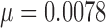 , 95% CI = 0:0070 – 0.085) than at the dominant hand (
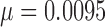 , 95% CI = 0:0086 – 0.0104) for the non-fallers. However, the AS feature was not found to significantly differentiate between amount of applied support by hands for the fallers (
 ). The remarkable performance of the AS feature was found at the dominant hand, where in extreme cases the amount of support applied was more than twice as large between particular participants.
V. Discussion
A number of features both, time and frequency domain based, indicated the significant differences between fallers and non-fallers independently of the side of the body (dominant or non-dominant) where the sensor system was worn. There was a high test-retest reliability of these features within the monitored period as well. Despite the poor performance of the clinical tools that are currently used in assessment of the fall risk (habitual gait speed [10], 30 seconds chair rise test [21], [41], and history of falls) our proposed method based on the assessment of wrist performance during sit-to-stand transitions overcame this highly complex multifactorial challenge. The reason for that lies in the analysis of not only numerical perspective of the sit-to-stand events but rather on its detailed quantitative assessment enabled throughout different features. Our results for the assessment of highly acute fall risk showed consistent feature performance for the defined groups in line with studies assessing fall risk either based upon detailed quantitative evaluation of the clinical characteristics (stride variability [42]) or features derived from waist-worn devices (local dynamic stability [43]).
Our novel feature AS indicated that the energy of the applied support is highly beneficial for distinguishing between fallers and non-fallers, especially from the perspective of the non-dominant hand. Further analysis should focus on the upper-limb role in the well-established 5-times-sit-to-stand test, where the arms are folded across chest [44]. The findings further supplement our knowledge of transfer strategies in elderly, showing that non-fallers who have more available upper and lower limb strength [40] will apply more energy for support during standing up, while being a faller does not automatically imply more applied support. Moreover, considerably more signal energy in the AP direction suggests that our findings could also be applied to detecting the fall-prone population in elderly with dementia (more movement and pushing through the armrest while standing up) [18] by objectively analyzing transfer techniques.
From the wrist perspective, the AS feature revealed noteworthy variability in the amount of applied support between the hands only for non-fallers suggesting a more uniform distribution of both hand support for standing up in the severely fall-prone subjects (i.e. in people with upper and lower limb weaknesses). This is also an important factor for the fall prevention implications since some of the strategies have been shown to affect only those parts receiving interventions [45]. Furthermore, wearing the sensor at the non-dominant hand provided more distinguishing features in terms of the FRA which suggests possible combinations of our method within a watch (or similar wrist-worn device) in future applications for a highly non-stigmatized medical use.
Defining the groups in our study based only on fall events during the first month of the follow-up phase, allowed us to assess highly acute fall risk. This enables faster interventions in prevention strategies crucially important for one’s personal safety, as well as for the cost optimizations. Nevertheless, the predictive value of our identified features and their effects on the clinical standard 12 months of the follow-up phase should be confirmed by another prospective study.
Non-fallers performed more transitions than fallers, possibly due to a predominantly sedentary behavior characteristic for the individuals at high risk of falling [46]. The definition of three different transition types by different end conditions and their fused analysis were justified by having a negligible amount (1.4%) of motionless positions detected, and the fact that random hand movements at the end of transition may also depict start of the walking phase since initial steps are prone to different artefacts and as such are hardly recognizable. Hence, analysis of different types of transitions, their occurrence as well as their influence on the proposed features should be addressed in future work in combination with additional sensor nodes since it can further extend the knowledge about group-characteristic transfer techniques.
Our method focused on the precision (i.e. correct detection of the performed transitions) rather than the sensitivity (i.e. hit rate). Thus, although we do not get all performed transitions, findings in [20] still enable us to detect enough transitions for further analysis even with low algorithm sensitivity. Dormancy and step detectors have made this high precision possible, but the influence of the false positive transitions in the final analysis should not be disregarded. This effect is particularly visible in the comparison of the results for the dominant and non-dominant hand from the perspective of the number of features that showed significant difference between the groups. Lower precision for the dominant hand, caused by more chaotically movement, that in acceleration signal look like sit-to-stand transitions (e.g. during writing, cooking, cleaning etc.), has consequently caused lower performance of the extracted features. Another limitation of this approach is being unable to detected the exact extreme points of the transfer (as defined in the clinical practice), but an approach with various features overcame this problem. Nevertheless, further objective qualitative assessment of whole transitions should be addressed in a controlled setting to confirm our findings in the daily life environment.
Most falls in community-dwelling older adults, especially for those above 80 years, occur indoors [47]. As a limitation of our study, some adults reported falls related to sports activities which are in its basic already sport-prone (e.g. skiing). These cases, despite the possible minor influence on the final results, were not separately analyzed in our study. Participants excluded from our study by the defined exclusion criteria should also be addressed either separately or as a more diverse group in further analysis, since these groups are at high risk of falling [3]. Although our assessment was based on the whole week of monitoring of the activities of daily living, covering both, leisure and business hours (when applicable), our study did not include late afternoon hours due to limited battery life time. Furthermore, some of the transitions performed by the study participants were completely or partially lost due to the data loss characteristic for wireless transmission [48]. This challenge was addressed by validating all the signals as described with three exclusion criteria, but this also strongly suggests alternative data acquisition protocols in future studies (e.g. SD card) and by using two or more batteries. The data loss might have affected the quantitative feature analysis, but its influence was negligible since all significant features showed high reliability throughout the monitored period of time.
VI. Conclusion
Analysis of the features derived from the sit-to-stand transitions shows good performance for assessment of acute fall risk. Our approach enables a reliable application of non-stigmatized wrist-worn devices also for clinically significant purposes, such as fall risk assessment. The findings also contribute to the better understanding and definition of the role of the upper limb in the elderly population, as well as improve disreputableness of the wrist-worn devices. Furthermore, the results open a broad spectrum of new additional options that could be investigated in further studies (e.g. different transfer strategies, correlation with other sensor positions, possible applications in neurodegenerative diseases that affect motor performance).
The study may be especially worthwhile for clinicians, as it provides tools for better adjustment of fall prevention strategies as well as for tracking their progress on a regular/monthly basis. Cost-effective multifactorial interventions that reduce the rate of falls, as well as the number of fallers in hospital settings [49], [50] could benefit from our method (more precisely from the AS feature analysis) since they are orientated to individually-designed prevention programs based on the previous assessments.
Biographies

Tomislav Pozaic received the B.Sc. degree in electrical engineering and information technology in 2011 and the M.Sc. degree in electronic and computer engineering in 2013 from the Faculty of Electrical Engineering and Computing, University of Zagreb, Croatia. His thesis was on the assisted strength exercising in elderly and diabetic population.
He is currently a Ph.D. Fellow with Bosch Healthcare Solutions GmbH, Waiblingen, Germany. His research is focused on the fall risk assessment in activities of daily living by using sensor-based approach. Further interests include signal processing, machine learning, and gait, and posture analysis.

Ulrich Lindemann received the Diploma degree in sport science from German Sport University Cologne in 1989 and the Ph.D. degree from the University of Ulm in 2004. He was a Professional Coach and a Therapist with the Orthopedic And Neurologic Rehabilitation. He was a Research Fellow with the Geriatric Center Ulm/Alb-Donau, Academic Center of the University of Ulm.
Since 2004, he is currently a Senior Research Fellow with the Clinic for Geriatric Rehabilitation, Robert-Bosch-Hospital, Stuttgart. His research activities are strength and balance exercise for older persons and assessment of physical performance and physical activity.

Anna-Karina Grebe received the degree in computer sciences from the Esslingen University of Applied Sciences, the M.Sc. degree in biomedical engineering from University of Ulm.
From 2011 to 2014, she was with Bosch Healthcare Solutions GmbH as a Research Engineer. Since 2015, she has been a Project Manager with focus on activity monitoring and clinical data analysis.

Wilhelm Stork received the degree in physics with focus on optics and digital image processing from the University of Munich, and the Ph.D. degree in applied optics from University Erlangen-Nürnberg.
Since 1993, he was with the Institute for Information Processing Technologies, Karlsruhe University. He leads the Research Group in Microsystems Technology and Optics, cooperates in various EU funded research projects. He is an Author of numerous influential publications with focus on optoelectronics in medicine and on computer-based tools for micro optical systems and components.
Funding Statement
The work was supported by the European Community’s Seventh Framework Programme FP7/2012 under Grant 316 639.
References
- [1].Center for Disease Control and Prevention, National Center for Injury Prevention and Control. Web-Based Injury Statistics Query and Reporting System, accessed on Dec. 8, 2015. [Online] Available: http://www.cdc.gov/homeandrecreationalsafety/falls/adultfalls.html
- [2].Kerse N., et al. , “Falls, depression and antidepressants in later life: A large primary care appraisal,” PLoS ONE, vol. 3, no. 6, p. e2423, 2008. [DOI] [PMC free article] [PubMed] [Google Scholar]
- [3].Karlsson M. K., Vonschewelov T., Karlsson C., Cöster M., and Rosengen B. E., “Prevention of falls in the elderly: A review,” Scandin. J. Public Health, vol. 41, no. 5, pp. 442–454, 2013. [DOI] [PubMed] [Google Scholar]
- [4].Lord S. R., Menz H. B., and Tiedemann A., “A physiological profile approach to falls risk assessment and prevention,” J. Amer. Phys. Therapy Assoc., vol. 83, no. 3, pp. 237–252, 2003. [PubMed] [Google Scholar]
- [5].Shumway-Cook A., Brauer S., and Woollacott M., “Predicting the probability for falls in community-dwelling older adults using the timed up & go test,” J. Amer. Phys. Therapy Assoc., vol. 80, no. 9, pp. 896–903, 2000. [PubMed] [Google Scholar]
- [6].Rispens S. M., van Schooten K. S., Pijnappels M., Daffertshofer A., Beek P. J., and van Dieën J. H., “Identification of fall risk predictors in daily life measurements: Gait characteristics’ reliability and association with self-reported fall history,” Neurorehabilitation Neural Repair, vol. 29, no. 1, pp. 54–61, 2015. [DOI] [PubMed] [Google Scholar]
- [7].van Schooten K. S., Pijnappels M., Rispens S. M., Elders P. J. M., Lips P., and van Dieën J. H., “Ambulatory fall-risk assessment: Amount and quality of daily-life gait predict falls in older adults,” J. Gerontol., vol. 70, no. 5, pp. 608–615, 2015. [DOI] [PubMed] [Google Scholar]
- [8].van Schooten K. S., Rispens S. M., Elders P. J., Lips P., van Dieën J. H., and Pijnappels M., “Assessing physical activity in older adults: Required days of trunk accelerometer measurements for reliable estimation,” J. Aging Phys. Activity, vol. 23, no. 1, pp. 9–17, 2014. [DOI] [PubMed] [Google Scholar]
- [9].Rispens S. M., van Schooten K. S., Pijnappels M., Daffertshofer A., and Beek P. J., and van Dieën J. H., “Do extreme values of daily-life gait characteristics provide more information about fall risk than median values?,” JMIR Res. Protocols, vol. 4, no. 1, p. e4, 2015. [DOI] [PMC free article] [PubMed] [Google Scholar]
- [10].Stone E., Skubic M., Rantz M., Abbott C., and Miller S., “Average in-home gait speed: Investigation of a new metric for mobility and fall risk assessment of elders,” Gait Posture, vol. 41, no. 1, pp. 57–62, 2015. [DOI] [PubMed] [Google Scholar]
- [11].Rapp K., Becker C., Cameron I. D., König H.-H., and Büchele G., “Epidemiology of falls in residential aged care: Analysis of more than 70,000 falls from residents of Bavarian nursing homes,” J. Amer. Med. Directors Assoc., vol. 13, no. 2, pp. 187.e1–187.e6, 2011. [DOI] [PubMed] [Google Scholar]
- [12].Schenkman M. L., et al. , “Whole-body movements during rising to standing from sitting,” Phys. Therapy, vol. 70, no. 10, pp. 638–648, 1990. [DOI] [PubMed] [Google Scholar]
- [13].Iluz T., et al. , “Can a body-fixed sensor reduce Heisenberg’s uncertainty when it comes to the evaluation of mobility? Effects of aging and fall risk on transitions in daily living,” J. Gerontol., vol. 71, no. 11, pp. 1459–1465, May 2016. [DOI] [PubMed] [Google Scholar]
- [14].Pozaic T., et al. , “Inter-limb coordination assessment and fall risk in ADL,” in Proc. Int. Conf. Biomed. Health Inform., Haikou, China, Oct. 2015, pp. 19. [Google Scholar]
- [15].Najafi B., Aminian K., Loew F., Blanc Y., and Robert P. A., “Measurement of stand-sit and sit-stand transitions using a miniature gyroscope and its application in fall risk evaluation in the elderly,” IEEE Trans. Biomed. Eng., vol. 49, no. 8, pp. 843–851, Aug. 2012. [DOI] [PubMed] [Google Scholar]
- [16].Welch W. A., et al. , “Classification accuracy of the wrist-worn GENEA accelerometer,” Med. Sci. Sports Exerc., vol. 45, pp. 2012–2019, Oct. 2014. [DOI] [PMC free article] [PubMed] [Google Scholar]
- [17].Mannini A., Intille S. S., Rosenberger M., Sabatini A. M., andHaskell W., “Activity recognition using a single accelerometer placed at the wrist or ankle,” Med. Sci. Sports Exerc., vol. 45, no. 11, pp. 2193–2203, 2013. [DOI] [PMC free article] [PubMed] [Google Scholar]
- [18].Dolecka U. E., Ownsworth T., and Kuys S. S., “Comparison of sit-to-stand strategies used by older adults and people living with dementia,” Arch. Gerontol. Geriatrics, vol. 60, no. 3, pp. 528–534, 2015. [DOI] [PubMed] [Google Scholar]
- [19].Katzman R., Brown T., Fuld P., Peck A., Schechter R., and Schimmel H., “Validation of a short Orientation-Memory-Concentration Test of cognitive impairment,” Amer. J. Psychiatry, vol. 140, no. 6, pp. 734–739, 1983. [DOI] [PubMed] [Google Scholar]
- [20].Dall P. M. and Kerr A., “Frequency of the sit to stand task: An observational study of free-living adults,” Appl. Ergonom., vol. 41, pp. 58–61, Jan. 2010. [DOI] [PubMed] [Google Scholar]
- [21].Jones C. J., Rikli R. E., and Beam W. C., “A 30-s chair-stand test as a measure of lower body strength in community-residing older adults,” Res. Quart. Exerc. Sport, vol. 70, no. 2, pp. 113–119, 1999. [DOI] [PubMed] [Google Scholar]
- [22].Deandrea S., Lucenteforte E., Bravi F., Foschi R., La Vecchia C., and Negri E., “Risk factors for falls in community-dwelling older people: A systematic review and meta-analysis,” Epidemiology, vol. 21, pp. 658–668, Sep. 2010. [DOI] [PubMed] [Google Scholar]
- [23].Cattelani L., et al. , “FRAT-up, a rule-based system evaluating fall risk in the elderly,” in Proc. IEEE 27th Int. Symp. Comput.-Based Med. Syst., May 2014, pp. 38–41. [Google Scholar]
- [24].Cattelani L., et al. , “FRAT-up, a Web-based fall-risk assessment tool for elderly people living in the community,” J. Med. Internet Res., vol. 17, no. 2, p. e41, 2015. [DOI] [PMC free article] [PubMed] [Google Scholar]
- [25].Hauer K., Lamb S. E., Jorstad E. C., Todd C., and Becker C., “Systematic review of definitions and methods of measuring falls in randomised controlled fall prevention trials,” Age Aging, vol. 35, pp. 5–10, Jan. 2006. [DOI] [PubMed] [Google Scholar]
- [26].Karantonis D. M., Narayanan M. R., Mathie M., Lovell N. H., and Celler B. G., “Implementation of a real-time human movement classifier using a triaxial accelerometer for ambulatory monitoring,” IEEE Trans. Inf. Technol. Biomed., vol. 10, no. 1, pp. 156–167, Jan. 2006. [DOI] [PubMed] [Google Scholar]
- [27].Van Lummel R. C., et al. , “Automated approach for quantifying the repeated sit-to-stand using one body fixed sensor in young and older adults,” Gait Posture, vol. 38, pp. 153–156, May 2013. [DOI] [PubMed] [Google Scholar]
- [28].Zijlstra W., Bisseling R. W., Schlumbohm S., and Baldus H., “A body-fixed-sensor-based analysis of power during sit-to-stand movements,” Gait Posture, vol. 31, pp. 272–278, Feb. 2010. [DOI] [PubMed] [Google Scholar]
- [29].Galli M., Cimolin V., Crivellini M., and Campanini I., “Quantitative analysis of sit to stand movement: Experimental set-up definition and application to healthy and hemiplegic adults,” Gait Posture, vol. 28, pp. 80–85, Jul. 2008. [DOI] [PubMed] [Google Scholar]
- [30].Pozaic T., et al. , “Sit-to-stand transition time estimation based on the wrist and hip acceleration sensor,” in Proc. ISPGR World Congr., Seville, Spain, pp. 87, Jun./Jul. 2015. [Google Scholar]
- [31].Zhang S., et al. , “Physical activity classification using the GENEA wrist worn accelerometer,” Ph.D. dissertation, Lippincott Williams Wilkins, Philadelphia, PA, USA: 2012. [DOI] [PubMed] [Google Scholar]
- [32].Davis J. W. and Taylor S. R., “Analysis and recognition of walking movements,” in Proc. Int. Conf. Pattern Recognit., 2002, pp. 315–318. [Google Scholar]
- [33].Zhu M., “Feature extraction and dimension reduction with applications to classification and the analysis of co-occurrence data,” Ph.D. dissertation, Dept. Statist, Stanford Univ, Stanford, CA, USA, 2001. [Google Scholar]
- [34].Tiedemann A., Shimada H., Sherrington C., Murray S., and Lord S., “The comparative ability of eight functional mobility tests for predicting falls in community-dwelling older people,” Age Aging, vol. 37, pp. 430–435, May 2008. [DOI] [PubMed] [Google Scholar]
- [35].Buatois S., et al. , “A simple clinical scale to stratify risk of recurrent falls in community-dwelling adults aged 65 years and older,” Phys. Therapy, vol. 90, no. 4, pp. 550–560, 2010. [DOI] [PubMed] [Google Scholar]
- [36].Kerr A., Rafferty D., Kerr K. M., and Durward B., “Timing phases of the sit-to-walk movement: Validity of a clinical test,” Gait Posture, vol. 26, pp. 11–16, Jun. 2007. [DOI] [PubMed] [Google Scholar]
- [37].Riva F., Bisi M. C., and Stagni R., “Orbital stability analysis in biomechanics: A systematic review of a nonlinear technique to detect instability of motor tasks,” Gait Posture, vol. 37, pp. 1–11, Jan. 2013. [DOI] [PubMed] [Google Scholar]
- [38].Mazzà C., Benvenuti F., Bimbi C., and Stanhope S. J., “Association between subject functional status, seat height, and movement strategy in sit-to-stand performance,” J. Amer. Geriatrics Soc., vol. 52, pp. 1750–1754, Oct. 2004. [DOI] [PubMed] [Google Scholar]
- [39].Mayston M. J., Harrison L. M., Stephens J. A., and Farmer S. F., “Physiological tremor in human subjects with X-linked Kallmann’s syndrome and mirror movements,” J. Physiol., vol. 3, pp. 551–563, Feb. 2001. [DOI] [PMC free article] [PubMed] [Google Scholar]
- [40].Cho K. H., Bok S. K., Kim Y.-J., and Hwang S. L., “Effect of lower limb strength on falls and balance of the elderly,” Ann. Rehabil. Med., vol. 36, pp. 386–393, Jun. 2012. [DOI] [PMC free article] [PubMed] [Google Scholar]
- [41].Millor N., Lecumberri P., Gómez M., Martínez-Ramírez A., and Izquierdo M., “An evaluation of the 30-s chair stand test in older adults: Frailty detection based on kinematic parameters from a single inertial unit,” J. Neuroeng. Rehabil., vol. 10, pp. 86–94, Aug. 2013. [DOI] [PMC free article] [PubMed] [Google Scholar]
- [42].Hausdorff J. M., “Gait dynamics, fractals and falls: Finding meaning in the stride-to-stride fluctuations of human walking,” Human Movement Sci., vol. 26, pp. 555–589, Aug. 2007. [DOI] [PMC free article] [PubMed] [Google Scholar]
- [43].van Schooten K. S., Rispens S. M., Pijnappels M., Daffertshofer A., and van Dieen J. H., “Assessing gait stability: The influence of state space reconstruction on inter- and intra-day reliability of local dynamic stability during over-ground walking,” J. Biomech., vol. 46, pp. 137–141, Jan. 2013. [DOI] [PubMed] [Google Scholar]
- [44].Buatois S., et al. , “Five times sit to stand test is a predictor of recurrent falls in healthy community-living subjects aged 65 and older,” J. Amer. Geriatrics Soc., vol. 56, pp. 1575–1577, Aug. 2008. [DOI] [PubMed] [Google Scholar]
- [45].Cadore E. L., Rodríguez-Mañas L., Sinclair A., and Izquierdo M., “Effects of different exercise interventions on risk of falls, gait ability, and balance in physically frail older adults: A systematic review,” Rejuvenation Res., vol. 16, no. 2, pp. 105–114, 2013. [DOI] [PMC free article] [PubMed] [Google Scholar]
- [46].Thibaud M., et al. , “Impact of physical activity and sedentary behaviour on fall risks in older people: A systematic review and meta-analysis of observational studies,” Eur. Rev. Aging Phys. Activity, vol. 9, pp. 5–15, Apr. 2012. [Google Scholar]
- [47].Bergström U., Björnstig U., Stenlund H., Jonsson H., and Svensson O., “Fracture mechanisms and fracture pattern in men and women aged 50 years and older: A study of a 12-year population-based injury register, Umeå, Sweden,” Osteoporosis Int., vol. 19, pp. 1267–1273, Sep. 2008. [DOI] [PubMed] [Google Scholar]
- [48].Cao H., Leung V., Chow C., and Chan H., “Enabling technologies for wireless body area networks: A survey and outlook,” IEEE Commun. Mag., vol. 47, no. 12, pp. 84–93, Dec. 2009. [Google Scholar]
- [49].Cameron I. D., et al. , “Interventions for preventing falls in older people in nursing care facilities and hospitals,” Cochrane Database Syst. Rev., vol. 20, no. 1, p. CD005465, 2010. [DOI] [PubMed] [Google Scholar]
- [50].Gillespie L. D., et al. , “Interventions for preventing falls in older people living in the community,” Cochrane Database Syst. Rev., vol. 12, no. 9, p. CD007146, 2012. [DOI] [PMC free article] [PubMed] [Google Scholar]