



Abstract
Maternal obesity associates with an increased risk of offspring neurodevelopmental disorders. Although the underlying mechanism(s) remain unclear, evidence suggests a role for altered DNA methylation. We utilized a murine model of diet‐induced obesity to investigate the impact of maternal obesity on the offspring brain transcriptome and DNA methylation. C57Bl/6 dams were fed high‐fat high‐sugar (HFD, n = 7) or control (CON, n = 7) diets. Maternal obesity/hyperglycemia associated with offspring growth restriction, with brain‐sparing specifically in females. Postnatal hypoglycemia was seen in HFD males, but not females. The 3′ RNA‐sequencing revealed perturbations in metabolic and cell differentiation pathways in neonatal male and female offspring frontal cortex and cerebellum. Compared with controls, HFD males, but not females, had lower cortical and cerebellar DNMT gene and protein expression, and reduced cerebellar TET enzyme mRNA. Whilst female offspring had lower cerebellar 5‐methylcytosine (5mC) and 5‐hydroxymethylcytosine (5hmC) than males, there were no effects of HFD on 5mC/5hmC in cortex or cerebellum in either sex. Our data suggest that maternal obesity has sex‐specific effects on fetal neurodevelopment, including enzymes involved in DNA methylation/demethylation. These mechanisms may play a role in the increased risk of neurodevelopmental disorders following obese/diabetic pregnancies, including increased male susceptibility to these disorders.
Keywords: DNA methylation, epigenetics, neurodevelopment, obesity, pregnancy
1. INTRODUCTION
The prevalence of obesity is increasing across the world with important consequences for global disease burden and economic output. 1 , 2 Worldwide, the proportion of women with a body mass index (BMI) of 25 kg/m2 or greater is estimated to be around 38.0%. 3 This includes pregnant women, such that ~1 in 5 pregnant women may be obese. 4 Some countries report higher prevalence data including the United States where rates of pre‐pregnancy overweight (BMI 25.0–29.9 kg/m2) and obesity (BMI ≥30 kg/m2) have been estimated at 25.8% and 25.6%, respectively. 5 Data from the Euro‐Peristat Project (2015) reported that 30%–50% of pregnant women in Europe were overweight and 8%–26% obese. 6 The increasing prevalence of obesity in adolescents and young adults 1 , 7 emphasizes the need for global public health measures to tackle obesity if there is not to be a continued rise in obesity prevalence amongst pregnant women. Indeed, a recent study has predicted that a lack of effective interventions may result in an increase of overweight and obese individuals by 44% and 45%, respectively, by 2030. 1
Whilst maternal obesity during pregnancy is associated with significant immediate risks to the mother and offspring 8 it also has implications for both maternal and offspring long‐term health. 9 During the antenatal and early postnatal period, exposure to “adverse” environments can impact on key developmental processes in the offspring, leading to long‐lasting effects into adulthood. 10 , 11 , 12 , 13 The associations between maternal obesity and the long‐term risk of non‐communicable diseases in her offspring, including poor cardiometabolic health, cancer, and respiratory diseases, are widely recognized. 14 , 15 , 16 There is also growing evidence for an association between higher maternal BMI and diabetes in pregnancy and an increased risk of neurodevelopmental disorders in her offspring. 17 Evidence from epidemiological studies suggests that maternal obesity, gestational and/or type 2 diabetes, and increased gestational weight gain are associated with an increased risk of autism spectrum disorders (ASD), attention deficit‐hyperactivity disorder (ADHD) and impaired cognitive function in her children. 18 , 19 , 20 , 21 A meta‐analysis by Wang et al. 19 identified a 16% increase in offspring risk of ASD for every 5 kg/m2 increase in maternal BMI. Gestational diabetes diagnosed before 26 weeks' gestation and type 2 diabetes associates with a relative risk of 1.42 (95% CI: 1.16–1.75) and 1.33 (95% CI: 1.07–1.66), respectively, of offspring developing ASD. 20 These data are supported by studies in animal models which confirm that maternal diet‐induced obesity can affect offspring neurodevelopment. 22
Human brain development begins in the third gestational week and continues throughout gestation, involving a complex network of molecular mechanisms and changes in gene expression. 23 Kang et al. published a detailed analysis of a gender‐specific genome‐wide exon‐level transcriptomic data from 16 human brain regions ranging from the embryonic period to late adulthood. 24 Genes involved in key neurodevelopmental processes, including cell proliferation, dendrite development, synaptogenesis, and myelination, were interrogated, and transcriptional trajectories identified a highly dynamic process in these processes during the fetal period. Cell proliferation was at its peak in the neocortex and cerebellum during fetal development, and this progressively reduced over time. However, synaptogenesis and myelination exponentially increased in utero and peaked at the time of birth, and they remained at their maximum transcriptional velocity into adulthood. Exploration of the transcription of glycolytic genes identified an increase in glycolytic gene transcription in the cortex over the course of fetal development, whereas transcriptional activity peaked in utero in the cerebellum, 25 suggesting that the fetal frontal cortex and cerebellum are potentially vulnerable to in utero exposure to hyperglycemia during obese and/or diabetic pregnancies. Indeed, aberrant structural organization and cellular connectivity in both the frontal cortex and cerebellum have been implicated in childhood‐onset neurodevelopmental disorders, including autism spectrum disorders and attention deficit‐hyperactivity disorders. 26 , 27 , 28 , 29 , 30
There is increasing evidence that dynamic changes in DNA methylation (5‐methylcytosine, [5mC] and 5‐hydroxymethylcytosine [5hmC]) are crucial for normal in utero brain development. 31 , 32 For example, DNA methylation associates with chromatin accessibility, particularly at regulatory sites, suggesting a key role in the determination of cell identity and function. 33 Dynamic changes in 5mC/5hmC levels also occur during neurogenesis 31 ; for example, neural progenitor cells and immature neurons have lower levels of 5hmC in comparison to differentiated cortical plate neurons. 31 These dynamic changes in DNA methylation/hydroxymethylation, which are important for normal neurodevelopment, are facilitated by the DNA methyltransferase (DNMT) and Ten‐eleven translocation (Tet) enzymes. 34 , 35 , 36 , 37
Epigenome‐wide association studies of peripheral blood from offspring of women with gestational diabetes and obesity during pregnancy have identified differential methylation of genes involved in lipid metabolism and endocrine functioning, which may be involved in the increased susceptibility to obesity and impaired glucose tolerance. 38 However, the extent to which the maternal metabolic milieu influences the epigenome of the developing fetal brain and the extent to which this contributes to psychiatric and neurodevelopmental disorders is less well understood. 39 , 40 In this study, we used a mouse model of maternal obesity to study the effects on the developing brain transcriptome and DNA methylome in male and female offspring.
2. METHODS
2.1. Animals
All animal procedures were performed in accordance with the Animals (Scientific Procedures) Act 1986. Experimental protocol and methods (Experiment ID: 84‐LF2‐18 and 644‐LF2‐18) were approved by the United Kingdom Home Office and local ethics committee. Animals were maintained in a controlled environment with set humidity (55%), temperature (21°C–22°C) and lighting (12‐h light/12‐h dark).
Female C57Bl/6 mice (in house stock, Harlan, UK) aged 3 weeks to 3 weeks + 3 days were randomly allocated to either “high‐fat diet” (HFD: 45% fat; Special Diets Services [SDS, 824053]), supplemented with “high sugar” condensed milk (Carnation Sweetened Condensed Milk [31% sugars, 6% fat] with added vitamin premix [SDS 829912], 62.5 mg per 30 mL) or “control diet” (CON: Special Diets Services [RM1(P) 801151]) as previously described. 41 Each cage housed two females with ad lib access to food and water during the experimental period.
A first mating cycle was performed following 3 weeks of being on the diet, irrespective of weight, to confirm breeding ability (CON n = 17, HFD n = 16). Each mating cage consisted of 2 dams and 1 stud male, which had previously been maintained on standard chow (Special Diets Services [RM1(E) 801003]). Cages were checked daily for the presence of vaginal plugs. Mice that had successful pregnancies within 12 days (i.e., proven breeders) were included in the ongoing experiment (n = CON 17; HFD 16). Dams in the HFD group, which reached a weight >30 g, were then included in a second mating cycle to generate pups used for the experiment (HFD dams with successful first mating cycle and >30 g before second mating cycle, n = 10. HFD dams with successful second mating cycle, n = 7). During this second mating cycle, dams were weighed on embryonic days (E)0.5, E5, E10, and E18, and on postnatal days (PN)1 and 10 (Ohaus Scout STX2201 Portable Balance). Tail nick blood was collected from dams on E0.5, E10, and E18, PN1 (after pups were removed) and PN10. All blood tests were performed between 0930 and 1100 h, and animals had usual access to diet and water before, during, and after blood sampling (see Figure 1).
FIGURE 1.

Mouse model of high‐fat high‐sugar diet (HFD)‐induced obesity. N = 7 in each diet group, and offspring from the second mating cycle were retrieved for dissection and further analysis. aBreeding cycle 1 confirmed dam breeding ability. bOnly dams that successfully fell pregnant in breeding cycle 1 were included in breeding cycle 2 (proven breeders). #Offspring from breeding cycle 1 was killed on postnatal day 1. §Offspring from breeding cycle 2 were retrieved on postnatal day 1 for downstream experiments (Created using BioRender).
Offspring born following the second mating cycle were retrieved on PN1 and killed by decapitation. Pup weight was measured and sex was determined by checking anogenital distance. The brain was removed, weighed, and then micro‐dissected using a dissecting microscope (Stemi 2000, Zeiss) to obtain the frontal cortex and cerebellum. All tissues were snap frozen and stored at −80°C until ready for use.
Blood from dams (tail nick) and pups (trunk blood) was analyzed for blood glucose concentrations using the Accu‐Chek Performa Nano Blood Glucose System (Roche, UK). Plasma was obtained following centrifugation (12,000g for 10 min at 4°C) and stored at −80°C. Offspring and dam plasma insulin concentrations were quantified using the Ultrasensitive Mouse Insulin ELISA Kit (Mercodia).
2.2. Transcriptomic analysis
RNA was extracted from the frontal cortex and cerebellum from one male and one female offspring randomly selected from each litter (i.e., male offspring, n = 7/diet group; female offspring, n = 7/diet group) using QIAzol Lysis Reagent and the QIAGEN RNeasy Kit (QIAGEN, UK), and stored at −80°C. RNA quality was assessed with gel electrophoresis (18S and 21S bands) and quantity assessed using a spectrophotometer (Nanodrop 2000, Thermo Fisher Scientific). For quantitative qPCR, cDNA was generated following reverse transcription of RNA using the High Capacity cDNA Reverse Transcriptase Kit (QIAGEN, UK). qPCR was performed using either SYBR Green or probe‐based assay on a LightCycler 480 Instrument (Roche, West Sussex, UK), followed by melting curve analysis. Primers were designed using the Roche Universal ProbeLibrary Assay Design Center (Table 1).
TABLE 1.
List of primers for qPCR.
| Gene | Sequence | Probe |
|---|---|---|
| TBP |
For: 5′‐GGCGGTTTGGCTAGGTTT‐3′ Rev: 5′‐TCTGGGTTATCTTCACACACCA‐3′ |
107 |
| DNMT1 |
For: 5′‐GCTACCAGTGCACCTTTGGT‐3′ Rev: 5′‐ATGATGGCCCTCCTTCGT‐3′ |
1 |
| TET1 |
For: 5′‐GGCTCCAGTTGCTTATCAAAA‐3′ Rev: 5′‐CCCTCTTCATTTCCAAGTCG‐3′ |
67 |
| TET3 |
For: 5′‐AAGACGCCACGAAAGTTCC‐3′ Rev: 5′‐TGAAAGCTATTCCGGAGCAC‐3′ |
63 |
| DNMT3a |
For: 5′‐TACCAGTATGACGACGATGG‐3′ Rev: 5′‐GGGCATAAGGGCACCTAT‐3′ |
‐ |
| RPL30 |
For: 5′‐CTGCTCTCAAGGTTGTTCG‐3′ Rev: 5′‐GCCCTCAAGGTTGTGC‐3′ |
‐ |
For RNA‐sequencing, library preparation and 3′ RNA‐sequencing were performed at the Genetics Core, Edinburgh Clinical Research Facility, University of Edinburgh (n = 7 for each sex and diet group). Single read (1× 75 bp) sequencing was performed using the NextSeq 500/550 High‐Output v2.5 (75 cycle) Kit (Illumina) on the NextSeq 550 platform (Illumina). The libraries were combined in 2 equimolar pools of 42 libraries and run across 2× NextSeq 500/550 High Output v2.5 Flow Cells (Illumina). Raw data were transferred in “.bcl” format from the NextSeq 550 instrument to a computer running Linux and used to generate demultiplexed FASTQ files using the Bcl2fastq2 v2.17.1.14 software (Illumina). The lane‐splitting feature on this software was disabled to create a single FASTQ file for each library. QuantSeq FWD data analysis was performed on the Bluebee Genomics Platform (1.10.16, www.bluebee.com). The generated raw reads were trimmed and aligned to the Encyclopedia of DNA Elements (ENCODE) mouse reference genome (mm9) using the Spliced Transcript Alignment to a Reference (STAR) aligner. Raw gene counts for each individual sample were produced following in‐built quality control steps. Analysis was performed on R (version 3.6.2, https://www.r-project.org/), with its associated packages (https://cran.r-project.org/). The edgeR platform (version 3.28.1) was used to normalize read counts and determine differentially expressed genes (https://bioconductor.org/packages/release/bioc/html/edgeR.html). A full list of R packages has been included in Supporting Information S1. Functional enrichment analysis of differentially expressed genes was performed using Gene Set Enrichment Analysis (GSEA) Software (v4.1.0). 42
2.3. DNA extraction and ultra‐performance liquid chromatography (UPLC) for 5mC/5hmC
DNA was extracted from frozen dissected offspring brain sections using the QIAGEN DNeasy Blood and Tissue Kit (DNA was obtained from male cortex, CON n = 7, HFD n = 5.; male cerebellum, CON n = 7, HFD n = 5. Female cortex, CON n = 7, HFD n = 6; female cerebellum, CON n = 4, HFD n = 4). DNA quality and quantity were assessed with a spectrophotometer (Nanodrop 2000, Thermo Fisher Scientific). The samples were processed at the Mass Spectrometry Facility, Institute for Genetic and Molecular Medicine (IGMM), University of Edinburgh as previously described. 43
2.4. Western blot
Protein was extracted from defrosted brain tissue sections (n = 3 for each sex and diet group) using lysis buffer (RIPA buffer) with a protease inhibitor complex. Protein concentration was quantified using a modified Lowry assay (DC Protein Assay Kit, Bio‐Rad Laboratories) according to the manufacturer's protocol. Extracted protein (30 μg/sample) was resolved by SDS‐PAGE, using Novex Wedgewell (4%–12%) pre‐loaded gels (Thermo Fisher). Protein bands were then transferred onto polyvinylidene difluoride (PVDF) membranes using the Trans‐Blot Turbo Blotting System (Bio‐Rad). Membranes were blocked in 5% skimmed milk (in Tris‐buffered saline buffer with 0.2% Tween, TBS‐T) and incubated overnight in primary antibodies (Anti‐DNMT1 antibody, Abcam ab188453, 1:1000. Anti‐DNMT3A antibody, Abcam ab188470, 1:2000. Anti‐beta Actin antibody, Proteintech 66,009, 1:10000. All antibodies were diluted in 3% BSA in Tris‐buffered saline) at 4°C. Membranes were then incubated in secondary antibodies (IRDye 800CW and IRDye 680CW (LI‐COR, anti‐mouse and anti‐rabbit IgGs), diluted at 1:10,000 dilution in 3% BSA in TBS with and 0.01% SDS) for 1 h at room temperature. Membranes were scanned using the Li‐cor Odyssey Clx Imaging system, and protein bands were analyzed using Image Studio Light software (LI‐COR, version 5.2.5). Protein bands of interest were normalized against beta‐Actin.
2.5. Statistical analysis
Data from 3′‐RNA sequencing were deemed statistically significant if they met the following criteria: (1) false discovery rate (FDR) <0.05, and (2) adjusted p‐value <.05. These values were calculated using the edgeR package on R (version 3.6.2). Statistical analysis was performed using GraphPad Prism software (version 9.0.0 for macOS, GraphPad Software LLC) and statistical tests have been described within the respective result sections. Where appropriate, Q–Q plots were used to test the assumption of normality; Tukey's multiple comparison test was performed, and analyses were considered statistically significant when p‐value was <.05. Unless otherwise stated, all values are presented as mean ± SEM.
3. RESULTS
3.1. Dams on high‐fat diet were obese and hyperglycemic but had lighter pups
Dams and offspring from the second mating were included in the final analysis once dam breeding ability was proven. Dams in the HFD group (n = 7) gained more weight than CON dams (n = 7) and were heavier at mating, during pregnancy and at postnatal days (PN) 1 and 10 (Figure 2A). HFD dams also had higher gestational weight gain (GWG) between mating and E18 than CON dams (HFD vs. CON ± SEM (g) 15.46 ± 1.28 vs. 10.96 ± 1.60, p = .048). HFD dams had higher blood glucose levels than CON dams on gestational days 10 and 18 (n = 7/group; Figure 2B). Following removal of outliers (based on mean ± 2SD), HFD dams had higher plasma insulin levels when compared with CON dams (Figure 2C) (mean ± SEM (μg/L); HFD, 473.2.8 ± 79.6 (n = 4); CON, 128.2 ± 39.6 (n = 5); unpaired t‐test p = .004). HFD dams had a longer gestational period (mean ± SEM (days); HFD vs. CON 19.6 ± 0.2 vs. 19.0 ± 0.0; p = .04). There were no differences in litter size (HFD vs. CON pups/litter ± SEM; 8.1 ± 0.6 vs. 7.3 ± 0.6; p = .33) and no differences in female:male offspring ratio (HFD vs. CON female:male offspring ratio ± SEM; 0.52 ± 0.16 vs. 0.57 ± 0.15; p = .53). Both male and female offspring of HFD dams were lighter than those from CON dams (Figure 2D). There were no differences in brain weights between HFD versus CON offspring at PN1 (Figure 2E). However, there was a difference in brain:body weight ratio between female HFD and CON offspring suggesting a “brain‐sparing” effect in females (Figure 2F). Male HFD offspring had lower blood glucose compared with CON males, but there were no differences in females (Figure 2G). There were no differences in plasma insulin concentrations between groups in either male or female offspring (HFD vs. CON mean ± SEM (μg/L); male, 154.1 ± 42.3 vs. 140.2 ± 99.8, p = .90; female, 156.8 ± 66.2 vs. 69.01 ± 30.8, p = .44).
FIGURE 2.

Effects of HFD on dams and offspring. (A–C) Dam characteristics. (A) Repeated measures ANOVA showed that HFD dams (black squares) were consistently heavier than CON dams (blank circles) during the pre‐mating, gestational and postnatal period (F(6,69) = 4.754, p = .0004). (B) HFD dams were more hyperglycemic than CON (repeated measures ANOVA, F(4,57) = 1.505, p = .213). (C) HFD dams had higher plasma insulin than CON (unpaired t‐test, p = .004). (D–G) Offspring characteristics at postnatal day 1. (D) In both male and female offspring, HFD offspring were lighter than CON (Male CON 1.44 ± 0.02 g, HFD 1.24 ± 0.03 g, p = .0006; Female CON 1.39 ± 0.04 g, HFD 1.20 ± 0.03 g, p = 012. F(1,24) = 41.03, p < .0001). (E) There were no differences in brain weight between HFD versus CON offspring (Male CON 0.088 ± 0.003 g, HFD 0.085 ± 0.002 g, p = .767; Female CON 0.086 ± 0.003 g, HFD 0.084 ± 0.002 g, p = .943. F(1,24) = 0.3688, p = .549). (F) There were no differences in brain:body weight ratio between HFD versus CON male offspring (CON 0.061 ± 0.002 g, HFD 0.069 ± 0.002 g, 0.074). However, HFD female offspring had a higher brain:body weight ratio than CON (CON 0.062 ± 0.002 g, HFD 0.070 ± 0.002 g, p = .039). (G) HFD male offspring had a lower blood glucose than CON, however this difference was not observed among female offspring (Male CON 3.36 ± 0.014 mmol/L, HFD 2.40 ± 0.27 mmol/L, p = .035. Female CON 3.50 ± 0.18 mmol/L, HFD 2.99 ± 0.39 mmol/L, p = .332). All values are mean ± SEM and statistical analyses were performed with repeated measures two‐way ANOVA, followed by post hoc analysis with Šidák test where applicable (*p < .05, **p < .01, ***p < .001, ****p < .0001).
3.2. Transcriptional analysis of offspring cortex and cerebellum identified perturbations in genes associated with metabolism and cell differentiation and function
Transcriptomic analysis using 3′ RNA‐sequencing did not identify any clustering between biological replicates within each diet group (Figure 3A). Additionally, none of the differentially expressed genes (DEGs) between HFD versus CON male and female offspring achieved the threshold for statistical significance (FDR <0.05) in the cortex or cerebellum.
FIGURE 3.

Transcriptomic analysis of offspring cortex and cerebellum. (A) PCA plots of HFD versus CON male and female cortex and cerebellum. There was no clustering between biological replicates within each gender and diet group (purple dots, CON; blue dots, HFD). (B–E) Gene Set Enrichment Analysis of HFD versus CON male (B) and female (C) cortex, and male (D) and female (E) cerebellum. The top 10 upregulated and downregulated pathways have been displayed, except in the female cortex (C) where there were no upregulated pathways. (F, G) Venn diagram demonstrating genes with upregulated (up‐reg DEG) and downregulated (down‐reg DEG) log2 fold change in HFD versus CON male and female cortex (F) and cerebellum (G) (included genes with p‐value <.05). (H–K) Transcription factor (TF) analysis demonstrating transcription factors with increased log2fold change in male (H) and female (I) cerebellum. TFs with increased (J) and decreased (K) log2 fold change in male cortex.
Further analysis to identify overlaps between DEGs in male and female offspring (using p‐value <.05) demonstrated that the majority of DEGs in males and females were sex‐specific in both cortex and cerebellum (Figure 3F,G). Only a small proportion of upregulated genes in HFD male cortex and cerebellum were also upregulated in HFD females, and vice versa. Additionally, several genes which were upregulated in HFD male cortex were downregulated in females, and vice versa. This suggests that the expression of these genes and their vulnerability to the effects of maternal obesity are influenced by offspring sex.
Functional enrichment analysis was performed using the GSEA tool, which compares all DEGs against an a priori defined set of genes known to share similar biological pathways and functions. 42 Comparison between HFD versus CON male offspring cortex identified enrichment of genes associated with mitochondrial metabolic pathways and gamma aminobutyric acid (GABA) signaling pathways (Figure 3B). Enrichment analysis for the female cortex also revealed alterations in GABA signaling pathways, in addition to downregulation of genes associated with synaptic development and function and metabolic processes, including fatty acid metabolism (Figure 3C). In the cerebellum, there were some similarities between male and female offspring in the pathways altered by exposure to maternal high fat diet, including lipoprotein metabolism. However, there was also evidence of changes in the expression of genes associated with pathways involved in the regulation of excitatory synapse assembly and astrocyte activation in male, but not female, cerebellum (Figure 3D,E).
Finally, transcription factor (TF) analysis using the Transcriptional Regulatory Relationships Unraveled by Sentence‐based Text mining database (TRRUST) 44 , 45 demonstrated effects of maternal HFD on transcription factors involved in neuronal development in male and female offspring cerebellum (Figure 3H,I). Two TFs were upregulated in male and female cerebellum—growth factor independent 1 gene (Gfi1) which is overexpressed in medulloblastoma 46 and tumor repressor protein 53 (Trp53), the expression of which increases following cytotoxic insults and cellular stress. 47 In the male cortex, the expression of TFs associated with neurogenesis and neuronal maturation, including Pax6, Nanog, and Notch1, were altered in the HFD group (Figure 3J,K). There were no changes in TF expression in the female HFD cortex.
3.3. Exposure to maternal obesity impacts on mRNA expression of DNA methyltransferase and Ten‐Eleven Translocase enzymes in male offspring but does not affect global cytosine methylation or hydroxymethylation
There were sex differences in the mRNA expression of the DNA methyltransferases (DNMTs), with lower cortical Dnmt1 and Dnmt3A but higher cerebellar Dnmt1 expression in female offspring compared with males. In males, maternal HFD was associated with a reduction in the mRNA expression of Dnmt3A in the cortex and Dnmt1 in the cerebellum (Figure 4A). There were no differences in females. HFD exposure was associated with a reduction in DNMT1 and 3A protein levels in the male cortex, but there were no differences in the cerebellum (Figure 4B).
FIGURE 4.
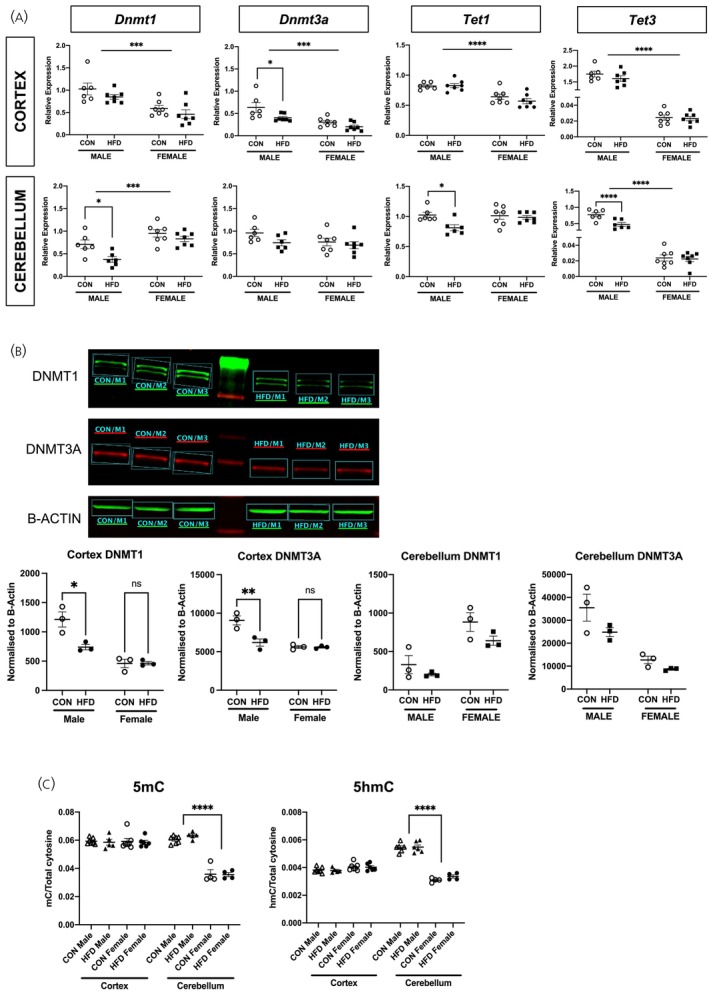
Offspring DNMT and TET enzyme, and 5mC/5hmC levels. (A) RT‐qPCR of Dnmt1, Dnmt3a, Tet1, and Tet3 in HFD versus CON male and female cortex and cerebellum. In the cortex, gene expression of Dnmt1 (F(1,23) = 21.05, p = .0001), Dnmt3a (F(1,23) = 20.81, p = .0001), Tet1 (F(1,23) = 31.44, p < .0001), and Tet3 (F(1,23) = 744.7, p < .0001) in female offspring was lower than males (indicated by horizontal bar). Exposure to HFD did not impact on the expression of these genes in offspring cortex (Dnmt1, F(1,23) = 2.947, p = .99; Tet1, F(1,23) = 0.754, p = .394; Tet2, F(1,23) = 1.398, p = .249), except in males where Dnmt3a expression was lower in HFD vs. CON offspring (p = .022, indicated by bracket). In the cerebellum, Dnmt1 expression was higher in female offspring when compared with males (F(1,22) = 20.98, p = .0001), whereas Tet3 expression was lower in females than in males (F(1,22) = 221.9, p < .0001) (indicated by horizontal bars). Exposure to maternal HFD associated with reduced expression of Dnmt1 (p = .038), Tet1 (p = .038), and Tet3a (p = .0003) in male (indicated by bracket), but not female, offspring cerebellum (n = 6/diet group in males, n = 7/diet group in females). (B) Protein expression of both DNMT1 (p = .026) and DNMT3A (p = .019) was reduced in HFD male cortex when compared with controls (n = 3/diet group). There were no differences in DNMT1 and DNMT3A protein expression in HFD versus CON female cortex, as well as cerebellum in both males and females. (C) Global 5mC and 5hmC levels. There were no differences in 5mC and 5hmC levels between diet groups (F(1,37) = 0.057, p = .813). However, in the cerebellum, 5mC and 5hmC concentration was greater in male vs. female offspring (5mC, F(1,37) = 118.5, p < .0001; 5hmC, F(1,37) = 150.2, p < .0001. Indicated by brackets). Unless otherwise stated, repeated measures ANOVA testing was performed.
There were also sex differences in the mRNA expression of the TET enzymes, with lower expression of Tet1 in the cerebral cortex and Tet3 in the cortex and cerebellum in females compared with males (Figure 4A). HFD exposure was associated with a reduction in cerebellar Tet1 and Tet3 expression in males but not in females (Figure 4A). There were no differences in the female cortex or cerebellum.
To elucidate any impact of altered Dnmt and Tet enzyme gene expression on DNA methylation, mass spectrometry was performed to quantify global 5mC and 5hmC levels (Figure 4C). Although there were marked sex differences in 5mC and 5hmC in the cerebellum, with lower 5mC and 5hmC levels in females, there were no effects of HFD exposure in the cortex and cerebellum in either males or females.
4. DISCUSSION
In human pregnancies complicated by obesity, maternal blood glucose concentrations increase as the pregnancy progresses 48 and hyperglycemia and gestational diabetes mellitus (GDM) are more likely to occur from the mid‐trimester onwards in obese pregnant women than in women of normal. 49 These features are recapitulated in this mouse model. The hyperglycemia in obese mouse dams resolved on postnatal day 1, a feature which is similar to that observed in human pregnancies in which the majority of women with GDM return to a normoglycemic state postnatally. 50
Data from animal models of maternal obesity report both large and small offspring, 51 , 52 , 53 , 54 , 55 and in this study, the offspring of high‐fat diet dams were lighter than controls. In humans, maternal obesity generally associates with increased offspring birthweight, 56 with a proportional increase in the risk of delivering large‐for‐gestational age (LGA) infants with increasing maternal BMI. 57 This risk is independent of the presence of gestational diabetes. 58 , 59 However, there is growing evidence that overweight and obese women, 59 , 60 , 61 , 62 as well as women with GDM, 63 , 64 have an increased risk of a small for gestational age (SGA) baby at birth. Our data suggests “brain sparing” in female HFD offspring with preserved brain weight despite a reduction in total body weight. This phenomenon, where there is asymmetrical growth with redistribution of oxygen and nutrients to critical organs (i.e., brain), is frequently observed in conditions associated with placental dysfunction or insufficiency. 65 , 66 This “brain sparing” phenomenon in growth restriction has been shown to be associated with poorer neurodevelopmental outcomes when compared with infants who have symmetrical growth restriction. 67 , 68
Male HFD offspring had lower blood glucose concentrations on PN1. In humans, neonatal hypoglycemia is a well‐documented complication of pregnancies in which the mother has pre‐existing or gestational diabetes. 69 , 70 , 71 Notably, even in the absence of a formal diagnosis of diabetes, maternal hyperglycemia in obese pregnant women is associated with an increased risk of neonatal hypoglycemia. 71 The mechanisms underpinning the neonatal hypoglycemia may include fetal hyperinsulinemia, which also contributes to the LGA phenomenon in pregnancies complicated by diabetes. 59 Additionally, following delivery, the sudden cessation of maternal glucose supply and reduced neonatal glycogenolysis may also contribute to early postnatal hypoglycemia. 72 This is important, since the developing brain depends on glucose as a key source of energy, and neonatal hypoglycemia can have detrimental effects on neurodevelopment. 25 , 73 The sex difference in the risk of postnatal hypoglycemia appears to recapitulate observations in humans where male infants of mothers with Type 1 or gestational diabetes have a higher risk of neonatal hypoglycemia. 74 , 75 The mechanism(s) underlying the apparent increased male susceptibility to neonatal hypoglycemia may reflect fundamental sex differences in insulin sensitivity. 76 Consistent with an effect of maternal obesity and hyperglycemia on the availability of substrates including glucose, lactate, and ketone bodies, 53 gene ontology analysis of DEGs demonstrated an impact on metabolic processes in both cortex and cerebellum.
Perturbations in regulatory processes, including transcription factor and cell signaling activity, may interfere with fundamental cortical and cerebellar developmental milestones and associate with an increased risk of developing neurodevelopmental disorders in later life, including autism spectrum disorders and attention deficit and hyperactivity disorder. 77 , 78 This study has focused on offspring cerebral cortex and cerebellum because there is evidence that both structures, and indeed the cortical–cerebellar connectome, are critical in early cognitive development and have been implicated in neurodevelopmental disorders including ASD and ADHD. 26 , 29 , 30 , 77 , 78 Gene set enrichment analysis of the transcriptomic data from the cerebral cortex showed alterations in pathways associated with the GABA signaling pathway, synaptic function, and glial cell regulation. Additionally, enrichment analysis of gene expression in male cerebellum identified changes in genes associated with excitatory synapse assembly and astrocyte activation following exposure to a maternal HFD. This is relevant since these pathways are linked to the development of autism spectrum disorders. 27 , 28 , 77 , 78 , 79 Transcription factor analysis demonstrated dysregulation of TFs involved in neurodevelopment in the cerebellum, 80 some of which associate with psychiatric disorders including schizophrenia. This included the tumor suppressor gene, Trp53, which may be important for neuronal protection against neurotoxicity. 81 Further work is required to establish the implications of these transcriptional changes on the higher prevalence of neurodevelopmental disorders seen in the offspring of obese and diabetic pregnant women. 18 , 24
Exposure to a maternal HFD was associated with a reduction in cortical Dnmt3A mRNA expression in male offspring and a reduction in both DNMT1 and DNMT3A protein levels in HFD male cortex. In mice, maternal undernutrition resulting in SGA offspring has been associated with reduced DNMT1 protein expression in the hypothalamus and with reduced cell proliferation—particularly in neuronal cells. 82 In Sprague–Dawley rats, exposure to a maternal high‐fat diet was associated with attenuated protein expression of DNMT1 in the newborn hypothalamus. 83 During development, the TET enzymes also play an important role in the temporal, regional, and functional regulation of neuronal maturation 31 and there are dramatic changes in gene expression in the perinatal mouse brain, where Tet enzyme expression is high during the newborn period and dramatically decreases, at least in the hippocampus and hypothalamus, by postnatal day 7. 84 We observe a difference in the mRNA expression of Tet1 and Tet3 in the cerebellum in males exposed to maternal obesity compared with controls. Although metabolic perturbations secondary to obesity and diabetes impact TET enzyme expression in other organ systems including the placenta, 85 , 86 , 87 any effects in the developing brain are not well characterized. Although the DNMT and TET enzymes may facilitate the dynamic changes in DNA methylation/hydroxymethylation during neurodevelopment 37 there were no differences in global 5mC and 5hmC levels between HFD and CON offspring. However, this does not exclude changes in 5mC/5hmC at a single base pair level or alterations in DNA methylation patterns across the different regions in the genome. Further, 5mC/5hmC patterns differ between cell types and between different brain regions 33 so that analysis of 5mC/5hmC in whole cortex may miss more subtle changes in specific brain subregions.
There were marked sex differences in the response to prenatal exposure to maternal obesity. This is not surprising since known sex differences in the risk of disease in adulthood may be apparent in childhood 88 and may be influenced by the environment in early life. For example, females with low birthweight may be more vulnerable to an increased risk of cardiovascular disease than males. 89 , 90 In contrast, males may be more susceptible to the early life “programming” of neurodevelopmental disorders. 91 The mechanism(s) underlying sex differences in the vulnerability of different organ systems to the effects of early life programming remain poorly understood. Sex hormones may play a role, and animal studies have provided evidence that the macro‐ and microscopic differences between male and female brains 92 may be influenced by androgen exposure, particularly testosterone, in the fetal and neonatal periods in human and non‐human primates. 92 , 93 Studies have reported sex differences in brain mitochondrial function including NADH‐linked respiration, pyruvate dehydrogenase activity and formation of reactive oxygen species 94 , 95 which may be mediated by sex steroids, and which associate with lower oxidative stress, at least in adult females. 94 Thus, it is possible that prenatal sex differences in sex steroid concentrations and metabolism may explain the enrichment in mitochondrial metabolism pathways seen in male, but not female offspring following exposure to maternal HFD in utero.
We also found sex differences in DNMT and TET gene expression in the cortex and cerebellum, and in 5mC and 5hmC levels. Previous studies have shown sex differences in the expression of the TET and DNMT enzymes in several regions of the brain during the neonatal period, including the preoptic area and the hippocampus. 84 , 96 DNA methyltransferase activity in the preoptic area is influenced by sex steroids. In female mice, exposure to exogenous estradiol in the early postnatal period leads to the masculinization of CpG methylation patterns in the brain. 96 Males and “masculinized” females had reduced levels of global DNA methylation when compared with females, in association with altered DNMT activity and impacts on dendritic spine density. 96 In contrast to the sex differences we found in 5mC levels in the frontal cortex and cerebellum, 5mC levels are higher in the preoptic area of the hypothalamus in females on postnatal day 7, 84 suggesting that sex differences in 5mC and 5hmC levels differ between brain regions and between developmental periods.
There are several limitations to this study, including the phenotype of the offspring from HFD dams. In humans, obese and diabetic pregnancies commonly associate with offspring macrosomia, and it would be useful to ascertain whether similar transcriptomic changes are observed in LGA offspring. We acknowledge that the small sample sizes in several experiments are described. Nevertheless, we ensured high‐quality samples were processed and offspring from independent litters were used as replicates to ensure the reliability of the results.
The lack of clustering between biological replicates may be due to the cellular heterogeneity in the developing brain. The transcriptomic data was obtained from bulk RNA‐sequencing, and cell sorting before sequencing may provide us with a better resolution of cell‐specific transcriptomic changes. The neonatal hypoglycemia observed in offspring of HFD dams may in itself impact offspring neurodevelopment. It would, therefore, be useful to dissect the impact of hypoglycemia versus hyperglycemia using cell culture models and manipulation of glucose availability to assess the impact of (1) hypoglycemia on astrocytes and neurons, and (2) hypoglycemia on astrocytes and neurons that were subjected to prior exposure to hyperglycemic conditions. Behavioral studies to establish the impact of these transcriptional changes on offspring neurodevelopment will allow us to better understand the mechanism(s) underlying the neurodevelopmental and psychiatric disorders seen in the offspring of obese and diabetic pregnant women. Further, it will expand on our current knowledge of the sexual dimorphism seen in these disorders.
To conclude, this study utilized a murine diet‐induced obesity model to demonstrate that the exposure of the offspring to maternal high fat diet during the perinatal period associates with offspring growth restriction with brain sparing and male offspring postnatal hypoglycemia which, to an extent, recapitulates that observed in human pregnancies. 60 , 69 , 70 This study has also highlighted the sexual dimorphism in the transcriptional landscape in offspring cortex and cerebellum following exposure to maternal obesity and hyperglycemia. The altered mitochondrial metabolic pathways seen in male, but not female, cortex suggest that there may be a male susceptibility to altered metabolic milieu during the in utero and early postnatal period. This study also demonstrated a sex difference in the expression of key enzymes involved in DNA methylation in the early postnatal period, including DNMT and TET enzymes. Further work to explore the mechanism(s) underpinning these differences may allow us to understand some of the gender disparities associated with risks of neurodevelopmental and psychiatric disorders.
AUTHOR CONTRIBUTIONS
Kahyee Hor: Conceptualization; data curation; formal analysis; funding acquisition; investigation; methodology; project administration; writing – original draft. Laura Dearden: Methodology; writing – review and editing. Emily Herzstein: Investigation. Susan Ozanne: Methodology; writing – review and editing. Giles Hardingham: Supervision; writing – review and editing. Amanda J. Drake: Conceptualization; supervision; writing – review and editing.
CONFLICT OF INTEREST STATEMENT
The authors declare no conflicts of interest.
PEER REVIEW
The peer review history for this article is available at https://www.webofscience.com/api/gateway/wos/peer-review/10.1111/jne.70046.
Supporting information
Data S1. Supporting Information.
ACKNOWLEDGEMENTS
This study was funded by the Wellcome Trust to KH under the Edinburgh Clinical Academic Track Clinical Lectureship scheme. The murine diet‐induced obesity model was adapted from published work from SO's lab, and both SO and LD provided support with this. For the purpose of open access, the author (KH) has applied a Creative Commons Attribution (CC‐BY) license to any Author Accepted Manuscript version arising from this submission.
Hor K, Dearden L, Herzstein E, Ozanne S, Hardingham G, Drake AJ. Maternal high fat and high sugar diet impacts on key DNA methylation enzymes in offspring brain in a sex‐specific manner. J Neuroendocrinol. 2025;37(8):e70046. doi: 10.1111/jne.70046
DATA AVAILABILITY STATEMENT
The data that support the findings of this study are available from the corresponding author upon reasonable request.
REFERENCES
- 1. Kelly T, Yang W, Chen CS, Reynolds K, He J. Global burden of obesity in 2005 and projections to 2030. Int J Obes (Lond). 2008;32(9):1431‐1437. doi: 10.1038/ijo.2008.102 [DOI] [PubMed] [Google Scholar]
- 2. Wang YC, McPherson K, Marsh T, Gortmaker SL, Brown M. Health and economic burden of the projected obesity trends in the USA and the UK. The Lancet. 2011;378(9793):815‐825. doi: 10.1016/S0140-6736(11)60814-3 [DOI] [PubMed] [Google Scholar]
- 3. Ng M, Fleming T, Robinson M, et al. Global, regional, and national prevalence of overweight and obesity in children and adults during 1980–2013: a systematic analysis for the global burden of disease study 2013. The Lancet. 2014;384(9945):766‐781. doi: 10.1016/S0140-6736(14)60460-8 [DOI] [PMC free article] [PubMed] [Google Scholar]
- 4. Kanagalingam MG, Forouhi NG, Greer IA, Sattar N. Changes in booking body mass index over a decade: retrospective analysis from a Glasgow Maternity Hospital. BJOG. 2005;112(10):1431‐1433. doi: 10.1111/j.1471-0528.2005.00685.x [DOI] [PubMed] [Google Scholar]
- 5. Deputy NP, Dub B, Sharma AJ. Prevalence and trends in prepregnancy normal weight—48 states, New York City, and District of Columbia, 2011–2015. Morbidity and Mortality Weekly Report (MMWR). 2018;66:1402‐1407. [DOI] [PMC free article] [PubMed] [Google Scholar]
- 6. Euro‐Peristat Project . European Perinatal Health Report. Core Indicators of the Health and Care of Pregnant Women and Babies in Europe in 2015. 2018.
- 7. Poston L, Caleyachetty R, Cnattingius S, et al. Preconceptional and maternal obesity: epidemiology and health consequences. The Lancet Diabetes & Endocrinology. 2016;4(12):1025‐1036. doi: 10.1016/S2213-8587(16)30217-0 [DOI] [PubMed] [Google Scholar]
- 8. MBRRACE‐UK . Saving Lives, Improving Mothers' Care—Lessons Learned to Inform Maternity Care from the UK and Ireland Confidential Enquiries into Maternal Deaths and Morbidity 2015–17. National Perinatal Epidemiology Unit; 2019. [Google Scholar]
- 9. Boney CM, Verma A, Tucker R, Vohr BR. Metabolic syndrome in childhood: association with birth weight, maternal obesity, and gestational diabetes mellitus. Pediatrics. 2005;115(3):e290‐e296. doi: 10.1542/peds.2004-1808 [DOI] [PubMed] [Google Scholar]
- 10. Godfrey KM, Reynolds RM, Prescott SL, et al. Influence of maternal obesity on the long‐term health of offspring. The Lancet Diabetes & Endocrinology. 2017;5(1):53‐64. doi: 10.1016/S2213-8587(16)30107-3 [DOI] [PMC free article] [PubMed] [Google Scholar]
- 11. Roseboom TJ, van der Meulen JHP, Osmond C, et al. Coronary heart disease after prenatal exposure to the Dutch famine, 1944–45. Heart. 2000;84(6):595‐598. doi: 10.1136/heart.84.6.595 [DOI] [PMC free article] [PubMed] [Google Scholar]
- 12. Roseboom TJ, van der Meulen JHP, Osmond C, Barker DJP, Ravelli ACJ, Bleker OP. Plasma lipid profiles in adults after prenatal exposure to the Dutch famine. Am J Clin Nutr. 2000;72(5):1101‐1106. doi: 10.1093/ajcn/72.5.1101 [DOI] [PubMed] [Google Scholar]
- 13. Sheriff MJ, McMahon EK, Krebs CJ, Boonstra R. Predator‐induced maternal stress and population demography in snowshoe hares: the more severe the risk, the longer the generational effect. J Zool. 2015;296(4):305‐310. doi: 10.1111/jzo.12249 [DOI] [Google Scholar]
- 14. Di Angelantonio E, Bhupathiraju SN, Wormser D, et al. Body‐mass index and all‐cause mortality: individual‐participant‐data meta‐analysis of 239 prospective studies in four continents. The Lancet. 2016;388(10046):776‐786. doi: 10.1016/S0140-6736(16)30175-1 [DOI] [PMC free article] [PubMed] [Google Scholar]
- 15. Kivimäki M, Kuosma E, Ferrie JE, et al. Overweight, obesity, and risk of cardiometabolic multimorbidity: pooled analysis of individual‐level data for 120–813 adults from 16 cohort studies from the USA and Europe. Lancet Public Health. 2017;2(6):e277‐e285. doi: 10.1016/S2468-2667(17)30074-9 [DOI] [PMC free article] [PubMed] [Google Scholar]
- 16. Berrington de Gonzalez A, Hartge P, Cerhan JR, et al. Body‐mass index and mortality among 1.46 million white adults. N Engl J Med. 2010;363(23):2211‐2219. doi: 10.1056/NEJMoa1000367 [DOI] [PMC free article] [PubMed] [Google Scholar]
- 17. Nahum Sacks K, Friger M, Shoham‐Vardi I, et al. Prenatal exposure to gestational diabetes mellitus as an independent risk factor for long‐term neuropsychiatric morbidity of the offspring. American Journal of Obstetrics & Gynecology. 2016;215(3):380.e1‐380.e7. doi: 10.1016/j.ajog.2016.03.030 [DOI] [PubMed] [Google Scholar]
- 18. Kong L, Chen X, Gissler M, Lavebratt C. Relationship of prenatal maternal obesity and diabetes to offspring neurodevelopmental and psychiatric disorders: a narrative review. Int J Obes (Lond). 2020;44(10):1981‐2000. doi: 10.1038/s41366-020-0609-4 [DOI] [PMC free article] [PubMed] [Google Scholar]
- 19. Wang Y, Tang S, Xu S, Weng S, Liu Z. Maternal body mass index and risk of autism spectrum disorders in offspring: a meta‐analysis. Sci Rep. 2016;6:34248. doi: 10.1038/srep34248 [DOI] [PMC free article] [PubMed] [Google Scholar]
- 20. Xiang AH, Wang X, Martinez MP, et al. Association of maternal diabetes with autism in offspring. JAMA. 2015;313(14):1425‐1434. doi: 10.1001/jama.2015.2707 [DOI] [PubMed] [Google Scholar]
- 21. Rodriguez A, Miettunen J, Henriksen TB, et al. Maternal adiposity prior to pregnancy is associated with ADHD symptoms in offspring: evidence from three prospective pregnancy cohorts. Int J Obes (Lond). 2008;32(3):550‐557. doi: 10.1038/sj.ijo.0803741 [DOI] [PubMed] [Google Scholar]
- 22. Tozuka Y, Wada E, Wada K. Diet‐induced obesity in female mice leads to peroxidized lipid accumulations and impairment of hippocampal neurogenesis during the early life of their offspring. FASEB J. 2009;23(6):1920‐1934. doi: 10.1096/fj.08-124784 [DOI] [PubMed] [Google Scholar]
- 23. Colantuoni C, Lipska BK, Ye T, et al. Temporal dynamics and genetic control of transcription in the human prefrontal cortex. Nature. 2011;478(7370):519‐523. doi: 10.1038/nature10524 [DOI] [PMC free article] [PubMed] [Google Scholar]
- 24. Kang HJ, Kawasawa YI, Cheng F, et al. Spatio‐temporal transcriptome of the human brain. Nature. 2011;478(7370):483‐489. doi: 10.1038/nature10523 [DOI] [PMC free article] [PubMed] [Google Scholar]
- 25. Goyal MS, Hawrylycz M, Miller JA, Snyder AZ, Raichle ME. Aerobic glycolysis in the human brain is associated with development and neotenous gene expression. Cell Metab. 2014;19(1):49‐57. doi: 10.1016/j.cmet.2013.11.020 [DOI] [PMC free article] [PubMed] [Google Scholar]
- 26. Rubenstein JLR. Annual research review: development of the cerebral cortex: implications for neurodevelopmental disorders. J Child Psychol Psychiatry. 2011;52(4):339‐355. doi: 10.1111/j.1469-7610.2010.02307.x [DOI] [PMC free article] [PubMed] [Google Scholar]
- 27. Morgan JT, Chana G, Abramson I, Semendeferi K, Courchesne E, Everall IP. Abnormal microglial–neuronal spatial organization in the dorsolateral prefrontal cortex in autism. Brain Res. 2012;1456:72‐81. doi: 10.1016/j.brainres.2012.03.036 [DOI] [PubMed] [Google Scholar]
- 28. Edmonson C, Ziats MN, Rennert OM. Altered glial marker expression in autistic post‐mortem prefrontal cortex and cerebellum. Mol Autism. 2014;5(1):3. doi: 10.1186/2040-2392-5-3 [DOI] [PMC free article] [PubMed] [Google Scholar]
- 29. Stoodley CJ. Distinct regions of the cerebellum show gray matter decreases in autism, ADHD, and developmental dyslexia. Front Syst Neurosci. 2014;8:92. doi: 10.3389/fnsys.2014.00092 [DOI] [PMC free article] [PubMed] [Google Scholar]
- 30. Mackie S, Shaw P, Lenroot R, et al. Cerebellar development and clinical outcome in attention deficit hyperactivity disorder. Am J Psychiatry. 2007;164(4):647‐655. doi: 10.1176/ajp.2007.164.4.647 [DOI] [PubMed] [Google Scholar]
- 31. Hahn MA, Qiu R, Wu X, et al. Dynamics of 5‐hydroxymethylcytosine and chromatin marks in mammalian neurogenesis. Cell Rep. 2013;3(2):291‐300. doi: 10.1016/j.celrep.2013.01.011 [DOI] [PMC free article] [PubMed] [Google Scholar]
- 32. Lister R, Mukamel EA, Nery JR, et al. Global epigenomic reconfiguration during mammalian brain development. Science (New York, NY). 2013;341(6146):1237905. doi: 10.1126/science.1237905 [DOI] [PMC free article] [PubMed] [Google Scholar]
- 33. Rizzardi LF, Hickey PF, Rodriguez DiBlasi V, et al. Neuronal brain‐region‐specific DNA methylation and chromatin accessibility are associated with neuropsychiatric trait heritability. Nat Neurosci. 2019;22(2):307‐316. doi: 10.1038/s41593-018-0297-8 [DOI] [PMC free article] [PubMed] [Google Scholar]
- 34. Ito S, D'Alessio AC, Taranova OV, Hong K, Sowers LC, Zhang Y. Role of Tet proteins in 5mC to 5hmC conversion, ES‐cell self‐renewal and inner cell mass specification. Nature. 2010;466(7310):1129‐1133. doi: 10.1038/nature09303 [DOI] [PMC free article] [PubMed] [Google Scholar]
- 35. Tahiliani M, Koh KP, Shen Y, et al. Conversion of 5‐methylcytosine to 5‐hydroxymethylcytosine in mammalian DNA by MLL partner TET1. Science (New York, NY). 2009;324(5929):930‐935. doi: 10.1126/science.1170116 [DOI] [PMC free article] [PubMed] [Google Scholar]
- 36. Kaas GA, Zhong C, Eason DE, et al. TET1 controls CNS 5‐methylcytosine hydroxylation, active DNA demethylation, gene transcription, and memory formation. Neuron. 2013;79(6):1086‐1093. doi: 10.1016/j.neuron.2013.08.032 [DOI] [PMC free article] [PubMed] [Google Scholar]
- 37. Wang T, Pan Q, Lin L, et al. Genome‐wide DNA hydroxymethylation changes are associated with neurodevelopmental genes in the developing human cerebellum. Hum Mol Genet. 2012;21(26):5500‐5510. doi: 10.1093/hmg/dds394 [DOI] [PMC free article] [PubMed] [Google Scholar]
- 38. Hjort L, Martino D, Grunnet LG, et al. Gestational diabetes and maternal obesity are associated with epigenome‐wide methylation changes in children. JCI Insight. 2018;3(17):e122572. doi: 10.1172/jci.insight.122572 [DOI] [PMC free article] [PubMed] [Google Scholar]
- 39. Wockner LF, Noble EP, Lawford BR, et al. Genome‐wide DNA methylation analysis of human brain tissue from schizophrenia patients. Transl Psychiatry. 2014;4(1):e339. doi: 10.1038/tp.2013.111 [DOI] [PMC free article] [PubMed] [Google Scholar]
- 40. De Rubeis S, He X, Goldberg AP, et al. Synaptic, transcriptional and chromatin genes disrupted in autism. Nature. 2014;515(7526):209‐215. doi: 10.1038/nature13772 [DOI] [PMC free article] [PubMed] [Google Scholar]
- 41. Anne‐Maj S, Matthews PA, Marco A, et al. Diet‐induced obesity in female mice leads to offspring hyperphagia, adiposity, hypertension, and insulin resistance. Hypertension. 2008;51(2):383‐392. doi: 10.1161/HYPERTENSIONAHA.107.101477 [DOI] [PubMed] [Google Scholar]
- 42. Subramanian A, Tamayo P, Mootha VK, et al. Gene set enrichment analysis: a knowledge‐based approach for interpreting genome‐wide expression profiles. Proc Natl Acad Sci. 2005;102(43):15545‐15550. doi: 10.1073/pnas.0506580102 [DOI] [PMC free article] [PubMed] [Google Scholar]
- 43. Masalmeh RHA, Taglini F, Rubio‐Ramon C, et al. De novo DNA methyltransferase activity in colorectal cancer is directed towards H3K36me3 marked CpG islands. Nat Commun. 2021;12(1):694. doi: 10.1038/s41467-020-20716-w [DOI] [PMC free article] [PubMed] [Google Scholar]
- 44. Han H, Cho JW, Lee S, et al. TRRUST v2: an expanded reference database of human and mouse transcriptional regulatory interactions. Nucleic Acids Res. 2018;46(D1):D380‐D386. doi: 10.1093/nar/gkx1013 [DOI] [PMC free article] [PubMed] [Google Scholar]
- 45. Zhou Y, Zhou B, Pache L, et al. Metascape provides a biologist‐oriented resource for the analysis of systems‐level datasets. Nat Commun. 2019;10(1):1523. doi: 10.1038/s41467-019-09234-6 [DOI] [PMC free article] [PubMed] [Google Scholar]
- 46. Lee C, Rudneva VA, Erkek S, et al. Lsd1 as a therapeutic target in Gfi1‐activated medulloblastoma. Nat Commun. 2019;10(1):332. doi: 10.1038/s41467-018-08269-5 [DOI] [PMC free article] [PubMed] [Google Scholar]
- 47. Lau D, Bading H. Synaptic activity‐mediated suppression of p53 and induction of nuclear calcium‐regulated neuroprotective genes promote survival through inhibition of mitochondrial permeability transition. J Neurosci. 2009;29(14):4420‐4429. doi: 10.1523/JNEUROSCI.0802-09.2009 [DOI] [PMC free article] [PubMed] [Google Scholar]
- 48. Siegmund T, Rad NT, Ritterath C, Siebert G, Henrich W, Buhling KJ. Longitudinal changes in the continuous glucose profile measured by the CGMS® in healthy pregnant women and determination of cut‐off values. European Journal of Obstetrics & Gynecology and Reproductive Biology. 2008;139(1):46‐52. doi: 10.1016/j.ejogrb.2007.12.006 [DOI] [PubMed] [Google Scholar]
- 49. Chu SY, Callaghan WM, Kim SY, et al. Maternal obesity and risk of gestational diabetes mellitus. Diabetes Care. 2007;30(8):2070‐2076. doi: 10.2337/dc06-2559a [DOI] [PubMed] [Google Scholar]
- 50. McClean S, Farrar D, Kelly CA, Tuffnell DJ, Whitelaw DC. The importance of postpartum glucose tolerance testing after pregnancies complicated by gestational diabetes. Diabet Med. 2010;27(6):650‐654. doi: 10.1111/j.1464-5491.2010.03001.x [DOI] [PubMed] [Google Scholar]
- 51. Vora NL, Grace MR, Smeester L, et al. Targeted multiplex gene expression profiling to measure high‐fat diet and metformin effects on fetal gene expression in a mouse model. Reproductive Sciences. 2019;26(5):683‐689. doi: 10.1177/1933719118786453 [DOI] [PMC free article] [PubMed] [Google Scholar]
- 52. Song YP, Chen YH, Gao L, et al. Differential effects of high‐fat diets before pregnancy and/or during pregnancy on fetal growth development. Life Sci. 2018;212:241‐250. doi: 10.1016/j.lfs.2018.10.008 [DOI] [PubMed] [Google Scholar]
- 53. Jones HN, Woollett LA, Barbour N, Prasad PD, Powell TL, Jansson T. High‐fat diet before and during pregnancy causes marked up‐regulation of placental nutrient transport and fetal overgrowth in C57/BL6 mice. FASEB Journal. 2009;23(1):271‐278. doi: 10.1096/fj.08-116889 [DOI] [PMC free article] [PubMed] [Google Scholar]
- 54. Mayor RS, Finch KE, Zehr J, et al. Maternal high‐fat diet is associated with impaired fetal lung development. Am J Physiol Lung Cell Mol Physiol. 2015;309(4):L360‐L368. doi: 10.1152/ajplung.00105.2015 [DOI] [PMC free article] [PubMed] [Google Scholar]
- 55. Sasson IE, Vitins AP, Mainigi MA, Moley KH, Simmons RA. Pre‐gestational vs gestational exposure to maternal obesity differentially programs the offspring in mice. Diabetologia. 2015;58(3):615‐624. doi: 10.1007/s00125-014-3466-7 [DOI] [PMC free article] [PubMed] [Google Scholar]
- 56. Sebire NJ, Jolly M, Harris JP, et al. Maternal obesity and pregnancy outcome: a study of 287,213 pregnancies in London. Int J Obes (Lond). 2001;25(8):1175‐1182. doi: 10.1038/sj.ijo.0801670 [DOI] [PubMed] [Google Scholar]
- 57. Santos S, Voerman E, Amiano P, et al. Impact of maternal body mass index and gestational weight gain on pregnancy complications: an individual participant data meta‐analysis of European, north American and Australian cohorts. BJOG. 2019;126(8):984‐995. doi: 10.1111/1471-0528.15661 [DOI] [PMC free article] [PubMed] [Google Scholar]
- 58. Schaefer‐Graf UM, Heuer R, Kilavuz Ö, Pandura A, Henrich W, Vetter K. Maternal obesity not maternal glucose values correlates best with high rates of fetal macrosomia in pregnancies complicated by gestational diabetes. J Perinat Med. 2002;30(4):313‐321. doi: 10.1515/JPM.2002.046 [DOI] [PubMed] [Google Scholar]
- 59. Kong L, Nilsson IAK, Gissler M, Lavebratt C. Associations of maternal diabetes and body mass index with offspring birth weight and prematurity. JAMA Pediatr. 2019;173(4):371‐378. doi: 10.1001/jamapediatrics.2018.5541 [DOI] [PMC free article] [PubMed] [Google Scholar]
- 60. Chen YH, Li L, Chen W, et al. Pre‐pregnancy underweight and obesity are positively associated with small‐for‐gestational‐age infants in a Chinese population. Sci Rep. 2019;9(1):15544. doi: 10.1038/s41598-019-52018-7 [DOI] [PMC free article] [PubMed] [Google Scholar]
- 61. Tanner LD, Brock C, Chauhan SP. Severity of fetal growth restriction stratified according to maternal obesity. J Matern Fetal Neonatal Med. 2022;35(10):1886‐1890. doi: 10.1080/14767058.2020.1773427 [DOI] [PubMed] [Google Scholar]
- 62. Lewandowska M. Maternal obesity and risk of low birth weight, fetal growth restriction, and macrosomia: multiple analyses. Nutrients. 2021;13(4):1213‐1231. doi: 10.3390/nu13041213 [DOI] [PMC free article] [PubMed] [Google Scholar]
- 63. Barquiel B, Herranz L, Martínez‐Sánchez N, Montes C, Hillman N, Bartha JL. Increased risk of neonatal complications or death among neonates born small for gestational age to mothers with gestational diabetes. Diabetes Res Clin Pract. 2020;159:107971. doi: 10.1016/j.diabres.2019.107971 [DOI] [PubMed] [Google Scholar]
- 64. Langer O, Levy J, Brustman L, Anyaegbunam A, Merkatz R, Divon M. Glycemic control in gestational diabetes mellitus‐how tight is tight enough: small for gestational age versus large for gestational age? Am J Obstet Gynecol. 1989;161(3):646‐653. doi: 10.1016/0002-9378(89)90371-2 [DOI] [PubMed] [Google Scholar]
- 65. Savvidou MD, Hingorani AD, Tsikas D, Frölich JC, Vallance P, Nicolaides KH. Endothelial dysfunction and raised plasma concentrations of asymmetric dimethylarginine in pregnant women who subsequently develop pre‐eclampsia. The Lancet. 2003;361(9368):1511‐1517. doi: 10.1016/S0140-6736(03)13177-7 [DOI] [PubMed] [Google Scholar]
- 66. Baschat AA, Cosmi E, Bilardo CM, et al. Predictors of neonatal outcome in early‐onset placental dysfunction. Obstetrics & Gynecology. 2007;109:253‐261. [DOI] [PubMed] [Google Scholar]
- 67. Figueras F, Cruz‐Martinez R, Sanz‐Cortes M, et al. Neurobehavioral outcomes in preterm, growth‐restricted infants with and without prenatal advanced signs of brain‐sparing. Ultrasound in Obstetrics & Gynecology. 2011;38(3):288‐294. doi: 10.1002/uog.9041 [DOI] [PubMed] [Google Scholar]
- 68. Miller SL, Huppi PS, Mallard C. The consequences of fetal growth restriction on brain structure and neurodevelopmental outcome. J Physiol. 2016;594(4):807‐823. doi: 10.1113/JP271402 [DOI] [PMC free article] [PubMed] [Google Scholar]
- 69. Cremona A, Saunders J, Cotter A, Hamilton J, Donnelly AE, O'Gorman CS. Maternal obesity and degree of glucose intolerance on neonatal hypoglycaemia and birth weight: a retrospective observational cohort study in women with gestational diabetes mellitus. Eur J Pediatr. 2020;179(4):653‐660. doi: 10.1007/s00431-019-03554-x [DOI] [PubMed] [Google Scholar]
- 70. Domanski G, Lange AE, Ittermann T, et al. Evaluation of neonatal and maternal morbidity in mothers with gestational diabetes: a population‐based study. BMC Pregnancy Childbirth. 2018;18(1):367. doi: 10.1186/s12884-018-2005-9 [DOI] [PMC free article] [PubMed] [Google Scholar]
- 71. Farrar D, Simmonds M, Bryant M, et al. Hyperglycaemia and risk of adverse perinatal outcomes: systematic review and meta‐analysis. BMJ. 2016;354:i4694. doi: 10.1136/bmj.i4694 [DOI] [PMC free article] [PubMed] [Google Scholar]
- 72. Bloom SR, Johnston DI. Failure of glucagon release in infants of diabetic mothers. Br Med J. 1972;4(5838):453‐454. doi: 10.1136/bmj.4.5838.453 [DOI] [PMC free article] [PubMed] [Google Scholar]
- 73. Wickström R, Skiöld B, Petersson G, Stephansson O, Altman M. Moderate neonatal hypoglycemia and adverse neurological development at 2‐6 years of age. Eur J Epidemiol. 2018;33(10):1011‐1020. doi: 10.1007/s10654-018-0425-5 [DOI] [PMC free article] [PubMed] [Google Scholar]
- 74. Shaw M, Lutz T, Gordon A. Does low body fat percentage in neonates greater than the 5th percentile birthweight increase the risk of hypoglycaemia and neonatal morbidity? J Paediatr Child Health. 2019;55(12):1424‐1428. doi: 10.1111/jpc.14433 [DOI] [PubMed] [Google Scholar]
- 75. Yamamoto JM, Donovan LE, Mohammad K, Wood SL. Severe neonatal hypoglycaemia and intrapartum glycaemic control in pregnancies complicated by type 1, type 2 and gestational diabetes. Diabet Med. 2020;37(1):138‐146. doi: 10.1111/dme.14137 [DOI] [PMC free article] [PubMed] [Google Scholar]
- 76. Lindsay RS, Walker JD, Halsall I, et al. Insulin and insulin propeptides at birth in offspring of diabetic mothers. J Clin Endocrinol Metabol. 2003;88(4):1664‐1671. doi: 10.1210/jc.2002-021018 [DOI] [PubMed] [Google Scholar]
- 77. Schubert D, Martens GJM, Kolk SM. Molecular underpinnings of prefrontal cortex development in rodents provide insights into the etiology of neurodevelopmental disorders. Mol Psychiatry. 2015;20(7):795‐809. doi: 10.1038/mp.2014.147 [DOI] [PMC free article] [PubMed] [Google Scholar]
- 78. Sathyanesan A, Zhou J, Scafidi J, Heck DH, Sillitoe RV, Gallo V. Emerging connections between cerebellar development, behaviour and complex brain disorders. Nat Rev Neurosci. 2019;20(5):298‐313. doi: 10.1038/s41583-019-0152-2 [DOI] [PMC free article] [PubMed] [Google Scholar]
- 79. Medrihan L, Tantalaki E, Aramuni G, et al. Early defects of GABAergic synapses in the brain stem of a MeCP2 mouse model of Rett syndrome. J Neurophysiol. 2008;99(1):112‐121. doi: 10.1152/jn.00826.2007 [DOI] [PubMed] [Google Scholar]
- 80. Mariani J, Simonini MV, Palejev D, et al. Modeling human cortical development in vitro using induced pluripotent stem cells. Proc Natl Acad Sci U S A. 2012;109(31):12770‐12775. doi: 10.1073/pnas.1202944109 [DOI] [PMC free article] [PubMed] [Google Scholar]
- 81. Ni X, Trakalo J, Valente J, et al. Human p53 tumor suppressor gene (TP53) and schizophrenia: case–control and family studies. Neurosci Lett. 2005;388(3):173‐178. doi: 10.1016/j.neulet.2005.06.050 [DOI] [PubMed] [Google Scholar]
- 82. Desai M, Han G, Li T, Ross MG. Programmed epigenetic DNA methylation‐mediated reduced neuroprogenitor cell proliferation and differentiation in small‐for‐gestational‐age offspring. Neuroscience. 2019;412:60‐71. doi: 10.1016/j.neuroscience.2019.05.044 [DOI] [PMC free article] [PubMed] [Google Scholar]
- 83. Desai M, Han G, Ross MG. Programmed hyperphagia in offspring of obese dams: altered expression of hypothalamic nutrient sensors, neurogenic factors and epigenetic modulators. Appetite. 2016;99:193‐199. doi: 10.1016/j.appet.2016.01.023 [DOI] [PMC free article] [PubMed] [Google Scholar]
- 84. Cisternas CD, Cortes LR, Bruggeman EC, Yao B, Forger NG. Developmental changes and sex differences in DNA methylation and demethylation in hypothalamic regions of the mouse brain. Epigenetics. 2020;15(1‐2):72‐84. doi: 10.1080/15592294.2019.1649528 [DOI] [PMC free article] [PubMed] [Google Scholar]
- 85. Yang H, Lin H, Xu H, et al. TET‐catalyzed 5‐methylcytosine hydroxylation is dynamically regulated by metabolites. Cell Res. 2014;24(8):1017‐1020. doi: 10.1038/cr.2014.81 [DOI] [PMC free article] [PubMed] [Google Scholar]
- 86. Mitsuya K, Parker AN, Liu L, Ruan J, Vissers MCM, Myatt L. Alterations in the placental methylome with maternal obesity and evidence for metabolic regulation. PLoS One. 2017;12(10):e0186115. [DOI] [PMC free article] [PubMed] [Google Scholar]
- 87. Shrestha D, Ouidir M, Workalemahu T, Zeng X, Tekola‐Ayele F. Placental DNA methylation changes associated with maternal prepregnancy BMI and gestational weight gain. International Journal of Obesity (2005). 2020;44(6):1406‐1416. doi: 10.1038/s41366-020-0546-2 [DOI] [PMC free article] [PubMed] [Google Scholar]
- 88. Barker DJ, Osmond C, Golding J, Kuh D, Wadsworth ME. Growth in utero, blood pressure in childhood and adult life, and mortality from cardiovascular disease. BMJ. 1989;298(6673):564‐567. doi: 10.1136/bmj.298.6673.564 [DOI] [PMC free article] [PubMed] [Google Scholar]
- 89. Gamborg M, Byberg L, Rasmussen F, et al. Birth weight and systolic blood pressure in adolescence and adulthood: meta‐regression analysis of sex‐ and age‐specific results from 20 Nordic studies. Am J Epidemiol. 2007;166(6):634‐645. doi: 10.1093/aje/kwm042 [DOI] [PubMed] [Google Scholar]
- 90. Lawlor DA, Georgina R, Heather C, George DS. Birth weight is inversely associated with incident coronary heart disease and stroke among individuals born in the 1950s. Circulation. 2005;112(10):1414‐1418. doi: 10.1161/CIRCULATIONAHA.104.528356 [DOI] [PubMed] [Google Scholar]
- 91. Hintz SR, Kendrick DE, Vohr BR, Poole WK, Higgins RD, Network FTNNR. Gender differences in neurodevelopmental outcomes among extremely preterm, extremely‐low‐birthweight infants. Acta Paediatr. 2006;95(10):1239‐1248. doi: 10.1080/08035250600599727 [DOI] [PubMed] [Google Scholar]
- 92. Roof RL, Zhang Q, Glasier MM, Stein DG. Gender‐specific impairment on Morris water maze task after entorhinal cortex lesion. Behav Brain Res. 1993;57(1):47‐51. doi: 10.1016/0166-4328(93)90060-4 [DOI] [PubMed] [Google Scholar]
- 93. Baron‐Cohen S, Knickmeyer RC, Belmonte MK. Sex differences in the brain: implications for explaining autism. Science. 2005;310(5749):819‐823. doi: 10.1126/science.1115455 [DOI] [PubMed] [Google Scholar]
- 94. Gaignard P, Savouroux S, Liere P, et al. Effect of sex differences on brain mitochondrial function and its suppression by ovariectomy and in aged mice. Endocrinology. 2015;156(8):2893‐2904. doi: 10.1210/en.2014-1913 [DOI] [PubMed] [Google Scholar]
- 95. Silaidos C, Pilatus U, Grewal R, et al. Sex‐associated differences in mitochondrial function in human peripheral blood mononuclear cells (PBMCs) and brain. Biol Sex Differ. 2018;9(1):34. doi: 10.1186/s13293-018-0193-7 [DOI] [PMC free article] [PubMed] [Google Scholar]
- 96. Nugent BM, Wright CL, Shetty AC, et al. Brain feminization requires active repression of masculinization via DNA methylation. Nat Neurosci. 2015;18(5):690‐697. doi: 10.1038/nn.3988 [DOI] [PMC free article] [PubMed] [Google Scholar]
Associated Data
This section collects any data citations, data availability statements, or supplementary materials included in this article.
Supplementary Materials
Data S1. Supporting Information.
Data Availability Statement
The data that support the findings of this study are available from the corresponding author upon reasonable request.