



Abstract
Nocturnal home blood pressure (BP) monitoring has been used in clinical practice for ~20 years. The authors recently showed that nocturnal systolic BP (SBP) measured by a home BP monitoring (HBPM) device in a Japanese general practice population was a significant predictor of incident cardiovascular disease (CVD) events, independent of office and morning home SBP levels, and that masked nocturnal hypertension obtained by HBPM (defined as nocturnal home BP ≥ 120/70 mmHg and average morning and evening BP < 135/85 mmHg) was associated with an increased risk of CVD events compared with controlled BP (nocturnal home BP < 120/70 mmHg and average morning and evening BP < 135/85 mmHg). This evidence revealed that (a) it is feasible to use a nocturnal HBPM device for monitoring nocturnal BP levels, and (b) such a device may offer an alternative to ambulatory BP monitoring, which has been the gold standard for the measurement of nocturnal BP. However, many unresolved clinical problems remain, such as the measurement schedule and conditions for the use of nocturnal HBPM. Further investigation of the measurement of nocturnal BP using an HBPM device and assessments of the prognostic value are thus warranted. Asians are at high risk of developing nocturnal hypertension due to high salt sensitivity and salt intake, and the precise management of their nocturnal BP levels is important. Information and communication technology‐based monitoring devices are expected to facilitate the management of nocturnal hypertension in Asian populations.
Keywords: Asia, blood pressure, blood pressure monitoring, nocturnal home blood pressure, nocturnal hypertension
1. INTRODUCTION
Nocturnal blood pressure (BP) measured by ambulatory BP monitoring (ABPM) is a better predictor of future cardiovascular disease (CVD) events than daytime BP in both general and hypertensive populations. 1 , 2 , 3 , 4 , 5 , 6 Although ABPM has historically been the gold standard for the measurement of nocturnal BP levels, nocturnal BP measured by a home BP monitoring (HBPM) device has been used in clinical practice over the past two decades. 7 A 2017 meta‐analysis showed that the clinical significance of nocturnal BP measured by HBPM is comparable to that of nocturnal BP measured by ABPM. 8 Compared to ABPM, HBPM has been widely adopted in clinical practice due to its wide availability, simplicity, convenience, and tolerability, and it is unanimously recommended by major hypertension guidelines. 9 , 10 , 11 , 12 , 13 , 14 However, the evidence concerning nocturnal BP measured by an HBPM device has been relatively limited. In addition, the precise management of nocturnal BP levels is especially important in Asians, who are at high risk of nocturnal hypertension due to high salt sensitivity and salt intake. In this review, we summarize the remaining clinical issues, the latest findings regarding nocturnal BP measured by HBPM, and its clinical implications. Little is known regarding the clinical significance of nocturnal BP measured by HBPM, and we wrote this review with a primary focus on the results of our own researches. Based on the results, our goal was to ensure that appropriate future research into HBPM‐measured nocturnal BP is performed and that the results of such research be appropriately interpreted in order to assist physicians in the management of hypertension.
2. NOCTURNAL HOME BLOOD PRESSURE MONITORING
2.1. Definition of nocturnal hypertension
Nocturnal hypertension is defined as a BP value of ≥120/70 mmHg 10 , 11 , 13 or ≥110/65 mmHg in the 2017 American College of Cardiology/American Heart Association BP guidelines. 9 Although these thresholds were set based on previous studies using ABPM, 2017 meta‐analysis revealed that nocturnal BP values measured by HBPM and those measured by ABPM were almost the same; the differences in systolic BP (SBP) and diastolic BP (DBP) between them were 1.4 mmHg (95% confidence interval [CI]: 0.3 to 2.6) and −0.2 mmHg (95% CI: −0.9 to 0.6). 8 Thus, the same definition of nocturnal hypertension obtained by ABPM has been used in the definition of nocturnal hypertension obtained by HBPM.
In the J‐HOP (Japan Morning Surge Home Blood Pressure) Nocturnal BP study (n = 2,545, mean age: 63 years; antihypertensive medication use: 83%), we observed that nocturnal hypertension obtained by HBPM (defined as nocturnal SBP ≥ 120 mmHg) and masked nocturnal hypertension obtained by HBPM (defined as nocturnal home BP ≥ 120/70 mmHg and the average of morning and evening BP < 135/85 mmHg) were present in 49.3% and 26.7% of a Japanese general practice population, respectively. 15 , 16
2.2. Measurement schedules
In nocturnal BP measurements by ABPM, the term “nocturnal” has been defined by self‐reported, fixed‐time, or actigraphy‐based approaches, and nocturnal BP values were automatically measured at regular intervals (e.g., 30 min) throughout the participant's time spent sleeping. In HBPM, the participants must wrap the BP cuff around the upper arm by themselves and press a button to start the timer before going to bed. It is easy to set the cuff by oneself since the procedure is the same as the usual HBPM of morning and evening BPs. The nocturnal BP values are then automatically measured based on the participant's specified bedtime (eg, 2, 3, and 4 h after the chosen bedtime) or measured at fixed time points (eg, 2:00, 3:00, and 4:00 a.m.).
Although recently developed HBPM devices permit participants to set the nocturnal BP measurement schedule freely, there are no established criteria regarding when and at what time intervals the nocturnal BP measurements should be taken in one night. We previously compared the reliability of different schedules of multiple nocturnal home BP readings measured based on the participants’ specified bedtimes and those measured at fixed time points. 17 The reliability of the nocturnal home BP values measured using bedtime‐based measurements and that of the values measured using fixed‐time measurements were similar. That study also revealed that multiple measurements (≥2 times) in a single night could provide reliable information about the nocturnal home BP values.
In the J‐HOP study, we asked study participants to measure their nocturnal home BP at three fixed time points (2:00, 3:00, and 4:00 a.m.). 15 There was no difference between nocturnal SBP at 2:00 a.m. and 3:00 a.m., whereas at 4:00 a.m. the nocturnal SBP values were slightly, but significantly, higher by 1.5 mmHg. It is necessary to have further discussions about when nocturnal home BP should be measured.
Another matter of debate has been how many times nocturnal home BP must be measured within 1 week for a reliable assessment of nocturnal BP levels. We demonstrated that two nights of nocturnal home BP measurement in 1 week should be recommended in consideration of its feasibility. 17 Kollias and colleagues also showed that a schedule of three automated measurements at intervals of 1 h on each of two nights was the minimum requirement for the reliable assessment of nocturnal home BP values. 18 Taking these findings into consideration, two nights of nocturnal home BP measurement in 1 week would be reliable and feasible in clinical practice. However, further study is necessary to establish the necessary number of nocturnal home BP measurements per night and the number of nights per week, in order to gather more robust evidence for the use of HBPM to measure nocturnal BP.
2.3. Measurement conditions
Measurement conditions are also essential factors affecting nocturnal BP levels. Saeki and colleagues demonstrated that (a) a 1°C lower nighttime bed temperature was significantly associated with 0.019 mmHg higher nocturnal SBP; (b) a 1°C lower indoor temperature was significantly associated with a 0.18% greater fall of nocturnal BP; and (c) a 1°C lower ambient temperature was significantly associated with a 0.21% greater fall of nocturnal BP, independently of traditional CVD risk factors (all BPs were measured by ABPM). 19 Tabara and colleagues also showed that the nocturnal BP fall assessed by an HBPM device differed according to the season, with a higher frequency of riser and non‐dipper patterns in the summer. 20 These studies showed that attention must be paid to environmental factors when patients are told to measure their nocturnal BP at home.
The posture during nocturnal BP measurements might also affect the BP level. Since the arm‐cuff height of an HBPM device differs between the supine position and the lateral position when measuring nocturnal BP, the nocturnal BP levels might be measured in different positions. In addition, during the supine position of sleep, nocturnal BP levels vary depending on the position of the arm cuff of the upper‐arm device or wrist‐type BP device and the position of the palm when using a wrist‐type BP device. 21 , 22
These various factors affect nocturnal BP measurements and may not reflect “inherent” BP levels.
2.4. Association with target organ damage
In regard to the associations between nocturnal home BP and hypertensive target organ damages (TODs), we demonstrated that nocturnal home SBP levels were significantly correlated with the urinary albumin/creatinine ratio (UACR), left ventricular mass index (LVMI), and brachial‐ankle pulse wave velocity (baPWV) even after adjustment for morning, evening, and office BP levels. 15 Studies comparing the association of hypertensive TOD with nocturnal BP measured by HBPM and the association of hypertensive TOD with nocturnal BP measured by ABPM reported that the correlation coefficient between nocturnal home SBP and UACR was significantly greater than that for the relationship between nocturnal ambulatory SBP and UACR. 23 , 24 This result is likely attributed to the superiority of nocturnal BP measured by HBPM compared with nocturnal BP measured by conventional ABPM in terms of measurement frequency, reproducibility, and acceptability. Further studies are needed to confirm the superiority of nocturnal home BP measurement compared with nocturnal ambulatory BP measurement in terms of the association with hypertensive TODs.
2.5. ICT‐based home BP monitoring device
The technological advances over the last two decades have been remarkable, enabling the measurement of nocturnal home BP levels with information and communication technology (ICT)–based HBPM devices. 25 , 26 This ICT‐based approach has allowed us to obtain reliable nocturnal home BP data that are transmitted automatically to a cloud server. This technological revolution brings light to nocturnal BP measurement, once a “dark spot,” and it is expected to be widely adopted in clinical practice in the future.
3. PATHOPHYSIOLOGY AND CLINICAL CHARACTERISTICS
Various factors account for the increase in nocturnal BP. First, the increases in the circulating volumes of blood and interstitial fluid, particularly in patients with heart and/or renal failure when they are supine, cause an increase in sleep/nocturnal BP. During sleep, venous return from the lower body is increased by the body's supine position, which in turn increases nocturnal BP levels. Second, autonomic neuropathy would cause an increase in nocturnal BP. Usually, sympathetic activity is reduced during the nighttime compared with daytime, since there is little external stimulation during sleep. However, sympathetic tone during sleep is elevated, especially in patients with diabetes or insomnia, and elevated sympathetic tone causes an abnormal circadian BP pattern and increased nocturnal BP levels. Third, obstructive sleep apnea (OSA) is a significant risk factor for nocturnal hypertension. In patients with OSA, repetitive OSA episodes produce hypoxia, which induces transient sympathetic overactivation. The sympathetic overdrive causes nocturnal BP surges, and this nocturnal BP surge may be a trigger for the onset of CVD events during the night. Fourth, in patients with cerebrovascular disease, persistent sympathetic overactivity, impaired endothelial function, platelet activation, and enhanced inflammatory response have been reported to be responsible for a nocturnal BP increase. 27 Various other factors such as depressive state/anxiety, cognitive impairment, and lifestyle habits (alcohol intake, insufficient sleep time/poor sleep quality) can also cause a nocturnal BP elevation. 28 As such, nocturnal BP should be actively measured in patients with those factors.
The timing of antihypertensive medication administration would also affect nocturnal BP levels. The bedtime administration of antihypertensive medications has been shown to lower nocturnal BP compared with morning administration in some, but not all, 29 studies. The HERMONY (Hellenic‐Anglo Research into Morning or Night Antihypertensive Drug Delivery) trial demonstrated that the timing of antihypertensive medication administration (morning or evening) did not affect nocturnal BP levels. 30 We previously demonstrated that there were no significant differences in nocturnal BP reduction between morning and bedtime administrations of an angiotensin II receptor blocker (ARB)/calcium‐channel blocker (CCB) combination in the ACROBAT (ARB and CCB Longest Combination Treatment on Ambulatory and Home BP in Hypertension With Atrial Fibrillation Multicenter Study on Time of Dosing (ACROBAT) trial). 31 We also observed that the morning administration of ARB/CCB was not inferior to the bedtime administration in the terms of the reduction in not only nocturnal brachial but also central BP levels. 32 These studies vary in several respects, including the populations, baseline comorbidities, and treatment regimens, which might have contributed to the inconsistent results. Further evidence is needed to determine when to take antihypertensive medications to control nocturnal BP levels.
4. CLINICAL RESEARCH AND THE LATEST FINDINGS OF NOCTURNAL HOME BP MONITORING
Table 1 shows the up‐to‐date publications on nocturnal HBPM. The schedules (ie, timing and number) of the measurement of nocturnal home BP differ among the studies, indicating that there is no established method for conducting nocturnal home BP measurement. In addition, among these 33 studies, 27 were conducted in Japan, including most of the clinical trials concerning nocturnal HBPM. Japanese individuals are very tolerant of home BP measurements and widely accept them as a daily activity to track their health. In addition, Japanese medical device manufacturers are focusing on clinical research and investing significant effort into the development of new nocturnal HBPM devices.
TABLE 1.
The up‐to‐date evidence of nocturnal home blood pressure monitoring
| Year | Authors | Study participants (age, years; % female) | Device | Schedule of BP measurement | Main findings |
|---|---|---|---|---|---|
| Observational study | |||||
| 2001 | Chonan et al 40 |
49 hypertensive patients (details unknown) |
HEM‐747IC‐N (Omron Healthcare) |
2 a.m, 10 days | Complete vigilance during BP measurement led to a nocturnal BP increase at 2 a.m. |
| 2006 | Shirasaki et al 41 |
16 patients with OSA (22‐79 years, 25%) |
HEM‐770 (Omron Healthcare) hypoxia‐triggered BP measurements |
1 day (at the time of heavy hypoxia episode) | The midnight BP surge was associated with the severity of OSA |
| 2007 | Hosohata et al 42 |
556 general population (62 ± 11 years, 71%) |
HEM‐747IC‐N (Omron Healthcare) |
2 a.m., 2 times (5.9 days interval) | The reproducibility was poor in the participants who experienced different sleep qualities |
| 2009 | Ushino et al 43 |
40 healthy participants (25 ± 1 years, 30%) |
HEM‐5041 (Omron Healthcare) |
6 times at 1‐h intervals, 7 days | The nocturnal BPs measured by HBPM were not significantly different from those measured by ABPM, and HBPM was more comfortable for patients than ABPM in measuring nocturnal BP |
| 2011 | Shirasaki et al 44 |
23 patients with OSA (58 ± 13 years, 9%) |
HEM‐780 (Omron Healthcare) hypoxia‐triggered BP measurements |
1 day (at the time of heavy hypoxia episode) | Hypoxia‐triggered BP monitoring was able to detect severe OSA‐related BP surge |
| 2012 | Ishikawa et al 23 |
854 patients with CV risk factors in the general practice population (63 ± 11 years, 53%) |
HEM‐5001 (Omron Healthcare) |
3 points (2 a.m., 3 a.m., 4 a.m.) at night, 14 days | Nocturnal home BP measured by HBPM was comparable to nocturnal BP measured by ABPM and associated with hypertensive target organ damage |
| 2012 | Stergiou et al 45 |
81 hypertensive patients (58 ± 11 years, 47%) |
WatchBPN (Microlife) |
3 points (2, 3, 4 h after going to bed) at night, 3 days | Nocturnal HBPM was reliable and well‐accepted by users as an alternative to ABPM |
| 2013 | Stergiou et al 46 |
39 patients with OSA (49 ± 11 years, 28%) |
WatchBPN (Microlife) |
3 points (2, 3, 4 h after going to bed) at night, 3 days | Nocturnal HBPM was feasible and related to the severity of OSA |
| 2015 | Kario et al 15 |
2,562 patients with CVD risk factors in general practice population (63 ± 10 years, 51%) |
HEM‐5001 (Omron Healthcare) |
3 points (2 a.m., 3 a.m., 4 a.m.) at night, 14 days | Nocturnal home BP was associated with hypertensive target organ damage independently of office BP, morning home BP, and evening home BP |
| 2016 | Andreadis et al 24 |
131 untreated hypertensive patients (52 ± 12 years, 42%) |
WatchBPN (Microlife) |
3 points (2, 3, 4 h after going to bed) at night, 3 days | HBPM and ABPM appeared to be equally reliable for the evaluation of nocturnal BP, the detection of nocturnal hypertension and non‐dippers, and the determination of preclinical target organ damage |
| 2016 | Lindroos et al 47 |
248 general population (58 ± 13 years, 55%) |
WatchBP Home N (Microlife) |
3 points (2, 3, 4 h after going to bed) at night, 2 days | HBPM and ABPM produced similar mean nocturnal BP values that had comparable associations with hypertensive end‐organ damage |
| 2017 | Kuwabara et al 48 |
147 patients with OSA (59 ± 14 years, 14%) |
HEM‐780 (Omron Healthcare) hypoxia‐triggered BP measurements |
2 days (at the time of heavy hypoxia episode) | Hypoxia‐peak nocturnal BP was much higher than the mean nocturnal BP measured at 30‐min intervals, and it was as reproducible as mean nocturnal BP |
| 2018 | Kuwabara et al 49 |
116 patients with OSA (58 ± 14 years, 15%) |
HEM‐780 (Omron Healthcare) hypoxia‐triggered BP measurements |
2 days (at the time of heavy hypoxia episode) | Among polysomnography‐derived parameters, lowest SpO2, defined as the minimum SpO2 value during sleep, was the strongest independent determinant of hypoxia‐peak SBP and nocturnal SBP surge measured by nocturnal HBPM |
| 2018 | Fujiwara et al 17 |
48 hypertensive patients (77 ± 8 years, 56%) |
HEM‐7252G‐HP (Omron Healthcare) |
3 points (2, 3, 4 h after going to bed) at night for 7 days and 3 points (0 a.m., 2 a.m., 4 a.m.) at night for another 7 days, total of 14 days | The reliability of nocturnal HBPM was similar between nocturnal HBP adapted to the chosen bedtime of participants (2, 3, 4 h after going to bed) and that measured at fixed time points (0 a.m., 2 a.m., 4 a.m.) |
| 2018 | Matsumoto et al 50 |
5,959 general population (58 ± 12 years, 69%) |
HEM‐7080IC (Omron Healthcare) |
3 points (0 a.m., 2 a.m., 4 a.m.) at night, the last 1 night of 7 days | Lower sleep quality, particularly frequent nocturnal urination, was a strong determinant for increase in nocturnal BP |
| 2018 | Kollias et al 18 |
94 untreated hypertensive patients (52 ± 11 years, 43%) |
WatchBP Home N (Microlife) |
3 points (2, 3, 4 h after going to bed) at night, 3 days | A two‐night home BP schedules (six readings) appears to be the minimum requirement for a reliable assessment of nocturnal home BP, which gives reasonable agreement with ABP and association with preclinical organ damage |
| 2018 | Tabara et al 20 |
4,780 general population (59 ± 12 years, 69%) |
HEM‐7080IC (Omron Healthcare) |
2 points (2 a.m., 4 a.m.) at night, the last 5 nights (day 3 to day 7) | The nocturnal BP fall was largely different by season, with a higher frequency of riser and non‐dipper patterns in the summer |
| 2018 | Imai et al 51 |
57 hypertensive patients (64 ± 10 years, 47%) |
Arm‐cuff system: HEM‐7080IC (Omron Healthcare); wrist‐cuff system: HEM6310F‐N (Omron Healthcare) |
Arm‐cuff system: 2 points (2 a.m. and 4 h after going to bed) at night, 2 days; wrist‐cuff system: every 30 min during night, 2 days |
The SBP/DBP values obtained using the wrist‐cuff system were 5.6/6.4 mmHg higher than those obtained using the upper arm‐cuff system. The wrist‐cuff system caused fewer sleep disturbances and was more accepted and tolerated by the participants, compared with the arm‐cuff system |
| 2019 | Tamura et al 52 |
78 severe AS patients (79 ± 6 years, 56%) |
HEM‐5041 (Omron Healthcare) |
8 times at 1‐h intervals from 11 p.m. to 6 a.m., 1 day | Higher nocturnal BP was independently associated with BNP in AS patients with preserved EF |
| 2019 | Lindroos et al 53 |
180 general population (57 ± 13 years, 62%) |
WatchBP Home N (Microlife) |
3 points (2, 3, 4 h after going to bed) at night, 2 days | A good agreement between ABPM and HBPM in detecting nocturnal hypertension was observed. A two‐night HBPM seems to offer an inexpensive, feasible, and reliable method for the diagnosis of nocturnal hypertension |
| 2019 | Matsumoto et al 54 |
5,854 general population (58 ± 12 years, 69%) |
HEM‐7080IC (Omron Healthcare) |
3 points (0 a.m., 2 a.m., 4 a.m.) at night, the last 5 nights (day 3 to day 7) | Low sleep efficiency was a strong determinant of increased nocturnal BP and decreased nocturnal BP drop |
| 2019 | Maruhashi et al 55 |
169 hypertensive patients (70 ± 9 years, 38%) |
HEM‐7252G‐HP or HEM‐7080IC (Omron Healthcare) |
4 points (2 a.m., 3 a.m., 4 a.m., 5 a.m.) at night, 7 days | baPWV was higher in the sustained hypertension (daytime SBP ≥ 135 mmHg and nighttime SBP ≥ 120 mmHg) group than in the isolated nocturnal hypertension (daytime SBP < 135 mmHg and nighttime SBP ≥ 120 mmHg) group after adjustment for mean BP at the measurement of baPWV |
| 2019 | Kario et al 39 |
2,545 patients with CVD risk factors in the general practice population (63 ± 10 years, 51%) |
HEM‐5001 (Omron Healthcare) |
3 points (2 a.m., 3 a.m., 4 a.m.) at night, 14 days | Nocturnal SBP measured by HBPM is a significant predictor of incident CVD events, independently of office and morning home SBP |
| 2020 | Fujiwara et al 16 |
2,745 patients with CVD risk factors in the general practice population (64 ± 10 years, 51%) |
HEM‐5001 (Omron Healthcare) |
3 points (2 a.m., 3 a.m., 4 a.m.) at night, 14 days | Participants with masked nocturnal hypertension defined by HBPM (nocturnal HBP ≥ 120/70 mmHg and average morning and evening SBP < 135/85 mmHg) are at high risk of future CVD events |
| 2020 | Hosohata et al 56 |
55 general population (65 years, 78%) |
HEM‐747‐IC‐N (Omron Healthcare) |
1 point (2 a.m.), only time | Since no significant difference was found in nocturnal BP between HBPM and ABPM, HBPM may be a reliable alternative to ABPM for the assessment of nocturnal BP levels |
| 2020 | Mokwatsi et al 57 |
1,005 patients with CVD risk factors in general practice population (63 ± 11 years, 50%) |
HEM‐5001 (Omron Healthcare) |
3 points (2 a.m., 3 a.m., 4 a.m.) at night, 14 days | Nocturnal hypertension defined by HBPM (≥120 mmHg) is a significant predictor of future CVD events. On the other hand, nocturnal hypertension defined by ABPM is not |
| Clinical trials | |||||
| 2010 | Kario et al 58 |
161 hypertensive patients (67 ± 13 years, 53%) |
HEM‐5001 (Omron Healthcare) |
3 points (2 a.m., 3 a.m., 4 a.m.) at night, 7 days | In home BP‐guided antihypertensive treatment, bedtime dosing of an ARB might be superior to awaking dosing for reducing microalbuminuria, even when a similar reduction in office and home BP, including nocturnal BP, is achieved |
| 2014 | Ishikawa et al 33 |
50 hypertensive patients (59 ± 10 years, 56%) |
HEM‐5001 (Omron Healthcare) |
3 points (2 a.m., 3 a.m., 4 a.m.) at night, 7 days | The reduction in nocturnal BP measured by HBPM is significantly correlated with the reduction in left ventricular hypertrophy |
| 2014 | Kario et al 35 |
11 patients with OSA (65 ± 13 years, 27%) |
HEM‐770 (Omron Healthcare) ; hypoxia‐triggered BP measurements |
2 days (at the time of heavy hypoxia episode) | The nighttime dosing of a vasodilating or a sympatholytic antihypertensive drug may be an effective option for controlling nocturnal BP in hypertensive patients with OSA |
| 2017 | Kario et al 25 |
411 patients with nocturnal hypertension (63 ± 12 years, 45%) |
HEM‐7252G‐HP (Omron Healthcare) |
3 points (2 a.m., 3 a.m., 4 a.m.) at night, 5 days | The ARB/CCB combination was superior to the ARB/diuretic combination for reducing nocturnal home BP, independently of sodium intake, despite the similar impact of the two combinations in patients with higher salt sensitivity |
| 2018 | Fujiwara et al 26 |
129 patients with morning hypertension (68 ± 12 years, 57%) |
HEM‐7252G‐HP (Omron Healthcare) |
3 points (2 a.m., 3 a.m., 4 a.m.) at night, 3 days | Although the nocturnal home SBP was significantly decreased in the ARB/diuretic combination group compared with the ARB/CCB combination group, there were no significant differences in the reduction in morning home BP surge between the two combination groups |
| 2018 | Kario et al 34 |
78 diabetic patients with nocturnal hypertension (69 ± 10 years, 41%) |
HEM‐7080‐IC (Omron Healthcare) |
3 points (2 a.m., 3 a.m., 4 a.m.) at night, 5 days | The addition of an SGLT2 inhibitor to standard antihyperglycemic therapy marginally reduced nocturnal home SBP and significantly reduced morning/evening home SBP and NT‐proBNP levels, compared with intensified antihyperglycemic therapy |
| 2020 | Fujiwara et al |
129 patients with morning hypertension (68 ± 12 years, 57%) |
HEM‐7252G‐HP (Omron Healthcare) |
3 points (2 a.m., 3 a.m., 4 a.m.) at night, 3 days |
In preparation for publication. (the BP‐lowering effect of the ARB/CCB combination was more dependent on baseline nocturnal home SBP than that of the ARB/diuretic combination.) |
ABP indicated ambulatory blood pressure; ABPM, ambulatory blood pressure monitoring; ARB, angiotensin Ⅱ receptor blocker; AS, aortic stenosis; baPWV, brachial‐ankle pulse wave velocity; BP, blood pressure; CCB, calcium‐channel blocker; CVD, cardiovascular disease; DBP, diastolic blood pressure; EF, ejection fraction; HBP, home blood pressure; HBPM, home blood pressure monitoring; NT‐proBNP, N‐terminal pro‐brain natriuretic peptide; OSA, obstructive sleep apnea; SBP, systolic blood pressure; SGLT2, sodium‐glucose cotransporter 2.
There have been only four randomized control clinical trials (RCTs) using nocturnal HBPM devices 25 , 26 , 33 , 34 and one RCT using a hypoxia‐triggered nocturnal HBPM device 35 to compare the effects of two different classes of antihypertensive medications on nocturnal BP lowering. All of these trials demonstrated that it was possible to have participants self‐measure their nocturnal BP at home. Nocturnal HBPM devices could thus have the potential to be an alternative to ABPM for the measurement of nocturnal BP. Further clinical studies are needed to verify the tolerability of nocturnal HBPM with these devices and to determine antihypertensive medications that can effectively reduce nocturnal BP levels.
5. NOCTURNAL HOME BP MONITORING IN ASIA
There is strong evidence of a causal relationship between salt intake and BP increase. Asians are likely to have a genetic predisposition to salt sensitivity, 36 and salt sensitivity is an independent risk factor for cardiovascular events and a strong predictor for total mortality in both hypertensive and normotensive patients. 37 This is of importance particularly in Asian populations as their salt intake is higher compared with other populations, and excessive salt intake remains a societal problem. 38 This excessive salt intake causes nocturnal hypertension via an increase in the circulating volume during the nighttime. In other words, nocturnal hypertension is considered to be one of the phenotypes of increased salt sensitivity. Salt restriction should thus be an important strategy for the management of nocturnal hypertension in Asian populations.
We recently demonstrated that nocturnal SBP measured by an HBPM device was a significant predictor of incident CVD events independent of office and morning home SBP levels in a Japanese general practice population of the J‐HOP Nocturnal BP Study. 39 In the same J‐HOP study participants, we observed that masked nocturnal hypertension obtained by home BP monitoring (defined as nocturnal home BP ≥ 120/70 mmHg and average morning and evening BP < 135/85 mmHg) was associated with an increased risk for total CVD events compared with controlled BP (nocturnal home BP < 120/70 mmHg and average morning and evening BP < 135/85 mmHg). 16 This means that even in individuals with controlled daytime BP, those with increased nocturnal BP have a significant CVD risk. This evidence emphasizes the importance of nocturnal HBPM in clinical practice.
In a direct comparison with ABPM in the J‐HOP Nocturnal BP study, nocturnal hypertension (nocturnal home SBP ≥ 120 mmHg) obtained by HBPM was independently associated with CVD events, and there was no association between nocturnal hypertension (nocturnal ambulatory SBP ≥ 120 mmHg) obtained by ABPM and CVD events. These results indicate that it is worthwhile to measure nocturnal home BP in addition to the morning and evening home BP levels. Knowledge of patients’ nocturnal HBPM would be useful for identifying patients with high CVD risk and could be used widely in daily clinical practice, especially for Asian populations.
6. CONCLUSIONS AND PERSPECTIVES
Nocturnal HBPM values and the management of nocturnal hypertension are important for hypertensive patients. Due to high salt sensitivity and salt intake, Asians are at high risk of nocturnal hypertension, and a precise management of nocturnal BP levels is crucial (Figure 1). The ICT‐based approach could be a revolutionary approach for the management of nocturnal home BP. This technological innovation improves nocturnal BP measurement, and it is expected to be ripe for wider adaptation in clinical practice in the future. Nocturnal HBPM could thus have the potential to be an alternative to ABPM for the measurement of nocturnal BP. Further research on how to measure nocturnal BP and assessments of its prognostic values is warranted. Lastly, data on the clinical significance of nocturnal BP measured by HBPM in other racial and ethnic groups will be needed.
FIGURE 1.
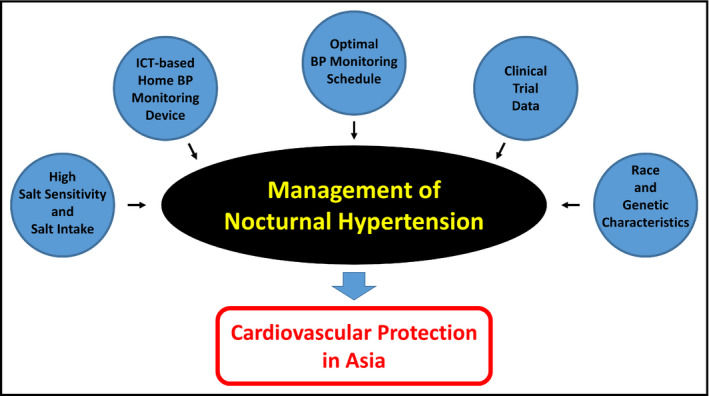
The management of nocturnal hypertension in Asia
CONFLICTS OF INTEREST
Hao‐min Cheng has received speakers’ honoraria and sponsorship to attend conferences and CME seminars from Eli Lilly and AstraZeneca; Pfizer Inc; Bayer AG; Boehringer Ingelheim Pharmaceuticals, Inc; Daiichi Sankyo; Novartis Pharmaceuticals, Inc; Servier Co.; Pharmaceuticals Corporation; Sanofi; Takeda Pharmaceuticals International; and Menarini Co., Ltd. and has served as an advisor or consultant for ApoDx Technology, Inc Chen‐Huan Chen reports personal fees from Novartis, Sanofi, Daiichi Sankyo, Servier, Bayer, and Boehringer Ingelheim Pharmaceuticals, Inc Yook‐Chin Chia has received speaker honoraria and sponsorship to attend conferences and seminars from Boehringer Ingelheim, Pfizer, Omron, Servier, and Xepa‐Sol and investigator‐initiated research grants from Pfizer and Omron. Ji‐Guang Wang reports research grants from Chendu Di‐Ao and Omron, and lecture and consulting fees from AstraZeneca, Novartis, Omron, Servier, and Takeda. Kario reports research grants from Omron Healthcare, Fukuda Denshi, A&D, and Pfizer, Japan, and honoraria from Omron Healthcare. All other authors report no potential conflicts of interest in relation to this article.
AUTHOR CONTRIBUTIONS
T. Fujiwara conceived and designed the study. T. Fujiwara, S. Hoshide, N. Tomitani, H.‐m. Cheng, A. A. Soenarta, Y. Turana, C.‐H. Chen, H. V. Minh, G. P. Sogunuru, J. C. Tay, T.‐D. Wang, Y.‐C. Chia, N. Verma, Y. Li, J.‐G. Wang, and K. Kario drafted the manuscript or critically revised the important intellectual content. T. Fujiwara, S. Hoshide, N. Tomitani, H.‐m. Cheng, A. A. Soenarta, Y. Turana, C.‐H. Chen, H. V. Minh, G. P. Sogunuru, J. C. Tay, T.‐D. Wang, Y.‐C. Chia, N. Verma, Y. Li, J.‐G. Wang, and K. Kario approved the final version of the manuscript.
ACKNOWLEDGMENTS
We gratefully acknowledge Ms Ayako Okura and Ms Yukie Okawara for their editorial assistance.
Fujiwara T, Hoshide S, Tomitani N, et al. Clinical significance of nocturnal home blood pressure monitoring and nocturnal hypertension in Asia. J Clin Hypertens. 2021;23:457–466. 10.1111/jch.14218
Contributor Information
Takeshi Fujiwara, Email: kkario@jichi.ac.jp, Email: m03080tf@jichi.ac.jp.
Kazuomi Kario, Email: kkario@jichi.ac.jp.
REFERENCES
- 1. Fagard RH, Celis H, Thijs L, et al. Daytime and nighttime blood pressure as predictors of death and cause‐specific cardiovascular events in hypertension. Hypertension. 2008;51:55‐61. [DOI] [PubMed] [Google Scholar]
- 2. Fan HQ, Li Y, Thijs L, et al. Prognostic value of isolated nocturnal hypertension on ambulatory measurement in 8711 individuals from 10 populations. J Hypertens. 2010;28:2036‐2045. [DOI] [PubMed] [Google Scholar]
- 3. Yano Y, Kario K. Nocturnal blood pressure and cardiovascular disease: a review of recent advances. Hypertens Res. 2012;35:695‐701. [DOI] [PubMed] [Google Scholar]
- 4. Li Y, Wang JG. Isolated nocturnal hypertension: a disease masked in the dark. Hypertension. 2013;61:278‐283. [DOI] [PubMed] [Google Scholar]
- 5. Yang WY, Melgarejo JD, Thijs L, et al. Association of office and ambulatory blood pressure with mortality and cardiovascular outcomes. JAMA. 2019;322:409‐420. [DOI] [PMC free article] [PubMed] [Google Scholar]
- 6. Wang C, Li Y, Zhang J, et al. Prognostic effect of isolated nocturnal hypertension in chinese patients with nondialysis chronic kidney disease. J Am Heart Assoc. 2016;5:e004198. [DOI] [PMC free article] [PubMed] [Google Scholar]
- 7. Ishikawa J, Kario K. Assessment of nocturnal blood pressure by home blood pressure monitoring. Hypertens Res. 2007;30:661‐662. [DOI] [PubMed] [Google Scholar]
- 8. Kollias A, Ntineri A, Stergiou GS. Association of night‐time home blood pressure with night‐time ambulatory blood pressure and target‐organ damage: a systematic review and meta‐analysis. J Hypertens. 2017;35:442‐452. [DOI] [PubMed] [Google Scholar]
- 9. Whelton PK, Carey RM, Aronow WS, et al. 2017 ACC/AHA/AAPA/ABC/ACPM/AGS/APhA/ASH/ASPC/NMA/PCNA Guideline for the Prevention, Detection, Evaluation, and Management of High Blood Pressure in Adults: Executive Summary: A Report of the American College of Cardiology/American Heart Association Task Force on Clinical Practice Guidelines. Hypertension. 2018;71:1269‐1324. [DOI] [PubMed] [Google Scholar]
- 10. Williams B, Mancia G, Spiering W, et al. 2018 ESC/ESH Guidelines for the management of arterial hypertension. Eur Heart J. 2018;39:3021‐3104. [DOI] [PubMed] [Google Scholar]
- 11. Umemura S, Arima H, Arima S, et al. The Japanese Society of Hypertension Guidelines for the Management of Hypertension (JSH 2019). Hypertens Res. 2019;42:1235‐1481. [DOI] [PubMed] [Google Scholar]
- 12. National Institute for Health and Care Excellence . Hypertension in adults: Diagnosis and management. NICE guideline. Published: 28 August 2019. https://www.nice.org.uk/guidance/ng136
- 13. Unger T, Borgi C, Charchar F, et al. 2020 International Society of Hypertension Global Hypertension Practice Guidelines. Hypertension. 2020;75:1334‐1357. [DOI] [PubMed] [Google Scholar]
- 14. Shimbo D, Artinian NT, Basile JN, et al. Self‐measured blood pressure monitoring at home: A joint policy statement from the American Heart Association and American Medical Association. Circulation. 2020;142:e42‐e63. [DOI] [PubMed] [Google Scholar]
- 15. Kario K, Hoshide S, Haimoto H, et al. Sleep blood pressure self‐measured at home as a novel determinant of organ damage: Japan Morning Surge Home Blood Pressure (J‐HOP) Study. J Clin Hypertens (Greenwich). 2015;17:340‐348. [DOI] [PMC free article] [PubMed] [Google Scholar]
- 16. Fujiwara T, Hoshide S, Kanegae H, Kario K. Cardiovascular event risks associated with masked nocturnal hypertension defined by home blood pressure monitoring in the J‐HOP nocturnal blood pressure study. Hypertension. 2020;76:259‐266. [DOI] [PubMed] [Google Scholar]
- 17. Fujiwara T, Nishizawa M, Hoshide S, et al. Comparison of different schedules of nocturnal home blood pressure measurement using an information/communication technology‐based device in hypertensive patients. J Clin Hypertens (Greenwich). 2018;20:1633‐1641. [DOI] [PMC free article] [PubMed] [Google Scholar]
- 18. Kollias A, Andreadis E, Agaliotis G, et al. The optimal night‐time home blood pressure monitoring schedule: agreement with ambulatory blood pressure and association with organ damage. J Hypertens. 2018;36:243‐249. [DOI] [PubMed] [Google Scholar]
- 19. Saeki K, Obayashi K, Iwamoto J, et al. Stronger association of indoor temperature than outdoor temperature with blood pressure in colder months. J Hypertens. 2014;32:1582‐1589. [DOI] [PubMed] [Google Scholar]
- 20. Tabara Y, Matsumoto T, Murase K, et al. Seasonal variation in nocturnal home blood pressure fall: The Nagahama study. Hypertens Res. 2018;41:198‐208. [DOI] [PubMed] [Google Scholar]
- 21. Kuwabara M, Harada K, Hishiki Y, Kario K. Validation of a wrist‐type home nocturnal blood pressure monitor in the sitting and supine position according to the ANSI/AAMI/ISO81060‐2:2013 guidelines: Omron HEM‐9600T. J Clin Hypertens (Greenwich). 2019;21:463‐469. [DOI] [PMC free article] [PubMed] [Google Scholar]
- 22. Kuwabara M, Harada K, Hishiki Y, et al. Validation of a wrist‐type home nocturnal blood pressure monitor in the sitting and supine position according to the ANSI/AAMI/ISO81060‐2:2013 guidelines: Omron HEM‐9601T. J Clin Hypertens (Greenwich). 2020;22:970‐978. [DOI] [PMC free article] [PubMed] [Google Scholar]
- 23. Ishikawa J, Hoshide S, Eguchi K, et al. Nighttime home blood pressure and the risk of hypertensive target organ damage. Hypertension. 2012;60:921‐928. [DOI] [PubMed] [Google Scholar]
- 24. Andreadis EA, Agaliotis G, Kollias A, et al. Night‐time home versus ambulatory blood pressure in determining target organ damage. J Hypertens. 2016;34(3):438–444; discussion 44. [DOI] [PubMed] [Google Scholar]
- 25. Kario K, Tomitani N, Kanegae H, et al. Comparative Effects of an Angiotensin II Receptor Blocker (ARB)/Diuretic vs. ARB/Calcium‐Channel Blocker Combination on Uncontrolled Nocturnal Hypertension Evaluated by Information and Communication Technology‐Based Nocturnal Home Blood Pressure Monitoring – The NOCTURNE Study. Circ J. 2017;81:948‐957. [DOI] [PubMed] [Google Scholar]
- 26. Fujiwara T, Tomitani N, Kanegae H, Kario K. Comparative effects of valsartan plus either cilnidipine or hydrochlorothiazide on home morning blood pressure surge evaluated by information and communication technology‐based nocturnal home blood pressure monitoring. J Clin Hypertens (Greenwich). 2018;20:159‐167. [DOI] [PMC free article] [PubMed] [Google Scholar]
- 27. Nakanishi K, Jin Z, Homma S, et al. Night‐time systolic blood pressure and subclinical cerebrovascular disease: The Cardiovascular Abnormalities and Brain Lesions (CABL) study. Eur Heart J Cardiovasc Imaging. 2019;20:765‐771. [DOI] [PMC free article] [PubMed] [Google Scholar]
- 28. Asayama K, Fujiwara T, Hoshide S, et al. Nocturnal blood pressure measured by home devices: evidence and perspective for clinical application. J Hypertens. 2019;37:905‐916. [DOI] [PubMed] [Google Scholar]
- 29. Pogue V, Rahman M, Lipkowitz M, et al. Disparate estimates of hypertension control from ambulatory and clinic blood pressure measurements in hypertensive kidney disease. Hypertension. 2009;53:20‐27. [DOI] [PubMed] [Google Scholar]
- 30. Poulter NR, Savopoulos C, Anjum A, et al. Randomized crossover trial of the impact of morning or evening dosing of antihypertensive agents on 24‐hour ambulatory blood pressure. Hypertension. 2018;72:870‐873. [DOI] [PubMed] [Google Scholar]
- 31. Kario K, Hoshide S, Uchiyama K, et al. Dose timing of an angiotensin II receptor blocker/calcium channel blocker combination in hypertensive patients with paroxysmal atrial fibrillation. J Clin Hypertens (Greenwich). 2016;18:1036‐1044. [DOI] [PMC free article] [PubMed] [Google Scholar]
- 32. Fujiwara T, Hoshide S, Yano Y, et al. Comparison of morning vs bedtime administration of the combination of valsartan/amlodipine on nocturnal brachial and central blood pressure in patients with hypertension. J Clin Hypertens (Greenwich). 2017;19:1319‐1326. [DOI] [PMC free article] [PubMed] [Google Scholar]
- 33. Ishikawa J, Shimizu M, Edison ES, et al. Assessment of the reductions in night‐time blood pressure and dipping induced by antihypertensive medication using a home blood pressure monitor. J Hypertens. 2014;32:82‐89. [DOI] [PubMed] [Google Scholar]
- 34. Kario K, Hoshide S, Okawara Y, et al. Effect of canagliflozin on nocturnal home blood pressure in Japanese patients with type 2 diabetes mellitus: The SHIFT‐J study. J Clin Hypertens (Greenwich). 2018;20:1527‐1535. [DOI] [PMC free article] [PubMed] [Google Scholar]
- 35. Kario K, Kuwabara M, Hoshide S, et al. Effects of nighttime single‐dose administration of vasodilating vs sympatholytic antihypertensive agents on sleep blood pressure in hypertensive patients with sleep apnea syndrome. J Clin Hypertens (Greenwich). 2014;16:459‐466. [DOI] [PMC free article] [PubMed] [Google Scholar]
- 36. Katsuya T, Ishikawa K, Sugimoto K, et al. Salt Sensitivity of Japanese from the viewpoint of gene polymorphism. Hypertens Res. 2003;26:521‐525. [DOI] [PubMed] [Google Scholar]
- 37. Morimoto A, Uzu T, Fujii T, et al. Sodium sensitivity and cardiovascular events in patients with essential hypertension. Lancet. 1997;350:1734‐1737. [DOI] [PubMed] [Google Scholar]
- 38. Anderson CAM, Appel LJ, Okuda N, et al. Dietary sources of sodium in China, Japan, the United Kingdom, and the United States, women and men aged 40 to 59 years: The INTERMAP study. J Am Diet Assoc. 2010;110:736‐745. [DOI] [PMC free article] [PubMed] [Google Scholar]
- 39. Kario K, Kanegae H, Tomitani N, et al. Nighttime blood pressure measured by home blood pressure monitoring as an independent predictor of cardiovascular events in general practice. Hypertension. 2019;73:1240‐1248. [DOI] [PMC free article] [PubMed] [Google Scholar]
- 40. Chonan K, Kikuya M, Araki T, et al. Device for the self‐measurement of blood pressure that can monitor blood pressure during sleep. Blood Press Monit. 2001;6:203‐205. [DOI] [PubMed] [Google Scholar]
- 41. Shirasaki O, Yamashita S, Kawara S, et al. A new technique for detecting sleep apnea‐related "Midnight" surge of blood pressure. Hypertens Res. 2006;29:695‐702. [DOI] [PubMed] [Google Scholar]
- 42. Hosohata K, Kikuya M, Ohkubo T, et al. Reproducibility of nocturnal blood pressure assessed by self‐measurement of blood pressure at home. Hypertens Res. 2007;30:707‐712. [DOI] [PubMed] [Google Scholar]
- 43. Ushio H, Ishigami T, Araki N, et al. Utility and feasibility of a new programmable home blood pressure monitoring device for the assessment of nighttime blood pressure. Clin Exp Nephrol. 2009;13:480‐485. [DOI] [PubMed] [Google Scholar]
- 44. Shirasaki O, Kuwabara M, Saito M, et al. T Development and clinical application of a new technique for detecting 'sleep blood pressure surges' in sleep apnea patients based on a variable desaturation threshold. Hypertens Res. 2011;34:922‐928. [DOI] [PubMed] [Google Scholar]
- 45. Stergiou GS, Nasothimiou EG, Destounis A, et al. Assessment of the diurnal blood pressure profile and detection of non‐dippers based on home or ambulatory monitoring. Am J Hypertens. 2012;25:974‐978. [DOI] [PubMed] [Google Scholar]
- 46. Stergiou GS, Triabtafyllidou E, Cholidou K, et al. Asleep home blood pressure monitoring in obstructive sleep apnea: a pilot study. Blood Press Monit. 2013;18:21‐26. [DOI] [PubMed] [Google Scholar]
- 47. Lindroos AS, Johansson JK, Puukka PJ, et al. The association between home vs. ambulatory night‐time blood pressure and end‐organ damage in the general population. J Hypertens. 2016;34:1730‐1737. [DOI] [PubMed] [Google Scholar]
- 48. Kuwabara M, Hamasaki H, Tomitani N, et al. Novel triggered nocturnal blood pressure monitoring for sleep apnea syndrome: distribution and reproducibility of hypoxia‐triggered nocturnal blood pressure measurements. J Clin Hypertens (Greenwich). 2017;19:30‐37. [DOI] [PMC free article] [PubMed] [Google Scholar]
- 49. Kuwabara M, Tomitani N, Shiga T, Kario K. Polysomnography‐derived sleep parameters as a determinant of nocturnal blood pressure profile in patients with obstructive sleep apnea. J Clin Hypertens (Greenwich). 2018;20:1039‐1048. [DOI] [PMC free article] [PubMed] [Google Scholar]
- 50. Matsumoto T, Tabara Y, Murase K, et al. Nocturia and increase in nocturnal blood pressure: the Nagahama study. J Hypertens. 2018;36:2185‐2192. [DOI] [PubMed] [Google Scholar]
- 51. Imai Y, Asayama K, Fujiwara S, et al. Development and evaluation of a home nocturnal blood pressure monitoring system using a wrist‐cuff device. Blood Press Monit. 2018;23:318‐326. [DOI] [PubMed] [Google Scholar]
- 52. Tamura S, Iwata S, Ito A, et al. Greater nocturnal blood pressure is associated with natriuretic peptide level in aortic stenosis with preserved ejection fraction. Circ J. 2019;83:447‐451. [DOI] [PubMed] [Google Scholar]
- 53. Lindroos AS, Kantola I, Salomaa V, et al. Agreement between ambulatory and home blood pressure monitoring in detecting night‐time hypertension and nondipping patterns in the general population. Am J Hypertens. 2019;32:734‐741. [DOI] [PubMed] [Google Scholar]
- 54. Matsumoto T, Tabara Y, Murase K, et al. Association between sleep disturbance and nocturnal blood pressure profiles by a linear mixed model analysis: the Nagahama study. Sleep Med. 2019;61:104‐109. [DOI] [PubMed] [Google Scholar]
- 55. Maruhashi T, Kinoshita Y, Kajikawa M, et al. Relationship between home blood pressure and vascular function in patients receiving antihypertensive drug treatment. Hypertens Res. 2019;42:1175‐1185. [DOI] [PubMed] [Google Scholar]
- 56. Hosohata K, Kikuya M, Asayama K, et al. Comparison of nocturnal blood pressure based on home versus ambulatory blood pressure measurement: the Ohasama Study. Clin Exp Hypertens. 2020;42:685‐691. [DOI] [PubMed] [Google Scholar]
- 57. Mokwatsi GG, Hoshide S, Kanegae H, et al. Direct comparison of home versus ambulatory defined nocturnal hypertension for predicting cardiovascular events: the Japan Morning Surge‐Home Blood Pressure (J‐HOP) Study. Hypertension. 2020;76:554‐561. [DOI] [PubMed] [Google Scholar]
- 58. Kario K, Hoshide S, Shimizu M, et al. Effect of dosing time of angiotensin II receptor blockade titrated by self‐measured blood pressure recordings on cardiorenal protection in hypertensives: the Japan Morning Surge‐Target Organ Protection (J‐TOP) study. J Hypertens. 2010;28:1574‐1583. [DOI] [PubMed] [Google Scholar]