



Abstract
Epithelial cells in barrier tissues perform a critical immune function by detecting, restricting, and often directly eliminating extrinsic pathogens. Membrane-bound and cytosolic pattern recognition receptors in epithelial cells bind to diverse ligands, detecting pathogen components and behaviors and stimulating cell-autonomous immunity. In addition to directly acting as first-responders to pathogens, epithelial cells detect commensal- and diet- derived products to promote homeostasis. Recent advances have clarified the array of molecular sensors expressed by epithelial cells, and how epithelial cells responses are wired to promote homeostatic balance while simultaneously allowing elimination of pathogens. These new studies emphatically position epithelial cells as central to an effective innate immune response.
Keywords: epithelium, intestine, Toll-like receptor, inflammasome, interferon, infection
Graphical Abstract
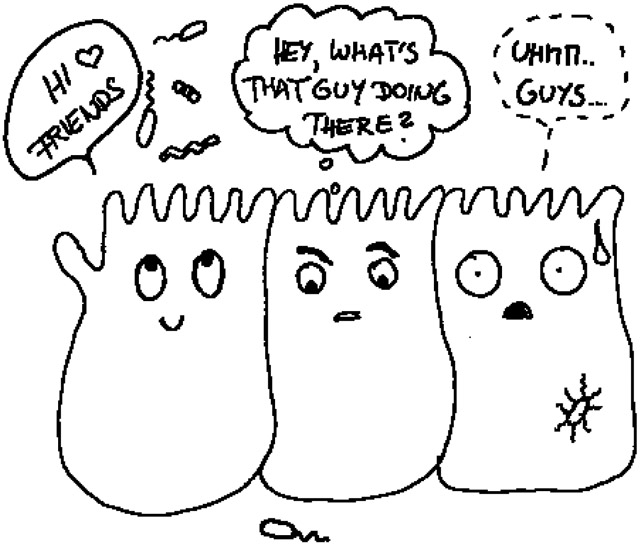
Introduction
Epithelial barriers sequester vital organs from potentially damaging environmental factors, and must strike a balance between integrity and permeability. Epithelial surfaces have evolved mechanisms of selective trans-barrier traffic, including specialized physical characteristics to limit permeability, chemical secretions to facilitate barrier function, and the cultivation of beneficial microbial ecosystems. Compromising any of these barrier activities can lead to damage and disease.
Some barriers have evolved to allow a high degree of exchange, such as the lung (gas exchange) and intestine (nutrient uptake). They comprise a single layer of cells that perform crucial roles in maintaining barrier integrity, such as secreting mucus or antimicrobial peptides (AMPs) and monitoring the environment for pathogens (Fig. 1a). In the intestine, there are six major types of epithelial cells (IECs), which differentiate from the stem cell niche embedded in recessed crypts [1]. Barriers with a lower degree of environmental exchange (e.g. skin) are composed of multiple layers of tightly packed epithelial cells (Fig. 1b). Specific epithelial barriers vary widely in the extent to which they rely on cellular, mucosal, and microbial layers for compartmentalization and pathogen exclusion (Fig. 1). However, all barrier epithelia express molecular sensors that can detect microbial patterns and initiate downstream innate responses. Contemporary sequencing approaches have significantly expanded our knowledge of the immune signaling capacity of epithelial cells. A recent single-cell analysis of stromal cell gene expression and epigenetics revealed commonalities between epithelial cells from a broad array of tissues: all maintain interferon (IFN) responsiveness, antigen presentation, and open chromatin at immune response loci, rendering them poised for a rapid immune response. However, the specific array of immune genes expressed by epithelia at homeostasis is highly organ-specific [2]. These genetic data support and expand upon prior foundational studies of epithelial cell immunity that identified differences in reactivity to microbial products and IFN types in cells of the gut, lung, and skin.
Figure 1.

Examples of epithelial barrier organization. A) Mucosal epithelia, such as the intestine, form an important secondary barrier to the physical cellular barrier by secreting mucus and antimicrobial factors. The small intestine has the unique ability to promote selective absorption while maintaining a microbial buffer zone. B) Stratified, keratinized epithelium (e.g., skin) have a largely impermeable multi-layer cellular barrier which usually has fewer absorptive roles. Created in BioRender.com.
In this review, we focus on recent advances in our understanding of the intestinal epithelium, which is associated with abundant commensal microbes—an environment that presents continuous opportunities for stimulation of innate signaling pathways. Commensals are now thought of as an additional barrier to infection for the host by competitive exclusion of pathogens and moderation of pathobiont behavior. Despite layered defenses, the intestinal epithelium remains vulnerable to pathogens, and mounts potent responses to viruses, bacteria, protists, fungi, and multicellular parasites.
Epithelial Detection of Microbes: Location, Location, Location.
All cells are equipped with molecular sensors conferring the ability to detect microbes. These are referred to as pattern-recognition receptors (PRRs, Fig. 2) based on activation by pathogen-associated molecular patterns (PAMPs, many of which are shared by commensal microbes) and danger-associated molecular patterns (DAMPs, host-cell molecules present outside their usual context). One determinant of PRR activation is cellular localization: they are either membrane-bound and detect extracellular (including endosomal) ligands, or cytosolic and detect intracellular ligands. Context-dependent activation of PRRs that maximizes responses to pathogens and minimizes responses to harmless microbes or self-ligands has been coined ‘patterns of pathogenesis’ [3]. Even so, it is clear that commensal microbes robustly activate epithelial PRRs and play a critical role in development of mucosal immunity and maintenance of tissue homeostasis [4].
Figure 2.

Mechanisms of immune sensing in the intestinal epithelia and resultant barrier immune responses. Primary mechanisms of microbial stimulation include the membrane-bound toll-like receptors (TLRs), which recognize extracellular ligands, including those in endosomes; cytosolic nucleotide-binding domain and leucine-rich repeat containing receptors (NLRs), which detect ligands present in the cytosol and stimulate inflammasome assembly and activation; and cytosolic nucleic acid sensors such as RIG-I-like receptors and cGAS/STING. Transduction of signals into responses requires transcriptional regulation of cytokines and direct-acting antimicrobial products, maturation of cytokine precursors, and activation of programmed cell death pathways. Created in BioRender.com.
Extracellular pattern recognition receptors.
Toll-like receptors (TLRs, Fig. 2) are membrane-embedded sensors stimulated by diverse PAMPs, and IECs specialize in expression of specific TLRs in a context-dependent manner. In addition to detection of pathogens, we now appreciate the importance of tonic immune stimulation by the microbiome in maintaining intestinal homeostasis. Stimulation of TLRs by commensal microbes in the intestinal lumen is required for optimal induction of inflammatory cytokines upon injury or infection, and the ability to subsequently return to homeostasis [5]. This may be attributable in part to commensal-dependent shaping of IEC epigenetics, as germ-free mice have global increases in DNA methylation [6]. Another effect of commensal sensing by hematopoietic and non-hematopoietic TLRs is stimulation of MHC-II expression on IECs. MHC-II activity is generally restricted to professional antigen presenting cells, but IEC-specific MHC-II was recently shown to play a pathological role in graft versus host disease [7].
Microbes are typically kept out of the crypt base, where Paneth cells – relatively long-lived secretory cells – reside and secrete AMPs. Paneth cells detect commensal bacteria dependent on TLR signaling and the downstream adaptor protein MyD88, leading to increased AMP production and limiting bacterial invasion [8,9]. Using reporter mice, Price et al. showed that TLRs are non-uniform in their distribution and expression along the gastrointestinal tract and over the course of development. For example, expression of TLR5 (which recognizes bacterial flagellin) is restricted to Paneth cells in the small intestine, yet is ubiquitous in IECs of the proximal and undetectable in the distal colon [10]. The ability of Paneth cells to detect microbes is clearly important, yet chronic overstimulation by IFNs leads to their depletion by necroptosis and apoptosis and is correlated with ileitis [11], demonstrating that inflammatory responses are a double-edged sword. Human intestinal development is not as well studied as animal models, but a recent comparative study suggests that many observations of mouse IEC differentiation hold true across species [12].
Asymmetry in TLR responses to microbes based on the membrane context (i.e., apical, basal, endosomal) has long been thought to exist, and is an active area of research lacking clear consensus. For example, TLR9 stimulation activates NFκB when agonists are detected on the basolateral face, but inhibits NFκB when detected on the apical face of IECs [13]. More recently, it was shown that basolateral localization of TLR3 leads to a muted IFN response upon apical delivery of poly I:C or reovirus infection relative to basolateral delivery or infection [14]. These findings could indicate that certain PRR signals are ‘wired’ to respond more strongly to agonists on the basolateral face. However, in their genetic mouse studies Price et al. found no evidence of localized TLR5 expression in IECs, and no evidence of any TLR9 expression or function in IECs [10], highlighting the need for further experimentation to resolve these disparate findings. Although we now appreciate that apical PRR signaling of epithelia can be muted, certain epithelial responses to apical colonization remain intact: elegant studies show that segmented filamentous bacterium, a ‘pathobiont’ [15] that penetrates IECs without causing overt inflammation in healthy animals, delivers antigens to the IEC cytosol via endocytosis, inducing TH17 differentiation [16].
Extracellular detection of PAMPs by IECs through non-TLR PRRs such as C-type lectin receptors remains largely unexplored, but fungal-sensing lectins are expressed in CX3CR1+ macrophages of the intestine, which control the mycobiota [17]. Indeed, CX3CR1+ macrophages promote systemic antifungal IgG production that protects from systemic candidiasis [18]. Meanwhile, IECs do play at least a passive role in fungal detection: fluid absorbed by IECs in the distal colon is sampled by ‘balloon-like projections’ of resident macrophages. IECs stop absorbing luminal fluid when these macrophages detect fungal products, preventing widespread apoptosis triggered by fungal toxins [19]. This only occurs in the distal colon, emphasizing the context dependency of microbial detection. Commensal fungi of the intestine may provide beneficial homeostatic stimulation that cross-protects against pathogens, as indicated by a recent study of gut-adapted Candida albicans that evolved to trigger reduced cell death in IECs [20]. It will be important to continue studying the role of fungi and other commensal microbes in promoting tonic cross-protective innate stimuli, including the specific role of sensing by IECs in facilitating these homeostatic signals.
Cytosolic pattern recognition receptors.
Whereas basolateral positioning of microbes is indicative of danger to epithelial cells, cytosolic microbes are overtly pathogenic. Inflammasomes are innate immune complexes formed upon detection of intracellular PAMPs and DAMPs that activate Caspase-1, triggering inflammatory cell death to eliminate intracellular pathogens. Strong expression of multiple inflammasome sensors and execution molecules suggest important roles in barrier tissues. Major advances have been made in our understanding of inflammasome activation in the intestine, as thoroughly reviewed [21]. Briefly, IEC inflammasomes protect from early pathogen invasion by causing rapid extrusion of infected IECs from the monolayer. Inflammasome activation in IECs also leads to release of IL-18 and the eicosanoid (lipid inflammatory mediator) prostaglandin E2. Activated IL-18 can promote barrier integrity or inflammation in a seemingly context-dependent manner [21]. A recent study showed that IL-18 derived from neurons, but not IECs or myeloid cells, protects from Salmonella Typhimurium late in infection, underlining the complex biology of this cytokine [22]. While the pro-inflammatory cytokine IL-1β is primarily produced by myeloid cells in the intestine upon inflammasome activation, epithelial cells of the skin and lung also release activated IL-1β [21,23,24]. As inflammasomes have been primarily studied in myeloid cells, effects of their activation in the many IEC sub-types remain poorly understood, as highlighted by a recent report of the unique capacity of tuft cells to release prostaglandin D2 upon inflammasome activation [25].
The NAIP-NLRC4 inflammasome senses cytosolic bacterial flagellin and type three secretion systems. This inflammasome complex has potent antibacterial effects, reducing both early Salmonella Typhimurium invasion through epithelial cells and decreasing tissue adherence of Citrobacter rodentium, as recently reviewed [21]. This protection relies on epithelial–and not myeloid–pathogen detection, as a study using conditional knockouts and barcoded pathogens confirmed [26]. In vitro studies of Salmonella infection demonstrated that ion flux through the pores created by Caspase-1-cleaved Gasdermin D leads to epithelial contractions that close the gap after cell extrusion [27]. The moderate inflammation caused by this epithelial response is a small price to pay to prevent the severe enteropathy observed in its absence caused by elevated TNFα [28]. Recently, it was shown that epithelial NAIP-NLRC4 sensing entirely protects mice from pathology caused by Shigella spp. through IEC extrusion [29].
Another important cytosolic sensor, Caspase-11, is a non-canonical inflammasome that senses cytoplasmic LPS and is expressed at low levels in murine IEC during homeostasis. IFN-II produced during infection strongly induces Caspase-11, contributing to protection from Salmonella, especially later in infection [30]. As recently shown in intestinal organoids, Caspase-4 (the human ortholog of Caspase-11) is possibly the major pathway of protection from gram-negative pathogens in human IECs [31]. The NLRP9b inflammasome has been described to sense viral RNA in IECs and to restrict rotavirus invasion, which functionally makes it the antiviral counterpart to NAIP-NLRC4 and Caspase-4/11 [32].
Nlrp6 is also highly expressed in IECs, suggesting an important role in barrier sensing. Several activating ligands from pathogen-derived ligands have been proposed for NLRP6. Some reports suggest Inflammasome/Caspase-independent transcriptional regulatory functions, making the literature on NLRP6’s role in the intestine less clear-cut [33]. Recently, enterocyte-specific Caspase-1 was shown to control Cryptosporidium infection, and fully NLRP6- as well as IL-18- deficient animals also display increased parasite burden, suggesting epithelial sensing of Cryptosporidium infection by NLRP6 [34]. NLRP6’s role in prevention of intestinal dysbiosis is heavily debated, and individual findings may depend on the presence of specific microbiota or ‘pathobionts’ [35]. Two recent studies using conditional knockout mice with specific Cre recombinase drivers demonstrated a role for NLRP6 as well as Caspase-11 in pathogen and microbiome detection in intestinal neurons, opening a fascinating new chapter in barrier innate sensing [36,37]. Further use of such genetic mouse models will hopefully clarify the role of NLRP6.
Nlrp1b is weakly expressed in mouse IECs [38], and its role in intestinal barrier sensing is unclear. Recent studies show activation of this inflammasome by ‘functional degradation’ triggered by Shigella and Rhinovirus proteins [24,39,40]–gut- and lung-trophic pathogens, respectively–suggesting NLRP1b is important in multiple epithelial tissues. Interestingly, a recent report has demonstrated a direct interaction between Semliki Forest virus replication intermediates or synthetic dsRNA and human NLRP1 in keratinocytes with subsequent inflammasome activation [41].
Inflammasomes can also be assembled upon detection of cytosolic dsDNA through AIM2 [42]. A direct role for AIM2 in IEC pathogen sensing has yet to be demonstrated, but as radiation leads to AIM2-dependent IEC death, it seems likely [43]. Interestingly, AIM2-dependent innate immune ‘memory’ mechanisms have been described in epithelial stem cells of the skin [44], and similar mechanisms may be involved in cytosolic sensing at other barrier epithelia.
Cytosolic detection of nucleic acids also robustly induces production of IFN-I and III upon detection by cGAS/STING or the RIG-I-like receptors (RLRs, e.g. RIG-I and MDA5, reviewed in [45]). The expression level of these nucleic acid sensors is generally low at baseline, but upregulation of cGAS and RLRs by IFN-I and III serves as a positive feedback mechanism to increase the capacity for nucleic acid detection during infection. Two recent studies demonstrate our incomplete understanding of these sensors: STING mediates protection from oral Listeria infection, but independently of the IFN-I response it stimulates [46], and also has a remarkable pro-viral role in Rhinovirus A and C infection of airway epithelial cells [47]. Another nucleic acid sensor, Z-DNA binding protein (ZBP-1), is a critical inducer of necroptosis in response to some viral nucleic acids, but ZBP-1 can also recognize endogenous ligands and cause inflammation in barrier tissues in the absence of viral infection when apoptotic signals are abrogated [48,49].
With few exceptions, epithelial cells express the same sensors and detect viral nucleic acids by the same mechanism as other cell types but have specialized responses. IFN-III (IFN-λ) is essential and non-redundant with other IFNs for restricting enteric viruses [50], and epithelial cells have been shown in several independent studies to preferentially produce or secrete IFN-III upon infection [51-55]. Additionally, the receptor for IFN-III is more restricted in expression than the receptor for IFN-I, with notably high expression on epithelial cells. Thus, the detection of infection in epithelial cells by nucleic acid sensors can be linked to an epithelium-centric response through IFN-III. The role of IFN-III in antiviral protection of IECs is magnified because IECs respond poorly to IFN-I relative to other barrier epithelia [56]. This hypo-responsiveness is apparently dependent on yet unknown factors within the intestinal milieu because IEC organoids respond robustly to IFN-I and express greater surface IFN alpha receptor (IFNAR) than IECs isolated directly from the intestine [57]. An important area of study in the future will be how homeostatic responses to commensal microbes or other factors may tune the expression of IFNAR, cytosolic nucleic acid sensors, or other PRRs at epithelial barriers.
Environmental monitoring of metabolites and dietary nutrients.
While IECs use PRRs to directly sense microbes or damage caused by pathogens, they also react to microbial metabolites and dietary compounds [58,59]. These vary in abundance with food intake, location in the digestive tract, and microbial presence, and can profoundly affect homeostasis. In an extreme example, recent findings demonstrate that a specific set of mTOR-dependent protective alpha-defensins are produced upon prolonged fasting in mice [60]. Such mechanisms may help prevent pathogen colonization as commensal niches become available during nutrient deprivation. In a less extreme example, microbe-derived short chain fatty acids (SCFA) have been shown to influence IEC proliferation and production of AMP, mucus, and cytokines [58]. Recent publications demonstrated SCFA imprinting of an antimicrobial program in macrophages [61] and promotion of memory potential in CD8+T-cells of the intestine [62]. SCFAs also reach the bloodstream and could affect responses of distal tissues. For example, the SCFA butyrate enhances viral infection of lung epithelial cells through regulation of IFN-stimulated genes [63].
Bile acids are secreted into the digestive tract to aid digestion and are metabolized by commensal microbes, leading to regional variation in their abundance along the length of the gastrointestinal tract. The enteropathogen norovirus has evolved a dependency on bile acids for entry into cells [64,65]. Reciprocally, anti-noroviral IFN-III responses in IECs were recently shown to be primed by primary bile acid metabolites, whereas secondary bile acid metabolites inhibit this response in the distal small intestine [66]. This highlights the need for careful consideration of both global and localized effects of dietary compounds and their metabolites in the intestine.
Vitamin A – in its active form retinoic acid – has long been known to play critical roles in development and immune regulation. At the intestinal epithelium, it has pleiotropic effects including stimulating IEC proliferation, differentiation, antimicrobial production, immune cell migration, and IgA secretion [67]. A recent study showed that mice with IEC-specific retinoic acid receptor signaling abrogation are more susceptible to Salmonella due to reduced IL-18 signaling and IFN-II priming [68]. Vitamin A also stimulates antimicrobial production in the skin [69].
Tuft cells, a long enigmatic type of IECs, are now recognized as important sentinels that trigger anti-parasitic type 2 immune reactions [70-72], yet are also the specific entry point for norovirus [73]. One way that tuft cells detect parasite infections is by ‘tasting’ the metabolite succinate [74, 75]. The emergence of tuft cells as important monitors of the luminal environment is exciting after their role remained mysterious for so long.
Aryl hydrocarbon receptor (AHR) can bind tryptophan metabolites and dietary components and contributes to intestinal homeostasis via signaling on innate lymphocytes, leading to IL-22 production, among other effects on myeloid cells [76]. AHR also signals directly on IECs, balancing proliferation versus differentiation, thus protecting from attaching and effacing infection [77]. The plethora of specific metabolites and cognate receptors in the intestine likely includes many with a direct effect on IEC innate immunity we are not currently aware of.
Conclusions
Our understanding of the active roles that the epithelium plays in immune sensing has advanced enormously in recent years. The explosion in availability of tissue-specific conditional genetic mouse models points to a bright future and continued rapid growth in this field. Maturation of the microbiome field and the standardization of husbandry practices likewise points to forthcoming major advances. While In vivo studies of intestinal immune sensing are essential, particularly for investigating how context affects IEC innate immune sensing, intestinal organoids have great promise for enabling complementary in vitro experimentation. One of the most exciting prospects for these authors is a deeper understanding of how barrier sensing mechanisms, and concomitant epithelial responses, synergize with or antagonize one another. How metabolites and nutrients alter this picture adds another layer of complexity, that we are only beginning to unravel. With all this has come a deeper appreciation of the central role barrier tissues play in innate immune sensing.
Acknowledgements
We thank Madeline Churchill and Jacob Van Winkle for critical reading of the manuscript. The authors would like to acknowledge the colleagues whose work we were not able to cite due to the article format, or whom we may have inadvertently overlooked. This work was supported by the National Institutes of Health 5T32AI007472-25 (DAC) and R01-AI130055 (TJN), and OHSU (IR, DAC).
Footnotes
Declaration of interests
The authors declare that they have no known competing financial interests or personal relationships that could have appeared to influence the work reported in this paper.
Publisher's Disclaimer: This is a PDF file of an unedited manuscript that has been accepted for publication. As a service to our customers we are providing this early version of the manuscript. The manuscript will undergo copyediting, typesetting, and review of the resulting proof before it is published in its final form. Please note that during the production process errors may be discovered which could affect the content, and all legal disclaimers that apply to the journal pertain.
References
- 1.Beumer J, Clevers H: Cell fate specification and differentiation in the adult mammalian intestine. Nat Rev Mol Cell Biol 2020, doi: 10.1038/s41580-020-0278-0. [DOI] [PubMed] [Google Scholar]
- 2.Krausgruber T, Fortelny N, Fife-Gernedl V, Senekowitsch M, Schuster LC, Lercher A, Nemc A, Schmidl C, Rendeiro AF, Bergthaler A, et al. : Structural cells are key regulators of organ-specific immune responses. Nature 2020, 583:296–302. [DOI] [PMC free article] [PubMed] [Google Scholar]
- 3.Vance RE, Isberg RR, Portnoy DA: Patterns of pathogenesis: discrimination of pathogenic and nonpathogenic microbes by the innate immune system. Cell Host Microbe 2009, 6:10–21. [DOI] [PMC free article] [PubMed] [Google Scholar]
- 4.Soderholm AT, Pedicord VA: Intestinal epithelial cells: at the interface of the microbiota and mucosal immunity. Immunology 2019, 158:267–280. [DOI] [PMC free article] [PubMed] [Google Scholar]
- 5.Rakoff-Nahoum S, Paglino J, Eslami-Varzaneh F, Edberg S, Medzhitov R: Recognition of Commensal Microflora by Toll-Like Receptors Is Required for Intestinal Homeostasis. Cell 2004, 118:229–241. [DOI] [PubMed] [Google Scholar]
- 6.Ansari I, Raddatz G, Gutekunst J, Ridnik M, Cohen D, Abu-Remaileh M, Tuganbaev T, Shapiro H, Pikarsky E, Elinav E, et al. : The microbiota programs DNA methylation to control intestinal homeostasis and inflammation. Nat Microbiol 2020, 5:610–619. [DOI] [PubMed] [Google Scholar]
- 7. Koyama M, Mukhopadhyay P, Schuster IS, Henden AS, Hülsdünker J, Varelias A, Vetizou M, Kuns RD, Robb RJ, Zhang P, et al. : MHC Class II Antigen Presentation by the Intestinal Epithelium Initiates Graft-versus-Host Disease and Is Influenced by the Microbiota. Immunity 2019, 51:885–898.e7. *Using conventional and germ-free mice, the authors demonstrate that intestinal epithelial cells express MHC-II, dependent on microbiota and functional TLR signaling. Epithelial-specific MHC-II knockout or interleukin 12 neutralization confers protection from graft-versus-host disease.
- 8.Vaishnava S, Behrendt CL, Ismail AS, Eckmann L, Hooper LV.: Paneth cells directly sense gut commensals and maintain homeostasis at the intestinal host-microbial interface. Proc Natl Acad Sci 2008, 105:20858–20863. [DOI] [PMC free article] [PubMed] [Google Scholar]
- 9.Bel S, Pendse M, Wang Y, Li Y, Ruhn KA, Hassell B, Leal T, Winter SE, Xavier RJ, Hooper LV.: Paneth cells secrete lysozyme via secretory autophagy during bacterial infection of the intestine. Science 2017, 357:1047–1052. [DOI] [PMC free article] [PubMed] [Google Scholar]
- 10. Price AE, Shamardani K, Lugo KA, Deguine J, Roberts AW, Lee BL, Barton GM: A Map of Toll-like Receptor Expression in the Intestinal Epithelium Reveals Distinct Spatial, Cell Type-Specific, and Temporal Patterns. Immunity 2018, 49:560–575.e6. **These authors created five reporter mouse lines to visualize intestinal TLR expression. They find that TLR5 expression decreases over development and is restricted to Paneth cells in the small intestine, and describe a set TLR5-depentent microbially stimulate genes.
- 11.Günther C, Ruder B, Stolzer I, Dorner H, He GW, Chiriac MT, Aden K, Strigli A, Bittel M, Zeissig S, et al. : Interferon Lambda Promotes Paneth Cell Death Via STAT1 Signaling in Mice and Is Increased in Inflamed Ileal Tissues of Patients With Crohn’s Disease. Gastroenterology 2019, 157:1310–1322.e13. [DOI] [PubMed] [Google Scholar]
- 12.Stanford AH, Gong H, Noonan M, Lewis AN, Gong Q, Lanik WE, Hsieh JJ, Lueschow SR, Frey MR, Good M, et al. : A direct comparison of mouse and human intestinal development using epithelial gene expression patterns. Pediatr Res 2020, 88:66–76. [DOI] [PMC free article] [PubMed] [Google Scholar]
- 13.Lee J, Mo J-H, Katakura K, Alkalay I, Rucker AN, Liu Y-T, Lee H-K, Shen C, Cojocaru G, Shenouda S, et al. : Maintenance of colonic homeostasis by distinctive apical TLR9 signalling in intestinal epithelial cells. Nat Cell Biol 2006, 8:1327–1336. [DOI] [PubMed] [Google Scholar]
- 14. Stanifer ML, Mukenhirn M, Muenchau S, Pervolaraki K, Kanaya T, Albrecht D, Odendall C, Hielscher T, Haucke V, Kagan JC, et al. : Asymmetric distribution of TLR3 leads to a polarized immune response in human intestinal epithelial cells. Nat Microbiol 2020, 5:181–191. **This work utilized a screen for polarized responses to TLR agonists, and discovered that basal TLR3 stimulation induces a stronger IFN-III response, dependent basolateral sorting of TLR3 by AP-1B.
- 15.Jochum L, Stecher B: Label or Concept – What Is a Pathobiont? Trends Microbiol 2020, 28:789–792. [DOI] [PubMed] [Google Scholar]
- 16.Ladinsky MS, Araujo LP, Zhang X, Veltri J, Galan-Diez M, Soualhi S, Lee C, Irie K, Pinker EY, Narushima S, et al. : Endocytosis of commensal antigens by intestinal epithelial cells regulates mucosal T cell homeostasis. Science 2019, 363:eaat4042. [DOI] [PMC free article] [PubMed] [Google Scholar]
- 17.Leonardi I, Li X, Semon A, Li D, Doron I, Putzel G, Bar A, Prieto D, Rescigno M, McGovern DPB, et al. : CX3CR1+, mononuclear phagocytes control immunity to intestinal fungi. Science 2018, 359:232–236. [DOI] [PMC free article] [PubMed] [Google Scholar]
- 18.Doron I, Leonardi I, Li XV., Fiers WD, Semon A, Bialt-DeCelie M, Migaud M, Gao IH, Lin W-Y, Kusakabe T, et al. : Human gut mycobiota tune immunity via CARD9-dependent induction of anti-fungal IgG antibodies. Cell 2021, 184:1017–1031.e14. [DOI] [PMC free article] [PubMed] [Google Scholar]
- 19. Chikina AS, Nadalin F, Maurin M, San-roman M, Thomas-bonafos T, Li XV., Lameiras S, Baulande S, Henri S, Malissen B, et al. : Macrophages Maintain Epithelium Integrity by Limiting Fungal Product Absorption. Cell 2020, doi: 10.1016/j.cell.2020.08.048. *The authors describe a macrophage population in the distal colon which monitor IEC fluid accumulation via ‘balloon-like projections’ containing IEC-derived cell membranes. When fungal toxins are present, these macrophages protect IECs from toxin-triggered apoptosis via as yet undefined mechanisms.
- 20.Tso GHW, Reales-Calderon JA, Tan ASM, Sem X, Le GTT, Tan TG, Lai GC, Srinivasan KG, Yurieva M, Liao W, et al. : Experimental evolution of a fungal pathogen into a gut symbiont. Science 2018, 362:589–595. [DOI] [PubMed] [Google Scholar]
- 21.Lei-Leston AC, Murphy AG, Maloy KJ: Epithelial Cell Inflammasomes in Intestinal Immunity and Inflammation. Front Immunol 2017, 8. [DOI] [PMC free article] [PubMed] [Google Scholar]
- 22.Jarret A, Jackson R, Duizer C, Healy ME, Zhao J, Rone JM, Bielecki P, Sefik E, Roulis M, Rice T, et al. : Enteric Nervous System-Derived IL-18 Orchestrates Mucosal Barrier Immunity. Cell 2020, 180:50–63.e12. [DOI] [PMC free article] [PubMed] [Google Scholar]
- 23.Zhong FL, Mamaï O, Sborgi L, Boussofara L, Hopkins R, Robinson K, Szeverényi I, Takeichi T, Balaji R, Lau A, et al. : Germline NLRP1 Mutations Cause Skin Inflammatory and Cancer Susceptibility Syndromes via Inflammasome Activation. Cell 2016, 167:187–202.e17. [DOI] [PubMed] [Google Scholar]
- 24. Robinson KS, Teo DET, Tan K Sen, Toh GA, Ong HH, Lim CK, Lay K, Au BV, Lew TS, Chu JJH, et al. : Enteroviral 3C protease activates the human NLRP1 inflammasome in airway epithelia. Science 2020, doi: 10.1126/science.aay2002. **The authors demonstrate that NLRP1 is expressed in primary human airway epithelial cells and can be activated by human rhinovirus. Mechanistically, the virus protease 3C cleaves NLRP1, relieving autoinhibition through degradation.
- 25.Oyesola OO, Shanahan MT, Kanke M, Mooney BM, Webb LM, Smita S, Matheson MK, Campioli P, Pham D, Früh SP, McGinty JW, et al. (2021). PGD2 and CRTH2 counteract Type 2 cytokine–elicited intestinal epithelial responses during helminth infection. Journal of Experimental Medicine 2021, 218. doi: 10.1084/JEM.20202178 [DOI] [PMC free article] [PubMed] [Google Scholar]
- 26.Hausmann A, Böck D, Geiser P, Berthold DL, Fattinger SA, Furter M, Bouman JA, Barthel-Scherrer M, Lang CM, Bakkeren E, et al. : Intestinal epithelial NAIP/NLRC4 restricts systemic dissemination of the adapted pathogen Salmonella Typhimurium due to site-specific bacterial PAMP expression. Mucosal Immunol 2020, 13:530–544. [DOI] [PMC free article] [PubMed] [Google Scholar]
- 27. Ventayol PS, Geiser P, di Martino ML, Florbrant A, Fattinger SA, Walder N, Sima E, Shao F, Gekara NO, Sundbom M, et al. Bacterial detection by NAIP/NLRC4 elicits prompt contractions of intestinal epithelial cell layers. Proc Natl Acad Sci 2021. 118(16). doi: 10.1073/pnas.2013963118 ** Using organoid derived monolayers and live imaging, the authors demonstrate that different from apoptotic epithelial cell extrusion, during pyroptotic IEC extrusion the surrounding epithelium undergoes contractions. The contractions require ion flux and are Caspase-1 and GSDMD dependent and presumably help seal the epithelial gaps resulting from infection-induced extrusion.
- 28.Fattinger SA, Geiser P, Samperio Ventayol P, Di Martino ML, Furter M, Felmy B, Bakkeren E, Hausmann A, Barthel-Scherrer M, Gül E, et al. : Epithelium-autonomous NAIP/NLRC4 prevents TNF-driven inflammatory destruction of the gut epithelial barrier in Salmonella-infected mice. Mucosal Immunology 2021, 1–15. 10.1038/s41385-021-00381-y [DOI] [PMC free article] [PubMed] [Google Scholar]
- 29. Mitchell PS, Roncaioli JL, Turcotte EA, Goers L, Chavez RA, Lee AY, Lesser CF, Rauch I, Vance RE: NAIP–NLRC4-deficient mice are susceptible to shigellosis. Elife 2020, 9. * The authors show that mice, which are usually highly resistant to Shigella infection, become highly susceptible if deficient in NLRC4 or NAIPs. The phenotype is demonstrated to be caused by loss of epithelial-cell-specific pathogen recognition and cell extrusion.
- 30.Crowley SM, Han X, Allaire JM, Stahl M, Rauch I, Knodler LA, Vallance BA: Intestinal restriction of Salmonella Typhimurium requires caspase-1 and caspase-11 epithelial intrinsic inflammasomes. PLOS Pathog 2020, 16:e1008498. [DOI] [PMC free article] [PubMed] [Google Scholar]
- 31.Holly MK, Han X, Zhao EJ, Crowley SM, Allaire JM, Knodler LA, Vallance BA, Smith JG: Salmonella enterica infection of murine and human enteroid-derived monolayers elicits differential activation of epithelium-intrinsic inflammasomes. Infect Immun 2020, 88. [DOI] [PMC free article] [PubMed] [Google Scholar]
- 32.Zhu S, Ding S, Wang P, Wei Z, Pan W, Palm NW, Yang Y, Yu H, Li HB, Wang G, et al. : Nlrp9b inflammasome restricts rotavirus infection in intestinal epithelial cells. Nature 2017, 546:667–670. [DOI] [PMC free article] [PubMed] [Google Scholar]
- 33.Li R, Zhu S: NLRP6 inflammasome. Mol Aspects Med 2020, doi: 10.1016/j.mam.2020.100859. [DOI] [PubMed] [Google Scholar]
- 34.Sateriale A, Gullicksrud JA, Engiles JB, McLeod Bl, Kugler EM, Henao-Mejia J, Zhou T, Ring AM, Brodsky IE, Hunter CA, et al. : The intestinal parasite Cryptosporidium is controlled by an enterocyte intrinsic inflammasome that depends on NLRP6. Proc Natl Acad Sci 2021, 118. [DOI] [PMC free article] [PubMed] [Google Scholar]
- 35.Elinav E, Henao-Mejia J, Strowig T, Flavell R: NLRP6 and Dysbiosis: Avoiding the Luring Attraction of Over-simplification. Immunity 2018, doi: 10.1016/j.immuni.2018.04.002. [DOI] [PubMed] [Google Scholar]
- 36.Muller PA, Matheis F, Schneeberger M, Kerner Z, Jové V, Mucida D: Microbiota-modulated CART + enteric neurons autonomously regulate blood glucose. Science 2020, 370:eabd6176. [DOI] [PMC free article] [PubMed] [Google Scholar]
- 37. Matheis F, Muller PA, Graves CL, Gabanyi I, Kerner ZJ, Costa-Borges D, Ahrends T, Rosenstiel P, Mucida D: Adrenergic Signaling in Muscularis Macrophages Limits Infection-Induced Neuronal Loss. Cell 2020, 180:64–78.e16. **The authors show that intrinsic enteric-associated neurons undergo NLRP6- and Caspase-11-mediated cell death, causing gastrointestinal dysregulation. Intestinal-resident macrophages limit this neuronal damage via β2-adrenergic receptor signaling.
- 38.Haber AL, Biton M, Rogel N, Herbst RH, Shekhar K, Smillie C, Burgin G, Delorey TM, Howitt MR, Katz Y, et al. : A single-cell survey of the small intestinal epithelium. Nature 2017, 551:333–339. [DOI] [PMC free article] [PubMed] [Google Scholar]
- 39.Sandstrom A, Mitchell PS, Goers L, Mu EW, Lesser CF, Vance RE: Functional degradation: A mechanism of NLRP1 inflammasome activation by diverse pathogen enzymes. Science 2019, 364. [DOI] [PMC free article] [PubMed] [Google Scholar]
- 40.Tsu BV, Beierschmitt C, Ryan AP, Agarwal R, Daugherty MD: Diverse viral proteases activate the NLRP1 inflammasome. Elife 2021;10:e60609 doi: 10.7554/eLife.60609. [DOI] [PMC free article] [PubMed] [Google Scholar]
- 41.Bauernfried S, Scherr MJ, Pichlmair A, Duderstadt KE, Hornung V: Human NLRP1 is a sensor for double-stranded RNA. Science 2021, 371. [DOI] [PubMed] [Google Scholar]
- 42.Sharma BR, Karki R, Kanneganti T: Role of AIM2 inflammasome in inflammatory diseases, cancer and infection. Eur J Immunol 2019, 49:1998–2011. [DOI] [PMC free article] [PubMed] [Google Scholar]
- 43.Hu B, Jin C, Li HB, Tong J, Ouyang X, Cetinbas NM, Zhu S, Strowig T, Lam FC, Zhao C, et al. : The DNA-sensing AIM2 inflammasome controls radiation-induced cell death and tissue injury. Science 2016, 354:765–768. [DOI] [PMC free article] [PubMed] [Google Scholar]
- 44.Naik S, Larsen SB, Gomez NC, Alaverdyan K, Sendoel A, Yuan S, Polak L, Kulukian A, Chai S, Fuchs E: Inflammatory memory sensitizes skin epithelial stem cells to tissue damage. Nature 2017, 550:475–480. [DOI] [PMC free article] [PubMed] [Google Scholar]
- 45.Ablasser A, Hur S: Regulation of cGAS- and RLR-mediated immunity to nucleic acids. Nat Immunol 2020, 21:17–29. [DOI] [PubMed] [Google Scholar]
- 46.Louie A, Bhandula V, Portnoy DA: Secretion of c-di-AMP by Listeria monocytogenes Leads to a STING-Dependent Antibacterial Response during Enterocolitis. Infect Immun 2020, 88. [DOI] [PMC free article] [PubMed] [Google Scholar]
- 47.McKnight KL, Swanson KV., Austgen K, Richards C, Mitchell JK, McGivern DR, Fritch E, Johnson J, Remlinger K, Magid-Slav M, et al. : Stimulator of interferon genes (STING) is an essential proviral host factor for human rhinovirus species A and C. Proc Natl Acad Sci 2020, 117:27598–27607. [DOI] [PMC free article] [PubMed] [Google Scholar]
- 48.Jiao H, Wachsmuth L, Kumari S, Schwarzer R, Lin J, Eren RO, Fisher A, Lane R, Young GR, Kassiotis G, et al. : Z-nucleic-acid sensing triggers ZBP1-dependent necroptosis and inflammation. Nature 2020, 580:391–395. [DOI] [PMC free article] [PubMed] [Google Scholar]
- 49.Devos M, Tanghe G, Gilbert B, Dierick E, Verheirstraeten M, Nemegeer J, de Reuver R, Lefebvre S, De Munck J, Rehwinkel J, et al. : Sensing of endogenous nucleic acids byZBP1 induces keratinocyte necroptosis and skin inflammation. J Exp Med 2020, 217. [DOI] [PMC free article] [PubMed] [Google Scholar]
- 50.Ingle H, Peterson ST, Baldridge MT. Distinct effects of type I and III interferons on enteric viruses. Viruses 2018. 10(1). doi: 10.3390/v10010046 [DOI] [PMC free article] [PubMed] [Google Scholar]
- 51.Odendall C, Dixit E, Stavru F, Bierne H, Franz KM, Durbin AF, Boulant S, Gehrke L, Cossart P, Kagan JC: Diverse intracellular pathogens activate type III interferon expression from peroxisomes. Nat Immunol 2014, 15:717–728. [DOI] [PMC free article] [PubMed] [Google Scholar]
- 52.Pervolaraki K, Stanifer ML, Münchau S, Renn LA, Albrecht D, Kurzhals S, Senís E, Grimm D, Schröder-Braunstein J, Rabin RL, et al. : Type I and Type III Interferons Display Different Dependency on Mitogen-Activated Protein Kinases to Mount an Antiviral State in the Human Gut. Front Immunol 2017, 8:459. [DOI] [PMC free article] [PubMed] [Google Scholar]
- 53.Saxena K, Simon LM, Zeng X-L, Blutt SE, Crawford SE, Sastri NP, Karandikar UC, Ajami NJ, Zachos NC, Kovbasnjuk O, et al. : A paradox of transcriptional and functional innate interferon responses of human intestinal enteroids to enteric virus infection. Proc Natl Acad Sci 2017, 114:201615422. [DOI] [PMC free article] [PubMed] [Google Scholar]
- 54.Good C, Wells AI, Coyne CB: Type III interferon signaling restricts enterovirus 71 infection of goblet cells. Sci Adv 2019, 5. [DOI] [PMC free article] [PubMed] [Google Scholar]
- 55.Odendall C, Voak AA, Kagan JC: Type III IFNs Are Commonly Induced by Bacteria-Sensing TLRs and Reinforce Epithelial Barriers during Infection. J Immunol 2017, 199:3270–3279. [DOI] [PMC free article] [PubMed] [Google Scholar]
- 56.Mahlakõiv T, Hernandez P, Gronke K, Diefenbach A, Staeheli P. Leukocyte-Derived IFN-α/β and Epithelial IFN-λ Constitute a Compartmentalized Mucosal Defense System that Restricts Enteric Virus Infections. PLOS Pathog 2015. 11(4)e1004782. doi: 10.1371/journal.ppat.1004782 [DOI] [PMC free article] [PubMed] [Google Scholar]
- 57.van Winkle JA, Constant DA, Li L, Nice TJ. Selective Interferon Responses of Intestinal Epithelial Cells Minimize Tumor Necrosis Factor Alpha Cytotoxicity. Journal of Virology 94(21):1–16. doi: 10.1128/JVI.00603-20 [DOI] [PMC free article] [PubMed] [Google Scholar]
- 58.Chen F, Stappenbeck TS: Microbiome control of innate reactivity. Curr Opin Immunol 2019, 56:107–113. [DOI] [PubMed] [Google Scholar]
- 59.Garrett WS: Immune recognition of microbial metabolites. Nat Rev Immunol 2020, 20:91–92. [DOI] [PubMed] [Google Scholar]
- 60.Liang S, Guo X, Ou J, Huang R, Xue Q, Zhang B, Chung Y, Wu W, Dong C, Yang X, et al. : Nutrient Sensing by the Intestinal Epithelium Orchestrates Mucosal Antimicrobial Defense via Translational Control of Hes1. Cell Host Microbe 2019, 25:706–718.e7. [DOI] [PubMed] [Google Scholar]
- 61.Schulthess J, Pandey S, Capitani M, Rue-Albrecht KC, Arnold I, Franchini F, Chomka A, Ilott NE, Johnston DGW, Pires E, et al. : The Short Chain Fatty Acid Butyrate Imprints an Antimicrobial Program in Macrophages. Immunity 2019, 50:432–445.e7. [DOI] [PMC free article] [PubMed] [Google Scholar]
- 62.Bachem A, Makhlouf C, Binger KJ, de Souza DP, Tull D, Hochheiser K, Whitney PG, Fernandez-Ruiz D, Dähling S, Kastenmüller W, et al. : Microbiota-Derived Short-Chain Fatty Acids Promote the Memory Potential of Antigen-Activated CD8+T Cells. Immunity 2019, 51:285–297.e5. [DOI] [PubMed] [Google Scholar]
- 63.Chemudupati M, Kenney AD, Smith AC, Fillinger RJ, Zhang L, Zani A, Liu S-L, Anderson MZ, Sharma A, Yount JS: Butyrate Reprograms Expression of Specific Interferon-Stimulated Genes. J Virol 2020, 94. [DOI] [PMC free article] [PubMed] [Google Scholar]
- 64.Nelson CA, Wilen CB, Dai Y-N, Orchard RC, Kim AS, Stegeman RA, Hsieh LL, Smith TJ, Virgin HW, Fremont DH: Structural basis for murine norovirus engagement of bile acids and the CD300lf receptor. Proc Natl Acad Sci 2018, 115:E9201–E9210. [DOI] [PMC free article] [PubMed] [Google Scholar]
- 65.Ettayebi K, Crawford SE, Murakami K, Broughman JR, Karandikar U, Tenge VR, Neill FH, Blutt SE, Zeng X-L, Qu L, et al. : Replication of human noroviruses in stem cell-derived human enteroids. Science 2016, 353:1387–1393. [DOI] [PMC free article] [PubMed] [Google Scholar]
- 66.Grau KR, Zhu S, Peterson ST, Helm EW, Philip D, Phillips M, Hernandez A, Turula H, Frasse P, Graziano VR, et al. : The intestinal regionalization of acute norovirus infection is regulated by the microbiota via bile acid-mediated priming of type III interferon. Nat Microbiol 2020, 5:84–92. [DOI] [PMC free article] [PubMed] [Google Scholar]
- 67.Iyer N, Vaishnava S: Vitamin A at the interface of host–commensal–pathogen interactions. PLOS Pathog 2019, 15:el007750. [DOI] [PMC free article] [PubMed] [Google Scholar]
- 68.Iyer N, Grizotte-Lake M, Duncan K, Gordon SR, Palmer ACS, Calvin C, Zhong G, Isoherranen N, Vaishnava S: Epithelium intrinsic vitamin A signaling co-ordinates pathogen clearance in the gut via IL-18. PLOS Pathog 2020, 16:e1008360. [DOI] [PMC free article] [PubMed] [Google Scholar]
- 69.Harris TA, Gattu S, Propheter DC, Kuang Z, Bel S, Ruhn KA, Chara AL, Edwards M, Zhang C, Jo J-H, et al. : Resistin-like Molecule α Provides Vitamin-A-Dependent Antimicrobial Protection in the Skin. Cell Host Microbe 2019, 25:777–788.e8. [DOI] [PMC free article] [PubMed] [Google Scholar]
- 70.Howitt MR, Lavoie S, Michaud M, Blum AM, Tran SV., Weinstock JV., Gallini CA, Redding K, Margolskee RF, Osborne LC, et al. : Tuft cells, taste-chemosensory cells, orchestrate parasite type 2 immunity in the gut. Science 2016, 351:1329–1333. [DOI] [PMC free article] [PubMed] [Google Scholar]
- 71.Gerbe F, Sidot E, Smyth DJ, Ohmoto M, Matsumoto I, Dardalhon V, Cesses P, Garnier L, Pouzolles M, Brulin B, et al. : Intestinal epithelial tuft cells initiate type 2 mucosal immunity to helminth parasites. Nature 2016, 529:226–230. [DOI] [PMC free article] [PubMed] [Google Scholar]
- 72.Von Moltke J, Ji M, Liang HE, Locksley RM: Tuft-cell-derived IL-25 regulates an intestinal ILC2-epithelial response circuit. Nature 2016, 529:221–225. [DOI] [PMC free article] [PubMed] [Google Scholar]
- 73.Wilen CB, Lee S, Hsieh LL, Orchard RC, Desai C, Hykes BL, McAllaster MR, Bake DR, Feehley T, Brestoff JR, et al. : Tropism for tuft cells determines immune promotion of norovirus pathogenesis. Science 2018, 360:204–208. [DOI] [PMC free article] [PubMed] [Google Scholar]
- 74.Nadjsombati MS, McGinty JW, Lyons-Cohen MR, Jaffe JB, DiPeso L, Schneider C, Miller CN, Pollack JL, Nagana Gowda GA, Fontana MF, et al. : Detection of Succinate by Intestinal Tuft Cells Triggers a Type 2 Innate Immune Circuit. Immunity 2018, 49:33–41.e7. [DOI] [PMC free article] [PubMed] [Google Scholar]
- 75.Schneider C, O’Leary CE, von Moltke J, Liang HE, Ang QY, Turnbaugh PJ, Radhakrishnan S, Pellizzon M, Ma A, Locksley RM. A Metabolite-Triggered Tuft Cell-ILC2 Circuit Drives Small Intestinal Remodeling. Cell 2018, 174(2). doi: 10.1016/j.cell.2018.05.014 [DOI] [PMC free article] [PubMed] [Google Scholar]
- 76.Rothhammer V, Quintana FJ: The aryl hydrocarbon receptor: an environmental sensor integrating immune responses in health and disease. Nat Rev Immunol 2019, 19:184–197. [DOI] [PubMed] [Google Scholar]
- 77.Metidji A, Omenetti S, Crotta S, Li Y, Nye E, Ross E, Li V, Maradana MR, Schiering C, Stockinger B: The Environmental Sensor AHR Protects from Inflammatory Damage by Maintaining Intestinal Stem Cell Homeostasis and Barrier Integrity. Immunity 2018, doi: 10.1016/j.immuni.2018.07.010. [DOI] [PMC free article] [PubMed] [Google Scholar]