


Abstract
Background
Attention deficit hyperactivity disorder (ADHD) is a psychiatric diagnosis increasingly used in adults. The recommended first‐line pharmacological treatment is central nervous system (CNS) stimulants, such as methylphenidate, but uncertainty remains about its benefits and harms.
Objectives
To assess the beneficial and harmful effects of extended‐release formulations of methylphenidate in adults diagnosed with ADHD.
Search methods
We searched CENTRAL, MEDLINE, Embase, nine other databases and four clinical trial registries up to February 2021. We searched 12 drug regulatory databases for clinical trial data up to 13 May 2020. In addition, we cross‐referenced all available trial identifiers, handsearched reference lists, searched pharmaceutical company databases, and contacted trial authors.
Selection criteria
Randomised, double‐blind, parallel‐group trials comparing extended‐release methylphenidate formulations at any dose versus placebo and other ADHD medications in adults diagnosed with ADHD.
Data collection and analysis
Two review authors independently extracted data. We assessed dichotomous outcomes as risk ratios (RRs), and rating scales and continuous outcomes as mean differences (MDs) or standardised mean differences (SMDs). We used the Cochrane risk of bias tool to assess risks of bias, and GRADE to assess the certainty of the evidence. We meta‐analysed the data using a random‐effects model. We assessed three design characteristics that may impair the trial results' 'generalisability'; exclusion of participants with psychiatric comorbidity; responder selection based on previous experience with CNS stimulants; and risk of withdrawal effects. Our prespecified primary outcomes were functional outcomes, self‐rated ADHD symptoms, and serious adverse events. Our secondary outcomes included quality of life, ADHD symptoms rated by investigators and by peers such as family members, cardiovascular variables, severe psychiatric adverse events, and other adverse events.
Main results
We included 24 trials (5066 participants), of which 21 reported outcome data for this review. We also identified one ongoing study. We included documents from six drug regulatory agencies covering eight trials. Twenty‐one trials had an outpatient setting and three were conducted in prisons. They were primarily conducted in North America and Europe. The median participant age was 36 years. Twelve trials (76% of participants) were industry‐sponsored, four (14% of participants) were publicly funded with industry involvement, seven (10% of participants) were publicly funded, and one had unclear funding. The median trial duration was eight weeks. One trial was rated at overall unclear risk of bias and 20 trials were rated at overall high risk of bias, primarily due to unclear blinding of participants and investigators, attrition bias, and selective outcome reporting. All trials were impaired in at least one of the three design characteristics related to 'generalisability'; for example, they excluded participants with psychiatric comorbidity such as depression or anxiety, or included participants only with a previous positive response to methylphenidate, or similar drugs. This may limit the trials’ usefulness for clinical practice, as they may overestimate the benefits and underestimate the harms.
Extended‐release methylphenidate versus placebo (up to 26 weeks)
For the primary outcomes, we found very low‐certainty evidence that methylphenidate had no effect on ‘days missed at work’ at 13‐week follow‐up (mean difference (MD) −0.15 days, 95% confidence interval (CI) −2.11 to 1.81; 1 trial, 409 participants) or serious adverse events (risk ratio (RR) 1.43, CI 95% CI 0.85 to 2.43; 14 trials, 4078 participants), whereas methylphenidate improved self‐rated ADHD symptoms (small‐to‐moderate effect; SMD −0.37, 95% CI −0.43 to −0.30; 16 trials, 3799 participants). For secondary outcomes, we found very low‐certainty evidence that methylphenidate improved self‐rated quality of life (small effect; SMD −0.15, 95% CI −0.25 to −0.05; 6 trials, 1888 participants), investigator‐rated ADHD symptoms (small‐to‐moderate effect; SMD −0.42, 95% CI −0.49 to −0.36; 18 trials, 4183 participants), ADHD symptoms rated by peers such as family members (small‐to‐moderate effect; SMD −0.31, 95% CI −0.48 to −0.14; 3 trials, 1005 participants), and increased the risk of experiencing any adverse event (RR 1.27, 95% CI 1.19 to 1.37; 14 trials, 4214 participants). We rated the certainty of the evidence as ‘very low’ for all outcomes, primarily due to high risk of bias and 'indirectness of the evidence'. One trial (419 participants) had follow‐up at 52 weeks and two trials (314 participants) included active comparators, hence long‐term and comparative evidence is limited.
Authors' conclusions
We found very low‐certainty evidence that extended‐release methylphenidate compared to placebo improved ADHD symptoms (small‐to‐moderate effects) measured on rating scales reported by participants, investigators, and peers such as family members. Methylphenidate had no effect on 'days missed at work' or serious adverse events, the effect on quality of life was small, and it increased the risk of several adverse effects. We rated the certainty of the evidence as ‘very low’ for all outcomes, due to high risk of bias, short trial durations, and limitations to the generalisability of the results. The benefits and harms of extended‐release methylphenidate therefore remain uncertain.
Keywords: Adult, Humans, Anxiety Disorders, Anxiety Disorders/therapy, Attention Deficit Disorder with Hyperactivity, Attention Deficit Disorder with Hyperactivity/drug therapy, Central Nervous System Stimulants, Central Nervous System Stimulants/adverse effects, Methylphenidate, Methylphenidate/adverse effects, Quality of Life, Randomized Controlled Trials as Topic
Plain language summary
Extended‐release methylphenidate for attention deficit hyperactivity disorder (ADHD) in adults
Review question
This review investigated the positive and negative effects of methylphenidate and compared them to placebo or to other medications in adults diagnosed with attention deficit hyperactivity disorder (ADHD). We particularly focused on effects on daily functioning, such as the number of days a person is absent from work, and the effects on ADHD symptoms and quality of life assessed by the patients themselves, and also by a doctor or a researcher.
Background
ADHD is a psychiatric diagnosis characterised by difficulties with concentration, hyperactivity, and impulsive behaviour that often affects social life, the ability to do well at work, and to maintain personal relationships. Increasingly more adults are diagnosed with ADHD and receive drugs. Treatment of ADHD should consist of a range of different approaches, including psychotherapy, social interventions, other types of non‐medical treatments, and pharmacological drugs. Methylphenidate and amphetamine are the recommended first‐choice ADHD drugs. Methylphenidate is a drug that increases the activity of the central nervous system (CNS). This review focuses on methylphenidate given as a pill that you only need to take once or twice a day, a so‐called 'extended‐release formulation'. Methylphenidate has been tested in many clinical trials in adults with ADHD, but the overall positive and negative effects seem uncertain, because of concerns about how these trials were designed and how the results were reported. Methylphenidate is also used in children and adolescents with ADHD.
Study characteristics
The search is current to February 2021. We found 24 studies (5066 participants) diagnosed with ADHD and we also identified one ongoing study. In each study the participants were divided into two groups; one group received extended‐release methylphenidate and the other received placebo, also known as a 'sugar pill'. Two trials also included another ADHD drug as a third group. The median age (i.e. the middle age from a list of all ages arranged in order from youngest to eldest) of the participants was 36 years old. The studies were primarily conducted in Europe and North America in outpatients, which means that the participants were not hospitalised during the trials. The studies lasted around eight weeks. Half of the trials were sponsored by the companies that also sell the drugs, which may have affected the way these trials were designed.
Key results
Compared with placebo, methylphenidate as an extended‐release pill reduced the severity of ADHD symptoms when rated by the participants, investigators, as well as family members or spouses. Methylphenidate did not reduce the number of days missed at work, and the effect on quality of life rated by the participants was small. The trials did not find an increased risk of serious harms but methylphenidate increased the overall risk of experiencing any harm.
Quality of the evidence
We rated our certainty in the evidence as ‘very low’, which means that it is still uncertain whether methylphenidate’s positive effects outweigh the negative effects. All studies were at high risk of being affected by different sources of bias in the way they were designed and conducted, which could affect (bias) the results. Consequently, methylphenidate’s reported positive and negative effects in the trials are not reliable, and could change importantly if new trials are conducted. There is also limited knowledge about the long‐term effects of methylphenidate, which is often taken for years, since most trials lasted around eight weeks, and only one trial lasted for 52 weeks.
We identified several problems with the trials; for example, participants having other psychiatric diagnoses as well as ADHD were often not allowed to participate, although people with ADHD often have multiple psychiatric diagnoses, like anxiety and depression. This limits the trials' usefulness for important groups of adults with ADHD. Also, often only people who had previously taken methylphenidate, or similar drugs, with good results were allowed to participate. This means that the studies could underestimate the severity and the number of people who experience problems taking the drugs. To get more reliable estimates of methylphenidate's positive and negative effects, it therefore seems necessary to conduct new clinical trials, free from the problems highlighted in this review.
Summary of findings
Summary of findings 1. Extended‐release methylphenidate compared to placebo for ADHD.
| Extended‐release methylphenidate compared to placebo for ADHD | ||||||
| Patient or population: adults diagnosed with ADHD Setting: outpatient setting Intervention: extended‐release methylphenidate Comparison: placebo | ||||||
| Outcomes | Anticipated absolute effects* (95% CI) | Relative effect (95% CI) | № of participants (studies) | Certainty of the evidence (GRADE) | Comments | |
| Risk with placebo | Risk with extended‐release methylphenidate | |||||
|
Functional outcome:days missed at work/ school/ training Time of assessment: 13 weeks |
The mean number of days missed at work, school or training in the control group was 2.4 | The mean number of days missed at work, school or training was 0.15 days fewer (2.11 fewer to 1.81 more) | ‐ | 409 (1 RCT) | ⊕⊝⊝⊝ Very lowa,b | ‐ |
|
ADHD symptoms (self‐rated) Time of assessment: median 8 weeks (range 2 ‐ 26) |
‐ | The mean ADHD score in the intervention groups was 0.37 SDlower (0.43 lower to 0.30 lower) | ‐ | 3799 (16 RCTs) | ⊕⊝⊝⊝ Very lowa,b | An SMD of 0.37 may be considered a small‐to‐moderate effect size |
|
Serious adverse events Time of assessment: median 8 weeks (range 4 ‐ 52) |
Study population | RR1.43 (0.85 to 2.43) | 4078 (14 RCTs) | ⊕⊝⊝⊝ Very lowa,b | ‐ | |
| 12 per 1000 | 17 per 1000 (10 to 30) | |||||
|
Quality of life (self‐rated) Time of assessment: median 6 weeks (range 4 ‐ 52) |
‐ | The mean quality of life score in the intervention groups was 0.15 SD lower (0.25 lower to 0.05 lower) | ‐ | 1888 (6 RCTs) | ⊕⊝⊝⊝ Very lowa,b | An SMD of 0.15 may be considered a small effect size |
|
ADHD symptoms (investigator‐rated) Time of assessment: median 8 weeks (range 2 ‐ 26) |
‐ | The mean investigator‐rated ADHD score in the intervention groups was 0.42 SD lower (0.49 lower to 0.36 lower) | ‐ | 4183 (18 RCTs) | ⊕⊝⊝⊝ Very lowa,b | An SMD of 0.42 may be considered a small‐to‐moderate effect size |
|
ADHD symptoms (peer‐rated) Time of assessment: median 7.5 weeks (range 6 ‐ 9) |
‐ | The mean peer‐rated ADHD score in the intervention groups was 0.31 SD lower (0.48 lower to 0.14 lower) | ‐ | 1005 (3 RCTs) | ⊕⊝⊝⊝ Very lowa,b | An SMD of 0.31 may be considered a small‐to‐moderate effect size |
|
Adverse events (proportion experiencing any adverse event) Time of assessment: median 8 weeks (range 4 ‐ 52) |
Study population | RR1.27 (1.19 to 1.37) | 4214 (14 RCTs) | ⊕⊝⊝⊝ Very lowa,b | ‐ | |
| 641 per 1000 | 814 per 1000 (763 to 878) | |||||
| *The risk in the intervention group (and its 95% CI) is based on the assumed risk in the comparison group and the relative effect of the intervention (and its 95% CI). ADHD: Attention deficit hyperactivity disorder; CI: Confidence interval; RCT: Randomised controlled trial; RR: Risk ratio; SD: Standard deviation; SMD: Standardised mean difference. | ||||||
| GRADE Working Group grades of evidence High certainty: we are very confident that the true effect lies close to that of the estimate of the effect Moderate certainty: we are moderately confident in the effect estimate; the true effect is likely to be close to the estimate of the effect, but there is a possibility that it is substantially different Low certainty: our confidence in the effect estimate is limited; the true effect may be substantially different from the estimate of the effect Very low certainty: we have very little confidence in the effect estimate; the true effect is likely to be substantially different from the estimate of effect | ||||||
aWe downgraded two levels due to risk bias; primarily due to blinding issues caused by methylphenidate's effects, high attrition (dropout) rates, and selective reporting of the included trials. bWe downgraded two levels due to indirectness; 19 of 21 trials had limited generalisability due to strict inclusion of allowed psychiatric comorbidity; 19 of 21 trials used an 'enriched design' thereby excluding potential participants with previous poor response to methylphenidate; and 16 of 21 trials were at risk of being confounded by withdrawal effects since participants were asked to stop concurring CNS stimulant use prior to randomisation. In addition, 18 of 21 trials had a short follow‐up between 2 to 13 weeks.
Background
Description of the condition
The diagnosis of attention deficit hyperactivity disorder (ADHD) for adults is described in the Diagnostic and Statistical Manual of Mental Disorders (DSM‐5; APA 2013) and in the International Classification of Disorders (ICD‐11; WHO 2019a). Individuals diagnosed with ADHD are characterised by having problems with concentration, hyperactivity, and impulsivity, with substantial impact on a person’s private, social, and professional life. The diagnostic criteria for ADHD have changed over time (Lange 2010; Doernberg 2016). The DSM‐5 criteria require the presence of five or more symptoms of inattention or hyperactivity/impulsivity for at least six months. The symptoms should affect two or more domains of social, academic, and work/school functioning, and they should have been present before the age of 12 years (APA 2013). The DSM‐5 criteria operate with three diagnostic subtypes: 'combined presentation', 'predominantly inattentive presentation', and 'predominantly hyperactive/impulsive presentation' (APA 2013). The ICD‐11 criteria are similar to the DSM system but do not define an age cut‐off for symptom occurrence, although they state that most experience symptoms prior to the age of 12. The ICD‐11 criteria define five subtypes, including three subtypes identical to those in DSM‐5, and two more, entitled 'other specified presentation' and 'unspecified presentation' (WHO 2019a).
A systematic review of epidemiological studies reported a pooled prevalence of adult ADHD of 2.5% (Simon 2009), with the most recent World Health Organization (WHO) Mental Health Survey reporting a prevalence of 2.8% (range 0.6% to 7.3%) across 10 countries (Fayyad 2017). The prevalence of adult ADHD was higher in males than in females (odds ratio (OR) 1.6, 95% confidence interval (CI) 1.3 to 1.9) (Fayyad 2017). According to the US National Epidemiologic Survey on Alcohol and Related Conditions, women diagnosed with ADHD exhibit less hyperactive behaviour compared to men, but a similar level of 'risky behaviour', and higher levels of anxiety (Cortese 2018b).
The youngest children in a school class have a higher risk of getting a diagnosis of ADHD than the oldest (Elder 2010; Evans 2010; Morrow 2012; Sayal 2017; Layton 2018; Root 2019). A recent systematic review of 334 studies concluded that ADHD is overdiagnosed in children and adolescents (Kazda 2021). Interestingly, follow‐up epidemiological studies have reported that between 5% and 22% of those diagnosed in childhood fulfil the diagnostic ADHD criteria in adulthood only (Faraone 2006; Moffitt 2015; Agnew‐Blais 2016; Caye 2016). Adults with ADHD also often have psychiatric comorbidities (Kessler 2006; Jacob 2007; Sobanski 2007a; Cumyn 2009; Grosz‐Lesch 2013; Philipsen 2014), such as depression, anxiety or substance abuse disorders. For these reasons, the diagnosis of adult ADHD and its categorisation as a 'neurodevelopmental disorder', the treatment modalities, the impact of socioeconomic factors, and the natural course of the symptoms for those diagnosed are debated (Barkley 2002; Timimi 2004; Coghill 2004; Marcovitch 2004; Bailly 2005; Asherson 2010; Moncrieff 2010; Moncrieff 2011; MHRA 2010; MEB 2016).
Description of the intervention
Methylphenidate is a central nervous system (CNS) stimulant related to amphetamine. It inhibits dopamine and noradrenergic reuptake transporters, thus increasing the synaptic concentration of these neurotransmitters (Challman 2000; Iversen 2006). Methylphenidate can be administered as immediate‐release or extended‐release oral tablet formulations. The extended‐release formulations use different coatings and release mechanisms to ensure a prolonged release of methylphenidate (Coghill 2013; Maldonado 2013), and are prescribed more frequently than immediate‐release formulations (Treceño 2012; Beau‐Lejdstrom 2016). The UK National Institute for Health and Care Excellence (NICE) state in their ADHD treatment guideline that pharmacological treatment, such as CNS stimulants, should be used as part of a multimodal approach consisting also of social and psychological interventions (NICE 2018).
Several extended‐release methylphenidate formulations have been approved for ADHD in adults. The US Food and Drug Administration (FDA) approved the first drug for this indication in 2005 with the authorisation of Novartis’s dex‐methylphenidate (FDA 2007). The German Bundesinstitut für Arzneimittel und Medicinprodukte (BfArM), was the first European drug regulator to approve a formulation for the indication in adults in 2011, with the approval of Medice’s extended‐release formulation (BfArM 2011). Methylphenidate has been the most prescribed CNS stimulant for ADHD, but in some countries, e.g. in the USA, amphetamines are now more widely prescribed for use in adult ADHD (Safer 2016; Piper 2018).
In the USA, methylphenidate is classified as a 'schedule II controlled substance', meaning that it is authorised for medical use but that it has a "high potential for abuse which may lead to severe psychological or physical dependence" (US DEA 2021). The most recent systematic review on diversion and misuse of prescription stimulants, such as methylphenidate, found that it is a "significant public health concern" (Faraone 2020a).
How the intervention might work
Methylphenidate has central and peripheral stimulatory effects. The drug's central effects are primarily due to increased synaptic concentrations of dopamine and norepinephrine, which are suggested to have behavioural and cognitive effects in adults with ADHD (Foquest 2019, p 22), but the exact mode of therapeutic action is unknown (FDA 2017, p 20). The main hypothesis underlying CNS stimulant use for ADHD is that these neurotransmitters activate specific brain regions related to attention and inhibition control (Cortese 2020). A systematic review of single‐dose methylphenidate studies in healthy adults reported on improvements in several cognitive domains (Linssen 2014). Methylphenidate is also used as a cognitive enhancement drug (i.e. 'study drug') by students and adults (Sussman 2006; Wilens 2008; Franke 2013). A systematic review of methylphenidate's impact on maths and reading skills in children found only small‐to‐moderate effects (Kortekaas‐Rijlaarsdam 2019), and a systematic review of observational studies on methylphenidate's impact on academic achievements (e.g. school tests, failure to pass a class, grades) reported that the evidence on methylphenidate's benefits is uncertain (De Faria 2021).
Methylphenidate's peripheral stimulatory effects include increases in heart rate and blood pressure (Mick 2013). Observational studies of CNS stimulant use in children and in adults have reported an increased risk of cardiovascular events (Holick 2009; Schelleman 2012; Dalsgaard 2014; Shin 2016) or no increased risk (Cooper 2011; Habel 2011). The FDA Prescriber Information warns about the risk of serious cardiovascular events (FDA 2017, section 5.1).
The published literature on observational studies assessing the effects of methylphenidate on various functional outcomes have reported ambiguous results. Studies using a before‐after medication design have reported on beneficial methylphenidate effects on outcomes such as serious traffic accidents (Chang 2014) and criminal behaviour (Lichtenstein 2012). In contrast to these studies, long‐term observational follow‐up studies from the Multimodal Treatment of ADHD (MTA) study in children (MTA 1999) have not found beneficial effects on outcomes such as hospital admissions, delinquency, or academic performance for those treated with methylphenidate compared to no treatment after three to eight years of follow‐up (Jensen 2007; Molina 2007 Molina 2009). At 16 years of follow‐up, the subgroup of those consistently taking methylphenidate was on average 5 cm shorter than the subgroup with the lowest methylphenidate intake (Swanson 2017). A systematic review (Krinzinger 2019) assessing the risk of psychiatric harms of methylphenidate from long‐term treatment assessed in various study designs reported that the evidence base is weak and that more studies are needed. Generally, confounding and bias are inadequately addressed in observational research in psychiatry (Munkholm 2020) and one should be cautious about drawing inference from such uncontrolled study designs.
Why it is important to do this review
In the UK, NICE recommends methylphenidate as the first‐line drug for ADHD in adults (NICE 2018, section 1.7.11). The prescription rate of ADHD drugs in the UK for adults between 25 and 45 years of age rose 16‐fold from 3.4 per 10,000 in 2000 to 53 per 10,000 in 2015 (Renoux 2016). Across 14 countries, the annual average increase in ADHD medication use was 18% between 2001 and 2015 (Raman 2018).
The World Health Organization (WHO) has twice rejected applications to include methylphenidate on the WHO Model list of Essential Medicines. The first application was submitted by faculty at the Icahn School of Medicine in 2018 (Moscibrodzki 2018). The second application by Faraone 2020b focused on methylphenidate for children and adolescents, and was additionally signed by ADHD key opinion leaders. In both rejections, the WHO argued that there were uncertainties about the benefits and harms, and that the quality of the evidence was low (WHO 2019b; p 441; Storebø 2021; WHO 2021a; WHO 2021b). In the first rejection, the WHO also highlighted that a Cochrane Review of immediate‐release methylphenidate for ADHD in adults (Epstein 2014) was retracted in 2016, since the review authors were unable to respond to criticism of the methodological limitations of the included trials (Epstein 2016; Boesen 2017a). The review on immediate‐release methylphenidate was updated by a new author team (Cândido 2021).
Previous systematic reviews have assessed methylphenidate compared to placebo (Faraone 2004; Peterson 2008; Koesters 2009; Meszaros 2009; Faraone 2010; Castells 2011; McDonagh 2011; Castells 2013; McDonagh 2015; Cunill 2016; Cortese 2018, Elliott 2020). The most recent of these reviews have reported on small to moderate effects of methylphenidate with a high degree of uncertainty about the quality of the evidence (McDonagh 2015; Cunill 2016; Cortese 2018; Elliott 2020). Important limitations to these reviews were their reliance on mostly published literature and a focus on ADHD symptom scales, which might not be the most patient‐relevant outcomes. A systematic review (Schatz 2015) of patient preference studies included three surveys of adult ADHD patients (Mühlbacher 2009; Mühlbacher 2010; Glenngård 2013), all of which ranked work and school performance and social contacts as most important.
Due to substantial selective reporting (McDonagh 2011), and a dearth of assessed patient‐reported outcomes in previous reviews, the benefits and harms of methylphenidate for adult ADHD remain uncertain. This uncertainty was particularly emphasised in the sister review on immediate‐release methylphenidate for adult ADHD (Cândido 2021).
Objectives
To assess the beneficial and harmful effects of extended‐release formulations of methylphenidate in adults diagnosed with ADHD.
Methods
Criteria for considering studies for this review
Types of studies
Double‐blind, parallel‐group, randomised controlled trials (RCTs).
Types of participants
Adults diagnosed with ADHD according to DSM (APA 1987; APA 2000; APA 2013) or ICD (WHO 1992; WHO 2019a) criteria. Adults had to be diagnosed according to the criteria of ADHD in childhood, before the introduction of the ADHD diagnosis in adolescence and adulthood with the DSM‐5 (APA 2013) and ICD‐11 (WHO 2019a).
Types of interventions
Methylphenidate in any extended‐release formulation, at any dose, compared with placebo or an active control, or both. We permitted co‐interventions, such as cognitive behavioural therapy and pharmaceutical interventions, provided they were delivered to both groups.
Types of outcome measures
Primary outcomes
Functional outcomes (functional capacity), such as academic and job adherence, measured as days of lost work or study activities (Philipsen 2008).
Self‐rated ADHD symptoms, measured on validated rating scales such as the Connors' Adult ADHD Rating Scale (Conners 1999).
Serious adverse events, defined according to the International Council for Harmonisation (ICH) guideline (ICH 2003).
Secondary outcomes
Quality of life, measured on validated scales such as the Quality of Life Enjoyment and Satisfaction Questionnaire‐Short Form (Mick 2008).
Investigator‐rated (trialist, physician, other healthcare professional) ADHD symptoms, measured on a validated rating scale.
Peer‐rated (spouse, family or friends) ADHD symptoms, measured on a validated rating scale.
Severe psychiatric adverse events, i.e. any psychiatric adverse event classified as 'severe' or 'serious', or any psychiatric event leading to dose reduction or to dropout.
Cardiovascular variables (i.e. blood pressure and heart rate).
Adverse events other than serious adverse events.
We used data with the longest possible follow‐up within three outcome periods: short‐term (up to six months); medium‐term (up to 12 months); and long‐term (more than 12 months).
Search methods for identification of studies
We ran the first searches in October 2017. We ran top‐up searches of all databases in March 2019 and February 2021, apart from the Database of Abstracts of Reviews of Effects (DARE), which was last published in April 2015. We searched the databases and trial registries listed below using the strategies in Appendix 1. We did not limit the searches by publication date or language.
Electronic searches
We searched the following electronic sources.
Cochrane Central Register of Controlled Trials (CENTRAL; Issue 2, 2021), in the Cochrane Library, which includes the Cochrane Developmental, Psychosocial and Learning Problems Specialised Register (searched 16 February 2021).
MEDLINE Ovid (1946 to February Week 1 2021).
MEDLINE In‐Process & Other Non‐Indexed Citations Ovid (1946 to 12 February 2021).
MEDLINE Epub Ahead of Print Ovid (12 February 2021).
Embase Ovid (1974 to 12 February 2021)
APA PsycINFO Ovid (1806 to February Week 2 2021).
Cochrane Database of Systematic Reviews (CDSR; Issue 2, 2021), part of the Cochrane Library (searched 16 February 2021).
Database of Abstracts of Reviews of Effects (DARE; Issue 2, 2015, final issue), part of the Cochrane Library (searched 3 October 2017).
CINAHL Plus EBSCOhost (Cumulative Index to Nursing and Allied Health Literature; 1937 to 16 February 2021).
Conference Proceedings Citation Index ‐ Science Web of Science (CPCI‐S; 1990 to 16 February 2021).
LILACS (Latin American and Caribbean Health Science Information database; lilacs.bvsalud.org/en/; searched 16 February 2021).
ClinicalTrials.gov (clinicaltrials.gov; searched 16 February 2021).
EU Clinical Trials Register (clinicaltrialsregister.eu; searched 16 February 2021).
ISRCTN Registry (www.isrctn.com; searched 16 February 2021).
WHO International Clinical Trials Registry Platform (apps.who.int/trialsearch; attempted access 16 February 2021 but site unresponsive because of high traffic generated by the pandemic)
Searching other resources
Drug regulatory agency databases
We searched the following 12 drug regulatory agencies for publicly‐available trial data up to 12 May 2020. To our knowledge, there have been no new methylphenidate formulations approved for adult use since that date, so we did not update these searches. Some agencies host multiple databases; full details of these and descriptions of the searches are reported in Appendix 2.
The US Food and Drug Administration (FDA; www.accessdata.fda.gov/scripts/cder/daf)
The European Medicines Agency (EMA; www.ema.europa.eu/en/medicines)
The Heads of Medicines Agencies (HMA; mri.cts-mrp.eu/Human/)
Health Canada (Drug Product Database; Summary Basis of Decision; Clinical Study Reports)
The Australian Therapeutic Goods Administration (TGA; Australian Register of Therapeutic Goods; Public Assessment Reports)
The German Bundesinstitut für Arzneimittel und Medizinprodukte (BfArM; www.pharmnet-bund.de/)
The Dutch Medicines Evaluation Board (MEB; www.geneesmiddeleninformatiebank.nl/en)
The British Medicines and Healthcare products Regulatory Agency (MHRA; products.mhra.gov.uk/)
The French Agence Nationale de Sécurité du Médicament et des Produits de Santé (ANSM; archiveansm.integra.fr/Mediatheque/Publications/Rapports-Syntheses-Rapports-publics-d-evaluation)
The Irish Health Product Regulatory Authority (HPRA; hpra.ie/homepage/medicines/medicines-information/find-a-medicine)
SwissMedic (www.swissmedic.ch/swissmedic/en/home/humanarzneimittel/authorisations/swisspar.html)
The Japanese Pharmaceuticals and Medical Devices Agency (PMDA; www.pmda.go.jp/english/review-services/reviews/approved-information/drugs/0003.html)
Pharmaceutical company databases
We also searched methylphenidate manufacturer websites and databases for clinical trials. See Appendix 2 for details.
Yale University Open Data Access (YODA; yoda.yale.edu/), which contains trials sponsored by Johnson & Johnson, including Janssen.
Novartis’ database (www.novctrd.com/).
Purdue Pharma’s website (www.purduepharma.com/healthcare-professionals/clinical-trials/).
Medice’s website (www.medice.de/the-company).
Author correspondence
We contacted all corresponding authors for each included trial. We wrote to all authors or contact people up to three times. If we did not receive an answer the first time, we searched Google to identify other email addresses. We approached some authors already at the protocol stage.
Searching other systematic reviews and guidelines
We searched national clinical ADHD guidelines (Sundhedsstyrelsen 2017; NICE 2018) and recently‐published systematic reviews of ADHD medications (Cortese 2018; Elliott 2020).
Cross‐referencing of trial identifiers
Finally, we cross‐referenced trial registry identifiers, grant funding numbers, and searched the reference lists of included published reports and documents to find additional information.
Data collection and analysis
Selection of studies
Two review authors (KB and ASP) independently screened titles and abstracts for eligibility, using Covidence. We compared full‐text reports of potentially eligible studies against the inclusion criteria (Criteria for considering studies for this review), resolving disagreements by discussion with a third review author (KJ). We listed the reasons for exclusion of full‐text reports in the PRISMA diagram (Moher 2009), and they may be seen in Characteristics of excluded studies.
Data extraction and management
Two review authors (KB and ASP) independently extracted study data on methodology, population characteristics and outcomes using a prespecified data extraction sheet, and compared the data. We resolved disagreements by discussion with a third review author (KJ). One review author (KB) entered the data into Review Manager 5 (Review Manager 2020), and a second review author (ASP) double‐checked them for accuracy.
Assessment of risk of bias in included studies
Two review authors (KB and ASP) independently assessed each trial for risks of bias using the original Cochrane risk of bias tool (Higgins 2011). Consensus was sought, and disagreements were resolved through discussion with a third review author (KJ). The risk of bias tool consists of seven domains, with each domain given a rating of low, unclear or high risk of bias.
Random sequence generation (selection bias): Was the sequence generated adequately (e.g. computer‐generated) or inadequately (e.g. using the day of study enrolment) to allocate participants?
Allocation sequence concealment (selection bias): Was the implementation of the randomisation sequence adequate (e.g. central allocation by a third party) or inadequate (e.g. open allocation or using non‐opaque envelopes)?
Blinding of participants and personnel (performance bias): Methylphenidate’s effects may compromise blinding of participants and investigators. We rated the trials at unclear risk of bias, unless the blinding was tested and confirmed. We applied the same method to trials that added active components to the placebo pill, e.g. folic acid in Levin 1998a and Levin 1998b, to mimic adverse effects like stomach‐ache and decreased appetite.
Blinding of outcome assessment (detection bias): We applied the same method for this domain as described above for blinding of participants and personnel.
-
Incomplete outcome data (attrition bias): We based our assessment on four variables:
dropout rates in each arm;
dropout rates in each arm due to adverse events;
the statistical method used to account for missing data ‐ acceptable methods would include multiple imputations, whereas improper methods would include completers’ analysis and last observation carried forward (LOCF) (Lachin 2016);
other aberrations, such as analyses including more participants than actually completed the trials. There is no dropout level that eliminates the risk of bias, unless it is zero, and we did not define a lower threshold to guide our assessments.
Selective outcome reporting (reporting bias): We rated a trial at high risk of bias if it prespecified one of our primary or secondary outcomes in a trial registry, protocol, or published report, but did not report it. We categorised as reporting bias any adverse event‐reporting threshold (i.e. that a certain percentage of participants must experience an adverse event before it is reported).
Other potential sources of bias: Was the study free of other sources of bias, such as baseline differences?
Overall risk of bias assessment for individual trials
We made an overall risk of bias assessment for each trial, based on the individual domain ratings, as recommended in the Cochrane Handbook (Higgins 2011). We considered all bias domains as critical for the overall risk of bias, so if one or more domains were rated as high risk we rated the trial as having an overall high risk of bias.
Specific limitations to the generalisability (external validity)
We assessed three study design characteristics related to the generalisability of ADHD drug trials. We depicted these three design characteristics as additional items within the Cochrane risk of bias tool, and rated them being at high, low or unclear risk of limiting the external validity of each trial. These design characteristics should not be mistaken for additional risk of bias domains (which describe internal validity). Rather, they informed our assessment of 'indirectness' when we graded the certainty of the evidence (see Data synthesis).
1. Psychiatric comorbidity
Adults with an ADHD diagnosis are often also diagnosed with other psychiatric diagnoses, such as depression, anxiety or substance abuse (Kessler 2006, Jacob 2007, Sobanski 2007a, Cumyn 2009, Grosz‐Lesch 2013, Philipsen 2014). The exclusion of participants with psychiatric comorbidity may reduce the trials’ generalisability (Surman 2010). It has also been suggested that such exclusions could lead to an overestimation of the treatment effect (Pliszka 1989; Sobanski 2007b, MHRA 2010).
Low risk: Participants diagnosed with other psychiatric diagnoses than ADHD were not excluded, unless methylphenidate was contraindicated (e.g. bipolar affective disorder or suicidality).
Unclear risk: There was no description, or an unclear one, whether participants with psychiatric comorbidity were allowed.
High risk: Participants with psychiatric comorbidities other than ADHD or other psychiatric symptoms, were excluded from participation in the trial.
2. Responder selection ('enriched design')
Some patients do not benefit from or tolerate methylphenidate, and are referred to as "non‐responders" (Elia 1991; De Sonneville 1994; Cho 2007). It is ethically unacceptable to include participants who are known to experience harm or not to benefit from the intervention. However, the exclusion of such participants will lead to an overestimation of benefits and an underestimation of harms compared to a treatment‐naïve population, especially if only participants known to benefit from the drug are included. Selecting participants based on previous exposure to the drug is called an 'enriched design' (FDA 2019).
Low risk: Participants were treatment‐naïve.
Unclear risk: There was no description, or an unclear one, of exclusion criteria or of previous stimulant use.
High risk: Previous exposure to methylphenidate or other stimulants was allowed, or 'non‐responders' (or similar) were excluded before randomisation, or both.
3. Withdrawal effects
Discontinuation of psychotropic drugs can cause acute and protracted withdrawal symptoms (Lerner 2019). The literature pertaining specifically to methylphenidate withdrawal is scarce, but evidence related to other CNS stimulants, most commonly cocaine, amphetamine, and methamphetamine, suggests that withdrawal symptoms may persist for weeks or months (Lago 1994; Baker 2004; Cruickshank 2009; Phillips 2014). Due to methylphenidate's status as a Schedule‐II drug (US DEA 2021), FDA's Prescriber Information on methylphenidate products warns that chronic use can lead to dependence and tolerance (FDA 2017). It seems plausible that if participants take CNS stimulants upon enrolment in a methylphenidate trial and stop treatment before randomisation, they might experience withdrawal effects. If the taper period (often called a “washout”) is not of sufficient duration, withdrawal or rebound symptoms may occur during the trial (Cox 2008, Récalt 2019). To our knowledge, there are no published guidelines on how to taper methylphenidate. Consensus documents (Kooij 2010; Kooij 2019) and British (NICE 2018, section 1.10, 'Review of medication and discontinuation') and German (DGPPN 2021) national ADHD guidelines contain no guidance on how to taper methylphenidate. A systematic review of CNS stimulant discontinuation in children and adolescents with ADHD did not identify any concrete guidance (Lohr 2021). To assess the risk of withdrawal effects, we therefore made an individual trial‐by‐trial assessment of whether the stated washout periods were of sufficient duration to avoid withdrawal effects.
Low risk: Participants were treatment‐naïve, or the stimulant‐free period before randomisation was of such duration that the risk of withdrawal effects was considered minimal.
Unclear risk: There was no description, or an unclear one, of the participants’ treatment status, or it was uncertain if the stimulant‐free period prior to randomisation was sufficient to avoid withdrawal effects.
High risk: Stimulants were stopped before randomisation, with a washout phase of insufficient duration, or without a washout.
Measures of treatment effect
Dichotomous data
We summarised dichotomous data as risk ratios (RRs) with corresponding 95% confidence intervals (95% CIs).
Continuous data
For continuous data and rating scales, we extracted mean change or endpoint (preferred) data and the corresponding standard deviations (SDs) or standard errors (SEs), in order to calculate a mean difference (MD). If the outcome was reported on different scales, we used a standardised mean difference (SMD) with a 95% CI.
Unit of analysis issues
Cross‐over trials
We excluded cross‐over trials due to the risk of carry‐over stimulant effects and the likely loss of blinding. In a trial of immediate‐release methylphenidate (Gualtieri 1985), all eight participants were able to correctly guess their allocation, probably due to the adverse events.
Studies with multiple time points
We split up outcome periods into short‐term (up to six months), medium‐term (up to 12 months), and long‐term (more than 12 months). If a trial reported multiple sets of study data within the same predefined outcome period, we extracted data with the longest follow‐up time.
Studies with multiple treatment groups
In studies with multiple methylphenidate groups and a single comparator arm, we pooled the groups to make a single, pair‐wise comparison (Higgins 2021).
Dealing with missing data
A drug class review from 2011 reported that a considerable amount of data were missing in ADHD drug trials (McDonagh 2011). As well as searching for unpublished and regulatory data, as described elsewhere, we took the following precautions.
We highlighted unreported trial outcomes in the ‘selective outcome reporting’ bias domain of the risk of bias tables.
We imputed missing standard deviations (SDs) based on trials using the same scale and of similar size.
We extracted and meta‐analysed the overall dropout rates. We used the full population sizes rather than restricted populations, e.g. per‐protocol populations or ‘safety‐populations’.
We highlighted each trial's statistical method for dealing with missing data, such as last observation carried forward (LOCF), in the ‘attrition bias’ domain of the risk of bias tables.
We preferred analyses based on imputed rather than completer's data, and made it clear if we made such a choice.
Assessment of heterogeneity
We assessed clinical heterogeneity related to differences in the trial populations, interventions or settings. We assessed methodological heterogeneity using the Cochrane risk of bias tool and the three domains related to the trials’ generalisability (psychiatric comorbidity, responder selection, and withdrawal effects; see Assessment of risk of bias in included studies). We assessed statistical heterogeneity using the I2 statistic and Chi2 test (Deeks 2021), and explored reasons for heterogeneity through subgroup (see: Subgroup analysis and investigation of heterogeneity) and sensitivity analyses (see: Sensitivity analysis) when the I2 statistic was greater than 50%.
Assessment of reporting biases
We describe elsewhere in detail how we assessed outcome reporting bias (Assessment of risk of bias in included studies).
We assessed publication bias and other small‐study effects using funnel plots, with estimated effect sizes plotted against their standard error (Egger 1997), provided 10 or more studies reported a given outcome (Page 2021).
Data synthesis
We summarised data using random‐effects meta‐analyses with inverse‐variance weighting due to anticipated clinical, methodological and statistical heterogeneity (McDonagh 2011; Storebø 2015). We considered all studies eligible for meta‐analysis regardless of their risk of bias assessment and methylphenidate dosage, as there is no established dose‐response relationship (NICE 2008; Huss 2017).
Subgroup analysis and investigation of heterogeneity
We prespecified subgroup analyses when the I2 was greater than 50%.
Psychiatric comorbidity: trials that excluded participants with psychiatric comorbidity versus trials that did not.
Responder selection: trials with responder selection ('enriched design') versus trials without responder selection.
Withdrawal effects: trials with a high risk of withdrawal effects versus trials with a low risk of withdrawal effects.
Conflicts of interest: industry‐sponsored trials versus other trials.
Sensitivity analysis
We also prespecified sensitivity analyses when the I2 was greater than 50%.
Restricting the analyses to trials with low risk of attrition bias according to our bias assessment.
Summary of findings and assessment of the certainty of the evidence
We created a summary of findings table for our three primary outcomes and four of our secondary outcomes comparing extended‐release methylphenidate with placebo. Rather than including all individual adverse events in the summary of findings table, we chose the ‘proportion of participants experiencing adverse event’ as an overall outcome for harms in the table. We chose to include short‐term data only, due to the scarcity of medium‐ and long‐term follow‐up. We used GradePro GDT to construct the table.
Using the GRADE approach, two review authors (KB and ASP) independently assessed the certainty of evidence for each outcome included in the table. They assigned ratings of 'high', 'moderate', 'low', or 'very low' certainty according to the presence of the following five elements; 'study limitations' (i.e. risk of bias), 'inconsistency' (i.e. statistical heterogeneity), 'indirectness' (i.e. low generalisability), imprecision (i.e. wide confidence intervals), and 'publication bias' (Schünemann 2013).
Results
Description of studies
Results of the search
We ran searches in October 2017, March 2019 and February 2021 of databases and trial registries, which returned a total of 11,104 records; 6182 duplicates were removed in EndNote/Covidence, leaving 4922 records. We found 68 records by searching drug regulatory agency databases and pharmaceutical company databases (May 2020), corresponding with trial authors (continuously from 2016 to 2021), and by cross‐referencing all documents, giving a total of 4990 records to be screened. We excluded 4648 of these records and assessed 342 reports in full text. We excluded 144 full‐text reports, leaving 198 reports for inclusion. We therefore included 189 reports, drug regulatory documents, trial registry entries, and other documents, describing 24 randomised, placebo‐controlled trials; 2 reports describing one ongoing trial; and 7 reports awaiting classification (Figure 1). We listed the reasons for exclusion of full‐text records in the Characteristics of excluded studies.
1.

Flow diagram. BfArM= Bundesinstitut für Arzneimittel und Medizinprodukte, FDA= US Food and Drug Administration, MEB= Medicines Evaluation Board, MHRA= Medicines and Healthcare products Regulatory Agency, TGA= Therapeutic Goods Administration, YODA= Yale University Open Data Access.
Three trials appeared in trial registries only (Combine Substudy 2005; College Study 2009; Methacan 2017), while the remaining 22 trials also appeared in published reports. We included regulatory documents from 11 drug applications reporting data from eight trials: four OROS methylphenidate applications reported data from three pivotal trials (Medori 2005; Adler 2006; Casas 2008); three long‐acting methylphenidate applications reported data from one trial (Huss 2010); two controlled‐release methylphenidate applications reported data from one trial (Weiss 2014); one dex‐methylphenidate extended‐release application reported data from one trial (Spencer 2003a); and one extended‐release methylphenidate application reported data from two trials (Rösler 2004; Retz 2008). We have assessed these drug applications further in a separate research project (Boesen 2021a; Leufkens 2021). See the appendices for more information on clinical trial registries, pharmaceutical company databases, cross‐referenced records, and other resources (Appendix 3), drug regulatory documents (Appendix 4), and author correspondence (Appendix 5). We have made our full dataset available (see Contributions of authors).
Included studies
We included 24 randomised, parallel‐group, placebo‐controlled trials of extended‐release methylphenidate (5066 participants), conducted between 1998 and 2019 (Table 1). All 24 trials compared extended‐release methylphenidate with placebo, and two trials also included active comparators, bupropion (Levin 1998a) and atomoxetine (Weisler 2009) respectively.
Twenty‐one trials reported outcome data for our review, and three did not: the Combine Substudy 2005 appears to be unpublished; the College Study 2009 was apparently never conducted; and Asherson 2016 reported group‐level data including participants younger and older than 18 years of age, which made the data ineligible for our review. The COMPAS study (Compas 2007 GPT/Compas 2007 CM) used a factorial study design with four arms testing two comparisons (methylphenidate versus placebo; group psychotherapy versus clinical management). To allow pairwise comparisons we split up the trial into two: methylphenidate versus placebo for those receiving group psychotherapy (Compas 2007 GPT) and methylphenidate versus placebo for those receiving clinical management (Compas 2007 CM).
Key trial characteristics
The median sample size was 224 (range 20 to 725) and the median trial length was eight weeks (range 2 to 52 weeks). The trials assessed six different extended‐release methylphenidate formulations; osmotic‐controlled release oral delivery system (OROS) (14 trials), sustained‐release (SR) (4 trials), extended‐release (ER) (3 trials), long‐acting (LA) (1 trial), controlled‐release (CR) (1 trial), and dex‐methylphenidate extended‐release (1 trial). Fourteen trials used a dose‐titration design, five trials used a fixed‐dose design and included multiple methylphenidate groups, three trials used a fixed‐dose design with one methylphenidate group, and for two trials there was missing information. Twelve trials (3836 participants; 76% of total population) were industry‐sponsored, four trials (708; 14% of population) were publicly‐funded with industry involvement, seven trials (502; 10% of population) were publicly‐funded, and in one trial (20 participants) funding was unclear. See also Table 1 below.
Table 1. Key trial characteristics
| Trial | Formulation | Dose design (fixed/titration) | Study start date to study end date | Sponsor | Sponsor categorisation | Number of participants | Duration in weeks | Other comments |
| Levin 1998a | Sustained‐release methylphenidate | Titration (40 mg to 80 mg) | February 1998 ‐October 2004 | National Institute on Drug Abuse (NIDA) | Publicly funded | 98 | 10 | Number of participants includes the bupropion group |
| Levin 1998b | Sustained‐release methylphenidate | Titration (40 mg to 60 mg) | April 1998 ‐ March 2004 | National Institute on Drug Abuse (NIDA) | Publicly funded | 106 | 13 | ‐ |
| Levin 2001 | Sustained‐release methylphenidate | Fixed (20 mg) | Not reported | Not reported | Not reported | 20 | 4 | ‐ |
| Biederman 2003 | Osmotic Controlled‐release Oral Delivery System (OROS) methylphenidate | Titration (36 mg to 1.3 mg/kg, max 144 mg) | June 2003 –August 2007 | McNeil/Janssen | Industry trial | 227 | 6 | ‐ |
| Spencer 2003a | Dex‐methylphenidate extended release | Fixed (20 mg to 30 mg to 40 mg) | April 2003 ‐September 2003 |
Novartis | Industry trial | 221 | 5 | ‐ |
| Chronis‐Tuscano 2004 | OROS methylphenidate | Titration (36 mg to 90 mg) | December 2004 ‐December 2006 |
University of Maryland and McNeil | Publicly funded, with industry involvement | 20 | 2 | According to clinicaltrials.gov, the sponsor was the University of Maryland and McNeil was a collaborator. According to the published report, the trial was “supported by” McNeil. |
| Rösler 2004 | Extended‐release methylphenidate | Titration (10 mg to 60 mg) | November 2004 ‐May 2006 | Medice | Industry trial | 359 | 24 | ‐ |
| Combine Substudy 2005 | Sustained‐release methylphenidate | No data | December 2005 ‐April 2007 (estimated) | National Institute on Alcohol Abuse and Alcoholism (NIAAA) | Publicly funded | No data | 12 | ‐ |
| Medori 2005 | OROS methylphenidate | Fixed (18 mg to 36 mg to 72 mg) | April 2005 ‐August 2006 | Janssen | Industry trial | 402 | 5 | ‐ |
| Winhusen 2005 | OROS methylphenidate | Titration (18 mg to 72 mg) | November 2005 ‐March 2008 | National Institute on Drug Abuse (NIDA) | Publicly funded, with industry involvement | 255 | 11 | Janssen was listed as collaborator on clinicaltrials.gov. |
| Adler 2006 | OROS methylphenidate | Titration (36 mg to 108 mg) | April 2006 ‐December 2006 | McNeil | Industry trial | 229 | 7 | ‐ |
| Konstenius 2006 | OROS methylphenidate | Titration (18 mg to 72 mg) | February 2006 ‐June 2007 | Addiction Centre Stockholm | Publicly funded | 24 | 12 | ‐ |
| Compas 2007 (Compas 2007 CM; Compas 2007 GPT) | Extended‐release methylphenidate | Titration (10 mg to 60 mg, or up to 1.3 mg/kg) | April 2007 ‐August 2011 | German Federal Ministry of Education and Research | Publicly funded, with industry involvement | 433 | 52 | Medice’s medical director was involved in designing the trial and collecting data according to the published reports. |
| Ginsberg 2007 | OROS methylphenidate | Fixed (72 mg) | May 2007 ‐ April 2010 | Karolinska University Hospital | Publicly funded | 30 | 5 | ‐ |
| Konstenius 2007 | OROS methylphenidate | Titration (18 mg to 180 mg) | April 2007 ‐September 2011 | Addiction Centre Stockholm | Publicly funded | 54 | 24 | ‐ |
| Casas 2008 | OROS methylphenidate | Fixed (54 mg to 72 mg) | February 2008 ‐ April 2009 | Janssen | Industry trial | 279 | 13 | ‐ |
| Retz 2008 | Extended‐release methylphenidate | Titration (40 mg to 120 mg) | September 2008 ‐ January 2010 | Medice | Industry trial | 162 | 8 | ‐ |
| College Study 2009 | OROS methylphenidate | No data | No data | University of Pittsburgh | Publicly funded, with industry involvement | No data | 8 | Study was seemingly never conducted. Ortho‐McNeil‐Janssen was listed as collaborator on clinicaltrials.gov. |
| Goodman 2009 | OROS methylphenidate | Titration (18 mg to 72 mg) | July 2009 ‐February 2010 | Janssen | Industry trial | 357 | 6 | ‐ |
| Weisler 2009 | OROS methylphenidate | Fixed (54 mg) | May 2009 ‐January 2010 | Janssen | Industry trial | 216 | 6 | Number of participants includes the atomoxetine group, but not the bavisant groups |
| Huss 2010 | Long‐acting methylphenidate | Fixed (40 mg to 60 mg to 80 mg) | November 2010 ‐ August 2012 | Novartis | Industry trial | 725 | 9 | ‐ |
| Takahashi 2011 | OROS methylphenidate | Titration (18 mg to 72 mg) | March 2011 ‐ April 2012 | Janssen | Industry trial | 284 | 8 | ‐ |
| Weiss 2014 | Controlled‐release methylphenidate | Fixed (25 mg to 45 mg to 70 mg to 100 mg) | October 2014 ‐January 2015 | Purdue | Industry trial | 375 | 4 | ‐ |
| Asherson 2016 | OROS methylphenidate | Titration (18 mg to 72 mg) | May 2016 ‐July 2019 | King’s College London | Publicly funded | 190 | 8 | Number of participants includes those aged 18 years and older only |
Setting and participants
Twenty‐one trials had an outpatient setting and three trials were conducted in prison (Ginsberg 2007; Konstenius 2007; Asherson 2016). The industry trials were homogeneous by setting, population and trial design. The five publicly‐funded trials that reported outcome data for this review either included participants with a comorbid substance abuse diagnosis (Levin 1998a; Levin 1998b; Konstenius 2006), or were conducted in prison with inmates (Ginsberg 2007), or both (Konstenius 2007). We summarise trial setting and participant characteristics in Table 2 below.
Table 2. Key trial settings and participant characteristics
| Trial ID | Location, number of sites | Mean age in years | % of male | Required co‐diagnosis | Other trial characteristics |
| Levin 1998a | USA, 5 sites | 39 | 57 | Opiate dependence | All participants were maintained on a methadone program during the trial. Assessed substance use outcomes as well |
| Levin 1998b | USA, 2 sites | 37 | 83 | Cocaine dependence | Assessed substance use outcomes as well |
| Levin 2001 | USA, 1 site | 37 | 63 | No | None |
| Biederman 2003 | USA, 1 site | 36 | 55 | No | None |
| Spencer 2003a | USA, 18 sites | 39 | 57 | No | None |
| Chronis‐Tuscano 2004 | USA, 1 site | 40 | 0 | No | All participants were mothers who had daughters also diagnosed with attention deficit hyperactivity disorder |
| Rösler 2004 | Germany, 28 sites | 35 | 50 | No | None |
| Combine Substudy 2005 | USA, 1 site | No data | No data | Alcohol dependence | None |
| Medori 2005 | 13 European countries, 48 sites | 34 | 54 | No | None |
| Winhusen 2005 | USA, 6 sites | 38 | 57 | No | All participants received a transdermal nicotine patch as part of a smoking cessation programme. Assessed smoking‐related outcomes as well |
| Adler 2006 | USA, 27 sites | 39 | 56 | No | None |
| Konstenius 2006 | Sweden, 1 site | 37 | 79 | Amphetamine dependency | Assessed substance use outcomes as well |
| Compas 2007 (Compas 2007 CM; Compas 2007 GPT) | Germany, 7 sites | 35 | 50 | No | Factorial study design (methylphenidate versus placebo; group psychotherapy versus clinical management) |
| Ginsberg 2007 | Sweden, 1 site | 34 | 100 | No | Conducted in a prison setting with male inmates |
| Konstenius 2007 | Sweden, 1 site | 42 | 100 | Amphetamine dependence | Conducted in prison setting with male inmates; first 2 weeks of trial in prison before release, and remaining 22 weeks outside prison. Assessed substance use outcomes as well |
| Casas 2008 | 11 European countries, 42 sites | 36 | 52 | No | None |
| Retz 2008 | Germany, 11 sites | 37 | 47 | No | None |
| College Study 2009 | USA, 1 site | No data | No data | No | Study not conducted |
| Goodman 2009 | USA, 35 sites | 36 | 53 | No | None |
| Weisler 2009 | USA, 37 sites | 33 | 62 | No | None |
| Huss 2010 | 9 countries (Belgium, Sweden, Denmark, Germany, Norway, Columbia, South Africa, USA, Singapore), 67 sites |
35 | 55 | No | None |
| Takahashi 2011 | Japan, 39 sites | 34 | 49 | No | None |
| Weiss 2014 | USA and Canada, 38 sites | 36 | 47 | No | None |
| Asherson 2016 | UK, 3 sites | No data | 100 | No | Conducted in a prison setting with male inmates |
Excluded studies
We excluded 144 reports after full‐text reading (Figure 1). Fifty‐seven reported on an ineligible study design (e.g. no blinding, or no control group); 33 reported on an ineligible intervention (e.g. immediate‐release methylphenidate); 22 were duplicates; 16 included ineligible patient populations (e.g. children with ADHD or adults diagnosed with psychiatric diagnoses other than ADHD); and 16 were irrelevant (e.g. not reporting in clinical trials).
We report, in detail, 38 full‐text reports, falling into four categories:
extended‐release methylphenidate trials using a cross‐over design (9 reports);
non‐blind or industry‐sponsored open‐label extension phases of already‐included trials (9 reports);
immediate‐release methylphenidate trials (we only list trials not already included in the immediate‐release methylphenidate reviews by Cândido 2021 or Epstein 2014, or when it was difficult to determine the used formulation) (9 reports);
trials with other design issues, such as randomisation to an intervention in which both groups received methylphenidate (11 reports).
See Characteristics of excluded studies tables for details.
Studies awaiting classification
We were unable to retrieve seven records from our systematic searches. All seven were conference proceedings, and probably not reporting on trials of relevance to this review. See details in Characteristics of studies awaiting classification.
Ongoing studies
We identified one French publicly‐funded study (Methacan 2017), which is scheduled to be completed in May 2022. It includes adults diagnosed with ADHD and comorbid cannabis dependence.
Risk of bias in included studies
We assessed the risks of bias for the 21 studies reporting outcome data (Figure 2). See the individual assessments in the Characteristics of included studies tables. We did not assess the risk of bias for the three trials (College Study 2009; Combine Substudy 2005; Asherson 2016) from which we had no data, or from the ongoing trial (Methacan 2017).
2.

Risk of bias summary: review authors' judgements about each risk of bias item for each included study.
Allocation
Fifteen studies described adequate methods for randomisation and allocation concealment and were rated at low risk of selection bias, while six studies reported insufficient information and were rated at unclear risk (Levin 1998a; Levin 1998b; Levin 2001; Spencer 2003a; Chronis‐Tuscano 2004; Rösler 2004).
Blinding
We rated all 21 trials at unclear risk of bias for blinding of participants and personnel and blinding of investigators. Thirteen trials used a dose titration schedule and eight trials used a fixed‐dose trial design (Levin 2001; Spencer 2003a; Medori 2005; Ginsberg 2007; Casas 2008; Weisler 2009; Huss 2010; Weiss 2014). One trial (Konstenius 2007) reported testing for unblinding. The trial used a dose titration design and tested whether the participants could guess their allocation during the titration phase. They reported that 48% of the participants in each group correctly guessed their allocation, 11% and 26% were wrong, and 41% and 26% were uncertain. Thus, the blinding was less than perfect. The remaining trials did not report whether or not they tested for unblinding.
Incomplete outcome data
We rated four trials at low risk of attrition bias. Two of these trials had no dropouts, Chronis‐Tuscano 2004 lasted two weeks only and Ginsberg 2007 was conducted in a prison setting, and two industry‐sponsored trials had low dropout rates (Retz 2008; 5% for methylphenidate, 4% for placebo) and (Takahashi 2011; 6% and 4%), respectively). We judged the remaining 17 trials to be at high risk of attrition bias, as the total dropout rates ranged from 10% to 63% in the methylphenidate groups and 6% to 55% in the placebo groups. Some trials had similar dropout rates between the groups, but most trials had more dropouts in either the methylphenidate or the placebo group; see our meta‐analysis (Analysis 3.1). Eleven of these trials stated that they conducted intention‐to‐treat analyses by using the last observation forward (LOCF). Fifteen trials also reported dropouts due to adverse events, generally favouring placebo (see meta‐analysis Analysis 3.2). We noted aberrations in two trials (Casas 2008; Huss 2010); the combination of high dropout rates and the use of the LOCF method meant that more participants were categorised as 'responders', i.e. benefiting from the drug, than the actual number of participants completing the trials in the high‐dose groups.
3.1. Analysis.

Comparison 3: Extended‐release methylphenidate versus placebo ‐ secondary outcomes: adverse events (short‐ and medium‐term), Outcome 1: Dropout (overall)
3.2. Analysis.

Comparison 3: Extended‐release methylphenidate versus placebo ‐ secondary outcomes: adverse events (short‐ and medium‐term), Outcome 2: Dropout (due to adverse events)
Selective reporting
We rated two trials as having a low risk of reporting bias (Compas 2007 CM/Compas 2007 GPT; Ginsberg 2007), two trials as having unclear risk (Medori 2005; Casas 2008), and all other trials as having a high risk. Harms were particularly poorly reported. Nineteen trials reported on adverse events to various degrees, but we had access to the full lists without reporting thresholds for two trials only, Compas 2007 (Compas 2007 GPT/Compas 2007 CM) and Ginsberg 2007. Adverse events reporting thresholds were prevalent also in drug regulatory documents, and thresholds varied for different documents describing the same trials.
Other potential sources of bias
We rated one trial (Retz 2008) at high risk of other bias due to baseline differences in gender distribution and self‐rated symptom severity. We rated one trial at unclear risk of other bias (Spencer 2003a), since it was noted in the FDA review that an audit of trial sites had found a miscoding of a participant's reasons for dropping out, which meant we could not judge the overall impact. We rated the remaining trials at low risk of other bias.
Overall risk of bias assessment
We rated 20 studies at an overall 'high risk' of bias and one trial (Ginsberg 2007) at an overall 'unclear risk' of bias. We rated the blinding domains as 'unclear risk' for all trials, and we identified substantial biases in the attrition and reporting bias domains.
Generalisability (external validity) assessment
We considered all 21 trials to have at least one design characteristic rated at high risk of limiting the external validity (Figure 2). We rated 14 trials (3539 participants, 70% of total population) at high risk regarding all three design characteristics, 9 of which were industry trials. See the individual assessments in the Characteristics of included studies tables.
Restrictive inclusion criteria
We rated one trial at low risk (Konstenius 2007), one at unclear risk (Ginsberg 2007), and 19 trials at high risk due to restrictions of allowed psychiatric comorbidity. The limited external validity of these trials was acknowledged in several reports (Chronis‐Tuscano 2004; Adler 2006; Compas 2007 GPT/Compas 2007 CM; Casas 2008; Huss 2010; Takahashi 2011).
Responder selection ('enriched design')
We considered two trials to be at unclear risk (Levin 2001; Biederman 2003) and 19 trials to be at high risk; 16 of these trials described how participants were excluded based on previous treatment response; for example, due to a “history of poor response” (Spencer 2003a), were “known non‐responders” (Casas 2008) or “non‐responsive” (Ginsberg 2007). Three trials reported how many of the participants had previously been exposed to methylphenidate (Chronis‐Tuscano 2004; Rösler 2004; Retz 2008).
Withdrawal effects
We rated one trial (Goodman 2009) at low risk since the inclusion criteria stipulated stimulant treatment was not allowed within five years of enrolment. We rated four trials at unclear risk, either due to a lack of information (Levin 2001; Biederman 2003; Weisler 2009) or because of a washout phase of six months (Compas 2007 GPT/Compas 2007 CM). We rated 16 trials at high risk due to washout or CNS stimulant‐free periods between one week (Levin 1998b), one to two weeks (Adler 2006; Weiss 2014), one to four weeks (Spencer 2003a; Huss 2010; Takahashi 2011), two weeks (Levin 1998a; Rösler 2004; Konstenius 2006; Ginsberg 2007; Konstenius 2007; Casas 2008; Retz 2008) and one month (Medori 2005; Winhusen 2005), respectively. Chronis‐Tuscano 2004 did not specify the washout period, but the trial was designed in a way that exposed all participants to the methylphenidate before randomisation.
Effects of interventions
See: Table 1
Extended‐release methylphenidate versus placebo
Twenty‐one trials reported outcome data for this comparison. All 21 trials reported short‐term outcome data between two and 26 weeks of follow‐up, and one trial also reported outcome data at 52 weeks of follow‐up (Compas 2007 CM/Compas 2007 GPT). Due to large dropout rates at 52 weeks, we analysed the symptom‐rating scale data using both the 'completers’ and 'last mean carried forward' datasets, as reported by the authors. No trials with a continuous randomised, placebo‐controlled phase reported long‐term follow‐up of more than 52 weeks.
Primary outcomes
Functional outcomes
Short‐term follow‐up (up to six months)
One trial (two comparisons; Compas 2007 CM/Compas 2007 GPT) reported a mean difference (MD) of −0.15 days (95% CI −2.11 to 1.81; I2 = 68%; 1 trial, 409 participants; very low‐certainty evidence) missed at work/school/training at 13 weeks of follow‐up (Analysis 1.1), and −0.42 days (95% CI −2.48 to 1.64; I2 = 39%; 1 trial, 2 comparisons, 329 participants; very low‐certainty evidence) between 13 and 26 weeks (Analysis 1.2).
1.1. Analysis.

Comparison 1: Extended‐release methylphenidate versus placebo ‐ primary outcomes (short‐ and medium‐term), Outcome 1: Days missed at work/school/training (week 13)
1.2. Analysis.

Comparison 1: Extended‐release methylphenidate versus placebo ‐ primary outcomes (short‐ and medium‐term), Outcome 2: Days missed at work/school/training (weeks 13‐26)
Three trials specified functional outcomes we could not analyse: College Study 2009 defined Grade Points Average (i.e. final grades for college students) but the trial was not conducted. Konstenius 2007 defined “relapse to crime” (e.g. readmission to prison) and Asherson 2016 prespecified “number of adjudications for antisocial behaviour” and “positive incentive and earned privileges” in prison, but the outcomes were not reported.
Medium‐term follow‐up (at 52 weeks)
The MD was 0.71 days (95% CI −1.61 to 3.03; I2 = 0%; 1 trial, 2 comparisons, 292 participants; very low‐certainty evidence) missed from work/school/training in favour of placebo between weeks 26 and 52 using completers' data (Analysis 1.3). We asked the corresponding author for baseline to week 52 data, but did not receive the information.
1.3. Analysis.

Comparison 1: Extended‐release methylphenidate versus placebo ‐ primary outcomes (short‐ and medium‐term), Outcome 3: Days missed at work/school/training (weeks 26‐52)
Self‐rated ADHD symptom severity
Short‐term follow‐up (between 2 and 26 weeks)
Sixteen trials (10 reporting endpoint values, six change scores) showed a small‐to‐moderate SMD −0.37 (95% CI −0.43 to −0.30; I2 = 0%; 16 trials, 17 comparisons, 3799 participants; very low‐certainty evidence) in favour of methylphenidate (Analysis 1.4). The funnel plot was symmetrical (Figure 3). Ginsberg 2007 was a small study (30 participants) conducted in a prison setting. The trial reported an SMD of 1.6, which we considered to be an outlier and removed it from the meta‐analysis. The overall result did not change.
1.4. Analysis.

Comparison 1: Extended‐release methylphenidate versus placebo ‐ primary outcomes (short‐ and medium‐term), Outcome 4: ADHD symptoms (self‐rated) (short‐term)
3.

Funnel plot. Extended‐release methylphenidate versus placebo: ADHD symptoms (self‐rated).
The MD was −3 points (95% CI −4.34 to −1.76; I2 = 13%; 6 trials, 7 comparisons, 1189 participants) on the most commonly‐used DSM‐IV Total ADHD 18‐item scale (range 0 to 54 points) (Analysis 1.5).
1.5. Analysis.

Comparison 1: Extended‐release methylphenidate versus placebo ‐ primary outcomes (short‐ and medium‐term), Outcome 5: ADHD symptoms (self‐rated) [subgroup MD] (short‐term)
Medium‐term follow‐up (at 52 weeks)
The MD was −1.59 points (95% CI −4.26 to 1.09; I2 = 20%; 1 trial, 2 comparisons, 234 participants; very low‐certainty evidence) on the DSM‐IV Total ADHD scale (range 0 to 54), using completers’ data (Analysis 1.6). The MD was −2.23 points (95% CI −3.50 to −0.95; I2 = 2%; 1 trial, 2 comparisons, 419 participants; very low‐certainty evidence) on the ADHD Index (range 0 to 36) using the last mean carried forward data (Analysis 1.7).
1.6. Analysis.

Comparison 1: Extended‐release methylphenidate versus placebo ‐ primary outcomes (short‐ and medium‐term), Outcome 6: ADHD symptoms (self‐rated) (medium‐term)
1.7. Analysis.

Comparison 1: Extended‐release methylphenidate versus placebo ‐ primary outcomes (short‐ and medium‐term), Outcome 7: ADHD symptoms (self‐rated) [LMCF data] (medium‐term)
Serious adverse events
Short‐ and medium‐term follow‐up (between 5 and 52 weeks)
There was no evidence of a difference between the groups on this outcome (RR 1.43, 95% CI 0.85 to 2.43; I2 = 0%; 14 trials, 15 comparisons, 4078 participants; very low‐certainty evidence) (Analysis 1.8). The funnel plot was symmetrical (Figure 4). See Appendix 6 for the full list of events.
1.8. Analysis.

Comparison 1: Extended‐release methylphenidate versus placebo ‐ primary outcomes (short‐ and medium‐term), Outcome 8: Serious adverse events
4.

Funnel plot of comparison: 1 Extended‐release methylphenidate versus placebo ‐ primary outcomes (short and medium term), outcome: 1.8 Serious adverse events.
Secondary outcomes
Quality of life
Short‐term follow‐up (between 4 and 26 weeks)
Six trials (3 reporting endpoint values, 3 change scores) showed a small SMD of −0.15 (95% −0.25 to −0.05; I2 = 0%; 6 trials, 7 comparisons, 1888 participants; very low‐certainty evidence), favouring methylphenidate (Analysis 2.1). Two studies did not report prespecified quality‐of‐life outcomes (Biederman 2003; Adler 2006), one trial did not report data for adults aged 18 years and older separately (Asherson 2016), and one trial reported subscales only but not a total score (Goodman 2009).
2.1. Analysis.

Comparison 2: Extended‐release methylphenidate versus placebo ‐ secondary outcomes (short and medium term), Outcome 1: Quality of life (self‐rated) (short‐term)
The MD was −0.9 points (95% CI −2.17 to 0.31; I2 = 0%; 4 trials, 5 comparisons, 1234 participants) on the most commonly‐used scale, Q‐LES‐QSF (range 14 to 70 points) (Analysis 2.2). The minimal important difference on this scale has been estimated to be 3 points (Mick 2008).
2.2. Analysis.
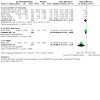
Comparison 2: Extended‐release methylphenidate versus placebo ‐ secondary outcomes (short and medium term), Outcome 2: Quality of life (self‐rated) [subgroup MD] (short‐term)
Medium‐term follow‐up (at 52 weeks)
The MD was −0.66 points (95% CI −2.97 to 1.64; I2 = 36%; 1 trial, 2 comparisons, 419 participants; very low‐certainty evidence; Analysis 2.3).
2.3. Analysis.

Comparison 2: Extended‐release methylphenidate versus placebo ‐ secondary outcomes (short and medium term), Outcome 3: Quality of life (self‐rated) (medium‐term)
Investigator‐rated ADHD symptom severity
Short‐term follow‐up (between 2 and 26 weeks)
Eighteen trials (15 reporting endpoint values, 3 change scores) showed a small‐to‐moderate SMD of −0.42 (95% CI −0.49 to −0.36; I2 = 0%; 18 trials, 19 comparisons, 4183 participants; very low‐certainty evidence), favouring methylphenidate (Analysis 2.4). The funnel plot was symmetrical around the large trials (Figure 5). As with self‐rated symptoms (Analysis 1.4), we removed Ginsberg 2007 from this analysis. The trial reported an SMD of 2.1, which seemed to be an outlier. Had we retained Ginsberg 2007, the funnel plot would be symmetrical also around the smaller trials, but it does not affect our result.
2.4. Analysis.

Comparison 2: Extended‐release methylphenidate versus placebo ‐ secondary outcomes (short and medium term), Outcome 4: ADHD symptoms (investigator rated) (short‐term)
5.

Funnel plot of comparison: 2 Extended‐release methylphenidate versus placebo ‐ secondary outcomes (short‐ and medium‐term), outcome: 2.4 ADHD symptoms (investigator‐rated) (short‐term).
The MD was −4.74 points (95% CI −5.65 to −3.84; I2 = 15%; 11 trials, 12 comparisons, 3121 participants) on the most commonly‐used rating scale, DSM‐IV Total ADHD 18‐item (range 0 to 54 points) (Analysis 2.5).
2.5. Analysis.

Comparison 2: Extended‐release methylphenidate versus placebo ‐ secondary outcomes (short and medium term), Outcome 5: ADHD symptoms (investigator‐rated) [subgroup MD] (short‐term)
Medium‐term follow‐up (at 52 weeks)
The MD was −1.29 points (95% CI −3.38 to 0.80; I2= 0%; 1 trial, 2 comparisons, 243 participants; very low‐certainty evidence) on the DSM‐IV Total ADHD rating scale (range 0 to 54) using completers' data (Analysis 2.6). The MD was −2.18 points (95% CI −3.55 to −0.80; I2 = 15%; 1 trial, 2 comparisons, 419 participants; very low‐certainty evidence) on the ADHD Index (range 0 to 36) using the last mean carried forward data (Analysis 2.7).
2.6. Analysis.

Comparison 2: Extended‐release methylphenidate versus placebo ‐ secondary outcomes (short and medium term), Outcome 6: ADHD symptoms (investigator‐rated) (medium‐term)
2.7. Analysis.

Comparison 2: Extended‐release methylphenidate versus placebo ‐ secondary outcomes (short and medium term), Outcome 7: ADHD symptoms (investigator‐rated) [LMCF data] (medium‐term)
Peer‐rated ADHD symptom severity
Short‐term follow‐up (between 4 and 9 weeks)
Three trials reported on this outcome. The raters were called "subject‐designated raters" (Goodman 2009), "assessments made by friend, family members or colleague" (Huss 2010), and "consistent observer" (Weiss 2014). They found a small‐to‐moderate SMD of −0.31 (95% CI −0.48 to −0.14, I2 = 18%; 1005 participants; very low‐certainty evidence), favouring methylphenidate (Analysis 2.8).
2.8. Analysis.

Comparison 2: Extended‐release methylphenidate versus placebo ‐ secondary outcomes (short and medium term), Outcome 8: ADHD symptoms (peer‐rated) (short‐term)
Severe psychiatric adverse events
Short‐term follow‐up (up to six months)
The components of this outcome were inconsistently reported. We did not perform a meta‐analysis, due to scarcity and heterogeneity of data, but all available data are presented in Appendix 7.
Cardiovascular parameters
Short‐ and medium‐term follow‐up (between 5 and 52 weeks)
Eleven trials (5 reporting endpoint values, 6 change scores) showed a difference in pulse of 4.64 beats per minute (95% CI 3.13 to 6.15; I2 = 65%; 11 trials, 12 comparisons, 2558 participants; very low‐certainty evidence), higher for methylphenidate (Analysis 2.9). There was no difference for systolic blood pressure (Analysis 2.10), whereas 10 trials (5 reporting endpoint values, 5 change scores) showed a difference in diastolic blood pressure of 1.24 mm Hg (95% CI 0.04 to 2.44; I2 = 60%; 10 trials, 11 comparisons, 2276 participants; very low‐certainty evidence) higher for methylphenidate (Analysis 2.11). We noted that Konstenius 2007 did not report data on diastolic blood pressure from the placebo group (and it was not included in the analysis), but the methylphenidate group data were the same before and after treatment, down to the decimal place.
2.9. Analysis.

Comparison 2: Extended‐release methylphenidate versus placebo ‐ secondary outcomes (short and medium term), Outcome 9: Cardiovascular: pulse (beats per minute)
2.10. Analysis.

Comparison 2: Extended‐release methylphenidate versus placebo ‐ secondary outcomes (short and medium term), Outcome 10: Cardiovascular: systolic blood pressure
2.11. Analysis.

Comparison 2: Extended‐release methylphenidate versus placebo ‐ secondary outcomes (short and medium term), Outcome 11: Cardiovascular: diastolic blood pressure
Adverse events
Short‐ and medium‐term follow‐up (between 2 and 52 weeks)
For overall dropout, there was no evidence of a difference between the groups (RR 1.01, 95% CI 0.84 to 1.21; I2 = 59%; 21 trials, 22 comparisons, 4769 participants; very low‐certainty evidence; Analysis 3.1). For dropouts due to adverse events, the RR was 2.36 (95% CI 1.62 to 3.43; I2 = 16%; 15 trials, 3963 participants; very low‐certainty evidence), favouring placebo (Analysis 3.2). For participants experiencing any adverse event, the RR was 1.27 (95% CI 1.19 to 1.37; I2 = 69%; 14 trials, 15 comparisons, 4214 participants; very low‐certainty evidence), favouring placebo (Analysis 3.3). For number of adverse events, three trials (951 participants) reported on 2183 events in 586 participants on methylphenidate and 1216 events in 365 participants on placebo (see full dataset; Contributions of authors). For participants experiencing any psychiatric adverse event, the RR was 1.83 (95% CI 1.43 to 2.34; I2 = 68%; 8 trials, 9 comparisons, 2737 participants, very low‐certainty evidence), favouring placebo (Analysis 3.4); note, only one study (Biederman 2003) reported the exact criteria for this outcome. Weight was −1.78 kg (CI 95% CI −2.36 to −1.20, I2 = 81%; 10 trials, 11 comparisons, 2302 participants; very low‐certainty evidence), lower for those on methylphenidate (Analysis 3.5).
3.3. Analysis.

Comparison 3: Extended‐release methylphenidate versus placebo ‐ secondary outcomes: adverse events (short‐ and medium‐term), Outcome 3: Adverse events (proportion experiencing any adverse event)
3.4. Analysis.

Comparison 3: Extended‐release methylphenidate versus placebo ‐ secondary outcomes: adverse events (short‐ and medium‐term), Outcome 4: Psychiatric adverse events (proportion of participants)
3.5. Analysis.

Comparison 3: Extended‐release methylphenidate versus placebo ‐ secondary outcomes: adverse events (short‐ and medium‐term), Outcome 5: Weight (change in kilograms)
We estimated the RR for 12 specific adverse effects (see Table 3, and Analysis 3.6 to Analysis 3.17 for further detail). Ten events occurred more frequently for those on methylphenidate, with RRs ranging from 1.35 (95% CI 1.18 to 1.54) for headache to 5.52 (95% CI 2.77 to 10.99) for feeling jittery. Two events, depression and irritability, did not occur more frequently for those on methylphenidate. We rated the certainty of the evidence as very low for all effect estimates.
3.6. Analysis.

Comparison 3: Extended‐release methylphenidate versus placebo ‐ secondary outcomes: adverse events (short‐ and medium‐term), Outcome 6: Adverse event: decreased appetite
3.17. Analysis.

Comparison 3: Extended‐release methylphenidate versus placebo ‐ secondary outcomes: adverse events (short‐ and medium‐term), Outcome 17: Adverse event: aggression
Table 3. Adverse events table
| Adverse event | Number of trials (participants) | Risk ratio (95% Confidence Interval) | I2 | Analysis |
| Decreased appetite | 16 trials, 17 comparisons (4491 participants) | 4.08 (3.34 to 4.98) | 0% | Analysis 3.6 |
| Dry mouth | 16 trials, 17 comparisons (4491 participants) | 3.36 (2.61 to 4.34) | 16% | Analysis 3.7 |
| Headache | 16 trials, 17 comparisons (4238 participants) | 1.35 (1.18 to 1.54) | 0% | Analysis 3.8 |
| Palpitations | 15 trials, 16 comparisons (4274 participants) | 3.67 (2.42 to 5.57) | 12% | Analysis 3.9 |
| Insomnia | 16 trials, 17 comparisons (4435 participants) | 1.97 (1.51 to 2.57) | 5% | Analysis 3.10 |
| Sexual dysfunction | 9 trials, 10 comparisons (3057 participants) | 2.66 (1.31 to 5.39) | 0% | Analysis 3.11 |
| Anxiety | 13 trials, 14 comparisons (3829 participants) | 2.23 (1.40 to 3.57) | 28% | Analysis 3.12 |
| Depression | 9 trials, 10 comparisons (2791 participants) | 1.47 (0.87 to 2.49) | 39% | Analysis 3.13 |
| Irritability | 11 trials, 12 comparisons (3377 participants) | 1.39 (1.00 to 1.93) | 0% | Analysis 3.14 |
| Feeling jittery | 7 trials (2254 participants) | 5.52 (2.77 to 10.99) | 0% | Analysis 3.15 |
| Agitation | 10 trials, 11 comparisons (3166 participants) | 2.16 (1.25 to 3.71) | 9% | Analysis 3.16 |
| Aggression | 4 trials, 5 comparisons (1319 participants) | 2.10 (1.32 to 3.33) | 0% | Analysis 3.17 |
Subgroup and sensitivity analyses
Six outcomes met our predefined threshold for conducting subgroup and sensitivity analyses, i.e. I2 above 50%. We considered it inappropriate to analyse four of these outcomes, due to probable selective reporting: pulse was reported by 11 trials (Analysis 2.9); diastolic blood pressure by 10 trials (Analysis 2.11); participants experiencing psychiatric adverse events by eight trials (Analysis 3.4); and body weight by 10 trials (Analysis 3.5). We analysed two outcomes: 'overall dropout rate' (I2 = 59%) (Analysis 3.1) and 'participants experiencing any adverse event' (I2 = 69%) (Analysis 3.3).
Overall dropout rate
The four subgroup analyses did not show any differences for 'psychiatric comorbidity' (Analysis 4.1), 'responder selection' (Analysis 4.2, 'withdrawal effects' (Analysis 4.3), or 'conflicts of interest' (Analysis 4.4). We did not conduct the sensitivity analysis based on attrition bias.
4.1. Analysis.

Comparison 4: Extended‐release methylphenidate versus placebo: subgroup and sensitivity analyses, Outcome 1: Overall dropout rate: psychiatric comorbidity (subgroup analysis)
4.2. Analysis.

Comparison 4: Extended‐release methylphenidate versus placebo: subgroup and sensitivity analyses, Outcome 2: Overall dropout rate: 'enriched design' (subgroup analysis)
4.3. Analysis.

Comparison 4: Extended‐release methylphenidate versus placebo: subgroup and sensitivity analyses, Outcome 3: Overall dropout rate: withdrawal effects (subgroup analysis)
4.4. Analysis.

Comparison 4: Extended‐release methylphenidate versus placebo: subgroup and sensitivity analyses, Outcome 4: Overall dropout rate: funding (subgroup analysis)
Participants experiencing any adverse events
There were no differences in the two subgroup analyses for psychiatric comorbidity (Analysis 4.5) and 'withdrawal effects' (Analysis 4.6), whereas the subgroup analysis of 'conflicts of interest' showed a higher proportion of participants experiencing adverse events in industry‐funded trials compared to publicly‐funded trials with industry involvement (Analysis 4.7). We did not conduct the 'responder selection' subgroup analysis, since all trials were classified at high risk of being enriched. The sensitivity analysis based on attrition bias showed no evidence of a difference (Analysis 4.8).
4.5. Analysis.

Comparison 4: Extended‐release methylphenidate versus placebo: subgroup and sensitivity analyses, Outcome 5: Proportion experiencing any adverse event: psychiatric comorbidity (subgroup analysis)
4.6. Analysis.

Comparison 4: Extended‐release methylphenidate versus placebo: subgroup and sensitivity analyses, Outcome 6: Proportion experiencing any adverse event: withdrawal effects (subgroup analysis)
4.7. Analysis.

Comparison 4: Extended‐release methylphenidate versus placebo: subgroup and sensitivity analyses, Outcome 7: Proportion experiencing any adverse event: funding (subgroup analysis)
4.8. Analysis.

Comparison 4: Extended‐release methylphenidate versus placebo: subgroup and sensitivity analyses, Outcome 8: Proportion experiencing any adverse event: dropout rates (sensitivity analysis)
Extended‐release methylphenidate versus atomoxetine
Weisler 2009 compared OROS methylphenidate 54 mg per day (68 participants) and atomoxetine 80 mg per day (74 participants) at six‐week follow‐up. The trial also included a placebo comparison (these results are reported above).
Primary outcomes
Functional outcomes
There were no data for this outcome.
Self‐rated ADHD symptom severity
There was no difference between OROS methylphenidate and atomoxetine for this outcome (MD −0.66, 95% CI −6.36 to 5.04; 1 trial, 142 participants; very low‐certainty evidence; Analysis 5.1) when assessed with the CAARS:DSM IV total ADHD scale (range 0 to 54 points).
5.1. Analysis.

Comparison 5: Extended‐release methylphenidate versus atomoxetine, Outcome 1: ADHD symptoms (self‐rated)
Serious adverse events
There was no difference between OROS methylphenidate and atomoxetine (RR 3.26, 95% CI 0.14 to 78.72; 1 trial, 142 participants; very low‐certainty evidence; Analysis 5.2).
5.2. Analysis.

Comparison 5: Extended‐release methylphenidate versus atomoxetine, Outcome 2: Serious adverse events
Secondary outcomes
There were differences favouring atomoxetine on two outcomes: initial insomnia (RR 5.44, 95% CI 1.65 to 17.98; 1 trial, 142 participants; very low‐certainty; Analysis 5.3) and weight change (MD −0.91 kg, 95% CI −1.49 to −0.33; 1 trial, 142 participants; very low‐certainty evidence; Analysis 5.4).
5.3. Analysis.

Comparison 5: Extended‐release methylphenidate versus atomoxetine, Outcome 3: Adverse event: initial insomnia
5.4. Analysis.

Comparison 5: Extended‐release methylphenidate versus atomoxetine, Outcome 4: Weight
There were no differences for the other secondary outcomes of investigator‐rated ADHD symptoms (Analysis 5.5), overall dropout rates (Analysis 5.6), proportion of participants experiencing adverse events (Analysis 5.7), dropouts due to adverse events (Analysis 5.8), headache (Analysis 5.9), decreased appetite (Analysis 5.10), irritability (Analysis 5.11), dry mouth (Analysis 5.12), decreased libido (Analysis 5.13), feeling jittery (Analysis 5.14), or palpitations (Analysis 5.15).
5.5. Analysis.

Comparison 5: Extended‐release methylphenidate versus atomoxetine, Outcome 5: ADHD symptoms (investigator‐rated)
5.6. Analysis.

Comparison 5: Extended‐release methylphenidate versus atomoxetine, Outcome 6: Overall dropout
5.7. Analysis.

Comparison 5: Extended‐release methylphenidate versus atomoxetine, Outcome 7: Adverse events (AE): proportion experiencing any AE
5.8. Analysis.

Comparison 5: Extended‐release methylphenidate versus atomoxetine, Outcome 8: Adverse events (leading to dropout)
5.9. Analysis.
Comparison 5: Extended‐release methylphenidate versus atomoxetine, Outcome 9: Adverse event: headache
5.10. Analysis.

Comparison 5: Extended‐release methylphenidate versus atomoxetine, Outcome 10: Adverse event: decreased appetite
5.11. Analysis.

Comparison 5: Extended‐release methylphenidate versus atomoxetine, Outcome 11: Adverse event: irritability
5.12. Analysis.

Comparison 5: Extended‐release methylphenidate versus atomoxetine, Outcome 12: Adverse event: dry mouth
5.13. Analysis.

Comparison 5: Extended‐release methylphenidate versus atomoxetine, Outcome 13: Adverse event: decreased libido
5.14. Analysis.

Comparison 5: Extended‐release methylphenidate versus atomoxetine, Outcome 14: Adverse event: feeling jittery
5.15. Analysis.

Comparison 5: Extended‐release methylphenidate versus atomoxetine, Outcome 15: Adverse events: palpitations
Extended‐release methylphenidate versus bupropion
Levin 1998a compared sustained‐release methylphenidate (32 participants) and bupropion 400 mg per day (33 participants) at 10‐week follow‐up.
Primary outcomes
Functional outcomes
There were no data for this outcome.
Self‐rated ADHD symptom severity
There was no difference between SR methylphenidate and bupropion for self‐rated ADHD symptom severity (MD 3.46, 95% CI −1.40 to 8.32; 1 trial, 65 participants; very low‐certainty evidence), assessed with the Adult ADHD Rating Scale (range 0 to 54 points) (Analysis 6.1).
6.1. Analysis.

Comparison 6: Extended‐release methylphenidate versus bupropion, Outcome 1: ADHD symptoms (self‐rated)
Serious adverse events
There were no data for this outcome.
Secondary outcomes
There were no reported differences between the groups for overall dropout rates (Analysis 6.2), or dropouts due to adverse events (Analysis 6.3); 1 trial, 65 participants.
6.2. Analysis.

Comparison 6: Extended‐release methylphenidate versus bupropion, Outcome 2: Overall dropout
6.3. Analysis.

Comparison 6: Extended‐release methylphenidate versus bupropion, Outcome 3: Dropouts due to adverse events
Certainty of the evidence
We rated the certainty of the evidence for all outcomes and for all comparisons as very low. We downgraded our certainty in the evidence in two domains; 'risk of bias' and 'indirectness'. We judged 20 of the 21 trials that reported outcome data to be at high risk of bias overall, and one trial (Ginsberg 2007) at unclear risk of bias overall. Several trial design characteristics contributed to the downgrading in the 'indirectness' domain, such as short trial duration, exclusion of participants with psychiatric comorbidity, responder selection ('enriched design'), and withdrawal effects. See also (Assessment of risk of bias in included studies).
Discussion
Summary of main results
We included 24 clinical trials (5066 participants) using six different extended‐release methylphenidate formulations for adults with ADHD. Twenty‐one trials reported data for this review, of which 12 were sponsored by industry.
We found very low‐certainty evidence that the reported beneficial effects of methylphenidate over placebo assessed with symptom‐rating scales by the participants, investigators, or peers such as family members, were small to moderate. The effect on quality of life was small, and there was no effect on 'days missed at work'. In comparing the two groups, we found no increase in the risk of serious adverse events or overall dropout among those receiving methylphenidate, whereas the risk of experiencing any adverse event, dropping out due to an adverse event, and the risk of experiencing any psychiatric adverse event were higher in the methylphenidate group. The relative risk for 10 of the 12 assessed adverse events were higher in the methylphenidate group than placebo, including headache, dry mouth, palpitations and psychiatric adverse events such as anxiety, agitation and feeling jittery, whereas there was no increased risk for two events, depression and irritability. We considered 20 out of 21 trials to be at high risk of bias, particularly due to an uncertainty related to the blinding of participants and investigators, high attrition rates, and selective outcome reporting. Eighteen of the trials had a follow‐up between 2 and 13 weeks, two trials at 24 weeks, and one trial at 52 weeks. The evidence is therefore mainly applicable to short‐term treatment, with long‐term effects largely unknown. Finally, we identified important limitations about the generalisability of the results.
Two trials, Levin 1998a and Weisler 2009, reported on comparisons of extended‐release methylphenidate versus other ADHD medications, bupropion and atomoxetine. The trials had modest sample sizes (98 and 216 participants) and the direct comparative evidence is therefore sparse. There were no differences between the drugs on most reported outcomes, and no conclusions can be drawn. We also note with concern that we did not identify trials comparing immediate‐release with extended‐release methylphenidate, nor different extended‐release formulations compared with each other. We are currently raising the issue related to the lack of direct comparisons in ADHD drug authorisations (Boesen 2021b; Boesen 2021c).
Overall completeness and applicability of evidence
We searched drug regulatory agency databases, and included more than 1100 pages of regulatory documents from drug approval reviews, public assessment reports, and other documents. Despite these efforts, our results are limited by selective reporting. Important patient‐relevant outcomes were not reported in a number of the included trials: 14 of 21 trials reported on serious adverse events, 10 reported on cardiovascular variables; six of 10 trials reported on prespecified quality‐of‐life outcomes (of which, only one study, Takahashi 2011, appeared in a journal publication; the other results were obtained from regulatory documents), and only one trial reported a functional outcome. Additionally, only seven of our 23 attempts to contact authors were fruitful in obtaining more information or more outcome data from the clinical trials (Appendix 5).
The rates of important psychiatric harms are uncertain. In the British drug regulator's OROS methylphenidate public assessment report (British Medicines and Healthcare products Regulatory Agency; MHRA), we noted that “psychosis/mania” was reported to occur in 3% of participants on methylphenidate versus 1% in the placebo group during the double‐blind placebo‐controlled phase (MHRA 2010, p 63). This estimate, based on three pivotal trials (Medori 2005; Adler 2006; Casas 2008), is 30 times higher than the 0.1% risk of “new psychotic or symptoms” according to the FDA’s Prescribing Information (FDA 2017, section 5.2). We also noted large differences across trials that were not explained by obvious trial differences. For example, Rösler 2004 reported that 11% of participants on methylphenidate experienced "reduced libido", compared to 1% in the pooled analysis of Medori 2005, Adler 2006, and Casas 2008 (MHRA 2010, p 61). The Dutch drug regulatory agency (Dutch Medicines Evaluation Board; MEB) noted in their public assessment report of long‐acting methylphenidate (which they did not approve for market authorisation) that the strict exclusion criteria probably reduced the incidence of reported harms in the trials: “Psychiatric AEs were common (i.e. total of 43%, including insomnia 11%, anxiety 7%, irritability 7%, and restlessness 7%) and some were serious. Since these events were more common in patients with a psychiatric history and since elaborate psychiatric exclusion criteria were implemented in the study, which prevented inclusion of patients with more serious psychiatric comorbidity, it is concluded that the rate of psychiatric AEs would have been even higher without these exclusions” (MEB 2016, p 36).
In terms of applicability, there is, as far as we know, limited empirical evidence on minimal important differences in rating scales used in ADHD drug trials. It is therefore uncertain whether the reported effects are clinically relevant. For the quality‐of‐life scale, Quality of Life Enjoyment and Satisfaction Questionnaire‐Short Form (range 14 to 70 points), the minimal important difference is estimated to be three points (Mick 2008); however, we found a difference between methylphenidate and placebo of only one point (Analysis 2.2). The lack of direct comparisons between methylphenidate and other ADHD drugs also limits the clinical applicability of the evidence.
Quality of the evidence
We rated the overall certainty of the evidence as 'very low' due to high risk of bias and limitations in the external validity. This means that further research is likely to change the effect estimates. The statistical heterogeneity was low for most effect estimates, which was unsurprising, since most participants were enrolled in homogeneous, industry‐sponsored trials.
A major limitation to the evidence is the limited generalisability due to several problematic trial design characteristics; exclusion of participants with psychiatric comorbidity, responder selection based on previous treatment response, potential withdrawal effects, short trial durations, and a lack of patient‐relevant outcomes. In MHRA's public assessment report on OROS methylphenidate, they noted, “Current psychiatric morbidity and a history of psychiatric morbidity appeared to reduce the effect size (excluding the 72mg dose in study 3013). No obvious pattern of differences was seen in whether the adult was MPH naïve or not” (MHRA 2010, p 51). However, in order to properly address the impact of such study designs we would need access to Clinical Study Reports and individual patient data. Ideally, new and less biased trials should be conducted.
Potential biases in the review process
There are several biases and limitations in the review. An important limitation may be the omission of potentially relevant data. As stated above, we included a large amount of regulatory data, but we were also denied access to clinical data. In 2016, we asked Medice, the Marketing Authorisation Holder of Medikinet in Europe, for access to trial data from their two pivotal trials (Rösler 2004 and Retz 2008). Medice’s medical director declined our request, with the argument that Cochrane Reviews are “full of errors and biased” and then cited an article by Banaschewski 2016, which criticised a Cochrane Review of methylphenidate for children and adolescents with ADHD (Storebø 2015). In 2019, we asked the German drug regulatory agency, Bundesinstitut für Arzneimittel und Medizinprodukte (BfArM) about access to the same trial data. The German regulator consulted with Medice, which again declined the request. We recently raised this rejection with the Heads of Medicines Agencies (Boesen 2021d; Boesen 2021e), which is a European umbrella organisation consisting of the heads of the European national drug regulatory agencies. This rejection of access to Clinical Study Reports conflicts with the European Medicines Agency's transparency policies 0043 (EMA 2018) and 0070 (EMA 2019) that grant access to data from centrally‐authorised drugs (Gøtzsche 2011; CURIA 2020; Dyer 2020).
The composite outcome of 'severe psychiatric adverse event' was not well‐suited to estimate psychiatric harms, and one should always be careful with composite outcomes. It was also a limitation that we did not specify which adverse events to assess at protocol stage. For future reviews of psychiatric drugs, we recommend prespecifying individual harms, preferably in collaboration with patients. It would also be preferable to pool adverse events according to their Medical Dictionary for Regulatory Activities (MedDRA) terms, rather than analysing individual events. Miscoding and splitting up events into separate terms may dilute potential signals of harms and make the analyses unreliable (Maund 2014). Ideally, our high‐level outcomes of harm (i.e. aggregate outcomes such as 'dropout due to adverse events'), should be defined at the protocol stage also, see Differences between protocol and review.
We did not prespecify a hierarchy for extracting data from multiple resources. Such an approach is recommended in complex reviews to avoid selectively reporting available results (Mayo‐Wilson 2017; Mayo‐Wilson 2018). We included the data that were judged as most complete and in best accordance with our specified criteria (see 'Dealing with missing data’). To be as transparent as possible, we share the full dataset (see link in Contributions of authors). Separate efforts would be required to systematically assess potential differences (Mayo‐Wilson 2017a; Jørgensen 2020; Paludan‐Müller 2021).
In most included trials, participants were allowed (to varying degrees) to continue psychopharmacological treatments, such as antidepressants and anxiolytics. How these drugs affected the reported outcomes is not known. We would probably need detailed information at an individual participant level to perform reliable subgroup analyses based on treatment status. We decided not to go into this question in detail in the current review. However, it seems to be an important research question that needs to be addressed, provided there are sufficiently granulated data.
To our knowledge, this is the first review to systematically assess external validity issues in trials of methylphenidate for ADHD in adults. It should be highlighted that our attempt to operationalise these design characteristics is open for discussion. We hope our review may increase the focus on external validity issues, which may be as pertinent from a clinical point of view as the standard risk of bias assessment when assessing the benefits and harms of drugs like methylphenidate.
Agreements and disagreements with other studies or reviews
Our results for adverse effects, cardiovascular effects, and weight changes correspond with previous systematic reviews of ADHD mediations for children and adolescents (Storebø 2015; Liang 2018; Catalá‐López 2017; Storebø 2018) and for adults (Mick 2013). Our quality assessment also agrees with Cochrane Reviews on methylphenidate for ADHD in children and adolescents (Storebø 2015; Storebø 2018), immediate‐release methylphenidate for adults (Cândido 2021), and amphetamines for ADHD in children and adolescents (Punja 2016) and adults (Castells 2018). However, it is difficult to compare our results directly with non‐Cochrane Reviews on methylphenidate for adult ADHD (Faraone 2004; Peterson 2008; Koesters 2009; Meszaros 2009; Faraone 2010; Castells 2011; Castells 2013; Cunill 2016; Cortese 2018). These reviews used different methodologies and included different drugs and trials. One of the most recent systematic reviews (Cortese 2018) reported similar effects on ADHD symptom scales, dropout rates due to adverse events, and overall dropout rates for methylphenidate. However, the review did not assess functional outcomes, quality of life or individual adverse events, and the review authors rated the certainty of the evidence for some of the outcomes as ‘moderate’ (clinician‐rated ADHD symptoms) or ‘high’ (dropout due to adverse events), whereas we rated the certainty of the evidence as ‘very low’ for all outcomes. The most recent systematic review by Elliott 2020 identified clinical trial limitations, such as external validity issues, short trial duration, and a lack of patient‐reported outcomes, similar to our own findings. The updated sister review to this review on immediate‐release methylphenidate for adult ADHD (Cândido 2021) concluded, “Clinicians should consider whether it is appropriate to prescribe IR methylphenidate, given its limited efficacy and increased risk of harms. Future RCTs should explore the long‐term efficacy and risks of IR methylphenidate, and the influence of conflicts of interest on reported effects”.
Authors' conclusions
Implications for practice.
Clinical guidelines and consensus documents, such as the European Consensus Statement (Kooij 2019), the World Federation of ADHD International Consensus Statement (Faraone 2021), and the NICE ADHD guideline (NICE 2018), should reflect the ‘very low’ certainty of the evidence. The evidence to support methylphenidate as a pharmacological treatment for ADHD in adults is weak, and treatment beyond 52 weeks is unsupported by randomised trials. Furthermore, there is inadequate direct comparative evidence to guide clinical practice about extended‐release methylphenidate against other ADHD medications. In practice, each patient should make a shared decision with their family and with their physician, and decide whether or not the reported benefits outweigh the harms for them.
Implications for research.
It seems necessary to conduct new clinical trials of extended‐release methylphenidate, to allow more reliable assessments of methylphenidate’s benefits and harms in adults with ADHD. These trials should be free from the methodological limitations highlighted in this review: Such new trials should last longer, preferably for years rather than weeks; the trial participants should be stimulant‐naïve to avoid withdrawal effects and to avoid selection bias of participants who already tolerate the drug; the trial inclusion criteria should be broad and allow inclusion of participants with relevant psychiatric comorbidities; and finally such trials should be designed to address clinically relevant outcomes, like patient‐reported quality of life and functional capacity, such as the ability to maintain social and work‐related activities. In this regard, it will be important to conduct a systematic survey of patients, peers, and healthcare professionals, a so‐called 'Core Outcome Set' study (COMET 2021), to define which outcomes to measure in ADHD drug trials. This was recently done for clinical trials in depression (Chevance 2020). Some also argue that the blinding issue in CNS stimulant trials should be resolved through the use of 'active placebos' (Storebø 2015), but other design issues may be more pertinent, and also more feasible, to address in new trials.
History
Protocol first published: Issue 11, 2017
Acknowledgements
We thank Geraldine McDonald (Coordinating editor) and Joanne Duffield (Managing Editor) from the Cochrane Developmental, Psychosocial and Learning Problems Review Group.
Appendices
Appendix 1. Search strategies (databases)
Cochrane Central Register of Controlled Trials (CENTRAL)
Searched 3 October 2017 [1477 records] Searched 12 March 2019 [114 new records] Searched 16 February 2021 [147 new records]
#1[mh "attention deficit and disruptive behavior disorders"] #2[mh "attention deficit disorder with hyperactivity"] #3[mh "conduct disorder"] #4ADHD or ADHS or ADDH or AD next HD or HKD or TDAH #5((attention* or behav*) near/3 (defic* or dysfunc* or disorder*)) #6((disrupt* near/3 disorder*) or (disrupt* near/3 behav*) or (defian* near/3 disorder*) or (defian* near/3 behav*)) #7(impulsiv* or inattentiv* or inattention*) #8[mh hyperkinesis] #9(hyperkin* or hyper‐kin* or hkd) #10(minimal near/3 brain near/3 (disorder* or dysfunct* or damage*)) #11(hyperactiv* or hyper‐activ*) #12{or #1‐#11} #13[mh methylphenidate] #14(Adaphen* or Aptensio* or Aradix* or Attenade* or Biphentin* or Calocain* or Centedrin* or Concerta* or Conmet* or Daytrana* or Dexmethylphenidat* or Difumenil* or D‐methylphenidat* or Equasym* or Fenilidato* or Focalin* or Matoride* or Medicebran* or Medikid* or Medikinet* or Meridil* or Metadate* or Methylphenidylacetat* or methyl NEXT phenidylacetat* or Methylofenidan* or Methylin* or Methypatch or methylphenidat* or Metilfenidato* or Phenidylate or Phenidyl hydrochlorid* or Phenidylhydrochlorid* or Quillivant* or Richter Works or Riphenidat* or Ritalin* or Ritrocel* or Rubifen* or Tsentedrin*) #15#13 or #14 #16 #12 and #15 in Trials #17 #12 and #15 with Publication Year from 2017 to 2019, in Trials #18 #12 and #15 with Publication Year from 2019 to 2021, in Trials
MEDLINE Ovid
Searched 3 October 2017 [1467 records] Searched 12 March 2019 [97 new records] Searched 15 February 2021 [99 new records]
1 "attention deficit and disruptive behavior disorders"/ 2 attention deficit disorder with hyperactivity/ 3 conduct disorder/ 4 ADHD.tw,kf. 5 ADHS.tw,kf. 6 ADDH.tw,kf. 7 ("AD/HD" or hkd).tw,kf. 8 TDAH.tw,kf. 9 ((attention$ or behav$) adj3 (defic$ or dysfunc$ or disorder$)).tw,kf. (49848) 10 ((disrupt$ adj3 disorder$) or (disrupt$ adj3 behav$) or (defian$ adj3 disorder$) or (defian$ adj3 behav$)).tw,kf 11 (impulsiv$ or inattentiv$ or inattention$).tw,kf. 12 hyperkinesis/ 13 (hyperkin$ or hyper‐kin$).tw,kf. (4266) 14 (minimal adj3 brain adj3 (disorder$ or dysfunct$ or damage$)).tw,kf. 15 (hyperactiv$ or hyper‐activ$).tw,kf. 16 or/1‐15 17 exp Methylphenidate/ 18 Adaphen$.mp. 19 Aptensio$.mp. 20 Aradix$.mp. 21 Attenade$.mp. 22 Biphentin$.mp. 23 Calocain$.mp. 24 Centedrin$.mp. 25 Concerta$.mp. 26 Conmet$.mp. 27 Daytrana$.mp. 28 Dexmethylphenidat$.mp. 29 Difumenil$.mp. 30 D‐methylphenidat$.mp. 31 Equasym$.mp. 32 Fenilidato$.mp. 33 Focalin$.mp. 34 Matoride$.mp. 35 Medicebran$.mp. 36 Medikid$.mp. 37 Medikinet$.mp. 38 Meridil$.mp. 39 Metadate$.mp. 40 (Methylphenidylacetat$ or methyl phenidylacetat$).mp. 41 Methylofenidan$.mp. 42 Methylin$.mp. 43 Methypatch.mp. 45 Metilfenidato$.mp. 44 methylphenidat$.mp. 46 Novo‐Methylphenidat$.mp. 47 Phenidylate.mp. 48 (Phenidyl hydrochlorid$ or Phenidylhydrochlorid$).mp. 49 Quillivant$.mp. 50 Richter Works.mp. 51 Riphenidat$.mp. 52 Ritalin$.mp. 53 Ritrocel$.mp. 54 Rubifen$.mp. 55 Tsentedrin$.mp. 56 or/17‐55 57 16 and 56 58 randomized controlled trial.pt. 59 controlled clinical trial.pt. 60 randomized.ab.~ 61 placebo.ab. 62 clinical trials as topic.sh. 63 randomly.ab. 64 trial.ti. 65 or/58‐64 66 exp animals/ not humans.sh. 67 65 not 66 68 57 and 67 69 (201710* or 201711* or 201712* or 2018* or 2019* ).dt,ez,da,ed.70 68 and 69 71 (201902* or 201903* or 201904* or 201905* or 201906* or 201907* or 201908* or 201909* or 201910* or 201911* or 201912* or 2020* or 2021*).dt,ez,da,ed. 72 68 and 70
MEDLINE In_Process and Other Non‐indexed Citations OVID
Searched 3 October 2017 [126 records] Searched 13 March 2019 [66 new records] Searched 15 February 2021 [53 new records]
1 ADHD.tw,kf. 2 ADHS.tw,kf. 3 ADDH.tw,kf. 4 ("AD/HD" or hkd).tw,kf. 5 TDAH.tw,kf. 6 ((attention$ or behav$) adj3 (defic$ or dysfunc$ or disorder$)).tw,kf. 7 ((disrupt$ adj3 disorder$) or (disrupt$ adj3 behav$) or (defian$ adj3 disorder$) or (defian$ adj3 behav$)).tw,kf. 8 (impulsiv$ or inattentiv$ or inattention$).tw,kf. 9 (hyperkin$ or hyper‐kin$).tw,kf. 10 (minimal adj3 brain adj3 (disorder$ or dysfunct$ or damage$)).tw,kf. 11 (hyperactiv$ or hyper‐activ$).tw,kf. 12 or/1‐11 13 Adaphen$.mp. 14 Aptensio$.mp. 15 Aradix$.mp. 16 Attenade$.mp. 17 Biphentin$.mp. 18 Calocain$.mp. 19 Centedrin$.mp. 20 Concerta$.mp. 21 Conmet$.mp. 22 Daytrana$.mp. 23 Dexmethylphenidat$.mp. 24 Difumenil$.mp. 25 D‐methylphenidat$.mp. 26 Equasym$.mp. 27 Fenilidato$.mp. 28 Focalin$.mp. 29 Matoride$.mp. 30 Medicebran$.mp. 31 Medikid$.mp. 32 Medikinet$.mp. 33 Meridil$.mp. 34 Metadate$.mp. 35 (Methylphenidylacetat$ or methyl phenidylacetat$).mp. 36 Methylofenidan$.mp. 37 Methylin$.mp. 38 Methypatch.mp. 39 methylphenidat$.mp. 40 Metilfenidato$.mp. 41 Novo‐Methylphenidat$.mp. 42 Phenidylate.mp. 43 (Phenidyl hydrochlorid$ or Phenidylhydrochlorid$).mp. 44 Quillivant$.mp. 45 Richter Works.mp. 46 Riphenidat$.mp. 47 Ritalin$.mp. 48 Ritrocel$.mp. 49 Rubifen$.mp. 50 Tsentedrin$.mp. 51 or/13‐50 52 random$.tw,kf. 53 placebo.ab. 54 trial.ti. 55 RCT.tw,kf. 56 or/52‐55 57 12 and 51 and 56
MEDLINE E‐Pub Ahead of Print (OVID)
Searched 3 October 2017 [27 records] Searched 13 March 2019 [13 new records] Searched 15 February 2021 [22 new records]
1 ADHD.tw,kf. 2 ADHS.tw,kf. 3 ADDH.tw,kf. 4 ("AD/HD" or hkd).tw,kf. 5 TDAH.tw,kf. 6 ((attention$ or behav$) adj3 (defic$ or dysfunc$ or disorder$)).tw,kf. 7 ((disrupt$ adj3 disorder$) or (disrupt$ adj3 behav$) or (defian$ adj3 disorder$) or (defian$ adj3 behav$)).tw,kf. 8 (impulsiv$ or inattentiv$ or inattention$).tw,kf. 9 (hyperkin$ or hyper‐kin$).tw,kf 10 (minimal adj3 brain adj3 (disorder$ or dysfunct$ or damage$)).tw,kf. 11 (hyperactiv$ or hyper‐activ$).tw,kf. 12 or/1‐11 13 Adaphen$.mp. 14 Aptensio$.mp. 15 Aradix$.mp. 16 Attenade$.mp. 17 Biphentin$.mp. 18 Calocain$.mp. 19 Centedrin$.mp. 20 Concerta$.mp. 21 Conmet$.mp. 22 Daytrana$.mp. 23 Dexmethylphenidat$.mp. 24 Difumenil$.mp. 25 D‐methylphenidat$.mp. 26 Equasym$.mp. 27 Fenilidato$.mp. 28 Focalin$.mp. 29 Matoride$.mp. 30 Medicebran$.mp. 31 Medikid$.mp. 32 Medikinet$.mp. 33 Meridil$.mp. 34 Metadate$.mp. 35 (Methylphenidylacetat$ or methyl phenidylacetat$).mp. 36 Methylofenidan$.mp. 37 Methylin$.mp. 38 Methypatch.mp. 39 methylphenidat$.mp. 40 Metilfenidato$.mp. 41 Novo‐Methylphenidat$.mp. 42 Phenidylate.mp. 43 (Phenidyl hydrochlorid$ or Phenidylhydrochlorid$).mp. 44 Quillivant$.mp. 45 Richter Works.mp. 46 Riphenidat$.mp. 47 Ritalin$.mp. 48 Ritrocel$.mp. 49 Rubifen$.mp. 50 Tsentedrin$.mp. 51 or/13‐50 52 random$.tw,kf. 53 placebo.ab. 54 trial.ti. 55 RCT.tw,kf. 56 or/52‐55 57 12 and 51 and 56
Embase Ovid strategy up to 2019
Searched 2 October 2017 [2687 records] Searched 15 March 2019 [187 new records]
1 attention deficit disorder/ 2 hyperactivity/ 3 conduct disorder/ 4 ADHD.tw,kw. 5 ADDH.tw,kw. 6 ADHS.tw,kw. 7 ("AD/HD" or HKD).tw,kw. 8 TDAH.tw,kw. 9 ((attention$ or behav$) adj3 (defic$ or dysfunc$ or disorder$)).tw,kw. 10 ((disrupt$ adj3 disorder$) or (disrupt$ adj3 behav$) or (defian$ adj3 disorder$) or (defian$ adj3 behav$)).tw,kw. 11 (impulsiv$ or inattentiv$ or inattention$).tw,kw. 12 hyperkinesis/ 13 (hyperkin$ or hyper‐kin$ or hkd).tw,kw. 14 (minimal adj3 brain adj3 (disorder$ or dysfunct$ or damage$)).tw. 15 (hyperactiv$ or hyper‐activ$).tw. 16 or/1‐15 17 methylphenidate/ 18 (Adaphen$ or Aptensio$ or Aradix$ or Attenade$ or Biphentin$).mp. 19 methylphenidate/ 20 (Adaphen$ or Aptensio$ or Aradix$ or Attenade$ or Biphentin$ or Calocain$ or Centedrin$ or Concerta$ or Conmet$ or Daytrana$ or Dexmethylphenidat$ or Difumenil$ or D‐methylphenidat$ or Equasym$ or Fenilidato$ or Focalin$ or Matoride$ or Medicebran$ or Medikid$ or Medikinet$ or Meridil$ or Metadate$ or Methylphenidylacetat$ or methyl phenidylacetat$ or Methylofenidan$ or Methylin$ or Methypatch or methylphenidat$ or Metilfenidato$ or Phenidylate or Phenidyl hydrochlorid$ or Phenidylhydrochlorid$ or Quillivant$ or Ritcher Works or Riphenidat$ or Ritalin$ or Ritrocel$ or Rubifen$ or Tsentedrin$).mp. 21 19 or 20 22 16 and 21 23 limit 22 to "therapy (best balance of sensitivity and specificity)" 24 remove duplicates from 23 25 limit 24 to yr="2017 ‐Current"
Embase Ovid Strategy 2021
Searched 15 February 2021 [271 new records] 1 attention deficit disorder/ 2 hyperactivity/ 3 conduct disorder/ 4 ADHD.tw,kw. 5 ADDH.tw,kw. 6 ADHS.tw,kw. 7 ("AD/HD" or HKD).tw,kw. 8 TDAH.tw,kw. 9 ((attention$ or behav$) adj3 (defic$ or dysfunc$ or disorder$)).tw,kw. 10 ((disrupt$ adj3 disorder$) or (disrupt$ adj3 behav$) or (defian$ adj3 disorder$) or (defian$ adj3 behav$)).tw,kw. 11 (impulsiv$ or inattentiv$ or inattention$).tw,kw. 12 hyperkinesis/ 13 (hyperkin$ or hyper‐kin$ or hkd).tw,kw. 14 (minimal adj3 brain adj3 (disorder$ or dysfunct$ or damage$)).tw,kw. 15 (hyperactiv$ or hyper‐activ$).tw,kw. 16 or/1‐15 17 methylphenidate/ 18 (Adaphen$ or Aptensio$ or Aradix$ or Attenade$ or Biphentin$).mp. 19 methylphenidate/ 20 (Adaphen$ or Aptensio$ or Aradix$ or Attenade$ or Biphentin$ or Calocain$ or Centedrin$ or Concerta$ or Conmet$ or Daytrana$ or Dexmethylphenidat$ or Difumenil$ or D‐methylphenidat$ or Equasym$ or Fenilidato$ or Focalin$ or Matoride$ or Medicebran$ or Medikid$ or Medikinet$ or Meridil$ or Metadate$ or Methylphenidylacetat$ or methyl phenidylacetat$ or Methylofenidan$ or Methylin$ or Methypatch or methylphenidat$ or Metilfenidato$ or Phenidylate or Phenidyl hydrochlorid$ or Phenidylhydrochlorid$ or Quillivant$ or Ritcher Works or Riphenidat$ or Ritalin$ or Ritrocel$ or Rubifen$ or Tsentedrin$).mp. 21 19 or 20 22 16 and 21 ( 23 Randomized controlled trial/ 24 Controlled clinical study/ 25 random$.ti,ab. 26 randomization/ 27 intermethod comparison/ 28 placebo.ti,ab. 29 (compare or compared or comparison).ti. 30 ((evaluated or evaluate or evaluating or assessed or assess) and (compare or compared or comparing or comparison)).ab. 31 (open adj label).ti,ab. 32 ((double or single or doubly or singly) adj (blind or blinded or blindly)).ti,ab. 33 double blind procedure/ 34 parallel group$1.ti,ab. 35 (crossover or cross over).ti,ab. 36 ((assign$ or match or matched or allocation) adj5 (alternate or group$1 or intervention$1 or patient$1 or subject$1 or participant$1)).ti,ab. ( 37 (assigned or allocated).ti,ab. 38 (controlled adj7 (study or design or trial)).ti,ab. 39 (volunteer or volunteers).ti,ab. 40 human experiment/ 41 trial.ti. 42 or/23‐41 43 (random$ adj sampl$ adj7 ("cross section$" or questionnaire$1 or survey$ or database$1)).ti,ab. not (comparative study/ or controlled study/ or randomi?ed controlled.ti,ab. or randomly assigned.ti,ab.) 44 Cross‐sectional study/ not (randomized controlled trial/ or controlled clinical study/ or controlled study/ or randomi?ed controlled.ti,ab. or control group$1.ti,ab.) 45 (((case adj control$) and random$) not randomi?ed controlled).ti,ab. 46 (Systematic review not (trial or study)).ti. 47 (nonrandom$ not random$).ti,ab. 48 "Random field$".ti,ab. 49 (random cluster adj3 sampl$).ti,ab. 50 (review.ab. and review.pt.) not trial.ti. 51 "we searched".ab. and (review.ti. or review.pt.) 52 "update review".ab. 53 (databases adj4 searched).ab. 54 (rat or rats or mouse or mice or swine or porcine or murine or sheep or lambs or pigs or piglets or rabbit or rabbits or cat or cats or dog or dogs or cattle or bovine or monkey or monkeys or trout or marmoset$1).ti. and animal experiment/ 55 Animal experiment/ not (human experiment/ or human/) 56 or/43‐55 57 42 not 56 58 22 and 57 59 limit 58 to yr="2019 ‐Current"
PsycINFO Ovid
Searched 3 October 2017 [1339 records] Searched 13 March 2019 [74 new records] Searched 15 February 2021 [136 new records]
1 exp attention deficit disorder/ 2 exp Behavior Problems/ 3 adhd.tw. 4 addh.tw. 5 adhs.tw. 6 "ad/hd".tw. 7 TDAH.tw. 8 ((attention$ or behav$) adj3 (defic$ or dysfunc$ or disorder$)).tw. 9 ((disrupt$ adj3 disorder$) or (disrupt$ adj3 behav$) or (defian$ adj3 disorder$) or (defian$ adj3 behav$)).tw. 10 Impulsiveness/ 11 (impulsiv$ or inattentiv$ or inattention$).tw. 12 hyperkinesis/ 13 (hyperkin$ or hyper‐kin$ or hkd).tw. 14 (minimal adj3 brain$ adj3 (damag$ or disorder$ or dysfunc$)).tw. 15 (hyperactiv$ or hyper‐activ$).tw. 16 or/1‐15 17 methylphenidate/ 18 (Adaphen$ or Aptensio$ or Aradix$ or Attenade$ or Biphentin$ or Calocain$ or Centedrin$ or Concerta$ or Conmet$ or Daytrana$ or Dexmethylphenidat$ or Difumenil$ or D‐methylphenidat$ or Equasym$ or Fenilidato$ or Focalin$ or Matoride$ or Medicebran$ or Medikid$ or Medikinet$ or Meridil$ or Metadate$ or Methylphenidylacetat$ or methyl phenidylacetat$ or Methylofenidan$ or Methylin$ or Methypatch or methylphenidat$ or Metilfenidato$ or Phenidylate or Phenidyl hydrochlorid$ or Phenidylhydrochlorid$ or Quillivant$ or Richter Works or Riphenidat$ or Ritalin$ or Ritrocel$ or Rubifen$ or Tsentedrin$).tw,id. 19 17 or 18 20 16 and 19 21 clinical trials/ 22 random sampling/ 23 placebo/ 24 Experiment controls/ (836) 25 ((clinic$ or control$) adj (study or trial$ or experiment$)).tw. 26 ((compar$ or control$ or experiment$ or treat$) adj3 (subjects or group$)).tw. 27 ((singl$ or doubl$ or trebl$ or tripl$) adj3 (blind$ or mask$)).tw. 28 (randomiz$ or randomis$).tw. 29 randomly.tw. 30 exp program evaluation/ 31 exp treatment outcomes/ 32 exp treatment effectiveness evaluation/ 33 ((effectiveness or evaluat$) adj3 (stud$ or research$)).tw. 34 or/21‐33 35 20 and 34 36 limit 35 to up=20190301‐20210208
Cochrane Database of Systematic Reviews (CDSR), in the Cochrane Library
Searched 3 October 2017 [10 records] Searched 12 March 2019 [5 new records] Searched 16 February 2021 [1 new record]
#1[mh "attention deficit and disruptive behavior disorders"] #2[mh "attention deficit disorder with hyperactivity"] #3(ADHD or ADHS or ADDH or AD next HD or HKD or TDAH):ti,ab,kw #4((attention* or behav*) near/3 (defic* or dysfunc* or disorder*)):ti,ab,kw #5(impulsiv* or inattentiv* or inattention*):ti,ab,kw #6(hyperactiv* or hyper next activ*):ti,ab,kw #7{or #1‐#6} #8[mh methylphenidate] #9(Adaphen* or Aptensio* or Aradix* or Attenade* or Biphentin* or Calocain* or Centedrin* or Concerta* or Conmet* or Daytrana* or Dexmethylphenidat* or Difumenil* or D‐methylphenidat* or Equasym* or Fenilidato* or Focalin* or Matoride* or Medicebran* or Medikid* or Medikinet* or Meridil* or Metadate* or Methylphenidylacetat* or methyl next phenidylacetat* or Methylofenidan* or Methylin* or Methypatch or methylphenidat* or Metilfenidato* or Phenidylate or Phenidyl hydrochlorid* or Phenidylhydrochlorid* or Quillivant* or Richter Works or Riphenidat* or Ritalin* or Ritrocel* or Rubifen* or Tsentedrin*):ti,ab,kw #10#8 or #9 #11#7 and #10 in Cochrane Reviews, Cochrane Protocols #12#7 AND #10 with Cochrane Library publication date Between Nov 2017 and Mar 2019, in Cochrane Reviews, Cochrane Protocols #13 #7 AND #10 with Cochrane Library publication date Between Mar 2019 and Feb 2021, in Cochrane Reviews, Cochrane Protocols
Database of Abstracts of Reviews of Effects (DARE), in the Cochrane Library
Searched 3 October 2017 [23 records] Not searched after 2017 as database no longer maintained.
#1[mh "attention deficit and disruptive behavior disorders"] #2[mh "attention deficit disorder with hyperactivity"] #3[mh "conduct disorder"] #4ADHD or ADHS or ADDH or "AD next HD" or HKD or TDAH #5((attention* or behav*) near/3 (defic* or dysfunc* or disorder*)) #6((disrupt* near/3 disorder*) or (disrupt* near/3 behav*) or (defian* near/3 disorder*) or (defian* near/3 behav*)) #7(impulsiv* or inattentiv* or inattention*) #8[mh hyperkinesis] #9(hyperkin* or hyper‐kin* or hkd) #10(minimal near/3 brain near/3 (disorder* or dysfunct* or damage*)) #11(hyperactiv* or hyper‐activ*) #12{or #1‐#11} #13[mh methylphenidate] #14(Adaphen* or Aptensio* or Aradix* or Attenade* or Biphentin* or Calocain* or Centedrin* or Concerta* or Conmet* or Daytrana* or Dexmethylphenidat* or Difumenil* or D‐methylphenidat* or Equasym* or Fenilidato* or Focalin* or Matoride* or Medicebran* or Medikid* or Medikinet* or Meridil* or Metadate* or Methylphenidylacetat* or methyl phenidylacetat* or Methylofenidan* or Methylin* or Methypatch or methylphenidat* or Metilfenidato* or Phenidylate or Phenidyl hydrochlorid* or Phenidylhydrochlorid* or Quillivant* or Ritcher Works or Riphenidat* or Ritalin* or Ritrocel* or Rubifen* or Tsentedrin*) #15#13 or #14 #16#12 and #15 in Other Reviews
CINAHL Plus EBSCOhost
Searched 4 October 2017 [634 records] Searched 15 March 2019 [119 new records] Searched 16 February 2021 [98 new records]
S1(MH "Attention Deficit Hyperactivity Disorder") S2ADHD S3ADDH S4ADDH S5ADHS S6"AD/HD" or HKD OR TDAH S7((attention* or behav*) n3 (defic* or dysfunc* or disorder*)) S8((disrupt* N3 disorder*) or (disrupt* N3 behav*) or (defian* N3 disorder*) or (defian* N3 behav*)) S9(impulsiv* or inattentiv* or inattention* S10(MH "Hyperkinesis") S11hyperkin* or hyper‐kin*) S12(minimal N3 brain N3 (disorder* or dysfunct* or damage*)) S13hyperactiv* or hyper‐activ* S14S1 OR S2 OR S3 OR S4 OR S5 OR S6 OR S7 OR S8 OR S9 OR S10 OR S11 OR S12 OR S13 S15(MH "Methylphenidate") S16(Adaphen* or Aptensio* or Aradix* or Attenade* or Biphentin* or Calocain* or Centedrin* or Concerta* or Conmet* or Daytrana* or Dexmethylphenidat* or Difumenil* or D‐methylphenidat* or Equasym* or Fenilidato* or Focalin* or Matoride* or Medicebran* or Medikid* or Medikinet* or Meridil* or Metadate* or Methylphenidylacetat* or methyl phenidylacetat* or Methylofenidan* or Methylin* or Methypatch or methylphenidat* or Metilfenidato* or Phenidylate or Phenidyl hydrochlorid* or Phenidylhydrochlorid* or Quillivant* or Richter Works or Riphenidat* or Ritalin* or Ritrocel* or Rubifen* or Tsentedrin*) S17S15 OR S16 S18S14 AND S17 S19(MH "Clinical Trials+") S20MH random assignment S21(MH "Meta Analysis") S22(MH "Crossover Design") S23(MH "Quantitative Studies") S24PT randomized controlled trial S25PT Clinical trial S26(clinical trial*) or (control* N2 trial*) S27("follow‐up study" or "follow‐up research") S28(prospectiv* study or prospectiv* research) S29(MH "Program Evaluation") S30(MH "Treatment Outcomes") S31TI(single N2 mask* or single N2 blind*) OR AB(single N2 mask* or single N2 blind*)S32TI((doubl* N2 mask*) or(doubl* N2 blind*)) OR AB((doubl* N2 mask*) or (doubl* N2 blind*)) S33TI ((tripl* N2 mask*) or (tripl* N2 blind*)) or ((trebl* N2 mask*) or (trebl* N2 blind*)) OR AB((tripl* N2 mask*) or (tripl* N2 blind*)) or ((trebl* N2 mask*) or (trebl* N2 blind*) S34(MH "Evaluation Research+") S35TI (evaluat* N2 study or evaluat* N2 research) OR AB (evaluat* N2 study or evaluat* N2 research) S36TI(random* OR RCT) OR AB(random* OR RCT) S37S19 OR S20 OR S21 OR S22 OR S23 OR S24 OR S25 OR S26 OR S27 OR S28 OR S29 OR S30 OR S31 OR S32 OR S33 OR S34 OR S35 OR S36 S38S18 AND 37
Conference Proceedings Citation Index ‐ Science Web of Science Clarivate
Searched 4 October 2017 [166 records] Searched 15 March 2019 [5 new records] Searched 16 February 2021 [4 new records]
# 10 #9 AND #8 Indexes=CPCI‐S Timespan=All years # 9 TS=(random* OR control* OR RCT* OR placebo* OR blind* or "systematic review" OR "meta analys*s") Indexes=CPCI‐S Timespan=All years # 8 #7 AND #6 Indexes=CPCI‐S Timespan=All years # 7 TS= (Adaphen* or Aptensio* or Aradix* or Attenade* or Biphentin* or Calocain* or Centedrin* or Concerta* or Conmet* or Daytrana* or Dexmethylphenidat* or Difumenil* or "D‐methylphenidat*" or Equasym* or Fenilidato* or Focalin* or Matoride* or Medicebran* or Medikid* or Medikinet* or Meridil* or Metadate* or Methylphenidylacetat* or "methyl phenidylacetat*" or Methylofenidan* or Methylin* or Methypatch or methylphenidat* or Metilfenidato* or Phenidylate or "Phenidyl hydrochlorid*" or Phenidylhydrochlorid* or Quillivant* or "Richter Works" or Riphenidat* or Ritalin* or Ritrocel* or Rubifen* or Tsentedrin*) Indexes=CPCI‐S Timespan=All years # 6#5 OR #4 OR #3 OR #2 OR #1 Indexes=CPCI‐S Timespan=All years # 5 TS=(minimal near/3 brain near/3 (disorder* or dysfunct* or damage*)) Indexes=CPCI‐S Timespan=All years # 4 TS=(impulsiv* or inattentiv* or inattention* OR hyperkin* or "hyper‐kin*" OR hyperactiv* OR "hyper‐activ*") Indexes=CPCI‐S Timespan=All years # 3 TS=((disrupt* near/3 disorder*) or (disrupt* near/3 behav*) or (defian* near/3 disorder*) or (defian* near/3 behav*)) Indexes=CPCI‐S Timespan=All years # 2 TS=((attention* or behav*) near/3 (defic* or dysfunc* or disorder*)) Indexes=CPCI‐S Timespan=All years # 1 TS=(ADHD or ADHS or ADDH or "AD HD" or HKD or TDAH) Indexes=CPCI‐S Timespan=All years
LILACS (Latin American and Caribbean Health Science Information)
Searched 4 October 2017 [19 records] Searched 15 March 2019 [no new records] Searched 16 February 2021 [no new records]
(mh:("attention deficit and disruptive behavior disorders" OR "attention deficit disorder with hyperactivity" OR "conduct disorder" OR hyperkinesis)) OR (tw:(adhd OR adhs OR addh OR "AD/HD" OR hkd OR tdah )) OR (tw:("ATTENTION DEFICIT*" OR impulsiv* OR inattentiv* OR inattention* OR hyperactiv* OR hyper‐activ*)) AND (mh:((adaphen* OR aptensio* OR aradix* OR attenade* OR biphentin* OR calocain* OR centedrin* OR concerta* OR conmet* OR daytrana* OR dexmethylphenidat* OR difumenil* OR d‐methylphenidat* OR equasym* OR fenilidato* OR focalin* OR matoride* OR medicebran* OR medikid* OR medikinet* OR meridil* OR metadate* OR methylphenidylacetat* OR methyl phenidylacetat* OR methylofenidan* OR methylin* OR methypatch OR methylphenidat* OR metilfenidato* OR phenidylate OR phenidylhydrochlorid* OR phenidylhydrochlorid* OR quillivant* OR richter works OR riphenidat* OR ritalin* OR ritrocel* OR rubifen* OR tsentedrin*))) AND (instance:"regional") AND ( db:("LILACS") AND type_of_study:("clinical_trials" OR "systematic_reviews"))
ClinicalTrials.gov clinicaltrials.gov/
Searched 4 October 2017 [48] Searched 15 March 2019 Limited by First posted from 10/05/2017 to 03/15/2019 [4 new records] Searched 16 February 2021 Limited by First posted from 03/15/2019 to 02/16/2021[22 new records]
LONG ACTING OR DELAYED OR EXTENDED OR PROLONGED OR RELEASE | ADHD OR "ATTENTION DEFICIT" OR HYPERACTIVE | Methylphenidate | Adult
EU Clinical Trials Register www.clinicaltrialsregister.eu/ctr‐search/
Searched 4 October 2017 [28 records] Searched 15 March 2019 [2 new records] Searched 16 February 2021 [1 new record]
methylphenidate AND ADHD AND Age Range = ADULT
ISRCTN www.isrctn.com/
Searched 4 October [5 records] Searched 15 March 2019 [ no new records] Searched 16 February 2021 [ no new records]
Condition: Attention Deficit Hyperactivity Disorder Interventions: methylphenidate Participant age range: Adult
WHO ICTRP www.who.int/ictrp/en/
Searched 4 October [38 records] Searched 15 MARCH 2019 limited by date of registration between 05/10/2017 AND 15/03/2019 [5 new records] Attempted access 16 March 2021 limited by date of registration between 15/03/2019 AND 16/02/2021 but website unresponsive because of heavy traffic generated by pandemic.
CONDITION ADHD OR "ATTENTION DEFICIT" OR HYPERACTIV*
INTERVENTION methylphenidate AND extended OR methylphenidate AND prolonged OR methylphenidate AND release OR methylphenidate AND Long
Appendix 2. Search strategy (regulatory and pharmaceutical company databases)
Drug regulatory agencies
We included drug regulatory documents that contained data from clinical trials according to our inclusion criteria (Criteria for considering studies for this review). We did not include regulatory documents related to generic drugs or applications that did not include clinical trial data or only reported pharmacokinetic studies or studies in healthy adults.
We searched 12 drug regulatory agency databases (eTable 1). The European Medicines Agency has not approved any methylphenidate formulation, so we also searched the Heads of Medicines Agencies' (HMA) MR Index of approved drugs to identify which National Competent Authorities have approved the drugs in Europe. HMA’s MR Index is a European database of approved pharmaceutical drugs in the European Union across the different National Competent Authorities. The HMA MR Index database is not exhaustive, so we also handsearched all known European drug regulatory agencies' websites and databases of regulatory documents. See overview in eTable 1.
We describe each search string and detailed results in the Excel datafile available from osf.io/39wzk/?view_only=a1d2c58b069c4e99b8c836107e99fcad.
eTable 1. Overview of searched drug regulatory agency databases and websites
| Regulatory agency (country) | Database | Content | Link |
| FDA (USA) | Drugs@FDA | Drug Approval Packages | www.accessdata.fda.gov/scripts/cder/daf |
| EMA (EU) | EMA Medicines | Public Assessment Reports | www.ema.europa.eu/en/medicines |
| Heads of Medicines Agencies (EU) | MR Index | Overview of approved drugs in the EU and links to various regulatory documents | mri.cts-mrp.eu/Human |
| Health Canada | Public Release of Clinical Information (PRCI) | Clinical Study Reports | clinical-information.canada.ca/search/ci-rc |
| Health Canada | Drug Product Database | Product Monographs | www.canada.ca/en/health-canada/services/drugs-health-products/drug-products/drug-product-database.html |
| Health Canada | Drug and Health product Register | Summary Basis of Decision Letters | hpr-rps.hres.ca/reg-content/summary-basis-decision.php |
| TGA (AU) | Australian Register of Therapeutic Goods | Prescribing Information | www.tga.gov.au/artg |
| TGA (AU) | AusPAR database | Public Assessment Reports | www.tga.gov.au/ws-auspar-index |
| BfArM (DE) | Pharmnet‐Bund | Public Assessment Reports, CSR synopses | PharmNet.bund.de |
| MEB (NL) | The Medicines Data Bank | Public Assessment Reports, CSR synopses | www.geneesmiddeleninformatiebank.nl/en |
| MHRA (UK) | Products database | SmPC, Public Assessment Reports | products.mhra.gov.uk |
| ANSM (FR) | Rapports publics d'évaluation | Public Assessment Reports | archiveansm.integra.fr/Mediatheque/Publications/Rapports-Syntheses-Rapports-publics-d-evaluation |
| HPRA (IE) | Find a medicine | Public Assessment Reports, SmPC, PIL | www.hpra.ie/homepage/medicines/medicines-information/find-a-medicine |
| SwissMedic | SwissPAR database | Public Assessment Reports | www.swissmedic.ch/swissmedic/de/home/humanarzneimittel/authorisations/swisspar.html |
| PMDA (JN) | Review Reports database | Public Assessment Reports | www.pmda.go.jp/english/review-services/reviews/approved-information/drugs/0001.html |
|
ANSM: Agence Nationale de Sécurité du Médicament et des Produits de Santé; AU: Australia; BfArM: Bundesinstitut für Arzneimittel und Medizinproducte [ Federal Institute for Drugs and Medical Devices]; DE: Deutschland (Germany); EMA: European Medicines Agency; FDA: US Food and Drug Administration; FR: France; HPRA: Health Products Regulatory Authority; IE: Ireland; JN: Japan; MEB: Medicines Evaluation Board; MHRA: Medicines and Healthcare products Regulatory Agency; NL: Netherlands; PIL: Patient Information Leaflet; PMDA: Pharmaceuticals and Medical Devices Agency; SmPC: Summary of Product Characteristics; TGA: Therapeutic Goods Administration; UK: United Kingdom. | |||
Pharmaceutical company databases
We searched the websites and clinical trial databases of the marketing authorisation holders of extended‐release methylphenidate formulations approved for use in adults: Novartis (Ritalin LA, Ritalin SR and Focalin XL), Janssen (Concerta), Medice (Medikinet) and Purdue (Foquest/Adhansia).
Yale University Open Data Access (YODA)
The YODA database (yoda.yale.edu) contains clinical trial results from Johnson & Johnson sponsored trials, which Janssen is a part of. We assessed trials with the tag 'methylphenidate'. You may also request full clinical study reports from the YODA database. We did not do this for the current version of review but it might be relevant for potential review updates.
Novartis
Clinical Trial Results Database, available at www.novctrd.com. We used the keyword 'ADHD'.
Medice
We searched Medice’s website, www.medice.de/the-company, but they do not seem to have a publicly available database of clinical trial data. We contacted the company’s medical director but our request to access the data was declined, see also Potential biases in the review process.
Purdue
Purdue has a website dedicated to sharing clinical trial results, www.purduepharma.com/healthcare-professionals/clinical-trials. The data are not publicly available and you have to file a formal request to get access. We decided not to request access to data for this version of the review. They might be relevant for a future update.
Appendix 3. Results from trial registries, company databases and other resources
eTable 2. ClinicalTrials.gov
| NCT ID | Related trial | Data available | Document type |
| NCT00061087a | Levin 1998a | No | N/A |
| NCT00136734a | Levin 1998b | No | N/A |
| NCT00181571a | Biederman 2003 | No | N/A |
| NCT00318981a | Chronis‐Tuscano 2004 | No | N/A |
| NCT00619840 | Rösler 2004 | No | N/A |
| NCT00261872 | Combine Substudy 2005 | No | N/A |
| NCT00246220 | Medori 2005 | Yes | Clinical study report synopsis (German extension study)a,b |
| NCT00253747 | Winhusen 2005 | Yes | Data on website |
| NCT00326391 | Adler 2006 | Yes | Clinical study report synopsisa |
| NCT00482313 | Ginsberg 2007 | No | N/A |
| NCT00714688 | Casas 2008 | Yes | Data on website |
| NCT00730249 | Retz 2008 | No | N/A |
| NCT00931398 | College Study 2009 | No | N/A |
| NCT00937040 | Goodman 2009 | Yes | Data on website |
| NCT00880217a | Weisler 2009 | No | N/A |
| NCT01259492 | Huss 2010 | Yes | Data on website |
| NCT01323192a | Takahashi 2011 | Yes | Data on website |
| NCT02139124a | Weiss 2014 | Yes | Data on website |
| NCT03481959a | Methacan 2017 | No | N/A |
| CSR: Clinical Study Report; EUCTR: EU Clinical Trials Register; ID: identifier; NCT: National Clinical Trial; N/A: not applicable; YODA: Yale University Open Data Access. | |||
Footnotes aIdentified via cross‐referencing. bThe synopsis is about a German extension phase of the study.
eTable 3. EU Clinical Trials Register
| Identifier | Related trial | Data available | Document type |
| 200400073037 | Medori 2005 | Yes | Clinical Study Report synopsis |
| 2006‐000222‐31a | Compas 2007 CM/ Compas 2007 GPT | No | N/A |
| 2006‐002249‐35 | Konstenius 2007 | No | N/A |
| 2006‐002553‐80a | Ginsberg 2007 | No | N/A |
| 2007‐002111‐82 | Casas 2008 | Yes | Document not includedb |
| 2008‐000942‐29a | Retz 2008 | Yes | Document not includedc |
| 2010‐021533‐31 | Huss 2010 | Yes | Clinical trial report (53 pages) |
| 2015‐004271‐78 | Asherson 2016 | Yes | Clinical Study Report |
| 2017‐000386‐77 | Methacan 2017 | No | N/A |
| EUCTR: EU Clinical Trials Register; N/A: not applicable; YODA: Yale University Open Data Access. | |||
Foonotes aIdentified via cross‐referencing. bPDF‐file of data from ClinicalTrials.gov. cEarlier version of the included synopsis from BfArM.
eTable 4. ISRCTN
| Identifier | Related trial | Data available | Document type |
| ISRCTN81602628 | Konstenius 2006 | No | N/A |
| ISRCTN54096201 | Compas 2007 CM/Compas 2007 GPT | No | N/A |
| ISRCTN77940178 | Konstenius 2007 | No | N/A |
| ISRCTN16827947a | Asherson 2016 | No | N/A |
| N/A: not applicable | |||
Footnote
aIdentified via cross referencing.
eTable 5. Pharmaceutical company databases
| Database | Identifier | Trial | Available data |
| Novartis | CRIT124E2302 | Spencer 2003a | Clinical study report synopsis |
| Novartis | CRIT124D2302 | Huss 2010 | Document not includeda |
| Novartis | CRIT124D2302E1 | Huss 2010 | Document not includedb |
| YODAc | NCT00246220 | Medori 2005 | Document not includeda |
| YODA | NCT00326391 | Adler 2006 | Clinical study report synopsisd |
| YODA | NCT00714688 | Casas 2008 | Clinical study report synopsis |
| YODA | NCT00937040 | Goodman 2009 | Clinical study report synopsisd |
| YODA | NCT01323192 | Takahashi 2011 | Clinical study report synopsisd |
| NCT: National Clinical Trial; YODA: Yale University Open Data Access. | |||
Footnotes
For YODA, we counted the trial entries and available documents as separate records in our flowchart. For Novartis, we only counted the included documents in our flowchart.
aIdentical to document from EU Clinical Trials Register, therefore not included. bSimilar to the document from BfArM (but without the amendments), therefore not included. cThe Yale University Open Data Access (YODA) declined two of our requests. The Weisler 2009 trial was sponsored by Janssen and compared bavisant, a histamine antagonist, with placebo, OROS methylphenidate and atomoxetine. Our request was declined because bavisant has been out‐licensed to another company. Chronis‐Tuscano 2004 lists McNeil as sponsor in the published report, and as collaborator and sponsor in the Clinicaltrials.Gov entry. We were not granted access to data with the argument that Johnson & Johnson is not the data holder. dMade available upon our request.
eTable 6. National guidelines and other systematic reviews
One author (KB) handsearched two national guidelines (Sundhedsstyrelsen 2017; NICE 2018), as prespecified in our protocol (Boesen 2017b), and the two most recently published systematic reviews (Cortese 2018; Elliott 2020). It yielded three additional records, and three references were not obtainable.
Sundhedsstyrelsens Nationale Kliniske Retningsline (2017)
We assessed the file ‘PICO 3 – MPH versus placebo’. Exact references to publications were not reported in the file (available from www.sst.dk/-/media/Udgivelser/2015/NKR-ADHD-voksne/PICO-3---MPH-vs,-d-,-placebo-PDF.ashx?la=da&hash=844986F014AF8E03BA2845BBF62FDEB42CC15FD9):
Carpentier (not included, cross‐over) Gualtieri 1985 (not included, immediate‐release (IR) methylphenidate (MPH)) Spencer 1995 (not included, IR MPH) Kuperman 2001 (not included, IR MPH) Schubiner 2002 (not included, IR MPH) Tennenbaum 2002 (not included, cross‐over) Bouffard 2003 (not included, cross‐over) Kooij 2004 (not included, cross‐over) Spencer 2005 (not included, cross‐over) Biederman 2006 (already included) Levin 2006 (already included) Jain 2007 (not included, cross‐over) Levin 2007 (already included) Reimherr 2007 (not included, cross‐over) Spencer 2007 (already included) Medori 2008 (already included) Adler 2009 (already included) Rösler 2009 (already included) Biederman 2010 (already included) Konstenius 2010 (already included) Rösler 2010 (already included) Winhusen 2010 (already included) Ginsberg 2012 (already included) Ginsberg 2012a (already included) Retz 2012 (already included) Weisler 2012 (already included) Casas 2013 (already included) Konstenius 2013 (already included) Rösler 2013 (already included, Medori 2005 publication) Huss 2014 (already included)
We identified no additional references.
NICE guideline (2018)
We assessed the ‘Evidence Review’, appendix D, on ‘Pharmacological efficacy and sequencing’. On page 39, the list of randomised controlled trials (RCTs) in adults appear (section 1.1.3.5), of which 12 used extended release methylphenidate. Available from www.nice.org.uk/guidance/ng87/evidence/c-pharmacological-efficacy-and-sequencing-pdf-4783686303.
Ref 21: Adler et al 2009, Journal of Clinical Psychopharmacology (already included) Ref 90: Biederman et al 2006, Biological Psychiatry (already included) Ref 91: Biederman et al 2010, Journal of Clinical Psychopharmacology (already included) Ref 117: Bron et al 2014, Neuropsychopharmacology (not included; cross‐over) Ref 140: Casas et al 2013, World Journal of Biological Psychiatry (already included) Ref 162: Chronis‐Tuscano et al 2008, Journal of Clinical Psychiatry (already included) Ref 282: Ginsberg et al 2012, British Journal of Psychiatry (already included) Ref 287: Goodman et al 2017, Journal of Clinical Psychiatry (already included) Ref 446: Medori et al 2008, Biological Psychiatry (already included) Ref 524: Retz et al 2012, World Journal of Biological Psychiatry (already included) Ref 533: Rosler et al 2009, European Archives of Psychiatry and Clinical Neuroscience (already included) Ref 594: Spencer et al 2007, Biological Psychiatry (already included) (on page 32, it mistakenly says ref 593 which is an IR‐MPH trial).
We identified no additional references.
Cortese systematic review (2018)
Fifty‐one studies with adult ADHD were included (Cortese 2018). We handsearched all 133 included studies listed in the Supplement, Appendix 8, ‘Studies/citations retained for the network meta‐analysis’ (page 237), because they were not categorised according to intervention. Studies that seemed relevant (adult ADHD; extended‐release methylphenidate) or studies we were unable to exclude solely based on the information provided in Supplement appear here.
Ref 6: Adler 2009 (already included, we did not include the Adler 2011 publication since this is an open label extension, which is listed in our excluded list) Ref 15: Bedard 2015 (not included; children and adolescents) Ref 18: Biederman 2006 (already included, all references) Ref 23: Biel 2016 (not included, immediate release (IR)) Ref 25: Bron 2014 (not included, cross‐over study) Ref 27: Casas 2013 (already included, all references) Ref 32: CRIT124 (information not provided in list; study with adolescents, not included) Ref 45: Ginsberg study (already included, all references) Ref 46: Goodman study (already included, all references) Ref 55: Huss study (already included, all references) Ref 63: Kooij 2004 (not included, cross‐over) Ref 70: Medori 2008 (already included, three references included, two not obtainable) Ref 77: NCT01069523 (not included, children) Ref 82: COMPAS study (already included, all references) Ref 85: Reimherr 2007 (not included, cross‐over) Ref 86: Rösler 2009 (already included, all references) Ref 92: Schrantee (not included, IR methylphenidate) Ref 98: Spencer 1995 (not included, IR methylphenidate) Ref 103: Spencer 2005 (not included, IR methylphenidate) Ref 105: Spencer 2003 (already included, one reference not obtainable) Ref 112: Takahashi 2012 (already included, all references) Ref 120: Weisler 2012 (already included, all references) Ref 122: Wender 2011 (not included, IR methylphenidate) Ref 132: Winhusen (already included, all references)
We identified six additional references (three included, three unobtainable).
Elliot systematic review (2020)
We assessed the studies listed in Elliott 2020, table 1. Studies with relevant interventions (MPH, MPH SR, MPH LA, and OROS MPH) and a parallel group design are listed here.
Matochik 1994 (not included, formulation not specified but we assume it was immediate release (IR)) Levin 2001 (already included, all references) Biederman 2006 (already included, all references) Levin 2006 (already included, all references) Levin 2007 (already included, all references) Spencer 2007 (already included, all references) Medori 2008 (already included, all references) Adler 2009 (already included, all references) Rösler 2009 (already included, all references) Biederman 2010 (already included, all references) Konstenius 2010 (already included, all references) Philipsen 2010 (already included, all references) Winhusen 2010 (already included, all references) Ginsberg 2012 (already included, all references) Retz 2012 (already included, all references) Weisler 2012 (already included, all references) Casas 2013 (already included, all references) Huss 2014 (already included, all references) Konstenius 2014 (already included, all references) Takahashi 2014 (already included, all references) Schrantee 2016 (not included, IR) Goodman 2017 (already included, all references)
We identified no additional references.
eTable 7. Cross referenced records
| Type of record | Records | Related trial(s) |
| Publications | 11 | Levin 1998a (1), Compas 2007 CM/Compas 2007 GPT (2), Ginsberg 2007 (1), Huss 2010 (4), Medori 2005 (3) |
| ClinicalTrials.gova | 10 | Levin 1998a entry; Levin 1998b entry; Biederman 2003 entry; Chronis‐Tuscano 2004 entry; Medori 2005 CSR synopsisb; Adler 2006 CSR Synopsis; Weisler 2009 entry; Takahashi 2011 entry; Weiss 2014 entry; Methacan 2017 entry |
| EU Clinical Trials Registera | 6 | Medori 2005 CSR synopsis; Compas 2007 CM/Compas 2007 CM entry, Ginsberg 2007 entry, Retz 2008 entry, Huss 2010 Clinical Trial Report; Asherson 2016 Synopsis |
| ISRCTNa | 1 | Asherson 2016 entry |
| NiH RePORTERa | 2 | Levin 1998a (1), Levin 1998b (1) |
| Total records | 30 |
Footnotes
CSR = Clinical Study Report; NiH = National Institute of Health Research Portfolio Online Reporting Tools
aTrial entries or separately linked documents. bGerman extension study.
Appendix 4. Results from drug regulatory agencies
Drug regulatory databases
See the full search results in the additional datafile available on OSF (osf.io/39wzk/?view_only=a1d2c58b069c4e99b8c836107e99fcad).
eTable 8. Drug regulatory documents
| Agency | Documenttype | Drug (trade name) | Related trial(s) |
| BfArM | Public Assessment Report (English) | Extended‐release methylphenidate (Medikinet®) |
Rösler 2004 and Retz 2008 |
| BfArM | Public Assessment Report (German) | Extended‐release methylphenidate (Medikinet®) | Rösler 2004 and Retz 2008 |
| BfArM | CSR synopsisc | Extended‐release methylphenidate (Medikinet®) |
Retz 2008 |
| BfArM | CSR synopsis | OROS methylphenidate (Concerta®) |
Medori 2005 |
| BfArM | Clinical Trial Report | ER methylphenidate (Medikinet®) |
Compas 2007 CM/Compas 2007 GPT |
| BfArM | CSR synopsis | OROS methylphenidate (Concerta®) |
Casas 2008 |
| BfArM | CSR synopsis + (part of) Clinical Trial Reporte | LA methylphenidate (Ritalin LA®) |
Huss 2010 |
| BfArM | Clinical trial report (extension study) | LA methylphenidate (Ritalin LA®) |
Huss 2010 |
| FDA | Drug Approval Package | OROS methylphenidate (Concerta®) |
Medori 2005 and Adler 2006 |
| FDA | Drug Approval Package | Controlled‐release methylphenidate (Adhansia®) |
Weiss 2014 |
| FDA | Drug Approval Package | Dex‐methylphenidate (Focalin XR®) |
Spencer 2003a |
| Health Canada | Product Monograph | Controlled‐release methylphenidate (Foquest®) |
Weiss 2014 |
| Health Canada | Product Monograph | OROS methylphenidate (Concerta®) |
Medori 2005 |
| MEB | Public Assessment report | Long‐acting methylphenidate (Ritalin LA/XL®) |
Huss 2010 |
| MHRA | Public Assessment Report | Long‐acting methylphenidate (Ritalin XL®) |
Huss 2010 |
| MHRA | Public Assessment Report | OROS methylphenidate (Concerta®) |
Medori 2005, Adler 2006 and Casas 2008 |
| TGA | Prescribing Information | Extended‐release methylphenidate (Ritalin LA®) |
Huss 2010 |
| TGA | Prescribing Information | OROS methylphenidate (Concerta®) |
Medori 2005, Adler 2006, and Casas 2008b |
| BfArM: Bundesinstitut für Arzneimittel und Medizinprodukte [Federal Institute for Drugs and Medical Devices]; CSR: Clinical Study Report; ER: extended release; FDA: US Food and Drug Adminsitration; ID: identifier; LA: long acting; MEB: Medicines Evaluation Board; MHRA: Medicines and Healthcare products Regulatory Agency; MPH: methylphenidate; OROS: Osmotic controlled‐Release Oral delivery System ; TGA: Therapeutic Goods Administration; XL: prolonged release | |||
Footnotes: aThis was a BfArM Public Assessment Report of Medikinet in German. We did not find this record in our systematic search of the BfArM database, but as a reference in an Arzneitelegramm (www.arznei-telegramm.de/html/2011_10/1110085_01.html). bOnly harms data from Casas 2008 were included. cAlmost identical to document from EUCTR. eOne collated document, consisting of one CSR Synopsis and a part Clinical Trial Report (the full report was found on EUCTR).
Appendix 5. Author correspondence
We contacted all corresponding authors. Seven of the correspondences were fruitful; three correspondences yielded additional information, and four correspondences yielded a total of nine additional records for inclusion in the review.
eTable 9. Overview of author correspondence
| Trial | Corresponding author | Sponsorship | Outcome and summary of correspondence |
| Levin 1998a and Levin 1998b | Frances Levin | Publicly funded | Negative. No reply after three emails. |
| Levin 2001 | Edward Levin | Publicly funded | Negative. No reply after three emails. |
| Biederman 2003 | Joseph Biederman | Janssen | Negative. Author reply: “Sorry. The sponsor has the data”. |
| Spencer 2003a | Thomas Spencer | Novartis | Negative. No reply after three emails. |
| Chronis‐Tuscano 2004 | Andrea Chronis‐Tuscano | Publicly funded with industry‐involvement | Negative. No reply after three emails. |
| Rösler 2004 | Michael Rösler | Medice | Negative. No reply after three emails. |
| Combine Substudy 2005 | Raymond Anton | Publicly funded | Negative. Corresponding author referred us to the NIH database but informed us that there would be no data of interest. We contacted the NIH data manager about the content. We did not receive a reply after three emails. |
| Medori 2005 | Rossella Medori | Janssen | Negative. No reply after three emails. |
| Winhusen 2005 | Theresa Winhusen | Publicly funded with industry‐involvement | Positive. One record (trial protocol) and corresponding author also referred us to the trial database. |
| Adler 2006 | Lenard Adler | Janssen | Negative. Author reply: “You need to contact the study sponsor”. |
| Konstenius 2006 and Konstenius 2007 | Maija Konstenius | Publicly funded | Negative. Replied to our first email but did not respond to our follow‐up emails where we specified our request. |
| Compas 2007 CM/ Compas 2007 GPT | Alexandra Philipsen | Publicly funded with industry‐involvement | Positive. One record (documents describing adverse events and serious adverse events), and corresponding author also referred us to the BfArM website where the full trial report was available. |
| Ginsberg 2007 | Ylva Ginsberg | Publicly funded | Positive. Two records (doctoral thesis, one published article). |
| Casas 2008 | Miguel Casas | Janssen | Negative. Author reply: “We have not the raw data as it was a Janssen's study”. |
| Retz 2008 | Wolfgang Retz | Medice | Negative. No reply after three emails. |
| College Study 2009 | Oscar Bukstein | Publicly funded with industry‐involvement |
Positive. Auhor reply: “I apologize; the project funding was withdrawn before we got started. I forgot to take this off clinicaltrials.gov Oscar Bukstein” Our response: “Thank you indeed for the quick reply. Can you tell me why the funding was withdrawn, it seemed like a very important study?” Author reply: “We thought so too. Investigator‐initiated pharma sponsored study. The bosses thought it was too close to end of patent.” |
| Goodman 2009 | H Lynn Starr (medical director) | Janssen | Positive. We were contacted by Janssen's Therapeutic Area Head, who informed us to request data at YODA. |
| Weisler 2009 | Ella Daly | Janssen | Positive. One record (conference proceeding) and referred to YODA database for further information. |
| Huss 2010 | Michael Huss | Novartis | Negative. The author replied to our first email, but not to our second email in which we we specified the data we were interested in. Author reply: “Thank you for contacting me on this behalf. However, I was a bit irritated since we did not have OROS‐methlyphenidate but MPH‐LA in our study”. In the email, we had by mistake written 'OROS MPH' and not 'MPH LA'. |
| Takahashi 2011 | Nagahide Takahashi | Janssen | Negative. No reply after three emails. |
| Weiss 2014 | Margaret Weiss | Purdue | Positive. Four records (conference posters), sent from Adlon Therapeutics. |
| Asherson 2016 | Philip Asherson | Publicly funded | Negative. Replied to our first email but did not reply to subsequent emails where we asked for the protocol and potential interim data. |
| Methacan 2017 | Elodie Soler | Publicly funded | Negative. No reply after three emails. |
| BfArM: Bundesinstitut für Arzneimittel und Medizinprodukte [Federal Institute for Drugs and Medical Devices]; LA: long acting; MPH: methylphenidate; NIH: National Institutes of Health; OROS: osmotic‐controlled release oral delivery system; YODA: Yale University Open Data Accesss. | |||
Appendix 6. Serious adverse events
eTable 10. Specification of serious adverse events
| Study | Methylphenidate | Placebo | ||||
| Number of participants | Number of serious adverse events | Type of event(s) (number of events) | Number of participants | Number of serious adverse events | Type of event(s) (number of events) | |
| Biederman 2003 | 109 | 0 | None | 114 | 0 | None |
| Spencer 2003ab | 165 | 2 events in 2 participants | Ulcerative colitis and hypovolemic shock, high fever and loss of consciousness | 53 | 0 | None |
| Medori 2005c | 305 | 4 events in 4 participants | Cerebrovascular accident, anxiety disorder, migraine attack, depressive disorder | 96 | 0 | None |
| Winhusen 2005 | 127 | 2 | Car accident, worsening of depression leading to hospitalisation | 128 | 0 | None |
| Adler 2006d | 110 | 0 | None | 116 | 0 | None |
| Compas 2007 CM/ Compas 2007 GPTe | 205 | 19 events in 15 participants | Depression (1), suicidal ideation (1), aggression (1), tension (1), somnambulism (1), alcohol poisoning (1), appendix disorder (1), ocular hypertension (1), retinal detachment (1), cholecystectomy (1), rehabilitation therapy (1), adenomyosis (1), haermorrhagic ovarian cyst (1), transient ischaemic attack (1), pneumonia (1), pregnancy (2), chest pain (1), tachycardia (1). | 209 | 12 events in 9 participants | Depression (1), suicidal ideation (1), road traffic accident (2), epicondylitis (1), fall (1), abdominal discomfort (1), gastrointestinal pain (1), ovarian cyst (1), syncope (1), salpingitis (1), vertigo (1), arthroscopy (1). |
| Ginsberg 2007 | 15 | 0 | None | 15 | 0 | None |
| Konstenius 2007f | 27 | 0 | None | Not reported | Not reported | Not reported |
| Casas 2008g | 181 | 7 events in 5 participants | Abdominal pain + nausea, ruptured ovarian cyst, suicidal ideation and subsequent suicide attempt, concussion, inter‐vertebral disc protrusion (1 each) | 97 | 2 events in 2 participants | Cholecystitis (1), joint injury (1) |
| Retz 2008 | 84 | 1 | Rupture of the acromioclavicular joint | 78 | 2 | Appendicitis, postoperative pain |
| Goodman 2009 | 174 | 0 | None | 175 | 1 event in 1 participant | Suicidal ideation |
| Weisler 2009 h | 68 | 1 | Convulsion | 73 | 1 | Pericarditis |
| Huss 2010i | 542 | 4 events in 4 participants | Goiter, infected bites, loss of consciousness, ovarian cyst rupture | 180 | 6 events in 2 participants | Sudden hearing loss and vertigo, eye infection, syncope, agitation and depression |
| Takahashi 2011 | 143 | 2 | Psychotic disorder, tension pneumothorax | 141 | 0 | None |
| Weiss 2014j | 297 | 16 events in 12 participants | Diarrhoea (1), feeling jittery (1), cellulitis (1), muscle strain (1), osteoarthritis (1), uterine cancer (1), headache (1), anxiety (1), emotional disorder (1), insomnia (3), mood altered (1), psychotic disorder (1), calculus urinary (1), nephrolithiasis (1). | 78 | 2 events in 2 participants | Headache (2) |
Footnotes
aThe 15 trials reporting serious adverse events for at least one group. bReported in FDA (Food and Drug Administration) Medical Review, p 19. The three other events occurred in extension phase. c'Aggression and delusion of reference' was not listed as a serious adverse event. d'Abnormal thinking" was not listed as a serious adverse event. eReported for the two methylphenidate and placebo groups together at 52 weeks follow‐up. fReported in conference proceeding, but not for placebo group. gData according to ClinicalTrials.gov. hThe pericarditis event in the placebo group occurred after study completion, but it was not reported when exactly. In comparison, the aneurism event in Huss 2010 (see below), was not included since it occurred after study completion. iWe noted that one death (in the methylphenidate group) due to aortic dissection rupture 21 days after study completion was not reported as a serious adverse event (Huss 2010; Huss et al. 2014, p 56). jThere were important differences between reported serious adverse events in Health Canada’s Product Information, FDA’s Medical Review and on ClinicalTrials.gov. We used the ClinialTrials.gov results.
Appendix 7. Severe psychiatric adverse events
eTable 11. Serious adverse events or severe psychiatric adverse events
| Study | Serious psychiatric adverse events and severe psychiatric adverse events | ||
| Methylphenidate (number of participants) | Placebo (number of participants) | Comments | |
| Levin 1998a | Not reported | Not reported | Adverse effects were collected according to severity (mild/moderate/severe) (Levin 2006, p 145), but they were not reported in the paper. |
| Levin 1998b | Not reported | Not reported | Adverse effects were collected according to severity (mild/moderate/severe) (Levin 2007, p 26), but they were not reported in the paper. |
| Levin 2001 | Not reported | Not reported | ‐ |
| Biederman 2003 | No SAEs. Severe adverse events not described | No SAEs. Severe adverse events not described | ‐ |
| Spencer 2003a | No SAEs. Overall rate of "severe adverse events" of 8.5%; ('insomnia' was reported by 2 participants) | No SAEs. Rate of "severe adverse events" of 5.7%; events not specified for the placebo participants | Only "severe adverse events" occurring in more than one participant was reported (Spencer 2007, p 1384) |
| Chronis‐Tuscano 2004 | Not reported | Not reported | ‐ |
| Rösler 2004 | Not reported | Not reported | Akathisia and dyskinesia were mentioned as "neurological abnormalities", but not detailed (Rösler 2009, p 125) |
| Medori 2005 | 2 SAEs: 'depression' and 'anxiety'. 3% of participants experienced psychosis/mania (combined Medori 2005, Adler 2006, Casas 2008); three of these events were highlighted as "severe" ('thinking abnormal', 'delusion of reference', 'abnormal behaviour) but uncertain whether this list was exhustive. | 0 SAEs, "severe adverse events" not systematically reported. 1% of participants (combined Medori 2005, Adler 2006, Casas 2008) experienced placebo/mania, but not further specified. | Not reported systematically. The data was reported under "Psychosis/mania" in the MHRA Public Assessment Report (MHRA 2010, p 63) |
| Winhusen 2005 | 1 SAE ('worsening of depression'). Severe adverse events not described. | No SAEs. Severe adverse events not described. | ‐ |
| Adler 2006 | 0 SAEs. "severe" adverse events included: 'abnormal thinking', 'irritability', 'anxiety', 'initial insomnia' and 'asthenia'. Frequency not reported. | 0 SAEs. 2 "severe adverse events" included 'somnolence' and 'affect lability'. Frequency not reported. | A total of 8 participants experienced severe adverse events on methylphenidate, and 4 on placebo. Reported in Adler 2009, p 244. |
| Konstenius 2006 | SAEs not reported. No severe adverse events. | SAEs not reported. No severe adverse events. | "Reported Aes were mild and reversible", (Konstenius 2010, p 132). We therefore assume that no severe events occurred. |
| Compas 2007 CM/ Compas 2007 GPT | 5 SAEs: 'depression' (1), 'suicidal ideation' (1), 'aggression' (1),' tension' (1), 'somnambulism' (1). Severe adverse events not described | 2 SAEs: 'depression' (1), 'suicidal ideation' (1). Severe adverse events not described | Reported in document sent by corresponding author (Philipsen 2020, personal communication) |
| Ginsberg 2007 | No SAEs. Severe adverse events not described | No SAEs. Severe adverse events not described. 'Intrusive thoughts' (1) listed as event but severity not described | 'Instrusive thoughts' [Tvångstanker] listed in adverse event table in Ginsberg & Lindefors, 2013 p. 24. The severity of events were described as, "The severity of AEs was usually rated as mild to moderate and not a reason for discontinuation" (Ginsberg thesis 2012, p 53). |
| Konstenius 2007 | No SAEs. Severe adverse events not described. | SAEs not reported. No reporting of severe adverse events. 'Hearing voices' (1) and 'agitation' listed as events, but severity not described. | Konstenius 2014, p 446 |
| Casas 2008 | 2 SAEs in one participant: 1 'suicide ideation' and 1 'suicide attempt'. Severe adverse events not specified | No SAEs of interest. Severe adverse events not specified | The total number of participants experiencing a severe adverse event was reported in the YODA CSR synopsis on p. 23: 23 participants on MPH and 10 participants on placebo. Events not specified. |
| Retz 2008 | No relevant SAEs. "No severe adverse events related to study medication". | No relevant SAEs. "No severe adverse events related to study medication". | Retz 2012, p 57. |
| Goodman 2009 | 0 SAEs. 3 participants with "severe adverse events": 'anxiety' (1), 'restlessness' (1), and 'nervousness and jitter' (1). | 1 SAE: 'suicidal ideation'. 1 participant with severe adverse event: 'insomnia'. | Severe adverse events reported in Goodman 2017, p 111. |
| Weisler 2009 | No SAEs. Severe adverse events not described. 'Suicidal ideation' (1) listed as event but not described further. | No SAEs. Severe adverse events not described. 'Suicidal ideation' (1) listed as event but not described further. | The suicidal events were captured using the Columbia Suicide Severity Rating Scale (Weisler 2012, p 430). |
| Huss 2010 | 0 SAEs. Severe adverse events not described | 2 SAEs: 'depression' and 'agitation' (unclear if one or two participants). Severe adverse events not described | ‐ |
| Takahashi 2011 | 1 SAE ('psychotic disorder'). 9 answered 'yes' to questions regarding suicidal ideations (6 according to the CSR synopsis). Severe adverse events not described. | 0 SAEs. 9 participants answered 'yes' to having suicidal ideation (2.9%, corresponding to 4 participants). Severe adverse events not described. | The suicidal events were captured using the Columbia Suicide Severity Rating Scale (YODA CSR synopsis, p 16). |
| Weiss 2014 | 8 SAEs: 'Anxiety' (1), 'emotional disorder' (1), 'insomnia' (3), 'mood altered' (1), 'psychotic disorder' (1), 'feeling jittery' (1). Severe adverse events not described. Suicidal ideation (100mg group) (1). | 0 SAEs. Severe adverse events not described. Suicidal behaviour (1). | Data comes from the ClinicalTrial.gov entry. Note that in FDA's Clinical Review, the SAEs are called "significant adverse events" (FDA Clinical Review, p. 35 of 57). The suicide events are described in Weiss 2020, p 7. |
| CSR: Clinical Study Report. FDA: US Food and Drug Administration. MHRA: Medicines and Healthcare product Regulatory Agency. P: Page. SAE: Serious adverse events. YODA: Yale Open access DAtabase. | |||
eTable 12. Dose reductions due to psychiatric adverse events
| Study | Dose reductions due to psychiatric adverse events | ||
| Methylphenidate (number of participants) | Placebo (number of participants) | Comments | |
| Levin 1998a | 3 participants, but the adverse events were not reported | 0 | Reasons for dose reduction were not described |
| Levin 1998b | 3 participants ('insomnia', 'depressed', and 'clenched jaws') | 1 participant ('sedation') | ‐ |
| Levin 2001 | Fixed dose | Fixed dose | ‐ |
| Biederman 2003 | Not reported | Not reported | ‐ |
| Spencer 2003a | Fixed dose | Fixed dose | ‐ |
| Chronis‐Tuscano 2004 | Not reported | Not reported | ‐ |
| Rösler 2004 | Not reported | Not reported | ‐ |
| Medori 2005 | Fixed dose | Fixed dose | ‐ |
| Winhusen 2005 | Not reported | Not reported | ‐ |
| Adler 2006 | 3 participants experienced 'anxiety' | Not reported | Only events leading to dose reduction in 2% of participants or more were reported. Adler 2009, p 244. |
| Konstenius 2006 | Not reported | Not reported | 'Nervousness' (1), but not described if it occurred in the methylphenidate or placebo arm. |
| Compas 2007 CM/ Compas 2007 GPT | Not reported | Not reported | ‐ |
| Ginsberg 2007 | Fixed dose | Fixed dose | ‐ |
| Konstenius 2007 | 'Feeling edgy' (1) | 'Suicidal ideation' (1) | The event in the placebo group led to "study medication discontinuation". |
| Casas 2008 | Fixed dose | Fixed dose | ‐ |
| Retz 2008 | 19 total dose reductions. Reasons for reduction not described. | 2 total dose reductions. Reasons for reduction not described. | Retz 2012, p 53 |
| Goodman 2009 | Not reported | Not reported | ‐ |
| Weisler 2009 | Dose reduction was not allowed | Dose reduction was not allowed | ‐ |
| Huss 2010 | Fixed dose | Fixed dose | ‐ |
| Takahashi 2011 | Not reported | Not reported | ‐ |
| Weiss 2014 | Fixed dose | Fixed dose | ‐ |
| P: Page. | |||
eTable 13. Dropouts due to psychiatric adverse events
| Study | Dropouts (due to psychiatric adverse events) | ||
| Methylphenidate (number of participants) | Placebo (number of participants) | Comments | |
| Levin 1998a | 'Psychomotor agitation' (1) | No dropouts | We did not count the 'fatigue' event in the placebo group as a psychiatric event. |
| Levin 1998b | 'Persistent insomnia' (1) and 2 participants were "removed from the protocol because of worsening of pre‐existing mood lability [and] anxiety". | 3 participants were "removed from the protocol because of worsening of pre‐existing depression". | it is unclear what the 'removal from the protocol' entails (Levin 2007, p 22 (3.1. 'participant flow'). In the flowchart, respectively 3 participant on methylphenidate and 2 on placebo were listed as dropout due to "psychiatric", but events not described further. |
| Levin 2001 | Not reported | Not reported | None |
| Biederman 2003 | 6 AEs leading to drop out: 'jitteriness' (1), 'irritability' (3), 'depression' (1), 'anxiety' (1) | One dropout ('irritability') but it was not described in which trial it occurred (the publication reported from two trials, one with immediate and one with extended‐release methylphenidate) | Described in Biederman 2007 p 5, which reported data from the trial's interim analysis |
| Spencer 2003a | 'Insomnia' (3), 'jittery' (2), 'anxiety' (2) | 'Insomnia' (1) | Adverse events leading to drop out in more than two participants reported (FDA's Focalin labelling, p 12 of 21). The 'insomnia' event in the placebo group was described in Spencer 2007, calculated from 1.9% |
| Chronis‐Tuscano 2004 | No dropouts | No dropouts | None |
| Rösler 2004 | Not reported | Not reported | None |
| Medori 2005 | 11 participants experiencing 12 events: 'anxiety' (4), 'irritability' (3), 'nervousness' (3), 'restlessness' (2), 'insomnia' (2) | No events | Reasons for dropouts only reported for events experienced by two participants or more. We also included 'insomnia' although it is classified as a nervous system disorder in the table (MHRA 2010, p 59) |
| Winhusen 2005 | No dropouts due to adverse events | No dropouts due to adverse events | None |
| Adler 2006 | 5 participants and 7 events: 'anxiety' (3), 'agitation', 'mood altered', 'panic attack', 'thinking abnormal' (1 each) | 3 participants and 3 events: 'depressed mood' (2), 'depression' (1) | FDA Medical Review, p 103 of 456 |
| Konstenius 2006 | Not reported | Not reported | None |
| Compas 2007 CM/ Compas 2007 GPT | Not reported | Not reported | Only the number of participants who stopped MPH or placebo due to adverse events were reported (Philipsen 2015, Figure 1). Unclear if they dropped out of the study and type of adverse events not reported |
| Ginsberg 2007 | No dropouts | No dropouts | None |
| Konstenius 2007 | Not reported | Not reported | None |
| Casas 2008 | 'Insomnia' (5) | Not reported | Only the most common reason for dropout ('insomnia'), was reported in Casas 2013, p 275. |
| Retz 2008 | Not reported | Not reported | None |
| Goodman 2009 | 2 participants: 'anxiety' (1), 'anxiety and insomnia' (1) | 1 participant: 'suicidal ideation' (corresponding to the serious adverse event) | Goodman 2016, p 107 |
| Weisler 2009 | Not reported | Not reported | None |
| Huss 2010 | 47 reported participants: 'anxiety' (9), 'agitation' (5),' depressed mood' (5), 'depression' (5), 'insomnia' (5), 'irritability' (4), 'restlessness' (4), 'aggression' (2), 'apathy' (2), 'disturbance in attention' (2), 'impulse‐control disorder' (2), 'panic attack' (2) | 4 reported participants: 'anxiety' (1), 'agitation' (1), 'depression' (1), 'panic attack' (1) | "Adverse event leading to dropout" reporting threshold: 0.4% (Clinical Trial Report, p 40) and 2% in Huss et al 2012 |
| Takahashi 2011 | Not reported | Not reported | None |
| Weiss 2014 | 'Anxiety' (2), 'insomnia' (2), 'affect lability' (1), 'emotional disorder' (1), 'irritability' (1) | 'Irritability' (2) | FDA Clinical Review, table 13, p 35 of 57 |
| AE: Adverse events. FDA: US Food and Drug Administration. P: page. | |||
Data and analyses
Comparison 1. Extended‐release methylphenidate versus placebo ‐ primary outcomes (short‐ and medium‐term).
| Outcome or subgroup title | No. of studies | No. of participants | Statistical method | Effect size |
|---|---|---|---|---|
| 1.1 Days missed at work/school/training (week 13) | 2 | 409 | Mean Difference (IV, Random, 95% CI) | ‐0.15 [‐2.11, 1.81] |
| 1.2 Days missed at work/school/training (weeks 13‐26) | 2 | 327 | Mean Difference (IV, Random, 95% CI) | ‐0.42 [‐2.48, 1.64] |
| 1.3 Days missed at work/school/training (weeks 26‐52) | 2 | 292 | Mean Difference (IV, Random, 95% CI) | 0.71 [‐1.61, 3.03] |
| 1.4 ADHD symptoms (self‐rated) (short‐term) | 17 | 3799 | Std. Mean Difference (IV, Random, 95% CI) | ‐0.37 [‐0.43, ‐0.30] |
| 1.5 ADHD symptoms (self‐rated) [subgroup MD] (short‐term) | 17 | Mean Difference (IV, Random, 95% CI) | Subtotals only | |
| 1.5.1 DSM‐IV Total ADHD (18 items, 0‐54 points) | 7 | 1189 | Mean Difference (IV, Random, 95% CI) | ‐3.05 [‐4.34, ‐1.76] |
| 1.5.2 ASRS (18 items, 0‐72 points) | 2 | 953 | Mean Difference (IV, Random, 95% CI) | ‐6.25 [‐8.25, ‐4.25] |
| 1.5.3 CAARS: short version (26 items, 0‐78 points) | 5 | 1451 | Mean Difference (IV, Random, 95% CI) | ‐5.21 [‐7.14, ‐3.29] |
| 1.5.4 CAARS: long version (66 items, 0‐90 points) | 1 | 162 | Mean Difference (IV, Random, 95% CI) | ‐28.40 [‐48.28, ‐8.52] |
| 1.5.5 CAARS: unspecified subscale | 2 | 44 | Mean Difference (IV, Random, 95% CI) | ‐8.23 [‐17.79, 1.32] |
| 1.6 ADHD symptoms (self‐rated) (medium‐term) | 2 | 234 | Mean Difference (IV, Random, 95% CI) | ‐1.59 [‐4.26, 1.09] |
| 1.7 ADHD symptoms (self‐rated) [LMCF data] (medium‐term) | 2 | 419 | Mean Difference (IV, Random, 95% CI) | ‐2.23 [‐3.50, ‐0.95] |
| 1.8 Serious adverse events | 14 | 4078 | Risk Ratio (IV, Random, 95% CI) | 1.43 [0.85, 2.43] |
Comparison 2. Extended‐release methylphenidate versus placebo ‐ secondary outcomes (short and medium term).
| Outcome or subgroup title | No. of studies | No. of participants | Statistical method | Effect size |
|---|---|---|---|---|
| 2.1 Quality of life (self‐rated) (short‐term) | 7 | 1888 | Std. Mean Difference (IV, Random, 95% CI) | ‐0.15 [‐0.25, ‐0.05] |
| 2.2 Quality of life (self‐rated) [subgroup MD] (short‐term) | 7 | Mean Difference (IV, Random, 95% CI) | Subtotals only | |
| 2.2.1 Q‐LES‐QSF (14‐70 points) | 5 | 1234 | Mean Difference (IV, Random, 95% CI) | ‐0.93 [‐2.17, 0.31] |
| 2.2.2 AIM‐A total score | 1 | 279 | Mean Difference (IV, Random, 95% CI) | ‐0.50 [‐0.99, ‐0.00] |
| 2.2.3 AAQOL | 1 | 375 | Mean Difference (IV, Random, 95% CI) | ‐6.10 [‐10.67, ‐1.53] |
| 2.3 Quality of life (self‐rated) (medium‐term) | 2 | 419 | Mean Difference (IV, Random, 95% CI) | ‐0.66 [‐2.97, 1.64] |
| 2.4 ADHD symptoms (investigator rated) (short‐term) | 19 | 4183 | Std. Mean Difference (IV, Random, 95% CI) | ‐0.42 [‐0.49, ‐0.36] |
| 2.5 ADHD symptoms (investigator‐rated) [subgroup MD] (short‐term) | 19 | Mean Difference (IV, Random, 95% CI) | Subtotals only | |
| 2.5.1 DSM‐IV Total ADHD (18 items, 0‐54 points) | 12 | 3121 | Mean Difference (IV, Random, 95% CI) | ‐4.74 [‐5.65, ‐3.84] |
| 2.5.2 DSM‐5 Total ADHD (18 items, 0‐54 points) | 1 | 375 | Mean Difference (IV, Random, 95% CI) | ‐4.38 [‐7.37, ‐1.39] |
| 2.5.3 WRAADDS (28 items, 0‐56 points) | 2 | 521 | Mean Difference (IV, Random, 95% CI) | ‐6.06 [‐8.48, ‐3.63] |
| 2.5.4 CGI (range 0‐7) | 2 | 36 | Mean Difference (IV, Random, 95% CI) | 0.09 [‐0.67, 0.86] |
| 2.5.5 TAADS (7 items, 0‐28 points) | 1 | 106 | Mean Difference (IV, Random, 95% CI) | ‐3.50 [‐7.85, 0.85] |
| 2.5.6 CAARS: unspecified scale | 1 | 24 | Mean Difference (IV, Random, 95% CI) | 0.10 [‐10.21, 10.41] |
| 2.6 ADHD symptoms (investigator‐rated) (medium‐term) | 2 | 243 | Mean Difference (IV, Random, 95% CI) | ‐1.29 [‐3.38, 0.80] |
| 2.7 ADHD symptoms (investigator‐rated) [LMCF data] (medium‐term) | 2 | 419 | Mean Difference (IV, Random, 95% CI) | ‐2.18 [‐3.55, ‐0.80] |
| 2.8 ADHD symptoms (peer‐rated) (short‐term) | 3 | 1005 | Std. Mean Difference (IV, Random, 95% CI) | ‐0.31 [‐0.48, ‐0.14] |
| 2.9 Cardiovascular: pulse (beats per minute) | 11 | 2558 | Mean Difference (IV, Random, 95% CI) | 4.64 [3.13, 6.15] |
| 2.10 Cardiovascular: systolic blood pressure | 10 | 2276 | Mean Difference (IV, Random, 95% CI) | 1.11 [‐0.06, 2.27] |
| 2.11 Cardiovascular: diastolic blood pressure | 10 | 2276 | Mean Difference (IV, Random, 95% CI) | 1.24 [0.04, 2.44] |
Comparison 3. Extended‐release methylphenidate versus placebo ‐ secondary outcomes: adverse events (short‐ and medium‐term).
| Outcome or subgroup title | No. of studies | No. of participants | Statistical method | Effect size |
|---|---|---|---|---|
| 3.1 Dropout (overall) | 22 | 4769 | Risk Ratio (IV, Random, 95% CI) | 1.01 [0.84, 1.21] |
| 3.2 Dropout (due to adverse events) | 15 | 3963 | Risk Ratio (IV, Random, 95% CI) | 2.36 [1.62, 3.43] |
| 3.3 Adverse events (proportion experiencing any adverse event) | 14 | 4214 | Risk Ratio (IV, Random, 95% CI) | 1.27 [1.19, 1.37] |
| 3.4 Psychiatric adverse events (proportion of participants) | 7 | 2737 | Risk Ratio (IV, Random, 95% CI) | 1.83 [1.43, 2.34] |
| 3.5 Weight (change in kilograms) | 10 | 2302 | Mean Difference (IV, Random, 95% CI) | ‐1.78 [‐2.36, ‐1.20] |
| 3.6 Adverse event: decreased appetite | 16 | 4491 | Risk Ratio (IV, Random, 95% CI) | 4.08 [3.34, 4.98] |
| 3.7 Adverse event: dry mouth | 16 | 4491 | Risk Ratio (IV, Random, 95% CI) | 3.36 [2.61, 4.34] |
| 3.8 Adverse event: headache | 16 | 4238 | Risk Ratio (IV, Random, 95% CI) | 1.35 [1.18, 1.54] |
| 3.9 Adverse event: palpitations | 15 | 4265 | Risk Ratio (IV, Random, 95% CI) | 3.67 [2.42, 5.57] |
| 3.10 Adverse event: insomnia | 16 | 4435 | Risk Ratio (IV, Random, 95% CI) | 1.97 [1.51, 2.57] |
| 3.11 Adverse event: sexual dysfunction | 7 | 3057 | Risk Ratio (IV, Random, 95% CI) | 2.66 [1.31, 5.39] |
| 3.12 Adverse event: anxiety | 13 | 3829 | Risk Ratio (IV, Random, 95% CI) | 2.23 [1.40, 3.57] |
| 3.13 Adverse event: depression | 7 | 2791 | Risk Ratio (IV, Random, 95% CI) | 1.47 [0.87, 2.49] |
| 3.14 Adverse event: irritability | 11 | 3377 | Risk Ratio (IV, Random, 95% CI) | 1.39 [1.00, 1.93] |
| 3.15 Adverse event: feeling jittery | 7 | 2254 | Risk Ratio (IV, Random, 95% CI) | 5.52 [2.77, 10.99] |
| 3.16 Adverse event: agitation | 8 | 3166 | Risk Ratio (IV, Random, 95% CI) | 2.16 [1.25, 3.71] |
| 3.17 Adverse event: aggression | 2 | 1319 | Risk Ratio (IV, Random, 95% CI) | 2.10 [1.32, 3.33] |
3.7. Analysis.

Comparison 3: Extended‐release methylphenidate versus placebo ‐ secondary outcomes: adverse events (short‐ and medium‐term), Outcome 7: Adverse event: dry mouth
3.8. Analysis.

Comparison 3: Extended‐release methylphenidate versus placebo ‐ secondary outcomes: adverse events (short‐ and medium‐term), Outcome 8: Adverse event: headache
3.9. Analysis.

Comparison 3: Extended‐release methylphenidate versus placebo ‐ secondary outcomes: adverse events (short‐ and medium‐term), Outcome 9: Adverse event: palpitations
3.10. Analysis.

Comparison 3: Extended‐release methylphenidate versus placebo ‐ secondary outcomes: adverse events (short‐ and medium‐term), Outcome 10: Adverse event: insomnia
3.11. Analysis.

Comparison 3: Extended‐release methylphenidate versus placebo ‐ secondary outcomes: adverse events (short‐ and medium‐term), Outcome 11: Adverse event: sexual dysfunction
3.12. Analysis.

Comparison 3: Extended‐release methylphenidate versus placebo ‐ secondary outcomes: adverse events (short‐ and medium‐term), Outcome 12: Adverse event: anxiety
3.13. Analysis.

Comparison 3: Extended‐release methylphenidate versus placebo ‐ secondary outcomes: adverse events (short‐ and medium‐term), Outcome 13: Adverse event: depression
3.14. Analysis.

Comparison 3: Extended‐release methylphenidate versus placebo ‐ secondary outcomes: adverse events (short‐ and medium‐term), Outcome 14: Adverse event: irritability
3.15. Analysis.

Comparison 3: Extended‐release methylphenidate versus placebo ‐ secondary outcomes: adverse events (short‐ and medium‐term), Outcome 15: Adverse event: feeling jittery
3.16. Analysis.

Comparison 3: Extended‐release methylphenidate versus placebo ‐ secondary outcomes: adverse events (short‐ and medium‐term), Outcome 16: Adverse event: agitation
Comparison 4. Extended‐release methylphenidate versus placebo: subgroup and sensitivity analyses.
| Outcome or subgroup title | No. of studies | No. of participants | Statistical method | Effect size |
|---|---|---|---|---|
| 4.1 Overall dropout rate: psychiatric comorbidity (subgroup analysis) | 22 | 4769 | Risk Ratio (IV, Random, 95% CI) | 1.01 [0.84, 1.21] |
| 4.1.1 Low risk | 1 | 54 | Risk Ratio (IV, Random, 95% CI) | 0.74 [0.53, 1.03] |
| 4.1.2 Unclear risk | 1 | 30 | Risk Ratio (IV, Random, 95% CI) | Not estimable |
| 4.1.3 High risk | 20 | 4685 | Risk Ratio (IV, Random, 95% CI) | 1.04 [0.86, 1.25] |
| 4.2 Overall dropout rate: 'enriched design' (subgroup analysis) | 22 | 4769 | Risk Ratio (IV, Random, 95% CI) | 1.01 [0.84, 1.21] |
| 4.2.1 Unclear risk | 2 | 247 | Risk Ratio (IV, Random, 95% CI) | 1.02 [0.26, 3.98] |
| 4.2.2 High risk | 20 | 4522 | Risk Ratio (IV, Random, 95% CI) | 0.99 [0.83, 1.19] |
| 4.3 Overall dropout rate: withdrawal effects (subgroup analysis) | 22 | 4769 | Risk Ratio (IV, Random, 95% CI) | 1.01 [0.84, 1.21] |
| 4.3.1 Low risk | 1 | 357 | Risk Ratio (IV, Random, 95% CI) | 0.91 [0.61, 1.34] |
| 4.3.2 Unclear risk | 5 | 822 | Risk Ratio (IV, Random, 95% CI) | 0.90 [0.62, 1.30] |
| 4.3.3 High risk | 16 | 3590 | Risk Ratio (IV, Random, 95% CI) | 1.07 [0.85, 1.34] |
| 4.4 Overall dropout rate: funding (subgroup analysis) | 22 | 4769 | Risk Ratio (IV, Random, 95% CI) | 1.01 [0.84, 1.21] |
| 4.4.1 Industry funded | 13 | 3782 | Risk Ratio (IV, Random, 95% CI) | 1.14 [0.88, 1.47] |
| 4.4.2 Publicly funded with industry involvement | 3 | 688 | Risk Ratio (IV, Random, 95% CI) | 0.73 [0.59, 0.91] |
| 4.4.3 Publicly funded | 5 | 279 | Risk Ratio (IV, Random, 95% CI) | 0.99 [0.70, 1.40] |
| 4.4.4 Unclear funding | 1 | 20 | Risk Ratio (IV, Random, 95% CI) | 0.33 [0.04, 2.69] |
| 4.5 Proportion experiencing any adverse event: psychiatric comorbidity (subgroup analysis) | 14 | 4214 | Risk Ratio (IV, Random, 95% CI) | 1.27 [1.19, 1.37] |
| 4.5.1 High | 13 | 4184 | Risk Ratio (IV, Random, 95% CI) | 1.26 [1.18, 1.36] |
| 4.5.2 Unclear | 1 | 30 | Risk Ratio (IV, Random, 95% CI) | 2.40 [1.12, 5.13] |
| 4.6 Proportion experiencing any adverse event: withdrawal effects (subgroup analysis) | 14 | 4214 | Risk Ratio (IV, Random, 95% CI) | 1.27 [1.19, 1.37] |
| 4.6.1 High | 11 | 3310 | Risk Ratio (IV, Random, 95% CI) | 1.28 [1.18, 1.38] |
| 4.6.2 Unclear | 2 | 555 | Risk Ratio (IV, Random, 95% CI) | 1.21 [0.95, 1.53] |
| 4.6.3 Low | 1 | 349 | Risk Ratio (IV, Random, 95% CI) | 1.46 [1.22, 1.74] |
| 4.7 Proportion experiencing any adverse event: funding (subgroup analysis) | 14 | 4214 | Risk Ratio (IV, Random, 95% CI) | 1.27 [1.19, 1.37] |
| 4.7.1 Industry funded | 12 | 3545 | Risk Ratio (IV, Random, 95% CI) | 1.32 [1.23, 1.41] |
| 4.7.2 Publicly funded with industry involvement | 2 | 669 | Risk Ratio (IV, Random, 95% CI) | 1.09 [1.05, 1.14] |
| 4.8 Proportion experiencing any adverse event: dropout rates (sensitivity analysis) | 14 | 4214 | Risk Ratio (IV, Random, 95% CI) | 1.27 [1.19, 1.37] |
| 4.8.1 High | 10 | 3363 | Risk Ratio (IV, Random, 95% CI) | 1.21 [1.14, 1.29] |
| 4.8.2 Unclear | 1 | 375 | Risk Ratio (IV, Random, 95% CI) | 1.46 [1.12, 1.89] |
| 4.8.3 Low | 3 | 476 | Risk Ratio (IV, Random, 95% CI) | 1.56 [1.35, 1.81] |
Comparison 5. Extended‐release methylphenidate versus atomoxetine.
| Outcome or subgroup title | No. of studies | No. of participants | Statistical method | Effect size |
|---|---|---|---|---|
| 5.1 ADHD symptoms (self‐rated) | 1 | Mean Difference (IV, Random, 95% CI) | Totals not selected | |
| 5.2 Serious adverse events | 1 | Risk Ratio (IV, Random, 95% CI) | Totals not selected | |
| 5.3 Adverse event: initial insomnia | 1 | Risk Ratio (IV, Random, 95% CI) | Totals not selected | |
| 5.4 Weight | 1 | Mean Difference (IV, Random, 95% CI) | Totals not selected | |
| 5.5 ADHD symptoms (investigator‐rated) | 1 | Mean Difference (IV, Random, 95% CI) | Totals not selected | |
| 5.6 Overall dropout | 1 | Risk Ratio (IV, Random, 95% CI) | Totals not selected | |
| 5.7 Adverse events (AE): proportion experiencing any AE | 1 | Risk Ratio (IV, Random, 95% CI) | Totals not selected | |
| 5.8 Adverse events (leading to dropout) | 1 | Risk Ratio (IV, Random, 95% CI) | Totals not selected | |
| 5.9 Adverse event: headache | 1 | Risk Ratio (IV, Random, 95% CI) | Totals not selected | |
| 5.10 Adverse event: decreased appetite | 1 | Risk Ratio (IV, Random, 95% CI) | Totals not selected | |
| 5.11 Adverse event: irritability | 1 | Risk Ratio (IV, Random, 95% CI) | Totals not selected | |
| 5.12 Adverse event: dry mouth | 1 | Risk Ratio (IV, Random, 95% CI) | Totals not selected | |
| 5.13 Adverse event: decreased libido | 1 | Risk Ratio (IV, Random, 95% CI) | Totals not selected | |
| 5.14 Adverse event: feeling jittery | 1 | Risk Ratio (IV, Random, 95% CI) | Totals not selected | |
| 5.15 Adverse events: palpitations | 1 | Risk Ratio (IV, Random, 95% CI) | Totals not selected |
Comparison 6. Extended‐release methylphenidate versus bupropion.
| Outcome or subgroup title | No. of studies | No. of participants | Statistical method | Effect size |
|---|---|---|---|---|
| 6.1 ADHD symptoms (self‐rated) | 1 | Mean Difference (IV, Random, 95% CI) | Totals not selected | |
| 6.2 Overall dropout | 1 | Risk Ratio (IV, Random, 95% CI) | Totals not selected | |
| 6.3 Dropouts due to adverse events | 1 | Risk Ratio (IV, Random, 95% CI) | Totals not selected |
Characteristics of studies
Characteristics of included studies [ordered by year]
Levin 1998a.
| Study characteristics | ||
| Methods |
Trial ID(s): NCT00061087, R01DA011444 (NIH RePORTER ID), NIDA‐011444‐1 (grant ID), 4184R (NYSPI Institutional Review Board ID)
Trial registry entry: clinicaltrials.gov/show/NCT00061087, NIH RePORTER entry Sponsor: New York State Psychiatric Institute Funding/industry involvement: National Institute of Drug Abuse (NIDA) grants R01 DA00144, KO2 00465 and K02 DA00288 Location: USA No. sites: 5 Start to completion: February 1998 to March 2004 Duration: 10 weeks Sample size: 65 |
|
| Participants |
Information on exclusion criteria related to psychiatric comorbidity is listed in the risk of bias table ADHD diagnostic system: DSM‐IV Concomitant substance abuse disorder: DSM‐IV: opiate dependency Mean age (range): 39 (inclusion criteria 18 ‐ 60) years Male participants (%): 57 |
|
| Interventions |
Trial arms
Type of methylphenidate: methylphenidate sustained‐release (SR) Dosage range: 40 mg to 80 mg Fixed or titrated: titrated Administrations per day: 2 Co‐intervention(s): weekly cognitive behavioural therapy + methadone treatment programme |
|
| Outcomes |
Reported outcomes of relevance for the review are listed here. Missing outcomes are listed in the 'selective reporting' risk of bias domain
|
|
| Notes | Declared conflicts of interest: "Dr. Levin is a consultant for Eli Lily and Company, Shire Pharmaceuticals Group, and Ortho‐McNeil Pharmaceutical Inc. Also she has investigator‐initiated grants with Eli Lily and Company and UCB Pharma Inc" (Levin 2006) | |
| Risk of bias | ||
| Bias | Authors' judgement | Support for judgement |
| Random sequence generation (selection bias) | Unclear risk |
Quote
|
| Allocation concealment (selection bias) | Unclear risk | Not described |
| Blinding of participants and personnel (performance bias) All outcomes | Unclear risk |
Quotes
Comment
|
| Blinding of outcome assessment (detection bias) All outcomes | Unclear risk |
Quotes
Comment
|
| Incomplete outcome data (attrition bias) All outcomes | High risk |
Comments
|
| Selective reporting (reporting bias) | High risk |
Comments
|
| Other bias | Low risk | None found |
| Psychiatric comorbidity (External validity) | High risk |
Quote
|
| Responder selection (External validity) | High risk |
Quote
|
| Withdrawal effects (External validity) | High risk |
Quote
Comments
|
Levin 1998b.
| Study characteristics | ||
| Methods |
Trial ID(s): NCT00136734, 3236‐NIDA‐011755‐1 (grant ID), 1R01DA011755‐01 (NIH RePORTER number)
Trial registry entry: clinicaltrials.gov/show/NCT00136734; NIH RePORT entry Sponsor: New York State Psychiatric Institute Funding/industry involvement: National Institute on Drug Abuse (NIDA) grants: K23 DA16743, K23 DA00429, K02 DA00288, RO1 DA11755, and K02 DA00465 Location: USA No. sites: 2 Start to completion: April 1998 to March 2004 Duration: 13 weeks Sample size: 106 participants |
|
| Participants |
Information on exclusion criteria related to psychiatric comorbidity is listed in the risk of bias table ADHD diagnostic system: DSM‐IV Concomitant substance abuse disorder: DSM‐IV: cocaine dependence Mean age (range): 37 (23 ‐ 52) years Male participants (%): 83 |
|
| Interventions |
Trial arms
Type of methylphenidate: methylphenidate sustained‐release (SR) Dosage range: 40 mg to 60 mg Fixed or titrated: titrated Administrations per day: 2 Co‐intervention(s): weekly cognitive behavioural therapy |
|
| Outcomes |
Relevant outcomes for the review are listed here
|
|
| Notes | Declared conflicts of interest: "Dr. Levin is a consultant for Eli Lily and Company, Shire Pharmaceuticals Group, AstraZeneca, Cephalon/Alkermes and OrthoMcNeil Pharmaceutical Inc. Also she has research support from Eli Lily and Company, UCB Pharma Inc, Shire Pharmaceuticals Group, AstraZeneca and OrthoMcNeil Pharmaceutical Inc" (Levin 2007) | |
| Risk of bias | ||
| Bias | Authors' judgement | Support for judgement |
| Random sequence generation (selection bias) | Unclear risk |
Quote
|
| Allocation concealment (selection bias) | Unclear risk | Comment: not described |
| Blinding of participants and personnel (performance bias) All outcomes | Unclear risk |
Quotes
Comment
|
| Blinding of outcome assessment (detection bias) All outcomes | Unclear risk |
Quotes
Comment
|
| Incomplete outcome data (attrition bias) All outcomes | High risk |
Comments
|
| Selective reporting (reporting bias) | High risk |
Comments
|
| Other bias | Low risk | Comment: None found |
| Psychiatric comorbidity (External validity) | High risk |
Quote
|
| Responder selection (External validity) | High risk |
Quotes
Comment
|
| Withdrawal effects (External validity) | High risk |
Quote
Comment
|
Levin 2001.
| Study characteristics | ||
| Methods |
Trial ID(s): not registered
Trial registry entry: not registered (we named the trial after year of publication) Sponsor: not reported Funding/industry involvement: not reported Location: USA No. sites: 1 site Start to completion: not reported Duration: 4 weeks Sample size: 20 participants |
|
| Participants |
Information on exclusion criteria related to psychiatric comorbidity is listed in the risk of bias table ADHD diagnostic system: DSM‐IV Concomitant substance abuse disorder: no Mean age (range): 37 (19 to 56) years Male participants (%): 63 |
|
| Interventions |
Trial arms
Type of methylphenidate: methylphenidate sustained‐release (MPH SR) Dosage range: 20 mg Fixed or titrated: fixed Administrations per day: 1 Co‐intervention(s): not described |
|
| Outcomes |
Reported outcome of relevance for the review is listed here. Missing outcomes are listed in the 'selective reporting' risk of bias domain
|
|
| Notes | Declared conflicts of interest: not reported in Levin 2001 | |
| Risk of bias | ||
| Bias | Authors' judgement | Support for judgement |
| Random sequence generation (selection bias) | Unclear risk |
Quote
|
| Allocation concealment (selection bias) | Unclear risk |
Quote.
|
| Blinding of participants and personnel (performance bias) All outcomes | Unclear risk |
Quote
Comment
|
| Blinding of outcome assessment (detection bias) All outcomes | Unclear risk |
Quotes:
Comment:
|
| Incomplete outcome data (attrition bias) All outcomes | High risk |
Comments
|
| Selective reporting (reporting bias) | High risk |
Comments
|
| Other bias | Low risk |
Comment
|
| Psychiatric comorbidity (External validity) | High risk |
Quotes
|
| Responder selection (External validity) | Unclear risk |
Quote: "None of the participants were on methylphenidate or other stimulant medication before the study" (Levin 2001). Comment
|
| Withdrawal effects (External validity) | Unclear risk |
Quote
Comment
|
Biederman 2003.
| Study characteristics | ||
| Methods |
Trial ID(s): NCT00181571, 2003‐p‐000037 (protocol)
Trial registry entry: clinicaltrials.gov/ct2/show/NCT00181571 Sponsor: Massachusetts General Hospital Funding/industry involvement: Ortho‐McNeil Janssen ("Clinical trials were supported with financial support from Ortho‐McNeil Janssen" (Biederman 2010), and on ClinicalTrials.Gov the company is listed as collaborator) Location: USA No. sites: 1 site Start to completion: June 2003 to August 2007 Duration: 6 weeks Sample size: 227 participants |
|
| Participants |
Information on exclusion criteria related to psychiatric comorbidity is listed in the risk of bias table
ADHD diagnostic system: DSM‐IV Concomitant substance abuse diagnosis: no Mean age (range): 36 (19 ‐ 60) years Male participants (%): 55 |
|
| Interventions |
Trial arms
Type of methylphenidate: OROS methylphenidate Dosagerange: 36 mg to 144 mg Fixed or titrated: titrated Administrations per day: 1 Co‐intervention(s): not reported |
|
| Outcomes |
Relevant outcomes for the review are listed here
|
|
| Notes | Declared conflicts of interest: "Dr Joseph Biederman is currently receiving research sup‐ port from the following sources: Alza, AstraZeneca, Bristol‐ Myers Squibb, Eli Lilly & Company, Janssen Pharmaceuticals Inc, McNeil, Merck, Organon, Otsuka, Shire, National Institutes of Mental Health and NICHD. In 2009, Dr Joseph Biederman received a speaker’s fee from the following sources: Fundacion Areces, Medice Pharmaceuticals, and the Spanish Child Psychiatry Association. In previous years, Dr Joseph Biederman received research support, consultation fees, or speaker’s fees for/from the following additional sources: Abbott, AstraZeneca, Celltech, Cephalon, Eli Lilly & Company, Esai, Forest, Glaxo, Gliatech, Janssen, McNeil, NARSAD, NIDA, New River, Novartis, Noven, Neurosearch, Pfizer, Pharmacia, The Prechter Foundation, Shire, The Stanley Foundation, UCB Pharma, Inc, and Wyeth. Dr Eric Mick receives research support from the following sources: Ortho‐McNeil Janssen Scientific Affairs, Pfizer, Shire Pharmaceuticals; and has been an advisory board member for Shire Pharmaceuticals. Dr Surman has received research support from Abbott, Alza, Cephalon, Elminda, Eli Lilly, the Hilda and Preston Davis Foundation, McNeil, Merck, New River, National Institutes of Health, Organon, Pfizer, Shire, and Takeda; has been a speaker for Janssen‐Ortho, McNeil, Novartis, and Shire; and has been a consultant/advisor for McNeil, Shire and Takeda. He has also been a speaker for the MGH Academy and Reed Medical Education, which produces programs that are funded by several pharmaceutical companies. Dr Robert Doyle has received speaker honoraria from Shire, Novartis, McNeil, Neuroscience Educational Institute, Continuing Medical Education Outfitters, PriMed, APA, and AACAP. Dr Hammerness has participated, as an investigator, in research studies funded by the following companies: Abbott, Bristol‐Myers Squibb, Cephalon, Eli Lilly, Glaxo‐SmithKline, Johnson & Johnson, McNeil, Merck, New River, Organon, Pfizer, Shire, and Takeda. In the past 2 years, Dr Hammerness has received research funds or participated in CME activities/professional talks supported by the following companies: Abbott, Eli Lilly, Forest, McNeil, Shire. Dr Hammerness has also received research funds from Elminda Ltd and has participated in speaker training with Shire. Dr Hammerness has also received honoraria from Reed Medical Education (a company working as a logistics collaborator for the MGH Psychia‐ try Academy); education programs supported through grants from pharmaceutical companies along with participant tuition. Ms Meghan Kotarski reports no competing interests. Dr Thomas Spencer has received research support from the following sources: Shire Laboratories Inc, Cephalon, Eli Lilly & Company, Glaxo‐ Smith Kline, Janssen, McNeil Pharmaceutical, Novartis Pharmaceuticals, Pfizer, and NIMH. Dr Thomas Spencer has been a speaker for the following speaker’s bureaus: Shire Laboratories, Inc, Eli Lilly & Company, Glaxo‐Smith Kline, Janssen, McNeil Pharmaceutical, and Novartis Pharmaceuticals. Dr Thomas Spencer has been on the advisory board for the following pharmaceutical companies: Shire Laboratories Inc, Cephalon, Eli Lilly & Company, Glaxo‐Smith Kline, Janssen, McNeil Pharmaceutical, Novartis Pharmaceuticals, and Pfizer" (Biederman 2010) | |
| Risk of bias | ||
| Bias | Authors' judgement | Support for judgement |
| Random sequence generation (selection bias) | Low risk |
Quote
|
| Allocation concealment (selection bias) | Low risk |
Quote
|
| Blinding of participants and personnel (performance bias) All outcomes | Unclear risk |
Quotes
Comment
|
| Blinding of outcome assessment (detection bias) All outcomes | Unclear risk |
Quotes
Comment
|
| Incomplete outcome data (attrition bias) All outcomes | High risk |
Comments
|
| Selective reporting (reporting bias) | High risk |
Comments
|
| Other bias | Low risk |
Comment
|
| Psychiatric comorbidity (External validity) | High risk |
Quotes
|
| Responder selection (External validity) | Unclear risk |
Quote
Comment
|
| Withdrawal effects (External validity) | Unclear risk |
Quote
Comments
|
Spencer 2003a.
| Study characteristics | ||
| Methods |
Trial ID(s): CRIT124E2302 (protocol), 2302 (US Food and Drug Administration Drug Approval Package)
Trial registry entry: not registered Sponsor: Novartis Funding/industry involvement: industry trial Location: USA No. sites: 18 Start to completion: April 2003 to September 2003 Duration: 5 weeks Sample size: 221 |
|
| Participants |
Information on exclusion criteria related to psychiatric comorbidity is listed in the risk of bias table
ADHD diagnostic system: DSM‐IV Concomitant substance abuse diagnosis: no Mean age (range): 39 years (We noted the age range was 18 ‐ 60, but they included participants up to 62 years of age) Male participants (%): 58 |
|
| Interventions |
Trial arms
Type of methylphenidate: dex‐methylphenidate extended‐release Dosage range: 20 mg to 40 mg Fixed or titrated: fixed Administrations per day: 1 Co‐intervention(s): "Patients receiving any psychological or behavioral therapies for ADHD were also excluded" (FDA review p 41) |
|
| Outcomes |
Relevant outcomes for the review are listed here
|
|
| Notes | Declared conflicts of interest: Conflicts of interests were not reported in Spencer 2007 or the open‐label extension by Adler 2009. The first and second authors declared the following interests in Adler 2006 trial: "Dr Adler receives grant/research support from the following pharmaceutical companies: Abbott Laboratories, Cortex Pharmaceuticals, Bristol‐Myers Squibb, Merck & Co, Novartis Pharmaceuticals, Pfizer, Eli Lilly, Shire, Ortho McNeil/Janssen/ Johnson and Johnson, New River Pharmaceuticals, Cephalon, and the National Institute of Drug Abuse. He is on the speaker’s bureau for Eli Lilly and Shire. He serves on the advisory board and as a consultant for the following pharmaceutical companies: Abbott Laboratories, Cortex Pharmaceuticals, Novartis Pharmaceuticals, Pfizer, Eli Lilly, Shire, Ortho McNeil/Janssen/ Johnson and Johnson, New River Pharmaceuticals, Cephalon, Merck & Co, Organon, Sanofi‐Aventis Pharmaceuticals, and Psychogenics. Dr Spencer receives research support from the following sources: Shire Laboratories Inc, Cephalon, Eli Lilly and Company, GlaxoSmithKline, Janssen, McNeil Pharmaceutical, Pfizer, Novartis Pharmaceuticals, and the National Institute of Mental Health. He is a speaker for the following speaker’s bureaus: Shire Laboratories Inc, Eli Lilly and Company, GlaxoSmithKline, Janssen, McNeil Pharmaceutical, and Novartis Pharmaceuticals. He is on the advisory boards of the following pharmaceutical companies: Shire Laboratories Inc, Cephalon, Eli Lilly and Company, GlaxoSmithKline, McNeil Pharmaceutical, Pfizer, Janssen, and Novartis Pharmaceutical" (Adler 2006). | |
| Risk of bias | ||
| Bias | Authors' judgement | Support for judgement |
| Random sequence generation (selection bias) | Unclear risk |
Quote
|
| Allocation concealment (selection bias) | Unclear risk |
Comment
|
| Blinding of participants and personnel (performance bias) All outcomes | Unclear risk |
Quote
Comment
|
| Blinding of outcome assessment (detection bias) All outcomes | Unclear risk |
Quote
Comment
|
| Incomplete outcome data (attrition bias) All outcomes | High risk |
Comments
|
| Selective reporting (reporting bias) | High risk |
Comments
|
| Other bias | Unclear risk |
Comments
|
| Psychiatric comorbidity (External validity) | High risk |
Quotes
|
| Responder selection (External validity) | High risk |
Quote
Comments
|
| Withdrawal effects (External validity) | High risk |
Quotes
Comments
|
Chronis‐Tuscano 2004.
| Study characteristics | ||
| Methods |
Trial ID(s): NCT00318981, IIS‐2003‐023 (protocol ID)
Trial registry entry: clinicaltrials.gov/ct2/show/NCT00318981 Sponsor: University of Maryland (see ClinicalTrials.Gov) Funding/industry involvement: McNeil listed as sponsor in article and as a collaborator on ClinicalTrials.Gov. Location: USA No. sites: 1 Start to completion: December 2004 to December 2006 Duration: 2 weeks Sample size: 20 participants |
|
| Participants |
Information on exclusion criteria related to psychiatric comorbidity is listed in the risk of bias table
ADHD diagnostic system: DSM‐IV Concomitant substance abuse disorder: no Mean age (range): 40 years (not reported) Male participants (%): 0 |
|
| Interventions |
Trial arms
Type of methylphenidate: OROS methylphenidate Dosage range: 36 mg to 90 mg Fixed or titrated: titrated Administrations per day: not reported Co‐intervention(s): "Psychosocial interventions should be suspended during the study" |
|
| Outcomes |
Relevant outcomes for the review are listed here
There were no results reported from the double‐blind phase |
|
| Notes | Declared conflicts of interest: "Dr. Chronis‐Tuscano has received grant/ research support from the National Institute of Mental Health (NIMH) (R34 MH073567‐01A1). Dr. Stein has been a consultant for Novartis; has received grant/research support from Novartis, Pfizer, NIMH, and Eli Lilly; and has been a member of the speakers or advisory boards for McNeil and Novartis. Dr. Conlon has been a member of the speakers or advisory boards for McNeil Pediatrics, Eli Lilly, Novartis, and Shire. Dr. Robb has been a consultant for Lundbeck, Otsuka, and Eli Lilly; has received grant/research support from Pfizer, Janssen, Forest, Bristol‐Myers Squibb, GlaxoSmithKline, Supernus, and NIMH; has received honoraria from the American Academy of Child and Adolescent Psychiatry; and has been a member of the speakers or advisory boards for McNeil Pediatrics, Eli Lilly, Abbott, and Bristol‐Myers Squibb. Drs. Jones, Jiles, and Efron and Mss. Seymour, Rooney, Wagner, and Pian report no financial affiliations or other relationships relevant to the subject of this article" (Chronis‐Tuscano 2008) | |
| Risk of bias | ||
| Bias | Authors' judgement | Support for judgement |
| Random sequence generation (selection bias) | Unclear risk |
Quote
|
| Allocation concealment (selection bias) | Unclear risk |
Quote
Comment
|
| Blinding of participants and personnel (performance bias) All outcomes | Unclear risk |
Quotes
Comment
|
| Blinding of outcome assessment (detection bias) All outcomes | Unclear risk |
Quotes
Comment
|
| Incomplete outcome data (attrition bias) All outcomes | Low risk |
Comment
|
| Selective reporting (reporting bias) | High risk |
Comment
|
| Other bias | Low risk |
Comment
|
| Psychiatric comorbidity (External validity) | High risk |
Quotes
|
| Responder selection (External validity) | High risk |
Comments
|
| Withdrawal effects (External validity) | High risk |
Quote
Comment
|
Rösler 2004.
| Study characteristics | ||
| Methods |
Trial ID(s): NCT00619840, 6520‐9979‐06 (protocol), EMMA (trial acronym)
Trial registry entry: clinicaltrials.gov/ct2/show/NCT00619840 Sponsor: Medice Funding/industry involvement: industry trial Location: Germany No. sites: 28 Start to completion: November 2004 to May 2006 Duration: 24 weeks Sample size: 359 participants |
|
| Participants |
Information on exclusion criteria related to psychiatric comorbidity is listed in the risk of bias table
ADHD diagnostic system: DSM‐IV Concomitant substance abuse disorder: no Mean age (range): 35 (18 +) years Male participants (%): 50 |
|
| Interventions |
Trial arms
Type of methylphenidate: extended‐release methylphenidate Dosagerange: 10 mg to 60 mg Fixed or titrated: titrated Administrations per day: 2 Co‐intervention(s): disease management sessions (7 sessions) |
|
| Outcomes |
Relevant outcomes for the review are listed here
|
|
| Notes | Declared conflicts of interest: not reported in the primary publication. In Rösler 2010 they reported: "M. Rösler is speaker and member of the advisory board from Lilly Germany, Janssen‐Cilag, Shire and Medice. He has received research support from Medice. He has grants from the German Federal Ministery of Education and Research. W. Retz has no financial interests in the connection with this manuscript. R. Fischer is the Medical Director of the study sponsor. C. Ose has received honoraria from Medice. B. Alm has no financial interests in connection with this study. J. Deckert has received honoraria from Medice and Janssen‐Cilag. A. Philipsen is member of the advisory board of Medice and Janssen‐Cilag. She has received research support from Medice. S. Herpertz has no financial interests in connection with this study. R. Ammer is member of the general management of the study sponsor Medice" | |
| Risk of bias | ||
| Bias | Authors' judgement | Support for judgement |
| Random sequence generation (selection bias) | Unclear risk |
Quote
|
| Allocation concealment (selection bias) | Unclear risk |
Quote
|
| Blinding of participants and personnel (performance bias) All outcomes | Unclear risk |
Quote
Comment
|
| Blinding of outcome assessment (detection bias) All outcomes | Unclear risk |
Quote
Comment:
|
| Incomplete outcome data (attrition bias) All outcomes | High risk |
Quote
Comments
|
| Selective reporting (reporting bias) | High risk |
Comments
|
| Other bias | Low risk |
Comments
|
| Psychiatric comorbidity (External validity) | High risk |
Quotes
|
| Responder selection (External validity) | High risk |
Quotes
|
| Withdrawal effects (External validity) | High risk |
Quotes
|
Combine Substudy 2005.
| Study characteristics | ||
| Methods |
Trial ID(s): NCT00261872, 06‐AA‐0004 (protocol ID)
Trial registry entry: clinicaltrials.gov/ct2/show/NCT00261872 Sponsor: National Institute on Alcohol Abuse and Alcoholism (NIAAA) Funding/industry involvement: not reported Location: not reported No. sites: not reported Start to completion: December 2005 to April 2007 (estimated) Duration: 12 weeks Sample size: not reported |
|
| Participants |
Information on exclusion criteria related to psychiatric comorbidity is listed in the risk of bias table ADHD diagnostic system: DSM‐IV Concomitant substance abuse disorder: DSM‐IV: alcohol dependency Mean age (range): no data (21 ‐ 65 years) Male participants (%): not reported |
|
| Interventions |
Trial arms
Type of methylphenidate: Described as "slow released" methylphenidate, which we assume is the SR formulation Dosage range: not reported Fixed or titrated: not reported Administrations per day: not reported Co‐intervention(s): naltrexone + behavioural therapy |
|
| Outcomes |
Relevant outcomes for the review are listed here
We have no data from this study |
|
| Notes | Declared conflicts of interest: conflicts were not declared in the publication that reported on the main Combine study (Anton 2006) | |
Medori 2005.
| Study characteristics | ||
| Methods |
Trial ID(s): NCT00246220, 2004‐000730‐37 (EUCTR), CR002479 (protocol ID), 42603ATT3002 (FDA review), Study 4 (Aus Product Information), Study 5 (Health Canada Drug Monograph), LAMDA (trial name)
Trial registry entry: clinicaltrials.gov/ct2/show/NCT00246220, www.clinicaltrialsregister.eu/ctr-search/trial/2004-000730-37 Sponsor: Janssen Funding/ industry involvement: industry trial Location: 13 European countries (Great Britain, Germany, Denmark, Norway, Sweden, Finland, Czech Republic, Greece, France, The Netherlands, Spain, Portugal, and Switzerland) No. sites: 48 sites Start to completion: April 2005 to August 2006 Duration: 5 weeks Sample size: 402 participants |
|
| Participants |
Information on exclusion criteria related to psychiatric comorbidity is listed in the risk of bias table
ADHD diagnostic system: DSM‐IV Concomitant substance abuse disorder: no Mean age (range): 34 (18 ‐ 63) years Male participants (%): 54 |
|
| Interventions |
Trial arms
Type of methylphenidate: OROS methylphenidate Dosage: 18 mg to 72 mg Fixed or titrated: fixed Administrations per day: 1 Co‐intervention(s): not reported |
|
| Outcomes |
Relevant outcomes for the review are listed here
|
|
| Notes | Declared conflicts of interest: "We thank the investigators, their study teams, and patients for participating in the study. Joachim Dejonckheere of SGS Life Sciences analyzed the data. We also acknowledge Bradford Challis, Ph.D., and Susan Glasser, Ph.D., of Johnson & Johnson Pharmaceutical Research & Development, L.L.C., for their contribution to the preparation of the manuscript.Drs. Rossella Medori and Emma Lee are employees of Janssen, and the other authors were investigators in the clinical study. Dr. Ramos‐Quiroga reports having received lecture and consulting fees from Janssen‐Cilag and Laboratorios Rubió and research funding from Janssen‐Cilag. Dr. Casas reports having received lecture and consulting fees from Janssen‐Cilag and Laboratorios Rubió and research funding from Janssen‐Cilag. Dr. Kooij reports having been a consultant, member of advisory board, and/or speaker for Janssen Cilag BV and Eli Lilly. Dr. Buitelaar reports having been a consultant, member of advisory board, and/or speaker for Janssen Cilag BV, Eli Lilly, Bristol‐Myer Squibb, UBC, Shire, Medice. Dr. Niemelä reports having received lecture fees from Janssen‐Cilagand. Dr. Trott reports no applicable financial interests or potential conflicts of interest" (Medori 2008) | |
| Risk of bias | ||
| Bias | Authors' judgement | Support for judgement |
| Random sequence generation (selection bias) | Low risk |
Quote
|
| Allocation concealment (selection bias) | Low risk |
Quote
|
| Blinding of participants and personnel (performance bias) All outcomes | Unclear risk |
Quote
Comment:
|
| Blinding of outcome assessment (detection bias) All outcomes | Unclear risk |
Quote
Comment
|
| Incomplete outcome data (attrition bias) All outcomes | High risk |
Comments
|
| Selective reporting (reporting bias) | Unclear risk |
Comments
|
| Other bias | Low risk |
Comment
|
| Psychiatric comorbidity (External validity) | High risk |
Quote
|
| Responder selection (External validity) | High risk |
Quotes
|
| Withdrawal effects (External validity) | High risk |
Quotes
|
Winhusen 2005.
| Study characteristics | ||
| Methods |
Trial ID(s): NCT00253747, NIDA CTN‐0029 (protocol ID), 5U10DA013732 (NIDA grant number)
Trial registry entry: clinicaltrials.gov/ct2/show/NCT00253747 Sponsor: University of Cincinnati Funding/industry involvement: NIDA grants (5U10DA013732), Janssen was listed as collaborator on ClinicalTrials.Gov Location: USA No. sites: 6 Start to completion: November 2005 to March 2008 Duration: 11 weeks Sample size: 255 participants |
|
| Participants |
Information on exclusion criteria related to psychiatric comorbidity is listed in the risk of bias table
ADHD diagnostic system: DSM‐IV Concomitant substance abuse diagnosis: no Mean age (range): 38 (18 ‐ 55) years Male participants (%): 57% |
|
| Interventions |
Trial arms
Type of methylphenidate: OROS methylphenidate Dosagerange: 18 mg to 72 mg Fixed or titrated: titrated Administrations per day: 1 Co‐intervention(s): nicotine patch + smoking cessation counselling (weekly) |
|
| Outcomes |
Relevant outcomes for the review are listed here
|
|
| Notes | Declared conflicts of interest: "Dr Adler is a consultant for Abbott Laboratories, Cortex Pharmaceuticals, Novartis Pharmaceuticals, Pfizer, Shire, Eli Lilly, Ortho McNeil/Janssen/Johnson and Johnson, New River Pharmaceuticals, Cephalon, Merck, Organon, Sanofi‐Aventis Pharmaceuticals, Psychogenics, Mindsite, Major League Baseball, and Psychogenics; has received grant/research support from Abbott Laboratories, Cortex Pharmaceuticals, Bristol‐Myers Squibb, Merck and Co, Novartis Pharmaceuticals, Pfizer, Shire, Eli Lilly, Ortho McNeil/ Janssen/Johnson and Johnson, New River Pharmaceuticals, Cephalon, and the National Institute of Drug Abuse; is a member of the speakers/advisory boards for Abbott Laboratories, Cortex Pharmaceuticals, Novartis Pharmaceuticals, Pfizer, Shire, Eli Lilly, Ortho McNeil/Janssen/Johnson and Johnson, New River Pharmaceuticals, Cephalon, Merck, Organon, Sanofi‐Aventis Pharmaceuticals, Eli Lilly, and Shire; and has received royalty payments (as inventor) from NYU for license of adult ADHD scales and training materials. Dr Weiss is a consultant for Titan Pharmaceuticals and has received grant/research support from Eli Lilly. Drs Winhusen, Somoza, Brigham, Liu, Green, Covey, Croghan, and Leimberger and Mr Lewis and Ms Dorer have no personal affiliations or financial relationships with any commercial interest to disclose relative to the article" (Winhusen 2010) | |
| Risk of bias | ||
| Bias | Authors' judgement | Support for judgement |
| Random sequence generation (selection bias) | Low risk |
Quote
|
| Allocation concealment (selection bias) | Low risk |
Quote
|
| Blinding of participants and personnel (performance bias) All outcomes | Unclear risk |
Quote
Comment
|
| Blinding of outcome assessment (detection bias) All outcomes | Unclear risk |
Quote
Comment
|
| Incomplete outcome data (attrition bias) All outcomes | High risk |
Comments
|
| Selective reporting (reporting bias) | High risk |
Comment
|
| Other bias | Low risk |
Comment
|
| Psychiatric comorbidity (External validity) | High risk |
Quote
|
| Responder selection (External validity) | High risk |
Quote
|
| Withdrawal effects (External validity) | High risk |
Quote
|
Adler 2006.
| Study characteristics | ||
| Methods |
Trial ID(s): NCT00326391, CR011560 (protocol), 02‐159 (FDA and the Medicines and Healthcare products Regulatory Agency (MHRA) reviews), Study 5 (Austrialia Prescriber Information)
Trial registry entry: clinicaltrials.gov/ct2/show/NCT00326391 Sponsor: McNeil (according to clinicaltrials.gov), Johnson & Johnson (according to the CSR synopsis and the trial publication) Funding/industry involvement: industry trial Location: USA No. sites: 27 sites Start to completion: April 2006 to December 2006 Duration: 7 weeks Sample size: 229 participants |
|
| Participants |
Information on exclusion criteria related to psychiatric comorbidity is listed in the risk of bias table
ADHD diagnostic system: DSM‐IV Concomitant substance abuse diagnosis: no Mean age (range): 39 (18 ‐ 65) years Male participants (%): 56 |
|
| Interventions |
Trial arms
Type of methylphenidate: osmotic‐controlled release oral delivery system (OROS) methylphenidate Dosagerange: 36 mg to 108 mg Fixed or titrated: titrated Administrations per day: 1 Co‐intervention(s): not reported |
|
| Outcomes |
Relevant outcomes for the review are listed here
|
|
| Notes | Declared conflicts of interest: "Dr Adler receives grant/research support from the following pharmaceutical companies: Abbott Laboratories, Cortex Pharmaceuticals, Bristol‐Myers Squibb, Merck & Co, Novartis Pharmaceuticals, Pfizer, Eli Lilly, Shire, Ortho McNeil/Janssen/ Johnson and Johnson, New River Pharmaceuticals, Cephalon, and the National Institute of Drug Abuse. He is on the speaker’s bureau for Eli Lilly and Shire. He serves on the advisory board and as a consultant for the following pharmaceutical companies: Abbott Laboratories, Cortex Pharmaceuticals, Novartis Pharmaceuticals, Pfizer, Eli Lilly, Shire, Ortho McNeil/Janssen/Johnson and Johnson, New River Pharmaceuticals, Cephalon, Merck & Co, Organon, Sanofi‐Aventis Pharmaceuticals, and Psychogenics. Dr Spencer receives research support from the following sources: Shire Laboratories Inc, Cephalon, Eli Lilly and Company, GlaxoSmithKline, Janssen, McNeil Pharmaceutical, Pfizer, Novartis Pharmaceuticals, and the National Institute of Mental Health. He is a speaker for the following speaker’s bureaus: Shire Laboratories Inc, Eli Lilly and Company, GlaxoSmithKline, Janssen, McNeil Pharmaceutical, and Novartis Pharmaceuticals. He is on the advisory boards of the following pharmaceutical companies: Shire Laboratories Inc, Cephalon, Eli Lilly and Company, GlaxoSmithKline, McNeil Pharmaceutical, Pfizer, Janssen, and Novartis Pharmaceutical. Drs Starr, Silber, Palumbo, and Orman, and Ms Zimmerman, are all employees of Johnson and Johnson. Dr Starr also owns stock in Johnson and Johnson" (Adler 2009). | |
| Risk of bias | ||
| Bias | Authors' judgement | Support for judgement |
| Random sequence generation (selection bias) | Low risk |
Quote
|
| Allocation concealment (selection bias) | Low risk |
Quote
|
| Blinding of participants and personnel (performance bias) All outcomes | Unclear risk |
Quote
Comment
|
| Blinding of outcome assessment (detection bias) All outcomes | Unclear risk |
Quote
Comment
|
| Incomplete outcome data (attrition bias) All outcomes | High risk |
Comments
|
| Selective reporting (reporting bias) | High risk |
Comments
|
| Other bias | Low risk |
Comments
|
| Psychiatric comorbidity (External validity) | High risk |
Quotes
|
| Responder selection (External validity) | High risk |
Quotes
|
| Withdrawal effects (External validity) | High risk |
Quotes
|
Konstenius 2006.
| Study characteristics | ||
| Methods |
Trial ID(s): ISRCTN81602628
Trial registry entry: www.isrctn.com/ISRCTN81602628 Sponsor: Addiction Centre Stockholm, Sweden Funding/industry involvement: no Location: Sweden No. sites: 1 Start to completion: February 2006 to June 2007 Duration: 12 weeks Sample size: 24 |
|
| Participants |
Information on exclusion criteria related to psychiatric comorbidity is listed in the risk of bias table
ADHD diagnostic system: DSM‐IV Concomitant substance abuse diagnosis: DSM‐IV: amphetamine dependence Mean age (range): 37 (18 ‐ 65) years Male participants (%): 79 |
|
| Interventions |
Trial arms
Type of methylphenidate: OROS methylphenidate Dosage range: 18 mg to 72 mg Fixed or titrated: titrated Administrations per day: 1 Co‐intervention(s): skills training programme (weekly) |
|
| Outcomes |
Relevant outcomes for the review are listed here
|
|
| Notes | Conflicts of interest: "There are no conflicts of interest to declare" (Konstenius 2010) | |
| Risk of bias | ||
| Bias | Authors' judgement | Support for judgement |
| Random sequence generation (selection bias) | Low risk |
Quote
|
| Allocation concealment (selection bias) | Low risk |
Quote
|
| Blinding of participants and personnel (performance bias) All outcomes | Unclear risk |
Quote
Comment
|
| Blinding of outcome assessment (detection bias) All outcomes | Unclear risk |
Quote
Comment
|
| Incomplete outcome data (attrition bias) All outcomes | High risk |
Comments
|
| Selective reporting (reporting bias) | High risk |
Comments
|
| Other bias | Low risk |
Comment
|
| Psychiatric comorbidity (External validity) | High risk |
Quote
|
| Responder selection (External validity) | High risk |
Quotes
|
| Withdrawal effects (External validity) | High risk |
Quotes
|
Ginsberg 2007.
| Study characteristics | ||
| Methods |
Trial ID(s): NCT00482313, 2006‐002553‐80 (EUCTR), ADHD Norrtälje 2006 (protocol ID), 6104/2009‐305 F27&28 (Project ID)
Trial registry entry: clinicaltrials.gov/ct2/show/NCT00482313 Sponsor: Karolinska University Hospital Funding/industry involvement: no Location: Sweden No. sites: 1 Start to completion: May 2007 to April 2010 Duration: 5 weeks Sample size: 30 participants |
|
| Participants |
Information on exclusion criteria related to psychiatric comorbidity is listed in the risk of bias table
ADHD diagnostic system: DSM‐IV Concomitant substance abuse diagnosis: no Mean age (range): 34 (21 ‐ 61) years Male participants (%): 100 |
|
| Interventions |
Trial arms
Type of methylphenidate: OROS methylphenidate Dosagerange: 72 mg Fixed or titrated: fixed Administrations per day: 1 Co‐intervention(s): personal psychosocial treatment (not ADHD‐specific, on a daily level) |
|
| Outcomes |
Relevant outcomes for the review are listed here
|
|
| Notes | Declared conflicts of interest: not reported in the primary publication (Ginsberg 2015). In the 3‐year follow‐up study they reported: "This was an investigator‐initiated study funded by the Swedish Ministry of Health and Social Affairs and the Stockholm County Council, Sweden. Dr Ginsberg has served as an investigator, consultant and/or speaker for Novartis, Eli Lilly, HB Pharma, and Shire. Dr Larsson has served as a speaker for Eli Lilly and received a research grant from Shire. Dr Långström received one speaker's honorarium from Lundbeck in 2013, and Dr Lindefors has no conflicts to declare" (Ginsberg 2015) | |
| Risk of bias | ||
| Bias | Authors' judgement | Support for judgement |
| Random sequence generation (selection bias) | Low risk |
Quote
|
| Allocation concealment (selection bias) | Low risk |
Quote
|
| Blinding of participants and personnel (performance bias) All outcomes | Unclear risk |
Quotes
Comment
|
| Blinding of outcome assessment (detection bias) All outcomes | Unclear risk |
Quotes
Comment
|
| Incomplete outcome data (attrition bias) All outcomes | Low risk |
Comments
|
| Selective reporting (reporting bias) | Low risk |
Comments
|
| Other bias | Low risk |
Comment
|
| Psychiatric comorbidity (External validity) | Unclear risk |
Quotes
Comment
|
| Responder selection (External validity) | High risk |
Quotes
|
| Withdrawal effects (External validity) | High risk |
Quotes
|
Konstenius 2007.
| Study characteristics | ||
| Methods |
Trial ID(s): 2006‐002249‐35, ISRCTN77940178, MKJF001(protocol ID)
Trial registry entry: www.clinicaltrialsregister.eu/ctr-search/trial/2006-002249-35/SE, www.isrctn.com/ISRCTN77940178 Sponsor: Addiction Centre Stockholm, National Psychiatric Services Coordination Taskgroup Funding/industry involvement: no Location: Sweden No. sites: 1 Start to completion: April 2007 to September 2011 Duration: 24 weeks Sample size: 54 |
|
| Participants |
Information on exclusion criteria related to psychiatric comorbidity is listed in the risk of bias table
ADHD diagnostic system: DSM‐IV Concomitant substance abuse diagnosis: DSM‐IV: amphetamine dependence Mean age (range): 42 (18 ‐ 65) years Male participants (%): 100 Other trial characteristics: Only criminal offenders were included. Treatment started 2 weeks before release from prison and continued for 22 weeks after release |
|
| Interventions |
Trial arms
Type of methylphenidate: OROS methylphenidate Dosage range: 18 mg to 180 mg Fixed or titrated: titrated Administrations per day: 1 Co‐intervention(s): cognitive behavioural therapy (first 12 weeks), meeting with psychologist/coach (weeks 13 ‐ 24, every 14 days) |
|
| Outcomes |
Relevant outcomes for the review are listed here
|
|
| Notes | Declared conflicts of interest: "The authors declare no conflicts of interest" (Konstenius 2013) | |
| Risk of bias | ||
| Bias | Authors' judgement | Support for judgement |
| Random sequence generation (selection bias) | Low risk |
Quote
|
| Allocation concealment (selection bias) | Low risk |
Quote
|
| Blinding of participants and personnel (performance bias) All outcomes | Unclear risk |
Quotes
|
| Blinding of outcome assessment (detection bias) All outcomes | Unclear risk |
Quotes
Comment
|
| Incomplete outcome data (attrition bias) All outcomes | High risk |
Comments
|
| Selective reporting (reporting bias) | High risk |
Comments
|
| Other bias | Low risk |
Comment
|
| Psychiatric comorbidity (External validity) | Low risk |
Quote
Comment
|
| Responder selection (External validity) | High risk |
Quotes
|
| Withdrawal effects (External validity) | High risk |
Quotes
|
Compas 2007 CM.
| Study characteristics | ||
| Methods | See description for Compas 2007 GPT | |
| Participants | ||
| Interventions | ||
| Outcomes | ||
| Notes | ||
Compas 2007 GPT.
| Study characteristics | ||
| Methods |
Trial ID(s): 2006‐000222‐31 (EUCTR), ISRCTN54096201, 70170 (protocol ID)
Trial registry entry: www.clinicaltrialsregister.eu/ctr-search/trial/2006-000222-31/DE, www.isrctn.com/ISRCTN54096201 Sponsor: Universitätsklinikum Freiburg Funding/industry involvement: German Federal Ministry of Education and Research (01GV0605 and 01GV0606). The Marketing Authorisation Holder, Medice, was involved in the study design and outcome collection Location: Germany No. sites: 7 sites Start to completion: April 2007 to August 2011 Duration: 52 weeks Sample size: 433 participants |
|
| Participants |
Information on exclusion criteria related to psychiatric comorbidity is listed in the risk of bias table
ADHD diagnostic system: DSM‐IV Concomitant substance abuse diagnosis: no Mean age (range): 35 (18 ‐ 58) years Male participants (%): 53 (for group psychotherapy comparison), 47 (for clinical management comparison) |
|
| Interventions |
Trial arms
Type of methylphenidate: extended‐release methylphenidate Dosagerange: 10 mg to 60 mg or up to 1.3 mg/kg Fixed or titrated: titrated Administrations per day: 2 Co‐intervention(s): group psychotherapy (weekly until week 12, monthly afterwards) or clinical management, non‐specific counselling in individual sessions (weekly until week 12, afterwards monthly) |
|
| Outcomes |
Relevant outcomes for the review are listed here
|
|
| Notes | Declared conflicts of interest: "Dr Philipsen reported serving on advisory boards, giving lectures, performing phase 3 studies, or receiving travel grants within the last 3 years from Eli Lilly and Co, Janssen‐Cilag, MEDICE Arzneimittel Pütter GmbH and Co KG, Novartis, and Shire; and has authored books and articles on psychotherapy published by Elsevier, Hogrefe, Schattauer, Kohlhammer, and Karger. Dr Matthies reported receiving a speaker’s fee from Janssen‐Cilag; and involvement in clinical trials conducted by Janssen‐Cilag and Eli Lilly and Co. Dr Colla reported serving on advisory boards, receiving speaker’s honoraria, or performing phase 3 studies within the last 3 years with Shire, Eli Lilly and Co, and Novartis. Dr Jacob reported receiving speaker’s honoraria from MEDICE; serving as an advisory board member of Eli Lilly and Co; performing phase 3 studies at MEDICE, Novartis, Janssen‐Cilag, Eli Lilly and Co; and performing an investigator‐initiated trial with Eli Lilly and Co. Dr Sobanski reported receiving speaker’s honoraria from MEDICE, Eli Lilly and Co, and Novartis; serving as an advisory board member of MEDICE, Shire, and Eli Lilly and Co; and performing phase 3 studies and investigator‐initiated trials with MEDICE, Novartis, Janssen‐Cilag, and Eli Lilly and Co. Dr Alm reported receiving speaker’s honoraria from MEDICE; serving on the advisory board of Eli Lilly and Co; performing phase 3 studies at MEDICE, Novartis, Janssen‐Cilag, Eli Lilly and Co; and performing an investigator‐initiated trial with Eli Lilly and Co. Dr Roesler reported serving as an advisory board member of MEDICE, Eli Lilly and Co, and Janssen‐Cilag; serving as a member of the speakers bureau of MEDICE, Eli Lilly and Co, Shire, and Novartis; and performing clinical studies for MEDICE. Dr Retz reported receiving speaker’s honoraria from and serving as an advisory board member of MEDICE, Shire, and Novartis; and performing clinical trials for BMBF, Novartis, Vifor, and MEDICE. Dr Kis reported receiving speaker’s honoraria from MEDICE, Servier, and Eli Lilly and Co; and serving as an advisory board member of MEDICE, Novartis, and Servier. Dr Huss reported serving as an advisory board member of Eli Lilly and Co, Engelhardt Arzneimittel, Janssen‐Cilag, MEDICE, Novartis, Shire, and Steiner Arzneimittel within the past 5 years; serving as consultant to Engelhardt Arzneimittel, MEDICE, and Steiner Arzneimittel; receiving honoraria from Eli Lilly and Co, Engelhard Arzneimittel, Janssen‐Cilag, MEDICE, Novartis, and Shire; and receiving unrestricted grants for investigator‐initiated trials from Eli Lilly and Co, MEDICE, Engelhard Arzneimittel, and Steiner Arzneimittel. Mr Schlander reported receiving research support from sick funds, physicians’ associations, health technology agencies, industry associations, and biopharmaceutical enterprises, including Janssen (Johnson & Johnson) and Shire, all under unrestricted educational grant policy. Dr Tebartz van Elst reported serving on advisory boards, giving lectures, or receiving travel grants within the last 3 years from Eli Lilly and Co, Janssen‐ Cilag, Novartis, Shire, UCB, GlaxoSmithKline, Servier, Janssen‐Cilag, and Cyberonics. No other disclosures were reported" (Philipsen 2015). Furthermore: "Roland Fischer, MD, MEDICE Arzneimittel Pütter GmbH and Co KG, Iserlohn, Germany, gave advice on preparing the study protocol and assisted in managing serious adverse events; he received no compensation" (Philipsen 2015). | |
| Risk of bias | ||
| Bias | Authors' judgement | Support for judgement |
| Random sequence generation (selection bias) | Low risk |
Quote
|
| Allocation concealment (selection bias) | Low risk |
Quote
|
| Blinding of participants and personnel (performance bias) All outcomes | Unclear risk |
Quotes
Comment
|
| Blinding of outcome assessment (detection bias) All outcomes | Unclear risk |
Quotes
Comment
|
| Incomplete outcome data (attrition bias) All outcomes | High risk |
Comments
|
| Selective reporting (reporting bias) | Low risk |
Comments
|
| Other bias | Low risk |
Comment
|
| Psychiatric comorbidity (External validity) | High risk |
Quotes
|
| Responder selection (External validity) | High risk |
Quotes
Comments
|
| Withdrawal effects (External validity) | Unclear risk |
Quotes
|
Casas 2008.
| Study characteristics | ||
| Methods |
Trial ID(s): NCT00714688, 2007‐002111‐82 (EUCTR), 42603ATT3013 (protocol ID), 3013 (Regulatory reviews), LAMDA II (trial name)
Trial registry entry: clinicaltrials.gov/ct2/show/NCT00714688, www.clinicaltrialsregister.eu/ctr-search/trial/2007-002111-82/FR Sponsor: Janssen Funding/industry involvement: industry trial Location: 11 European countries (Norway, France, Sweden, Denmark, the Netherlands, Spain, Belgium, United Kingdom, Finland, Germany, and Switzerland) No. sites: 42 sites Start to completion: February 2008 to April 2009 Duration: 13 weeks Sample size: 279 participants |
|
| Participants |
Information on exclusion criteria related to psychiatric comorbidity is listed in the risk of bias table
ADHD diagnostic system: DSM‐IV‐TR Concomitant substance abuse diagnosis: no Mean age (range): 36 (18 ‐ 64) years Male participants (%): 52 |
|
| Interventions |
Trial arms
Type of methylphenidate: OROS methylphenidate Dosage range: 54 mg to 72 mg Fixed or titrated: fixed Administrations per day: 1 Co‐intervention(s): not reported |
|
| Outcomes |
Relevant outcomes for the review are listed here
|
|
| Notes | Declared conflicts of interest: "M. Casas has, in the past 3 years, been a consultant, a member of an advisory board and/or a speaker for Janssen–Cilag, Eli Lilly, Shire and Rubió. He has received research grants from Janssen–Cilag, Rubió and Eli Lilly. M. Rösler is a consultant for Janssen–Cilag, Medice, Lilly and Shire, and is a member of the speaker’s bureau of Janssen–Cilag, Medice and Shire. J.J.S. Kooij has been a speaker for Janssen–Cilag BV and Eli Lilly and has received research grants from Janssen– Cilag BV and Shire. Y. Ginsberg has served as a consultant and speaker for Janssen–Cilag and Novartis and as a speaker for Lundbeck. She is a principal investigator for the LAMDA‐I and LAMDA‐II studies, funded by Janssen–Cilag. J.A. Ramos‐Quiroga has, in the past 3 years, been a consultant, a member of an advisory board and/or a speaker for Janssen–Cilag, Eli Lilly, Shire and Rubió. He has received research grants from Jans‐ sen–Cilag, Rubió, Eli Lilly and Alicia Koplowitz Foundation. S. Heger is a former employee of Janssen–Cilag EMEA, and has since acted as a speaker and consultant for the company. J. Berwaerts is an employee of Johnson & Johnson Pharmaceutical Research & Development. J. Dejonkheere is a consultant working on behalf of SGS–Life Science Services, a company employed by Janssen–Cilag EMEA to provide statistical analysis. B. Schäuble and E. van der Vorst are employees of Janssen–Cilag EMEA" (Casas 2013) | |
| Risk of bias | ||
| Bias | Authors' judgement | Support for judgement |
| Random sequence generation (selection bias) | Low risk |
Quote
|
| Allocation concealment (selection bias) | Low risk |
Quote
|
| Blinding of participants and personnel (performance bias) All outcomes | Unclear risk |
Quote
Comment
|
| Blinding of outcome assessment (detection bias) All outcomes | Unclear risk |
Quote
Comment
|
| Incomplete outcome data (attrition bias) All outcomes | High risk |
Comments
|
| Selective reporting (reporting bias) | Unclear risk |
Comments
|
| Other bias | Low risk |
Comment
|
| Psychiatric comorbidity (External validity) | High risk |
Quotes
|
| Responder selection (External validity) | High risk |
Quotes
|
| Withdrawal effects (External validity) | High risk |
Quotes
|
Retz 2008.
| Study characteristics | ||
| Methods |
Trial ID(s): NCT00730249, 2008‐000942‐29 (EUCTR), 6520‐0650‐13 (protocol ID), QUMEA (trial name)
Trial registry entry: clinicaltrials.gov/ct2/show/NCT00730249, www.clinicaltrialsregister.eu/ctr-search/trial/2008-000942-29/DE Sponsor: Medice Funding/industry involvement: industry trial Location: Germany No. trial sites: 11 sites Start to completion: September 2008 to January 2010 Duration: 8 weeks Sample size: 162 participants |
|
| Participants |
Information on exclusion criteria related to psychiatric comorbidity is listed in the risk of bias table
ADHD diagnostic system: DSM‐IV Concomitant substance abuse diagnosis: no Mean age (range): 37 (18+) years Male participants (%): 47 |
|
| Interventions |
Trial arms
Type of methylphenidate: extended‐release methylphenidate Dosagerange: 40 mg to 120 mg Fixed or titrated: titrated Administrations per day: 2 Co‐intervention(s): disease management sessions (6 sessions) |
|
| Outcomes |
Relevant outcomes for the review are listed here
|
|
| Notes | Declared conflicts of interest: "WR has received honoraria and travel grants from Novartis, AstraZeneca, Medice and Flynn Pharma and is on the advisory board of Shire. MR has received honoraria, travel grants, and paid consultancy from Lilly, Janssen‐Cilag, Shire and Medice and is on the advisory board of Lilly and Shire. CO has received honoraria from Medice. AS currently serves as trial statistician is on a data safety and monitoring the advisory board for Boehringer Ingelheim KG. BA is on the advisory board of Lilly. AP has received honoraria and travel grants from Janssen‐Cilag, Medice, Lilly, Novartis and is on the advisory board of Janssen‐Cilag, Lilly and Shir. RF is the Medical Director of Medice. RA is member of the general management of Medice and sponsor of the trial" (Retz 2012) | |
| Risk of bias | ||
| Bias | Authors' judgement | Support for judgement |
| Random sequence generation (selection bias) | Low risk |
Quote
|
| Allocation concealment (selection bias) | Low risk |
Quote
|
| Blinding of participants and personnel (performance bias) All outcomes | Unclear risk |
Quote
Comment
|
| Blinding of outcome assessment (detection bias) All outcomes | Unclear risk |
Quote
Comment
|
| Incomplete outcome data (attrition bias) All outcomes | Low risk |
Comments
|
| Selective reporting (reporting bias) | High risk |
Comments
|
| Other bias | High risk |
Comment
|
| Psychiatric comorbidity (External validity) | High risk |
Quotes
|
| Responder selection (External validity) | High risk |
Comment
|
| Withdrawal effects (External validity) | High risk |
Quotes
Comment
|
College Study 2009.
| Study characteristics | ||
| Methods |
Trial ID(s): NCT00931398, ConcertaATT4100 (other study ID)
Trial registry entry: clinicaltrials.gov/ct2/show/NCT00931398 (registered 2 July 2009) Sponsor: University of Pittsburg Funding/industry involvement: Ortho‐McNeil‐Janssen was involved in the study (listed on ClinicalTrials.Gov as collaborator) Location: USA No. sites: 1 Start to completion: "Study was not initiated due to lack of funding by the sponsor" according to ClinicalTrials.Gov entry Duration: 8 weeks Sample size: not reported |
|
| Participants |
Information on exclusion criteria related to psychiatric comorbidity is listed in the risk of bias table
ADHD diagnostic system: DSM‐IV Concomitant substance abuse diagnosis: no Mean age (range): not reported (range 18 to 25 years) Male participants (%): not reported |
|
| Interventions |
Trial arms
Type of methylphenidate: OROS methylphenidate Dosagerange: 18 mg to 72 mg Fixed or titrated: not reported Administrations per day: not reported Co‐intervention(s): not reported |
|
| Outcomes |
Relevant outcomes for the review are listed here The study was not conducted.
|
|
| Notes | Declared conflicts of interest: There are no publications or published protocols | |
Goodman 2009.
| Study characteristics | ||
| Methods |
Trial ID(s): NCT00937040, CONCERTAATT3014 (other study ID), CR015058 (protocol ID)
Trial registry entry: clinicaltrials.gov/ct2/show/NCT00937040 Sponsor: Ortho‐McNeil Janssen Funding/industry involvement: industry trial Location: USA No. sites: 35 sites Start to completion: July 2009 to February 2010 Duration: 6 weeks Sample size: 357 |
|
| Participants |
Information on exclusion criteria related to psychiatric comorbidity is listed in the risk of bias table
ADHD diagnostic system: DSM‐IV Concomitant substance abuse diagnosis: no Mean age (range): 36 (18 ‐ 65) years Male participants (%): 54 |
|
| Interventions |
Trial arms
Type of methylphenidate: OROS methylphenidate Dosagerange: 18 mg to 72 mg Fixed or titrated: titrated Administrations per day: 1 Co‐intervention(s): not reported |
|
| Outcomes |
Relevant outcomes for the review are listed here
|
|
| Notes | Declared conflicts of interest: "Dr Goodman discloses the following financial considerations: consultant and/or reports associated with WebMD, Medscape, Temple University, American Professional Society of ADHD and Related Disorders, Neuroscience Education Institute, Children and Adults with ADHD Association, Shire, McNeil, Cephalon, Teva, Lundbeck, Janssen US and Canada, OptumInsight (Ingenix Pharmaceutical Services), Sunovion, Thomson Reuters, GuidePoint Global, Otsuka, Med‐IQ, Novartis, Ironshore Pharmaceuticals, Neos Therapeutics, Rhodes Pharmaceuticals, Avacat, Major League Baseball, National Football League, American Physician Institute for Advanced Professional Studies, LLC, Healthequity Corporation, Prescriber’s Letter, Consumer Reports, and Pontifax. Dr Rostain is an employee of the University of Pennsylvania; has been on the scientific advisory boards of Pearson and Alcobra; has been a consultant to the State University of New York (SUNY) at Albany; has received grant/research support from the Agency for Healthcare Research and Quality and the National Institute of Mental Health; has made educational presentations/received honoraria from WebMD, MedScape, and the National Association for Continuing Education; and has received royalties from Routledge/Taylor Francis Group. Dr Armstrong discloses the following financial considerations relating to Johnson & Johnson: stockholder, stock options holder, and pension. Dr Ma is an employee of Johnson & Johnson Consumer, Inc, and is a Johnson & Johnson stockholder. Dr Ascher is an employee of Janssen Pharmaceutical Development, LLC, and is a stockholder of Johnson & Johnson as well as a holder of stock options. Dr Starr is an employee of Janssen Scientific Affairs, LLC, and is a Johnson & Johnson stockholder" (Goodman 2016). | |
| Risk of bias | ||
| Bias | Authors' judgement | Support for judgement |
| Random sequence generation (selection bias) | Low risk |
Quote
|
| Allocation concealment (selection bias) | Low risk |
Quote
|
| Blinding of participants and personnel (performance bias) All outcomes | Unclear risk |
Quotes
Comment
|
| Blinding of outcome assessment (detection bias) All outcomes | Unclear risk |
Quotes
Comment
|
| Incomplete outcome data (attrition bias) All outcomes | High risk |
Comments
|
| Selective reporting (reporting bias) | High risk |
Comments
|
| Other bias | Low risk |
Comment
|
| Psychiatric comorbidity (External validity) | High risk |
Quote
|
| Responder selection (External validity) | High risk |
Quotes
|
| Withdrawal effects (External validity) | Low risk |
Quotes
|
Weisler 2009.
| Study characteristics | ||
| Methods |
Trial ID(s): NCT00880217, 31001074ATT2001 (protocol ID), CR015964 (other study ID)
Trial registry entry: clinicaltrials.gov/ct2/show/NCT00880217 Sponsor: Janssen Funding/industry involvement: industry trial Location: USA No. trial sites: 37 sites Start to completion: May 2009 to January 2010 Duration: 6 weeks Sample size: 216 (for the methylphenidate, atomoxetine and placebo arms) |
|
| Participants |
Information on exclusion criteria related to psychiatric comorbidity is listed in the risk of bias table
ADHD diagnostic system: DSM‐IV‐TR Concomitant substance abuse diagnosis: no Mean age (range): 33 (18 ‐ 55) Male participants (%): 62 |
|
| Interventions |
Trial arms
Type of methylphenidate: OROS methylphenidate Dosagerange: 54 mg Fixed or titrated: fixed Administrations per day: 1 Co‐intervention(s): not reported |
|
| Outcomes |
Relevant outcomes for the review are listed here
|
|
| Notes | Declared conflicts of interest: "Richard Weisler was the principal investigator for the study and received no compensation for time spent in the preparation of this manuscript. Dr Weisler has been a consultant to, on the speaker’s bureaus of, and received research support from Johnson & Johnson or an operating company (McNeil Pharmaceutical, Janssen). He owns Johnson & Johnson stock in mutual funds or in managed accounts with no direct control. Richard Weisler, MD, in his career, has also been a consultant to, on the speaker’s bureaus of, and/or received research support from the following: Abbott, speaker’s bureau, consultant, received research support; Agency for Toxic Substances and Disease Registry, consultant; Astra Zeneca, speaker’s bureau, consultant, received research support; Biovail, speaker’s bureau, consultant, received research support; Bristol‐Myers Squibb, speaker’s bureau, consultant, received research support, stockholder has held or holds stock; Burroughs Wellcome, speaker’s bureau, received research support; Cenerx, received research support; Centers of Disease Control and Prevention, consultant; Cephalon, speaker’s bureau, consultant, received research support; Ciba Geigy, speaker’s bureau, received research support; CoMentis, received research support; Corcept, consultant, Cortex, stockholder has held or holds stock; Dainippon Sumitomo Pharma America, received research support; Eisai, received research support; Eli Lilly, speaker’s bureau, consultant, received research support; Forest, speaker’s bureau, consultant, received research support; GlaxoSmithKline, speaker’s bureau, consultant, received research support; Lundbeck, received research support; Medicinova, received research support; Medscape Advisory Board, consultant; Merck, received research support, stockholder has held or holds stock; National Institute of Mental Health, consultant, received research support; Neurochem, received research support; New River Pharmaceuticals, received research support; Novartis, speaker’s bureau, received research support; Organon, speaker’s bureau, consultant, received research support; Otsuka America Pharma, consultant; Pfizer, speaker’s bureau, consultant, received research support, stockholder has held or holds stock; Pharmacia, consultant, received research support; Repligen, received research support; Saegis, received research support; Sandoz, received research support; Sanofi, speaker’s bureau, consultant, received research support; Sanofi‐ Synthelabo, speaker’s bureau, consultant, received research support; Schwabe/Ingenix, received research support; Sepracor, received research support; Shire, speaker’s bureau, consultant, received research support; Solvay, speaker’s bureau, consultant; Sunovion, speaker’s bureau, consultant, received research support; Synaptic, received research support; Takeda, received research support; TAP, received research support; Transcept Pharma, consultant, received research support; TransTech, consultant; UCB Pharma, received research support; Validus, speaker’s bureau, consultant; Vela, received research support; and Wyeth, speaker’s bureau, consultant, received research support. Gahan Pandina, Ella Daly, Kimberly Cooper and Cristi‐ ana Gassmann‐Mayer are employees of Janssen Research & Development, LLC, and own stock in Johnson & Johnson. All authors met International Committee of Medical Journal Editors (ICMJE) criteria and all those who fulfilled those criteria are listed as authors. Bradford Challis, an employee of Janssen Research & Development, LLC, contributed to writing of the initial draft with author guidance, copy editing and incorporating author comments. The study is registered at ClinicalTrials.gov: NCT00880217" (Weisler 2012) | |
| Risk of bias | ||
| Bias | Authors' judgement | Support for judgement |
| Random sequence generation (selection bias) | Low risk |
Quotes
|
| Allocation concealment (selection bias) | Low risk |
Quote
|
| Blinding of participants and personnel (performance bias) All outcomes | Unclear risk |
Quote
Comment
|
| Blinding of outcome assessment (detection bias) All outcomes | Unclear risk |
Quote
Comment
|
| Incomplete outcome data (attrition bias) All outcomes | High risk |
Comments
|
| Selective reporting (reporting bias) | High risk |
Comments
|
| Other bias | Low risk |
Comment
|
| Psychiatric comorbidity (External validity) | High risk |
Quotes
|
| Responder selection (External validity) | High risk |
Quotes
|
| Withdrawal effects (External validity) | Unclear risk |
Quote
Comment
|
Huss 2010.
| Study characteristics | ||
| Methods |
Trial ID(s): NCT01259492, 2010‐021533‐31 (EUCTR), CRIT124D2302 (protocol), D2302 (regulatory reviews)
Trial registry entry: clinicaltrials.gov/ct2/show/NCT01259492, www.clinicaltrialsregister.eu/ctr-search/trial/2010-021533-31/DE Sponsor: Novartis Funding/industry involvement: industry trial Location: Belgium, Columbia, Denmark, Germany, Norway, Singapore, South Africa, Sweden and USA No. sites: 67 sites Start to completion: November 2010 to August 2012 Duration: 9 weeks Sample size: 725 participants |
|
| Participants |
Information on exclusion criteria related to psychiatric comorbidity is listed in the risk of bias table
ADHD diagnostic system: DSM‐IV Concomitant substance abuse diagnosis: no Mean age (range): 35 (18 ‐ 60) Male participants (%): 55 |
|
| Interventions |
Trial arms:
Type of methylphenidate: Long‐acting (LA) methylphenidate Dosage: 40 mg to 80 mg Fixed or titrated: fixed Administrations per day: 1 Co‐intervention(s): "Any psychological or behavioral therapies for the treatment of ADHD were discontinued at least 1 month prior to the screening visit. Patients who initiated these therapies within 3 months prior to screening visit for reasons other than ADHD were excluded from the trial." (Huss 2014) |
|
| Outcomes |
Relevant outcomes for the review are listed here
|
|
| Notes | Declared conflicts of interest: "Michael Huss has served as an advisory board member for Eli Lilly, Engelhardt Arzneimittel, Janssen‐Cilag, Medice, Novartis, Shire, and Steiner Arzneimittel, and as a consultant for Engelhardt Arzneimittel, Medice, and Steiner Arzneimittel. He received honoraria from Eli Lilly, Engelhardt Arzneimittel, Janssen‐Cilag, Medice, Novartis, and Shire. He has received unrestricted grants for investigator‐initiated trials from Eli Lilly, Medice, Engelhardt Arzneimittel, and Steiner Arzneimittel. Ylva Ginsberg has served as a consultant and speaker for Janssen‐Cilag and Novartis and as a speaker for Lundbeck. She has also been a principal investigator of two international multicenter trials initiated by Janssen‐Cilag, and she was the coordinating investigator of a MPH trial conducted in adult prison inmates with ADHD, funded by the Swedish Ministry of Health and Social Affairs. Torbjorn Tvedten has received speaker fees from Novartis and Lundbeck. Torben Arngrim has been involved in clinical trials conducted by Janssen‐Cilag and Novartis. He has received speaker fees from Janssen‐Cilag, Novartis, Eli Lilly, and HB Pharma, and has served as an advisory board member for Novartis and Shire. Alexandra Philipsen has received speaker fees and/or travel grants from Eli Lilly, Janssen‐Cilag, Medice, Novartis, and Shire, and has been involved in clinical trials conducted by Eli Lilly, Janssen‐Cilag, Medice, and Novartis. She has served as an advisory board member for Eli Lilly, Janssen‐Cilag, Medice, Novartis, and Shire. She is the co‐ordinating investigator of a multicenter trial on the treatment of adult ADHD (Current Controlled Trials ISRCTN54096201, funded by the Federal Ministry of Education and Research 01GV0606). Katherine Carter is an employee of Novartis Pharmaceutical Corporation. Chien‐ Wei Chen is an employee of Novartis Pharmaceutical Corporation. Vinod Kumar is an employee of Novartis Pharmaceutical Corporation" (Huss 2014) | |
| Risk of bias | ||
| Bias | Authors' judgement | Support for judgement |
| Random sequence generation (selection bias) | Low risk |
Quote
|
| Allocation concealment (selection bias) | Low risk |
Quote
|
| Blinding of participants and personnel (performance bias) All outcomes | Unclear risk |
Quote
Comment
|
| Blinding of outcome assessment (detection bias) All outcomes | Unclear risk |
Quotes
Comment
|
| Incomplete outcome data (attrition bias) All outcomes | High risk |
Comments
|
| Selective reporting (reporting bias) | High risk |
Comments
|
| Other bias | Low risk |
Comment
|
| Psychiatric comorbidity (External validity) | High risk |
Quotes
|
| Responder selection (External validity) | High risk |
Quotes
|
| Withdrawal effects (External validity) | High risk |
Quotes
|
Takahashi 2011.
| Study characteristics | ||
| Methods |
Trial ID(s): NCT01323192, JNS001‐JPN‐A01 (other study ID), CR017755 (protocol ID)
Trial registry entry: clinicaltrials.gov/ct2/show/NCT01323192
Sponsor: Janssen
Funding/industry involvement: industry trial Location: Japan No. sites: 39 sites Start to completion: March 2011 to April 2012 Duration: 8 weeks Sample size: 284 |
|
| Participants |
Information on exclusion criteria related to psychiatric comorbidity is listed in the risk of bias table
ADHD diagnostic system: DSM‐IV‐TR Concomitant substance abuse diagnosis: no Mean age (range): 34 (18 ‐ 59) years Male participants (%): 49 |
|
| Interventions |
Trial arms
Type of methylphenidate: OROS methylphenidate Dosagerange: 18 mg to 72 mg Fixed or titrated: titrated Administrations per day: 1 Co‐intervention(s): not reported |
|
| Outcomes |
Relevant outcomes for the review are listed here
|
|
| Notes | Declared conflicts of interest: "NT, TK, YT, YS, YK and TM are employees of Janssen Pharmaceutical KK, Japan. This study was supported by Janssen Pharmaceutical KK, Japan. Editorial support was provided by Allison Michaelis, PhD, of Medergy and was funded by Janssen Global Services, LLC" (Takahashi 2014) | |
| Risk of bias | ||
| Bias | Authors' judgement | Support for judgement |
| Random sequence generation (selection bias) | Low risk |
Quote
|
| Allocation concealment (selection bias) | Low risk |
Quote
|
| Blinding of participants and personnel (performance bias) All outcomes | Unclear risk |
Quote
Comments
|
| Blinding of outcome assessment (detection bias) All outcomes | Unclear risk |
Quote
Comments
|
| Incomplete outcome data (attrition bias) All outcomes | Low risk |
Comments
|
| Selective reporting (reporting bias) | High risk |
Comments
|
| Other bias | Low risk |
Comment
|
| Psychiatric comorbidity (External validity) | High risk |
Quotes
|
| Responder selection (External validity) | High risk |
Quotes
|
| Withdrawal effects (External validity) | High risk |
Quotes
|
Weiss 2014.
| Study characteristics | ||
| Methods |
Trial ID(s): NCT02139124, 063‐010 (protocol ID)
Trial registry entry: clinicaltrials.gov/ct2/show/NCT02139124 Sponsor: Purdue Funding/industry involvement: industry trial Location: Canada and USA No. sites: 38 sites Start to completion: October 2014 to January 2015 Duration: 4 weeks Sample size: 375 participants |
|
| Participants |
Information on exclusion criteria related to psychiatric comorbidity is listed in the risk of bias table ADHD diagnostic system: DSM‐5 Concomitant substance abuse diagnosis: no Mean age (range): 36 (18 ‐ 72) Male participants (%): 47 |
|
| Interventions |
Trial arms
Type of methylphenidate: Controlled‐release (CR) methylphenidate Dosage range: 25 mg to 100 mg Fixed or titrated: fixed Administrations per day: not reported Co‐intervention(s): not reported |
|
| Outcomes |
Relevant outcomes for the review are listed here
*Described as rated by "consistent observer" and "completed the CAARS at home" in Weiss 2020, but it is unclear who specifically rated the symptoms **As reported in the poster on quality of life |
|
| Notes |
Declared conflicts of interest: "The author(s) declared the following potential conflicts of interest with respect to the research, analyses, authorship and/or publication of this article: M.D.W. has received consultant fees or received honoraria from Janssen, Purdue Pharma (Canada), Purdue Pharma L.P., Shire, Rhodes, Mundipharma, NLS Pharma, and Akili. A.C.C. has received research support from Akili, Alcobra, Arbor, Forest, Ironshore, KemPharm, Lilly, Lundbeck, Medgenics, Neos, Neurovance, NextWave, NLS, Noven, Otsuka, Pearson, Pfizer, Purdue Pharma (Canada), Rhodes Pharmaceuticals L.P., Shire, Sunovion, Supernus, Theravance, and Tris; been a consultant for and received honoraria from Kempharm, Ironshore, Neos, Pfizer, Rhodes Pharmaceuticals L.P., Shire, Sunovion, Supernus and Tris; received travel support from Ironshore, NextWave, Pfizer, and Shire; has received writing assistance on projects from Arbor, Ironshore, Neos, NextWave, Pfizer, Rhodes Pharmaceuticals L.P., Shire and Tris; received payment for lectures from Arbor, Neos, Pfizer, Shire and Tris; and has been an advisory board member for Arbor, Ironshore, Neos, Neurovance, NextWave, Noven, Pfizer, Purdue Pharma L.P. and Rhodes Pharmaceuticals L.P. G.A.E.D. is an employee of Purdue Pharma (Canada)." (Weiss 2020) "The author(s) disclosed receipt of the following financial support for the research, authorship, and/or publication of this article: This study was supported by Purdue Pharma (Canada)." (Weiss 2020). |
|
| Risk of bias | ||
| Bias | Authors' judgement | Support for judgement |
| Random sequence generation (selection bias) | Low risk |
Quote
|
| Allocation concealment (selection bias) | Low risk |
Comment
|
| Blinding of participants and personnel (performance bias) All outcomes | Unclear risk |
Quotes
Comment
|
| Blinding of outcome assessment (detection bias) All outcomes | Unclear risk |
Quotes
Comment
|
| Incomplete outcome data (attrition bias) All outcomes | High risk |
Comments
|
| Selective reporting (reporting bias) | High risk |
Comments
|
| Other bias | Low risk |
Comment
|
| Psychiatric comorbidity (External validity) | High risk |
Quotes
|
| Responder selection (External validity) | High risk |
Quotes
|
| Withdrawal effects (External validity) | High risk |
Quotes
|
Asherson 2016.
| Study characteristics | ||
| Methods |
Trial ID(s): 2015‐004271‐78 (EUCTR), ISRCTN16827947, CIAOII (other study ID)
Trial registry entry: www.clinicaltrialsregister.eu/ctr-search/trial/2015-004271-78/GB; www.isrctn.com/ISRCTN16827947 Sponsor: King's College, London Funding/industry involvement: National Institute of Health (NIH) Efficacy and Mechanism Evaluation (EME) grant Location: United Kingdom No. sites: 3 sites Start to completion: May 2016 to July 2019 Duration: 8 weeks Sample size: 190 participants (18 years and older) (In the CSR it was reported how many were older/younger than 18 years of age) |
|
| Participants |
Information on exclusion criteria related to psychiatric comorbidity is listed in the risk of bias table
ADHD diagnostic system: DSM‐5 Concomitant substance abuse diagnosis: no Mean age (range): not reported (inclusion criteria: 16 ‐ 25 years) Male participants (%): 100 Other trial characteristics: prison inmates only |
|
| Interventions |
Trial arms
Type of methylphenidate: OROS methylphenidate Dosagerange: 18 mg to 72 mg Fixed or titrated: titrated Administrations per day: 1 or 2 Co‐intervention(s): not reported |
|
| Outcomes |
Relevant outcomes for the review are listed here
|
|
| Notes |
Declared conflicts of interest: "King’s College London departmental research support account received payments for work by PA: consultancy to Shire, Eli Lilly and Novartis; educational/research awards from Shire, Lilly, Novartis, Vifor Pharma, GW Pharmaceuticals and QbTech; speaker at events sponsored by Shire, Lilly, Novartis, Flynn Pharma and Medicen. PA received personal honoraria for speaking at events sponsored by Shire, Flynn Pharma and Medicen. SY has received honoraria for consultation and/or educational talks in the last 5 years from Janssen, HB Pharma and/or Shire. She is author of the ADHD Child Evaluation (ACE) and ACE+ for adults and lead author of R&R2 for ADHD Youths and Adults. In the last 3 years, SL has received personal fees from Janssen, Otsuka and Sunovion and research support from Janssen, all in connection with schizophrenia meetings and trials. JS has worked with several pharmaceutical companies to seek to identify new or improved medications, but they do not have a relationship to the study reported here. This has included research grant support and consultancy payments to King’s College London and travelling and/or accommodation and/or conference expenses (including, in the past 3 years, from Martindale, Indivior, MundiPharma, Camurus/Braeburn). The other authors declare that they have no competing interests." (Asherson 2019). |
|
ADHD: attention deficit hyperactivity disorder; ADHD‐5‐RS: ADHD Rating Scale based on the diagnostic DSM‐5 criteria; CR: controlled‐release; CSR: Clinical Study Report; CT: ClinicalTrials.gov; DSM: Diagnostic and Statistical Manual of Mental Disorders; DSM‐IV: Diagnostic and Statistical Manual of Mental Disorders, Fourth Edition; DSM‐IV‐TR: Diagnostic and Statistical Manual of Mental Disorders, Fourth Edition, Text Revision; DSM‐IV RS: ADHD Rating Scale based on the diagnostic DSM‐IV criteria; DSM‐5: Diagnostic and Statistical Manual of Mental Disorders, Fifth Edition; EUCTR: European Union Clinical Trials Register; FDA: US Food and Drug Administration; ICD: International Classification of Diseases; LA: long acting; MHRA: Medicines and Healthcare product Regulatory Agency; MPH: methylphenidate; No.: number; OROS: Osmotic‐controlled Release Oral delivery System; SR: sustained release.
Characteristics of excluded studies [ordered by study ID]
| Study | Reason for exclusion |
|---|---|
| Adler 2011 | Ineligible study design (open‐label, no control group); extension phase of the included Adler 2006 |
| Ang 2015 | Ineligible population (participants were diagnosed with methamphetamine use disorder and then a subgroup also had an ADHD diagnosis). This is a conference proceeding related to Ling 2014, which is the full trial report. The proportion of those diagnosed with ADHD is shown in Table 1. |
| Biehl 2016 | Ineligible intervention (immediate‐release methylphenidate), otherwise eligible RCT design. Not included in immediate‐release methylphenidate reviews |
| Bink 2014 | Ineligible study design (no randomisation to methylphenidate). Participants were randomised to neurofeedback or not, whereas both groups received treatment as usual, including stimulant treatment. |
| Bouziane 2019 | Ineligible intervention (immediate‐release methylphenidate). Publication related to Schrantee 2016; included in the Cochrane Review on immediate‐release methylphenidate (Cândido 2021). Wrote to corresponding author who clarified the formulation |
| Buitelaar 2009 | Ineligible study design (open‐label, no control group); extension phase of Medori 2005 |
| EUCTR 2005‐004037‐18 | Ineligible study design (open‐label, no control group); extension phase of Medori 2005 |
| EUCTR 2008‐006242‐26 | Ineligible intervention (immediate‐release methylphenidate), otherwise eligible study design. Trial registry for Biehl 2016 |
| EUCTR 2010‐023654‐37 | Ineligible intervention (immediate‐release methylphenidate). Trial registry for Schrantee 2016 trial, included in the Cochrane Review on immediate‐release methylphenidate for adult ADHD (Cândido 2021). Wrote to corresponding author who clarified the formulation |
| EUCTR 2011‐000210‐19 | Ineligible study design (open‐label, no control group); extension phase of Huss 2010 |
| EUCTR 2012‐000517‐37 | Ineligible study design (open‐label, no control group). All participants received OROS methylphenidate; pilot study preceding the included Asherson 2016 trial |
| EUCTR 2014‐001488‐11 | Ineligible study design (cross‐over) and also uncertainty whether immediate‐ or extended‐release formulation. Otherwise seemingly eligible design |
| EUCTR 2017‐000368‐14 | Ineligible study design (blind for researchers, but not for prescribers and participants). Comparison of OROS methylphenidate and lisdexamfetamine on symptomatology and functional capacity |
| Geissler 2020 | Ineligible study design (no blinding of methylphenidate treatment). Participants were randomised to group psychotherapy + open‐label extended‐release methylphenidate or to clinical management without methylphenidate; AIMAC trial (3 reports excluded: Geissler 2020; Häge 2018; Jans 2013) |
| Häge 2018 | Ineligible study design (no blinding of methylphenidate treatment). Participants were randomised to group psychotherapy + open‐label extended‐release methylphenidate or to clinical management without methylphenidate; AIMAC trial (3 reports excluded: Geissler 2020; Häge 2018; Jans 2013) |
| Imhof 2009 | Ineligible study design (open‐label, no control group); extension phase to Medori 2005 |
| ISRCTN52392534 | Ineligible study design (cross‐over trial). Trial registry for Bron 2014, RCT comparing OROS methylphenidate versus placebo in adult ADHD |
| ISRCTN77828247 | Ineligible study design (cross‐over). Trial testing controlled‐release methylphenidate (tradename Biphentin) and placebo on driving skills. There are uncertainties about the trial design, but without the cross‐over design it might have been eligible |
| Jans 2013 | Ineligible study design (no blinding of methylphenidate treatment). Participants were randomised to group psychotherapy + open‐label extended‐release methylphenidate or to clinical management without methylphenidate; AIMAC trial (three reports excluded: Geissler 2020; Häge 2018; Jans 2013) |
| Levin 2002 | Ineligible intervention (bupropion, and also no control group). In the manuscript they compare bupropion results with methylphenidate (uncertain which formulation). However, the methylphenidate data were collected in non‐randomised fashion without a control group |
| Marchant 2010 | Ineligible study design (open‐label, no control group); extension phase of the cross‐over RCT Reimherr 2007, testing OROS methylphenidate versus placebo in adult ADHD |
| NCT00307684 | Ineligible study design (open‐label, no control group); extension phase of Medori 2005 |
| NCT01338818 | Ineligible study design (open‐label, no control group); extension phase of Huss 2010 |
| NCT02675400 | Ineligible study design (open‐label, no blinding for intervention). Randomisation of fathers with ADHD to open‐label methylphenidate (formulation not specified) or to amphetamine. Publicly funded |
| NCT04507204 | Ineligible study design (open‐label, no blinding for intervention). Randomisation to either open‐label controlled‐release methylphenidate (Purdue's formulation) or to open‐label OROS methylphenidate (Janssen's formulation). Sponsored by Purdue |
| Olsen 2012 | Ineligible study design (cross‐over). RCT testing transdermal methylphenidate (Daytrana) and placebo in adult ADHD. Without the cross‐over design it might have been eligible |
| Reimherr 2010 | Ineligible study design (cross‐over). Post‐hoc publication related to Reimherr 2007, which tested OROS methylphenidate and placebo in adult ADHD |
| Reimherr 2013 | Ineligible study design (cross‐over). RCT comparing transdermal methylphenidate (Daytrana) and placebo. Same trial as Olsen 2012 |
| Reimherr 2015 | Ineligible study design (cross‐over). Post‐hoc publication related to Reimherr 2007, which tested OROS methylphenidate and placebo in adult ADHD |
| Schaeuble 2010 | Ineligible study design (open‐label, no control group); extension phase of Adler 2006 |
| Schrantee 2016a | Ineligible intervention (immediate‐release methylphenidate). Publication related to Schrantee 2016; included in the Cohrane Review on immediate‐release methylphenidate (Cândido 2021). Wrote to corresponding author who clarified the formulation |
| Schrantee 2016b | Ineligible intervention (immediate‐release methylphenidate). Publication related to Schrantee 2016; included in the Cohrane Review on immediate‐release methylphenidate (Cândido 2021). Wrote to corresponding author who clarified the formulation |
| Surman 2019 | Ineligible study design (both groups received methylphenidate). All participants were prescribed OROS methylphenidate and then randomised to receive placebo or L‐methylfolate |
| Walhovd 2020 | Ineligible intervention (immediate‐release methylphenidate). Publication related to Schrantee 2016; included in the Cochrane Review on immediate‐release methylphenidate (Cândido 2021). Wrote to corresponding author who clarified the formulation |
| Wender 1998 | Ineligible intervention (immediate‐release methylphenidate); likely refers to Wender 2011, which was an RCT comparing immediate‐release methylphenidate with placebo in a 2x2 week cross‐over design. Not included in immediate‐release methylphenidate reviews (Epstein 2014; Cândido 2021) |
| Wender 2001 | Ineligible intervention (immediate‐release methylphenidate); likely refers to Wender 2011, which was an RCT comparing immediate‐release methylphenidate with placebo in a 2x2 week cross‐over design. Not included in immediate‐release methylphenidate reviews (Epstein 2014; Cândido 2021) |
| Williams 2010 | Ineligible study design (cross‐over). Post‐hoc publication related to Reimherr 2007, which tested OROS methylphenidate and placebo in adult ADHD |
| Zinnow 2018 | Ineligible study design (both groups received methylphenidate). In Step 2, participants were randomised to extended‐release methylphenidate + neurofeedback or to extended‐release methylphenidate alone |
ADHD: attention deficit hyperactivity disorder; AIMAC: attention deficit hyperactivity disorder (ADHD) in mothers and children; OROS: Osmotic‐Release Oral System; RCT: randomised controlled trial.
Characteristics of studies awaiting classification [ordered by study ID]
Perry 2002.
| Methods | Not specified |
| Participants | Adults with ADHD |
| Interventions | Bupropion sustained‐release and methylphenidate (formulation not specified) |
| Outcomes | Not specified |
| Notes | It may be a conference proceeding for Kuperman 2001, which was a trial comparing bupropion and immediate‐release methylphenidate with placebo (included in the Cândido 2021 review). Perry was a co‐author on that paper |
Spencer 2003b.
| Methods | Not specified |
| Participants | Adults with ADHD |
| Interventions | Methylphenidate, formulation not specified |
| Outcomes | Not specified |
| Notes | N/A |
Spencer 2004.
| Methods | Not specified |
| Participants | Adults with ADHD |
| Interventions | Dex‐methylphenidate |
| Outcomes | Not specified |
| Notes | It may be a conference proceeding for Spencer 2003a. |
Wender 2002.
| Methods | Not specified |
| Participants | Adults with ADHD |
| Interventions | Methylphenidate, formulation not specified |
| Outcomes | Not specified |
| Notes | It may be a conference proceeding for Wender 2011, which was an immediate‐release methylphenidate cross‐over trial versus placebo for 2 x 2 weeks, followed by a 12‐month open‐label extension study. |
Wender 2003a.
| Methods | Not specified |
| Participants | Adults with ADHD |
| Interventions | Methylphenidate, formulation not specified |
| Outcomes | Not specified |
| Notes | It may be a conference proceeding related to Wender 2011, which was an immediate‐release methylphenidate cross‐over trial versus placebo for 2 x 2 weeks, followed by a 12‐month open‐label extension study. |
Wender 2003b.
| Methods | Not specified |
| Participants | Adults with ADHD |
| Interventions | Methylphenidate, formulation not specified |
| Outcomes | Not specified |
| Notes | It may be a conference proceeding related to Wender 2011, which was an immediate‐release methylphenidate cross‐over trial versus placebo for 2 x 2 weeks, followed by a 12‐month open‐label extension study. |
Zhong 2019.
| Methods | Not specified |
| Participants | 237 participants; not reported whether all were diagnosed with ADHD, and age not reported |
| Interventions | OROS methylphenidate and atomoxetine |
| Outcomes | Not specified |
| Notes | N/A |
ADHD: attention deficit hyperactivity disorder; N/A: not applicable; OROS: Osmotic Controlled‐release Oral Delivery System.
Characteristics of ongoing studies [ordered by study ID]
Methacan 2017.
| Study name | METHACAN |
| Methods |
Trial ID(s): 2017‐000386‐77 (EUCTR), NCT03481959, P140313 (protocol), 'Effectiveness of methylphenidate late formula to reduce cannabis use in young cannabis‐related patients and attention deficit disorder hyperactivity (METHACAN)' (trial name)
Trial registry entry: www.clinicaltrialsregister.eu/ctr-search/trial/2017-000386-77/FR, clinicaltrials.gov/ct2/show/NCT03481959 Sponsor: Assistance Publique ‐ Hopitaux de Paris Funding/industry involvement: no Location: France No. sites: 2 sites Start to completion: May 2019 ‐ May 2022 (expected) Duration: 12 weeks Sample size: not reported |
| Participants |
Information on exclusion criteria related to psychiatric comorbidity is listed in the risk of bias table
ADHD diagnostic system: DSM‐5 Concomitant substance abuse diagnosis: cannabis dependence (not reported if DSM or ICD) Mean age (range): not reported (range 12 ‐ 25 years) Males (%): not reported |
| Interventions |
Trial arms
Type of methylphenidate: long‐acting methylphenidate Dosagerange: 10 mg to 30 mg Fixed or titrated: not reported Administrations per day: not reported Co‐intervention(s): not reported |
| Outcomes |
Relevant outcomes for the review are listed here
|
| Starting date | May 2019 |
| Contact information | |
| Notes | Declared conflicts of interest: no publication available, information from EUCTR and clinicaltrials.gov/ct2/show/NCT03481959 |
Differences between protocol and review
Searching regulatory databases
We did not update our searches of regulatory databases (last searched May 2020), since ‐ to our knowledge ‐ new methylphenidate formulations have not been approved for adult ADHD after that time.
Eligibility criteria ‐ minimum trial duration
In our protocol (Boesen 2017b) we did not define a minimum trial duration as an inclusion criterion. However, we did not include single‐dose studies. Many single‐dose experiments have been conducted in laboratory settings where the participants are tested with, for instance, cognitive tests or in driving simulators.
Eligibility criteria ‐ trials with more than one phase
Some included trials consisted of several ‘phases’ (e.g. Biederman 2003; Medori 2005; Huss 2010), where the participants were re‐randomised to participate in additional 'phases' depending on their clinical response during the placebo‐controlled trial. We included only the first randomised phase of such trials to avoid participant‐level unit‐of‐analysis errors. There are also several methodological problems related to such study designs that limit their generalisability: the blinding would be difficult to maintain; there would be a risk of exposing those participants re‐randomised to placebo to withdrawal effects; and the trial design would favour those who tolerate the drug, which is responder selection ('enriched design').
Naming the included trials
We named the included studies after the year the study started rather than the year of the first trial publication, which is often common practice. We did not specify this in the protocol. We did this to increase transparency, as there might be many years of difference between when the study was conducted and the trial publication, e.g. the Goodman 2009 trial was conducted between 2009 and 2010, but the trial results were published in a medical journal in 2016.
Counting records
For trial registries, regulatory databases, and pharmaceutical companies, we counted trial entries and separately available documents with data as separate records in our flowchart. We did this to make the counting of references in the review and in the flowchart easier.
Risk of bias ‐ assessing attrition bias
In our protocol (Boesen 2017b), we stated that we would assess whether 'missing data were adequately addressed' and whether dropout rates were 'balanced' between the groups. To avoid making subjective judgements, we instead extracted information on total dropout rates, dropouts due to adverse events and the statistical method to account for missing data, and based our bias assessments on this information.
Risk of bias ‐ assessing selective reporting
In our protocol (Boesen 2017b), we stated that we would use the ORBIT tool (Kirkham 2018), to assess selective outcome reporting. Due to our review's complexity and different data sources (published reports, clinical trial registries, and drug regulatory documents), we tailored our outcome reporting assessment as described in our Assessment of risk of bias in included studies. However, it should be noted that our methodology overlaps with that proposed by Kirkham 2018.
Adverse events – specifying outcomes
In our protocol (Boesen 2017b), we did not specify which specific harms‐related outcomes to assess; neither the individual events nor the high‐level outcomes such as ‘proportion experiencing any event’. We consider the high‐level outcomes to be standard measures of harms and their selection was not ‘data‐driven’, i.e. chosen because of specific results. However, in future reviews and updates, it will be preferable to prespecify the specific harms‐related outcomes at the protocol stage.
Adverse events ‐ data extraction
In our protocol (Boesen 2017b), we did not specify how we would extract individual adverse events. In some trial reports, two or more events were reported that were related to the same type of event. For insomnia, if two or more types of insomnia events (e.g. initial and middle insomnia) were reported, we preferred ‘initial insomnia’. For sexual dysfunction, we chose those events that seemed to describe more general problems related to sexual function.
Adverse events ‐ analyses
We pooled adverse events and serious adverse events from the short‐term and medium‐term periods, as only one trial reported medium‐term data. We wanted to avoid splitting up the analyses, and since we used risk ratios, we considered it a feasible method.
Trial Sequential Analysis
In our protocol (Boesen 2017b), we specified we would run such analyses. However, we judged that this would be uninformative, since 20 of 21 trials were at high risk of bias and had limited generalisability.
Subgroup analyses of symptom rating scales
Mean differences on a rating scale may be more clinically relevant than a unitless standardised mean difference. Therefore, we also reported the mean differences based on the rating scales used in the trials. We grouped scales assessing the same items and using the same range.
Subgroup analyses
We did not conduct two of the six prespecified subgroup analyses (Boesen 2017b):
'Treatment status'; i.e. trials of CNS stimulant‐naïve participants versus trials of previously CNS stimulant treated participants. This analysis was practically the same analysis as our 'withdrawal effects' analysis (called 'washout' in our protocol) and was deemed redundant.
'Publication status'; we did not consider this analysis as feasible. We included data from many different sources including regulatory documents, trial registries, and data sent directly from the investigators, which blurred the distinction between published and non‐published data.
Sensitivity analyses
We did not perform the planned sensitivity analysis based on our risk of bias assessment. There were no trials rated as having an overall low risk of bias.
Contributions of authors
KB: Data extraction, data analysis, writing first draft of final review, revision of draft. Guarantor of review.
ASP: Data extraction, data analysis, revision of draft.
PCG: Data analysis, revision of draft, supervision of project.
KJ: Data analysis, revision of draft, supervision of project.
All authors approved submission and publication of the manuscript.
Data sharing statement
The full dataset is available in Excel format at osf.io/39wzk/?view_only=a1d2c58b069c4e99b8c836107e99fcad.
Sources of support
Internal sources
-
Nordic Cochrane Centre, Denmark
Supported the review authors in the form of salary: KB, ASP and KJ.
External sources
None, Other
Declarations of interest
Kim Boesen: none known. Asger Sand Paludan‐Müller: none known. Peter C Gøtzsche: none known. Karsten Juhl Jørgensen: none known.
New
References
References to studies included in this review
Adler 2006 {published and unpublished data}
- Adler LA, Zimmerman B, Starr HL, Silber S, Palumbo J, Orman C, et al.Efficacy and safety of OROS methylphenidate in adults with attention-deficit/hyperactivity disorder: a randomized, placebo-controlled, double-blind, parallel group, dose-escalation study. Journal of Clinical Psychopharmacology 2009;29(3):239-47. [DOI: 10.1097/JCP.0b013e3181a390ce] [PMID: ] [DOI] [PubMed] [Google Scholar]
- K Boesen.Subject: Cochrane review [personal communication]. Email to: L Adler 18 February 2019.
- NCT00326391.A safety and effectiveness study of methylphenidate HCl extended-release tablets in adults with attention deficit hyperactivity disorder [A placebo-controlled, double-blind, parallel-group, dose-titration study to evaluate the efficacy and safety of CONCERTA (methylphenidate HCl) extended-release tablets in adults with attention deficit hyperactivity disorder at doses of 36 mg, 54 mg, 72 mg, 90 mg, or 108 mg per day]. clinicaltrials.gov/ct2/show/NCT00326391 (first received 16 May 2006). [accessed 1 December 2021]
- NCT00326391.Clinical Study Report Synopsis (CR011560); 25 July 2007. Available at filehosting.pharmacm.com/DownloadService.ashx?client=CTR_JNJ_6051&studyid=1092&filename=CR011560_CSR.pdf (accessed 1 December 2021).
- Schaeuble B, Orman C, Palumbo JM.P.7.a.003 Efficacy of prolonged-release methylphenidate in a randomized controlled trial in adults with ADHD: secondary endpoints. European Neuropsychopharmacology 2009;19 Suppl 3:S679-80. [DOI: 10.1016/S0924-977X(09)71098-3] [DOI] [Google Scholar]
- Yale University Open Data Access.Clinical Study Report Synopsis Concerta (NCT00326391); 25 July 2007. Available at yoda.yale.edu/sites/default/files/nct00326391_0.pdf (accessed 1 December 2021).
- Yale University Open Data Access.NCT00326391 [A placebo-controlled, double-blind, parallel-group, dose-titration study to evaluate the efficacy and safety of CONCERTA (methylphenidate HCl) extended-release tablets in adults with attention deficit hyperactivity disorder at doses of 36 mg, 54 mg, 72 mg, 90 mg, or 108 mg per day]. yoda.yale.edu/nct00326391-placebo-controlled-double-blind-parallel-group-dose-titration-study-evaluate-efficacy (accessed 1 December 2021).
Asherson 2016 {published and unpublished data}
- Asherson P, Johansson L, Holland R, Fahy T, Forester A, Howitt S, et al.Randomised controlled trial of the short-term effects of OROS-methylphenidate on ADHD symptoms and behavioural outcomes in young male prisoners with attention-deficit/hyperactivity disorder (CIAO-II). Trials 2019;20(1):663. [DOI: 10.1186/s13063-019-3705-9] [PMCID: PMC6889577] [PMID: ] [DOI] [PMC free article] [PubMed] [Google Scholar]
- EUCTR 2015-004271-78.Clinical Study Report (CIAO-II); 26 April 2021 . Available at www.clinicaltrialsregister.eu/ctr-search/rest/download/result/attachment/2015-004271-78/2/37400 (accessed 1 December 2021).
- EUCTR 2015-004271-78.Randomised controlled trial of the short term effects of OROS-methylphenidate on ADHD symptoms and behavioural outcomes in young male prisoners with attention deficit hyperactivity disorder. Available at clinicaltrialsregister.eu/ctr-search/trial/2015-004271-78/GB (first received 30 March 2016). [accessed 1 December 2021]
- ISRCTN16827947.A study of Concerta XL on reducing ADHD symptoms and behavioural problems in adult offenders with ADHD [Randomised controlled trial of the short term effects of OROS-methylphenidate on ADHD symptoms and behavioural outcomes in young male prisoners with attention deficit hyperactivity disorder]. Available at isrctn.com/ISRCTN16827947 (first received 31 May 2016). [accessed 1 December 2021]
- K Boesen.Subject: ISRCTN16827947 [personal communication]. Email to: P Asherson 19 February 2019.
Biederman 2003 {published and unpublished data}
- Biederman J, Mick E, Fried R, Wilner N, Spencer TJ, Faraone SV.Are stimulants effective in the treatment of executive function deficits? Results from a randomized double blind study of OROS-methylphenidate in adults with ADHD. European Neuropsychopharmacology 2011;21(7):508-15. [DOI: 10.1016/j.euroneuro.2010.11.005] [PMID: ] [DOI] [PubMed] [Google Scholar]
- Biederman J, Mick E, Spencer T, Surman C, Faraone SV.Is response to OROS-methylphenidate treatment moderated by treatment with antidepressants or psychiatric comorbidity? A secondary analysis from a large randomized double blind study of adults with ADHD. CNS Neuroscience & Therapeutics 2012;18(2):126-32. [DOI: 10.1111/j.1755-5949.2010.00233.x] [PMCID: PMC6493536] [PMID: ] [DOI] [PMC free article] [PubMed] [Google Scholar]
- Biederman J, Mick E, Surman C, Doyle R, Hammerness P, Harpold T, et al.A randomized, placebo-controlled trial of OROS methylphenidate in adults with attention-deficit/hyperactivity disorder. Biological Psychiatry 2006;59(9):829-35. [DOI: 10.1016/j.biopsych.2005.09.011] [PMID: ] [DOI] [PubMed] [Google Scholar]
- Biederman J, Mick E, Surman C, Doyle R, Hammerness P, Harpold T, et al.P.8.059 A randomized, double-blind, placebo-controlled study of OROS methylphenidate in the treatment of adults with attention-deficit/hyperactivity disorder. European Neuropsychopharmacology 2005;15 Suppl 3:S631-2. [DOI: 10.1016/S0924-977X(05)81339-2] [DOI] [Google Scholar]
- Biederman J, Mick E, Surman C, Doyle R, Hammerness P, Harpold Teresa, et al.Erratum to: Biological Psychiatry 2006; 59(9):829-35. DOI 10.1016/j.biopsych.2005.09.011. Biological Psychiatry 2007;61(12):1402. [DOI: 10.1016/j.biopsych.2007.05.009] [DOI] [PubMed] [Google Scholar]
- Biederman J, Mick E, Surman C, Doyle R, Hammerness P, Kotarski M, et al.A randomized, 3-phase, 34-week, double-blind, long-term efficacy study of osmotic-release oral system-methylphenidate in adults with attention-deficit/hyperactivity disorder. Journal of Clinical Psychopharmacology 2010;30(5):549-53. [DOI: 10.1097/JCP.0b013e3181ee84a7] [PMID: ] [DOI] [PubMed] [Google Scholar]
- Biederman J, Mick E.P.1.i.004 A randomized, three phase 34 week double-blind long-term efficacy study of extended-release methylphenidate in adults with ADHD. European Neuropsychopharmacology 2010;20 Suppl 3:S329-30. [DOI: 10.1016/S0924-977X(10)70450-8] [DOI] [PubMed] [Google Scholar]
- Biederman J, Mick EO, Surman C, Doyle R, Hammerness P, Michel E, et al.Comparative acute efficacy and tolerability of OROS and immediate release formulations of methylphenidate in the treatment of adults with attention-deficit/hyperactivity disorder. BMC Psychiatry 2007;7:49. [DOI: 10.1186/1471-244X-7-49] [PMCID: PMC2075491] [PMID: ] [DOI] [PMC free article] [PubMed] [Google Scholar]
- Biederman J, Spencer T, Surman C, Mick E, Dunkel S, Dougherty M, et al.385. A double-blind placebo-controlled randomized study of OROS methylphenidate in the treatment of adults with attention deficit hyperactivity disorder (ADHD): an interim analysis. Biological Psychiatry 2005;57(Suppl 8):S106. [DOI: 10.1016/j.biopsych.2005.03.004] [DOI] [Google Scholar]
- Bush G, Spencer TJ, Holmes J, Shin LM, Valera EM, Seidman LJ, et al.Functional magnetic resonance imaging of methylphenidate and placebo in attention-deficit/hyperactivity disorder during the multi-source interference task. Archives of General Psychiatry 2008;65(1):102-14. [DOI: 10.1001/archgenpsychiatry.2007.16] [PMID: ] [DOI] [PubMed] [Google Scholar]
- K Boesen.Subject: Cochrane review [personal communication]. Email to: J Biederman 23 June 2016.
- Mick E, Biederman J, Spencer T, Faraone SV, Sklar P.Absence of association with DAT1 polymorphism and response to methylphenidate in a sample of adults with ADHD. American Journal of Medical Genetics. Part B, Neuropsychiatric Genetics 2006;141B(8):890-4. [DOI: 10.1002/ajmg.b.30376] [PMCID: PMC2715939] [PMID: ] [DOI] [PMC free article] [PubMed] [Google Scholar]
- Mick E, Faraone SV, Spencer T, Zhang HF, Biederman J.Assessing the validity of the Quality of Life Enjoyment and Satisfaction Questionnaire Short Form in adults with ADHD. Journal of Attention Disorders 2008;11(4):504-9. [DOI: 10.1177/1087054707308468] [PMID: ] [DOI] [PubMed] [Google Scholar]
- NCT00181571.A double-blind comparison of Concerta and placebo in adults with attention deficit hyperactivity disorder. Clinicaltrials.gov/ct2/show/NCT00181571 (first received 16 September 2005). [accessed 1 December 2021]
Casas 2008 {published and unpublished data}
- Bundesinstitut für Arzneimittel und Medizinprodukte.Clinical Study Report Synopsis (42603ATT3013); 18 September 2009. Available at portal.dimdi.de/data/ctr/O-4033974-2-1-897CB7-20131030171751.pdf (accessed 1 December 2021).
- Casas M, Rösler M, Kooij JJ, Ginsberg Y, Ramos-Quiroga JA, Heger S, et al.Efficacy and safety of prolonged-release OROS methylphenidate in adults with attention deficit/hyperactivity disorder: a 13-week, randomized, double-blind, placebo-controlled, fixed-dose study. World Journal of Biological Psychiatry 2013;14(4):268-81. [DOI: 10.3109/15622975.2011.600333] [PMID: ] [DOI] [PubMed] [Google Scholar]
- EUCTR2007-002111-82.A multicenter, randomized, double-blind, placebo-controlled, parallel group, dose-response study to evaluate efficacy and safety of prolonged release (PR) OROS® methylphenidate (54 and 72 mg/day) in adults with attention deficit/hyperactivity disorder. Available at clinicaltrialsregister.eu/ctr-search/trial/2007-002111-82/FR (first received 25 July 2007). [accessed 1 December 2021]
- K Boesen.Subject: Cochrane review [personal communication]. Email to: M Casas 17 June 2016.
- Kooij JJ, Rösler M, Philipsen A, Wächter S, Dejonckheere J, Van der Kolk A, et al.Predictors and impact of non-adherence in adults with attention-deficit/hyperactivity disorder receiving OROS methylphenidate: results from a randomized, placebo-controlled trial. BMC Psychiatry 2013;13:36. [DOI: 10.1186/1471-244X-13-36] [PMCID: PMC3577504] [PMID: ] [DOI] [PMC free article] [PubMed] [Google Scholar]
- NCT00714688.A study to evaluate effectiveness and safety of prolonged release OROS methylphenidate in adults with attention deficit hyperactivity disorder [A multicentre, randomized, double-blind, placebo-controlled, parallel group, dose-response study to evaluate efficacy and safety of prolonged release (PR) OROS methylphenidate (54 and 72 mg/day) in adults with attention deficit/hyperactivity disorder]. Available at clinicaltrials.gov/ct2/show/NCT00714688 (first received 14 July 2008). [accessed 1 December 2021]
- Yale University Open Data Access.Clinical Study Report Synopsis [42603ATT3013; Phase 3]; 18 September 2009. Available at yoda.yale.edu/sites/default/files/nct00714688.pdf (accessed 1 December 2021).
- Yale University Open Data Access.NCT00714688 [A multicentre, randomized, double-blind, placebo-controlled, parallel group, dose-response study to evaluate efficacy and safety of prolonged release (PR) OROS methylphenidate (54 and 72 mg/Day) in adults with attention deficit/hyperactivity disorder]. Available at yoda.yale.edu/nct00714688-multicentre-randomized-double-blind-placebo-controlled-parallel-group-dose-response (accessed 1 December 2021).
Chronis‐Tuscano 2004 {published and unpublished data}
- Chronis-Tuscano A, Seymour KE, Stein MA, Jones HA, Jiles CD, Rooney ME, et al.Efficacy of osmotic-release oral system (OROS) methylphenidate for mothers with attention-deficit/hyperactivity disorder (ADHD): preliminary report of effects on ADHD symptoms and parenting. Journal of Clinical Psychiatry 2008;69(12):1938-47. [DOI: 10.4088/jcp.v69n1213] [PMID: ] [DOI] [PubMed] [Google Scholar]
- NCT00318981.Efficacy of Concerta in treating ADHD in mothers of children with ADHD. Available at clinicaltrials.gov/ct2/show/NCT00318981 (first received 27 April 2006). [accessed 1 December 2021]
College Study 2009 {published and unpublished data}
- K Boesen.Subject: RE: trial NCT00931398 [personal communication]. Email to: O Bukstein 11 September 2018.
- NCT00931398.Treatment of college students with attention-deficit/hyperactivity disorder (ADHD) using OROS methylphenidate [Treatment of college students with ADHD using OROS methylphenidate]. Available at clinicaltrials.gov/ct2/show/NCT00931398 (first received 2 July 2009). [accessed 1 December 2021]
Combine Substudy 2005 {published and unpublished data}
- Boesen K.RE: NCT00261872 [personal communication]. Email to: R Anton 12 July 2018.
- NCT00261872.Treatment of patients with alcoholism and attention deficit disorder. Available at clinicaltrials.gov/ct2/show/NCT00261872 (first received 5 December 2005) . [accessed 1 December 2021]
Compas 2007 CM {published and unpublished data}
- 2006-000222-31.Comparison of structured disorder-specific group psychotherapy plus placebo or methylphenidate versus psychiatric counseling plus placebo or methylphenidate for ADHD in adulthood - a first randomized multicentre study [Vergleich einer strukturierten störungsspezifischen gruppenpsychotherapie plus placebo oder methylphenidat versus einer psychiatrischen beratung plus placebo oder methylphenidat bei ADHS im Erwachsenenalter – eine erste randomisierte MultizenterStudie]. www.clinicaltrialsregister.eu/ctr-search/trial/2006-000222-31/DE (first received 22 September 2006). [accessed 1 December 2021]
- Boesen K.Subject: COMPAS trial data [personal communication]. Email to: A Philipsen 13 December 2019.
- Endres D, Perlov E, Maier S, Feige B, Nickel K, Goll P, et al.Normal neurochemistry in the prefrontal and cerebellar brain of adults with attention-deficit hyperactivity disorder. Frontiers in Behavioral Neuroscience 2015;9:242. [DOI: 10.3389/fnbeh.2015.00242] [PMCID: PMC4585345] [PMID: ] [DOI] [PMC free article] [PubMed] [Google Scholar]
- Gross V, Lücke C, Graf E, Lam AP, Matthies S, Borel P, et al.Effectiveness of psychotherapy in adult ADHD: what do patients think? Results of the COMPAS study. Journal of Attention Disorders 2019;23(9):1047-58. [DOI: 10.1177/1087054717720718] [PMID: ] [DOI] [PubMed] [Google Scholar]
- ISRCTN54096201.Effects and mechanisms of psychotherapy in the treatment of attention deficit hyperactivity disorder in adults: the first randomised multicentre study. www.isrctn.com/ISRCTN54096201 (first received 30 April 2007). [accessed 1 December 2021]
- Kis B, Lücke C, Abdel-Hamid M, Hessmann P, Graf E, Berger M, et al.Safety profile of methylphenidate under long-term treatment in adult ADHD patients - results of the COMPAS study. Pharmacopsychiatry 2020;53(6):263-71. [DOI: 10.1055/a-1207-9851] [PMID: ] [DOI] [PubMed] [Google Scholar]
- Lam AP, Matthies S, Graf E, Colla M, Jacob C, Sobanski E, et al.Long-term effects of multimodal treatment on adult attention-deficit/hyperactivity disorder symptoms follow-up analysis of the COMPAS trial. JAMA Network Open 2019;2(5):e194980. [DOI: 10.1001/jamanetworkopen.2019.4980] [PMCID: PMC6547099] [PMID: ] [DOI] [PMC free article] [PubMed] [Google Scholar]
- Maier S, Tebartz van Elst L, Philipsen A, Lange T, Feige B, Glauche V, et al.Effects of 12-week methylphenidate treatment on neurometabolism in adult patients with adhd: the first double-blind placebo-controlled MR spectroscopy study. Journal of Clinical Medicine 2020;9(8):2601. [DOI: 10.3390/jcm9082601] [PMCID: PMC7464267] [PMID: ] [DOI] [PMC free article] [PubMed] [Google Scholar]
- Omitted author affiliation. Erratum to: JAMA Psychiatry 2015; 72(12):1199-210. DOI 10.1001/jamapsychiatry.2015.2146. JAMA Psychiatry 2016;73(1):90. [DOI: 10.1001/jamapsychiatry.2015.2803] [PMID: ] [DOI] [PubMed]
- Philipsen A, Colla M, Jacob C, Roesler M, Sobanski E, Kis B, et al.Efficacy of psychotherapy in the treatment of adult ADHD - a randomized controlled multicentre trial. Neuropsychiatrie de l’Enfance et de l’Adolescence 2012;60(Suppl 5 ):S50-1. [DOI: 10.1016/j.neurenf.2012.05.193] [DOI] [Google Scholar]
- Philipsen A, Graf E, Jans T, Matthies S, Borel P, Colla M, et al.A randomized controlled multicenter trial on the multimodal treatment of adult attention-deficit hyperactivity disorder: enrollment and characteristics of the study sample. ADHD Attention Deficit and Hyperactivity Disorders 2014;6(1):35-47. [DOI: 10.1007/s12402-013-0120-z] [PMID: ] [DOI] [PubMed] [Google Scholar]
- Philipsen A, Graf E, Tebartz van Elst L, Jans T, Colla M, Sobanski E, et al.FC14-03 - First results of the compas group (comparison of methylphenidate and psychotherapy in adult adhd study). European Psychiatry 2011;26(Suppl 2):1895. [DOI: 10.1016/S0924-9338(11)73599-4] [DOI] [Google Scholar]
- Philipsen A, Graf E, Tebartz van Elst L, Jans T, Warnke A, Hesslinger B, et al.Evaluation of the efficacy and effectiveness of a structured disorder tailored psychotherapy in ADHD in adults: study protocol of a randomized controlled multicentre trial. ADHD Attention Deficit and Hyperactivity Disorders 2010;2(4):203-12. [DOI: 10.1007/s12402-010-0046-7] [PMID: ] [DOI] [PubMed] [Google Scholar]
- Philipsen A, Jans T, Graf E, Matthies S, Borel P, Colla M, et al.Effects of group psychotherapy, individual counseling, methylphenidate, and placebo in the treatment of adult attention-deficit/hyperactivity disorder: a randomized clinical trial. JAMA Psychiatry 2015;72(12):1199-210. [DOI: 10.1001/jamapsychiatry.2015.2146] [PMID: ] [DOI] [PubMed] [Google Scholar]
- Philipsen A, Jans T, Matthies S, Colla M, Berger M, Tebartz Van Elst L, et al.HT-9-002 Multimodal treatment of adult ADHD: a randomized controlled multicentre trial (COMPAS). ADHD Attention Deficit and Hyperactivity Disorders 2015;7(Suppl 1):S16. [DOI: 10.1007/s12402-015-0169-y] [DOI] [Google Scholar]
- Philipsen A, Tebartz van Elst L, Graf E.Quality of life of adult patients with attention-deficit/hyperactivity disorder taking methylphenidate—Reply. JAMA Psychiatry 2016;73(5):534-5. [DOI: 10.1001/jamapsychiatry.2016.0051] [PMID: ] [DOI] [PubMed] [Google Scholar]
- Philipsen A, Tebartz van Elst L, Lesch KP, Jans T, Warnke A.Effects and mechanisms of psychotherapy in the treatment of attention deficit hyperactivity disorder (ADHD) in children and adults [Wirksamkeit und wirkmechanismen von psychotherapie bei der behandlung der aufmerksamkeitsdefizit-/hyperaktivitätsstörung (ADHS) bei kindern und erwachsenen]. Psychotherapie, Psychosomatik, Medizinische Psychologie 2009;59(3-4):132-40. [DOI: 10.1055/s-0029-1202371] [PMID: ] [DOI] [PubMed] [Google Scholar]
- Philipsen A.Frequencies of adverse events on the preferred term level under treatment in patients who received Methylphenidate/Placebo, sorted by frequency in the Methylphenidate group. Email to: K Boesen 28 and 29 January 2020:1-22.
- Philipsen A.Serious adverse events in patients receiving Methylphenidate (MPH) / Placebo, System Organ Class (SOC) und Preferred Term (PT). Email to: K Boesen 28 and 29 January 2020:1-3. [URL: www.clinicaltrialsregister.eu/ctr-search/rest/download/result/attachment/2006-000222-31/2/33150]
- Philipsen A.Study synopsis. Effects and mechanisms of psychotherapy in the treatment of attention deficit hyperactivity disorder in adults: the first randomised multicentre study. portal.dimdi.de/data/ctr/O-4032161-2-0-1770D3-20190701182027.pdf (accessed 1 December 2021).
- Schlander M, Philipsen A, Schwarz O, COMPAS Study Group.The cost effectiveness of clinically proven treatment strategies for attention-deficit/hyperactivity disorder (ADHD) in adult patients. In: 14th IPSOR European Congress; 2011 Nov 05-08; Madrid, Spain. 2011. [ABSTRACT #: A403]
- Tebartz van Elst L, Maier S, Klöppel S, Graf E, Kilius C, Rump M, et al.The effect of methylphenidate intake on brain structure in adults with ADHD in a placebo-controlled randomized trial. Journal of Psychiatry & Neuroscience 2016;41(6):422-30. [DOI: 10.1503/jpn.150320] [PMCID: PMC5082513] [PMID: ] [DOI] [PMC free article] [PubMed] [Google Scholar]
Compas 2007 GPT {published and unpublished data}
- All references are listed under Compas 2007 CM. N/A.
Ginsberg 2007 {published and unpublished data}
- EUCTR 2006002553-80.ADHD in inmates within the Swedish Prison and Probation Service - incidence/diagnosis/treatment/follow-up [ADHD hos intagna inom Kriminalvården förekomst/diagnos/behandling/uppföljning]. Available at www.clinicaltrialsregister.eu/ctr-search/trial/2006-002553-80/SE (first received 15 May 2006). [accessed 1 December 2021]
- Ginsberg Y, Hirvikoski T, Grann M, Lindefors N.1465 - Osmotic-release oral system methylphenidate (oros-mph) treatment of adult prison inmates with adhd: a randomised controlled trial with open-label extension. European Psychiatry 2013;28(Suppl 1):1. [DOI: 10.1016/S0924-9338(13)76493-9] [DOI] [Google Scholar]
- Ginsberg Y, Hirvikoski T, Grann M, Lindefors N.Long-term functional outcome in adult prison inmates with ADHD receiving OROS-methylphenidate. European Archives of Psychiatry and Clinical Neuroscience 2012;262(8):705-24. [DOI: 10.1007/s00406-012-0317-8] [PMCID: PMC3491195] [PMID: ] [DOI] [PMC free article] [PubMed] [Google Scholar]
- Ginsberg Y, Hirvikoski T, Lindefors N.Attention deficit hyperactivity disorder (ADHD) among longer-term prison inmates is a prevalent, persistent and disabling disorder. BMC Psychiatry 2010;10:112. [DOI: 10.1186/1471-244X-10-112] [PMCID: PMC3016316] [PMID: ] [DOI] [PMC free article] [PubMed] [Google Scholar]
- Ginsberg Y, Långström N, Larsson H, Lindefors N.Long-term treatment outcome in adult male prisoners with attention deficit/hyperactivity disorder: three-year naturalistic follow-up of a 52-week methylphenidate trial. Journal of Clinical Psychopharmacology 2015;35(5):535-43. [DOI: 10.1097/JCP.0000000000000395] [PMID: ] [DOI] [PubMed] [Google Scholar]
- Ginsberg Y, Lindefors N.ADHD-projektet på Norrtäljeanstalten. Slutrapport 2013-12-30. Projektnummer 6104/2009-305 F27&28; 30 December 2013. Available at docplayer.se/8383612-Adhd-projektet-pa-norrtaljeanstalten.html (accessed 1 December 2021).
- Ginsberg Y, Lindefors N.Methylphenidate treatment of adult male prison inmates with attention-deficit hyperactivity disorder: randomised double-blind placebo-controlled trial with open-label extension. British Journal of Psychiatry 2012;200(1):68-73. [DOI: 10.1192/bjp.bp.111.092940] [PMID: ] [DOI] [PubMed] [Google Scholar]
- Ginsberg Y.Attention Deficit Hyperactivity Disorder in Prison Inmates [Doctoral thesis]. Stockholm: Karolinska Institutet, 2012 . [Google Scholar]
- Ginsberg Y.Pharmacological treatment of offenders with ADHD. ADHD Attention Deficit and Hyperactivity Disorders 2015;7(Suppl 1):S4. [DOI: 10.1007/s12402-015-0169-y] [DOI] [Google Scholar]
- Grann M, Ginsberg Y, Hirvikoski T, Lindefors N.S8.1 Methylphenidate treatment of adult prison inmates with ADHD: a randomised double-blind placebo-controlled trial with open-label extension. Acta Neuropsychiatrica 2013;25(Suppl 1):13. [DOI: 10.1017/neu.2013.10] [DOI] [Google Scholar]
- K Boesen.Subject: Cochrane review [personal communication]. Email to: Y Ginsberg 17 June 2016.
- NCT00482313.Efficacy and effectiveness of methylphenidate in Swedish male prison inmates with attention-deficit hyperactivity disorder (ADHD) [A single centre, randomised, double-blind, placebo-controlled, parallel group study to evaluate efficacy of PR OROS methylphenidate followed by open-label extension, in Swedish male prison inmates with ADHD]. Available at clinicaltrials.gov/ct2/show/NCT00482313 (first received 5 June 2007). [accessed 1 December 2021]
Goodman 2009 {published and unpublished data}
- Goodman DW, Starr HL, Ma YW, Rostain AL, Ascher S, Armstrong RB.Randomized, 6-week, placebo-controlled study of treatment for adult attention-deficit/hyperactivity disorder: individualized dosing of osmotic-release oral system (OROS) methylphenidate with a goal of symptom remission. Journal of Clinical Psychiatry 2017;78(1):105-14. [DOI: 10.4088/JCP.15m10348] [PMID: ] [DOI] [PubMed] [Google Scholar]
- K Boesen.Subject: Cochrane review [personal communication]. Email to: H Lynn Starr 18 April 2019.
- NCT00937040.Adult study/OROS methylphenidate hydrochloride (HCL) (OROS MPH) in adults with attention deficit hyperactivity disorder (ADHD) [A placebo controlled double-blind, parallel group, individualizing dosing study optimizing treatment of adults with attention deficit hyperactivity disorder to an effective response with OROS methylphenidate]. Available at clinicaltrials.gov/ct2/show/NCT00937040 (first received 10 July 2009). [accessed 1 December 2021]
- Yale University Open Data Access.Clinical Study Report Synopsis (CONCERTA-ATT-3014); 20 December 2010. Available at yoda.yale.edu/sites/default/files/nct00937040.pdf (accessed 1 December 2021).
- Yale University Open Data Access.NCT00937040 [A placebo controlled double-blind, parallel group, individualizing dosing study optimizing treatment of adults with attention deficit hyperactivity disorder to an effective response with OROS methylphenidate]. Available at yoda.yale.edu/nct00937040-placebo-controlled-double-blind-parallel-group-individualizing-dosing-study-optimizing (accessed 1 December 2021).
Huss 2010 {published and unpublished data}
- Bundesinstitut für Arzneimittel und Medizinprodukte.Clinical Study Report Synopsis (CRIT124D2302); 7 November 2012. Available at portal.dimdi.de/data/ctr/O-4036816-2-0-E378D3-20190111110032.pdf (accessed 1 December 2021).
- Bundesinstitut für Arzneimittel und Medizinprodukte.Clinical Trial Report (CRIT24D2302E1); 5 February 2014. Available at portal.dimdi.de/data/ctr/O-4037228-2-0-A1764D-20140205152929.pdf (accessed 1 December 2021).
- Coles T, Coon C, DeMuro C, McLeod L, Gnanasakthy A.Psychometric evaluation of the Sheehan Disability Scale in adult patients with attention-deficit/hyperactivity disorder. Neuropsychiatric Disease and Treatment 2014;10:887-95. [DOI: 10.2147/NDT.S55220] [PMCID: PMC4038420] [PMID: ] [DOI] [PMC free article] [PubMed] [Google Scholar]
- EUCTR 2010-021533-31.Clinical trial report (CRIT124D2302); 7 November 2012. Available at www.clinicaltrialsregister.eu/ctr-search/rest/download/result/attachment/2010-021533-31/1/19175 (accessed 1 December 2021).
- EUCTR 2010-021533-31.Efficacy and safety study of methylphenidate hydrochloride modified release in adults with childhood-onset attention deficit/hyperactivity disorder (ADHD) [A 40-week, randomized, double-blind, placebo-controlled, multicenter efficacy and safety study of Ritalin® LA in the treatment of adult patients with childhood-onset ADHD]. Available at clinicaltrialsregister.eu/ctr-search/trial/2010-021533-31/DE (first received 9 November 2011). [accessed 1 December 2021]
- Ginsberg Y, Arngrim T, Philipsen A, Gandhi P, Chen CW, Kumar V, et al.Long-term (1 year) safety and efficacy of methylphenidate modified-release long-acting formulation (MPH-LA) in adults with attention-deficit hyperactivity disorder: a 26-week, flexible-dose, open-label extension to a 40-week, double-blind, randomised, placebo-controlled core study. CNS Drugs 2014;28(10):951-62. [DOI: 10.1007/s40263-014-0180-4] [PMCID: PMC4676085] [PMID: ] [DOI] [PMC free article] [PubMed] [Google Scholar]
- Ginsberg Y, Huss M, Philipsen A, Tvedten T, Arngrim T, Gruener D, et al.P-27-005 Methylphenidate hydrochloride modified release (MPH–LA) in adults with attention deficit hyperactivity disorder (ADHD): self–rated, observer–rated and physician–rated assessments show consistently significant improvement compared to placebo. EU Clinical Trials Register (accessed 19 February 2019):217.
- Huss M, Duhan P, Gandhi P, Chen CW, Spannhuth C, Kumar V.Methylphenidate dose optimization for ADHD treatment: review of safety, efficacy, and clinical necessity. Neuropsychiatric Disease and Treatment 2017;13:1741-51. [DOI: 10.2147/NDT.S130444] [PMCID: PMC5505611] [PMID: ] [DOI] [PMC free article] [PubMed] [Google Scholar]
- Huss M, Ginsberg Y, Arngrim T, Philipsen A, Carter K, Chen CW, et al.Open-label dose optimization of methylphenidate modified release long acting (MPH-LA): a post hoc analysis of real-life titration from a 40-week randomized trial. Clinical Drug Investigation 2014;34(9):639-49. [DOI: 10.1007/s40261-014-0213-2] [PMCID: PMC4143596] [PMID: ] [DOI] [PMC free article] [PubMed] [Google Scholar]
- Huss M, Ginsberg Y, Arngrim T, Philipsen A, Gandhi P, Chen CW, et al.Adult ADHD treated with methylphenidate modified-release (MPH-LA) maintained functional improvement over a period of 1 year. ADHD Attention Deficit and Hyperactivity Disorders 2015;7(Suppl 1):S50. [DOI: 10.1007/s12402-015-0169-y] [DOI] [Google Scholar]
- Huss M, Ginsberg Y, Arngrim T, Philipsen A, Gandhi P, Chen CW, et al.Long-term safety of methylphenidate modified-release in adult ADHD upon continuous exposure up to 66 weeks. ADHD Attention Deficit and Hyperactivity Disorders 2015;7(Suppl 1):S50-1. [DOI: 10.1007/s12402-015-0169-y] [DOI] [Google Scholar]
- Huss M, Ginsberg Y, Arngrim T, Philipsen A, Gandhi P, Chen CW, et al.P.1.g.013 Efficacy and safety of methylphenidate modified release long-acting after reinstatement of therapy in placebo treated patients. European Neuropsychopharmacology 2014;24 Suppl 2:S209-10. [DOI: 10.1016/S0924-977X(14)70324-4] [DOI] [Google Scholar]
- Huss M, Ginsberg Y, Arngrim T, Philipsen A, Gandhi P, Chen CW, et al.P.1.g.014 Added benefits of long-term treatment of methylphenidate modified-release long-acting formulation in adults with ADHD. European Neuropsychopharmacology 2014;24 Suppl 2:S210. [DOI: 10.1016/S0924-977X(14)70325-6] [DOI] [Google Scholar]
- Huss M, Ginsberg Y, Philipsen A, Tvedten T, Arngrim T, Greenbaum M, et al.1082 - 40-week, randomized, double-blind, placebo-controlled, multicenter, efficacy and safety study of methylphenidate hydrochloride modified release (MPH-LA) in adults with attention deficit hyperactivity disorder (ADHD). European Psychiatry 2013;28(Suppl 1):1. [DOI: 10.1016/S0924-9338(13)76193-5] [DOI] [Google Scholar]
- Huss M, Ginsberg Y, Tvedten T, Arngrim T, Greenbaum M, Philipsen A, et al.P.7.d.005 Methylphenidate hydrochloride modified release led to a beneficial impact on family-, work-and social life in adult ADHD patients. European Neuropsychopharmacology 2013;23 Suppl 2:S601-2. [DOI: 10.1016/S0924-977X(13)70957-X] [DOI] [Google Scholar]
- Huss M, Ginsberg Y, Tvedten T, Arngrim T, Greenbaum M, Philipsen A, et al.P.7.d.009 Methylphenidate hydrochloride modified release improved inattention and hyperactivity/impulsivity scores in adult ADHD patients. European Neuropsychopharmacology 2013;23 Suppl 3:S604-5. [DOI: 10.1016/S0924-977X(13)70961-1] [DOI] [Google Scholar]
- Huss M, Ginsberg Y, Tvedten T, Arngrim T, Gruener D, Philipsen A, et al.40–week, randomized, double–blind, placebo–controlled, multi-centre, efficacy and safety study of Methylphenidate Hydrochloride Modified Release (MPH–LA) in adults with Attention Deficit Hyperactivity Disorder (ADHD). EU Clinical Trials Register (accessed 19 February 2019):219. [P-28-004]
- Huss M, Ginsberg Y, Tvedten T, Arngrim T, Philipsen A, Carter K, et al.Methylphenidate hydrochloride modified-release in adults with attention deficit hyperactivity disorder: a randomized double-blind placebo-controlled trial. Advances in Therapy 2014;31(1):44-65. [DOI: 10.1007/s12325-013-0085-5] [PMCID: PMC3905180] [PMID: ] [DOI] [PMC free article] [PubMed] [Google Scholar]
- K Boesen.Subject: Cochrane review [personal communication]. Email to: M Huss 19 February 2019.
- Kumar V, Ginsberg Y, Tvedten T, Arngrim T, Gruener D, Philipsen A, et al.P-28-006 A 40–week, double–blind, placebo–controlled, efficacy and safety study of methylphenidate hydrochloride modified release (MPH–LA) in adult ADHD: study design. EU Clinical Trials Register (accessed 19 February 2019):220.
- Kumar V, Ginsberg Y, Tvedten T, Arngrim T, Philipsen A, Ghandi P, et al.P-28-007 Methylphenidate hydrochloride modified release (MPH–LA) safety profile in adults with attention deficit hyperactivity disorder (ADHD): results of a 40–week, randomized, double–blind, placebo–controlled, multi-centre, efficacy and safety study. EU Clinical Trials Register (accessed 19 February 2019):221.
- Medicines and Healthcare products Regulatory Agency.Public Assessment Report. UKPAR. Methylphenidate hydrochloride; March 2018. Available at bit.ly/3b0cbqC (accessed 1 December 2021).
- Medicines Evaluation Board.Public Assessment Report. Ritalin LA 10 mg, 20 mg, 30 mg, 40 mg and 60 mg, modified-release capsules (methylphenidate hydrochloride); 20 October 2016. Available at db.cbg-meb.nl/Pars/h116381.pdf . [accessed August 2021]
- NCT01259492.Efficacy and safety study of methylphenidate hydrochloride extended release in adults with childhood-onset attention deficit/hyperactivity disorder (ADHD) [A 40-week, randomized, double-blind, placebo-controlled, multicenter efficacy and safety study of methylphenidate HCl extended release in the treatment of adult patients with childhood-onset ADHD]. Available at clinicaltrials.gov/ct2/show/NCT01259492 (first received 14 December 2010) . [accessed 1 December 2021]
- Therapeutics Goods Administration.Australian Product Information: RITALIN®10/RITALIN®LA (methylphenidate); 20 January 2020. Available at www.ebs.tga.gov.au/ebs/picmi/picmirepository.nsf/pdf?OpenAgent&id=CP-2010-PI-03175-3&d=202007281016933 (accessed 1 December 2021).
Konstenius 2006 {published and unpublished data}
- ISRCTN81602628.Clinical trial of long acting methylphenidate in amphetamine addicts with attention deficit hyperactivity disorder (ADHD). Available at www.isrctn.com/ISRCTN81602628 (first received 21 April 2008). [accessed 1 December 2021]
- Konstenius M, Jayaram-Lindström N, Beck O, Franck J.Sustained release methylphenidate for the treatment of ADHD in amphetamine abusers: a pilot study. Drug and Alcohol Dependence 2010;108(1-2):130-3. [DOI: 10.1016/j.drugalcdep.2009.11.006] [PMID: ] [DOI] [PubMed] [Google Scholar]
Konstenius 2007 {published and unpublished data}
- EUCTR 200600224935.Clinical trial of sustained release methylphenidate for attentiondeficithyperactivitydisorder (ADHD) in adult criminal offenders with amphetamine addiction. Available at www.clinicaltrialsregister.eu/ctr-search/trial/2006-002249-35/SE (first received 9 June 2006). [accessed 1 December 2021]
- Franck J, Konstenius M, Jayaram-Lindstrom N, Philips B, Guterstam J.S-36-004. ADHD in drug addiction: a RCT on the feasibility of methylphenidate treatment in criminal amphetamine users. International Journal of Neuropsychopharmacology 2012;15(Suppl 1):41. [DOI: 10.1017/S1461145712000508] [DOI] [Google Scholar]
- ISRCTN77940178.Clinical trial of sustained release methylphenidate for attention deficit hyperactivity disorder (ADHD) in adult criminal offenders with amphetamine addiction. Available at www.isrctn.com/ISRCTN77940178 (first received 26 October 2007). [accessed 1 December 2021]
- K Boesen.Subject: Cochrane review [personal communication]. Email to: M Konstenius 19 February 2019.
- Konstenius M, Jayaram-Lindström N, Guterstam J, Beck O, Philips B, Franck J.Methylphenidate for attention deficit hyperactivity disorder and drug relapse in criminal offenders with substance dependence: a 24-week randomized placebo-controlled trial. Addiction 2014;109(3):440-9. Erratum in: Addition 2014; 109(9): 1571-2. [DOI: 10.1111/add.12369] [PMCID: PMC4226329] [PMID: ] [DOI] [PMC free article] [PubMed] [Google Scholar]
- Konstenius M, Jayaram-Lindström N, Guterstam J, Philips B, Beck O, Franck J.1129 - Methylphenidate for ADHD in adults with substance dependence: a 24-week randomized placebo-controlled trial. European Psychiatry 2013;28(Suppl 1):1. [DOI: 10.1016/S0924-9338(13)76230-8] [DOI] [PMC free article] [PubMed] [Google Scholar]
- Konstenius M, Jayaram-Lindström N, Guterstam J, Beck O, Philips B, Franck J.Corrigendum. Addiction 2014;109(9):1571-2. [DOI: 10.1111/add.12674] [DOI] [PMC free article] [PubMed] [Google Scholar]
- Konstenius M, Jayaram N, Guterstam J, Franck J.S8.2. Pharmacological treatment of ADHD with amphetamine dependence. Acta Neuropsychiatrica 2013;25(Suppl 1):13-4. [DOI: 10.1017/neu.2013.10] [DOI] [Google Scholar]
Levin 1998a {published and unpublished data}
- Brooks DJ, Vosburg SK, Evans SK, Levin FR.Assessment of cognitive functioning of methadone-maintenance patients: impact of adult ADHD and current cocaine dependence. Journal of Addictive Diseases 2006;25(4):15-25. [DOI: 10.1300/j069v25n04_02] [PMID: 17088222 ] [DOI] [PubMed] [Google Scholar]
- Levin FR, Evans SM, Brooks DJ, Kalbag AS, Garawi F, Nunes EV.Treatment of methadone-maintained patients with adult ADHD: double-blind comparison of methylphenidate, bupropion and placebo. Drug and Alcohol Dependence 2006;81(2):137-48. [DOI: 10.1016/j.drugalcdep.2005.06.012] [PMID: ] [DOI] [PubMed] [Google Scholar]
- NCT00061087.Treatment of adult attention deficit hyperactivity disorder (ADHD) in methadone patients - 1 [Treatment of adult ADHD in methadone patients]. Available at clinicaltrials.gov/ct2/show/NCT00061087 (first received 22 May 2003). [accessed 1 December 2021]
- NIH RePORTER.5R01DA011444-05. Treatment of adult ADHD in methadone patients. reporter.nih.gov/project-details/6497805 (accessed 1 December 2021).
Levin 1998b {published and unpublished data}
- Aharonovich E, Garawi F, Bisaga A, Brooks D, Raby WN, Rubin E, et al.Concurrent cannabis use during treatment for comorbid ADHD and cocaine dependence: effects on outcome. American Journal of Drug and Alcohol Abuse 2006;32(4):629-35. [DOI: 10.1080/00952990600919005] [PMID: ] [DOI] [PubMed] [Google Scholar]
- Levin FR, Evans SM, Brooks DJ, Garawi F.Treatment of cocaine dependent treatment seekers with adult ADHD: double-blind comparison of methylphenidate and placebo. Drug and Alcohol Dependence 2007;87(1):20-9. [DOI: 10.1016/j.drugalcdep.2006.07.004] [PMID: ] [DOI] [PubMed] [Google Scholar]
- NCT00136734.Methylphenidate treatment for cocaine abuse and ADHD - 1 [Methylphenidate treatment for cocaine abuse and ADHD]. Available at clinicaltrials.gov/ct2/show/NCT00136734 (first received 29 August 2005). [accessed 1 December 2021]
- NIH RePORTER.1R01DA011755. Methylphenidate for treatment for cocaine abuse and ADHD. Available at reporter.nih.gov/search/PEPHwbrdG0WBUxKyva6Ozg/project-details/2596880 (accessed 1 December 2021).
Levin 2001 {published and unpublished data}
- Levin ED, Conners CK, Silva D, Canu W, March J.Effects of chronic nicotine and methylphenidate in adults with attention deficit/hyperactivity disorder. Experimental and Clinical Psychopharmacology 2001;9(1):83-90. [DOI: 10.1037/1064-1297.9.1.83] [PMID: ] [DOI] [PubMed] [Google Scholar]
Medori 2005 {published and unpublished data}
- Buitelaar JK, Casas M, Philipsen A, Kooij JJ, Ramos-Quiroga JA, Dejonckheere J, et al.Functional improvement and correlations with symptomatic improvement in adults with attention deficit hyperactivity disorder receiving long-acting methylphenidate. Psychological Medicine 2012;42(1):195-204. [DOI: 10.1017/S0033291711000845] [PMCID: PMC3226157] [PMID: ] [DOI] [PMC free article] [PubMed] [Google Scholar]
- Buitelaar JK, Kooij JJ, Ramos-Quiroga JA, Dejonckheere J, Casas M, Van Oene JC, et al.Predictors of treatment outcome in adults with ADHD treated with OROS® methylphenidate. Progress in Neuro-Psychopharmacoloy and Biological Psychiatry 2011;35(2):554-60. [DOI: 10.1016/j.pnpbp.2010.12.016] [DOI] [PubMed] [Google Scholar]
- Buitelaar JK, Sobanski E, Stieglitz RD, Dejonckheere J, Waechter S, Schäuble B.Predictors of placebo response in adults with attention-deficit/hyperactivity disorder: data from 2 randomized trials of osmotic-release oral system methylphenidate. Journal of Clinical Psychiatry 2012;73(8):1097-102. [DOI: 10.4088/JCP.11m07528] [PMID: ] [DOI] [PubMed] [Google Scholar]
- Buitelaar JK, Trott GE, Hofecker M, Waechter S, Berwaerts J, Dejonkheere J, et al.Long-term efficacy and safety outcomes with OROS-MPH in adults with ADHD. International Journal of Neuropsychopharmacology 2012;15(1):1-13. [DOI: 10.1017/S1461145711001131] [PMCID: PMC3243903] [PMID: ] [DOI] [PMC free article] [PubMed] [Google Scholar]
- Bundesinstitut für Arzneimittel und Medizinprodukte.Clinical Study Report Synopsis (42603A TT3004); 1 June 2009. Available at portal.dimdi.de/data/ctr/O-2154861-1-1-05F283-20190418181055.pdf (accessed 1 December 2021).
- EUCTR 2004-000730-37.A multicentre, randomised, double-blind, placebo-controlled, parallel group, dose-response phase III A study to evaluate safety and efficacy of prolonged release (PR) OROS methylphenidate (18, 36 and 72 mg/day), with open-label extension, in adults with attention deficit/hyperactivity disorder. Available at www.clinicaltrialsregister.eu/ctr-search/trial/2004-000730-37/SE (first received 15 December 2004). [accessed 1 December 2021]
- EUCTR 2004-000730-37.Clinical Study Report Synopsis (42603ATT3002); 26 April 2007. Available at www.clinicaltrialsregister.eu/ctr-search/rest/download/result/attachment/2004-000730-37/1/6495 (accessed 1 December 2021).
- Health Canada.Product Monograph Concerta® Submission Control No: 224296; 18 June 2003, last updated 17 April 2019. Available at pdf.hres.ca/dpd_pm/00050777.PDF (accessed 1 December 2021).
- Kooij S, Medori R, Buitelaar J, Ramos-Quiroga JA, Lee E, Casas M.Open-label extension trial of the safety and tolerability of OROSO methylphenidate in adults with ADHD – the long-acting methylphenidate in adult ADHD (lamda) trial. Journal of Neural Transmission 2007;114(7):52. [DOI: 10.1007/s00702-007-0754-0] [DOI] [Google Scholar]
- Medicines and Healthcare products Regulatory Agency.Public Assessment Report. Mutual Recognition Procedure. Concerta® XL 27 mg prolonged-release tablets (methylphenidate hydrochloride); November 2013. Available at mhraproducts4853.blob.core.windows.net/docs/e16cca8676c72aff9c51ed19f93314a251e61a05 (accessed 1 December 2021).
- Medori R, Kooij S, Buitelaar J, Ramos-Quiroga JA, Trott GE, Lee E, et al.P.8.a.016. Double-blind study of the efficacy and safety of prolonged-release methylphenidate in adults with ADHD - the LAMDA trial. European Neuropsychopharmacology 2007;17 Suppl 4:S589. [DOI: 10.1016/S0924-977X(07)70919-7] [DOI] [Google Scholar]
- Medori R, Kooij S, Ramos-Quiroga JA, Buitelaar J, Lee E, Casas M.Efficacy and safety of OROS methylphenidate with ADHD - the long-acting methylphenidate in adult ADHD (lamda) trial. Journal of Neural Transmission 2007;114(7):50-1. [DOI: 10.1007/s00702-007-0754-0] [DOI] [Google Scholar]
- Medori R, Ramos-Quiroga J, Casas M, Kooij JJS, Niemelä A, Trott GE, et al.A randomized, placebo-controlled trial of three fixed dosages of prolonged-release OROS methylphenidate in adults with attention-deficit/hyperactivity disorder. Biological Psychiatry 2008;63(10):981-9. [DOI: 10.1016/j.biopsych.2007.11.008] [PMID: ] [DOI] [PubMed] [Google Scholar]
- NCT00246220.A study of the effectiveness and safety of prolonged-release methylphenidate hydrochloride in adult patients with attention deficit/hyperactivity disorder [A multicentre, randomised, double-blind, placebo-controlled, parallel group, dose-response study to evaluate the safety and efficacy of prolonged release OROS methylphenidate hydrochloride (18, 36 and 72 mg/day), with open-label extension, in adults with attention deficit/hyperactivity disorder]. Available at clinicaltrials.gov/ct2/show/NCT00246220 (first received 30 October 2005). [accessed 1 December 2021]
- NCT00246220.Clinical Study Report CR002479_REF1 (German extension study); 13 September 2007. Available at filehosting.pharmacm.com/DownloadService.ashx?client=CTR_JNJ_6051&studyid=378&filename=CR002479_REF1.pdf (accessed 1 December 2021).
- Rösler M, Ginsberg Y, Arngrim T, Adamou M, Niemelä A, Dejonkheere J, et al.Correlation of symptomatic improvements with functional improvements and patient-reported outcomes in adults with attention-deficit/hyperactivity disorder treated with OROS methylphenidate. World Journal of Biological Psychiatry 2013;14(4):282-90. [DOI: 10.3109/15622975.2011.571283] [PMID: ] [DOI] [PubMed] [Google Scholar]
- Rösler M, Trott GE, Philipsen A, Gerwe M, Lee E, Medori R, et al.Efficacy and safety of OROS® methylphenidate in adults with ADHD: the long-acting methylphenidate in adult ADHD (LAMDA) trial. Pharmacopsychiatry 2007;40:A205. [DOI: 10.1055/s-2007-991880] [DOI] [Google Scholar]
- Ramos-Quiroga JA, Kooij S, Trott GE, Medori JR, Dejonckheere J, Van Oene JC, et al.P.1.i.0311. Predictors of treatment outcome with long-acting methylphenidate in attention deficit hyperactivity disorder in adults. European Neuropsychopharmacology 2009;19(Suppl 3):S352-3. [DOI: 10.1016/S0924-977X(09)70535-8] [DOI] [Google Scholar]
- Sandner F.First results of the European LAMDA study on ADHD: long-acting methylphenidate is effective and well tolerated in adults [Erste Ergebnisse der europäischen LAMDA-Studie zu ADHS: retardiertes methylphenidat ist auch beir erwachsenen effektiv und vertäglich]. Journal fur Pharmakologie und Therapie 2007;16(6):181-2. [Google Scholar]
- Schaeuble B, Buitelaar JK, Roesler M, Kooij S, Casas M, Dejonckheere J, et al.P1339. Symptomatic and functional outcomes in adults with ADHD treated with OROS methylphenidate are related as shown by partial correlation analysis. European Journal of Neurology 2010;17(Suppl 3):204. [DOI: 10.1111/j.1468-1331.2010.03232.x] [DOI] [Google Scholar]
- Therapeutic Goods Administration.Australian Product Information: Concerta. CCDS181023; 21 October 2021. Available at www.ebs.tga.gov.au/ebs/picmi/picmirepository.nsf/pdf?OpenAgent&id=CP-2009-PI-00919-3 (accessed 1 December 2021) .
- US Food and Drug Administration.Drug Approval Package for 21-121/S-017; 27 June 2008. Available at www.accessdata.fda.gov/drugsatfda_docs/nda/2008/021121s017.pdf (accessed 1 December 2021).
- Yale University Open Data Access.NCT00246220 [A multicentre, randomised, double-blind, placebo-controlled, parallel group, dose-response study to evaluate the safety and efficacy of prolonged release OROS methylphenidate hydrochloride (18, 36 and 72 mg/day), with open-label extension, in adults with attention deficit/hyperactivity disorder]. Available at yoda.yale.edu/nct00246220-multicentre-randomised-double-blind-placebo-controlled-parallel-group-dose-response (accessed 1 December 2021).
Retz 2008 {published and unpublished data}
- Bundesinstitut für Arzneimittel und Medizinprodukte.Clinical Study Report synopsis (2008-000942-29); 22 March 2010 (version 2). Available at portal.dimdi.de/data/ctr/O-2163890-1-0-179913-20170620143824.pdf (accessed August 2021).
- EUCTR 2008-00094229.Quality assurance of methylphenidate administration in adults with ADHS [Qualitätssicherung der methylphendidatgabe bei erwachsenen mit ADHS]. Available at www.clinicaltrialsregister.eu/ctr-search/trial/2008-000942-29/DE (first received 17 November 2008). [accessed 1 December 2021]
- NCT00730249.Quality assurance of administering methylphenidate in adults with attention deficit hyperactivity disorder (ADHD) - QUMEA [Quality assurance of administering methylphenidate in adults with ADHD]. Available at clinicaltrials.gov/ct2/show/NCT00730249 (first received 8 August 2008). [accessed 1 December 2021]
- Retz W, Rösler M, Ose C, Scherag A, Alm B, Philipsen A, et al.Multiscale assessment of treatment efficacy in adults with ADHD: a randomized placebo-controlled, multi-centre study with extended-release methylphenidate. World Journal of Biological Psychiatry 2012;13(1):48-59. [DOI: 10.3109/15622975.2010.540257] [PMCID: PMC3279134] [PMID: ] [DOI] [PMC free article] [PubMed] [Google Scholar]
Rösler 2004 {published and unpublished data}
- Bundesinstitut für Arzneimittel und Medizinprodukte.Public Assessment Report, Medikinet. portal.dimdi.de/amguifree/am/docoutput/additionalDocDownload.xhtml?dntObjId=3381ebd7-a3b4-10ad-e053-0b0c10ac04b9 (accessed prior to 1 August 2021).
- Bundesinstitut für Arzneimittel und Medizinprodukte.Public Assessment Report [Öffentlicher bewertungsbericht zur änderungsanzeige vom 14.01.2011. Medikinet adult; 18 July 2011]. Available at portal.dimdi.de/amispb/doc/2011/07/25/2163890/OBFMBD5B836E01CC4AAA.rtf (accessed 1 December 2021).
- NCT00619840.Placebo-controlled multi-centre double-blind trial for adults with extended-release methylphenidate for ADHD (EMMA) [Placebo-controlled multi-centre double-blind trial for adults with extended-release methylphenidate for ADHD]. Available at clinicaltrials.gov/ct2/show/NCT00619840 (first received 21 February 2008). [accessed 1 December 2021]
- Rösler M, Fischer R, Ammer R, Ose C, Retz W, on behalf of the Study Group.Erratum to: European Archives of Psychiatry and Clinical Neuroscience 2009; 259:120–9. DOI 10.1007/s00406-008-0845-4. European Archives of Psychiatry and Clinical Neuroscience 2009;259:368. [DOI: 10.1007/s00406-009-0005-5] [DOI] [PubMed] [Google Scholar]
- Rösler M, Fischer R, Ammer R, Ose C, Retz W.A randomised, placebo-controlled, 24-week, study of low-dose extended-release methylphenidate in adults with attention-deficit/hyperactivity disorder. European Archives of Psychiatry and Clinical Neuroscience 2009;259(2):120-9. Erratum in: European Archives of Psychiatry and Clinical Neuroscience 2009;259(6):368. [DOI: 10.1007/s00406-008-0845-4] [PMID: ] [DOI] [PubMed] [Google Scholar]
- Rösler M, Retz W, Fischer R, Ose C, Alm B, Deckert J, et al.Twenty-four-week treatment with extended release methylphenidate improves emotional symptoms in adult ADHD. World Journal of Biological Psychiatry 2010;11(5):709-18. [DOI: 10.3109/15622971003624197] [PMID: ] [DOI] [PubMed] [Google Scholar]
- Rösler M, Retz W.S15-04. Do symptoms of emotional dysregulation respond to pharmacological treatment of adult ADHD? European Psychiatry 2010;25(1):28. [DOI: 10.1016/S0924-9338(10)70028-6] [DOI] [Google Scholar]
- Sobanski E, Retz W, Fischer R, Ose C, Alm B, Hennig O, et al.Treatment adherence and persistence in adult ADHD: results from a twenty-four week controlled clinical trial with extended release methylphenidate. European Psychiatry 2014;29(5):324-30. [DOI: 10.1016/j.eurpsy.2013.08.004] [PMID: ] [DOI] [PubMed] [Google Scholar]
- Sobanski E.S.06.04. Psychopharmacological treatments for adults with ADHD: new findings. European Neuropsychopharmacology 2013;23 Suppl 2:S119. [DOI: 10.1016/S0924-977X(13)70144-5] [DOI] [Google Scholar]
Spencer 2003a {published and unpublished data}
- Adler LA, Spencer T, McGough JJ, Jiang H, Muniz R.Long-term effectiveness and safety of dexmethylphenidate extended-release capsules in adult ADHD. Journal of Attention Disorders 2009;12(5):449-59. [DOI: 10.1177/1087054708320397] [PMID: ] [DOI] [PubMed] [Google Scholar]
- Adler LA, Spencer T, Wang J, Pestreich L, Muniz R.P03.006. Efficacy and safety of once-daily extended-release dexmethylphenidate 30 and 40 mg in adults with ADHD: a double-blind, fixed-dose, placebo-controlled, randomized study. International Journal of Neuropsychopharmacology 2006;9(Suppl 1):S229. [DOI: 10.1017/S1461145706007292] [DOI] [Google Scholar]
- Novartis.Clinical Study Report Synopsis (CRIT124E2302); updated 9 September 2005. Available at www.novctrd.com/ctrdweb/trialresult/trialresults/pdf?trialResultId=1623 (accessed 1 December 2021).
- Spencer TJ, Adler LA, McGough JJ, Muniz R, Jiang H, Pestreich L, et al.Efficacy and safety of dexmethylphenidate extended-release capsules in adults with attention-deficit/hyperactivity disorder. Biological Psychiatry 2007;61(12):1380-7. [DOI: 10.1016/j.biopsych.2006.07.032] [PMID: ] [DOI] [PubMed] [Google Scholar]
- US Food and Drug Administration.Drug Approval Package: Focalin XR (dexmethylphenidate hydrochloride) extended release capsules; 2 July 2007. Available at www.accessdata.fda.gov/drugsatfda_docs/nda/2005/021802s000TOC.cfm (accessed 1 December 2021).
Takahashi 2011 {published and unpublished data}
- NCT01323192.An efficacy and safety study for JNS001 in adults with attentiondeficit hyperactivity disorder [A double-blind, placebo-controlled, parallel-group study to evaluate the efficacy and safety of JNS001 in adults with attention-deficit/hyperactivity disorder at doses of 18 mg, 36 mg, 54 mg, or 72 mg per day]. Available at clinicaltrials.gov/ct2/show/NCT01323192 (first received 25 March 2011). [accessed 1 December 2021]
- Takahashi N, Koh T, Tominaga Y, Saito Y, Kashimoto Y, Matsumura T.A randomized, double-blind, placebo-controlled, parallel-group study to evaluate the efficacy and safety of osmotic-controlled release oral delivery system methylphenidate HCl in adults with attention-deficit/hyperactivity disorder in Japan. World Journal of Biological Psychiatry 2014;15(6):488-98. [DOI: 10.3109/15622975.2013.868925] [PMID: ] [DOI] [PubMed] [Google Scholar]
- Yale University Open Data Access.Clinical Study Report Synopsis (JNS001-JPN-A01); 20 November 2012. Available at yoda.yale.edu/sites/default/files/nct01323192.pdf (accessed 1 December 2021).
- Yale University Open Data Access.NCT001323192 [A double-blind, placebo-controlled, parallel-group study to evaluate the efficacy and safety of JNS001 in adults with attention-deficit/hyperactivity disorder at doses of 18 mg, 36 mg, 54 mg, or 72 mg per day]. yoda.yale.edu/nct01323192-double-blind-placebo-controlled-parallel-group-study-evaluate-efficacy-and-safety-jns001 (accessed 1 December 2021).
Weisler 2009 {published and unpublished data}
- K Boesen.Subject: Cochrane review [personal communication]. Email to: E Daly 19 February 2019.
- NCT00880217.A study to evaluate 3 different doses of JNJ31001074 in the treatment of adults with attentiondeficit/hyperactivity disorder (ADHD) [A randomized, double-blind, placebo- and active-controlled, parallel-group, multicenter study of 3 dosages of JNJ-31001074 in the treatment of adult subjects with attention-deficit/hyperactivity disorder]. Available at clinicaltrials.gov/ct2/show/NCT00880217 (first received 13 April 2009). [accessed 1 December 2021]
- Pandina G, Daly E, Gassmann-Mayer C, Cooper K.Exploratory analyses of efficacy by sex and age of histamine3 (h3) receptor antagonist (bavisant) for the treatment of adults with attention deficit hyperactivity disorder. In: 67th Annual Convention of the Society of Biological Psychiatry; 2012 May 3-5; Philadelphia (PA). Philadelphia (PA), 2012. [Poster #203]
- Weisler RH, Pandina GJ, Daly EJ, Cooper K, Gassmann-Mayer C, 31001074-ATT2001 Study Investigators.Randomized clinical study of a histamine H3 receptor antagonist for the treatment of adults with attention-deficit hyperactivity disorder. CNS Drugs 2012;26(5):421-34. [DOI: 10.2165/11631990-000000000-00000] [PMID: ] [DOI] [PubMed] [Google Scholar]
Weiss 2014 {published and unpublished data}
- Health Canada.Product Monograph: Foquest® Submission Control No: 214860; 1 March 2019. Available at pdf.hres.ca/dpd_pm/00049955.PDF (accessed 1 December 2021).
- NCT02139124.The efficacy and safety of PRC063 in adult ADHD patients [A phase III, randomized, double-blind, placebo-controlled, parallel-arm, multi-center study measuring the efficacy and safety of PRC-063 in adult ADHD patients]. Available at clinicaltrials.gov/ct2/show/study/NCT02139124 (first received 15 May 2014). [accessed 1 December 2021]
- Quinn D, Weiss MD, Donnelly G, Reiz J.Effect of PRC-063 on executive functioning in adults with ADHD treated in a randomized, double-blind, placebo-controlled, multi-center study with a six-month open label extension [poster]. In: 66th Annual Meeting of the Canadian Psychiatric Association; 2016 Sep 22-24; Toronto (ON). 2016.
- US Food and Drug Administration.Drug Approval Package: Adhansia XR; 7 February 2019. Available at www.accessdata.fda.gov/drugsatfda_docs/nda/2019/212038Orig1s000TOC.cfm (accessed 1 December 2021).
- Weiss MD, Childress AC, Donnelly GA.Efficacy and safety of PRC-063, extended-release multilayer methylphenidate in adults with ADHD including 6-month open-label extension. Journal of Attention Disorders 2021;25(10):1417-28. [DOI: 10.1177/1087054719896853] [PMCID: PMC8273537] [PMID: ] [DOI] [PMC free article] [PubMed] [Google Scholar]
- Weiss MD, Donnelly G, Reiz J.Quality of Life in adults with ADHD treated with PRC-063 in a randomized, double-blind, placebo-controlled, multi-centre study with a six-month open-label extension (poster). In: 66th Annual Meeting of the Canadian Psychiatric Association; 2016 Sep 22-24; Toronto (ON). 2016.
- Weiss MD, Donnelly G, Reiz J.Sleep quality outcomes in adults with ADHD treated with PRC-063 in two randomized, double-blind, placebo-controlled, multi-center studies with sixth-month open label extension (poster). In: 21st Annual Meeting of the American Professional Society of ADHD and Related Disorders (APSARD); 17-19 Jan 2020; Washington (DC). 2020.
- Weiss MD, Donnelly GA.Functional outcomes in adults with ADHD treated with PRC-063 in a randomized, double-blind, placebo-controlled, multi-center study with a six-month open-label extension (poster). In: 21st Annual Meeting of the American Professional Society of ADHD and Related Disorders (APSARD); 2020 Jan 17-19; Washington (DC). 2020.
Winhusen 2005 {published and unpublished data}
- Berlin I, Hu MC, Covey LS, Winhusen T.Attention-deficit/hyperactivity disorder (ADHD) symptoms, craving to smoke, and tobacco withdrawal symptoms in adult smokers with ADHD. Drug and Alcohol Dependence 2012;124(3):268-73. [DOI: 10.1016/j.drugalcdep.2012.01.019] [NIHMSID: NIHMS444432] [PMCID: PMC3605750] [PMID: ] [DOI] [PMC free article] [PubMed] [Google Scholar]
- Boesen K.Cochrane review [personal communication]. Email to : T Winhusen 18 February 2019.
- Covey LS, Hu MC, Green CA, Brigham G, Hurt RD, Adler L, et al.An exploration of site effects in a multisite trial of OROS-methylphenidate for smokers with attention deficit/hyperactivity disorder. American Journal of Drug and Alcohol Abuse 2011;37(5):392-9. [DOI: 10.3109/00952990.2011.596979] [PMCID: PMC3510007] [PMID: ] [DOI] [PMC free article] [PubMed] [Google Scholar]
- Covey LS, Hu MC, Weissman J, Croghan I, Adler L, Winhusen T.Divergence by ADHD subtype in smoking cessation response to OROS-methylphenidate. Nicotine & Tobacco Research 2011;13(10):1003-8. [DOI: 10.1093/ntr/ntr087] [PMCID: PMC3179666] [PMID: ] [DOI] [PMC free article] [PubMed] [Google Scholar]
- Covey LS, Hu MC, Winhusen T, Lima J, Berlin I, Nunes E.Anxiety and depressed mood decline following smoking abstinence in adult smokers with attention deficit hyperactivity disorder. Journal of Substance Abuse Treatment 2015;59:104-8. [DOI: 10.1016/j.jsat.2015.07.004] [NIHMSID: NIHMS709235] [PMCID: PMC4661105] [PMID: ] [DOI] [PMC free article] [PubMed] [Google Scholar]
- Covey LS, Hu MC, Winhusen T, Weissman J, Berlin I, Nunes EV.OROS-methylphenidate or placebo for adult smokers with attention deficit hyperactivity disorder: racial/ethnic differences. Drug and Alcohol Dependence 2010;110(1-2):156-9. [DOI: 10.1016/j.drugalcdep.2010.02.002] [NIMHSID: NIHMS218133] [PMCID: PMC2913299] [PMID: ] [DOI] [PMC free article] [PubMed] [Google Scholar]
- Heffner JL, Lewis DF, Winhusen TM.Osmotic release oral system methylphenidate prevents weight gain during a smoking-cessation attempt in adults with ADHD. Nicotine & Tobacco Research 2013;15(2):583-7. [DOI: 10.1093/ntr/nts152] [PMCID: PMC3545716] [PMID: ] [DOI] [PMC free article] [PubMed] [Google Scholar]
- Heffner JL, Lewis DF, Winhusen TM.Preliminary evidence that adherence to counseling mediates the effects of pretreatment self-efficacy and motivation on outcome of a cessation attempt in smokers with ADHD. Nicotine & Tobacco Research 2013;15(2):393-400. [DOI: 10.1093/ntr/nts135] [PMCID: PMC3612001] [PMID: ] [DOI] [PMC free article] [PubMed] [Google Scholar]
- Luo SX, Covey L, Hu M-C, Levin FR, Nunes EV.Predictive modeling and nonlinear treatment effects in a multicenter, randomized controlled trial of methylphenidate in smoke cessation intervention. American Journal on Addictions 2013;22(3):305. [DOI: 10.1111/j.1521-0391.2013.12069.x] [DOI] [Google Scholar]
- Luo SX, Covey LS, Hu MC, Levin FR, Nunes EV, Winhusen TM.Toward personalized smoking-cessation treatment: using a predictive modeling approach to guide decisions regarding stimulant medication treatment of attention-deficit/hyperactivity disorder (ADHD) in smokers. American Journal on Addictions 2015;24(4):348-56. [DOI: 10.1111/ajad.12193] [PMCID: PMC4425992] [PMID: ] [DOI] [PMC free article] [PubMed] [Google Scholar]
- Luo SX, Covey LS, Hu M-C, Winhusen TM, Nunes EV.Differential posttreatment outcomes of methylphenidate for smoking cessation for individuals with ADHD. American Journal on Addictions 2019;28(6):497-502. [DOI: 10.1111/ajad.12961] [PMCID: PMC6803035] [PMID: ] [DOI] [PMC free article] [PubMed] [Google Scholar]
- Luo SX, Nunes EV, Covey L, Hu MC, Winhusen TM.A course of methylphenidate may improve smoking cessation outcomes in patients with more severe ADHD: results from follow-up data from a multi-site randomized controlled trial. Journal Neuroimmune Pharmacology 2017;12(Suppl 2):S107. [DOI: 10.1007/s11481-017-9751-8] [DOI] [Google Scholar]
- Luo SX, Wall M, Covey L, Hu MC, Scodes JM, Levin FR, et al.Exploring longitudinal course and treatment-baseline severity interactions in secondary outcomes of smoking cessation treatment in individuals with attention-deficit hyperactivity disorder. American Journal of Drug and Alcohol Abuse 2018;44(6):653-9. [DOI: 10.1080/00952990.2017.1416474] [PMCID: PMC6060016] [PMID: ] [DOI] [PMC free article] [PubMed] [Google Scholar]
- Luo SX, Wall MM, Covey LS, Hu MC, Levin FR, Nunes EV, et al.Modeling potential mechanisms of differential treatment effects in osmotic-release methylphenidate for smoking cessation. Drug and Alcohol Dependence 2015;146:e188. [DOI: 10.1016/j.drugalcdep.2014.09.427] [DOI] [Google Scholar]
- Mamey MR.Using Parallel Latent Growth Curve Models to Better Understand Co-Morbidity in Two Randomized Clinical Trials: Smoking with Co-Morbid ADHD and Co-Morbid SUD [PhD thesis]. Pullman, Washington (DC): Washington State University, 2015. [Google Scholar]
- NCT00253747.Smoking cessation for adults with attention deficit hyperactivity disorder (ADHD) [A pilot study of osmotic-release methylphenidate in initiating and maintaining abstinence in smokers with ADHD]. Available at clinicaltrials.gov/ct2/show/NCT00253747 (first received 15 November 2005). [accessed 1 December 2021]
- Nunes EV, Covey LS, Brigham G, Hu MC, Levin FR, Somoza EC, et al.Treating nicotine dependence by targeting attention-deficit/hyperactivity disorder (ADHD) with OROS methylphenidate: the role of baseline ADHD severity and treatment response. Journal of Clinical Psychiatry 2013;74(10):983-90. [DOI: 10.4088/JCP.12m08155] [PMCID: PMC3946795] [PMID: ] [DOI] [PMC free article] [PubMed] [Google Scholar]
- Westover AN, Kashner TM, Winhusen TM, Golden RM, Nakonezny PA, Adinoff B, et al.A systematic approach to subgroup analyses in a smoking cessation trial. American Journal of Drug and Alcohol Abuse 2015;41(6):498-507. [DOI: 10.3109/00952990.2015.1044605] [PMCID: PMC4817346] [PMID: ] [DOI] [PMC free article] [PubMed] [Google Scholar]
- Westover AN, Nakonezny PA, Winhusen T, Adinoff B, Vongpatanasin W.Risk of methylphenidate-induced prehypertension in normotensive adult smokers with attention deficit hyperactivity disorder. Journal of Clinical Hypertension 2013;15(2):124-32. [DOI: 10.1111/jch.12039] [PMCID: PMC3556994] [PMID: ] [DOI] [PMC free article] [PubMed] [Google Scholar]
- Winhusen T, Somoza E.CTN-0029 Protocol. A pilot study of osmotic-release methylphenidate (OROS-MPH) in initiating and maintaining abstinence in smokers with attention deficit hyperactivity disorder (ADHD). datashare.nida.nih.gov/index.php/study/nida-ctn-0029 (accessed 1 December 2021).
- Winhusen TM, Lewis DF, Riggs PD, Davies RD, Adler LA, Sonne S, et al.Subjective effects, misuse, and adverse effects of osmotic-release methylphenidate treatment in adolescent substance abusers with attention-deficit/hyperactivity disorder. Journal of Child and Adolescent Psychopharmacology 2011;21(5):455-63. [DOI: 10.1089/cap.2011.0014] [PMCID: PMC3243465] [PMID: ] [DOI] [PMC free article] [PubMed] [Google Scholar]
- Winhusen TM, Somoza EC, Brigham GS, Liu DS, Green CA, Covey LS, et al.Impact of attention-deficit/hyperactivity disorder (ADHD) treatment on smoking cessation intervention in ADHD smokers: a randomized, double-blind, placebo-controlled trial. Journal of Clinical Psychiatry 2010;71(12):1680-8. [DOI: 10.4088/JCP.09m05089gry] [PMCID: PMC3151610] [PMID: ] [DOI] [PMC free article] [PubMed] [Google Scholar]
References to studies excluded from this review
Adler 2011 {published data only}
- Adler LA, Orman C, Starr HL, Silber S, Palumbo J, Cooper K, et al.Long-term safety of OROS methylphenidate in adults with attention-deficit/hyperactivity disorder: an open-label, dose-titration, 1-year study. Journal of Clinical Psychopharmacology 2011;31(1):108-14. [DOI: 10.1097/JCP.0b013e318203ea0a] [PMID: ] [DOI] [PubMed] [Google Scholar]
Ang 2015 {published data only}
- Ang A, Hillhouse M, Jenkins J, Reed S, Ling W.Methylphenidate for methamphetamine use disorders in participants with and without ADHD. Drug and Alcohol Dependence 2015;156:e7. [DOI: 10.1016/j.drugalcdep.2015.07.938] [DOI] [Google Scholar]
Biehl 2016 {published data only}
- Biehl SC, Merz CJ, Dresler T, Heupel J, Reichert S, Jacob CP, et al.Increase or decrease of fMRI activity in adult attention deficit/hyperactivity disorder: does it depend on task difficulty? International Journal of Neuropsychopharmacology 2016;19(10):pyw049. [DOI: 10.1093/ijnp/pyw049] [PMCID: PMC5091824] [PMID: ] [DOI] [PMC free article] [PubMed] [Google Scholar]
Bink 2014 {published data only}
- Bink M, Van Nieuwenhuizen C, Popma A, Bongers IL, Van Boxtel GJ.Neurocognitive effects of neurofeedback in adolescents with ADHD: a randomized controlled trial. Journal of Clinical Psychiatry 2014;75(5):535-42. [DOI: 10.4088/JCP.13m08590] [PMID: ] [DOI] [PubMed] [Google Scholar]
Bouziane 2019 {published data only}
- Bouziane C, Filatova OG, Schrantee A, Caan MW, Vos FM, Reneman L.White matter by diffusion MRI following methylphenidate treatment: a randomized control trial in males with attention-deficit/hyperactivity disorder. Radiology 2019;293(1):186-92. [DOI: 10.1148/radiol.2019182528] [PMID: ] [DOI] [PubMed] [Google Scholar]
Buitelaar 2009 {published data only}
- Buitelaar JK, Ramos-Quiroga JA, Casas M, Kooij JJ, Niemelä A, Konofal E, et al.Safety and tolerability of flexible dosages of prolonged-release OROS methylphenidate in adults with attention-deficit/hyperactivity disorder. Neuropsychiatric Disease and Treatment 2009;5:457-66. [DOI: 10.2147/ndt.s6873] [PMCID: PMC2747385] [PMID: ] [DOI] [PMC free article] [PubMed] [Google Scholar]
EUCTR 2005‐004037‐18 {published data only}
- EUCTR 2005-004037-18.An open label, multicentre study to evaluate the long term safety of prolonged release (PR) OROS methylphenidate (18, 36, 54, 72 and 90 mg/day) in adults with attention deficit/hyperactivity disorder - Lamda extension. www.clinicaltrialsregister.eu/ctr-search/trial/2005-004037-18/DE (first received 1 December 2005). [accessed September 2021]
EUCTR 2008‐006242‐26 {published data only}
- EUCTR 2008-006242-26/DE.Genetic modulation of functional brain activity of attention-deficit/hyperactivity disorder-related working memory processes. www.clinicaltrialsregister.eu/ctr-search/trial/2008-006242-26/DE (first received 7 August 2009).
EUCTR 2010‐023654‐37 {published data only}
- EUCTR 2010-023654-37/NL.Ritalin and the developing brain [Effects of methylphenidate on the development of the dopaminergic system in the brain]. www.clinicaltrialsregister.eu/ctr-search/trial/2010-023654-37/NL (first received 1 November 2010).
EUCTR 2011‐000210‐19 {published data only}
- EUCTR 2011-000210-19/DE.Six-month open label extension to an efficacy and safety study of Ritalin LA in the treatment of adult patients with childhood-onset ADHD [A 6-month, open-label extension to a 40-week, randomized, double-blind, placebo-controlled, multicenter efficacy and safety study of Ritalin® LA in the treatment of adult patients with childhood-onset ADHD]. www.clinicaltrialsregister.eu/ctr-search/trial/2011-000210-19/DE (first received 7 April 2011).
EUCTR 2012‐000517‐37 {published data only}
- EUCTR 2012-000517-37/GB.Clinical trial of Concerta for the treatment of ADHD in adult offenders [A pilot study of Concerta XL in adult offenders with ADHD]. www.clinicaltrialsregister.eu/ctr-search/trial/2012-000517-37/GB (first received 31 October 2012).
EUCTR 2014‐001488‐11 {published data only}
- EUCTR 2014-001488-11/SE.Effects of expectations, medication and placebo during the Quantified Behavior Test in patients with untreated ADHD and substance use disorder [Effekten av förväntning, läkemedel och placebo på objektiv och självskattad prestation vid QbTest hos patienter med obehandlad ADHD och substanssyndrom] [Effects of expectations, medication and placebo on objective and self-rated performance during the Quantified Behavior Test in terms of the ADHD core signs hyperactivity, inattention and impulsivity in patients with untreated ADHD and substance use disorder [Effekten av förväntning, aktivt läkemedel och placebo på objektiv och självskattad prestation vid QbTest avseende ADHD-kärnsymtomen hyperaktivitet, ouppmärksamhet och impulsivitet hos patienter med obehandlad ADHD och substanssyndrom]]. www.clinicaltrialsregister.eu/ctr-search/trial/2014-001488-11/SE (first received 16 December 2014).
EUCTR 2017‐000368‐14 {published data only}
- EUCTR 2017-000368-14/SE.A clinical trial of methylphenidate and lisdexamphetamine treatment in adults with attention-deficit hyperactivity disorder [En jämförande studie av metylfenidat och lisdexamfetamine hos vuxna personer med ADHD] [A head-to-head randomized clinical trial of methylphenidate and lisdexamphetamine treatment for executive functions and global functioning in adults with ADHD [En jämförande randomiserad klinisk prövning med metylfenidat och lisdexamfetamine behandling med avseende på exekutiva funktioner och global funktionsnivå hos vuxna personer med ADHD]]. www.clinicaltrialsregister.eu/ctr-search/trial/2017-000368-14/SE (first received 30 March 2017).
Geissler 2020 {published data only}
- Geissler JM, Vloet TD, Strom N, Jaite C, Graf E, Kappel V, et al.Does helping mothers in multigenerational ADHD also help children in the long run? 2-year follow-up from baseline of the AIMAC randomized controlled multicentre trial. European Child & Adolescent Psychiatry 2020;29(10):1425-39. [DOI: 10.1007/s00787-019-01451-0] [PMID: ] [DOI] [PubMed] [Google Scholar]
Häge 2018 {published data only}
- Häge A, Alm B, Banaschewski T, Becker K, Colla M, Freitag C, et al.Does the efficacy of parent-child training depend on maternal symptom improvement? Results from a randomized controlled trial on children and mothers both affected by attention-deficit/hyperactivity disorder (ADHD). European Child & Adolescent Psychiatry 2018;27(8):1011-21. [DOI: 10.1007/s00787-018-1109-0] [PMID: ] [DOI] [PubMed] [Google Scholar]
Imhof 2009 {published data only}
- Imhof L, Nyerod HJ, Filipe HJ, Dejonckheere J, Wachter S, Schauble B, et al.P.1.i.034 Efficacy outcomes during longterm prolonged-release methylphenidate treatment of adults with ADHD. European Neuropsychopharmacology 2009;19(Suppl 3):S353-4. [DOI: 10.1016/S0924-977X(09)70537-1] [DOI] [Google Scholar]
ISRCTN52392534 {published data only}ISRCTN52392534
- ISRCTN52392534.The Continuous Performance Test (CPT) study: OROS-methylphenidate efficacy on objective measures [Efficacy of OROS-methylphenidate on specific executive functioning deficits in adults with Attention deficit hyperactivity disorder (ADHD)]. www.isrctn.com/ISRCTN52392534 (first received 18 June 2013).
ISRCTN77828247 {published data only}ISRCTN77828247
- ISRCTN77828247.Biphentin effects in attention deficit hyperactivity disorder (ADHD) drivers [Biphentineffects in attention deficit hyperactivity disorder (ADHD) drivers: a randomised, placebo controlled, crossover study of multilayer-release (MLR) methylphenidate on driving performance in adult ADHD patients]. www.isrctn.com/ISRCTN77828247 (first received 13 July 2009).
Jans 2013 {published data only}
- Jans T, Graf E, Jacob C, Zwanzger U, Gross-Lesch S, Matthies S, et al.A randomized controlled multicentre trial on the treatment for ADHD in mothers and children: enrolment and basic characteristics of the study sample. ADHD Attention Deficit and Hyperactivity Disorders 2013;5(1):29-40. [DOI: 10.1007/s12402-012-0092-4] [PMID: ] [DOI] [PubMed] [Google Scholar]
Levin 2002 {published data only}
- Levin FR, Evans SM, McDowell DM, Brooks DJ, Nunes E.Bupropion treatment for cocaine abuse and adult attention-deficit/hyperactivity disorder. Journal of Addictive Diseases 2002;21(2):1-16. [DOI: 10.1300/J069v21n02_01] [PMID: ] [DOI] [PubMed] [Google Scholar]
Marchant 2010 {published data only}
- Marchant BK, Reimherr FW, Halls C, Williams ED, Strong RE.OROS methylphenidate in the treatment of adults with ADHD: a 6-month, open-label, follow-up study. Annals of Clinical Psychiatry 2010;22(3):196-204. [PMID: ] [PubMed] [Google Scholar]
NCT00307684 {published data only}
- NCT00307684.Open label, multicentre extension study of protocol 42603ATT3002 to evaluate safety of prolonged release OROS methlyphenidate in adults with attention deficit hyperactivity disorder (ADHD) [An open international multicentre long-term follow up study to evaluate safety of prolonged release OROS methlyphenidate in adults with attention deficit hyperactivity disorder]. www.clinicaltrials.gov/ct2/show/NCT00307684 (first received 28 March 2006). [accessed September 2021]
NCT01338818 {published data only}
- NCT01338818.Open-label extension evaluating methylphenidate hydrochloride extended release in adults with attention deficit/hyperactivity disorder [A 6-month, open-label extension to a 40-week, randomized, double-blind, placebo-controlled, multicenter efficacy and safety study of methylphenidate hydrochloride extended release in the treatment of adult patients with childhood-onset ADHD]. www.clinicaltrials.gov/ct2/show/NCT01338818 (first received 20 April 2011).
NCT02675400 {published data only}
- NCT02675400.Treatments for fathers with ADHD and their at-risk children (Fathers Too) [Treatments for fathers with attention deficit/hyperactivity disorder (ADHD) and their at-risk children (Fathers Too)]. www.clinicaltrials.gov/ct2/show/NCT02675400 (first received 5 February 2016).
NCT04507204 {published data only}
- NCT04507204.Real-world evidence of duration of effect of adhansia XR (extended-release) for treatment of attention-deficit/hyperactivity disorder (ADHD) (RE-DAX) [Real-world evidence of duration of adhansia XR for treatment of ADHD (RE-DAX): an open-label pragmatic study to assess the real-world effectiveness of adhansia XR in treatment of adult and adolescent patients with ADHD in the United States]. www.clinicaltrials.gov/ct2/show/NCT04507204 (first received 11 August 2020).
Olsen 2012 {published data only}
- Olsen JL, Reimherr FW, Marchant BK, Wender PH, Robison RJ.The effect of personality disorder symptoms on response to treatment with methylphenidate transdermal system in adults with attention-deficit/hyperactivity disorder. Primary Care Companion for CNS Disorders 2012;14(5):PCC.12m01344. [DOI: 10.4088/PCC.12m01344] [PMCID: PMC3583767] [PMID: ] [DOI] [PMC free article] [PubMed] [Google Scholar]
Reimherr 2010 {published data only}
- Reimherr FW, Marchant BK, Williams ED, Strong RE, Halls C, Soni P.Personality disorders in ADHD part 3: personality disorder, social adjustment, and their relation to dimensions of adult ADHD. Annals of Clinical Psychiatry 2010;22(2):103-12. [PMID: ] [PubMed] [Google Scholar]
Reimherr 2013 {published data only}
- Reimherr FW, Marchant BK, Olsen JL, Wender PH, Robison RJ.Oppositional defiant disorder in adults with ADHD. Journal of Attention Disorders 2013;17(2):102-13. [DOI: 10.1177/1087054711425774] [PMID: ] [DOI] [PubMed] [Google Scholar]
Reimherr 2015 {published data only}
- Reimherr FW, Marchant BK, Gift TE, Steans TA, Wender PH.Types of adult attention-deficit hyperactivity disorder (ADHD): baseline characteristics, initial response, and long-term response to treatment with methylphenidate. Attention Deficit and Hyperactivity Disorders 2015;7(2):115-28. [DOI: 10.1007/s12402-015-0176-z] [PMID: ] [DOI] [PubMed] [Google Scholar]
Schaeuble 2010 {published data only}
- Schaeuble B, Hofecker M, Buitelaar J, Kooij S, Dejonckheere J, Waechter S.P.1.c.025 Longterm safety and efficacy outcomes in adults with ADHD treated with prolonged-release methylphenidate. European Neuropsychopharmacology 2010;20(Suppl 3):S249. [DOI: 10.1016/S0924-977X(10)70312-6] [DOI] [Google Scholar]
Schrantee 2016a {published data only}
- Boesen K.Methylphenidate trial [personal communication]. Email to: L Reneman 3 January 2018.
- Schrantee A, Tamminga HG, Bouziane C, Bottelier MA, Bron EE, Klein S, et al.474. A randomized clinical trial on the age-dependent effects of methylphenidate on the human dopaminergic system. Biological Psychiatry 2016;79(Suppl 9):S157. [URL: Available at www.sobp.org/journal] [DOI] [PMC free article] [PubMed] [Google Scholar]
Schrantee 2016b {published data only}
- Boesen K.Methylphenidate trial [personal communication]. Email to: L Reneman 3 January 2018.
- Schrantee A, Tamminga HG, Bouziane C, Bottelier MA, Bron EE, Mutsaerts H-JM, et al.Age-dependent effects of methylphenidate on the human dopaminergic system in young vs adult patients with attention-deficit/hyperactivity disorder: a randomized clinical trial. JAMA Psychiatry 2016;73(9):955-62. [DOI: 10.1001/jamapsychiatry.2016.1572] [PMCID: PMC5267166] [PMID: ] [DOI] [PMC free article] [PubMed] [Google Scholar]
Surman 2019 {published data only}
- Surman C, Ceranoglu A, Vaudreuil C, Albright B, Uchida M, Yule A, et al.Does l-methylfolate supplement methylphenidate pharmacotherapy in attention-deficit/hyperactivity disorder? Evidence of lack of benefit from a double-blind, placebo-controlled, randomized clinical trial. Journal of Clinical Psychopharmacology 2019;39(1):28-38. [DOI: 10.1097/JCP.0000000000000990] [PMCID: PMC6750952] [PMID: ] [DOI] [PMC free article] [PubMed] [Google Scholar]
Walhovd 2020 {published data only}
- Walhovd KB, Amlien I, Schrantee A, Rohani DA, Groote I, Bjørnerud A, et al.Methylphenidate effects on cortical thickness in children and adults with attention-deficit/hyperactivity disorder: a randomized clinical trial. AJNR: American Journal of Neuroradiology 2020;41(5):758‐65. [DOI: 10.3174/ajnr.A6560] [PMCID: PMC7228175 (available on 2021-05-01)] [PMID: ] [DOI] [PMC free article] [PubMed] [Google Scholar]
Wender 1998 {published data only}
- Wender PH.Pharmacotherapy of attention-deficit/hyperactivity disorder in adults. Journal of Clinical Psychiatry 1998;59(Suppl 7):76-9. [PMID: ] [PubMed] [Google Scholar]
Wender 2001 {published data only}
- Wender PH, Reimherr FW, Marchant B, Czajkowski L, Sanford ME.A placebo-controlled, long-term trial of methylphenidate in the treatment of adults with ADHD. In: 154th Annual Meeting of the American Psychiatric Association; 2001 May 5-10; New Orleans (LA). 2001.
Williams 2010 {published data only}
- Williams ED, Reimherr FW, Marchant BK, Strong RE, Halls C, Soni P, et al.Personality disorder in ADHD Part 1: assessment of personality disorder in adult ADHD using data from a clinical trial of OROS methylphenidate. Annals of Clincal Psychiatry 2010;22(2):84-93. [PMID: ] [PubMed] [Google Scholar]
Zinnow 2018 {published data only}
- Zinnow T, Banaschewski T, Fallgatter AJ, Jenkner C, Millenet S, Philipsen-Wiegmann F, et al.ESCAlate - An adaptive treatment approach for adolescents and adults with ADHD [ESCAlate – Ein adaptiver behandlungsansatz für jugendliche und erwachsene mit ADHS]. Zeitschrift für Psychiatrie, Psychologie und Psychotherapie 2018;66(4):219-31. [DOI: 10.1024/1661-4747/a000360] [DOI] [Google Scholar]
References to studies awaiting assessment
Perry 2002 {published data only}
- Perry PJ.Bupropion sustained release versus methylphenidate versus placebo in the treatment of adult ADHD. In: 155th Annual Meeting of the American Psychiatric Association; 2002 May 18-23; Philadelphia (PA). 2002. [CENTRAL: CN–00340471]
Spencer 2003b {published data only}
- Spencer TJ.Preliminary results of a six-month trial of methylphenidate in adults with ADHD. In: The Promise of Science. The Power of Healing. 156th Annual Meeting of the American Psychiatric Association; 2003 May 17-22; San Francisco (CA). 2003:116. [ABSTRACT #: 54B]
Spencer 2004 {published data only}
- Spencer TJ, Kim S, Jiang H.Efficacy of dexmethylphenidate extended release capsules in adults with ADHD. In: Psychotherapy and Psychopharmacology: Dissolving the Mind-Brain Barrier. 157th Annual Meeting of the American Psychiatric Association; 2004 May 1-6; New York (NY). 2004. [ABSTRACT #: NR455]
Wender 2002 {published data only}
- Wender PH.A placebo-controlled, long-term trial of methylphenidate in the treatment of adults with ADHD. In: 155th Annual Meeting of the American Psychiatric Association; 2002 May 18-23; Philadelphia (PA). 2002.
Wender 2003a {published data only}
- Wender PH, Szajkowski L, Marchant B, Reimherr FW, Sanford E, Eden J.A long-term study of methylphenidate in the treatment of ADHD in adults. In: 156th Annual Meeting of the American Psychiatric Association; 2003 May 17-22; San Francisco (CA). 2003:NR708. [CENTRAL: CN-00592892]
Wender 2003b {published data only}
- Wender PH, Reimherr FW, Marchant B, Sanford E, Czajkowski L.A long-term trial of methylphenidate in the treatment of ADHD in adults. In: 156th Annual Meeting of the American Psychiatric Association; 2003 May 17-22 San Francisco (CA). 2003:NR709. [CENTRAL: CN-00592894]
Zhong 2019 {published data only}
- Zhong Y, Su Y, Cao Q, Sun L, Wang Y, Yang Z, et al.Machine learning based ADHD medication response prediction. ADHD Attention Deficit and Hyperactivity Disorders 2019;11(Suppl 1):S72. [DOI: 10.1007/s12402-019-00295-7] [DOI] [Google Scholar]
References to ongoing studies
Methacan 2017 {published data only}
- EUCTR 2017-000386-77.Effectiveness of extended release methylphenidate in reducing cannabis use in young cannabis-dependent patients with attention deficit hyperactivity disorder (ADHD). Available at www.clinicaltrialsregister.eu/ctr-search/trial/2017-000386-77/FR (first received 22 January 2018). [accessed 1 December 2021]
- NCT03481959.Effectiveness of methylphenidate late formula to reduce cannabis use in young cannabis-related patients and attention deficit disorder hyperactivity (METHACAN). Available at clinicaltrials.gov/ct2/show/NCT03481959 (first received 29 March 2018). [accessed 1 December 2021]
Additional references
Agnew‐Blais 2016
- Agnew-Blais JC, Polanczyk GV, Danese A, Wertz J, Moffitt TE, Arseneault L.Evaluation of the persistence, remission, and emergence of attention-deficit/hyperactivity disorder in young adulthood. JAMA Psychiatry 2016;73(7):713-20. [DOI: 10.1001/jamapsychiatry.2016.0465] [PMCID: PMC5475268] [PMID: ] [DOI] [PMC free article] [PubMed] [Google Scholar]
Anton 2006
- Anton RF, O'Malley SS, Ciraulo DA, Cisler RA, Couper D, Donovan DM, et al.Combined pharmacotherapies and behavioral interventions for alcohol dependence the COMBINE study: a randomized controlled trial. JAMA 2006;295(17):2003-17. [DOI: 10.1001/jama.295.17.2003] [PMID: ] [DOI] [PubMed] [Google Scholar]
APA 1987
- American Psychiatric Association.Diagnostic and Statistical Manual of Mental Disorders (DSM-III-R). 3rd edition. Washington (DC): American Psychiatric Association, 1987. [Google Scholar]
APA 2000
- American Psychiatric Association.Diagnostic and Statistical Manual of Mental Disorders (DSM-IV-TR). 4th edition. Washington (DC): American Psychiatric Association, 2000. [Google Scholar]
APA 2013
- American Psychiatric Association.Diagnostic and Statistical Manual of Mental Disorders (DSM-5). 5th edition. Washington (DC): American Psychiatric Association, 2013. [Google Scholar]
Asherson 2010
- Asherson P, Adamou M, Bolea B, Muller U, Morua SD, Pitts M, et al.Is ADHD a valid diagnosis in adults? Yes. BMJ 2010;340:c549. [DOI: 10.1136/bmj.c549] [PMID: ] [DOI] [PubMed] [Google Scholar]
Bailly 2005
- Bailly L.Stimulant medication for the treatment of attention-deficit hyperactivity disorder: evidence-b(i)ased practice? Psychiatric Bulletin 2005;29(8):284-7. [DOI: 10.1192/pb.29.8.284] [DOI] [Google Scholar]
Baker 2004
- Baker A, Lee NK, Jenner L, editor(s).Models of intervention and care for psychostimulant users, 2nd Edition. Drug Strategy Monograph Series No.: 51 (last updated 2004). health.gov.au/internet/publications/publishing.nsf/Content/drugtreat-pubs-modpsy-toc~drugtreat-pubs-modpsy-1 (accessed 1 December 2021).
Banaschewski 2016
- Banaschewski T, Gerlach M, Becker K, Holtmann M, Döpfner M, Romanos M.Trust, but verify. The errors and misinterpretations in the Cochrane Analysis by OJ Storebo and Colleagues on the efficacy and safety of methylphenidate for the treatment of children and adolescents with ADHD. Zeitschrift fur Kinder - und Jugendpsychiatrie Psychotherapie 2016;44(4):307-14. [DOI: 10.1024/1422-4917/a000433] [PMID: ] [DOI] [PubMed] [Google Scholar]
Barkley 2002
- Barkley RA.International consensus statement on ADHD. Clinical Child and Family Psychology Review 2002;5(2):89-111. [DOI: 10.1023/A:1017494719205] [DOI] [PubMed] [Google Scholar]
Beau‐Lejdstrom 2016
- Beau-Lejdstrom R, Douglas I, Evans SJ, Smeeth L.Latest trends in ADHD drug prescribing patterns in children in the UK: prevalence, incidence and persistence. BMJ Open 2016;6(6):e010508. [DOI: 10.1136/bmjopen-2015-010508] [PMCID: PMC4932306] [PMID: ] [DOI] [PMC free article] [PubMed] [Google Scholar]
BfArM 2011
- Bundesinstitut für Arzneimittel und Medizinprodukte.Öffentlicher Bewertungsbericht [Public Assessment Report] Medikinet adult; 18 July 2011. portal.dimdi.de/amispb/doc/2011/07/25/2163890/OBFMBD5B836E01CC4AAA.rtf (accessed 1 December 2021).
Biederman 2006
- Biederman J, Faraone SV, Spencer TJ, Mick E, Monuteaux MC, Aleardi M.Functional impairments in adults with self-reports of diagnosed ADHD: A controlled study of 1001 adults in the community. Journal of Clinical Psychiatry 2006;67(4):524-40. [DOI: 10.4088/jcp.v67n0403] [PMID: ] [DOI] [PubMed] [Google Scholar]
Boesen 2017a
- Boesen K, Saiz LC, Erviti J, Storebø OJ, Gluud C, Gøtzsche PC, et al.The Cochrane Collaboration withdraws a review on methylphenidate for adults with attention deficit hyperactivity disorder. Evidence-Based Medicine 2017;22(4):143-7. [DOI: 10.1136/ebmed-2017-110716] [PMCID: PMC5537554] [PMID: ] [DOI] [PMC free article] [PubMed] [Google Scholar]
Boesen 2021a
- Boesen K, Jørgensen KJ, Gøtzsche PC.Clinical trials were missing from regulatory documents of extended-release methylphenidate for ADHD in adults: a case study of public documents. Journal of Clinical Epidemiology 2021 Nov 6 [Epub ahead of print]. [DOI: 10.1016/j.jclinepi.2021.10.027] [PMID: ] [DOI] [PubMed]
Boesen 2021b
- Boesen K, Jørgensen KJ, Gøtzsche PC.The US Food and Drug Administration’s authorisation of Purdue’s controlled-release methylphenidate for adult ADHD: comments on the regulatory practice. Journal of the Royal Society of Medicine 2021;114(8):377-80. [DOI: 10.1177/0141076821994535] [PMCID: PMC8361378 (available on 2024-08-01)] [PMID: ] [DOI] [PMC free article] [PubMed] [Google Scholar]
Boesen 2021c
- Boesen K, Gøtzsche PC, Ioannidis JP.EMA and FDA psychiatric drug trial guidelines: assessment of guideline development and trial design recommendations. Epidemiology and Psychiatric Sciences 2021;30:e35. [DOI: 10.1017/S2045796021000147] [PMCID: PMC8157504] [PMID: ] [DOI] [PMC free article] [PubMed] [Google Scholar]
Boesen 2021d
- Boesen K, Bruckner T, Dirnagl U, Gøtzsche P, Ioannidis J, Jefferson T, et al.[Open letter] Proposal to the Heads of Medicines Agencies to improve harmonisation of access to Clinical Study Reports across National Competent Authorities; 31 May 2021. Available at www.bihealth.org/fileadmin/QUEST/Dokumente/Boesen_HMA_letter.pdf.
Boesen 2021e
- Boesen K.Working towards harmonised access to clinical trial data across European drug regulatory agencies; 31 July 2021. blogs.bmj.com/bmj/2021/07/31/working-towards-harmonised-access-to-clinical-trial-data-across-european-drug-regulatory-agencies/ (accessed 1 December 2021).
Bron 2014
- Bron TI, Bijlenga D, Boonstra AM, Breuk M, Pardoen WF, Beekman AT, et al.OROS-methylphenidate efficacy on specific executive functioning deficits in adults with ADHD: a randomized, placebo-controlled cross-over study. European Neuropsychopharmacology 2014;24(4):519-28. [DOI: 10.1016/j.euroneuro.2014.01.007] [PMID: ] [DOI] [PubMed] [Google Scholar]
Cândido 2021
- Cândido RF, De Padua CA, Golder S, Junqueira DR.Immediate-release methylphenidate for attention deficit hyperactivity disorder (ADHD) in adults. Cochrane Database of Systematic Reviews 2021, Issue 1. Art. No: CD013011. [DOI: 10.1002/14651858.CD013011.pub2] [PMCID: PMC8092481 (available on 2022-01-18)] [PMID: ] [DOI] [PMC free article] [PubMed] [Google Scholar]
Castells 2011
- Castells X, Ramos-Quiroga JA, Rigau D, Bosch R, Nogueira M, Vidal X, et al.Efficacy of methylphenidate for adults with attention-deficit hyperactivity disorder: meta-regression analysis. CNS Drugs 2011;25(2):157-69. [DOI: 10.2165/11539440-000000000-00000] [PMID: ] [DOI] [PubMed] [Google Scholar]
Castells 2013
- Castells X, Cunill R, Capellà D.Treatment discontinuation with methylphenidate in adults with attention deficit hyperactivity disorder: a meta-analysis of randomized clinical trials. European Journal of Clinical Pharmacolology 2013;69(3):347-56. [DOI: 10.1007/s00228-012-1390-7] [PMID: ] [DOI] [PubMed] [Google Scholar]
Castells 2018
- Castells X, Blanco-Silvente L, Cunill R.Amphetamines for attention deficit hyperactivity disorder (ADHD) in adults. Cochrane Database of Systematic Reviews 2018, Issue 8. Art. No: CD007813. [DOI: 10.1002/14651858.CD007813.pub3] [PMCID: PMC6513464] [PMID: ] [DOI] [PMC free article] [PubMed] [Google Scholar]
Catalá‐López 2017
- Catalá-López F, Hutton B, Núñez-Beltrán A, Page MJ, Ridao M, Saint-Gerons DM, et al.The pharmacological and non-pharmacological treatment of attention deficit hyperactivity disorder in children and adolescents: a systematic review with network meta-analyses of randomised trials. PLOS One 2017;12(7):e0180355. [DOI: 10.1371/journal.pone.0180355] [PMCID: PMC5507500] [PMID: ] [DOI] [PMC free article] [PubMed] [Google Scholar]
Caye 2016
- Caye A, Rocha TB, Anselmi L, Murray J, Menezes AM, Barros FC, et al.Attention-deficit/hyperactivity disorder trajectories from childhood to young adulthood: evidence from a birth cohort supporting a late-onset syndrome. JAMA Psychiatry 2016;73(7):705-12. [DOI: 10.1001/jamapsychiatry.2016.0383] [PMID: ] [DOI] [PubMed] [Google Scholar]
Challman 2000
- Challman TD, Lipsky JJ.Methylphenidate: its pharmacology and uses. Mayo Clinic Proceedings 2000;75(7):711-21. [DOI: 10.4065/75.7.711] [PMID: ] [URL: www.mayoclinicproceedings.org/article/S0025-6196(11)64618-1/pdf] [DOI] [PubMed] [Google Scholar]
Chang 2014
- Chang Z, Lichtenstein P, D'Onofrio B, Sjölander A, Larsson H.Serious transport accidents in adults with ADHD, and the effect of medication: a population based study. JAMA Psychiatry 2014;71(3):319-25. [DOI: 10.1001/jamapsychiatry.2013.4174] [PMCID: PMC3949159] [PMID: ] [DOI] [PMC free article] [PubMed] [Google Scholar]
Chevance 2020
- Chevance A, Ravaud P, Tomlinson A, Berre CL, Teufer B, Touboul S, et al.Identifying outcomes for depression that matter to patients, informal caregivers, and health-care professionals: qualitative content analysis of a large international online survey. Lancet Psychiatry 2020;7(8):692-702. [DOI: 10.1016/S2215-0366(20)30191-7] [PMID: ] [DOI] [PubMed] [Google Scholar]
Cho 2007
- Cho SC, Hwang JW, Kim BN, Lee HY, Kim HW, Lee JS, et al.The relationship between regional cerebral blood flow and response to methylphenidate in children with attention-deficit hyperactivity disorder: comparison between non-responders to methylphenidate and responders. Journal of Psychiatric Research 2007;41(6):459-65. [DOI: 10.1016/j.jpsychires.2006.05.011] [PMID: ] [DOI] [PubMed] [Google Scholar]
Coghill 2004
- Coghill D.Use of stimulants for attention deficit hyperactivity disorder: FOR. BMJ 2004;329(7471):907-8. [DOI: 10.1136/bmj.329.7471.907] [PMCID: PMC523123] [PMID: ] [DOI] [PMC free article] [PubMed] [Google Scholar]
Coghill 2013
- Coghill D, Banaschewski T, Zuddas A, Pelaz A, Gagliano A, Doepfner M.Long-acting methylphenidate formulations in the treatment of attention-deficit/hyperactivity disorder: a systematic review of head-to-head studies. BMC Psychiatry 2013;13:237. [DOI: 10.1186/1471-244X-13-237] [PMCID: PMC3852277] [PMID: ] [DOI] [PMC free article] [PubMed] [Google Scholar]
COMET 2021
- COMET Initiative: Core Outcome Measures in Effectiveness Trials. www.comet-initiative.org (accessed 1 December 2021).
Conners 1999
- Conners CK, Erhardt D, Sparrow EP.Conners’ Adult ADHD Rating Scales (CAARS): Technical Manual. North Tonawanda (NY): Multi-Health Systems Inc, 1999. [Google Scholar]
Cooper 2011
- Cooper WO, Habel LA, Sox CM, Chan KA, Arbogast PG, Cheetham TG, et al.ADHD drugs and serious cardiovascular events in children and young adults. New England Journal of Medicine 2011;365(20):1896-904. [DOI: 10.1056/NEJMoa1110212] [PMCID: PMC4943074] [PMID: ] [DOI] [PMC free article] [PubMed] [Google Scholar]
Cortese 2018
- Cortese S, Adamo N, Del Giovane C, Mohr-Jensen C, Hayes AJ, Carucci S, et al.Comparative efficacy and tolerability of medications for attention-deficit hyperactivity disorder in children, adolescents, and adults: a systematic review and network meta-analysis. Lancet Psychiatry 2018;5(9):727-38. [DOI: 10.1016/S2215-0366(18)30269-4] [PMCID: PMC6109107] [PMID: ] [DOI] [PMC free article] [PubMed] [Google Scholar]
Cortese 2018b
- Cortese S, Faraone SV, Bernardi S, Wang S, Blanco C.Gender differences in adult attention-deficit/hyperactivity disorder: results from the National Epidemiologic Survey on Alcohol and Related Conditions (NESARC). Journal of Clinical Psychiatry 2016;77(4):e421-8. [DOI: 10.4088/JCP.14m09630] [PMID: ] [DOI] [PubMed] [Google Scholar]
Cortese 2020
- Cortese S.Pharmacologic treatment of attention-deficit/hyperactivity disorder. New England Journal of Medicine 2020;383(11):1050-6. [DOI: 10.1056/NEJMra1917069] [PMID: ] [DOI] [PubMed] [Google Scholar]
Covidence [Computer program]
- Covidence .Melbourne, Australia: Veritas Health Innovation, accessed 1 December 2021. Available at www.covidence.org.
Cox 2008
- Cox DJ, Moore M, Burket R, Merkel RL, Mikami AY, Kovatchev B.Rebound effects with long-acting amphetamine or methylphenidate stimulant medication preparations among adolescent male drivers with attention-deficit/hyperactivity disorder. Journal of Child and Adolescent Psychopharmacology 2008;18(1):1-10. [DOI: 10.1089/cap.2006.0141] [PMID: ] [DOI] [PubMed] [Google Scholar]
Cruickshank 2009
- Cruickshank CC, Dyer KR.A review of the clinical pharmacology of methamphetamine. Addiction 2009;104(7):1085-99. [DOI: 10.1111/j.1360-0443.2009.02564.x] [PMID: ] [DOI] [PubMed] [Google Scholar]
Cumyn 2009
- Cumyn L, French L, Hechtman L.Comorbidity in adults with attention-deficit hyperactivity disorder. Canadian Journal of Psychiatry 2009;54(10):673-83. [DOI: 10.1177/070674370905401004] [PMID: ] [DOI] [PubMed] [Google Scholar]
Cunill 2016
- Cunill R, Castells X, Tobias A, Capellà D.Efficacy, safety and variability in pharmacotherapy for adults with attention deficit hyperactivity disorder: a meta-analysis and meta-regression in over 9000 patients. Psychopharmacology 2016;233(2):187-97. [DOI: 10.1007/s00213-015-4099-3] [PMID: ] [DOI] [PubMed] [Google Scholar]
CURIA 2020
- Court of Justice of the European Union.PRESS RELEASE No 6/20. Judgments in Case C-175/18 P PTC: Therapeutics International Ltd v European Medicines Agency (EMA), and C-178/18 P MSD Animal Health Innovation and Intervet International v European Medicines Agency (EMA); 22 January 2020. curia.europa.eu/jcms/upload/docs/application/pdf/2020-01/cp200006en.pdf (accessed 1 December 2021).
Dalsgaard 2014
- Dalsgaard S, Kvist AP, Leckman JF, Nielsen HS, Simonsen M.Cardiovascular safety of stimulants in children with attention-deficit/hyperactivity disorder: a nationwide prospective cohort study. Journal of Child and Adolescent Psychopharmacology 2014;24(6):302-10. [DOI: 10.1089/cap.2014.0020] [PMCID: PMC4137345] [PMID: ] [DOI] [PMC free article] [PubMed] [Google Scholar]
Deeks 2021
- Deeks JJ, Higgins JP, Altman DG, editor(s).Chapter 10: Analysing data and undertaking meta-analyses. In: Higgins JP, Thomas J, Chandler J, Cumpston M, Li T, Page MJ, Welch VA, editor(s). Cochrane Handbook for Systematic Reviews of Interventions Version 6.2 (updated February 2021). Cochrane, 2021. Available from training.cochrane.org/handbook.
De Faria 2021
- De Faria JC, Duarte LJ, Ferreira LA, Da Silveira VT, De Pádua CM, Perini E.“Real-world” effectiveness of methylphenidate in improving the academic achievement of attention-deficit hyperactivity disorder diagnosed students—a systematic review. Journal of Clinical Pharmacy and Therapeutics 2021 Jul 13 [Epub ahead of print]. [DOI: 10.1111/jcpt.13486] [PMID: ] [DOI] [PubMed]
De Sonneville 1994
- De Sonneville LM, Njiokiktjien C, Bos H.Methylphenidate and information processing. Part 1: differentiation between responders and nonresponders; Part 2: efficacy in responders. Journal of Clinical and Experimental Neuropsychology 1994;16(6):877-97. [DOI: 10.1080/01688639408402700] [PMID: ] [DOI] [PubMed] [Google Scholar]
DGPPN 2021
- DGPPN, Deutsche Gesellschaft für Kinder- und Jugendpsychiatrie, Psychosomatik und Psychotherapie (DGKJP), Deutsche Gesellschaft für Sozialpädiatrie und Jugendmedizin eV(DGSPJ).Long version of the interdisciplinary evidence- and consensus-based (S3) guideline 'Attention deficit/hyperactivity control (ADHD) in childhood, adolescence and adulthood'. AWMF registration number 028-045 [Langfassung der interdisziplinären evidenz- und konsensbasierten (S3) Leitlinie 'Aufmerksamkeitsdefizit-/Hyperaktivitätsöstrung (ADHS) im Kindes-, Jugend- und Erwachsenenalter'. AWMF-Registernummer 028-045]. www.dgppn.de/_Resources/Persistent/6f514fd31d75221054f1d880bda9637728e2b92d/Langfassung%20ADHS%20Leitlinie_080618.pdf (accessed 15 September 2021).
Doernberg 2016
- Doernberg E, Hollander E.Neurodevelopmental Disorders (ASD and ADHD): DSM-5, ICD-10, and ICD-11. CNS Spectrums 2016;21(4):295-9. [DOI: 10.1017/S1092852916000262] [PMID: ] [DOI] [PubMed] [Google Scholar]
Dyer 2020
- Dyer C.Europe’s drug regulator wins court backing for data transparency policy. BMJ 2020;368:m302. [DOI: 10.1136/bmj.m302] [PMID: ] [DOI] [PubMed] [Google Scholar]
Egger 1997
- Egger M, Davey Smith G, Schneider M, Minder C.Bias in meta-analysis detected by a simple, graphical test. BMJ 1997;315(7109):629-34. [DOI: 10.1136/bmj.315.7109.629] [PMCID: PMC2127453] [PMID: ] [DOI] [PMC free article] [PubMed] [Google Scholar]
Elder 2010
- Elder TE.The importance of relative standards in ADHD diagnoses: evidence based on exact birth dates. Journal of Health Economics 2010;29(5):641-56. [DOI: 10.1016/j.jhealeco.2010.06.003] [PMCID: PMC2933294] [PMID: ] [DOI] [PMC free article] [PubMed] [Google Scholar]
Elia 1991
- Elia J, Borcherding BG, Rapoport JL, Keysor CS.Methylphenidate and dextroamphetamine treatments of hyperactivity: are there true nonresponders? Psychiatry Research 1991;36(2):141-55. [DOI: 10.1016/0165-1781(91)90126-a] [PMID: ] [DOI] [PubMed] [Google Scholar]
Elliott 2020
- Elliott J, Johnston A, Husereau D, Kelly SE, Eagles C, Charach A, et al.Pharmacologic treatment of attention deficit hyperactivity disorder in adults: a systematic review and network meta-analysis. PLOS One 2020;15(10):e0240584. [DOI: 10.1371/journal.pone.0240584] [PMCID: PMC7577505] [PMID: ] [DOI] [PMC free article] [PubMed] [Google Scholar]
EMA 2018
- European Medicines Agency.European Medicines Agency policy on access to documents. Policy/0043; October 2018. Available at www.ema.europa.eu/en/documents/other/policy/0043-european-medicines-agency-policy-access-documents_en.pdf (accessed 15 September 2021).
EMA 2019
- European Medicines Agency.European Medicines Agency policy on publication of clinical data for medicinal products for human use. Policy/0070; 21 March 2019. Available at www.ema.europa.eu/en/documents/other/european-medicines-agency-policy-publication-clinical-data-medicinal-products-human-use_en.pdf (accessed 15 September 2021).
Epstein 2014
- Epstein T, Patsopoulos NA, Weiser M.Immediate-release methylphenidate for attention deficit hyperactivity disorder (ADHD) in adults. Cochrane Database of Systematic Reviews 2014, Issue 9. Art. No: CD005041. [DOI: 10.1002/14651858.CD005041.pub2] [PMID: ] [DOI] [PubMed] [Google Scholar]
Epstein 2016
- Epstein T, Patsopoulos NA, Weiser M.Withdrawn: immediate-release methylphenidate for attention deficit hyperactivity disorder (ADHD) in adults. Cochrane Database of Systematic Reviews 2016, Issue 5. Art. No: CD005041. [DOI: 10.1002/14651858.CD005041.pub3] [PMID: ] [DOI] [PubMed] [Google Scholar]
Evans 2010
- Evans WN, Morrill MS, Parente ST.Measuring inappropriate medical diagnosis and treatment in survey data: the case of ADHD among school-age children. Journal of Health Economics 2010;29(5):657-73. [DOI: 10.1016/j.jhealeco.2010.07.005] [PMID: ] [DOI] [PubMed] [Google Scholar]
Faraone 2004
- Faraone SV, Spencer T, Aleardi M, Pagano C, Biederman J.Meta-analysis of the efficacy of methylphenidate for treating adult attention-deficit/hyperactivity disorder. Journal of Clinical Psychopharmacology 2004;24(1):24-9. [DOI: 10.1097/01.jcp.0000108984.11879.95] [PMID: ] [DOI] [PubMed] [Google Scholar]
Faraone 2006
- Faraone SV, Biederman J, Mick E.The age-dependent decline of attention deficit hyperactivity disorder: a meta-analysis of follow-up studies. Psychological Medicine 2006;36(2):159-65. [DOI: 10.1017/S003329170500471X] [PMID: ] [DOI] [PubMed] [Google Scholar]
Faraone 2010
- Faraone SV, Glatt SJ.A comparison of the efficacy of medications for adult attention-deficit/hyperactivity disorder using meta-analysis of effect sizes. Journal of Clinical Psychiatry 2010;71(6):754-63. [DOI: 10.4088/JCP.08m04902pur] [PMID: ] [DOI] [PubMed] [Google Scholar]
Faraone 2020a
- Faraone SV, Rostain AL, Montano CB, Mason O, Antshel KM, Newcorn JH.Systematic review: nonmedical use of prescription stimulants: risk factors, outcomes, and risk reduction strategies. Journal of the American Academy of Child & Adolescent Psychiatry 2020;59(1):100-12. [DOI: 10.1016/j.jaac.2019.06.012] [PMID: ] [DOI] [PubMed] [Google Scholar]
Faraone 2020b
- Faraone SV, Banaschewski T, Coghill D, Cortese S, Newcorn JH, Moscibrodzki P, et al.Application for inclusion to the 23rd expert committee on the selection and use of Essential Medicines for children: methylphenidate hydrochloride; 25 November 2020. Available at cdn.who.int/media/docs/default-source/essential-medicines/2021-eml-expert-committee/applications-for-addition-of-new-medicines/a.21_methylphenidate.pdf?sfvrsn=d22a85a2_4 (accessed 1 December 2021).
Faraone 2021
- Faraone SV, Banaschewski T, Coghill D, Zeng Y, Biederman J, Bellgrove MA, et al.The World Federation of ADHD International Consensus Statement: 208 evidence-based conclusions about the disorder. Neuroscience and Biobehavioral Reviews 2021;128:789-818. [DOI: 10.1016/j.neubiorev.2021.01.022] [PMCID: PMC8328933] [PMID: ] [DOI] [PMC free article] [PubMed] [Google Scholar]
Fayyad 2017
- Fayyad J, Sampson NA, Hwang I, Adamowski T, Aguilar-Gaxiola S, Al-Hamzawi A, et al.The descriptive epidemiology of DSM-IV Adult ADHD in the World Health Organization World Mental Health Surveys. ADHD Attention Deficit and Hyperactivity Disorders 2017;9(1):47-65. [DOI: 10.1007/s12402-016-0208-3] [NIHMSID: NIHMS850481] [PMCID: PMC5325787] [PMID: ] [DOI] [PMC free article] [PubMed] [Google Scholar]
FDA 2007
- US Food and Drug Administration Center for Drug Evaluation and Research.Drug Approval Package: Focalin XR; 2 July 2007 . Available at www.accessdata.fda.gov/drugsatfda_docs/nda/2005/021802s000TOC.cfm (accessed 1 December 2021).
FDA 2017
- US Food and Drug Administration.Prescribing information: Concerta®; revised January 2017 . Available at www.accessdata.fda.gov/drugsatfda_docs/label/2017/021121s038lbl.pdf (accessed 1 December 2021).
FDA 2019
- US Food and Drug Administration.Enrichment strategies for clinical trials to support approval of human drugs and biological products; March 2019 . Available at www.fda.gov/media/121320/download (accessed 1 December 2021).
Foquest 2019
- Purdue Pharma.Product Monograph Foquest. Submission control no.: 214860; 1 March 2019 . Available at pdf.hres.ca/dpd_pm/00049955.PDF (accessed 1 December 2021).
Franke 2013
- Franke AG, Bagusat C, Dietz P, Hoffman I, Simon P, Ulrich R, et al.Use of illicit and prescription drugs for cognitive or mood enhancement among surgeons. BMC Medicine 2013;11:102. [DOI: 10.1186/1741-7015-11-102] [PMCID: PMC3635891] [PMID: ] [DOI] [PMC free article] [PubMed] [Google Scholar]
Glenngård 2013
- Glenngård AH, Hjemgren J, Thomsen PH, Tvedten T.Patient preferences and willingness-to-pay for ADHD treatment with stimulants using discrete choice experiment (DCE) in Sweden, Denmark and Norway. Nordic Journal of Psychiatry 2013;67(5):351-9. [DOI: 10.3109/08039488.2012.748825] [PMID: ] [DOI] [PubMed] [Google Scholar]
GradePro GDT [Computer program]
- GRADEpro GDT.Hamilton (ON): McMaster University (developed by Evidence Prime), accessed 1 August 2021. Available at gradepro.org.
Grosz‐Lesch 2013
- Grosz-Lesch S, Dempfle A, Reichert S, Jans T, Geissler J, Kittel-Schneider S, et al.Sex- and subtype-related differences in the comorbidity of adult ADHDs. Journal of Attention Disorders 2016;20(10):855-66. [DOI: 10.1177/1087054713510353] [PMID: ] [DOI] [PubMed] [Google Scholar]
Gualtieri 1985
- Gualtieri CT, Ondrusek MG, Finley C.Attention deficit disorders in adults. Clinical Neuropharmacology 1985;8(4):343-56. [DOI: 10.1097/00002826-198512000-00005] [PMID: ] [DOI] [PubMed] [Google Scholar]
Gøtzsche 2011
- Gøtzsche PC, Jørgensen AW.Opening up data at the European Medicines Agency. BMJ 2011;342:d2686. [DOI: 10.1136/bmj.d2686 ] [PMID: ] [DOI] [PubMed] [Google Scholar]
Habel 2011
- Habel LA, Cooper WO, Sox CM, Chan KA, Fireman BH, Arbogast PG, et al.ADHD medications and risk of serious cardiovascular events in young and middle-aged adults. JAMA 2011;306(24):2673-83. [DOI: 10.1001/jama.2011.1830] [PMCID: PMC3350308] [PMID: ] [DOI] [PMC free article] [PubMed] [Google Scholar]
Higgins 2011
- Higgins JP, Altman DG, Sterne JA, editor(s).Chapter 8: Assessing risk of bias in included studies. In: Higgins JP, Green S, editor(s). Cochrane Handbook for Systematic Reviews of Interventions Version 5.1.0 (updated March 2011). The Cochrane Collaboration, 2011. Available from training.cochrane.org/handbook/archive/v5.1/.
Higgins 2021
- Higgins JP, Eldridge S, Li T, editor(s).Chapter 23: Including variants on randomized trials. In: Higgins JP, Thomas J, Chandler J, Cumpston M, Li T, Page MJ, Welch VA, editor(s). Cochrane Handbook for Systematic Reviews of Interventions Version 6.2 (updated February 2021). Cochrane, 2021. Available from training.cochrane.org/handbook.
Holick 2009
- Holick CN, Turnbull BR, Jones ME, Chaudhry S, Bangs ME, Seeger JD.Atomoxetine and cerebrovascular outcomes in adults. Journal of Clinical Psychopharmacology 2009;29(5):453-60. [DOI: 10.1097/JCP.0b013e3181b2b828] [PMID: ] [DOI] [PubMed] [Google Scholar]
Huss 2017
- Huss M, Duhan P, Gandhi P, Chen CW, Spannhuth C, Kumar V.Methylphenidate dose optimization for ADHD treatment: review of safety, efficacy, and clinical necessity. Neuropsychiatric Disease and Treatment 2017;13:1741-51. [DOI: 10.2147/NDT.S130444] [DOI] [PMC free article] [PubMed] [Google Scholar]
ICH 2003
- ICH Expert Working Group, International conference on harmonisation of technical requirements for registration of pharmaceutical human use.ICH Harmonised Tripartite Guideline. Post-approval safety data management: definitions and standards for expedited reporting E2D; 12 November 2003. Available at database.ich.org/sites/default/files/E2D_Guideline.pdf (accessed 1 December 2021).
Iversen 2006
- Iversen L.Neurotransmitter transporters and their impact on the development of psychopharmacology. British Journal of Pharmacology 2006;147(Suppl 1):S82-8. [DOI: 10.1038/sj.bjp.0706428] [PMCID: PMC1760736] [PMID: ] [DOI] [PMC free article] [PubMed] [Google Scholar]
Jacob 2007
- Jacob CP, Romanos J, Dempfle A, Heine M, Windemuth-Kieselbach C, Kruse A, et al.Co-morbidity of adult attention-deficit/hyperactivity disorder with focus on personality traits and related disorders in a tertiary referral center. European Archives of Psychiatry and Clinical Neuroscience 2007;257(6):309-17. [DOI: 10.1007/s00406-007-0722-6] [PMID: ] [DOI] [PubMed] [Google Scholar]
Jensen 2007
- Jensen PS, Arnold LE, Swanson JM, Vitiello B, Abikoff HB, Greenhill LL, et al.3-year follow-up of the NIMH MTA study. Journal of the American Academy of Child and Adolescent Psychiatry 2007;46(8):989-1002. [DOI: 10.1097/CHI.0b013e3180686d48] [PMID: ] [DOI] [PubMed] [Google Scholar]
Jørgensen 2020
- Jørgensen L, Gøtzsche PC, Jefferson T.Benefits and harms of the human papillomavirus (HPV) vaccines: comparison of trial data from clinical study reports with corresponding trial register entries and journal publications. Systematic Reviews 2020;9(1):42. [DOI: 10.1186/s13643-020-01300-1] [DOI] [PMC free article] [PubMed] [Google Scholar]
Kazda 2021
- Kazda L, Bell K, Thomas R, McGeechan K, Sims R, Barratt A.Overdiagnosis of attention-deficit/hyperactivity disorder in children and adolescents: a systematic scoping review. JAMA Network Open 2021;4(4):e215335. [DOI: 10.1001/jamanetworkopen.2021.5335] [PMCID: PMC8042533] [PMID: ] [DOI] [PMC free article] [PubMed] [Google Scholar]
Kessler 2006
- Kessler RC, Adler L, Barkley R, Biederman J, Conners CK, Demler O, et al.The prevalence and correlates of adult ADHD in the United States: results from the National Comorbidity Survey Replication. American Journal of Psychiatry 2006;163(4):716-23. [DOI: 10.1176/ajp.2006.163.4.716] [PMCID: PMC2859678] [PMID: ] [DOI] [PMC free article] [PubMed] [Google Scholar]
Kirkham 2018
- Kirkham JJ, Altman DG, Chan AW, Gamble C, Dwan KM, Williamson PR.Outcome reporting bias in trials: a methodological approach for assessment and adjustment in systematic reviews. BMJ 2018;362:k3802. [DOI: 10.1136/bmj.k3802] [PMCID: PMC6161807] [PMID: ] [DOI] [PMC free article] [PubMed] [Google Scholar]
Koesters 2009
- Koesters M, Becker T, Kilian R, Fegert JM, Weinmann S.Limits of meta-analysis: methylphenidate in the treatment of adult attention-deficit hyperactivity disorder. Journal of Psychopharmacology 2009;23(7):733-44. [DOI: 10.1177/0269881108092338] [PMID: ] [DOI] [PubMed] [Google Scholar]
Kooij 2010
- Kooij SS, Bejerot S, Blackwell A, Caci H, Casas-Brugué M, Carpentier PJ, et al.European consensus statement on diagnosis and treatment of adult ADHD: the European Network Adult ADHD. BMC Psychiatry 2010;10:67. [DOI: 10.1186/1471-244X-10-67] [PMCID: PMC2942810] [PMID: ] [DOI] [PMC free article] [PubMed] [Google Scholar]
Kooij 2019
- Kooij JJ, Bijlenga D, Salerno L, Jaeschke R, Bitter I, Balázs J, et al.Updated European Consensus Statement on diagnosis and treatment of adult ADHD. European Psychiatry 2019;56:14-34. [DOI: 10.1016/j.eurpsy.2018.11.001] [PMID: ] [DOI] [PubMed] [Google Scholar]
Kortekaas‐Rijlaarsdam 2019
- Kortekaas-Rijlaarsdam AF, Luman M, Sonuga-Barke E, Oosterlan J.Does methylphenidate improve academic performance? A systematic review and meta‑analysis. European Child & Adolescent Psychiatry 2019;28(2):155-64. [DOI: 10.1007/s00787-018-1106-3] [PMID: ] [DOI] [PubMed] [Google Scholar]
Krinzinger 2019
- Krinziger H, Hall CL, Groom MJ, Ansari MT, Banaschewski T, Buitelaar JK, et al.Neurological and psychiatric adverse effects of long-term methylphenidate treatment in ADHD: a map of the current evidence. Neuroscience & Biobehavioral Reviews 2019;107:945-68. [DOI: 10.1016/j.neubiorev.2019.09.023] [PMID: ] [DOI] [PubMed] [Google Scholar]
Kuperman 2001
- Kuperman S, Perry PJ, Gaffney GR, Lund BC, Bever-Stille KA, Arndt S, et al.Bupropion SR vs methylphenidate vs placebo for attention deficit hyperactivity disorder in adults. Annals of Clinical Psychiatry 2001;13(3):129-34. [DOI: 10.1023/a:1012239823148] [PMID: ] [DOI] [PubMed] [Google Scholar]
Lachin 2016
- Lachin JM.Fallacies of last observation carried forward. Clinical Trials 2016;13(2):161-8. [DOI: 10.1177/1740774515602688] [NIHMSID: NIHMS713649] [PMCID: PMC4785044] [PMID: ] [DOI] [PMC free article] [PubMed] [Google Scholar]
Lago 1994
- Lago JA, Kosten TR.Stimulant withdrawal. Addiction 1994;89(11):1477-81. [DOI: 10.1111/j.1360-0443.1994.tb03746.x] [PMID: ] [DOI] [PubMed] [Google Scholar]
Lange 2010
- Lange KW, Reichl S, Lange KM, Tucha L, Tucha O.The history of attention deficit hyperactivity disorder. ADHD Attention Deficit and Hyperactivity Disorders 2010;2(4):241-55. [DOI: 10.1007/s12402-010-0045-8] [PMCID: PMC3000907] [DOI] [PMC free article] [PubMed] [Google Scholar]
Layton 2018
- Layton TJ, Barnett ML, Hicks TR, Jena AB.Attention deficit–hyperactivity disorder and month of school enrollment. New England Journal of Medicine 2018;379(22):2122-30. [DOI: 10.1056/NEJMoa1806828] [PMCID: PMC6322209] [PMID: ] [DOI] [PMC free article] [PubMed] [Google Scholar]
Lerner 2019
- Lerner A, Klein M.Dependence, withdrawal and rebound of CNS drugs: an update and regulatory considerations for new drugs development. Brain Communications 2019;1(1):fcz025. [DOI: 10.1093/braincomms/fcz025] [PMCID: PMC7425303] [PMID: ] [DOI] [PMC free article] [PubMed] [Google Scholar]
Leufkens 2021
Liang 2018
- Liang EF, Lim SZ, Tam WW, Ho CS, Zhang MW, McIntyre RS, et al.The effect of methylphenidate and atomoxetine on heart rate and systolic blood pressure in young people and adults with attention-deficit hyperactivity disorder (ADHD): systematic review, meta-analysis, and meta-regression. International Journal of Environmental Research and Public Health 2018;15(8):1789. [DOI: 10.3390/ijerph15081789] [PMCID: PMC6121294] [PMID: ] [DOI] [PMC free article] [PubMed] [Google Scholar]
Lichtenstein 2012
- Lichtenstein P, Halldner L, Zetterqvist J, Sjölander A, Serlachius E, Fazel S, et al.Medication for attention deficit–hyperactivity disorder and criminality. New England Journal of Medicine 2012;367(21):2006-14. [DOI: 10.1056/NEJMoa1203241] [PMCID: PMC3664186] [PMID: ] [DOI] [PMC free article] [PubMed] [Google Scholar]
Ling 2014
- Ling W, Chang L, Hillhouse M, Ang A, Striebel J, Jenkins J, et al.Sustained-release methylphenidate in a randomized trial of treatment of methamphetamine use disorder. Addiction 2014;109(9):1489-500. [DOI: 10.1111/add.12608] [PMCID: PMC4127124] [PMID: ] [DOI] [PMC free article] [PubMed] [Google Scholar]
Linssen 2014
- Linssen AM, Sambeth A, Vuurman EF, Riedel WJ.Cognitive effects of methylphenidate in healthy volunteers: a review of single dose studies. International Journal of Neuropsychopharmacology 2014;17(6):961-77. [DOI: 10.1017/S1461145713001594] [PMID: ] [DOI] [PubMed] [Google Scholar]
Lohr 2021
- Lohr WD, Wanta JW, Baker M, Grudnikoff E, Morgan W, Chhabra D, et al.Intentional discontinuation of psychostimulants used to treat ADHD in youth: a review and analysis. Frontiers in Psychiatry 2021;12:642798. [DOI: 10.3389/fpsyt.2021.642798] [PMCID: PMC8093505] [PMID: ] [DOI] [PMC free article] [PubMed] [Google Scholar]
Maldonado 2013
- Maldonado R.Comparison of the pharmacokinetics and clinical efficacy of new extended-release formulations of methylphenidate. Expert Opinion on Drug Metabolism & Toxicology 2013;9(8):1001-14. [DOI: 10.1517/17425255.2013.786041] [PMID: ] [DOI] [PubMed] [Google Scholar]
Marcovitch 2004
- Marcovitch H.Use of stimulants for attention deficit hyperactivity disorder: AGAINST. BMJ 2004;329(7471):908-9. [DOI: 10.1136/bmj.329.7471.908] [PMCID: PMC523124] [PMID: ] [DOI] [PMC free article] [PubMed] [Google Scholar]
Maund 2014
- Maund E, Tendal B, Hróbjartsson A, Lundh A, Gøtzsche PC.Coding of adverse events of suicidality in clinical study reports of duloxetine for the treatment of major depressive disorder: descriptive study. BMJ 2014;348:g3555. [DOI: 10.1136/bmj.g3555] [PMCID: PMC4045315] [PMID: ] [DOI] [PMC free article] [PubMed] [Google Scholar]
Mayo‐Wilson 2017
- Mayo-Wilson E, Fusco N, Li T, Hong H, Canner JK, Dickersin K, et al.Multiple outcomes and analyses in clinical trials create challenges for interpretation and research synthesis. Journal of Clinical Epidemiology 2017;86:39-50. [DOI: 10.1016/j.jclinepi.2017.05.007] [DOI] [PubMed] [Google Scholar]
Mayo‐Wilson 2017a
- Mayo-Wilson E, Li T, Fusco N, Bertizzolo L, Canner JK, Cowley T, et al.Cherry-picking by trialists and meta-analysts can drive conclusions about intervention efficacy. Journal of Clinical Epidemiology 2017;91:95-110. [DOI] [PubMed] [Google Scholar]
Mayo‐Wilson 2018
- Mayo-Wilson E, Li T, Fusco N, Disckersin K, for the MUDS investigators.Practical guidance for using multiple data sources in systematic reviews and meta-analyses (with examples from the MUDS study). Research Synthesis Methods 2018;9(1):2-12. [DOI: 10.1002/jrsm.1277] [DOI] [PMC free article] [PubMed] [Google Scholar]
McDonagh 2011
- McDonagh MS, Peterson K, Thakurta S, Low A.Drug Class Review: Pharmacologic Treatments for Attention Deficit Hyperactivity Disorder, Final Update 4 Report. Portland (OR): Oregon Health & Science University, 2011. [BOOKSHELF ID: NBK84419] [PMID: ] [PubMed] [Google Scholar]
McDonagh 2015
- McDonagh M, Peterson K, Holzhammer B.Drug Class Review: Pharmacologic Treatments for Attention Deficit Hyperactivity Disorder, Final Update 5 Report. Portland (OR): Oregon Health & Science University, 2015. [PubMed] [Google Scholar]
MEB 2016
- Medicines Evaluation Board.Public Assessment Report. Scientific discussion. Ritalin LA 10 mg, 20 mg, 30 mg, 40 mg and 60 mg, modified-release capsules (methylphenidate hydrochloride). NL License RVG: 116377, 116379-116385; 20 October 2016. Available at db.cbg-meb.nl/Pars/h116381.pdf.
MedDRA
- Medical Dictionary for Regulatory Activities.MedDRA. www.meddra.org (accessed 4 November 2020).
Meszaros 2009
- Mészáros A, Czobor P, Bálint S, Komlósi S, Simon V, Bitter I.Pharmacotherapy of adult attention deficit hyperactivity disorder (ADHD): a meta-analysis. International Journal of Neuropsychopharmacology 2009;12(8):1137-47. [DOI: 10.1017/S1461145709990198] [PMID: ] [DOI] [PubMed] [Google Scholar]
MHRA 2010
- Medicines Healthcare products Regulatory Agency.Public Assessment Report. Mutual Recognition Procedure. Concerta® XL 27 mg prolonged-release tablets (methylphenidate hydrochloride), UK/H/0544/004/MR. UK licence no: PL 00242/0400; July 2010 (updated November 2013). mhraproductsproduction.blob.core.windows.net/docs/e16cca8676c72aff9c51ed19f93314a251e61a05 (accessed 1 December 2021).
Mick 2008
- Mick E, Faraone SV, Spencer T, Zhang HF, Biederman J.Assessing the validity of the Quality of Life Enjoyment and Satisfaction Questionnaire Short Form in adults with ADHD. Journal of Attention Disorders 2008;11(4):504-9. [DOI: 10.1177/1087054707308468] [PMID: ] [DOI] [PubMed] [Google Scholar]
Mick 2013
- Mick E, McManus DD, Goldberg RJ.Meta-analysis of increased heart rate and blood pressure associated with CNS stimulant treatment of ADHD in adults. European Neuropsychopharmacology 2013;23(6):534-41. [DOI: 10.1016/j.euroneuro.2012.06.011] [PMCID: PMC3488604] [PMID: ] [DOI] [PMC free article] [PubMed] [Google Scholar]
Moffitt 2015
- Moffitt TE, Houts R, Asherson P, Belsky DW, Corcoran DL, Hammerle M, et al.Is Adult ADHD a childhood-onset neurodevelopmental disorder? Evidence from a four-decade longitudinal cohort study. American Journal of Psychiatry 2015;172(10):967-77. [DOI: 10.1176/appi.ajp.2015.14101266] [PMCID: PMC4591104] [PMID: ] [DOI] [PMC free article] [PubMed] [Google Scholar]
Moher 2009
- Moher D, Liberati A, Tetzlaff J, Altman DG, PRISMA Group.Preferred reporting items for systematic reviews and meta-analyses: the PRISMA statement. PLOS Medicine 2009;6(7):e1000097. [DOI: 10.1371/journal.pmed.1000097] [PMCID: PMC2707599] [PMID: ] [DOI] [PMC free article] [PubMed] [Google Scholar]
Molina 2007
- Molina BS, Flory K, Hinshaw SP, Greiner AR, Arnold LE, Swanson JM, et al.Delinquent behavior and emerging substance use in the MTA at 36 months: prevalence, course, and treatment effects. Journal of the American Academy of Child and Adolescent Psychiatry 2007;46(8):1028-40. [DOI: 10.1097/chi.0b013e3180686d96] [PMID: ] [DOI] [PubMed] [Google Scholar]
Molina 2009
- Molina BS, Hinshaw SP, Swanson JM, Arnold LE, Vitiello B, Jensen PS, et al.The MTA at 8 years: prospective follow-up of children treated for combined-type ADHD in a multisite study. Journal of the American Academy of Child and Adolescent Psychiatry 2009;48(5):484-500. [CLINICALTRIALS.GOV: NCT00000388] [DOI: 10.1097/CHI.0b013e31819c23d0] [PMCID: PMC3063150 ] [PMID: ] [DOI] [PMC free article] [PubMed] [Google Scholar]
Moncrieff 2010
- Moncrieff J, Timimi S.Is ADHD a valid diagnosis in adults? No. BMJ 2010;340:c547. [DOI: 10.1136/bmj.c547] [PMID: ] [DOI] [PubMed] [Google Scholar]
Moncrieff 2011
- Moncrieff J, Timimi S.Critical analysis of the concept of adult attention-deficit hyperactivity disorder. Psychiatrist 2011;35:334-8. [DOI: 10.1192/pb.bp.110.033423] [DOI] [Google Scholar]
Morrow 2012
- Morrow RL, Garland EJ, Wright JM, Maclure M, Taylor S, Dormuth CR.Influence of relative age on diagnosis and treatment of attention-deficit/hyperactivity disorder in children. CMAJ 2012;184(7):755-62. [DOI: 10.1503/cmaj.111619] [PMCID: PMC3328520] [PMID: ] [DOI] [PMC free article] [PubMed] [Google Scholar]
Moscibrodzki 2018
- Moscibrodzki P, Katz CL.Application for inclusion to the 22nd expert committee on the selection and use of Essential Medicines: methylphenidate hydrochloride; 7 December 2018. Available at who.int/selection_medicines/committees/expert/22/applications/s24_methylphenidate.pdf?ua=1 (accessed 1 December 2021).
MTA 1999
- MTA Cooperative Group.A 14-month randomized clinical trial of treatment strategies for attention-deficit/hyperactivity disorder. Archives of General Psychiatry 1999;56(12):1073-86. [DOI: 10.1001/archpsyc.56.12.1073] [PMID: ] [DOI] [PubMed] [Google Scholar]
Mühlbacher 2009
- Mühlbacher AC, Rudolph I, Lincke HJ, Nübling M.Preferences for treatment of attention-deficit/hyperactivity disorder (ADHD): a discrete choice experiment. BMC Health Services Research 2009;9:149. [DOI: 10.1186/1472-6963-9-149] [PMCID: PMC2735743] [PMID: ] [DOI] [PMC free article] [PubMed] [Google Scholar]
Mühlbacher 2010
- Mühlbacher AC, Nübling M.Analysis of patients' preferences: direct assessment and discrete-choice experiment in therapy of adults with attention-deficit hyperactivity disorder. Patient 2010;3(4):285-94. [DOI: 10.2165/11584640-000000000-000009] [PMID: ] [DOI] [PubMed] [Google Scholar]
Munkholm 2020
- Munkholm K, Faurholt-Jepsen M, Ioannidis JP, Hemkens LG.Consideration of confounding was suboptimal in the reporting of observational studies in psychiatry: a meta-epidemiological study. Journal of Clinical Epidemiology 2020;119:75-84. [DOI: 10.1016/j.jclinepi.2019.12.002] [PMID: ] [DOI] [PubMed] [Google Scholar]
NICE 2008
- National Institute for Health and Care Excellence.Attention deficit hyperactivity disorder: diagnosis and management. Clinical guideline (CG72); 24 September 2008. Available at https://webarchive.nationalarchives.gov.uk/ukgwa/20140721215336/https://www.nice.org.uk/Guidance/CG72 (accessed 10 January 2021).
NICE 2018
- National Institute for Health and Care Excellence.Attention deficit hyperactivity disorder: diagnosis and management. NICE guideline (NG87); 14 March 2018. Available at www.nice.org.uk/guidance/ng87 (accessed 1 December 2021).
Page 2021
- Page M, Higgins JP, Sterne JA, editor(s).Chapter 13: Assessing risk of bias due to missing results in a synthesis. In: Higgins JP, Thomas J, Chandler J, Cumpston M, Li T, Page MJ, Welch VA, editor(s). Cochrane Handbook for Systematic Reviews of Interventions Version 6.2 (updated February 2021). Cochrane, 2021. Available from training.cochrane.org/handbook.
Paludan‐Müller 2021
- Paludan-Müller AS, Créquit P, Boutron I.Reporting of harms in oncological clinical study reports submitted to the European Medicines Agency compared to trial registries and publications—a methodological review. BMC Medicine 2021;19:88. [DOI: 10.1186/s12916-021-01955-0] [DOI] [PMC free article] [PubMed] [Google Scholar]
Peterson 2008
- Peterson K, McDonagh MS, Fu R.Comparative benefits and harms of competing medications for adults with attention-deficit hyperactivity disorder: a systematic review and indirect comparison meta-analysis. Psychopharmacology 2008;197(1):1-11. [DOI: 10.1007/s00213-007-0996-4] [PMID: ] [DOI] [PubMed] [Google Scholar]
Philipsen 2008
- Philipsen A.Comparison of a structured disorder tailored group psychotherapy plus placebo or methylphenidate versus psychiatric counseling plus placebo or methylphenidate in adult ADHD - a first randomised multicenter study [Vergleich einer strukturierten störungsspezifischen gruppenpsychotherapie plus placebo oder methylphenidat versus einer psychiatrischen beratung plus placebo oder methylphenidat bei ADHS im erwachsenenalter - eine erste randomisierte multizenter–studie (BMBF-ADHD-C1). Amendment 4. Protokollversion 5, 17.12.2008]. JAMA Psychiatry 2015;72(12):1190-210. [SUPPLEMENT 1: Protocol provided as an online supplement to JAMA Psychiatry] [WEBSITE: tinyurl.com/72ees8hq] [Google Scholar]
Philipsen 2014
- Philipsen A, Graf E, Jans T, Matthies S, Borel P, Colla M, et al.A randomized controlled multicenter trial on the multimodal treatment of adult attention-deficit hyperactivity disorder: enrollment and characteristics of the study sample. ADHD Attention Deficit and Hyperactivity Disorders 2014;6(1):35-47. [DOI: 10.1007/s12402-013-0120-z] [PMID: 24132867] [DOI] [PubMed] [Google Scholar]
Phillips 2014
- Phillips KA, Epstein DH, Preston KL.Psychostimulant addiction treatment. Neuropharmacology 2014;87:150-60. [DOI: 10.1016/j.neuropharm.2014.04.002] [PMCID: PMC4524548] [PMID: ] [DOI] [PMC free article] [PubMed] [Google Scholar]
Piper 2018
- Piper BJ, Ogden CL, Simoyan OM, Chung DY, Caggiano JF, Nichols SD, et al.Trends in use of prescription stimulants in the United States and Territories, 2006 to 2016. PLOS One 2018;13(11):e0206100. [DOI: 10.1371/journal.pone.0206100] [PMCID: PMC6261411] [PMID: ] [DOI] [PMC free article] [PubMed] [Google Scholar]
Pliszka 1989
- Pliszka SR.Effect of anxiety on cognition, behavior, and stimulant response in ADHD. Journal of the American Academy of Child and Adolescent Psychiatry 1989;28(6):882-7. [DOI: 10.1097/00004583-198911000-00012] [PMID: ] [DOI] [PubMed] [Google Scholar]
Punja 2016
- Punja S, Shamseer L, Hartling L, Urichuk L, Vandermeer B, Nikles J, et al.Amphetamines for attention deficit hyperactivity disorder (ADHD) in children and adolescents. Cochrane Database of Systematic Reviews 2016, Issue 2. Art. No: CD009996. [DOI: 10.1002/14651858.CD009996.pub2] [PMID: ] [DOI] [PMC free article] [PubMed] [Google Scholar]
Raman 2018
- Raman SR, Man KK, Bahmanyar S, Berard A, Bilder S, Boukhris T, et al.Trends in attention-deficit hyperactivity disorder medication use: a retrospective observational study using population-based databases. Lancet Psychiatry 2018;5(10):824-35. [DOI: 10.1016/S2215-0366(18)30293-1] [PMID: ] [DOI] [PubMed] [Google Scholar]
Récalt 2019
- Récalt AM, Cohen D.Withdrawal confounding in randomized controlled trials of antipsychotic, antidepressant, and stimulant drugs, 2000–2017. Psychotherapy and Psychosomatics 2019;88(2):105-13. [DOI: 10.1159/000496734] [PMID: ] [DOI] [PubMed] [Google Scholar]
Reimherr 2007
- Reimherr FW, Williams ED, Strong RE, Mestas R, Soni P, Merchant BK.A double-blind, placebo-controlled, crossover study of osmotic release oral system methylphenidate in adults with ADHD with assessment of oppositional and emotional dimensions of the disorder. Journal of Clinical Psychiatry 2007;68(1):93-101. [DOI: 10.4088/jcp.v68n0113] [PMID: ] [DOI] [PubMed] [Google Scholar]
Renoux 2016
- Renoux C, Shin JY, Dell'Aniello S, Fergusson E, Suissa S.Prescribing trends of attention‐deficit hyperactivity disorder (ADHD) medications in UK primary care, 1995–2015. British Journal of Clinical Pharmacology 2016;82(3):858-68. [DOI: 10.1111/bcp.13000] [PMCID: PMC5338115] [PMID: ] [DOI] [PMC free article] [PubMed] [Google Scholar]
Review Manager 2020 [Computer program]
- Review Manager 5.4 (RevMan 5.4).Version 5.4. Copenhagen: Nordic Cochrane Centre, The Cochrane Collaboration, 2020.
Root 2019
- Root A, Brown JP, Forbes HJ, Bhaskaren K, Hayes J, Smeeth L, et al.Association of relative age in the school year with diagnosis of intellectual disability, attention-deficit/hyperactivity disorder, and depression. JAMA Pediatrics 2019;173(11):1068-75. [DOI: 10.1001/jamapediatrics.2019.3194] [PMCID: PMC6763997] [PMID: ] [DOI] [PMC free article] [PubMed] [Google Scholar]
Safer 2016
- Safer DJ.Recent trends in stimulant usage. Journal of Attention Disorders 2016;20(6):471-7. [DOI: 10.1177/1087054715605915] [PMID: ] [DOI] [PubMed] [Google Scholar]
Sayal 2017
- Sayal K, Chudal S, Hinkka-Yli-Salomäki S, Joelsson P, Sourander A.Relative age within the school year and diagnosis of attention-deficit hyperactivity disorder: a nationwide population-based study. Lancet. Psychiatry 2017;4(11):868-75. [DOI: 10.1016/S2215-0366(17)30394-2] [PMID: ] [DOI] [PubMed] [Google Scholar]
Schatz 2015
- Schatz NK, Fabiano GA, Cunningham CE, DosReis S, Waschbusch DA, Jerome S, et al.Systematic review of patients' and parents' preferences for ADHD treatment options and processes of care. Patient 2015;8(6):483-97. [DOI: 10.1007/s40271-015-0112-5] [PMID: ] [DOI] [PubMed] [Google Scholar]
Schelleman 2012
- Schelleman H, Bilker WB, Kimmel SE, Daniel GW, Newcomb C, Guevara JP, et al.Methylphenidate and risk of serious cardiovascular events in adults. American Journal of Psychiatry 2012;169(2):178-85. [DOI: 10.1176/appi.ajp.2011.11010125] [PMID: ] [DOI] [PubMed] [Google Scholar]
Schrantee 2016
- Schrantee A, Tamminga HG, Bouziane C, Bottelier MA, Bron EE, Mutsaerts HJ, et al.Age-dependent effects of methylphenidate on the human dopaminergic system in young vs adult patients with attention-deficit/hyperactivity disorder: a randomized clinical trial. JAMA Psychiatry 2016;73(9):955-62. [DOI: 10.1001/jamapsychiatry.2016.1572] [PMCID: PMC5267166] [PMID: ] [DOI] [PMC free article] [PubMed] [Google Scholar]
Schünemann 2013
- Schünemann H, Brożek J, Guyatt G, Oxman A, editor(s).Handbook for grading quality of evidence and strength of recommendations using the GRADE approach (updated October 2013). GRADE Working Group, 2013. Available from gdt.guidelinedevelopment.org/app/handbook/handbook.html.
Shin 2016
- Shin JY, Roughead EE, Park BJ, Pratt NL.Cardiovascular safety of methylphenidate among children and young people with attention-deficit/hyperactivity disorder (ADHD): nationwide self controlled case series study. BMJ 2016;353:i2550. [DOI: 10.1136/bmj.i2550] [PMCID: PMC4887614] [PMID: ] [DOI] [PMC free article] [PubMed] [Google Scholar]
Simon 2009
- Simon V, Czobor P, Bálint S, Mészáros A, Bitter I.Prevalence and correlates of adult attention-deficit hyperactivity disorder: meta-analysis. British Journal of Psychiatry 2009;194(3):204-11. [DOI: 10.1192/bjp.bp.107.048827] [PMID: ] [DOI] [PubMed] [Google Scholar]
Sobanski 2007a
- Sobanski E, Brüggemann D, Alm B, Kern S, Deschner M, Schubert T, et al.Psychiatric comorbidity and functional impairment in a clinically referred sample of adults with attention-deficit/hyperactivity disorder (ADHD). European Archives of Psychiatry and Clinical Neuroscience 2007;257(7):371-7. [DOI: 10.1007/s00406-007-0712-8] [PMID: ] [DOI] [PubMed] [Google Scholar]
Sobanski 2007b
- Sobanski E, Alm B, Krumm B.Effect of subtype and psychiatric comorbidities on methylphenidate treatment in adults with attention-deficit hyperactivity disorder [Methylphenidatbehandlung bei Erwachsenen mit Aufmerksamkeitsdefizit-/Hyperaktivitätsstörung]. Der Nervenarzt 2007;78(3):328-30, 333-7. [DOI: 10.1007/s00115-006-2068-0] [PMID: ] [DOI] [PubMed] [Google Scholar]
Storebø 2015
- Storebø OJ, Ramstad E, Krogh HB, Nilausen TD, Skoog M, Holmskov M, et al.Methylphenidate for children and adolescents with attention deficit hyperactivity disorder (ADHD). Cochrane Database of Systematic Reviews 2015, Issue 11. Art. No: CD009885. [DOI: 10.1002/14651858.CD009885.pub2] [PMID: ] [DOI] [PMC free article] [PubMed] [Google Scholar]
Storebø 2018
- Storebø OJ, Pedersen N, Ramstad E, Kielsholm ML, Nielsen SS, Krogh HB, et al.Methylphenidate for attention deficit hyperactivity disorder (ADHD) in children and adolescents – assessment of adverse events in non-randomised studies. Cochrane Database of Systematic Reviews 2018, Issue 5. Art. No: CD012069. [DOI: 10.1002/14651858.CD012069.pub2] [PMCID: PMC6494554] [PMID: ] [DOI] [PMC free article] [PubMed] [Google Scholar]
Storebø 2021
Sundhedsstyrelsen 2017
- Sundhedsstyrelsen [Danish Health Authority].Diagnostics and treatment of ADHD in adults. National clinical guideline; 2017 [Udredning og behandling af ADHD hos voksne. National Klinisk Retningslinje]. Available at sst.dk/-/media/Udgivelser/2015/NKR-ADHD-voksne/National-Klinisk-Retningslinje-ADHD-hos-voksne.ashx?la=da&hash=917EEE2F30284A27380F46A20DD40CCCDB67AB6F (accessed 1 December 2021).
Surman 2010
- Surman CB, Monuteaux MC, Petty CR, Faraone SV, Spencer TJ, Chu NF, et al.Representativeness of participants in a clinical trial for attention-deficit/hyperactivity disorder? Comparison with adults from a large observational study. Journal of Clinical Psychiatry 2010;71(12):1612-6. [DOI: 10.4088/JCP.09m05344pur] [PMCID: PMC3737773] [PMID: ] [DOI] [PMC free article] [PubMed] [Google Scholar]
Sussman 2006
- Sussman S, Pentz MA, Spruijt-Metz D, Miller T.Misuse of "study drugs:" prevalence, consequences, and implications for policy. Substance Abuse Treatment, Prevention, and Policy 2006;1:15. [DOI: 10.1186/1747-597X-1-15] [PMCID: PMC1524735] [PMID: ] [DOI] [PMC free article] [PubMed] [Google Scholar]
Swanson 2017
- Swanson JM, Arnold LE, Molina BS, Sibley MH, Hechtman LT, Hinshaw SP, et al.Young adult outcomes in the follow-up of the multimodal treatment study of attention-deficit/hyperactivity disorder: symptom persistence, source discrepancy, and height suppression. Journal of Child Psycholology and Psychiatry 2017;58(6):663-78. [DOI: 10.1111/jcpp.12684] [PMID: ] [DOI] [PMC free article] [PubMed] [Google Scholar]
Timimi 2004
- Timimi S, Moncrieff J, Jureidini J, Leo J, Cohen D, Whitfield C, et al.A critique of the international consensus statement on ADHD. Clinical Child and Family Psychology Review 2004;7(1):59-63; discussion 65-69. [DOI: 10.1023/B:CCFP.0000020192.49298.7a] [PMID: ] [DOI] [PubMed] [Google Scholar]
Treceño 2012
- Treceño C, Martín Arias LH, Sáinz M, Salado I, García Ortega P, Velasco V, et al.Trends in the consumption of attention deficit hyperactivity disorder medications in Castilla y León (Spain): changes in the consumption pattern following the introduction of extended release methylphenidate. Pharmacoepidemiology and Drug Safety 2012;21(4):435-41. [DOI: 10.1002/pds.2348] [PMID: ] [DOI] [PubMed] [Google Scholar]
US DEA 2021
- US Department of Justice, Drug Enforcement Administration, Diversion Control Division.Controlled substance schedules. www.deadiversion.usdoj.gov/schedules/index.html (accessed 1 December 2021).
Wender 2011
- Wender PH, Reimherr FW, Marchant BK, Sanford ME, Czajkowski LA, Tomb DA.A one year trial of methylphenidate in the treatment of ADHD. Journal of Attention Disorders 2011;15(1):36-45. [DOI: 10.1177/1087054709356188] [PMID: ] [DOI] [PubMed] [Google Scholar]
WHO 1992
- World Health Organization.The ICD-10 Classification of Mental and Behavioural Disorders. Clinical Descriptions and Diagnostic Guidelines. Geneva (CH): World Health Organization, 1992. [URL: www.who.int/classifications/icd/en/bluebook.pdf] [Google Scholar]
WHO 2019a
- World Health Organization.ICD-11: International Classification of Diseases 11th Revision. icd.who.int/en (accessed 8 July 2020).
WHO 2019b
- World Health Organization.The selection and use of Essential Medicines: report of the WHO expert committee on selection and use of Essential Medicines, 2019 (including the 21st WHO Model List of Essential Medicines and the 7th WHO Model List of Essential Medicines for children); 2019. Available at apps.who.int/iris/bitstream/handle/10665/330668/9789241210300-eng.pdf?sequence=1&isAllowed=y (accessed 1 December 2021).
WHO 2021a
- World Health Organization.Expert review 1. Expert Committee on Selection and Use of Essential Medicines. cdn.who.int/media/docs/default-source/essential-medicines/2021-eml-expert-committee/expert-reviews/a21_methylphenidate_rev1.pdf?sfvrsn=b8ecf5e6_8 (accessed 1 December 2021).
WHO 2021b
- World Health Organization.Expert review 2. Expert Committee on Selection and Use of Essential Medicines. cdn.who.int/media/docs/default-source/essential-medicines/2021-eml-expert-committee/expert-reviews/a21_methylphenidate_rev2.pdf?sfvrsn=42d5434f_6 (accessed 1 December 2021).
Wilens 2008
- Wilens TE, Adler LA, Adams J, Sgambati S, Rotrosen J, Sawtelle R, et al.Misuse and diversion of stimulants prescribed for ADHD: a systematic review of the literature. Journal of the American Academy of Child and Adolescent Psychiatry 2008;47(1):21-31. [DOI: 10.1097/chi.0b013e31815a56f1] [PMID: ] [DOI] [PubMed] [Google Scholar]
References to other published versions of this review
Boesen 2017b
- Boesen K, Danborg PB, Gøtzsche PC, Jørgensen KJ.Extended-release methylphenidate for attention deficit hyperactivity disorder (ADHD) in adults. Cochrane Database of Systematic Reviews 2017, Issue 11. Art. No: CD012857. [DOI: 10.1002/14651858.CD012857] [PMCID: PMC6486124] [DOI] [PMC free article] [PubMed] [Google Scholar]