


Abstract
Background
Intermittent locking of central venous catheters (CVCs) is undertaken to help maintain their patency and performance. There are systematic variations in care: some practitioners use heparin (at different concentrations), whilst others use 0.9% sodium chloride (normal saline). This review looks at the effectiveness and safety of intermittent locking with heparin compared to normal saline, to see if the evidence establishes whether one is better than the other. This is an update of an earlier Cochrane Review.
Objectives
To evaluate the benefits and harms of intermittent locking of CVCs with heparin versus normal saline in adults to prevent occlusion.
Search methods
We used standard, extensive Cochrane search methods. The latest search date was 20 October 2021.
Selection criteria
We included randomised controlled trials in adults ≥ 18 years of age with a CVC that compared intermittent locking with heparin at any concentration versus normal saline. We excluded studies on infants and children from this review.
Data collection and analysis
We used standard Cochrane methods. Our primary outcomes were occlusion of CVCs and duration of catheter patency. Our secondary outcomes were CVC‐related bloodstream infections and CVC‐related colonisation, mortality, haemorrhage, heparin‐induced thrombocytopaenia, CVC‐related thrombosis, number of additional CVC insertions, abnormality of coagulation profile and allergic reactions to heparin. We used GRADE to assess the certainty of evidence for each outcome.
Main results
We identified one new RCT with 30 participants for this update. We included a total of 12 RCTs with 2422 participants. Data for meta‐analysis were available from all RCTs. We noted differences in methods used by the included studies and variation in heparin concentrations (10 to 5000 IU/mL), time to follow‐up (1 to 251.8 days), and the unit of analysis used (participant, catheter, line access). Five studies included ICU (intensive care unit) patients, two studies included oncology patients, and the remaining studies included miscellaneous patients (chronic kidney disease, haemodialysis, home care patients, etc.).
Primary outcomes
Overall, combined results may show fewer occlusions with heparin compared to normal saline but this is uncertain (risk ratio (RR) 0.70, 95% confidence interval (CI) 0.51 to 0.95; 10 studies; 1672 participants; low‐certainty evidence). We pooled studies that used participant or catheter as the unit of analysis.
We carried out subgroup analysis by unit of analysis. No clear differences were detected after testing for subgroup differences (P = 0.23).
We found no clear evidence of a difference in the duration of catheter patency with heparin compared to normal saline (mean difference (MD) 0.44 days, 95% CI ‐0.10 to 0.99; 6 studies; 1788 participants; low‐certainty evidence).
Secondary outcomes
We found no clear evidence of a difference in the following outcomes: CVC‐related bloodstream infections (RR 0.66, 95% CI 0.08 to 5.80; 3 studies; 1127 participants; very low‐certainty evidence); mortality (RR 0.76, 95% CI 0.44 to 1.31; 3 studies; 1100 participants; very low‐certainty evidence); haemorrhage (RR 1.54, 95% CI 0.41 to 5.74; 3 studies; 1197 participants; very low‐certainty evidence); or heparin‐induced thrombocytopaenia (RR 0.21, 95% CI 0.01 to 4.27; 3 studies; 443 participants; very low‐certainty evidence).
The main reasons for downgrading the certainty of evidence for the primary and secondary outcomes were unclear allocation concealment, suspicion of publication bias, imprecision and inconsistency.
Authors' conclusions
Given the low‐certainty evidence, we are uncertain whether intermittent locking with heparin results in fewer central venous catheter occlusions than intermittent locking with normal saline in adults. Low‐certainty evidence suggests that heparin may have little or no effect on catheter patency duration. Although we found no evidence of differences in safety (CVC‐related bloodstream infections, mortality, or haemorrhage), the combined studies were not powered to detect rare adverse events such as heparin‐induced thrombocytopaenia. Further research conducted over longer periods would reduce the current uncertainties.
Keywords: Adult, Humans, Catheter-Related Infections, Catheter-Related Infections/epidemiology, Central Venous Catheters, Hemorrhage, Hemorrhage/chemically induced, Heparin, Heparin/adverse effects, Randomized Controlled Trials as Topic, Saline Solution, Saline Solution/adverse effects, Sepsis, Thrombocytopenia, Thrombocytopenia/chemically induced
Plain language summary
Does heparin locking prevent blocking of central venous catheters in adults when compared to locking with normal saline?
Key message
We did not find clear evidence of a difference between heparin and normal saline solution (sterile solution of salt in water) in preventing central venous catheter blockages (occlusions), or in the length of time catheters remained unblocked, or in the number of side effects such as infections, death, bleeding, etc. Further well‐designed, large‐scale studies are required to reduce uncertainties.
Why is this question important?
Central venous catheters are tubes (also called 'lines') that must be temporarily placed into the veins of patients whose veins need to be accessed regularly for medical reasons. These are inserted into the great vessels leading to the heart. While not in use, a fluid is injected into the catheter until it is next used to avoid blood clots that can block the catheter. This is called locking catheters. Replacement of catheters adds to the cost of care, may delay treatment, and poses an additional risk of catheter‐related adverse events to the patient. The catheter may also become infected, resulting in bloodstream infections. Fluids used for locking are heparin or normal saline. Heparin, which is an anticoagulant, is used to prevent clotting of the blood. It may also help to prevent the catheters from blocking; however, it can also cause bleeding, allergic reactions, and a drop in the number of platelets in the blood. This has raised the question whether heparin is better than saline to avoid blockages, and how safe each method is.
What did we do?
We searched for randomised controlled trials that assessed whether locking catheters with heparin was more effective in reducing the risk of blocking and infections compared to normal saline. In randomised controlled trials, the treatments people receive are decided at random and these give the most reliable evidence about treatment effects.
What we did find?
We found one new study for this update. In total, we included 12 studies with 2422 people. Five studies included ICU patients, two studies included cancer patients, and the remaining studies included miscellaneous patients (haemodialysis, home care patients, etc.). We cannot conclude that locking catheters with heparin prevents blocking better than flushing with normal saline. We saw little or no difference in the length of time the catheter remained unblocked or in the numbers of side effects between heparin or saline use.
How certain are we with the evidence?
When comparing heparin with saline, the certainty of the evidence of the results ranged from very low to low due to the design of the studies and because the overall result included the likelihood of both benefit and harm.
How up to date is the evidence?
This Cochrane review updates our previous evidence. The evidence is current to 20 October 2021.
Summary of findings
Summary of findings 1. Heparin versus normal saline solution locking for prevention of occlusion in central venous catheters in adults.
| Heparin versus normal saline solution locking for prevention of occlusion in central venous catheters in adults | ||||||
| Patient or population: adults with CVCs Settings: hospital Intervention: heparin Comparison: normal saline solution (0.9% NaCl) | ||||||
| Outcomes | Anticipated absolute effects * (95% CI) | Relative effect (95% CI) | Number of participants (studies) | Certainty of the evidence (GRADE) | Comments | |
| Risk with normal saline | Risk with heparin | |||||
|
Occlusion of CVC (combining participant, and catheter as unit of analysis) Blood withdrawing Follow‐up: 1 to 231 days |
Study population | RR 0.70 (0.51 to 0.95) | 1672 participants, 1025 catheters (10 RCTs) |
⊕⊕⊝⊝ Low1 | Heparin may reduce the rate of CVC occlusion when compared to normal saline, NNTB: 42 (95% CI 32 to 252). Considering only participant as unit of analysis: RR 0.79 (95% CI 0.58 to 1.08; 7 studies, 1672 participants) Considering only catheter as unit of analysis: RR 0.53 (95% CI 0.29 to 0.95; 3 studies, 1025 catheters), NNTB: 35 (95% CI 23 to 326) Considering only line access as unit of analysis: RR 1.06 (95% CI 0.84 to 1.33; 2 studies, 6835 lines accessed) |
|
| 103 per 1000 | 77 per 1000 (62 to 86) | |||||
|
Duration of catheter patency (days; combining participant and catheter as unit of analysis) Blood withdrawing Follow‐up: 3 to 180 days |
Study population | ‐ | 1788 (6 RCTs) | ⊕⊕⊝⊝ Low2 | No clear evidence of a difference in duration of catheter patency was shown ‐ less than 1 day longer with heparin locking Considering only participant as unit of analysis: MD 0.66 (95% CI ‐0.66 to 1.97; 4 studies, 1036 participants) Considering only catheter as unit of analysis: MD 0.40 (95% CI ‐0.20 to 0.99; 2 studies, 752 catheters) |
|
| Mean catheter patency in the normal saline group was 9 days (8.36 to 9.7 days) |
Mean catheter patency in the heparin group was 0.44 days more (‐0.1 less to 0.99 more) than in the normal saline group | |||||
|
CVC‐related bloodstream infections (positive microbiological culture, participant as unit of analysis) Follow‐up: 22 to 180 days |
Study population | RR 0.66 (0.08 to 5.80) | 1127 (3 RCTs) | ⊕⊝⊝⊝ Very low3 | No clear evidence of a difference in CVC‐related bloodstream infections between locking methods was shown. | |
| 11 per 1000 | 8 per 1000 (0 to 212) | |||||
|
Mortality Follow‐up: 17 to 180 days |
Study population | RR 0.76 (0.44 to 1.31) | 1100 (3 RCTs) | ⊕⊝⊝⊝ Very low4 | No clear evidence of a difference in mortality between locking methods was shown. | |
| 52 per 1000 |
40 per 1000 (24 to 57) |
|||||
| Haemorrhage from any site Follow‐up: 1 to 180 days | Study population |
RR 1.54 95% CI 0.41 to 5.74 |
1197 (3 RCTs) | ⊕⊝⊝⊝ Very low4 | No clear evidence of a difference in haemorrhage between locking methods was shown. | |
| 5 per 1000 | 5 per 1000 (‐10 to 11) | |||||
|
Heparin‐induced thrombocytopaenia Follow‐up: 7 to 22 days |
Study population |
RR 0.21 (0.01 to 4.27) |
443 (3 RCTs) |
⊕⊝⊝⊝ Very low4 | No clear evidence of a difference in HIT between locking methods was shown. Studies are likely to be underpowered to detect low adverse events. | |
| 9 per 1000 |
2 per 1000 (0 to 38) |
|||||
| **The risk in the intervention group (and its 95% confidence interval) is based on the assumed risk in the comparison group and the relative effect of the intervention (and its 95% CI). CI: confidence interval; CVC: central venous catheter; HIT: heparin‐induced thrombocytopaenia; MD: mean difference; NNTB: number needed to treat for an additional beneficial outcome; RCT: randomised controlled trial; RR: risk ratio. | ||||||
| GRADE Working Group grades of evidence. High certainty: we are very confident that the true effect lies close to that of the estimate of the effect. Moderate certainty: we are moderately confident in the effect estimate. The true effect is likely to be close to the estimate of the effect, but there is a possibility that it is substantially different. Low certainty: our confidence in the effect estimate is limited. The true effect may be substantially different from the estimate of the effect. Very low certainty: we have very little confidence in the effect estimate. The true effect is likely to be substantially different from the estimate of effect. | ||||||
1 We downgraded the certainty of evidence by two levels, i.e. one level for risk of bias due to suspicion of publication bias (see Figure 1) and one level due to imprecision. 2 We downgraded the certainty of evidence by two levels, i.e. one level for risk of bias due to unclear allocation concealment and one level due to imprecision. 3 We downgraded the certainty of evidence by three levels, i.e. two levels due to imprecision (low number of events and CIs were very wide) and one level due to inconsistency. 4 We downgraded the certainty of evidence by three levels, i.e. one level due to risk of bias and two levels due to imprecision (low number of events and CIs were very wide).
Background
Description of the condition
Vascular access devices (VADs) are commonly used in healthcare. They encompass a wide range of devices that include, among others, central venous catheters (CVCs). A CVC is a catheter with a tip that lies within the proximal third of the superior vena cava, the right atrium, or the inferior vena cava. Catheters can be inserted through a peripheral vein or a proximal central vein, most commonly the internal jugular, subclavian, or femoral vein. Four types of CVCs are available: non‐tunnelled catheters, tunnelled catheters (e.g. Hickman catheters, tunnelled dialysis catheters), peripherally inserted central catheters (PICCs), and totally implantable ports (Port‐a‐cath) (Smith 2013).
In the United States, more than five million CVCs are inserted every year (Merrer 2001), leading to approximately 15 million central line days per year in intensive care units (ICUs) (Mermel 2000). CVCs allow measurement of haemodynamic variables that cannot be measured accurately by non‐invasive methods (although some minimally invasive methods are now available), and they allow delivery of blood, medication, and nutritional support that cannot be given safely through peripheral venous catheters. Unfortunately, use of CVCs is associated with adverse events. Among them, mechanical complications during insertion (arterial puncture, haematoma, and pneumothorax) in 5% to 29% (Eisen 2006; McGee 2003), infectious complications in 5% to 26% (Merrer 2001; Raad 1997; Veenstra 1999), and thrombosis in 2% to 26% (Lee 2007) are the most common. Almost all of catheter occlusions are thrombotic. Non‐thrombotic occlusions represent only a small percentage and are caused mainly by medication, lipids deposits, mineral precipitates or mechanical obstructions (Jacobs 2003).
To some extent, thrombi are formed on CVCs during the first few hours of use in the form of fibrin tail, fibrin sheath, intraluminal occlusion, or mural thrombus (Jonker 2010), and thrombosis of large vessels occurs after long‐term catheterisation (Valerio 1981). The incidence of CVC‐related thrombosis varies depending on the patient's condition, catheter tip position and diameter, side and technique of insertion, and the chemical structure and nature of the infusate, among other factors (Verso 2003). CVC‐related thrombosis represents an important source of morbidity and mortality among affected patients, not only for its inherent risks but also because thrombus creates a medium for bacterial proliferation that promotes infection (Mermel 2000). Pulmonary embolism, a severe medical condition, occurs in approximately 15% of patients with CVC‐related upper extremity deep venous thrombosis (Burns 2008).
To avoid thrombus formation in CVCs, clinicians are currently applying several measures with different levels of success. Among others, heparin‐locking catheters (Bishop 2009), heparin‐bonded catheters (Shah 2008), systemic heparinisation with unfractionated heparin or with low molecular weight heparin (Randolph 1998b), anticoagulation with warfarin (Bern 1990), or administration of alteplase or urokinase, as in Hemmelgarn 2011 and Ray 1999, respectively, may be used. Heparin locking is the most commonly used procedure. According to some trial authors, the use of heparin may be justified with some types of VADs when they are not used frequently (Bishop 2009), but the efficacy of this practice remains unproven (López‐Briz 2005).
Description of the intervention
Heparin locking essentially consists of filling the lumens of CVCs with solutions of unfractionated heparin of varying strength. To rinse out the catheter after every use the catheter needs to be flushed. Flushing helps keep the catheter clean. It also prevents blood clots from blocking the catheter.
How the intervention might work
People that have CVCs are at risk of vascular thrombosis via vessel wall injury (during catheter placement), hypercoagulability, and alterations in normal blood flow. The balance between haemostatic systems producing thrombi and fibrinolytic systems dissolving them regulates blood vessel lumen patency, but placement of a CVC can alter this fine‐tuned process, leading to a persistent thrombotic state. Catheter composition also plays a role in this thrombotic situation, allowing adsorption of fibrin and fibrinogen on its surface, thereby worsening the problem (Jacobs 2003). The anticoagulant properties of heparin have led clinicians to use heparin flushes in an attempt to prevent thrombus formation and to prolong the duration of catheter patency between uses. However, this physiopathological rationale may be wrong when applied to peripheral venous catheters, for which no benefit in using heparin locking versus normal saline solution (a crystalloid solution that contains 9.0 g of sodium chloride (NaCl) per litre of water) locking has been demonstrated, as two published systematic reviews have independently shown (Goode 1991; Randolph 1998a).
Why it is important to do this review
Bishop and colleagues reported in 2009 that heparin locking of catheters is a standard practice in the maintenance of CVCs (Bishop 2009), but the effectiveness of this practice so far has not been established in a systematic review. Moreover, variation in nursing practice is considerable because current guidelines provide conflicting recommendations about locking frequency and heparin concentration and volume (Mitchell 2009). A survey conducted in ICUs in the United States shows that 64.6% of respondents used normal saline and 31% used heparin (Sona 2012). The concentrations of heparin most commonly used were 100 IU/mL (37.5%) and 10 IU/mL (29.7%), and the most common intervals for locking catheters were every eight hours and after each use (74.4%). No information is available on CVC maintenance practices in other countries, so could clinical expertise be the guiding principle on this topic?
There are reasons to think that heparin locking catheters might be helpful. This makes pathophysiological sense. One systematic review studied the benefits of heparin in central venous and pulmonary artery catheters (Randolph 1998b). This paper showed that prophylactic systemic heparin decreases catheter‐related venous thrombosis (risk ratio (RR) 0.43, 95% confidence interval (CI) 0.23 to 0.78) and bacterial colonisation of CVCs (RR 0.18, 95% CI 0.06 to 0.60) and may decrease catheter‐related bacteraemia (RR 0.26, 95% CI 0.07 to 1.03). Randolph 1998b included combined data from trials using several doses of systemic prophylactic heparin, including unfractionated heparin (treatment regimens of 1 IU/kg, 3 IU/kg, 50 IU q12h, and 5000 IU intermittently), low molecular weight heparin (2500 IU given subcutaneously daily), or heparin‐bonded catheters and did not include trials that provided periodic flushing of CVCs with heparin.
However, there are also potential harms associated with heparin use. Heparin‐induced thrombocytopaenia (HIT), a severe immunological drug reaction known to cause arterial and venous thromboembolism, raises serious concerns regarding the use of heparin (Warkentin 2007). Exposure of surgical patients to unfractionated heparin for longer than four days implies an overall risk of HIT of 2.6% (Martel 2005). A recent paper highlights an incidence of HIT in the USA of 0.76% in patients treated with therapeutic doses of non‐fractionated heparin and less than 0.1% with prophylactic doses, leading to an amputation rate of 3 to 4% (Gruel 2020).
This adverse effect of heparin treatment is a common late‐onset complication that can develop five or more days after initiation of the drug. Another potential harm that may be associated with heparin use is the incidental administration of a heparin bolus through a catheter line intended for heparin locking.
From an economic point of view, avoiding heparin locking would represent a very important cost savings (Sona 2012). Another systematic review estimated yearly savings of USD109 million to USD218 million when peripheral venous lines were flushed with normal saline instead of heparin (Goode 1991).
In summary, the effectiveness of heparin locking of CVCs has not yet been demonstrated, and wide systematic variations in both guideline recommendations and practice have surrounded its use. Moreover, use of heparin is not free of risk and has a considerable economic impact. We developed a protocol and performed a systematic review about this topic (López‐Briz 2010; López‐Briz 2014). This is the second update of our review first published in 2014.
Objectives
To evaluate the benefits and harms of intermittent locking of central venous catheters with heparin versus normal saline in adults to prevent occlusion.
Methods
Criteria for considering studies for this review
Types of studies
We included only randomised controlled trials (RCTs) of heparin locking versus normal saline locking of central venous catheters (CVCs) in adults. We excluded studies when researchers used alternative methods of randomisation (quasi‐randomised), such as alternate days of the week, odd and even numbers, dates of birth, hospital numbers, or historical controls.
Types of participants
We included studies of adults 18 years of age or older with a CVC. We excluded from this review studies on infants and children, as they are the topic of another Cochrane review (Bradford 2020).
Types of interventions
Interventions included intermittent locking with heparin (any dose with or without systemic drugs ‐ except systemic heparin) compared with normal saline solution. All locking protocols were accepted for inclusion.
Types of outcome measures
Primary outcomes
Occlusion of CVCs (defined as inability to infuse fluids through the catheter because of blockage)
Duration (in days) of catheter patency
Secondary outcomes
Episodes of CVC‐related bloodstream infections; CVC‐related bloodstream infections are defined as the presence of positive blood cultures from both the catheter and peripheral veins and fever or chills in absence of other infection sources (Goosens 2013).
Episodes of CVC‐related colonisation; CVC‐related colonisation is defined as the presence of micro‐organisms in the CVC only and not at another sterile site.
Mortality
Haemorrhage from any site in the body
Heparin‐induced thrombocytopaenia (HIT) (development of thrombocytopaenia after heparin locking of a CVC in an adult with a previously normal platelet count after exclusion of all other causes of thrombocytopaenia, along with a positive antibody test)
CVC‐related thrombosis (determined by colour‐coded Doppler ultrasonography, venography, computerised tomography, or magnetic resonance venography)
Number of additional CVC insertions
Abnormality of coagulation profile
Allergic reactions to heparin
Outcomes were assessed using the description and definitions used by the included studies and reported using the time points reported by the studies, generally at the end of the study period.
Search methods for identification of studies
We applied no restriction on language of publication.
Electronic searches
The Cochrane Vascular Information Specialist conducted systematic searches of the following databases for randomised controlled trials and controlled clinical trials without language, publication year or publication status restrictions:
The Cochrane Vascular Specialised Register via the Cochrane Register of Studies (CRS‐Web);
The Cochrane Central Register of Controlled Trials (CENTRAL; via the Cochrane Register of Studies Online (CRSO);
MEDLINE (Ovid MEDLINE Epub Ahead of Print, In‐Process & Other Non‐Indexed Citations, Ovid MEDLINE Daily and Ovid MEDLINE);
Embase Ovid;
CINAHL EBSCO.
We developed search strategies for other databases from the search strategy designed for MEDLINE. Where appropriate, they were combined with adaptations of the highly sensitive search strategy designed by Cochrane for identifying randomised controlled trials and controlled clinical trials (as described in the Cochrane Handbook for Systematic Reviews of Interventions (Lefebvre 2022)). Search strategies for major databases are provided in Appendix 1.
We searched the following trials registries:
The World Health Organization International Clinical Trials Registry Platform (trialsearch.who.int/);
ClinicalTrials.gov (clinicaltrials.gov).
The most recent searches were carried out on 20 October 2021.
Searching other resources
We searched the reference lists of relevant studies identified through the electronic searches in order to find missing studies.
Data collection and analysis
Selection of studies
Two review authors (ELB and VRG) independently read the abstract and, if necessary, the full text of potentially relevant references, to identify studies that needed to be further examined. We excluded letters, editorials, commentaries, reviews, and lectures that did not contain original research data. We contacted authors of unpublished and ongoing trials to obtain further information. When differences in opinion arose, we consulted a third review author (RCS).
Data extraction and management
Three review authors (ELB, VRG, and RCS) independently extracted data regarding populations, interventions, relevant outcomes, funding source and declarations of interest from the study authors, using the standard Cochrane Vascular forms for dichotomous data and continuous data. We contacted study authors to obtain additional data, if necessary (Goosens 2013; Schallom 2012).
Assessment of risk of bias in included studies
We assessed the risk of bias in included studies by using standardised criteria from Cochrane for the following (Higgins 2011).
Adequacy of random sequence generation.
Allocation concealment.
Blinding of participants and personnel.
Blinding of outcome assessment.
Incomplete outcome data.
Selective reporting.
Other bias.
Measures of treatment effect
We used risk ratio (RR) with 95% confidence interval (CI) and number needed to treat for an additional beneficial outcome (NNTB) to measure any effect on dichotomous variables (i.e. occlusion of CVCs, mortality, adverse events, etc.). We calculated NNTB values from the RR according to the formula NNTB (or number needed to treat for an additional harmful outcome (NNTH)) = 1/ACR*(1‐RR), for which ACR is the assumed control risk (McQuay 1997).
Unit of analysis issues
The unit of analysis differed between studies and was either the participant or catheter or line access (i.e. each time a line of a CVC is used to administer drugs, blood, etc.). We performed analysis separately for each different unit of analysis for outcomes that could have been influenced by the unit of analysis (occlusions and patency), if sufficient data were available. The main analyses stratified studies by the unit of analysis type, but we also reported the main results irrespective of the unit of analysis. For secondary outcomes, when considering adverse effects, we used the participant as the denominator for analysis.
Dealing with missing data
We contacted the principal investigators of two studies to request additional data (Goosens 2013; Schallom 2012). These study authors provided relevant data that were later published.
Assessment of heterogeneity
We attempted to explain relevant clinical, methodological, or statistical heterogeneity using forest plots, and we quantified heterogeneity using the I² statistic (Higgins 2021). Thresholds for interpretation of I² can be misleading in that the importance of inconsistency depends on several factors. Higgins 2021 prepared the following rough guide to interpretation.
0% to 40%: might not be important.
30% to 60%: may represent moderate heterogeneity.
50% to 90%: may represent substantial heterogeneity.
75% to 100%: shows considerable heterogeneity.
We considered I2 values > 50% to indicate significant heterogeneity.
Assessment of reporting biases
We assessed reporting bias using funnel plots, since we found a sufficient numbers of studies.
Data synthesis
We summarised data statistically, if possible. We performed statistical analysis according to the statistical guidelines referenced in the current version of the Cochrane Handbook for Systematic Reviews of Interventions (Higgins 2021). We used Review Manager for review production and data analysis (Review Manager 2020). We used a random‐effects model, even though I² values were low because, although the same drug was used across trials (heparin), we noted clear clinical heterogeneity in the study methods applied (i.e. different doses with systemic heparin or not, different follow‐up times, different kinds of patients, etc.).
Subgroup analysis and investigation of heterogeneity
We performed subgroup analyses for each different unit of analysis for the primary outcomes (participant, catheter or line access). The incidence of CVC‐related thrombosis varies depending on clinical background of the participants (suffering malignancies or other onco‐haematological diseases, admitted to intensive care units, on dialysis, etc.), CVC implantation site, CVC type, and perfusion‐related factors. We planned to perform subgroup analyses to take these factors into account, if sufficient data were available.
Sensitivity analysis
We carried out sensitivity analyses to explore the robustness of results by investigating the influence of the following factors on effect size for occlusions.
Published or unpublished studies.
Methodological quality of studies. We explored quality of studies according to the risk of bias of the allocation concealment.
Weight of different studies. We categorised most weighted studies as those with more than 30% of total weight.
Different measures of effect size (odds ratio (OR) and RR).
Summary of findings and assessment of the certainty of the evidence
We created Table 1 to present the results for the comparison of heparin versus normal saline intermittent locking for prevention of occlusion in central venous catheters in adults. We used GRADEpro GDT software to present the main findings of the review (gradepro.org) (GRADEproGDT 2015), and assessed the certainty of the evidence as high, moderate, low, or very low, based on within‐study risk of bias, directness of evidence, heterogeneity, precision of effect estimates, and risk of publication bias (Guyatt 2008). We judged the outcomes of CVC occlusion, duration of catheter patency, CVC‐related bloodstream infections, mortality, haemorrhage, and heparin‐induced thrombocytopaenia to be the most clinically relevant to healthcare professionals and patients. For each outcome, we calculated assumed control intervention risks from the mean number of events reported in the control groups of selected studies.
Results
Description of studies
Results of the search
See Figure 2.
2.

Study flow diagram 2021
Included studies
One new study met the inclusion criteria for this update (Klein 2018), bringing the number of included studies to 12, involving a total of 2422 patients (Babu 2014; Beigi 2014; Bowers 2008; Dal Molin 2015; Goosens 2013; Heidari 2015; Kaneko 2004; Klein 2018; Lyons 2014; Pumarola 2007; Rabe 2002; Schallom 2012). See Characteristics of included studies.
Babu 2014 performed an RCT in 100 participants from the Respiratory Intensive Care Unit with triple lumen CVC. This study compared heparin (3 mL, 10 IU/ mL) versus normal saline (10 mL) flushes every eight hours. The primary outcome of the study was lumen non‐patency, defined as inability to both withdraw blood and flush through a lumen, and the unit of analysis was the participant. Researchers reached the conclusion of lumen non‐patency after the following interventions: (1) if the lumen could not be flushed, the participant was repositioned and the flush re‐attempted; and (2) if the lumen still could not be flushed, the syringe was changed and the flush was re‐attempted. Investigators assessed the secondary outcome, HIT, using daily platelet count starting on day 4 from the time of giving heparin flushes to all participants in the heparin group.
Beigi 2014 was a single‐blinded randomised controlled trial with 100 participants with chronic kidney disease. Researchers randomly assigned participants to locking with heparin (1000 IU) versus normal saline. The unit of analysis was the participant. Only three in the heparin group and one in the normal saline group withdrew. We sent a letter to study authors to request more information, but they did not respond to our request. Length of follow‐up was 24 hours.
Bowers 2008 conducted a single‐centre randomised study in 102 adult participants with single‐lumen peripherally inserted central catheters (PICCs) with luer‐activated devices. Trial authors used a random block design with allocation concealment to randomly assign participants to receive normal saline or heparin lock flush (100 USP U/mL). The main outcome studied was occlusion rate, and the secondary outcome was duration of PICCs (in days). The unit of analysis was the participant for occlusion rate as well as for patency. All participants completed the study (50 in the normal saline group and 52 in the heparin group).
Dal Molin 2015 was a multicentre, open‐label randomised trial with 430 oncology participants. Investigators randomly assigned participants to locking with heparin 5 mL (50 IU) versus normal saline 5 mL. Trial authors used the participant as the unit of analysis for occlusion. Study authors reported 5% withdrawals from the normal saline group and 2.5% from the heparin group without providing details.
Goosens 2013 conducted a randomised controlled open‐label non‐inferiority trial in 802 participants older than one year scheduled for first insertion of a totally implantable venous access device (TIVAD) through the superior vena cava (SVC) system, with an onco‐haematological malignancy and with sufficient life expectancy to complete the planned follow‐up of 180 days at the study centre. After randomisation via computerised random number generation, researchers assigned 398 participants to receive a normal saline lock and 404 to receive a heparin lock in a non‐blinded manner. Although participants were randomly assigned, the main unit of analysis was the number of catheters accessed. However, the study authors provided us with additional information about occlusions per participant. Participants who had difficulties with aspiration through the catheter were registered. Investigators considered outcomes of withdrawal occlusion, catheter‐related bloodstream infections, and catheter duration within 180 days (unit of analysis ‐ participant), as well as adverse events. The study authors also provided data on thrombosis, and mortality. As this study included adults and children, we also requested data for the adult participants only. The study author responded as follows: "Only 3.5% of patients were <18 years old; given that small number we didn't perform any sub analysis. Moreover we don't presume any difference in results between adults and peds" [sic].
Heidari 2015 conducted a double‐blinded RCT in 84 participants from the intensive care unit. This study compared a flush of 3 mL of heparin (10 IU/mL) versus normal saline locking. The main outcome was CVC patency, and the unit of analysis chosen was the participant. We requested additional information from study authors, but they did not respond to our request. Follow‐up period was 21 days.
Kaneko 2004 performed a single‐centre, open‐label, randomised controlled clinical trial in adult participants with an inserted double‐lumen CVC. This study compared a flush of 20 mL of normal saline versus a flush of 20 mL of normal saline followed by locking with 2 mL heparin (1000 IU/mL). Researchers used low molecular weight heparin at 8 IU/kg/h during each haemodialysis session. They randomly allocated 48 participants to the normal saline (26) or heparin group (22). They studied the outcomes: days of catheter survival and thrombotic occlusion (both considered the participant as the unit of analysis), as well as coagulation analytical parameters such as activated coagulation time, activated partial thromboplastin time, and prothrombin time.
Klein 2018 performed a RCT in 30 patients from the blood and bone transplantation unit. The study was not blinded. Fifteen were flushed with normal saline and 15 with different concentrations of heparin according to the lines (triple or double lumen). In addition, every line was flushed depending on the type of line. Outcomes of interest were patency and safety. The unit of analysis was line access.
Lyons 2014 performed a single RCT on 90 participants from home care and tried to find the most effective locking solution for maintenance of PICCs. This study compared three arms: 10 mL of normal saline, 5 mL of low‐dose heparin (10 IU/mL), and 3 mL of high‐dose heparin (100 IU/mL). The main outcome was the development of patency‐related complications (sluggishness, occlusions, etc.), and researchers used the participant as the unit of analysis. One participant in the normal saline group and one in the high‐dose heparin group withdrew. We sent a letter to study authors to request more information and they kindly provided us with the protocol of study.
Pumarola 2007 carried out a two‐phase clinical trial in a polyvalent ICU. Participants were adults with multiple pathological processes in whom a three‐lumen CVC had been inserted. Researchers used a registered software program for randomisation. However, the study was not blinded. In the first phase, trialists compared two concentrations of heparin (20 IU/mL and 100 IU/mL), establishing patency at 24 hours after catheter implantation and at discharge. In the second phase, 125 participants were randomised to each group and heparin at a concentration of 100 IU/mL was compared to normal saline. Patency was assessed at 24 hours, at 72 hours, and at discharge. Only this second phase fulfilled our inclusion criteria. Although study authors randomised 125 to each group, 95 CVCs were assessed (38 in the heparin group and 57 in the normal saline group) for occlusion rates and mean days of catheter duration, using the catheter as the unit of analysis for both.
Rabe 2002 studied 99 three‐lumen CVCs inserted into 91 adult participants locked with one of the following solutions: normal saline, heparin (5000 IU/mL), or vitamin C (200 mg/mL). Researchers assigned catheters randomly (using a list of random numbers prepared by the study authors) to one of three groups. They assessed patency every two days to a maximum of 20 days. Study outcomes included thrombotic obstruction and catheter survival, with the catheter used as the unit of analysis.
Schallom 2012 conducted a single‐centre study wherein researchers randomly assigned patients in the ICU with a newly placed three‐ or four‐lumen CVC (simple randomisation, sequence concealed) to be flushed with normal saline or with heparin (10 IU/mL every 8 hours). Among the randomly assigned participants, 295 had at least one lumen with a minimum of two flushes, resulting in 326 catheters (170 allocated to the normal saline group and 156 to the heparin group) with 709 lumens (395 in the normal saline group and 314 in the heparin group). The primary outcome was lack of lumen patency (unit of analysis was the catheter). Secondary outcomes included rates of loss of blood return, flush failure, HIT, and catheter‐related bloodstream infection.
Excluded studies
We excluded 12 additional studies for this update (IRCT20151228025732N56; IRCT20190325043107N4; IRCT20191218045773N2; Kaewsangsai 2021; Liu 2018; NCT02923830; Roberts 2020; Saini 2018; Silva 2021; TCTR20200630005; Wathanavasin 2021; Wouters 2020).
The total number of excluded studies in the current review is 189. We excluded these studies for the following reasons:
Studies did not meet the criteria established for intervention (heparin) or comparison (normal saline).
Studies focussed on peripheral catheters.
Studies focussed on arterial catheters.
Studies did not provide data stratified by arterial or venous catheters.
Studies were in fact protocols of data unpublished/published.
We excluded some studies for more than one reason.
See the Characteristics of excluded studies section for further details.
Ongoing studies
We identified six new studies as ongoing (ChiCTR1800018391; CTRI/2021/04/033007; IRCT20190905044704N1; JPRN‐UMIN000033713; NCT02354118; NCT05029596). See Characteristics of ongoing studies for further details.
Risk of bias in included studies
Figure 3 and Figure 4 show the risk of bias according to the methodological quality of included trials.
3.

Risk of bias graph: review authors' judgements about each risk of bias item presented as percentages across all included studies
4.

Risk of bias summary: review authors' judgements about each risk of bias item for each included study
Allocation
Eight studies provided sufficient information on random sequence generation, so we assessed the risk of bias for these studies as low (Beigi 2014; Bowers 2008; Dal Molin 2015; Goosens 2013; Heidari 2015; Pumarola 2007; Rabe 2002; Schallom 2012). In four studies, the information provided about the sequence generation process was either insufficient or undisclosed, so we judged them to be at unclear risk of bias (Babu 2014; Kaneko 2004; Klein 2018; Lyons 2014).
Eight studies provided insufficient information about allocation concealment, so we assessed the risk of selection bias for these studies as unclear (Babu 2014; Beigi 2014; Bowers 2008; Heidari 2015; Kaneko 2004; Klein 2018; Pumarola 2007; Rabe 2002). Pumarola 2007 reported a method of closed envelopes, but it remains unclear whether the envelopes were opaque or sealed to conceal information. Goosens 2013 concealed the allocation sequence from researchers who enrolled participants by using sequentially numbered participant cards stored in a separate room; Schallom 2012 stated that the allocation sequence was concealed from the researcher enrolling participants; Dal Molin 2015 used a web‐based method to conceal allocation; and Lyons 2014 used a sequentially numbered, opaque sealed envelope method, so we assessed these studies as having low risk of selection bias.
Blinding
Nine studies were open‐label or did not blind participants or research staff to the intervention received. We rated these studies as having a unclear risk of performance and detection bias (Babu 2014; Bowers 2008; Dal Molin 2015; Goosens 2013; Kaneko 2004; Klein 2018; Pumarola 2007; Rabe 2002; Schallom 2012).
Beigi 2014 and Lyons 2014 used single‐blinding design, and we classified the risk of performance and detection bias as unclear for both.
Heidari 2015 was at low risk of bias as both participants and researchers were unaware of which locking fluid was used (the solution was made up by nurses). However, neither occlusion nor patency was likely to be influenced by lack of blinding. We judged that the secondary outcomes, namely, CVC‐related thrombosis, episodes of CVC‐related bloodstream infections and colonisation, numbers of additional CVC insertions, mortality, coagulation profile, HIT, and allergic reactions to heparin and haemorrhage, were also unlikely to be influenced by lack of blinding.
Incomplete outcome data
We considered Beigi 2014 (two in heparin groups and one in saline group withdrew), Bowers 2008 (no withdrawals), Dal Molin 2015 (five participants in heparin group and 10 in saline group withdrew), Heidari 2015 (no withdrawals), Lyons 2014 (no withdrawals), Babu 2014 (no withdrawals), and Schallom 2012 (no withdrawals), to have a low risk of attrition bias because missing outcome data were either none or few and were balanced in numbers across intervention groups, and reasons for missing data were similar across groups.
Researchers from Rabe 2002 and Goosens 2013 reported attrition or exclusions insufficiently to permit judgement, and information about the number of catheters losing patency in each treatment group was lacking in Rabe 2002. In Klein 2018, one patient was excluded from the normal saline group and two from the heparin group, because of incomplete flushing records; furthermore, in Klein 2018, the presence of occlusion was evaluated several times per day resulting in a huge number of observations; hence, the impact of losing a participant could not be properly estimated. We judged these three studies as having an unclear risk of attrition bias.
We rated both Kaneko 2004 and Pumarola 2007 as having a high risk of bias. Kaneko 2004 reported 40% withdrawals in the heparin group (9/22) and 30% in the normal saline group (8/26) and provided unclear reasons for withdrawal. Pumarola 2007 reported a withdrawal rate of 69.6% (87/125) in the heparin group and 54.4% (68/125) in the normal saline group; the main reason for withdrawal was cancellation of the procedure (74/125 and 52/125, respectively).
Selective reporting
Dal Molin 2015, Goosens 2013, and Lyons 2014 reported all expected outcomes, so we rated these studies as having a low risk of selective reporting bias. The remaining studies were at unclear risk owing to lack of available protocols or insufficient information retrieved from researchers (Beigi 2014; Bowers 2008; Heidari 2015; Kaneko 2004; Klein 2018; Babu 2014; Pumarola 2007; Rabe 2002; Schallom 2012).
Other potential sources of bias
Bowers 2008, Klein 2018 and Lyons 2014 were rated at low risk of bias. Pumarola 2007 might be underpowered as researchers analysed only 38 and 57 catheters per group, but the predetermined sample size was 185 catheters per group; trialists stopped the study early for 74 and 52 catheters in the heparin and normal saline groups, respectively, but did not provide the reason for this. Therefore, we rated the risk of other bias as high. In Goosens 2013, 3.5% of participants were children and study authors did not perform separate analyses; therefore we rated the risk of other bias as unclear. In the remaining studies, the risk of other bias was also rated as unclear because there was not enough information to permit a low‐risk judgement of bias.
Effects of interventions
See: Table 1
Primary outcomes
Occlusion of CVCs
Ten studies (1672 participants, 1025 catheters and 6835 lines accessed) reported on occlusion of CVCs using either the participant, the catheter or the line access as the unit of analysis. We pooled results in the overall meta‐analysis for the unit of analysis catheter and participants (Beigi 2014; Bowers 2008; Dal Molin 2015; Goosens 2013; Kaneko 2004; Lyons 2014; Babu 2014; Pumarola 2007; Rabe 2002; Schallom 2012). We used a Mantel‐Haenszel (M‐H) random‐effects model because of clinical heterogeneity between the studies. Results showed fewer occlusions with heparin (RR 0.70, 95% CI 0.51 to 0.95; P = 0.02; Analysis 1.1). We calculated the number needed to treat for an additional beneficial outcome (NNTB) as 42 (95% CI 32 to 252) using the calculator from Chris Cates' web page (nntonline.net/visualrx).
1.1. Analysis.

Comparison 1: Occlusion of CVCs, Outcome 1: All studies
The funnel plot that we created for this outcome suggested that the risk of publication bias was present (Figure 1). We judged the certainty of the evidence for this outcome to be low. We downgraded the certainty of evidence by one level for risk of bias due to suspicion of publication bias and one more level for imprecision.
1.

Funnel plot of comparison: 1 Occlusion of CVCs, outcome: 1.1 All studies
Seven studies (1672 participants) used the participant as the unit of analysis (Babu 2014; Beigi 2014; Bowers 2008; Dal Molin 2015; Goosens 2013; Kaneko 2004; Lyons 2014). We noted no clear evidence of an effect upon pooling this subgroup only (RR 0.79, 95% CI 0.58 to 1.08; P = 0.15; Analysis 1.1). NNTB was 37 (95% CI ‐96 to 19). We judged the certainty of evidence to be low. We downgraded the certainty of evidence by one level for risk of bias due to unclear allocation concealment and by one more level for imprecision.
Three studies with 1025 participants used the catheter as the unit of analysis (Pumarola 2007; Rabe 2002; Schallom 2012). Results demonstrated a favourable effect of heparin (RR 0.53, 95% CI 0.29 to 0.95; P = 0.03; Analysis 1.1). NNTB was 35 (95% CI 23 to 326). We judged the certainty of evidence to be low. We downgraded the certainty of evidence by two levels, i.e. one for risk of bias due to unclear allocation concealment and one for imprecision.
Testing for subgroup differences did not indicate a difference between the subgroups (P = 0.23).
Two studies used line access as the unit of analysis (Goosens 2013; Klein 2018). These studies included 6835 observations and showed no differences in the number of occlusions between heparin and normal saline locking (RR 1.06, 95% CI 0.84 to 1.33; P = 0.15; Analysis 1.2) (NNTB 417 (95% ‐76 to 157)). We judged the certainty of evidence as low. We downgraded the certainty of evidence by two levels, i.e. one for risk of bias due to unclear allocation concealment and one for imprecision. Despite lack of blinding in these trials, we decided not to further downgrade certainty because obstruction is a categorical outcome and unlikely to be influenced by blinding. The authors of one study (Goosens 2013) provided data for unit of analysis participants and for unit of analysis line accessed.
1.2. Analysis.
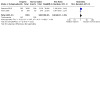
Comparison 1: Occlusion of CVCs, Outcome 2: Unit of analysis: line access
We did not pool data for unit of analysis: participants, catheters and line access as we judged this to not be clinically appropriate. For line access, the presence of occlusion was evaluated several times per day resulting in a huge number of observations in a very low number of participants.
Duration (in days) of catheter patency
We pooled six studies with 1788 participants (using the participant or the catheter as the unit of analysis) and analysed results for catheter patency duration (Bowers 2008; Goosens 2013; Heidari 2015; Kaneko 2004, Pumarola 2007; Schallom 2012). Overall, data showed no clear difference in this outcome between heparin and normal saline groups for duration of patency in days (mean difference (MD) 0.44, 95% CI ‐0.10 to 0.99; P = 0.11; Analysis 2.1). We judged the certainty of evidence as low. We downgraded the certainty of evidence by one level for risk of bias due to unclear allocation concealment and by one more level for imprecision.
2.1. Analysis.

Comparison 2: Duration of catheter patency (days), Outcome 1: All studies
Four studies with 1036 participants used the participant as the unit of analysis for catheter patency duration (Bowers 2008; Goosens 2013; Heidari 2015; Kaneko 2004). We detected no clear differences between heparin and normal saline groups (MD 0.66, 95% CI ‐0.66 to 1.97; P = 0.33; Analysis 2.1). We judged the certainty of evidence as low. We downgraded the certainty of evidence by one level for risk of bias due to unclear allocation concealment and by one more level for imprecision.
Two studies with 752 participants used the catheter as the unit of analysis for catheter patency duration (Pumarola 2007; Schallom 2012). We observed no clear differences between heparin and normal saline groups (MD 0.40, 95% CI ‐0.20 to 0.99; P = 0.19; Analysis 2.1). We judged the certainty of evidence as low. We downgraded the certainty of evidence by one level for risk of bias due to unclear allocation concealment and by one more for imprecision.
Testing for subgroup differences did not indicate a difference between the subgroups (P = 0.72).
No studies reporting on this outcome used line access as the unit of analysis.
Secondary outcomes
See additional Table 2.
1. Secondary outcomes.
| Study | CVC‐related thrombosis | CVC‐related bloodstream infections | Mortality | HIT | ||||
| H | NS | H | NS | H | NS | H | NS | |
| Babu 2014 | NR | NR | NR | NR | NR | NR | 0 | 0 |
| Beigi 2014 | NR | NR | NR | NR | NR | NR | NR | NR |
| Bowers 2008 | NR | NR | NR | NR | NR | NR | NR | NR |
| Dal Molin 2015 | NR | NR | NR | NR | NR | NR | NR | NR |
| Goosens 2013 | 13/398 | 11/404 | 6/398 | 2/404 | 20/398 | 28/404 | NR | NR |
| Heidari 2015 | NR | NR | NR | NR | NR | NR | NR | NR |
| Kaneko 2004 | NR | NR | NR | NR | 0 | 0 | 0 | 0 |
| Klein 2018 | NR | NR | NR | NR | NR | NR | NR | NR |
| Lyons 2014 | NR | NR | NR | NR | NR | NR | NR | NR |
| Pumarola 2007 | NR | NR | NR | NR | 2/125 | 1/125 | 0 | 0 |
| Rabe 2002 | NR | NR | NR | NR | NR | NR | NR | NR |
| Schallom 2012 | 19/145 | 16/150 | 0/145 | 4/150 | NR | NR | 0/145 | 2/150 |
CVC: central venous catheter H: heparin HIT: heparin‐induced thrombocytopaenia NR: not reported NS: normal saline (0.9% NaCl)
Episodes of CVC‐related bloodstream infections
Three studies (1127 participants) reported on CVC‐related bloodstream infections (Goosens 2013; Klein 2018; Schallom 2012). Analysis showed no clear evidence of an effect with heparin use (RR 0.66, 95% CI 0.08 to 5.80; P = 0.71; Analysis 3.1). In Schallom 2012, four participants in the normal saline group experienced episodes of CVC‐related bloodstream infection compared with none in the heparin group (data received via personal communication with study authors). The study authors treated all four participants using non–antibiotic‐impregnated catheters. This difference was not statistically significant (Chi² = 2.180; P = 0.14; Yates correction applied). Goosens 2013 found catheter‐related bloodstream infections in 2 out of 404 cases (0.5%) in the normal saline group and in 6 out of 398 cases (1.5%) in the heparin group (P = 0.18). Only one case of central line‐associated bloodstream infection in the arm of normal saline was found in Klein 2018. We judged the certainty of evidence to be very low. We downgraded the certainty of evidence by two levels due to imprecision (low number of events and CIs were very wide) and one more due to inconsistency.
3.1. Analysis.

Comparison 3: Safety, Outcome 1: CVC‐related bloodstream infections
Episodes of CVC‐related colonisation
None of the studies assessed reported on CVC‐related colonisation.
Mortality
Three studies (1100 participants) reported on mortality (Goosens 2013; Kaneko 2004; Pumarola 2007). Results showed no evidence of an effect (RR 0.76, 95% CI 0.44 to 1.31; P = 0.42; Analysis 3.2). Kaneko 2004 did not report any deaths, Pumarola 2007 reported three deaths (two in the heparin group and one in the normal saline group, without significant differences), and Goosens 2013 reported 48 deaths (28 in the normal saline group and 20 in the heparin group; P = 0.255). No other included studies reported mortality. We judged the certainty of evidence to be very low. We downgraded the certainty of evidence by three levels, i.e. one level due to risk of bias and two levels due to imprecision (low number of events and CIs were very wide). The NNTB for mortality was not calculated as there was no evidence of an effect.
3.2. Analysis.
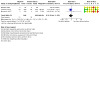
Comparison 3: Safety, Outcome 2: Mortality
Haemorrhage from any site in the body
Four studies (1245 participants) reported on bleeding (Beigi 2014; Goosens 2013; Kaneko 2004; Schallom 2012). We decided not include Kaneko 2004 in the meta‐analysis because the study authors reported bleeding as oozing. We observed no evidence of a difference in bleeding between heparin and normal saline groups (RR 1.54, 95% CI 0.41 to 5.74; 3 studies, 1197 participants; P = 0.52; Analysis 3.3). Beigi 2014 reported four and three bleeding events in heparin and normal saline groups, respectively. Goosens 2013 reported no haemorrhages in any group. In Schallom 2012, one participant in the heparin group presented with bleeding versus none in the normal saline group (Chi² = 0; P = 0.984; Yates correction). We judged the certainty of evidence to be very low. We downgraded the certainty of evidence by three levels, i.e. one level due to risk of bias and two levels due to imprecision (low number of events and CIs were very wide).
3.3. Analysis.

Comparison 3: Safety, Outcome 3: Haemorrhage from any site
Kaneko 2004 reported oozing from the exit site of the dialysis catheter in five participants in the heparin group and in five in the normal saline group with no statistically significant differences (Chi² = 0.088; P = 0.799).
Heparin‐induced thrombocytopaenia (HIT)
Three studies (443 participants) reported on HIT (Babu 2014; Kaneko 2004; Schallom 2012). Neither Kaneko 2004 nor Babu 2014 found cases of HIT. Schallom 2012 detected two cases, both in the normal saline group. Pooling data showed no clear evidence of an effect (RR 0.21, 95% CI 0.01 to 4.27; P = 0.31; Analysis 3.4). We judged the certainty of evidence as very low. Only one study detected HIT (Schallom 2012), with a finding that is counterintuitive (lower detection of HIT in patients treated with heparin locking). We downgraded the certainty of evidence by three levels, i.e. one level due to risk of bias and two levels due to imprecision (low number of events and CIs were very wide).
3.4. Analysis.

Comparison 3: Safety, Outcome 4: Heparin‐induced thrombocytopaenia
CVC‐related thrombosis
Only three studies (1527 participants) reported on the incidence of CVC‐related thrombosis (Dal Molin 2015; Goosens 2013; Schallom 2012). Pooled results showed no evidence of a difference in effect between heparin and normal saline groups (RR 1.24, 95% CI 0.77 to 2.02; P = 0.38; Analysis 3.5).
3.5. Analysis.

Comparison 3: Safety, Outcome 5: CVC‐related thrombosis
Schallom 2012 found 10.7% had venous thromboembolism in the normal saline group (16 participants) and 13.1% (19 participants) in the heparin group (Chi² = 0.419; P = 0.518), with no statistical differences between groups. Goosens 2013 found a confirmed diagnosis of central venous thrombosis in 13 participants (3.3%) in the heparin group and in 11 participants (2.8%) in the normal saline group (Chi² = 0.060; P = 0.807), retrospectively. Dal Molin 2015 reported one thrombosis in the heparin group.
We judged the certainty of evidence to be low. We downgraded the certainty of evidence by two levels due to imprecision, i.e. low number of events and CIs were very wide.
Number of additional CVC insertions
None of the included studies provided data on this outcome.
Abnormality of coagulation profile
Only Kaneko 2004 reported alterations in coagulation parameters. These investigators studied activated coagulation time (ACT), activated partial thromboplastin time (APTT), and prothrombin time (PT). Kaneko 2004 reported differences between groups for both ACT (P < 0.001) and APTT (P = 0.001). In particular, these parameters, except PT (P = 0.187), were higher in the heparin group. Differences observed in the PT parameter, which was elevated in the heparin group, did not reach statistical significance.
Allergic reactions to heparin
None of the included studies provided data on this outcome.
Sensitivity analysis
We planned to carry out sensitivity analyses affecting main outcomes (occlusions) for published versus unpublished studies, for quality of studies, and for the weight of studies, as well as for choice of summary effects measure, odds ratio (OR) versus RR.
The only study initially identified as an unpublished study was Goosens 2013, but this study was later published, and we identified no other unpublished studies. So, we could not perform this kind of predefined sensitivity analysis.
We found that results for occlusion in the 10 studies with unit of analysis participant or catheter showed fewer occlusions with heparin (RR 0.70, 95% CI 0.51 to 0.95; P = 0.02; Analysis 1.1). This effect was lost when only studies with good allocation concealment were considered (RR 0.74, 95% CI 0.51 to 1.05; P = 0.09; Analysis 4.1).
4.1. Analysis.
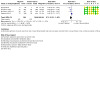
Comparison 4: Sensitivity analysis, Outcome 1: Occlusion of CVCs ‐ good allocation concealment
We explored the influence of studies contributing most to the effect estimate to assess whether a single study could reverse the direction of the effect. When we considered the outcome, occlusions of CVCs, with the unit of analysis, the participant, the study with the greatest weight was Goosens 2013. We performed a sensitivity analysis by removing this study from the analysis; it suggested a decrease in occlusions when using heparin (RR 0.52, 95% CI 0.30 to 0.91; P = 0.02; Analysis 4.2) compared with no clear difference between heparin and saline solution with the inclusion of Goosens 2013 (RR 0.79, 95% CI 0.58 to 1.08; P = 0.15; Analysis 1.1).
4.2. Analysis.
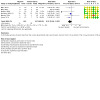
Comparison 4: Sensitivity analysis, Outcome 2: Occlusion of CVCs ‐ excluding most weighted study (Goosens 2013)
We explored and calculated differences between the OR and RR but found no evidence of a difference between measures (results not shown).
We also explored the effect size in occlusions and patency. Here we standardised the results, so they were independent of the unit of analysis. We did this because there was discussion in our review authors group about whether it was appropriate to combine studies that used the participant as the unit of analysis with studies that used the catheter as the unit of analysis. Overall, the team concluded that it was reasonable to do so because most participants only ever have one catheter and, therefore, the two approximated to each other. However, we presented each unit of analysis also as a subgroup (Analysis 1.1). A different strategy for meta‐analysing results that are addressing the same underlying construct but measuring this construct in different ways is to standardise the results by converting them to an effect size, that is, a 'z‐score' of a standard normal distribution. We did this in the sensitivity analysis in case readers of the review disagreed with our pragmatic approach in Analysis 1.1.
Using z‐scores, we noted fewer occlusions with heparin (RR 0.78, 95% CI 0.62 to 0.98; 10 studies, 2697 participants; P = 0.04; Analysis 4.3), which was similar to the results shown in Analysis 1.1 by unit of analysis participants and catheter. For completeness, we have also presented the effect size for occlusions by the original unit of analysis of the participant (RR 0.84, 95% CI 0.65 to 1.08) and catheter (RR 0.54, 95% CI 0.31 to 0.96), with no clear differences between them (P = 0.17; Analysis 4.3).
4.3. Analysis.
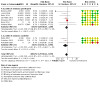
Comparison 4: Sensitivity analysis, Outcome 3: Occlusion of CVCs ‐ Z scores by unit of analysis
We also assessed the effect of duration of patency using z‐scores, noting no clear difference between heparin and normal saline groups (MD 0.44, 95% CI ‐0.10 to 0.99; P = 0.11; Analysis 4.4), which was similar to Analysis 2.1. For completeness, we have also presented the effect size for duration of patency by the original unit of analysis of the participant (RR 0.66, 95% CI ‐0.66 to 1.97) and catheter (RR 0.40, 95% CI ‐0.20 to 0.99), with no clear differences between them (P = 0.72; Analysis 4.4).
4.4. Analysis.
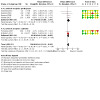
Comparison 4: Sensitivity analysis, Outcome 4: Duration of catheter patency ‐ Z scores by unit of analysis
Subgroup analysis
We planned to perform subgroup analyses by type of participant, CVC site and CVC type, and perfusion‐related factors. We carried out subgroup analysis by oncology/non‐oncology patients, number of CVC lumens, heparin concentration used, and time to follow‐up. Data were insufficient for analysis by CVC implantation site or CVC type subgroup. We carried out subgroup analyses by the unit of analysis and reported these results above under the relevant outcomes. Given the small number of studies in the subgroups, the results should be interpreted with caution.
Subgroup analysis to investigate occlusion in oncology and non‐oncology patients showed differences between groups. Occlusions in non‐oncology participants were different from those in oncology participants (RR 0.48, 95% CI 0.30 to 0.77; P = 0.002; vs RR 0.91, 95% CI 0.69 to 1.19; P = 0.48; respectively), favouring heparin use in non‐oncology participants (test for subgroup differences P = 0.02; Analysis 5.1).
5.1. Analysis.
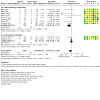
Comparison 5: Additional subgroup analysis, Outcome 1: Oncology vs non‐oncology participants: occlusion of CVCs
Subgroup analysis to assess the relationship between occlusion and the number of CVC lumens (unit of analysis ‐ participants) showed no clear differences between groups: occlusions in studies using CVCs with one lumen (RR 0.85, 95% CI 0.57 to 1.26) versus those using CVCs with more than one lumen (RR 0.63, 95% CI 0.15 to 2.59) (test for subgroup differences P = 0.69; Analysis 5.2).
5.2. Analysis.

Comparison 5: Additional subgroup analysis, Outcome 2: One vs more than one lumen (unit of analysis is participant): occlusion of CVCs
Subgroup analysis to investigate the effect of heparin concentration on occlusion showed no clear differences between high (≥ 1000 IU/mL) and low concentrations (< 1000 IU/mL). According to heparin concentration, high concentrations (RR 0.41, 95% CI 0.14 to 1.25) versus low concentrations (RR 0.65, 95% CI 0.31 to 1.34) showed no clear differences (test for subgroup differences P = 0.50; Analysis 5.3).
5.3. Analysis.

Comparison 5: Additional subgroup analysis, Outcome 3: High vs low heparin concentration: occlusion of CVCs
We performed subgroup analysis to assess whether occlusions were related to time to follow‐up. When time to follow‐up was less than one month, we found differences favouring heparin (RR 0.48, 95% CI 0.30 to 0.77). When time to follow‐up was one month or longer, we noted no clear differences (RR 0.91, 95% CI 0.69 to 1.19). Testing for subgroup differences showed differences between the subgroups (P = 0.02; Analysis 5.4).
5.4. Analysis.

Comparison 5: Additional subgroup analysis, Outcome 4: Less than one month vs over one month follow‐up: occlusion of CVCs
Discussion
Summary of main results
The aim of the present update was to assess the effectiveness of intermittent locking with heparin versus normal saline in adults with CVCs in terms of prevention of occlusion and overall benefits versus harms. CVCs are frequently used to provide blood derivatives, medication, or nutritional support to patients, as well as for diagnostic monitoring, cardiac pacing, and other procedures. However, their use could result in thrombosis and infection and may prolong hospital stay.
Low‐certainty evidence suggests that, in adults, intermittent locking of CVCs with heparin may show a slight reduction of occlusions than intermittent locking with normal saline.
Low‐certainty evidence suggests that heparin has little or no effect on the duration of catheter patency. Although we did not detect any clear differences in safety, the trials that were combined are not sufficiently powered to detect rare adverse events, such as HIT. Lack of an effect of heparin concentration and the suggestion of publication bias as demonstrated by the funnel plot mean that these results should be interpreted cautiously. These findings on efficacy (occlusion and patency) could be related to the types of participants included (subgroup analysis indicated there may be more benefit for non‐oncology patients) and to the methodological quality of trials (effect changed when studies with appropriate allocation concealment were included in sensitivity analysis). The certainty of the evidence ranged from low to very low.
Overall completeness and applicability of evidence
All addressed outcomes were examined. Statistical heterogeneity was low (I² = 0) for the main outcomes of efficacy (occlusion and patency) and safety (bleeding, thrombosis, and mortality), despite inclusion of participants with very different conditions (admitted to the intensive care units, with onco‐haematological malignancies, or undergoing haemodialysis), treated with a very wide range of heparin concentrations ranging from 10 IU/mL to 5000 IU/mL. Only CVC‐related bloodstream infections showed statistical heterogeneity (I² = 56%), which could be explained by the different clinical conditions of participants in the three studies reporting CVC‐related bloodstream infections.
Our results are consistent with those of a retrospective cohort study by Jonker 2010, which detected increased use of alteplase to manage catheter obstructions flushed with normal saline compared with catheters locked with heparin. However, these results may be biased by the indirectness of outcomes.
It is interesting to consider also the use of systemic anticoagulants among different studies. In Pumarola 2007 and Goosens 2013, use of any anticoagulation was a criterion of exclusion; although some studies provided either no data on permitted use of systemic anticoagulation in every participant (Bowers 2008; Kaneko 2004), or in only some participants (Rabe 2002; Schallom 2012), differences were found to be not significant. Moreover, Dal Molin 2015 excluded patients with intolerance to heparin, and Heidari 2015 excluded patients with risk of bleeding. However, the exclusion of Pumarola 2007 and Goosens 2013 ‐ two studies that used the exclusion criterion of use of anticoagulants ‐ resulted in no change in findings of the sensitivity analysis.
The length of follow‐up for safety in this review could be too short to reveal relevant adverse events. Only Dal Molin 2015 (231 days) and Goosens 2013 (180 days) provided long‐term follow‐up, whereas Babu 2014, Beigi 2014, Heidari 2015, Lyons 2014, Pumarola 2007, Rabe 2002 and Schallom 2012 studied participants for a shorter time ranging from 24 hours to 23 days. Bowers 2008, Kaneko 2004 and Klein 2018 studied participants for a period ranging from 40 to 90 days. Consequently, the potential for higher incidence of adverse events with long‐term follow‐up cannot be discarded. Given that CVCs could be placed for several months according to the needs of patients, adverse events may be more relevant than those described in the present systematic review. None of the 12 included trials planned to study adverse events as a primary outcome. It cannot be ruled out that adverse events may occur with longer exposure or larger numbers of participants.
Despite results suggesting no differences in safety, it is probable that a high proportion of patients could be at increased risk with heparin use. This increased risk of adverse events due to heparin locking may be especially relevant among patients with liver or kidney failure and those with recent surgery (especially of the brain, eye, or spine), spinal anaesthesia, or recent injury. Also, patients who have a history of heart problems, high blood pressure, menstrual problems, bleeding problems, or a history of ulcers or other stomach problems, or who are taking drugs such as non‐steroidal anti‐inflammatory drugs or antiplatelet agents, may have an increased risk of bleeding. Adverse events may be reduced by flushes with normal saline.
Heparin‐induced thrombocytopaenia (HIT) is an adverse event that may be life‐threatening. It is more common after intraoperative or perioperative administration of heparin. Its incidence is reported at between 0.1% and 5%. Risk factors for HIT include type of heparin used (greater risk with unfractionated heparin), duration of exposure, patient setting, and patient gender (1.5 to 2 times higher among women) (Battistelli 2010). In general, higher doses of heparin result in a greater risk of HIT. However, lower heparin doses used to flush catheters have occasionally been associated with HIT (McNulty 2005). In the present systematic review, HIT was not reported in the heparin groups, and only two cases were reported in the normal saline groups (Schallom 2012), suggesting altogether an undiagnosed adverse event.
It should be mentioned that some outcomes (i.e. bleeding, occlusion, thrombosis) of the present review were either not properly defined or not defined at all in the included studies. Similarly, the sampling times for the outcome patency are not clearly established in the studies. Notwithstanding these clear limitations, the present review had to accept and analyse the data as were de facto reported in the included studies. It is unfeasible to assess how this required assumption may have affected the reported outcomes.
Quality of the evidence
We have presented the main results in Table 1. The certainty of evidence ranged from very low to low.
The certainty of evidence for the main outcome (all occlusions of CVC) was low. We downgraded the certainty of evidence by one level for risk of bias due to suspicion of publication bias and one more level for imprecision. Although the common rule is not to create a funnel plot for fewer than 10 studies, we created it because the included studies described different effects and different sizes. Although other possible sources of asymmetry can be addressed (selection bias, poor method, artefacts, or chance), we cannot discard the possibility of publication bias.
We judged the certainty of evidence for overall duration of catheter patency as low. We judged the certainty of evidence as low. We downgraded the certainty of evidence by one level for risk of bias due to unclear allocation concealment and by one more level for imprecision.
We judged the certainty of evidence for CVC‐related bloodstream infections to be very low. We downgraded the certainty of evidence by two levels due to imprecision (low number of events and CIs were very wide) and one more level due to inconsistency.
We judged the certainty of evidence for mortality to be very low. We downgraded the certainty of evidence by three levels, i.e. one level due to risk of bias and two levels due to imprecision (low number of events and CIs were very wide).
We judged the certainty of evidence for haemorrhage from any site to be very low. We downgraded the certainty of evidence by three levels, i.e. one level due to risk of bias and two levels due to imprecision (low number of events and CIs were very wide).
We judged the certainty of evidence for HIT to be very low. We downgraded the certainty of evidence by three levels, i.e. one level due to risk of bias and two levels due to imprecision (low number of events and CIs were very wide).
We did not include the secondary outcomes CVC‐related thrombosis and abnormality of the coagulation profile in Table 1. We judged the certainty of evidence for CVC‐related thrombosis to be low. We downgraded the certainty of evidence by two levels due to imprecision, i.e. low number of events and CIs were very wide. We did not judge the certainty of evidence for abnormality of the coagulation profile because only one study provided information on this outcome.
In summary, risk of bias for unclear allocation concealment and imprecision were the criteria that downgraded the certainty of evidence for most outcomes, and risk of publication bias for the outcome 'all occlusions'.
Potential biases in the review process
Review authors carried out study selection and data extraction in a duplicate manner. We published a protocol for this systematic review (López‐Briz 2010). None of the authors of this review update was involved in any of the included or excluded studies. We selected a priori all outcomes analysed. We contacted trial authors and retrieved additional information. Hence, the probability of publication bias among studies included in this systematic review is low. However, we could not discard the possibility of bias from non‐published studies after we assessed the funnel plot for publication bias (Figure 1).
For the unit of analysis of participant or catheter, heparin showed a small benefit. We concluded that it was reasonable to pool both units of analysis because most participants only ever have one catheter, and therefore the two approximated to each other. This was an 'a posteriori' decision, and it must be kept in mind when review results are interpreted. We carried out additional analyses to check the robustness of this decision.
Agreements and disagreements with other studies or reviews
Other systematic reviews focused on heparin use in CVCs have used different inclusion and/or exclusion criteria from those of this review. Randolph 1998b reviewed randomised controlled trials in adult and paediatric participants in whom heparin was infused continuously through the catheter, administered subcutaneously (SC), or bonded to the catheter. They found a trend toward a reduction in catheter thrombus and a significant reduction (57%) in venous thrombosis. Statistical heterogeneity was not significant in both cases. Heparin dosage ranged from SC 5000 IU every 12 hours to 1 IU/mL in continuous perfusion added to total parenteral nutrition.
Klerk 2003 also reviewed studies with adult and paediatric participants with CVCs in whom heparin flushes or antithrombotic agents were administered in prophylactic or therapeutic doses. This review concluded that heparin added to parenteral nutrition did not significantly decrease the risk of catheter‐related thrombosis. However, this review cannot be compared with the present one because it differed in the design of included studies (randomised controlled trials and prospective cohort studies) and in the intervention provided (systemic heparin).
A previous systematic review conducted by some of the authors of this Cochrane review found and included only two studies, one of which included paediatric participants (López‐Briz 2005). Results showed no differences between heparin and normal saline locking.
Mitchell 2009 conducted a systematic review focussed on adult participants with CVCs or PICCs comparing heparin locking, continuous heparin perfusion, normal saline locking, urokinase locking, and heparin‐bonded catheter versus any other intervention. The review authors concluded that "there is insufficient evidence on which to find that flushing catheters with heparin are more effective than flushing with saline solution" (verbatim).
In paediatric participants, Shah 2008 found that continuous heparin infusion reduced the risk of catheter occlusion with no statistically significant differences in the duration of catheter patency. However, the review authors could not provide recommendations for heparin use in neonates with PICCs. These review authors detected high clinical heterogeneity and high heterogeneity in treatment effect.
Guidelines have led to a wide variety of locking protocols, with many different types of locking solutions, volumes, locking frequencies, and heparin concentrations because these guidelines are based mainly on manufacturers' recommendations ‐ not on published evidence (Mitchell 2009; Sona 2012). The Infusion Therapy Standards of Practice of 2016 (INS 2016), and the updated version of 2021 (Gorski 2021) are in line with the conclusions of our SR ("Use of 0.9% sodium chloride alone may be as effective as heparin in locking to maintain port patency" (verbatim)). Sousa 2016 stated that "Intermittent flushing with heparin is a standard practice in the maintenance of CVC patency. However, when compared with 0.9% normal saline flushing, no differences in thrombosis rates were found" (verbatim). Finally, Kovacevich 2019 reported from the American Society for Parenteral and Enteral Nutrition (ASPEN) clinical guidelines to describe best practices in the selection and care of central venous access devices (CVADs) for the infusion of home parenteral nutrition (HPN) admixtures in adult patients. The flushing protocols compared were normal saline, heparin 10 IU/mL, and heparin 100 IU/mL. Although the "results indicated that the saline‐only group required additional home RN [? registered nurse] visits to assess for sluggishness/occlusions (32.1% compared with 15.6% for the 100 U/mL and 13.3% for the 10 U/mL; P = 0.150)", the authors concluded that "there is no strong evidence to support the use of heparin vs saline flush solutions to maintain CVAD patency" (verbatim). The results are in line with those of our review, although the conclusion is slightly different. The authors reported only a trend in the results towards significance that, according to them, reflected "the small sample sizes".
Various systematic reviews reported no differences. Dal Molin 2014 performed a network meta‐analysis and concluded: "There is no evidence of a different effectiveness between heparin flushing and normal saline or other solutions in reducing catheter occlusions" (verbatim).
The systematic review of Wen 2017 presented similar findings to this review, namely, no significant differences in occlusion rate (OR 1.58, 95%CI 0.79 to 3.14, P = 0.19) and duration of catheter days (OR –7.24, 95%CI –22.90 to 8.41, P = 0.36), while the heparin group had more advantage than the normal saline group in decreasing the incidence of phlebitis (OR 2.57, 95%CI 1.52 to 4.34, P = 0.0004).
Zhong 2017 concluded that heparin locking is not superior to saline in the maintenance of CVC lumen catheters. In a post hoc analysis, these review authors suggested that heparin could be effective when used with follow‐up of less than one month. We found the same data but noted a lack of plausibility only about this time‐limited effect. A similar Cochrane systematic review was carried out in paediatric patients and concluded: "It remains unclear whether heparin is necessary to prevent occlusion, CVC‐associated bloodstream infection or effects duration of catheter placement" (Bradford 2020). Wouters 2020 reported a systematic review that focussed on the prevention of catheter‐related bloodstream infections (CRBSI) in patients receiving home parenteral nutrition. The review concluded that taurolidine was more effective than saline or heparin flushing: the cumulative proportion of CRBSI‐free patients using taurolidine, saline, and heparin after one year was 88%, 56%, and 14%, respectively. Our review does not support this finding. Wu 2021 reported a systematic review that focussed on whether saline solution can replace heparin solution in totally implantable venous access ports (TIVAPs) in adult cancer patients. The review recommended that saline solution can replace 50 or 100 IU/mLl of heparin as a safe and effective flush solution for TIVAPs.
Overall, the above systematic reviews suggest a protective effect for occlusions with heparin, but without statistical significance. Our review update has included more trials and more participants. Our results regarding benefits with heparin use are uncertain.
Authors' conclusions
Implications for practice.
Given the low‐certainty evidence, we are uncertain whether intermittent locking with heparin results in fewer central venous catheter occlusions than intermittent locking with normal saline in adults. Low‐certainty evidence suggests that heparin may have little or no effect on catheter patency duration. Although we found no evidence of differences in safety (CVC‐related bloodstream infections, mortality, or haemorrhage), the combined studies were not powered to detect rare adverse events such as heparin‐induced thrombocytopaenia. We are uncertain about the effects of heparin compared to normal saline, and review findings should be interpreted with caution.
Implications for research.
Better designed large‐scale randomised controlled trials are needed to definitively establish or rule out a net benefit of locking with heparin versus normal saline; these trials should also explore effectiveness in different patient groups, such as patients under haemodialysis or those with onco‐haematological malignancies. Trials should report the outcome using both the participant and the catheter as units of analysis to allow evidence to be combined more consistently. Occlusions and adverse events must be the focus of future studies, and we suggest at least one month of follow‐up. In addition, assessment by type of line (i.e. dialysis/apheresis versus peripherally inserted central catheter (PICC) or versus other) is important. Addressing the question of harm from rare events requires high‐quality prospective cohort studies with sufficient follow‐up. Decision analytical modelling incorporating the costs of heparin and normal saline and the probabilities and costs of alteplase use and catheter replacement may also help to establish the thresholds required to conclude which method is the most appropriate and efficient choice.
What's new
| Date | Event | Description |
|---|---|---|
| 24 January 2022 | New citation required but conclusions have not changed | New search run. One new study included, 12 new studies excluded and six new studies assessed as ongoing. Text updated to reflect current Cochrane recommendations. No change to conclusions. |
| 24 January 2022 | New search has been performed | New search run. One new study included, 12 new studies excluded and six new studies assessed as ongoing. |
History
Protocol first published: Issue 4, 2010 Review first published: Issue 10, 2014
| Date | Event | Description |
|---|---|---|
| 11 June 2018 | New citation required but conclusions have not changed | Search updated. Five new studies included, three new ongoing studies identified, seven additional studies excluded and two studies classed as awaiting classification. Text amended to reflect current Cochrane policy. Conclusions changed. |
| 11 June 2018 | New search has been performed | Search updated. Five new studies included, three new ongoing studies identified, seven additional studies excluded, and two studies classed as awaiting classification. |
Acknowledgements
We thank the Cochrane Vascular staff for assistance with the literature search and for ongoing support and constructive comments. The review team and Cochrane Vascular editorial base wish to thank the following peer reviewers for their input: Matthew D Mitchell PhD, Rian J Mills BSN, RN, OCN, and Elizabeth M Bass MSN RN from the Center for Evidence‐based Practice, University of Pennsylvania Health System; Amanda J Ullman, School of Nursing, Midwifery and Social Work, The University of Queensland, Australia; Polina Langer, and A Jill Thompson, MUSC College of Pharmacy, USA.
Appendices
Appendix 1. Sources searched and search strategies
| Source | Search strategy | Hits retrieved |
| 1. VASCULAR REGISTER IN CRSW (Date of most recent search: 20 October 2021) |
venous catheter* | June 2018: 0 Oct 2021: 186 |
| 2. CENTRAL via CRS (Date of most recent search: 20 October 2021) |
#1 MESH DESCRIPTOR Heparin EXPLODE ALL TREES 4357 #2 (hep* or UH or UFH or LMWH):TI,AB,KY 43721 #3 *parin:TI,AB,KY 10836 #4 *paran:TI,AB,KY 108 #5 #1 OR #2 OR #3 OR #4 44779 #6 MESH DESCRIPTOR Sodium Chloride 2141 #7 MESH DESCRIPTOR Saline Solution, Hypertonic 458 #8 saline:TI,AB,KY 22724 #9 sodium*:TI,AB,KY 32923 #10 NaCl:TI,AB,KY 1748 #11 #6 OR #7 OR #8 OR #9 OR #10 49217 #12 #5 AND #11 1756 #13 MESH DESCRIPTOR Catheterization, Central Venous 724 #14 MESH DESCRIPTOR Catheterization 1501 #15 MESH DESCRIPTOR Catheters, Indwelling 939 #16 MESH DESCRIPTOR Vascular Access Devices 81 #17 MESH DESCRIPTOR Central Venous Catheters 83 #18 catheter*:TI,AB,KY 21075 #19 cannula*:TI,AB,KY 3146 #20 (venous near3 access):TI,AB,KY 507 #21 (CVC* or PICC):TI,AB,KY 745 #22 #13 OR #14 OR #15 OR #16 OR #17 OR #18 OR #19 OR #20 OR #21 23602 #23 #12 AND #22 217 |
June 2018: 43 0Oct 2021: 20 |
| 3. Clinicaltrials.gov (Date of most recent search: 20 October 2021) |
catheter AND heparin | June 2018: 21 Oct 2021: 50 |
| 4. ICTRP Search Portal (Date of most recent search: 20 October 2021) |
catheter* AND heparin | June 2018: 11 Oct 2021: 48 |
| 5. MEDLINE via OVID (Date of most recent search: 20 October 2021) |
1 exp HEPARIN/ 2 (hep* or UH or UFH or LMWH).ti,ab. 3 heparin.ti,ab. 4 alpha‐Heparin.ti,ab. 5 heparan.ti,ab. 6 1 or 2 or 3 or 4 or 5 7 Sodium Chloride/ 8 Saline Solution, Hypertonic/ 9 saline.ti,ab. 10 sodium*.ti,ab. 11 NaCl.ti,ab. 12 7 or 8 or 9 or 10 or 11 13 6 and 12 14 Catheterization, Central Venous/ 15 CATHETERIZATION/ 16 Catheters, Indwelling/ 17 Vascular Access Devices/ 18 Central Venous Catheters/ 19 catheter*.ti,ab. 20 cannula*.ti,ab. 21 (CVC* or PICC).ti,ab. 22 (venous adj3 access).ti,ab. 23 or/14‐22 24 13 and 23 25 randomized controlled trial.pt. 26 controlled clinical trial.pt. 27 randomized.ab. 28 placebo.ab. 29 drug therapy.fs. 30 randomly.ab. 31 trial.ab. 32 groups.ab. 33 or/25‐32 34 exp animals/ not humans.sh. 35 33 not 34 36 24 and 35 |
June 2018: 11 Oct 2021: 37 |
| 6. Embase via OVID (Date of most recent search: 20 October 2021) |
1 exp heparin/ 2 (hep* or UH or UFH or LMWH).ti,ab. 3 heparin.ti,ab. 4 heparan.ti,ab. 5 alpha‐Heparin.ti,ab. 6 1 or 2 or 3 or 4 or 5 7 sodium chloride/ 8 saline.ti,ab. 9 sodium*.ti,ab. 10 NaCl.ti,ab. 11 7 or 8 or 9 or 10 12 6 and 11 13 central venous catheterization/ 14 catheterization/ 15 indwelling catheter/ 16 vascular access device/ 17 central venous catheter/ 18 catheter*.ti,ab. 19 cannula*.ti,ab. 20 (CVC* or PICC).ti,ab. 21 (venous adj3 access).ti,ab. 22 or/13‐21 23 12 and 22 24 randomized controlled trial/ 25 controlled clinical trial/ 26 random$.ti,ab. 27 randomization/ 28 intermethod comparison/ 29 placebo.ti,ab. 30 (compare or compared or comparison).ti. 31 ((evaluated or evaluate or evaluating or assessed or assess) and (compare or compared or comparing or comparison)).ab. 32 (open adj label).ti,ab. 33 ((double or single or doubly or singly) adj (blind or blinded or blindly)).ti,ab. 34 double blind procedure/ 35 parallel group$1.ti,ab. 36 (crossover or cross over).ti,ab. 37 ((assign$ or match or matched or allocation) adj5 (alternate or group$1 or intervention$1 or patient$1 or subject$1 or participant$1)).ti,ab. 38 (assigned or allocated).ti,ab. 39 (controlled adj7 (study or design or trial)).ti,ab. 40 (volunteer or volunteers).ti,ab. 41 trial.ti. 42 or/24‐41 43 23 and 42 |
June 2018: 55 Oct 2021: 110 |
| 7. CINAHL via EBSCO (Date of most recent search: 20 October 2021) |
S39 S23 AND S38 S38 S24 OR S25 OR S26 OR S27 OR S28 OR S29 OR S30 OR S31 OR S32 OR S33 OR S34 OR S35 OR S36 OR S37 S37 MH "Random Assignment" S36 MH "Triple‐Blind Studies" S35 MH "Double‐Blind Studies" S34 MH "Single‐Blind Studies" S33 MH "Crossover Design" S32 MH "Factorial Design" S31 MH "Placebos" S30 MH "Clinical Trials" S29 TX "multi‐centre study" OR "multi‐center study" OR "multicentre study" OR "multicenter study" OR "multi‐site study" S28 TX crossover OR "cross‐over" S27 AB placebo* S26 TX random* S25 TX trial* S24 TX "latin square" S23 S13 AND S22 S22 S14 OR S15 OR S16 OR S17 OR S18 OR S19 OR S20 OR S21 S21 TX venous n3 access S20 TX CVC* or PICC S19 TX cannula* S18 TX catheter* S17 MH "Central Venous Catheters" S16 MH "Vascular Access Devices" S15 MH "Catheterization" S14 MH "Catheterization, Central Venous" S13 S6 AND S12 S12 S7 OR S8 OR S9 OR S10 OR S11 S11 TX sodium* S10 TX NaCl S9 TX saline S8 MH "Saline Solution, Hypertonic" S7 MH "Sodium Chloride" S6 S1 OR S2 OR S3 OR S4 OR S5 S5 TX heparan S4 TX alpha‐Heparin S3 TX heparin S2 TX hep* or UH or UFH or LMWH S1 MH "Heparin+" |
June 2018: 8 Oct 2021: 21 |
| 8. AMED via OVID (Date of most recent search: 20 October 2021) |
1 exp HEPARIN/ 2 (hep* or UH or UFH or LMWH).ti,ab. 3 heparin.ti,ab. 4 alpha‐Heparin.ti,ab. 5 heparan.ti,ab. 6 1 or 2 or 3 or 4 or 5 7 Sodium Chloride/ 8 Saline Solution, Hypertonic/ 9 saline.ti,ab. 10 sodium*.ti,ab. 11 NaCl.ti,ab. 12 7 or 8 or 9 or 10 or 11 13 6 and 12 50 14 CATHETERIZATION/ 15 catheter*.ti,ab. 16 cannula*.ti,ab. 17 (CVC* or PICC).ti,ab. 18 (venous adj3 access).ti,ab. 19 14 or 15 or 16 or 17 or 18 20 13 and 19 |
June 2018: 0 Oct 2021: 0 |
Data and analyses
Comparison 1. Occlusion of CVCs.
| Outcome or subgroup title | No. of studies | No. of participants | Statistical method | Effect size |
|---|---|---|---|---|
| 1.1 All studies | 10 | 2697 | Risk Ratio (M‐H, Random, 95% CI) | 0.70 [0.51, 0.95] |
| 1.1.1 Unit of analysis: participant | 7 | 1672 | Risk Ratio (M‐H, Random, 95% CI) | 0.79 [0.58, 1.08] |
| 1.1.2 Unit of analysis: catheter | 3 | 1025 | Risk Ratio (M‐H, Random, 95% CI) | 0.53 [0.29, 0.95] |
| 1.2 Unit of analysis: line access | 2 | 6835 | Risk Ratio (M‐H, Random, 95% CI) | 1.06 [0.84, 1.33] |
Comparison 2. Duration of catheter patency (days).
| Outcome or subgroup title | No. of studies | No. of participants | Statistical method | Effect size |
|---|---|---|---|---|
| 2.1 All studies | 6 | 1788 | Mean Difference (IV, Random, 95% CI) | 0.44 [‐0.10, 0.99] |
| 2.1.1 Unit of analysis: participant | 4 | 1036 | Mean Difference (IV, Random, 95% CI) | 0.66 [‐0.66, 1.97] |
| 2.1.2 Unit of analysis: catheter | 2 | 752 | Mean Difference (IV, Random, 95% CI) | 0.40 [‐0.20, 0.99] |
Comparison 3. Safety.
| Outcome or subgroup title | No. of studies | No. of participants | Statistical method | Effect size |
|---|---|---|---|---|
| 3.1 CVC‐related bloodstream infections | 3 | 1127 | Risk Ratio (M‐H, Random, 95% CI) | 0.66 [0.08, 5.80] |
| 3.2 Mortality | 3 | 1100 | Risk Ratio (M‐H, Random, 95% CI) | 0.76 [0.44, 1.31] |
| 3.3 Haemorrhage from any site | 3 | 1197 | Risk Ratio (M‐H, Random, 95% CI) | 1.54 [0.41, 5.74] |
| 3.4 Heparin‐induced thrombocytopaenia | 3 | 443 | Risk Ratio (M‐H, Random, 95% CI) | 0.21 [0.01, 4.27] |
| 3.5 CVC‐related thrombosis | 3 | 1527 | Risk Ratio (M‐H, Random, 95% CI) | 1.24 [0.77, 2.02] |
Comparison 4. Sensitivity analysis.
| Outcome or subgroup title | No. of studies | No. of participants | Statistical method | Effect size |
|---|---|---|---|---|
| 4.1 Occlusion of CVCs ‐ good allocation concealment | 4 | 2031 | Risk Ratio (M‐H, Random, 95% CI) | 0.74 [0.51, 1.05] |
| 4.2 Occlusion of CVCs ‐ excluding most weighted study (Goosens 2013) | 6 | 870 | Risk Ratio (M‐H, Random, 95% CI) | 0.52 [0.30, 0.91] |
| 4.3 Occlusion of CVCs ‐ Z scores by unit of analysis | 10 | Risk Ratio (IV, Random, 95% CI) | 0.78 [0.62, 0.98] | |
| 4.3.1 Unit of analysis: participant | 7 | Risk Ratio (IV, Random, 95% CI) | 0.84 [0.65, 1.08] | |
| 4.3.2 Unit of analysis: catheter | 3 | Risk Ratio (IV, Random, 95% CI) | 0.54 [0.31, 0.96] | |
| 4.4 Duration of catheter patency ‐ Z scores by unit of analysis | 6 | Mean Difference (IV, Random, 95% CI) | 0.44 [‐0.10, 0.99] | |
| 4.4.1 Unit of analysis: participant | 4 | Mean Difference (IV, Random, 95% CI) | 0.66 [‐0.66, 1.97] | |
| 4.4.2 Unit of analysis: catheter | 2 | Mean Difference (IV, Random, 95% CI) | 0.40 [‐0.20, 0.99] |
Comparison 5. Additional subgroup analysis.
| Outcome or subgroup title | No. of studies | No. of participants | Statistical method | Effect size |
|---|---|---|---|---|
| 5.1 Oncology vs non‐oncology participants: occlusion of CVCs | 10 | 2697 | Risk Ratio (M‐H, Random, 95% CI) | 0.70 [0.51, 0.95] |
| 5.1.1 Non‐oncology participants | 8 | 1465 | Risk Ratio (M‐H, Random, 95% CI) | 0.48 [0.30, 0.77] |
| 5.1.2 Oncology participants | 2 | 1232 | Risk Ratio (M‐H, Random, 95% CI) | 0.91 [0.69, 1.19] |
| 5.2 One vs more than one lumen (unit of analysis is participant): occlusion of CVCs | 6 | 1582 | Risk Ratio (M‐H, Random, 95% CI) | 0.88 [0.68, 1.15] |
| 5.2.1 One lumen | 3 | 1334 | Risk Ratio (M‐H, Random, 95% CI) | 0.85 [0.57, 1.26] |
| 5.2.2 More than one lumen | 3 | 248 | Risk Ratio (M‐H, Random, 95% CI) | 0.63 [0.15, 2.59] |
| 5.3 High vs low heparin concentration: occlusion of CVCs | 10 | 2497 | Risk Ratio (M‐H, Random, 95% CI) | 0.62 [0.32, 1.20] |
| 5.3.1 Heparin ≥ 1000 IU/mL | 3 | 214 | Risk Ratio (M‐H, Random, 95% CI) | 0.41 [0.14, 1.25] |
| 5.3.2 Heparin < 1000 IU/mL | 7 | 2283 | Risk Ratio (M‐H, Random, 95% CI) | 0.65 [0.31, 1.34] |
| 5.4 Less than one month vs over one month follow‐up: occlusion of CVCs | 10 | Risk Ratio (M‐H, Random, 95% CI) | Subtotals only | |
| 5.4.1 Less than one month | 8 | 1465 | Risk Ratio (M‐H, Random, 95% CI) | 0.48 [0.30, 0.77] |
| 5.4.2 One month or longer | 2 | 1232 | Risk Ratio (M‐H, Random, 95% CI) | 0.91 [0.69, 1.19] |
Characteristics of studies
Characteristics of included studies [ordered by study ID]
Babu 2014.
| Study characteristics | ||
| Methods | Design: RCT Exclusions post‐randomisation: not reported Losses to follow‐up: not reported Duration of study: from March 2012 to August 2012 Unit of randomisation: participant | |
| Participants | Country: India Setting: patients from the RICU with CVC with triple lumen Number: 100 (heparin group n = 50; saline group n = 50) Age: heparin group: 18‐28: n = 6, 29‐38: n = 12, 39‐48: n = 16, 49‐58: n = 16; saline group: 18‐28: n = 6, 29‐38: n = 14, 39‐48: n = 12, 49‐58: n = 18 Sex: heparin group: male/female 24/26; saline group: male/female 22/28 Inclusion criteria: patients aged between 18‐58 years of both sexes who are admitted into the RICU Exclusion criteria: known heparin allergy, diagnosis of HIT, bleeding risk identified by attending physician, age < 18 years or > 58 years, requiring prolonged ICU stay with ailments such as terminal illness, severe septicaemia, MODS, etc. | |
| Interventions | Locking with:
|
|
| Outcomes | Primary outcome: lumen non‐patency, defined as inability to both withdraw blood and flush through a lumen. The conclusion of lumen non‐patency was arrived at only after the following interventions:
Secondary outcome: HIT, assessed by daily platelet count, starting on day 4 from the time of giving heparin flushes for all participants in heparin group Follow‐up: average 1 week |
|
| Funding | None declared | |
| Declarations of interest | None declared | |
| Notes | ||
| Risk of bias | ||
| Bias | Authors' judgement | Support for judgement |
| Random sequence generation (selection bias) | Unclear risk | Insufficient or undisclosed information |
| Allocation concealment (selection bias) | Unclear risk | Insufficient or undisclosed information |
| Blinding of participants and personnel (performance bias) All outcomes | Unclear risk | Single‐blinded study. Insufficient information to permit judgement of ‘Low risk’ or ‘High risk’ |
| Blinding of outcome assessment (detection bias) All outcomes | Unclear risk | Single‐blinded study. Insufficient information to permit judgement of ‘Low risk’ or ‘High risk’ |
| Incomplete outcome data (attrition bias) All outcomes | Low risk | Without withdrawals |
| Selective reporting (reporting bias) | Unclear risk | The protocol was not available and not indexed in PubMed or CENTRAL |
| Other bias | Unclear risk | Not enough information to permit judgement of other bias |
Beigi 2014.
| Study characteristics | ||
| Methods | Design: RCT Exclusions post‐randomisation: 3 patients in heparin group and 1 patient in saline group Losses to follow‐up: none Duration of study: 24 h Unit of randomisation: participant | |
| Participants | Country: Iran Setting: chronic kidney disease patients at hospital Number: 100 Age: heparin group: 62.3 ± 11.7; saline group: 63.8 ± 10.8 years Sex: heparin group: male/female 23/24; saline group: male/female 29/20 Inclusion criteria: chronic kidney disease patients, 18 years and older and had their first permanent catheter insertion through their right or left internal jugular vein Exclusion criteria: patients on anticoagulants or therapeutic dose of fibrinolytic therapy, coagulopathy, thrombocytopaenia (platelets < 100000/mcL), history of allergy to heparin, having arteriovenous fistulas at each extremity, and history of pulmonary hypertension | |
| Interventions | Locking with:
|
|
| Outcomes | Manoeuvre needed to maintain catheter patency; catheter thrombosis; bleeding; PTT Follow‐up: 24 hours |
|
| Funding | Isfahan University of Medical Sciences, Iran | |
| Declarations of interest | None declared | |
| Notes | ||
| Risk of bias | ||
| Bias | Authors' judgement | Support for judgement |
| Random sequence generation (selection bias) | Low risk | Random allocation numbers |
| Allocation concealment (selection bias) | Unclear risk | Not stated |
| Blinding of participants and personnel (performance bias) All outcomes | Unclear risk | Single‐blinded study. Insufficient information to permit judgement of ‘Low risk’ or ‘High risk’ |
| Blinding of outcome assessment (detection bias) All outcomes | Unclear risk | Single‐blinded study. Insufficient information to permit judgement of ‘Low risk’ or ‘High risk’ |
| Incomplete outcome data (attrition bias) All outcomes | Low risk | Three participants in the heparin group and 1 in the 0.9% NaCl group withdrew. |
| Selective reporting (reporting bias) | Unclear risk | We sent a letter to study authors regarding the protocol, but we received no response. |
| Other bias | Unclear risk | Only 24 hours of follow‐up. Not enough information to permit judgement of other bias |
Bowers 2008.
| Study characteristics | ||
| Methods | Design: RCT, open‐label Exclusions post‐randomisation: not reported Losses to follow‐up: not reported Duration of study: over a 2‐year period between 2004 and 2006 Unit of randomisation: participant | |
| Participants | Country: USA Setting: hospital, medical and surgical inpatients with single‐lumen PICCs with luer‐activated devices Number: 102 (heparin group: n = 52; saline group: n = 50) Age: heparin group: 53.8; saline group: 54.9 Sex: heparin group: male/female 20/30; saline group: male/female 31/21 Inclusion criteria: ≥ 18 years of age, required a PICC for intermittent access and had a single‐lumen PICC placed by the interventional radiology staff at the hospital where the research was conducted Exclusion criteria: known allergy to heparin formulations, PICC inserted more than 24 hours before admission, end‐stage renal disease or kidney transplant with potential need for graft or fistula in the ipsilateral extremity, ipsilateral radiation therapy, burn or limb surgery involving the ipsilateral extremity, existing infection in or history of central vein obstruction, or participation in an investigational study in the last 30 days | |
| Interventions | Locking with:
No data on use of systemic anticoagulation, as stated by study authors |
|
| Outcomes | Occlusion of PICCs, average duration of use of catheter (in days) Follow‐up until the first of the following: event (occlusion) or discharge | |
| Funding | None declared | |
| Declarations of interest | None declared | |
| Notes | ||
| Risk of bias | ||
| Bias | Authors' judgement | Support for judgement |
| Random sequence generation (selection bias) | Low risk | Quote: "A random block design with concealment was used". |
| Allocation concealment (selection bias) | Unclear risk | Information insufficient to permit judgement. Method of concealment not described or not described in sufficient detail to allow a definitive judgement |
| Blinding of participants and personnel (performance bias) All outcomes | Unclear risk | Open label study. Insufficient information to permit judgement of ‘Low risk’ or ‘High risk’ |
| Blinding of outcome assessment (detection bias) All outcomes | Unclear risk | Open label study. Insufficient information to permit judgement of ‘Low risk’ or ‘High risk’ |
| Incomplete outcome data (attrition bias) All outcomes | Low risk | Missing outcome data balanced in numbers across intervention groups, with similar reasons for missing data across groups |
| Selective reporting (reporting bias) | Unclear risk | Study protocol was not available, but it was clear that published reports included all expected outcomes, including those that were prespecified. |
| Other bias | Low risk | Study appeared to be free of other sources of bias. |
Dal Molin 2015.
| Study characteristics | ||
| Methods | Design: multicentre, open‐label, RCT Exclusions post‐randomisation: heparin group: n = 5; saline group: n = 10 Losses to follow‐up: heparin group: n = 5; saline group: n = 10 Duration of study: heparin group: average follow‐up time 251.8 (median 294); saline group: average follow‐up time 231.8 days (median: 204 days) Unit of randomisation: participant | |
| Participants | Country: Italy Setting: hospital, patients with cancer with a new TIVAD Number: 430 (heparin group: n = 212; saline group: n = 202) Age: heparin group: 62.5 ± 12.14; saline group: 62.9.8 ± 11.0 Sex: heparin group: male/female 92/120; saline group: male/female 101/102 Inclusion criteria: 18+ years, to have an expected survival > 3 months, a Karnofsky Performance Status > 60 and the ability to understand study rationale and procedures and to have provided informed signed consent for participation Exclusion criteria: patients with leukaemia or known intolerance to heparin, patients whose device had some complications after insertion or who were planning to start parenteral nutrition with lipid, patients with implanted TIVAD requiring TPN during the course of the study | |
| Interventions | Locking with:
|
|
| Outcomes | Main outcome: port failure for lumen occlusion Secondary outcomes: catheter‐related infections, thrombosis, extravasation Median follow‐up was 231.8 days in the normal saline group and 251.8 days in the heparin group. |
|
| Funding | None declared clearly but, "The authors wish to thank Fondo Edo Tempia of Biella for support to the conduction of this trial". | |
| Declarations of interest | The authors had no conflicts of interest to disclose. | |
| Notes | ||
| Risk of bias | ||
| Bias | Authors' judgement | Support for judgement |
| Random sequence generation (selection bias) | Low risk | Quote: "A random allocation sequence was created using a computerized procedure on‐line". |
| Allocation concealment (selection bias) | Low risk | Allocation was determined after the nurse/doctor entered some patient and device data into the web page of the study. The goal of the procedure was to ensure that the clinician was not informed a priori if patient had been assigned to normal saline group or heparin group. Therefore allocation sequence was concealed. |
| Blinding of participants and personnel (performance bias) All outcomes | Unclear risk | Open label study. Insufficient information to permit judgement of ‘Low risk’ or ‘High risk’ |
| Blinding of outcome assessment (detection bias) All outcomes | Unclear risk | Open label study. Insufficient information to permit judgement of ‘Low risk’ or ‘High risk’ |
| Incomplete outcome data (attrition bias) All outcomes | Low risk | 5% of withdrawals in 0.9% NaCl group and 2.5% in heparin group with no details provided |
| Selective reporting (reporting bias) | Low risk | Eudract_number: 2009‐013620‐22. All outcomes reported in the protocol were stated in the paper. |
| Other bias | Unclear risk | Not enough information to permit judgement of other bias |
Goosens 2013.
| Study characteristics | ||
| Methods | Design: RCT, open‐label, non‐inferiority Exclusions post‐randomisation: heparin group: n = 15; saline group: n = 22 Losses to follow‐up: heparin group: n = 211; saline group: n = 225 Duration of study: patient inclusion occurred from 23 January 2009 to 7 December 2010. Follow‐up lasted until 5 June 2011. Unit of randomisation: participant | |
| Participants | Country: Belgium Setting: oncology patients at hospital Number: 802 (heparin group: n = 398; saline group: n = 404) Age: heparin group: 54.9 ± 16.6; saline group: 56.7 ± 14.8 Sex: heparin group: male/female 135/263; saline group: male/female 143/261 Inclusion criteria: older than 1 year, scheduled for a first TIVAD insertion through the SVC system, had an onco‐haematological malignancy, and had a sufficient life expectancy to complete the planned follow‐up of 180 days in the study centre Exclusion criteria: adult patients who were unable to sign informed consent, inability to stand for a postoperative chest X‐ray, patients with therapeutic intravenous heparin administration, history of HIT or abnormal clotting tests (international normalised ratio > 2, or platelet count < 40,000/mm3 or > 1,000,000/mm3), or coincident participation in other clinical trials | |
| Interventions | Locking with:
|
|
| Outcomes | Primary outcome: withdrawal occlusion at access (i.e. inability to aspirate blood while injection is easy) Secondary outcomes: catheter‐related bacteraemia within 180 days, duration of catheter Follow‐up: 180 days |
|
| Funding | Partially funded by Leuvens Kankerinstituut and by BBraun Belgium | |
| Declarations of interest | Quote "GA. Gossens, M. Jérôme, and M. Stas have received speaking honoraria from BBraun. M. Stas has received educational research grants from BBraun and Opus medical. GA. Gossens has received travel grants from Opus medica. IM. Jérôme from BBraun and Opus Medical, C. Janssens from BBraun, Medri, and M. Stas from BBraun and CR Bard. M. Stas has been a consultant of BBraun. The remaining authors have declared no conflicts of interests." | |
| Notes | Additional raw data provided by trialists was used in the analysis. 3.5% of the patients were younger than 18 years. Additional information about occlusions per participant was provided by the trialists. | |
| Risk of bias | ||
| Bias | Authors' judgement | Support for judgement |
| Random sequence generation (selection bias) | Low risk | Computerised random number generation |
| Allocation concealment (selection bias) | Low risk | Allocation concealment by means of sequentially numbered participant cards, stored in a separate room |
| Blinding of participants and personnel (performance bias) All outcomes | Unclear risk | Open label study. Insufficient information to permit judgement of ‘Low risk’ or ‘High risk’ |
| Blinding of outcome assessment (detection bias) All outcomes | Unclear risk | Open label study. Insufficient information to permit judgement of ‘Low risk’ or ‘High risk’ |
| Incomplete outcome data (attrition bias) All outcomes | Unclear risk | Reporting of attrition/exclusions insufficient to permit judgement: no information on number of catheters losing patency in each group |
| Selective reporting (reporting bias) | Low risk | NCT00994136: all outcomes available |
| Other bias | Unclear risk | No separate analyses for children (3.5%) and adults. Not enough information to permit judgement of other bias |
Heidari 2015.
| Study characteristics | ||
| Methods | Design: RCT, double‐blinded Exclusions post‐randomisation: none reported Losses to follow‐up: none reported Duration of study: March 2013 to February 2014 Unit of randomisation: participant | |
| Participants | Country: Iran Setting: ICU patients Number: 84 Age: heparin group: 50.0 ± 8.9; saline group: 51.98 ± 7.8 Sex: heparin group: male/female 22/20; saline group: male/female 22/20 Inclusion criteria: 18‐60 years of age, time passed from the insertion of catheter less than 12 hours, usage of triple lumen silicone catheters, patient’s blood platelet of 150000‐450000, PT of 11‐12.5 seconds, PTT in the range of 35‐45 seconds and received one litre of serum KVO during 24 hours Exclusion criteria: risk of bleeding, receiving blood products and TPN during study, increase in body temperature greater than 37.7°C | |
| Interventions | Locking with:
|
|
| Outcomes | CVC patency Follow‐up: 21 days | |
| Funding | Mazandaran University of Medical Sciences supported this research financially. | |
| Declarations of interest | None declared | |
| Notes | ||
| Risk of bias | ||
| Bias | Authors' judgement | Support for judgement |
| Random sequence generation (selection bias) | Low risk | Random numbers generated by Excel software's Rand Between Function |
| Allocation concealment (selection bias) | Unclear risk | Not stated |
| Blinding of participants and personnel (performance bias) All outcomes | Low risk | Participants were unaware of the method used. |
| Blinding of outcome assessment (detection bias) All outcomes | Low risk | In this study, the ward nurse prepared heparin and normal saline solutions, and the researcher was unaware of the content of serum. |
| Incomplete outcome data (attrition bias) All outcomes | Low risk | All participants were followed up. |
| Selective reporting (reporting bias) | Unclear risk | We sent a letter to study authors regarding the protocol, but we received no response. |
| Other bias | Unclear risk | Not enough information to permit judgement of other bias |
Kaneko 2004.
| Study characteristics | ||
| Methods | Design: RCT, open‐label Exclusions post‐randomisation: none reported Losses to follow‐up: heparin group: n = 9; saline group: n = 8 Duration of study: from November 2002 to August 2003 Unit of randomisation: participant | |
| Participants | Country: Japan Setting: hospital, haemodialysis with double‐lumen CVC Number: 48 (heparin group: n = 22; saline group: n = 26) Age: heparin group: 67.7 (CI 60.5 to 72.9); saline group: 66.9 (CI 65.0 to 74.9) Sex: heparin group: male/female 11/11; saline group: male/female 13/13 Inclusion criteria: hospitalised patients 18 years of age or older under haemodialysis therapy Exclusion criteria: patients with coagulation disorders, haemorrhagic diseases, and indication of abdominal or orthopaedic surgery, or taking anticoagulant drugs | |
| Interventions | Locking with:
LMWH (dalteparin, parnaparin, or reviparin) at 8 IU/kg was used during each haemodialysis session. |
|
| Outcomes | Thrombotic occlusion, catheter survival, catheter patency time, haematological and coagulation markers, safety Follow‐up was not clearly reported but average period of catheter patency until removal or occlusion was almost the same: mean 17.3 days in the saline group and 18.1 days in the heparin group |
|
| Funding | Funding for this study was provided in part by Fresenius Medical Care Dialysis Foundation and Unitika Ltd Japan. | |
| Declarations of interest | None declared | |
| Notes | ||
| Risk of bias | ||
| Bias | Authors' judgement | Support for judgement |
| Random sequence generation (selection bias) | Unclear risk | Information about sequence generation process insufficient to permit judgement |
| Allocation concealment (selection bias) | Unclear risk | Information insufficient to permit judgement |
| Blinding of participants and personnel (performance bias) All outcomes | Unclear risk | Open label study. Insufficient information to permit judgement of ‘Low risk’ or ‘High risk’ |
| Blinding of outcome assessment (detection bias) All outcomes | Unclear risk | Open label study. Insufficient information to permit judgement of ‘Low risk’ or ‘High risk’ |
| Incomplete outcome data (attrition bias) All outcomes | High risk | Withdrawals (9/22 = 40%) in heparin group and saline group (8/26 = 30%). No data regarding reasons for withdrawals |
| Selective reporting (reporting bias) | Unclear risk | Study protocol was not available, but it was clear that published reports included all expected outcomes, including those that were prespecified. |
| Other bias | Unclear risk | Not enough information to permit judgement of other bias |
Klein 2018.
| Study characteristics | ||
| Methods | Design: RCT Exclusions post‐randomisation: none reported Losses to follow‐up: heparin group n = 1; saline group n = 2 Duration of study: 90 days post‐transplantation or until the CVC line was removed Unit of randomisation: catheter | |
| Participants | Country: USA Setting: hospital, patients undergoing BMT Number: 30 (heparin group: n = 15, saline group: n = 15) Age: 54 (reported as average age of both groups) Sex: male/female 16/10 (reported without group specification) Inclusion criteria: patients undergoing BMT and had newly placed central lines, including tunnelled double‐lumen apheresis catheters, tunnelled triple‐lumen catheters, and non‐tunnelled double‐lumen catheters Exclusion criteria: patients with PICC, implanted ports, and lines placed at an outside facility | |
| Interventions | Protocol for treatment (was dependent on catheter type):
Protocols for flushing (was dependent on catheter type):
|
|
| Outcomes | Daily patency of lines, safety | |
| Funding | None declared | |
| Declarations of interest | Authors did not receive any honoraria or disclose any relevant financial relationships. | |
| Notes | Although the number of patients was small, 698 observations were able to be made. | |
| Risk of bias | ||
| Bias | Authors' judgement | Support for judgement |
| Random sequence generation (selection bias) | Unclear risk | Despite authors performing block randomisation, they did not report the process of randomisation, such as a random number table or computer random number generator, or block selection. |
| Allocation concealment (selection bias) | Unclear risk | Insufficient information to permit judgement |
| Blinding of participants and personnel (performance bias) All outcomes | Unclear risk | Insufficient information to permit judgement of ‘Low risk’ or ‘High risk’ |
| Blinding of outcome assessment (detection bias) All outcomes | Unclear risk | Insufficient information to permit judgement of ‘Low risk’ or ‘High risk’ |
| Incomplete outcome data (attrition bias) All outcomes | Unclear risk | One patient was excluded from the saline group and two from the heparin group, because of incomplete flushing records. As the unit of analysis was catheter, we can not be sure whether these were similar. |
| Selective reporting (reporting bias) | Unclear risk | We did not find the protocol in clinicaltrials.gov. |
| Other bias | Low risk | Study appeared to be free of other sources of bias. |
Lyons 2014.
| Study characteristics | ||
| Methods | Design: RCT, single‐blinded Exclusions post‐randomisation: none Losses to follow‐up: none Duration of study: from 1 February 2012 to 28 April 2013 Unit of randomisation: participant | |
| Participants | Country: USA Setting: home care patients Number: 90 (reported without group specification) Age: 52 (reported as average age of both groups) Sex: male/female 54/36 (reported without group specification) Inclusion criteria: adults age 18 or older, with PICCs placed at the university medical centre, whose anticipated duration of therapy was longer than 1 week Exclusion criteria: children; patients with a history of heparin allergy; cancer and pregnancy diagnoses; history of HIT | |
| Interventions | Locked with:
|
|
| Outcomes | Quote: "Development of patency‐related complications and other significant issues such as sluggishness, occlusion, missed medication doses, catheter replacement, additional nursing visits, and the use of alteplase" Mean follow‐up: 23 days per participant |
|
| Funding | This project was supported by grants from the Gardner Foundation of the INS as well as the Alpha Nu Chapter of Sigma Theta Tau International. | |
| Declarations of interest | None declared | |
| Notes | Follow‐up according to "Subjects' length of time in the study was determined by their prescribed therapy length and/or the study’s end date". | |
| Risk of bias | ||
| Bias | Authors' judgement | Support for judgement |
| Random sequence generation (selection bias) | Unclear risk | Quote: "were randomly assigned" |
| Allocation concealment (selection bias) | Low risk | Sequentially numbered, opaque, sealed envelope method. Principal investigator was blind to which study group a participant was assigned. |
| Blinding of participants and personnel (performance bias) All outcomes | Unclear risk | Single‐blinded study. Insufficient information to permit judgement of ‘Low risk’ or ‘High risk’ |
| Blinding of outcome assessment (detection bias) All outcomes | Unclear risk | Single‐blinded study. Insufficient information to permit judgement of ‘Low risk’ or ‘High risk’ |
| Incomplete outcome data (attrition bias) All outcomes | Low risk | Without withdrawals |
| Selective reporting (reporting bias) | Low risk | We contacted the study author, who sent us the study protocol. |
| Other bias | Low risk | Study appeared to be free of other sources of bias. |
Pumarola 2007.
| Study characteristics | ||
| Methods | Design: RCT, blinded Exclusions post‐randomisation: none reported Losses to follow‐up: heparin group: n = 107; saline group: n = 100 (both reported after discharge from ICU) Duration of study: up to discharge from ICU Unit of randomisation: catheter | |
| Participants | Country: Spain Setting: ICU patients Number: 250 (heparin group: n = 125; saline group: n = 125) Age: 52.27 (19) (reported as average age of both groups) Sex: male/female 68.4%/31.6% (reported as % and as an average of both groups) Inclusion criteria: ICU patients with three‐lumen catheters Exclusion criteria: systemic anticoagulant use | |
| Interventions | Locking with:
|
|
| Outcomes | Catheter patency at 24 hours, at 72 hours, and at discharge from ICU (mean 4.74, SD 5) Follow‐up until first of the following: event (occlusion) or discharge | |
| Funding | None declared | |
| Declarations of interest | None declared | |
| Notes | Two‐phase trial: in the first phase, 2 different dosages of heparin were compared; in the second phase, heparin was compared with 0.9% NaCl in 95 CVCs. Only the data of the second phase was analysed in this review. |
|
| Risk of bias | ||
| Bias | Authors' judgement | Support for judgement |
| Random sequence generation (selection bias) | Low risk | Randomisation computer‐generated (Aleator; Aleator SRL, Buenos Aires, Argentina) |
| Allocation concealment (selection bias) | Unclear risk | Information was insufficient to permit judgement. Method of concealment was not described or was not described in sufficient detail to allow a definitive judgement. |
| Blinding of participants and personnel (performance bias) All outcomes | Unclear risk | "Blinded" study. Insufficient information to permit judgement of ‘Low risk’ or ‘High risk’ |
| Blinding of outcome assessment (detection bias) All outcomes | Unclear risk | "Blinded" study. Insufficient information to permit judgement of ‘Low risk’ or ‘High risk’ |
| Incomplete outcome data (attrition bias) All outcomes | High risk | Missing outcome data balanced in numbers across intervention groups, with similar reasons for missing data across groups, but a very high rate of withdrawals: heparin 87/125 and saline 68/125 |
| Selective reporting (reporting bias) | Unclear risk | Study protocol was not available, but it was clear that published reports included all expected outcomes, including those that were prespecified. |
| Other bias | High risk | Study may be underpowered: only 25 and 18 catheters per group were analysed, but predetermined sample size was 185 catheters per group. Study was stopped early. |
Rabe 2002.
| Study characteristics | ||
| Methods | Design: RCT, open‐label Exclusions post‐randomisation: none reported Losses to follow‐up: none reported Duration of study: 20 days Unit of randomisation: catheter | |
| Participants | Country: Germany Setting: ICU patients Number: 66 (heparin group: n = 33; saline group: n = 33) Age: heparin group: 59 (27‐78); saline group: 59.5 (22‐89) Sex: heparin group: male/female 13/20; saline group: male/female 11/22 Inclusion criteria: adult (18 years or older) patients with adequate systemic coagulation, defined as a PT of 25% or more of normal and a platelet count of 25000/μL or more Exclusion criteria: not reported | |
| Interventions | Locked with:
Prophylactic or therapeutic anticoagulation used in the 3 groups but with non‐significant differences |
|
| Outcomes | Catheter patency (tested every 2 days) | |
| Funding | None declared | |
| Declarations of interest | None declared | |
| Notes | ||
| Risk of bias | ||
| Bias | Authors' judgement | Support for judgement |
| Random sequence generation (selection bias) | Low risk | Randomisation list prepared by study authors using a random number generator |
| Allocation concealment (selection bias) | Unclear risk | Information insufficient to permit judgement |
| Blinding of participants and personnel (performance bias) All outcomes | Unclear risk | Open‐label study. Insufficient information to permit judgement of ‘Low risk’ or ‘High risk’ |
| Blinding of outcome assessment (detection bias) All outcomes | Unclear risk | Open‐label study. Insufficient information to permit judgement of ‘Low risk’ or ‘High risk’ |
| Incomplete outcome data (attrition bias) All outcomes | Unclear risk | Reporting of attrition/exclusions insufficient to permit judgement: no information about number of catheters losing patency in each group |
| Selective reporting (reporting bias) | Unclear risk | Study protocol was not available, but it was clear that published reports included all expected outcomes, including those that were prespecified. |
| Other bias | Unclear risk | Not enough information to permit judgement of other bias |
Schallom 2012.
| Study characteristics | ||
| Methods | Design: RCT, open‐label Exclusions post‐randomisation: heparin group: n = 5; saline group: n = 1 Losses to follow‐up: heparin group: n = 9; saline group: n = 1 Duration of study: From April 2009 to May 2010 Unit of randomisation: catheter | |
| Participants | Country: USA Setting: medical or surgical ICU patients Number: 338 (heparin group: n = 172; saline group: n = 166) Age: heparin group: 59.1 ± 15.2; saline group: 58.3 ± 17.5 Sex: heparin group: male/female 68/104; saline group: male/female 83/83 Inclusion criteria: patients had to have a newly inserted (< 12 hrs) multi‐lumen CVC. Exclusion criteria: patients with multi‐lumen dialysis or apheresis catheters, PICC, long‐term use catheters, pulmonary artery catheters, implanted ports, large‐bore single lumen sheath catheters, and multi‐lumen catheters threaded through large bore sheath catheters; patients with double‐lumen catheters; known heparin allergy; diagnosis of HIT, bleeding risk identified by attending physician; age < 18 yrs; and pregnancy | |
| Interventions | Flushes every 8 hours with:
Prophylactic or therapeutic anticoagulation was used in both groups with non‐significant differences. |
|
| Outcomes | Rate of lumen non‐patency, blood loss return, flush failure, rate of catheter‐related bloodstream infection, HIT Follow‐up: 22 days | |
| Funding | Not reported | |
| Declarations of interest | Not reported | |
| Notes | ||
| Risk of bias | ||
| Bias | Authors' judgement | Support for judgement |
| Random sequence generation (selection bias) | Low risk | Investigators used a computerised random number generator in MS Excel. |
| Allocation concealment (selection bias) | Low risk | Quote: "The allocation sequence was concealed until the card was retrieved upon obtaining patient consent". |
| Blinding of participants and personnel (performance bias) All outcomes | Unclear risk | Open‐label study. Insufficient information to permit judgement of ‘Low risk’ or ‘High risk’ |
| Blinding of outcome assessment (detection bias) All outcomes | Unclear risk | Open‐label study. Insufficient information to permit judgement of ‘Low risk’ or ‘High risk’ |
| Incomplete outcome data (attrition bias) All outcomes | Low risk | Only 2/166 in saline group and 14/172 in heparin group withdrew. |
| Selective reporting (reporting bias) | Unclear risk | Study protocol was not available, but it was clear that published reports included all expected outcomes, including those that were prespecified. |
| Other bias | Unclear risk | Not enough information to permit judgement of other bias |
BMT: blood and marrow transplantation CI: confidence interval CVC: central venous catheter h: hours HIT: heparin‐induced thrombocytopaenia ICU: intensive care unit KVO: keep vein open LMWH: low molecular weight heparin MODS: multi‐organ dysfunction syndrome NaCl: sodium chloride PICCs: peripherally inserted central catheters PT: prothrombin time PTT: partial thromboplastin time RCT: randomised controlled trial RICU: respiratory intensive care unit SD: standard deviation SVC: superior vena cava TIVAD: totally implantable vascular access device TPN: total parenteral nutrition
Characteristics of excluded studies [ordered by study ID]
| Study | Reason for exclusion |
|---|---|
| AACCN 1993 | Arterial catheters |
| Abdelkefi 2004 | Interventions did not fulfil inclusion criteria (continuous infusion) |
| Abdelkefi 2005 | Interventions did not fulfil inclusion criteria (continuous infusion) |
| Abdelkefi 2007 | Interventions did not fulfil inclusion criteria (heparin‐coated catheters) |
| Abdelkefi 2008 | Interventions did not fulfil inclusion criteria (impregnated catheters) |
| Akyuz 2010 | Comparison did not fulfil inclusion criteria (heparin vs taurolidine + citrate) |
| Alexander 2010 | Peripheral catheters |
| Ankola 1993 | Arterial catheters |
| Anton 2009 | Intervention and participants did not fulfil inclusion criteria (children, heparin‐bonded catheters) |
| Appelgren 1996 | Interventions did not fulfil inclusion criteria (heparin‐bonded catheters) |
| Aquino 2002 | Interventions did not fulfil inclusion criteria (urokinase flushes) |
| Araujo 2008 | Interventions did not fulfil inclusion criteria (catheter comparison) |
| Arnts 2011 | Peripheral catheters; participants did not fulfil inclusion criteria (neonates) |
| Arrants 1999 | Interventions did not fulfil inclusion criteria (saline lock only) |
| Ashton 1990 | Peripheral catheters |
| Bailey 1979 | Interventions did not fulfil inclusion criteria (continuous perfusion of heparin) |
| Barrett 1990 | Peripheral catheters |
| Barriga 1997 | Interventions did not fulfil inclusion criteria (heparin with or without vancomycin) |
| Bennegard 1982 | Interventions did not fulfil inclusion criteria (heparin‐coated vs non‐coated catheters) |
| Bertolino 2012 | Peripheral catheters |
| Betjes 2004 | Comparison did not fulfil inclusion criteria (heparin vs citrate‐taurolidine) |
| Bisseling 2010 | Comparison did not fulfil inclusion criteria (heparin vs taurolidine) |
| Bleyer 2005 | Comparison interventions did not fulfil inclusion criteria (heparin vs minocycline + EDTA) |
| Bolgiano 1990 | Arterial catheters |
| Branger 2011 | Interventions did not fulfil inclusion criteria (arteriovenous fistula vs tunnelled jugular vein catheter) |
| Branson 1993 | Comparison interventions did not fulfil inclusion criteria (heparin vs sodium citrate) |
| Brismar 1982 | Interventions did not fulfil inclusion criteria (systemic heparin) |
| Broom 2012 | Comparison interventions did not fulfil inclusion criteria (heparin vs ethanol) |
| Butt 1987 | Arterial catheters |
| Buturovic 1998 | Comparison interventions did not fulfil inclusion criteria (heparin vs citrate vs polygeline) |
| Campos 2011 | Comparison interventions did not fulfil inclusion criteria (heparin vs ethanol) |
| Cardinal 2000 | Comparisons did not fulfil inclusion criteria (heparin vs sodium citrate) |
| Carrasco 2004 | Interventions did not fulfil inclusion criteria (heparin‐coated catheter) |
| Carratala 1999 | Interventions did not fulfil inclusion criteria (heparin vs heparin + vancomycin) |
| Casale 2009 | Comparisons did not fulfil inclusion criteria (comparison of two heparin concentrations) |
| Catorze 2011 | Arterial catheters |
| Catton 2006 | Peripheral catheters |
| Chen 2014 | Comparisons did not fulfil inclusion criteria (heparin vs NaCl 10%) |
| Chu 2009 | Comparisons did not fulfil inclusion criteria (heparin vs heparin + gentamicin) |
| Clifton 1991 | Interventions did not fulfil inclusion criteria (heparin continuous flush) |
| Coli 2006 | Interventions did not fulfil inclusion criteria (oral anticoagulant drugs) |
| Conte 2003 | Interventions did not fulfil inclusion criteria (systemic low molecular weight heparin) |
| Corbett 2013 | Comparisons did not fulfil inclusion criteria (heparin vs taurolidine + heparin + citrate) |
| Daniell 1973 | Interventions did not fulfil inclusion criteria (warfarin vs low molecular weight heparin) |
| Davanipur 2011 | Comparison did not fulfil inclusion criteria (heparin vs cloxacillin + heparin) |
| De Cicco 2009 | Interventions did not fulfil inclusion criteria (acenocoumarin vs dalteparin vs no treatment) |
| De la Torre 2012 | Peripheral catheters |
| Del Cotillo 2008 | Arterial catheters |
| Dogra 2002 | Comparison interventions did not fulfil inclusion criteria (heparin vs gentamicin + citrate) |
| Donham 1987 | Peripheral catheters |
| Duncan 2005 | Comparison interventions did not fulfil inclusion criteria (heparin vs citrate) |
| Dunser 2005 | Interventions did not fulfil inclusion criteria (coated vs non‐coated catheters) |
| Eloy 1987 | Interventions did not fulfil inclusion criteria (catheter comparison) |
| Epperson 1984 | Peripheral catheters |
| Garay Rubio 2011 | Peripheral catheters |
| Garrelts 1989 | Peripheral catheters |
| Goh 2011 | Interventions did not fulfil inclusion criteria (IV continuous heparin administration) |
| Goode 1993 | Peripheral catheters |
| Griffin 2005 | Interventions did not fulfil inclusion criteria (papaverine) |
| Grosso 1989 | Interventions did not fulfil inclusion criteria (calcium heparin) |
| Gyr 1995 | Peripheral catheters |
| Hall 2006 | Interventions did not fulfil inclusion criteria (continuous flush) |
| Hamilton 1988 | Peripheral catheters |
| Han 2012 | Arterial catheters |
| Han 2016 | Interventions did not fulfil inclusion criteria (low vs high doses of heparin) |
| Harter 2002 | Interventions did not fulfil inclusion criteria (coated vs non‐coated catheters) |
| Haynes 2002 | Interventions did not fulfil inclusion criteria (SC device) |
| Hemmelgarn 2011 | Comparison interventions did not fulfil inclusion criteria (heparin vs alteplase) |
| Hendrickx 2001 | Comparison interventions did not fulfil inclusion criteria (citrate vs heparin) |
| Heng 2011 | Interventions did not fulfil inclusion criteria (ethanol lock) |
| Hoffer 1999 | Interventions did not fulfil inclusion criteria (valved vs non‐valved catheters) |
| Horne 1995 | Comparison interventions did not fulfil inclusion criteria (heparin vs lepirudin) |
| Hryszko 2013 | Comparisons did not fulfil inclusion criteria (comparison of two heparin concentrations) |
| Hu 2011 | Comparisons did not fulfil inclusion criteria (comparison of two heparin concentrations) |
| IRCT20151228025732N56 | Peripheral intravenous catheters; outcome was phlebitis |
| IRCT20190325043107N4 | Peripheral intravenous catheters |
| IRCT20191218045773N2 | Peripheral intravenous catheters |
| Ishii 2013 | Interventions did not fulfil inclusion criteria (heparin continuous administration) |
| Jasinsky 2007 | Interventions did not fulfil inclusion criteria (antireflux device) |
| Johnson 2002 | Interventions did not fulfil inclusion criteria (mupirocin) |
| Jonkers 2012 | Comparison interventions did not fulfil inclusion criteria (heparin vs taurolidine) |
| Jowett 1986 | Peripheral catheters |
| Kaewsangsai 2021 | Wrong comparator |
| Kankanala 2012 | Comparison did not fulfil inclusion criteria (heparin vs citrate) |
| Karthaus 2006 | Interventions did not fulfil inclusion criteria (systemic dalteparin) |
| Kokenge 2010 | Comparison did not fulfil inclusion criteria (heparin vs citrate) |
| Kudsk 1985 | Interventions did not fulfil inclusion criteria (heparin administered in continuous perfusion) |
| Kulkarni 1994 | Interventions did not fulfil inclusion criteria (continuous flush) |
| Lacasaña Bellmunt 2006 | Peripheral catheters |
| Lavau‐Denes 2013 | Interventions did not fulfil inclusion criteria (warfarin vs low molecular weight heparin) |
| Le Corre 2003 | Interventions did not fulfil inclusion criteria (dressings) |
| Leslie 1996 | Comparisons did not fulfil inclusion criteria (comparison of two heparin concentrations) |
| Liang 1998 | Peripheral catheters |
| Liang 2015 | Interventions did not fulfil inclusion criteria (2 heparin doses were compared) |
| Liao 2002 | Peripheral catheters |
| Lindblad 1994 | Interventions did not fulfil inclusion criteria (systemic heparin) |
| Liu 2018 | Wrong comparator |
| Lok 2007 | Comparison interventions did not fulfil inclusion criteria (heparin vs sodium citrate) |
| Long 2006 | Interventions did not fulfil inclusion criteria (heparin‐bonded catheters) |
| Lustig 2011 | Comparisons did not fulfil inclusion criteria (heparin vs citrate + ethanol + methylene blue) |
| Macrae 2008 | Comparison did not fulfil inclusion criteria (heparin vs citrate) |
| Maki 2011 | Comparison interventions did not fulfil inclusion criteria (heparin vs sodium citrate + methylene blue + methylparaben + propylparaben) |
| Malo 2010 | Comparison interventions did not fulfil inclusion criteria (heparin vs tinzaparin) |
| Marin 2000 | Interventions did not fulfil inclusion criteria (heparin‐bonded catheters) |
| McIntyre 2004 | Comparison interventions did not fulfil inclusion criteria (heparin vs heparin + gentamicin) |
| Meier 2011 | Interventions did not fulfil inclusion criteria (catheter comparison) |
| Meyer 1995 | Peripheral catheters |
| Mismetti 2003 | Interventions did not fulfil inclusion criteria (systemic dalteparin) |
| Monreal 1996 | Interventions did not fulfil inclusion criteria (systemic nadroparin) |
| Moran 2012 | Comparison interventions did not fulfil inclusion criteria (gentamicin + citrate vs heparin) |
| Mortazavi 2011 | Comparison interventions did not fulfil inclusion criteria (heparin vs heparin + cefotaxime) |
| Mudge 1998 | Peripheral catheters |
| NCT00006083 | Interventions did not fulfil inclusion criteria (systemic dalteparin) |
| NCT00039767 | Comparisons did not fulfil inclusion criteria (heparin vs lepirudin) |
| NCT00216866 | Interventions did not fulfil inclusion criteria (systemic dalteparin) |
| NCT00378781 | Comparisons did not fulfil inclusion criteria (heparin vs minocycline + EDTA) |
| NCT00386451 | Comparisons did not fulfil inclusion criteria (heparin vs non‐needle system) |
| NCT00571259 | Comparisons did not fulfil inclusion criteria (heparin vs gentamicin + citrate) |
| NCT00735813 | Comparisons did not fulfil inclusion criteria (heparin vs taurolidine) |
| NCT00749619 | Comparisons did not fulfil inclusion criteria (heparin vs taurolidine) |
| NCT00862966 | Comparisons did not fulfil inclusion criteria (heparin vs citrate) |
| NCT00951574 | Interventions did not fulfil inclusion criteria (systemic nadroparin) |
| NCT01097031 | Arterial catheters |
| NCT01131754 | Peripheral catheters |
| NCT01229592 | Comparisons did not fulfil inclusion criteria (heparin vs ethanol) |
| NCT01243710 | Comparisons did not fulfil inclusion criteria (heparin vs taurolidine) |
| NCT01472965 | Comparisons did not fulfil inclusion criteria (heparin vs ethanol) |
| NCT01483872 | Comparisons did not fulfil inclusion criteria (heparin or citrate vs heparin + tigecycline + N‐acetylcysteine) |
| NCT01522846 | Arterial catheters |
| NCT01592032 | Interventions did not fulfil inclusion criteria (comparison of antibiotic concentrations) |
| NCT01820962 | Comparisons did not fulfil inclusion criteria (heparin vs citrate) |
| NCT01948245 | Comparisons did not fulfil inclusion criteria (heparin vs taurolidine) |
| NCT01962116 | Comparisons did not fulfil inclusion criteria (heparin vs citrate) |
| NCT01989091 | Comparisons did not fulfil inclusion criteria (heparin vs trimethoprim + EDTA + ethanol) |
| NCT02923830 | The study was terminated by physician decision and data were not published |
| NCT03114722 | Comparison did not fulfil inclusion criteria (heparin vs citrate) |
| Niers 2007 | Interventions did not fulfil inclusion criteria (systemic nadroparin) |
| Niesen 2003 | Peripheral catheters |
| Nieto‐Rodriguez 1992 | Peripheral catheters |
| Nori 2006 | Comparison did not fulfil inclusion criteria (gentamicin vs minocycline) |
| Oguzhan 2012 | Interventions did not fulfil inclusion criteria (heparin + NaCl 26% vs heparin) |
| Oran 2008 | Comparison interventions did not fulfil inclusion criteria (heparin lock 3 times a week vs heparin lock 6 times a week) |
| Periard 2008 | Interventions did not fulfil inclusion criteria (catheter comparison) |
| Pervez 2002 | Comparison interventions did not fulfil inclusion criteria (heparin vs sodium citrate + gentamicin) |
| Phulara 2018 | Peripheral catheters |
| Pouw 1995 | Interventions did not fulfil inclusion criteria (systemic heparin) |
| Power 2009 | Comparison interventions did not fulfil inclusion criteria (heparin vs citrate) |
| Rajani 1979 | Interventions did not fulfil inclusion criteria (warfarin vs low molecular weight heparin) |
| Ray 1999 | Comparison interventions did not fulfil inclusion criteria (heparin vs urokinase) |
| Reichardt 2002 | Interventions did not fulfil inclusion criteria (systemic heparin) |
| Rijnders 2005 | Interventions did not fulfil inclusion criteria (antibiotics vs placebo) |
| Roberts 1994 | Peripheral catheters |
| Roberts 2020 | Wrong study design |
| Ruggiero 1983 | Interventions did not fulfil inclusion criteria (heparin continuous) |
| Saini 2018 | Wrong comparator |
| Sanders 2008 | Comparison interventions did not fulfil inclusion criteria (heparin vs ethanol) |
| Saxena 2006 | Comparison did not fulfil inclusion criteria (heparin vs cefotaxime + heparin) |
| Scherr 2002 | Arterial catheters |
| Shirzad 2013 | Comparisons did not fulfil inclusion criteria (heparin vs heparin + cefazolin) |
| Silva 2008 | Interventions did not fulfil inclusion criteria (antibiotic ointment vs antibiotic lock) |
| Silva 2013 | Comparison did not fulfil inclusion criteria (heparin vs heparin + cefazolin + gentamicin) |
| Silva 2021 | Children and adult population |
| Smith 1990 | Interventions did not fulfil inclusion criteria (heparin lock left in place) |
| Sofroniadou 2012 | Comparison did not fulfil inclusion criteria (heparin vs heparin + vancomycin vs heparin + linezolid) |
| Solomon 2001 | Comparison did not fulfil inclusion criteria (heparin vs urokinase) |
| Solomon 2010 | Comparison did not fulfil inclusion criteria (heparin vs taurolidine + citrate) |
| Stas 2001 | Comparison did not fulfil inclusion criteria (heparin vs citrate) |
| TCTR20200630005 | Wrong comparator |
| Thomson 2011 | Comparison interventions did not fulfil inclusion criteria (different concentrations of heparin) |
| Thurlimann 1992 | Peripheral catheters |
| Tolar 1996 | Interventions did not fulfil inclusion criteria (no heparin use) |
| Trottier 1995 | Interventions did not fulfil inclusion criteria (different catheterisation sites) |
| Tuncali 2005 | Interventions did not fulfil inclusion criteria (arterial catheters, continuous flushing) |
| Tuten 1991 | Peripheral catheters |
| Venditto 2010 | Comparison interventions did not fulfil inclusion criteria (heparin vs citrate vs heparin + gentamicin) |
| Vercaigne 2011 | Comparisons did not fulfil inclusion criteria (heparin vs citrate + ethanol) |
| Verso 2005 | Interventions did not fulfil inclusion criteria (systemic enoxaparin) |
| Wang 2012 | Peripheral catheters |
| Warkentin 1998 | Although designed as an RCT, we contacted study authors as insufficient information was provided and the study has never been published; we received no response |
| Wathanavasin 2021 | Wrong comparator |
| Weijmer 2005 | Comparison did not fulfil inclusion criteria (heparin vs citrate) |
| Whitta 2006 | Interventions did not fulfil inclusion criteria (continuous heparin flushing) |
| Wong 2009 | Interventions did not fulfil inclusion criteria (heparin 2500 IU/mL vs heparin 500 IU/mL vs sodium citrate + glucose) |
| Wouters 2020 | Wrong study design |
| Xu 2017 | Peripheral catheters |
| Young 2009 | Interventions did not fulfil inclusion criteria (warfarin) |
| Zacharski 2005 | Interventions did not fulfil inclusion criteria (warfarin vs low molecular weight heparin) |
| Zhang 2009 | Interventions did not fulfil inclusion criteria (heparin vs gentamicin + heparin) |
| Ziyaeifard 2015 | Data were not stratified by arterial and central venous catheters. We received no response to request for additional data, so we were unable to use the published data |
EDTA: ethylenediaminetetraacetic acid IV: intravenous NaCI: sodium chloride RCT: randomised controlled trial SC: subcutaneous
Characteristics of ongoing studies [ordered by study ID]
ChiCTR1800018391.
| Study name | ChiCTR1800018391 |
| Methods | A prospective, single‐blind, RCT |
| Participants | Tumour patients with PICC
Inclusion criteria:
Exclusion criteria:
|
| Interventions | Group 1 (n = 213): 10 U/mL heparin solution Group 2 (n = 213): 50 U/mL heparin solution Group 3 (n = 213): normal saline |
| Outcomes | Incidence of upper extremity venous thrombosis (%); time to venous thrombosis; the severity of thrombosis, including grade I, grade II, and grade III |
| Starting date | 11 August 2008 (date approved by ethics committee) |
| Contact information | Zhimin Wang (wzm8882@qq.com) |
| Notes |
CTRI/2021/04/033007.
| Study name | CTRI/2021/04/033007 |
| Methods | Randomised, parallel‐group, placebo‐controlled trial method |
| Participants | Inclusion criteria:
Exclusion criteria:
|
| Interventions | UFH vs NS |
| Outcomes | Primary outcome:
Secondary outcome:
|
| Starting date | 26 April 2021 (date of first enrolment) |
| Contact information | Venkatraman Rajagopalan (drvenkat94@gmail.com) |
| Notes |
IRCT20190905044704N1.
| Study name | IRCT20190905044704N1 |
| Methods | A controlled clinical trial with parallel groups, double‐blind, simple randomised, phase 3 |
| Participants | Patients admitted to ICU Inclusion criteria:
Exclusion criteria:
|
| Interventions | Active and inactive lines in the intervention group are washed every 8 hours with 10 mL of normal saline solution and then locked with 1.5 mL of heparin solution (100 units per mL) |
| Outcomes | CVC occlusion |
| Starting date | 6 September 2021 (expected recruitment start date) |
| Contact information | Asieh Yahyaie (yahyaeia961@mums.ac.ir) |
| Notes |
JPRN‐UMIN000033713.
| Study name | JPRN‐UMIN000033713 |
| Methods | Parallel randomised |
| Participants | Inclusion criteria:
Exclusion criteria:
|
| Interventions | Heparin vs NS |
| Outcomes | Maintenance of CVC and atrial blood pressure catheters |
| Starting date | 11 January 2019 (Ethics review) |
| Contact information | Takahiro Tamura (akahiro@med.nagoya‐u.ac.jp) |
| Notes |
NCT02354118.
| Study name | Maintaining patency in implanted port catheters |
| Methods | RCT |
| Participants | Estimated enrolment: 396 Inclusion criteria:
|
| Interventions | Control group (active comparator): control group will have port catheters flushed with 20 mL saline and after with 5 mL heparin 100 units/mL each 3 months Intervention group (experimental): normal saline only, catheter flush |
| Outcomes | Occlusion, days without obstruction, safety |
| Starting date | 29 January 2015 |
| Contact information | Sarah Pelgen, BSN, RN, OCN. TriHealth Cancer Institute |
| Notes | Status: recruiting participants; estimated study completion date 31 Dec 2021 No data posted on 9 December 2021 |
NCT05029596.
| Study name | NCT05029596 |
| Methods | Interventional open‐label clinical trial |
| Participants | Oncology inpatients (n = 175) |
| Interventions | Heparin group: all lumens of PICC line will be flushed with heparin flush every 8 hours. PICC line will be flushed with 10 cc normal saline followed by 3 cc heparin flush after administration of medication, blood products, or blood draws Normal saline group: a 10 mL normal saline flush will be administered IV through the PICC line catheter after administration of medication, blood products, and blood draws. In addition, the PICC line will be flushed IV with 10 mL normal saline every 24 hours. |
| Outcomes | Primary outcome: patency (time frame: up to day 7 of enrolment) Secondary outcome: infection rate (time frame: from day 1 and up to day 7 of enrolment) |
| Starting date | 12 February 2020 (actual study start date) |
| Contact information | Meredith C Allen (meredith.allen@utsouthwestern.edu) |
| Notes | Estimated study completion date: August 2022 |
CVC: central venous catheters ICU: intensive care unit IV: intravenous NS: normal saline PICC: peripherally inserted central catheter RCT: randomised controlled trial UFH: unfractionated heparin
Differences between protocol and review
2022 version
When we planned the present systematic review, and as a result of clinical considerations, we assumed that the unit of analysis would be the participant. When we performed the searches, we found that the studies also used the catheter or line access (every time a line was used to provide drugs, blood, etc.) as the unit of analysis.
The results of the previous review considered only the aggregated data of participants and catheter occlusions as the unit of analysis. In the present update, we reconsidered the inclusion of line access as unit of analysis because we had additional data in this form (Klein 2018). However, pooling this with the previous unit of analysis, i.e. participants and catheters, was discarded. The reason for this is that the aggregation of the line access as unit of analysis introduces high heterogeneity without clinical sense: in a very low number of patients, the presence of occlusion was evaluated several times per day resulting in a huge number of observations. For completeness, we have included the results for line access as a unit of analysis separately from participants and catheters.
We have renamed the outcome CVC‐related sepsis to CVC‐related bloodstream infections with a clinically more appropriate definition. For clarity, we have split the outcome episodes of CVC‐related bloodstream infections and colonisation into to two separate outcomes: episodes of CVC‐related bloodstream infections and episodes of CVC‐related colonisation.
2018 version
Although we used a fixed‐effect model in the previous version of this review, we decided to use a random‐effects model for this update, even when statistical heterogeneity was low. This decision was based on clinical heterogeneity among trials, such as different lengths of follow‐up, different doses for locking heparin, and different co‐interventions.
Compared to the previous published version (López‐Briz 2014), in keeping with Cochrane recommendations, we removed references from the list of excluded studies that were systematic reviews, not randomised controlled trials, or trials that included exclusively children or infants.
A distinction must be made between flushing a catheter, which is done for the purpose of washing out the contents of the catheter, and locking a catheter, which is done to inject a fluid that is intended to stay in the catheter until next use. To remove any ambiguity regarding the intention of this review, we have introduced the term 'locking' instead of 'flushing'.
Contributions of authors
ELB: conception of the review; protocol design; identification, qualification, and analysis of studies; interpretation of analysis; draft of the final review; update of the review VRG: conception of the review; protocol design; identification, qualification, and analysis of studies; interpretation of analysis; draft of the final review; update of the review JBC: protocol design; identification, qualification, and analysis of studies; interpretation of analysis; draft of the final review; update of the review SBM: draft of the final review; update of the review RCS: protocol design; third review author in cases of disagreement about study qualifications; interpretation of analysis; update of the review
Sources of support
Internal sources
-
New Source of support, Spain
No New Source of support
External sources
-
Chief Scientist Office, Scottish Government Health Directorates, the Scottish Government, UK
The Cochrane Vascular editorial base is supported by the Chief Scientist Office.
Declarations of interest
ELB: none known VRG: none known JBC: none known SBM: none known RCS: none known
New search for studies and content updated (no change to conclusions)
References
References to studies included in this review
Babu 2014 {published data only}
- Babu BM, Rao AK, Rajesh K, Babu VH. Heparin or 0.9% sodium chloride to maintain central venous catheter patency: a randomised trial. Journal of Evolution of Medical and Dental Sciences 2014;3(1):46-51. [Google Scholar]
Beigi 2014 {published data only}
- Beigi AK, HadiZadeh MS, Salimi F, Ghaheri H. Heparin compared with normal saline to maintain patency of permanent double lumen hemodialysis catheters: a randomized controlled trial. Advanced Biomedical Research 2014;3:121. [DOI: 10.4103/2277-9175.133192] [DOI] [PMC free article] [PubMed]
Bowers 2008 {published data only}
- Bowers L, Speroni KG, Jones L, Atherton M. Comparison of occlusion rates by flushing solutions for peripherally inserted central catheters with positive pressure Luer-activated devices. Journal of Infusion Nursing 2008;31(1):22-7. [DOI] [PubMed] [Google Scholar]
Dal Molin 2015 {published data only}
- Dal Molin A, Clerico M, Baccini M, Guerretta L, Sartorello B, Rasero L. Normal saline versus heparin solution to lock totally implanted venous access devices: results from a multicenter randomized trial. European Journal of Oncology Nursing 2015;19(6):638-43. [DOI] [PubMed] [Google Scholar]
Goosens 2013 {published and unpublished data}
- Goossens GA, Jérôme M, Janssens C, Peetermans WE, Fieuws S, Moons P, et al. Comparing normal saline versus diluted heparin to lock non-valved totally implantable venous access devices in cancer patients: a randomised, non-inferiority, open trial. Annals of Oncology 2013;24(7):1892-9. [DOI] [PubMed] [Google Scholar]
- Goossens GA, Jerome M, Janssens C, Peetermans WE, Fieuws S, Moons P, et al. Heparin versus normal saline as locking solution in totally implantable venous ports: a randomized controlled trial in cancer patients. Supportive Care in Cancer 2013;21:S28. [Google Scholar]
Heidari 2015 {published data only}
- Heidari Gorji MA, Rezaei F, Jafari H, Yazdani Cherati J. Comparison of the effects of heparin and 0.9% sodium chloride solutions in maintenance of patency of central venous catheters. Anesthesiology and Pain Medicine 2015;5(2):e22595. [DOI] [PMC free article] [PubMed] [Google Scholar]
Kaneko 2004 {published data only}
- Kaneko Y, Iwano M, Yoshida H, Kosuge M, Ito S, Narita I, et al. Natural saline-flush is sufficient to maintain patency of immobilized-urokinase double-lumen catheter used to provide temporary blood access for hemodialysis. Blood Purification 2004;22(5):473-9. [DOI] [PubMed] [Google Scholar]
Klein 2018 {published data only}
- Klein J, Jepsen A, Patterson A, Reich RR, Mason TM. Heparin versus normal saline: flushing effectiveness in managing central venous catheters in patients undergoing blood and marrow transplantation. Clinical Journal of Oncology Nursing 2018;22(2):199-202. [DOI] [PubMed] [Google Scholar]
- Klein J, Patterson A, Jepsen A, Badgero K, Moore M, Warrell WA, et al. Effectiveness of heparin versus saline flushing for managing central venous catheters (CVCs) in the blood and marrow transplant (BMT) patients: a pilot study. Biology of Blood and Marrow Transplantation 2017;23(3 Suppl 1):S386. [Google Scholar]
Lyons 2014 {published data only}
- Lyons MG, Phalen AG. A randomized controlled comparison of flushing protocols in home care patients with peripherally inserted central catheters. Journal of Infusion Nursing 2014;37(4):270-81. [DOI] [PubMed] [Google Scholar]
Pumarola 2007 {published data only}
- Pumarola CF, Mercader RC, Plana MC, Bueno CC, Casellas SS, Vidal MF, et al. [Comparative study of maintenance of patency of triple lumen central venous catheter] [Estudio comparativo del mantenimiento de la permeabilidad de los cateteres venosos centrales de tres luces]. Enfermeria Intensiva 2007;18(1):25-35. [DOI] [PubMed] [Google Scholar]
Rabe 2002 {published data only}
- Rabe C, Gramann T, Sons X, Berna M, Gonzalez-Carmona MA, Klehr HU, et al. Keeping central venous lines open: a prospective comparison of heparin, vitamin C and sodium chloride sealing solutions in medical patients. Intensive Care Medicine 2002;28(8):1172-6. [DOI] [PubMed] [Google Scholar]
Schallom 2012 {published and unpublished data}
- Schallom ME, Prentice D, Sona C, Micek ST, Skrupky LP. Heparin or 0.9% sodium chloride flush to maintain central venous catheter patency: a randomized trial. Critical Care Medicine 2012;40(6):1820-6. [DOI] [PubMed] [Google Scholar]
References to studies excluded from this review
AACCN 1993 {published data only}
- American Association of Critical-Care Nurses. Evaluation of the effects of heparinized and nonheparinized flush solutions on the patency of arterial pressure monitoring lines: the AACN Thunder Project. By the American Association of Critical-Care Nurses. American Journal of Critical Care 1993;2(1):3-15. [PubMed] [Google Scholar]
Abdelkefi 2004 {published data only}
- Abdelkefi A, Othman TB, Kammoun L, Chelli M, Romdhane NB, Kriaa A, et al. Prevention of central venous line-related thrombosis by continuous infusion of low-dose unfractionated heparin, in patients with haemato-oncological disease. A randomized controlled trial. Thrombosis and Haemostasis 2004;92(3):654-61. [DOI] [PubMed] [Google Scholar]
Abdelkefi 2005 {published data only}
- Abdelkefi A, Torjman L, Ladeb S, Othman TB, Achour W, Lakhal A, et al. Randomized trial of prevention of catheter-related bloodstream infection by continuous infusion of low-dose unfractionated heparin in patients with hematologic and oncologic disease. Journal of Clinical Oncology 2005;23(31):7864-70. [DOI] [PubMed] [Google Scholar]
Abdelkefi 2007 {published data only}
- Abdelkefi A, Achour W, Othman TB, Ladeb S, Torjman L, Lakhal A, et al. Use of heparin-coated central venous lines to prevent catheter-related bloodstream infection. Journal of Supportive Oncology 2007;5(6):273-8. [PubMed] [Google Scholar]
- NCT00207779. Prevention of catheter-related bloodstream infection in patients with haemato-oncological disease. clinicaltrials.gov/ct2/show/NCT00207779 (first received 13 September 2005).
Abdelkefi 2008 {published data only}
- Abdelkefi A, Chelli M, Achour W, Ben Romdhane N, Torjman L, Ladeb S, et al. Catheter related bloodstream infection in haematological patients: a prospective, randomized study comparing heparin-coated with chlorhexidine and silver sulfadiazine impregnated central venous catheters. Blood 2008;112(11):Abstract 1174. [Google Scholar]
Akyuz 2010 {published data only}
- Akyuz C, Kupeli S, Yagci-Kupeli B, Buyukpamukcu M. Prophylactic taurolidine use in central venous catheters of pediatric cancer patients: a prospective randomized study from single center. Pediatric Blood and Cancer 2010;55(5):949. [Google Scholar]
Alexander 2010 {published data only}
- Alexander H. Heparin versus normal saline as a flush solution. International Journal for the Advancement of Science and Arts 2010;1(1):63-75. [Google Scholar]
Ankola 1993 {published data only}
- Ankola PA, Atakent YS. Effect of adding heparin in very low concentration to the infusate to prolong the patency of umbilical artery catheters. American Journal of Perinatology 1993;10(3):229-32. [DOI] [PubMed] [Google Scholar]
Anton 2009 {published data only}
- Anton N, Cox PN, Massicotte MP, Chait P, Yasui Y, Dinyari PM, et al. Heparin-bonded central venous catheters do not reduce thrombosis in infants with congenital heart disease: a blinded randomized, controlled trial. Pediatrics 2009;123(3):e453-8. [DOI] [PubMed] [Google Scholar]
Appelgren 1996 {published data only}
- Appelgren P, Ransjo U, Bindslev L, Espersen F, Larm O. Surface heparinisation of central venous catheters reduces microbial colonization in vitro and in vivo: results from a prospective, randomized trial. Critical Care Medicine 1996;24(9):1482-9. [DOI] [PubMed] [Google Scholar]
Aquino 2002 {published data only}
- Aquino VM, Sandler ES, Mustafa MM, Steele JW, Buchanan GR. A prospective double-blind randomized trial of urokinase flushes to prevent bacteremia resulting from luminal colonization of subcutaneous central venous catheters. Journal of Pediatric Hematology/Oncology 2002;24(9):710-3. [DOI] [PubMed] [Google Scholar]
Araujo 2008 {published data only}
- Araujo C, Silva JP, Antunes P, Fernandes JM, Dias C, Pereira H, et al. A comparative study between two central veins for the introduction of totally implantable venous access devices in 1201 cancer patients. European Journal of Surgical Oncology 2008;34(2):222-6. [DOI] [PubMed] [Google Scholar]
Arnts 2011 {published data only}
- Arnts IJ, Heijnen JA, Wilbers HT, Van der Wilt GJ, Groenewoud JMM, Liem KD. Effectiveness of heparin solution versus normal saline in maintaining patency of intravenous locks in neonates: a double blind randomized controlled study. Journal of Advanced Nursing 2011;67(12):2677-85. [DOI] [PubMed] [Google Scholar]
Arrants 1999 {published data only}
- Arrants J, Willis ME, Stevens B, Gripkey L, Herman JA, Hernandez-Brooks L, et al. Reliability of an intravenous intermittent access port (saline lock) for obtaining blood samples for coagulation studies. American Journal of Critical Care 1999;8(5):344-8. [PubMed] [Google Scholar]
Ashton 1990 {published data only}
- Ashton J, Gibson V, Summers S. Effects of heparin versus saline solution on intermittent infusion device irrigation. Heart and Lung 1990;19(6):608-12. [PubMed] [Google Scholar]
Bailey 1979 {published data only}
- Bailey MJ. Reduction of catheter-associated sepsis in parenteral nutrition using low-dose intravenous heparin. British Medical Journal 1979;1(6179):1671-3. [DOI] [PMC free article] [PubMed] [Google Scholar]
Barrett 1990 {published data only}
- Barrett PJ, Lester RL. Heparin versus saline flushing solutions in a small community hospital. Hospital Pharmacy 1990;25(2):115-8. [PubMed] [Google Scholar]
Barriga 1997 {published data only}
- Barriga FJ, Varas M, Potin M, Sapunar F, Rojo H, Martinez A, et al. Efficacy of a vancomycin solution to prevent bacteremia associated with an indwelling central venous catheter in neutropenic and non-neutropenic cancer patients. Medical and Pediatric Oncology 1997;28(3):196-200. [DOI] [PubMed] [Google Scholar]
Bennegard 1982 {published data only}
- Bennegard K, Curelaru I, Gustavsson B, Linder LE, Zachrisson BF. Material thrombogenicity in central venous catheterization. I. A comparison between uncoated and heparin-coated, long antebrachial, polyethylene catheters. Acta Anaesthesiologica Scandinavica 1982;26(2):112-20. [DOI] [PubMed] [Google Scholar]
Bertolino 2012 {published data only}
- Bertolino G, Pitassi A, Tinelli C, Staniscia A, Guglielmana B, Scudeller L, et al. Intermittent flushing with heparin versus saline for maintenance of peripheral intravenous catheters in a medical department: a pragmatic cluster-randomized controlled study. Worldviews on Evidence-Based Nursing 2012;9(4):221-6. [DOI] [PubMed] [Google Scholar]
Betjes 2004 {published data only}
- Betjes MG, Van Agteren M. Prevention of dialysis catheter-related sepsis with a citrate-taurolidine-containing lock solution. Nephrology, Dialysis, Transplantation 2004;19(6):1546-51. [DOI] [PubMed] [Google Scholar]
Bisseling 2010 {published data only}
- Bisseling TM, Willems MC, Versleijen MW, Hendriks JC, Vissers RK, Wanten GJ. Taurolidine lock is highly effective in preventing catheter-related bloodstream infections in patients on home parenteral nutrition: a heparin-controlled prospective trial. Clinical Nutrition 2010;29(4):464-8. [DOI] [PubMed] [Google Scholar]
Bleyer 2005 {published data only}
- Bleyer AJ, Mason L, Russell G, Raad II, Sherertz RJ. A randomized, controlled trial of a new vascular catheter flush solution (minocycline-EDTA) in temporary hemodialysis access. Infection Control and Hospital Epidemiology 2005;26(6):520-4. [DOI] [PubMed] [Google Scholar]
Bolgiano 1990 {published data only}
- Bolgiano CS, Subramaniam PT, Montanari JM, Minick L. The effect of two concentrations of heparin on arterial catheter patency. Critical Care Nurse 1990;10(5):47-57. [PubMed] [Google Scholar]
Branger 2011 {published data only}
- Branger B, Reboul P, Prelipcean C, Noguera ME, Cariou S, Granolleras C, et al. Tunnelled internal jugular vein catheters with taurolidine lock: an acceptable challenge to arterio-venous fistula in 70 years old haemodialyzed patients: a prospective pilot study. Nephrologie and Therapeutique 2011;7(4):237-41. [DOI] [PubMed] [Google Scholar]
Branson 1993 {published data only}
- Branson PK, McCoy RA, Phillips BA, Clifton GD. Efficacy of 1.4 percent sodium citrate in maintaining arterial catheter patency in patients in a medical ICU. Chest 1993;103(3):882-5. [DOI] [PubMed] [Google Scholar]
Brismar 1982 {published data only}
- Brismar B, Hardstedt C, Jacobson S, Kager L, Malmborg AS. Reduction of catheter-associated thrombosis in parenteral nutrition by intravenous heparin therapy. Archives of Surgery 1982;117(9):1196-9. [DOI] [PubMed] [Google Scholar]
Broom 2012 {published data only}
- Broom JK, Krishnasamy R, Hawley CM, Playford EG, Johnson DW. A randomised controlled trial of heparin versus ethanol lock therapy for the prevention of catheter associated infection in haemodialysis patients - The HEALTHY-CATH trial. BMC Nephrology 2012;13:146. [DOI] [PMC free article] [PubMed] [Google Scholar]
- Broom JK, O'Shea S, Govindarajulu S, Playford EG, Hawley CM, Isbel NM, et al. Rationale and design of the HEALTHY-CATH trial: a randomised controlled trial of heparin versus ethanol lock therapy for the prevention of catheter associated infection in haemodialysis patients. BMC Nephrology 2009;10:23. [DOI] [PMC free article] [PubMed] [Google Scholar]
Butt 1987 {published data only}
- Butt W, Shann F, McDonnell G, Hudson I. Effect of heparin concentration and infusion rate on the patency of arterial catheters. Critical Care Medicine 1987;15(3):230-2. [DOI] [PubMed] [Google Scholar]
Buturovic 1998 {published data only}
- Buturovic J, Ponikvar R, Kandus A, Boh M, Klinkmann J, Ivanovich P. Filling hemodialysis catheters in the interdialytic period: heparin versus citrate versus polygeline: a prospective randomized study. Artificial Organs 1998;22(11):945-7. [DOI] [PubMed] [Google Scholar]
Campos 2011 {published data only}
- Campos RP, Do Nascimento MM, Chula DC, Riella MC. Minocycline-EDTA lock solution prevents catheter-related bacteremia in hemodialysis. Journal of the American Society of Nephrology 2011;22(10):1939-45. [DOI] [PMC free article] [PubMed] [Google Scholar]
Cardinal 2000 {published data only}
- Cardinal P, Allan J, Pham B, Hindmarsh T, Jones G, Delisle S. The effect of sodium citrate in arterial catheters on acid-base and electrolyte measurements. Critical Care Medicine 2000;28(5):1388-92. [DOI] [PubMed] [Google Scholar]
Carrasco 2004 {published data only}
- Carrasco MN, Bueno A, De Las Cuevas C, Jimenez S, Salinas I, Sartorius A, et al. Evaluation of a triple-lumen central venous heparin-coated catheter versus a catheter coated with chlorhexidine and silver sulphadiazine in critically ill patients. Intensive Care Medicine 2004;30(4):633-8. [DOI] [PubMed] [Google Scholar]
Carratala 1999 {published data only}
- Carratala J, Niubo J, Fernandez-Sevilla A, Juve E, Castellsague X, Berlanga J, et al. Randomized, double-blind trial of an antibiotic-lock technique for prevention of gram-positive central venous catheter-related infection in neutropenic patients with cancer. Antimicrobial Agents and Chemotherapy 1999;43(9):2200-4. [DOI] [PMC free article] [PubMed] [Google Scholar]
Casale 2009 {published data only}
- Casale KE, Horst MA, Anderson AS, Devereux RB. Lower concentration of heparinized flush solution is associated with a higher incidence of femoral sheath clot following diagnostic cardiac catheterization. Journal of the American College of Cardiology 2009;53(10 Suppl 1):A24. [Google Scholar]
Catorze 2011 {published data only}
- Catorze N, Teixeira S, Cabrita J, Carreto J, Vieira V, Gonçalves S, et al. Maintenance of arterial catheters with heparin; should we continue? Critical Care 2011;15(Suppl 1):P78. [Google Scholar]
Catton 2006 {published data only}
- Catton JA, Davies J, Dobbins BM, Wood JM, McMahon MJ, Burke D. The effect of heparin in peripheral intravenous nutrition via a fine-bore midline: a randomised double-blind controlled trial. Clinical Nutrition 2006;25(3):394-9. [DOI] [PubMed] [Google Scholar]
Chen 2014 {published data only}
- Chen FK, Li JJ, Song Y, Zhang YY, Chen P, Zhao CZ, et al. Concentrated sodium chloride catheter lock solution - a new effective alternative method for hemodialysis patients with high bleeding risk. Renal Failure 2014;36(1):17-22. [DOI] [PubMed] [Google Scholar]
Chu 2009 {published data only}
- Chu KH, Cheung W, Chan W, Fung KS, Tang HL, Yim KF, et al. A single centre experience of using gentamicin/heparin lock solution in preventing dialysis catheter-related infection. Hemodialysis International 2009;13(3):372. [Google Scholar]
Clifton 1991 {published data only}
- Clifton GD, Branson P, Kelly HJ, Dotson LR, Record KE, Phillips BA, et al. Comparison of normal saline and heparin solutions for maintenance of arterial catheter patency. Heart and Lung 1991;20(2):115-8. [PubMed] [Google Scholar]
Coli 2006 {published data only}
- Coli L, Donati G, Cianciolo G, Raimondi C, Comai G, Panicali L, et al. Anticoagulation therapy for the prevention of hemodialysis tunneled cuffed catheters (TCC) thrombosis. Journal of Vascular Access 2006;7(3):118-22. [DOI] [PubMed] [Google Scholar]
Conte 2003 {published data only}
- Conte GF, Aravena PC, Fardella PD, Araos DM, Alfaro JI, Flores CA, et al. Prophylaxis of venous thrombosis (VT) associated with central venous catheter (CVC) with low molecular weight heparin (LMWH) in hematologic malignancies [abstract]. Blood 2003;102(11):122b. [Google Scholar]
Corbett 2013 {published data only}
- Corbett R, Ashby D, Edwards C, Prout V, Singh S, Bedi R, et al. A randomised control trial of taurolidine-heparin-citrate line locks in prevention of recurrence of catheter related bacteraemia in haemodialysis patients. Nephrology Dialysis Transplantation 2013;28(Suppl 1):i19. [Google Scholar]
Daniell 1973 {published data only}
- Daniell HW. Heparin in the prevention of infusion phlebitis. A double-blind controlled study. JAMA 1973;226(11):12317-21. [PubMed] [Google Scholar]
Davanipur 2011 {published data only}
- Davanipur M, Pakfetrat M, Roozbeh J. Cloxacillin as an antibiotic lock solution for prevention of catheter-associated infection. Iranian Journal of Kidney Diseases 2011;5(5):328-31. [PubMed] [Google Scholar]
De Cicco 2009 {published data only}
- De Cicco M, Matovic M, Balestreri L, Steffan A, Pacenzia R, Malafronte M, et al. Early and short-term acenocumarine or dalteparin for the prevention of central vein catheter-related thrombosis in cancer patients: a randomized controlled study based on serial venographies. Annals of Oncology 2009;20(12):1936-42. [DOI] [PubMed] [Google Scholar]
De la Torre 2012 {published data only}
- De la Torre Montero JC, Montealegre Sanz M. Heparinization versus salinization in short peripheral catheters for blood draws in clinical trials [Heparinización versus salinización en catéteres periféricos cortos para extracciones de sangre en ensayos clínicos]. Metas de Enfermeria 2012;15(7):15-8. [Google Scholar]
Del Cotillo 2008 {published data only}
- Del Cotillo M, Grane N, Llavore M, Quintana S. Heparinized solution vs. saline solution in the maintenance of arterial catheters: a double blind randomized clinical trial. Intensive Care Medicine 2008;34(2):339-43. [DOI] [PubMed] [Google Scholar]
Dogra 2002 {published data only}
- Dogra GK, Herson H, Hutchison B, Irish AB, Heath CH, Golledge C, et al. Prevention of tunnelled hemodialysis catheter-related infections using catheter-restricted filling with gentamicin and citrate: a randomized controlled study. Journal of the American Society of Nephrology 2002;13(8):2133-9. [DOI] [PubMed] [Google Scholar]
Donham 1987 {published data only}
- Donham JA, Denning V. Heparin vs. saline in maintaining patency, intermittent infusion devices: pilot study. Kansas Nurse 1987;62(11):6-7. [PubMed] [Google Scholar]
Duncan 2005 {published data only}
- Duncan N, Singh S, Amao M, Brown W, Dalby E, Edwards C, et al. A single centre randomised control trial of sodium citrate versus heparin line locks for cuffed central venous catheters [abstract no: F-PO539]. Journal of the American Society of Nephrology 2005;16:451A. [Google Scholar]
Dunser 2005 {published data only}
- Dünser MW, Mayr AJ, Hinterberger G, Flörl CL, Ulmer H, Schmid S, et al. Central venous catheter colonization in critically ill patients: a prospective, randomized, controlled study comparing standard with two antiseptic-impregnated catheters. Anesthesia and Analgesia 2005;101(6):1778-84. [DOI] [PubMed] [Google Scholar]
Eloy 1987 {published data only}
- Eloy R, Belleville J, Paul J, Pusineri C, Baguet J, Rissoan MC, et al. Thromboresistance of bulk heparinized catheters in human. Thrombosis Research 1987;45(3):223-33. [DOI] [PubMed] [Google Scholar]
Epperson 1984 {published data only}
- Epperson EL. Efficacy of 0.9% sodium chloride injection with and without heparin for maintaining indwelling intermittent injection sites. Clinical Pharmacy 1984;3(6):626-9. [PubMed] [Google Scholar]
Garay Rubio 2011 {published data only}
- Garay Rubio T, Urruela Oliván M, Hernando Uzkudun A, Asensio Bermejo B, Cossío Díaz C. Effectivity [sic] of saline versus heparinized solution in flushing clogged peripheral catheter [Efectividad en la utilización de suero salino frente a suero salino heparinizado para el lavado de catéteres periféricos obturados]. Enfermeria Clinica 2011;11(6):283-8. [Google Scholar]
Garrelts 1989 {published data only}
- Garrelts JC, LaRocca J, Ast D, Smith DF Jr, Sweet DE. Comparison of heparin and 0.9% sodium chloride injection in the maintenance of indwelling intermittent i.v. devices. Clinical Pharmacy 1989;8(1):34-9. [PubMed] [Google Scholar]
Goh 2011 {published data only}
- Goh LJ, Teo HS, Masagoes M. Heparinised saline versus normal saline in maintaining patency of arterial and central venous catheters. Proceedings of Singapore Healthcare 2011;20(3):190-6. [Google Scholar]
Goode 1993 {published data only}
- Goode CJ, Kleiber C, Titler M, Small S, Rakel B, Steelman VM, et al. Improving practice through research: the case of heparin vs. saline for peripheral intermittent infusion devices. Medsurg Nursing 1993;2(1):23-7. [PubMed] [Google Scholar]
Griffin 2005 {published data only}
- Griffin MP, Siadaty MS. Papaverine prolongs patency of peripheral arterial catheters in neonates. Journal of Pediatrics 2005;146(1):62-5. [DOI] [PubMed] [Google Scholar]
Grosso 1989 {published data only}
- Grosso P, Martello L, Petrini PL, Massei R. Prevention of vena cava thrombosis during catheterization. Comparison of calciheparin and defibrotide. Minerva Anestesiologica 1989;55(6):273-6. [PubMed] [Google Scholar]
Gyr 1995 {published data only}
- Gyr P, Burroughs T, Smith K, Mahl C, Pontious S, Swerczek L. Double blind comparison of heparin and saline flush solutions in maintenance of peripheral infusion devices. Pediatric Nursing 1995;21(4):383-9. 366. [PubMed] [Google Scholar]
Hall 2006 {published data only}
- Hall KF, Bennetts TM, Whitta RK, Welman L, Rawlins P. Effect of heparin in arterial line flushing solutions on platelet count: a randomised double-blind study. Critical Care and Resuscitation 2006;8(4):294-6. [PubMed] [Google Scholar]
Hamilton 1988 {published data only}
- Hamilton RA, Plis JM, Clay C, Sylvan L. Heparin sodium versus 0.9% sodium chloride injection for maintaining patency of indwelling intermittent infusion devices. Clinical Pharmacy 1988;7(6):439-43. [PubMed] [Google Scholar]
Han 2012 {published data only}
- Han SS, Park JE, Kim NE, Kang HJ. Effects of normal saline for maintenance of arterial lines of surgical patients. Journal of Korean Academy of Nursing 2012;42(6):791-8. [DOI] [PubMed] [Google Scholar]
Han 2016 {published data only}
- Han X, Yang X, Huang B, Yuan L, Cao Y. Low-dose versus high-dose heparin locks for hemodialysis catheters: a systematic review and meta-analysis. Clinical Nephrology 2016;86(1):1-8. [DOI] [PubMed] [Google Scholar]
Harter 2002 {published data only}
- Harter C, Salwender HJ, Bach A, Egerer G, Goldschmidt H, Ho AD. Catheter-related infection and thrombosis of the internal jugular vein in hematologic-oncologic patients undergoing chemotherapy: a prospective comparison of silver-coated and uncoated catheters. Cancer 2002;94(1):245-51. [DOI] [PubMed] [Google Scholar]
Haynes 2002 {published data only}
- Haynes BJ, Quarles AW, Vavrinchik J, White J, Pedan A. The LifeSite hemodialysis access system: implications for the nephrology nurse. Nephrology Nursing Journal 2002;29(1):27-33, 72. [PubMed] [Google Scholar]
Hemmelgarn 2011 {published data only}
- Hemmelgarn BR, Moist LM, Lok CE, Tonelli M, Manns BJ, Holden RM, et al, for the Prevention of Dialysis Catheter Lumen Occlusion with rt-PA versus Heparin (PreCLOT) Study Group. Prevention of dialysis catheter malfunction with recombinant tissue plasminogen activator. NEJM 2011;364(4):303-12. [DOI] [PubMed] [Google Scholar]
Hendrickx 2001 {published data only}
- Hendrickx L, Kuypers D, Evenepoel P, Maes B, Messiaen T, Vanrenterghem Y. A comparative prospective study on the use of low concentrate citrate lock versus heparin lock in permanent dialysis catheters. International Journal of Artificial Organs 2001;24(4):208-11. [PubMed] [Google Scholar]
Heng 2011 {published data only}
- Heng AE, Abdelkader MH, Diaconita M, Nony A, Guerraoui A, Caillot N, et al. Impact of short term use of interdialytic 60% ethanol lock solution on tunneled silicone catheter dysfunction. Clinical Nephrology 2011;75(6):534-41. [DOI] [PubMed] [Google Scholar]
Hoffer 1999 {published data only}
- Hoffer EK, Borsa J, Santulli P, Bloch R, Fontaine AB. Prospective randomized comparison of valved versus nonvalved peripherally inserted central vein catheters. American Journal of Roentgenology 1999;173(5):1393-8. [DOI] [PubMed] [Google Scholar]
Horne 1995 {published data only}
- Horne MK III, May DJ, Alexander HR, Steinhaus EP, Whitman ED, Chang RC, et al. Venographic surveillance of tunneled venous access devices in adult oncology patients. Annals of Surgical Oncology 1995;2(2):174-8. [DOI] [PubMed] [Google Scholar]
Hryszko 2013 {published data only}
- Hryszko T, Brzosko S, Mysliwiec M. Low concentration of heparin used for permanent catheters canal locking is effective and diminishes the risk of bleeding. International Urology and Nephrology 2013;45(3):825-9. [DOI] [PMC free article] [PubMed] [Google Scholar]
Hu 2011 {published data only}
- Hu HH, Hsu CY, Fang HC, Lee PT, Chen CL, Chang TY, et al. Low-dose heparin retention in temporary hemodialysis double-lumen catheter does not increase catheter occlusion and might reduce risk of bleeding. Blood Purification 2011;32(3):232-7. [DOI] [PubMed] [Google Scholar]
IRCT20151228025732N56 {published data only}
- IRCT51660. Comparison of the effect of intravenous catheter washing with heparin, normal saline, and taurolock solution on phlebitis severity. www.irct.ir/trial/51660 (first received 20 October 2020). [IRCT20151228025732N56]
IRCT20190325043107N4 {unpublished data only}IRCT20190325043107N4
- IRCT20190325043107N4. Comparison of the effect of heparin saline and normal saline on keeping open the pathway of peripheral or peripheral venous catheters in cancer patients. trialsearch.who.int/?TrialID=IRCT20190325043107N4 (first received 21 April 2019). [IRCT20190325043107N4]
IRCT20191218045773N2 {unpublished data only}
- IRCT44454. Comparing the effects of flushing and saline lock on phlebitis and patency time of peripheral intravenous catheters in patients admitted to the medical department. irct.ir/trial/44454 (first received 31 January 2020). [IRCT20191218045773N2]
Ishii 2013 {published data only}
- Ishii Y, Mishima S, Yukioka T. Comparison of normal saline and heparinized solutions for maintenance of arterial catheter pressure waves. Academic Emergency Medicine 2013;20(5 Suppl 1):s248. [Google Scholar]
Jasinsky 2007 {published data only}
- Jasinsky L, Wurster J. Occlusion reduction and heparin elimination trial using an anti-reflux device on central intravenous lines. Journal of the Association for Vascular Access 2007;12(4):205. [Google Scholar]
Johnson 2002 {published data only}
- Johnson DW, MacGinley R, Kay TD, Hawley CM, Campbell SB, Isbel NM, et al. A randomized controlled trial of topical exit site mupirocin application in patients with tunnelled, cuffed haemodialysis catheters. Nephrology Dialysis Transplantation 2002;17(10):1802-7. [DOI] [PubMed] [Google Scholar]
Jonkers 2012 {published data only}
- Jonkers C, Looman KI, Tabbers MM, Tas TA, Serlie MJ. Incidence of central venous catheter related bloodstream infections in adults and children on home parenteral nutrition: heparin versus taurolidine catheter lock. Clinical Nutrition Supplements 2012;7(1):203-4. [Google Scholar]
Jowett 1986 {published data only}
- Jowett NI, Stephens JM, Thompson DR, Sutton TW. Do indwelling cannulae on coronary care units need a heparin flush? Intensive Care Nursing 1986;2(1):16-9. [DOI] [PubMed] [Google Scholar]
Kaewsangsai 2021 {published data only}
- Kaewsangsai C, Pongsittisak W. The efficacy and safety of sodium bicarbonate versus heparin for locking solution of non-tunnelled non-cuffed dialysis catheter: a randomized control study (ESBL-study). Nephrology 2021;26((Suppl 1)):12-3. [Google Scholar]
Kankanala 2012 {published data only}
- Kankanala S, Smith K, Henner DE. Efficacy and safety of a 4% sodium citrate locking solution in cuffed tunneled hemodialysis catheters compared with heparin. American Journal of Kidney Diseases 2012;59(4):A45. [Google Scholar]
Karthaus 2006 {published data only}
- Karthaus M, Kretzschmar A, Kroning H, Biakhov M, Irwin D, Marschner N, et al. Dalteparin for prevention of catheter-related complications in cancer patients with central venous catheters: final results of a double-blind, placebo-controlled phase III trial. Annals of Oncology 2006;17(2):289-96. [DOI] [PubMed] [Google Scholar]
Kokenge 2010 {published data only}
- Kokenge T, Lohofener C, Lange C, Grundemann C, Bergmann K, Januschkewitz K, et al. Efficacy and safety of a low-dose citrate catheter locking solution. A randomized double blind controlled trial. NDT Plus 2010;3(3):iii162. [Google Scholar]
Kudsk 1985 {published data only}
- Kudsk KA, Powell C, Mirtallo JM, Fabri PJ, Ruberg RL. Heparin does not reduce catheter sepsis during total parenteral nutrition. Journal of Parenteral and Enteral Nutrition 1985;9(3):348-9. [DOI] [PubMed] [Google Scholar]
Kulkarni 1994 {published data only}
- Kulkarni M, Elsner C, Ouellet D, Zeldin R. Heparinized saline versus normal saline in maintaining patency of the radial artery catheter. Canadian Journal of Surgery 1994;37(1):37-42. [PubMed] [Google Scholar]
Lacasaña Bellmunt 2006 {published data only}
- Lacasaña Bellmunt P, Garcia Ortega MJ, Garcia Ruiz C, Palomino Gutierrez B, Toro Padilla R, Vila Sanchez A, et al. Permeabilisation of peripheral venous catheters of intermittent use: with and without heparin [Permeabilización de catéteres venosos periféricos de uso intermitente: con y sin heparina]. Metas de Enfermeria 2006;9(7):10-6. [Google Scholar]
Lavau‐Denes 2013 {published data only}
- Lavau-Denes S, Lacroix P, Maubon A, Preux PM, Genet D, Venat-Bouvet L, et al. Prophylaxis of catheter-related deep vein thrombosis in cancer patients with low-dose warfarin, low molecular weight heparin, or control: a randomized, controlled, phase III study. Cancer Chemotherapy and Pharmacology 2013;72(1):65-73. [DOI] [PubMed] [Google Scholar]
Le Corre 2003 {published data only}
- Le Corre I, Delorme M, Cournoyer S. A prospective, randomized trial comparing a transparent dressing and a dry gauze on the exit site of long term central venous catheters of hemodialysis patients. Journal of Vascular Access 2003;4(2):56-61. [PubMed] [Google Scholar]
Leslie 1996 {published data only}
- Leslie GD, Jacobs IG, Clarke GM. Proximally delivered dilute heparin does not improve circuit life in continuous venovenous haemodiafiltration. Intensive Care Medicine 2011;22(11):1261-4. [DOI] [PubMed] [Google Scholar]
Liang 1998 {published data only}
- Liang Y, Wang Y, Li D. Clinical observation on normal saline of tube-sealing solution for vein permanent needle. Shanxi Nursing Journal 1998;12(2):80-1. [Google Scholar]
Liang 2015 {published data only}
Liao 2002 {published data only}
- Liao S, Zhang Y, Chen L. Comparison of effects on sealing up the infusion tube by using three different solutions. Chinese Nursing Research 2002;16(2):87-8. [Google Scholar]
Lindblad 1994 {published data only}
- Lindblad B, Bergqvist D, Wakefield TW, Stanley JC. Time-related anticoagulation after regional and systemic administration of heparin in patients undergoing aortoiliac surgery. European Journal of Vascular Surgery 1994;8(5):574-7. [DOI] [PubMed] [Google Scholar]
Liu 2018 {published data only}
- Liu F, Liao T, Wang Q, Tao Y. Evaluation of a novel flushing protocol for a peripherally inserted central catheter (PICC) in the neurological intensive care unit: a prospective randomized study. National Medical Journal of India 2018;31(1):5-7. [DOI] [PubMed] [Google Scholar]
Lok 2007 {published data only}
- Lok CE, Appleton D, Bhola C, Khoo B, Richardson RMA. Trisodium citrate 4% - an alternative to heparin capping of haemodialysis catheters. Nephrology Dialysis Transplantation 2007;22(2):477-83. [DOI] [PubMed] [Google Scholar]
Long 2006 {published data only}
- Long DA, Coulthard MG. Effect of heparin-bonded central venous catheters on the incidence of catheter-related thrombosis and infection in children and adults. Anaesthesia and Intensive Care 2006;34(4):481-4. [DOI] [PubMed] [Google Scholar]
Lustig 2011 {published data only}
- Lustig A, Aflalu S. Novel catheter lock solution in prevention of hemodialysis catheter complications. Journal of Clinical Pharmacology 2011;51(9):1342. [Google Scholar]
Macrae 2008 {published data only}
- Macrae JM, Dojcinovic I, Djurdjev O, Jung B, Shalansky S, Levin A, et al. Citrate 4% versus heparin and the reduction of thrombosis study (CHARTS). Clinical Journal of the American Society of Nephrology 2008;3(2):369-74. [DOI] [PMC free article] [PubMed] [Google Scholar]
Maki 2011 {published data only}
- Maki DG, Ash SR, Winger RK, Lavin P, AZEPTIC Trial Investigators. A novel antimicrobial and antithrombotic lock solution for hemodialysis catheters: a multi-center, controlled, randomized trial. Critical Care Medicine 2011;39(4):613-20. [DOI] [PubMed] [Google Scholar]
Malo 2010 {published data only}
- Malo J, Jolicoeur C, Theriault F, Lachaine J, Senecal L. Comparison between standard heparin and tinzaparin for haemodialysis catheter lock. American Society for Artificial Internal Organs Journal 2010;56(1):42-7. [DOI] [PubMed] [Google Scholar]
Marin 2000 {published data only}
- Marin MG, Lee JC, Skurnick JH. Prevention of nosocomial bloodstream infections: effectiveness of antimicrobial-impregnated and heparin-bonded central venous catheters. Critical Care Medicine 2000;28(9):3332-8. [DOI] [PubMed] [Google Scholar]
McIntyre 2004 {published data only}
- McIntyre CW, Hulme LJ, Taal M, Fluck RJ. Locking of tunneled hemodialysis catheters with gentamicin and heparin. Kidney International 2004;66(2):801-5. [DOI] [PubMed] [Google Scholar]
Meier 2011 {published data only}
- Meier P, Meier R, Turini P, Friolet R, Blanc E. Prolonged catheter survival in patients with acute kidney injury on continuous renal replacement therapy using a less thrombogenic micropatterned polymer modification. Nephrology Dialysis Transplantation 2011;26(2):628-35. [DOI] [PubMed] [Google Scholar]
Meyer 1995 {published data only}
- Meyer BA, Little CJ, Thorp JA, Cohen GR, Yeast JD. Heparin versus normal saline as a peripheral line flush in maintenance of intermittent intravenous lines in obstetric patients. Obstetrics and Gynecology 1995;85(3):433-6. [DOI] [PubMed] [Google Scholar]
Mismetti 2003 {published data only}
- Mismetti P, Mille D, Laporte S, Charlet V, Buchmuller-Cordier A, Jacquin JP, et al. Low-molecular-weight heparin (nadroparin) and very low doses of warfarin in the prevention of upper extremity thrombosis in cancer patients with indwelling long-term central venous catheters: a pilot randomized trial. Haematologica 2003;88(1):67-73. [PubMed] [Google Scholar]
Monreal 1996 {published data only}
- Monreal M, Alastrue A, Rull M, Mira X, Muxart J, Rosell R, et al. Upper extremity deep venous thrombosis in cancer patients with venous access devices - prophylaxis with a low molecular weight heparin (Fragmin). Thrombosis and Haemostasis 1996;75(2):251-3. [PubMed] [Google Scholar]
Moran 2012 {published data only}
- Moran J, Sun S, Khababa I, Pedan A, Doss S, Schiller B. A randomized trial comparing gentamicin/citrate and heparin locks for central venous catheters in maintenance hemodialysis patients. American Journal of Kidney Diseases 2012;59(1):102-7. [DOI] [PubMed] [Google Scholar]
Mortazavi 2011 {published data only}
- Mortazavi M, Alsaeidi S, Sobhani R, Salimi F, Atapour A, Sharif N, et al. Succesful prevention of tunneled, central catheter infection by antibiotic lock therapy using cefotaxime. Journal of Research in Medical Sciences 2011;16(3):303-9. [PMC free article] [PubMed] [Google Scholar]
Mudge 1998 {published data only}
- Mudge B, Forcier D, Slattery MJ. Patency of 24-gauge peripheral intermittent infusion devices: a comparison of heparin and saline flush solutions. Pediatric Nursing 1998;24(2):142-5, 149. [PubMed] [Google Scholar]
NCT00006083 {published data only}
- NCT00006083. A phase III randomized, double-blind, placebo-controlled study to evaluate the effects of fragmin (5,000 IU subcutaneously) in preventing catheter-related complications when given daily to cancer patients with central venous catheters. clinicaltrials.gov/ct2/show/NCT00006083 (first received 3 August 2000).
NCT00039767 {published data only}
- NCT00039767. Heparin vs. lepirudin flushes in preventing withdrawal occlusion of tunneled, open-ended venous access devices: a blinded, randomized, clinical trial. clinicaltrials.gov/ct2/show/NCT00039767 (first received 7 June 2002).
NCT00216866 {published data only}
- NCT00216866. A pilot study of central venous catheter survival in cancer patients using low molecular weight heparin (dalteparin) for the treatment of deep vein thrombosis of the upper extremity. clinicaltrials.gov/ct2/show/NCT00216866 (first received 19 September 2005).
NCT00378781 {published data only}
- NCT00378781. Prospective, randomized trial comparing heparin and minocycline-EDTA flush for the prevention of catheter-related infections and occlusions. clinicaltrials.gov/ct2/show/NCT00378781 (first received 16 September 2006).
NCT00386451 {published data only}
- NCT00386451. Prospective study which compares the use of a closing system without a needle and with positive pressure to a heparin lock with positive pressure for patients with a catheter for chemotherapy. clinicaltrials.gov/ct2/show/NCT00386451 (first received 10 October 2006).
NCT00571259 {published data only}
- NCT00571259. Prophylactic antimicrobial catheter lock in hemodialysis patients: a randomized controlled clinical trial. clinicaltrials.gov/ct2/show/NCT00571259 (first received 10 December 2007).
NCT00735813 {published data only}
- NCT00735813. A randomised study of taurolock for the locking of tunneled central venous catheters in children with malignant diseases. clinicaltrials.gov/ct2/show/NCT00735813 (first received 14 August 2008).
NCT00749619 {published data only}
- NCT00749619. Addition of heparin to taurolock-TM CLS in HD patients with TCC: does it improve catheter patency problems? clinicaltrials.gov/ct2/show/NCT00749619 (first received 7 September 2008).
NCT00862966 {published data only}
- NCT00862966. Randomized control trial on citrate as the central venous catheter lock solution. clinicaltrials.gov/ct2/show/NCT00862966 (first received 13 March 2009).
NCT00951574 {published data only}
- NCT00951574. Prevention of venous and arterial thromboembolism in cancer patients undergoing chemotherapy, with a low molecular weight heparin (nadroparin calcium). A randomized, placebo-controlled, double-blind, multicenter phase III study. clinicaltrials.gov/ct2/show/NCT00951574 (first received 31 July 2009).
NCT01097031 {published data only}
- NCT01097031. Continuous or intermittent for keeping arterial catheter in children: a randomized clinical trial. clinicaltrials.gov/show/NCT01097031 (first received 30 March 2010).
NCT01131754 {published data only}
- NCT01131754. Heparin in prophylaxis of peripheral venous catheters thrombosis: randomized clinical trial [Studio clinico randomizzato sull'utilizzo di eparina per la profilassi della tromboflebite da catetere venoso periferico]. clinicaltrials.gov/ct2/show/NCT01131754 (first received 26 May 2010).
NCT01229592 {published data only}
- NCT01229592. Clinical study of ethanol lock-therapy in the prevention of non-tunnelled, short term central venous catheter associated infections. clinicaltrials.gov/ct2/show/NCT01229592 (first received 18 October 2012).
NCT01243710 {published data only}
- NCT01243710. A randomised controlled trial of taurolidine with heparin for prevention of recurrence of catheter related bacteraemia in haemodialysis patients. clinicaltrials.gov/ct2/show/NCT01243710 (first received 18 November 2010).
NCT01472965 {published data only}
- NCT01472965. A double-blind, randomized, placebo-controlled trial of ethanol lock therapy for treatment and secondary prophylaxis of central line associated bloodstream infection (CLABSI) in children and adolescents. clinicaltrials.gov/show/NCT01472965 (first received 14 November 2011).
NCT01483872 {published data only}
- NCT01483872. Phase II trial of a novel catheter lock solution for adjunctive treatment of hemodialysis catheter-associated bacteremia. clinicaltrials.gov/ct2/show/NCT01483872 (first received 26 November 2011).
NCT01522846 {published data only}
- NCT01522846. Influence by heparinized flush solution of the radial artery catheter: INTEM and HEPTEM analysis. clinicaltrials.gov/ct2/show/NCT01522846 (first received 9 January 2012).
NCT01592032 {published data only}
- NCT01592032. Concentration and antibiotic activity in antibiotic lock solutions. clinicaltrials.gov/ct2/show/NCT01592032 (first received 24 April 2012).
NCT01820962 {published data only}
- NCT01820962. Concentrated citrate locking to reduce the incidence of central venous catheter-related infections and thrombosis: a randomized phase III study in a hematological patient population. clinicaltrials.gov/ct2/show/NCT01820962 (first received 12 March 2013).
NCT01948245 {published data only}
- NCT01948245. A double blinded, randomized, controlled investigation of taurolidine-citrate/heparin catheter lock solution versus heparin in patients on home parenteral nutrition with previously proven high risk of catheter related blood stream infections. clinicaltrials.gov/ct2/show/NCT01948245 (first received 16 September 2013).
NCT01962116 {published data only}
- NCT01962116. Citrate versus heparin for the lock of non-tunneled hemodialysis catheters in patients hospitalised in ICU. Multicentre, controlled, randomised superiority trial. clinicaltrials.gov/ct2/show/NCT01962116 (first received 27 August 2013).
NCT01989091 {published data only}
- NCT01989091. Multi-center, prospective, randomized, open-label, sponsor-blinded, active-control (heparin) clinical investigation to evaluate the safety and effectiveness of B-Lock™ as an antimicrobial catheter lock solution in dialysis patients with a central venous catheter. clinicaltrials.gov/ct2/show/NCT01989091 (first received 30 October 2013).
NCT02923830 {published data only}
- NCT02923830. Maintaining patency in BioFlo implanted port catheters with saline only flushes. clinicaltrials.gov/ct2/show/NCT02923830 (first received 30 September 2016).
NCT03114722 {published data only}
- NCT03114722. Citrate 4% versus heparinised saline in preventing peripherally inserted central catheter (PICC) occlusions. clinicaltrials.gov/show/NCT03114722 (date first received 14 April 2017).
Niers 2007 {published data only}
- Niers TM, Di Nisio M, Klerk CP, Baarslag HJ, Buller HR, Biemond BJ. Prevention of catheter-related venous thrombosis with nadroparin in patients receiving chemotherapy for hematologic malignancies: a randomized, placebo-controlled study. Journal of Thrombosis and Haemostasis 2007;5(9):1878-82. [DOI] [PubMed] [Google Scholar]
Niesen 2003 {published data only}
- Niesen KM, Harris DY, Parkin LS, Henn LT. The effects of heparin versus normal saline for maintenance of peripheral intravenous locks in pregnant women. Journal of Obstetric Gynecologic and Neonatal Nursing 2003;32(4):503-8. [DOI] [PubMed] [Google Scholar]
Nieto‐Rodriguez 1992 {published data only}
- Nieto-Rodriguez JA, Garcia-Martin MA, Barreda-Hernandez MD, Hervas MJ, Cano-Real O. Heparin and infusion phlebitis: a prospective study. Annals of Pharmacotherapy 1992;26(10):1211-4. [DOI] [PubMed] [Google Scholar]
Nori 2006 {published data only}
- Nori US, Manoharan A, Yee J, Besarab A. Comparison of low-dose gentamicin with minocycline as catheter lock solutions in the prevention of catheter-related bacteremia. American Journal of Kidney Diseases 2006;48(4):596-605. [DOI] [PubMed] [Google Scholar]
Oguzhan 2012 {published data only}
- Oguzhan N, Pala C, Sipahioglu MH, Cilan H, Durmaz S, Percin D, et al. Locking tunneled hemodialysis catheters with hypertonic saline (26% NaCl) and heparin to prevent catheter-related bloodstream infections and thrombosis: a randomised, prospective trial. Renal Failure 2012;34(2):181-8. [DOI] [PubMed] [Google Scholar]
Oran 2008 {published data only}
- Oran NT, Eser I. Impact of heparin locking frequency on preventing temporary dialysis catheter dysfunction in haemodialysis patients. Journal of Renal Care 2008;34(4):199-202. [DOI] [PubMed] [Google Scholar]
Periard 2008 {published data only}
- Periard D, Monney P, Waeber G, Zurkinden C, Mazzolai L, Hayoz D, et al. Randomized controlled trial of peripherally inserted central catheters vs. peripheral catheters for middle duration in-hospital intravenous therapy. Journal of Thrombosis and Haemostasis 2008;6(8):1281-8. [DOI] [PubMed] [Google Scholar]
Pervez 2002 {published data only}
- Pervez A, Ahmed M, Ram S, Torres C, Work J, Zaman F, et al. Antibiotic lock technique for prevention of cuffed tunnel catheter associated bacteremia. Journal of Vascular Access 2002;3(3):108-13. [DOI] [PubMed] [Google Scholar]
Phulara 2018 {published data only}
- Phulara U. Effectiveness of normal saline flush versus heparin saline flush in maintaining the patency of peripheral intravenous cannula and on occurrence of intravenous focal vascular complications in patients receiving intermittent intravenous medications. Nursing Journal of India 2018;109(2):51-5. [Google Scholar]
Pouw 1995 {published data only}
- Pouw L, Kilsby D, Francis P, Tulloh B. Heparin thromboprophylaxis via indwelling subcutaneous teflon cannula. Australian and New Zealand Journal of Surgery 1995;65(11):793-5. [DOI] [PubMed] [Google Scholar]
Power 2009 {published data only}
- Power A, Duncan N, Singh SK, Brown W, Dalby E, Edwards C, et al. Sodium citrate versus heparin catheter locks for cuffed central venous catheters: a single-center randomized controlled trial. American Journal of Kidney Diseases 2009;53(6):1034-41. [DOI] [PubMed] [Google Scholar]
Rajani 1979 {published data only}
- Rajani K, Goetzman BW, Wennberg RP, Turner E, Abildgaard C. Effect of heparinization of fluids infused through an umbilical artery catheter on catheter patency and frequency of complications. Pediatrics 1979;63(4):552-6. [PubMed] [Google Scholar]
Ray 1999 {published data only}
- Ray CE Jr, Shenoy SS, McCarthy PL, Broderick KA, Kaufman JA. Weekly prophylactic urokinase instillation in tunneled central venous access devices. Journal of Vascular and Interventional Radiology 1999;10(10):1330-4. [DOI] [PubMed] [Google Scholar]
Reichardt 2002 {published data only}
- Reichardt P, Kretzschmar A, Biakhov M, Irwin D, Slabber C, Miller L, et al. A phase III double-blind, placebo-controlled study evaluating the efficacy and safety of daily low-molecular-weight heparin (dalteparin sodium, Fragmin) in preventing catheter-related complications in cancer patients with central venous catheters [abstract]. Journal of Clinical Oncology 2002;21(Suppl):703a, Abstract 1474. [Google Scholar]
Rijnders 2005 {published data only}
- Rijnders BJ, Van WE, Vandecasteele SJ, Stas M, Peetermans WE. Treatment of long-term intravascular catheter-related bacteraemia with antibiotic lock: randomized, placebo-controlled trial. Journal of Antimicrobial Chemotherapy 2005;55(1):90-4. [DOI] [PubMed] [Google Scholar]
Roberts 1994 {published data only}
- Roberts GW, Holmes MD, Staugas RE, Day RA, Finlay CF, Pitcher A. Peripheral intravenous line survival and phlebitis prevention in patients receiving intravenous antibiotics: heparin/hydrocortisone versus in-line filters. Annals of Pharmacotherapy 1994;28(1):11-6. [DOI] [PubMed] [Google Scholar]
Roberts 2020 {published data only}
- Roberts LN, Arya R, Hogan BJ. Comment on comparison of three transfusion protocols prior to central venous catheterisation in patients with cirrhosis; a randomised controlled trial. Journal of Thrombosis and Haemostasis 2020;18(3):754-5. [DOI: 10.1111/jth.14737] [DOI] [PubMed] [Google Scholar]
Ruggiero 1983 {published data only}
- Ruggiero RP, Aisenstein TJ. Central catheter fibrin sleeve - heparin effect. Journal of Parenteral and Enteral Nutrition 1983;7(3):270-3. [DOI] [PubMed] [Google Scholar]
Saini 2018 {published data only}
- Saini V, Samra T, Ahuja N, Sethi S. A prospective randomized study to evaluate safety and efficacy of heparin topical solution (1000 IU/mL) compared to heparin topical gel (200 IU/g) in prevention of infusion-associated phlebitis. Indian Journal of Pharmacology 2018;50(6):344-9. [DOI] [PMC free article] [PubMed] [Google Scholar]
Sanders 2008 {published data only}
- Sanders J, Pithie A, Ganly P, Surgenor L, Wilson R, Merriman E, et al. A prospective double-blind randomized trial comparing intraluminal ethanol with heparinized saline for the prevention of catheter-associated bloodstream infection in immunosuppressed haematology patients. Journal of Antimicrobial Chemotherapy 2008;62(4):809-15. [DOI] [PubMed] [Google Scholar]
Saxena 2006 {published data only}
- Saxena AK, Panhotra BR, Sundaram DS, Al-Hafiz A, Naguib M, Venkateshappa CK, et al. Tunneled catheters' outcome optimization among diabetics on dialysis through antibiotic-lock placement. Kidney International 2006;70(9):1629-35. [DOI] [PubMed] [Google Scholar]
- Saxena AK, Panhotra BR, Sundaram DS, Morsy MN, Al-Ghamdi AM. Enhancing the survival of tunneled haemodialysis catheters using an antibiotic lock in the elderly: a randomised, double-blind clinical trial. Nephrology 2006;11(4):299-305. [DOI] [PubMed] [Google Scholar]
Scherr 2002 {published data only}
- Scherr K, Guenther C, Koshal A, Finegan B. Effects of heparinized vs non-heparinized flush solutions on patency of arterial and central pressure monitoring lines in the postoperative cardiac surgical patient. American Journal of Critical Care 2002;11(3):277. [Google Scholar]
Shirzad 2013 {published data only}
- Shirzad M, Espahbodi F, Baboli MT, Samakoosh MA, Khalilian A. Effects of heparin lock - antibiotics to prevent infections in patients undergoing hemodialysis: a clinical trial. Journal of Mazandaran University of Medical Sciences 2013;22(96):99-104. [Google Scholar]
Silva 2008 {published data only}
- Silva J, Teixeira e Costa, Baptista A, Ramos A, Ponce P. Catheter-related bacteremia in hemodialysis: which preventive measures to take? Nephron 2008;110(4):251-7. [DOI] [PubMed] [Google Scholar]
Silva 2013 {published data only}
- Silva TN, Mendes ML, Abrao JM, Caramori JT, Ponce D. Successful prevention of tunneled central catheter infection by antibiotic lock therapy using cefazolin and gentamicin. International Urology and Nephrology 2013;45(5):1405-13. [DOI] [PubMed] [Google Scholar]
Silva 2021 {published data only}
- RBR-3ht499. Effect of heparin to prevent obstruction of the Hickman® catheter. ensaiosclinicos.gov.br/rg/RBR-3ht499 (first received 3 July 2017). [https://ensaiosclinicos.gov.br/rg/RBR-3ht499]
- Silva SR, Reichembach MT, Pontes L, Kusma S. Heparin solution in the prevention of occlusions in Hickman catheters: a randomized clinical trial. Revista Latino-Americana de Enfermagem 2021;29(2021):e3385. [DOI: 10.1590/1518-8345.3310.3385. eCollection 2021] [DOI] [PMC free article] [PubMed] [Google Scholar]
Smith 1990 {published data only}
- Smith I, Hathaway M, Goldman C, Ng J, Brunton J, Simor AE, et al. A randomized study to determine complications associated with duration of insertion of heparin locks. Research in Nursing and Health 1990;13(6):367-73. [DOI] [PubMed] [Google Scholar]
Sofroniadou 2012 {published data only}
- Sofroniadou S, Revela I, Smirloglou D, Makriniotou I, Zerbala S, Kouloubinis A, et al. Linezolid versus vancomycin antibiotic lock solution for the prevention of nontunneled catheter-related blood stream infections in hemodialysis patients: a prospective randomized study. Seminars in Dialysis 2012;25(3):344-50. [DOI] [PubMed] [Google Scholar]
Solomon 2001 {published data only}
- Solomon B, Moore J, Arthur C, Prince HM. Lack of efficacy of twice-weekly urokinase in the prevention of complications associated with Hickman catheters: a multicentre randomised comparison of urokinase versus heparin. European Journal of Cancer 2001;37(18):2379-84. [DOI] [PubMed] [Google Scholar]
Solomon 2010 {published data only}
- Solomon LR, Cheesbrough JS, Ebah L, Al-Sayed T, Heap M, Millband N, et al. A randomized double-blind controlled trial of taurolidine-citrate catheter locks for the prevention of bacteremia in patients treated with hemodialysis. American Journal of Kidney Diseases 2010;55(6):1060-8. [DOI] [PubMed] [Google Scholar]
Stas 2001 {published data only}
- Stas KJF, Vanwalleghem J, De Moor B, Keuleers H. Trisodium citrate 30% vs heparin 5% as catheter lock in the interdialytic period in twin- or double-lumen dialysis catheters for intermittent haemodialysis. Nephrology Dialysis Transplantation 2001;16(7):1521-2. [DOI] [PubMed] [Google Scholar]
TCTR20200630005 {published data only}
- TCTR20200610003. Comparison [of] the permanent catheter loss rate between 7.5% sodium bicarbonate and heparin lock in chronic hemodialysis patients. thaiclinicaltrials.org/show/TCTR20200610003 (first received 10 June 2020).
Thomson 2011 {published data only}
- Thomson PC, Morris ST, Mactier RA. The effect of heparinized catheter lock solutions on systemic anticoagulation in hemodialysis patients. Clinical Nephrology 2011;75(3):212-7. [DOI] [PubMed] [Google Scholar]
Thurlimann 1992 {published data only}
- Thurlimann B, Bachmann I. Effective prevention of chemotherapy-induced phlebitis by low-dose heparin: a prospective randomised trial. Annals of Oncology 1992;3(4):311-3. [DOI] [PubMed] [Google Scholar]
Tolar 1996 {published data only}
- Tolar B, Gould JR. The timing and sequence of multiple device-related complications in patients with long-term indwelling Groshong catheters. Cancer 1996;78(6):1308-13. [DOI] [PubMed] [Google Scholar]
Trottier 1995 {published data only}
- Trottier SJ, Veremakis C, O'Brien J, Auer AI. Femoral deep vein thrombosis associated with central venous catheterization: results from a prospective, randomized trial. Critical Care Medicine 1995;23(1):52-9. [DOI] [PubMed] [Google Scholar]
Tuncali 2005 {published data only}
- Tuncali BE, Kuvaki B, Tuncali B, Capar E. A comparison of the efficacy of heparinized and nonheparinized solutions for maintenance of perioperative radial arterial catheter patency and subsequent occlusion. Anesthesia and Analgesia 2005;100(4):1117-21. [DOI] [PubMed] [Google Scholar]
Tuten 1991 {published data only}
- Tuten SH, Gueldner SH. Efficacy of sodium chloride versus dilute heparin for maintenance of peripheral intermittent intravenous devices. Applied Nursing Research 1991;4(2):63-71. [DOI] [PubMed] [Google Scholar]
Venditto 2010 {published data only}
- Venditto M, Du Montcel ST, Robert J, Trystam D, Dighiero J, Hue D, et al. Effect of catheter-lock solutions on catheter-related infection and inflammatory syndrome in hemodialysis patients: heparin versus citrate 46% versus heparin/gentamicin. Blood Purification 2010;29(3):268-73. [DOI] [PubMed] [Google Scholar]
Vercaigne 2011 {published data only}
- NCT01394458. Efficacy and safety of an ethanol/sodium citrate locking solution to prevent hemodialysis catheter-related infections: a pilot study. clinicaltrials.gov/ct2/show/NCT01394458 (first received 4 July 2011).
- Vercaigne LM, Allan DR, Armstrong SW, Zacharias JM, Miller LM. An ethanol/sodium citrate locking solution compared to heparin to prevent hemodialysis catheter-related infections: a randomized pilot study. Journal of Vascular Access 2016;17(1):55-62. [DOI] [PubMed] [Google Scholar]
- Vercaigne LM. Efficacy and safety of an ethanol/sodium citrate locking solution: a pilot study. Vascular Access 2014;8(1):25. [Google Scholar]
Verso 2005 {published data only}
- Verso M, Agnelli G, Bertoglio S, Di Somma FC, Paoletti F, Ageno W, et al. Enoxaparin for the prevention of venous thromboembolism associated with central vein catheter: a double-blind, placebo-controlled, randomized study in cancer patients. Journal of Clinical Oncology 2005;23(18):4057-62. [DOI] [PubMed] [Google Scholar]
Wang 2012 {published data only}
- Wang R, Luo O, He L, Li JX, Zhang MG. Preservative-free 0.9% sodium chloride for flushing and locking peripheral intravenous access device: a prospective controlled trial. Journal of Evidence-Based Medicine 2012;5(4):205-8. [DOI] [PubMed] [Google Scholar]
- Wang R, Zhang MG, Luo O, He L, Li JX, Tang YJ, et al. Heparin saline versus normal saline for flushing and locking peripheral venous catheters in decompensated liver cirrhosis patients: a randomized controlled trial. Medicine (Baltimore) 2015;94(31):e1292. [DOI: 10.1097/MD.0000000000001292] [DOI] [PMC free article] [PubMed] [Google Scholar]
Warkentin 1998 {published data only}
- Warkentin TE, Ling E, Ho A, Sheppard JI. 'Incidental' unfractionated heparin (UFH) vs normal saline (NS) flushes for intraoperative invasive catheters and the frequency of formation of heparin induced thrombocytopenia IgG antibodies (HIT-IgG): a randomized controlled trial. Blood 1998;92(10 Suppl 1 (Pt 2)):91. [Google Scholar]
Wathanavasin 2021 {published data only}
- Wathanavasin W, Phannajit J, Poosoonthronsri M, Lewsuwan S, Tanateerapong P, Jongthanakorn K, et al. A randomized controlled trial of comparative effectiveness between sodium bicarbonate and heparin as a locking solution for tunnelled central venous catheters among haemodialysis patients. Canadian Journal of Kidney Health and Disease 2021;8:20543581211046077. [DOI: 10.1177/20543581211046077] [DOI] [PMC free article] [PubMed] [Google Scholar]
Weijmer 2005 {published data only}
- Weijmer MC, Van Den Dorpel MA, Van de Ven PJ, Ter Wee PM, Van Geelen JA, Groeneveld JO, et al. Randomized, clinical trial comparison of trisodium citrate 30% and heparin as catheter-locking solution in hemodialysis patients. Journal of the American Society of Nephrology 2005;16(9):2769-77. [DOI] [PubMed] [Google Scholar]
Whitta 2006 {published data only}
- Whitta RK, Hall KF, Bennetts TM, Welman L, Rawlins P. Comparison of normal or heparinised saline flushing on function of arterial lines. Critical Care and Resuscitation 2006;8(3):205-8. [PubMed] [Google Scholar]
Wong 2009 {published data only}
- Wong FS, Cheng YL, Chow NY, Cheung AL, Chau SK, Ngai MS, et al. Effect of 3 different solutions used for locking hemodialysis catheter on systemic coagulation: a randomized study. Hemodialysis International 2009;13(3):403. [Google Scholar]
Wouters 2020 {published data only}
- Wouters Y, Causevic E, Klek S, Groenewoud H, Wanten GJ. Use of catheter lock solutions in patients receiving home parenteral nutrition: a systematic review and individual-patient data meta-analysis. Journal of Parenteral and Enteral Nutrition 2020;44(7):1198-209. [DOI] [PMC free article] [PubMed] [Google Scholar]
Xu 2017 {published data only}
- Xu L, Hu Y, Huang X, Fu J, Zhang J. Heparinized saline versus normal saline for maintaining peripheral venous catheter patency in China: an open-label, randomized controlled study. Journal of International Medical Research 2017;45(2):471-80. [DOI] [PMC free article] [PubMed] [Google Scholar]
Young 2009 {published data only}
- Young AM, Billingham LJ, Begum G, Kerr DJ, Hughes AI, Rea DW, et al, WARP Collaborative Group, UK. Warfarin thromboprophylaxis in cancer patients with central venous catheters (WARP): an open-label randomised trial. Lancet 2009;373(9663):567-74. [DOI] [PubMed] [Google Scholar]
Zacharski 2005 {published data only}
- Zacharski LR, Prandoni P, Monreal M. Warfarin versus low-molecular-weight heparin therapy in cancer patients. Oncologist 2005;10(1):72-9. [DOI] [PubMed] [Google Scholar]
Zhang 2009 {published data only}
- Zhang P, Yuan J, Tan HZ, Lv R, Chen JH. Successful prevention of cuffed hemodialysis catheter-related infection using an antibiotic lock technique by strictly catheter-restricted antibiotic lock solution method. Blood Purification 2009;27(2):206-11. [DOI] [PubMed] [Google Scholar]
Ziyaeifard 2015 {published data only}
- Ziyaeifard M, Alizadehasl A, Aghdaii N, Sadeghi A, Azarfarin R, Masoumi G, et al. Heparinized and saline solutions in the maintenance of arterial and central venous catheters after cardiac surgery. Anesthesiology and Pain Medicine 2015;5(5):e28056. [DOI] [PMC free article] [PubMed] [Google Scholar]
References to ongoing studies
ChiCTR1800018391 {published data only}
- ChiCTR1800018391. The effect of different concentrations of heparin sealing liquid on thrombosis after peripherally inserted central catheter catheterization in malignant tumor patients: a prospective, single-blind, randomized, controlled study. chictr.org.cn/showproj.aspx?proj=30808 (first received 14 September 2018). [DOI: 10.21203/rs.2.54/v1] [DOI]
CTRI/2021/04/033007 {published data only}
- CTRI/2021/04/033007. A randomized controlled trial on comparison of normal saline with heparin for maintaining patency of central venous catheters in intensive care unit patients. trialsearch.who.int/Trial2.aspx?TrialID=CTRI/2021/04/033007 (first received 22 April 2021). [033007]
IRCT20190905044704N1 {published data only}
- IRCT20190905044704N1. The effect of intermediate dose of heparin solution in the prevention of central vein catheter occlusion on ICU admitted patients. irct.ir/trial/57908 (first received 19 August 2021). [IRCT20190905044704N1]
JPRN‐UMIN000033713 {published data only}
- JPRN-UMIN000033713. The maintenance of central venous catheters and atrial blood pressure catheters. trialsearch.who.int/Trial2.aspx?TrialID=JPRN-UMIN000033713 (first received 1 November 2018). [JPRN-UMIN000033713]
NCT02354118 {published data only}
- NCT02354118. Maintaining patency in implanted port catheters. clinicaltrials.gov/ct2/show/NCT02354118 (first received 3 February 2013). [NCT0235411823]
NCT05029596 {published data only}
- NCT05029596. Heparin versus normal saline in peripherally inserted central catheter lines. clinicaltrials.gov/ct2/show/NCT05029596 (first received 31 August 2021). [NCT05029596]
Additional references
Battistelli 2010
- Battistelli S, Genovese A, Gori T. Heparin-induced thrombocytopenia in surgical patients. American Journal of Surgery 2010;199(1):43-51. [DOI] [PubMed] [Google Scholar]
Bern 1990
- Bern MM, Lokich JJ, Wallach SR, Bothe A, Benotti PN, Arkin CF, et al. Very low doses of warfarin can prevent thrombosis in central venous catheters. A randomized prospective trial. Annals of Internal Medicine 1990;112(6):423-8. [DOI] [PubMed] [Google Scholar]
Bishop 2009
- Bishop L. Aftercare and management of central venous access devices. In: Hamilton H, Bodenham A, editors(s). Central Venous Catheters. 1st edition. Chichester: Wiley & Blackwell, 2009:221-37. [Google Scholar]
Bradford 2020
- Bradford NK, Edwards RM, Chan RJ. Normal saline (0.9% sodium chloride) versus heparin intermittent flushing for the prevention of occlusion in long-term central venous catheters in infants and children. Cochrane Database of Systematic Reviews 2020, Issue 4. Art. No: CD010996. [DOI: 10.1002/14651858.CD010996.pub3] [DOI] [PMC free article] [PubMed] [Google Scholar]
Burns 2008
- Burns KE, McLaren A. A critical review of thromboembolic complications associated with central venous catheters. Canadian Journal of Anaesthesia 2008;55(8):532-41. [DOI] [PubMed] [Google Scholar]
Dal Molin 2014
- Dal Molin A, Allara E, Montani D, Milani S, Frassati C, Cossu S, et al. Flushing the central venous catheter: is heparin necessary? Journal of Vascular Access 2014;15(4):241-8. [DOI] [PubMed] [Google Scholar]
Eisen 2006
- Eisen LA, Narasimhan M, Berger JS, Mayo PH, Rosen MJ, Schneider RF. Mechanical complications of central venous catheters. Journal of Intensive Care Medicine 2006;21(1):40-6. [DOI] [PubMed] [Google Scholar]
Goode 1991
- Goode CJ, Titler M, Rakel B, Ones DS, Kleiber C, Small S, et al. A meta-analysis of effects of heparin flush and saline flush: quality and cost implications. Nursing Research 1991;40(6):324-30. [PubMed] [Google Scholar]
Gorski 2021
- Gorski LA, Hadaway L, Hagle ME, Broadhurst D, Clare S, Kleidon T, et al. Infusion therapy standards of practice, 8th edition. Journal of Infusion Nursing 2021;44(1S Suppl 1):S1-S224. [DOI: 10.1097/NAN.0000000000000396] [DOI] [PubMed] [Google Scholar]
GRADEproGDT 2015 [Computer program]
- GRADEpro GDT. Version accessed August 2017. Hamilton (ON): McMaster University (developed by Evidence Prime), 2015.
Gruel 2020
- Gruel Y, De Maistre E, Pouplard C, Mullierd F, Susene S, Roulletgh S, et al. Diagnosis and management of heparin-induced thrombocytopenia. Anesthesia Critical Care and Pain Medicine 2020;39(2):291-310. [DOI] [PubMed] [Google Scholar]
Guyatt 2008
- Guyatt GH, Oxman AD, Vist GE, Kunz R, Falck-Ytter Y, Alonso-Coello P, et al. GRADE: an emerging consensus on rating quality of evidence and strength of recommendations. British Medical Journal 2008;336(7650):924-6. [DOI] [PMC free article] [PubMed] [Google Scholar]
Higgins 2011
- Higgins JP, Green S, editor(s). Cochrane Handbook for Systematic Reviews of Interventions Version 5.1.0 (updated March 2011). The Cochrane Collaboration, 2011. Available from training.cochrane.org/handbook/archive/v5.1.
Higgins 2021
- Higgins JP, Thomas J, Chandler J, Cumpston M, Li T, Page MJ, et al, editor(s). Cochrane Handbook for Systematic Reviews of Interventions Version 6.2 (updated February 2021). Cochrane, 2021. Available from training.cochrane.org/handbook.
INS 2016
- Gorski LA. INS Learning Center: infusion therapy standards of practice 2016. learningcenter.ins1.org/products/infusion-therapy-standards-of-practice-2016 (accessed 9 May 2017).
Jacobs 2003
- Jacobs BR. Central venous catheter occlusion and thrombosis. Critical Care Clinics 2003;19(3):489-514. [DOI] [PubMed] [Google Scholar]
Jonker 2010
- Jonker MA, Osterby KR, Vermeulen LC, Kleppin SM, Kudsk KA. Does low-dose heparin maintain central venous access device patency? A comparison of heparin versus saline during a period of heparin shortage. Journal of Parenteral and Enteral Nutrition 2010;34(4):444-9. [PMID: ] [DOI] [PubMed] [Google Scholar]
Klerk 2003
- Klerk CPW, Smorenburg SM, Büller HR. Thrombosis prophylaxis in patient populations with a central venous catheter. Archives of Internal Medicine 2003;163(16):1913-21. [DOI] [PubMed] [Google Scholar]
Kovacevich 2019
- Kovacevich DS, Corrigan M, Ross VM, McKeever L, Hall AM, Braunschweig C. American Society for parenteral and enteral nutrition guidelines for the selection and care of central venous access devices for adult home parenteral nutrition administration. Journal of Parenteral and Enteral Nutrition 2019;43(1):15-31. [DOI] [PubMed] [Google Scholar]
Lee 2007
- Lee DH, Warkentin TE. Frequency of heparin-induced thrombocytopenia. In: Warkentin TE, Greinacher A, editors(s). Heparin-Induced Thrombocytopenia. 4th edition. New York: Informa Healthcare, 2007:67-116. [Google Scholar]
Lefebvre 2022
- Lefebvre C, Glanville J, Briscoe S, Featherstone R, Littlewood A, Marshall C, et al. Chapter 4: Searching for and selecting studies. In: Higgins JPT, Thomas J, Chandler J, Cumpston M, Li T, Page MJ, et al (editors). Cochrane Handbook for Systematic Reviews of Interventions version 6.3 (updated February 2022). Cochrane, 2022. Available from training.cochrane.org/handbook.
López‐Briz 2005
- López-Briz E, Ruiz-Garcia V. Effectiveness of heparin versus NaCl 0.9% in central venous catheter flushing. A systematic review [Heparina frente a cloruro sódico 0.9% para mantener permeables los catéteres venosos centrales. Una revisión sistemática]. Farmacia Hospitalaria 2005;29(4):258-64. [DOI] [PubMed] [Google Scholar]
Martel 2005
- Martel N, Lee J, Wells PS. Risk for heparin-induced thrombocytopenia with unfractionated and low-molecular-weight heparin thromboprophylaxis: a meta-analysis. Blood 2005;106(8):2710-5. [DOI] [PubMed] [Google Scholar]
McGee 2003
- McGee DC, Gould MK. Preventing complications of central venous catheterization. New England Journal of Medicine 2003;348(12):1123-33. [DOI] [PubMed] [Google Scholar]
McNulty 2005
- McNulty I, Katz E, Kim KY. Thrombocytopenia following heparin flush. Progress in Cardiovascular Nursing 2005;20(4):143-7. [DOI] [PubMed] [Google Scholar]
McQuay 1997
- McQuay HJ, Moore RA. Using numerical results from systematic reviews in clinical practice. Annals of Internal Medicine 1997;126(9):712-20. [DOI] [PubMed] [Google Scholar]
Mermel 2000
- Mermel LA. Prevention of intravascular catheter-related infections. Annals of Internal Medicine 2000;132(5):391-402. [DOI] [PubMed] [Google Scholar]
Merrer 2001
- Merrer J, De Jonghe B, Golliot F, Lefrant JY, Raffy E, Barre E, et al, French Catheter Study Group in Intensive Care. Complications of femoral and subclavian venous catheterization in critically ill patients: a randomized controlled trial. Journal of the American Medical Association 2001;286(6):700-7. [DOI] [PubMed] [Google Scholar]
Mitchell 2009
- Mitchell MD, Anderson BJ, Williams K, Umscheid CA. Heparin flushing and other interventions to maintain patency of central venous catheters: a systematic review. Journal of Advanced Nursing 2009;65(10):2007-21. [DOI] [PubMed] [Google Scholar]
Raad 1997
- Raad I, Darouiche R, Dupuis J, Abi-Said D, Gabrielli A, Hachem R, et al. Central venous catheters coated with minocycline and rifampin for the prevention of catheter-related colonization and bloodstream infections. A randomized, double-blind trial. The Texas Medical Center Catheter Study Group. Annals of Internal Medicine 1997;127(4):267-74. [DOI] [PubMed] [Google Scholar]
Randolph 1998a
- Randolph AG. An evidence-based approach to central venous catheter management to prevent catheter-related infection in critically ill patients. Critical Care Clinics 1998;14(3):411-21. [DOI] [PubMed] [Google Scholar]
Randolph 1998b
- Randolph AG, Cook DJ, Gonzales CA, Andrew M. Benefit of heparin in central venous and pulmonary artery catheters: a meta-analysis of randomized controlled trials. Chest 1998;113(1):165-71. [DOI] [PubMed] [Google Scholar]
Review Manager 2020 [Computer program]
- Review Manager 5 (RevMan 5). Version 5.4. Copenhagen: Nordic Cochrane Centre, The Cochrane Collaboration, 2020.
Shah 2008
- Shah PS, Shah VS. Continuous heparin infusion to prevent thrombosis and catheter occlusion in neonates with peripherally placed percutaneous central venous catheters. Cochrane Database of Systematic Reviews 2008, Issue 2. Art. No: CD002772. [DOI: 10.1002/14651858.CD002772.pub3] [DOI] [PMC free article] [PubMed] [Google Scholar]
Smith 2013
- Smith RN. Central venous catheters. British Medical Journal 2013;347:f6570. [DOI: 10.1136/bmj.f6570] [DOI] [PubMed] [Google Scholar]
Sona 2012
- Sona C, Prentice D, Schallom L. National survey of central venous catheter flushing in the intensive care unit. Critical Care Nurse 2012;32(1):e12-9. [DOI] [PubMed] [Google Scholar]
Sousa 2016
- Sousa B, Furlanetto J, Hutka M, Gouveia P, Wuerstlein R, Mariz JM, et al. Central venous access in oncology: ESMO Clinical Practice Guidelines. Annals of Oncology 2015;26(Suppl 5):v152-68. [DOI] [PubMed] [Google Scholar]
Valerio 1981
- Valerio D, Hussey JK, Smith FW. Central vein thrombosis associated with intravenous feeding - a prospective study. Journal of Parenteral and Enteral Nutrition 1981;5(3):240-2. [DOI] [PubMed] [Google Scholar]
Veenstra 1999
- Veenstra DL, Saint S, Saha S, Lumley T, Sullivan SD. Efficacy of antiseptic-impregnated central venous catheters in preventing catheter-related bloodstream infection: a meta-analysis. Journal of the American Medical Association 1999;281(3):261-7. [DOI] [PubMed] [Google Scholar]
Verso 2003
- Verso M, Agnelli G. Venous thromboembolism associated with long-term use of central venous catheters in cancer patients. Journal of Clinical Oncology 2003;21(19):3665-75. [DOI] [PubMed] [Google Scholar]
Warkentin 2007
- Warkentin TE. Clinical picture of heparin-induced thrombocytopenia. In: Warkentin TE, Greinacher A, editors(s). Heparin-Induced Thrombocytopenia. 4th edition. New York: Informa Healthcare, 2007:21-66. [Google Scholar]
Wen 2017
- Wen Z, Shen M, Zhang H, Liu Q, Wang Z. Flushing effects of normal saline and heparin saline after central venous catheterization: a meta-analysis [Chinese]. Chinese Journal of Evidence-Based Medicine 2017;17(1):58-64. [Google Scholar]
Wu 2021
- Wu XH, Chen LC, Liu GL, Zhang TT, Chen XS. Heparin versus 0.9% saline solution to maintain patency of totally implanted venous access ports in cancer patients: a systematic review and meta-analysis. International Journal of Nursing Practice 2021;27(2):e12913. [DOI] [PubMed] [Google Scholar]
Zhong 2017
- Zhong L, Wang HL, Xu B, Yuan Y, Wang X, Zhang YY, et al. Normal saline versus heparin for patency of central venous catheters in adult patients - a systematic review and meta-analysis. Critical Care 2017;21(1):5. [PMID: ] [DOI] [PMC free article] [PubMed] [Google Scholar]
References to other published versions of this review
López‐Briz 2010
- López-Briz E, Ruiz Garcia V, Cabello JB, Bort-Marti S, Carbonell Sanchis R, Burls A. Heparin versus 0.9% sodium chloride intermittent flushing for prevention of occlusion in central venous catheters in adults. Cochrane Database of Systematic Reviews 2010, Issue 4. Art. No: CD008462. [DOI: 10.1002/14651858.CD008462] [DOI] [PubMed] [Google Scholar]
López‐Briz 2014
- López-Briz E, Ruiz Garcia V, Cabello JB, Bort-Marti S, Carbonell Sanchis R, Burls A. Heparin versus 0.9% sodium chloride intermittent flushing for prevention of occlusion in central venous catheters in adults. Cochrane Database of Systematic Reviews 2014, Issue 10. Art. No: CD008462. [DOI: 10.1002/14651858.CD008462.pub2] [DOI] [PubMed] [Google Scholar]
López‐Briz 2018
- Lopez-Briz E, Ruiz Garcia V, Cabello JB, Bort-Marti S, Carbonell Sanchis R, Burls A. Heparin versus 0.9% sodium chloride locking for prevention of occlusion in central venous catheters in adults. Cochrane Database of Systematic Reviews 2018, Issue 7. Art. No: CD008462. [DOI: 10.1002/14651858.CD008462.pub3] [DOI] [PMC free article] [PubMed] [Google Scholar]