


Abstract
Aggregated risk of carbamazepine (CBZ)‐induced cutaneous adverse drug reactions (cADRs) with different HLA variants are unclear and limited in terms of the power of studies. This study aimed to assess the aggregated risk of CBZ‐induced cADRs associated with carrying the following HLA variants: HLA‐B*15:02, HLA‐B*15:11, HLA‐B*15:21, HLA‐B*38:02, HLA‐B*40:01, HLA‐B*46:01, HLA‐B*58:01, HLA‐A*24:02, and HLA‐A*31:01. Literature was searched in different databases following PRISMA guidelines. The outcomes were measured as odds ratio (OR) using RevMan software by a random/fixed effects model, where p < 0.05 was set as statistical significance. In total, 46 case–control studies met the inclusion criteria and were included in this analysis consisting of 1817 cases and 6614 controls. It was found that case‐patients who carried the HLA‐B*15:02 allele were associated with a significantly increased risk of CBZ‐induced Stevens−Johnson syndrome/toxic epidermal necrolysis (SJS/TEN) compared to controls (OR 26.01; 95% CI 15.88–42.60; p < 0.00001). The aggregated risk of cADRs was slightly higher in Asian compared to Caucasian patients (Asians: OR 14.84; 95% CI 8.95–24.61; p < 0.00001; Caucasians: OR 11.65; 95% CI 1.68–80.70; p = 0.01). Further, HLA‐B*15:11, HLA‐B*15:21, or HLA‐A*31:01 allele was also associated with significantly increased risk of CBZ‐induced cADRs (HLA‐B*15:11: OR 6.08; 95% CI 2.28–16.23; p = 0.0003; HLA‐B*15:21: OR 5.37; 95% CI 2.02–14.28; p = 0.0008; HLA‐A*31:01: OR 5.92; 95% CI 4.35–8.05; p < 0.00001). Other HLA variants were not found to have any significant associations with CBZ‐induced cADRs. Strong associations between the HLA‐B*15:02, HLA‐B*15:11, HLA‐B*15:21, or HLA‐A*31:01 allele with CBZ‐induced cADRs have been established in this analysis. Pharmacogenetic testing of particular HLA alleles before initiation of CBZ therapy may be beneficial to patients and may help to eradicate cADRs substantially.
Study Highlights.
WHAT IS THE CURRENT KNOWLEDGE ON THE TOPIC?
Studies assessing the aggregated risk of carbamazepine (CBZ)‐induced cutaneous adverse drug reactions (cADRs) associated with carrying HLA genetic variants are conflicting and limited in terms of the power of studies. Besides HLA‐B*1502, HLA‐B*15:11, or HLA‐A*31:01, other potential genetic variants of HLA (e.g., HLA‐B*15:21) were not included in these analyses. Further, the associations of HLA‐A*24:02, HLA‐B*40:01, HLA‐B*46:01, and HLA‐B*58:01 alleles with CBZ‐induced cADRs are controversial.
WHAT QUESTION DID THIS STUDY ADDRESS?
What is the relationship of some specific HLA genetic variants (e.g., HLA‐B*15:02, HLA‐B*15:11, HLA‐B*15:21, HLA‐B*38:02, HLA‐B*40:01, HLA‐B*46:01, HLA‐B*58:01, HLA‐A*24:02, or HLA‐A*31:01) with cADRs?
WHAT DOES THIS STUDY ADD TO OUR KNOWLEDGE?
In this meta‐analysis, strong associations between HLA‐B*15:02, HLA‐B*15:11, HLA‐B*15:21, or HLA‐A*31:01 allele with CBZ‐induced cADRs have been established in which the most substantial, robust evidence has been found between HLA‐B*15:02 allele and CBZ‐induced Stevens−Johnson syndrome/toxic epidermal necrolysis (SJS/TEN). Other HLA variants (e.g., HLA‐A*24:02, HLA‐B*40:01, HLA‐B*46:01, and HLA‐B*58:01) were not associated with significantly increased risk of cADRs.
HOW MIGHT THIS CHANGE CLINICAL PHARMACOLOGY OR TRANSLATIONAL SCIENCE?
Pharmacogenetic testing of particular HLA variants before initiation of carbamazepine therapy may be beneficial to patients and may help to eradicate cADRs substantially. The findings of this analysis may facilitate the rapid translation of some selective HLA variants from bench to bedside.
INTRODUCTION
Cutaneous adverse drug reactions (cADRs) such as Stevens−Johnson syndrome (SJS), toxic epidermal necrolysis (TEN), maculopapular exanthema (MPE), and drug reaction with eosinophilia and systemic symptoms (DRESS) are life‐threatening hypersensitivity reactions affecting predominantly the mucous membranes and skin. 1 , 2 , 3 The incidence of cADRs is generally found to be low, but the mortality rates associated with cADRs are high enough (SJS ~1–5%, TEN ~25–35%, DRESS ~10%) to be clinically concerning as reported elsewhere. 4 Medication use (~80% of cases) is one of the most identified and widely accepted reasons for developing life‐threatening cADRs. Although different medications such as allopurinol, phenytoin, abacavir, dapsone, flucloxacillin, and cotrimoxazole have been strongly associated with cADRs, carbamazepine (CBZ) is the most studied and causes SJS/TEN in a considerable proportion of patients. 1 , 5 , 6 Some studies also found an association between CBZ use and the development of MPE/DRESS. 7 , 8 , 9 , 10
Multiple investigators have reported the relationship between human leukocyte antigen (HLA) encoded by the HLA genes and CBZ‐induced SJS/TEN. Specifically, the HLA‐B*15:02 allele has been associated with CBZ‐induced SJS/TEN predominantly in Asian ethnicities, as reported in multiple studies. 11 , 12 , 13 Because of the strong association found in numerous observational studies, the US Food and Drug Administration (FDA) recommended screening for the HLA‐B*15:02 allele before starting CBZ therapy, particularly in Asian patients. 12 It is unlikely that some studies did not find very strong associations between CBZ‐induced SJS/TEN and HLA‐B*15:02 allele, which may be controversial in the clinical decision process for healthcare professionals. 14 , 15
Although few meta‐analyses have been identified, studies assessing the aggregated risk of CBZ‐induced cADRs associated with carrying HLA genetic variants are limited in terms of the power of studies and the different genetic variants of HLA. 5 , 11 , 12 , 13 , 16 , 17 Besides HLA‐B*15:02, HLA‐B*15:11, or HLA‐A*31:01, other potential genetic variants of HLA (e.g., HLA‐B*15:21) were not included in these analyses. A recent comprehensive review of HLA associated with cADRs suggested that not only the HLA‐B*15:02 allele but also HLA‐B75 serotypes (e.g., HLA‐B*15:11, HLA‐B*15:21) should be considered in assessing CBZ‐induced cADRs. 1 Previous meta‐analysis indicated HLA‐A*24:02, HLA‐B*40:01, HLA‐B*46:01, and HLA‐B*58:01 as strong protective biomarkers 5 , 11 although some recent studies found these alleles to increase the risk of cADRs. 18 , 19 There is also a need to update the literature as since 2018 there has been no meta‐analysis assessing such associations with a wide range of HLA genetic variants. Therefore, this study aimed to review all relevant studies systematically and to assess the aggregated risk of CBZ‐induced cADRs associated with the following HLA genetic variants: HLA‐B*15:02, HLA‐B*15:11, HLA‐B*15:21, HLA‐B*38:02, HLA‐B*40:01, HLA‐B*46:01, HLA‐B*58:01, HLA‐A*24:02, and HLA‐A*31:01.
METHODS
Literature search strategy
This study followed the Preferred Reporting Items for Systematic Reviews and Meta‐Analyses (PRISMA) guidelines as described elsewhere 20 for identifying relevant studies from different data sources. The literature was searched in PubMed, Cochrane Library, and ScienceDirect from the inception date to October 6, 2021. Different keywords reflecting HLA genetic variants (e.g., HLA‐B*15:02, HLA‐B*15:11, HLA‐B*15:21, HLA‐B*38:02, HLA‐B*40:01, HLA‐B*46:01, HLA‐B*58:01, HLA‐A*24:02, HLA‐A*31:01) and CBZ with relevant terms of various forms of cADRs (i.e., SJS/TEN/MPE/DRESS) were applied to identify relevant studies. Furthermore, reference lists of all the included studies and published meta‐analyses were checked carefully to identify additional studies qualifying for this analysis.
Inclusion and exclusion criteria of the studies
Studies were included if they fulfilled the following criteria: (i) must be a case–control study in design where all patients have taken CBZ; (ii) reported the relationship between HLA‐B*15:02, HLA‐B*15:11, HLA‐B*15:21, HLA‐B*38:02, HLA‐B*40:01, HLA‐B*46:01, HLA‐B*58:01, HLA‐A*24:02, HLA‐A*31:01, and CBZ‐induced cADRs (SJS/TEN/MPE/DRESS); (iii) reported data were sufficient for assessing the relationship of different HLA genetic variants among cases and controls; (iv) there were no ethnic restrictions; and (v) articles must be written in English. Studies were excluded based on the following criteria: (i) if the studies were randomized control trials (RCTs) or observational cohort studies; (ii) if they were a review/systematic review/meta‐analysis/viewpoint/correspondence/perspective/letter to the editor; and (iii) if they reported insufficient data for assessing the relationship between HLA genetic variants and CBZ‐induced cADRs.
Data extraction, validity, and quality assessment
At the end of the literature search, all the entries were imported into Rayyan QCRI, a systematic review software tool for the identification of studies. 21 Two authors (M.E. and S.J.) were involved in the selection of studies from Rayyan QCRI in accordance with the inclusion and exclusion criteria. Any disagreement in selected studies by these two authors was resolved by the senior authors (S.C. and B.M.) via discussion with the authors engaged in the study selection process. Finally, full texts of all included studies were downloaded and checked exclusively for the extraction of relevant data. Data extraction was primarily carried out by one author (M.E.) and was double‐checked and verified by a second author (S.J.). Any discrepancies were discussed until a consensus between the two authors could be reached. If they were not in consensus, the disagreements were resolved by the lead author (B.M.). The qualities of included studies were assessed following Newcastle‐Ottawa Scale (NOS) guidelines. 22
Assessment of aggregated risk, heterogeneity, sensitivity, and publication bias
The aggregated odds ratio (OR) was measured using the Mantel–Haenssel (M‐H) method following a fixed/random effect model based on the magnitude of heterogeneity (I 2 statistics). The heterogeneity was judged depending on the value of I 2 statistics, where I 2 < 25%, I 2 = 25–50%, and I 2 > 50% indicate low, moderate, and high levels of heterogeneity, respectively. 23 If I 2 > 50, then the pooled effects were estimated using a random effect model. In contrast, a fixed effect model was applied if I 2 < 50 to assess the aggregated risk. All data were analyzed using Review‐Manager software (RevMan version 5.3 Windows; The Cochrane Collaboration, Oxford, UK), where the statistical significance (p) was set as <0.05. Sensitivity analysis was performed to check the impacts of any individual study on the pooled risk and the overall effects on the heterogeneity of the studies. Publication bias was assessed by the visual inspection of the funnel plot. 24
RESULTS
Selection of studies
In total, 1089 articles were identified through a literature search of different databases. After the removal of duplicates, 733 articles were considered for the screening of titles. After title screening, 381 records were removed, and the remaining 352 were considered for abstract screening. After abstract screening, 166 articles were included for full‐text assessment. During full‐text assessment, 120 articles were excluded for different reasons, and finally 46 articles met the inclusion criteria for this meta‐analysis. The complete selection process following PRISMA guidelines is illustrated in Figure 1.
FIGURE 1.

PRISMA flowchart for identification of eligible studies. HLA, human leukocyte antigen.
Characteristics of included studies
The basic characteristics of all included studies are shown in Table 1. Of the 46 studies, 41 were conducted in Asian populations in which 15 studies represented the Chinese population, 5 from Thailand, 5 from India, 3 from Malaysia, 2 from Japan, 1 from Singapore, 2 from Taiwan, and the other 6 studies were from other parts of Asia. Six studies investigated Caucasians, while only one study examined multi‐ethnic populations for assessing the risk of cADRs associated with different HLA genetic variants (Table 1). A total of 44 studies reported the risk in case patients using tolerant controls, while only 4 studies used the healthy population as controls. Qualities of all included studies as assessed by following NOS ranged from ‘4’ to ‘9’ as shown in Table S1.
TABLE 1.
Baseline characteristics of included studies
| Author | Country | Study design | Sample size (case) | Mean age ± SD; % of male | Assessed HLA variants | Variant allele in case (n/N) | Tolerant controls | Healthy controls | Outcomes | Genotyping method |
|---|---|---|---|---|---|---|---|---|---|---|
| Aggarwal (2014) 62 | North Indian population | Case–control | 17 | 33.9 ± 11.6; 5% | B*15:02 | 2 /9 | 0/37 | SJS/TEN | PCR‐SSP | |
| Amstutz (2013) 81 | Canada | Case–control | 42 | 9.9; 55% |
A*31:01 B*15:02 |
9/42 3/42 |
3/87 1/87 |
SCARs | SBT | |
| Capule (2020) 80 | Filipino | Case–control | 29 | 38.1 ± 12.9; 62.5% |
A*31:01 A*24:02 B*15:02 B*15:21 B*38:02 B*40:01 B*46:01 B*58:01 |
1/8 3/8 2/8 4/8 1/8 1/8 1/80 |
2/32 15/32 2/32 4/32 9/32 2/32 2/32 3/32 |
SJS/TEN | SSP | |
| Chang (2011) 67 |
Multi‐ethnic Malaysia (16 Malays, 3 Chinese, 2 Indian) |
Case–control | 21 | – | HLA‐B*1502 | 12/16 | – | 47/300 | SJS/TEN | PCR‐SSP |
| Chong (2014) 72 | Singapore pediatric (Chinese, Malay, India) | Case–control | 32 |
SJS/TEN:13.4 HSS: 8.9 |
B*1502 | 6/22 | 1/10 | SCARs | SSP | |
| Cheung (2013) 42 |
Hong Kong Han China |
Case–control | 55 | 36.1 ± 16.9; 59.3% |
B*15:02 B*38:02 B*46:01 B*58:01 B*40:01 |
24/26 2/27 3/27 2/27 1/27 |
16/135 | 275 | SJS/TEN | PCR‐SSP |
| Chung (2004) 43 | Han Chinese, Taiwan | Case–control | 44 | 43.0; 58.1 | B*1502 | 44/44 |
3/101 |
SJS | MS | |
| Devi (2017) 63 | South Indian population | Case–control | 12 | 11–85; 50% | B*15:02 | 1/4 | 0/3 | SJS/TEN | PCR SSP | |
| Fricke‐Galindo (2014) 82 | Mexican Mestizo | Case–control | 21 | 35 ± 12; 33% | A*31:01:02 | 2/5 | 0/18 | 23/225 | MPE | SBT |
| Genin (2014) 87 |
1. Han Chinese Taiwan 2. Caucasian Europe |
Case–control | 93 | – |
EUROPE A*31:01 B*15:02 Taiwan A*31:01 B*15:02 |
10/30 0/30 6/63 41/63 |
10/257 0/43 3/72 4/72 |
DRESS, SJS/TEN | SSP | |
| Hsiao (2014) 44 | Han Chinese (Taiwan) | Case–control | 194 | 49.2 ± 18; 52% |
A* 2402 A*3101 B*1502 B*4001 |
33/186 16/186 103/186 27/186 |
43/152 5/152 11/152 57/152 |
SJS/TEN DRESS MPE |
SSO, SBT | |
| He (2013) 45 | Northeastern China | Case–control | 35 | 31.4;57.1% |
B*15:02 B*58:01 |
8/35 4/20 |
2/125 6/125 |
SJS/TEN | PCR–SBT | |
| Hung (2006) 73 | Taiwan | Case–control | 91 |
SJS/TEN:43.4; HSS: 51.5; MPE:45.9; 40.7% |
A*31:01 A*24:02 B*15:02 B*40:01 |
9/91 14/91 60/91 16/91 |
4/144 41/144 6/144 59/144 |
SJS/TEN HSS MPE |
MS | |
| Ihtisham (2019) 64 | North Indian | Case–control | 120 | 25.3; 48.6% | A*31:01 | 35/81 | 3/70 | MPE | PCR‐SSP; PCR‐SSO | |
| Khor (2014) 65 | Indian | Case–control | 5 | 39.2; 80% | B*15:02 | 2/5 | 2/52 | SJS/TEN | SSOP | |
| Khor (2017) 68 | Malaysia; Malay, Chinese, Indian | Case–control | 28 | 36.6;46.4% |
B*15:02 A*31:01 |
20/28 3/28 |
23/227 12/227 |
SJS/TEN | SSOP | |
| Kim (2011) 75 | Koreans | Case–control | 24 | 52.1 ± 15.1; 54.2% |
A*24:02 A*31:01 B*1502 B*1511 |
5/24 13/24 1/24 3/24 |
21/50 7/50 0/50 2/50 |
SCARs | SSOP | |
| Khosama (2017) 79 | Indonesia | Case–control | 14 | 33.5; 56.7% |
B*1502 Javanese Sundanese Padangnese |
8/14 3/4 2/4 1/1 |
14/53 | SJS/TEN | SSO | |
| Ko (2011) 74 | Taiwan | Case–control | 18 | – | B*1502 | 18/18 | 2/11 | SJS/TEN, SJS | PCR‐SBT | |
| Ksouda (2017) 83 | Tunisian | Case–control | 14 | 48.80; 64.2% | A*31:01 | 4/7 | 1/25 | DRESS | SSO | |
| Kulkantrakorn (2012) 57 | Thailand | Case–control | 34 | 47.0 ± 14.7; 28% | B*1502 | 32/34 | 7/40 | SJS/TEN | RT‐PCR, SSP | |
| Locharernkul (2008) 58 | Thailand | Case–control | 31 | B*1502 | 6/11 | 0/4 |
SJS MPE |
SSP | ||
| Li (2013) 46 | Han Chinese | Case–control | 249 | 30.8 ± 16.2; 72.5% |
A*24:02 A*31:01 B*15:02 B*15:11 B*38:02 B*46:01 B*40:01 B*58:01 |
16/40 1/40 4/40 2/40 2/40 15/40 7/40 3/40 |
14/52 1/52 5/52 1/52 9/52 16/52 8/52 13/52 |
MPE | PCR‐SBT | |
| Man (2007) 47 | Han Chinese, Hong Kong | Case–control | 24 | 36; 50% | B*15:02 | 8/24 | 16/48 | SCARs | SSP | |
| Maekawa (2015) 70 | Japanese | Case–control | 210 | 53; 47.6% | A*31:01 | 9/21 | – | 482/2873 | SJS/TEN | SSP‐PCR |
| McCormack (2011) 84 | Northern European | Case–control | 26 | – | A*31:01 | 38/145 | 10/257 | SCARs | SSP | |
| Mehta (2009) 66 |
Indian Hindu |
Case–control | 8 | 22.8; 50% | B*1502 | 6/8 | 0/10 | SJS, SJS/TEN | SSP | |
| Nakkam (2021) 59 | Thailand | Case–control | 91 | 17.3; 40.7% |
A*24:02 B*15:02 B*15:11 B*15:21 B*46:01 B*38:02 B*40:01 B*58:01 |
15/91 76/91 1/91 4/91 19/91 8/91 8/91 7/91 |
34/144 18/144 0/144 0/144 42/144 6/144 21/144 17/144 |
SCARs | SSO | |
| Nguyen (2015) 76 | Vietnam | Case–control | 38 | 40.6 ± 18.7; 52.6% |
B* 38:02 B* 40:01 B* 46:01 B*58:01 B*15:02 |
2/38 2/38 5/38 0/38 34/38 |
2/25 2/25 9/25 4/25 6/25 |
SCARs | SSOP | |
| Niihara (2011) 71 | Japanese | Case–control | 15 | 50.7; 33.3% |
B*15:02 B*15:11 B*40:01 B*46:01 B*58:01 |
0/15 1/15 2/15 1/15 0/15 |
0/33 1/33 4/33 3/33 2/33 |
ADRs SJS/TEN MPE DIHS, EEM |
PCR‐SSO | |
| Ramírez (2017) 85 | Caucasian (Romani Spanish | Case–control | 27 | 50; 38.5% |
B*1502 A*31:01 B*40:01 B*58:01 |
1/2 2/4 1/4 1/4 |
0/23 1/23 0/23 0/23 |
SJS/TEN DRESS |
SSOP | |
| Shafeng (2021) 48 | Northwest China | Case–control | 165 | –; 80% | B*1502 | 4/5 | 19/48 | MPE | DFMH | |
| Shi (2012) 49 |
Southern China Han China |
Case–control | 18 | 27.8 ± 14.9; 61.1% |
B*15:02 A*24:02 A*31:01 B*40:01 B*4601 B*15:11 B*38:02 |
15/18 10/16 1/16 8/18 6/18 2/18 1/18 |
– 8/32 0/32 – – – – |
39/264 86/264 15/264 76/264 63/264 1/264 37/264 |
SJS/TEN | PCR‐SSP, SBT |
| Shi (2017) 50 | Southern Han Chinese | Case–control | 91 | – |
B*15:02 C*08:01 DRB1*12:02 A*24:02 B*15:11 B*15:02 |
39/56 42/55 29/54 17/56 4/56 19/132 |
28/179 38/177 45/176 28/178 0/179 28/179 |
SJS/TEN MPE |
SBT | |
| Shi (2021) 51 | China | Case–control | 267 | 24.8 ± 17.8; 53.9% | B*38:02 | 18/145 | 10/179 | MPE | SBT | |
| Shirzadi (2015) 86 | Norway | Case–control | 86 | 27; 34% |
A*31:01 A*24:02 |
4/48 14/48 |
2/79 13/79 |
MPE, HSS | SSO | |
| Sukasem (2018) 60 | Thailand | Case–control | 38 | 44; 63.2% |
B*15:02 B*15:21 B*40:01 B*46:01 B*58:01 |
17/38 2/38 5/38 8/38 8/38 |
11/271 4/271 41/271 64/271 22/271 |
71/470 2/470 58/470 122/470 57/470 |
SCARs | PCR‐SSOP |
| Sun (2014) 52 | China | Case–control | 17 | 6.9 ± 3.6; 64.7% | B*1502 | 3/11 | 2/18 | SJS | SSP | |
| Tassaneeyakul (2010) 61 | Thailand | Case–control | 42 | 42.4 ± 17; 35.7% |
B*15:02 B*15:21 B*38:02 B*40:01 B*46:01 B*58:01 |
37/ 42 2/42 2 /42 3/42 9/42 3/42 |
5/42 0/42 2/42 6/42 11/42 8/42 |
SJS/TEN | PCR‐SBT, PCR SSP | |
| Tan‐Koi (2017) 77 | Chinese, Malays and Indians in Singapore | Case–control | 91 | – | B*15:02 | 13/13 | 3/26 | SCARs | SBT | |
| Then (2011) 69 | Malaysian, Malaysia | Case–control | 27 | 18.07; 33.3% | B*15:02 | 617 | 0/8 | – | SCARs | SSP |
| Wang (2014) 53 | Han Chinese | Case–control | 27 | 33; 41% |
B*15:02 B*58:01 |
12/16 0/16 |
3/39 9/39 |
SJS/TEN | PCR‐SBT | |
| Wang (2011) 54 | Southern China mainland | Case–control | 48 | 32 ± 16.8; 58.3% | B*15:02 | 19/48 | 11/80 | SJS/TEN MPE | PCR‐SSP | |
| Wu (2010) 55 | Central China | Case–control | 86 | 31.5 ± 16.5; 69.4% | B*15:02 | 11/36 | 4/50 | SJS/TEN, MPE | PCR‐SBT | |
| Yuliwulandari (2017) 78 | Indonesia: Javanese and Sundanese | Case–control | 12 | 34.3; 47% |
B*15:02 B*15:21 B*38:02 B*40:01 B*58:01 |
8/12 2/12 0 0 0 |
4/17 1/17 0 1/17 0 |
54/236 33/236 25/236 17/236 27/236 |
SJS/TEN | SSOP |
| Zhang (2011) 56 | Mainland Han Chinese | Case–control | 38 | 37.9 ± 18.3;0.43% | B*15:02 | 16/17 | 2/21 | 17/185 | SJS/TEN | PCR‐SSP, PCR‐SBT |
Abbreviations: ADR, adverse drug reaction; DFMH, digital fluorescence molecular hybridization; DIHS, drug‐induced hypersensitivity syndrome; DRESS, drug reaction with eosinophilia and systemic symptoms; EEM, erythema exsudativum multiforme; HLA, human leukocyte antigen; HSS, hypersensitivity syndrome; MPE, maculopapular exanthema; MS, mass spectrometry; PCR‐SBT, polymerase chain reaction sequencing‐based typing; PCR‐SSO, polymerase chain reaction‐sequence specific oligonucleotide; PCR‐SSOP, polymerase chain reaction‐sequence specific oligonucleotide probe; PCR‐SSP, polymerase chain reaction‐sequence specific primers; RT‐PCR, reverse transcription‐polymerase chain reaction; SCARs, severe cutaneous adverse drug reactions; SD, standard deviation; SJS, Stevens–Johnson syndrome; TEN, toxic epidermal necrolysis.
Association of HLA‐B*15:02 with CBZ‐induced cADRs
In total, 38 studies consisting of 1346 cases, 2504 tolerant controls, and 564 population controls were included for the assessment of the relationship between HLA‐B*15:02 and CBZ‐induced cADRs. After pooled estimation, it was found that case‐patients who carried the HLA‐B*15:02 allele were associated with a significantly increased risk of cADRs compared to controls (OR 14.63; 95% CI 9.14–23.42; p < 0.00001) as shown in Figure 2.
FIGURE 2.
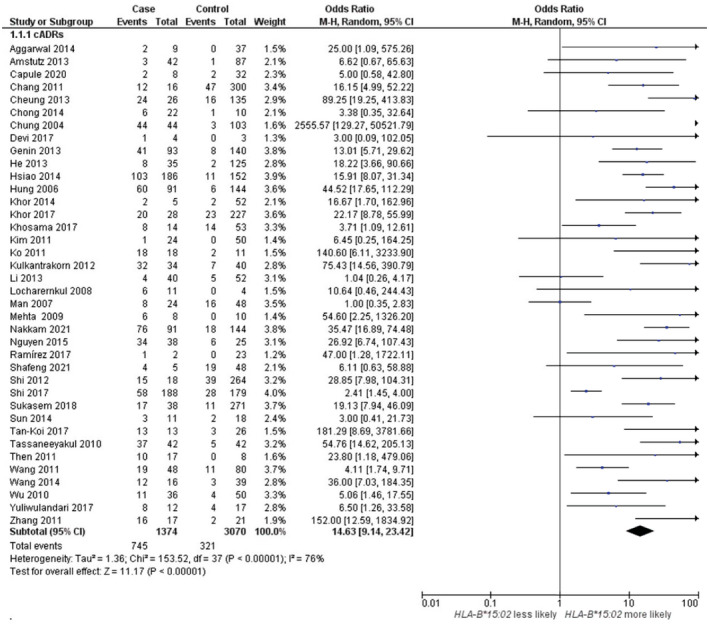
Forest plot for the association of HLA‐B*15:02 with carbamazepine‐induced cutaneous adverse drug reactions. cADRs, cutaneous adverse drug reactions; HLA, human leukocyte antigen; M‐H, Mantel–Haenssel method.
Subgroup analysis further revealed that significantly increased risk of cADRs was driven from SJS/TEN (OR 26.01; 95% CI 15.88–42.60; p < 0.00001) but not from MPE (OR 1.56; 95% CI 0.95–2.55; p = 0.08) or DRESS (OR 1.97; 95% CI 0.36–10.87; p = 0.43) (Figure 3).
FIGURE 3.
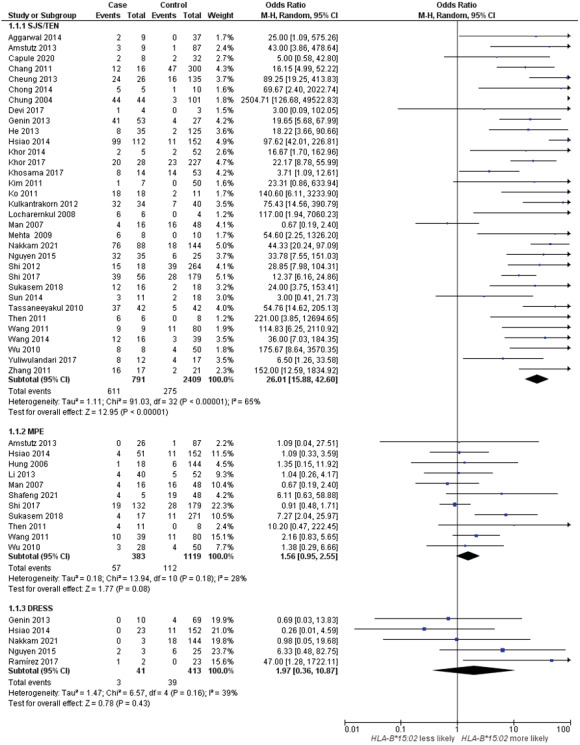
Forest plot for the association of HLA‐B*15:02 with carbamazepine‐induced different forms of cutaneous adverse drug reactions. cADRs, cutaneous adverse drug reactions; DRESS, drug reaction with eosinophilia and systemic symptoms; HLA, human leukocyte antigen; M‐H, Mantel–Haenssel method; MPE, maculopapular exanthema; SJS, Stevens−Johnson syndrome; TEN, toxic epidermal necrolysis.
Case‐patients carrying the HLA‐B*15:02 allele were associated with a significantly increased risk of cADRs compared to controls in both Asian (OR 14.84; 95% CI 8.95–24.61; p < 0.00001) and Caucasian patients (OR 11.65; 95% CI 1.68–80.70; p = 0.01), although the risk was slightly higher in patients of Asian ethnicities (Figure 4).
FIGURE 4.

Forest plot for the association of HLA‐B*15:02 with carbamazepine‐induced cutaneous adverse drug reactions in different ethnicities. cADRs, cutaneous adverse drug reactions; HLA, human leukocyte antigen; M‐H, Mantel–Haenssel method.
Association of HLA‐B*15:21, HLA‐B*38:02, or HLA‐B*40:01 with CBZ‐induced cADRs
It was found that only the HLA‐B*15:21 allele was associated with significantly increased risk of cADRs (OR 5.37; 95% CI 2.02–14.28; p = 0.0008) but the other alleles were not found to have any significant associations (for HLA‐B*38:02: OR 0.92; 95% CI 0.46–1.83; p = 0.81; for HLA‐B*40:01: OR 0.66; 95% CI 0.40–1.08; p = 0.10) (Figure 5).
FIGURE 5.

Forest plot for the association of HLA‐B*15:21, HLA‐B*38:02 or HLA‐B*40:01 with carbamazepine‐induced cutaneous adverse drug reactions. cADRs, cutaneous adverse drug reactions; HLA, human leukocyte antigen; M‐H, Mantel–Haenssel method.
Association of HLA‐B*46:01 or HLA‐B*58:01 with CBZ‐induced cADRs
It was also found that neither HLA‐B*46:01 (OR 0.84; 95% CI 0.60–1.17; p = 0.30) nor HLA‐B*58:01 (OR 0.70; 95% CI 0.29–1.69; p = 0.43) allele was associated with significantly increased risk of cADRs as shown in Figure S1.
Association of HLA‐B*15:11, HLA‐A*24:02, or HLA‐A*31:01 with CBZ‐induced cADRs
It was further found that both the HLA‐B*15:11 and HLA‐A*31:01 alleles were associated with significantly increased risk of cADRs (for HLA‐B*15:11: OR 6.08; 95% CI 2.28–16.23; p = 0.0003; for HLA‐A*31:01: OR 5.92; 95% CI 4.35–8.05; p < 0.00001) but the HLA‐A*24:02 allele was not found to have any significant association (OR 1.04; 95% CI 0.82–1.31; p = 0.77) (Figure 6).
FIGURE 6.

Forest plot for the association of HLA‐B*15:11, HLA‐A*24:02, or HLA‐A*31:01 with carbamazepine‐induced cutaneous adverse drug reactions. cADRs, cutaneous adverse drug reactions; HLA, human leukocyte antigen; M‐H, Mantel–Haenssel method.
Multivariate analysis between HLA‐B*15:02 and cADRs adjusted for gender and age
In the meta‐regression analysis, the gender had a statistically significant impact on the OR of HLA‐B 15:02, but there was no significant effect of age on the estimated OR of HLA‐B 15:02 (Figure S1). The studies that had a higher percentage of males in their sample had lower OR of HLA‐B 15:02 than other studies (p = 0.0304). When the variable age was incorporated into model 2, the performance of fitting was not better than model 1 (likelihood ratio test had p value >0.05). However, there was a trend showing the potential impact of variable age in model 2, whose F statistics resulted in a p value = 0.0605. The impact of gender was once again confirmed in model 2 by the permutation test (F and CE gender had p values equal to 0.0605 and 0.0320, respectively) (Table S1).
Heterogeneity, sensitivity, and publication bias
Since various HLA genetic models were used to assess the aggregated risk of cADRs, different degrees of heterogeneity (very low to high) were found in this analysis. However, it is assumed that in the case of a high level of heterogeneity, many confounding factors such as age, race, dose of CBZ, comorbidity, co‐medications, molecular technologies applied to detect HLA variants, etc., might contribute to the high degree of heterogeneity. From the sensitivity analysis it was found that no single study affected either the pooled risk or level of heterogeneity. There was no publication bias as determined from the funnel plot (Figure S1).
DISCUSSION
Of nine HLA alleles, as investigated in this analysis, the results indicate that four HLA variants (HLA‐B*15:02, HLA‐B*15:11, HLA‐B*15:21, and HLA‐A*31:01) are strongly associated with increased risk of cADRs in patients taking CBZ. The highest strong association (~15‐fold) is found for the patients carrying the HLA‐B*15:02 allele with CBZ‐induced cADRs. These results were found predominantly from Asian studies (35 studies) compared to Caucasian studies (2 studies), indicating that Asian patients might be at greater risk than Caucasian patients. The results of the current analysis also firmly established that HLA‐B*15:02 is a phenotypic biomarker since it was strongly associated with increased risk of CBZ‐induced SJS or TEN (~26‐fold) but not the other adverse events such as MPE or DRESS. These findings are consistent with previous meta‐analyses and suggestions also. 1 , 11 , 12 , 13 , 17 Our findings may be considered superior to previous analyses in terms of power and robustness since the aggregated risk was measured from a relatively large sample size (total studies = 38, consisting of 1346 cases and 3138 controls).
In addition, the strong associations of HLA‐B*15:11 and HLA‐A*31:01 with CBZ‐induced cADRs as found in the present analysis are also in line with the findings of previous meta‐analyses, though our findings were aggregated from a larger sample size. 5 , 11 , 13 , 16 Although no meta‐analysis was found in the literature, the findings of our study indicate a strong relationship between the HLA‐B*15:21 allele and CBZ‐induced cADRs and may be considered a novel insight. However, it is important to note here that the prevalence of this allele is very low in major populations (~0.0003% in European Caucasians, ~0.01% in Chinese, ~0.03% in South Asians), and is not reported in African and East Asian populations, which may restrict assessment of such associations in these populations.
Previous meta‐analyses found HLA‐A*24:02, HLA‐B*40:01, HLA‐B*46:01, and HLA‐B*58:01 as strong protective biomarkers; however, the present analysis found a trend towards reduction of risk but did not reach statistical significance, suggesting conducting more research is needed to establish such associations. A meta‐analysis conducted by Wang et al. 5 found a strong protective association between HLA‐B*40:01, HLA‐B*46:01, or HLA‐B*58:01 with CBZ‐induced SJS/TEN in Asian populations. Another meta‐analysis conducted by Grover et al. 11 only found a significant protective association between HLA‐B*40:01 allele carriers and CBZ‐induced cADRs in Asian patients. Both of these analyses were conducted on a relatively small sample size restricted to Asian populations. In contrast, our analyses included a relatively large sample size compared to previous analyses and was not restricted to any ethnicities. Although there was a trend towards a reduction in the risk of cADRs for the patients who carried HLA‐B*40:01, HLA‐B*46:01, or HLA‐B*58:01 allele as revealed in the present analysis, future studies are warranted to confirm these findings.
The cADRs (e.g., SJS, TEN, MPE, or DRESS) could be minimized or eradicated considerably if HLA‐specific genetic information is known before or during the prescription of CBZ. Since our results robustly established strong associations of HLA‐B*15:02, HLA‐B*15:11, HLA‐B*15:21, and HLA‐A*31:01 with CBZ‐induced cADRs, clinicians and policymakers should consider our findings to generate national and international guidelines for the implementation of precision medicine of CBZ therapy by proposing a panel of HLA genetic testing as supported by this study. Although some countries, including Thailand, have national guidelines for screening HLA‐B*15:02 before CBZ therapy, other risk alleles such as HLA‐B*15:11, HLA‐B*15:21, and HLA‐A*31:01 are usually not uniformly covered in the guidelines. 1 The findings of the present analysis reinforce the consideration of a panel of HLA genetic variants (i.e., HLA‐B*15:02, HLA‐B*15:11, HLA‐B*15:21, and HLA‐A*31:01) for the reduction of CBZ‐induced cADRs substantially and should revise the national and international guidelines accordingly.
Besides, the impact of gender on the risk of severe cutaneous adverse drug reactions (SCARs) was also reported by other authors 25 , 26 , 27 and is consistent with the findings of the present analysis. Hsu et al. 28 found a statistically significant sensitivity to SCARs in females compared to males in the American population. Kannenberg et al. 29 observed the dominance of females over males in SCARs patients in the South African population. The same result was also found in Japanese patients. 30 The impact of gender can be hypothetically explained by the hormonal or genetic differences between males and females. 26 However, further studies are needed in order to clearly understand the explanatory biological processes.
The present analysis observed a trend towards the impact of variable age on SCARs. Many authors also confirmed the role of age on the development of SCARs. 31 , 32 , 33 Even so, most researchers believe that the effect of age was actually just a consequence of the fact that older patients tend to have more drugs and chronic diseases than younger ones. Therefore, older patients might have a higher possibility of developing SCARs.
CBZ is generally administered as long‐term therapy for the clinical conditions for which it is indicated, therefore safety requirements should be of high priority. Since certain HLA variants cause severe adverse events, as evidenced in this analysis, mandating considering either preemptive or reactive genetic screening of selective HLA alleles (HLA‐B*15:02, HLA‐B*15:11, HLA‐B*15:21, and HLA‐A*31:01) among populations at high risk, especially those from Asian countries, is recommended to optimize the safety of CBZ. Since the prevalence of HLA‐B*15:02 is comparatively high in Asian populations, particularly in Southeast populations compared to Caucasians as described elsewhere 1 and is also supportive as found in this analysis (~25% vs. ~3%), the pharmacogenomic testing of HLA‐B*15:02 would be cost‐effective in these specific populations before prescribing CBZ, which is in line with recommendations of a recent cost‐effectiveness analysis. 34 Although the HLA‐A*31:01 allele is considered a universal biomarker, its prevalence is slightly higher in European populations compared to Asian populations, as reported elsewhere. 1 Other strongly associated alleles (e.g., HLA‐B*15:11 and HLA‐B*15:21) have a comparatively low prevalence in Asian populations (~2% for HLA‐B*15:11 and ~3% for HLA‐B*15:21) as found in this analysis. These alleles were not reported in European populations, which is also supportive from a recent comprehensive review of HLA. 1
Some studies suggest that the pharmacogenomic testing of HLA‐B*15:02 would be more cost‐effective if the prevalence of this allele was more than 5% or at least greater than 2.5%. 1 , 35 , 36 This suggestion might be applicable to other HLA risk alleles (e.g., HLA‐B*15:11 or HLA‐B*15:21), although this has not yet been quantified. Despite the cost‐effectiveness issue of pharmacogenetic testing, there is a strong need to consider some other factors, such as ethical, legal, and social issues (ELSI), pharmacogenomics education, and so on, before implementation of such pharmacogenetic screening in real clinical settings. 1 , 12 Many countries, including Thailand, are advancing precision medicine initiatives, especially in Asian regions. Thailand has become the focal point for innovating new technologies to accelerate the translation of pharmacogenomics into routine clinical practice. 37 The innovation of the PPM card, which is a pharmacogenomics identity card from the Division of Pharmacogenomics and Personalized Medicine (PPM) of Mahidol University in Thailand led by Dr. Chonlaphat Sukasem as described elsewhere 1 , 38 may expedite the implementation of precision medicine to the bedside and may be considered in other parts of the world for advancing precision medicine initiatives.
There are some limitations of this analysis. Although the present analysis focused on and addressed nine HLA variants with CBZ‐induced cADRs, other potential HLA risk alleles (e.g., HLA‐B*57:01, HLA‐Cw*08:01, and HLA‐DRB1*12:02) were not included in this analysis which may increase the risk of developing cADRs for patients taking CBZ. 1 , 39 Further, the clinical efficacy and safety of CBZ may also be affected by the genetic polymorphisms of CYP3A4/5, CYP2C8, ABCB1, etc., which were not considered in this analysis. 40 , 41
CONCLUSIONS
The results of this study show a strong association between HLA‐B*15:02, HLA‐B*15:11, HLA‐B*15:21, or HLA‐A*31:01 allele with CBZ‐induced cADRs. The most substantial, robust evidence has been found between HLA‐B*15:02 allele and CBZ‐induced SJS/TEN. Pharmacogenetic testing of particular HLA alleles before initiation of CBZ therapy may be beneficial to patients and may help to eradicate cADRs substantially. Such HLA genetic status information may assist clinicians in determining the optimal therapy of CBZ.
CONFLICT OF INTEREST
The authors declared no competing interests for this work.
ETHICAL APPROVAL
Ethical approval was not required since the study comprised a meta‐analysis of published results.
AUTHOR CONTRIBUTIONS
M.B. wrote the manuscript. C.S. and M.B. designed the research. C.S., M.B., M.E., and J.S. performed the research. M.B., M.E., and J.S. analyzed the data.
Supporting information
Figure S1
Figure S2
Figure S3
Table S1
Table S2
ACKNOWLEDGMENTS
The authors thank the staff of the Division of Pharmacogenomic and Personalized Medicine of Ramathibodi Hospital.
Biswas M, Ershadian M, Shobana J, et al. Associations of HLA genetic variants with carbamazepine‐induced cutaneous adverse drug reactions: An updated meta‐analysis. Clin Transl Sci. 2022;15:1887‐1905. doi: 10.1111/cts.13291
Funding information
This study was supported by grants from: (1) Mahidol University International Postdoctoral Fellowship, Mahidol University; (2) Faculty of Medicine, Ramathibodi Hospital, Mahidol University; (3) the Health System Research Institute under Genomics Thailand Strategic Fund; and (4) The International Research Network‐The Thailand Research Fund (IRN60W003).
References
REFERENCES
- 1. Kloypan C, Koomdee N, Satapornpong P, Tempark T, Biswas M, Sukasem C. A comprehensive review of HLA and severe cutaneous adverse drug reactions: implication for clinical pharmacogenomics and precision medicine. Pharmaceuticals. 2021;14(11):1077. doi: 10.3390/ph14111077 [DOI] [PMC free article] [PubMed] [Google Scholar]
- 2. Duong TA, Valeyrie‐Allanore L, Wolkenstein P, Chosidow O. Severe cutaneous adverse reactions to drugs. Lancet. 2017;390(10106):1996‐2011. doi: 10.1016/S0140-6736(16)30378-6 [DOI] [PubMed] [Google Scholar]
- 3. Roujeau JC, Stern RS. Severe adverse cutaneous reactions to drugs. N Engl J Med. 1994;331(19):1272‐1285. doi: 10.1056/NEJM199411103311906 [DOI] [PubMed] [Google Scholar]
- 4. Jantararoungtong T, Tempark T, Koomdee N, Medhasi S, Sukasem C. Genotyping HLA alleles to predict the development of severe cutaneous adverse drug reactions (SCARs): state‐of‐the‐art. Expert Opin Drug Metab Toxicol. 2021;17(9):1049‐1064. doi: 10.1080/17425255.2021.1946514 [DOI] [PubMed] [Google Scholar]
- 5. Wang Q, Sun S, Xie M, Zhao K, Li X, Zhao Z. Association between the HLA‐B alleles and carbamazepine‐induced SJS/TEN: a meta‐analysis. Epilepsy Res. 2017;135:19‐28. doi: 10.1016/j.eplepsyres.2017.05.015 [DOI] [PubMed] [Google Scholar]
- 6. Hasegawa A, Abe R. Recent advances in managing and understanding Stevens‐Johnson syndrome and toxic epidermal necrolysis. F1000Research. 2020;9:612. doi: 10.12688/f1000research.24748.1 [DOI] [PMC free article] [PubMed] [Google Scholar]
- 7. Shafeng N, Han D‐F, Ma Y‐F, Abudusalamu R, Ayitimuhan B. Association between the HLA‐B*1502 gene and mild maculopapular exanthema induced by antiepileptic drugs in Northwest China. BMC Neurol. 2021;21(1):340. doi: 10.1186/s12883-021-02363-w [DOI] [PMC free article] [PubMed] [Google Scholar]
- 8. Then S‐M, Rani ZZM, Raymond AA, Ratnaningrum S, Jamal R. Frequency of the HLA‐B*1502 allele contributing to carbamazepine‐induced hypersensitivity reactions in a cohort of Malaysian epilepsy patients. Asian Pac J Allergy Immunol. 2011;29(3):290‐293. [PubMed] [Google Scholar]
- 9. Van Nguyen D, Chu HC, Van Nguyen D, et al. HLA‐B*1502 and carbamazepine‐induced severe cutaneous adverse drug reactions in Vietnamese. Asia Pac Allergy. 2015;5(2):68‐77. doi: 10.5415/apallergy.2015.5.2.68 [DOI] [PMC free article] [PubMed] [Google Scholar]
- 10. Ramírez E, Bellón T, Tong HY, et al. Significant HLA class I type associations with aromatic antiepileptic drug (AED)‐induced SJS/TEN are different from those found for the same AED‐induced DRESS in the Spanish population. Pharmacol Res. 2017;115:168‐178. doi: 10.1016/j.phrs.2016.11.027 [DOI] [PubMed] [Google Scholar]
- 11. Grover S, Kukreti R. HLA alleles and hypersensitivity to carbamazepine: an updated systematic review with meta‐analysis. Pharmacogenet Genomics. 2014;24(2):94‐112. doi: 10.1097/FPC.0000000000000021 [DOI] [PubMed] [Google Scholar]
- 12. Tangamornsuksan W, Chaiyakunapruk N, Somkrua R, Lohitnavy M, Tassaneeyakul W. Relationship between the HLA‐B*1502 allele and carbamazepine‐induced Stevens‐Johnson syndrome and toxic epidermal necrolysis: a systematic review and meta‐analysis. JAMA Dermatol. 2013;149(9):1025‐1032. doi: 10.1001/jamadermatol.2013.4114 [DOI] [PubMed] [Google Scholar]
- 13. Yip VL, Marson AG, Jorgensen AL, Pirmohamed M, Alfirevic A. HLA genotype and carbamazepine‐induced cutaneous adverse drug reactions: a systematic review. Clin Pharmacol Ther. 2012;92(6):757‐765. doi: 10.1038/clpt.2012.189 [DOI] [PubMed] [Google Scholar]
- 14. Li L‐J, Hu F‐Y, Wu X‐T, An D‐M, Yan B, Zhou D. Predictive markers for carbamazepine and lamotrigine‐induced maculopapular exanthema in Han Chinese. Epilepsy Res. 2013;106(1–2):296‐300. doi: 10.1016/j.eplepsyres.2013.05.004 [DOI] [PubMed] [Google Scholar]
- 15. Man CBL, Kwan P, Baum L, et al. Association between HLA‐B*1502 allele and antiepileptic drug‐induced cutaneous reactions in Han Chinese. Epilepsia. 2007;48(5):1015‐1018. doi: 10.1111/j.1528-1167.2007.01022.x [DOI] [PubMed] [Google Scholar]
- 16. Genin E, Chen D‐P, Hung S‐I, et al. HLA‐A*31:01 and different types of carbamazepine‐induced severe cutaneous adverse reactions: an international study and meta‐analysis. Pharmacogenomics J. 2014;14(3):281‐288. doi: 10.1038/tpj.2013.40 [DOI] [PubMed] [Google Scholar]
- 17. Chouchi M, Kaabachi W, Tizaoui K, Daghfous R, Aidli SE, Hila L. The HLA‐B*15:02 polymorphism and Tegretol®‐induced serious cutaneous reactions in epilepsy: an updated systematic review and meta‐analysis. Rev Neurol. 2018;174(5):278‐291. doi: 10.1016/j.neurol.2017.11.006 [DOI] [PubMed] [Google Scholar]
- 18. Capule F, Tragulpiankit P, Mahasirimongkol S, et al. Association of carbamazepine‐induced Stevens‐Johnson syndrome/toxic epidermal necrolysis with the HLA‐B75 serotype or HLA‐B*15:21 allele in Filipino patients. Pharmacogenomics J. 2020;20(3):533‐541. doi: 10.1038/s41397-019-0143-8 [DOI] [PubMed] [Google Scholar]
- 19. Shi Y‐W, Wang J, Min F‐L, et al. HLA risk alleles in aromatic antiepileptic drug‐induced maculopapular exanthema. Front Pharmacol. 2021;12:671572. doi: 10.3389/fphar.2021.671572 [DOI] [PMC free article] [PubMed] [Google Scholar]
- 20. Higgins JPT, Thomas J, Chandler J, Cumpston M, Li T, WV PMJ. Cochrane Handbook for Systematic Reviews of Interventions Version 6.0 (updated July 2019). Cochrane; 2019. [Google Scholar]
- 21. Ouzzani M, Hammady H, Fedorowicz Z, Elmagarmid A. Rayyan – a web and mobile app for systematic reviews. Syst Rev. 2016;5(1):210. doi: 10.1186/s13643-016-0384-4 [DOI] [PMC free article] [PubMed] [Google Scholar]
- 22. Wells G, Shea B, O'Connell D, Peterson J. The Newcastle‐Ottawa Scale (NOS) for Assessing the Quality of Nonrandomised Studies in Meta‐Analyses. Ottawa Hospital Research Institute; 2000. http://www.ohri.ca/programs/clinical_epidemiology/oxford.asp [Google Scholar]
- 23. Higgins JPT, Thompson SG, Deeks JJ, Altman DG. Measuring inconsistency in meta‐analyses. Br Med J. 2003;327(7414):557‐560. doi: 10.1136/bmj.327.7414.557 [DOI] [PMC free article] [PubMed] [Google Scholar]
- 24. Sutton AJ, Duval SJ, Tweedie RL, Abrams KR, Jones DR. Empirical assessment of effect of publication bias on meta‐analyses. Br Med J. 2000;320(7249):1574‐1577. doi: 10.1136/bmj.320.7249.1574 [DOI] [PMC free article] [PubMed] [Google Scholar]
- 25. Irungu K, Nyamu D, Opanga S. Characterization of Stevens‐Johnson syndrome and toxic epidermal necrolysis among patients admitted to Kenyatta National Hospital: a retrospective cross‐sectional study. Drugs – Real World Outcomes. 2017;4(2):79‐85. doi: 10.1007/s40801-017-0105-x [DOI] [PMC free article] [PubMed] [Google Scholar]
- 26. Magone MT, Maiberger M, Clayton J, Pasieka H. Vulvovaginal and ocular involvement and treatment in female patients with Stevens‐Johnson syndrome and toxic epidermal necrolysis: a review. Int J Women's Dermatol. 2021;7(5Part A):520‐528. doi: 10.1016/j.ijwd.2021.08.012 [DOI] [PMC free article] [PubMed] [Google Scholar]
- 27. Chan HL, Stern RS, Arndt KA, et al. The incidence of erythema multiforme, Stevens‐Johnson syndrome, and toxic epidermal necrolysis. A population‐based study with particular reference to reactions caused by drugs among outpatients. Arch Dermatol. 1990;126(1):43‐47. [PubMed] [Google Scholar]
- 28. Hsu DY, Brieva J, Silverberg NB, Silverberg JI. Morbidity and mortality of Stevens‐Johnson syndrome and toxic epidermal necrolysis in United States adults. J Invest Dermatol. 2016;136(7):1387‐1397. doi: 10.1016/j.jid.2016.03.023 [DOI] [PubMed] [Google Scholar]
- 29. Kannenberg SMH, Jordaan HF, Koegelenberg CFN, Von Groote‐Bidlingmaier F, Visser WI. Toxic epidermal necrolysis and Stevens‐Johnson syndrome in South Africa: a 3‐year prospective study. QJM. 2012;105(9):839‐846. doi: 10.1093/qjmed/hcs078 [DOI] [PubMed] [Google Scholar]
- 30. Yamane Y, Aihara M, Ikezawa Z. Analysis of Stevens‐Johnson syndrome and toxic epidermal necrolysis in Japan from 2000 to 2006. Allergol Int. 2007;56(4):419‐425. doi: 10.2332/allergolint.O-07-483 [DOI] [PubMed] [Google Scholar]
- 31. Yang M‐S, Lee JY, Kim J, et al. Incidence of Stevens‐Johnson syndrome and toxic epidermal necrolysis: a Nationwide population‐based study using National Health Insurance Database in Korea. PLoS One. 2016;11(11):e0165933. doi: 10.1371/journal.pone.0165933 [DOI] [PMC free article] [PubMed] [Google Scholar]
- 32. Abtahi‐Naeini B, Dehghan M‐S, Paknazar F, et al. Clinical and epidemiological features of patients with drug‐induced Stevens‐Johnson syndrome and toxic epidermal necrolysis in Iran: different points of children from adults. Int J Pediatr. 2022;8163588. doi: 10.1155/2022/8163588 [DOI] [PMC free article] [PubMed] [Google Scholar]
- 33. Sunaga Y, Kurosawa M, Ochiai H, et al. The nationwide epidemiological survey of Stevens‐Johnson syndrome and toxic epidermal necrolysis in Japan, 2016–2018. J Dermatol Sci. 2020;100(3):175‐182. doi: 10.1016/j.jdermsci.2020.09.009 [DOI] [PubMed] [Google Scholar]
- 34. Zhou Y, Krebs K, Milani L, Lauschke VM. Global frequencies of clinically important HLA alleles and their implications for the cost‐effectiveness of preemptive pharmacogenetic testing. Clin Pharmacol Ther. 2021;109(1):160‐174. doi: 10.1002/cpt.1944 [DOI] [PubMed] [Google Scholar]
- 35. Van ND, Vidal C, Chu HC, van Nunen S. Developing pharmacogenetic screening methods for an emergent country: Vietnam. World Allergy Organ J. 2019;12(5):100037. doi: 10.1016/j.waojou.2019.100037 [DOI] [PMC free article] [PubMed] [Google Scholar]
- 36. Dong D, Sung C, Finkelstein EA. Cost‐effectiveness of HLA‐B*1502 genotyping in adult patients with newly diagnosed epilepsy in Singapore. Neurology. 2012;79(12):1259‐1267. doi: 10.1212/WNL.0b013e31826aac73 [DOI] [PubMed] [Google Scholar]
- 37. Sukasem C, Jantararoungtong T, Koomdee N. Pharmacogenomics research and its clinical implementation in Thailand: lessons learned from the resource‐limited settings. Drug Metab Pharmacokinet. 2021;39:100399. doi: 10.1016/j.dmpk.2021.100399 [DOI] [PubMed] [Google Scholar]
- 38. Sukasem C, Chantratita W. A success story in pharmacogenomics: genetic ID card for SJS/TEN. Pharmacogenomics. 2016;17(5):455‐458. doi: 10.2217/pgs-2015-0009 [DOI] [PubMed] [Google Scholar]
- 39. Mockenhaupt M, Wang C‐W, Hung S‐I, et al. HLA‐B*57:01 confers genetic susceptibility to carbamazepine‐induced SJS/TEN in Europeans. Allergy. 2019;74(11):2227‐2230. doi: 10.1111/all.13821 [DOI] [PubMed] [Google Scholar]
- 40. Iannaccone T, Sellitto C, Manzo V, et al. Pharmacogenetics of carbamazepine and valproate: focus on polymorphisms of drug metabolizing enzymes and transporters. Pharmaceuticals. 2021;14(3):204. doi: 10.3390/ph14030204 [DOI] [PMC free article] [PubMed] [Google Scholar]
- 41. He X‐J, Jian L‐Y, He X‐L, et al. Association of ABCB1, CYP3A4, EPHX1, FAS, SCN1A, MICA, and BAG6 polymorphisms with the risk of carbamazepine‐induced Stevens‐Johnson syndrome/toxic epidermal necrolysis in Chinese Han patients with epilepsy. Epilepsia. 2014;55(8):1301‐1306. doi: 10.1111/epi.12655 [DOI] [PubMed] [Google Scholar]
REFERENCES OF STUDIES INCLUDED FOR META‐ANALYSIS
- 42. Cheung Y‐K, Cheng S‐H, Chan EJM, Lo SV, Ng MHL, Kwan P. HLA‐B alleles associated with severe cutaneous reactions to antiepileptic drugs in Han Chinese. Epilepsia. 2013;54(7):1307‐1314. doi: 10.1111/epi.12217 [DOI] [PubMed] [Google Scholar]
- 43. Chung W‐H, Hung S‐I, Hong H‐S, et al. Medical genetics: a marker for Stevens‐Johnson syndrome. Nature. 2004;428(6982):486. doi: 10.1038/428486a [DOI] [PubMed] [Google Scholar]
- 44. Hsiao Y‐H, Hui RC‐Y, Wu T, et al. Genotype‐phenotype association between HLA and carbamazepine‐induced hypersensitivity reactions: strength and clinical correlations. J Dermatol Sci. 2014;73(2):101‐109. doi: 10.1016/j.jdermsci.2013.10.003 [DOI] [PubMed] [Google Scholar]
- 45. He X‐J, Jian L‐Y, He X‐L, et al. Association between the HLA‐B*15:02 allele and carbamazepine‐induced Stevens‐Johnson syndrome/toxic epidermal necrolysis in Han individuals of northeastern China. Pharmacol Rep. 2013;65(5):1256‐1262. doi: 10.1016/s1734-1140(13)71483-x [DOI] [PubMed] [Google Scholar]
- 46. Li L‐J, Hu F‐Y, Wu X‐T, An D‐M, Yan B, Zhou D. Predictive markers for carbamazepine and lamotrigine‐induced maculopapular exanthema in Han Chinese. Epilepsy Res. 2013;106(1–2):296‐300. doi: 10.1016/j.eplepsyres.2013.05.004 [DOI] [PubMed] [Google Scholar]
- 47. Man CBL, Kwan P, Baum L, et al. Association between HLA‐B*1502 allele and antiepileptic drug‐induced cutaneous reactions in Han Chinese. Epilepsia. 2007;48(5):1015‐1018. doi: 10.1111/j.1528-1167.2007.01022.x [DOI] [PubMed] [Google Scholar]
- 48. Shafeng N, Han D‐F, Ma Y‐F, Abudusalamu R, Ayitimuhan B. Association between the HLA‐B*1502 gene and mild maculopapular exanthema induced by antiepileptic drugs in Northwest China. BMC Neurol. 2021;21(1):340. doi: 10.1186/s12883-021-02363-w [DOI] [PMC free article] [PubMed] [Google Scholar]
- 49. Shi Y‐W, Min F‐L, Qin B, et al. Association between HLA and Stevens‐Johnson syndrome induced by carbamazepine in Southern Han Chinese: genetic markers besides B*1502? Basic Clin Pharmacol Toxicol 2012;111(1):58–64. doi: 10.1111/j.1742-7843.2012.00868.x [DOI] [PubMed] [Google Scholar]
- 50. Shi Y‐W, Min F‐L, Zhou D, et al. HLA‐A*24:02 as a common risk factor for antiepileptic drug‐induced cutaneous adverse reactions. Neurology. 2017;88(23):2183‐2191. doi: 10.1212/WNL.0000000000004008 [DOI] [PMC free article] [PubMed] [Google Scholar]
- 51. Shi Y‐W, Wang J, Min F‐L, et al. HLA risk alleles in aromatic antiepileptic drug‐induced maculopapular exanthema. Front Pharmacol. 2021;12:671572. doi: 10.3389/fphar.2021.671572 [DOI] [PMC free article] [PubMed] [Google Scholar]
- 52. Sun D, Yu C‐H, Liu Z‐S, et al. Association of HLA‐B*1502 and *1511 allele with antiepileptic drug‐induced Stevens‐Johnson syndrome in central China. J Huazhong Univ Sci Technolog Med Sci 2014;34(1):146–150. doi: 10.1007/s11596-014-1247-7 [DOI] [PubMed] [Google Scholar]
- 53. Wang W, Hu F‐Y, Wu X‐T, An D‐M, Yan B, Zhou D. Genetic predictors of Stevens‐Johnson syndrome and toxic epidermal necrolysis induced by aromatic antiepileptic drugs among the Chinese Han population. Epilepsy Behav. 2014;37:16‐19. doi: 10.1016/j.yebeh.2014.05.025 [DOI] [PubMed] [Google Scholar]
- 54. Wang Q, Zhou J, Zhou L, et al. Association between HLA‐B*1502 allele and carbamazepine‐induced severe cutaneous adverse reactions in Han people of southern China mainland. Seizure. 2011;20(6):446‐448. doi: 10.1016/j.seizure.2011.02.003 [DOI] [PubMed] [Google Scholar]
- 55. Wu XT, Hu FY, An DM, et al. Association between carbamazepine‐induced cutaneous adverse drug reactions and the HLA‐B*1502 allele among patients in central China. Epilepsy Behav. 2010;19(3):405‐408. doi: 10.1016/j.yebeh.2010.08.007 [DOI] [PubMed] [Google Scholar]
- 56. Zhang Y, Wang J, Zhao L‐M, et al. Strong association between HLA‐B*1502 and carbamazepine‐induced Stevens‐Johnson syndrome and toxic epidermal necrolysis in mainland Han Chinese patients. Eur J Clin Pharmacol. 2011;67(9):885‐887. doi: 10.1007/s00228-011-1009-4 [DOI] [PubMed] [Google Scholar]
- 57. Kulkantrakorn K, Tassaneeyakul W, Tiamkao S, et al. HLA‐B*1502 strongly predicts carbamazepine‐induced Stevens‐Johnson syndrome and toxic epidermal necrolysis in Thai patients with neuropathic pain. Pain Pract. 2012;12(3):202‐208. doi: 10.1111/j.1533-2500.2011.00479.x [DOI] [PubMed] [Google Scholar]
- 58. Locharernkul C, Loplumlert J, Limotai C, et al. Carbamazepine and phenytoin induced Stevens‐Johnson syndrome is associated with HLA‐B*1502 allele in Thai population. Epilepsia. 2008;49(12):2087‐2091. doi: 10.1111/j.1528-1167.2008.01719.x [DOI] [PubMed] [Google Scholar]
- 59. Nakkam N, Konyoung P, Amornpinyo W, et al. Genetic variants associated with severe cutaneous adverse drug reactions induced by carbamazepine. Br J Clin Pharmacol. 2021;88(2):773‐786. doi: 10.1111/bcp.15022 [DOI] [PubMed] [Google Scholar]
- 60. Sukasem C, Chaichan C, Nakkrut T, et al. Association between HLA‐B alleles and carbamazepine‐induced maculopapular exanthema and severe cutaneous reactions in Thai patients. J Immunol Res. 2018;2018:2780272. doi: 10.1155/2018/2780272 [DOI] [PMC free article] [PubMed] [Google Scholar]
- 61. Tassaneeyakul W, Tiamkao S, Jantararoungtong T, et al. Association between HLA‐B*1502 and carbamazepine‐induced severe cutaneous adverse drug reactions in a Thai population. Epilepsia. 2010;51(5):926‐930. doi: 10.1111/j.1528-1167.2010.02533.x [DOI] [PubMed] [Google Scholar]
- 62. Aggarwal R, Sharma M, Modi M, Garg VK, Salaria M. HLA‐B* 1502 is associated with carbamazepine induced Stevens‐Johnson syndrome in North Indian population. Hum Immunol. 2014;75(11):1120‐1122. doi: 10.1016/j.humimm.2014.09.022 [DOI] [PubMed] [Google Scholar]
- 63. Devi K. The association of HLA B*15:02 allele and Stevens‐Johnson syndrome/toxic epidermal necrolysis induced by aromatic anticonvulsant drugs in a South Indian population. Int J Dermatol. 2018;57(1):70‐73. doi: 10.1111/ijd.13812 [DOI] [PubMed] [Google Scholar]
- 64. Ihtisham K, Ramanujam B, Srivastava S, et al. Association of cutaneous adverse drug reactions due to antiepileptic drugs with HLA alleles in a North Indian population. Seizure. 2019;66:99‐103. doi: 10.1016/j.seizure.2019.02.011 [DOI] [PubMed] [Google Scholar]
- 65. Khor AH‐P, Lim K‐S, Tan C‐T, Wong S‐M, Ng C‐C. HLA‐B*15:02 association with carbamazepine‐induced Stevens‐Johnson syndrome and toxic epidermal necrolysis in an Indian population: a pooled‐data analysis and meta‐analysis. Epilepsia. 2014;55(11):e120‐e124. doi: 10.1111/epi.12802 [DOI] [PubMed] [Google Scholar]
- 66. Mehta TY, Prajapati LM, Mittal B, et al. Association of HLA‐B*1502 allele and carbamazepine‐induced Stevens‐Johnson syndrome among Indians. Indian J Dermatol Venereol Leprol. 2009;75(6):579‐582. doi: 10.4103/0378-6323.57718 [DOI] [PubMed] [Google Scholar]
- 67. Chang C‐C, Too C‐L, Murad S, Hussein SH. Association of HLA‐B*1502 allele with carbamazepine‐induced toxic epidermal necrolysis and Stevens‐Johnson syndrome in the multi‐ethnic Malaysian population. Int J Dermatol. 2011;50(2):221‐224. doi: 10.1111/j.1365-4632.2010.04745.x [DOI] [PubMed] [Google Scholar]
- 68. Khor AH‐P, Lim K‐S, Tan C‐T, et al. HLA‐A*31: 01 and HLA‐B*15:02 association with Stevens‐Johnson syndrome and toxic epidermal necrolysis to carbamazepine in a multi‐ethnic Malaysian population. Pharmacogenet Genomics. 2017;27(7):275‐278. doi: 10.1097/FPC.0000000000000287 [DOI] [PubMed] [Google Scholar]
- 69. Then S‐M, Rani ZZM, Raymond AA, Ratnaningrum S, Jamal R. Frequency of the HLA‐B*1502 allele contributing to carbamazepine‐induced hypersensitivity reactions in a cohort of Malaysian epilepsy patients. Asian Pac J Allergy Immunol. 2011;29(3):290‐293. [PubMed] [Google Scholar]
- 70. Maekawa K, Nakamura R, Kaniwa N, et al. Development of a simple genotyping method for the HLA‐A*31:01‐tagging SNP in Japanese. Pharmacogenomics. 2015;16(15):1689‐1699. doi: 10.2217/pgs.15.115 [DOI] [PubMed] [Google Scholar]
- 71. Niihara H, Kakamu T, Fujita Y, Kaneko S, Morita E. HLA‐A31 strongly associates with carbamazepine‐induced adverse drug reactions but not with carbamazepine‐induced lymphocyte proliferation in a Japanese population. J Dermatol. 2012;39(7):594‐601. doi: 10.1111/j.1346-8138.2011.01457.x [DOI] [PubMed] [Google Scholar]
- 72. Chong KW, Chan DWS, Cheung YB, et al. Association of carbamazepine‐induced severe cutaneous drug reactions and HLA‐B*1502 allele status, and dose and treatment duration in pediatric neurology patients in Singapore. Arch Dis Child. 2014;99(6):581‐584. doi: 10.1136/archdischild-2013-304767 [DOI] [PubMed] [Google Scholar]
- 73. Hung S‐I, Chung W‐H, Jee S‐H, et al. Genetic susceptibility to carbamazepine‐induced cutaneous adverse drug reactions. Pharmacogenet Genomics. 2006;16(4):297‐306. doi: 10.1097/01.fpc.0000199500.46842.4a [DOI] [PubMed] [Google Scholar]
- 74. Ko T‐M, Chung W‐H, Wei C‐Y, et al. Shared and restricted T‐cell receptor use is crucial for carbamazepine‐induced Stevens‐Johnson syndrome. J Allergy Clin Immunol. 2011;128(6):1266‐1276. doi: 10.1016/j.jaci.2011.08.013 [DOI] [PubMed] [Google Scholar]
- 75. Kim S‐H, Lee KW, Song W‐J, et al. Carbamazepine‐induced severe cutaneous adverse reactions and HLA genotypes in Koreans. Epilepsy Res. 2011;97(1‐2):190‐197. doi: 10.1016/j.eplepsyres.2011.08.010 [DOI] [PubMed] [Google Scholar]
- 76. Van Nguyen D, Chu HC, Van Nguyen D, et al. HLA‐B*1502 and carbamazepine‐induced severe cutaneous adverse drug reactions in Vietnamese. Asia Pac Allergy. 2015;5(2):68‐77. doi: 10.5415/apallergy.2015.5.2.68 [DOI] [PMC free article] [PubMed] [Google Scholar]
- 77. Tan‐Koi WC, Sung C, Chong YY, et al. Tailoring of recommendations to reduce serious cutaneous adverse drug reactions: a pharmacogenomics approach. Pharmacogenomics. 2017;18(9):881‐890. doi: 10.2217/pgs-2017-0016 [DOI] [PubMed] [Google Scholar]
- 78. Yuliwulandari R, Kristin E, Prayuni K, et al. Association of the HLA‐B alleles with carbamazepine‐induced Stevens‐Johnson syndrome/toxic epidermal necrolysis in the Javanese and Sundanese population of Indonesia: the important role of the HLA‐B75 serotype. Pharmacogenomics. 2017;18(18):1643‐1648. doi: 10.2217/pgs-2017-0103 [DOI] [PMC free article] [PubMed] [Google Scholar]
- 79. Khosama H, Budikayanti A , Khor AHP, Lim KS, Ng C‐C, Mansyur IG, Harahap A, Ranakusuma TAR, Tan CT. HLA‐B*1502 and carbamazepine induced Stevens Johnson syndrome/toxic epidermal necrolysis in Indonesia. Neurol Asia 2017;22(2):113–116. [Google Scholar]
- 80. Capule F, Tragulpiankit P, Mahasirimongkol S, et al. Association of carbamazepine‐induced Stevens‐Johnson syndrome/toxic epidermal necrolysis with the HLA‐B75 serotype or HLA‐B*15:21 allele in Filipino patients. Pharmacogenomics J. 2020;20(3):533‐541. doi: 10.1038/s41397-019-0143-8 [DOI] [PubMed] [Google Scholar]
- 81. Amstutz U, Ross CJD, Castro‐Pastrana LI, et al. HLA‐A 31:01 and HLA‐B 15:02 as genetic markers for carbamazepine hypersensitivity in children. Clin Pharmacol Ther. 2013;94(1):142‐149. doi: 10.1038/clpt.2013.55 [DOI] [PMC free article] [PubMed] [Google Scholar]
- 82. Fricke‐Galindo I, Martínez‐Juárez IE, Monroy‐Jaramillo N, et al. HLA‐A*02:01:01/‐B*35:01:01/‐C*04:01:01 haplotype associated with lamotrigine‐induced maculopapular exanthema in Mexican Mestizo patients. Pharmacogenomics. 2014;15(15):1881‐1891. doi: 10.2217/pgs.14.135 [DOI] [PubMed] [Google Scholar]
- 83. Ksouda K, Affes H, Mahfoudh N, et al. HLA‐A*31:01 and carbamazepine‐induced DRESS syndrome in a sample of North African population. Seizure. 2017;53:42‐46. doi: 10.1016/j.seizure.2017.10.018 [DOI] [PubMed] [Google Scholar]
- 84. McCormack M, Alfirevic A, Bourgeois S, et al. HLA‐A*3101 and carbamazepine‐induced hypersensitivity reactions in Europeans. N Engl J Med. 2011;364(12):1134‐1143. doi: 10.1056/NEJMoa1013297 [DOI] [PMC free article] [PubMed] [Google Scholar]
- 85. Ramírez E, Bellón T, Tong HY, et al. Significant HLA class I type associations with aromatic antiepileptic drug (AED)‐induced SJS/TEN are different from those found for the same AED‐induced DRESS in the Spanish population. Pharmacol Res. 2017;115:168‐178. doi: 10.1016/j.phrs.2016.11.027 [DOI] [PubMed] [Google Scholar]
- 86. Shirzadi M, Thorstensen K, Helde G, Moen T, Brodtkorb E. Do HLA‐A markers predict skin‐reactions from aromatic antiepileptic drugs in a Norwegian population? A case control study. Epilepsy Res. 2015;118:5‐9. doi: 10.1016/j.eplepsyres.2015.09.011 [DOI] [PubMed] [Google Scholar]
- 87. Genin E, Chen D‐P, Hung S‐I, et al. HLA‐A*31:01 and different types of carbamazepine‐induced severe cutaneous adverse reactions: an international study and meta‐analysis. Pharmacogenomics J. 2014;14(3):281‐288. doi: 10.1038/tpj.2013.40 [DOI] [PubMed] [Google Scholar]
Associated Data
This section collects any data citations, data availability statements, or supplementary materials included in this article.
Supplementary Materials
Figure S1
Figure S2
Figure S3
Table S1
Table S2