



Abstract
Background:
Self-perceived oral health is related to clinical and subjective oral factors, socioeconomic factors, perceived stress, and oral health behavior. However, limited studies have examined whether self-perceived oral health is related to dry mouth, salivary viscosity, or lifestyle factors. Accordingly, this study aimed to verify the effect of self-perceived oral health and stress levels on subjective oral symptoms and lifestyle.
Methods:
The responses of 644 university students who agreed to participate in the study were analyzed. A chi-square test was used to determine whether self-perceived oral health and stress levels showed significant differences based on subjective oral symptoms and lifestyle. Logistic regression was used to analyze the effect of subjective oral symptoms and periodontal disease diagnosis on self-perceived oral health.
Results:
Subjective oral symptom factors that showed significant differences depending on self-perceived oral health included gingival bleeding or pain, dry mouth, and saliva viscosity, and depending on lifestyle factors included the frequency of tooth brushing and beverage consumption. Additionally, subjective oral symptoms influenced self-perceived oral health. Self-perceived oral health was negative when there was gingival bleeding, pain (odds ratio (OR)=0.594, p=0.002), and dry mouth (OR=0.577, p=0.001).
Conclusions:
This study’s results showed that self-perceived oral health significantly impacts gingival bleeding, pain, and dry mouth. Therefore, government intervention must provide and manage innovative and efficient education programs that promote self-perceived oral health management habits and maintenance and improvement of oral health.
Keywords: Oral health, University students, Lifestyle, Stress, Self-perceived oral health
1. Background
Oral health is a multifaceted and essential component of good health, allowing us to perform daily activities, such as speaking, smiling, tasting, and chewing [1]. The World Health Organization defines oral health as freedom from conditions that limit a person’s psychosocial well-being capacity [2]. Maintaining oral health is crucial because it can improve mental and overall health [3]. Factors that determine oral health include physiological functions, psychosocial functions, disease states, environmental factors, and self-perceived oral health [4]. Self-perceived oral health is related to clinical and subjective oral factors, socioeconomic factors, perceived stress, and oral health behavior [5]. Specifically, self-perceived oral health is closely correlated with objective clinical indicators and is considered crucial to oral health because it provides insight into an individual’s oral health status [6]. Clinical factors include dental caries, tooth loss, and gingival bleeding; subjective factors are related to general health status and oral pain [5]. Additionally, clinical and subjective oral factors such as tooth loss, gingival bleeding, and pain influence perceptions of one’s oral health, well-being, and quality of life [5]. Therefore, to maintain self-perceived oral health, related factors must be controlled and managed.
Several countries are examining self-perceived oral health, including China and Japan [7, 8]. However, identifying the determinants of self-mouth health recognition is crucial because the factors associated with them vary by race [5]. Therefore, further studies on self-perceived oral health and overall oral health in South Korea are needed. Specifically, university students are young adults undergoing dynamic growth and may experience changes in their health, social psychology, lifestyle, and behavior [7]. Additionally, many university students are living away from home for the first time and are responsible for their health, lifestyle, and behavior; incorrect health behaviors can significantly impact their self-perceived oral health [5, 9]. Therefore, systematic research is needed to develop positive self-perceived oral health measures to ensure good oral health management among South Korean university students. Accordingly, this study aimed to investigate whether self-perceived oral health and stress are related to subjective oral symptoms and lifestyle among South Korean university students and suggest the importance of oral health management in university students.
2. Results
A chi-square test was conducted to verify whether there were significant differences in subjective oral symptoms and lifestyle factors according to the participants’ self-perception of oral health (Table 1). Among the participants, the number of those who perceived their oral cavity as healthy significantly exceeded the number of those who perceived it as unhealthy, and they reported no gingival bleeding or pain (66.4%), no dry mouth (66.0%), or meager saliva viscosity. (63.3%). Additionally, the proportion of participants who perceived their oral health as healthy was significantly higher when they brushed their teeth three times (64.0%) and when they did not consume any beverages (69.2%) than when they perceived their oral cavity as unhealthy. However, there was no statistically significant difference in self-perceived oral health between smoking status and sleep duration.
Table 1.
Association between subjective oral symptoms and lifestyle factors according to self-perceived oral health
| Variable | N(%) | χ2(p) | |
|---|---|---|---|
| Self-perceived oral health | |||
| Good | Poor | ||
| Gingival bleeding or pain | |||
| Yes | 138(52.5) | 125(47.5) | 120663 (<0.001) *** |
| No | 253(66.4) | 128(33.6) | |
| Dry mouth | |||
| Yes | 125(51.9) | 116(48.1) | 12.638 (<0.001) *** |
| No | 266(66.0) | 137(34.0) | |
| Saliva viscosity | |||
| Very Low | 253(63.3) | 147(36.8) | 8.638 (0.035)* |
| Low | 92(61.3) | 58(38.7) | |
| High | 39(52.7) | 355(47.3) | |
| Very high | 7(35.0) | 13(65.0) | |
| Daily tooth brushing frequency | |||
| 1~2 | 97(52.7) | 87(47.3) | 6.922 (0.031)* |
| 3 | 258(64.0) | 145(36.0) | |
| ≥ 4 | 36(63.2) | 21(36.8) | |
| Smoking | |||
| Yes | 50(56.2) | 39(43.8) | 0.890 (0.345) |
| No | 341(61.4) | 214(38.6) | |
| Average weekly beverage consumption frequency | |||
| None | 83(69.2) | 37(30.8) | 9.482 (0.024)* |
| 1~2 | 194(62.8) | 115(37.2) | |
| 3~4 | 86(53.1) | 76(46.9) | |
| ≥ 5 | 28(52.8) | 25(47.2) | |
| Average daily sleeping duration | |||
| ≤ 5hr | 127(56.7) | 97(43.3) | 4.594 (0.204) |
| ≤ 6hr | 153(60.0) | 102(40.0) | |
| ≤ 7hr | 80(67.8) | 38(32.2) | |
| ≥ 8hr | 31(66.0) | 16(34.0) | |
Note.
p <0.05;
p <0.001
A chi-square test was conducted to verify whether there were significant differences in subjective oral symptoms and lifestyle factors according to participants’ stress levels (Table 2). Regarding subjective oral symptom factors, gingival bleeding or pain (55.1%), no dry mouth (55.6%), and very low salivary viscosity (54.3%) were observed when the stress level was low. Regarding lifestyle factors, when the stress level was low, the respondents were non-smokers (53.9%), and the average daily sleep duration was less than seven hours (59.3%). However, there was no significant difference in stress levels between the average daily tooth brushing frequency and average weekly frequency of beverage consumption.
Table 2.
The relationship between subjective oral symptoms and lifestyle factors according to stress level
| Variable | N(%) | χ2 (p) | |||
|---|---|---|---|---|---|
| Stress | |||||
| Very low | Low | High | Very high | ||
| Gingival bleeding or pain | |||||
| Yes | 21(8.0) | 126(47.9) | 97(36.9) | 19(7.2) | 15.130 (0.002) ** |
| No | 55(14.4) | 210(55.1) | 98(25.7) | 18(4.7) | |
| Dry mouth | |||||
| Yes | 25(10.4) | 112(46.5) | 86(35.7) | 18(7.5) | 8.771 (0.032)* |
| No | 51(12.7) | 224(55.6) | 109(27.0) | 19(4.7) | |
| Saliva viscosity | |||||
| Very low | 43(10.8) | 217(54.3) | 123(30.8) | 17(4.3) | 25.939 (0.002) ** |
| Low | 20(13.3) | 80(53.3) | 43(28.7) | 7(4.7) | |
| High | 13(17.6) | 31(41.9) | 22(29.7) | 8(10.8) | |
| Very high | 0(0.0) | 8(40.0) | 7(35.0) | 5(25.0) | |
| Daily tooth brushing frequency | |||||
| 1~2 | 25(13.6) | 87(47.3) | 63(34.2) | 9(4.9) | 8.918 (0.178) |
| 3 | 47(11.7) | 218(54.1) | 117(29.0) | 21(5.2) | |
| ≥4 | 4(7.0) | 31(54.4) | 15(26.3) | 7(12.3) | |
| Smoking | |||||
| Yes | 9(10.1) | 37(41.6) | 28(31.5) | 15(16.9) | 24.703 (<0.001) *** |
| No | 67(12.1) | 299(53.9) | 167(30.1) | 22(4.0) | |
| Average weekly beverage consumption frequency | |||||
| None | 16(13.3) | 61(50.8) | 38(31.7) | 5(4.2) | 11.515 (0.242) |
| 1~2 | 38(12.3) | 172(55.7) | 83(26.9) | 16(5.2) | |
| 3~4 | 17(10.5) | 77(47.5) | 59(36.4) | 9(5.6) | |
| ≥5 | 5(9.4) | 26(49.1) | 15(28.3) | 7(13.2) | |
| Average sleeping duration | |||||
| ≤5hr | 21(9.4) | 104(46.4) | 80(35.7) | 19(8.5) | 18.297 (0.032)* |
| ≤6hr | 30(11.8) | 136(53.3) | 78(30.6) | 11(4.3) | |
| ≤7hr | 17(14.4) | 70(59.3) | 24(20.3) | 7(5.9) | |
| geq8hr | 8(17.0) | 26(55.3) | 13(27.7) | 0(0.0) | |
Note.
p <0.05;
p <0.01;
p <0.001
Figure 1 shows the differences in the use of oral hygiene aids according to gingival bleeding or pain, average daily tooth brushing frequency, and stress levels among individuals who perceived their oral health as healthy. The rate of use of oral hygiene aids was highest when there was no gingival bleeding or pain, when the average daily tooth brushing frequency was three times, and when stress levels were low. Dental flosses, tongue cleaners, and mouthwashes were the most frequently used oral hygiene aids.
Fig. 1.
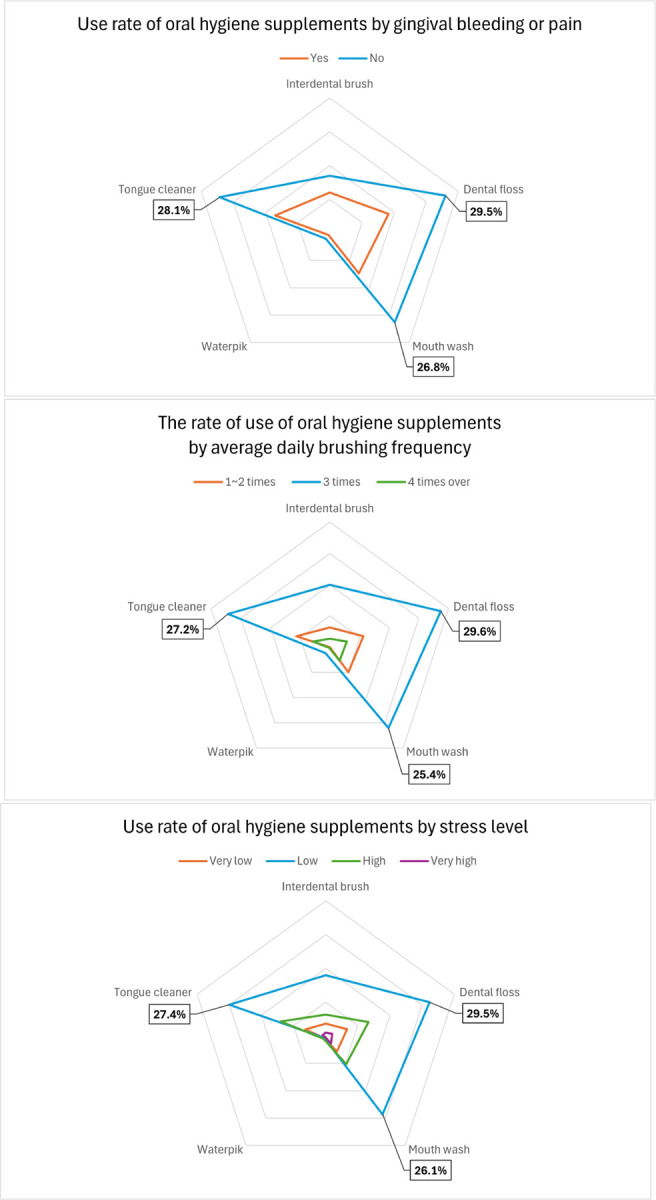
Factors influencing oral hygiene aid use: bleeding or pain, brushing frequency and stress level
A chi-square test was conducted to determine the impact of gingival bleeding or pain, dry mouth, and a diagnosis of periodontal disease on self-perceived oral health (Table 3). When there was gingival bleeding or pain (odds ratio [OR]=0.594, p=0.002) or dry mouth (OR=0.577, p=0.001), the perception that one’s oral cavity was healthy was low. Therefore, subjective oral symptoms (gingival bleeding or pain and dry mouth) and self-perceived oral health may have a significant mutual influence.
Table 3.
Adjustment of odds ratio and 95% confidence interval of predictors of subjective oral symptoms and periodontal disease diagnosis for self-perceived oral health.
| Variable (ref.) | Self-perceived oral health (ref. Poor) | ||
|---|---|---|---|
| Odds ratio | 95% CI | p-value | |
| Gingival bleeding or pain (ref. No) | 0.594 | 0.425–0.830 | 0.002** |
| Dry mouth (ref. No) | 0.577 | 0.414–0.804 | 0.001** |
| Periodontal disease (ref. No) | 0.811 | 0.529–1.241 | 0.334 |
Note.
p <0.01;
CI. confidence interval
5. Methods
Study population
We used a random non-probability sampling technique for the survey. The research purpose and methods were explained through a self-administered structured questionnaire targeting university students, which was distributed through an online Google survey link. The survey responses of 644 people who voluntarily agreed were used for the final data analysis. This study was conducted following the Declaration of Helsinki.
Questionnaire
The questionnaire comprised questions regarding general characteristics, self-perceived oral health, subjective oral symptoms, lifestyle, stress levels, and periodontal disease diagnosis. General characteristics included gender (male, female) and grade (1st, 2nd, 3rd, and 4th grades). Self-perceived oral health was classified as good and bad, and subjective oral symptoms were classified according to gingival bleeding or pain, the presence of dry mouth, and the viscosity of saliva (very low, low, high, very high). Lifestyle factors included the average frequency of daily tooth brushing (one to two times, three times, or four or more times), smoking status (yes/no), average weekly frequency of consumption of beverages such as soda and ade (no beverages consumed, one to two times, three to four times, or five or more times), average daily sleep duration (5 hours or less, 6 hours or less, 7 hours or less, or 8 hours or more), and oral hygiene aids used (not used, interdental brush, dental floss, mouthwash, water pick, or tongue cleaner). They were categorized by stress level (very low, low, high, or very high) and whether the respondent had been diagnosed with periodontal disease (yes/no).
Statistical analysis
A chi-square test was conducted to determine whether there was a significant difference in participants’ self-perceived oral health and stress levels with their subjective oral symptoms and lifestyle, as well as the average daily oral health perception of those who considered their oral health healthy. The use of oral hygiene aids was analyzed according to tooth brushing frequency, gingival bleeding or pain, and stress level. Additionally, logistic regression analysis was conducted to verify the effect of subjective oral symptoms (gingival bleeding or pain and dry mouth) and the diagnosis of periodontal disease on self-perceived oral health. Statistical analyses were performed using SPSS Statistics ver. 22, and the significance level at the time of the decision was set at 0.05.
6. Discussion
Self-perceived oral health is used in epidemiological studies because, in addition to disease, it is influenced by functional capacity, pain, aesthetics, and psychosocial factors [10]. The key factors associated with self-perceived oral health include clinical and subjective oral health [5]. However, limited studies examine whether self-perceived oral health is related to dry mouth, salivary viscosity, or lifestyle factors. Investigating these factors is crucial to improve self-perceived oral health. Therefore, this study investigated factors related to self-perceived oral health among South Korean university students. The U.S. Centers for Disease Control and Prevention (CDC) defined oral health as the health status of teeth, gingiva, and oral facial systems, and reported that diseases affecting oral health include dental carries, periodontal disease, oral cancer, and tooth loss [11]. Periodontal disease is an inflammatory disease that affects the soft and hard tissues that support teeth and causes gingival bleeding, pain, redness, swelling, tooth agitation, and loss [12, 13]. When bleeding or pain occurs in the gingiva, it affects speech and pronunciation, causing difficulties in social interaction, and negatively affects psychological health through feelings of guilt, discomfort, or lack of care [14]. According to Luchi et al.’s study, people experiencing periodontal disease, dry mouth, cavities, and tooth loss often perceived their oral cavity as unhealthy [15]. This aligns with our results that people who perceived their oral health as healthy did not have gingival bleeding, pain, or dry mouth compared with people who perceived their oral health as unhealthy and had minimal saliva viscosity. Yins reported that self-perceived oral health is associated with the development of good oral health behaviors [16]. This aligns with our results, which showed that self-perceived oral health is significantly related to lifestyle. Lifestyle factors related to self-perceived oral health included average daily tooth brushing frequency and average weekly frequency of beverage consumption. The group that perceived their oral health as healthy brushed their teeth an average of three times per day (64.0%). People consider brushing their teeth a fundamental self-care behavior for maintaining oral health [17]. Tooth brushing helps prevent and relieve dental caries and dry mouth by removing plaque from teeth and temporarily increasing saliva secretion [18, 19]. Therefore, many people believe that brushing their teeth helps maintain overall physical hygiene and health, and they expect that brushing their teeth will make their mouths healthier [20]. This finding supports that self-perceived oral health is related to the frequency of tooth brushing. Moreover, self-perceived oral health was associated with beverage consumption habits. Specifically, Korean college students use energy drinks to overcome sleep deprivation when studying for exams or completing projects [21]. Energy drinks are used to improve mental and physical performance and have gained global popularity over the years, making them the fastest-growing drink in the global beverage market [22]. However, these drinks contain excess amounts of sugar and are highly acidic. Thus, they pose a danger to oral health due to the risk of leading to dental caries and tooth erosion. Furthermore, their excessive consumption can increase stress levels among university students with sleep disorders [23–25]. Therefore, their consumption has emerged as a global public health problem [22]. This shows how subjective oral symptoms and incorrect lifestyle habits significantly impact oral health, and the need for forming positive self-perceived oral health by practicing a healthy lifestyle. University students in South Korea are under considerable stress due to academics, pressure to succeed, competition, and financial burdens [26, 27]. University students under significant stress change their eating and lifestyle, negatively affecting their emotions and health [28, 29]. Therefore, we investigated and analyzed the relationships among stress, subjective oral symptoms, and lifestyle to determine the factors affecting university students’ health. Stress affects health directly and indirectly through changes in autonomic and neuroendocrine responses and health behaviors [30]. Specifically, if stress is not relieved, various problems arise. According to Stankeviciene’s study on stress among university students, high stress levels lead to unhealthy behaviors, such as incorrect eating habits, smoking, and drinking, leading to failure to control body homeostasis [28, 31]. Failure to maintain homeostasis causes weakening of the periodontal tissue and decreased saliva secretion due to local tissue destruction in the oral cavity [28, 32]. When saliva secretion decreases, complications such as dry mouth, dental caries, periodontal disease, oral burning, and oral pain occur [33–35]. Furthermore, they do not have antibacterial, mastication, digestion, taste, lubrication, or pH buffering effects, making it challenging to maintain oral homeostasis [36, 37]. Therefore, stress must be controlled appropriately to promote and maintain oral health. This study’s results showed that stress was closely related to subjective oral symptoms and lifestyle. Studies on the stress levels of university students show that when their stress level is low, they do not experience gingival bleeding, pain, or dry mouth, and the viscosity of their saliva is low. Stress also affects smoking and sleep duration. The correlation between stress and smoking has been investigated using various methods [38–40]. Cigarettes are perceived to calm the mind and lead to focused thoughts when stress levels are high [41]. Moreover, stress affects sleep duration and quality; the shorter the sleep duration, the more negatively the person reacts to daily stressors and events [42]. Blood pressure, heart rate, hormone secretion, immune function, cell repair, memory recovery, and cognitive function are all regulated during sleep [43]. Lack of sleep is also related to respiratory and cognitive function decline, memory loss, and weight gain and negatively impacts university students’ academic and overall health [43]. Therefore, the U.S. National Sleep Foundation recommends that adults get seven to nine hours of sleep [44]. People with high stress levels may neglect oral hygiene behaviors, leading to negative outcomes [45]. Additionally, studies show that stress increases anxiety, significantly impacting oral health [46]. Conversely, people with less anxiety may have better lifestyle-related and oral hygiene behaviors [46]. Oral hygiene behaviors include regular brushing, use of oral hygiene aids, and regular dental checkups; practicing these oral hygiene behaviors helps prevent dental caries and periodontal diseases [47]. Furthermore, it affected various factors, including gingival status, oral hygiene knowledge, and stress, aligning with this study [20, 48–50]. Therefore, this study investigated the effects of gingival bleeding or pain, average daily tooth brushing frequency, and stress levels on the use of oral hygiene aids according to self-perceived oral health. The results showed that the rate of use of oral hygiene aids was high when there was no gingival bleeding or pain, when the average daily brushing frequency was three times, and when the stress level was low, especially when the rate of use of oral hygiene aids was high, in the order of dental flossing, tongue cleaning, and gargling. Therefore, to maintain good oral health, it is critical to remove plaque daily, and dental floss or an interdental brush is recommended to reduce gingivitis and plaque compared with brushing alone [51–53]. Additionally, individuals who brush their teeth regularly use more oral hygiene aids. Consistent results have shown that people who perceived their oral health as healthy did not have gingival bleeding or pain and frequently used dental floss. A previous study reported that those who brushed their teeth more than three times per day were 1.394 times more likely to use interdental care products than those who brushed their teeth twice [54]. Additionally, people with knowledge of oral health are more likely to have better self-care habits [55]. Therefore, ongoing oral health education is required to increase the likelihood of people practicing better oral care habits [47]. Additionally, government intervention must provide and manage innovative and efficient educational programs to develop self-administered oral health management habits to maintain and improve oral health. Oral diseases are caused not only by children unfamiliar with dental care, but also by chronic diseases such as diabetes, high blood pressure, and osteoporosis; additionally, young and middle-aged people complain of periodontal diseases caused by stress [56]. Due to the chronic and cumulative nature of oral diseases, dental care expenses constitute a significant proportion of the total medical costs and continue to increase steadily each year; the 2020 results for common dental outpatient diseases indicated that “gingivitis and periodontal disease” affected 16.27 million people (31.4%), making it the most prevalent condition, followed by “dental caries,” which affected 6.13 million people (11.8%) [56]. Therefore, it is critical for university students to develop proper lifestyles as they begin adulthood [57, 58]; this study aimed to provide fundamental data for developing an efficient and practicable educational program for oral health management. However, because this study’s survey results are based on university students in South Korea, there are limitations to generalizing the results to all university students. Additionally, because this was a cross-sectional survey, causal relationships cannot be presented for mutual relationships. Future studies must analyze risk factors affecting health through systematic research targeting university students and explore various approaches to improve university students’ health and lifestyle and suggest the need for effective clinical implementation policies.
7. Conclusion
This study had several key findings. First, the correlations between self-perceived oral health and stress, subjective oral symptoms, and lifestyle factors were confirmed. Second, subjective oral symptoms, lifestyle, and stress were found to be related to the use of oral hygiene aids. Therefore, as both self-perceived oral health and stress harm oral health, it is crucial to establish a practical education program to improve lifestyle.
Funding
This research was supported by Basic Science Research Program” through the National Research Foundation of Korea (NRF) funded by the Ministry of Education(MOE)_ (2022R1F1A107477011 22682121 230101).
Funding Statement
This research was supported by Basic Science Research Program” through the National Research Foundation of Korea (NRF) funded by the Ministry of Education(MOE)_ (2022R1F1A107477011 22682121 230101).
Footnotes
This study was reviewed and approved by the Ethics Committee of Catholic Kwandong University (No. CKU-17-01-0111) in accordance with the ethical guidelines and regulations of the Declaration of Helsinki.
Consent for publication
Written informed consent was obtained from all research participants.
Competing interests
The authors declare that they have no conflict of interest.
Editorial Policies for:
BMC journals: https://www.biomedcentral.com/getpublished/editorial-policies
Availability of data and materials
The datasets used and/or analysed during the current study are available from the corresponding author on reasonable request.
References
- [1].Foley M.A., Lalloo R., Spencer A.J., Do L.G.: What are “health” and “oral health”? Journal of Global Oral Health, 1–9 (2022) 10.25259/JGOH_23_2022 [DOI] [Google Scholar]
- [2].Gill S.A., Quinonez R.B., Deutchman M., Conklin C.E., Rizzolo D., Rabago D., Haidet P., Silk H.: Integrating oral health into health professions school curricula. Med Educ Online 27(1), 2090308 (2022) 10.1080/10872981.2022.2090308. Gill, Stephanie A Quinonez, Rocio B Deutchman, Mark Conklin, Charles E Rizzolo, Denise Rabago, David Haidet, Paul Silk, Hugh eng Review 2022/06/24 Med Educ Online. 2022 Dec;27(1):2090308. doi: 10.1080/10872981.2022.2090308. [DOI] [PMC free article] [PubMed] [Google Scholar]
- [3].Health, H.T.H.C.S.o.P.: Oral health (2023). https://nutritionsource.hsph.harvard.edu/oral-health/
- [4].Abreu M.H.N.G., Cruz A.J.S., Borges-Oliveira A.C., Martins R.d.C., Mattos F.d.F.: Perspectives on social and environmental determinants of oral health. International Journal of Environmental Research and Public Health 18(24), 13429 (2021) 10.3390/ijerph182413429 [DOI] [PMC free article] [PubMed] [Google Scholar]
- [5].Kojima A., Ekuni D., Mizutani S., Furuta M., Irie K., Azuma T., Tomofuji T., Iwasaki Y., Morita M.: Relationships between self-rated oral health, subjective symptoms, oral health behavior and clinical conditions in japanese university students: a cross-sectional survey at okayama university. BMC Oral Health 13, 62 (2013) 10.1186/1472-6831-13-62. Kojima, Azusa Ekuni, Daisuke Mizutani, Shinsuke Furuta, Michiko Irie, Koichiro Azuma, Tetsuji Tomofuji, Takaaki Iwasaki, Yoshiaki Morita, Manabu eng Research Support Non-U.S. Gov’t England 2013/11/08 BMC Oral Health. 2013 Nov 6;13:62. doi: 10.1186/1472–6831-13–62. [DOI] [PMC free article] [PubMed] [Google Scholar]
- [6].Atala-Acevedo C., McGrath R., Glenister K., Capurro D., Bourke L., Simmons D., Morgan M., Marino R.: Self-rated oral health as a valid measure of oral health status in adults living in rural australia. Healthcare (Basel) 11(12) (2023) 10.3390/healthcare11121721. Atala-Acevedo, Claudia McGrath, Roisin Glenister, Kristen Capurro, Daniel Bourke, Lisa Simmons, David Morgan, Mike Marino, Rodrigo eng Switzerland 2023/06/28 Healthcare (Basel). 2023 Jun 12;11(12):1721. doi: 10.3390/healthcare11121721. [DOI] [PMC free article] [PubMed] [Google Scholar]
- [7].Zheng S., Zhao L., Ju N., Hua T., Zhang S., Liao S.: Relationship between oral health-related knowledge, attitudes, practice, self-rated oral health and oral health-related quality of life among chinese college students: a structural equation modeling approach. BMC Oral Health 21(1), 99 (2021) 10.1186/s12903-021-01419-0. Zheng, Suge Zhao, Lili Ju, Nianting Hua, Tiantian Zhang, Shunhua Liao, Shengkai eng Research Support, Non-U.S. Gov’t England 2021/03/08 BMC Oral Health. 2021 Mar 6;21(1):99. doi: 10.1186/s12903–021-01419–0. [DOI] [PMC free article] [PubMed] [Google Scholar]
- [8].Nakahara M., Toyama N., Ekuni D., Takeuchi N., Maruyama T., Yokoi A., Fukuhara D., Sawada N., Nakashima Y., Morita M.: Trends in self-rated oral health and its associations with oral health status and oral health behaviors in japanese university students: A cross-sectional study from 2011 to 2019. Int J Environ Res Public Health 19(20) (2022) 10.3390/ijerph192013580. Nakahara, Momoko Toyama, Naoki Ekuni, Daisuke Takeuchi, Noriko Maruyama, Takayuki Yokoi, Aya Fukuhara, Daiki Sawada, Nanami Nakashima, Yukiho Morita, Manabu eng Switzerland 2022/10/28 Int J Environ Res Public Health. 2022 Oct 20;19(20):13580. doi: 10.3390/ijerph192013580. [DOI] [PMC free article] [PubMed] [Google Scholar]
- [9].Yamane-Takeuchi M., Ekuni D., Mizutani S., Kataoka K., Taniguchi-Tabata A., Azuma T., Furuta M., Tomofuji T., Iwasaki Y., Morita M.: Associations among oral health-related quality of life, subjective symptoms, clinical status, and self-rated oral health in japanese university students: a cross-sectional study. BMC Oral Health 16(1), 127 (2016) 10.1186/s12903-016-0322-9. Yamane-Takeuchi, Mayu Ekuni, Daisuke Mizutani, Shinsuke Kataoka, Kota Taniguchi-Tabata, Ayano Azuma, Tetsuji Furuta, Michiko Tomofuji, Takaaki Iwasaki, Yoshiaki Morita, Manabu eng England 2016/12/03 BMC Oral Health. 2016 Nov 30;16(1):127. doi: 10.1186/s12903–016-0322–9. [DOI] [PMC free article] [PubMed] [Google Scholar]
- [10].Anticona C., Suominen A.L., Holgerson P.L., Gustafsson P.E.: Impact of an oral care subsidization reform on intersectional inequities in self-rated oral health in sweden. Int J Equity Health 23(1), 63 (2024) 10.1186/s12939-024-02121-7. Anticona, Cynthia Suominen, Anna Liisa Holgerson, Pernilla Lif Gustafsson, Per E eng England 2024/03/20 Int J Equity Health. 2024 Mar 19;23(1):63. doi: 10.1186/s12939–024-02121–7. [DOI] [PMC free article] [PubMed] [Google Scholar]
- [11].Prevention, C.f.D.C.a.: Oral Health (2024). https://www.cdc.gov/oral-health/about/index.html
- [12].Goulao B., MacLennan G.S., Ramsay C.R.: Have you had bleeding from your gums? self-report to identify gingival inflammation (the sing diagnostic accuracy and diagnostic model development study). J Clin Periodontol 48(7), 919–928 (2021) 10.1111/jcpe.13455. Goulao, Beatriz MacLennan, Graeme S Ramsay, Craig Reng HSRU1/CSO/Chief Scientist Office/United Kingdom DH/Department of Health/United Kingdom Research Support, Non-U.S. Gov’t 2021/03/23 J Clin Periodontol. 2021 Jul;48(7):919–928. doi: 10.1111/jcpe.13455. Epub 2021 May 7. [DOI] [PubMed] [Google Scholar]
- [13].S A.T., Afaq A., Alqutub M.N., Aldahiyan N., AlMubarak A.M., Shaikh A.C., Naseem M., Vohra F., Abduljabbar T.: Association of self-perceived psychological stress with the periodontal health of socially deprived women in shelter homes. Int J Environ Res Public Health 18(10) (2021) 10.3390/ijerph18105160. A Tanveer, Syeda Afaq, Ashar Alqutub, Montaser N Aldahiyan, Nada AlMubarak, Abdulrahman M Shaikh, Amynah C Naseem, Mustafa Vohra, Fahim Abduljabbar, Tariq eng Research Support, Non-U.S. Gov’t Switzerland 2021/06/03 Int J Environ Res Public Health. 2021 May 13;18(10):5160. doi: 10.3390/ijerph18105160. [DOI] [PMC free article] [PubMed] [Google Scholar]
- [14].Broomhead T., Gibson B., Parkinson C.R., Vettore M.V., Baker S.R.: Gum health and quality of life-subjective experiences from across the gum health-disease continuum in adults. BMC Oral Health 22(1), 512 (2022) 10.1186/s12903-022-02507-5. Broomhead, Tom Gibson, B Parkinson, C R Vettore, M V Baker, S R eng Research Support, Non-U.S. Gov’t England 2022/11/20 BMC Oral Health. 2022 Nov 18;22(1):512. doi: 10.1186/s12903–022-02507–5. [DOI] [PMC free article] [PubMed] [Google Scholar]
- [15].Luchi C.A., Peres K.G., Bastos J.L., Peres M.A.: Desigualdades na autoavaliação da saúde bucal em adultos. Revista de Saúde Pública 47, 740–751 (2013) [DOI] [PubMed] [Google Scholar]
- [16].Yin N., Zheng S., Ju N., Hua T., Ding W., Zhang W., Zhou H., Zhang Y., Li W., Ge H.: Associations between self-rated oral health, subjective oral conditions, oral health behaviours and oral health-related quality of life among college students: A study using structural equation modelling (2021)
- [17].Kumar S., Tadakamadla J., Johnson N.W.: Effect of toothbrushing frequency on incidence and increment of dental caries: A systematic review and meta-analysis. J Dent Res 95(11), 1230–6 (2016) 10.1177/0022034516655315. Kumar, S Tadakamadla, J Johnson, N W eng Meta-Analysis Review Systematic Review 2016/06/24 J Dent Res. 2016 Oct;95(11):1230–6. doi: 10.1177/0022034516655315. Epub 2016 Jun 22. [DOI] [PubMed] [Google Scholar]
- [18].Axe A., Mueller W.D., Rafferty H., Lang T., Gaengler P.: Impact of manual toothbrush design on plaque removal efficacy. BMC Oral Health 23(1), 796 (2023) 10.1186/s12903-023-03518-6. Axe, Alyson Mueller, Wolf Dieter Rafferty, Helen Lang, Tomas Gaengler, Peter eng Research Support, Non-U.S. Gov’t England 2023/10/26 BMC Oral Health. 2023 Oct 25;23(1):796. doi: 10.1186/s12903–023-03518–6. [DOI] [PMC free article] [PubMed] [Google Scholar]
- [19].Ligtenberg A.J., Brand H.S., Bots C.P., Nieuw Amerongen A.V.: The effect of toothbrushing on secretion rate, ph and buffering capacity of saliva. Int J Dent Hyg 4(2), 104–5 (2006) 10.1111/j.1601-5037.2006.00170.x. Ligtenberg, A J M Brand, H S Bots, C P Nieuw Amerongen, A V eng England 2006/04/28 Int J Dent Hyg. 2006 May;4(2):104–5. doi: 10.1111/j.1601–5037.2006.00170.x. [DOI] [PubMed] [Google Scholar]
- [20].Mueller M., Schorle S., Vach K., Hartmann A., Zeeck A., Schlueter N.: Relationship between dental experiences, oral hygiene education and self-reported oral hygiene behaviour. PLoS One 17(2), 0264306 (2022) 10.1371/journal.pone.0264306. Mueller, Maxi Schorle, Sarah Vach, Kirstin Hartmann, Armin Zeeck, Almut Schlueter, Nadine eng Research Support, Non-U.S. Gov’t 2022/02/25 PLoS One. 2022 Feb 24;17(2):e0264306. doi: 10.1371/journal.pone.0264306. eCollection 2022. [DOI] [PMC free article] [PubMed] [Google Scholar]
- [21].Lee K.E., Kim Y.: The structural equation model of intention to discontinue drinking highly caffeinated beverage of undergraduate students. Child Health Nurs Res 26(1), 35–46 (2020) 10.4094/chnr.2020.26.1.35. Lee, Kyu Eun Kim, Yunsoo eng Korea (South) 2020/01/01 Child Health Nurs Res. 2020 Jan;26(1):35–46. doi: 10.4094/chnr.2020.26.1.35. Epub 2020 Jan 31. [DOI] [PMC free article] [PubMed] [Google Scholar]
- [22].Saku E.Y., Nuro-Ameyaw P., Amenya P.C., Kpodo F.M., Esua-Amoafo P., Kortei N.K.: Energy drink: the consumption prevalence, and awareness of its potential health implications among commercial drivers in the ho municipality of ghana. BMC Public Health 20(1), 1304 (2020) 10.1186/s12889-020-09421-x. Saku, Emmanuella Yayra Nuro-Ameyaw, Peter Amenya, Priscilla Cecilia Kpodo, Fidelis Mawunyo Esua-Amoafo, Paul Kortei, Nii Korley eng England 2020/08/29 BMC Public Health. 2020 Aug 27;20(1):1304. doi: 10.1186/s12889–020-09421-x. [DOI] [PMC free article] [PubMed] [Google Scholar]
- [23].Valenzuela M.J., Waterhouse B., Aggarwal V.R., Bloor K., Doran T.: Effect of sugar-sweetened beverages on oral health: a systematic review and meta-analysis. Eur J Public Health 31(1), 122–129 (2021) 10.1093/eurpub/ckaa147. Valenzuela, Maria Josefina Waterhouse, Beverley Aggarwal, Vishal R Bloor, Karen Doran, Tim eng Meta-Analysis Research Support, Non-U.S. Gov’t Systematic Review England 2020/08/25 Eur J Public Health. 2021 Feb 1;31(1):122–129. doi: 10.1093/eurpub/ckaa147. [DOI] [PubMed] [Google Scholar]
- [24].Malinauskas B.M., Aeby V.G., Overton R.F., Carpenter-Aeby T., Barber-Heidal K.: A survey of energy drink consumption patterns among college students. Nutr J 6, 35 (2007) 10.1186/1475-2891-6-35. Malinauskas, Brenda M Aeby, Victor G Overton, Reginald F Carpenter-Aeby, Tracy Barber-Heidal, Kimberly eng England 2007/11/02 Nutr J. 2007 Oct 31;6:35. doi: 10.1186/1475–2891-6–35. [DOI] [PMC free article] [PubMed] [Google Scholar]
- [25].Dwaidy J., Dwaidy A., Hasan H., Kadry S., Balusamy B.: Survey of energy drink consumption and adverse health effects in lebanon. Health Inf Sci Syst 6(1), 15 (2018) 10.1007/s13755-018-0056-y. Dwaidy, Jana Dwaidy, Anjie Hasan, Hanin Kadry, Seifedine Balusamy, Balamurugan eng England 2018/10/04 Health Inf Sci Syst. 2018 Sep 20;6(1):15. doi: 10.1007/s13755–018-0056-y. eCollection 2018 Dec. [DOI] [PMC free article] [PubMed] [Google Scholar]
- [26].Tavolacci M.P., Ladner J., Grigioni S., Richard L., Villet H., Dechelotte P.: Prevalence and association of perceived stress, substance use and behavioral addictions: a cross-sectional study among university students in france, 2009–2011. BMC Public Health 13, 724 (2013) 10.1186/1471-2458-13-724. Tavolacci, Marie Pierre Ladner, Joel Grigioni, Sebastien Richard, Laure Villet, Herve Dechelotte, Pierre eng Research Support, Non-U.S. Gov’t England 2013/08/08 BMC Public Health. 2013 Aug 6;13:724. doi: 10.1186/1471–2458-13–724. [DOI] [PMC free article] [PubMed] [Google Scholar]
- [27].Kim M.-H., Park S.-H.: Effects of sleep duration on stress and depression in college students. Journal of The Korean Society of Integrative Medicine 9(4), 261–270 (2021) [Google Scholar]
- [28].Stankeviciene I., Stangvaltaite-Mouhat L., Aleksejuniene J., Mieliauskaite D., Talijuniene I., Butrimiene I., Bendinskaite R., Puriene A.: Oral health status, related behaviours and perceived stress in xerostomia, sicca and sjogren’s syndromes patients - a cross-sectional study. BMC Oral Health 24(1), 454 (2024) 10.1186/s12903-024-04224-7. Stankeviciene, Indre Stangvaltaite-Mouhat, Lina Aleksejuniene, Jolanta Mieliauskaite, Diana Talijuniene, Ieva Butrimiene, Irena Bendinskaite, Ruta Puriene, Alina eng England 2024/04/16 BMC Oral Health. 2024 Apr 15;24(1):454. doi: 10.1186/s12903–024-04224–7. [DOI] [PMC free article] [PubMed] [Google Scholar]
- [29].El Ansari W., Sebena R., El-Ansari K., Suominen S.: Clusters of lifestyle behavioral risk factors and their associations with depressive symptoms and stress: evidence from students at a university in finland. BMC Public Health 24(1), 1103 (2024) 10.1186/s12889-024-18421-0. El Ansari, Walid Sebena, Rene El-Ansari, Kareem Suominen, Sakari eng Research Support, Non-U.S. Gov’t England 2024/04/23 BMC Public Health. 2024 Apr 22;24(1):1103. doi: 10.1186/s12889–024-18421–0. [DOI] [PMC free article] [PubMed] [Google Scholar]
- [30].O’Connor D.B., Thayer J.F., Vedhara K.: Stress and health: A review of psychobiological processes. Annu Rev Psychol 72, 663–688 (2021) 10.1146/annurev-psych-062520-122331. O’Connor, Daryl B Thayer, Julian F Vedhara, Kavita eng Review 2020/09/05 Annu Rev Psychol. 2021 Jan 4;72:663–688. doi: 10.1146/annurev-psych-062520–122331. Epub 2020 Sep 4. [DOI] [PubMed] [Google Scholar]
- [31].Association, A.P.: Stress and Health (2022). https://www.apa.org/topics/stress/health
- [32].Akcali A., Huck O., Tenenbaum H., Davideau J.L., Buduneli N.: Periodontal diseases and stress: a brief review. J Oral Rehabil 40(1), 60–8 (2013) 10.1111/j.1365-2842.2012.02341.x. Akcali, A Huck, O Tenenbaum, H Davideau, J L Buduneli, N eng Review England 2012/08/14 J Oral Rehabil. 2013 Jan;40(1):60–8. doi: 10.1111/j.1365–2842.2012.02341.x. Epub 2012 Aug 7. [DOI] [PubMed] [Google Scholar]
- [33].Guggenheimer J., Moore P.A.: Xerostomia: etiology, recognition and treatment. J Am Dent Assoc 134(1), 61–91189 (2003) 10.14219/jada.archive.2003.0018. Guggenheimer, James Moore, Paul A eng Review England 2003/01/31 J Am Dent Assoc. 2003 Jan;134(1):61–9; quiz 118–9. doi: 10.14219/jada.archive.2003.0018. [DOI] [PubMed] [Google Scholar]
- [34].Mizutani S., Ekuni D., Tomofuji T., Azuma T., Kataoka K., Yamane M., Iwasaki Y., Morita M.: Relationship between xerostomia and gingival condition in young adults. J Periodontal Res 50(1), 74–9 (2015) 10.1111/jre.12183. Mizutani, S Ekuni, D Tomofuji, T Azuma, T Kataoka, K Yamane, M Iwasaki, Y Morita, M eng Research Support, Non-U.S. Gov’t 2014/04/05 J Periodontal Res. 2015 Feb;50(1):74–9. doi: 10.1111/jre.12183. Epub 2014 Apr 4. [DOI] [PubMed] [Google Scholar]
- [35].Dodds M.W.J., Haddou M.B., Day J.E.L.: The effect of gum chewing on xerostomia and salivary flow rate in elderly and medically compromised subjects: a systematic review and meta-analysis. BMC Oral Health 23(1), 406 (2023) 10.1186/s12903-023-03084-x. Dodds, Michael W J Haddou, Mohamed Ben Day, Jon E L eng Meta-Analysis Research Support, Non-U.S. Gov’t Systematic Review England 2023/06/21 BMC Oral Health. 2023 Jun 20;23(1):406. doi: 10.1186/s12903–023-03084-x. [DOI] [PMC free article] [PubMed] [Google Scholar]
- [36].Martina E., Campanati A., Diotallevi F., Offidani A.: Saliva and oral diseases. J Clin Med 9(2) (2020) 10.3390/jcm9020466. Martina, Emanuela Campanati, Anna Diotallevi, Federico Offidani, Annamaria eng Review Switzerland 2020/02/13 J Clin Med. 2020 Feb 8;9(2):466. doi: 10.3390/jcm9020466. [DOI] [PMC free article] [PubMed] [Google Scholar]
- [37].Uchida H., Ovitt C.E.: Novel impacts of saliva with regard to oral health. J Prosthet Dent 127(3), 383–391 (2022) 10.1016/j.prosdent.2021.05.009. Uchida, Hitoshi Ovitt, Catherine E eng R21 DE026861/DE/NIDCR NIH HHS/R90 DE022529/DE/NIDCR NIH HHS/Review 2021/06/19 J Prosthet Dent. 2022 Mar;127(3):383–391. doi: 10.1016/j.prosdent.2021.05.009. Epub 2021 Jun 16. [DOI] [PMC free article] [PubMed] [Google Scholar]
- [38].Ho Y.C., Lee H.C., Lin M.F., Chang H.J.: Correlations among life stress, smoking behavior, and depressive symptoms in adolescents: A descriptive study with a mediating model. Nurs Health Sci 22(4), 949–957 (2020) 10.1111/nhs.12752. Ho, Yen-Chung Lee, Hsin-Chien Lin, Mei-Feng Chang, Hsiu-Ju eng Australia 2020/06/21 Nurs Health Sci. 2020 Dec;22(4):949–957. doi: 10.1111/nhs.12752. Epub 2020 Aug 9. [DOI] [PubMed] [Google Scholar]
- [39].Zlomuzica A., Lange M., Reher S., Machulska A., Rinck M.: The effects of psychological stress on approach tendencies for smoking-related cues in smokers. Eur J Neurosci 55(9–10), 2581–2591 (2022) 10.1111/ejn.15295. Zlomuzica, Armin Lange, Miriam Reher, Sarah Machulska, Alla Rinck, Mike eng Research Support, Non-U.S. Gov’t France 2021/05/09 Eur J Neurosci. 2022 May;55(9–10):2581–2591. doi: 10.1111/ejn.15295. Epub 2021 May 31. [DOI] [PubMed] [Google Scholar]
- [40].Kalkhoran S.M., Levy D.E., Rigotti N.A.: Smoking and e-cigarette use among u.s. adults during the covid-19 pandemic. Am J Prev Med 62(3), 341–349 (2022) 10.1016/j.amepre.2021.08.018. Kalkhoran, Sara M Levy, Douglas E Rigotti, Nancy A eng K23 HL136854/HL/NHLBI NIH HHS/Research Support, N.I.H., Extramural Netherlands 2021/11/11 Am J Prev Med. 2022 Mar;62(3):341–349. doi: 10.1016/j.amepre.2021.08.018. Epub 2021 Oct 6. [DOI] [PMC free article] [PubMed] [Google Scholar]
- [41].Nichter M., Nichter M., Carkoglu A., Tobacco Etiology Research, N.: Reconsidering stress and smoking: a qualitative study among college students. Tob Control 16(3), 211–4 (2007) 10.1136/tc.2007.019869. Nichter, Mark Nichter, Mimi Carkoglu, Asli eng Research Support, Non-U.S. Gov’t England 2007/06/15 Tob Control. 2007 Jun;16(3):211–4. doi: 10.1136/tc.2007.019869. [DOI] [PMC free article] [PubMed] [Google Scholar]
- [42].Zhang L., Li D., Yin H.: How is psychological stress linked to sleep quality? the mediating role of functional connectivity between the sensory/somatomotor network and the cingulo-opercular control network. Brain Cogn 146, 105641 (2020) 10.1016/j.bandc.2020.105641. Zhang, Li Li, Dan Yin, Huazhan eng Research Support, Non-U.S. Gov’t 2020/11/04 Brain Cogn. 2020 Dec;146:105641. doi: 10.1016/j.bandc.2020.105641. Epub 2020 Nov 1. [DOI] [PubMed] [Google Scholar]
- [43].Liew S.C., Aung T.: Sleep deprivation and its association with diseases- a review. Sleep Med 77, 192–204 (2021) 10.1016/j.sleep.2020.07.048. Liew, Siaw Cheok Aung, Thidar eng Review Netherlands 2020/09/22 Sleep Med. 2021 Jan;77:192–204. doi: 10.1016/j.sleep.2020.07.048. Epub 2020 Aug 18. [DOI] [PubMed] [Google Scholar]
- [44].Li Q.: The association between sleep duration and excess body weight of the american adult population: a cross-sectional study of the national health and nutrition examination survey 2015–2016. BMC Public Health 21(1), 335 (2021) 10.1186/s12889-021-10369-9. Li, Qing, England, 2021/02/13. BMC Public Health. 2021 Feb 11;21(1):335. doi: 10.1186/s12889–021-10369–9. [DOI] [PMC free article] [PubMed] [Google Scholar]
- [45].Corridore D., Saccucci M., Zumbo G., Fontana E., Lamazza L., Stamegna C., Di Carlo G., Vozza I., Guerra F.: Impact of stress on periodontal health: Literature revision. Healthcare (Basel) 11(10) (2023) 10.3390/healthcare11101516. Corridore, Denise Saccucci, Matteo Zumbo, Giulia Fontana, Erika Lamazza, Luca Stamegna, Claudio Di Carlo, Gabriele Vozza, Iole Guerra, Fabrizio eng Switzerland 2023/05/27 Healthcare (Basel). 2023 May 22;11(10):1516. doi: 10.3390/healthcare11101516. [DOI] [PMC free article] [PubMed] [Google Scholar]
- [46].Cao R., Lai J., Fu X., Qiu P., Chen J., Liu W.: Association between psychological stress, anxiety and oral health status among college students during the omicron wave: a cross-sectional study. BMC Oral Health 23(1), 470 (2023) 10.1186/s12903-023-03151-3. Cao, Rongkai Lai, Junyu Fu, Xiaoxin Qiu, Piaopiao Chen, Jinghong Liu, Weicai eng Research Support, Non-U.S. Gov’t England 2023/07/10 BMC Oral Health. 2023 Jul 10;23(1):470. doi: 10.1186/s12903–023-03151–3. [DOI] [PMC free article] [PubMed] [Google Scholar]
- [47].Fukuhara D., Ekuni D., Kataoka K., Taniguchi-Tabata A., Uchida-Fukuhara Y., Toyama N., Yoneda T., Sugiura Y., Islam M.M., Saho H., Iwasaki Y., Morita M.: Relationship between oral hygiene knowledge, source of oral hygiene knowledge and oral hygiene behavior in japanese university students: A prospective cohort study. PLoS One 15(7), 0236259 (2020) 10.1371/journal.pone.0236259. Fukuhara, Daiki Ekuni, Daisuke Kataoka, Kota Taniguchi-Tabata, Ayano Uchida-Fukuhara, Yoko Toyama, Naoki Yoneda, Toshiki Sugiura, Yoshio Islam, Md Monirul Saho, Hikari Iwasaki, Yoshiaki Morita, Manabu eng 2020/07/24 PLoS One. 2020 Jul 23;15(7):e0236259. doi: 10.1371/journal.pone.0236259. eCollection 2020. [DOI] [PMC free article] [PubMed] [Google Scholar]
- [48].Sabounchi S.S., Torkzaban P., Sabounchi S.S., Ahmadi R.: Association of oral health behavior-related factors with periodontal health and oral hygiene. Avicenna journal of dental research 8(2), 6–6 (2016) [Google Scholar]
- [49].Lalani A., Dasar P.L., Sandesh N., Mishra P., Kumar S., Balsaraf S.: Assessment of relationship between oral health behavior, oral hygiene and gingival status of dental students. Indian J Dent Res 26(6), 592–7 (2015) [DOI] [PubMed] [Google Scholar]
- [50].Deinzer R., Granrath N., Spahl M., Linz S., Waschul B., Herforth A.: Stress, oral health behaviour and clinical outcome. Br J Health Psychol 10(Pt 2), 269–83 (2005) 10.1348/135910705X26858. Deinzer, Renate Granrath, Nicole Spahl, Manuela Linz, Sandra Waschul, Bernd Herforth, Armin eng Clinical Trial England 2005/06/23 Br J Health Psychol. 2005 May;10(Pt 2):269–83. doi: 10.1348/135910705X26858. [DOI] [PubMed] [Google Scholar]
- [51].Mohapatra S., Rajpurohit L., Mohandas R., Patil S.: Comparing the effectiveness of water flosser and dental floss in plaque reduction among adults: A systematic review. J Indian Soc Periodontol 27(6), 559–567 (2023) 10.4103/jisp.jisp_597_22. Mohapatra, Subhashree; Rajpurohit, Ladusingh; Mohandas, Rahul; Patil, Sujeet; eng; Review; India; 2024/03/04; J Indian Soc Periodontol. 2023 Nov-Dec;27(6):559–567. doi: 10.4103/jisp.jisp_597 22. Epub 2024 Jan 24. [DOI] [PMC free article] [PubMed] [Google Scholar]
- [52].Chapple I.L., Weijden F., Doerfer C., Herrera D., Shapira L., Polak D., Madianos P., Louropoulou A., Machtei E., Donos N., Greenwell H., Van Winkelhoff A.J., Eren Kuru B., Arweiler N., Teughels W., Aimetti M., Molina A., Montero E., Graziani F.: Primary prevention of periodontitis: managing gingivitis. J Clin Periodontol 42 Suppl 16, 71–6 (2015) 10.1111/jcpe.12366. Chapple, Iain L C Van der Weijden, Fridus Doerfer, Christof Herrera, David Shapira, Lior Polak, David Madianos, Phoebus Louropoulou, Anna Machtei, Eli Donos, Nikos Greenwell, Henry Van Winkelhoff, Ari J Eren Kuru, Bahar Arweiler, Nicole Teughels, Wim Aimetti, Mario Molina, Ana Montero, Eduardo Graziani, Filippo eng Research Support, Non-U.S. Gov’t Review Systematic Review 2015/02/03 J Clin Periodontol. 2015 Apr;42 Suppl 16:S71–6. doi:10.1111/jcpe.12366. [DOI] [PubMed] [Google Scholar]
- [53].Worthington H.V., MacDonald L., Poklepovic Pericic T., Sambunjak D., Johnson T.M., Imai P., Clarkson J.E.: Home use of interdental cleaning devices, in addition to toothbrushing, for preventing and controlling periodontal diseases and dental caries. Cochrane Database Syst Rev 4(4), 012018 (2019) 10.1002/14651858.CD012018.pub2. Worthington, Helen V MacDonald, Laura Poklepovic Pericic, Tina Sambunjak, Dario Johnson, Trevor M Imai, Pauline Clarkson, Janet E eng Research Support, Non-U.S. Gov’t Systematic Review England 2019/04/11 Cochrane Database Syst Rev. 2019 Apr 10;4(4):CD012018. doi: 10.1002/14651858.CD012018.pub2. [DOI] [PMC free article] [PubMed] [Google Scholar]
- [54].Han S.J.: The use of interdental care products in korean adults aged 30 years and older and factors affecting their use: 4th to 7th korean national health and nutrition examination survey. Int J Environ Res Public Health 19(14) (2022) 10.3390/ijerph19148639. Han, Su-Jin eng Switzerland 2022/07/28 Int J Environ Res Public Health. 2022 Jul 15;19(14):8639. doi: 10.3390/ijerph19148639. [DOI] [PMC free article] [PubMed] [Google Scholar]
- [55].Okoroafor C.C., Okobi O.E., Owodeha-Ashaka M., Okobi E., Oluseye B., Ekpang O.B., Aya L.E., Owolabi O.J., Oru-Betem T.E., Nwafor J.N.: Dental health knowledge attitude and practice among university of calabar students. Cureus 15(6), 40055 (2023) [DOI] [PMC free article] [PubMed] [Google Scholar]
- [56].Chun H., Choi K.: A study on differentiation of dental insurance rates using national health insurance service big data: periodontal caries and disease. J Insurance Finance 33, 119–147 (2022) [Google Scholar]
- [57].Parker P.D., Ludtke O., Trautwein U., Roberts B.W.: Personality and relationship quality during the transition from high school to early adulthood. J Pers 80(4), 1061–89 (2012) 10.1111/j.1467-6494.2012.00766.x. Parker, Philip D Ludtke, Oliver Trautwein, Ulrich Roberts, Brent W eng R01 AG021178/AG/NIA NIH HHS/Research Support, Non-U.S. Gov’t 2012/01/10 J Pers. 2012 Aug;80(4):1061–89. doi: 10.1111/j.1467–6494.2012.00766.x. Epub 2012 Jun 29. [DOI] [PMC free article] [PubMed] [Google Scholar]
- [58].Magolda M.B., Taylor K.: 19 developing self-authorship in college to navigate emerging adulthood. The Oxford handbook of emerging adulthood, 299 (2016) [Google Scholar]
Associated Data
This section collects any data citations, data availability statements, or supplementary materials included in this article.
Data Availability Statement
The datasets used and/or analysed during the current study are available from the corresponding author on reasonable request.